

Psychotherapy mediated by remote communication technologies: a meta-analytic review
Open accessThe DOI matches its Crossref record; 69 of the 70 references it cites were found in a registry or an index.
Abstract
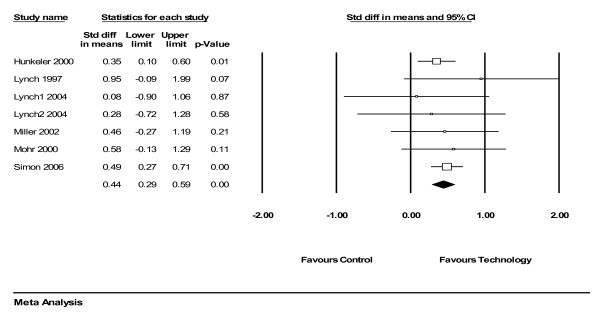
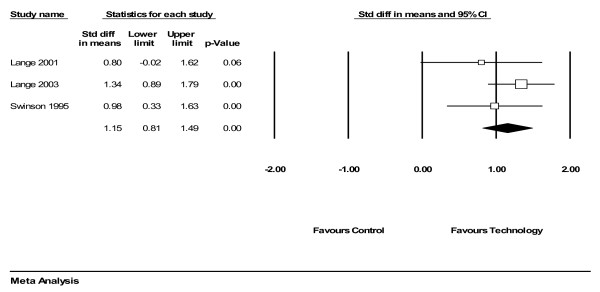
BACKGROUND: Access to psychotherapy is limited by psychopathology (e.g. agoraphobia), physical disability, occupational or social constraints and/or residency in under-served areas. For these populations, interventions delivered via remote communication technologies (e.g. telephone, internet) may be more appropriate. However, there are concerns that such delivery may influence the therapeutic relationship and thus reduce therapy effectiveness. This review aimed to determine the clinical effectiveness of remotely communicated, therapist-delivered psychotherapy. METHODS: Systematic review (including electronic database searching and correspondence with authors) of randomised trials of individual remote psychotherapy. Electronic databases searched included MEDLINE (1966-2006), PsycInfo (1967-2006), EMBASE (1980-2006) and CINAHL databases (1982-2006). The Cochrane Central Register of Controlled Trials (CENTRAL) and the Cochrane Collaboration Depression, Anxiety and Neurosis Controlled Trials Register (CCDAN-CTR). All searches were conducted to include studies with a publication date to July 2006. RESULTS: Thirteen studies were identified, ten assessing psychotherapy by telephone, two by internet and one by videoconference. Pooled effect sizes for remote therapy versus control conditions were 0.44 for depression (95%CI 0.29 to 0.59, 7 comparisons, n = 726) and 1.15 for anxiety-related disorders (95%CI 0.81 to 1.49, 3 comparisons, n = 168). There were few comparisons of remote versus face-to-face psychotherapy. CONCLUSION: Remote therapy has the potential to overcome some of the barriers to conventional psychological therapy services. Telephone-based interventions are a particularly popular research focus and as a means of therapeutic communication may confer specific advantages in terms of their widespread availability and ease of operation. However, the available evidence is limited in quantity and quality. More rigorous trials are required to confirm these preliminary estimates of effectiveness. Future research priorities should include overcoming the methodological shortcomings of published work by conducting large-scale trials that incorporate both clinical outcome and more process-orientated measures.
Overview
The claims and statistics of this paper haven’t been checked yet.
Free: it reads the open-access text and checks the first 5 claims that cite a source we can check. Create a free account to check every claim.
Integrity signals
Registry
Cites
Statistics
Figures
Verification
Claims the paper makes
The claims and statistics of this paper haven’t been checked yet.
Free: it reads the open-access text and checks the first 5 claims that cite a source we can check. Create a free account to check every claim.
Claims other papers make about this one
Each is checked against this paper’s own text: does it say what the citing paper says it does?
The source backs part of the claim, not all of it — or backs it for a different population, condition or comparison.
In the citing paper
“A growing body of research also supports the efficacy of internet-based interventions for these treatment targets (4–8).”
From Interest in behavioral and psychological treatments delivered face-to-face, by telephone, and by internet (2010) · cites this paper as [7]
Experimental — accuracy not yet measuredThe source backs part of the claim, not all of it — or backs it for a different population, condition or comparison.
In the citing paper
“Furthermore, first meta-analyses have shown comparable effectiveness of these interventions and regular face-to-face psychotherapy (Andersson et al., 2014, Barak et al., 2008, Bee et al., 2008) especially for depression and anxiety (Andersson and Cuijpers, 2009, Andrews et al., 2010, Richards and Richardson, 2012).”
From Using a transdiagnostic, psychodynamic online self-help intervention to maintain inpatient psychosomatic treatment effects: Study protocol of a feasibility study (2016) · cites this paper as Bee et al., 2008
Experimental — accuracy not yet measured
Self-check
Percentages, sums and reported differences re-computed from the paper’s own numbers.
The self-check needs the paper’s full text.
Citations
Cites
Measuring inconsistency in meta-analyses
Higgins, J. P. T., Thompson, S. G., Deeks, J. J., & Altman, D. G. (2003) · BMJ · doi:10.1136/bmj.327.7414.557 · Cited by 63,139 · cited 1×
“Between-study heterogeneity was assessed using the I 2 statistic [ 44 ], which describes the percentage of total variation across studies that is due to heterogeneity rather than chance.”
MethodBias in meta-analysis detected by a simple, graphical test
Egger, M., Smith, G. D., Schneider, M., & Minder, C. (1997) · BMJ · doi:10.1136/bmj.315.7109.629 · Cited by 56,722
Cochrane Handbook for Systematic Reviews of Interventions: Cochrane Book Series
(2008) · doi:10.1002/9780470712184 · Cited by 25,048
(2000) · Cited by 9,198
Diagnostic and Statistical Manual of Mental Disorders (DSM-IV)
Hu, R. J. (2003) · Encyclopedia of the Neurological Sciences · doi:10.1016/b0-12-226870-9/01070-4 · Cited by 9,117
(1996) · Cited by 6,884
Cochrane Handbook for Systematic Reviews of Interventions
Higgins, J. P. T., Green, S., & Ben Van Den, A. (2020) · International Coaching Psychology Review · doi:10.53841/bpsicpr.2020.15.2.123 · Cited by 5,670
Internet paradox: A social technology that reduces social involvement and psychological well-being?
Kraut, R., Patterson, M., Lundmark, V., Kiesler, S., Mukophadhyay, T., & Scherlis, W. (1998) · American Psychologist · doi:10.1037/0003-066x.53.9.1017 · Cited by 4,793 · cited 1×
“Whether or not an effective alliance can be delivered in the absence of interpersonal contact thus remains a topic of some debate [20-22].”
BackgroundThe Journal of Family Practice
(1997) · The American Journal of Family Therapy · doi:10.1080/01926189708251066 · Cited by 3,067
Eysenbach, G. (2005) · Journal of Medical Internet Research · doi:10.2196/jmir.7.1.e11 · Cited by 2,524 · cited 1×
“Trials of written self help materials for anxiety and depressive disorders report comparable figures of between 0 and 61% [62], although attrition from open access online therapy is generally assumed to be higher and may be as much as 99% [63], Once again however, differences in study context, recruitment and sample c…”
Background
Research works printed but not linked: 8
- Department of Veteran Affairs (DVA) Clinical guideline for major depressive disorder 1993 Washington, DC: Veterans Health Administration
- Depression Guideline Panel Depression in primary care: treatment of major depression 1993 Rockville, Md.: US Dept. of Health and Human Services, Public Health Service, Agency for Health Care Policy and Research
- FCC Supplemental telephone penetration report 1993 US Federal Communications Commission
- Veterans Health Administration (VHA) Telemental health toolkit 2003 Veterans Health Administration
- Hsuing R E-therapy 2002 London: WW Norton & Company Ltd
- World Health Organisation The ICD-10 classification of mental and behavioural disorders: clinical descriptions and diagnostic guidelines 1992 Geneva: World Health Organisation
- Cohen J Statistical power analysis for the behavioural sciences 1988 New Jersey: Lawrence Erlbaum
- Deeks JJ Higgins JPT Altman DG Higgins JPT, Green S Analysing and presenting results Cochrane Handbook for Systematic Reviews of Interventions 425 2005 Chichester UK: John Wiley & Sons Ltd
Cited by
Items 101–188 of 188
Working Alliance in Internet-Based Cognitive-Behavioral Therapy for Obsessive-Compulsive Disorder
Herbst, N., Franzen, G., Voderholzer, U., Thiel, N., Knaevelsrud, C., Hertenstein, E., Nissen, C., & Külz, A. K. (2016) · Psychotherapy and Psychosomatics · doi:10.1159/000441282 · Cited by 18
Telephone psychotherapy in multiple sclerosis: A systematic review and meta-analysis.
Proctor, B. J., Moghaddam, N., Vogt, W., & das Nair, R. (2018) · Rehabilitation Psychology · doi:10.1037/rep0000182 · Cited by 16
Mikocka-Walus, A., & Andrews, J. M. (2016) · Gastroenterology Nursing · doi:10.1097/sga.0000000000000182 · Cited by 16
“The comparative efficacy of such methods is yet to be established, specifically in IBD; however, systematic reviews of the general mental health populations report similar efficacy for online therapies ( Bee et al., 2008 ; Kaltenthaler et al., 2006 ).”
BackgroundHoerster, K. D., Jakupcak, M., Stephenson, K. R., Fickel, J. J., Simons, C. E., Hedeen, A. N., Dwight‐Johnson, M., Whealin, J. M., Chaney, E. F., & Felker, B. L. (2014) · Telemedicine Journal and e-Health · doi:10.1089/tmj.2013.0337 · Cited by 22
“Telephonebased care is poised to address veteran geographic access to care barriers in a cost-effective manner by reducing the need to travel for care.(29) In an effort to provide an empirical basis for this large expansion of services, this study provides preliminary findings supporting the feasibility, acceptability…”
ResultZwerenz, R., Gerzymisch, K., Edinger, J., Holme, M., Knickenberg, R. J., Spörl-Dönch, S., Kiwus, U., & Beutel, M. E. (2013) · Trials · doi:10.1186/1745-6215-14-26 · Cited by 15
“Several controlled trials demonstrated the efficacy of internet-based therapy and counseling for various mental disorders [22].”
BackgroundHaller, E., Besson, N., & Watzke, B. (2019) · BMC Health Services Research · doi:10.1186/s12913-019-4495-1 · Cited by 13
“Increasingly, the telephone is recognised as a mediator of full psychological treatments with clinical effectiveness [4].”
BackgroundLam, R. W. M., Lutz, K., Preece, M., Cayley, P. M., & Walker, A. B. (2011) · Annals of Clinical Psychiatry · doi:10.1177/104012371102300103 · Cited by 16
Rushton, K., Fraser, C., Gellatly, J. L., Brooks, H. L., Bower, P., Armitage, C. J., Faija, C., Welsh, C., & Bee, P. (2019) · BMC Health Services Research · doi:10.1186/s12913-019-4824-4 · Cited by 18
Self-citationNorwood, C., Sabin‐Farrell, R., Malins, S., & Moghaddam, N. G. (2021) · Journal of Clinical Psychology · doi:10.1002/jclp.23112 · Cited by 12
“However, debate exists around the WA in VCP. Conventional wisdom has suggested a better WA could be facilitated face‐to‐face, due to the reduced interpersonal richness of communication in VCP (Bee et al., 2008).”
BackgroundJones, E. A., Bale, H. L., & Morera, T. (2013) · The Cognitive Behaviour Therapist · doi:10.1017/s1754470x13000226 · Cited by 17
“It is suggested that patients often report positive experiences of telephone working (Bee et al. 2008), and that this treatment-delivery method leads to improved outcomes.”
BackgroundTelepsychiatry in the developing world: Whither promised joy?
Chakrabarti, S., & Shah, R. (2016) · Indian Journal of Social Psychiatry · doi:10.4103/0971-9962.193200 · Cited by 13
Becker, J., Zwerenz, R., Johansson, R., Frederick, R. J., Andersson, G., & Beutel, M. E. (2016) · Internet Interventions · doi:10.1016/j.invent.2016.07.003 · Cited by 11
“…meta-analyses have shown comparable effectiveness of these interventions and regular face-to-face psychotherapy (Andersson et al., 2014; Barak et al., 2008; Bee et al., 2008) especially for depression and anxiety (Andersson and Cuijpers, 2009; Andrews et al., 2010; Richards and Richardson, 2012).”
BackgroundBalconi, M., & Cassioli, F. (2022) · Social Neuroscience · doi:10.1080/17470919.2022.2064910 · Cited by 16
“To this day, computermediated interaction in the organizational framework is still unexplored and lags behind compared to other wellexplored forms of social processes, such as psychotherapy when administered via remote communication (e.g., Bee et al., 2008).”
BackgroundTherapist-delivered distance cognitive behavioural therapy for anxiety disorders in adults
Olthuis, J. V., Watt, M. C., & Stewart, S. H. (2011) · Cochrane Database of Systematic Reviews · doi:10.1002/14651858.cd009028 · Cited by 11
Evaluation of an Australian primary care telephone cognitive behavioural therapy pilot
Bassilios, B., Pirkis, J., King, K., Fletcher, J. R., Blashki, G. A., & Burgess, P. M. (2012) · Australian Journal of Primary Health · doi:10.1071/py12111 · Cited by 12
Apolinario-Hagen, J. A., & Tasseit, S. (2015) · International Journal of Health Professions · doi:10.1515/ijhp-2015-0010 · Cited by 11
“For these indications, significant positive therapeutic effects were achieved using Internetbased CBT (ICBT; see Arnberg, Linton, Hultcrantz, Heintz, & Jonsson, 2014; Barak, Hen, Boniel-Nissim, & Shapira, 2008; Bee et al., 2008; Hedman, Ljótsson & Lindefors, 2012).”
BackgroundInfluentialBlumenthal, J. A., Smith, P. J., Sherwood, A., Mabe, S., Snyder, L. D., Frankel, C. W., McKee, D. C., Hamilton, N., Keefe, F. J., Shearer, S., et al. (2020) · Transplantation Direct · doi:10.1097/txd.0000000000000979 · Cited by 11
National telemental health responses to a major bushfire disaster
Reifels, L., Bassilios, B., & Pirkis, J. (2012) · Journal of Telemedicine and Telecare · doi:10.1258/jtt.2012.110902 · Cited by 11
Köhnen, M., Kriston, L., Härter, M., Dirmaier, J., & Liebherz, S. (2019) · BMJ Open · doi:10.1136/bmjopen-2018-028042 · Cited by 10
Informing nursing policy: An exploration of digital health research by nurses in England
O’Connor, S., Cave, L., & Philips, N. (2024) · International Journal of Medical Informatics · doi:10.1016/j.ijmedinf.2024.105381 · Cited by 13
Botella, C., Mira, A., Herrero, R., García‐Palacios, A., & Baños, R. (2015) · Aloma: revista de psicologia, ciències de l'educació i de l'esport Blanquerna · doi:10.51698/aloma.2015.33.2.39-48 · Cited by 22
Steinmann, M., Heddaeus, D., Liebherz, S., Weymann, N., Härter, M. C., & Watzke, B. (2016) · Verhaltenstherapie · doi:10.1159/000452435 · Cited by 12
The future of psychotherapy: One editor’s perspective.
Silverman, W. H. (2013) · Psychotherapy · doi:10.1037/a0030573 · Cited by 12
Salisbury, C., O’Cathain, A., Thomas, C., Edwards, L., Montgomery, A. A., Hollinghurst, S. P., Large, S., Nicholl, J. P., Pope, C. J., Rogers, A. E., et al. (2017) · Programme Grants for Applied Research · doi:10.3310/pgfar05010 · Cited by 9
“For anxiety disorders, there were large effect sizes for computer-aided psychotherapy(87) and remote communication technologies.(89) There were moderate effects overall for internet-based psychotherapeutic interventions for PTSD and panic disorder, but effects were small for depression and weight loss.”
BackgroundDeLucia, P. R., Harold, S. A., & Tang, Y. (2013) · Journal of Contemporary Psychotherapy · doi:10.1007/s10879-013-9238-8 · Cited by 12
“…that the quantity and quality of the evidence is limited, and the magnitude of effectiveness varies and depends on the disorder being treated (Backhaus et al. 2012; Bee et al. 2008; Garcı́a-Linzana and Muñoz-Mayorga 2010; Meyerbröker and Emmelkamp 2010; Opris et al. 2012; Parsons and Rizzo 2008).”
InfluentialSaxon, D. H., Barkham, M., Bee, P., Gellatly, J. L., Faija, C., & Bower, P. (2023) · BMC Psychiatry · doi:10.1186/s12888-022-04404-1 · Cited by 8
“Telephone sessions are accessible to more patients and provide greater ‘anonymity’ for patients and may reduce barriers due to psychological or physical impairment [9] or stigma and sense of shame [10], than face-to-face treatments.”
BackgroundSelf-citationOverholser, J. C. (2013) · Journal of Contemporary Psychotherapy · doi:10.1007/s10879-013-9241-0 · Cited by 10
“TAP can help reduce complications that arise from transportation problems (Bee et al. 2008).”
BackgroundTransmitting Human Presence Through Portable Teleoperated Androids: A Minimal Design Approach
Ishiguro, H. (2016) · Springer eBooks · doi:10.1007/978-4-431-55867-5_2 · Cited by 9
“The quality of communication with therapists, typically conducted with telephones, the Internet, or videophones, may be enhanced by huggable devices [55].”
BackgroundTutus, D., Plener, P. L., & Niemitz, M. (2018) · Zeitschrift für Kinder- und Jugendpsychiatrie und Psychotherapie · doi:10.1024/1422-4917/a000640 · Cited by 8
Roper, A., Brooks, D., Mitchell, L. K., Pachana, N. A., Au, T. R., Byrne, G. J., O’Sullivan, J. D., & Dissanayaka, N. N. (2024) · Clinical Gerontologist · doi:10.1080/07317115.2024.2306861 · Cited by 8
Wu, J., Tsai, Y.-Y., Chen, Y.-J., Hsiao, F., Hsu, C., Lin, K., & Liao, L. (2024) · Medical & Biological Engineering & Computing · doi:10.1007/s11517-024-03209-6 · Cited by 12
“This visual prompt could remind patients to maintain a composed face or monitor their appearance [111].”
InfluentialThe Norwegian remote intervention programme for problem gambling: Short- and long-term outcomes
Erevik, E. K., Pallesen, S., Mohn, M., Aspeland, T., Vedaa, Ø., & Torsheim, T. (2020) · Nordic Studies on Alcohol and Drugs · doi:10.1177/1455072520947247 · Cited by 8
“Such approaches have been shown to be effective in treating a wide range of mental disorders, and may be easier to approach for people who typically avoid face-to-face treatment (e.g., due to stigma) (Bee et al., 2008; Hailey et al., 2008; Hing et al., 2014).”
BackgroundCunningham, N. R., Miller, A. K., Ely, S. L., Reid, M. R., Danguecan, A. N., Mossad, S. I., Pereira, L. F., Abulaban, K. M., Kessler, E., Rosenwasser, N. L., et al. (2023) · Pediatric Rheumatology · doi:10.1186/s12969-023-00835-6 · Cited by 8
“Remotely delivered psychological therapy is considered to be as effective and more accessible to patients with co-morbid mood concerns than conventional in-person approaches [40].”
Background‘Just to get it off my chest’: Patients' views on psychotherapy in inflammatory bowel disease
Mikocka‐Walus, A. A., Gordon, A. L., Stewart, B. J., & Andrews, J. M. (2013) · Counselling and Psychotherapy Research · doi:10.1080/14733145.2012.730540 · Cited by 10
Patel, S., Malins, S., Guo, B., James, M., Kai, J., Kaylor‐Hughes, C., Rowley, E., Simpson, J., Smart, D., Stubley, M., et al. (2016) · BJPsych Open · doi:10.1192/bjpo.bp.115.002220 · Cited by 8
“16 At present, remotely delivered therapy over the internet tends to be computer-led self-help therapy for volunteers with health anxiety with minimal therapist contact.”
Psychotherapy via Skype: a therapist's experience
Bell, F. L. (2013) · The Psychiatrist · doi:10.1192/pb.37.4.144 · Cited by 6
Distance Psychoanalysis and Psychotherapy in China
Fishkin, L. P. (2020) · Psychoanalytic Inquiry · doi:10.1080/07351690.2020.1690880 · Cited by 5
“(Bee et al., 2008) There is some controversy over whether distance treatment is as good as in-person treatment.”
BackgroundTelepsychiatry and Telepsychology: Possibilities and Limitations of Remote Work
Солохина, Т. А., Kuzminova, M. V., & Mitikhin, V. G. (2021) · Psikhiatriya · doi:10.30629/2618-6667-2021-19-3-68-79 · Cited by 6
Sensorimotor Interaction Against Trauma
Persichilli, G., Grifoni, J., Pagani, M., Bertoli, M., Gianni, E., L’Abbate, T., Cerniglia, L., Bevacqua, G., Paulon, L., & Tecchio, F. (2022) · Frontiers in Neuroscience · doi:10.3389/fnins.2022.913410 · Cited by 6
“, 2019) and high level of gratification (Bee et al., 2008; Van Ommeren, 2013; Berliner et al., 2019).”
BackgroundA social VR clinic for knee arthritis patients with haptics
Xue, X., Li, J., Chen, G., & Cesar, P. S. (2020) · Centrum Wiskunde & Informatica (CWI), the national research institute for mathematics and computer science in the Netherlands · Cited by 5
Unleashing potential: a deep dive into AI-blockchain integration for UAV-enhanced tele-surgery
Punitha, S. C., & S., P. K. (2024) · Cogent Engineering · doi:10.1080/23311916.2024.2429773 · Cited by 12
“Furthermore, contemporan-eous interaction involving patients and the medical staff is not necessary for these illnesses (Bee et al., 2008).”
Steinmann, M., Heddaeus, D., Liebherz, S., Daubmann, A., Härter, M. C., & Watzke, B. (2020) · Telemedicine Journal and e-Health · doi:10.1089/tmj.2018.0311 · Cited by 4
Online Therapy for Children: Yay or Nay? Clinicians’ Insights from the COVID-19 Era
Hagyari-Donaldson, P., & Scott, N. (2024) · Child & Youth Care Forum · doi:10.1007/s10566-024-09835-3 · Cited by 4
“There was a considerable surge in the frequency of use of e-mental health tools since the start of the COVID-19 pandemic.”
InfluentialGicas, K. M., Paterson, T. S. E., Linares, N. F. N., & Thornton, W. L. (2021) · Canadian Psychology/Psychologie canadienne · doi:10.1037/cap0000258 · Cited by 7
Psychosocial Interventions for Pain Management
Portelli, P. (2018) · OAR@UM (University of Malta) · Cited by 4
Behavioural activation for the treatment of depression in military personnel
Whybrow, D. (2013) · Journal of the Royal Army Medical Corps · doi:10.1136/jramc-2013-000004 · Cited by 4
Coninck, S. D., & Emmers, E. (2023) · Frontiers in Digital Health · doi:10.3389/fdgth.2023.1216268 · Cited by 7
Aas, I. H. M. (2010) · IGI Global eBooks · doi:10.4018/978-1-61692-010-4.ch002 · Cited by 3
Is a Combination of Pharmacotherapy and Psychotherapy Superior to Each Alone?
Choi, K., & Kim, Y. (2017) · Springer eBooks · doi:10.1007/978-981-10-6577-4_21 · Cited by 4
Zainab, R., Kandasamy, A., Bhat, N. A., Dsouza, C. V., Jennings, H. M., Jackson, C., Mazumdar, P., Hewitt, C. E., Ekers, D., Narayanan, G., et al. (2023) · JMIR Research Protocols · doi:10.2196/41127 · Cited by 6
Rudnicki, K., Declerck, C. H., Backer, C. J. S. D., & Berth, M. (2019) · Interaction Studies Social Behaviour and Communication in Biological and Artificial Systems · doi:10.1075/is.18015.rud · Cited by 4
“the fear of mediated interactions) (Marshall, 1995) or mediated psychotherapy (Bee et al., 2008).”
BackgroundBaban, A., Hillen, T., Story, G. W., Burn, W., & Curtis, V. A. (2024) · British Journal of Psychotherapy · doi:10.1111/bjp.12919 · Cited by 2
Jenkinson, E., Hackett, R. A., Moss-Morris, R. E., Wong, G., Wheatley, J., Cirkovic, M., & Hudson, J. L. (2025) · BJPsych Open · doi:10.1192/bjo.2024.846 · Cited by 2
“27,28 Attendance may be a particular challenge for people with LTCs, because of multiple hospital appointments and mobility challenges associated with certain LTCs.”
Spors, V., Flintham, M., Brundell, P., & Murphy, D. (2023) · Frontiers in Computer Science · doi:10.3389/fcomp.2023.1230284 · Cited by 3
The growth of e‑health services focused on mental health
Duplaga, M., & Dzida, D. (2014) · Homo Politicus (Academy of Humanities and Economics in Lodz) · doi:10.4467/20842627oz.14.029.2168 · Cited by 2
Stain, H. J., Baker, A., Jackson, C., Lenroot, R., Paulik, G., Attia, J. R., Wolfenden, L., Stoyanov, S. R., Devir, H., & Hides, L. M. (2019) · BMC Psychiatry · doi:10.1186/s12888-019-2116-5 · Cited by 3
An Online Mindfulness Intervention for Pain and Wellbeing
Leov, J. (2016) · Otago University Research Archive (University of Otago) · Cited by 3
Cognitive-Behavioral Therapy: Next Generation of Treatments
Mundy, E. A., & Hofmann, S. G. (2014) · FOCUS The Journal of Lifelong Learning in Psychiatry · doi:10.1176/appi.focus.12.3.267 · Cited by 3
A novel treatment resource for co-occurring symptoms
McCallum, S., Mikocka‐Walus, A. A., Keage, H. A. D., Churches, O. F., & Andrews, J. M. (2013) · Advances in Dual Diagnosis · doi:10.1108/add-08-2013-0018 · Cited by 1
“In addition, providing CBT in a self-directed format allows for improved treatment availability and costs; through reducing practitioner-patient contact (Bee et al., 2008; Richardson et al., 2010; Woody and Adessky, 2003).”
BackgroundLate-Life Mood Disorders and Home-Based Services and Interventions
Bazelais, K. N., Pickett, Y. R., & BRUCE, M. L. (2013) · Oxford University Press eBooks · doi:10.1093/med/9780199796816.003.0030 · Cited by 1
Context sensitivity: A prognostic patient characteristic for digital psychotherapy
Hull, T. D. (2021) · doi:10.7916/d8-ymp7-ny97 · Cited by 1
“A number of studies have identified contexts in which therapy delivered via technology platforms can be effective in reducing symptoms across a range of psychiatric diagnoses (Bee et al., 2008; Hull & Mahan, 2017; Kessler, et al., 2009; Nelson, Barnard, & Cain, 2003; Reynolds, Stiles & Grohl, 2006).”
BackgroundInfluentialKamarsu, S., & Anderson, P. L. (2024) · Procedia Computer Science · doi:10.1016/j.procs.2024.10.365 · Cited by 1
Emerging models of psychotherapy
Spedding, M. F., & Chibanda, D. (2019) · Elsevier eBooks · doi:10.1016/b978-0-12-814932-4.00006-9 · Cited by 2
Introducing psychoanalytic therapy into China: the CAPA experience *
Fishkin, R. E., & Fishkin, L. P. (2018) · Routledge eBooks · doi:10.4324/9780429478826-23 · Cited by 1
La télépsychologie. Opportunité et continuité des soins ?
Lambrette, G. (2021) · VST - Vie sociale et traitements · doi:10.3917/vst.149.0005 · Cited by 2
NURSES' ACCEPTANCE OF AN INTERNET-BASED SUPPORT SYSTEM IN THE CARE OF ADOLESCENTS WITH DEPRESSION
Kurki, M. (2014) · UTUPub (University of Turku) · Cited by 7
Webb, C. (2014) · UEA Digital Repository (University of East Anglia) · Cited by 6
Reis, C. I., Freire, C. S., & Fierro, J. M. M. (2010) · IGI Global eBooks · doi:10.4018/978-1-61520-670-4.ch042 · Cited by 2
CHILDREN AND PARENTS' EXPERIENCES WITH DISTANCE MENTAL HEALTH TREATMENT
Lingley‐Pottie, P. (2011) · DalSpace (Dalhousie University)
Pilot CBT trial for anxiety in alcohol use disorders treatment
Fielder, A. L., Mikocka‐Walus, A. A., McCallum, S., Stewart, B. J., Alvaro, P. K., & Esterman, A. (2015) · Advances in Dual Diagnosis · doi:10.1108/add-05-2015-0008
Practicing Psychiatry Via Skype: Medicolegal Considerations
Farrell, H. M., & Mossman, D. (2011) · Current psychiatry
Modes of Delivering Psychotherapy: Investigating Technology
Alvandi, E. O., Doorn, G. H. V., & Symmons, M. A. (2017) · International Journal of Reliable and Quality E-Healthcare · doi:10.4018/ijrqeh.2017070101 · Cited by 2
“…it is not surprising that the usefulness and appropriateness of videoconferencing technologies for therapeutic purposes has been assessed (see Bee et al., 2008; Haberstroh, Parr, Bradley, Morgan‐Fleming, & Gee, 2008; Lovejoy, Demireva, Grayson, & McNamara, 2009; Richards & Vigano, 2013;…”
BackgroundRobles, V. A. G. (2019) · Tesis Doctorals en Xarxa (Consorci de Serveis Universitaris de Catalunya) · doi:10.6035/14109.2019.233592
Modes of Delivering Psychotherapy: Investigating Technology
Alvandi, E. O., Doorn, G. H. V., & Symmons, M. A. (2020) · IGI Global eBooks · doi:10.4018/978-1-7998-3432-8.ch034
Mohammadlou, S. S., Farani, A. R., Shariat, V., & Habibi, M. (2022) · Smart Health · doi:10.1016/j.smhl.2022.100280
Gilbody, S. M., Kendrick, T., & Gask, L. (2018) · Cambridge University Press eBooks · doi:10.1017/9781911623038.028 · Cited by 1
Self-citationประสบการณ์ของนักจิตวิทยาการปรึกษาที่ให้บริการผ่านช่องทางออนไลน์
บุญสิทธิ์วิจิตร, เ., เต้พันธ์, ณ., & อารีกิจ, พ. (2021) · Chula Digiverse · doi:10.58837/chula.the.2021.574
File, N., Kulcar, V., Kuntschner, E., Zeppenfeld, A., & Juen, B. H. (2022) · PERSON · doi:10.24989/person.v26i1.2330
“Distanztherapie überwindet einige Barrieren, die ansonsten für Klient*innen zum Problem werden können (Apolináro-Hagen & Tasseit, 2015), wie beispielsweise die Angst vor Stigmatisie-rung (Bee et al., 2008; Simpson & Reid, 2014).”
BackgroundBrief Telephonic Motivational Interviewing for People Living with HIV with Follow-up Problems
Gutiérrez-Velilla, E., Robles, R., Sosa, J. J. S., Ávila-Ríos, S., & Caballero-Suárez, N. P. (2024) · Journal of Clinical Psychology in Medical Settings · doi:10.1007/s10880-023-09993-x
“…have amply demonstrated that the collection of psychological data, as well as the implementation of brief interventions such as the MI used in this work, can be performed remotely without the results varying from those obtained in person (Bee et al., 2008; Lovejoy, 2012; Teeter & Kavookjian, 2014).”
“Safer”: Design and Development of a Supportive Assistant for Emotion Regulation
Diano, F., Ponticorvo, M., & Sica, L. S. (2023) · IEEE International Conference on Metrology for eXtended Reality, Artificial Intelligence and Neural Engineering (MetroXRAINE) · doi:10.1109/metroxraine58569.2023.10405747
Nakimuli‐Mpungu, E., Bwanika, J. M., Musinguzi, D., Kwesiga, J. M., Wamala, K., Namuli, J. D., Akimana, B., Bakeera‐Kitaka, S., Mayora, C., Ochanda, P. N., et al. (2025) · Research Square · doi:10.21203/rs.3.rs-7136584/v1 · Cited by 1
Sanesi, L., & Lorusso, D. (2025) · Communications in computer and information science · doi:10.1007/978-3-032-03021-4_19
Saxon, D. H., Barkham, M., Bee, P., Gellatly, J. L., Faija, C., & Bower, P. (2024) · Figshare · doi:10.6084/m9.figshare.26567081
Self-citationHull, T. D., Malgaroli, M., Connolly, P. S., Feuerstein, S., & Simon, N. M. (2020) · Figshare · doi:10.6084/m9.figshare.12477005
Sugumar, B., & McCann, U. (2026) · Learning Disability Practice · doi:10.7748/ldp.2026.e2296
Nematian, F., & Ghadirian, F. (2026) · Archives of Psychiatric Nursing · doi:10.1016/j.apnu.2026.152167
Ferguson, R. J., Martinson, A. A., Matranga, J., & Sigmon, S. T. (2014) · Springer eBooks · doi:10.1007/978-0-387-09817-3_13
Metadata
- Authors
- Bee, P. E., Bower, P., Lovell, K., Gilbody, S., Richards, D., Gask, L., & Roach, P.
- Affiliations
- University of Manchester (GB)
- University of York (GB)
- Corresponding author
- Bee, Penny E
- Venue
- BMC Psychiatry
- Published
- 2008-07-22
- Volume
- 8
- Issue
- 1
- Pages
- 60-60
- ISSN
- 1471-244X (ISSN-L)
- PMC
- PMC2496903
- OpenAlex
- W2096868971
- Cited by
- 189
- References
- 70
- Citations by year
- 2026: 2 · 2025: 4 · 2024: 10 · 2023: 12 · 2022: 8 · 2021: 13 · 2020: 13 · 2019: 14 · 2018: 12 · 2017: 6 · 2016: 16 · 2015: 11 · 2014: 8 · 2013: 16 · 2012: 12
- FWCI
- 1.61
- Type
- journal article
- Language
- en
- Open access
- gold
- doi.org
- Licence
- cc-by
- creativecommons.org/licenses/by/2.0 (tdm)
- Locations
- BMC Psychiatry (publishedVersion, cc-by)
- PubMed Central (publishedVersion, cc-by)
- PubMed (publishedVersion)
- Open Research Exeter (University of Exeter) (publishedVersion)
- DOAJ (DOAJ: Directory of Open Access Journals) (submittedVersion)
- Figshare (submittedVersion)
- Research Explorer (The University of Manchester) (submittedVersion)
- Topics
- Health Sciences › Medicine › Public Health, Environmental and Occupational Health › Telemedicine and Telehealth Implementation
- Social Sciences › Psychology › Applied Psychology › Digital Mental Health Interventions
- Social Sciences › Psychology › Clinical Psychology › Psychotherapy Techniques and Applications
- Keywords
- remote psychotherapy, online therapy, videoconferencing, depression, anxiety disorders, access to mental health care, barriers to psychotherapy, therapeutic relationship, clinical effectiveness
- MeSH terms
- Humans, Phobic Disorders, Cognitive Behavioral Therapy, Internet
About these checks
Registry, retraction, Cites and statistics results are computed, not judged, with one exception: a printed reference that no index lists is read once by a model before it counts as a citation error. Claims are extracted by a model and kept only when their quote appears verbatim in the text; each cited source is then checked, with a model’s help, for whether it says what the claim relies on. Those verdicts can be wrong — read the claim’s quote and the cited source before relying on one.
Statistics and arithmetic are recomputed, not judged.
Confidence bands are shown only for fields calibrated on our annotated test set. None is calibrated yet, so no band is shown.
What counts as a claim ›How we measure confidence ›How we check this ›
Are you an author, or do you see a problem with this page? Request a review
Data sources
Bibliographic data: Semantic Scholar, OpenAlex, Crossref.
Contains information from the Semantic Scholar Academic Graph Datasets, made available under the ODC Attribution License (ODC-BY 1.0).
Semantic Scholar’s data is described in: Kinney, R., et al. (2023). The Semantic Scholar Open Data Platform. arXiv:2301.10140.
