

Psychotherapy mediated by remote communication technologies: a meta-analytic review
Open accessThe DOI matches its Crossref record; 69 of the 70 references it cites were found in a registry or an index.
Abstract
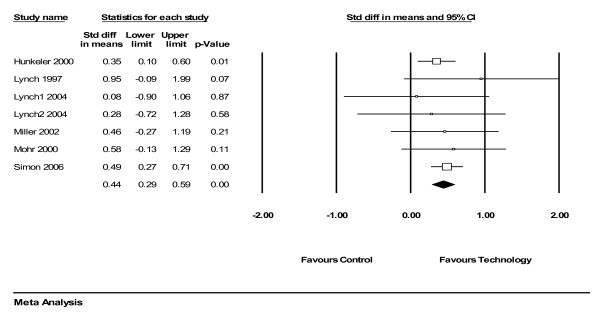
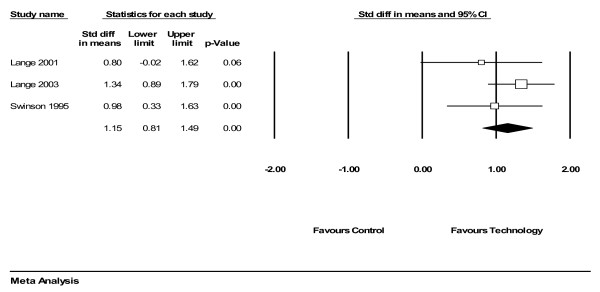
BACKGROUND: Access to psychotherapy is limited by psychopathology (e.g. agoraphobia), physical disability, occupational or social constraints and/or residency in under-served areas. For these populations, interventions delivered via remote communication technologies (e.g. telephone, internet) may be more appropriate. However, there are concerns that such delivery may influence the therapeutic relationship and thus reduce therapy effectiveness. This review aimed to determine the clinical effectiveness of remotely communicated, therapist-delivered psychotherapy. METHODS: Systematic review (including electronic database searching and correspondence with authors) of randomised trials of individual remote psychotherapy. Electronic databases searched included MEDLINE (1966-2006), PsycInfo (1967-2006), EMBASE (1980-2006) and CINAHL databases (1982-2006). The Cochrane Central Register of Controlled Trials (CENTRAL) and the Cochrane Collaboration Depression, Anxiety and Neurosis Controlled Trials Register (CCDAN-CTR). All searches were conducted to include studies with a publication date to July 2006. RESULTS: Thirteen studies were identified, ten assessing psychotherapy by telephone, two by internet and one by videoconference. Pooled effect sizes for remote therapy versus control conditions were 0.44 for depression (95%CI 0.29 to 0.59, 7 comparisons, n = 726) and 1.15 for anxiety-related disorders (95%CI 0.81 to 1.49, 3 comparisons, n = 168). There were few comparisons of remote versus face-to-face psychotherapy. CONCLUSION: Remote therapy has the potential to overcome some of the barriers to conventional psychological therapy services. Telephone-based interventions are a particularly popular research focus and as a means of therapeutic communication may confer specific advantages in terms of their widespread availability and ease of operation. However, the available evidence is limited in quantity and quality. More rigorous trials are required to confirm these preliminary estimates of effectiveness. Future research priorities should include overcoming the methodological shortcomings of published work by conducting large-scale trials that incorporate both clinical outcome and more process-orientated measures.
Overview
The claims and statistics of this paper haven’t been checked yet.
Free: it reads the open-access text and checks the first 5 claims that cite a source we can check. Create a free account to check every claim.
Integrity signals
Registry
Cites
Statistics
Figures
Verification
Claims the paper makes
The claims and statistics of this paper haven’t been checked yet.
Free: it reads the open-access text and checks the first 5 claims that cite a source we can check. Create a free account to check every claim.
Claims other papers make about this one
Each is checked against this paper’s own text: does it say what the citing paper says it does?
The source backs part of the claim, not all of it — or backs it for a different population, condition or comparison.
In the citing paper
“A growing body of research also supports the efficacy of internet-based interventions for these treatment targets (4–8).”
From Interest in behavioral and psychological treatments delivered face-to-face, by telephone, and by internet (2010) · cites this paper as [7]
Experimental — accuracy not yet measuredThe source backs part of the claim, not all of it — or backs it for a different population, condition or comparison.
In the citing paper
“Furthermore, first meta-analyses have shown comparable effectiveness of these interventions and regular face-to-face psychotherapy (Andersson et al., 2014, Barak et al., 2008, Bee et al., 2008) especially for depression and anxiety (Andersson and Cuijpers, 2009, Andrews et al., 2010, Richards and Richardson, 2012).”
From Using a transdiagnostic, psychodynamic online self-help intervention to maintain inpatient psychosomatic treatment effects: Study protocol of a feasibility study (2016) · cites this paper as Bee et al., 2008
Experimental — accuracy not yet measured
Self-check
Percentages, sums and reported differences re-computed from the paper’s own numbers.
The self-check needs the paper’s full text.
Citations
Cites
Measuring inconsistency in meta-analyses
Higgins, J. P. T., Thompson, S. G., Deeks, J. J., & Altman, D. G. (2003) · BMJ · doi:10.1136/bmj.327.7414.557 · Cited by 63,139 · cited 1×
“Between-study heterogeneity was assessed using the I 2 statistic [ 44 ], which describes the percentage of total variation across studies that is due to heterogeneity rather than chance.”
MethodBias in meta-analysis detected by a simple, graphical test
Egger, M., Smith, G. D., Schneider, M., & Minder, C. (1997) · BMJ · doi:10.1136/bmj.315.7109.629 · Cited by 56,722
Cochrane Handbook for Systematic Reviews of Interventions: Cochrane Book Series
(2008) · doi:10.1002/9780470712184 · Cited by 25,048
(2000) · Cited by 9,198
Diagnostic and Statistical Manual of Mental Disorders (DSM-IV)
Hu, R. J. (2003) · Encyclopedia of the Neurological Sciences · doi:10.1016/b0-12-226870-9/01070-4 · Cited by 9,117
(1996) · Cited by 6,884
Cochrane Handbook for Systematic Reviews of Interventions
Higgins, J. P. T., Green, S., & Ben Van Den, A. (2020) · International Coaching Psychology Review · doi:10.53841/bpsicpr.2020.15.2.123 · Cited by 5,670
Internet paradox: A social technology that reduces social involvement and psychological well-being?
Kraut, R., Patterson, M., Lundmark, V., Kiesler, S., Mukophadhyay, T., & Scherlis, W. (1998) · American Psychologist · doi:10.1037/0003-066x.53.9.1017 · Cited by 4,793 · cited 1×
“Whether or not an effective alliance can be delivered in the absence of interpersonal contact thus remains a topic of some debate [20-22].”
BackgroundThe Journal of Family Practice
(1997) · The American Journal of Family Therapy · doi:10.1080/01926189708251066 · Cited by 3,067
Eysenbach, G. (2005) · Journal of Medical Internet Research · doi:10.2196/jmir.7.1.e11 · Cited by 2,524 · cited 1×
“Trials of written self help materials for anxiety and depressive disorders report comparable figures of between 0 and 61% [62], although attrition from open access online therapy is generally assumed to be higher and may be as much as 99% [63], Once again however, differences in study context, recruitment and sample c…”
Background
Research works printed but not linked: 8
- Department of Veteran Affairs (DVA) Clinical guideline for major depressive disorder 1993 Washington, DC: Veterans Health Administration
- Depression Guideline Panel Depression in primary care: treatment of major depression 1993 Rockville, Md.: US Dept. of Health and Human Services, Public Health Service, Agency for Health Care Policy and Research
- FCC Supplemental telephone penetration report 1993 US Federal Communications Commission
- Veterans Health Administration (VHA) Telemental health toolkit 2003 Veterans Health Administration
- Hsuing R E-therapy 2002 London: WW Norton & Company Ltd
- World Health Organisation The ICD-10 classification of mental and behavioural disorders: clinical descriptions and diagnostic guidelines 1992 Geneva: World Health Organisation
- Cohen J Statistical power analysis for the behavioural sciences 1988 New Jersey: Lawrence Erlbaum
- Deeks JJ Higgins JPT Altman DG Higgins JPT, Green S Analysing and presenting results Cochrane Handbook for Systematic Reviews of Interventions 425 2005 Chichester UK: John Wiley & Sons Ltd
Cited by
Bakitas, M., Lyons, K. D., Hegel, M. T., Balan, S., Brokaw, F. C., Seville, J., Hull, J. G., Li, Z., Tosteson, T. D., Byock, I. R., et al. (2009) · JAMA · doi:10.1001/jama.2009.1198 · Cited by 1,726
Effectiveness of telemedicine: A systematic review of reviews
Ekeland, A. G., Bowes, A., & Flottorp, S. (2010) · International Journal of Medical Informatics · doi:10.1016/j.ijmedinf.2010.08.006 · Cited by 1,162
Videoconferencing psychotherapy: a systematic review
Backhaus, A., Agha, Z., Maglione, M. L., Repp, A., Ross, B., Zuest, D., Rice-Thorp, N. M., Lohr, J., & Thorp, S. R. (2012) · Psychological Services · doi:10.1037/a0027924 · Cited by 586
Kennedy, S. H., Lam, R. W., Parikh, S. V., Patten, S. B., & Ravindran, A. V. (2009) · Journal of Affective Disorders · doi:10.1016/j.jad.2009.06.043 · Cited by 525
“Several other studies have shown the acceptability and efficacy of telephone therapy (Bee et al., 2008).”
BackgroundTherapist-supported Internet cognitive behavioural therapy for anxiety disorders in adults
Olthuis, J. V., Watt, M. C., Bailey, K., Hayden, J. A., & Stewart, S. H. (2016) · Cochrane Database of Systematic Reviews · doi:10.1002/14651858.cd011565.pub2 · Cited by 390
ICBT in routine care: A descriptive analysis of successful clinics in five countries
Titov, N., Dear, B., Nielssen, O., Staples, L., Hadjistavropoulos, H., Nugent, M., Adlam, K., Nordgreen, T., Bruvik, K. H., Hovland, A., et al. (2018) · Internet Interventions · doi:10.1016/j.invent.2018.07.006 · Cited by 353
The Mental Health and Substance Use Workforce for Older Adults: In Whose Hands?
Eden, J., Maslow, K., Le, M., & Blazer, D. G. (2013) · Cited by 364
Norwood, C., Moghaddam, N. G., Malins, S., & Sabin‐Farrell, R. (2018) · Clinical Psychology & Psychotherapy · doi:10.1002/cpp.2315 · Cited by 324
Usefulness of telepsychiatry: A critical evaluation of videoconferencing-based approaches
Chakrabarti, S. (2015) · World Journal of Psychiatry · doi:10.5498/wjp.v5.i3.286 · Cited by 292
Griffiths, K. M., Farrer, L., & Christensen, H. (2010) · Medical Journal of Australia · doi:10.5694/j.1326-5377.2010.tb03685.x · Cited by 303
Macea, D. D., Gajos, K., Daglia Calil, Y. A., & Fregni, F. (2010) · The Journal of Pain · doi:10.1016/j.jpain.2010.06.005 · Cited by 289
Varker, T., Brand, R. M., Ward, J., Terhaag, S., & Phelps, A. (2019) · Psychological Services · doi:10.1037/ser0000239 · Cited by 261
“Although there was one meta-analysis, this study did not provide enough information to assess the individual merits of Internet-delivered text-based therapy and did not contribute to improving the strength of the evidence (Bee et al., 2008).”
BackgroundResultInfluentialMethodologies for assessing telemedicine: A systematic review of reviews
Ekeland, A. G., Bowes, A., & Flottorp, S. (2012) · International Journal of Medical Informatics · doi:10.1016/j.ijmedinf.2011.10.009 · Cited by 187
“Bee et al suggested that future research in tele-psychotherapy might overcome existing methodological shortcomings by conducting large-scale trials that incorporated both clinical outcome and process-oriented measures [71].”
BackgroundParikh, S. V., Segal, Z. V., Grigoriadis, S., Ravindran, A. V., Kennedy, S. H., Lam, R. W., & Patten, S. B. (2009) · Journal of Affective Disorders · doi:10.1016/j.jad.2009.06.042 · Cited by 183
“Several other studies have shown the acceptability and efficacy of telephone therapy (Bee et al., 2008).”
BackgroundHuggable communication medium decreases cortisol levels
Sumioka, H., Nakae, A., Kanai, R., & Ishiguro, H. (2013) · Scientific Reports · doi:10.1038/srep03034 · Cited by 180
Remote cognitive-behavior therapy for obsessive-compulsive symptoms: A meta-analysis.
Wootton, B. M. (2016) · Clinical Psychology Review · doi:10.1016/j.cpr.2015.10.001 · Cited by 162
Mohr, D. C., Siddique, J., Ho, J., Duffecy, J., Jin, L., & Fokuo, J. K. (2010) · Annals of Behavioral Medicine · doi:10.1007/s12160-010-9203-7 · Cited by 154
“A growing body of research also supports the efficacy of internet-based interventions for these treatment targets [4–8].”
BackgroundTherapist-supported Internet cognitive behavioural therapy for anxiety disorders in adults
Olthuis, J. V., Watt, M. C., Bailey, K., Hayden, J. A., & Stewart, S. H. (2015) · Cochrane Database of Systematic Reviews · doi:10.1002/14651858.cd011565 · Cited by 150
Osenbach, J. E., O'Brien, K. M., Mishkind, M., & Smolenski, D. J. (2013) · Depression and Anxiety · doi:10.1002/da.22165 · Cited by 144
“Firstly, several different TMH modalities, such as internet-based, TC, and VC are included together without examining or commenting on the effect on methodological heterogeneity.[36, 37, 42] Secondly, studies included in these meta-analyses appropriately use a measure of one particular outcome (e.”
BackgroundGreene, C. J., Morland, L. A., Macdonald, A., Frueh, B. C., Grubbs, K. M., & Rosen, C. S. (2010) · Journal of Consulting and Clinical Psychology · doi:10.1037/a0020158 · Cited by 116
Turner, C. M., Mataix-Cols, D., Lovell, K., Krebs, G., Lang, K., Byford, S., & Heyman, I. (2014) · Journal of the American Academy of Child & Adolescent Psychiatry · doi:10.1016/j.jaac.2014.09.012 · Cited by 111
Self-citationConley, C. S., Durlak, J. A., Shapiro, J. B., Kirsch, A. C., & Zahniser, E. (2016) · Prevention Science · doi:10.1007/s11121-016-0662-3 · Cited by 110
“…across technological interventions, as have data designed to estimate how much of the intervention is actually completed by participants (i.e., dosage; Bee et al. 2008; Christensen et al. 2009), and these variables have been linked tomental health outcomes (Donkin et al. 2011; Lamers et al. 2012).”
BackgroundVideoconferencing in psychiatry, a meta-analysis of assessment and treatment
Drago, A., Winding, T. N., & Antypa, N. (2016) · European Psychiatry · doi:10.1016/j.eurpsy.2016.03.007 · Cited by 106
Benefits and challenges of conducting psychotherapy by telephone
Brenes, G. A., Ingram, C. W., & Danhauer, S. C. (2011) · Professional Psychology: Research and Practice · doi:10.1037/a0026135 · Cited by 103
“In fact, some resistance from psychotherapists may stem from their “deeply embedded constructs of the therapeutic relationship” (Bee et al., 2008).”
BackgroundGrondin, F., Lomanowska, A. M., & Jackson, P. L. (2019) · Clinical Psychology: Science and Practice · doi:10.1111/cpsp.12298 · Cited by 100
Efficacy of Telehealth Treatments for Posttraumatic Stress-Related Symptoms: A Meta-Analysis
Sloan, D. M., Gallagher, M. W., Feinstein, B. A., Lee, D. J., & Pruneau, G. M. (2011) · Cognitive Behaviour Therapy · doi:10.1080/16506073.2010.550058 · Cited by 99
“…articles and telehealth meta-analyses (Amstadter, Broman-Fulks, Zinzow, Ruggiero, & Cercone, 2009; Barak, Hen, Boniel-Nissim, & Shapira, 2008; Bee et al., 2008; Benight, Ruzek, &Waldrep, 2008; Hailey, Roine, & Ohinmaa, 2008; Hirai & Clum, 2006) were examined to identify any additional…”
BackgroundAttitudes and perspectives towards the preferences for artificial intelligence in psychotherapy
Aktan, M. E., Turhan, Z., & Dolu, İ. (2022) · Computers in Human Behavior · doi:10.1016/j.chb.2022.107273 · Cited by 132
Jarrett, M. E., Cain, K. C., Burr, R. L., Hertig, V. L., Rosen, S. N., & Heitkemper, M. M. (2009) · American Journal of Gastroenterology · doi:10.1038/ajg.2009.479 · Cited by 89
“Telephone, web-based, and video conferencing may all yield benefits in terms of access and convenience (”
BackgroundA Roadmap to Computer-Based Psychotherapy in the United States
Cartreine, J. A., Ahern, D. K., & Locke, S. E. (2010) · Harvard Review of Psychiatry · doi:10.3109/10673221003707702 · Cited by 88
Mikocka-Walus, A., Bampton, P., Hetzel, D., Hughes, P., Esterman, A., & Andrews, J. M. (2015) · BMC Gastroenterology · doi:10.1186/s12876-015-0278-2 · Cited by 86
“Based on previous studies [17,18] we assumed that CBT would perform consistently irrespective of delivery mode.”
MethodFurukawa, T. A., Horikoshi, M., Kawakami, N., Kadota, M., Sasaki, M., Sekiya, Y., Hosogoshi, H., Kashimura, M., Asano, K., Terashima, H., et al. (2012) · PLoS ONE · doi:10.1371/journal.pone.0035330 · Cited by 83
“Remote CBT using telecommunication technology appears to be particularly suited to the problem of depression [18,19] and presenteeism in the workplace [20], as it obviates the need to commute and enables wider access to quality-assured psychotherapy.”
BackgroundResultMcLean, S. A., Booth, A., Schnabel, A., Wright, B. J., Painter, F. L., & McIntosh, J. E. (2021) · Clinical Child and Family Psychology Review · doi:10.1007/s10567-020-00340-2 · Cited by 94
“Novice TH therapists in our third study echoed concerns voiced elsewhere (Bee et al. 2008), that the formation of this critical alliance could be impacted in TH relative to in-person interactions through alterations in interpersonal communication.”
BackgroundHammond, G. C., Croudace, T. J., Radhakrishnan, M., Lafortune, L., Watson, A., McMillan-Shields, F., & Jones, P. B. (2012) · PLoS ONE · doi:10.1371/journal.pone.0042916 · Cited by 79
“A recent meta-analysis [20] demonstrated benefits for the use of technology-mediated interventions in the treatment of depression and anxiety, but only two studies compared telephone with face-to-face delivery.”
Castro, A., Gili, M., Ricci-Cabello, I., Roca, M., Gilbody, S., Perez-Ara, M. Á., Seguí, A., & McMillan, D. (2020) · Journal of Affective Disorders · doi:10.1016/j.jad.2019.09.023 · Cited by 78
Self-citationDennis, D., Radnitz, C. L., & Wheaton, M. G. (2021) · International Journal of Cognitive Therapy · doi:10.1007/s41811-021-00109-7 · Cited by 90
“Fortunately, there is an emerging evidence-base for the effectiveness of remote therapy for OCD and anxiety (Backhaus et al., 2012; Bee et al., 2008; Wootton, 2016).”
BackgroundPsychodynamic Treatment, Training, and Supervision Using Internet-Based Technologies
Fishkin, R. E., Fishkin, L. P., Leli, U., Katz, B., & Snyder, E. W. (2011) · Journal of the American Academy of Psychoanalysis and Dynamic Psychiatry · doi:10.1521/jaap.2011.39.1.155 · Cited by 74
Psychiatry in the Digital Age: A Blessing or a Curse?
Roth, C. B., Papassotiropoulos, A., Brühl, A. B., Lang, U. E., & Huber, C. G. (2021) · International Journal of Environmental Research and Public Health · doi:10.3390/ijerph18168302 · Cited by 83
Business as usual? Psychological support at a distance.
Payne, L., Flannery, H., Kambakara Gedara, C., Daniilidi, X., Hitchcock, M., Lambert, D., Taylor, C., & Christie, D. (2020) · Clinical Child Psychology and Psychiatry · doi:10.1177/1359104520937378 · Cited by 65
“A substantial majority of adult studies suggest high acceptability and satisfaction (e.g. Bee et al., 2008; Turner, 2015; Simpson et al., 2001b).”
BackgroundIt's time for disruptive innovation in psychotherapy
Simon, G. E., & Ludman, E. J. (2009) · The Lancet · doi:10.1016/s0140-6736(09)61415-x · Cited by 64
The potential of telemental health applications for obsessive–compulsive disorder
Herbst, N., Voderholzer, U., Stelzer, N., Knaevelsrud, C., Hertenstein, E., Schlegl, S., Nissen, C., & Külz, A. K. (2012) · Clinical Psychology Review · doi:10.1016/j.cpr.2012.04.005 · Cited by 68
“A meta-analysis by Bee et al. (2008) restricts the search to RCT, too, but does not consider automated therapeutic approaches, thereby including only an approach by Lovell et al. (2006) instead of BT-Steps.”
MethodResultDèttore, D., Pozza, A., & Andersson, G. (2015) · Cognitive Behaviour Therapy · doi:10.1080/16506073.2015.1005660 · Cited by 60
“help books, booklets, leaflets, and paper copy workbooks) to deliver cognitive behavioural therapy (CBT) contents (Bee et al., 2008).”
BackgroundMethodInfluentialA Psychodynamic Perspective on a Systematic Review of Online Psychotherapy for Adults
de Bitencourt Machado, D., Braga Laskoski, P., Trelles Severo, C., Margareth Bassols, A., Sfoggia, A., Kowacs, C., Valle Krieger, D., Benetti Torres, M., Bento Gastaud, M., Stella Wellausen, R., et al. (2016) · British Journal of Psychotherapy · doi:10.1111/bjp.12204 · Cited by 58
Jameson, J. P., Farmer, M. S., Head, K. J., Fortney, J., & Teal, C. R. (2011) · The Journal of Rural Health · doi:10.1111/j.1748-0361.2011.00364.x · Cited by 53
Lam, R. W., Parikh, S. V., Ramasubbu, R., Michalak, E. E., Tam, E. M., Axler, A., Yatham, L. N., Kennedy, S. H., & Manjunath, C. V. (2013) · British Journal of Psychiatry · doi:10.1192/bjp.bp.112.125237 · Cited by 56
Lamb, T., Pachana, N. A., & Dissanayaka, N. (2019) · Telemedicine and e-Health · doi:10.1089/tmj.2018.0079 · Cited by 55
Olthuis, J. V., Watt, M. C., Mackinnon, S. P., & Stewart, S. H. (2014) · Journal of Consulting and Clinical Psychology · doi:10.1037/a0037027 · Cited by 55
Bee, P. E., Lovell, K., Lidbetter, N., Easton, K., & Gask, L. (2010) · Social Science & Medicine · doi:10.1016/j.socscimed.2010.06.031 · Cited by 50
Self-citationA Pilot Project to Improve Access to Telepsychotherapy at Rural Clinics
Adler, G., Pritchett, L. R., Kauth, M. R., & Nadorff, D. (2014) · Telemedicine and e-Health · doi:10.1089/tmj.2013.0085 · Cited by 48
Specialized palliative care in advanced cancer: What is the efficacy? A systematic review
Holmenlund, K. R., Sjøgren, P., & Nordly, M. (2017) · Palliative & Supportive Care · doi:10.1017/s1478951517000402 · Cited by 58
“Bee et al. (2008) demonstrated that telephone-based psychotherapy can be effective, but it is possible that symptom burden can be further alleviated by direct clinical consultations.”
BackgroundSockalingam, S., Cassin, S. E., Wnuk, S., Du, C., Jackson, T. D., Hawa, R., & Parikh, S. V. (2016) · Obesity Surgery · doi:10.1007/s11695-016-2322-x · Cited by 60
“Telephone-based psychotherapy has been shown to be effective in treating depression and anxiety [5], and has been beneficial in a range of clinical”
BackgroundTwo-way messaging therapy for depression and anxiety: longitudinal response trajectories
Hull, T. D., Malgaroli, M., Connolly, P. S., Feuerstein, S., & Simon, N. M. (2020) · BMC Psychiatry · doi:10.1186/s12888-020-02721-x · Cited by 46
The Feasibility and Impact of Delivering a Mind-Body Intervention in a Virtual World
Hoch, D. B., Watson, A. J., Linton, D. A., Bello, H. E., Senelly, M., Milik, M. T., Baim, M. A., Jethwani, K., Fricchione, G. L., Benson, H., et al. (2012) · PLoS ONE · doi:10.1371/journal.pone.0033843 · Cited by 44
“While many health interventions have been presented using the Internet [24–27], the exceptional opportunities afforded by online, 3- dimensional or virtual environments have not yet been systematically explored for mind-body interventions.”
5G-enabled smart hospitals: Innovations in patient care and facility management
Elendu, C., Elendu, T. C., & Elendu, I. D. (2024) · Medicine · doi:10.1097/md.0000000000038239 · Cited by 59
A meta-review of Internet computer-based psychological treatments for anxiety disorders
Peñate, W., & Fumero, A. (2016) · Journal of Telemedicine and Telecare · doi:10.1177/1357633x15586491 · Cited by 41
Mikocka-Walus, A. A., Turnbull, D., Holtmann, G., & Andrews, J. M. (2012) · Inflammatory Bowel Diseases · doi:10.1002/ibd.22850 · Cited by 41
Looking to the future: Integrating telemental health therapy into psychologist training.
Colbow, A. J. (2013) · Training and Education in Professional Psychology · doi:10.1037/a0033454 · Cited by 49
Ethical concerns for telemental health therapy amidst governmental surveillance.
Lustgarten, S. D., & Colbow, A. J. (2017) · American Psychologist · doi:10.1037/a0040321 · Cited by 39
“Researchers are advocating the use of TMHT services (Bee et al., 2008; Godleski et al., 2012; Wagner et al., 2014), government agencies are promoting it (California Telehealth Network, 2013; Federal Communications Commission, 2015; Health Resources and Services Administration, 2015; National…”
BackgroundInfluentialE-mental health preferences of Veterans with and without probable posttraumatic stress disorder
Whealin, J. M., Seibert-Hatalsky, L. A., Howell, J. W., & Tsai, J. (2015) · Journal of Rehabilitation Research and Development · doi:10.1682/jrrd.2014.04.0113 · Cited by 39
“health care has been evaluated as well [26–29].”
BackgroundGoldsmith, E. S., Koffel, E., Ackland, P. E., Hill, J., Landsteiner, A., Miller, W., Stroebel, B., Ullman, K., Wilt, T. J., & Duan-Porter, W. (2023) · Journal of General Internal Medicine · doi:10.1007/s11606-023-08140-4 · Cited by 38
Bee, P., Lovell, K., Airnes, Z., & Pruszynska, A. (2016) · BMC Psychiatry · doi:10.1186/s12888-016-0761-5 · Cited by 38
“Contemporary mental healthcare offers one such example, with increasing attention being focused on the development and evaluation of remote psychotherapies [1].”
BackgroundSelf-citationBee, P., Bower, P., Gilbody, S. M., & Lovell, K. (2010) · General Hospital Psychiatry · doi:10.1016/j.genhosppsych.2010.01.006 · Cited by 40
“Growing evidence also supports the effectiveness of remotely communicated psychotherapies [6] yet little is known about the effectiveness or acceptability of these models in non-healthcare settings.”
BackgroundResultSelf-citationTurner, J., Brown, J. C., & Carpenter, D. T. (2018) · Journal of Psychiatric and Mental Health Nursing · doi:10.1111/jpm.12440 · Cited by 37
Correlates of expected eMental Health intervention uptake among Filipino domestic workers in China
Hall, B. J., Shi, W., Garabiles, M. R., & Chan, E. W. W. (2018) · Global Mental Health · doi:10.1017/gmh.2018.25 · Cited by 37
“Additionally, the efficiency of eMental Health has been documented in several systematic reviews (Bee et al. 2008; Andrews et al. 2010; Riper et al. 2011; Andersson et al. 2014; Ye et al. 2014; Sijbrandij et al. 2016).”
BackgroundLin, A., & Espay, A. J. (2021) · Epilepsy & Behavior Reports · doi:10.1016/j.ebr.2021.100469 · Cited by 36
“Meta-analyses have found therapy delivered via telephone [49] or videocall [50] to be clinically effective when compared to controls, as well as having no significant difference in effectiveness when compared to in-person CBT [51,52].”
ResultRushton, K., Ardern, K., Hopkin, E., Welsh, C., Gellatly, J., Faija, C., Armitage, C. J., Lidbetter, N., Lovell, K., Bower, P., et al. (2020) · BMC Psychiatry · doi:10.1186/s12888-020-02564-6 · Cited by 36
Self-citationVuorilehto, M. S., Melartin, T. K., Riihimäki, K., & Isometsä, E. T. (2016) · Journal of Affective Disorders · doi:10.1016/j.jad.2016.05.035 · Cited by 47
“…treatment for mild depression with no history of severe symptoms, e.g. low-intensity PS that includes guided self-help with problem-solving techniques and behavioural activation (Bee et al., 2008; Bower et al., 2001; Richards and Borglin, 2011) or computer psychotherapy (Andrews et al., 2010).”
BackgroundOestergaard, S., & Møldrup, C. (2011) · Public Health · doi:10.1016/j.puhe.2011.02.001 · Cited by 44
Ristkari, T., Kurki, M., Suominen, A., Gilbert, S., Sinokki, A., Kinnunen, M., Huttunen, J., McGrath, P., & Sourander, A. (2019) · Journal of Medical Internet Research · doi:10.2196/11446 · Cited by 35
“Web-based interventions can also remove the barriers associated with the face-to-face interventions and enable people to seek help for mental health problems without fear of being stigmatized [7,35,36].”
Hawkins, A., Creighton, S., Ho, A., McManus, B. M., & Hayden, M. R. (2012) · Clinical Genetics · doi:10.1111/cge.12033 · Cited by 33
“Moreover, a wealth of data supports the use of telehealth in communication, care provision and counselling around sensitive and complicated topics in psychiatry (16, 17).”
BackgroundZyl, N. V., Andrews, L., Williamson, H., & Meyrick, J. (2020) · Obesity Research & Clinical Practice · doi:10.1016/j.orcp.2020.05.005 · Cited by 47
Bringing psychotherapy to primary care: Innovations and challenges.
Alexander, C. L., Arnkoff, D. B., & Glass, C. R. (2010) · Clinical Psychology Science and Practice · doi:10.1111/j.1468-2850.2010.01211.x · Cited by 36
“Bee et al. (2008) conducted a similar meta-analysis of randomized trials of psychotherapy provided by remote communication. Of the 13 studies included in the meta-analysis, 10 utilized telephone interventions, two utilized Internet technology, and one utilized videoconferencing. The authors found a pooled effect size…”
BackgroundMethodInfluentialRathgeb-Fuetsch, M., Kempter, G., Feil, A., Pollmächer, T., & Schuld, A. (2011) · Journal of Psychiatric Research · doi:10.1016/j.jpsychires.2011.03.018 · Cited by 34
Goldsmith, E. S., Miller, W., Koffel, E., Ullman, K. E., Landsteiner, A. M. K., STROEBEL, B. M., Hill, J., Ackland, P. E., Wilt, T. J., & Duan‐Porter, W. (2023) · Journal of Pain · doi:10.1016/j.jpain.2023.02.026 · Cited by 38
González-Robles, A., García-Palacios, A., Baños, R., Riera, A., Llorca, G., Traver, F., Haro, G., Palop, V., Lera, G., Romeu, J. E., et al. (2015) · Trials · doi:10.1186/s13063-015-1024-3 · Cited by 31
“Moreover, meta-analyses reveal that these protocols produce higher effect sizes compared to control groups [60, 65, 70] and that they are as efficacious as face-to-face traditional treatments [66, 70–72].”
BackgroundThe impact of medical cyber–physical systems on healthcare service delivery
Sony, M., Antony, J., & McDermott, O. (2022) · The TQM Journal · doi:10.1108/tqm-01-2022-0005 · Cited by 37
Implementing video conferencing in mental health practice
DE WEGER, E., MACINNES, D., ENSER, J., FRANCIS, S. J., & JONES, F. W. (2013) · Journal of Psychiatric and Mental Health Nursing · doi:10.1111/j.1365-2850.2012.01947.x · Cited by 30
Jesser, A., Muckenhuber, J., & Lunglmayr, B. (2022) · Frontiers in Psychology · doi:10.3389/fpsyg.2021.777102 · Cited by 37
“The ambiguity of these findings is echoed in the quantitative results of Békés et al. (2020), showing that half of the surveyed therapists felt as emotionally connected in remote sessions as in the face-to-face setting, while the other half of the respondents felt less connected.”
ResultJafarzadeh, F., Rahmani, F., Azadmehr, F., Falaki, M., & Nazari, M. (2022) · Journal of Family Medicine and Primary Care · doi:10.4103/jfmpc.jfmpc_1638_21 · Cited by 33
“Because a person can be confident of remaining anonymous and providing all the information needed to treat their illness to a psychiatrist or psychologist, it is possible to treat mental illnesses and disorders through remote psychotherapy.[13]”
BackgroundGoetter, E. M., Herbert, J. D., Forman, E. M., Yuen, E. K., Gershkovich, M., Glassman, L. H., Rabin, S. J., & Goldstein, S. P. (2013) · Journal of Obsessive-Compulsive and Related Disorders · doi:10.1016/j.jocrd.2013.01.003 · Cited by 33
“One aspect of remote treatment that has come under criticism is the assumption that the therapeutic alliance will be weaker than with traditional face-to-face therapy, which will result in poorer outcomes (Bee et al., 2008; Proudfoot, 2004).”
BackgroundMolenaar, N. M., Brouwer, M. E., Bockting, C. L. H., Bonsel, G. J., van der Veere, C. N., Torij, H. W., Hoogendijk, W. J. G., Duvekot, J. J., Burger, H., & Lambregtse-van den Berg, M. P. (2016) · BMC Psychiatry · doi:10.1186/s12888-016-0752-6 · Cited by 27
“Several studies demonstrated that psychological intervention as applied by telephone support is effective and there is some evidence that it might be effective to decrease postpartum depressive symptomatology [44 – 47].”
Designing a Social VR Clinic for Medical Consultations
Li, J., Guo, C., de Ridder, H., & Cesar, P. S. (2020) · CHI Conference Extended Abstracts on Human Factors in Computing Systems (CHI EA) · doi:10.1145/3334480.3382836 · Cited by 29
“So far, many VR healthcare applications have been developed for medical training [28], psychological consultation [29] and remote (psycho)therapy [6].”
BackgroundCommon mental health disorders.
Bessant, M., & Ekers, D. (2011) · PubMed · Cited by 30
Shreck, E., Nehrig, N., Schneider, J. A., Palfrey, A., Buckley, J., Jordan, B., Ashkenazi, S., Wash, L. K., Baer, A. L., & Chen, C. K. (2020) · Rural Mental Health · doi:10.1037/rmh0000129 · Cited by 29
Therapist and client perceptions of empathy in simulated teletherapy sessions
Grondin, F., Lomanowska, A. M., Belleville, G., Yampolsky, M. A., Tremblay, M., & Jackson, P. L. (2023) · Behaviour and Information Technology · doi:10.1080/0144929x.2023.2214636 · Cited by 30
“For instance, teletherapy in VC has resulted in outcomes comparable to face-to-face (F2F) interventions for depression, posttraumatic stress, and anxiety (Back-haus et al. 2012; Bee et al. 2008).”
BackgroundAbout the effectiveness of telehealth procedures in psychological treatments
Peñate, W. (2012) · Redalyc (Universidad Autónoma del Estado de México) · Cited by 32
Good practice guidance on the use of self-help materials within IAPT services
Baguley, C., Farrand, P. A., Hope, R., Leibowitz, J., Lovell, K., Lucock, M. P., O’Neill, C., Paxton, R., Pilling, S., Richards, D. A., et al. (2010) · University of Huddersfield Repository (University of Huddersfield) · Cited by 52
Self-citationCarneiro, L., Rosenbaum, S., Ward, P. B., Clemente, F. M., Ramirez-Campillo, R., Monteiro-Júnior, R. S., Martins, A., & Afonso, J. (2022) · Brazilian Journal of Psychiatry · doi:10.1590/1516-4446-2021-2026 · Cited by 23
The Sub-Saharan Africa Conference on Stroke (SSACS): An idea whose time has come
Owolabi, M. O., Sarfo, F. S., Akinyemi, R., Gebreyohanns, M., & Ovbiagele, B. I. (2019) · Journal of the Neurological Sciences · doi:10.1016/j.jns.2019.03.026 · Cited by 26
“Furthermore, an important and feasible, but underutilized method of monitoring and supervising stroke care delivery and remote training of non-specialist healthcare workers, is mobile phone technology [66].”
Bennett, S. D., Au, C., Byford, S., Chorpita, B. F., Coughtrey, A. E., Cross, J. H., Dalrymple, E., Fonagy, P., Ford, T. J., Heyman, I., et al. (2021) · Epilepsy & Behavior · doi:10.1016/j.yebeh.2020.107743 · Cited by 23
Lovell, K., & Bee, P. (2011) · Journal of Mental Health · doi:10.3109/09638237.2011.608745 · Cited by 22
“The CCDAN is a widely used measure of research quality and allows comparison with other evidence syntheses of psychotherapies delivered by technology (Bee et al., 2008).”
BackgroundMethodInfluentialSelf-citationSullivan, M. J. L., & Simon, G. E. (2012) · Translational Behavioral Medicine · doi:10.1007/s13142-012-0119-6 · Cited by 24
Lin, T., Doorn, K. A., Heckman, T. G., Antebi‐Lerman, E., & Anderson, T. (2025) · Clinical Psychology & Psychotherapy · doi:10.1002/cpp.70047 · Cited by 22
Jiang, X., Luo, Y., Chen, Y., Yan, J., Xia, Y., Yao, L., Wang, X., He, S., Wang, F., Wang, T., et al. (2021) · Frontiers in Behavioral Neuroscience · doi:10.3389/fnbeh.2021.755547 · Cited by 25
Swartz, H. A., Bylsma, L. M., Fournier, J. C. J., Girard, J. M., Spotts, C., Cohn, J. F., & Morency, L.-P. (2023) · Journal of Affective Disorders · doi:10.1016/j.jad.2023.04.092 · Cited by 24
Fraser, C., Beasley, M., Macfarlane, G. J., & Lovell, K. (2019) · BMC Musculoskeletal Disorders · doi:10.1186/s12891-019-2584-2 · Cited by 25
Self-citationHudson, J. L., Bower, P., Kontopantelis, E., Bee, P., Archer, J., Clarke, R., Moriarty, A. S., Richards, D. A., Gilbody, S. M., Lovell, K., et al. (2019) · PLoS ONE · doi:10.1371/journal.pone.0217948 · Cited by 25
“This may partly owe to the fact that telephone contacts can reduce stigma associated with attendance with mental health clinics [47].”
BackgroundSelf-citationSockalingam, S., Leung, S., Hawa, R., Wnuk, S., Parikh, S. V., Jackson, T. D., & Cassin, S. E. (2019) · Obesity Research & Clinical Practice · doi:10.1016/j.orcp.2019.07.003 · Cited by 26
Finazzi, E., & MacBeth, A. M. (2021) · Clinical Psychology & Psychotherapy · doi:10.1002/cpp.2650 · Cited by 22
Social virtual reality (VR) applications and user experiences
Li, J., & Cesar, P. S. (2023) · Elsevier eBooks · doi:10.1016/b978-0-32-391755-1.00028-6 · Cited by 28
Early Dropout from Psychotherapy for Depression with Group- and Network-model Therapists
Simon, G. E., Ding, V. Y., Hubbard, R. A., Fishman, P. A., Ludman, E. J., Morales, L. S., Operskalski, B. H., & Savarino, J. E. (2011) · Administration and Policy in Mental Health and Mental Health Services Research · doi:10.1007/s10488-011-0364-x · Cited by 21
“…dropout from mental health treatment has typically been associated with younger age, lower income or educational attainment, lower social support, and substance use disorders (Centorrino et al. 2001; Foulks et al. 1986; McFarland and Klein 2005; Pekarik 1992; Renk et al. 2000; Sparr et al. 1993).”
Background
Metadata
- Authors
- Bee, P. E., Bower, P., Lovell, K., Gilbody, S., Richards, D., Gask, L., & Roach, P.
- Affiliations
- University of Manchester (GB)
- University of York (GB)
- Corresponding author
- Bee, Penny E
- Venue
- BMC Psychiatry
- Published
- 2008-07-22
- Volume
- 8
- Issue
- 1
- Pages
- 60-60
- ISSN
- 1471-244X (ISSN-L)
- PMC
- PMC2496903
- OpenAlex
- W2096868971
- Cited by
- 189
- References
- 70
- Citations by year
- 2026: 2 · 2025: 4 · 2024: 10 · 2023: 12 · 2022: 8 · 2021: 13 · 2020: 13 · 2019: 14 · 2018: 12 · 2017: 6 · 2016: 16 · 2015: 11 · 2014: 8 · 2013: 16 · 2012: 12
- FWCI
- 1.61
- Type
- journal article
- Language
- en
- Open access
- gold
- doi.org
- Licence
- cc-by
- creativecommons.org/licenses/by/2.0 (tdm)
- Locations
- BMC Psychiatry (publishedVersion, cc-by)
- PubMed Central (publishedVersion, cc-by)
- PubMed (publishedVersion)
- Open Research Exeter (University of Exeter) (publishedVersion)
- DOAJ (DOAJ: Directory of Open Access Journals) (submittedVersion)
- Figshare (submittedVersion)
- Research Explorer (The University of Manchester) (submittedVersion)
- Topics
- Health Sciences › Medicine › Public Health, Environmental and Occupational Health › Telemedicine and Telehealth Implementation
- Social Sciences › Psychology › Applied Psychology › Digital Mental Health Interventions
- Social Sciences › Psychology › Clinical Psychology › Psychotherapy Techniques and Applications
- Keywords
- remote psychotherapy, online therapy, videoconferencing, depression, anxiety disorders, access to mental health care, barriers to psychotherapy, therapeutic relationship, clinical effectiveness
- MeSH terms
- Humans, Phobic Disorders, Cognitive Behavioral Therapy, Internet
About these checks
Registry, retraction, Cites and statistics results are computed, not judged, with one exception: a printed reference that no index lists is read once by a model before it counts as a citation error. Claims are extracted by a model and kept only when their quote appears verbatim in the text; each cited source is then checked, with a model’s help, for whether it says what the claim relies on. Those verdicts can be wrong — read the claim’s quote and the cited source before relying on one.
Statistics and arithmetic are recomputed, not judged.
Confidence bands are shown only for fields calibrated on our annotated test set. None is calibrated yet, so no band is shown.
What counts as a claim ›How we measure confidence ›How we check this ›
Are you an author, or do you see a problem with this page? Request a review
Data sources
Bibliographic data: Semantic Scholar, OpenAlex, Crossref.
Contains information from the Semantic Scholar Academic Graph Datasets, made available under the ODC Attribution License (ODC-BY 1.0).
Semantic Scholar’s data is described in: Kinney, R., et al. (2023). The Semantic Scholar Open Data Platform. arXiv:2301.10140.
