

Integrated psychological treatment for substance use and co-morbid anxiety or depression vs. treatment for substance use alone. A systematic review of the published literature
Open accessThe DOI matches its Crossref record; 22 of the 22 references it cites were found in a registry or an index.
Abstract
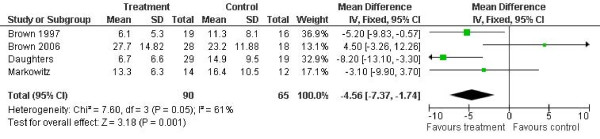
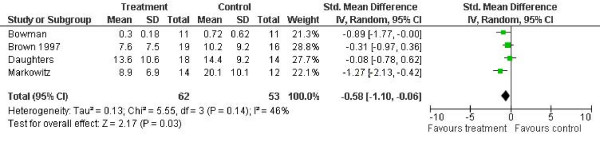
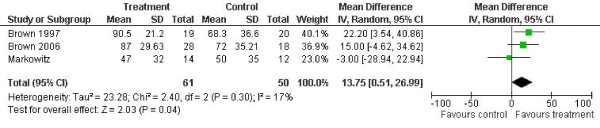
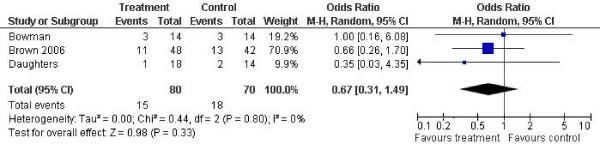
BACKGROUND: There is an increasing consensus in favour of integrated treatment of substance use disorders and co-morbid conditions, such as depression or anxiety. However, up till now no systematic reviews have been published. METHODS: Based on a systematic search of MedLine and PsychInfo, 9 trials of integrated treatment for depression or anxiety plus substance use disorder were identified. Where possible, meta-analyses were carried out, using random effects models. RESULTS: Meta-analyses were carried out for integrated treatment for depression and substance use disorders on a number of outcomes. No meta-analysis could be carried out for integrated treatment for anxiety and substance use disorders, due to multivariate reporting of outcomes in original articles. Integrated treatment for depression and substance abuse produced significant effects on percent days abstinent at follow-up. Differences in retention and symptoms were non-significant, but favoured the experimental condition. For studies of integrated treatment for co-morbid anxiety disorders and substance use disorders, no meta-analysis could be carried out. Several studies of integrated treatment for anxiety and substance use disorders reported that patients assigned to substance use treatment only fared better. CONCLUSION: Psychotherapeutic treatment for co-morbid depression and substance use disorders is a promising approach, but is not sufficiently empirically supported at this point. Psychotherapeutic treatment for co-morbid anxiety and substance use disorders is not empirically supported. There is a need for more trials to replicate the findings from studies of integrated treatment for depression and substance use disorders, and for the development of new treatment options for co-morbid anxiety and substance use disorders.
Overview
The claims and statistics of this paper haven’t been checked yet.
Free: it reads the open-access text and checks the first 5 claims that cite a source we can check. Create a free account to check every claim.
Integrity signals
Registry
Cites
Statistics
Figures
Verification
Claims the paper makes
The claims and statistics of this paper haven’t been checked yet.
Free: it reads the open-access text and checks the first 5 claims that cite a source we can check. Create a free account to check every claim.
Claims other papers make about this one
Each is checked against this paper’s own text: does it say what the citing paper says it does?
The source backs part of the claim, not all of it — or backs it for a different population, condition or comparison.
In the citing paper
“Another recent review found similar effects on depression and substance-use related outcomes as our review but was not able to analyze anxiety due to insufficient numbers of studies.(Hesse, 2009)”
From A systematic review and meta-analysis of psychosocial interventions for persons with comorbid anxiety and substance use disorders (2024) · cites this paper as Hesse, 2009
Experimental — accuracy not yet measuredThe cited source says what the claim attributes to it.
In the citing paper
“Previous studies of comorbid populations have reported mixed findings regarding the effects of psychosocial interventions on A-SUD related outcomes compared to standard treatments.(Hesse, 2009; Mehta et al., 2021)”
From A systematic review and meta-analysis of psychosocial interventions for persons with comorbid anxiety and substance use disorders (2024) · cites this paper as Hesse, 2009
The check wasn’t confident either way, so it gives no verdict — never disputed.
In the citing paper
“Mirtazapine also had a positive effect on sleep.”
From The ASAM/AAAP Clinical Practice Guideline on the Management of Stimulant Use Disorder (2024) · cites this paper as [126]
Experimental — accuracy not yet measuredThe check wasn’t confident either way, so it gives no verdict — never disputed.
In the citing paper
“While meta-analyses and systematic reviews largely reported mixed or no evidence for mirtazapine, two randomized placebo-controlled trials showed a small reduction in ATS use.126,127”
From The ASAM/AAAP Clinical Practice Guideline on the Management of Stimulant Use Disorder (2024) · cites this paper as [126]
Experimental — accuracy not yet measuredThe check wasn’t confident either way, so it gives no verdict — never disputed.
In the citing paper
“While both studies were conducted specifically with men who have sex with men (MSM), the CGC felt it appropriate to extend these results to the general population of patients with ATS use disorder.”
From The ASAM/AAAP Clinical Practice Guideline on the Management of Stimulant Use Disorder (2024) · cites this paper as [126]
Experimental — accuracy not yet measured
2 more claims about this paper
Create a free account to see every claim other papers make about this one.
Self-check
Percentages, sums and reported differences re-computed from the paper’s own numbers.
The self-check needs the paper’s full text.
Citations
Cites
Measuring inconsistency in meta-analyses
Higgins, J. P. T., Thompson, S. G., Deeks, J. J., & Altman, D. G. (2003) · BMJ · doi:10.1136/bmj.327.7414.557 · Cited by 63,139 · cited 1×
“The group that first presented the I2 statistic tentatively suggested that values of 25%, 50%, and 75% represent low, moderate, and high heterogeneity [10].”
BackgroundMoher, D., Schulz, K. F., & Altman, D. G. (2001) · The Lancet · doi:10.1016/s0140-6736(00)04337-3 · Cited by 5,373
Grant, B. F., Stinson, F. S., Dawson, D. A., Chou, S. P., Dufour, M. C., Compton, W., Pickering, R. P., & Kaplan, K. (2004) · Archives of General Psychiatry · doi:10.1001/archpsyc.61.8.807 · Cited by 2,889
Moher, D., Schulz, K. F., & Altman, D. G. (2001) · BMC Medical Research Methodology · doi:10.1186/1471-2288-1-2 · Cited by 2,755 · cited 2×
“None of the included studies adhered to the CONSORT statement [21], although one recent study did provide the flowchart as recommended in the CONSORT statement [14].”
BackgroundMethodHoffman, S. G., & Smits, J. A. J. (2008) · The Journal of Clinical Psychiatry · doi:10.4088/jcp.v69n0415 · Cited by 1,420 · cited 1×
“For instance, there is robust evidence that cognitive-behavioural therapies can be effective for anxiety disorders [ 8 ], and short-term psychodynamic therapy as well as cognitive-behavioural therapy has been shown to be effective for mood disorders such as depression and dysthymia [9].”
BackgroundTreatment of Depression in Patients With Alcohol or Other Drug Dependence: A Meta-analysis
Nunes, E. V., & Levin, F. R. (2004) · JAMA · doi:10.1001/jama.291.15.1887 · Cited by 532 · cited 1×
“There is currently some evidence that medications can be effective for co-morbid depression and substance use disorders [6,7].”
BackgroundJANE-LLOPIS, E., & MATYTSINA, I. (2006) · Drug and Alcohol Review · doi:10.1080/09595230600944461 · Cited by 497
Promising Treatments for Women With Comorbid PTSD and Substance Use Disorders
Hien, D. A., Cohen, L. R., Miele, G. M., Litt, L. C., & Capstick, C. (2004) · American Journal of Psychiatry · doi:10.1176/appi.ajp.161.8.1426 · Cited by 348 · cited 3×
“However, based on this narrative review there is currently little evidence that offering non-somatic treatment for co-morbid anxiety disorders to patients with substance use disorders will yield any significant benefit; several studies report that outcomes for integrated treatment produced worse results that treatment…”
BackgroundResultLeichsenring, F. (2001) · Clinical Psychology Review · doi:10.1016/s0272-7358(99)00057-4 · Cited by 281 · cited 1×
“For instance, there is robust evidence that cognitive-behavioural therapies can be effective for anxiety disorders [8], and short-term psychodynamic therapy as well as cognitive-behavioural therapy has been shown to be effective for mood disorders such as depression and dysthymia [9].”
BackgroundCognitive–behavioral treatment for depression in alcoholism.
Brown, R. A., Evans, D. M., Miller, I. W., Burgess, E. S., & Mueller, T. I. (1997) · Journal of Consulting and Clinical Psychology · doi:10.1037/0022-006x.65.5.715 · Cited by 194 · cited 7×
“Three studies reported percent days abstinent after treatment at follow-up [12,13,15].”
BackgroundMethodInfluentialRandall, C. L., Thomas, S., & Thevos, A. K. (2001) · Alcoholism: Clinical and Experimental Research · doi:10.1111/j.1530-0277.2001.tb02201.x · Cited by 188 · cited 4×
“However, based on this narrative review there is currently little evidence that offering non-somatic treatment for co-morbid anxiety disorders to patients with substance use disorders will yield any significant benefit; several studies report that outcomes for integrated treatment produced worse results that treatment…”
BackgroundInfluentialTreatments for Patients With Dual Diagnosis: A Review
Tiet, Q. Q., & Mausbach, B. (2007) · Alcoholism: Clinical and Experimental Research · doi:10.1111/j.1530-0277.2007.00336.x · Cited by 169 · cited 1×
“Tiet and Mausbach reviewed the literature on integrated treatment, and found that few studies have assessed the effectiveness of integrated treatments for substance use disorders with co-morbid disorders [5].”
BackgroundDaughters, S. B., Braun, A. R., Sargeant, M. N., Reynolds, E. K., Hopko, D. R., Blanco, C., & Lejuez, C. W. (2008) · The Journal of Clinical Psychiatry · doi:10.4088/jcp.v69n0116 · Cited by 159 · cited 9×
“Daughters SB, Braun AR, Sargeant MN, Reynolds EK, Hopko DR, Blanco C, Lejuez CW: Effectiveness of a brief behavioral treatment for inner-city illicit drug users with elevated depressive symptoms: the life enhancement treatment for substance use (LETS Act!).”
BackgroundMethodInfluentialThe impact of co-occurring mood and anxiety disorders among substance-abusing youth
Lubman, D. I., Allen, N. B., Rogers, N., Cementon, E., & Bonomo, Y. (2007) · Journal of Affective Disorders · doi:10.1016/j.jad.2007.01.011 · Cited by 135 · cited 1×
“Co-morbid psychiatric diagnoses accompanying alcohol addiction, such as severe cases of anxiety or depression, may have a negative impact on quality of life, and on functioning and ability to respond to treatment [3,4].”
BackgroundQuality of life, depression and anxiety in alcohol dependence
SAATCIOGLU, O., YAPICI, A., & CAKMAK, D. (2008) · Drug and Alcohol Review · doi:10.1080/09595230701711140 · Cited by 108 · cited 1×
“Co-morbid psychiatric diagnoses accompanying alcohol addiction, such as severe cases of anxiety or depression, may have a negative impact on quality of life, and on functioning and ability to respond to treatment [3,4].”
BackgroundBrown, S. A., Glasner-Edwards, S. V., Tate, S. R., McQuaid, J. R., Chalekian, J., & Granholm, E. (2006) · Journal of Psychoactive Drugs · doi:10.1080/02791072.2006.10400584 · Cited by 101 · cited 8×
“Three studies reported percent days abstinent after treatment at follow-up [12,13,15].”
BackgroundMethodInfluentialSchad??, A., Marquenie, L. A., van Balkom, A. J. L. M., Koeter, M. W. J., de Beurs, E., van den Brink, W., & van Dyck, R. (2005) · Alcoholism: Clinical & Experimental Research · doi:10.1097/01.alc.0000163511.24583.33 · Cited by 90 · cited 2×
“Schadé and colleagues randomly assigned patients to either treatment for alcoholism alone or treatment for anxiety plus alcoholism in weekly 60-minutes therapy sessions [18].”
BackgroundBowen, R. C., D'Arcy, C., Keegan, D. A., & Senthilselvan, A. (2000) · Addictive Behaviors · doi:10.1016/s0306-4603(99)00017-9 · Cited by 86 · cited 3×
“Five trials have been published of the treatment of comorbid anxiety and substance dependence, three targeting alcohol dependence [16-18], and two targeting mixed populations of drug and alcohol abusers [19,20].”
BackgroundMethodThe treatment of substance abusers diagnosed with obsessive–compulsive disorder: an outcome study
Fals-Stewart, W., & Schafer, J. (1992) · Journal of Substance Abuse Treatment · doi:10.1016/0740-5472(92)90032-j · Cited by 72 · cited 4×
“One possible exception is treatment for co-morbid Obsessive-Compulsive Disorder [19], but this is based on a single, very small trial.”
BackgroundInfluentialMarkowitz, J. C., Kocsis, J. H., Christos, P., Bleiberg, K., & Carlin, A. (2008) · Journal of Nervous & Mental Disease · doi:10.1097/nmd.0b013e31817738f1 · Cited by 71 · cited 5×
“Three studies reported percent days abstinent after treatment at follow-up [12,13,15].”
BackgroundMethodInfluentialBowman, V. M., Ward, L. C., Bowman, D., & Scogin, F. R. (1996) · Addictive Behaviors · doi:10.1016/0306-4603(95)00027-5 · Cited by 40 · cited 6×
“Bowman and colleagues compared Self-examination therapy with an attention placebo treatment for co-morbid depression in patients with substance use disorders and co-morbid depressive symptoms during inpatient treatment [11].”
BackgroundMethodInfluentialAchieving abstinence by treating depression in the presence of substance-use disorders
Hesse, M. (2004) · Addictive Behaviors · doi:10.1016/j.addbeh.2004.03.006 · Cited by 25 · cited 1×
“There is currently some evidence that medications can be effective for co-morbid depression and substance use disorders [6,7].”
BackgroundSelf-citation
Cited by
Carvalho, A. F., Heilig, M., Perez, A., Probst, C., & Rehm, J. (2019) · The Lancet · doi:10.1016/s0140-6736(19)31775-1 · Cited by 671
Alcohol use disorder and depressive disorders
McHugh, R. (2019) · Alcohol Research: Current Reviews · doi:10.35946/arcr.v40.1.01 · Cited by 517
Integrated treatment of substance use and psychiatric disorders
Kelly, T. M., & Daley, D. C. (2013) · Social Work in Public Health · doi:10.1080/19371918.2013.774673 · Cited by 378
“Hesse (2009) reviewed the available studies on integrated psychological treatment for comorbid anxiety and SUD and indicates that psychological intervention increased days abstinent from substances, decreased symptoms, and improved retention in treatment.”
Treatment of substance abusing patients with comorbid psychiatric disorders
Kelly, T. M., Daley, D. C., & Douaihy, A. B. (2012) · Addictive Behaviors · doi:10.1016/j.addbeh.2011.09.010 · Cited by 284
“Hesse (2009) reviewed the available studies on integrated psychological treatment for comorbid anxiety and SUD and indicates that psychological intervention increased days abstinent, decreased symptoms, and improved retention, albeit these last two at a non-significant level.”
Riper, H., Andersson, G., Hunter, S. B., Wit, J., Berking, M., & Cuijpers, P. (2014) · Addiction · doi:10.1111/add.12441 · Cited by 276
“CBT/MI as an adjunct to treatment as usual (or as an alternative to it) appears effective for treating (young) adult patients with comorbid MDD and AUD (clinical or subclinical).”
Influential
Metadata
- Authors
- Hesse, M.
- Affiliations
- Aarhus University (DK)
- Corresponding author
- Hesse, Morten
- ORCID
- Hesse, Morten
- Venue
- BMC Psychiatry
- Published
- 2009-02-20
- Volume
- 9
- Issue
- 1
- Pages
- 6-6
- ISSN
- 1471-244X (ISSN-L)
- PMC
- PMC2657780
- OpenAlex
- W2013084379
- Cited by
- 130
- References
- 22
- Citations by year
- 2026: 2 · 2025: 5 · 2024: 10 · 2023: 3 · 2022: 7 · 2021: 5 · 2020: 9 · 2019: 7 · 2018: 9 · 2017: 7 · 2016: 7 · 2015: 9 · 2014: 12 · 2013: 8 · 2012: 9
- FWCI
- 1.13
- Type
- journal article
- Language
- en
- Open access
- gold
- doi.org
- Licence
- Locations
- BMC Psychiatry (publishedVersion, cc-by)
- PubMed Central (publishedVersion, cc-by)
- PubMed (publishedVersion)
- DOAJ (DOAJ: Directory of Open Access Journals) (submittedVersion, cc-by-sa)
- Topics
- Health Sciences › Medicine › Epidemiology › Substance Abuse Treatment and Outcomes
- Social Sciences › Psychology › Clinical Psychology › Psychotherapy Techniques and Applications
- Social Sciences › Psychology › Experimental and Cognitive Psychology › Anxiety, Depression, Psychometrics, Treatment, Cognitive Processes
- Keywords
- integrated treatment, substance use disorders, depression, anxiety disorders, comorbidities, psychotherapy, treatment retention, abstinence, treatment outcomes
- MeSH terms
- Anxiety, Depression, Humans, Psychiatric Status Rating Scales, Psychotherapy, Randomized Controlled Trials as Topic, Substance-Related Disorders
About these checks
Registry, retraction, Cites and statistics results are computed, not judged, with one exception: a printed reference that no index lists is read once by a model before it counts as a citation error. Claims are extracted by a model and kept only when their quote appears verbatim in the text; each cited source is then checked, with a model’s help, for whether it says what the claim relies on. Those verdicts can be wrong — read the claim’s quote and the cited source before relying on one.
Statistics and arithmetic are recomputed, not judged.
Confidence bands are shown only for fields calibrated on our annotated test set. None is calibrated yet, so no band is shown.
What counts as a claim ›How we measure confidence ›How we check this ›
Are you an author, or do you see a problem with this page? Request a review
Data sources
Bibliographic data: Semantic Scholar, OpenAlex, Crossref.
Contains information from the Semantic Scholar Academic Graph Datasets, made available under the ODC Attribution License (ODC-BY 1.0).
Semantic Scholar’s data is described in: Kinney, R., et al. (2023). The Semantic Scholar Open Data Platform. arXiv:2301.10140.
