

Reframing climate change as a public health issue: an exploratory study of public reactions
Open accessThe DOI matches its Crossref record; 29 of the 32 references it cites were found in a registry or an index.
Abstract
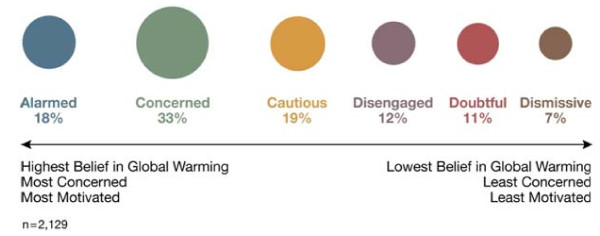
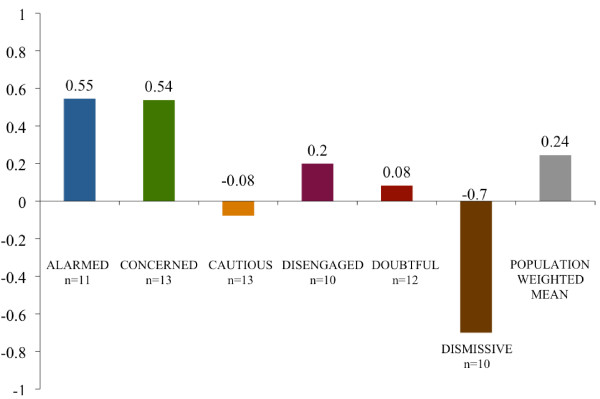
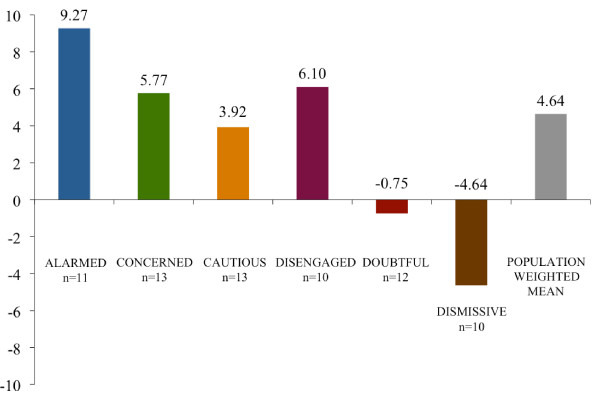
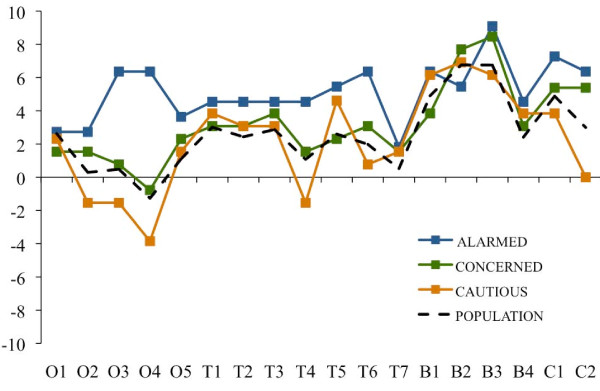
BACKGROUND: Climate change is taking a toll on human health, and some leaders in the public health community have urged their colleagues to give voice to its health implications. Previous research has shown that Americans are only dimly aware of the health implications of climate change, yet the literature on issue framing suggests that providing a novel frame--such as human health--may be potentially useful in enhancing public engagement. We conducted an exploratory study in the United States of people's reactions to a public health-framed short essay on climate change. METHODS: U.S. adult respondents (n = 70), stratified by six previously identified audience segments, read the essay and were asked to highlight in green or pink any portions of the essay they found "especially clear and helpful" or alternatively "especially confusing or unhelpful." Two dependent measures were created: a composite sentence-specific score based on reactions to all 18 sentences in the essay; and respondents' general reactions to the essay that were coded for valence (positive, neutral, or negative). We tested the hypothesis that five of the six audience segments would respond positively to the essay on both dependent measures. RESULTS: There was clear evidence that two of the five segments responded positively to the public health essay, and mixed evidence that two other responded positively. There was limited evidence that the fifth segment responded positively. Post-hoc analysis showed that five of the six segments responded more positively to information about the health benefits associated with mitigation-related policy actions than to information about the health risks of climate change. CONCLUSIONS: Presentations about climate change that encourage people to consider its human health relevance appear likely to provide many Americans with a useful and engaging new frame of reference. Information about the potential health benefits of specific mitigation-related policy actions appears to be particularly compelling. We believe that the public health community has an important perspective to share about climate change, a perspective that makes the problem more personally relevant, significant, and understandable to members of the public.
Overview
The claims and statistics of this paper haven’t been checked yet.
Free: it reads the open-access text and checks the first 5 claims that cite a source we can check. Create a free account to check every claim.
Integrity signals
Registry
Cites
Statistics
Figures
Verification
Claims the paper makes
The claims and statistics of this paper haven’t been checked yet.
Free: it reads the open-access text and checks the first 5 claims that cite a source we can check. Create a free account to check every claim.
Claims other papers make about this one
Each is checked against this paper’s own text: does it say what the citing paper says it does?
The cited source says what the claim attributes to it.
In the citing paper
“While studies such as Myers et al (2012) and Maibach et al (2010) have found evidence for the efficacy of the Public health frame, others have found limited evidence (Walker et al 2018).”
From Framing climate change for effective communication: a systematic map (2020) · cites this paper as Maibach et al 2010
The cited source says what the claim attributes to it.
In the citing paper
“most co-benefits research has been conducted in Western countries (for example, USA (ref.16))”
From Co-benefits of addressing climate change can motivate action around the world (2016) · cites this paper as [16]
The cited source says what the claim attributes to it.
In the citing paper
“benefit population health by reducing disease or promoting healthier lifestyles (for example, cycling/walking instead of driving) 12,15,16”
From Co-benefits of addressing climate change can motivate action around the world (2016) · cites this paper as [16]
The cited source says what the claim attributes to it.
In the citing paper
“Commonly cited co-benefits addressing Dysfunction (for example, pollution, disease 11,12,15,16 ) were actually the weakest motivators of action overall.”
From Co-benefits of addressing climate change can motivate action around the world (2016) · cites this paper as [16]
Self-check
Percentages, sums and reported differences re-computed from the paper’s own numbers.
The self-check needs the paper’s full text.
Citations
Cites
Content Analysis: An Introduction to its Methodology.
Shelley, M., & Krippendorff, K. (1984) · Journal of the American Statistical Association · doi:10.2307/2288384 · Cited by 24,312
Climate Change 2007: Impacts, Adaptation and Vulnerability
Parry, M. L., Canziani, O. F., Palutikof, J. P., van der Linden, P., & Hanson, C. (2007) · Centre for Environmental Data Analysis Digital Repository (Centre for Environmental Data Analysis) · doi:10.5281/zenodo.7356334 · Cited by 9,136
Mackay, A. (2008) · Journal of Environmental Quality · doi:10.2134/jeq2008.0015br · Cited by 5,591
Answering the Call for a Standard Reliability Measure for Coding Data
Hayes, A. F., & Krippendorff, K. (2007) · Communication Methods and Measures · doi:10.1080/19312450709336664 · Cited by 4,225 · cited 1×
“To assess reliability, we used Krippendorff 's alpha [24,25], a conservative measure that corrects for chance agreement among coders; a K-alpha of .”
MethodClimate change and human health: present and future risks
McMichael, A. J., Woodruff, R. E., & Hales, S. (2006) · The Lancet · doi:10.1016/s0140-6736(06)68079-3 · Cited by 2,585 · cited 1×
“This finding comes as a relatively small group of public health professionals are working rapidly to better comprehend and quantify the nature and magnitude of these threats to human health and wellbeing [6].”
BackgroundScheufele, D. A., & Tewksbury, D. (2007) · Journal of Communication · doi:10.1111/j.0021-9916.2007.00326.x · Cited by 2,548 · cited 1×
“, a frame that people had not previously considered - is potentially useful when it helps people understand the issue more clearly by providing additional personal and societal relevance [30,31].”
Background(2018) · Journal of Communication · doi:10.1111/(issn)1460-2466 · Cited by 2,303
Global Climate Change Impacts in the United States
Karl, T. R., Melillo, J. M., Peterson, T. C., & Hassol, S. J. (2009) · University of North Texas Digital Library (University of North Texas) · Cited by 1,641
Communicating Climate Change: Why Frames Matter for Public Engagement
Nisbet, M. C. (2009) · Environment: Science and Policy for Sustainable Development · doi:10.3200/envt.51.2.12-23 · Cited by 1,562 · cited 4×
“Indeed, it is precisely the lack of a countervailing populist movement on climate change that has made policy solutions so difficult to enact [ 13 ,14].”
BackgroundInfluentialSelf-citationMedia Images and the Social Construction of Reality
Gamson, W. A., Croteau, D., Hoynes, W., & Sasson, T. (1992) · Annual Review of Sociology · doi:10.1146/annurev.so.18.080192.002105 · Cited by 1,418 · cited 1×
“, how they mentally organize and discuss with others the issue's central ideas - greatly influences how they understand the nature of the problem, who or what they see as being responsible for the problem, and what they feel should be done to address the problem [11,12].”
Background
Research works printed but not linked: 3
- DeBono R Maltese public perceptions on climate change and health MPH thesis 2009 University of Malta, Faculty of Medicine and Surgery
- Association of State and Territorial Health Officials Climate change: a serious threat to public health 2009 http://www.astho.org/Search.aspx?s=climate%20change
- Pew Research Center for the People & the Press Fewer Americans see solid evidence of global warming http://people-press.org/report/556/global-warming
Cited by
Items 101–200 of 455
Schuldt, J. P., & Roh, S. (2014) · Social Cognition · doi:10.1521/soco.2014.32.3.217 · Cited by 49
Promising Directions for Environmental Communication Research
Hansen, A. (2015) · Environmental Communication · doi:10.1080/17524032.2015.1044047 · Cited by 43
Feldman, L. (2013) · International journal of communication · Cited by 58
Going Green Is Good for You: Why We Need to Change the Way We Think about Pro-environmental Behavior
Prinzing, M. (2020) · Ethics Policy & Environment · doi:10.1080/21550085.2020.1848192 · Cited by 48
“It’s been found that emphasizing the co-benefits of pro-environmental action increases pro-environmental values and motivation (Maibach et al., 2010).”
BackgroundControlling and preventing climate-sensitive noncommunicable diseases in urban sub-Saharan Africa
Rother, H. (2020) · The Science of The Total Environment · doi:10.1016/j.scitotenv.2020.137772 · Cited by 49
Kuehl, C., Sparks, A. C., Hodges, H., & Smith, E. R. A. N. (2023) · Frontiers in Sustainability · doi:10.3389/frsus.2023.1167041 · Cited by 53
“Others argue it is less a question of how much people know about sustainability that influences their behavior, but more how the issue is framed (Nisbet, 2009; Maibach et al., 2010; Corner and Groves, 2014).”
BackgroundA Simple Intervention to Reduce Framing Effects in Perceptions of Global Climate Change
Baumer, E. P. S., Polletta, F., Pierski, N., & Gay, G. K. (2017) · Environmental Communication · doi:10.1080/17524032.2015.1084015 · Cited by 41
“…issues has a well-demonstrated impact on perceptions of those issues and prescriptions for action, both generally (Borah, 2011; Chong & Druckman, 2007b) and with specific regard to environmental issues (Hart, 2011; Hart & Nisbet, 2012; Maibach et al., 2010; Nisbet, 2009; Schuldt et al., 2011).”
BackgroundInfluentialHealthy people with nature in mind
Annerstedt van den Bosch, M., & Depledge, M. H. (2015) · BMC Public Health · doi:10.1186/s12889-015-2574-8 · Cited by 38
Singh, S. P., & Swanson, M. (2017) · PLoS ONE · doi:10.1371/journal.pone.0181401 · Cited by 50
Cook, C., Demorest, S. L., & Schenk, E. C. (2019) · AJN American Journal of Nursing · doi:10.1097/01.naj.0000554551.46769.49 · Cited by 41
Environmental attitudes and political partisanship
DeNicola, E., & Subramaniam, P. R. (2014) · Public Health · doi:10.1016/j.puhe.2014.03.005 · Cited by 45
“Furthermore, Maibach et al.(6) contends that ‘issue fatigue’ exists among certain segments of the US population, meaning that now that the novelty of global warming is waning, people are becoming less concerned and less convinced that it is actuallyhappening.”
BackgroundInfluentialUnderstanding and Countering Misinformation About Climate Change
Cook, J. (2021) · IGI Global eBooks · doi:10.4018/978-1-6684-3686-8.ch081 · Cited by 53
Strategic Framing and Persuasive Messaging to Influence Climate Change Perceptions and Decisions
Bolsen, T., & Shapiro, M. A. (2017) · Oxford University Press eBooks · doi:10.1093/acrefore/9780190228620.013.385 · Cited by 61
Young, N., & Dugas, E. (2012) · The Canadian Journal of Sociology · doi:10.29173/cjs9733 · Cited by 58
Communicating climate change and health in the media
Depoux, A., Hémono, M., Puig-Malet, S., Pédron, R., & Flahault, A. (2017) · Public health reviews · doi:10.1186/s40985-016-0044-1 · Cited by 54
“Furthermore, “information about the potential health benefits of specific mitigation-related policy actions appears to be particularly compelling” [6].”
BackgroundEnhancing Nature Conservation and Health: Changing the Focus to Active Pro-environmental Behaviours
Rosa, C. D., & Collado, S. (2019) · Psychological Studies · doi:10.1007/s12646-019-00516-z · Cited by 42
Crowdfunding for climate change: Exploring the use of climate frames by environmental entrepreneurs
Mæhle, N., Otte, P. P., Huijben, J. C. C. M., & de Vries, J. (2021) · Journal of Cleaner Production · doi:10.1016/j.jclepro.2021.128040 · Cited by 41
“…related frames addressing the projects’ co-benefits such as green jobs, saving money, improved air quality, quieter streets and better public health (Nisbet, 2009; Lorenzoni et al., 2007; Maibach et al., 2010; Graham et al., 2019) and how they influence the success of crowdfunding campaigns.”
BackgroundEnvironmental attitudes, environmental problems and party choice. A large-N comparative study
Papp, Z. (2022) · Political Geography · doi:10.1016/j.polgeo.2022.102652 · Cited by 40
Howarth, C. (2017) · Energy Research & Social Science · doi:10.1016/j.erss.2017.06.011 · Cited by 43
“They enable the framing of complex and challenging societal issues such as climate change, in a way that aligns and resonates with the values receiving these stories and makes climate change more tangible [47].”
BackgroundWhat Will it Mean to be Green? Envisioning Positive Possibilities Without Dismissing Loss
Hall, C. (2013) · Ethics Policy & Environment · doi:10.1080/21550085.2013.801182 · Cited by 40
“Applying this typology to the case of climate change, he considers three frames to be particularly promising for encouraging broad-based support for mitigation efforts: the ‘economic development’ frame, the ‘morality and ethics’ frame (especially as linked to a faith-based notion of responsible stewardship), and the n…”
BackgroundInfluentialAir Passengers’ Preferences for Aviation Voluntary Carbon Offsetting: A Co-benefits Perspective
Zhang, B., Ritchie, B. W., Mair, J., & Driml, S. (2021) · Journal of Travel Research · doi:10.1177/00472875211030340 · Cited by 35
“…exhibit stronger preferences for biodiversity and health co-benefits in general, supporting the previous literature (Kragt et al. 2016; Rodríguez-Entrena, Espinosa-Goded, and Barreiro-Hurlé 2014; MacKerron et al. 2009; Maibach et al. 2010; Myers et al. 2012; Walker, Kurz, and Russel 2017).”
ResultBennett, H. P., Macmillan, A. K., Jones, R., Blaiklock, A., & McMillan, J. R. (2019) · The Lancet · doi:10.1016/s0140-6736(19)32985-x · Cited by 38
Ballew, M. T., Marlon, J. R., Goldberg, M. H., Maibach, E. W., Rosenthal, S. A., Aiken, E., & Leiserowitz, A. (2022) · Climatic Change · doi:10.1007/s10584-022-03397-w · Cited by 44
“Strategies such as these, however, often need trusted communicators, including public health professionals (Maibach et al. 2010) and local TV weathercasters (Maibach et al.”
BackgroundSelf-citationMaking the climate crisis personal through a focus on human health
Limaye, V. S. (2021) · Climatic Change · doi:10.1007/s10584-021-03107-y · Cited by 42
Geiger, N. (2020) · Health Communication · doi:10.1080/10410236.2020.1862449 · Cited by 42
“…health implications of climate change, such as noting that climate change is causing an increase in asthma rates and that addressing the issue can improve public health by reducing air pollution, can lead to increased hope and concern about the topic (Maibach et al., 2010; Myers et al., 2012).”
BackgroundTorre, G. L., Baer, L. D. P., Sestili, C., Cocchiara, R. A., Barbato, D., Mannocci, A., & Cimmuto, A. D. (2023) · South Eastern European Journal of Public Health · doi:10.56801/seejph.vi.155 · Cited by 36
How Motivated Reasoning and Temporal Frames May Polarize Opinions About Wildlife Disease Risk
Roh, S., McComas, K. A., Rickard, L. N., & Decker, D. J. (2015) · Science Communication · doi:10.1177/1075547015575181 · Cited by 42
“As relevant literature has explored such motivated processes by examining thought-listing exercises (e.g., Maibach et al., 2010), future work should extend this path to illuminate the process underlying the motivated processing of scientific, environmental, and health-based messages.”
BackgroundThe impact of frames highlighting coastal flooding in the USA on climate change beliefs
Bolsen, T., Kingsland, J. T., & Palm, R. I. (2018) · Climatic Change · doi:10.1007/s10584-018-2143-0 · Cited by 35
“This involves searching for new frames of reference that stress climate change’s potential for local impacts (e.g., health impacts on vulnerable populations) that can engage new audiences and perhaps resonate across polarized audiences (Maibach et al. 2010).”
BackgroundPeterson, H. L. (2021) · Policy Studies Journal · doi:10.1111/psj.12447 · Cited by 57
Narratives and the Policy Process : Applications of the Narrative Policy Framework
Shanahan, E. A. (2021) · Montana State University ScholarWorks (Montana State University) · doi:10.15788/npf · Cited by 36
Veterinarians in a Changing Global Climate: Educational Disconnect and a Path Forward
Kramer, C., McCaw, K. A., Zarestky, J., & Duncan, C. (2020) · Frontiers in Veterinary Science · doi:10.3389/fvets.2020.613620 · Cited by 36
Climate Change, Adaptation and Higher Education - Securing our Future
Yanda, P. Z., Hewitson, B. C., Makungwa, S., Mazvimavi, D., Lotz‐Sisitka, H., & Vogel, C. H. (2010) · Cited by 34
The framing of climate change in New Zealand newspapers from June 2009 to June 2010
Chetty, K., Devadas, V., & Fleming, J. (2015) · Journal of the Royal Society of New Zealand · doi:10.1080/03036758.2014.996234 · Cited by 48
“…to human health and the economy, as evidenced in the prominence of Social Progress and Economic Competitiveness frames, could in fact be effective in facilitating public engagement and action with regard to climate change (Shellenberger & Nordhaus 2009; Maibach et al. 2010; Spence & Pidgeon 2010).”
BackgroundInternet of Things for Sustainable Human Health
Salam, A. (2019) · Internet of things · doi:10.1007/978-3-030-35291-2_7 · Cited by 33
Letting the gorilla emerge from the mist: Getting past post-truth.
Lewandowsky, S., Cook, J., & Ecker, U. K. H. (2017) · Journal of Applied Research in Memory and Cognition · doi:10.1016/j.jarmac.2017.11.002 · Cited by 39
Ouariachi, T., Pérez, J. G., & Olvera‐Lobo, M. (2018) · PsyEcology Bilingual Journal of Environmental Psychology · doi:10.1080/21711976.2018.1493774 · Cited by 29
Wynes, S., Kotcher, J., & Donner, S. D. (2021) · Climatic Change · doi:10.1007/s10584-021-03215-9 · Cited by 31
“There is some evidence that framing climate communications in terms of their public health effects can lead to greater support for climate change mitigation (Kotcher et al., 2018; Maibach et al., 2010; Myers et al., 2012).”
Crafting an effective narrative on the green transition
Terzi, A. (2020) · Energy Policy · doi:10.1016/j.enpol.2020.111883 · Cited by 34
Issue Framing, Agenda Setting, and Environmental Discourse
Guber, D. L., & Bosso, C. J. (2013) · Oxford University Press eBooks · doi:10.1093/oxfordhb/9780199744671.013.0020 · Cited by 35
How can a climate change perspective be integrated into public health surveillance?
Pascal, M., Viso, A., Médina, S., Delmas, M.-C., & Beaudeau, P. (2012) · Public Health · doi:10.1016/j.puhe.2012.04.013 · Cited by 32
A people-centred approach is needed to meet net zero goals
Verfuerth, C., Demski, C., Capstick, S., Whitmarsh, L. E., & Poortinga, W. (2023) · Journal of the British Academy · doi:10.5871/jba/011s4.097 · Cited by 42
Pollard, A. E., Rowlison, D. L., Kohnen, A., McGuffin, K. M., Geldert, C., Kramer, C., MacDonald, L., Kastendieck, E. G., Sekhon, S. S., Carpenter, M. J., et al. (2020) · Journal of Veterinary Medical Education · doi:10.3138/jvme-2019-0080 · Cited by 28
The effects of a temporal framing manipulation on environmentalism: A replication and extension
Stanley, S. K., Klas, A., Clarke, E. J. R., & Walker, I. A. (2021) · PLoS ONE · doi:10.1371/journal.pone.0246058 · Cited by 35
“Health frames can backfire to decrease climate policy support among conservatives [21], are rated as more biased by those who are dismissive of climate change [39], and may even backfire for liberals [40].”
BackgroundAustralian young people's perspectives about the political determinants of the climate crisis
Arnot, G., Thomas, S. L., Pitt, H., & Warner, E. (2023) · Health Promotion Journal of Australia · doi:10.1002/hpja.734 · Cited by 26
Nisbet, M. C., Maibach, E. W., & Leiserowitz, A. (2011) · American Journal of Public Health · doi:10.2105/ajph.2011.300230 · Cited by 30
“Finally, to examine the possibility that the publics’ views about peak petroleum (an issue that most people have likely given little thought to) may be influenced by their views about climate change (a related issue that most people have given at least some thought to) we used a previously developed 15-item instrument…”
BackgroundMethodSelf-citationHwang, S., Lee, J., & Jang, D. (2024) · Sustainability · doi:10.3390/su16083246 · Cited by 34
Richter, I., Avillanosa, A. L., Cheung, V. V., Goh, H. C., Johari, S., Kay, S., Maharja, C., Nguyễn, T. H., Pahl, S., Sugardjito, J., et al. (2021) · Frontiers in Psychology · doi:10.3389/fpsyg.2021.635686 · Cited by 26
Newspaper Coverage of Global Warming and Climate Change (GWCC) as a Public Health Issue
Weathers, M. (2013) · Applied Environmental Education & Communication · doi:10.1080/1533015x.2013.795829 · Cited by 28
“For example, a recent study conducted by Maibach et al. (2010) examined Americans’ reactions to a public health-framed short essay on climate change.”
BackgroundInfluentialGaming Climate Change: Assessing Online Climate Change Games Targeting Youth Produced in Spanish
Ouariachi, T., Olvera‐Lobo, M., & Pérez, J. G. (2017) · Procedia - Social and Behavioral Sciences · doi:10.1016/j.sbspro.2017.02.154 · Cited by 25
Evaluación de juegos online para la enseñanza y aprendizaje del cambio climático
Ouariachi, T., Olvera‐Lobo, M., & Pérez, J. G. (2017) · Enseñanza de las Ciencias Revista de investigación y experiencias didácticas · doi:10.5565/rev/ensciencias.2088 · Cited by 48
Oberauer, K., Schickl, M., Zint, M. T., Liebhaber, N., Deisenrieder, V., Kubisch, S., Parth, S., Frick, M., Stötter, J., & Keller, L. (2022) · Sustainability Science · doi:10.1007/s11625-022-01222-y · Cited by 31
“Relevant literature often recommends positive or so-called ‘gain’ framing of messages describing the benefits of climate-friendly actions rather than the negative consequences of not acting, which in turn leads to more positive attitudes and increased willingness to act (Corner et al. 2015; Rabinovich et al. 2011; Mai…”
BackgroundCommunicating about marine disease: The effects of message frames on policy support
McComas, K. A., Schuldt, J. P., Burge, C. A., & Roh, S. (2015) · Marine Policy · doi:10.1016/j.marpol.2015.02.012 · Cited by 26
“Further, although climate change is commonly framed in terms of its consequences for environmental and ecosystem health (by highlighting threats to species survival or shifts in wildlife habitats), framing the issue in terms of its possible public health impacts may evoke stronger emotional responses and help mobilize…”
BackgroundOccupation Mediates Ecosystem Services with Human Well-Being
Aoyama, M., Hudson, M. J., & Hoover, K. C. (2012) · Journal of Occupational Science · doi:10.1080/14427591.2011.634782 · Cited by 32
“Recent research has found that when climate change is presented as an issue relevant to public health, it becomes much more compelling to members of the general public (Maibach, Nisbet, Baldwin, Akerlof, & Diao, 2010 ).”
BackgroundThink globally, act locally: adoption of climate action plans in California
Hui, I. S., Smith, G., & Kimmel, C. (2019) · Climatic Change · doi:10.1007/s10584-019-02505-7 · Cited by 33
“Qualitative studies such as Marsden et al. (2010) and Hunt and Watkiss (2011) find that it is large and prosperous cities (London, New York, L.A., etc.), particularly in the developed world, that have the most comprehensive and technically advanced climate plans.”
BackgroundFraming climate change and health: New Zealand’s online news media
Harrison, S., Macmillan, A. K., & Rudd, C. (2019) · Health Promotion International · doi:10.1093/heapro/daz130 · Cited by 33
Multisolving Innovations For Climate And Health: Message Framing To Achieve Broad Public Support
Dearing, J. W., & Lapinski, M. K. (2020) · Health Affairs · doi:10.1377/hlthaff.2020.01170 · Cited by 24
When conflicts get heated, so does the planet: coupled social-climate dynamics under inequality
Menard, J. R., Bury, T. M., Bauch, C. T., & Anand, M. (2021) · Proceedings of the Royal Society B Biological Sciences · doi:10.1098/rspb.2021.1357 · Cited by 30
Climate‐driven ‘species‐on‐the‐move’ provide tangible anchors to engage the public on climate change
Pecl, G. T., Kelly, R., Lucas, C. H., van Putten, I. E., Badhe, R., Champion, C., Chen, I., Defeo, O., Gaitán‐Espitía, J. D., Evengård, B., et al. (2023) · People and Nature · doi:10.1002/pan3.10495 · Cited by 24
“…issue may encourage people to consider the human health context of climate change, providing a new frame of reference that may broaden the personal significance and relevance of climate change to segments in society that may otherwise be disengaged or dismissive of the issue (Maibach et al., 2010).”
BackgroundUser comments on climate stories: impacts of anecdotal vs. scientific evidence
Hinnant, A., Subramanian, R., & Young, R. (2016) · Climatic Change · doi:10.1007/s10584-016-1759-1 · Cited by 30
“…uses the public health frame as a constant because of its ability to engage diverse audiences in responding positively to public health impacts and because health impacts can be perceived as local to the public (Maibach et al. 2010; Moser and Dilling 2011; Myers et al. 2012; Petrovic et al. 2014).”
BackgroundRaymond, L., Kelly, D., & Hennes, E. P. (2021) · Perspectives on Politics · doi:10.1017/s1537592721003054 · Cited by 30
“This work is closely related to research indicating that framing ACC in terms of local public health effects is effective for all partisan identities, including conservatives (Maibach et al. 2010; Raymond 2019).”
BackgroundThe Contribution of Local Agents and Citizens to Sustainable Development: The Portuguese Experience
Almeida, F. L. (2022) · Sustainability · doi:10.3390/su141912696 · Cited by 27
Empowering people to change occupational behaviours to address critical global issues
Ikiugu, M. N., Westerfield, M. A., Lien, J. M., Theisen, E. R., Cerny, S. L., & Nissen, R. M. (2015) · Canadian Journal of Occupational Therapy · doi:10.1177/0008417414567529 · Cited by 29
“…occupational therapists/scientists can use their knowledge of the nature, form, and meaning of occupation to help address them using occupation-based strategies (Blakeney & Marshall, 2009; Ikiugu, 2008; Ikiugu & McCollister, 2011; Maibach et al., 2010; McElroy et al., 2012; Whittaker, 2012).”
MethodYang, Y. W., & Yu, G. (2018) · Telematics and Informatics · doi:10.1016/j.tele.2018.04.006 · Cited by 21
Public Opinion and Participation
Nisbet, M. C. (2011) · Oxford University Press eBooks · doi:10.1093/oxfordhb/9780199566600.003.0024 · Cited by 21
Self-citationSandal, S., Éthier, I., Onu, U. C., Fung, W. W., Bajpai, D., Hailu, W., Bagasha, P., Chiara, L. D., Hafiz, E. O. A., Smyth, B. J., et al. (2024) · Journal of the American Society of Nephrology · doi:10.1681/asn.0000000000000402 · Cited by 24
The effects of fear appeals on reactance in climate change communication
Bilfinger, L., Brummernhenrich, B., & Jucks, R. (2024) · Journal of Experimental Social Psychology · doi:10.1016/j.jesp.2024.104666 · Cited by 31
Illingworth, S., Bell, A., Capstick, S., Corner, A., Forster, P. M. D. F., Leigh, R., Loroño-Leturiondo, M., Muller, C., Richardson, H., & Shuckburgh, E. F. (2018) · Geoscience Communication · doi:10.5194/gc-1-9-2018 · Cited by 37
“In this approach scientists have been tasked as the “experts”, whose role is to educate a “non-expert” general public, by increasing their knowledge about a particular topic that the experts deemed to be the most significant (Miller, 2001).”
Climate action now: How to fuel a social movement
Lteif, L., Nardini, G., Rank‐Christman, T., Block, L., Bublitz, M. G., Catlin, J. R., Cross, S. N. N., Hamby, A. M., & Peracchio, L. A. (2023) · Journal of Consumer Psychology · doi:10.1002/jcpy.1386 · Cited by 33
Intergovernmental engagement on health impacts of climate change
Dasandi, N., Graham, H., Lampard, P., & Jankin Mikhaylov, S. (2021) · Bulletin of the World Health Organization · doi:10.2471/blt.20.270033 · Cited by 20
Constructing climate change: Exploring how cities frame climate change in the Arctic
Филимонова, Н. (2024) · Journal of Urban Affairs · doi:10.1080/07352166.2024.2351391 · Cited by 20
“This approach aligns with prior research emphasizing climate change as a threat to nature and biodiversity (Badullovich et al., 2020; Maibach et al., 2010).”
Deluty, S. B., Scott, D. M., Waugh, S. C., Martin, V. K., McCaw, K. A., Rupert, J. R., Webb, T. L., Baumgarn, S. A., Carpenter, M. J., & Duncan, C. (2021) · Frontiers in Veterinary Science · doi:10.3389/fvets.2020.622199 · Cited by 23
“Collectively this information reiterates the need for animal health professionals to receive education on climate change which includes language and methods to discuss climate change as a health issue to facilitate conversations across political and generational divides (4, 20, 21).”
BackgroundPetrescu‐Mag, R. M., Petrescu, D. C., Ivan, A., & Ţenter, A. (2023) · BMC Public Health · doi:10.1186/s12889-023-15353-z · Cited by 30
“When climate change is described as a human health issue, a larger audience finds the information useful [97], which can change perceptions and attitudes.”
BackgroundCalling attention to opponents of climate action in climate and health messaging
Kotcher, J., Luong, K. T., Charles, J., Gould, R., & Maibach, E. W. (2023) · The Lancet Planetary Health · doi:10.1016/s2542-5196(23)00217-6 · Cited by 21
Self-citationPillay, C., & van den Bergh, J. C. J. M. (2016) · International Journal of Climate Change Strategies and Management · doi:10.1108/ijccsm-06-2015-0084 · Cited by 23
Kim, S. C., Pei, D., Kotcher, J., & Myers, T. A. (2020) · Environment and Behavior · doi:10.1177/0013916520942600 · Cited by 21
“For example, information about the health implications of climate change arouses feelings of hope and is evaluated positively, even among those dismissive of climate change (Maibach et al., 2010; Myers et al., 2012).”
BackgroundBrown, H., Proust, K., Spickett, J., & Capon, A. G. (2011) · Health Promotion Journal of Australia · doi:10.1071/he11448 · Cited by 19
Occupational therapy’s contributions to combating climate change and lifestyle diseases
Díaz, L. G., & Richardson, J. A. (2021) · Scandinavian Journal of Occupational Therapy · doi:10.1080/11038128.2021.1989484 · Cited by 24
Adaptation and Resilience: Private, Public, and Individual Change Makers
Oyenuga, M. O., & Jeresa, S. (2025) · Climate change management · doi:10.1007/978-3-031-83250-5_2 · Cited by 19
Lo, A. Y. H., & Jim, C. Y. (2014) · Public Understanding of Science · doi:10.1177/0963662513517483 · Cited by 22
“For instance, disengaged climate change believers might pay attention to climate change messages framed in terms of public health, whereas climate deniers might respond negatively and radically to those messages framed in terms of national security (Maibach et al., 2010; Myers et al., 2012).”
BackgroundAkerlof, K., Boules, C., Rohring, E., Rohring, B., & Kappalman, S. (2020) · Environmental Management · doi:10.1007/s00267-020-01283-8 · Cited by 21
Self-citationJabakhanji, S. B., Arnold, S. R., Aunan, K., Chersich, M., Jakobsson, K., McGushin, A., Kelly, I., Roche, N., Stauffer, A., & Stanistreet, D. (2022) · International Journal of Environmental Research and Public Health · doi:10.3390/ijerph192013665 · Cited by 24
Climate Connected: An Immersive VR and PC Game for Climate Change Engagement
Galeote, D. F., Legaki, N.-Z., & Hamari, J. (2023) · Annual Symposium on Computer-Human Interaction in Play · doi:10.1145/3573382.3616053 · Cited by 19
“• Communication, especially of climate change [42, 69], from which we take health [1, 36, 66, 67] and future visioning [60] in a way that is visual, local, and connected to the audience’s daily reality [59].”
BackgroundRoggero, M., Gotgelf, A., & Eisenack, K. (2023) · Climatic Change · doi:10.1007/s10584-023-03662-6 · Cited by 22
“Air quality co-benefits represent the largest portion of the co-benefits literature, focusing on the public health dimension of climate mitigation (Maibach et al. 2010; Nowak et al. 2018; Sabel et al. 2016).”
Mass Media Roles in Climate Change Mitigation
Swain, K. A. (2016) · Springer eBooks · doi:10.1007/978-3-319-14409-2_6 · Cited by 22
It’s Not All Bad News: Solutions-Oriented Journalism Approaches
Thier, K. (2024) · Springer eBooks · doi:10.1007/978-3-031-49084-2_18 · Cited by 22
Stoeth, A. M., & Carter, K. (2022) · Environmental Education Research · doi:10.1080/13504622.2022.2129043 · Cited by 23
“Effective strategies for climate change communication instead focus on context and localization, such as making the message local, immediate, personal (Nisbet 2009; Nerlich, Koteyko, and Brown 2010; Maibach et al. 2010) and positive (Markowitz and Shariff 2012; Snyder 2002; Swim et al. 2009).”
BackgroundResultGuo, Y. Q., & Hou, Y. (2023) · Environmental Communication · doi:10.1080/17524032.2023.2205038 · Cited by 18
“For instance, the health co-bene fi ts of mitigation-related policy and actions rede fi ne climate change as more than just an environmental issue (Maibach et al., 2010).”
Language and climate justice: A research agenda
Fine, J. C., & Love‐Nichols, J. (2021) · Journal of Sociolinguistics · doi:10.1111/josl.12469 · Cited by 23
Smith, H. M., & Lindenfeld, L. (2014) · Environmental Communication · doi:10.1080/17524032.2014.906479 · Cited by 30
Leave only Footprints? Reframing Climate Change, Environmental Stewardship, and Human Impact
Aufrecht, M. (2017) · Ethics Policy & Environment · doi:10.1080/21550085.2017.1291823 · Cited by 15
Kelemen, D. A., Brown, S. A., & Pizza, L. (2023) · Journal of Environmental Psychology · doi:10.1016/j.jenvp.2023.101990 · Cited by 17
Hirsbrunner, S. D. (2024) · Wiley Interdisciplinary Reviews Climate Change · doi:10.1002/wcc.902 · Cited by 17
“Nisbet's call for strategic framings of climate change (e.g., frames emphasizing economic growth and job creation) has later been expanded in other publications, e.g., proposing to frame climate change as a public health issue (Maibach et al., 2010).”
Loss-Framed Arguments Can Stifle Political Activism
Levine, A. S., & Kline, R. (2019) · Journal of Experimental Political Science · doi:10.1017/xps.2018.28 · Cited by 16
Buchanan, T., Ackland, J., Lloyd, S., van der Linden, S., & de‐Wit, L. (2022) · Climatic Change · doi:10.1007/s10584-021-03262-2 · Cited by 19
Media Representations of Water Issues as Health Risks
Mayeda, A. M., Boyd, A. D., Paveglio, T. B., & Flint, C. G. (2018) · Environmental Communication · doi:10.1080/17524032.2018.1513054 · Cited by 23
“Past research demonstrates the potential benefits of using a human health frame in relation to the environment and its increased use in media coverage surrounding climate change (Maibach et al., 2010; Weathers & Kendall, 2016).”
BackgroundRepresentación del cambio climático en YouTube: un análisis cuantitativo de los vídeos más populares
Muñoz-Pico, H. P., León, B., & García-Martínez, A. N. (2021) · Palabra Clave · doi:10.5294/pacla.2021.24.1.5 · Cited by 19
“Como han explicado Maibach et al. (2010), esta tendencia periodística hacia el equilibrio epistemológico puede adulterar la noticia, puesto que, en ocasiones, no transmite bien que el consenso científico en torno al hombre como causante del cambio climático es del 97 % (2014).”
BackgroundMass Media Roles in Climate Change Mitigation
Swain, K. A. (2012) · Springer eBooks · doi:10.1007/978-1-4419-7991-9_6 · Cited by 29
Macassa, G. (2022) · Journal of Public Health Research · doi:10.1177/22799036221102653 · Cited by 19
Arnot, G., Pitt, H., McCarthy, S., Warner, E., & Thomas, S. L. (2024) · Health Promotion International · doi:10.1093/heapro/daae023 · Cited by 19
“Global public health and health promotion communities have an important role to play in reframing climate narratives to harness motivations for action (Maibach et al ., 2010).”
BackgroundNunes, A. R., Karaba, F., Geddes, O., Bickerton, A., Atherton, H., Dahlmann, F., Eccles, A., Gregg, M., Spencer, R. A., Twohig, H., et al. (2025) · BMJ Open · doi:10.1136/bmjopen-2024-091404 · Cited by 16
Metadata
- Authors
- Maibach, E. W., Nisbet, M., Baldwin, P., Akerlof, K., & Diao, G.
- Affiliations
- George Mason University (US)
- Corresponding author
- Maibach, Edward W
- Venue
- BMC Public Health
- Published
- 2010-06-01
- Volume
- 10
- Issue
- 1
- Pages
- 299-299
- ISSN
- 1471-2458 (ISSN-L)
- PMC
- PMC2898822
- OpenAlex
- W2145094481
- Semantic Scholar
- 4389b56f74d97440b2d52ab91853942f814b3a02
- Cited by
- 454
- References
- 32
- Citations by year
- 2026: 18 · 2025: 48 · 2024: 35 · 2023: 39 · 2022: 33 · 2021: 48 · 2020: 34 · 2019: 39 · 2018: 36 · 2017: 25 · 2016: 12 · 2015: 26 · 2014: 20 · 2013: 17 · 2012: 7
- FWCI
- 42.34
- Type
- journal article
- Language
- en
- Open access
- gold
- doi.org
- Licence
- cc-by
- creativecommons.org/licenses/by/2.0 (tdm)
- Locations
- BMC Public Health (publishedVersion, cc-by)
- PubMed Central (publishedVersion, cc-by)
- PubMed (publishedVersion)
- DOAJ (DOAJ: Directory of Open Access Journals) (submittedVersion)
- Figshare (submittedVersion, cc-by)
- American University Research Archive
- Topics
- Social Sciences › Sociology and Political Science › Climate Change Communication and Perception
- Physical Sciences › Environmental Science › Health, Toxicology and Mutagenesis › Climate Change and Health Impacts
- Social Sciences › Sociology and Political Science › Risk Perception and Management
- Keywords
- climate change, public health framing, issue framing, climate change perception, health impacts of climate change, climate change mitigation policy, citizen participation
- MeSH terms
- Adult, Female, Humans, Male, Public Health, Public Opinion, Surveys and Questionnaires, United States, Climate Change
About these checks
Registry, retraction, Cites and statistics results are computed, not judged, with one exception: a printed reference that no index lists is read once by a model before it counts as a citation error. Claims are extracted by a model and kept only when their quote appears verbatim in the text; each cited source is then checked, with a model’s help, for whether it says what the claim relies on. Those verdicts can be wrong — read the claim’s quote and the cited source before relying on one.
Statistics and arithmetic are recomputed, not judged.
Confidence bands are shown only for fields calibrated on our annotated test set. None is calibrated yet, so no band is shown.
What counts as a claim ›How we measure confidence ›How we check this ›
Are you an author, or do you see a problem with this page? Request a review
Data sources
Bibliographic data: Semantic Scholar, OpenAlex, Crossref.
Contains information from the Semantic Scholar Academic Graph Datasets, made available under the ODC Attribution License (ODC-BY 1.0).
Semantic Scholar’s data is described in: Kinney, R., et al. (2023). The Semantic Scholar Open Data Platform. arXiv:2301.10140.
