

Reframing climate change as a public health issue: an exploratory study of public reactions
Open accessThe DOI matches its Crossref record; 29 of the 32 references it cites were found in a registry or an index.
Abstract
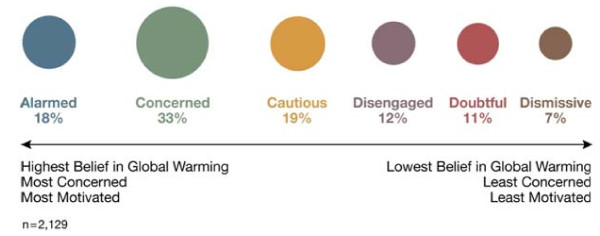
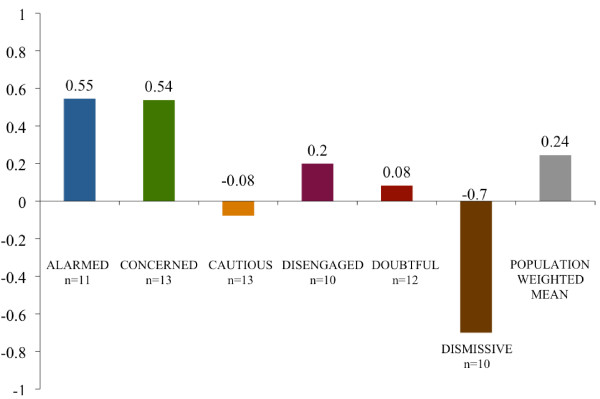
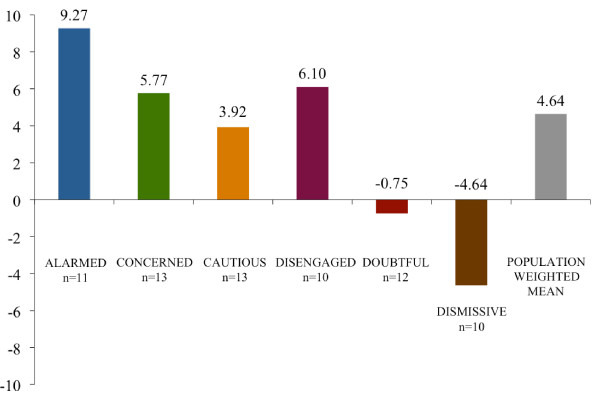
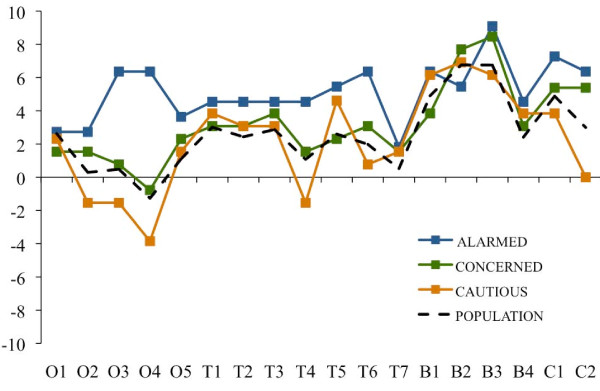
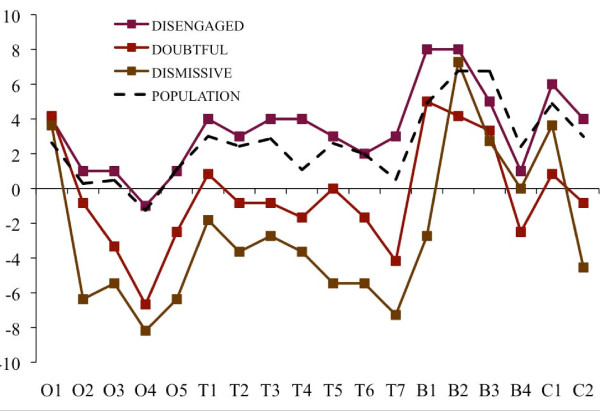
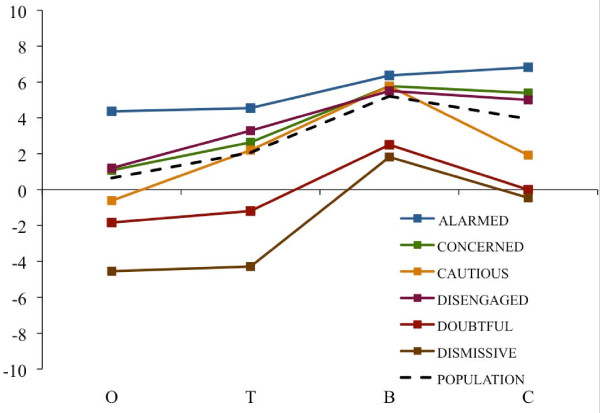
BACKGROUND: Climate change is taking a toll on human health, and some leaders in the public health community have urged their colleagues to give voice to its health implications. Previous research has shown that Americans are only dimly aware of the health implications of climate change, yet the literature on issue framing suggests that providing a novel frame--such as human health--may be potentially useful in enhancing public engagement. We conducted an exploratory study in the United States of people's reactions to a public health-framed short essay on climate change. METHODS: U.S. adult respondents (n = 70), stratified by six previously identified audience segments, read the essay and were asked to highlight in green or pink any portions of the essay they found "especially clear and helpful" or alternatively "especially confusing or unhelpful." Two dependent measures were created: a composite sentence-specific score based on reactions to all 18 sentences in the essay; and respondents' general reactions to the essay that were coded for valence (positive, neutral, or negative). We tested the hypothesis that five of the six audience segments would respond positively to the essay on both dependent measures. RESULTS: There was clear evidence that two of the five segments responded positively to the public health essay, and mixed evidence that two other responded positively. There was limited evidence that the fifth segment responded positively. Post-hoc analysis showed that five of the six segments responded more positively to information about the health benefits associated with mitigation-related policy actions than to information about the health risks of climate change. CONCLUSIONS: Presentations about climate change that encourage people to consider its human health relevance appear likely to provide many Americans with a useful and engaging new frame of reference. Information about the potential health benefits of specific mitigation-related policy actions appears to be particularly compelling. We believe that the public health community has an important perspective to share about climate change, a perspective that makes the problem more personally relevant, significant, and understandable to members of the public.
Overview
The claims and statistics of this paper haven’t been checked yet.
Free: it reads the open-access text and checks the first 5 claims that cite a source we can check. Create a free account to check every claim.
Integrity signals
Registry
Cites
Statistics
Figures
Verification
Claims the paper makes
The claims and statistics of this paper haven’t been checked yet.
Free: it reads the open-access text and checks the first 5 claims that cite a source we can check. Create a free account to check every claim.
Claims other papers make about this one
Each is checked against this paper’s own text: does it say what the citing paper says it does?
The cited source says what the claim attributes to it.
In the citing paper
“While studies such as Myers et al (2012) and Maibach et al (2010) have found evidence for the efficacy of the Public health frame, others have found limited evidence (Walker et al 2018).”
From Framing climate change for effective communication: a systematic map (2020) · cites this paper as Maibach et al 2010
The cited source says what the claim attributes to it.
In the citing paper
“most co-benefits research has been conducted in Western countries (for example, USA (ref.16))”
From Co-benefits of addressing climate change can motivate action around the world (2016) · cites this paper as [16]
The cited source says what the claim attributes to it.
In the citing paper
“benefit population health by reducing disease or promoting healthier lifestyles (for example, cycling/walking instead of driving) 12,15,16”
From Co-benefits of addressing climate change can motivate action around the world (2016) · cites this paper as [16]
The cited source says what the claim attributes to it.
In the citing paper
“Commonly cited co-benefits addressing Dysfunction (for example, pollution, disease 11,12,15,16 ) were actually the weakest motivators of action overall.”
From Co-benefits of addressing climate change can motivate action around the world (2016) · cites this paper as [16]
Self-check
Percentages, sums and reported differences re-computed from the paper’s own numbers.
The self-check needs the paper’s full text.
Citations
Cites
Content Analysis: An Introduction to its Methodology.
Shelley, M., & Krippendorff, K. (1984) · Journal of the American Statistical Association · doi:10.2307/2288384 · Cited by 24,312
Climate Change 2007: Impacts, Adaptation and Vulnerability
Parry, M. L., Canziani, O. F., Palutikof, J. P., van der Linden, P., & Hanson, C. (2007) · Centre for Environmental Data Analysis Digital Repository (Centre for Environmental Data Analysis) · doi:10.5281/zenodo.7356334 · Cited by 9,136
Mackay, A. (2008) · Journal of Environmental Quality · doi:10.2134/jeq2008.0015br · Cited by 5,591
Answering the Call for a Standard Reliability Measure for Coding Data
Hayes, A. F., & Krippendorff, K. (2007) · Communication Methods and Measures · doi:10.1080/19312450709336664 · Cited by 4,225 · cited 1×
“To assess reliability, we used Krippendorff 's alpha [24,25], a conservative measure that corrects for chance agreement among coders; a K-alpha of .”
MethodClimate change and human health: present and future risks
McMichael, A. J., Woodruff, R. E., & Hales, S. (2006) · The Lancet · doi:10.1016/s0140-6736(06)68079-3 · Cited by 2,585 · cited 1×
“This finding comes as a relatively small group of public health professionals are working rapidly to better comprehend and quantify the nature and magnitude of these threats to human health and wellbeing [6].”
BackgroundScheufele, D. A., & Tewksbury, D. (2007) · Journal of Communication · doi:10.1111/j.0021-9916.2007.00326.x · Cited by 2,548 · cited 1×
“, a frame that people had not previously considered - is potentially useful when it helps people understand the issue more clearly by providing additional personal and societal relevance [30,31].”
Background(2018) · Journal of Communication · doi:10.1111/(issn)1460-2466 · Cited by 2,303
Global Climate Change Impacts in the United States
Karl, T. R., Melillo, J. M., Peterson, T. C., & Hassol, S. J. (2009) · University of North Texas Digital Library (University of North Texas) · Cited by 1,641
Communicating Climate Change: Why Frames Matter for Public Engagement
Nisbet, M. C. (2009) · Environment: Science and Policy for Sustainable Development · doi:10.3200/envt.51.2.12-23 · Cited by 1,562 · cited 4×
“Indeed, it is precisely the lack of a countervailing populist movement on climate change that has made policy solutions so difficult to enact [ 13 ,14].”
BackgroundInfluentialSelf-citationMedia Images and the Social Construction of Reality
Gamson, W. A., Croteau, D., Hoynes, W., & Sasson, T. (1992) · Annual Review of Sociology · doi:10.1146/annurev.so.18.080192.002105 · Cited by 1,418 · cited 1×
“, how they mentally organize and discuss with others the issue's central ideas - greatly influences how they understand the nature of the problem, who or what they see as being responsible for the problem, and what they feel should be done to address the problem [11,12].”
Background
Research works printed but not linked: 3
- DeBono R Maltese public perceptions on climate change and health MPH thesis 2009 University of Malta, Faculty of Medicine and Surgery
- Association of State and Territorial Health Officials Climate change: a serious threat to public health 2009 http://www.astho.org/Search.aspx?s=climate%20change
- Pew Research Center for the People & the Press Fewer Americans see solid evidence of global warming http://people-press.org/report/556/global-warming
Cited by
Items 201–300 of 455
The Role of Health in Urban Climate Adaptation: An Analysis of Six U.S. Cities
Shimamoto, M. M., & McCormick, S. (2017) · Weather Climate and Society · doi:10.1175/wcas-d-16-0142.1 · Cited by 15
A narrative model for exploring climate change engagement among young community leaders
Malena-Chan, R. (2019) · Health Promotion and Chronic Disease Prevention in Canada · doi:10.24095/hpcdp.39.4.07 · Cited by 14
How Resistance Shapes Health and Well-Being
Essex, R. (2022) · Journal of Bioethical Inquiry · doi:10.1007/s11673-022-10183-x · Cited by 17
“For example, several studies have suggested that framing climate change as a public health issue is effective and could engage those previously not engaged and raise support for climate change mitigation and adaptation (Myers et al. 2012; Maibach et al. 2010).”
BackgroundMendoza-Vasconez, A. S., McLaughlin, E., Sallis, J. F., Maibach, E. W., Epel, E. S., Bennett, G. G., Nogueira, L., Thayer, J. F., & Dietz, W. H. (2022) · Translational Behavioral Medicine · doi:10.1093/tbm/ibac028 · Cited by 17
Self-citationThe Importance of Physician Climate Advocacy in the Face of Political Denial
Jameton, A. L. (2017) · The AMA Journal of Ethic · doi:10.1001/journalofethics.2017.19.12.sect1-1712 · Cited by 15
The green battle in the media: A framing analysis of environmental press coverage
Mateu, A., & Domínguez, M. (2019) · Communication & Society · doi:10.15581/003.32.37168 · Cited by 22
Public engagement with health and climate change around the world: a Google Trends analysis
Dasandi, N., Mikhaylov, S., Pantera, D. K., & Romanello, M. B. (2025) · The Lancet Planetary Health · doi:10.1016/s2542-5196(25)00029-4 · Cited by 19
Awuor, L., Meldrum, R. J., & Liberda, E. N. (2020) · International Journal of Environmental Research and Public Health · doi:10.3390/ijerph17176338 · Cited by 19
“The health promotion and disease prevention competencies of public health can address the many health impacts, highlight the health co-benefits of actions, and provide the evidence for mainstreaming and linking the health agenda to climate change decisions [11,18,21,22].”
BackgroundTheir Economy and Our Health: Communicating Climate Change to the Divided American Public
Chu, H., & Yang, J. Z. (2020) · International Journal of Environmental Research and Public Health · doi:10.3390/ijerph17217718 · Cited by 16
“As solutions to address climate change require bipartisan support, effective communication about climate change across ideological camps is critical [4].”
BackgroundResultInfluentialMarkanday, A., & Galarraga, I. (2021) · Climate Risk Management · doi:10.1016/j.crm.2021.100359 · Cited by 15
Griffith, A. B., Higgins, M. R., & Turner, J. M. (2013) · Journal of Environmental Studies and Sciences · doi:10.1007/s13412-013-0156-6 · Cited by 13
The Perception Factor: Climate Change Gets Personal
Cooney, C. M. (2010) · Environmental Health Perspectives · doi:10.1289/ehp.118-a484 · Cited by 13
Kelly, O. M., White, P., Butera, F., Illingworth, S., Martens, P., Huynen, M. M. T. E., Bailey, S., Schuitema, G., & Cowman, S. (2023) · Sustainability Science · doi:10.1007/s11625-023-01407-z · Cited by 19
“As argued by Maibach et al. (2010): ‘Re-defining climate change in public health terms should help people make connections to already familiar problems such as asthma, allergies, and infectious diseases experienced in their communities while shifting the visualisation of the issue away from remote…”
BackgroundClimate Change and Six Americas: What Can Behavior Analysts Do?
Meshes, E., Kamau, L. Z., Summers, M., & Hoppin, K. B. (2022) · Behavior and Social Issues · doi:10.1007/s42822-022-00107-0 · Cited by 17
“Unfortunately, associating health with climate change is generally counterproductive for this group (Maibach et al., 2010).”
BackgroundMartin-Kerry, J., Graham, H. M., & Lampard, P. (2023) · Public Health · doi:10.1016/j.puhe.2023.03.020 · Cited by 13
Effects of alternative framing on the publics perceived importance of environmental conservation
Sorensen, A. E., Clark, D. G., & Jordan, R. (2015) · Frontiers in Environmental Science · doi:10.3389/fenvs.2015.00036 · Cited by 14
“In reframing, they are engaging an audience that might not attend to climate change issues because of the scientific foundation (Groffman et al., 2010).”
BackgroundResultStordalen, G. A., Rocklöv, J., Nilsson, M., & Byass, P. (2013) · Global Health Action · doi:10.3402/gha.v6i0.20513 · Cited by 16
“Health benefits of particular strategies, as advised by trusted health professionals, can be a way into health and climate co-benefits (10).”
BackgroundThe Role of Health Co-Benefits in the Development of Australian Climate Change Mitigation Policies
Workman, A., Blashki, G. A., Karoly, D. J., & Wiseman, J. (2016) · International Journal of Environmental Research and Public Health · doi:10.3390/ijerph13090927 · Cited by 14
“Research undertaken around climate change communication has found that framing climate change from a health perspective can positively influence an individual’s acceptance of robust climate policies, irrespective of political preferences [11,12].”
BackgroundHines, D. R., & Sibbald, S. (2015) · Canada Communicable Disease Report · doi:10.14745/ccdr.v41i03a04 · Cited by 12
Food for Thought: Audience Engagement with Sustainability Messages in Branded Content
Swenson, R. D., & Olsen, N. C. (2017) · Environmental Communication · doi:10.1080/17524032.2017.1279202 · Cited by 15
Vaughan, H., & Johns, L. N. (2021) · Journal of Environmental Media · doi:10.1386/jem_00040_1 · Cited by 13
Economic framing dominates climate policy reporting: a fifty-state analysis
Garth, A., & Roberts, J. T. (2022) · Climatic Change · doi:10.1007/s10584-022-03371-6 · Cited by 14
Climate summits and protests have a strong impact on climate change media coverage in Germany
Lochner, J., Stechemesser, A., & Wenz, L. (2024) · Communications Earth & Environment · doi:10.1038/s43247-024-01434-3 · Cited by 21
Global Change: a Public Health Researcher’s Ethical Responsibility
Pascal, M., Beaudeau, P., Médina, S., & Hamilton, N. C. (2019) · Current Environmental Health Reports · doi:10.1007/s40572-019-00238-4 · Cited by 13
Inspire Hope, Not Fear: Communicating Effectively About Climate Change and Health
Ring, W. (2015) · Annals of Global Health · doi:10.1016/j.aogh.2015.06.006 · Cited by 16
“The first attempts by public health professionals and environmentalists to educate about climate and health were inspired by climate communication research demonstrating the benefit of framing climate change as a health issue.(6)”
BackgroundUppalapati, S. S., Ansah, P., Campbell, E., Gour, N., Thier, K., Kotcher, J., & Maibach, E. W. (2023) · OSF Preprints (OSF Preprints) · doi:10.31219/osf.io/6w3qh · Cited by 14
Self-citationMedia Framing of Climate Change Mitigation and Adaptation
Swain, K. A. (2022) · Springer eBooks · doi:10.1007/978-3-030-72579-2_6 · Cited by 16
Sarcone, A., Angelillo, S., Gennaro, G. D., Belfiore, M. G., Pileggi, C., Costa, D., & Nobile, C. G. A. (2025) · Frontiers in Public Health · doi:10.3389/fpubh.2025.1711363 · Cited by 13
“Prior studies have demonstrated that female healthcare students often express greater concern about environmental health, stronger climate-related risk perception, and greater readiness to act (11, 12).”
Promising a Greener Paris: Anne Hidalgo’s Framing of Environmental Issues in Her Mayoral Campaigns
Meeks, L. M. (2023) · Environmental Communication · doi:10.1080/17524032.2023.2226356 · Cited by 12
“The first 12 variables explicitly connected environmental matters to either a traditional or alternate issue frame (see Bolsen et al., 2019; Devaney et al., 2020; Maibach et al., 2010; Meeks, 2022; Myers et al., 2012).”
BackgroundInfluentialAnthropocentric Indirect Arguments for Environmental Protection
Elliott, K. C. (2014) · Ethics Policy & Environment · doi:10.1080/21550085.2014.955311 · Cited by 12
“…problems like climate change cut across a vast array of human institutions, policies, and behaviors, conceptualizing these problems narrowly as ‘environmental’ issues may in fact inhibit the development of innovative, cross-cutting solutions (Maibach et al., 2010; Nordhaus & Shellenberger, 2007).”
BackgroundIntersecting frames in communicating environmental risk and uncertainty
Schuldt, J. P., McComas, K. A., & Burge, C. A. (2017) · Journal of Risk Research · doi:10.1080/13669877.2017.1382559 · Cited by 11
“…framing of the issue (vs. a more traditional ‘environmental’ frame) can invite increased engagement from more skeptical and dismissive audiences (Maibach et al. 2010; Myers et al. 2012).1 From a cognitive-psychological perspective, these effects are theorized to operate through basic…”
BackgroundA Public Health Frame for Fracking? Predicting Public Support for Hydraulic Fracturing
O’Neill, B., & Schneider, M. J. (2020) · Sociological Quarterly · doi:10.1080/00380253.2020.1773350 · Cited by 14
“Like those authors (Maibach et al. 2010; Myers et al. 2012) who have promoted the idea of a public health framing for climate change, a similar reframing of fracking may push opinion away from the politically and fiscally conservative vision of fracking that ignores the environmental and public…”
BackgroundIssa, R., Baker, C., Spooner, R., Abrams, R., Göpfert, A., Evans, M., & Aitchison, G. (2021) · Perspectives in Public Health · doi:10.1177/17579139211058303 · Cited by 10
Perceived cultural impacts of climate change motivate climate action and support for climate policy
Tam, K., Leung, A. K. ‐., & Koh, B. (2022) · Climatic Change · doi:10.1007/s10584-022-03337-8 · Cited by 12
“Recent studies began considering alter‐ native non‐environmental frames (Maibach et al. 2010).”
BackgroundRatwatte, P., Wehling, H., Phalkey, R. K., & Weston, D. (2023) · International Journal of Environmental Research and Public Health · doi:10.3390/ijerph20065094 · Cited by 11
“To achieve widespread and sustained change, it is important that temporary changes observed in climate mitigation behaviours (for example, behavioural shifts resulting from national lockdowns and other pandemic-related behavioural guidance) are translated into long-term changes that could be sustained beyond the pande…”
BackgroundGao, J., Xu, G., Ma, W., Zhang, Y., Woodward, A. J., Vardoulakis, S., Kovats, S. R., Wilkinson, P., He, T., Lin, H., et al. (2017) · International Journal of Environmental Research and Public Health · doi:10.3390/ijerph14030298 · Cited by 10
“Besides, the ancillary health benefits make GHG abatement measures more “down to earth” and personally-relevant issues, which is an evolutionary tendency for people to pay attention to and appears to be particularly compelling [24,37,38].”
BackgroundEconomics, health, or environment: What motivates individual climate action?
Brown, H. E., Austhof, E., Luz, P. M., & Ferguson, D. B. (2023) · PLOS Climate · doi:10.1371/journal.pclm.0000177 · Cited by 10
Global Health and International Community: Ethical, Political and Regulatory Challenges
Coggon, J., & Gola, S. (2013) · Bloomsbury Publishing Plc eBooks · doi:10.5040/9781472544582 · Cited by 11
Kim, J., Song, H., Merrill, K., Jung, Y., & Kwon, J.-H. (2021) · International Journal of Human-Computer Interaction · doi:10.1080/10447318.2021.1970429 · Cited by 9
Conceptualising reflexivity within critical discourse of social marketing
Millard, R., & Akbar, M. B. (2023) · Journal of Social Marketing · doi:10.1108/jsocm-11-2022-0234 · Cited by 10
The “Think-and-do Tank” Model: Action-oriented Climate Communication Research
Maibach, E. W., Roser‐Renouf, C., Myers, T. A., Kotcher, J., & Reed, D. (2024) · Environmental Communication · doi:10.1080/17524032.2024.2304571 · Cited by 9
“In response, we conducted the fi rst scienti fi c survey of TV weathercasters in America to assess their views of climate change and their interest in educating viewers about the local relevance of global climate change (Maibach et al., 2010).”
MethodSelf-citationHeating or eating? The framing of food and fuel poverty in UK news media
Champagne, S. N., Macdiarmid, J. I., Olusola, O., Phimister, E., & Guntupalli, A. M. (2024) · Social Science & Medicine · doi:10.1016/j.socscimed.2024.117297 · Cited by 8
Policy and politics: How specialist farming media frame climate action
O'Morain, H. B., & Robbins, D. (2024) · Journal of Rural Studies · doi:10.1016/j.jrurstud.2024.103396 · Cited by 11
Byron, L. G., & Akerlof, K. (2021) · BMC Public Health · doi:10.1186/s12889-021-11737-1 · Cited by 10
Self-citationO’Sullivan, T. M., & Emmelhainz, R. (2014) · Journal of Homeland Security and Emergency Management · doi:10.1515/jhsem-2013-0117 · Cited by 17
The Health Reframing of Climate Change and the Poverty of Narrow Bioethics
Ferguson, K. E. (2020) · The Journal of Law Medicine & Ethics · doi:10.1177/1073110520979381 · Cited by 13
Howell, R. (2013) · Environmental Education Research · doi:10.1080/13504622.2013.836624 · Cited by 12
Public Engagement with Climate Change and Health: A Global Literature Review
Uppalapati, S. S., Campbell, E., Kotcher, J., Thier, K., Ansah, P., Gour, N., & Maibach, E. (2025) · EcoHealth · doi:10.1007/s10393-025-01756-4 · Cited by 9
“This finding aligns with results from other studies (Kim et al., 2021; Kotcher et al., 2018, 2021; Maibach et al., 2010; Myers et al., 2012).”
Self-citationInternet of Things for Mitigating Climate Change Impacts on Health
Rayan, R. Α., Zafar, I., Tsagkaris, C., & Romash, I. B. (2021) · CRC Press eBooks · doi:10.1201/9781003097204-14 · Cited by 7
Space bioprocess engineering as a potential catalyst for sustainability
Vengerova, G., Lipsky, I., Hutchinson, G. A., Averesch, N. J. H., & Berliner, A. J. (2024) · Nature Sustainability · doi:10.1038/s41893-024-01305-x · Cited by 7
“For example, it is impossible to adequately fight global warming without also fighting for public health 44 and social equity 45 .”
Nunes, A. R., Atherton, H., Dahlmann, F., Eccles, A., Geddes, O., Gregg, M., Karaba, F., Spencer, R. A., Twohig, H., & Dale, J. R. (2025) · Family Practice · doi:10.1093/fampra/cmaf050 · Cited by 7
“Climate change poses a profound threat to global health with far-reaching implications for disease patterns, health systems, and societal well-being [1–6].”
Samet, J. M., & Zhang, J. J. (2015) · Routledge eBooks · doi:10.4324/9781315818719.ch20 · Cited by 7
Public concern about climate change impacts on food choices: The interplay of knowledge and politics
Schuldt, J. P., Eiseman, D. L., & Hoffmann, M. P. (2020) · Agriculture and Human Values · doi:10.1007/s10460-020-10019-7 · Cited by 9
Issue Framing and U.S. State Energy and Climate Policy Choice
Jett, J., & Raymond, L. (2021) · Review of Policy Research · doi:10.1111/ropr.12427 · Cited by 10
Thaker, J. J., & Floyd, B. (2021) · Journal of Science Communication · doi:10.22323/2.20050208 · Cited by 9
“…of climate action as also resulting in better outcomes on important issues that resonates with the public, such as health, environment, economy, and national security [Akerlof et al., 2020; Amelung et al., 2019; Bain et al., 2016; Hart and Feldman, 2018; Maibach et al., 2010; Myers et al., 2012].”
BackgroundEvaluating responses to health-related messages about the financial costs of climate change
Limaye, V. S., & Toff, B. (2023) · The Journal of Climate Change and Health · doi:10.1016/j.joclim.2023.100218 · Cited by 10
“…has found that health messaging [26] can help to make climate communication more personally relevant and intelligible to some members of the public [27]; relatedly, a representative national online survey in 2010 found that a public health focus in climate messaging activated emotional reactions…”
The application of ‘valence’ to the idea of household food insecurity in Canada
McIntyre, L., Patterson, P. B., & Mah, C. L. (2018) · Social Science & Medicine · doi:10.1016/j.socscimed.2018.11.016 · Cited by 10
Alternative Facts and Alternative Views: Scientists, Managers, and Animal Rights Activists
Perry, G., Sarge, M. A., & Perry, D. (2020) · Springer eBooks · doi:10.1007/978-3-030-42335-3_13 · Cited by 9
What our response to the COVID-19 pandemic tells us of our capacity to respond to climate change
Gemenne, F., & Depoux, A. (2020) · Environmental Research Letters · doi:10.1088/1748-9326/abb851 · Cited by 8
Media Framing of Climate Change Mitigation and Adaptation
Swain, K. A. (2021) · Springer eBooks · doi:10.1007/978-1-4614-6431-0_6-3 · Cited by 8
Swim, J. K., Geiger, N., & Guerriero, J. G. (2021) · Thinking & Reasoning · doi:10.1080/13546783.2021.1957710 · Cited by 8
“Including solutions that help diminish threats to human health–describing human impacts can improve climate science communications (Maibach et al., 2010; Myers et al., 2012; Tannenbaum et al., 2015).”
BackgroundFraming rhino horn demand reduction in Vietnam: Dismissing medical use as voodoo
Smith, M. S. (2018) · Pacific Journalism Review – Te Koakoa · doi:10.24135/pjr.v24i2.403 · Cited by 9
“This approach performed an important motivating task (Benford & Snow, 2000) by using issues pertinent to the audience (Maibach et al., 2010) and contemporary medical opinion.”
MethodThe impact of public health messages on audience engagement and collective climate action
Thier, K., Campbell, E., Uppalapati, S. S., Kotcher, J., & Maibach, E. W. (2025) · Current Opinion in Behavioral Sciences · doi:10.1016/j.cobeha.2025.101539 · Cited by 11
Self-citationKotcher, J., Badullovich, N., Ahmed, M., Alwis, D. D., & Maibach, E. W. (2023) · The Journal of Climate Change and Health · doi:10.1016/j.joclim.2023.100291 · Cited by 9
Self-citationKhanal, S., Shrestha, R., & Boeckmann, M. (2024) · Global Health Action · doi:10.1080/16549716.2024.2432069 · Cited by 7
Neural topic modeling reveals German television’s climate change coverage
Schirmag, T., Wedemeyer, J. H., Stechemesser, A., & Wenz, L. (2025) · Communications Earth & Environment · doi:10.1038/s43247-025-02402-1 · Cited by 10
“Bycontrast,highlightingthehealthimpactsofclimatechange has been shown to increase public engagement 18 and support for climate change mitigation and adaptation initiatives 19 .”
Peterson, H. L., & Zanocco, C. M. (2023) · Review of Policy Research · doi:10.1111/ropr.12557 · Cited by 10
Missed Opportunities? Financing Climate Action in Urban Ghana and Uganda
Diko, S. K. (2019) · Springer eBooks · doi:10.1007/978-3-030-04873-0_18 · Cited by 7
Communicating the climate emergency: imagination, emotion, action
Guenther, G. (2020) · Edward Elgar Publishing eBooks · doi:10.4337/9781800371781.00071 · Cited by 6
Agriculture and downstream ecosystems in Florida: an analysis of media discourse
Wester, J., Turffs, D., McEntee, K., Pankow, C., Perni, N., Jerome, J., & Macdonald, C. C. (2022) · Environmental Science and Pollution Research · doi:10.1007/s11356-022-22475-1 · Cited by 8
The Current Environment of the Theory-Practice Divide
Ahern, L. A. (2011) · Science Communication · doi:10.1177/1075547011401039 · Cited by 11
Glenn, E. L. (2015) · UTS ePRESS (University of Technology Sydney) · Cited by 12
Emotional climate: a bibliometric analysis of the psychological consequences of climate change
Momenpour, Y., & Choobchian, S. (2025) · Frontiers in Psychology · doi:10.3389/fpsyg.2025.1521771 · Cited by 6
The role of co-benefits in motivating climate change mitigation – Experimental evidence
Feldhaus, C., Gleue, M., Löschel, A., & Werner, P. (2025) · Ecological Economics · doi:10.1016/j.ecolecon.2025.108783 · Cited by 7
A New Journalism for a New Climate: Is Solutions Journalism the Solution?
Thier, K. (2025) · Science Communication · doi:10.1177/10755470251378065 · Cited by 8
Gameful interventions for pro-environmental attitude change
Daiiani, M., Sweetser, P., Stanley, S. K., Rooy, D. V., & Caldwell, S. (2024) · International Journal of Human-Computer Studies · doi:10.1016/j.ijhcs.2024.103439 · Cited by 6
Citizen Science: Framing the Public, Information Exchange, and Communication in Crowdsourced Science
Suomela, T. (2014) · Cited by 11
Incremental advancements in public health adaptation to climate change in Florida
Holmes, T., & Eisenman, D. P. (2019) · Cities & Health · doi:10.1080/23748834.2019.1614725 · Cited by 5
“Some managers also used climate communication strategies consistent with scholarship advanced by Maibach et al. (2010); (2014) around effective climate communications which emphasizes creating individualized connections to specific risks and impacts in order to broaden understanding, awareness and…”
BackgroundSharma, A. N., Smyth, L., Jian, H., Vargas, N. T., Bowles, D. C., & Hunter, A. (2023) · Medical Teacher · doi:10.1080/0142159x.2023.2256963 · Cited by 7
“To date, the strongest voices in this area of medical education have been students themselves (Rabin et al. 2020) and researchers with a Population Health focus (Maibach et al. 2010).”
BackgroundSpillover Beliefs between Health and Pro-Environmental Behaviours
Bancale, V., Gérain, P., Ryckeghem, D. M. L. V., & DeSmet, A. (2025) · European Journal of Health Communication · doi:10.47368/ejhc.2024.405 · Cited by 5
Quality of Life and the Carbon Footprint: A Zip-Code Level Study Across the United States
Clement, M. T., Smith, C. L., & Leverenz-Soetaert, T. (2021) · The Journal of Environment & Development · doi:10.1177/10704965211052130 · Cited by 6
“…social scientists and psychologists have been studying the subjective and material well-being of individuals in the context of modern environmental change (e.g., Ambrey & Daniels., 2017; Biedenweg 2017; Cloutier et al., 2014; Maibach et al., 2010; Meijer and Van Beek 2011; Norgaard Kari, 2011).”
BackgroundLiang, X., Wei, Y., & Huang, W. (2024) · Urban Climate · doi:10.1016/j.uclim.2024.102071 · Cited by 5
The “War” Against Climate Change and Christian Eco-Justice: Ethical Implications of Martial Rhetoric
O’Brien, K. J. (2012) · Worldviews Global Religions Culture and Ecology · doi:10.1163/156853512x640842 · Cited by 5
Online partisan news and China’s country image: an experiment based on partisan motivated reasoning
Yang, C., & Yun, G. W. (2020) · Asian Journal of Communication · doi:10.1080/01292986.2020.1725074 · Cited by 6
Communication and public engagement
Plohl, N., Ruggeri, K., Stuhlreyer, J. P., & Matz, S. (2018) · Routledge eBooks · doi:10.4324/9781351052542-10 · Cited by 5
La urgencia de la bioética personalista en el cuidado ambiental
Luna, M. Y. M., & Vásquez, M. A. D. (2022) · Apuntes de bioética · doi:10.35383/apuntes.v5i1.713 · Cited by 5
Climate change health communication and its association with awareness and behaviors in South Korea
Kim, H., & Chae, S. (2025) · The Journal of Climate Change and Health · doi:10.1016/j.joclim.2025.100583 · Cited by 4
“While most studies have focused primarily on the health impacts of climate change, Maibach and colleagues [33] have emphasized the benefits of presenting health-related alternatives alongside climate change.”
Sokołowski, J. (2024) · Journal of Cleaner Production · doi:10.1016/j.jclepro.2024.141123 · Cited by 4
Enjolras, B. (2024) · Nonprofit Policy Forum · doi:10.1515/npf-2023-0013 · Cited by 5
“Furthermore, experiments examining public reactions towards di ff erent climate change frames revealed a varied response depending on the segment of the audience (Maibach et al. 2010).”
Understanding Framing of Public Health Issues and Its Relevance in Climate Change Policy Discourse
Krishnan, A. (2025) · Preventive Medicine Research & Reviews · doi:10.4103/pmrr.pmrr_257_24 · Cited by 5
A psychological network approach to engagement with climate change in Dutch youth
Sachisthal, M. S. M., Zadelaar, J. N., & Raijmakers, M. E. J. (2025) · Acta Psychologica · doi:10.1016/j.actpsy.2025.105290 · Cited by 4
The impact of climate change on mental health: A systematic review and meta-analysis
Niazi, Y., Farooq, S. M. Y., Moazzam, M., Yousaf, S., & Hameed, S. (2026) · Geopsychiatry · doi:10.1016/j.geopsy.2026.100067 · Cited by 4
García, L. P., Escudero, M. C., & Medina, L. E. (2021) · Communication & Society · doi:10.15581/003.34.4.149-165 · Cited by 7
Communicating ocean and human health connections: An agenda for research and practice
Reamer, M. B. (2022) · Frontiers in Public Health · doi:10.3389/fpubh.2022.1033905 · Cited by 5
“(22) have also found that audiences respond more positively to messaging that highlights the health benefits associated with policy decisions rather than focusing on associated hazards and risks, which aligns with other research that acknowledges the cognitive costs of emotional appeals related to environmental messag…”
BackgroundSubašić, M., Birch, S., Fagan, A., & Maltby, T. (2024) · Democratization · doi:10.1080/13510347.2024.2346109 · Cited by 6
Climate change, costs, or jobs: How policymakers frame state clean energy laws
Armstrong, J. H. (2023) · The Electricity Journal · doi:10.1016/j.tej.2023.107350 · Cited by 4
Balancing Paradigms in Climate Change Communication Research to Support Climate Services
de Leon, I. Z. P., & Gotangco, C. K. (2017) · Climate change management · doi:10.1007/978-3-319-69838-0_12 · Cited by 5
Arnold, A. (2015) · OPUS Publication Server of the University of Stuttgart (University of Stuttgart) · doi:10.18419/opus-8740 · Cited by 10
Xiang, Y. (2025) · Visual Communication · doi:10.1177/14703572251328337 · Cited by 3
“…existing frames which are: (1) Health Impact, which focuses on the adverse health effects of environmental pollution on individuals and communities (Maibach et al., 2010); (2) Economic Impact, which highlights the economic costs associated with environmental pollution (Boykoff and Boykoff, 2007);…”
Soldà, G., Mölsted-Alvesson, H., Montalti, M., Reali, C., Gori, D., von Schreeb, J., & Ljungman, P. L. S. (2025) · BMJ Public Health · doi:10.1136/bmjph-2024-002459 · Cited by 3
Metadata
- Authors
- Maibach, E. W., Nisbet, M., Baldwin, P., Akerlof, K., & Diao, G.
- Affiliations
- George Mason University (US)
- Corresponding author
- Maibach, Edward W
- Venue
- BMC Public Health
- Published
- 2010-06-01
- Volume
- 10
- Issue
- 1
- Pages
- 299-299
- ISSN
- 1471-2458 (ISSN-L)
- PMC
- PMC2898822
- OpenAlex
- W2145094481
- Semantic Scholar
- 4389b56f74d97440b2d52ab91853942f814b3a02
- Cited by
- 454
- References
- 32
- Citations by year
- 2026: 18 · 2025: 48 · 2024: 35 · 2023: 39 · 2022: 33 · 2021: 48 · 2020: 34 · 2019: 39 · 2018: 36 · 2017: 25 · 2016: 12 · 2015: 26 · 2014: 20 · 2013: 17 · 2012: 7
- FWCI
- 42.34
- Type
- journal article
- Language
- en
- Open access
- gold
- doi.org
- Licence
- cc-by
- creativecommons.org/licenses/by/2.0 (tdm)
- Locations
- BMC Public Health (publishedVersion, cc-by)
- PubMed Central (publishedVersion, cc-by)
- PubMed (publishedVersion)
- DOAJ (DOAJ: Directory of Open Access Journals) (submittedVersion)
- Figshare (submittedVersion, cc-by)
- American University Research Archive
- Topics
- Social Sciences › Sociology and Political Science › Climate Change Communication and Perception
- Physical Sciences › Environmental Science › Health, Toxicology and Mutagenesis › Climate Change and Health Impacts
- Social Sciences › Sociology and Political Science › Risk Perception and Management
- Keywords
- climate change, public health framing, issue framing, climate change perception, health impacts of climate change, climate change mitigation policy, citizen participation
- MeSH terms
- Adult, Female, Humans, Male, Public Health, Public Opinion, Surveys and Questionnaires, United States, Climate Change
About these checks
Registry, retraction, Cites and statistics results are computed, not judged, with one exception: a printed reference that no index lists is read once by a model before it counts as a citation error. Claims are extracted by a model and kept only when their quote appears verbatim in the text; each cited source is then checked, with a model’s help, for whether it says what the claim relies on. Those verdicts can be wrong — read the claim’s quote and the cited source before relying on one.
Statistics and arithmetic are recomputed, not judged.
Confidence bands are shown only for fields calibrated on our annotated test set. None is calibrated yet, so no band is shown.
What counts as a claim ›How we measure confidence ›How we check this ›
Are you an author, or do you see a problem with this page? Request a review
Data sources
Bibliographic data: Semantic Scholar, OpenAlex, Crossref.
Contains information from the Semantic Scholar Academic Graph Datasets, made available under the ODC Attribution License (ODC-BY 1.0).
Semantic Scholar’s data is described in: Kinney, R., et al. (2023). The Semantic Scholar Open Data Platform. arXiv:2301.10140.
