

Reframing climate change as a public health issue: an exploratory study of public reactions
Open accessThe DOI matches its Crossref record; 29 of the 32 references it cites were found in a registry or an index.
Abstract
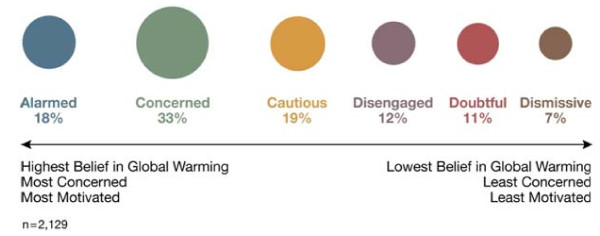
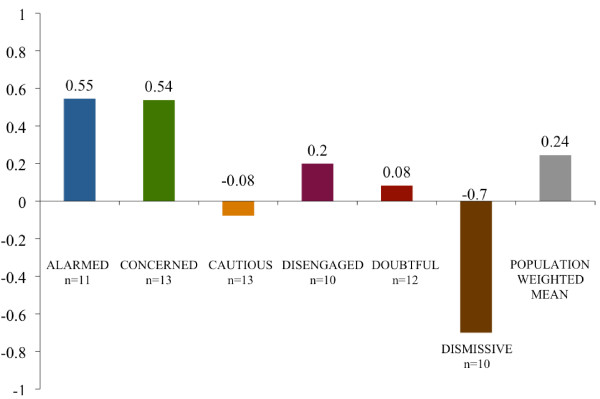
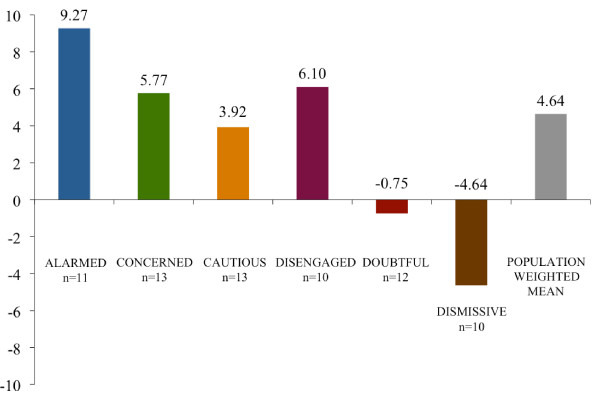
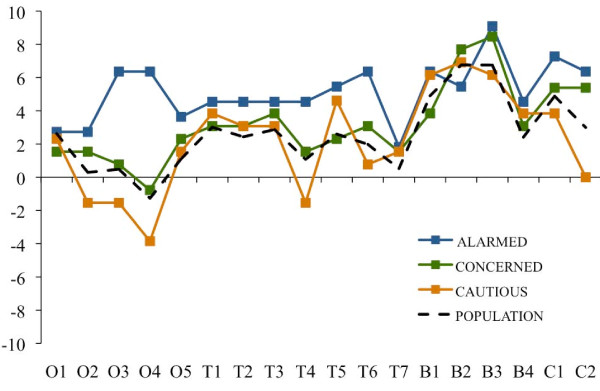
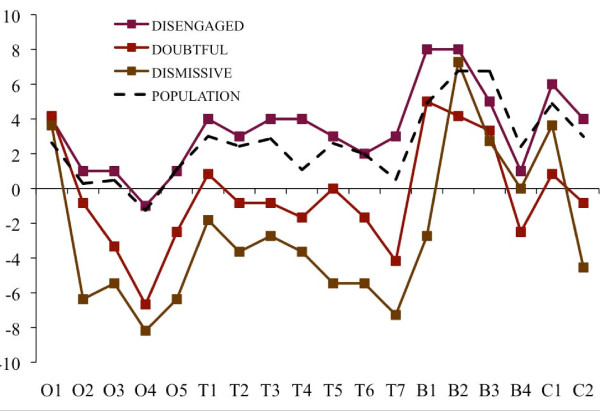
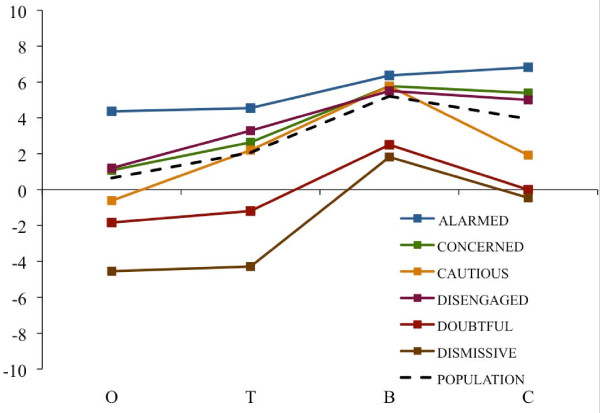
BACKGROUND: Climate change is taking a toll on human health, and some leaders in the public health community have urged their colleagues to give voice to its health implications. Previous research has shown that Americans are only dimly aware of the health implications of climate change, yet the literature on issue framing suggests that providing a novel frame--such as human health--may be potentially useful in enhancing public engagement. We conducted an exploratory study in the United States of people's reactions to a public health-framed short essay on climate change. METHODS: U.S. adult respondents (n = 70), stratified by six previously identified audience segments, read the essay and were asked to highlight in green or pink any portions of the essay they found "especially clear and helpful" or alternatively "especially confusing or unhelpful." Two dependent measures were created: a composite sentence-specific score based on reactions to all 18 sentences in the essay; and respondents' general reactions to the essay that were coded for valence (positive, neutral, or negative). We tested the hypothesis that five of the six audience segments would respond positively to the essay on both dependent measures. RESULTS: There was clear evidence that two of the five segments responded positively to the public health essay, and mixed evidence that two other responded positively. There was limited evidence that the fifth segment responded positively. Post-hoc analysis showed that five of the six segments responded more positively to information about the health benefits associated with mitigation-related policy actions than to information about the health risks of climate change. CONCLUSIONS: Presentations about climate change that encourage people to consider its human health relevance appear likely to provide many Americans with a useful and engaging new frame of reference. Information about the potential health benefits of specific mitigation-related policy actions appears to be particularly compelling. We believe that the public health community has an important perspective to share about climate change, a perspective that makes the problem more personally relevant, significant, and understandable to members of the public.
Overview
The claims and statistics of this paper haven’t been checked yet.
Free: it reads the open-access text and checks the first 5 claims that cite a source we can check. Create a free account to check every claim.
Integrity signals
Registry
Cites
Statistics
Figures
Verification
Claims the paper makes
The claims and statistics of this paper haven’t been checked yet.
Free: it reads the open-access text and checks the first 5 claims that cite a source we can check. Create a free account to check every claim.
Claims other papers make about this one
Each is checked against this paper’s own text: does it say what the citing paper says it does?
The cited source says what the claim attributes to it.
In the citing paper
“While studies such as Myers et al (2012) and Maibach et al (2010) have found evidence for the efficacy of the Public health frame, others have found limited evidence (Walker et al 2018).”
From Framing climate change for effective communication: a systematic map (2020) · cites this paper as Maibach et al 2010
The cited source says what the claim attributes to it.
In the citing paper
“most co-benefits research has been conducted in Western countries (for example, USA (ref.16))”
From Co-benefits of addressing climate change can motivate action around the world (2016) · cites this paper as [16]
The cited source says what the claim attributes to it.
In the citing paper
“benefit population health by reducing disease or promoting healthier lifestyles (for example, cycling/walking instead of driving) 12,15,16”
From Co-benefits of addressing climate change can motivate action around the world (2016) · cites this paper as [16]
The cited source says what the claim attributes to it.
In the citing paper
“Commonly cited co-benefits addressing Dysfunction (for example, pollution, disease 11,12,15,16 ) were actually the weakest motivators of action overall.”
From Co-benefits of addressing climate change can motivate action around the world (2016) · cites this paper as [16]
Self-check
Percentages, sums and reported differences re-computed from the paper’s own numbers.
The self-check needs the paper’s full text.
Citations
Cites
Content Analysis: An Introduction to its Methodology.
Shelley, M., & Krippendorff, K. (1984) · Journal of the American Statistical Association · doi:10.2307/2288384 · Cited by 24,312
Climate Change 2007: Impacts, Adaptation and Vulnerability
Parry, M. L., Canziani, O. F., Palutikof, J. P., van der Linden, P., & Hanson, C. (2007) · Centre for Environmental Data Analysis Digital Repository (Centre for Environmental Data Analysis) · doi:10.5281/zenodo.7356334 · Cited by 9,136
Mackay, A. (2008) · Journal of Environmental Quality · doi:10.2134/jeq2008.0015br · Cited by 5,591
Answering the Call for a Standard Reliability Measure for Coding Data
Hayes, A. F., & Krippendorff, K. (2007) · Communication Methods and Measures · doi:10.1080/19312450709336664 · Cited by 4,225 · cited 1×
“To assess reliability, we used Krippendorff 's alpha [24,25], a conservative measure that corrects for chance agreement among coders; a K-alpha of .”
MethodClimate change and human health: present and future risks
McMichael, A. J., Woodruff, R. E., & Hales, S. (2006) · The Lancet · doi:10.1016/s0140-6736(06)68079-3 · Cited by 2,585 · cited 1×
“This finding comes as a relatively small group of public health professionals are working rapidly to better comprehend and quantify the nature and magnitude of these threats to human health and wellbeing [6].”
BackgroundScheufele, D. A., & Tewksbury, D. (2007) · Journal of Communication · doi:10.1111/j.0021-9916.2007.00326.x · Cited by 2,548 · cited 1×
“, a frame that people had not previously considered - is potentially useful when it helps people understand the issue more clearly by providing additional personal and societal relevance [30,31].”
Background(2018) · Journal of Communication · doi:10.1111/(issn)1460-2466 · Cited by 2,303
Global Climate Change Impacts in the United States
Karl, T. R., Melillo, J. M., Peterson, T. C., & Hassol, S. J. (2009) · University of North Texas Digital Library (University of North Texas) · Cited by 1,641
Communicating Climate Change: Why Frames Matter for Public Engagement
Nisbet, M. C. (2009) · Environment: Science and Policy for Sustainable Development · doi:10.3200/envt.51.2.12-23 · Cited by 1,562 · cited 4×
“Indeed, it is precisely the lack of a countervailing populist movement on climate change that has made policy solutions so difficult to enact [ 13 ,14].”
BackgroundInfluentialSelf-citationMedia Images and the Social Construction of Reality
Gamson, W. A., Croteau, D., Hoynes, W., & Sasson, T. (1992) · Annual Review of Sociology · doi:10.1146/annurev.so.18.080192.002105 · Cited by 1,418 · cited 1×
“, how they mentally organize and discuss with others the issue's central ideas - greatly influences how they understand the nature of the problem, who or what they see as being responsible for the problem, and what they feel should be done to address the problem [11,12].”
Background
Research works printed but not linked: 3
- DeBono R Maltese public perceptions on climate change and health MPH thesis 2009 University of Malta, Faculty of Medicine and Surgery
- Association of State and Territorial Health Officials Climate change: a serious threat to public health 2009 http://www.astho.org/Search.aspx?s=climate%20change
- Pew Research Center for the People & the Press Fewer Americans see solid evidence of global warming http://people-press.org/report/556/global-warming
Cited by
Hart, P. S., & Nisbet, E. C. (2012) · Communication Research · doi:10.1177/0093650211416646 · Cited by 1,123
“…et al.’s (2009) study on diabetes prevention, indicate framing climate mitigation policies as a public health issue may not be the universal panacea for the deep political polarization infesting the public debate about climate change as some scholars recently suggest (see Maibach et al., 2010).”
BackgroundHealth effects of climate change: an overview of systematic reviews
Rocque, R. J., Beaudoin, C., Ndjaboue, R., Cameron, L., Poirier-Bergeron, L., Poulin-Rheault, R.-A., Fallon, C., Tricco, A. C., & Witteman, H. O. (2021) · BMJ Open · doi:10.1136/bmjopen-2020-046333 · Cited by 932
Wolf, J., & Moser, S. C. (2011) · WIREs Climate Change · doi:10.1002/wcc.120 · Cited by 696
A public health frame arouses hopeful emotions about climate change: A Letter
Myers, T. A., Nisbet, M. C., Maibach, E. W., & Leiserowitz, A. A. (2012) · Climatic Change · doi:10.1007/s10584-012-0513-6 · Cited by 632
“Our results are also consistent with past research that has found that a diversity of audience segments respond positively to an emphasis on the public health consequences of climate change and the health benefits of action (Maibach et al. 2010).”
BackgroundResultInfluentialSelf-citationClimate Change: Challenges and Opportunities for Global Health
Patz, J. A., Frumkin, H., Holloway, T., Vimont, D. J., & Haines, A. (2014) · JAMA · doi:10.1001/jama.2014.13186 · Cited by 576
Views of health professionals on climate change and health: a multinational survey study
Kotcher, J., Maibach, E., Miller, J., Campbell, E., Alqodmani, L., Maiero, M., & Wyns, A. (2021) · The Lancet Planetary Health · doi:10.1016/s2542-5196(21)00053-x · Cited by 534
Self-citationThe relationship between personal experience and belief in the reality of global warming
Myers, T. A., Maibach, E. W., Roser-Renouf, C., Akerlof, K., & Leiserowitz, A. A. (2013) · Nature Climate Change · doi:10.1038/nclimate1754 · Cited by 515
Self-citationCorner, A., Roberts, O., Chiari, S., Völler, S., Mayrhuber, E. S., Mandl, S., & Monson, K. (2015) · WIREs Climate Change · doi:10.1002/wcc.353 · Cited by 473
“In response, some research has focused on framing messages around the ‘cobenefits’ tackling climate change may bring, typically around improvements in public health or by addressing energy security 73 .”
Co-benefits of addressing climate change can motivate action around the world
Bain, P. G., Milfont, T. L., Kashima, Y., Bilewicz, M., Doron, G., Garðarsdóttir, R. B., Gouveia, V. V., Guan, Y., Johansson, L.-O., Pasquali, C., et al. (2016) · Nature Climate Change · doi:10.1038/nclimate2814 · Cited by 447
The Lancet countdown: Tracking progress on health and climate change
Watts, N., Adger, W. N., Ayeb-Karlsson, S., Bai, Y., Byass, P., Campbell-Lendrum, D., Colbourn, T., Cox, P., Davies, M., Depledge, M., et al. (2017) · The Lancet · doi:10.1016/s0140-6736(16)32124-9 · Cited by 430
Maibach, E. W., Leiserowitz, A., Roser-Renouf, C., & Mertz, C. K. (2011) · PLoS ONE · doi:10.1371/journal.pone.0017571 · Cited by 358
Self-citationBehaviour change to address climate change
Whitmarsh, L., Poortinga, W., & Capstick, S. (2021) · Current Opinion in Psychology · doi:10.1016/j.copsyc.2021.04.002 · Cited by 322
“…(a) tailor messages to audience values and beliefs (Whitmarsh & Corner, 2017); (b) communicate 140 the wider (co-)benefits of climate action (Maibach et al., 2010; Bain et al., 2016; Wolstenholme et al., 2020); 141 (c) target times and locations of decision-making, such as via product…”
BackgroundClimate change education and research: possibilities and potentials versus problems and perils?
Reid, A. (2019) · Environmental Education Research · doi:10.1080/13504622.2019.1664075 · Cited by 332
“…diverse participants (Rom an and Busch 2016; Siegner and Stapert 2019; Stapleton 2019; cf. Pruneau et al. 2003; McCaffrey and Buhr 2008; Whitmarsh 2008; Maibach et al. 2010; Akerlof, Bruff, and Witte 2011; Corner and Randall 2011; Hart 2011; Skamp, Boyes, and Stanisstreet 2013; Hestness et al.…”
BackgroundWibeck, V. (2014) · Environmental Education Research · doi:10.1080/13504622.2013.812720 · Cited by 314
“Other US surveys show similar results (Maibach et al. 2010), and there are signs of a certain ‘issue fatigue’ at least within some segments of the American public (Maibach et al.”
BackgroundResultInfluentialHansen, A. (2011) · International Communication Gazette · doi:10.1177/1748048510386739 · Cited by 271
Social Movement Theory and the Prospects for Climate Change Activism in the United States
McAdam, D. (2017) · Annual Review of Political Science · doi:10.1146/annurev-polisci-052615-025801 · Cited by 253
Migrants’ and refugees’ health: towards an agenda of solutions
Matlin, S. A., Depoux, A., Schütte, S., Flahault, A., & Saso, L. (2018) · Public Health Reviews · doi:10.1186/s40985-018-0104-9 · Cited by 238
Global Warming’s Six Americas: a review and recommendations for climate change communication
Leiserowitz, A., Roser-Renouf, C., Marlon, J., & Maibach, E. (2021) · Current Opinion in Behavioral Sciences · doi:10.1016/j.cobeha.2021.04.007 · Cited by 230
Self-citationThe Evolving Field of Risk Communication
Balog‐Way, D., McComas, K., & Besley, J. (2020) · Risk Analysis · doi:10.1111/risa.13615 · Cited by 220
Threat Without Efficacy? Climate Change on U.S. Network News
Hart, P. S., & Feldman, L. (2014) · Science Communication · doi:10.1177/1075547013520239 · Cited by 200
“Messages using a public health frame typically discuss localized health impacts of climate change and focus on the local, as well as global, benefits offered by proposed policy solutions (Maibach et al., 2010).”
BackgroundInfluentialHathaway, J., & Maibach, E. W. (2018) · Current Environmental Health Reports · doi:10.1007/s40572-018-0190-3 · Cited by 188
Self-citationMobilisation of public support for policy actions to prevent obesity
Huang, T. T.-K., Cawley, J. H., Ashe, M., Costa, S. A., Frerichs, L. M., Zwicker, L., Rivera, J. A., Levy, D., Hammond, R. A., Lambert, E. V., et al. (2015) · The Lancet · doi:10.1016/s0140-6736(14)61743-8 · Cited by 196
“For example, the field of climate change showed that people respond more positively to messages on the health benefits of mitigation policies than the health risks of climate change.(21) Similarly, efforts in the public health field may”
BackgroundAkerlof, K., DeBono, R., Berry, P., Leiserowitz, A., Roser-Renouf, C., Clarke, K.-L., Rogaeva, A., Nisbet, M. C., Weathers, M. R., & Maibach, E. W. (2010) · International Journal of Environmental Research and Public Health · doi:10.3390/ijerph7062559 · Cited by 190
“friendly communities, a broad cross-section of Americans responded positively to this re-framing of the issue [48].”
BackgroundSelf-citationThe effects of framing on environmental decisions: A systematic literature review
Ropret Homar, A., & Knežević Cvelbar, L. (2021) · Ecological Economics · doi:10.1016/j.ecolecon.2021.106950 · Cited by 190
Sustainability Transformations: Agents and Drivers across Societies
Linnér, B., & Wibeck, V. (2019) · Cambridge University Press eBooks · doi:10.1017/9781108766975 · Cited by 264
Troeger, C. E., Khalil, I. A., Blacker, B. F., Biehl, M. H., Albertson, S. B., Zimsen, S. R. M., Rao, P. C., Abate, D., Admasie, A., Ahmadi, A., et al. (2020) · The Lancet Infectious Diseases · doi:10.1016/s1473-3099(19)30410-4 · Cited by 176
Climate change as a polarizing cue: Framing effects on public support for low-carbon energy policies
Feldman, L., & Hart, P. S. (2018) · Global Environmental Change · doi:10.1016/j.gloenvcha.2018.05.004 · Cited by 171
“This follows prior research that found that the health benefits of climate mitigation resonate across the political spectrum (Maibach et al., 2010) and that conservatives and Republicans perceive health benefits and energy security as more compelling reasons than climate change for reducing fossil fuel use (Gromet et…”
BackgroundWhitmarsh, L., & Corner, A. (2017) · Global Environmental Change · doi:10.1016/j.gloenvcha.2016.12.008 · Cited by 172
“…change action found focussing on public health benefits elicited the most positive responses, suggesting shifting the terms of the debate from ‘concern about climate change’ to ‘concern about public health’ is likely to appeal to audiences irrespective of political ideology (Maibach et al, 2010).”
BackgroundFeldman, L., Hart, P. S., & Milosevic, T. (2017) · Public Understanding of Science · doi:10.1177/0963662515595348 · Cited by 172
Climate change and climate variability: personal motivation for adaptation and mitigation
Semenza, J. C., Ploubidis, G. B., & George, L. A. (2011) · Environmental Health · doi:10.1186/1476-069x-10-46 · Cited by 169
“Nevertheless, health as a communication frame can be used to complement other strategies to augment the public response [42].”
BackgroundLewandowsky, S., Stritzke, W. G. K., Freund, A. M., Oberauer, K., & Krueger, J. I. (2013) · American Psychologist · doi:10.1037/a0034515 · Cited by 163
Maibach, E. W., Kreslake, J. M., Roser-Renouf, C., Rosenthal, S., Feinberg, G., & Leiserowitz, A. A. (2015) · Annals of Global Health · doi:10.1016/j.aogh.2015.08.010 · Cited by 161
“As per the National Climate Assessment’s fourth and final key finding,(4) these benefits are an important part of the story, and research has shown that a focus on health benefits creates an important opportunity to engage people across the spectrum of climate change beliefs more deeply in the issue.(38) A variety of…”
BackgroundSelf-citationBuilding a Social Mandate for Climate Action: Lessons from COVID-19
Howarth, C., Bryant, P., Corner, A., Fankhauser, S., Gouldson, A., Whitmarsh, L. E., & Willis, R. (2020) · Environmental and Resource Economics · doi:10.1007/s10640-020-00446-9 · Cited by 196
Framing climate change for effective communication: a systematic map
Badullovich, N., Grant, W. J., & Colvin, R. M. (2020) · Environmental Research Letters · doi:10.1088/1748-9326/aba4c7 · Cited by 157
#Climate Change on TikTok: A Content Analysis of Videos
Basch, C. H., Yalamanchili, B., & Fera, J. (2021) · Journal of Community Health · doi:10.1007/s10900-021-01031-x · Cited by 149
Framing Virtual Experiences: Effects on Environmental Efficacy and Behavior Over Time
Ahn, S. J., Fox, J., Dale, K. R., & Avant, J. A. (2014) · Communication Research · doi:10.1177/0093650214534973 · Cited by 156
“Second, these results echo earlier studies on environmental message framing that demonstrated the relative power of gain frames over loss frames (Maibach et al., 2010; Morton et al., 2011; Obermiller, 1995).”
BackgroundResultMarteau, T. M. (2017) · Philosophical Transactions of the Royal Society A Mathematical Physical and Engineering Sciences · doi:10.1098/rsta.2016.0371 · Cited by 153
“Reflecting a higher value attached to benefits than risks, sustainable policies attracted greater support when outcomes were presented in terms of the health benefits of mitigation rather than the health risks of climate change [63].”
BackgroundHow do marine and coastal citizen science experiences foster environmental engagement?
Dean, A. J., Church, E., Loder, J., Fielding, K. S., & Wilson, K. A. (2018) · Journal of Environmental Management · doi:10.1016/j.jenvman.2018.02.080 · Cited by 144
Vainio, A., Irz, X., & Hartikainen, H. (2018) · Appetite · doi:10.1016/j.appet.2018.02.002 · Cited by 152
Toward human-centered algorithm design
Baumer, E. P. (2017) · Big Data & Society · doi:10.1177/2053951717718854 · Cited by 125
“…more) different frames and assessing the impact of those frames on participants’ opinions (Brewer, 2002; Druckman et al., 2012; Druckman and Nelson, 2003; Hart, 2011; Maibach et al., 2010; Quattrone and Tversky, 1988; Schuldt et al., 2011; Sniderman and Theriault, 2004; Tversky and Kahneman, 1981).”
BackgroundPositive, global, and health or environment framing bolsters public support for climate policies
Dasandi, N., Graham, H. M., Hudson, D., Mikhaylov, S., Hudson, J. V.-H., & Watts, N. (2022) · Communications Earth & Environment · doi:10.1038/s43247-022-00571-x · Cited by 153
Community Stories: Explaining Resistance to Street Tree-Planting Programs in Detroit, Michigan, USA
Carmichael, C. E., & McDonough, M. H. (2019) · Society & Natural Resources · doi:10.1080/08941920.2018.1550229 · Cited by 115
“Mental “frames” help people put boundaries around an issue, and determine the central ideas to focus on (Maibach et al. 2010).”
BackgroundSocial Practice and the Evolution of Personal Environmental Values
Hards, S. (2011) · Environmental Values · doi:10.3197/096327111x12922350165996 · Cited by 156
“However, with low levels Environmental Values 20.1 of trust in scientists and government, and signs of issue-fatigue (Maibach et al., 2010), combined with the global recession, the challenges are great.”
BackgroundInfluentialA toolkit for understanding and addressing climate scepticism
Hornsey, M. J., & Lewandowsky, S. (2022) · Nature Human Behaviour · doi:10.1038/s41562-022-01463-y · Cited by 158
Gamification for climate change engagement: review of corpus and future agenda
Galeote, D. F., Rajanen, M., Rajanen, D., Legaki, N.-Z., Langley, D., & Hamari, J. (2021) · Environmental Research Letters · doi:10.1088/1748-9326/abec05 · Cited by 162
Davison, S. M. C., White, M. P., Pahl, S., Taylor, T., Fielding, K. S., Roberts, B. R., Economou, T., McMeel, O., Kellett, P., & Fleming, L. E. (2021) · Global Environmental Change · doi:10.1016/j.gloenvcha.2021.102309 · Cited by 121
Motivating mitigation: when health matters more than climate change
Petrović, N., Madrigano, J., & Zaval, L. (2014) · Climatic Change · doi:10.1007/s10584-014-1192-2 · Cited by 144
“Indeed, casting climate change as a public health issue has been shown to elicit positive emotional responses (Maibach et al. 2010; Myers et al. 2012; Semenza et al. 2011).”
BackgroundMethodInfluentialThe Impact of Message Source on the Effectiveness of Communications About Climate Change
Bolsen, T., Palm, R. I., & Kingsland, J. T. (2019) · Science Communication · doi:10.1177/1075547019863154 · Cited by 141
Stapleton, S. R. (2018) · Environmental Education Research · doi:10.1080/13504622.2018.1472220 · Cited by 131
“Suggested reframings for climate change include public health (Maibach et al. 2010), security (Zia and Todd 2010), religion/morality, or economics.”
BackgroundTargeting and tailoring climate change communications
Bostrom, A., Böhm, G., & O'Connor, R. E. (2013) · Wiley Interdisciplinary Reviews Climate Change · doi:10.1002/wcc.234 · Cited by 138
Understanding and Countering Misinformation About Climate Change
Cook, J. (2019) · Advances in media, entertainment and the arts (AMEA) book series · doi:10.4018/978-1-5225-8535-0.ch016 · Cited by 121
Preaching to the choir: Internet-mediated advocacy, issue public mobilization, and climate change
Hestres, L. E. (2013) · New Media & Society · doi:10.1177/1461444813480361 · Cited by 143
“…community site Daily Kos); and neo-federated organizations retain a semblance of the chapter-based structure of traditional federated organizations, but focus on offering online tools for offline action (e.g., Democracy for America, founded by former presidential candidate Howard Dean in 2004).”
BackgroundOrlove, B., Shwom, R., Markowitz, E. M., & Cheong, S. (2020) · Annual Review of Environment and Resources · doi:10.1146/annurev-environ-012320-085130 · Cited by 128
“Researchers and activists have identified climate change as an existential crisis, a problem of public health (76, 77), a threat to national security (78), an economic risk (79), and as a moral issue (60).”
BackgroundMadrigano, J., Lane, K., Petrović, N., Ahmed, M. S., Blum, M., & Matte, T. (2018) · International Journal of Environmental Research and Public Health · doi:10.3390/ijerph15071433 · Cited by 117
“A deeper understanding of how closely people link climate change to threats to their personal health and safety can improve climate change communication strategies and promote adaptive behaviors to protect health [18,19].”
BackgroundGame-based Climate Change Engagement: Analyzing the Potential of Entertainment and Serious Games
Galeote, D. F., & Hamari, J. (2021) · Proceedings of the ACM on Human-Computer Interaction · doi:10.1145/3474653 · Cited by 135
“One way is to avoid persuading through fear and appeal to topics relevant for players, such as health [82, 96].”
BackgroundNisbet, M. C., & Markowitz, E. M. (2014) · PLoS ONE · doi:10.1371/journal.pone.0088473 · Cited by 110
Self-citationHerrmann, A., Fischer, H., Amelung, D., Litvine, D., Aall, C., Andersson, C., Baltruszewicz, M., Barbier, C., Bruyère, S., Bénévise, F., et al. (2017) · BMC Public Health · doi:10.1186/s12889-017-4604-1 · Cited by 93
Schuldt, J. P., & Roh, S. (2014) · Environmental Communication · doi:10.1080/17524032.2014.909510 · Cited by 82
“…to situate global climate change and its consequences within broader sociocultural contexts (e.g., as an “environmental” vs. “public health” issue; Maibach et al., 2010) that it may be served by somewhat distinct cognitive processes.6 Future theorizing and research should attempt to…”
BackgroundInfluentialAmelung, D., Fischer, H., Herrmann, A., Aall, C., Louis, V. R., Becher, H., Wilkinson, P., & Sauerborn, R. (2019) · Global Environmental Change · doi:10.1016/j.gloenvcha.2019.05.002 · Cited by 100
“Consequently, health co-105 benefits are still largely underestimated by the public (Maibach et al. 2010).”
BackgroundResultCook, B. R., & Overpeck, J. T. (2018) · Wiley Interdisciplinary Reviews Climate Change · doi:10.1002/wcc.570 · Cited by 94
Walker, B. J. A., Kurz, T., & Russel, D. (2018) · Environment and Behavior · doi:10.1177/0013916517713299 · Cited by 77
Developments in the Framing of Climate Change as a Public Health Issue in US Newspapers
Weathers, M. R., & Kendall, B. E. (2016) · Environmental Communication · doi:10.1080/17524032.2015.1050436 · Cited by 66
“However, recent findings indicate that Americans who understand that climate change is happening now and harming people in the USA are more engaged in personal actions and more supportive of climate change policies (Maibach et al., 2010).”
BackgroundFeldman, L., & Hart, P. S. (2018) · Journal of Communication · doi:10.1093/joc/jqy011 · Cited by 92
Communicating climate change through documentary film: imagery, emotion, and efficacy
Bieniek-Tobasco, A., McCormick, S., Rimal, R. N., Harrington, C. B., Shafer, M., & Shaikh, H. (2019) · Climatic Change · doi:10.1007/s10584-019-02408-7 · Cited by 107
“As a result, scholars have suggested reframing climate change to focus on gain frames, solutions and development, and not just impacts (Feinberg and Willer 2011; Maibach et al. 2010; Nisbet 2009; Spence and Pidgeon 2010).”
BackgroundBanwell, N., Rutherford, S., Mackey, B., & Chu, C. (2018) · International Journal of Environmental Research and Public Health · doi:10.3390/ijerph15040793 · Cited by 73
“reference for engagement on climate change issues [8,9,12].”
BackgroundThe Effect of Framing and Normative Messages in Building Support for Climate Policies
Hurlstone, M. J., Lewandowsky, S., Newell, B. R., & Sewell, B. (2014) · PLoS ONE · doi:10.1371/journal.pone.0114335 · Cited by 97
“Those additional variables include framing the consequences of climate-mitigation in terms of gains rather than losses [52], highlighting the benefits to human health of tackling climate change [53, 54], and, notably, underscoring the pervasive scientific consensus that humans are responsible for global warming [55, 5…”
BackgroundMessage framing strategies for effective marine conservation communication
Kolandai‐Matchett, K., & Armoudian, M. (2020) · Aquatic Conservation Marine and Freshwater Ecosystems · doi:10.1002/aqc.3349 · Cited by 88
Climate-sensitive health counselling: a scoping review and conceptual framework
Quitmann, C., Griesel, S., Schwerdtle, P. N., Danquah, I., & Herrmann, A. (2023) · The Lancet Planetary Health · doi:10.1016/s2542-5196(23)00107-9 · Cited by 81
Climate Change and Childhood Respiratory Health: A Call to Action for Paediatricians
Cicco, M. D., Ferrante, G., Amato, D., Capizzi, A., Pieri, C. D., Ferraro, V. A., Furno, M., Tranchino, V., & Grutta, S. L. (2020) · International Journal of Environmental Research and Public Health · doi:10.3390/ijerph17155344 · Cited by 74
“Since CC may undermine the last half-century of gains in global child health [5,13], there is an urgent need for health professionals to successfully educate citizens about CC issues and to engage them in preventive and adaptive responses [53].”
BackgroundLuber, G., Knowlton, K., Balbus, J. M., Frumkin, H., Hayden, M. H., Hess, J., McGeehin, M. A., Sheats, N., Backer, L. C., Beard, C. B., et al. (2014) · doi:10.7930/j0pn93h5 · Cited by 116
Self-citationMessage Framing and Climate Change Communication: A Meta-Analytical Review
Li, N., & Su, L. Y.-F. (2018) · Journal of Applied Communications · doi:10.4148/1051-0834.2189 · Cited by 93
Pechey, R., Reynolds, J. P., Cook, B., Marteau, T. M., & Jebb, S. A. (2022) · Journal of Environmental Psychology · doi:10.1016/j.jenvp.2022.101817 · Cited by 84
Navigating fundamental tensions towards a decolonial relational vision of planetary health
Jones, R., Reid, P., & Macmillan, A. K. (2022) · The Lancet Planetary Health · doi:10.1016/s2542-5196(22)00197-8 · Cited by 75
A new approach for evaluating climate change communication
Levine, A. S., & Kline, R. (2017) · Climatic Change · doi:10.1007/s10584-017-1952-x · Cited by 87
Kotcher, J., Maibach, E. W., Montoro, M., & Hassol, S. J. (2018) · GeoHealth · doi:10.1029/2018gh000154 · Cited by 75
“…health risks and the fact that the health consequences of climate change are arguably the most relevant aspect of the issue to most people (Maibach et al., 2010), most Americans appear to be largely unaware of the health impacts of climate change and who are most at risk (Leiserowitz et…”
BackgroundInfluentialSelf-citationCommunicating about ocean health: theoretical and practical considerations
Schuldt, J. P., McComas, K. A., & Byrne, S. E. (2016) · Philosophical Transactions of the Royal Society B Biological Sciences · doi:10.1098/rstb.2015.0214 · Cited by 75
The Influence of Identity Salience on Framing Effectiveness: An Experiment
Diamond, E. P. (2020) · Political Psychology · doi:10.1111/pops.12669 · Cited by 89
“For example, policy communicators have attempted to generate public support for climate mitigation policies by emphasizing the economic costs of inaction and the economic benefits of renewable energy (Hoffman, 2011; Hulme, 2009; Stern, 2007), the local impacts of climate change (Scannell & Gifford, 2013; Spence & Pidg…”
BackgroundKotcher, J., Feldman, L., Luong, K. T., Wyatt, J., & Maibach, E. W. (2021) · The Journal of Climate Change and Health · doi:10.1016/j.joclim.2021.100030 · Cited by 78
“[11] found that information on the health benefits of mitigation policies was rated as clearer and more useful than information on impacts.”
BackgroundResultInfluentialSelf-citationThe Political Economy of Health Co-Benefits: Embedding Health in the Climate Change Agenda
Workman, A., Blashki, G., Bowen, K. J., Karoly, D. J., & Wiseman, J. (2018) · International Journal of Environmental Research and Public Health · doi:10.3390/ijerph15040674 · Cited by 60
“Research conducted in the United States of America (US) concludes that applying a human health frame to climate change positively influences responses to climate action, irrespective of political persuasion [9,10].”
BackgroundMaking the links: do we connect climate change with health? A qualitative case study from Canada
Cardwell, F. S., & Elliott, S. J. (2013) · BMC Public Health · doi:10.1186/1471-2458-13-208 · Cited by 77
“While climate change has been, for many years, framed as an important environmental issue, this view has resulted in overall public ambivalence and contributes to a lack of public engagement [5].”
BackgroundResultInfluentialClimate Change Communication: A Provocative Inquiry into Motives, Meanings, and Means
Johnson, B. B. (2011) · Risk Analysis · doi:10.1111/j.1539-6924.2011.01731.x · Cited by 69
“(73) Those high in egoistic values might find public health benefits salient,(74) although also perhaps inclined to fear job impacts of such limits.”
BackgroundKreslake, J. M., Price, K. M., & Sarfaty, M. (2016) · BMC Public Health · doi:10.1186/s12889-016-3546-3 · Cited by 56
“Qualitative research has previously found that the public is receptive to messages about climate change with a public health frame [36], and other research has demonstrated that low-SES populations may have immediate-term, pragmatic priorities and interests regarding environmental impacts on health [18].”
BackgroundHsu, W.-C., Tseng, C.-M., & Kang, S.-C. (2018) · DOAJ (DOAJ: Directory of Open Access Journals) · Cited by 57
Sheehan, M. C., Fox, M. A., Kaye, C., & Resnick, B. A. (2017) · Environmental Health Perspectives · doi:10.1289/ehp1838 · Cited by 63
“Public health is a useful lens for conveying the urgency of behavior change needed to reduce greenhouse gas emissions and develop resilience to a changing climate (Maibach et al. 2010; Humphreys 2014).”
BackgroundOuariachi, T., Olvera‐Lobo, M., & Pérez, J. G. (2017) · Science Communication · doi:10.1177/1075547016687998 · Cited by 76
“According to different authors, focusing on visible solutions, as well as localized stories and positivism, can be considered a strategy to achieve these communicative goals (Maibach, Nisbet, Baldwin, Akerlof, & Diao, 2010; Moser & Dilling, 2011; Schroth et al., 2014; Sheppard, 2012).”
BackgroundCommunication research to improve engagement with climate change and human health: A review
Campbell, E., Uppalapati, S. S., Kotcher, J., & Maibach, E. W. (2023) · Frontiers in Public Health · doi:10.3389/fpubh.2022.1086858 · Cited by 69
Self-citationClimate Change Perception and Mental Health. Results from a Systematic Review of the Literature
Gianfredi, V., Mazziotta, F., Clerici, G., Astorri, E., Oliani, F., Cappellina, M., Catalini, A., Dell’Osso, B. M., Pregliasco, F. E., Castaldi, S., et al. (2024) · European Journal of Investigation in Health, Psychology and Education · doi:10.3390/ejihpe14010014 · Cited by 53
“This implies that individuals who are more attuned to the environmental crisis may find it more challenging to maintain a positive outlook and cope with adversity [41], suggesting that addressing climate change is an environmental concern and a public health urgency [42].”
BackgroundEnvironmental education and the health professions: framing climate change as a health issue
Adlong, W., & Dietsch, E. (2014) · Environmental Education Research · doi:10.1080/13504622.2014.930727 · Cited by 61
“Recent studies about reframing climate change as a health issue support the assertion that it gives rise to more engagement with the public (Cardwell and Elliott 2013; Maibach et al. 2010).”
BackgroundCyber security fear appeals: unexpectedly complicated
Renaud, K., & Dupuis, M. (2019) · New Security Paradigms Workshop · doi:10.1145/3368860.3368864 · Cited by 68
“2); (2) feasibility of recommended action(s) [18, 108, 163], which includes measures of opportunity to carry it out (Section 3.”
BackgroundFraming, the media, and environmental communication
Nisbet, M. C., & Newman, T. P. (2015) · doi:10.4324/9781315887586-24 · Cited by 111
Self-citationFlying less: personal health and environmental co-benefits
Cohen, S., & Kantenbacher, J. (2019) · Journal of Sustainable Tourism · doi:10.1080/09669582.2019.1585442 · Cited by 59
“Health-based essays on climate change have been found to be an effective framing for engaging the public (Maibach et al. 2010), while focusing on the public health impacts of climate change has been more effective than environmental or national-security frames in eliciting emotional reactions…”
From influencing to engagement: a framing model for climate communication in polarised settings
Badullovich, N. (2022) · Environmental Politics · doi:10.1080/09644016.2022.2052648 · Cited by 65
Climate Solutions Double as Health Interventions
Mailloux, N. A., Henegan, C. P., Lsoto, D., Patterson, K. P., West, P. C., Foley, J. A., & Patz, J. A. (2021) · International Journal of Environmental Research and Public Health · doi:10.3390/ijerph182413339 · Cited by 57
Hindering Harm and Preserving Purity: How Can Moral Psychology Save the Planet?
Rottman, J., Kelemen, D. A., & Young, L. (2015) · Philosophy Compass · doi:10.1111/phc3.12195 · Cited by 55
Perceptions of the health impacts of climate change among Canadians
Casson, N. J., Cameron, L., Mauro, I. J., Friesen‐Hughes, K., & Rocque, R. (2023) · BMC Public Health · doi:10.1186/s12889-023-15105-z · Cited by 54
“Some recent literature points to a health framing as a potentially effective way to engage people across political and ideological divides [20, 21, 65], possibly because of a ‘ceiling effect’ where those on the left end on the political spectrum are already very concerned about the impacts of climate change [33].”
BackgroundDoes it matter if you “believe” in climate change? Not for coastal home vulnerability
Javeline, D., Kijewski-Correa, T. L., & Chesler, A. (2019) · Climatic Change · doi:10.1007/s10584-019-02513-7 · Cited by 51
“Information more directly salient to daily lives may influence behavior more than awareness about climate change (Attari et al. 2010:16058; Maibach et al. 2010; Petrovic et al. 2014).”
BackgroundMailloux, N. A., Abel, D. W., Holloway, T., & Patz, J. A. (2022) · GeoHealth · doi:10.1029/2022gh000603 · Cited by 58
Méndez, M. (2015) · Local Environment · doi:10.1080/13549839.2015.1038227 · Cited by 59
Rickard, L. N., Yang, J. Z., Seo, M., & Harrison, T. M. (2014) · Global Environmental Change · doi:10.1016/j.gloenvcha.2014.03.010 · Cited by 54
The Six Australias: Concern About Climate Change (and Global Warming) is Rising
Neumann, C., Stanley, S. K., Leviston, Z., & Walker, I. A. (2022) · Environmental Communication · doi:10.1080/17524032.2022.2048407 · Cited by 53
“For example, due to their high valence and issue involvements, campaigns may focus on the more responsive Alarmed and Concerned segments, and avoid Dismissives, who are less likely to change their mind (Maibach et al., 2011).”
BackgroundInfluential
Metadata
- Authors
- Maibach, E. W., Nisbet, M., Baldwin, P., Akerlof, K., & Diao, G.
- Affiliations
- George Mason University (US)
- Corresponding author
- Maibach, Edward W
- Venue
- BMC Public Health
- Published
- 2010-06-01
- Volume
- 10
- Issue
- 1
- Pages
- 299-299
- ISSN
- 1471-2458 (ISSN-L)
- PMC
- PMC2898822
- OpenAlex
- W2145094481
- Semantic Scholar
- 4389b56f74d97440b2d52ab91853942f814b3a02
- Cited by
- 454
- References
- 32
- Citations by year
- 2026: 18 · 2025: 48 · 2024: 35 · 2023: 39 · 2022: 33 · 2021: 48 · 2020: 34 · 2019: 39 · 2018: 36 · 2017: 25 · 2016: 12 · 2015: 26 · 2014: 20 · 2013: 17 · 2012: 7
- FWCI
- 42.34
- Type
- journal article
- Language
- en
- Open access
- gold
- doi.org
- Licence
- cc-by
- creativecommons.org/licenses/by/2.0 (tdm)
- Locations
- BMC Public Health (publishedVersion, cc-by)
- PubMed Central (publishedVersion, cc-by)
- PubMed (publishedVersion)
- DOAJ (DOAJ: Directory of Open Access Journals) (submittedVersion)
- Figshare (submittedVersion, cc-by)
- American University Research Archive
- Topics
- Social Sciences › Sociology and Political Science › Climate Change Communication and Perception
- Physical Sciences › Environmental Science › Health, Toxicology and Mutagenesis › Climate Change and Health Impacts
- Social Sciences › Sociology and Political Science › Risk Perception and Management
- Keywords
- climate change, public health framing, issue framing, climate change perception, health impacts of climate change, climate change mitigation policy, citizen participation
- MeSH terms
- Adult, Female, Humans, Male, Public Health, Public Opinion, Surveys and Questionnaires, United States, Climate Change
About these checks
Registry, retraction, Cites and statistics results are computed, not judged, with one exception: a printed reference that no index lists is read once by a model before it counts as a citation error. Claims are extracted by a model and kept only when their quote appears verbatim in the text; each cited source is then checked, with a model’s help, for whether it says what the claim relies on. Those verdicts can be wrong — read the claim’s quote and the cited source before relying on one.
Statistics and arithmetic are recomputed, not judged.
Confidence bands are shown only for fields calibrated on our annotated test set. None is calibrated yet, so no band is shown.
What counts as a claim ›How we measure confidence ›How we check this ›
Are you an author, or do you see a problem with this page? Request a review
Data sources
Bibliographic data: Semantic Scholar, OpenAlex, Crossref.
Contains information from the Semantic Scholar Academic Graph Datasets, made available under the ODC Attribution License (ODC-BY 1.0).
Semantic Scholar’s data is described in: Kinney, R., et al. (2023). The Semantic Scholar Open Data Platform. arXiv:2301.10140.
