

Reframing climate change as a public health issue: an exploratory study of public reactions
Open accessThe DOI matches its Crossref record; 29 of the 32 references it cites were found in a registry or an index.
Abstract
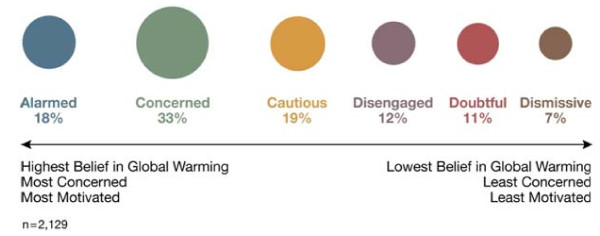
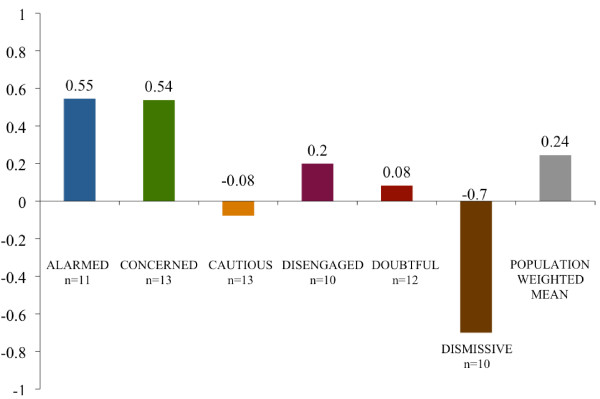
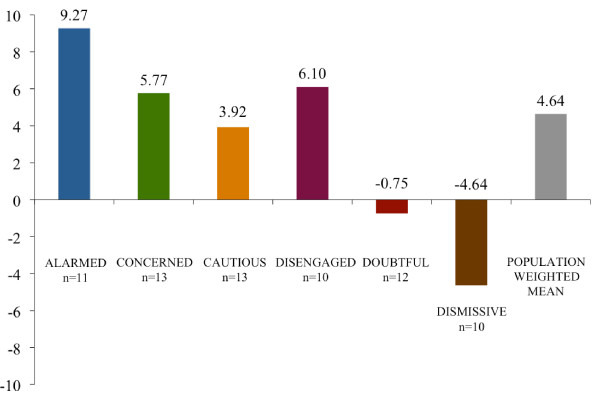
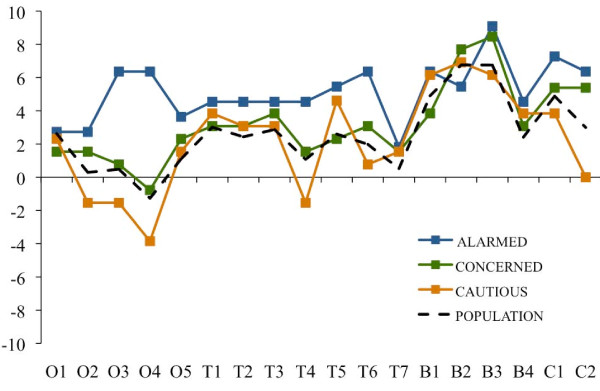
BACKGROUND: Climate change is taking a toll on human health, and some leaders in the public health community have urged their colleagues to give voice to its health implications. Previous research has shown that Americans are only dimly aware of the health implications of climate change, yet the literature on issue framing suggests that providing a novel frame--such as human health--may be potentially useful in enhancing public engagement. We conducted an exploratory study in the United States of people's reactions to a public health-framed short essay on climate change. METHODS: U.S. adult respondents (n = 70), stratified by six previously identified audience segments, read the essay and were asked to highlight in green or pink any portions of the essay they found "especially clear and helpful" or alternatively "especially confusing or unhelpful." Two dependent measures were created: a composite sentence-specific score based on reactions to all 18 sentences in the essay; and respondents' general reactions to the essay that were coded for valence (positive, neutral, or negative). We tested the hypothesis that five of the six audience segments would respond positively to the essay on both dependent measures. RESULTS: There was clear evidence that two of the five segments responded positively to the public health essay, and mixed evidence that two other responded positively. There was limited evidence that the fifth segment responded positively. Post-hoc analysis showed that five of the six segments responded more positively to information about the health benefits associated with mitigation-related policy actions than to information about the health risks of climate change. CONCLUSIONS: Presentations about climate change that encourage people to consider its human health relevance appear likely to provide many Americans with a useful and engaging new frame of reference. Information about the potential health benefits of specific mitigation-related policy actions appears to be particularly compelling. We believe that the public health community has an important perspective to share about climate change, a perspective that makes the problem more personally relevant, significant, and understandable to members of the public.
Overview
The claims and statistics of this paper haven’t been checked yet.
Free: it reads the open-access text and checks the first 5 claims that cite a source we can check. Create a free account to check every claim.
Integrity signals
Registry
Cites
Statistics
Figures
Verification
Claims the paper makes
The claims and statistics of this paper haven’t been checked yet.
Free: it reads the open-access text and checks the first 5 claims that cite a source we can check. Create a free account to check every claim.
Claims other papers make about this one
Each is checked against this paper’s own text: does it say what the citing paper says it does?
The cited source says what the claim attributes to it.
In the citing paper
“While studies such as Myers et al (2012) and Maibach et al (2010) have found evidence for the efficacy of the Public health frame, others have found limited evidence (Walker et al 2018).”
From Framing climate change for effective communication: a systematic map (2020) · cites this paper as Maibach et al 2010
The cited source says what the claim attributes to it.
In the citing paper
“most co-benefits research has been conducted in Western countries (for example, USA (ref.16))”
From Co-benefits of addressing climate change can motivate action around the world (2016) · cites this paper as [16]
The cited source says what the claim attributes to it.
In the citing paper
“benefit population health by reducing disease or promoting healthier lifestyles (for example, cycling/walking instead of driving) 12,15,16”
From Co-benefits of addressing climate change can motivate action around the world (2016) · cites this paper as [16]
The cited source says what the claim attributes to it.
In the citing paper
“Commonly cited co-benefits addressing Dysfunction (for example, pollution, disease 11,12,15,16 ) were actually the weakest motivators of action overall.”
From Co-benefits of addressing climate change can motivate action around the world (2016) · cites this paper as [16]
Self-check
Percentages, sums and reported differences re-computed from the paper’s own numbers.
The self-check needs the paper’s full text.
Citations
Cites
Content Analysis: An Introduction to its Methodology.
Shelley, M., & Krippendorff, K. (1984) · Journal of the American Statistical Association · doi:10.2307/2288384 · Cited by 24,312
Climate Change 2007: Impacts, Adaptation and Vulnerability
Parry, M. L., Canziani, O. F., Palutikof, J. P., van der Linden, P., & Hanson, C. (2007) · Centre for Environmental Data Analysis Digital Repository (Centre for Environmental Data Analysis) · doi:10.5281/zenodo.7356334 · Cited by 9,136
Mackay, A. (2008) · Journal of Environmental Quality · doi:10.2134/jeq2008.0015br · Cited by 5,591
Answering the Call for a Standard Reliability Measure for Coding Data
Hayes, A. F., & Krippendorff, K. (2007) · Communication Methods and Measures · doi:10.1080/19312450709336664 · Cited by 4,225 · cited 1×
“To assess reliability, we used Krippendorff 's alpha [24,25], a conservative measure that corrects for chance agreement among coders; a K-alpha of .”
MethodClimate change and human health: present and future risks
McMichael, A. J., Woodruff, R. E., & Hales, S. (2006) · The Lancet · doi:10.1016/s0140-6736(06)68079-3 · Cited by 2,585 · cited 1×
“This finding comes as a relatively small group of public health professionals are working rapidly to better comprehend and quantify the nature and magnitude of these threats to human health and wellbeing [6].”
BackgroundScheufele, D. A., & Tewksbury, D. (2007) · Journal of Communication · doi:10.1111/j.0021-9916.2007.00326.x · Cited by 2,548 · cited 1×
“, a frame that people had not previously considered - is potentially useful when it helps people understand the issue more clearly by providing additional personal and societal relevance [30,31].”
Background(2018) · Journal of Communication · doi:10.1111/(issn)1460-2466 · Cited by 2,303
Global Climate Change Impacts in the United States
Karl, T. R., Melillo, J. M., Peterson, T. C., & Hassol, S. J. (2009) · University of North Texas Digital Library (University of North Texas) · Cited by 1,641
Communicating Climate Change: Why Frames Matter for Public Engagement
Nisbet, M. C. (2009) · Environment: Science and Policy for Sustainable Development · doi:10.3200/envt.51.2.12-23 · Cited by 1,562 · cited 4×
“Indeed, it is precisely the lack of a countervailing populist movement on climate change that has made policy solutions so difficult to enact [ 13 ,14].”
BackgroundInfluentialSelf-citationMedia Images and the Social Construction of Reality
Gamson, W. A., Croteau, D., Hoynes, W., & Sasson, T. (1992) · Annual Review of Sociology · doi:10.1146/annurev.so.18.080192.002105 · Cited by 1,418 · cited 1×
“, how they mentally organize and discuss with others the issue's central ideas - greatly influences how they understand the nature of the problem, who or what they see as being responsible for the problem, and what they feel should be done to address the problem [11,12].”
BackgroundAmerican Risk Perceptions: Is Climate Change Dangerous?
Leiserowitz, A. A. (2005) · Risk Analysis · doi:10.1111/j.1540-6261.2005.00690.x · Cited by 888
Progress in communication sciences
Harmon, G. (1988) · Journal of the American Society for Information Science · doi:10.1002/(sici)1097-4571(198803)39:2<99::aid-asi5>3.0.co;2-1 · Cited by 495
Global Warming's Six Americas 2009: An Audience Segmentation Analysis
Maibach, E. W. (2009) · doi:10.13140/rg.2.2.28922.90563 · Cited by 420
Self-citationOckwell, D., Whitmarsh, L., & O'Neill, S. (2009) · Science Communication · doi:10.1177/1075547008328969 · Cited by 417
Maibach, E. W., Leiserowitz, A., Roser-Renouf, C., & Mertz, C. K. (2011) · PLoS ONE · doi:10.1371/journal.pone.0017571 · Cited by 358
Self-citationCommunication and Marketing As Climate Change–Intervention Assets
Maibach, E. W., Roser-Renouf, C., & Leiserowitz, A. (2008) · American Journal of Preventive Medicine · doi:10.1016/j.amepre.2008.08.016 · Cited by 255
Self-citationClimate Change and Public Health
Frumkin, H., & McMichael, A. J. (2008) · American Journal of Preventive Medicine · doi:10.1016/j.amepre.2008.08.019 · Cited by 172
Framing Public Discussion of Gay Civil Unions
Price, V., Nir, L., & Cappella, J. N. (2005) · Public Opinion Quarterly · doi:10.1093/poq/nfi014 · Cited by 164 · cited 1×
“, how they mentally organize and discuss with others the issue's central ideas - greatly influences how they understand the nature of the problem, who or what they see as being responsible for the problem, and what they feel should be done to address the problem [11,12].”
BackgroundMaibach, E. W., Chadwick, A. E., McBride, D., Chuk, M. G., Ebi, K. L., & Balbus, J. M. (2008) · PLoS ONE · doi:10.1371/journal.pone.0002838 · Cited by 139 · cited 1×
“In the United States, National Public Health Week 2008 was themed "Climate Change: Our Health in the Balance," the Centers for Disease Control and Prevention created a Climate Change and Public Health program, and several professional associations assessed the public health system's readiness to respond to the emergin…”
BackgroundSelf-citationAmid Worrisome Signs of Warming, 'Climate Fatigue' Sets In
Kerr, R. A. (2009) · Science · doi:10.1126/science.326.5955.926 · Cited by 64 · cited 1×
“, these findings are especially relevant given the "issue fatigue" that appears to be developing with regard to climate change among at least certain segments of the American public [26].”
BackgroundClimate Change and the Health of the Public
Frumkin, H., McMichael, A. J., & Hess, J. J. (2008) · American Journal of Preventive Medicine · doi:10.1016/j.amepre.2008.08.031 · Cited by 59
Jay, M., & Marmot, M. G. (2009) · BMJ · doi:10.1136/bmj.b3669 · Cited by 26
Berry, P., Clarke, K.-L., Pajot, M., & Hutton, D. (2009) · Cited by 18
Guston, D. H. (2010) · Sage eBooks · doi:10.4135/9781412972093.n109 · Cited by 16
Animal-human hybrid-embryo research
Lancet, T. (2007) · The Lancet · doi:10.1016/s0140-6736(07)61420-2 · Cited by 5
Andy Haines: exploring the effects of global environmental change and energy use on health
Shetty, P. (2007) · The Lancet · doi:10.1016/s0140-6736(07)61431-7 · Cited by 2
WHO workplan on climate change and health
(2018) · Climate Change and Law Collection · doi:10.1163/9789004322714_cclc_2015-0172-006 · Cited by 2
Breast cancer management is improving
Lancet, T. (2009) · The Lancet · doi:10.1016/s0140-6736(09)62136-x · Cited by 1
Research works printed but not linked: 3
- DeBono R Maltese public perceptions on climate change and health MPH thesis 2009 University of Malta, Faculty of Medicine and Surgery
- Association of State and Territorial Health Officials Climate change: a serious threat to public health 2009 http://www.astho.org/Search.aspx?s=climate%20change
- Pew Research Center for the People & the Press Fewer Americans see solid evidence of global warming http://people-press.org/report/556/global-warming
Cited by
Hart, P. S., & Nisbet, E. C. (2012) · Communication Research · doi:10.1177/0093650211416646 · Cited by 1,123
“…et al.’s (2009) study on diabetes prevention, indicate framing climate mitigation policies as a public health issue may not be the universal panacea for the deep political polarization infesting the public debate about climate change as some scholars recently suggest (see Maibach et al., 2010).”
BackgroundHealth effects of climate change: an overview of systematic reviews
Rocque, R. J., Beaudoin, C., Ndjaboue, R., Cameron, L., Poirier-Bergeron, L., Poulin-Rheault, R.-A., Fallon, C., Tricco, A. C., & Witteman, H. O. (2021) · BMJ Open · doi:10.1136/bmjopen-2020-046333 · Cited by 932
Wolf, J., & Moser, S. C. (2011) · WIREs Climate Change · doi:10.1002/wcc.120 · Cited by 696
A public health frame arouses hopeful emotions about climate change: A Letter
Myers, T. A., Nisbet, M. C., Maibach, E. W., & Leiserowitz, A. A. (2012) · Climatic Change · doi:10.1007/s10584-012-0513-6 · Cited by 632
“Our results are also consistent with past research that has found that a diversity of audience segments respond positively to an emphasis on the public health consequences of climate change and the health benefits of action (Maibach et al. 2010).”
BackgroundResultInfluentialSelf-citationClimate Change: Challenges and Opportunities for Global Health
Patz, J. A., Frumkin, H., Holloway, T., Vimont, D. J., & Haines, A. (2014) · JAMA · doi:10.1001/jama.2014.13186 · Cited by 576
Metadata
- Authors
- Maibach, E. W., Nisbet, M., Baldwin, P., Akerlof, K., & Diao, G.
- Affiliations
- George Mason University (US)
- Corresponding author
- Maibach, Edward W
- Venue
- BMC Public Health
- Published
- 2010-06-01
- Volume
- 10
- Issue
- 1
- Pages
- 299-299
- ISSN
- 1471-2458 (ISSN-L)
- PMC
- PMC2898822
- OpenAlex
- W2145094481
- Cited by
- 454
- References
- 32
- Citations by year
- 2026: 18 · 2025: 48 · 2024: 35 · 2023: 39 · 2022: 33 · 2021: 48 · 2020: 34 · 2019: 39 · 2018: 36 · 2017: 25 · 2016: 12 · 2015: 26 · 2014: 20 · 2013: 17 · 2012: 7
- FWCI
- 42.34
- Type
- journal article
- Language
- en
- Open access
- gold
- doi.org
- Licence
- cc-by
- creativecommons.org/licenses/by/2.0 (tdm)
- Locations
- BMC Public Health (publishedVersion, cc-by)
- PubMed Central (publishedVersion, cc-by)
- PubMed (publishedVersion)
- DOAJ (DOAJ: Directory of Open Access Journals) (submittedVersion)
- Figshare (submittedVersion, cc-by)
- American University Research Archive
- Topics
- Social Sciences › Sociology and Political Science › Climate Change Communication and Perception
- Physical Sciences › Environmental Science › Health, Toxicology and Mutagenesis › Climate Change and Health Impacts
- Social Sciences › Sociology and Political Science › Risk Perception and Management
- Keywords
- climate change, public health framing, issue framing, climate change perception, health impacts of climate change, climate change mitigation policy, citizen participation
- MeSH terms
- Adult, Female, Humans, Male, Public Health, Public Opinion, Surveys and Questionnaires, United States, Climate Change
About these checks
Registry, retraction, Cites and statistics results are computed, not judged, with one exception: a printed reference that no index lists is read once by a model before it counts as a citation error. Claims are extracted by a model and kept only when their quote appears verbatim in the text; each cited source is then checked, with a model’s help, for whether it says what the claim relies on. Those verdicts can be wrong — read the claim’s quote and the cited source before relying on one.
Statistics and arithmetic are recomputed, not judged.
Confidence bands are shown only for fields calibrated on our annotated test set. None is calibrated yet, so no band is shown.
What counts as a claim ›How we measure confidence ›How we check this ›
Are you an author, or do you see a problem with this page? Request a review
Data sources
Bibliographic data: Semantic Scholar, OpenAlex, Crossref.
Contains information from the Semantic Scholar Academic Graph Datasets, made available under the ODC Attribution License (ODC-BY 1.0).
Semantic Scholar’s data is described in: Kinney, R., et al. (2023). The Semantic Scholar Open Data Platform. arXiv:2301.10140.
