

Reframing climate change as a public health issue: an exploratory study of public reactions
Open accessThe DOI matches its Crossref record; 29 of the 32 references it cites were found in a registry or an index.
Abstract
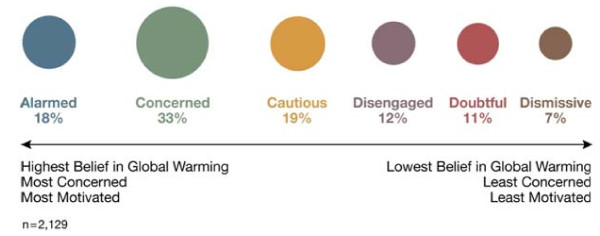
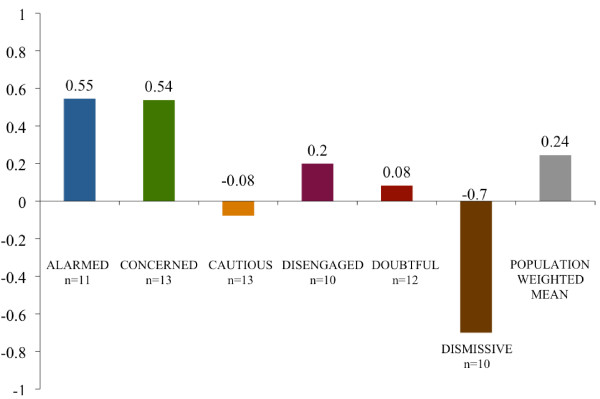
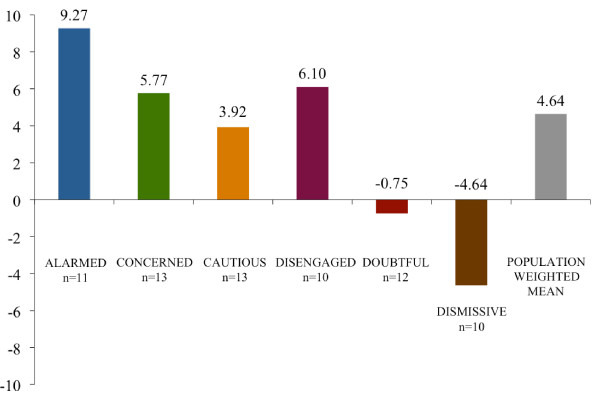
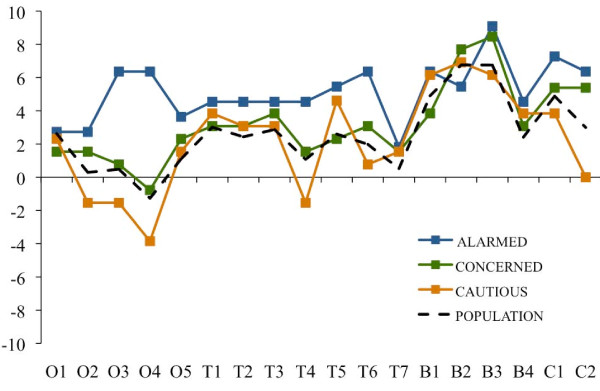
BACKGROUND: Climate change is taking a toll on human health, and some leaders in the public health community have urged their colleagues to give voice to its health implications. Previous research has shown that Americans are only dimly aware of the health implications of climate change, yet the literature on issue framing suggests that providing a novel frame--such as human health--may be potentially useful in enhancing public engagement. We conducted an exploratory study in the United States of people's reactions to a public health-framed short essay on climate change. METHODS: U.S. adult respondents (n = 70), stratified by six previously identified audience segments, read the essay and were asked to highlight in green or pink any portions of the essay they found "especially clear and helpful" or alternatively "especially confusing or unhelpful." Two dependent measures were created: a composite sentence-specific score based on reactions to all 18 sentences in the essay; and respondents' general reactions to the essay that were coded for valence (positive, neutral, or negative). We tested the hypothesis that five of the six audience segments would respond positively to the essay on both dependent measures. RESULTS: There was clear evidence that two of the five segments responded positively to the public health essay, and mixed evidence that two other responded positively. There was limited evidence that the fifth segment responded positively. Post-hoc analysis showed that five of the six segments responded more positively to information about the health benefits associated with mitigation-related policy actions than to information about the health risks of climate change. CONCLUSIONS: Presentations about climate change that encourage people to consider its human health relevance appear likely to provide many Americans with a useful and engaging new frame of reference. Information about the potential health benefits of specific mitigation-related policy actions appears to be particularly compelling. We believe that the public health community has an important perspective to share about climate change, a perspective that makes the problem more personally relevant, significant, and understandable to members of the public.
Overview
The claims and statistics of this paper haven’t been checked yet.
Free: it reads the open-access text and checks the first 5 claims that cite a source we can check. Create a free account to check every claim.
Integrity signals
Registry
Cites
Statistics
Figures
Verification
Claims the paper makes
The claims and statistics of this paper haven’t been checked yet.
Free: it reads the open-access text and checks the first 5 claims that cite a source we can check. Create a free account to check every claim.
Claims other papers make about this one
Each is checked against this paper’s own text: does it say what the citing paper says it does?
The cited source says what the claim attributes to it.
In the citing paper
“While studies such as Myers et al (2012) and Maibach et al (2010) have found evidence for the efficacy of the Public health frame, others have found limited evidence (Walker et al 2018).”
From Framing climate change for effective communication: a systematic map (2020) · cites this paper as Maibach et al 2010
The cited source says what the claim attributes to it.
In the citing paper
“most co-benefits research has been conducted in Western countries (for example, USA (ref.16))”
From Co-benefits of addressing climate change can motivate action around the world (2016) · cites this paper as [16]
The cited source says what the claim attributes to it.
In the citing paper
“benefit population health by reducing disease or promoting healthier lifestyles (for example, cycling/walking instead of driving) 12,15,16”
From Co-benefits of addressing climate change can motivate action around the world (2016) · cites this paper as [16]
The cited source says what the claim attributes to it.
In the citing paper
“Commonly cited co-benefits addressing Dysfunction (for example, pollution, disease 11,12,15,16 ) were actually the weakest motivators of action overall.”
From Co-benefits of addressing climate change can motivate action around the world (2016) · cites this paper as [16]
Self-check
Percentages, sums and reported differences re-computed from the paper’s own numbers.
The self-check needs the paper’s full text.
Citations
Cites
Content Analysis: An Introduction to its Methodology.
Shelley, M., & Krippendorff, K. (1984) · Journal of the American Statistical Association · doi:10.2307/2288384 · Cited by 24,312
Climate Change 2007: Impacts, Adaptation and Vulnerability
Parry, M. L., Canziani, O. F., Palutikof, J. P., van der Linden, P., & Hanson, C. (2007) · Centre for Environmental Data Analysis Digital Repository (Centre for Environmental Data Analysis) · doi:10.5281/zenodo.7356334 · Cited by 9,136
Mackay, A. (2008) · Journal of Environmental Quality · doi:10.2134/jeq2008.0015br · Cited by 5,591
Answering the Call for a Standard Reliability Measure for Coding Data
Hayes, A. F., & Krippendorff, K. (2007) · Communication Methods and Measures · doi:10.1080/19312450709336664 · Cited by 4,225 · cited 1×
“To assess reliability, we used Krippendorff 's alpha [24,25], a conservative measure that corrects for chance agreement among coders; a K-alpha of .”
MethodClimate change and human health: present and future risks
McMichael, A. J., Woodruff, R. E., & Hales, S. (2006) · The Lancet · doi:10.1016/s0140-6736(06)68079-3 · Cited by 2,585 · cited 1×
“This finding comes as a relatively small group of public health professionals are working rapidly to better comprehend and quantify the nature and magnitude of these threats to human health and wellbeing [6].”
BackgroundScheufele, D. A., & Tewksbury, D. (2007) · Journal of Communication · doi:10.1111/j.0021-9916.2007.00326.x · Cited by 2,548 · cited 1×
“, a frame that people had not previously considered - is potentially useful when it helps people understand the issue more clearly by providing additional personal and societal relevance [30,31].”
Background(2018) · Journal of Communication · doi:10.1111/(issn)1460-2466 · Cited by 2,303
Global Climate Change Impacts in the United States
Karl, T. R., Melillo, J. M., Peterson, T. C., & Hassol, S. J. (2009) · University of North Texas Digital Library (University of North Texas) · Cited by 1,641
Communicating Climate Change: Why Frames Matter for Public Engagement
Nisbet, M. C. (2009) · Environment: Science and Policy for Sustainable Development · doi:10.3200/envt.51.2.12-23 · Cited by 1,562 · cited 4×
“Indeed, it is precisely the lack of a countervailing populist movement on climate change that has made policy solutions so difficult to enact [ 13 ,14].”
BackgroundInfluentialSelf-citationMedia Images and the Social Construction of Reality
Gamson, W. A., Croteau, D., Hoynes, W., & Sasson, T. (1992) · Annual Review of Sociology · doi:10.1146/annurev.so.18.080192.002105 · Cited by 1,418 · cited 1×
“, how they mentally organize and discuss with others the issue's central ideas - greatly influences how they understand the nature of the problem, who or what they see as being responsible for the problem, and what they feel should be done to address the problem [11,12].”
Background
Research works printed but not linked: 3
- DeBono R Maltese public perceptions on climate change and health MPH thesis 2009 University of Malta, Faculty of Medicine and Surgery
- Association of State and Territorial Health Officials Climate change: a serious threat to public health 2009 http://www.astho.org/Search.aspx?s=climate%20change
- Pew Research Center for the People & the Press Fewer Americans see solid evidence of global warming http://people-press.org/report/556/global-warming
Cited by
Items 301–400 of 455
Climate change-associated health impacts: a way forward
Wills-Karp, M. A. (2024) · Frontiers in Science · doi:10.3389/fsci.2024.1395850 · Cited by 3
“As a greater emphasis on non-climate-related bene fi ts can motivate greater support for climate-mitigation actions (7), there is a critical need to evaluate the effectiveness and co-health bene fi ts of available and future interventions to identify those that offer the greatest societal bene fi ts.”
Does user-generated content increase the valuation of urban green space? Evidence from China
Alita, L., & Zhang, J. (2025) · Urban forestry & urban greening · doi:10.1016/j.ufug.2025.129086 · Cited by 4
Haltinner, K., Sarathchandra, D., Ziegler, A., & Stuart, R. P. (2022) · Rural Sociology · doi:10.1111/ruso.12460 · Cited by 4
Human Health and Well‐being in a Warming World
Nori‐Sarma, A., & Wellenius, G. A. (2023) · Milbank Quarterly · doi:10.1111/1468-0009.12608 · Cited by 3
Internet of Things for Sustainable Human Health
Salam, A. (2024) · Internet of things · doi:10.1007/978-3-031-62162-8_7 · Cited by 3
Caregivers of children with asthma alarmed by climate change: a cross‐sectional study
Godse, S., Shabanova, V., Ragavan, M. I., Mitchell, M., Chen, L., Flom, J. D., & Sheares, B. J. (2024) · Pediatric Pulmonology · doi:10.1002/ppul.27288 · Cited by 3
Science communication scholarship in Lithuania: A scoping study
Valinčiūtė, A. (2018) · Studies in Communication Sciences · doi:10.24434/j.scoms.2017.02.002 · Cited by 3
“Researchers, for example, suggest that one useful strategy for communicating about science involves framing issues in a way that resonates with people’s underlying beliefs and values (Scheufele, 2006; Dahlstrom, 2014; Maibach et al., 2010; Anderson et al., 2013).”
BackgroundMass Media Roles in Climate Change Mitigation
Swain, K. A. (2015) · Springer eBooks · doi:10.1007/978-1-4614-6431-0_6-2 · Cited by 3
Climate Donations Inspired by Evidence-Based Fundraising
Ryba, R., Dry, M. J., & Connell, S. D. (2022) · Frontiers in Psychology · doi:10.3389/fpsyg.2022.768823 · Cited by 5
Ramírez, E. A. B. (2024) · Communication & Society · doi:10.15581/003.37.1.115-130 · Cited by 4
“Environmental communication must therefore strike a balance in the representation of threats and solutions, of what is being lost and what can be gained (Nisbet, 2009; Maibach et al. , 2010; Spence & Pidgeon, 2010; Feinberg & Willer, 2011).”
BackgroundMaking climate policy efficient: implementing a model for environmental policy efficiency
Hansson, S. O., Björnberg, K. E., & Johansson, M. V. (2015) · International Journal of Sustainable Society · doi:10.1504/ijssoc.2015.068072 · Cited by 4
ROLE OF PAKISTANI PRINT MEDIA IN PROMOTING CLEAN AND GREEN PAKISTAN CAMPAIGN
Iftikhar, M., & Iftikhar, U. (2020) · Journal of Arts & Social Sciences (JASS) · doi:10.46662/jass-vol7-iss2-2020(24-34 · Cited by 3
Kotcher, J. (2016) · doi:10.13021/mars/5621 · Cited by 4
Elshirbiny, H. (2018) · Open Access Victoria University of Wellington | Te Herenga Waka (Figshare) · doi:10.26686/wgtn.17072027.v1 · Cited by 5
Barón, W. S., & Otero, K. L. M. (2024) · Acta Colombiana de Psicología · doi:10.14718/acp.2024.27.2.01 · Cited by 6
“Por ejemplo, enfatizar respecto a los beneficios inme-diatos de la acción climática, como la mejora de la salud y el ahorro económico, puede motivar a las personas y las comunidades a tomar medidas (Maibach et al., 2010).”
BackgroundHussain, M. (2024) · Newspaper Research Journal · doi:10.1177/07395329241263145 · Cited by 3
“Communication researchers have argued that frames of public health and national security may make climate change emotionally engaging (Maibach et al., 2010; Myers et al., 2012).”
Integrating Climate Change into Competency-Based Veterinary Education
Duncan, C., Berrian, A. M., & Sander, W. E. (2025) · Journal of Veterinary Medical Education · doi:10.3138/jvme-2024-0102 · Cited by 4
A thematic analysis of what Australians state would change their minds on climate change
Lee, A. S. G., Kirkland, K., Stanley, S. K., Robinson, A., Leviston, Z., & Walker, I. A. (2025) · Scientific Reports · doi:10.1038/s41598-025-96714-z · Cited by 4
“Recommendations for this group therefore include interventions that make climate change more personally relevant, such as by linking it to shared public health concerns 24,25 or using persuasive narratives 47 .”
An Interactive Tool for the Factor Analysis of Environmental Social Representations
Delouvée, S., Delisle, A. L., & David, J.-C. (2025) · Environments · doi:10.3390/environments12050164 · Cited by 2
“Previous studies on climate change communication have highlighted the importance for communicators to segment target groups and consider their interpretative frames [41,42].”
Public Participation and Social Movements in Environmental Policy and Justice
Armstrong, J. H. (2025) · Palgrave Studies in Sustainable Futures. · doi:10.1007/978-3-031-55387-5_19 · Cited by 2
Miniard, D., & Attari, S. Z. (2025) · Climatic Change · doi:10.1007/s10584-025-04034-y · Cited by 2
“…review of 25 years of climate framing research showed that issue-specific frames that focused on health, economic, or security concerns represent the dominant approach in the field (Badullovich et al. 2020; Guenther et al. 2024 ; Maibach et al. 2010; Myers et al. 2012 ; Spence and Pidgeon 2010 ).”
Badullovich, N., Stede, M., Aktaṣ, B., Mirzakhmedova, N., & Saint‐Dizier, P. (2025) · Scientometrics · doi:10.1007/s11192-025-05494-w · Cited by 2
“…Hulme et al. issue frames, as well as three others that were taken from recent publications on the topic of climate change framing: Public health (Maibach et al., 2010; Myers et al., 2012), Environment (Bolsen & Shapiro, 2018; Nisbet, 2009), and Efficacy (Bolsen & Shapiro, 2018; Feldman et al.,…”
Planetary Health and Healthcare Workers
Torre, G. L., Dorelli, B., Baer, A. D. P., Barbato, D., Lia, L., & Giusti, M. D. (2022) · Sustainable development goals series · doi:10.1007/978-3-030-83160-8_12 · Cited by 2
Gaudiano, É. J. G. (2022) · Éducation et socialisation · doi:10.4000/edso.18133 · Cited by 2
Public Health and the Climate Emergency
Harmer, A. (2023) · Springer eBooks · doi:10.1007/978-3-030-96778-9_38-1 · Cited by 2
Public Participation and Social Movements in Environmental Policy and Justice
Armstrong, J. H. (2024) · Palgrave Studies in Sustainable Futures. · doi:10.1007/978-3-031-30231-2_19-1 · Cited by 3
Vundo, A., Muchiguere, E., & Akhmetov, A. (2024) · Journal of Advances in Environmental Health Research · doi:10.34172/jaehr.1343 · Cited by 2
No Better Medicine: Health in American Environmental Writing
Aoyama, M., & Hudson, M. J. (2014) · EcoHealth · doi:10.1007/s10393-014-0943-x · Cited by 2
Linnér, B., & Wibeck, V. (2019) · Cambridge University Press eBooks · doi:10.1017/9781108766975.009 · Cited by 2
Matthews, J. (2020) · Newspaper Research Journal · doi:10.1177/0739532920968647 · Cited by 2
“Religious leaders also have featured at this time to express moral commitments to tackle climate change (Nisbet, 2009) while other advocates have sought to outline the global health consequences of the issue (Maibach et al., 2010).”
BackgroundHealth as a Key Driver of Climate Change Communication. A Scoping ReviewPreprint
Ahmadi, S., Schütte, S., Herlihy, N., Hémono, M., Flahault, A., & Depoux, A. (2020) · Preprints.org · doi:10.20944/preprints202010.0095.v1 · Cited by 2
“Nevertheless, health as a key driver of climate change communication has recently received a growing attention from researchers interested in climate change and health [12, 13].”
BackgroundInfluence of Personal Recommendations towards Electricity Consumption on Consumer Behavior
Héjjová, J., & Bućko, J. (2023) · International Convention on Information and Communication Technology, Electronics and Microelectronics · doi:10.23919/mipro57284.2023.10159837 · Cited by 1
Waldo, J. L., Swearingen, T. C., & Jones, M. S. (2025) · npj Ocean Sustainability · doi:10.1038/s44183-025-00115-8 · Cited by 1
“’ s pre-existing concerns and emphasizes co-bene fi ts from climate action for other priorities they already care about, such as their family ’ s safety or the security of their livelihood 10,74,75 .”
Hong, Y., Liu-Galvin, R. E., Khan, M., Nguyen, O. T., Yoon, H., Yang, J. J., & Prosperi, M. (2025) · Journal of Public Health · doi:10.1007/s10389-025-02477-2 · Cited by 1
“Framing climate change as a public health issue, with an emphasis on the health benefits of specific mitigation policies, may further strengthen public support and participation in climate action initiatives (Maibach et al. 2010).”
Tippett, A. W., Hellevik, C. C., Velle, L. G., & Aspen, D. M. (2025) · Environmental Science & Policy · doi:10.1016/j.envsci.2025.104240 · Cited by 1
Effective Communication for Sustainable Behavior: Insights from Psychology
Farias, A. R., Cruz, B., Domingos, S., Possidónio, C., Loureiro, A., Portugal, E., & Luís, S. (2026) · CSR, sustainability, ethics & governance · doi:10.1007/978-3-032-00086-6_11 · Cited by 1
Groff, S. P. (2022) · Journal of Environmental Media · doi:10.1386/jem_00088_1 · Cited by 2
Samuel, G. N., MacFarlane, M., & Briggs, S. (2025) · Sociology of Health & Illness · doi:10.1111/1467-9566.70058 · Cited by 3
“…policies in terms of direct health co‐benefits is particularly appealing because of the immediate visible and tangible improvements to individuals and their communities (Holguera et al. 2020; Myers et al. 2012; Maibach et al. 2010; Workman et al. 2018; Amelung et al. 2019; Moutet et al. 2024).”
Using emotional appeal to encourage recycle and reuse behaviors
Yang, J. Z., He, Y., & Feeley, T. H. (2025) · Risk Analysis · doi:10.1111/risa.70083 · Cited by 1
“…such as climate change, for instance, researchers have found that framing climate change as a public health issue—as opposed to an environmental or economic issue—can be an effective way to engage the public (Maibach et al., 2010; Myers et al., 2012; Petrovic et al., 2014; Walker et al., 2018).”
Media Framing of Climate Change Mitigation and Adaptation
Swain, K. A. (2025) · Springer eBooks · doi:10.1007/978-3-031-84483-6_6 · Cited by 2
Prasad, K. (2017) · Advances in finance, accounting, and economics book series · doi:10.4018/978-1-5225-2458-8.ch016 · Cited by 1
Burke, S. E. L. (2020) · Springer eBooks · doi:10.1007/978-981-10-5012-1_40-2 · Cited by 1
Linnér, B., & Wibeck, V. (2019) · Cambridge University Press eBooks · doi:10.1017/9781108766975.002 · Cited by 1
Burke, S. E. L. (2021) · Springer eBooks · doi:10.1007/978-981-15-6631-8_40 · Cited by 1
Čada, K. (2023) · Czech Sociological Review · doi:10.13060/csr.2023.016 · Cited by 1
Strengthening health‐focused climate adaptation in Canada: Barriers and interventions
Rose, D., & Birchall, S. J. (2023) · Canadian Geographies / Géographies canadiennes · doi:10.1111/cag.12894 · Cited by 1
Communicating the Health Relevance of Climate Change
Sarfaty, M., & Maibach, E. W. (2024) · Oxford University Press eBooks · doi:10.1093/oso/9780197683293.003.0018 · Cited by 1
Self-citationFuture Directions: Youth Climate Distress and Climate Justice
Ray, S. J., & Wray, B. (2024) · Cambridge University Press eBooks · doi:10.1017/9781009252904.023 · Cited by 1
Media reporting of industrial wastewater issues in Kenya
Otsieno, M. N., & Koech, M. K. (2025) · Media Culture & Society · doi:10.1177/01634437241313038 · Cited by 1
“Maibach (2010) has rightly noted that, although environmental reporting has developed significantly over the last 50 years, the quality of that coverage and the near neglect of some key aspects like industrial wastewater has been a concern.”
InfluentialPerceptions of Endocrine Clinicians Regarding Climate Change and Health
Steinmetz-Wood, S., Kennedy, A. G., Hitt, J. R., Barrett, K. V., & Gilbert, M. P. (2025) · International Journal of Environmental Research and Public Health · doi:10.3390/ijerph22020139 · Cited by 2
“There is evidence suggesting that informing people about the health effects of climate change, as well as solutions to address them, can increase support for actions to reduce emissions [29,41,42].”
Vásquez, W. F., Ramos, H. E. V., Rodriguez-Estupiñán, J. P., Osorio-Cano, J. D., & Ochoa‐Herrera, V. (2025) · Environment and Development Economics · doi:10.1017/s1355770x25100235 · Cited by 1
“Previous research indicates that respondents may be more responsive to framing potential environmental problems as public health issues (Maibach et al., 2008; Maibach et al. , 2010; Atherton, 2019).”
Navigating US greenways: US political reflections inAn Inconvenient Truth
Poff, M. (2013) · Journal of Integrative Environmental Sciences · doi:10.1080/1943815x.2013.864316 · Cited by 2
Language, Frames, and Narratives
Corner, A., & Clarke, J. (2016) · Springer eBooks · doi:10.1007/978-3-319-46744-3_4 · Cited by 1
Telling the Stories of Climate Change: Structure and Content
Arnold, A. (2018) · Springer eBooks · doi:10.1007/978-3-319-69383-5_4 · Cited by 1
Pinto, J. D. C. (2018) · REVISTA ESPAÑOLA DE COMUNICACIÓN EN SALUD · doi:10.20318/recs.2018.4258 · Cited by 2
Myrick, J. G. (2019) · Emerald Group Publishing Limited eBooks · doi:10.1108/978-1-78769-967-020191005 · Cited by 2
Linnér, B., & Wibeck, V. (2019) · Cambridge University Press eBooks · doi:10.1017/9781108766975.008 · Cited by 1
An igniter for personal climate action?
Godsmark, C. N. (2022) · The Journal of Climate Change and Health · doi:10.1016/j.joclim.2022.100133 · Cited by 1
(2018) · Bristol University Press eBooks · doi:10.2307/j.ctt22h6qdm.12 · Cited by 1
Cloud, D. (2016) · Reflections A Journal of Community-Engaged Writing and Rhetoric · doi:10.59236/rjv16i1pp57-74 · Cited by 7
Stenborg, E. (2013) · Lund University Publications (Lund University) · Cited by 5
Howell, R. A. (2014) · Area · doi:10.1111/area.12073 · Cited by 1
der Laan, M. E.-V. (2014) · QSpace (Queen's University Library) · Cited by 1
An investigation of the effects of lead on children’s cognitive abilities.
Earl, R. (2011) · Adelaide Research & Scholarship (AR&S) (University of Adelaide) · Cited by 2
Rainforest, Reef, and our Appetite for Beef: Communication for Sustainable Behaviour Change
Patel, V. (2016) · Otago University Research Archive (University of Otago) · doi:10.13140/rg.2.2.13732.01928 · Cited by 1
Ahonen, E. Q., Fujishiro, K., Flynn, M., & Cunningham, T. R. (2018) · American Journal of Public Health · doi:10.2105/ajph.2018.304485 · Cited by 1
Communicating the Health Impacts of Climate Change: from Conviction to Persuasion
Lozon, E. (2018) · Digital Commons - Michigan Tech (Michigan Technological University) · doi:10.37099/mtu.dc.etdr/603 · Cited by 1
Lifestyle Medicine and Climate Change: The Role of Providers in Addressing a Public Health Challenge
Bernstein, A., & Katz, D. L. (2021) · American Journal of Lifestyle Medicine · doi:10.1177/15598276211017097 · Cited by 1
Tam, H. (2018) · Policy Press eBooks · doi:10.51952/9781447338253.ch008 · Cited by 1
Awuor, L., Meldrum, R. J., & Liberda, E. N. (2023) · doi:10.32920/22782716.v1 · Cited by 1
Castronuovo, L., Shammah, C., Trebucq, C. A., Hurtado, A., Verzeñassi, D., & Sergeeva, M. (2025) · medRxiv · doi:10.1101/2025.08.27.25334531 · Cited by 1
“Both prior research and our own results emphasizes the need to raise awareness about the impact of climate change on health among the general population, healthcare professionals, and sectors of government that have yet to prioritize the climate-health nexus (4,38,40,41).”
Local Policy Scan on Climate Change Adaptation
Greve, A. I., & Boswell, M. R. (2013) · DigitalCommons - CalPoly (California State Polytechnic University)
O “framing” na construção social de sentido do risco e da incerteza na ciência
de Oliveira, L. T., & Carvalho, A. (2012) · Revista Comunicando · doi:10.58050/comunicando.v1i1.118 · Cited by 7
The Framing of Climate Change in New Zealand Newspapers
Chetty, K. (2013) · Otago University Research Archive (University of Otago) · Cited by 3
Totten, S., Severini, A., Jayaraman, G., Faybush, S., Johnson, G., Demers, A., Sobol, I., Mao, Y., & Wong, T. (2015) · Canada Communicable Disease Report · doi:10.14745/ccdr.v41i03a01
Langbehn, K. (2016) · Digital Commons - University of South Florida (University of South Florida)
Conclusions: Pitfalls and the Power of Narratives
Arnold, A. (2018) · Springer eBooks · doi:10.1007/978-3-319-69383-5_5
Climate Change Communication Studies: Inquiries into Beliefs, Information and Stories
Arnold, A. (2018) · Springer eBooks · doi:10.1007/978-3-319-69383-5_2 · Cited by 2
Hines, D., & Sibbald, S. (2015) · Relevé des maladies transmissibles au Canada · doi:10.14745/ccdr.v41i03a04f
Climate change education : a portfolio
Skrzypek, N. (2018)
10. Climate Change and Environmental Public Health
Frumkin, H., Ebi, K. L., & Hess, J. J. (2018) · American Public Health Association eBooks · doi:10.2105/9780875532943ch10
Responding to stakeholder concerns regarding potential hydraulic fracturing in western Newfoundland
Allen, T. J. (2017) · Memorial University Research Repository (Memorial University)
Malena-Chan, R. (2019) · Promotion de la santé et prévention des maladies chroniques au Canada · doi:10.24095/hpcdp.39.4.07f
Trainor, S. (2019) · DiVA (Digitala Vetenskapliga Arkivet)
Lived, Local and Everyday: Understanding Media Use in Green Home Renovation
Podkalicka, A., & Anderson, D. (2020) · Global transformations in media and communication/Global transformations in media and communication research · doi:10.1007/978-3-030-37330-6_12
Psychology and Black History Month in the United States
Charlton, S. R. (2020) · Eye on Psi Chi Magazine · doi:10.24839/2164-9812.eye24.4.18
Global Arenas of Transformations
Linnér, B., & Wibeck, V. (2019) · Cambridge University Press eBooks · doi:10.1017/9781108766975.005
The New International Relations of Migration: A Planetary Health Agenda?
Lederle, M. J. (2020) · SUNScholar (Stellenbosch University) · Cited by 2
How Societies Change: Theories of Transformation
Linnér, B., & Wibeck, V. (2019) · Cambridge University Press eBooks · doi:10.1017/9781108766975.004
Linnér, B., & Wibeck, V. (2019) · Cambridge University Press eBooks · doi:10.1017/9781108766975.003
Hum, A. (2020) · Carleton University's Institutional Repository (MacOdrum Library, Carleton University) · doi:10.22215/etd/2020-14399
Linnér, B., & Wibeck, V. (2019) · Cambridge University Press eBooks · doi:10.1017/9781108766975.006
Linnér, B., & Wibeck, V. (2019) · Cambridge University Press eBooks · doi:10.1017/9781108766975.007
Linnér, B., & Wibeck, V. (2019) · Cambridge University Press eBooks · doi:10.1017/9781108766975.010
Linnér, B., & Wibeck, V. (2019) · Cambridge University Press eBooks · doi:10.1017/9781108766975.001
Linnér, B., & Wibeck, V. (2019) · Cambridge University Press eBooks · doi:10.1017/9781108766975.011
Metadata
- Authors
- Maibach, E. W., Nisbet, M., Baldwin, P., Akerlof, K., & Diao, G.
- Affiliations
- George Mason University (US)
- Corresponding author
- Maibach, Edward W
- Venue
- BMC Public Health
- Published
- 2010-06-01
- Volume
- 10
- Issue
- 1
- Pages
- 299-299
- ISSN
- 1471-2458 (ISSN-L)
- PMC
- PMC2898822
- OpenAlex
- W2145094481
- Semantic Scholar
- 4389b56f74d97440b2d52ab91853942f814b3a02
- Cited by
- 454
- References
- 32
- Citations by year
- 2026: 18 · 2025: 48 · 2024: 35 · 2023: 39 · 2022: 33 · 2021: 48 · 2020: 34 · 2019: 39 · 2018: 36 · 2017: 25 · 2016: 12 · 2015: 26 · 2014: 20 · 2013: 17 · 2012: 7
- FWCI
- 42.34
- Type
- journal article
- Language
- en
- Open access
- gold
- doi.org
- Licence
- cc-by
- creativecommons.org/licenses/by/2.0 (tdm)
- Locations
- BMC Public Health (publishedVersion, cc-by)
- PubMed Central (publishedVersion, cc-by)
- PubMed (publishedVersion)
- DOAJ (DOAJ: Directory of Open Access Journals) (submittedVersion)
- Figshare (submittedVersion, cc-by)
- American University Research Archive
- Topics
- Social Sciences › Sociology and Political Science › Climate Change Communication and Perception
- Physical Sciences › Environmental Science › Health, Toxicology and Mutagenesis › Climate Change and Health Impacts
- Social Sciences › Sociology and Political Science › Risk Perception and Management
- Keywords
- climate change, public health framing, issue framing, climate change perception, health impacts of climate change, climate change mitigation policy, citizen participation
- MeSH terms
- Adult, Female, Humans, Male, Public Health, Public Opinion, Surveys and Questionnaires, United States, Climate Change
About these checks
Registry, retraction, Cites and statistics results are computed, not judged, with one exception: a printed reference that no index lists is read once by a model before it counts as a citation error. Claims are extracted by a model and kept only when their quote appears verbatim in the text; each cited source is then checked, with a model’s help, for whether it says what the claim relies on. Those verdicts can be wrong — read the claim’s quote and the cited source before relying on one.
Statistics and arithmetic are recomputed, not judged.
Confidence bands are shown only for fields calibrated on our annotated test set. None is calibrated yet, so no band is shown.
What counts as a claim ›How we measure confidence ›How we check this ›
Are you an author, or do you see a problem with this page? Request a review
Data sources
Bibliographic data: Semantic Scholar, OpenAlex, Crossref.
Contains information from the Semantic Scholar Academic Graph Datasets, made available under the ODC Attribution License (ODC-BY 1.0).
Semantic Scholar’s data is described in: Kinney, R., et al. (2023). The Semantic Scholar Open Data Platform. arXiv:2301.10140.
