

Mobile phone use and stress, sleep disturbances, and symptoms of depression among young adults – A prospective cohort study
Open accessThe DOI matches its Crossref record; 65 of the 66 references it cites were found in a registry or an index.
Abstract
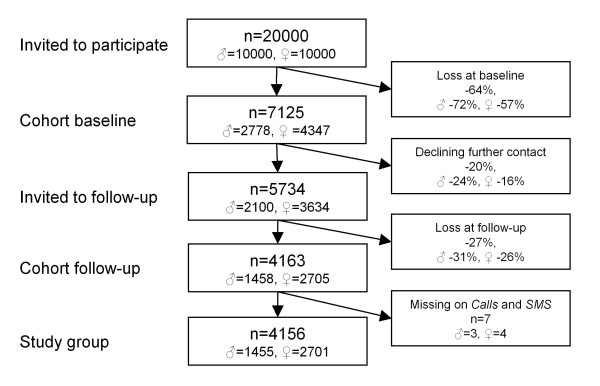
BACKGROUND: Because of the quick development and widespread use of mobile phones, and their vast effect on communication and interactions, it is important to study possible negative health effects of mobile phone exposure. The overall aim of this study was to investigate whether there are associations between psychosocial aspects of mobile phone use and mental health symptoms in a prospective cohort of young adults. METHODS: The study group consisted of young adults 20-24 years old (n = 4156), who responded to a questionnaire at baseline and 1-year follow-up. Mobile phone exposure variables included frequency of use, but also more qualitative variables: demands on availability, perceived stressfulness of accessibility, being awakened at night by the mobile phone, and personal overuse of the mobile phone. Mental health outcomes included current stress, sleep disorders, and symptoms of depression. Prevalence ratios (PRs) were calculated for cross-sectional and prospective associations between exposure variables and mental health outcomes for men and women separately. RESULTS: There were cross-sectional associations between high compared to low mobile phone use and stress, sleep disturbances, and symptoms of depression for the men and women. When excluding respondents reporting mental health symptoms at baseline, high mobile phone use was associated with sleep disturbances and symptoms of depression for the men and symptoms of depression for the women at 1-year follow-up. All qualitative variables had cross-sectional associations with mental health outcomes. In prospective analysis, overuse was associated with stress and sleep disturbances for women, and high accessibility stress was associated with stress, sleep disturbances, and symptoms of depression for both men and women. CONCLUSIONS: High frequency of mobile phone use at baseline was a risk factor for mental health outcomes at 1-year follow-up among the young adults. The risk for reporting mental health symptoms at follow-up was greatest among those who had perceived accessibility via mobile phones to be stressful. Public health prevention strategies focusing on attitudes could include information and advice, helping young adults to set limits for their own and others' accessibility.
Overview
The claims and statistics of this paper haven’t been checked yet.
Free: it reads the open-access text and checks the first 5 claims that cite a source we can check. Create a free account to check every claim.
Integrity signals
Registry
Cites
Statistics
Figures
Verification
Claims the paper makes
The claims and statistics of this paper haven’t been checked yet.
Free: it reads the open-access text and checks the first 5 claims that cite a source we can check. Create a free account to check every claim.
Claims other papers make about this one
Each is checked against this paper’s own text: does it say what the citing paper says it does?
The source backs part of the claim, not all of it — or backs it for a different population, condition or comparison.
In the citing paper
“Several studies indicate that high levels of social media use or screen time may reduce users' amount and quality of sleep.16,17”
From Social Media Use and Its Link to Physical Health Indicators (2022) · cites this paper as [17]
Experimental — accuracy not yet measuredThe source backs part of the claim, not all of it — or backs it for a different population, condition or comparison.
In the citing paper
“The first was focused on the non-smart mobile phone and was mainly due to two factors: the amount of phone bills that the use led to and the high use of text messages.”
From Problematic Use of the Internet and Smartphones in University Students: 2006–2017 (2018) · cites this paper as [6]
Experimental — accuracy not yet measuredThe source backs part of the claim, not all of it — or backs it for a different population, condition or comparison.
In the citing paper
“Previous studies showed the relationships between long phone usage duration and high stress [45] and long and frequent phone usage and severe depressive symptoms [8].”
From Identifying Objective Physiological Markers and Modifiable Behaviors for Self-Reported Stress and Mental Health Status Using Wearable Sensors and Mobile Phones: Observational Study (2018) · cites this paper as [45]
Experimental — accuracy not yet measuredThe source backs part of the claim, not all of it — or backs it for a different population, condition or comparison.
In the citing paper
“late night phone and exercise activities could relate to self-reported stress and mental health [45].”
From Identifying Objective Physiological Markers and Modifiable Behaviors for Self-Reported Stress and Mental Health Status Using Wearable Sensors and Mobile Phones: Observational Study (2018) · cites this paper as [45]
Experimental — accuracy not yet measuredThe cited source says what the claim attributes to it.
In the citing paper
“A questionnaire-based study also showed a relationship between high mobile phone usage, stress, and symptoms of depression [45].”
4 more claims about this paper
Create a free account to see every claim other papers make about this one.
Self-check
Percentages, sums and reported differences re-computed from the paper’s own numbers.
The self-check needs the paper’s full text.
Citations
Cites
Internet Addiction: The Emergence of a New Clinical Disorder
YOUNG, K. S. (1998) · CyberPsychology & Behavior · doi:10.1089/cpb.1998.1.237 · Cited by 5,513 · cited 1×
“Internet addiction has been proposed as a specific psychiatric illness [14]; however, this form of problematic Internet use could also be considered to share elements with impulse control disorders and be related to the specific activities done on the Internet (such as gambling) rather than the Internet per se [15,16].”
Mental health of young people: A global public-health challenge
Patel, V., Flisher, A. J., Hetrick, S., & McGorry, P. (2007) · The Lancet · doi:10.1016/s0140-6736(07)60368-7 · Cited by 3,126 · cited 1×
“Mental health problems have been increasing among young people in Sweden and around the world [1,2].”
Utility of a new procedure for diagnosing mental disorders in primary care. The PRIME-MD 1000 study
Spitzer, R. L. (1994) · JAMA · doi:10.1001/jama.272.22.1749 · Cited by 2,635
Mental health problems and help-seeking behavior among college students
Hunt, J., & Eisenberg, D. (2010) · Journal of Adolescent Health · doi:10.1016/j.jadohealth.2009.08.008 · Cited by 1,949 · cited 1×
“Cultural and social changes in terms of increased materialism and individualism have been discussed in relation to this [3,4], including the possibility of a decreasing stigma about mental illness, improved screening for mental illness, and increased help-seeking behaviors [5].”
Psychosocial work environment and mental health—a meta-analytic review
Stansfeld, S., & Candy, B. (2006) · Scandinavian Journal of Work, Environment & Health · doi:10.5271/sjweh.1050 · Cited by 1,875 · cited 1×
“Social support is a well-known factor that both promotes health and buffers negative effects of psychosocial strain [36,37].”
Utility of a New Procedure for Diagnosing Mental Disorders in Primary Care: The PRIME-MD 1000 Study
Spitzer, R. L. (1994) · JAMA · doi:10.1001/jama.1994.03520220043029 · Cited by 1,873 · cited 3×
“Following the suggested PRIME-MD procedure [29,30], a predictive power of 33% [30] would imply that about 20% of the study group was clinically depressed.”
InfluentialSleep disturbance and psychiatric disorders: A longitudinal epidemiological study of young Adults
Breslau, N., Roth, T., Rosenthal, L., & Andreski, P. (1996) · Biological Psychiatry · doi:10.1016/0006-3223(95)00188-3 · Cited by 1,831 · cited 1×
“For example, in one study of young adults [34], sleep disorders was a predictor of major depression onset with an odds ratio of nearly 4.”
Case-finding instruments for depression: Two questions are as good as many
Whooley, M. A., Avins, A. L., Miranda, J., & Browner, W. S. (1997) · Journal of General Internal Medicine · doi:10.1046/j.1525-1497.1997.00076.x · Cited by 1,826
Psychological Predictors of Problem Mobile Phone Use
Bianchi, A., & Phillips, J. G. (2005) · CyberPsychology & Behavior · doi:10.1089/cpb.2005.8.39 · Cited by 1,514 · cited 1×
“Intensive mobile phone use has been associated with dependency on the mobile phone [14,15], and problematic mobile phone use has been a focus in the literature concerning psychological aspects of mobile phone use, where criteria for substance addiction diagnoses or behavioral addictions [16,17] have been used to defin…”
Pathological Video Game Use Among Youths: A Two-Year Longitudinal Study
Gentile, D. A., Choo, H., Liau, A., Sim, T., Li, D., Fung, D., & Khoo, A. (2011) · Pediatrics · doi:10.1542/peds.2010-1353 · Cited by 1,314 · cited 1×
“In a longitudinal study among youths, pathological gaming predicted higher levels of depression, anxiety, social phobia, and poor school performance [22].”
Psychosocial models of the role of social support in the etiology of physical disease.
Cohen, S. (1988) · Health Psychology · doi:10.1037/0278-6133.7.3.269 · Cited by 1,273
Relations among loneliness, social anxiety, and problematic Internet use
Caplan, S. E. (2007) · CyberPsychology & Behavior · doi:10.1089/cpb.2006.9963 · Cited by 948 · cited 1×
“Morahan-Martin and Schumacher [23] found support for the position that loneliness leads to increased Internet use, while Caplan [39] concludes that social anxiety (rather than loneliness) explains the preference for online social interaction, because of benefits in comparison to face-to-face communication.”
Validity of a single-item measure of stress symptoms
Elo, A.-L., Leppänen, A., & Jahkola, A. (2003) · Scandinavian Journal of Work, Environment & Health · doi:10.5271/sjweh.752 · Cited by 900 · cited 1×
“The outcome variable current stress was constituted by a validated single-item stress indicator [27], with the responses divided into yes and no.”
Psychiatric features of individuals with problematic internet use
Shapira, N. A., Goldsmith, T. D., Keck, P. E., Khosla, U. M., & McElroy, S. L. (2000) · Journal of Affective Disorders · doi:10.1016/s0165-0327(99)00107-x · Cited by 898 · cited 1×
“Internet addiction has been proposed as a specific psychiatric illness [14]; however, this form of problematic Internet use could also be considered to share elements with impulse control disorders and be related to the specific activities done on the Internet (such as gambling) rather than the Internet per se [15,16].”
Loneliness and social uses of the Internet
Morahan-Martin, J., & Schumacher, P. (2003) · Computers in Human Behavior · doi:10.1016/s0747-5632(03)00040-2 · Cited by 733 · cited 3×
“Morahan-Martin and Schumacher [23] found support for the position that loneliness leads to increased Internet use, while Caplan [39] concludes that social anxiety (rather than loneliness) explains the preference for online social interaction, because of benefits in comparison to face-to-face communication.”
E-mail as a source and symbol of stress
Barley, S. R., Meyerson, D. E., & Grodal, S. (2011) · Organization Science · doi:10.1287/orsc.1100.0573 · Cited by 637 · cited 2×
“In a study among employees in an engineering company [38], time spent emailing was associated with feeling overloaded, and the overload was independent of the hours worked.”
Problematic Video Game Use: Estimated Prevalence and Associations with Mental and Physical Health
Mentzoni, R. A., Brunborg, G. S., Molde, H., Myrseth, H., Skouverøe, K. J. M., Hetland, J., & Pallesen, S. (2011) · Cyberpsychology, Behavior, and Social Networking · doi:10.1089/cyber.2010.0260 · Cited by 605 · cited 1×
“[12,20,21]).”
Métodos para estimar razão de prevalência em estudos de corte transversal
Coutinho, L. M. S., Scazufca, M., & Menezes, P. R. (2008) · Revista de Saúde Pública · doi:10.1590/s0034-89102008000600003 · Cited by 584
Problematic internet and cell-phone use: Psychological, behavioral, and health correlates
Jenaro, C., Flores, N., Gómez-Vela, M., González-Gil, F., & Caballo, C. (2007) · Addiction Research & Theory · doi:10.1080/16066350701350247 · Cited by 535
Beranuy, M., Oberst, U., Carbonell, X., & Chamarro, A. (2009) · Computers in Human Behavior · doi:10.1016/j.chb.2009.03.001 · Cited by 498 · cited 3×
“In this context, heavy or problem mobile phone use (overuse) has been associated with somatic complaints, anxiety, and insomnia [21], depression [21,24], psychological distress [22], and an unhealthy lifestyle [25].”
Sedentary Behavior and Depression Among Adults: A Review
Teychenne, M., Ball, K., & Salmon, J. (2010) · International Journal of Behavioral Medicine · doi:10.1007/s12529-010-9075-z · Cited by 497 · cited 1×
“A review suggests that sedentary behavior, including TV viewing and computer/Internet use, is associated with an increased risk of depression [45].”
Problematic Internet use or Internet addiction?
Yellowlees, P. M., & Marks, S. (2007) · Computers in Human Behavior · doi:10.1016/j.chb.2005.05.004 · Cited by 456 · cited 1×
“Internet addiction has been proposed as a specific psychiatric illness [14]; however, this form of problematic Internet use could also be considered to share elements with impulse control disorders and be related to the specific activities done on the Internet (such as gambling) rather than the Internet per se [15,16].”
Addictive Personality and Problematic Mobile Phone Use
Takao, M., Takahashi, S., & Kitamura, M. (2009) · CyberPsychology & Behavior · doi:10.1089/cpb.2009.0022 · Cited by 423
Yen, C., Tang, T., Yen, J., Lin, H., Huang, C., Liu, S., & Ko, C. (2009) · Journal of Adolescence · doi:10.1016/j.adolescence.2008.10.006 · Cited by 416 · cited 3×
“In this context, heavy or problem mobile phone use (overuse) has been associated with somatic complaints, anxiety, and insomnia [21], depression [21,24], psychological distress [22], and an unhealthy lifestyle [25].”
Behavioural addiction: an issue for everybody?
Griffiths, M. (1996) · Employee Counselling Today · doi:10.1108/13665629610116872 · Cited by 398 · cited 2×
“, salience, tolerance, withdrawal, conflict, and relapse) [17].”
Approaches for estimating prevalence ratios
Deddens, J. A., & Petersen, M. R. (2008) · Occupational and Environmental Medicine · doi:10.1136/oem.2007.034777 · Cited by 386 · cited 3×
“The robust variance option (COVS) was used in the cross-sectional analysis to produce adequate CIs [35,36].”
InfluentialFactors Associated with Cell Phone Use in Adolescents in the Community of Madrid (Spain)
Sánchez-Martínez, M., & Otero, A. (2009) · CyberPsychology & Behavior · doi:10.1089/cpb.2008.0164 · Cited by 373 · cited 2×
“Intensive mobile phone use has been associated with dependency on the mobile phone [14,15], and problematic mobile phone use has been a focus in the literature concerning psychological aspects of mobile phone use, where criteria for substance addiction diagnoses or behavioral addictions [16,17] have been used to defin…”
HIGUCHI, S., MOTOHASHI, Y., LIU, Y., & MAEDA, A. (2005) · Journal of Sleep Research · doi:10.1111/j.1365-2869.2005.00463.x · Cited by 352 · cited 1×
“In a laboratory study [42], computer gaming before going to bed increased sleep latency and heart rate, and decreased subjective sleepiness and rapid eye movement (REM) sleep, compared to controlled conditions.”
Internet addiction among Norwegian adults: A stratified probability sample study
BAKKEN, I. J., WENZEL, H. G., GÖTESTAM, K. G., JOHANSSON, A., & ØREN, A. (2009) · Scandinavian Journal of Psychology · doi:10.1111/j.1467-9450.2008.00685.x · Cited by 327 · cited 2×
“In a Norwegian cross-sectional adult population sample [17], the prevalence of Internet addiction was 1% and that of at risk users was approximately 5%.”
Walsh, S. P., White, K. M., & Young, R. M. (2008) · Journal of Adolescence · doi:10.1016/j.adolescence.2007.04.004 · Cited by 324 · cited 1×
“Intensive mobile phone use has been associated with dependency on the mobile phone [14,15], and problematic mobile phone use has been a focus in the literature concerning psychological aspects of mobile phone use, where criteria for substance addiction diagnoses or behavioral addictions [16,17] have been used to defin…”
Punamäki, R., Wallenius, M., Nygård, C., Saarni, L., & Rimpelä, A. (2007) · Journal of Adolescence · doi:10.1016/j.adolescence.2006.07.004 · Cited by 298 · cited 2×
“In a study among Finnish adolescents, intensive mobile phone use was linked to poor perceived health among girls, both directly and through poor sleep and wakingtime tiredness [13].”
Thomée, S., Eklöf, M., Gustafsson, E., Nilsson, R., & Hagberg, M. (2007) · Computers in Human Behavior · doi:10.1016/j.chb.2004.12.007 · Cited by 284 · cited 3×
“The results are further supported by the finding of prospective associations between high frequency of mobile phone use and mental health outcomes in our previous study among young adult university students [11].”
InfluentialSelf-citationCHEUNG, L. M., & WONG, W. S. (2011) · Journal of Sleep Research · doi:10.1111/j.1365-2869.2010.00883.x · Cited by 279
Two Questions Are as Good as Many
Whooley, M. A., Avins, A. L., Miranda, J. M., & Browner, W. S. (1997) · Cited by 248
Is modern Western culture a health hazard?
Eckersley, R. (2006) · International Journal of Epidemiology · doi:10.1093/ije/dyi235 · Cited by 238 · cited 1×
“Cultural and social changes in terms of increased materialism and individualism have been discussed in relation to this [3,4], including the possibility of a decreasing stigma about mental illness, improved screening for mental illness, and increased help-seeking behaviors [5].”
Gender differences in Taiwan high school students’ computer game playing
Chou, C., & Tsai, M.-J. (2007) · Computers in Human Behavior · doi:10.1016/j.chb.2004.11.011 · Cited by 235 · cited 1×
“[12,20,21]).”
Does impulsivity relate to perceived dependence on and actual use of the mobile phone?
Billieux, J., Van der Linden, M., d'Acremont, M., Ceschi, G., & Zermatten, A. (2007) · Applied Cognitive Psychology · doi:10.1002/acp.1289 · Cited by 218
Effect of Pathological Use of the Internet on Adolescent Mental Health: A Prospective Study
Lam, L. T., & Peng, Z.-W. (2010) · Archives of Pediatrics & Adolescent Medicine · doi:10.1001/archpediatrics.2010.159 · Cited by 217 · cited 1×
“Most studies we have found concerning problematic Internet use and mental health have a cross-sectional design, but one exception is a prospective study among Chinese adolescents 13–18 years old [19], where Internet addicts, compared to non-pathological users, had a relative risk of about 2.”
Users Divided? Exploring the Gender Gap in Internet Use
Shaw, L. H., & Gant, L. M. (2002) · CyberPsychology & Behavior · doi:10.1089/109493102321018150 · Cited by 215 · cited 1×
“It has been claimed that women, more than men, use the computer for communication purposes [35].”
Technological stress: Psychophysiological symptoms in modern offices
Arnetz, B. B., & Wiholm, C. (1997) · Journal of Psychosomatic Research · doi:10.1016/s0022-3999(97)00083-4 · Cited by 212 · cited 1×
“It was suggested that computer use can lead to psychophysiological stress reactions due to occupational strain, and that these reactions can become conditioned to the computer work environment, leading to symptoms associated with computer use [5,6].”
Physical Activity, Sedentary Index, and Mental Disorders in the SUN Cohort Study
SANCHEZ-VILLEGAS, A., ARA, I., GUILLÉN-GRIMA, F., BES-RASTROLLO, M., VARO-CENARRUZABEITIA, J. J., & MARTÍNEZ-GONZÁLEZ, M. A. (2008) · Medicine & Science in Sports & Exercise · doi:10.1249/mss.0b013e31816348b9 · Cited by 204
Keyboard use and musculoskeletal outcomes among computer users
Gerr, F., Monteilh, C. P., & Marcus, M. (2006) · Journal of Occupational Rehabilitation · doi:10.1007/s10926-006-9037-0 · Cited by 187 · cited 1×
“Musculoskeletal symptoms and ergonomics in relation to computer use and different input devices have been examined [1-3], but also, mental health effects have been considered (e.”
Thomée, S., Dellve, L., Härenstam, A., & Hagberg, M. (2010) · BMC Public Health · doi:10.1186/1471-2458-10-66 · Cited by 181 · cited 6×
“, among the subjects participants in [11]).”
InfluentialSelf-citationHabitual computer game playing at night is related to depressive symptoms
Lemola, S., Brand, S., Vogler, N., Perkinson‐Gloor, N., Allemand, M., & Grob, A. (2011) · Personality and Individual Differences · doi:10.1016/j.paid.2011.03.024 · Cited by 169 · cited 1×
“In a population of Internet game players, habitual gaming at night was related to an increase in depression scores in adolescents (13–17 years) and emerging adults (18–22 years), though not in the group defined as young adults (23–30 years) [41].”
Gustafsson, E., Johnson, P. W., & Hagberg, M. (2010) · Journal of Electromyography and Kinesiology · doi:10.1016/j.jelekin.2008.11.010 · Cited by 169 · cited 1×
“is ergonomics. Musculoskeletal symptoms due to intensive texting on a mobile phone have been reported [9], and techniques used for text entering have been studied in connection with developing musculoskeletal symptoms [ 10 ].”
Self-citationAssociation between duration of daily VDT use and subjective symptoms
Nakazawa, T., Okubo, Y., Suwazono, Y., Kobayashi, E., Komine, S., Kato, N., & Nogawa, K. (2002) · American Journal of Industrial Medicine · doi:10.1002/ajim.10133 · Cited by 165 · cited 1×
“[4]).”
Ezoe, S., Toda, M., Yoshimura, K., Naritomi, A., Den, R., & Morimoto, K. (2009) · Social Behavior and Personality: an international journal · doi:10.2224/sbp.2009.37.2.231 · Cited by 141 · cited 1×
“In this context, heavy or problem mobile phone use (overuse) has been associated with somatic complaints, anxiety, and insomnia [21], depression [21,24], psychological distress [22], and an unhealthy lifestyle [25].”
Peter, H., & Penzel, T. (2020) · Springer Reference Medizin · doi:10.1007/978-3-642-54672-3_561-1 · Cited by 128
Games at Work: The Recreational Use of Computer Games During Working Hours
Reinecke, L. (2009) · CyberPsychology & Behavior · doi:10.1089/cpb.2009.0010 · Cited by 119 · cited 1×
“In a study of online game players [40], playing computer games in the workplace was associated with recovery experience.”
Personality and Self-Reported Use of Mobile Phones for Games
Phillips, J. G., Butt, S., & Blaszczynski, A. (2006) · CyberPsychology & Behavior · doi:10.1089/cpb.2006.9.753 · Cited by 116
Carbonell, X., Guardiola, E., Beranuy, M., & Bellés, A. (2009) · Journal of the Medical Library Association : JMLA · doi:10.3163/1536-5050.97.2.006 · Cited by 116 · cited 1×
“There has been a growing number of publications concerning ICT addiction [13].”
One-month prevalence of depression and other DSM-IV disorders among young adults
AALTO-SETÄLÄ, T., MARTTUNEN, M., TUULIO-HENRIKSSON, A., POIKOLAINEN, K., & LÖNNQVIST, J. (2001) · Psychological Medicine · doi:10.1017/s0033291701004081 · Cited by 110 · cited 1×
“The prevalence of depression is most likely lower in our population than in primary care populations as, for example, the 1-month prevalence of depression among Finnish young adults (20-24 years of age) was 9.6% [ 38 ].”
InfluentialExcessive texting in pathophysiology of first carpometacarpal joint arthritis
Ming, Z., Pietikainen, S., & Hänninen, O. (2006) · Pathophysiology · doi:10.1016/j.pathophys.2006.09.001 · Cited by 101 · cited 1×
“is ergonomics. Musculoskeletal symptoms due to intensive texting on a mobile phone have been reported [ 9 ], and techniques used for text entering have been studied in connection with developing musculoskeletal symptoms [10].”
Johansson, A., Nordin, S., Heiden, M., & Sandström, M. (2009) · Journal of Psychosomatic Research · doi:10.1016/j.jpsychores.2009.06.009 · Cited by 100 · cited 1×
“Self-reported symptoms associated with using mobile phones most commonly include headaches, earache, and warmth sensations [6,7], and sometimes also perceived concentration difficulties and fatigue [6].”
Mobile Phones as Network Capital: Facilitating Connections
Rettie, R. (2008) · Mobilities · doi:10.1080/17450100802095346 · Cited by 94
Rutland, J. B., Sheets, T., & Young, T. (2007) · CyberPsychology & Behavior · doi:10.1089/cpb.2007.9943 · Cited by 93 · cited 2×
“Intensive mobile phone use has been associated with dependency on the mobile phone [14,15], and problematic mobile phone use has been a focus in the literature concerning psychological aspects of mobile phone use, where criteria for substance addiction diagnoses or behavioral addictions [16,17] have been used to defin…”
Gender Differences in Musculoskeletal Health of Computer and Mouse Users in the Swedish Workforce
Ekman, A., Andersson, A., Hagberg, M., & Hjelm, E. W. (2000) · Occupational Medicine · doi:10.1093/occmed/50.8.608 · Cited by 86 · cited 1×
“Musculoskeletal symptoms and ergonomics in relation to computer use and different input devices have been examined [1-3], but also, mental health effects have been considered (e.”
Self-citationComputer mouse use in two different hand positions: exposure, comfort, exertion and productivity
Gustafsson, E., & Hagberg, M. (2003) · Applied Ergonomics · doi:10.1016/s0003-6870(03)00005-x · Cited by 75 · cited 1×
“Musculoskeletal symptoms and ergonomics in relation to computer use and different input devices have been examined [1-3], but also, mental health effects have been considered (e.”
Self-citationTechno-stress. A psychophysiological study of employees with VDU-associated skin complaints.
Berg, M., Arnetz, B. B., Lidén, S., Eneroth, P. H. E., & Kallner, A. (1992) · PubMed · Cited by 68
Self‐report of physical symptoms associated with using mobile phones and other electrical devices
Korpinen, L. H., & Pääkkönen, R. J. (2009) · Bioelectromagnetics · doi:10.1002/bem.20500 · Cited by 49 · cited 1×
“Self-reported symptoms associated with using mobile phones most commonly include headaches, earache, and warmth sensations [6,7], and sometimes also perceived concentration difficulties and fatigue [6].”
Test–retest reliability and validity of self-reported duration of computer use at work
IJmker, S., Leijssen, J. N., Blatter, B. M., van der Beek, A. J., van Mechelen, W., & Bongers, P. M. (2008) · Scandinavian Journal of Work Environment & Health · doi:10.5271/sjweh.1220 · Cited by 28 · cited 1×
“Agreement between self-reported and registered exposure clearly was low in one validity study concerning computer use [46] where more than 80% of respondents misclassified their computer use, with almost all respondents overestimating their use.”
Reflecting on ICT and Stress - Conceptual Connections and a Suggested Application
Johansson-Hidén, B., Wästlund, E., & Wallin, S. (2003) · Cited by 17
Ahlbom, A., Auvinen, A. P., van Deventer, E., Hämäläinen, H., van Rongen, E., Röösli, M., Veyret, B., & Feychting, M. (2010) · STM:n Hallinnonalan avoin julkaisuarkisto (Julkari) · Cited by 10
Eckersley, R. (2010) · Perspectives on Psychological Science · doi:10.1177/1745691609357014 · Cited by 10
Coggon, D. (2003) · Scandinavian Journal of Work Environment & Health · doi:10.5271/sjweh.750 · Cited by 5
Research works printed but not linked: 3
- StatisticsSweden: Health and medical care 1980-2005. LE Living conditions. Stockholm. 2006, Sweden, [In Swedish, with parts in English]
- Ekman A, Ahlstrand C, Andrén M, Boström M, Dellve L, Eriksson J, Gustafsson E, Hagberg J, Lindegård A, Thomée S, et al: Ung Vuxen - Basenkät (Young adults - baseline questionnaire) [In Swedish]. Rapport från Arbets- och miljömedicin [Occupational and Environmental Report] No 118. 2008, Occupational and Environmental medicine, Gothenburg University, Gothenburg, Sweden
- Karasek R, Theorell T: Healthy work. 1990, New York: Basic Books
Cited by
Elhai, J. D., Dvorak, R. D., Levine, J. C., & Hall, B. J. (2017) · Journal of Affective Disorders · doi:10.1016/j.jad.2016.08.030 · Cited by 1,689
“Depression Ten studies assessed symptoms of depression (Augner and Hacker, 2012; Demirci et al., 2015; Guzeller and Cosguner, 2012; Ha et al., 2008; Harwood et al., 2014; Kim et al., 2015a; Lu et al., 2011; Smetaniuk, 2014; Thomée et al., 2011; Yen et al., 2009).”
BackgroundInfluentialDemirci, K., Akgönül, M., & Akpinar, A. (2015) · Journal of Behavioral Addictions · doi:10.1556/2006.4.2015.010 · Cited by 1,529
“Because sleep is a significant biological mechanism related to mood regulation (Thomée, et al., 2011), students whose sleep is disrupted because of technology use may be more likely to experience markers of depression such as loss of energy, concentration problems, and daytime sleepiness (Adams &…”
BackgroundRelationships among smartphone addiction, stress, academic performance, and satisfaction with life
Samaha, M., & Hawi, N. S. (2016) · Computers in Human Behavior · doi:10.1016/j.chb.2015.12.045 · Cited by 1,246
Billieux, J., Maurage, P., Lopez-Fernandez, O., Kuss, D. J., & Griffiths, M. D. (2015) · Current Addiction Reports · doi:10.1007/s40429-015-0054-y · Cited by 1,205
Dhir, A., Yossatorn, Y., Kaur, P., & Chen, S. (2018) · International Journal of Information Management · doi:10.1016/j.ijinfomgt.2018.01.012 · Cited by 1,033
Metadata
- Authors
- Thomée, S., Härenstam, A., & Hagberg, M.
- Affiliations
- University of Gothenburg (SE)
- Corresponding author
- Thomée, Sara
- Venue
- BMC Public Health
- Published
- 2011-01-31
- Volume
- 11
- Issue
- 1
- Pages
- 66-66
- ISSN
- 1471-2458 (ISSN-L)
- PMC
- PMC3042390
- OpenAlex
- W2117971251
- Cited by
- 1,269
- References
- 66
- Citations by year
- 2026: 54 · 2025: 76 · 2024: 103 · 2023: 111 · 2022: 133 · 2021: 126 · 2020: 151 · 2019: 105 · 2018: 119 · 2017: 79 · 2016: 79 · 2015: 49 · 2014: 34 · 2013: 34 · 2012: 13
- FWCI
- 88.28
- Type
- journal article
- Language
- en
- Open access
- gold
- doi.org
- Licence
- cc-by
- creativecommons.org/licenses/by/2.0 (tdm)
- Locations
- BMC Public Health (publishedVersion, cc-by)
- PubMed Central (publishedVersion, cc-by)
- PubMed (publishedVersion)
- Gothenburg University Publications Electronic Archive (Gothenburg University) (acceptedVersion)
- DOAJ (DOAJ: Directory of Open Access Journals) (submittedVersion)
- Funders
- Forskningsrådet för Arbetsliv och Socialvetenskap
- Topics
- Social Sciences › Sociology and Political Science › Impact of Technology on Adolescents
- Social Sciences › Psychology › Social Psychology › Technostress in Professional Settings
- Social Sciences › Education › Child Development and Digital Technology
- Keywords
- mobile phone use, mental health, stress, sleep disorders, depressive symptoms, young adults, mobile phone overuse, sex differences, mobile phone exposure
- MeSH terms
- Cross-Sectional Studies, Depression, Female, Humans, Male, Prospective Studies, Surveys and Questionnaires, Risk Factors, Sleep Wake Disorders, Stress, Psychological, Sweden, Cohort Studies, Cell Phone, Young Adult
About these checks
Registry, retraction, Cites and statistics results are computed, not judged, with one exception: a printed reference that no index lists is read once by a model before it counts as a citation error. Claims are extracted by a model and kept only when their quote appears verbatim in the text; each cited source is then checked, with a model’s help, for whether it says what the claim relies on. Those verdicts can be wrong — read the claim’s quote and the cited source before relying on one.
Statistics and arithmetic are recomputed, not judged.
Confidence bands are shown only for fields calibrated on our annotated test set. None is calibrated yet, so no band is shown.
What counts as a claim ›How we measure confidence ›How we check this ›
Are you an author, or do you see a problem with this page? Request a review
Data sources
Bibliographic data: Semantic Scholar, OpenAlex, Crossref.
Contains information from the Semantic Scholar Academic Graph Datasets, made available under the ODC Attribution License (ODC-BY 1.0).
Semantic Scholar’s data is described in: Kinney, R., et al. (2023). The Semantic Scholar Open Data Platform. arXiv:2301.10140.
