

Breastfeeding promotion interventions and breastfeeding practices: a systematic review
Open accessThe DOI matches its Crossref record; 123 of the 123 references it cites were found in a registry or an index.
Abstract
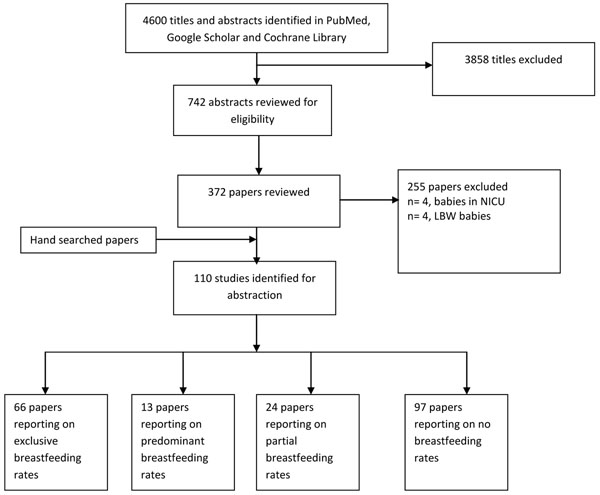
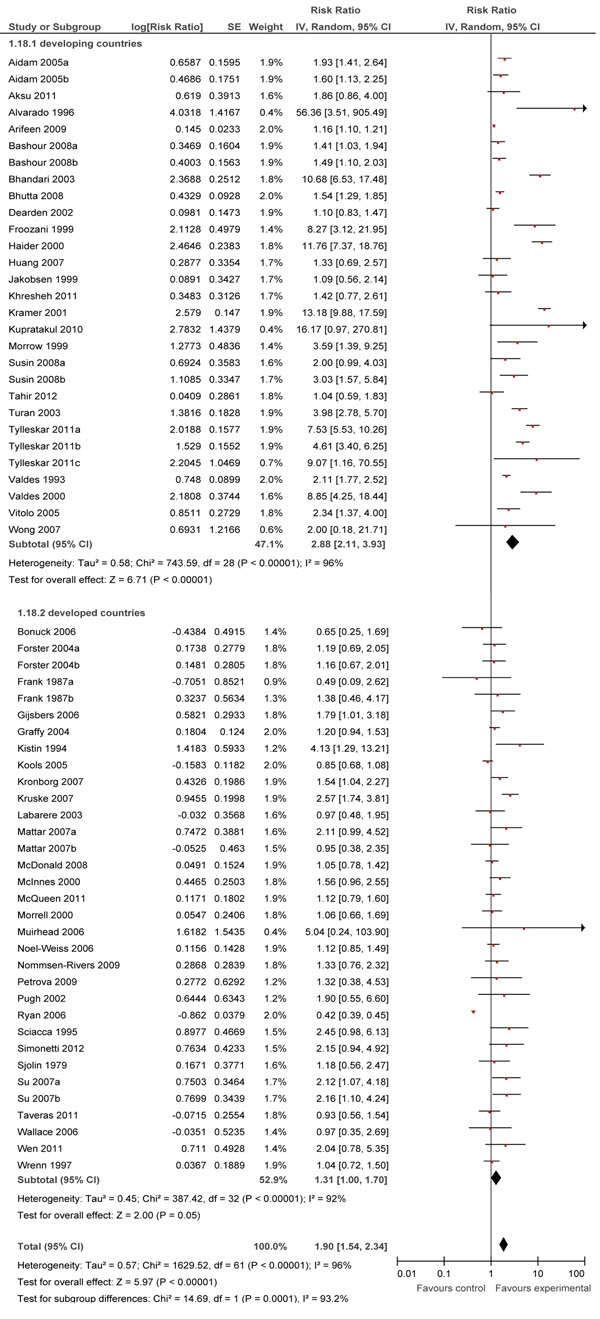
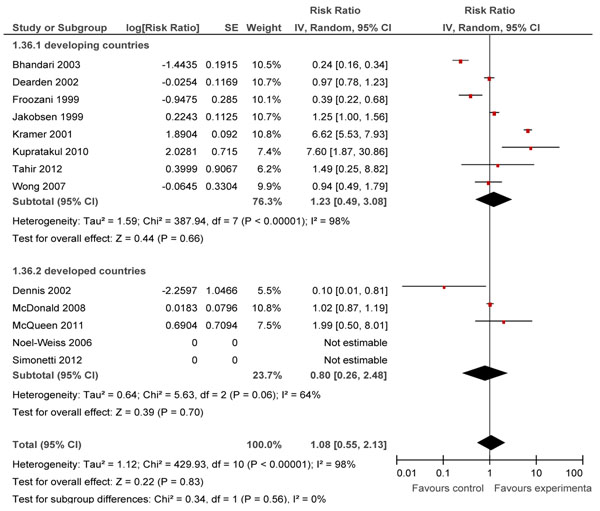
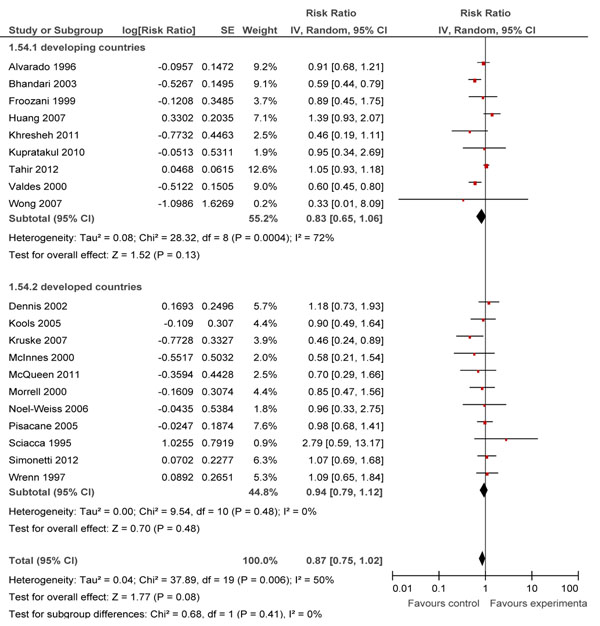
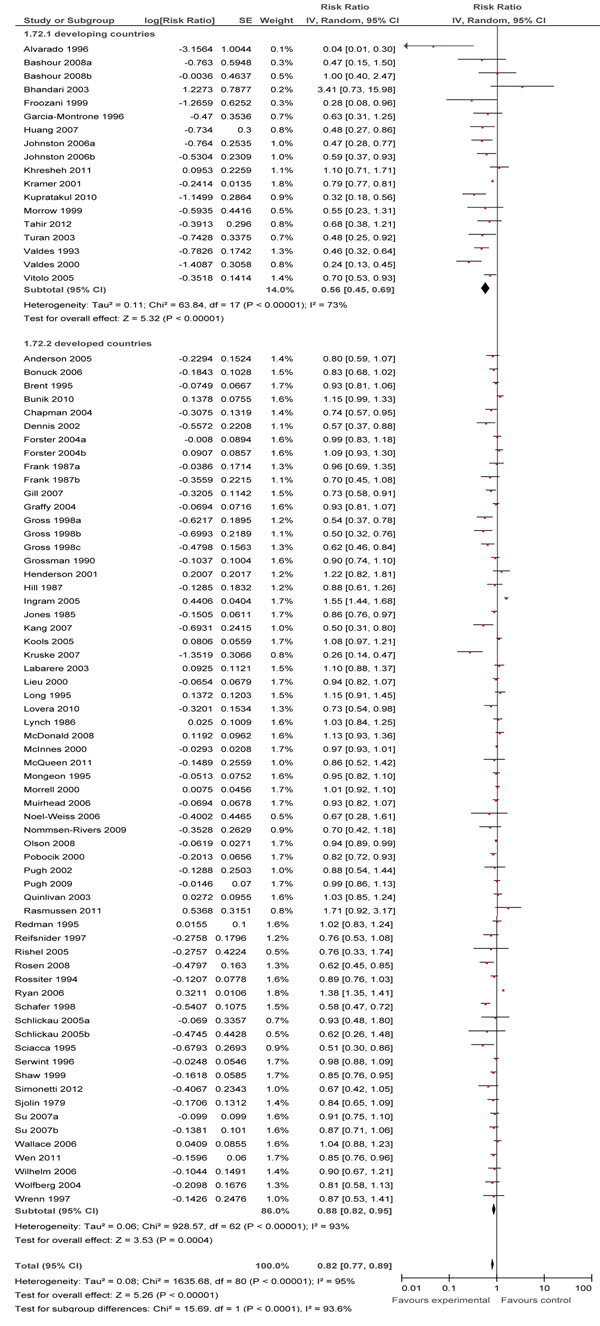
INTRODUCTION: Exclusive Breastfeeding (EBF) rates remain low in both low-income and high-income countries despite World Health Organization recommendations for EBF till 6 months. Breastfeeding has been shown to have a protective effect against gastrointestinal infections, among other benefits. Large-scale interventions focusing on educating mothers about breastfeeding have the potential to increase breastfeeding prevalence, especially EBF, up to recommended standards and also to decrease infant morbidity. METHODS: A systematic literature search was conducted for RCTs and quasi-experimental studies comparing breastfeeding education or support to routine care. The effect of interventions was observed for exclusive, predominant, partial and no breastfeeding rates. The time intervals of interest were day 1, <1 month, and 1 to 5 months. Outcome-specific evidence was graded according to the Child Health Epidemiology Reference Group (CHERG) rules using the adapted Grading of Recommendations, Assessment, Development and Evaluation (GRADE) criteria and recommendations were made from studies in developing countries for inclusion into the Lives Saved Tool (LiST) model. RESULTS: After reviewing 4600 abstracts, 372 studies were selected for full text screening and 110 of these studies were finally included. Statistically significant increases in EBF rates as a result of breastfeeding promotion interventions were observed: 43% at day 1, 30% at <1 month, and 90% at 1-5 months. Rates of 'no breastfeeding' reduced by 32% at 1 day, 30% at <1 month, and 18% at 1-5 months. The effect of interventions on the rates of predominant and partial breastfeeding were non-significant. CONCLUSION: Breastfeeding education and/or support increased EBF rates and decreased no breastfeeding rates at birth, <1 month and 1-5 months. Combined individual and group counseling appeared to be superior to individual or group counseling alone. Interventions in developing countries had a greater impact than those in developed countries.
Overview
The claims and statistics of this paper haven’t been checked yet.
Free: it reads the open-access text and checks the first 5 claims that cite a source we can check. Create a free account to check every claim.
Integrity signals
Registry
Cites
Statistics
Figures
Verification
Claims the paper makes
The claims and statistics of this paper haven’t been checked yet.
Free: it reads the open-access text and checks the first 5 claims that cite a source we can check. Create a free account to check every claim.
Claims other papers make about this one
Each is checked against this paper’s own text: does it say what the citing paper says it does?
The source backs part of the claim, not all of it — or backs it for a different population, condition or comparison.
In the citing paper
“According to systematic reviews and meta-analyses, breastfeeding support interventions that focus on prenatal/antenatal education and continuous long-term care reinforce the intention of women to breastfeed antenatally; such interventions are supportive of the duration and exclusivity of breastfeeding, and are characterized as effective [9,10,11,12,13,14,15,16,17].”
From Association between Breastfeeding Duration and Long-Term Midwifery-Led Support and Psychosocial Support: Outcomes from a Greek Non-Randomized Controlled Perinatal Health Intervention (2021) · cites this paper as [16]
Experimental — accuracy not yet measured
Self-check
Percentages, sums and reported differences re-computed from the paper’s own numbers.
The self-check needs the paper’s full text.
Citations
Cites
Grading quality of evidence and strength of recommendations
(2004) · BMJ · doi:10.1136/bmj.328.7454.1490 · Cited by 8,477 · cited 1×
“according to the CHERG adaptation of the GRADE technique [27].”
MethodKramer, M. S., Chalmers, B., Hodnett, E. D., Sevkovskaya, Z., Dzikovich, I., Shapiro, S., Collet, J.-P., Vanilovich, I., Mezen, I., Ducruet, T., et al. (2001) · JAMA · doi:10.1001/jama.285.4.413 · Cited by 1,534
Breastfeeding and the risk for diarrhea morbidity and mortality
Lamberti, L. M., Fischer Walker, C. L., Noiman, A., Victora, C., & Black, R. E. (2011) · BMC Public Health · doi:10.1186/1471-2458-11-s3-s15 · Cited by 657
Variables Associated With Breastfeeding Duration
Thulier, D., & Mercer, J. (2009) · Journal of Obstetric, Gynecologic & Neonatal Nursing · doi:10.1111/j.1552-6909.2009.01021.x · Cited by 606
Kumar, V., Mohanty, S., Kumar, A., Misra, R. P., Santosham, M., Awasthi, S., Baqui, A. H., Singh, P., Singh, V., Ahuja, R. C., et al. (2008) · The Lancet · doi:10.1016/s0140-6736(08)61483-x · Cited by 498
Morrow, A. L., Guerrero, M. L., Shults, J., Calva, J. J., Lutter, C., Bravo, J., Ruiz-Palacios, G., Morrow, R. C., & Butterfoss, F. D. (1999) · The Lancet · doi:10.1016/s0140-6736(98)08037-4 · Cited by 414
Haider, R., Ashworth, A., Kabir, I., & Huttly, S. R. (2000) · The Lancet · doi:10.1016/s0140-6736(00)03159-7 · Cited by 396
Dennis, C., HODNETT, E. D., Gallop, R., & CHALMERS, B. E. (2002) · PubMed Central · Cited by 383
Bhandari, N., Bahl, R., Mazumdar, S., Martines, J., Black, R. E., & Bhan, M. K. (2003) · The Lancet · doi:10.1016/s0140-6736(03)13134-0 · Cited by 376
Global trends in exclusive breastfeeding
Cai, X., Wardlaw, T., & Brown, D. W. (2012) · International Breastfeeding Journal · doi:10.1186/1746-4358-7-12 · Cited by 362
Research works printed but not linked: 7
- UNICEF A Report Card on Nutrition: Number 4 2006
- WHO UNICEF Integrated management of childhood illness: chartbook and training course 1995 Geneva: World Health Organization PMC2557738 10593034
- RevMan The Cochrane Colloboration. Review Manager (RevMan) 5 for Windows 2003 Oxford, England
- WHO Indicators for assessing breastfeeding practices 1991 91 WHO Geneva, Switzerland: WHO Document WHO/CDD/SER 14
- WHO Indicators for Assessing Infant and Young Child Feeding Practices: Conclusions of a Consensus Meeting Held 6-8 November 2007 in Washington DC, USA 2008 World Health Organization (WHO)
- Langer A Intrapartum Social Support and Exclusive Breastfeeding in Mexico. Wellstart International, Expanded Promotion of Breastfeeding Program Exclusive Breastfeeding Promotion: A Summary of Findings from EPB's Applied Research Program (1992-1996) 1996
- Wrenn SE Effects of a model-based intervention on breastfeeding attrition [dissertation] 1997 San Antonio: University of Texas
Cited by
Items 101–200 of 458
A New Look at Care in Pregnancy: Simple, Effective Interventions for Neglected Populations
Hodgins, S., Tielsch, J. M., Rankin, K., Robinson, A. B., Kearns, A. D., & Caglia, J. M. (2016) · PLoS ONE · doi:10.1371/journal.pone.0160562 · Cited by 51
“PLOS ONE | DOI:10.1371/journal.pone.0160562 August 18, 2016 8 / 73 The Imdad review is updated in Haroon [32]–“interventions included were those that offered education and/or support given to mothers through counselors (lay counselors and health professionals), and in either individual or group sessions, or a combinat…”
BackgroundInfluentialTola, H. H., Karimi, M., & Yekaninejad, M. S. (2017) · Infectious Diseases of Poverty · doi:10.1186/s40249-017-0380-5 · Cited by 55
Current Issues and Priorities in Childhood Nutrition, Growth, and Infections
Salam, R. A., Das, J. K., & Bhutta, Z. A. (2015) · Journal of Nutrition · doi:10.3945/jn.114.194720 · Cited by 48
“43%at day 1, 30% at <1mo, and 90%at 1–5mo, with reductions in rates of ‘‘no breastfeeding’’ by 32% at 1 d, 30% at <1 mo, and 18% at 1–5 mo (40).”
Self-citationLeurer, M. D., & Misskey, E. (2015) · International Breastfeeding Journal · doi:10.1186/s13006-015-0036-7 · Cited by 74
“A variety of lactation supports, including both peer and professional as well as institutional and community based supports, have been shown to improve breastfeeding rates [17-20].”
BackgroundMcGettigan, M., Cardwell, C. R., Cantwell, M. M., & Tully, M. A. (2017) · Cochrane Database of Systematic Reviews · doi:10.1002/14651858.cd012864 · Cited by 42
The effect of prenatal education classes on the birth expectations of Spanish women
Soriano‐Vidal, F. J., Vila‐Candel, R., Soriano-Martín, P. J., Tejedor-Tornero, A., & Castro‐Sánchez, E. (2018) · Midwifery · doi:10.1016/j.midw.2018.02.002 · Cited by 50
Morrison, D., Lichtenwald, K., & Tang, R. (2019) · International Journal of Research & Method in Education · doi:10.1080/1743727x.2019.1594183 · Cited by 44
Kim, S. S., Nguyen, P. H., Tran, L. M., Alayón, S., Menon, P., & Frongillo, E. A. (2019) · Current Developments in Nutrition · doi:10.1093/cdn/nzz140 · Cited by 50
Voogt, C. V., Beusink, M., Kleinjan, M., Otten, R., Engels, R. C. M. E., Smit, K., & Kuntsche, E. N. (2017) · Drug and Alcohol Dependence · doi:10.1016/j.drugalcdep.2017.04.006 · Cited by 48
Ijumba, P., Doherty, T., Jackson, D. J., Tomlinson, M., Sanders, D. M., Swanevelder, S. A., & Persson, L. Å. (2015) · Public Health Nutrition · doi:10.1017/s1368980015000099 · Cited by 47
“A recent systematic review indicated that studies combining individual (one-on-one counselling and support) and group counselling (counselling in groups of mothers or with other members of their families) were superior in increasing EBF and breast-feeding rates at birth, during the first month and between 1 and 5 mont…”
BackgroundEssential interventions: implementation strategies and proposed packages of care
Lassi, Z. S., Kumar, R., Mansoor, T., Salam, R. A., Das, J. K., & Bhutta, Z. A. (2014) · Reproductive Health · doi:10.1186/1742-4755-11-s1-s5 · Cited by 50
“Promotion and support for exclusive breastfeeding for 6 months [119-121] Referral Primary Community All • Materials for counselling, health education and health promotion, including individual and group counselling”
BackgroundSelf-citationInadequate prenatal care use and breastfeeding practices in Canada: a national survey of women
Costanian, C., Macpherson, A., & Tamim, H. (2016) · BMC Pregnancy and Childbirth · doi:10.1186/s12884-016-0889-9 · Cited by 47
“[40] has demonstrated.”
Care-seeking patterns among families that experienced under-five child mortality in rural Rwanda
Kagabo, D. M., Kirk, C. M., Bakundukize, B., Hedt‐Gauthier, B., Gupta, N., Hirschhorn, L. R., Ingabire, W., Rouleau, D., Nkikabahizi, F., Mugeni, C., et al. (2018) · PLoS ONE · doi:10.1371/journal.pone.0190739 · Cited by 48
Flaherman, V. J., Chan, S., Desai, R., Agung, F. H., Hartati, H., & Yelda, F. (2018) · Public Health Nutrition · doi:10.1017/s1368980018001453 · Cited by 38
Emerson, J. A., Tol, W. A., Caulfield, L. E., & Doocy, S. (2017) · Food and Nutrition Bulletin · doi:10.1177/0379572117714385 · Cited by 42
Self-management of type 2 diabetes in gulf cooperation council countries: A systematic review
Alslamah, T., Nicholl, B. I., Slail, F. Y. A., & Melville, C. A. (2017) · PLoS ONE · doi:10.1371/journal.pone.0189160 · Cited by 38
Cresswell, J. A., Ganaba, R., Sarrassat, S., Somé, H., Diallo, A. H., Cousens, S., & Filippi, V. (2019) · The Lancet Global Health · doi:10.1016/s2214-109x(18)30494-7 · Cited by 46
Titaley, C. R., Dibley, M. J., Ariawan, I., Mu’asyaroh, A., Alam, A., Damayanti, R., Thanh, T. L. T., Ferguson, E., Htet, M. K., Li, M., et al. (2021) · International Breastfeeding Journal · doi:10.1186/s13006-021-00357-5 · Cited by 73
The impact of Baby Friendly Initiative accreditation: An overview of systematic reviews
Fair, F. J., Morrison, A., & Soltani, H. (2021) · Maternal and Child Nutrition · doi:10.1111/mcn.13216 · Cited by 44
Pretorius, C. E., Asare, H., Genuneit, J., Kruger, H. S., & Ricci, C. (2020) · European Journal of Pediatrics · doi:10.1007/s00431-020-03721-5 · Cited by 34
“Notably, this cost represents approximately 6% of the overall GDP loss due to child mortality in relation to poor breastfeeding practices [53, 54].”
BackgroundFoss, K. A., & Blake, K. (2018) · Health Communication · doi:10.1080/10410236.2018.1440506 · Cited by 41
Nelson, L. E., Tharao, W. E., Husbands, W. C., Sa, T., Zhang, N., Kushwaha, S., Absalom, D., & Kaul, R. (2019) · BMC Infectious Diseases · doi:10.1186/s12879-019-3925-3 · Cited by 46
Jerin, I., Akter, M., Talukder, K., Talukder, M. Q. E. K., & Rahman, M. A. (2020) · International Breastfeeding Journal · doi:10.1186/s13006-020-00258-z · Cited by 40
Black, M. M., Fernandez‐Rao, S., Nair, K. M., Balakrishna, N., Tilton, N., Radhakrishna, K. V., Ravinder, P., Harding, K., Reinhart, G. A., Yimgang, D. P., et al. (2021) · Journal of Nutrition · doi:10.1093/jn/nxab066 · Cited by 37
Coca, K. P., Pinto, V. L., Westphal, F., Mania, P. N. A., & Abrão, A. C. F. D. V. (2018) · Revista Paulista de Pediatria · doi:10.1590/1984-0462/;2018;36;2;00002 · Cited by 84
Preoccupation as psychopathological process and symptom in adjustment disorder: A scoping review
Eberle, D. J., & Maercker, A. (2021) · Clinical Psychology & Psychotherapy · doi:10.1002/cpp.2657 · Cited by 38
Cabral, C. S., Cavalcanti, D. S., Barbosa, J. M., de Vasconcelos, A. C. C. P., & Vianna, R. P. D. T. (2020) · Interface - Comunicação Saúde Educação · doi:10.1590/interface.190688 · Cited by 40
Interventions for promoting and optimizing breastfeeding practices: An overview of systematic review
Khatib, M. N., Gaidhane, A. M., Upadhyay, S., Telrandhe, S., Saxena, D. B., Simkhada, P. P., Sawleshwarkar, S., & Zahiruddin, Q. S. (2023) · Frontiers in Public Health · doi:10.3389/fpubh.2023.984876 · Cited by 65
Rana, R., McGrath, M., Sharma, E., Gupta, P., & Kerac, M. (2021) · Nutrients · doi:10.3390/nu13020681 · Cited by 36
“conducted a review on the effect of breastfeeding promotion interventions on breastfeeding practices and found an increase in EBF rates with educational interventions [68].”
BackgroundOwor, M. O., Matovu, J. K. B., Murokora, D., Wanyenze, R. K., & Waiswa, P. (2016) · BMC Pregnancy and Childbirth · doi:10.1186/s12884-016-0874-3 · Cited by 33
The Lives Saved Tool (LiST) as a model for diarrhea mortality reduction
Walker, C. L. F., & Walker, N. (2014) · BMC Medicine · doi:10.1186/1741-7015-12-70 · Cited by 40
“For LiST, there have been reviews that estimated the impact of breastfeeding promotion on adoption of correct breastfeeding patterns [19,20].”
BackgroundParashar, M., Singh, S., Kishore, J., & Patavegar, B. N. (2015) · ICAN Infant Child & Adolescent Nutrition · doi:10.1177/1941406415602528 · Cited by 30
Zamora, G., Lutter, C. K., & Peña‐Rosas, J. P. (2014) · Journal of Human Lactation · doi:10.1177/0890334414561477 · Cited by 33
Adhisivam, B., Bhat, B. V., Poorna, R., Thulasingam, M., Pournami, F., & Joy, R. (2016) · The Journal of Maternal-Fetal & Neonatal Medicine · doi:10.1080/14767058.2016.1188379 · Cited by 35
“Adequate antenatal counseling of the mother combined with postnatal lactation support is likely to improve exclusive breastfeeding rates [3,8,9].”
BackgroundJardine, F. (2018) · Journal of Human Lactation · doi:10.1177/0890334418784562 · Cited by 29
de Souza, T. O., Morais, T. C. E. D. V., Martins, C. D. C., de Bessa, J., & Vieira, G. O. (2020) · Revista Brasileira de Saúde Materno Infantil · doi:10.1590/1806-93042020000100016 · Cited by 80
Perinatal psychological interventions to promote breastfeeding: a narrative review
Gómez, L., Verd, S., de-la-Banda, G., Cardo, E., Servera, M., Filgueira, A., Ponce‐Taylor, J., & Mulet, M. (2021) · International Breastfeeding Journal · doi:10.1186/s13006-020-00348-y · Cited by 38
“ment in breastfeeding exclusivity and maintenance [8]”
Perceived pressure to breastfeed negatively impacts postpartum mental health outcomes over time
Grattan, R. E., London, S. M., & Bueno, G. E. (2024) · Frontiers in Public Health · doi:10.3389/fpubh.2024.1357965 · Cited by 41
“…awareness programs (e.g., social media campaigns, prenatal education), one on one supports (e.g., breastfeeding support, counseling), and organization or community interventions [e.g., encouragement to breastfeed in hospitals, increasing breastfeeding friendly environments in hospitals; (21)].”
BackgroundCarroll, G. J., Safon, C. B., Buccini, G., Vilar‐Compte, M., Teruel, G., & Pérez‐Escamilla, R. (2020) · Health Policy and Planning · doi:10.1093/heapol/czaa005 · Cited by 34
Vara, P. A., Buhulula, L. S., Mohammed, F. A., & Njau, B. (2020) · AIDS Research and Therapy · doi:10.1186/s12981-020-00311-1 · Cited by 28
Cooijmans, K. H. M., Beijers, R., Brett, B. E., & de Weerth, C. (2021) · Maternal and Child Nutrition · doi:10.1111/mcn.13241 · Cited by 32
Li, J., Zhao, C., Wang, Y., Wang, Y. P., Chen, C. Y., Huang, Y. S., Gao, Y. Q., Jin, F., & Zhou, H. (2021) · International Breastfeeding Journal · doi:10.1186/s13006-021-00416-x · Cited by 42
Moreira, C. M. D., Cavalcante-Silva, R. P., Fujinaga, C. I., & Costa, F. M. (2017) · Jornal de Pediatria · doi:10.1016/j.jped.2016.12.008 · Cited by 27
Rujumba, J., Ndeezi, G., Nankabirwa, V., Kwagala, M., Mukochi, M., Diallo, A. H., Méda, N., Engebretsen, I. M. S., Tylleskär, T., & Tumwine, J. K. (2020) · International Breastfeeding Journal · doi:10.1186/s13006-020-00287-8 · Cited by 35
Flax, V. L., Ipadeola, A., Schnefke, C., Ralph-Opara, U., Adeola, O., Edwards, S. L., Bose, S., & Brower, A. O. (2022) · Journal of Nutrition · doi:10.1093/jn/nxab450 · Cited by 41
López-Medina, M. D., Abad, M. L., Araque, A. B. L., & López‐Medina, I. M. (2019) · Revista Latino-Americana de Enfermagem · doi:10.1590/1518-8345.2695.3106 · Cited by 26
Neonatal Mortality Risks Among Preterm Births in a Rural B angladeshi Cohort
Shah, R., Mullany, L. C., Darmstadt, G. L., Talukder, M. R., Rahman, S. M., Mannan, I., Arifeen, S. E., Baqui, A. H., & ProjAHNMo Study Group in Bangladesh (2014) · Paediatric and Perinatal Epidemiology · doi:10.1111/ppe.12145 · Cited by 31
Green, M., Pries, A. M., Hadihardjono, D. N., Izwardy, D., Zehner, E. R., & Morán, V. H. (2021) · Maternal and Child Nutrition · doi:10.1111/mcn.13189 · Cited by 40
Reichental, Z. L., O’Brien, V., & O'Reilly, S. L. (2021) · Obesity Reviews · doi:10.1111/obr.13371 · Cited by 31
“The main findings of this review align with others in general populations.(45) These systematic reviews identified core breastfeeding intervention components that positively impacted rates of any and exclusive breastfeeding.”
ResultBreastfeeding and obesity in PCOS
Harrison, C. L., Teede, H. J., Joham, A. E., & Moran, L. (2016) · Expert Review of Endocrinology & Metabolism · doi:10.1080/17446651.2016.1239523 · Cited by 27
Exclusive breastfeeding changes in Brazil attributable to pacifier use
Buccini, G., Pérez‐Escamilla, R., Benício, M. H. D., Giugliani, E. R. J., & Venâncio, S. I. (2018) · PLoS ONE · doi:10.1371/journal.pone.0208261 · Cited by 30
It’s in the Milk: Feeding the Microbiome to Promote Infant Growth
Bashiardes, S., Thaiss, C. A., & Elinav, E. (2016) · Cell Metabolism · doi:10.1016/j.cmet.2016.02.015 · Cited by 26
“Based on the widely recognized benefits of breast feeding on infant development, health organizations recommend exclusive breast feeding for the first 6 months of a baby’s life (Haroon et al., 2013).”
BackgroundSavino, G., Mackenzie, J. R. R., Allen, T., Baldock, M., Brown, J. K., & Fitzharris, M. (2016) · Traffic Injury Prevention · doi:10.1080/15389588.2016.1193171 · Cited by 25
Saran, A., White, H., Albright, K., & Adona, J. (2020) · Campbell Systematic Reviews · doi:10.1002/cl2.1116 · Cited by 32
Association of gout and depression: A systematic review and meta‐analysis
Lin, S., Zhang, H., & Ma, A. (2017) · International Journal of Geriatric Psychiatry · doi:10.1002/gps.4789 · Cited by 27
Damena, D., Tolosa, S., Hailemariam, M., Zewude, A., Worku, A., Mekonnen, B., Mohammed, T., Admasu, A., Chimusa, E. R., Mihret, A., et al. (2019) · PLoS ONE · doi:10.1371/journal.pone.0218545 · Cited by 25
A Randomized Trial of Prenatal Video Education to Improve Breastfeeding Among Low-Income Women
Kellams, A. L., Gurka, K. K., Hornsby, P. P., Drake, E., & Conaway, M. R. (2018) · Breastfeeding Medicine · doi:10.1089/bfm.2018.0115 · Cited by 23
“24 25–27 For example, prenatal breastfeeding education may prove more effective when combined with evidence-based hospital best practices.”
Nguyen, P. H., Kim, S. S., Tran, L. M., Menon, P., & Frongillo, E. A. (2020) · Maternal and Child Nutrition · doi:10.1111/mcn.13012 · Cited by 23
“To address the challenges of suboptimal breastfeeding practices, interventions with various strategies have been implemented and showed positive impacts, particularly in low-and middle-income countries (Haroon, Das, Salam, Imdad, & Bhutta, 2013; Imdad, Yakoob, & Bhutta, 2011).”
Histopathological characterization of peri-implant diseases: A systematic review and meta-analysis
Shafizadeh, M., Amid, R., Mahmoum, M., & Kadkhodazadeh, M. (2021) · Archives of Oral Biology · doi:10.1016/j.archoralbio.2021.105288 · Cited by 27
Wong, K. L., Tarrant, M., & Lok, K. Y. W. (2015) · Journal of Human Lactation · doi:10.1177/0890334415583294 · Cited by 35
“In addition, a review examining interventions given during both the antenatal and postpartum periods suggested that combining individual and group counseling was more effective than individual or group counseling alone.(60) Thus, further research to explore the effectiveness of combining both individual and group ante…”
BackgroundThe need for research-tested smartphone applications for promoting breastfeeding
Coughlin, S. S. (2016) · mHealth · doi:10.21037/mhealth.2016.04.03 · Cited by 29
A Review on Prevention Interventions to Decrease Diarrheal Diseases’ Burden in Children
Webb, C. M., & Cabada, M. M. (2018) · Current Tropical Medicine Reports · doi:10.1007/s40475-018-0134-x · Cited by 56
Factors influencing the uptake of a mass media intervention to improve child feeding in Bangladesh
Kim, S. S., Roopnaraine, T., Nguyen, P. H., Saha, K. K., Bhuiyan, M. I., & Menon, P. (2018) · Maternal and Child Nutrition · doi:10.1111/mcn.12603 · Cited by 24
Kassianos, A. P., Ward, E., Rojas‐García, A., Kurti, A. N., Mitchell, F., Nostikasari, D., Payton, J., Pascal-Saadi, J., Spears, C. A., & Notley, C. J. (2019) · Health Psychology Review · doi:10.1080/17437199.2019.1618724 · Cited by 29
Breastfeeding support in low and middle-income countries: Secondary analysis of national survey data
Peven, K., Purssell, E., Taylor, C., Bick, D., & Lopez, V. K. (2019) · Midwifery · doi:10.1016/j.midw.2019.102601 · Cited by 24
Nguyen, P. H., Kim, S. S., Nguyen, T. T., Tran, L. M., Hajeebhoy, N., Frongillo, E. A., Ruel, M. T., Rawat, R., & Menon, P. (2016) · PLoS ONE · doi:10.1371/journal.pone.0151358 · Cited by 24
“High-quality and timely IYCF counselling has been shown to be an effective strategy to improve both child feeding practices and the nutritional status of children [6 – 8].”
BackgroundOmer‐Salim, A., Suri, S., Dadhich, J. P., Faridi, M., & Olsson, P. (2015) · Midwifery · doi:10.1016/j.midw.2014.12.008 · Cited by 24
“Mothers also need skilled breastfeeding support and counselling from trained health providers such as midwives, nurses and physicians throughout the reproductive continuum (Haroon et al., 2013).”
BackgroundHuang, X., Yang, B., Liu, Q., Zhang, R., Tang, S., & Story, M. T. (2020) · Journal of Health Population and Nutrition · doi:10.1186/s41043-020-00221-y · Cited by 26
Rebelo, F. M., da Cunha, L. R., Andrade, P. D., Júnior, W. A. D. C., Bastos, W. R., & Caldas, E. D. (2017) · Journal of Trace Elements in Medicine and Biology · doi:10.1016/j.jtemb.2017.06.009 · Cited by 22
Servan-Mori, E. E., Chivardi, C., González, M. Á. M., & Nígenda, G. (2018) · Health Policy and Planning · doi:10.1093/heapol/czy074 · Cited by 22
Velázquez, A. L., Alcaire, F., Vidal, L., Varela, P., Næs, T., & Ares, G. (2021) · Food Quality and Preference · doi:10.1016/j.foodqual.2021.104296 · Cited by 27
Grano, C., Fernandes, M., & Conner, M. T. (2022) · Psychology and Health · doi:10.1080/08870446.2021.2025374 · Cited by 23
“Educational interventions and motivational interviews to decrease ambivalence and resistance towards sustained breastfeeding behaviour may be considered to improve breastfeeding intention and duration (Haroon et al., 2013; Wilhelm et al., 2006).”
BackgroundHill, D. R., & Buck, R. H. (2023) · Nutrients · doi:10.3390/nu15102339 · Cited by 28
“Exclusive breastfeeding through 12 months of age is strongly encouraged by prominent medical advisory groups including the American Academy of Pediatrics [1] and the World Health Organization [2].”
BackgroundIreland, R., Muc, M., Bunn, C., & Boyland, E. J. (2021) · Journal of Strategic Marketing · doi:10.1080/0965254x.2021.1967427 · Cited by 29
Influence of Feeding Practices on Malnutrition in Haitian Infants and Young Children
Irarrázaval, B., Salesa Barja, Y., Bustos-Arriagada, E., Doirsaint, R., Senethmm, G., Guzmán, M. G., & Uauy, R. D. (2018) · Nutrients · doi:10.3390/nu10030382 · Cited by 20
“The impact of early initiation of breastfeeding may be reflected in more successful long-term breastfeeding; suggesting an opportunity for an intervention with potential impact at the population level [21,25].”
BackgroundMothers’ Experiences with Child Protection Services: Using Qualitative Feminist Poststructuralism
Aston, M. L., Price, S. L., Paynter, M. J., Sim, M., Monaghan, J., Jefferies, K., & Ollivier, R. (2021) · Nursing Reports · doi:10.3390/nursrep11040084 · Cited by 23
Immunoinformatic Identification of Potential Epitopes Against Shigellosis
Sharma, D., Patel, S., Padh, H., & Desai, P. N. (2016) · International Journal of Peptide Research and Therapeutics · doi:10.1007/s10989-016-9528-6 · Cited by 19
Cost, K. T., Jonas, W., Unternäehrer, E., Dudin, A., Szatmári, P., Gaudreau, H., Kennedy, J., Atkinson, L. R., Steiner, M. S., Meaney, M. J., et al. (2018) · Journal of Family Psychology · doi:10.1037/fam0000468 · Cited by 23
Davie, P., Chilcot, J., Chang, Y., Norton, S., Hughes, L. D., & Bick, D. (2019) · Health Psychology Review · doi:10.1080/17437199.2019.1630293 · Cited by 26
“…among successful breastfeeding interventions remain unknown, and education and low-impact support interventions alone are insufficient in promoting long term breastfeeding (any or exclusively) behaviour (Fairbank et al., 2000; Haroon et al., 2013; Lumbiganon et al., 2016; Renfrew et al., 2012).”
BackgroundHIV Risk Perception Among College Students at a University in the Midwest
Haile, Z. T., Kingori, C., Darlington, K.-A., Basta, T. B., & Chavan, B. B. (2016) · Sexuality & Culture · doi:10.1007/s12119-016-9380-z · Cited by 20
Mortality from Nestlé’s Marketing of Infant Formula in Low and Middle-Income Countries
Anttila-Hughes, J., Fernald, L. C. H., Gertler, P., Krause, P., Tsai, E., & Wydick, B. (2018) · National Bureau of Economic Research · doi:10.3386/w24452 · Cited by 20
“There are a number of effective antenatal and postnatal behavioral change interventions that improve breastfeeding practices and thereby reduce infant formula use (35).”
BackgroundTopothai, C., Topothai, T., Suphanchaimat, R., Patcharanarumol, W., Putthasri, W., Hangchaovanich, Y., & Tangcharoensathien, V. (2021) · International Journal of Environmental Research and Public Health · doi:10.3390/ijerph18157889 · Cited by 24
“Health professionals are recognized as key people who can influence optimal breastfeeding through counselling and nursing care [8,11,12].”
BackgroundShariff, J. A., Lee, K. C., Leyton, A., & Abdalal, S. A. (2016) · Public Health · doi:10.1016/j.puhe.2016.05.006 · Cited by 39
Walters, D., Eberwein, J. D., Sullivan, L., D'Alimonte, M., & Shekar, M. (2016) · Breastfeeding Medicine · doi:10.1089/bfm.2016.0128 · Cited by 19
Smith, J., Borg, B., Nguyen, T. T., Iellamo, A. D., Pramono, A., & Mathisen, R. (2024) · Frontiers in Nutrition · doi:10.3389/fnut.2024.1371036 · Cited by 23
“Peer counseling interventions increase exclusive breastfeeding by 48–90% (35, 71, 72).”
BackgroundGhazal, H. A., Rashid, S., & Ruf, E. (2015) · Breastfeeding Medicine · doi:10.1089/bfm.2015.0095 · Cited by 18
Reinsma, K., Nkuoh, G. N., & Nshom, E. M. (2016) · BMC Health Services Research · doi:10.1186/s12913-016-1899-z · Cited by 18
Greenland, K., Chipungu, J., Chilekwa, J. C., Chilengi, R., & Curtis, V. (2017) · Globalization and Health · doi:10.1186/s12992-017-0302-0 · Cited by 21
Cheng, L. Y., Wang, X., & Mo, P. K. H. (2019) · International Journal of Public Health · doi:10.1007/s00038-019-01266-5 · Cited by 22
Ariff, S., Maznani, I., Bhura, M., Memon, Z., Arshad, T., Samejo, T., Zaidi, S., Umer, M. A., Ahmed, I., Habib, M. A., et al. (2021) · JMIR Formative Research · doi:10.2196/30663 · Cited by 20
“To improve health outcomes in neonates, it is imperative that newborns, particularly LBW babies, are exclusively breastfed to reduce morbidities and improve their neurodevelopment outcomes [37].”
Self-citationDas, J. K., Salam, R. A., Imdad, A., & Bhutta, Z. A. (2016) · World Bank, Washington, DC eBooks · doi:10.1596/978-1-4648-0348-2_ch12 · Cited by 20
Self-citationHealth provider experiences with galactagogues to support breastfeeding: a cross-sectional survey
Bazzano, A. N., Littrell, L., Brandt, A. J., Thibeau, S., Thriemer, K., & Theall, K. P. (2016) · Journal of Multidisciplinary Healthcare · doi:10.2147/jmdh.s121788 · Cited by 18
“Interestingly, a combination of group counseling with individual support was superior to each of the measures alone, possibly indicating that peer information-sharing is important.(12) Another recent review indicated that support given at an early postnatal stage and with a duration over extended periods of time had a…”
Das, J. K., Rizvi, A., Gaff, M. F., Walker, N., Horton, S., Webb, P., & Lartey, A. A. (2013) · Cited by 17
Self-citationJefferson, U. T., Zachary, I., & Majee, W. (2019) · CIN Computers Informatics Nursing · doi:10.1097/cin.0000000000000549 · Cited by 24
Elavally, S., Rohini, A. M., & Saradakutty, G. (2022) · Journal of Education and Health Promotion · doi:10.4103/jehp.jehp_708_21 · Cited by 22
“The universal nature of breastfeeding demands more local participation not only in community‐based studies but also in facility initiated ones.[22]”
BackgroundNejsum, F. M., Maastrup, R., Torp-Pedersen, C. T., Løkkegaard, E., Wiingreen, R., & Hansen, B. M. (2023) · PLoS ONE · doi:10.1371/journal.pone.0285476 · Cited by 16
“It is, however, possible to promote breastfeeding after delivery [10] and the Baby-friendly Hospital Initiative, launched by WHO and The United Nations Children’s Fund (UNICEF), has shown to improve breastfeeding rates [11].”
BackgroundFlax, V. L., Bose, S., Escobar-DeMarco, J. L., & Frongillo, E. A. (2023) · Maternal and Child Nutrition · doi:10.1111/mcn.13559 · Cited by 22
“…countries (LMICs) have shown that social and behaviour change (SBC) interventions can be successful at addressing practice gaps for breastfeeding (Haroon et al., 2013; Imdad et al., 2011; Olufunlayo et al., 2019; Perez ‐ Escamilla et al., 2012; Sinha, et al., 2015), complementary feeding (Arikpo…”
Quality of mother-infant interaction, breastfeeding, and perinatal mental health
Coo, S., García, M. I., & Prieto, F. (2024) · Infant Behavior and Development · doi:10.1016/j.infbeh.2024.101946 · Cited by 28
Chanani, S., Waingankar, A., More, N. S., Pantvaidya, S., Fernandez, A., & Jayaraman, A. (2018) · PLoS ONE · doi:10.1371/journal.pone.0195619 · Cited by 18
Zhang, Z., Bickmore, T., Mainello, K., Mueller, M., Foley, M., Jenkins, L., & Edwards, R. A. (2014) · Lecture notes in computer science · doi:10.1007/978-3-319-09767-1_61 · Cited by 23
“Several hundred non-automated breastfeeding interventions have now been evaluated, with generally positive outcomes [9].”
Background
Metadata
- Authors
- Haroon, S., Das, J. K., Salam, R. A., Imdad, A., & Bhutta, Z. A.
- Affiliations
- Aga Khan University (PK)
- Corresponding author
- Bhutta, Zulfiqar A
- Venue
- BMC Public Health
- Published
- 2013-09
- Volume
- 13
- Issue
- S3
- Pages
- S20-S20
- ISSN
- 1471-2458 (ISSN-L)
- PMC
- PMC3847366
- OpenAlex
- W2095348857
- Semantic Scholar
- 77fc4446053efe8f97f6782255f6ff7fe255bba7
- Cited by
- 460
- References
- 123
- Citations by year
- 2026: 8 · 2025: 16 · 2024: 25 · 2023: 27 · 2022: 30 · 2021: 59 · 2020: 44 · 2019: 45 · 2018: 62 · 2017: 45 · 2016: 44 · 2015: 36 · 2014: 14 · 2013: 5
- FWCI
- 3.91
- Type
- journal article
- Language
- en
- Open access
- gold
- doi.org
- Licence
- cc-by
- Locations
- BMC Public Health (publishedVersion, cc-by)
- Europe PMC (PubMed Central) (publishedVersion, cc-by)
- PubMed Central (publishedVersion, cc-by)
- PubMed (publishedVersion)
- Funders
- Bill and Melinda Gates Foundation
- Topics
- Health Sciences › Medicine › Epidemiology › Breastfeeding Practices and Influences
- Health Sciences › Nursing › Nutrition and Dietetics › Infant Nutrition and Health
- Health Sciences › Medicine › Pediatrics, Perinatology and Child Health › Global Maternal and Child Health
- Keywords
- breastfeeding promotion, exclusive breastfeeding, breastfeeding education, breastfeeding support, infant feeding practices, breastfeeding counseling, Lives Saved Tool, infant morbidity, developing countries, low-income countries
- MeSH terms
- Breast Feeding, Developing Countries, Female, Health Promotion, Humans, Infant, Infant Nutritional Physiological Phenomena, Maternal Behavior, Mothers, World Health Organization, Randomized Controlled Trials as Topic, Developed Countries
About these checks
Registry, retraction, Cites and statistics results are computed, not judged, with one exception: a printed reference that no index lists is read once by a model before it counts as a citation error. Claims are extracted by a model and kept only when their quote appears verbatim in the text; each cited source is then checked, with a model’s help, for whether it says what the claim relies on. Those verdicts can be wrong — read the claim’s quote and the cited source before relying on one.
Statistics and arithmetic are recomputed, not judged.
Confidence bands are shown only for fields calibrated on our annotated test set. None is calibrated yet, so no band is shown.
What counts as a claim ›How we measure confidence ›How we check this ›
Are you an author, or do you see a problem with this page? Request a review
Data sources
Bibliographic data: Semantic Scholar, OpenAlex, Crossref.
Contains information from the Semantic Scholar Academic Graph Datasets, made available under the ODC Attribution License (ODC-BY 1.0).
Semantic Scholar’s data is described in: Kinney, R., et al. (2023). The Semantic Scholar Open Data Platform. arXiv:2301.10140.
