

Breastfeeding promotion interventions and breastfeeding practices: a systematic review
Open accessThe DOI matches its Crossref record; 123 of the 123 references it cites were found in a registry or an index.
Abstract
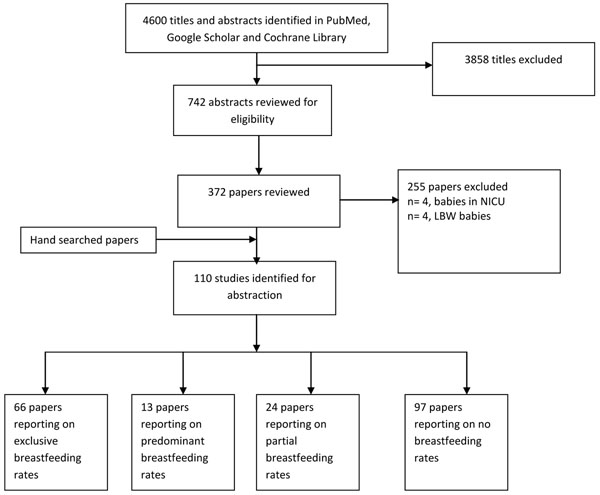
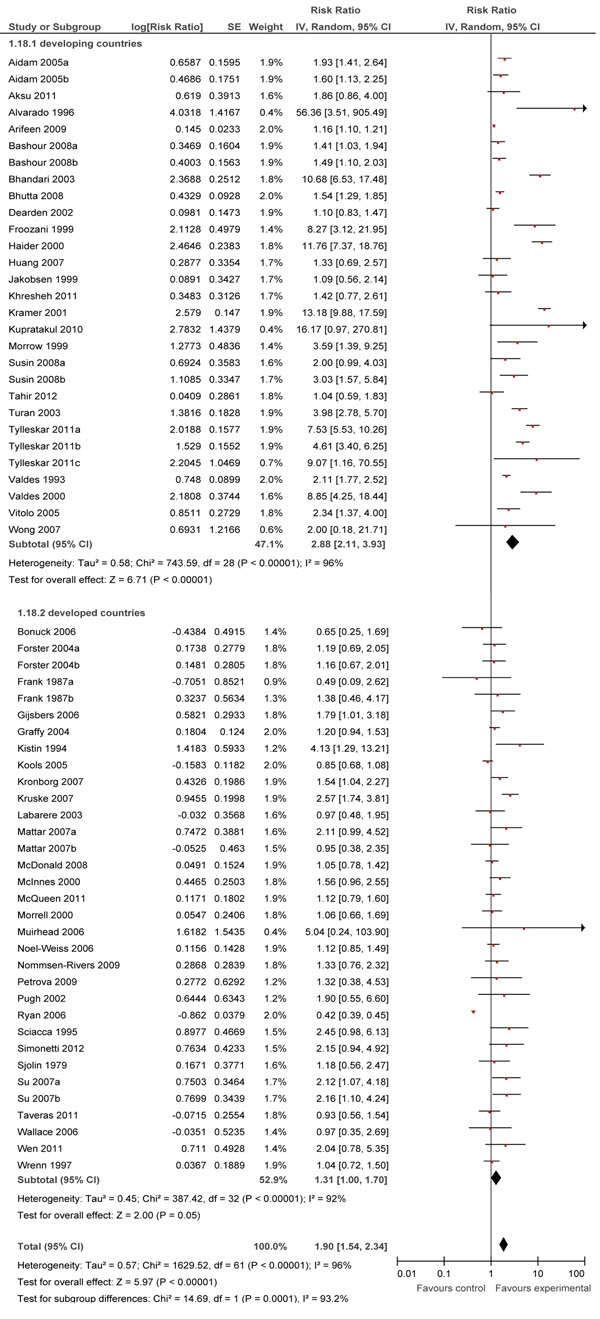
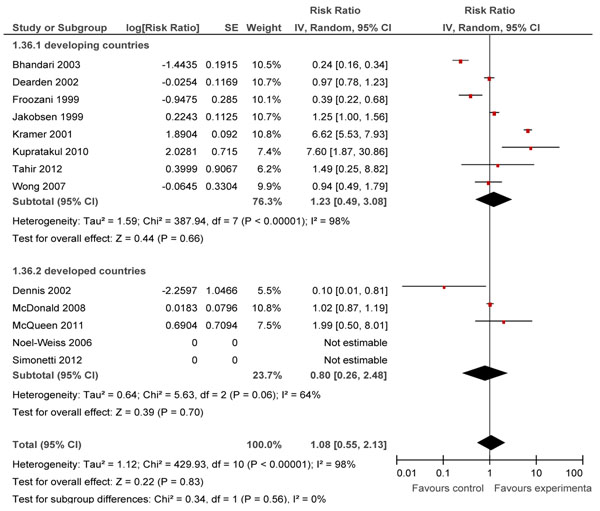
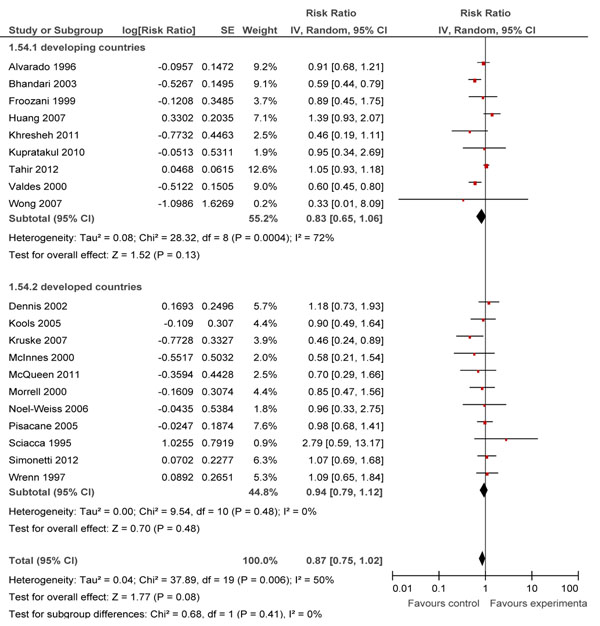
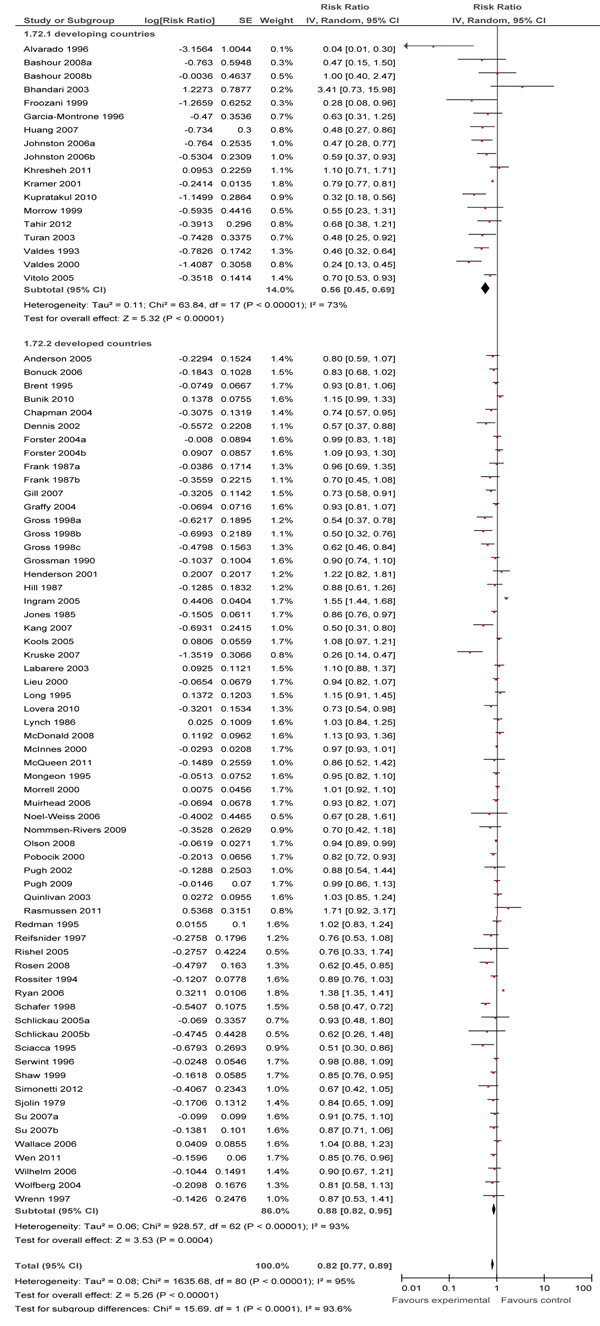
INTRODUCTION: Exclusive Breastfeeding (EBF) rates remain low in both low-income and high-income countries despite World Health Organization recommendations for EBF till 6 months. Breastfeeding has been shown to have a protective effect against gastrointestinal infections, among other benefits. Large-scale interventions focusing on educating mothers about breastfeeding have the potential to increase breastfeeding prevalence, especially EBF, up to recommended standards and also to decrease infant morbidity. METHODS: A systematic literature search was conducted for RCTs and quasi-experimental studies comparing breastfeeding education or support to routine care. The effect of interventions was observed for exclusive, predominant, partial and no breastfeeding rates. The time intervals of interest were day 1, <1 month, and 1 to 5 months. Outcome-specific evidence was graded according to the Child Health Epidemiology Reference Group (CHERG) rules using the adapted Grading of Recommendations, Assessment, Development and Evaluation (GRADE) criteria and recommendations were made from studies in developing countries for inclusion into the Lives Saved Tool (LiST) model. RESULTS: After reviewing 4600 abstracts, 372 studies were selected for full text screening and 110 of these studies were finally included. Statistically significant increases in EBF rates as a result of breastfeeding promotion interventions were observed: 43% at day 1, 30% at <1 month, and 90% at 1-5 months. Rates of 'no breastfeeding' reduced by 32% at 1 day, 30% at <1 month, and 18% at 1-5 months. The effect of interventions on the rates of predominant and partial breastfeeding were non-significant. CONCLUSION: Breastfeeding education and/or support increased EBF rates and decreased no breastfeeding rates at birth, <1 month and 1-5 months. Combined individual and group counseling appeared to be superior to individual or group counseling alone. Interventions in developing countries had a greater impact than those in developed countries.
Overview
The claims and statistics of this paper haven’t been checked yet.
Free: it reads the open-access text and checks the first 5 claims that cite a source we can check. Create a free account to check every claim.
Integrity signals
Registry
Cites
Statistics
Figures
Verification
Claims the paper makes
The claims and statistics of this paper haven’t been checked yet.
Free: it reads the open-access text and checks the first 5 claims that cite a source we can check. Create a free account to check every claim.
Claims other papers make about this one
Each is checked against this paper’s own text: does it say what the citing paper says it does?
The source backs part of the claim, not all of it — or backs it for a different population, condition or comparison.
In the citing paper
“According to systematic reviews and meta-analyses, breastfeeding support interventions that focus on prenatal/antenatal education and continuous long-term care reinforce the intention of women to breastfeed antenatally; such interventions are supportive of the duration and exclusivity of breastfeeding, and are characterized as effective [9,10,11,12,13,14,15,16,17].”
From Association between Breastfeeding Duration and Long-Term Midwifery-Led Support and Psychosocial Support: Outcomes from a Greek Non-Randomized Controlled Perinatal Health Intervention (2021) · cites this paper as [16]
Experimental — accuracy not yet measured
Self-check
Percentages, sums and reported differences re-computed from the paper’s own numbers.
The self-check needs the paper’s full text.
Citations
Cites
Grading quality of evidence and strength of recommendations
(2004) · BMJ · doi:10.1136/bmj.328.7454.1490 · Cited by 8,477 · cited 1×
“according to the CHERG adaptation of the GRADE technique [27].”
MethodKramer, M. S., Chalmers, B., Hodnett, E. D., Sevkovskaya, Z., Dzikovich, I., Shapiro, S., Collet, J.-P., Vanilovich, I., Mezen, I., Ducruet, T., et al. (2001) · JAMA · doi:10.1001/jama.285.4.413 · Cited by 1,534
Breastfeeding and the risk for diarrhea morbidity and mortality
Lamberti, L. M., Fischer Walker, C. L., Noiman, A., Victora, C., & Black, R. E. (2011) · BMC Public Health · doi:10.1186/1471-2458-11-s3-s15 · Cited by 657
Variables Associated With Breastfeeding Duration
Thulier, D., & Mercer, J. (2009) · Journal of Obstetric, Gynecologic & Neonatal Nursing · doi:10.1111/j.1552-6909.2009.01021.x · Cited by 606
Kumar, V., Mohanty, S., Kumar, A., Misra, R. P., Santosham, M., Awasthi, S., Baqui, A. H., Singh, P., Singh, V., Ahuja, R. C., et al. (2008) · The Lancet · doi:10.1016/s0140-6736(08)61483-x · Cited by 498
Morrow, A. L., Guerrero, M. L., Shults, J., Calva, J. J., Lutter, C., Bravo, J., Ruiz-Palacios, G., Morrow, R. C., & Butterfoss, F. D. (1999) · The Lancet · doi:10.1016/s0140-6736(98)08037-4 · Cited by 414
Haider, R., Ashworth, A., Kabir, I., & Huttly, S. R. (2000) · The Lancet · doi:10.1016/s0140-6736(00)03159-7 · Cited by 396
Dennis, C., HODNETT, E. D., Gallop, R., & CHALMERS, B. E. (2002) · PubMed Central · Cited by 383
Bhandari, N., Bahl, R., Mazumdar, S., Martines, J., Black, R. E., & Bhan, M. K. (2003) · The Lancet · doi:10.1016/s0140-6736(03)13134-0 · Cited by 376
Global trends in exclusive breastfeeding
Cai, X., Wardlaw, T., & Brown, D. W. (2012) · International Breastfeeding Journal · doi:10.1186/1746-4358-7-12 · Cited by 362
Research works printed but not linked: 7
- UNICEF A Report Card on Nutrition: Number 4 2006
- WHO UNICEF Integrated management of childhood illness: chartbook and training course 1995 Geneva: World Health Organization PMC2557738 10593034
- RevMan The Cochrane Colloboration. Review Manager (RevMan) 5 for Windows 2003 Oxford, England
- WHO Indicators for assessing breastfeeding practices 1991 91 WHO Geneva, Switzerland: WHO Document WHO/CDD/SER 14
- WHO Indicators for Assessing Infant and Young Child Feeding Practices: Conclusions of a Consensus Meeting Held 6-8 November 2007 in Washington DC, USA 2008 World Health Organization (WHO)
- Langer A Intrapartum Social Support and Exclusive Breastfeeding in Mexico. Wellstart International, Expanded Promotion of Breastfeeding Program Exclusive Breastfeeding Promotion: A Summary of Findings from EPB's Applied Research Program (1992-1996) 1996
- Wrenn SE Effects of a model-based intervention on breastfeeding attrition [dissertation] 1997 San Antonio: University of Texas
Cited by
Items 301–400 of 458
Srivastava, A., Mahmood, S. E., Srivastava, P., Shati, A. A., & Riaz, F. (2024) · Journal of Family Medicine and Primary Care · doi:10.4103/jfmpc.jfmpc_1359_23 · Cited by 5
Cocker, K. A. D., Ketels, M., Bennie, J. A., & Clays, E. (2020) · European Journal of Public Health · doi:10.1093/eurpub/ckaa144 · Cited by 5
Meyer, M. R. U., Houghtaling, B., Wende, M. E., Kheshaifaty, K. H., Delgado, H., Eze, S. A., Mecate, C., Woodward, R. S., Morgan, R. L., & Krey, K. J. (2024) · BMC Public Health · doi:10.1186/s12889-024-19173-7 · Cited by 9
Suppiger, D., Natalucci, G., & Reinelt, T. (2024) · International Breastfeeding Journal · doi:10.1186/s13006-024-00665-6 · Cited by 9
“Moreover, social factors like the availability of support [14, 17], returning to work [11, 12], or having the perception that their infant is not satisfied with human milk alone [18] contribute to the decision of breastfeeding cessation.”
BackgroundEpidemiology of Suicide by Medication Overdose: A Population–based Study 2011–2019
Azarbakhsh, H., Moftakhar, L., Amiri, S., & Mirahmadizadeh, A. (2021) · Archives of Medical Research · doi:10.1016/j.arcmed.2021.10.006 · Cited by 9
Singletary, N., & Farooqi, Z. W. (2024) · Qualitative Health Research · doi:10.1177/10497323241242640 · Cited by 5
“Previous research highlights the effective use of home and community-based counseling and education to promote optimal breastfeeding practices (Haroon et al., 2013; Sinha et al., 2015).”
Nayak, D. S., Kondagunta, N., Kamath, V. G., Kamath, A., & Nair, S. N. (2016) · International Journal of Community Medicine and Public Health · doi:10.18203/2394-6040.ijcmph20160438 · Cited by 4
Ariani, A., Rusmil, K., & Yuniati, T. (2016) · Sari Pediatri · doi:10.14238/sp18.1.2016.45-49 · Cited by 5
Health Counseling by Robots: Modalities for Breastfeeding Promotion
Murali, P., O’Leary, T. K., Shamekhi, A., & Bickmore, T. (2019) · IEEE RO-MAN · doi:10.1109/ro-man46459.2019.8956342 · Cited by 8
“Several hundred non-automated breastfeeding interventions have now been evaluated, with generally positive outcomes [19].”
BackgroundMoudi, A., Tafazoli, M., Boskabadi, H., Ebrahimzadeh, S., & Salehiniya, H. (2016) · Biomedical Research and Therapy · doi:10.15419/bmrat.v3i11.132 · Cited by 5
“Megilo investigated at the end of each week lactation status by the phone (Haroon et al., 2013; Vari et al., 2000), but in our study, daily feeding reports were used because that is closer to evaluation of infants' feeding pattern (Sheehan, 1999).”
BackgroundMethodCherubim, D. O., de Paula, C. C., Padoin, S. M. D. M., Trojahn, T. C., Rodrigues, A. P., & Rechia, F. P. N. D. S. (2018) · Revista de Pesquisa Cuidado é Fundamental Online · doi:10.9789/2175-5361.2018.v10i4.900-905 · Cited by 5
“The NICU is located on the sixth floor, offering 18 beds distributed in high risk (1-10) and intermediate risk (11-18).”
BackgroundNutrition crisis management after floods: A multisectoral perspective
Rakha, A., Jabbar, A., Rasheed, H., Tul‐Muntaha, S., Munir, A., Fatima, A., Anwar, R., Sohail, M., & Aadil, R. M. (2024) · International Journal of Disaster Risk Reduction · doi:10.1016/j.ijdrr.2024.105141 · Cited by 7
Predicting early cessation of exclusive breastfeeding using machine learning techniques
Nejsum, F. M., Wiingreen, R., Jensen, A. K., Løkkegaard, E., & Hansen, B. M. (2025) · PLoS ONE · doi:10.1371/journal.pone.0312238 · Cited by 5
McCaffery, H., Zaituna, J., Busch, S., Kaciroti, N., Miller, A. L., Lumeng, J. C., Rosenblum, K. L., Gearhardt, A. N., & Pesch, M. H. (2023) · Appetite · doi:10.1016/j.appet.2023.106978 · Cited by 7
Godana, W., Diongue, O., Temesgen, K., Yeshitila, Y. G., Tessema, G. Y., Souza, M. D., Henauw, S. D., Diouf, A., & Abbeddou, S. (2024) · Human Behavior and Emerging Technologies · doi:10.1155/2024/2158432 · Cited by 6
“This fi nding was in line with a systematic review which reported that breastfeeding education and/or support increased EBF rates and decreased no breastfeeding rates at birth and from less than 1 to 5 months postpartum [64].”
Consumer Behaviour in Developing Nations: A Conceptual Overview
Gbadamosi, A. (2016) · Advances in marketing, customer relationship management, and e-services book series · doi:10.4018/978-1-5225-0282-1.ch001 · Cited by 8
Effects of a Theory-based Breastfeeding Promotion Intervention on Exclusive Breastfeeding in China
Wan, H., Tiansawad, S., Yimyam, S., & Sriarporn, P. (2016) · Chiang Mai University Journal of Natural Sciences · doi:10.12982/cmujns.2016.0005 · Cited by 4
Mus, S., Rozas, L., Barnoya, J., & Busse, P. (2021) · BMC Research Notes · doi:10.1186/s13104-021-05812-4 · Cited by 4
Zhuang, J. (2022) · Journal of Applied Communication Research · doi:10.1080/00909882.2021.2018019 · Cited by 5
“Thus far, efforts made to promote breastfeeding in the United States and worldwide have significantly changed the landscape of infant feeding practices (Haroon et al., 2013; Oliveira et al., 2017).”
BackgroundKandasamy, V., Hirai, A. H., Kogan, M. D., Lawler, M. H., & Volpe, E. M. (2018) · Maternal and Child Health Journal · doi:10.1007/s10995-018-2568-0 · Cited by 4
Nuzhat, S., Islam, R., Ahmed, T., Sarker, S. A., Khan, A. I., Purkayastha, S., & Chisti, M. J. (2019) · Global Pediatric Health · doi:10.1177/2333794x19854942 · Cited by 4
“Pooled analysis from systematic review also supports our observation.(23) Severe underweight was observed to be more marked in non-EBF infants, and the finding indicates that the mothers of severe underweight infants might not have been motivated enough to be EBF.”
ResultCoaching as a strategy for the health promotion of the elderly: a systematic review
Casadei, G. R., Silva, E. S., de Oliveira, L. P., & Bennemann, R. M. (2019) · Revista Brasileira de Geriatria e Gerontologia · doi:10.1590/1981-22562019022.190056 · Cited by 4
Moreira, C. M. D., Cavalcante-Silva, R. P., Fujinaga, C. I., & Costa, F. M. (2017) · Jornal de Pediatria (Versão em Português) · doi:10.1016/j.jpedp.2017.07.001 · Cited by 4
Measuring milk: A call for change in quantifying breastfeeding behaviour
Davie, P., Bick, D., & Chilcot, J. (2018) · Midwifery · doi:10.1016/j.midw.2018.04.015 · Cited by 4
“For one of many examples of its use (Ip et al., 2007; Haroon et al., 2013), one recent study (Relton et al., 2018) reported financial incentives improved breastfeeding rates at 6-8 weeks postpartum, despite only identifying a statistically significant increase in „any‟ (exclusive or non-exclusive)…”
BackgroundResultEvidence review and analysis of provider behavior change opportunities
Zimmerman, E., Caetano, V., Banay, R., & Smith, J. (2020) · doi:10.31899/rh14.1110 · Cited by 7
Pascual, M., Migliorelli, F., Tricas, J. G., Arranz, Á., Archs, J., Martí-Soler, H., Marcè, N., & Manresa, M. (2025) · Breastfeeding Medicine · doi:10.1177/15568253251386459 · Cited by 6
“17,48 Thus, our study emphasizes the importance of the intensity of the interventions, particularly the number of visits and the duration of family follow-up, as key factors in maintaining EBF up to 6 months.”
Gavine, A. J., Farré, A., Lynn, F. A., Shinwell, S., Buchanan, P., Marshall, J. L., Cumming, S., WALLACE, L. M., Wade, A. M., Ahern, E., et al. (2024) · Health and Social Care Delivery Research · doi:10.3310/dgtp5702 · Cited by 4
Microsimulation model of child and adolescent overweight: making use of what we already know
Shackleton, N., Chang, K., Lay‐Yee, R., D’Souza, S., Davis, P. B., & Milne, B. J. (2019) · International Journal of Obesity · doi:10.1038/s41366-019-0426-9 · Cited by 4
“For maternal smoking, breastfeeding and caesarean section delivery the small effects are due to a combination of currently published interventions having small to moderate effects on reducing maternal smoking [33], reducing caesarean section delivery rates [37] and increasing breastfeeding behaviour [34], as well as m…”
BackgroundMihrshahi, S., Ara, G., Khanam, M., Rasheed, S., Agho, K., Kabir, A. I., Sk, R., Haider, R., Hamadani, J. D., Tofail, F., et al. (2021) · JMIR Research Protocols · doi:10.2196/31475 · Cited by 5
Soltani, H., & Fair, F. J. (2016) · Cochrane Database of Systematic Reviews · doi:10.1002/14651858.cd012099 · Cited by 4
Bartal, M. F., Huntley, E. S., Chen, H.-Y., Huntley, B. J. F., Wagner, S., Sibai, B. M., & Chauhan, S. P. (2023) · Birth · doi:10.1111/birt.12707 · Cited by 3
Hien, A., Some, J. W., Meda, R. N.-T., Zeba, A. N., TRAORE, I. T., & Ouédraogo, G. A. (2023) · Food and Nutrition Sciences · doi:10.4236/fns.2023.143013 · Cited by 10
Conhecimento de gestantes e puérperas acerca da mastite puerperal
Coelho, A. A., de Lima, C. M., & de Arruda, E. H. P. (2018) · Journal Health NPEPS · doi:10.30681/252610103021 · Cited by 3
MEISS, R. (2017) · Journal of Cancer Epidemiology & Treatment · doi:10.24218/jcet.2017.13 · Cited by 3
“Both national and international medical societies, non- governmental organizations and the representatives of public health [49] sponsor this preaching.”
BackgroundA Conceptual Overview of Consumer Behavior in the Contemporary Developing Nations
Gbadamosi, A. (2019) · Advances in marketing, customer relationship management, and e-services book series · doi:10.4018/978-1-5225-7906-9.ch001 · Cited by 4
Bayati, Z., Jamshidimanesh, M., Hasani, M., & Afshar, B. (2020) · کومش · doi:10.29252/koomesh.22.4.581 · Cited by 3
“[11] Haroon S, Das JK, Salam RA, Imdad A, Bhutta ZA.”
BackgroundQuinn, L., Brady, B., Ball, E., & Keaver, L. (2022) · Irish Journal of Medical Science (1971 -) · doi:10.1007/s11845-022-02932-z · Cited by 4
“A combination of both peer counselling and support as well as individual support has proved effective in developed countries [34].”
BackgroundPatel, N. C., Sumaraj, P., Gabler, T., Grieve, A., Naidoo, P., Cronin, K. M., & Loveland, J. (2023) · Wits Journal of Clinical Medicine · doi:10.18772/26180197.2023.v5n1a4 · Cited by 3
Have interventions been effective at increasing the rates of breastfeeding in the UK?
Shortis, E. J. (2019) · British Journal of Midwifery · doi:10.12968/bjom.2019.27.5.312 · Cited by 3
Extending Personalized Medicine From Mothers to Newborns
Triunfo, S. (2020) · Archives of Pediatrics and Adolescent Medicine · doi:10.1001/jamapediatrics.2019.6254 · Cited by 3
Allotey, D., Flax, V. L., Ipadeola, A., Adeola, O., Grimes, K. E. L., Adair, L. S., Valle, C. G., Bentley, M. E., Bose, S., & Martin, S. (2024) · PLoS ONE · doi:10.1371/journal.pone.0301695 · Cited by 2
Wolde, D., Medhin, G., Alemayehu, H., Tilahun, G. A., Kotiso, K. S., Hailu, W., Mihret, A., Senbato, F. R., Haile, A. F., & Eguale, T. (2025) · Tropical Medicine and Health · doi:10.1186/s41182-024-00675-4 · Cited by 4
The effect of an Empowerment-Based Human Centered Educational Program on early weaning
Irmak, N., Uzuner, A., Çifçili, S. S., Aksoy, S., Başaran, B., & Tellioğlu, M. (2021) · Primary Health Care Research & Development · doi:10.1017/s1463423621000013 · Cited by 2
“In this review, it was concluded that group and individual counseling together was superior to counseling provided only in groups or individually (Haroon et al., 2013).”
Tudela, D. M., Soriano‐Vidal, F. J., Vila‐Candel, R., Quesada, J. A., Aguilar, L., & Franco‐Antonio, C. (2023) · Healthcare · doi:10.3390/healthcare11101434 · Cited by 2
“Both individualized and personalized support, as well as telephone mediated supportive measures, have demonstrated favorable outcomes [11,12], and the combination of various of these interventions enhances the effects and outcomes [13,14].”
BackgroundFlores-Quispe, M. D. P., Duro, S. M. S., Facchini, L. A., Barros, N. B. R., & Tomasi, E. (2024) · Ciência & Saúde Coletiva · doi:10.1590/1413-81232024291.09192022en · Cited by 2
“Using the proper technique, including positioning the baby and effective latching on and suckling, is key to the success of breastfeeding 22 , and health professionals should provide counsel-Table ling as early as possible 23,24 .”
MethodDo improvements in infant and young child feeding (IYCF) practices endure the test of time?
Winters, S., Martínez, S., & Johannsen, J. (2024) · Journal of Health Population and Nutrition · doi:10.1186/s41043-024-00507-5 · Cited by 4
Fallon, B., Filippelli, J., Joh-Carnella, N., Milne, B., & Carradine, J. (2018) · Gender and the Genome · doi:10.1177/2470289718820843 · Cited by 4
“Despite the proven benefits of breastfeeding, exclusive breastfeeding until 6 months of age remains uncommon in many countries.(65)”
BackgroundBarriers to Breast Feeding: A Review
Shiva, F. (2015) · Archives of Pediatric Infectious Diseases · doi:10.5812/pedinfect.23516 · Cited by 2
“Hospital practices and training of health care personnel in accordance with the Baby friendly hospital initiative (BHFI), is another important variable that may have an enormous impact on the rate of EBF (39-44).”
BackgroundA Study on the Employment Status, Educational Level, and Breastfeeding among Korean Mothers
Choi, J.-H., & Yu, M. (2015) · Indian Journal of Science and Technology · doi:10.17485/ijst/2015/v8i26/80474 · Cited by 2
Ramírez, J. C. A., Angarita‐Díaz, M. D. P., Avellaneda, C. P. R., & Ramírez, Z. D. R. R. (2019) · Child Care in Practice · doi:10.1080/13575279.2019.1612731 · Cited by 2
Preventing Moderate Acute Malnutrition (MAM) through nutrition-specific interventions
Stone-Jimenez, M. J. A. M. (2015) · Cited by 3
Determinants of Exclusive Breastfeeding among Mothers in Rawalpindi: A Cross Sectional Study
Kant, S. B., Mahmood, H., Rehman, M. U., Anis, M., & Hafeez, A. (2021) · Pakistan Journal of Public Health · doi:10.32413/pjph.v10i2.234 · Cited by 2
“The prevalence of EBF has increased in almost all regions in the developing world, and a major improvement was seen in West and Central Africa where the prevalence has been doubled from 12% to 28%, while less improvements were observed in South Asia where the increase was from 40% in 1995 to 45% in 2010(7).”
BackgroundPerinatal morbidities, congenital malformations and breastfeeding outcomes
Silva, M. D. B., Alves, D. D. S. B., de Oliveira, R. D. V. C., Elias, N. T., Kohn, A. B., & Melo, E. C. P. (2021) · Journal of Neonatal Nursing · doi:10.1016/j.jnn.2021.05.003 · Cited by 2
Breastfeeding interventions for preventing postpartum depression
Lenells, M., Andersson, E. P., Gustafsson, A., Wells, M. B., Dennis, C., & Wilson, E. (2021) · Cochrane Database of Systematic Reviews · doi:10.1002/14651858.cd014833 · Cited by 4
Widiastuti, N. M. R., & Widiantari, K. (2022) · Jurnal Genta Kebidanan · doi:10.36049/jgk.v11i2.44 · Cited by 2
The impact of human milk oligosaccharides on health from infancy to childhood
Martina, F., RORÀ, L. G. L. D., Novelli, T., & Peroni, D. G. (2022) · Minerva Pediatrics · doi:10.23736/s2724-5276.22.07037-9 · Cited by 2
Impact of a Mobile Health Intervention to Support Exclusive Breastfeeding: A Scoping Review
Nor, T. F. N. T. K., & Wee, B. S. (2013) · Malaysian Journal of Medicine and Health Sciences · doi:10.47836/mjmhs.19.2.43 · Cited by 5
“Furthermore, it covered the implementation of the Baby-Friendly Hospital Initiative, and implementation of and adherence to the International Code of Marketing of Breast-milk Substitutes (5,7,8).”
MethodKiełbratowska, B., Michałek-Kwiecień, J., Kaźmierczak, M., & Bandurska, E. (2018) · Health Psychology Report · doi:10.5114/hpr.2018.73051 · Cited by 5
Lovrinčević, K. M., & Vodopivec, J. L. (2018) · Slovenian Nursing Review · doi:10.14528/snr.2018.52.1.163 · Cited by 2
Himanshi, H. (2019) · International Journal of Advanced Trends in Computer Science and Engineering · doi:10.30534/ijatcse/2019/5281.12019 · Cited by 2
“Method Medical literature was reviewed to identify frequently asked questions regarding breastfeeding and appropriate evidence based answer for them [2].”
BackgroundAddicks, S. H. (2018) · The Research Repository @ WVU (West Virginia University) · doi:10.33915/etd.5028 · Cited by 3
How to Change Behavior to Improve Maternal and Neonatal Health in Rural Areas of Latin America
García‐Prado, A. (2016) · doi:10.18235/0010666 · Cited by 5
Common Breastfeeding Myths in Derna City in the North-Eastern Part of Libya
Amneenah, A. M., & Alshalwi, M. A. (2022) · The Egyptian Journal of Hospital Medicine · doi:10.21608/ejhm.2022.231659 · Cited by 1
Lü, Y., Yi, H., Shao, Y., & Wang, X. (2024) · Food Science of Animal Products · doi:10.26599/fsap.2024.9240052 · Cited by 1
Pastor-Pagés, I., Ausina-Márquez, V., Baeza, M. R., Cortés-Castell, E., & Noreña‐Peña, A. (2025) · Healthcare · doi:10.3390/healthcare13111330 · Cited by 2
“Haroon et al. [6] had already shown that this counseling was more effective when it was carried out both individually and in groups (including both).”
Wu, Q., Zhu, X., Xu, T., Wang, X., Meng, N., Zhang, Y., & Chang, S. (2025) · PLoS ONE · doi:10.1371/journal.pone.0324372 · Cited by 1
Lactation dominant: How does a woman make her choice? A review
Zakharova, I. N., Sugian, N. G., & Orobinskaya, Y. V. (2025) · Pediatrics Consilium Medicum · doi:10.26442/26586630.2025.2.203341 · Cited by 1
Mishra, A., Shanglih, E., Duarah, R., & Bora, B. (2025) · International Journal of Contemporary Pediatrics · doi:10.18203/2349-3291.ijcp20252962 · Cited by 1
Lopes, A. C., Pereira, T., & Lousada, M. (2025) · Archives de Pédiatrie · doi:10.1016/j.arcped.2025.09.001 · Cited by 1
Jena, B. H., Gemecho, T. L., Turuse, E. A., Kebede, B. A., Adem, Z. A., Melaku, L. M., Abageda, M., Agde, Z. D., & Gelaye, K. A. (2026) · BMC Public Health · doi:10.1186/s12889-026-28088-4 · Cited by 1
“These suboptimal breastfeeding practices are largely linked to inadequate access to accurate health information within communities about the risks associated with such behaviors [11, 12].”
Felicitas-Perkins, J. Q., Tanenbaum, H. C., Li, Y., Chou, C., Palmer, P. H., Spruijt‐Metz, D., Reynolds, K. D., Johnson, C. A., & Xie, B. (2015) · Preventive Medicine Reports · doi:10.1016/j.pmedr.2015.07.003 · Cited by 1
The Role of Human and Other Milks in Preventing and Treating Undernutrition
Grenov, B., Friis, H., Mølgaard, C., & Michaelsen, K. F. (2017) · Springer eBooks · doi:10.1007/978-3-319-43739-2_15 · Cited by 3
“A combination of individual and group counseling seemed to increase breastfeeding practice more than individual or group counseling alone [19].”
BackgroundPressure Effectiveness At The GB-21 Acupressure Point On ASI Production In Post Sectio Caesarea)
Permata, P., Nursanti, I., & Widakdo, G. (2021) · JURNAL KEPERAWATAN CIKINI · doi:10.55644/jkc.v2i1.50 · Cited by 1
Nutrition and Vulnerable Groups
Devine, A., & Lawlis, T. (2019) · MDPI eBooks · doi:10.3390/books978-3-03921-121-0 · Cited by 2
Moraes, M. P. C., & Esteves, A. M. D. S. D. (2022) · Research Society and Development · doi:10.33448/rsd-v11i9.31496 · Cited by 1
Bougma, S., Hama-Ba, F., Garanet, F., Kabré, J. D. W., Flibert, G., Cissé, H., Tarnagda, B., Zio, S., & Savadogo, A. (2022) · Health · doi:10.4236/health.2022.147058 · Cited by 2
Whipps, M. D. M. (2022) · Health Behavior Research · doi:10.4148/2572-1836.1131 · Cited by 2
“Breastfeeding interventions are often unsuccessful in high income countries (Haroon et al., 2013) and rarely utilize psychological theory (Skouteris et al.”
BackgroundEjie, I. L., Anetoh, M. U., Atakulu, R. O., Ogbonna, B. O., Nwabanne, A. T., Agujiobi, C. C., Aniugbo, B. M., Umeh, I. B., Ofomata, C. M., Chigbo, C. G., et al. (2023) · Clinical Journal of Obstetrics and Gynecology · doi:10.29328/journal.cjog.1001129 · Cited by 1
“Several public health strategies promoting breastfeeding have been put in place to enable mothers to breastfeed successfully [14].”
BackgroundZúñiga, D. M. Q., Chacón, M. V., Velasco-Restrepo, A. M., & Garzón, C. J. C. (2023) · Aquichan · doi:10.5294/aqui.2023.23.3.5 · Cited by 1
“It is worth noting that, although systematic reviews have been conducted on interventions related to breastfeeding promotion and practices (5), with contributions given the increase in the exclusive breastfeeding rates, the reduction in the non-breastfeeding rates, the relevance of education and/or…”
Chumaira, R. L., Anggorowati, A., & Zubaidah, Z. (2024) · HOLISTIK JURNAL KESEHATAN · doi:10.33024/hjk.v18i1.219 · Cited by 1
Al‐Faraj, A. O., Messina, I., Summit, R., Modhwadiya, D., Ukonu, N., & Pang, T. D. (2024) · Epilepsy & Behavior · doi:10.1016/j.yebeh.2024.109773 · Cited by 4
Donkey’s milk feeding in newborn: Myths and facts
Pothapregada, S. (2014) · Indian Pediatrics · doi:10.1007/s13312-014-0359-2 · Cited by 1
Breastfeeding friendly pharmacies: a setting with potential
Llewellyn, R., Berger, S., Carty, S., Randall, P., Jahnke, K., & Thompson, L. (2017) · Australian and New Zealand Journal of Public Health · doi:10.1111/1753-6405.12633 · Cited by 1
Development of a breastfeeding training model in the north east of England
Menzies, J. (2018) · Journal of Health Visiting · doi:10.12968/johv.2018.6.12.596 · Cited by 1
Aris, M., Hadju, V., Bahar, B., & Nyorong, M. (2018) · Annals of Tropical Medicine and Public Health · doi:10.4103/atmph.atmph_186_17 · Cited by 1
“[12,13] Other forms of interventions that have been made are the formation of pregnant women’s classes[14] as well include integrated Hospital and Toddler Management developed.”
BackgroundProvision of Telelactation Support to Improve Breastfeeding Outcome
Falcon, A. (2020) · MOspace Institutional Repository (University of Missouri) · Cited by 1
da Rocha, N. B., & Moimaz, S. A. S. (2021) · Research Society and Development · doi:10.33448/rsd-v10i5.14729 · Cited by 1
“Uma revisão sistemática (2013) resumiu o efeito das intervenções educacionais para promover o aleitamento materno e mostrou que, após as intervenções, o índice de aleitamento materno exclusivo aumentou em 43% no primeiro dia, em 30% até 1 mês e em 90% a partir de 1-5 meses (Haroon et al., 2013).”
Nemzeti és nemzetközi szoptatási stratégiák tanulságai
Bóné, V., Ungváry, R. W., Kun, J. G. J., Kutas, K., Gyetván, K. G., & Gárdos, L. (2021) · IME - Az egészségügyi vezetők szaklapja · doi:10.53020/ime-2021-106 · Cited by 2
Çınaroğlu, S. (2021) · Journal of Diabetes & Metabolic Disorders · doi:10.1007/s40200-021-00856-6 · Cited by 1
Bankole, T. O., Solanke, B. L., & Bisiriyu, L. A. (2022) · Journal of Population and Social Studies · doi:10.25133/jpssv302022.044 · Cited by 1
Application and Modification of RT-LAMP for Rapid Detection of SARS-CoV-2 Viral Genome
Nor, A. C. M., Zain, Z. M., & Noorden, M. S. A. (2023) · Malaysian Journal of Medicine and Health Sciences · doi:10.47836/mjmhs.19.2.40 · Cited by 2
Breastfeeding Education: A Scoping Review
Ummah, F., Rosida, L., & Putri, A. K. (2023) · Malaysian Journal of Medicine and Health Sciences · doi:10.47836/mjmhs.19.2.41 · Cited by 3
“Education and/or breastfeeding support improved EBF rates and reduced non-breastfeeding rates (37) and thus BE required the involvement of family members.”
Feeding practices of mothers and/or caregivers of infants below the age of 6 months in South Africa
Siziba, L. P. (2014) · Cited by 1
MUDITAMBI, N. (2015) · Unisa Institutional Repository (University of South Africa) · Cited by 1
Evolução do uso de chupeta e sua influência no aleitamento materno exclusivo no Brasil, 1999-2008
Buccini, G. (2017) · Digital Library of Theses and Dissertations (Universidade de São Paulo) · doi:10.11606/t.6.2017.tde-19042017-094155 · Cited by 12
Marlow, M. (2017) · SUNScholar (Stellenbosch University) · Cited by 2
Kumwenda, W. (2017) · UpSpace Institutional Repository (University of Pretoria) · Cited by 2
Visitas domiciliarias a escala y desarrollo infantil
Araujo, M. C., Dormal, M., Grantham‐McGregor, S., Lazarte, F., Rubio‐Codina, M., & Schady, N. (2021) · doi:10.18235/0003706 · Cited by 2
Mehrabian, F., Keshavarz-Mohammadian, S., & Ebrahimi, P. (2015) · Journal of Biology and Today s World · doi:10.15412/j.jbtw.01040305
Promoting Breastfeeding in Your Practice
Torres, J., & Lackritz, K. D. (2014) · Postgraduate Obstetrics & Gynecology · doi:10.1097/01.pgo.0000458886.79496.b9
Metadata
- Authors
- Haroon, S., Das, J. K., Salam, R. A., Imdad, A., & Bhutta, Z. A.
- Affiliations
- Aga Khan University (PK)
- Corresponding author
- Bhutta, Zulfiqar A
- Venue
- BMC Public Health
- Published
- 2013-09
- Volume
- 13
- Issue
- S3
- Pages
- S20-S20
- ISSN
- 1471-2458 (ISSN-L)
- PMC
- PMC3847366
- OpenAlex
- W2095348857
- Semantic Scholar
- 77fc4446053efe8f97f6782255f6ff7fe255bba7
- Cited by
- 460
- References
- 123
- Citations by year
- 2026: 8 · 2025: 16 · 2024: 25 · 2023: 27 · 2022: 30 · 2021: 59 · 2020: 44 · 2019: 45 · 2018: 62 · 2017: 45 · 2016: 44 · 2015: 36 · 2014: 14 · 2013: 5
- FWCI
- 3.91
- Type
- journal article
- Language
- en
- Open access
- gold
- doi.org
- Licence
- cc-by
- Locations
- BMC Public Health (publishedVersion, cc-by)
- Europe PMC (PubMed Central) (publishedVersion, cc-by)
- PubMed Central (publishedVersion, cc-by)
- PubMed (publishedVersion)
- Funders
- Bill and Melinda Gates Foundation
- Topics
- Health Sciences › Medicine › Epidemiology › Breastfeeding Practices and Influences
- Health Sciences › Nursing › Nutrition and Dietetics › Infant Nutrition and Health
- Health Sciences › Medicine › Pediatrics, Perinatology and Child Health › Global Maternal and Child Health
- Keywords
- breastfeeding promotion, exclusive breastfeeding, breastfeeding education, breastfeeding support, infant feeding practices, breastfeeding counseling, Lives Saved Tool, infant morbidity, developing countries, low-income countries
- MeSH terms
- Breast Feeding, Developing Countries, Female, Health Promotion, Humans, Infant, Infant Nutritional Physiological Phenomena, Maternal Behavior, Mothers, World Health Organization, Randomized Controlled Trials as Topic, Developed Countries
About these checks
Registry, retraction, Cites and statistics results are computed, not judged, with one exception: a printed reference that no index lists is read once by a model before it counts as a citation error. Claims are extracted by a model and kept only when their quote appears verbatim in the text; each cited source is then checked, with a model’s help, for whether it says what the claim relies on. Those verdicts can be wrong — read the claim’s quote and the cited source before relying on one.
Statistics and arithmetic are recomputed, not judged.
Confidence bands are shown only for fields calibrated on our annotated test set. None is calibrated yet, so no band is shown.
What counts as a claim ›How we measure confidence ›How we check this ›
Are you an author, or do you see a problem with this page? Request a review
Data sources
Bibliographic data: Semantic Scholar, OpenAlex, Crossref.
Contains information from the Semantic Scholar Academic Graph Datasets, made available under the ODC Attribution License (ODC-BY 1.0).
Semantic Scholar’s data is described in: Kinney, R., et al. (2023). The Semantic Scholar Open Data Platform. arXiv:2301.10140.
