

Breastfeeding promotion interventions and breastfeeding practices: a systematic review
Open accessThe DOI matches its Crossref record; 123 of the 123 references it cites were found in a registry or an index.
Abstract
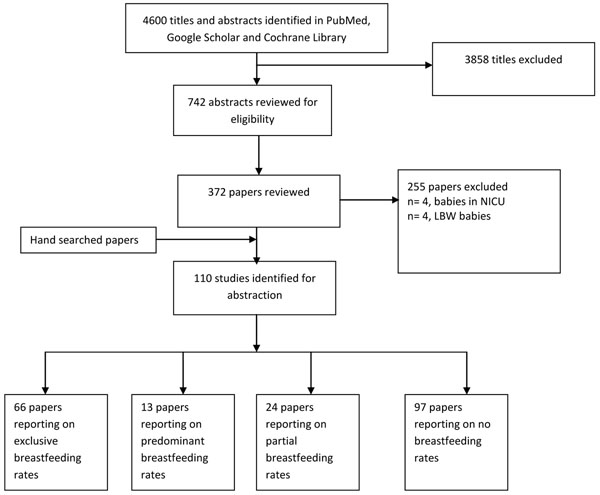
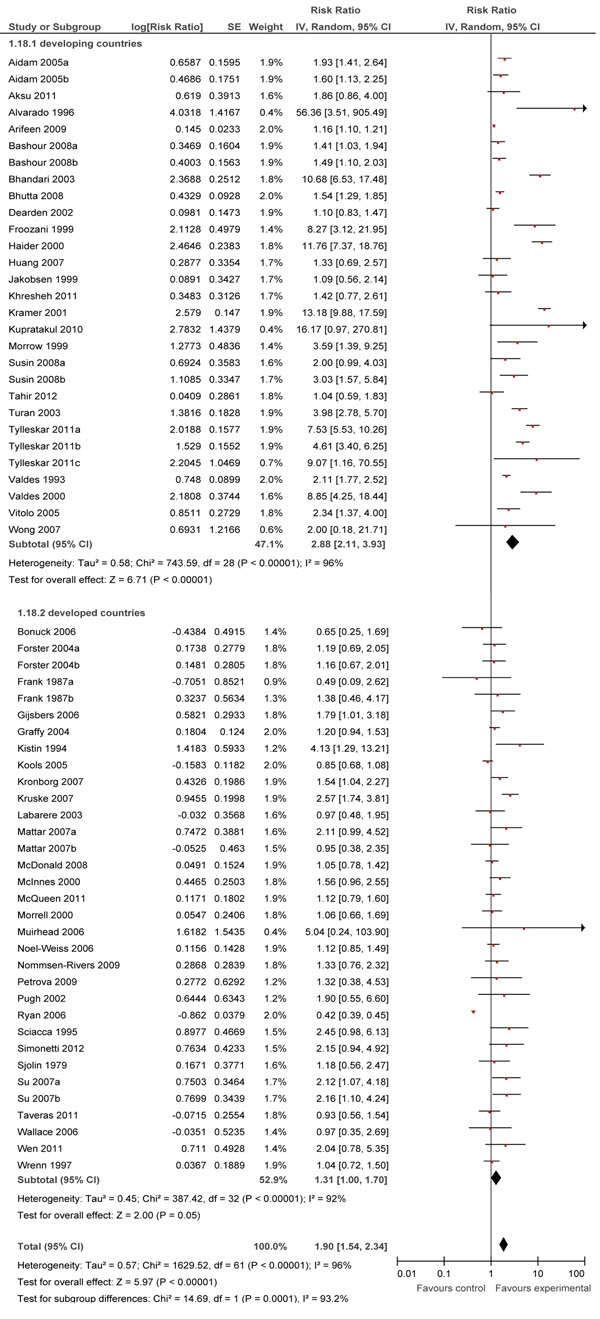
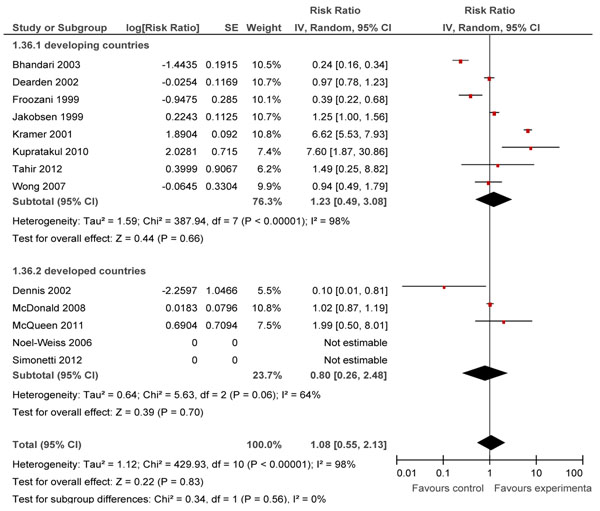
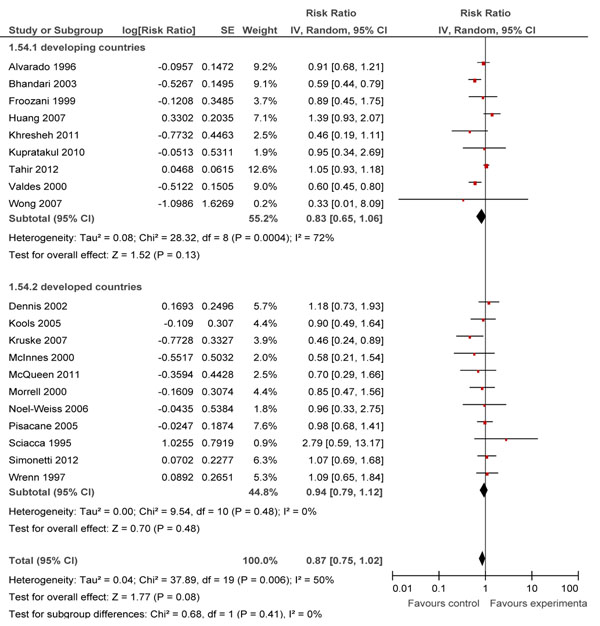
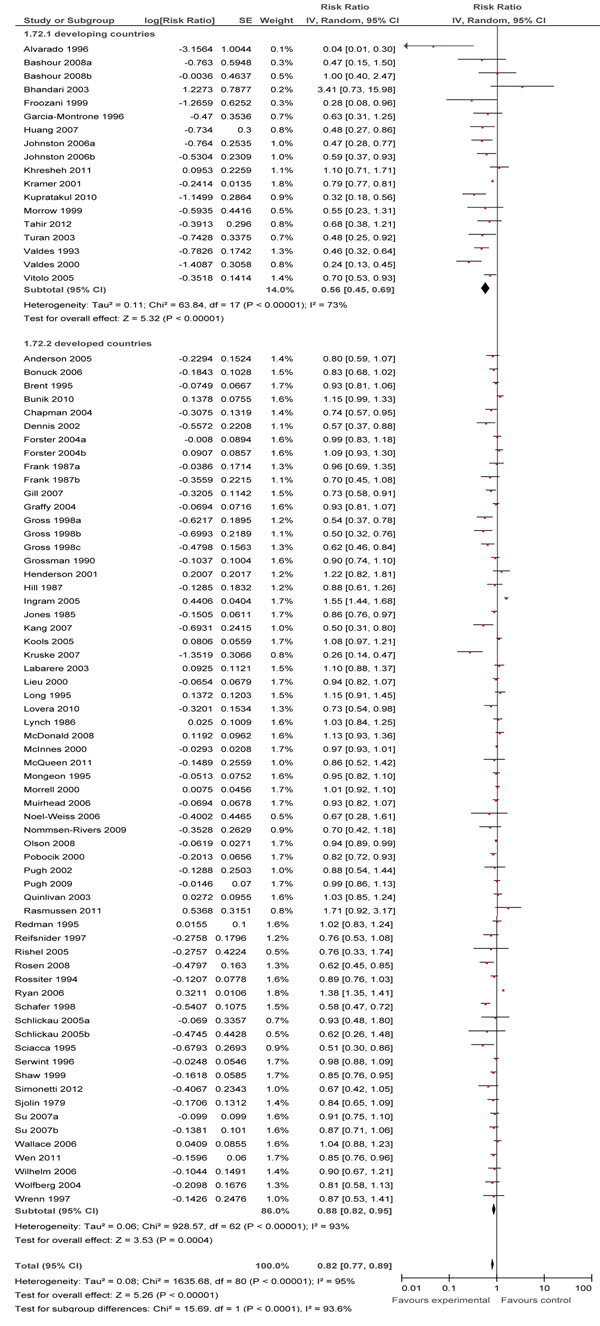
INTRODUCTION: Exclusive Breastfeeding (EBF) rates remain low in both low-income and high-income countries despite World Health Organization recommendations for EBF till 6 months. Breastfeeding has been shown to have a protective effect against gastrointestinal infections, among other benefits. Large-scale interventions focusing on educating mothers about breastfeeding have the potential to increase breastfeeding prevalence, especially EBF, up to recommended standards and also to decrease infant morbidity. METHODS: A systematic literature search was conducted for RCTs and quasi-experimental studies comparing breastfeeding education or support to routine care. The effect of interventions was observed for exclusive, predominant, partial and no breastfeeding rates. The time intervals of interest were day 1, <1 month, and 1 to 5 months. Outcome-specific evidence was graded according to the Child Health Epidemiology Reference Group (CHERG) rules using the adapted Grading of Recommendations, Assessment, Development and Evaluation (GRADE) criteria and recommendations were made from studies in developing countries for inclusion into the Lives Saved Tool (LiST) model. RESULTS: After reviewing 4600 abstracts, 372 studies were selected for full text screening and 110 of these studies were finally included. Statistically significant increases in EBF rates as a result of breastfeeding promotion interventions were observed: 43% at day 1, 30% at <1 month, and 90% at 1-5 months. Rates of 'no breastfeeding' reduced by 32% at 1 day, 30% at <1 month, and 18% at 1-5 months. The effect of interventions on the rates of predominant and partial breastfeeding were non-significant. CONCLUSION: Breastfeeding education and/or support increased EBF rates and decreased no breastfeeding rates at birth, <1 month and 1-5 months. Combined individual and group counseling appeared to be superior to individual or group counseling alone. Interventions in developing countries had a greater impact than those in developed countries.
Overview
The claims and statistics of this paper haven’t been checked yet.
Free: it reads the open-access text and checks the first 5 claims that cite a source we can check. Create a free account to check every claim.
Integrity signals
Registry
Cites
Statistics
Figures
Verification
Claims the paper makes
The claims and statistics of this paper haven’t been checked yet.
Free: it reads the open-access text and checks the first 5 claims that cite a source we can check. Create a free account to check every claim.
Claims other papers make about this one
Each is checked against this paper’s own text: does it say what the citing paper says it does?
The source backs part of the claim, not all of it — or backs it for a different population, condition or comparison.
In the citing paper
“According to systematic reviews and meta-analyses, breastfeeding support interventions that focus on prenatal/antenatal education and continuous long-term care reinforce the intention of women to breastfeed antenatally; such interventions are supportive of the duration and exclusivity of breastfeeding, and are characterized as effective [9,10,11,12,13,14,15,16,17].”
From Association between Breastfeeding Duration and Long-Term Midwifery-Led Support and Psychosocial Support: Outcomes from a Greek Non-Randomized Controlled Perinatal Health Intervention (2021) · cites this paper as [16]
Experimental — accuracy not yet measured
Self-check
Percentages, sums and reported differences re-computed from the paper’s own numbers.
The self-check needs the paper’s full text.
Citations
Cites
Grading quality of evidence and strength of recommendations
(2004) · BMJ · doi:10.1136/bmj.328.7454.1490 · Cited by 8,477 · cited 1×
“according to the CHERG adaptation of the GRADE technique [27].”
MethodKramer, M. S., Chalmers, B., Hodnett, E. D., Sevkovskaya, Z., Dzikovich, I., Shapiro, S., Collet, J.-P., Vanilovich, I., Mezen, I., Ducruet, T., et al. (2001) · JAMA · doi:10.1001/jama.285.4.413 · Cited by 1,534
Breastfeeding and the risk for diarrhea morbidity and mortality
Lamberti, L. M., Fischer Walker, C. L., Noiman, A., Victora, C., & Black, R. E. (2011) · BMC Public Health · doi:10.1186/1471-2458-11-s3-s15 · Cited by 657
Variables Associated With Breastfeeding Duration
Thulier, D., & Mercer, J. (2009) · Journal of Obstetric, Gynecologic & Neonatal Nursing · doi:10.1111/j.1552-6909.2009.01021.x · Cited by 606
Kumar, V., Mohanty, S., Kumar, A., Misra, R. P., Santosham, M., Awasthi, S., Baqui, A. H., Singh, P., Singh, V., Ahuja, R. C., et al. (2008) · The Lancet · doi:10.1016/s0140-6736(08)61483-x · Cited by 498
Morrow, A. L., Guerrero, M. L., Shults, J., Calva, J. J., Lutter, C., Bravo, J., Ruiz-Palacios, G., Morrow, R. C., & Butterfoss, F. D. (1999) · The Lancet · doi:10.1016/s0140-6736(98)08037-4 · Cited by 414
Haider, R., Ashworth, A., Kabir, I., & Huttly, S. R. (2000) · The Lancet · doi:10.1016/s0140-6736(00)03159-7 · Cited by 396
Dennis, C., HODNETT, E. D., Gallop, R., & CHALMERS, B. E. (2002) · PubMed Central · Cited by 383
Bhandari, N., Bahl, R., Mazumdar, S., Martines, J., Black, R. E., & Bhan, M. K. (2003) · The Lancet · doi:10.1016/s0140-6736(03)13134-0 · Cited by 376
Global trends in exclusive breastfeeding
Cai, X., Wardlaw, T., & Brown, D. W. (2012) · International Breastfeeding Journal · doi:10.1186/1746-4358-7-12 · Cited by 362
Research works printed but not linked: 7
- UNICEF A Report Card on Nutrition: Number 4 2006
- WHO UNICEF Integrated management of childhood illness: chartbook and training course 1995 Geneva: World Health Organization PMC2557738 10593034
- RevMan The Cochrane Colloboration. Review Manager (RevMan) 5 for Windows 2003 Oxford, England
- WHO Indicators for assessing breastfeeding practices 1991 91 WHO Geneva, Switzerland: WHO Document WHO/CDD/SER 14
- WHO Indicators for Assessing Infant and Young Child Feeding Practices: Conclusions of a Consensus Meeting Held 6-8 November 2007 in Washington DC, USA 2008 World Health Organization (WHO)
- Langer A Intrapartum Social Support and Exclusive Breastfeeding in Mexico. Wellstart International, Expanded Promotion of Breastfeeding Program Exclusive Breastfeeding Promotion: A Summary of Findings from EPB's Applied Research Program (1992-1996) 1996
- Wrenn SE Effects of a model-based intervention on breastfeeding attrition [dissertation] 1997 San Antonio: University of Texas
Cited by
Maternal and child undernutrition and overweight in low-income and middle-income countries
Black, R. E., Victora, C. G., Walker, S. P., Bhutta, Z. A., Christian, P., de Onis, M., Ezzati, M., Grantham-McGregor, S., Katz, J., Martorell, R., et al. (2013) · The Lancet · doi:10.1016/s0140-6736(13)60937-x · Cited by 8,475
Self-citationBhutta, Z. A., Das, J. K., Rizvi, A., Gaffey, M. F., Walker, N., Horton, S., Webb, P., Lartey, A., & Black, R. E. (2013) · The Lancet · doi:10.1016/s0140-6736(13)60996-4 · Cited by 3,093
Self-citationWhy invest, and what it will take to improve breastfeeding practices?
Rollins, N. C., Bhandari, N., Hajeebhoy, N., Horton, S., Lutter, C. K., Martines, J. C., Piwoz, E. G., Richter, L. M., & Victora, C. G. (2016) · The Lancet · doi:10.1016/s0140-6736(15)01044-2 · Cited by 2,944
Bhutta, Z. A., Das, J. K., Bahl, R., Lawn, J. E., Salam, R. A., Paul, V. K., Sankar, M. J., Blencowe, H., Rizvi, A., Chou, V. B., et al. (2014) · The Lancet · doi:10.1016/s0140-6736(14)60792-3 · Cited by 1,367
Self-citationRisks associated with obesity in pregnancy, for the mother and baby: a systematic review of reviews
Marchi, J., Berg, M., Dencker, A., Olander, E. K., & Begley, C. (2015) · Obesity Reviews · doi:10.1111/obr.12288 · Cited by 991
“However, as a Cochrane systematic review has shown that such support given to women irrespective of weight status is effective (93), further research is needed to develop feasible and acceptable interventions for women with obesity.”
Bhutta, Z. A., Das, J. K., Walker, N., Rizvi, A., Campbell, H., Rudan, I., & Black, R. E. (2013) · The Lancet · doi:10.1016/s0140-6736(13)60648-0 · Cited by 675
Self-citationBrockway, M., Benzies, K., & Hayden, K. A. (2017) · Journal of Human Lactation · doi:10.1177/0890334417707957 · Cited by 428
“These findings are supported by previous research indicating that interventions delivered in nonOECD countries showed a higher effect on exclusive breastfeeding rates compared with those delivered in OECD countries (Haroon et al., 2013; Sinha et al., 2015).”
InfluentialInterventions to improve breastfeeding outcomes: a systematic review and meta‐analysis
Sinha, B., Chowdhury, R., Sankar, M. J., Martines, J., Taneja, S., Mazumder, S., Rollins, N., Bahl, R., & Bhandari, N. (2015) · Acta Paediatrica · doi:10.1111/apa.13127 · Cited by 378
“(215) where combined facility and community based interventions resulted in greater improvements in breastfeeding rates.”
BackgroundInfluentialAsfaw, M., Wondaferash, M., Taha, M., & Dube, L. (2015) · BMC Public Health · doi:10.1186/s12889-015-1370-9 · Cited by 329
Tola, H. H., Shojaeizadeh, D., Tol, A., Garmaroudi, G., Yekaninejad, M. S., Kebede, A., Ejeta, L. T., Kassa, D., & Klinkenberg, E. (2016) · PLOS ONE · doi:10.1371/journal.pone.0155147 · Cited by 215
Coster, S., Watkins, M., & Norman, I. J. (2018) · International Journal of Nursing Studies · doi:10.1016/j.ijnurstu.2017.10.009 · Cited by 175
“Overall there is low to moderate evidence that nurses/midwives and other health professionals can increase the likelihood of breastfeeding compared with usual care, through supportive counselling and education with new mothers (44, 45).”
BackgroundMcFadden, A., Siebelt, L., Marshall, J. L., Gavine, A., Girard, L.-C., Symon, A., & MacGillivray, S. (2019) · International Breastfeeding Journal · doi:10.1186/s13006-019-0235-8 · Cited by 169
Support for healthy breastfeeding mothers with healthy term babies
Gavine, A., Shinwell, S. C., Buchanan, P., Farre, A., Wade, A., Lynn, F., Marshall, J., Cumming, S. E., Dare, S., & McFadden, A. (2022) · Cochrane Database of Systematic Reviews · doi:10.1002/14651858.cd001141.pub6 · Cited by 164
Kim, S. K., Park, S., Oh, J., Kim, J., & Ahn, S. (2018) · International Journal of Nursing Studies · doi:10.1016/j.ijnurstu.2018.01.004 · Cited by 168
“Currently, strategies to prolong breastfeeding are implemented either by trained health care personnel or laypeople and through educational or facility-based programs (Haroon et al., 2013a,b).”
BackgroundGalgamuwa, L. S., Iddawela, D., Dharmaratne, S. D., & Galgamuwa, G. L. S. (2017) · BMC Public Health · doi:10.1186/s12889-017-4311-y · Cited by 191
Nguyen, P. H., Kim, S. S., Sanghvi, T. G., Mahmud, Z., Tran, L. M., Shabnam, S., Aktar, B., Haque, R., Afsana, K., Frongillo, E. A., et al. (2017) · Journal of Nutrition · doi:10.3945/jn.117.257303 · Cited by 168
“The effect on EBF was similar to results from systematic reviews of breastfeeding-promotion interventions (32, 33) and comparable to previous studies in Bangladesh and Vietnam (30).”
ResultKim, S. S., Rawat, R., Mwangi, E. M., Tesfaye, R., Abebe, Y., Baker, J., Frongillo, E. A., Ruel, M. T., & Menon, P. (2016) · PLoS ONE · doi:10.1371/journal.pone.0164800 · Cited by 170
Chipojola, R., Chiu, H.-Y., Huda, M. H., Lin, Y.-M., & Kuo, S.-Y. (2020) · International Journal of Nursing Studies · doi:10.1016/j.ijnurstu.2020.103675 · Cited by 133
Wong, M. S., Mou, H., & Chien, W. T. (2021) · International Journal of Nursing Studies · doi:10.1016/j.ijnurstu.2021.103874 · Cited by 133
Menon, P., Nguyen, P. H., Saha, K. K., Adiba, K., Kennedy, A., Tran, L. M., Sanghvi, T. G., Hajeebhoy, N., Baker, J., Alayón, S., et al. (2016) · PLoS Medicine · doi:10.1371/journal.pmed.1002159 · Cited by 144
Enweronu-Laryea, C. C., Dickson, K., Moxon, S. G., Simen-Kapeu, A., Nyange, C., Niermeyer, S., Bégin, F., Sobel, H. L., Lee, A. C., von Xylander, S. R., et al. (2015) · BMC Pregnancy and Childbirth · doi:10.1186/1471-2393-15-s2-s4 · Cited by 135
Karaçam, Z., & Sağlık, M. (2018) · Türk Pediatri Arşivi · doi:10.5152/turkpediatriars.2018.6350 · Cited by 179
Reducing toxic stress in the neonatal intensive care unit to improve infant outcomes
Weber, A. M., & Harrison, T. M. (2018) · Nursing Outlook · doi:10.1016/j.outlook.2018.11.002 · Cited by 147
Lifestyle and Behavioral Management of Polycystic Ovary Syndrome
Brennan, L., Teede, H., Skouteris, H., Linardon, J., Hill, B., & Moran, L. (2017) · Journal of Women's Health · doi:10.1089/jwh.2016.5792 · Cited by 112
“A combined education and support program delivery with an individual or group approach may improve breastfeeding uptake and continuation, as reported in a recent systematic review.(113)”
Almohanna, A. A. S., Win, K. T., & Meedya, S. (2020) · Journal of Medical Internet Research · doi:10.2196/17361 · Cited by 151
Global burden of childhood diarrhea and interventions
Das, J. K., Salam, R. A., & Bhutta, Z. A. (2014) · Current Opinion in Infectious Diseases · doi:10.1097/qco.0000000000000096 · Cited by 140
Self-citationPromoting Early Child Development With Interventions in Health and Nutrition: A Systematic Review
Vaivada, T., Gaffey, M. F., & Bhutta, Z. A. (2017) · PEDIATRICS · doi:10.1542/peds.2016-4308 · Cited by 130
Self-citationThe Role of Maternal Breast Milk in Preventing Infantile Diarrhea in the Developing World
Turin, C. G., & Ochoa, T. J. (2014) · Current Tropical Medicine Reports · doi:10.1007/s40475-014-0015-x · Cited by 129
Interventions to Reduce Maternal and Newborn Morbidity and Mortality
Gülmezoglu, A. M., Lawrie, T. A., Hezelgrave, N., Oladapo, O. T., Souza, J. P., Gielen, M., Lawn, J. E., Bahl, R., Althabe, F., Colaci, D., et al. (2016) · Disease Control Priorities, Third Edition (Volume 2): Reproductive, Maternal, Newborn, and Child Health · doi:10.1596/978-1-4648-0348-2_ch7 · Cited by 104
Kim, S. S., Nguyen, P. H., Yohannes, Y., Abebe, Y., Tharaney, M., Drummond, E., Frongillo, E. A., Ruel, M. T., & Menon, P. (2019) · Journal of Nutrition · doi:10.1093/jn/nxz087 · Cited by 129
Gupta, A. K., Suri, S., Dadhich, J. P., Trejos, M., & Nalubanga, B. (2018) · Journal of Public Health Policy · doi:10.1057/s41271-018-0153-9 · Cited by 120
Maleki-Saghooni, N., Barez, M. A., & Karimi, F. Z. (2019) · The Journal of Maternal-Fetal & Neonatal Medicine · doi:10.1080/14767058.2019.1568986 · Cited by 135
Examining the role of psychological factors in the relationship between sleep problems and suicide
Littlewood, D., Kyle, S. D., Pratt, D., Peters, S., & Gooding, P. (2017) · Clinical Psychology Review · doi:10.1016/j.cpr.2017.03.009 · Cited by 101
Duration of exclusive breastfeeding in a Brazilian population: new determinants in a cohort study
Vieira, T. D. O., Vieira, G. O., de Oliveira, N. F., Mendes, C. M. C., Giugliani, E. R. J., & Silva, L. R. (2014) · BMC Pregnancy and Childbirth · doi:10.1186/1471-2393-14-175 · Cited by 92
“Other studies also found that breastfeeding education is significantly associated with EBF practice [4,15,16].”
BackgroundPromoting physical activity in the workplace: A systematic meta-review
Jirathananuwat, A., & Pongpirul, K. (2017) · Journal of Occupational Health · doi:10.1539/joh.16-0245-ra · Cited by 113
Luo, Y., Chua, C. R., Xiong, Z., Ho, R., & Ho, C. S. H. (2020) · Frontiers in Psychiatry · doi:10.3389/fpsyt.2020.565098 · Cited by 103
Price, S. L., Aston, M., Monaghan, J., Sim, M., Tomblin Murphy, G., Etowa, J., Pickles, M., Hunter, A., & Little, V. (2018) · Qualitative Health Research · doi:10.1177/1049732317748314 · Cited by 89
van Dellen, S. A., Wisse, B. M., Mobach, M. P., & Dijkstra, A. (2019) · BMC Public Health · doi:10.1186/s12889-019-7331-y · Cited by 136
Nguyen, P. H., Kachwaha, S., Tran, L. M., Avula, R., Young, M. F., Ghosh, S., Sharma, P. K., Escobar‐Alegria, J., Forissier, T., Patil, S. R., et al. (2021) · Journal of Nutrition · doi:10.1093/jn/nxab131 · Cited by 109
“The effect on exclusive breastfeeding was similar to results from systematic reviews of breastfeeding promotion interventions (52, 53), but the magnitude was smaller than for previous studies in Bangladesh (38).”
ResultNikiema, L. O., Huybregts, L., Martin‐Prével, Y., Donnen, P., Lanou, H., Grosemans, J., Offoh, P., Dramaix‐Wilmet, M., Sondo, B., Roberfroid, D., et al. (2017) · PLoS ONE · doi:10.1371/journal.pone.0177839 · Cited by 111
Improving exclusive breastfeeding in low and middle‐income countries: A systematic review
Olufunlayo, T. F., Roberts, A. A., MacArthur, C., Thomas, G. N., Odeyemi, K. A., Price, M. J., & Jolly, K. B. (2019) · Maternal and Child Nutrition · doi:10.1111/mcn.12788 · Cited by 105
“…measured at any time point prior to 6 months (McFadden et al., 2017; Sinha et al., 2017) or for high and low/middle income countries combined (Haroon et al., 2013; McFadden et al., 2017; Sinha et al., 2015), with meta‐analysis including all study designs (Sinha et al., 2017), despite the…”
BackgroundInfluentialBich, T. H., Long, T. K., & Hoa, D. T. P. (2019) · Maternal and Child Nutrition · doi:10.1111/mcn.12705 · Cited by 109
Multifunctional Benefits of Prevalent HMOs: Implications for Infant Health
Hill, D. R., Chow, J., & Buck, R. H. (2021) · Nutrients · doi:10.3390/nu13103364 · Cited by 104
“Thus, the World Health Organization [8] and the American Academy of Pediatrics [9] recommend exclusive breastfeeding for all infants for the first six months of life and have widely advocated for continued breastfeeding of all infants for up to two years.”
BackgroundGirum, T., Muktar, E., Lentiro, K., Wondiye, H., & Shewangizaw, M. (2018) · Tropical Diseases Travel Medicine and Vaccines · doi:10.1186/s40794-018-0065-5 · Cited by 84
Ollivier, R., Aston, M. L., Price, S. L., Sim, M., Benoit, B., Joy, P. R., Iduye, D., & Nassaji, N. A. (2020) · Midwifery · doi:10.1016/j.midw.2020.102902 · Cited by 108
A robust interrupted time series model for analyzing complex health care intervention data
Cruz, M., Bender, M., & Ombao, H. (2017) · Statistics in Medicine · doi:10.1002/sim.7443 · Cited by 97
Fakonti, G., Kyprianidou, M., Toumbis, G., & Giannakou, K. (2021) · Frontiers in Public Health · doi:10.3389/fpubh.2021.656138 · Cited by 93
Effectiveness of a smartphone-based educational intervention to improve breastfeeding
Seyyedi, N., Rahmatnezhad, L., Mesgarzadeh, M., Khalkhali, H. R., Seyyedi, N., & Rahimi, B. (2021) · International Breastfeeding Journal · doi:10.1186/s13006-021-00417-w · Cited by 111
“Similar results have been found in different studies reporting the highest impact of breastfeeding education during pre- and postnatal periods [37] and, in some cases, placing more emphasis on prenatal education as an initial action [38, 39].”
ResultAraban, M., Karimian, Z., Karimiankakolaki, Z., McQueen, K., & Dennis, C. (2018) · Journal of Obstetric, Gynecologic & Neonatal Nursing · doi:10.1016/j.jogn.2018.01.005 · Cited by 97
Connelly, M., Brown, H. L., van der Pligt, P., & Teychenne, M. J. (2015) · BMC Pregnancy and Childbirth · doi:10.1186/s12884-015-0529-9 · Cited by 94
The sleep phenotype of Borderline Personality Disorder: A systematic review and meta-analysis
Winsper, C., Tang, N. K. Y., Marwaha, S., Lereya, S. T., Gibbs, M., Thompson, A. D., & Singh, S. P. (2016) · Neuroscience & Biobehavioral Reviews · doi:10.1016/j.neubiorev.2016.12.008 · Cited by 81
Buckland, C., Hector, D., Kolt, G. S., Fahey, P. P., & Arora, A. (2020) · International Breastfeeding Journal · doi:10.1186/s13006-020-00340-6 · Cited by 86
Nguyen, P. H., Kim, S. S., Nguyen, T. T., Hajeebhoy, N., Tran, L. M., Alayón, S., Ruel, M. T., Rawat, R., Frongillo, E. A., & Menon, P. (2016) · Maternal and Child Nutrition · doi:10.1111/mcn.12330 · Cited by 85
“home and family environment, community context, health facilities and mass media) are used to promote optimal breastfeeding practices (Imdad et al. 2011; Haroon et al. 2013; Sinha et al. 2015).”
BackgroundDesissa, F., Workineh, T., & Tufa, T. B. (2018) · BMC Public Health · doi:10.1186/s12889-018-5371-3 · Cited by 67
Shape Matters: Package Shape Informs Brand Status Categorization and Brand Choice
Chen, H., Pang, J., Koo, M., & Patrick, V. M. (2019) · Journal of Retailing · doi:10.1016/j.jretai.2019.08.003 · Cited by 79
The Nexus Between Nutrition and Early Childhood Development
Alderman, H., & Fernald, L. C. H. (2017) · Annual Review of Nutrition · doi:10.1146/annurev-nutr-071816-064627 · Cited by 87
Brandão, S., Mendonça, D. M., Dias, C. C., Pinto, T. M., Dennis, C., & Figueiredo, B. (2018) · Midwifery · doi:10.1016/j.midw.2018.07.014 · Cited by 73
Chung, R. Y., Mercer, S. W., Lai, F. T. T., Yip, B. H. K., Wong, M. C. S., & Wong, S. Y. S. (2015) · PLoS ONE · doi:10.1371/journal.pone.0140040 · Cited by 66
Millennium Development Goals 4 and 5: Past and future progress
Gaffey, M. F., Das, J. K., & Bhutta, Z. A. (2015) · Seminars in Fetal and Neonatal Medicine · doi:10.1016/j.siny.2015.07.001 · Cited by 72
Self-citationSubramanian, S. V., Mejía‐Guevara, I., & Krishna, A. (2016) · Maternal and Child Nutrition · doi:10.1111/mcn.12254 · Cited by 75
“In addition, many programmes focus on promoting breastfeeding through both individual and group counselling (Haroon et al. 2013).”
BackgroundKim, S. S., Nguyen, P. H., Tran, L. M., Sanghvi, T. G., Mahmud, Z., Haque, M. R., Afsana, K., Frongillo, E. A., Ruel, M. T., & Menon, P. (2018) · Journal of Nutrition · doi:10.1093/jn/nxy147 · Cited by 72
Darsene, H., Geleto, A. B., Worku, A. G., & Woldeyohannes, S. M. (2017) · Archives of Public Health · doi:10.1186/s13690-017-0198-4 · Cited by 59
Adam, M., Johnston, J. S., Job, N., Dronavalli, M., Roux, I. L., Mbewu, N., Mkunqwana, N., Tomlinson, M., McMahon, S. A., LeFevre, A. E., et al. (2021) · PLoS Medicine · doi:10.1371/journal.pmed.1003744 · Cited by 75
MacIsaac, M. B., Bugeja, L. C., & Jelinek, G. A. (2016) · Australian and New Zealand Journal of Public Health · doi:10.1111/1753-6405.12594 · Cited by 74
Assessing and Improving Childhood Nutrition and Growth Globally
Williams, A. M., & Suchdev, P. S. (2017) · Pediatric Clinics of North America · doi:10.1016/j.pcl.2017.03.001 · Cited by 72
Successful delivery of nutrition programs and the sustainable development goals
de Romaña, D. L., Greig, A., Thompson, A., & Arabi, M. (2021) · Current Opinion in Biotechnology · doi:10.1016/j.copbio.2021.03.004 · Cited by 79
Essa, R. M., & Ismail, N. I. A. A. (2015) · Journal of Nursing Education and Practice · doi:10.5430/jnep.v5n4p98 · Cited by 71
“The Maximum goal of this period of successful breastfeeding can be achieved using SSC.[16, 17] Mothers and babies who experience early SSC method are more likely to have a successful breastfeeding initiation and continue the process during the early postpartum period.”
MethodVaivada, T., Gaffey, M. F., Das, J. K., & Bhutta, Z. A. (2017) · Current Opinion in Clinical Nutrition & Metabolic Care · doi:10.1097/mco.0000000000000365 · Cited by 76
Self-citationSinha, B., Chowdhury, R., Upadhyay, R. P., Taneja, S., Martines, J., Bahl, R., & Sankar, M. J. (2017) · Journal of Nutrition · doi:10.3945/jn.116.242321 · Cited by 64
Ara, G., Khanam, M., Papri, N., Nahar, B., Haque, M. A., Kabir, I., & Dibley, M. J. (2018) · Maternal & Child Nutrition · doi:10.1111/mcn.12605 · Cited by 56
“The rate of EBF increased in most in developing regions, with the highest improvements observed in West and Central Africa where the prevalence of EBF more than doubled from 12% in 1995 to 28% in 2010 (Haroon et al., 2013).”
Backgroundda Silva, N. V. D. N., Pontes, C. M., de Sousa, N. F. C., & de Vasconcelos, M. G. L. (2019) · Ciência & Saúde Coletiva · doi:10.1590/1413-81232018242.03022017 · Cited by 142
Greenland, K., Chipungu, J., Curtis, V., Schmidt, W., Siwale, Z., Mudenda, M., Chilekwa, J. C., Lewis, J. J., & Chilengi, R. (2016) · The Lancet Global Health · doi:10.1016/s2214-109x(16)30262-5 · Cited by 66
Home visiting at scale and child development
Araujo, M. C., Dormal, M., Grantham‐McGregor, S., Lazarte, F., Rubio‐Codina, M., & Schady, N. (2021) · Journal of Public Economics Plus · doi:10.1016/j.pubecp.2021.100003 · Cited by 70
Collison, D. K., Kekre, P., Verma, P., Melgen, S., Kram, N., Colton, J. S., Blount, W., & Girard, A. W. (2015) · Food and Nutrition Bulletin · doi:10.1177/156482651503600103 · Cited by 56
Khumalo, S., Taylor, M., Makusha, T., & Mabaso, M. (2020) · Reproductive Health · doi:10.1186/s12978-020-01041-3 · Cited by 74
Ekström, A. C., & Thorstensson, S. (2015) · BMC Pregnancy and Childbirth · doi:10.1186/s12884-015-0712-z · Cited by 52
“Mothers need to receive realistic, consistent and evidence-based information on breastfeeding [48] and a combination of group and individual counselling is more efficient for breast-feeding success [49].”
BackgroundSong, J. T., Kinshella, M. W., Kawaza, K., & Goldfarb, D. A. (2023) · Breastfeeding Medicine · doi:10.1089/bfm.2022.0151 · Cited by 66
“However, while there are numerous reviews focused on breastfeeding interventions among term infants, 9–12 there is a current gap in the literature reviewing breastfeeding interventions in preterm and/or LBW infants.”
Kellams, A. L., Gurka, K. K., Hornsby, P. P., Drake, E., Riffon, M., Gellerson, D., Gulati, G., & Coleman, V. (2015) · Journal of Human Lactation · doi:10.1177/0890334415599402 · Cited by 51
Fair, F. J., Ford, G. L., & Soltani, H. (2019) · Cochrane Database of Systematic Reviews · doi:10.1002/14651858.cd012099.pub2 · Cited by 60
“A further review has found educational- and support-based interventions are effective at increasing exclusive breastfeeding at birth, one month and up to five months of age and at decreasing the rate of no breastfeeding (Haroon 2013).”
BackgroundZhu, Y., Zhang, Z., Ling, Y., & Wan, H. (2016) · Women and Birth · doi:10.1016/j.wombi.2016.09.011 · Cited by 63
“Mother’s beliefs on the benefits and importance of breastfeeding to their babies and themselves seemed to be essential to the decision of breastfeeding.(24,25) Meanwhile, knowledge on the sufficient nutrition provided by exclusive breastfeeding was of importance to the practice of exclusive breastfeeding both in wards…”
BackgroundRonto, R., Ball, L., Pendergast, D., & Harris, N. (2016) · Appetite · doi:10.1016/j.appet.2016.10.024 · Cited by 70
Lyons, S., Currie, S., Peters, S., Lavender, T., & Smith, D. M. (2018) · Obesity Reviews · doi:10.1111/obr.12681 · Cited by 60
Educational practices of nursing in the puerperium: social representations of puerperal mothers
Dodou, H. D., de Oliveira, T. D. A., Oriá, M. O. B., Rodrigues, D. P., Pinheiro, P. N. D. C., & Luna, I. T. (2017) · Revista Brasileira de Enfermagem · doi:10.1590/0034-7167-2016-0136 · Cited by 50
Thepha, T., Marais, D., Bell, J. S., & Muangpin, S. (2018) · International Breastfeeding Journal · doi:10.1186/s13006-018-0148-y · Cited by 50
Essential interventions for child health
Lassi, Z. S., Mallick, D., Das, J. K., Mal, L., Salam, R. A., & Bhutta, Z. A. (2014) · Reproductive Health · doi:10.1186/1742-4755-11-s1-s4 · Cited by 67
“34) [10].”
Self-citationPacifier Use and Exclusive Breastfeeding in Brazil
Buccini, G., Pérez‐Escamilla, R., & Venâncio, S. I. (2015) · Journal of Human Lactation · doi:10.1177/0890334415609611 · Cited by 60
“Third, primary health care centers and human milk banks should be involved to implement these strategies in partnership with peer counselors and lactation consultants.(49,50) Fourth, a strategy should be specifically devised, focusing on reducing the use of pacifiers and supporting the maintenance of breastfeeding/mil…”
BackgroundVila‐Candel, R., Duke, K., Soriano‐Vidal, F. J., & Castro‐Sánchez, E. (2017) · Journal of Human Lactation · doi:10.1177/0890334416676469 · Cited by 63
Determinants of early breastfeeding initiation and exclusive breastfeeding in Colombia
Finnie, S., Pérez‐Escamilla, R., & Buccini, G. (2019) · Public Health Nutrition · doi:10.1017/s1368980019002180 · Cited by 63
“rates, particularly in non-high income countries such as Colombia(1,28).”
BackgroundWei, Y., Wang, Y., Li, X., Qin, P., Lu, Y., Xu, J., Chen, S., Li, M., & Yang, Z. (2018) · PLoS neglected tropical diseases · doi:10.1371/journal.pntd.0006604 · Cited by 48
School recess, social connectedness and health: a Canadian perspective
McNamara, L., Colley, P., & Franklin, N. (2015) · Health Promotion International · doi:10.1093/heapro/dav102 · Cited by 68
Prudhon, C., Benelli, P., Maclaine, A., Harrigan, P. B., & Frize, J. (2017) · Maternal and Child Nutrition · doi:10.1111/mcn.12457 · Cited by 50
Cost-Effectiveness of Peer Counselling for the Promotion of Exclusive Breastfeeding in Uganda
Chola, L., Fadnes, L. T., Engebretsen, I. M. S., Nkonki, L. L., Nankabirwa, V., Sommerfelt, H., Tumwine, J. K., Tylleskär, T., Robberstad, B., & PROMISE-EBF Study Group (2015) · PLoS ONE · doi:10.1371/journal.pone.0142718 · Cited by 56
“Interventions to educate mothers on the importance of breastfeeding can increase EBF prevalence [8].”
BackgroundBærug, A. B., Langsrud, Ø., Løland, B. F., Tufte, E., Tylleskär, T., & Fretheim, A. (2016) · Maternal and Child Nutrition · doi:10.1111/mcn.12273 · Cited by 54
“…at the combined effect of breastfeeding interventions in hospitals and primary care (Spiby et al. 2009; Beake et al. 2012; Renfrew et al. 2012; Haroon et al. 2013; Skouteris et al. 2014; Sinha et al. 2015), a systematic review by the US Preventive Service Task Force focused on interventions…”
BackgroundGu, Y., Zhu, Y., Zhang, Z., & Wan, H. (2016) · Midwifery · doi:10.1016/j.midw.2016.09.010 · Cited by 56
Factors Affecting Exclusive Breastfeeding, Using Adaptive LASSO Regression.
Maharlouei, N., Pourhaghighi, A., Shahraki, H. R., Zohoori, D., & Lankarani, K. B. (2018) · International journal of community based nursing and midwifery · doi:10.30476/ijcbnm.2018.40833 · Cited by 78
Benedict, R. K., Craig, H. C., Torlesse, H., & Stoltzfus, R. J. (2018) · Maternal and Child Nutrition · doi:10.1111/mcn.12697 · Cited by 52
“These findings support existing research that demonstrates the effective use of education and counselling services to promote optimal breastfeeding practices (Haroon et al., 2013; Sinha et al., 2015).”
ResultCOVID-19 vaccine hesitancy and reasons for or against adherence among dentists
Belingheri, M., Roncalli, M. G., Riva, M. A., Paladino, M. E., & Teruzzi, C. M. (2021) · The Journal of the American Dental Association · doi:10.1016/j.adaj.2021.04.020 · Cited by 53
Nilsson, L. K. J., Sharma, A., Bhatnagar, R. K., Bertilsson, S., & Terenius, O. (2018) · FEMS Microbiology Ecology · doi:10.1093/femsec/fiy058 · Cited by 44
Lori, J. R., Chuey, M. R., Munro‐Kramer, M. L., Ofosu-Darkwah, H., & Adanu, R. (2018) · Reproductive Health · doi:10.1186/s12978-018-0644-y · Cited by 47
Adam, M., Tomlinson, M., Roux, I. L., LeFevre, A. E., McMahon, S. A., Johnston, J. S., Kirton, A., Mbewu, N., Strydom, S.-L., Prober, C. G., et al. (2019) · BMC Health Services Research · doi:10.1186/s12913-019-4000-x · Cited by 59
Metadata
- Authors
- Haroon, S., Das, J. K., Salam, R. A., Imdad, A., & Bhutta, Z. A.
- Affiliations
- Aga Khan University (PK)
- Corresponding author
- Bhutta, Zulfiqar A
- Venue
- BMC Public Health
- Published
- 2013-09
- Volume
- 13
- Issue
- S3
- Pages
- S20-S20
- ISSN
- 1471-2458 (ISSN-L)
- PMC
- PMC3847366
- OpenAlex
- W2095348857
- Semantic Scholar
- 77fc4446053efe8f97f6782255f6ff7fe255bba7
- Cited by
- 460
- References
- 123
- Citations by year
- 2026: 8 · 2025: 16 · 2024: 25 · 2023: 27 · 2022: 30 · 2021: 59 · 2020: 44 · 2019: 45 · 2018: 62 · 2017: 45 · 2016: 44 · 2015: 36 · 2014: 14 · 2013: 5
- FWCI
- 3.91
- Type
- journal article
- Language
- en
- Open access
- gold
- doi.org
- Licence
- cc-by
- Locations
- BMC Public Health (publishedVersion, cc-by)
- Europe PMC (PubMed Central) (publishedVersion, cc-by)
- PubMed Central (publishedVersion, cc-by)
- PubMed (publishedVersion)
- Funders
- Bill and Melinda Gates Foundation
- Topics
- Health Sciences › Medicine › Epidemiology › Breastfeeding Practices and Influences
- Health Sciences › Nursing › Nutrition and Dietetics › Infant Nutrition and Health
- Health Sciences › Medicine › Pediatrics, Perinatology and Child Health › Global Maternal and Child Health
- Keywords
- breastfeeding promotion, exclusive breastfeeding, breastfeeding education, breastfeeding support, infant feeding practices, breastfeeding counseling, Lives Saved Tool, infant morbidity, developing countries, low-income countries
- MeSH terms
- Breast Feeding, Developing Countries, Female, Health Promotion, Humans, Infant, Infant Nutritional Physiological Phenomena, Maternal Behavior, Mothers, World Health Organization, Randomized Controlled Trials as Topic, Developed Countries
About these checks
Registry, retraction, Cites and statistics results are computed, not judged, with one exception: a printed reference that no index lists is read once by a model before it counts as a citation error. Claims are extracted by a model and kept only when their quote appears verbatim in the text; each cited source is then checked, with a model’s help, for whether it says what the claim relies on. Those verdicts can be wrong — read the claim’s quote and the cited source before relying on one.
Statistics and arithmetic are recomputed, not judged.
Confidence bands are shown only for fields calibrated on our annotated test set. None is calibrated yet, so no band is shown.
What counts as a claim ›How we measure confidence ›How we check this ›
Are you an author, or do you see a problem with this page? Request a review
Data sources
Bibliographic data: Semantic Scholar, OpenAlex, Crossref.
Contains information from the Semantic Scholar Academic Graph Datasets, made available under the ODC Attribution License (ODC-BY 1.0).
Semantic Scholar’s data is described in: Kinney, R., et al. (2023). The Semantic Scholar Open Data Platform. arXiv:2301.10140.
