

Cross-reactivity of steroid hormone immunoassays: clinical significance and two-dimensional molecular similarity prediction
Open accessThe DOI matches its Crossref record; 66 of the 66 references it cites were found in a registry or an index.
Abstract
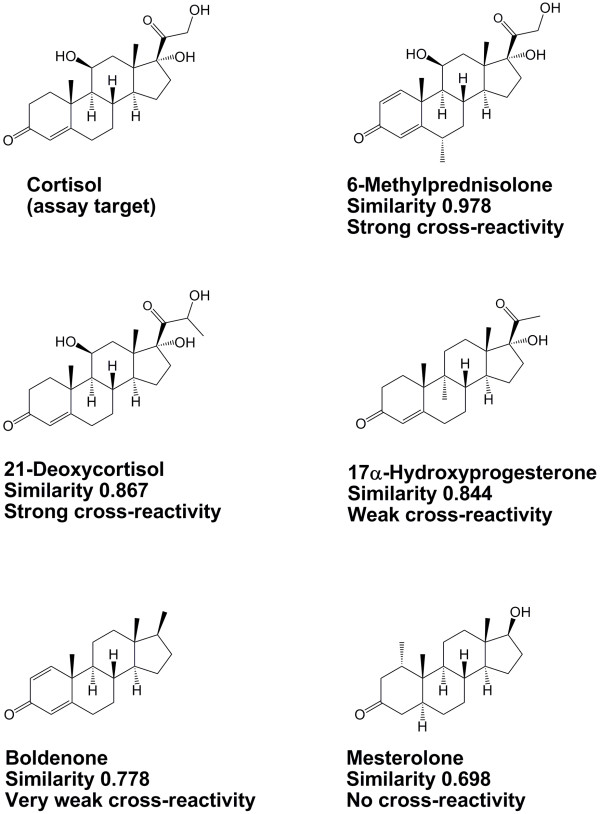
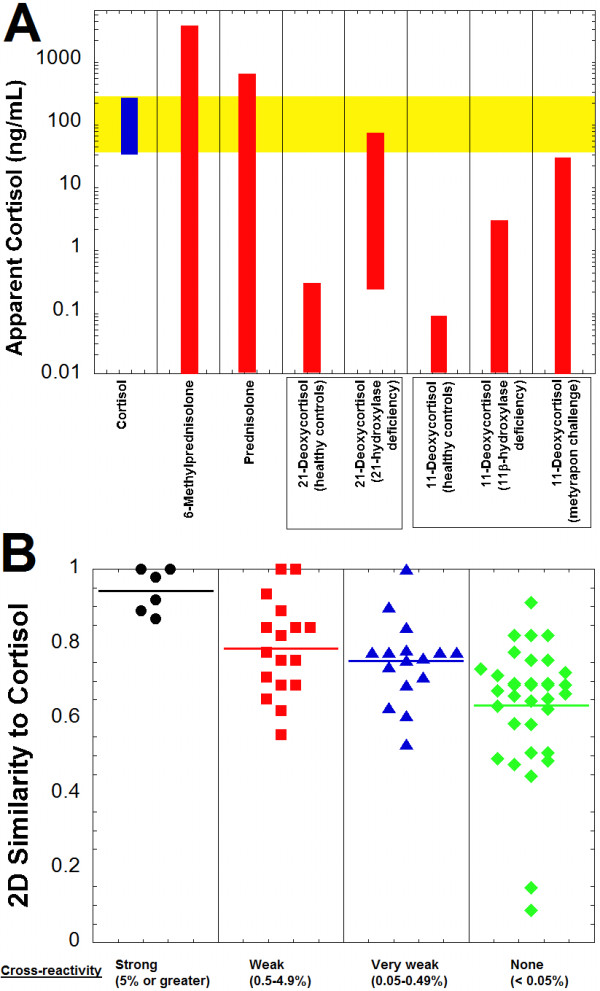
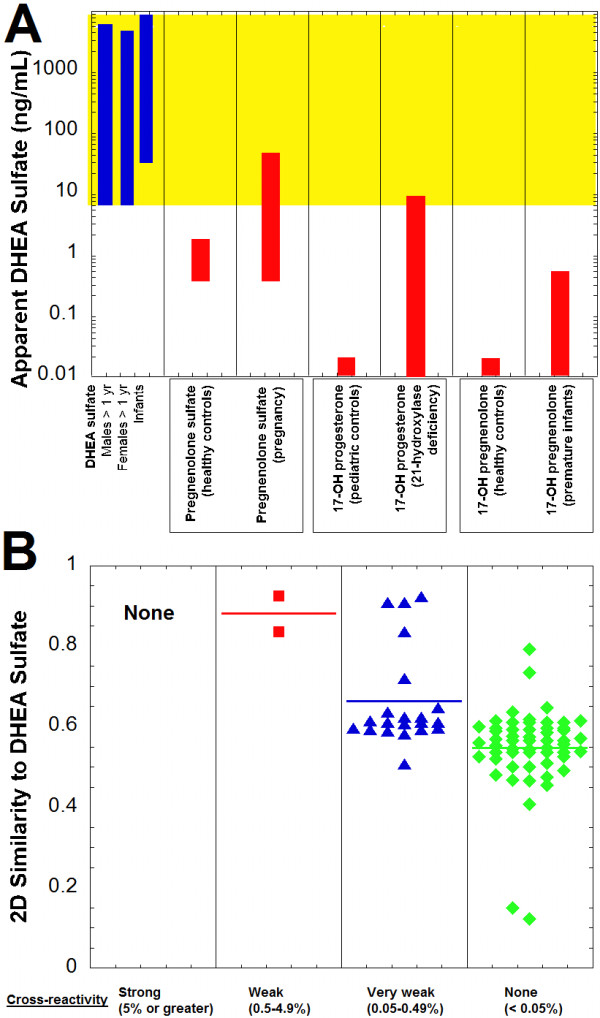
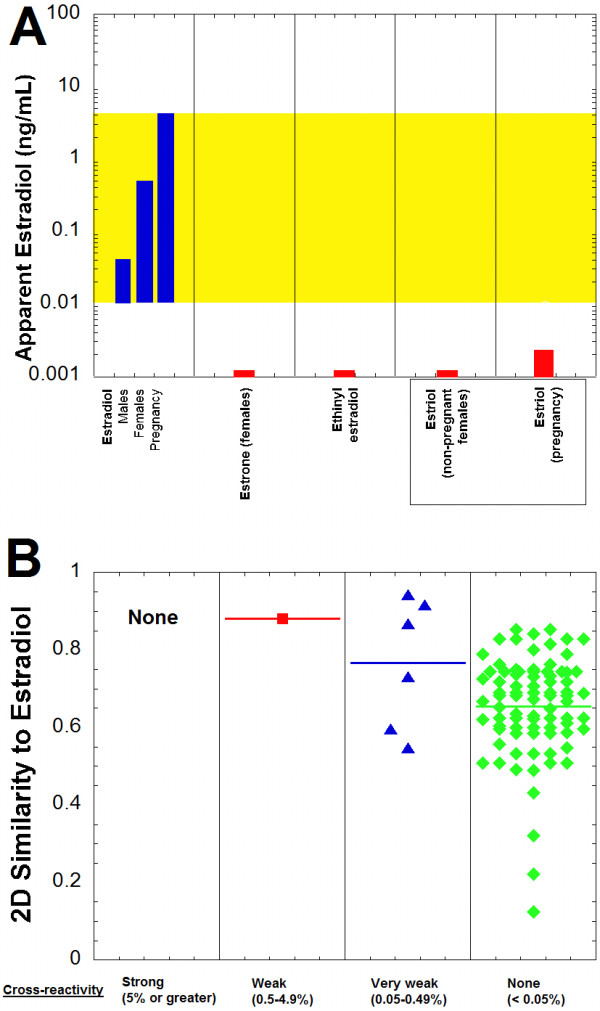
BACKGROUND: Immunoassays are widely used in clinical laboratories for measurement of plasma/serum concentrations of steroid hormones such as cortisol and testosterone. Immunoassays can be performed on a variety of standard clinical chemistry analyzers, thus allowing even small clinical laboratories to do analysis on-site. One limitation of steroid hormone immunoassays is interference caused by compounds with structural similarity to the target steroid of the assay. Interfering molecules include structurally related endogenous compounds and their metabolites as well as drugs such as anabolic steroids and synthetic glucocorticoids. METHODS: Cross-reactivity of a structurally diverse set of compounds were determined for the Roche Diagnostics Elecsys assays for cortisol, dehydroepiandrosterone (DHEA) sulfate, estradiol, progesterone, and testosterone. These data were compared and contrasted to package insert data and published cross-reactivity studies for other marketed steroid hormone immunoassays. Cross-reactivity was computationally predicted using the technique of two-dimensional molecular similarity. RESULTS: The Roche Elecsys Cortisol and Testosterone II assays showed a wider range of cross-reactivity than the DHEA sulfate, Estradiol II, and Progesterone II assays. 6-Methylprednisolone and prednisolone showed high cross-reactivity for the cortisol assay, with high likelihood of clinically significant effect for patients administered these drugs. In addition, 21-deoxycortisol likely produces clinically relevant cross-reactivity for cortisol in patients with 21-hydroxylase deficiency, while 11-deoxycortisol may produce clinically relevant cross-reactivity in 11β-hydroxylase deficiency or following metyrapone challenge. Several anabolic steroids may produce clinically significant false positives on the testosterone assay, although interpretation is limited by sparse pharmacokinetic data for some of these drugs. Norethindrone therapy may impact immunoassay measurement of testosterone in women. Using two-dimensional similarity calculations, all compounds with high cross-reactivity also showed a high degree of similarity to the target molecule of the immunoassay. CONCLUSIONS: Compounds producing cross-reactivity in steroid hormone immunoassays generally have a high degree of structural similarity to the target hormone. Clinically significant interactions can occur with structurally similar drugs (e.g., prednisolone and cortisol immunoassays; methyltestosterone and testosterone immunoassays) or with endogenous compounds such as 21-deoxycortisol that can accumulate to very high concentrations in certain disease conditions. Simple similarity calculations can help triage compounds for future testing of assay cross-reactivity.
Overview
The claims and statistics of this paper haven’t been checked yet.
Free: it reads the open-access text and checks the first 5 claims that cite a source we can check. Create a free account to check every claim.
Integrity signals
Registry
Cites
Statistics
Figures
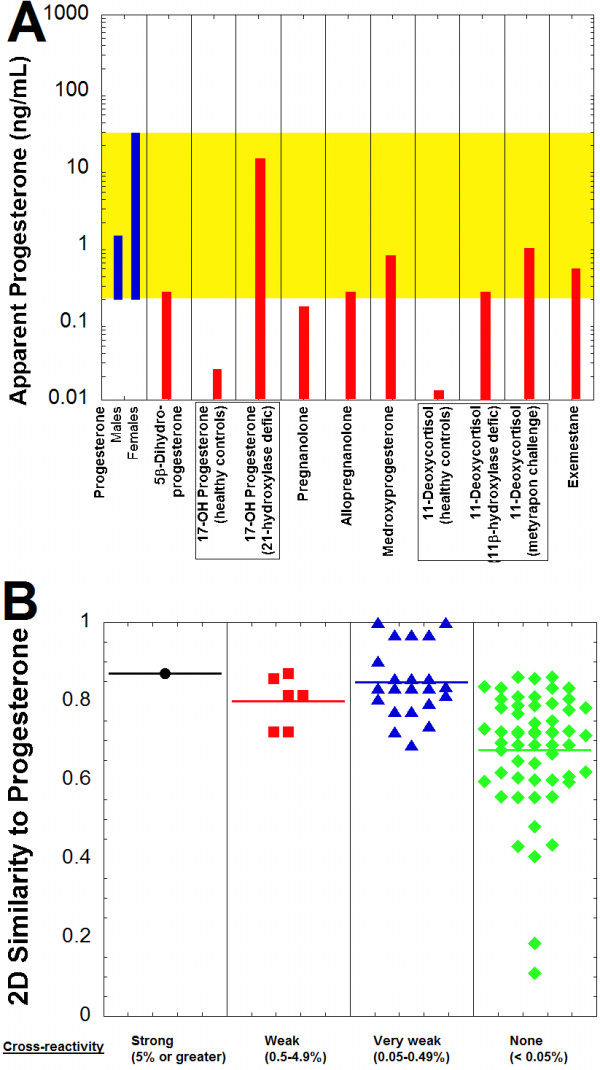
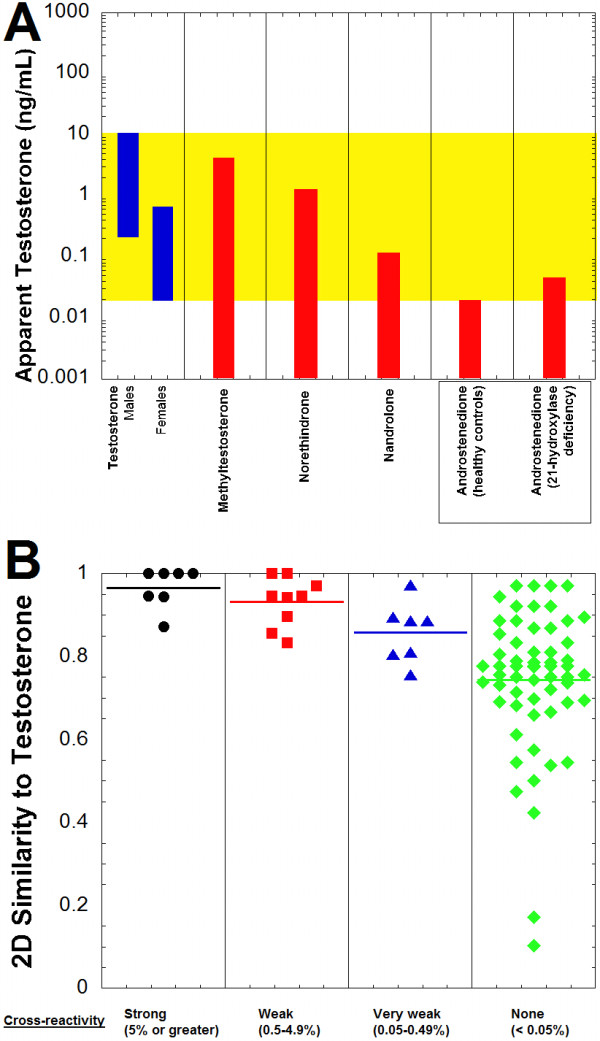
Verification
Claims the paper makes
The claims and statistics of this paper haven’t been checked yet.
Free: it reads the open-access text and checks the first 5 claims that cite a source we can check. Create a free account to check every claim.
Claims other papers make about this one
Each is checked against this paper’s own text: does it say what the citing paper says it does?
The check wasn’t confident either way, so it gives no verdict — never disputed.
In the citing paper
“Serum T3 or free T3 (fT3) levels are generally not helpful in diagnosing CH; most patients with CH have low fT3 levels, but there is considerable overlap between CH and non-CH patients with pituitary MAY 4, 2016 disease (75,77).”
From Hormonal Replacement in Hypopituitarism in Adults: An Endocrine Society Clinical Practice Guideline (2016) · cites this paper as [75]
Experimental — accuracy not yet measuredThe check wasn’t confident either way, so it gives no verdict — never disputed.
In the citing paper
“Many patients with CH have undetectable TSH levels on presentation, and almost all CH patients adequately treated with L-T4 to maintain serum fT4 levels in the mid-to high-normal range will have undetectable TSH levels (75,80,127,129).”
From Hormonal Replacement in Hypopituitarism in Adults: An Endocrine Society Clinical Practice Guideline (2016) · cites this paper as [75]
Experimental — accuracy not yet measured
Self-check
Percentages, sums and reported differences re-computed from the paper’s own numbers.
The self-check needs the paper’s full text.
Citations
Cites
Tietz Textbook of Clinical Chemistry and Molecular Diagnostics
Burtis, E. B. C. A., Ashwood, E. R., & Bruns, D. E. (2011) · Medical Entomology and Zoology · Cited by 2,190
Molecular similarity: a key technique in molecular informatics
Bender, A., & Glen, R. C. (2004) · Organic & Biomolecular Chemistry · doi:10.1039/b409813g · Cited by 614 · cited 1×
“Comparison of similarity of test molecules to the target compounds of the steroid immunoassays used twodimensional (2D) similarity analysis, which determines the similarity between molecules independent of any in vitro data [52-54].”
In silico pharmacology for drug discovery: applications to targets and beyond
Ekins, S., Mestres, J., & Testa, B. (2007) · British Journal of Pharmacology · doi:10.1038/sj.bjp.0707306 · Cited by 365 · cited 2×
“Comparison of similarity of test molecules to the target compounds of the steroid immunoassays used twodimensional (2D) similarity analysis, which determines the similarity between molecules independent of any in vitro data [52-54].”
Self-citationVirtual Screening in Drug Discovery - A Computational Perspective
Reddy, A. S., Pati, S. P., Kumar, P. P., Pradeep, H. N., & Sastry, G. N. (2007) · Current Protein & Peptide Science · doi:10.2174/138920307781369427 · Cited by 350 · cited 1×
“Comparison of similarity of test molecules to the target compounds of the steroid immunoassays used twodimensional (2D) similarity analysis, which determines the similarity between molecules independent of any in vitro data [52-54].”
Septic Shock and Sepsis: A Comparison of Total and Free Plasma Cortisol Levels
Ho, J. T., Al-Musalhi, H., Chapman, M. J., Quach, T., Thomas, P. D., Bagley, C. J., Lewis, J. G., & Torpy, D. J. (2006) · The Journal of Clinical Endocrinology & Metabolism · doi:10.1210/jc.2005-0265 · Cited by 312 · cited 4×
“These methods have been applied in our previous publications on cross-reactivity of drug of abuse and therapeutic drug monitoring immunoassays [14-17].”
InfluentialAdvantages and challenges of mass spectrometry assays for steroid hormones
Stanczyk, F. Z., & Clarke, N. J. (2010) · The Journal of Steroid Biochemistry and Molecular Biology · doi:10.1016/j.jsbmb.2010.05.001 · Cited by 265 · cited 1×
“However, a growing number of studies have documented differences between immunoassays and mass spectrometry methods (especially LC/ MS/MS) [6,7,58-63].”
Steroid Hormone Analysis by Tandem Mass Spectrometry
Soldin, S. J., & Soldin, O. P. (2009) · Clinical Chemistry · doi:10.1373/clinchem.2007.100008 · Cited by 264 · cited 3×
“Cross-reactivity to endogenous or exogenous compounds other than the target steroid hormone of the assay may also contribute to differences between immunoassay and LC/MS/MS [4,7,34,60,61].”
Shackleton, C. (2010) · The Journal of Steroid Biochemistry and Molecular Biology · doi:10.1016/j.jsbmb.2010.02.017 · Cited by 226 · cited 2×
“However, a growing number of studies have documented differences between immunoassays and mass spectrometry methods (especially LC/ MS/MS) [6,7,58-63].”
Huhtaniemi, I. T., Tajar, A., Lee, D. M., O'Neill, T. W., Finn, J. D., Bartfai, G., Boonen, S., Casanueva, F. F., Giwercman, A., Han, T. S., et al. (2012) · European Journal of Endocrinology · doi:10.1530/eje-11-1051 · Cited by 201 · cited 2×
“Estradiol immunoassays often do not perform well relative to LC/MS/MS in measuring the lower end of estradiol concentrations found in males, a limitation likely related primarily to differing lower limits of quantitation between the methods [59,62,64,65].”
Evans, T. R. J., di Salle, E., Ornati, G., Lassus, M., Benedetti, M. S., Pianezzola, E., & Coombes, R. C. (1992) · PubMed · Cited by 161
Moal, V., Mathieu, E., Reynier, P., Malthièry, Y., & Gallois, Y. (2007) · Clinica Chimica Acta · doi:10.1016/j.cca.2007.07.013 · Cited by 154 · cited 2×
“Cross-reactivity to endogenous or exogenous compounds other than the target steroid hormone of the assay may also contribute to differences between immunoassay and LC/MS/MS [4,7,34,60,61].”
Interferences in Immunoassay—Still a Threat
Kricka, L. J. (2000) · Clinical Chemistry · doi:10.1093/clinchem/46.8.1037 · Cited by 133
Serum Adrenal Steroid Concentrations in Premature Infants*
LEE, M. M., RAJAGOPALAN, L., BERG, G. J., & MOSHANG, T. (1989) · The Journal of Clinical Endocrinology & Metabolism · doi:10.1210/jcem-69-6-1133 · Cited by 131 · cited 1×
“• Up to 100 ng/mL in premature infants [36] Krasowski et al.”
Development and Performance Evaluation of a Tandem Mass Spectrometry Assay for 4 Adrenal Steroids
Kushnir, M. M., Rockwood, A. L., Roberts, W. L., Pattison, E. G., Owen, W. E., Bunker, A. M., & Meikle, A. W. (2006) · Clinical Chemistry · doi:10.1373/clinchem.2006.068445 · Cited by 125 · cited 3×
“3 ng/ml in healthy females [34,35] 0.”
The importance of discerning shape in molecular pharmacology
Kortagere, S., Krasowski, M. D., & Ekins, S. (2009) · Trends in Pharmacological Sciences · doi:10.1016/j.tips.2008.12.001 · Cited by 124
Self-citationSteroid measurement with LC–MS/MS. Application examples in pediatrics
Rauh, M. (2009) · The Journal of Steroid Biochemistry and Molecular Biology · doi:10.1016/j.jsbmb.2009.12.007 · Cited by 113 · cited 2×
“An increasing number of clinical laboratories, particularly reference laboratories, utilize liquid chromatographytandem mass spectrometry (LC/MS/MS) for steroid hormone measurement [5].”
Monaghan, P. J., Owen, L. J., Trainer, P. J., Brabant, G., Keevil, B. G., & Darby, D. (2011) · Annals of Clinical Biochemistry International Journal of Laboratory Medicine · doi:10.1258/acb.2011.011014 · Cited by 111
BARDITCHCROVO, P., TRAPNELL, C., ETTE, E., ZACUR, H., CORESH, J., ROCCO, L., HENDRIX, C., & FLEXNER, C. (1999) · Clinical Pharmacology & Therapeutics · doi:10.1016/s0009-9236(99)70138-4 · Cited by 111 · cited 2×
“[38-41] 0.”
Correlation of serum hormone concentrations in maternal and umbilical cord samples.
Troisi, R. J., Potischman, N. A., Roberts, J. M., Harger, G. F., Markovic, N., Cole, B. F., Lykins, D. L., Siiteri, P. K., & Hoover, R. N. (2003) · PubMed · Cited by 109
Abrams, L. S., Skee, D. M., Natarajan, J., Wong, F. A., & Anderson, G. D. (2002) · British Journal of Clinical Pharmacology · doi:10.1046/j.0306-5251.2001.01532.x · Cited by 90 · cited 1×
“[38-41] 0.”
Interferences in hormone immunoassays
Klee, G. G. (2004) · Clinics in Laboratory Medicine · doi:10.1016/j.cll.2004.01.003 · Cited by 80 · cited 2×
“One limitation of steroid hormone immunoassays is interference caused by compounds with structural similarity to the target steroid molecule against which the assay antibodies were generated [8].”
Krasowski, M. D., Pizon, A. F., Siam, M. G., Giannoutsos, S., Iyer, M., & Ekins, S. (2009) · BMC Emergency Medicine · doi:10.1186/1471-227x-9-5 · Cited by 74
Self-citationOhlsson, C., Nilsson, M. E., Tivesten, Å., Ryberg, H., Mellström, D., Karlsson, M. K., Ljunggren, Ö., Labrie, F., Orwoll, E. S., Lee, D. M., et al. (2013) · The Journal of Clinical Endocrinology & Metabolism · doi:10.1210/jc.2012-3861 · Cited by 74 · cited 2×
“However, a growing number of studies have documented differences between immunoassays and mass spectrometry methods (especially LC/ MS/MS) [6,7,58-63].”
Schnakenburg, K. V., BIDLINGMAIER, F., & Knorr, D. (1980) · European Journal of Pediatrics · doi:10.1007/bf00496086 · Cited by 73 · cited 2×
“2 ng/mL in 21-hydroxylase deficiency [30]”
Methylprednisolone pharmacokinetics after intravenous and oral administration.
Al‐Habet, S., & Rogers, H. (1989) · British Journal of Clinical Pharmacology · doi:10.1111/j.1365-2125.1989.tb05366.x · Cited by 73 · cited 1×
“6-Methylprednisolone Up to 1,000 ng/mL after oral or intravenous administration [20] 249% High”
Tagawa, N., Tamanaka, J., Fujinami, A., Kobayashi, Y., Takano, T., Fukata, S., Kuma, K., Tada, H., & Amino, N. (2000) · Clinical Chemistry · doi:10.1093/clinchem/46.4.523 · Cited by 71 · cited 1×
“Pregnenolone sulfate • 21 – 84 ng/mL (adult controls) [32] 2.”
Tonetto-Fernandes, V., Lemos-Marini, S. H. V., Kuperman, H., Ribeiro-Neto, L. M., Verreschi, I. T. N., & Kater, C. E. (2006) · The Journal of Clinical Endocrinology & Metabolism · doi:10.1210/jc.2005-1890 · Cited by 68 · cited 7×
“6% Low, except in patients following metyrapone challenge or who have 11β-hydroxylase deficiency • Up to 63 ng/mL (patients with 11β-hydroxylase deficiency) [22]”
InfluentialPerformance Characteristics of Eight Estradiol Immunoassays
Yang, M., Owen, M., Ramsay, C., Xie, M., & Roberts, M. (2004) · American Journal of Clinical Pathology · doi:10.1309/5n2r-4ht4-gm0a-gpby · Cited by 68 · cited 1×
“Estradiol immunoassays often do not perform well relative to LC/MS/MS in measuring the lower end of estradiol concentrations found in males, a limitation likely related primarily to differing lower limits of quantitation between the methods [59,62,64,65].”
Berneis, K., Staub, J. J., Gessler, A., Meier, C., Girard, J., & Müller, B. (2002) · The Journal of Clinical Endocrinology & Metabolism · doi:10.1210/jc.2001-011959 · Cited by 65
Dehydroepiandrostenedione sulphate interferes in many direct immunoassays for testosterone
Middle, J. G. (2007) · Annals of Clinical Biochemistry International Journal of Laboratory Medicine · doi:10.1258/000456307780118082 · Cited by 64
Valjakka, J., Hemminki, A., Niemi, S., Söderlund, H., Takkinen, K., & Rouvinen, J. (2002) · Journal of Biological Chemistry · doi:10.1074/jbc.m208392200 · Cited by 64 · cited 1×
“Three studies of anti-testosterone antibodies demonstrated how directed mutagenesis could improve antibody specificity [68-70].”
Petrie, M. S., Lynch, K. L., Ekins, S., Chang, J. S., Goetz, R., Wu, A. H. B., & Krasowski, M. D. (2013) · Clinical Toxicology · doi:10.3109/15563650.2013.768344 · Cited by 62 · cited 4×
“These methods have been applied in our previous publications on cross-reactivity of drug of abuse and therapeutic drug monitoring immunoassays [14-17].”
InfluentialSelf-citationDetecting the Administration of Endogenous Anabolic Androgenic Steroids
Ayotte, C. (2009) · Handbook of experimental pharmacology · doi:10.1007/978-3-540-79088-4_4 · Cited by 61 · cited 1×
“published data on serum/plasma concentrations of some of the anabolic steroids, with generally more focus on measurement of these compounds in urine samples, usually for the purposes of detecting use as performance-enhancing drugs in competitive athletics [55-57].”
Bagchus, W. M., Smeets, J. M. W., Verheul, H. A. M., Veen, S. M. D. J.-V. D., Port, A., & Geurts, T. B. P. (2005) · The Journal of Clinical Endocrinology & Metabolism · doi:10.1210/jc.2004-1526 · Cited by 58 · cited 2×
“16 ng/mL in men following intramuscular injection [47] 0.”
Soma, L. R., Uboh, C. E., Guan, F., McDonnell, S. M., & PACK, J. (2007) · Journal of Veterinary Pharmacology and Therapeutics · doi:10.1111/j.1365-2885.2007.00824.x · Cited by 58 · cited 2×
“There is animal data for some of these compounds [51], mainly due to interest in detecting doping in animal sports such as horse racing, but it is difficult to know how well these data extrapolate to humans.”
Baghai, T. C., di Michele, F., Schüle, C., Eser, D., Zwanzger, P., Pasini, A., Romeo, E., & Rupprecht, R. (2005) · Neuropsychopharmacology · doi:10.1038/sj.npp.1300684 · Cited by 52 · cited 1×
“8 ng/mL in adults [45] 18.”
Krasowski, M. D., Siam, M. G., Iyer, M., & Ekins, S. (2009) · Therapeutic Drug Monitoring · doi:10.1097/ftd.0b013e31819c1b83 · Cited by 47 · cited 3×
“These methods have been applied in our previous publications on cross-reactivity of drug of abuse and therapeutic drug monitoring immunoassays [14-17].”
Self-citationChemoinformatic Methods for Predicting Interference in Drug of Abuse/Toxicology Immunoassays
Krasowski, M. D., Siam, M. G., Iyer, M., Pizon, A. F., Giannoutsos, S., & Ekins, S. (2009) · Clinical Chemistry · doi:10.1373/clinchem.2008.118638 · Cited by 44 · cited 3×
“These methods have been applied in our previous publications on cross-reactivity of drug of abuse and therapeutic drug monitoring immunoassays [14-17].”
Self-citationPerformance characteristics of five automated serum cortisol immunoassays
Roberts, R. F., & Roberts, W. L. (2004) · Clinical Biochemistry · doi:10.1016/j.clinbiochem.2004.01.009 · Cited by 42 · cited 2×
“Examples include cross-reactivity of DHEA sulfate with testosterone immunoassays [10,11], mifepristone with estradiol and testosterone enzyme immunoassays [12], and methylprednisolone with cortisol immunoassays [13].”
Sluss, P. M., Hayes, F. J., Adams, J. M., Barnes, W., Williams, G., Frost, S., Ramp, J. M., Pacenti, D. P., Lehotay, D. C., George, S., et al. (2007) · Clinica Chimica Acta · doi:10.1016/j.cca.2007.10.020 · Cited by 41 · cited 2×
“No significant interference by estrone or estriol was noted in a study of the Abbott Architect estradiol assay [64].”
Sandall, J. M., Millership, J. S., Collier, P. S., & McElnay, J. C. (2006) · Journal of Chromatography B · doi:10.1016/j.jchromb.2006.02.017 · Cited by 40 · cited 1×
“Canrenone 10 – 1,000 ng/mL in patients receiving spironolactone [26-28] 1.”
Immunoassay of Estradiol: Unanticipated Suppression by Unconjugated Estriol
Cao, Z. T., Swift, T. A., West, C., ROSANO, T. G., & Rej, R. (2004) · Clinical Chemistry · doi:10.1373/clinchem.2003.023325 · Cited by 39 · cited 1×
“Negative interference by estriol has been reported in a study of the Abbott AxSYM estradiol immunoassay [66].”
Simultaneous determination of spironolactone and its metabolites in human plasma
Jankowski, A. W., Skorek-Jankowska, A., & Lamparczyk, H. (1996) · Journal of Pharmaceutical and Biomedical Analysis · doi:10.1016/s0731-7085(96)01767-0 · Cited by 39 · cited 1×
“Canrenone 10 – 1,000 ng/mL in patients receiving spironolactone [26-28] 1.”
Principles of Immunochemical Techniques
Kricka, L. J., Phil., D., Chem., C., & Park, J. Y. (2012) · Elsevier eBooks · doi:10.1016/b978-1-4160-6164-9.00016-0 · Cited by 38
Hill, M., Lukáč, D., Lapčík, O., Šulcová, J., Hampl, R., Pouzar, V., & Stárka, L. (1999) · cclm · doi:10.1515/cclm.1999.072 · Cited by 35 · cited 2×
“3 ng/ml in healthy females [34,35] 0.”
Hendrix, C. (2004) · Clinical Pharmacology & Therapeutics · doi:10.1016/j.clpt.2004.01.003 · Cited by 35
Biochemistry and Physiology of Anabolic Androgenic Steroids Doping
Lippi, G., Franchini, M., & Banfi, G. (2011) · Mini-Reviews in Medicinal Chemistry · doi:10.2174/138955711795445952 · Cited by 35 · cited 2×
“published data on serum/plasma concentrations of some of the anabolic steroids, with generally more focus on measurement of these compounds in urine samples, usually for the purposes of detecting use as performance-enhancing drugs in competitive athletics [55-57].”
Warner, M. H., Kane, J. W., Atkin, S. L., & Kilpatrick, E. S. (2006) · Annals of Clinical Biochemistry: International Journal of Laboratory Medicine · doi:10.1258/000456306776865034 · Cited by 34 · cited 1×
“Examples include cross-reactivity of DHEA sulfate with testosterone immunoassays [10,11], mifepristone with estradiol and testosterone enzyme immunoassays [12], and methylprednisolone with cortisol immunoassays [13].”
Hemminki, A., Niemi, S., Hoffren, A. M., Hakalahti, L., Söderlund, H., & Takkinen, K. (1998) · Protein Engineering Design and Selection · doi:10.1093/protein/11.4.311 · Cited by 33 · cited 1×
“Three studies of anti-testosterone antibodies demonstrated how directed mutagenesis could improve antibody specificity [68-70].”
Kulle, A. E., Welzel, M., Holterhus, P.-M., & Riepe, F. G. (2011) · PubMed · doi:10.3275/7843 · Cited by 31 · cited 2×
“Cross-reactivity to endogenous or exogenous compounds other than the target steroid hormone of the assay may also contribute to differences between immunoassay and LC/MS/MS [4,7,34,60,61].”
Monnet, C., Bettsworth, F., Stura, E. A., Du, M. L., Ménez, R., Derrien, L., Zinn‐Justin, S., Gilquin, B., Sibaı̈, G., Battail‐Poirot, N., et al. (2002) · Journal of Molecular Biology · doi:10.1006/jmbi.2001.5284 · Cited by 31
Pharmacokinetics and metabolism of formestane in breast cancer patients
Lønning, P. E., Geisler, J., Johannessen, D. C., Gschwind, H.-P., Waldmeier, F., Schneider, W., Galli, B., Winkler, T., Blum, W., KRIEMLER, H. ‐., et al. (2001) · The Journal of Steroid Biochemistry and Molecular Biology · doi:10.1016/s0960-0760(01)00029-2 · Cited by 29 · cited 1×
“Formestane Up to 14 ng/mL in breast cancer patients [29] 1.”
Structural Insights into Steroid Hormone Binding
Valjakka, J., Takkinenz, K., Teerinen, T., Söderlund, H., & Rouvinen, J. (2002) · Journal of Biological Chemistry · doi:10.1074/jbc.m105579200 · Cited by 29 · cited 1×
“Three studies of anti-testosterone antibodies demonstrated how directed mutagenesis could improve antibody specificity [68-70].”
Thalidomide does not alter the pharmacokinetics of ethinyl estradiol and norethindrone*
Trapnell, C. B., Donahue, S., Collins, J. M., Flockhart, D. A., Thacker, D. L., & Abernethy, D. R. (1998) · Clinical Pharmacology & Therapeutics · doi:10.1016/s0009-9236(98)90050-9 · Cited by 28 · cited 2×
“[38-41] 0.”
Pregnanolone isomers, pregnenolone and their polar conjugates around parturition
Klak, J., Hill, M., Pařízek, A., Havlíková, H., Bičíková, M., Hampl, R., Fait, T., Šulcová, J., Pouzar, V, Kancheva, R., et al. (2003) · Physiological Research · doi:10.33549/physiolres.930317 · Cited by 27 · cited 4×
“Allopregnanolone Up to 29 ng/mL in women [33] 0.”
InfluentialMeasurement of Glucocorticoids in Biological Fluids
Holder, G. (2006) · Humana Press eBooks · doi:10.1385/1-59259-986-9:141 · Cited by 22 · cited 1×
“Background Immunoassays are frequently used in laboratory medicine for quantitation of plasma/serum concentrations of steroid hormones such as cortisol, dehydroepiandrosterone (DHEA) sulfate, estradiol, progesterone, or testosterone [1,2].”
Wright, J. V., Schliesman, B., & Robinson, L. (1999) · PubMed · Cited by 21
Stable isotope methodology in the pharmacokinetic studies of androgenic steroids in humans
Shinohara, Y., & Baba, S. (1990) · Steroids · doi:10.1016/0039-128x(90)90106-l · Cited by 21
Boudou, P., Taieb, J., Mathian, B., Badonnel, Y., Lacroix, I., Mathieu, E., Millot, F., Queyrel, N., Somma-Delpéro, C., & Patricot, M. C. (2001) · The Journal of Steroid Biochemistry and Molecular Biology · doi:10.1016/s0960-0760(01)00078-4 · Cited by 21 · cited 2×
“A comparison of 12 progesterone immunoassays with gas chromatography/mass spectrometry (GC/MS) demonstrated high variability in specificity and sensitivity of the immunoassays compared to GC/MS [58].”
Wheeler, M. J. (2006) · Humana Press eBooks · doi:10.1385/1-59259-986-9:197 · Cited by 20
Cifuentes, F. T., Cremades, A., Monserrat, F., & Peñafiel, R. (1998) · Clinica Chimica Acta · doi:10.1016/s0009-8981(98)00077-1 · Cited by 17 · cited 1×
“Examples include cross-reactivity of DHEA sulfate with testosterone immunoassays [10,11], mifepristone with estradiol and testosterone enzyme immunoassays [12], and methylprednisolone with cortisol immunoassays [13].”
Ribot, M., Polito, A., Grassin‐Delyle, S., Annane, D., & Alvarez, J. (2012) · Clinica Chimica Acta · doi:10.1016/j.cca.2012.11.026 · Cited by 17 · cited 1×
“36 ng/ml after single dose [23] 7.”
McBride, J. H., Rodgerson, D. O., Park, S. S., & Reyes, A. F. (1991) · Clinical Chemistry · doi:10.1093/clinchem/37.5.643 · Cited by 17 · cited 2×
“Prednisolone Up to 400 ng/mL in pediatric transplant patients [21] 148% High”
Abosehmah‐Albidy, A. Z. M., York, P., Wong, V., Losowsky, M. S., & Chrystyn, H. (1997) · British Journal of Clinical Pharmacology · doi:10.1046/j.1365-2125.1997.00626.x · Cited by 14
Calvo, D., Tort, N., Salvador, J. ‐., Marco, M. ‐., Centi, F., & Marco, S. (2011) · The Analyst · doi:10.1039/c1an15114b · Cited by 11 · cited 1×
“published data on serum/plasma concentrations of some of the anabolic steroids, with generally more focus on measurement of these compounds in urine samples, usually for the purposes of detecting use as performance-enhancing drugs in competitive athletics [55-57].”
Pharmacokinetic study of low- versus high-dose medroxyprogesterone acetate (MPA) in women
Ohtsu, T., Fujii, H., Wakita, H., Igarashi, T., Itoh, K., Imoto, S., Kohagura, M., & Sasaki, Y. (1998) · Cancer Chemotherapy and Pharmacology · doi:10.1007/s002800050777 · Cited by 8 · cited 1×
“Medroxyprogesterone Up to 100 ng/mL following dosing in women [46] 0.”
Research works printed but not linked: 1
- Powers DM Boyd JC Glick MR Interference testing in clinical chemistry (EP7-A) 1986 NCCLS: Villanova, PA
Cited by
Consensus on diagnosis and management of Cushing's disease: a guideline update
Fleseriu, M., Auchus, R., Bancos, I., Ben-Shlomo, A., Bertherat, J., Biermasz, N. R., Boguszewski, C. L., Bronstein, M. D., Buchfelder, M., Carmichael, J. D., et al. (2021) · The Lancet Diabetes & Endocrinology · doi:10.1016/s2213-8587(21)00235-7 · Cited by 953
Hormonal Replacement in Hypopituitarism in Adults: An Endocrine Society Clinical Practice Guideline
Fleseriu, M., Hashim, I. A., Karavitaki, N., Melmed, S., Murad, M. H., Salvatori, R., & Samuels, M. H. (2016) · The Journal of Clinical Endocrinology & Metabolism · doi:10.1210/jc.2016-2118 · Cited by 945
Measuring cortisol in serum, urine and saliva—Are our assays good enough?
El-Farhan, N., Rees, D. A., & Evans, C. (2017) · Annals of Clinical Biochemistry: International Journal of Laboratory Medicine · doi:10.1177/0004563216687335 · Cited by 395
Yeasmin, S., Wu, B., Liu, Y., Ullah, A., & Cheng, L.-J. “. (2022) · SSRN Electronic Journal · doi:10.1016/j.bios.2022.114142 · Cited by 162
High-Affinity Nucleic-Acid-Based Receptors for Steroids
Yang, K.-A., Chun, H.-S., Zhang, Y., Pecic, S., Nakatsuka, N., Andrews, A. M., Worgall, T. S., & Stojanović, M. N. (2017) · ACS Chemical Biology · doi:10.1021/acschembio.7b00634 · Cited by 134
Metadata
- Authors
- Krasowski, M. D., Drees, D., Morris, C. S., Maakestad, J., Blau, J. L., & Ekins, S.
- Affiliations
- University of Iowa Hospitals and Clinics (US)
- University of Michigan (US)
- Corresponding author
- Krasowski, Matthew D
- Venue
- BMC Clinical Pathology
- Published
- 2014-07-14
- Volume
- 14
- Issue
- 1
- Pages
- 33-33
- ISSN
- 1472-6890 (ISSN-L)
- PMC
- PMC4112981
- OpenAlex
- W2043223954
- Semantic Scholar
- a9545d47c49699a6c80a80bc0eb4df29b3fff7b7
- Cited by
- 212
- References
- 65
- Citations by year
- 2026: 18 · 2025: 27 · 2024: 25 · 2023: 17 · 2022: 23 · 2021: 18 · 2020: 16 · 2019: 18 · 2018: 11 · 2017: 18 · 2016: 15 · 2015: 5 · 2014: 1
- FWCI
- 8.67
- Type
- journal article
- Language
- en
- Open access
- hybrid
- doi.org
- Licence
- Locations
- BMC Clinical Pathology (publishedVersion, cc-by)
- Europe PMC (PubMed Central) (publishedVersion, cc-by)
- PubMed Central (publishedVersion, cc-by)
- PubMed (publishedVersion)
- Topics
- Health Sciences › Health Professions › Medical Laboratory Technology › Clinical Laboratory Practices and Quality Control
- Health Sciences › Medicine › Endocrinology, Diabetes and Metabolism › Adrenal Hormones and Disorders
- Health Sciences › Medicine › Endocrinology, Diabetes and Metabolism › Hormonal and reproductive studies
- Keywords
- cross-reactivity, immunoassay interference, cortisol, testosterone, dehydroepiandrosterone sulfate, estradiol, progesterone, 21-deoxycortisol, 11-deoxycortisol, 21-hydroxylase deficiency, 11beta-hydroxylase deficiency, anabolic steroids, synthetic glucocorticoids, norethisterone, false positives, structural similarity
About these checks
Registry, retraction, Cites and statistics results are computed, not judged, with one exception: a printed reference that no index lists is read once by a model before it counts as a citation error. Claims are extracted by a model and kept only when their quote appears verbatim in the text; each cited source is then checked, with a model’s help, for whether it says what the claim relies on. Those verdicts can be wrong — read the claim’s quote and the cited source before relying on one.
Statistics and arithmetic are recomputed, not judged.
Confidence bands are shown only for fields calibrated on our annotated test set. None is calibrated yet, so no band is shown.
What counts as a claim ›How we measure confidence ›How we check this ›
Are you an author, or do you see a problem with this page? Request a review
Data sources
Bibliographic data: Semantic Scholar, OpenAlex, Crossref.
Contains information from the Semantic Scholar Academic Graph Datasets, made available under the ODC Attribution License (ODC-BY 1.0).
Semantic Scholar’s data is described in: Kinney, R., et al. (2023). The Semantic Scholar Open Data Platform. arXiv:2301.10140.
