

Mental illness and well-being: the central importance of positive psychology and recovery approaches
Open accessThe DOI matches its Crossref record; 118 of the 125 references it cites were found in a registry or an index.
Abstract
BACKGROUND: A new evidence base is emerging, which focuses on well-being. This makes it possible for health services to orientate around promoting well-being as well as treating illness, and so to make a reality of the long-standing rhetoric that health is more than the absence of illness. The aim of this paper is to support the re-orientation of health services around promoting well-being. Mental health services are used as an example to illustrate the new knowledge skills which will be needed by health professionals. DISCUSSION: New forms of evidence give a triangulated understanding about the promotion of well-being in mental health services. The academic discipline of positive psychology is developing evidence-based interventions to improve well-being. This complements the results emerging from synthesising narratives about recovery from mental illness, which provide ecologically valid insights into the processes by which people experiencing mental illness can develop a purposeful and meaningful life. The implications for health professionals are explored. In relation to working with individuals, more emphasis on the person's own goals and strengths will be needed, with integration of interventions which promote well-being into routine clinical practice. In addition, a more societally-focussed role for professionals is envisaged, in which a central part of the job is to influence local and national policies and practices that impact on well-being. SUMMARY: If health services are to give primacy to increasing well-being, rather than to treating illness, then health workers need new approaches to working with individuals. For mental health services, this will involve the incorporation of emerging knowledge from recovery and from positive psychology into education and training for all mental health professionals, and changes to some long-established working practices.
Overview
The claims and statistics of this paper haven’t been checked yet.
Free: it reads the open-access text and checks the first 5 claims that cite a source we can check. Create a free account to check every claim.
Integrity signals
Registry
Cites
Statistics
Figures
Verification
Claims the paper makes
The claims and statistics of this paper haven’t been checked yet.
Free: it reads the open-access text and checks the first 5 claims that cite a source we can check. Create a free account to check every claim.
Self-check
Percentages, sums and reported differences re-computed from the paper’s own numbers.
The self-check needs the paper’s full text.
Citations
Cites
(1997) · Naming the Mind: How Psychology Found its Language · doi:10.4135/9781446221815.n7 · Cited by 15,148 · cited 3×
“This is not a new focus - proposing qualities needed for a good life is an activity dating back to Aristotle’s investigation of eudaimonia, and builds on seminal work in the last Century by Antonovsky [33], Rogers [34] and Maslow [35].”
MethodNeighborhoods and Violent Crime: A Multilevel Study of Collective Efficacy
Sampson, R. J., Raudenbush, S. W., & Earls, F. (1997) · Science · doi:10.1126/science.277.5328.918 · Cited by 11,999 · cited 1×
“If skilled professionals with an interest in promoting well-being don’t point out that a high turnover of local residents create communities which are less cohesive [130] and more violent [131] then who will inject this information into social policy? This opens up innovative environmental approaches to fostering well…”
BackgroundPositive psychology: An introduction.
Seligman, M. E. P., & Csikszentmihalyi, M. (2000) · American Psychologist · doi:10.1037/0003-066x.55.1.5 · Cited by 11,351 · cited 2×
“Martin Seligman, often identified along with Mihaly Csikszentmihalyi as the founders of the discipline, suggests a definition [36]:”
BackgroundThe structure of psychological well-being revisited.
Ryff, C. D., & Keyes, C. L. M. (1995) · Journal of Personality and Social Psychology · doi:10.1037//0022-3514.69.4.719 · Cited by 10,285 · cited 1×
“These dimensions have been empirically validated [4,44], and are shown in Additional file 1.”
Handbook of Positive Psychology
(2001) · doi:10.1093/oso/9780195135336.001.0001 · Cited by 9,059
Handbook of Affective Sciences
(2002) · doi:10.1093/oso/9780195126013.001.0001 · Cited by 5,073
Habits of the Heart: Individualism and Commitment in American Life
Steidlmeier, P., Bellah, R. N., Madsen, R., Swindler, A., Sullivan, W. M., & Tipton, S. M. (1986) · Review of Religious Research · doi:10.2307/3511439 · Cited by 5,061
Meany, J., Rogers, C. R., Dorfman, E., Gordon, T., & Hobbes, N. (1951) · The American Catholic Sociological Review · doi:10.2307/3707825 · Cited by 4,192
Happiness: Lessons from a New Science
Cooper, R. N., & Layard, R. (2005) · Foreign Affairs · doi:10.2307/20031793 · Cited by 4,083
The PANAS-X: Manual for the Positive and Negative Affect Schedule - Expanded Form
Watson, D., & Clark, L. A. (1994) · University of Iowa · doi:10.17077/48vt-m4t2 · Cited by 3,700 · cited 1×
“alert, concentrating, determined) [82].”
Research works printed but not linked: 32
- Mental Health Commission of Canada: Toward recovery & well-being Calgary: Mental Health Commission of Canada, Calgary 2009.
- Department of Health: New Horizons. Towards a shared vision for mental health. Consultation London: Department of Health 2009.
- Coleman R: Recovery -an Alien Concept Gloucester, Hansell 1999.
- Goldsack S, Reet M, Lapsley H, Gingell M: Experiencing a Recovery-Oriented Acute Mental Health Service: Home Based Treatment from the Perspectives of Services Users, their Families and Mental Health Professionals Wellington: Mental Health Commission 2005.
- Mental Health Commission: Three forensic service users and their families talk about recovery Wellington: Mental Health Commission 2000.
- Scottish Recovery Network: Journeys of Recovery. Stories of hope and recovery from long term mental health problems Glasgow: Scottish Recovery Network 2006.
- Scottish Recovery Network: Routes to recovery. Collected wisdom from the SRN Narrative Research Project Glasgow: Scottish Recovery Network 2007.
- Spaniol L, Koehler M, Boston MA, eds: The experience of recovery Center for Psychiatric Rehabilitation 1994.
- McIntosh Z: From Goldfish Bowl to Ocean: personal accounts of mental illness and beyond London: Chipmunkapublishing 2005.
- Barker PJ, Davidson B, Campbell P, eds: From the Ashes of Experience London: Whurr Publications 1999.
- Mental Health Commission: Recovery Competencies. Teaching Resource Kit Wellington: Mental Health Commission 2001.
- Seligman M: Authentic happiness: Using the new positive psychology to realize your potential for lasting fulfillment New York: Free Press 2002.
- Jayawickreme J, Pawelski J, Seligman M: Positive Psychology and Nussbaum's Capabilities Approach. Conference presentation: Subjective Measures of Well-Being and the Science of Happiness: Historical origins and philosophical foundations Birmingham AL 2008.
- Mental Health Commission: A Vision for a Recovery Model in Irish Mental Health Services Dublin: Mental Health Commission 2005.
- Substance Abuse and Mental Health Services Administration: National Consensus Conference on Mental Health Recovery and Systems Transformation Rockville, MD: Department of Health and Human Services 2005.
- National Institute for Mental Health in England: Emerging Best Practices in Mental Health recovery London: NIMHE 2004.
- Morgan JS: The science of positive psychology. The Psychologist 2007, 682-687.
- Maddux JE: Stopping the "Madness". Positive Psychology and the Deconstruction of the Illness Ideology and the DSM. Handbook of Positive Psychology New York: OxfordSnyder CR, Lopez JS 2002, 13-24.
- Slade M: 100 ways to support recovery London: Rethink 2009.
- Tondora J, Pocklington S, Osher D, Davidson L: Implementation of person- centered care and planning: From policy to practice to evaluation Washington DC: Substance Abuse and Mental Health Services Administration 2005.
- Copeland ME: Wellness Recovery Action Plan Brattleboro: VT: Peach Press 1999.
- Shapiro DH: Meditation: Self-regulation strategy and altered states of consciousness New York: Aldine 1980.
- Hanh Nhat Thich: Anger: Buddhist Wisdom for Cooling the Flames London: Rider 2001.
- Hoffman EH, Hoffman CD: Staying Focused in the Age of Distraction: How Mindfulness, Prayer & Meditation Can Help you Pay Attention Oakland CA: New Harbinger Publications 2006.
- Niederhoffer KG, Pennebaker JW, Snyder CR, Lopez SJ: Sharing One's Story. On the Benefits of Writing or Talking About Emotional Experience. Handbook of positive psychology. 2002, New York: Oxford University Press, 573-583.
- Baumeister RF, Vohs KD: The Pursuit of Meaningfulness in Life. Handbook of positive psychology. Edited by: Snyder CR, Lopez SJ. 2002, New York: Oxford University Press, 608-618.
- Foresight Mental Capital and Wellbeing Project: Mental Capital and Wellbeing: Making the most of ourselves in the 21st century. Final Project Report. 2008, London: Government Office for Science
- Thornicroft G: Actions speak louder... Tackling discrimination against people with mental illness. 2006, London: Mental Health Foundation
- Baumeister RF, Vohs KD: The Pursuit of Meaningfulness in Life. Handbook of positive psychology New York: Oxford University PressSnyder CR, Lopez SJ 2002, 608-618. 100. Bauer JJ, McAdams DP, Pals JL: Narrative identity and eudaimonic well- being. Journal of Happiness Studies 2008, 9:81-104. 101. Smyth JM: Written emotional expression: Effect sizes, outcome types, and moderating variables. Journal of Consulting and Clinical Psychology 1998, 66:174-184. 102. Christensen AJ, Smith TW: Cynical hostility and cardiovascular reactivity during self-disclosure. Psychosomatic Medicine 1993, 55:193-202. 103. Paez D, Velasco C, Gonzalez JL: Expressive writing and the role of alexithymia as a dispositional deficit in self-disclosure and psychological health. Journal of Personality and Social Psychology 1999, 77:630-641. 104. Seligman M, Rashid T, Parks AC: Positive Psychotherapy. American Psychologist 2006, 61:774-788. 105. Perkins R: I have a vision.... Open Mind 2000, 104(6). 106. Foresight Mental Capital and Wellbeing Project: Mental Capital and Wellbeing: Making the most of ourselves in the 21st century. Final Project Report London: Government Office for Science 2008. 107. Thornicroft G: Shunned: Discrimination against People with Mental Illness Oxford: Oxford University Press 2005. 108. Thornicroft G: Actions speak louder... Tackling discrimination against people with mental illness London: Mental Health Foundation 2006. 109. Twamley EW, Jeste DV, Lehman AF: Vocational rehabilitation in schizophrenia and other psychotic disorders: a literature review and meta-analysis of randomized controlled trials. Journal of Nervous and Mental Disease 2003, 191:515-523. 110. Becker DR, Drake RE: A Working Life for People with Severe Mental Illness Oxford: Oxford University Press 2003. 111. Lewin-VHI I, Meisel J, Chandler D: The Integrated Service Agency Model: A Summary Report to the California Department of Mental Health California: California Department of Mental Health 1995. 112.
- Scott-Clark C, Levy A: Fast forward into trouble. Guardian Weekend (June 14). 2003
- Williams TM, eds: A Natural Experiment in Three Communities. 1986, New York: Academic Press
- Rutter M, Smith DJ, eds: Psychosocial Disorders in Young People: Time Trends and Their Causes. 1995, Chichester: John Wiley
Cited by
Items 101–200 of 754
Myers, N. A. L. (2016) · Transcultural Psychiatry · doi:10.1177/1363461516663124 · Cited by 48
Hammervold, U. E., Norvoll, R., Aas, R. W., & Sagvaag, H. (2019) · BMC Health Services Research · doi:10.1186/s12913-019-4060-y · Cited by 65
Asian perspectives on personal recovery in mental health: a scoping review
Kuek, J. H. L., Raeburn, T., & Wand, T. (2020) · Journal of Mental Health · doi:10.1080/09638237.2020.1818709 · Cited by 54
Solli, H. P. (2014) · Nordic Journal of Music Therapy · doi:10.1080/08098131.2014.907334 · Cited by 68
The contribution of advisory committees and public involvement to large studies: case study
Slade, M., Bird, V., Chandler, R., Fox, J., Larsen, J., Tew, J., & Leamy, M. (2010) · BMC Health Services Research · doi:10.1186/1472-6963-10-323 · Cited by 44
Self-citation“You can end up in a happy place” (Voyce): a role for positive autoethnography
Gonot-Schoupinsky, F., Weeks, M., & Carson, J. F. (2023) · Mental Health and Social Inclusion · doi:10.1108/mhsi-02-2023-0021 · Cited by 52
Cleary, M. L., & Hungerford, C. L. (2015) · Issues in Mental Health Nursing · doi:10.3109/01612840.2015.1009661 · Cited by 50
Needs Assessment of Individuals with Serious Mental Illness: Can It Help in Promoting Recovery?
Werner, S. (2011) · Community Mental Health Journal · doi:10.1007/s10597-011-9478-6 · Cited by 44
Bailie, H. A., & Tickle, A. (2015) · Mental Health Review Journal · doi:10.1108/mhrj-04-2014-0014 · Cited by 69
Hamilton, S. L., Maslen, S., Best, D. W., Freeman, J., O’Donnell, M., Reibel, T., Mutch, R. C., & Watkins, R. E. (2020) · International Journal for Crime Justice and Social Democracy · doi:10.5204/ijcjsd.v9i2.1256 · Cited by 49
“…colonial history and the resulting challenges that bring youth into contact with the law, there is a need to explore relational frameworks (Slade 2010; Burford, Braithwaite and Braithwaite 2019) that privilege the voices and knowledges of these youth and consider the broader aspects of…”
BackgroundInfluentialGeier, M. T., & Morris, J. (2022) · Applied Psychology Health and Well-Being · doi:10.1111/aphw.12359 · Cited by 68
Methodologies for Monitoring Mental Health on Twitter: Systematic Review
Cara, N. H. D., Maggio, V., Davis, O. S. P., & Haworth, C. M. A. (2023) · Journal of Medical Internet Research · doi:10.2196/42734 · Cited by 58
“We also make distinctions between mental health and a mental health disorder , with the term mental health disorder reserved for references to a medical condition and being separate from but related to general mental health and well-being [32,33].”
van Agteren, J. E., & Iasiello, M. P. (2020) · Australian Psychologist · doi:10.1111/ap.12440 · Cited by 57
PEOPLE: International Journal of Social Sciences
Guntsadze, M. (2020) · PEOPLE International Journal of Social Sciences · doi:10.20319/pijss.2019.53.814821 · Cited by 43
Allott, K., Steele, P., Boyer, F. A., de Winter, A., Bryce, S., Álvarez‐Jiménez, M., & Phillips, L. (2020) · Clinical Psychology Review · doi:10.1016/j.cpr.2020.101871 · Cited by 51
Recovery colleges: long-term impact and mechanisms of change
Thompson, H., Simonds, L. M., Barr, S., & Meddings, S. (2021) · Mental Health and Social Inclusion · doi:10.1108/mhsi-01-2021-0002 · Cited by 42
Gondek, D., Patalay, P., & Lacey, R. E. (2021) · SSM - Mental Health · doi:10.1016/j.ssmmh.2021.100013 · Cited by 49
Evaluating recovery colleges: a co-created scoping review
Lin, E. H. B., Harris, H., Black, G., Bellissimo, G., Giandomenico, A. D., Rodak, T., Costa-Dookhan, K. A., Shier, R., Rovet, J., Gruszecki, S., et al. (2022) · Journal of Mental Health · doi:10.1080/09638237.2022.2140788 · Cited by 45
A mentally healthy framework to guide employers and policy makers
Deady, M., Sanatkar, S., Tan, L., Glozier, N., Gayed, A., Petrie, K., Dalgaard, V. L., Stratton, E., LaMontagne, A. D., & Harvey, S. B. (2024) · Frontiers in Public Health · doi:10.3389/fpubh.2024.1430540 · Cited by 70
A conceptual framework for improving well-being in people with a diagnosis of psychosis
Schrank, B., Riches, S., Bird, V., Murray, J., Tylee, A. T., & Slade, M. (2013) · Epidemiology and Psychiatric Sciences · doi:10.1017/s2045796013000462 · Cited by 44
Self-citationLanger, A. I., Schmidt, C., Mayol-Troncoso, R., Díaz, M., Lecaros, J., Krogh, E., Pardow, A., Vergara, C., Vergara, G., Pérez-Herrera, B., et al. (2017) · Trials · doi:10.1186/s13063-017-1967-7 · Cited by 54
Tempier, R., Balbuena, L., Lepnurm, M., & Craig, T. (2013) · Social Psychiatry and Psychiatric Epidemiology · doi:10.1007/s00127-013-0701-3 · Cited by 52
Rashid, T., & Howes, R. N. (2016) · Wiley eBooks · doi:10.1002/9781118468197.ch22 · Cited by 44
Wynaden, D., Heslop, B., Heslop, K., Barr, L., Lim, E., Chee, G., Porter, J., & Murdock, J. (2016) · International Journal of Mental Health Nursing · doi:10.1111/inm.12242 · Cited by 50
Conversational agents and the making of mental health recovery
Meadows, R., Hine, C., & Suddaby, E. (2020) · DIGITAL HEALTH · doi:10.1177/2055207620966170 · Cited by 40
“55 Across the materials, “personal recovery” appears accompanied by an ever-increasing imperative built on the normalisation of apps as a form of self-care.”
BackgroundWELLFOCUS PPT: Modifying positive psychotherapy for psychosis.
Riches, S., Schrank, B., Rashid, T., & Slade, M. (2016) · Psychotherapy · doi:10.1037/pst0000013 · Cited by 50
Self-citationWidnall, E., Price, A., Trompetter, H. R., & Dunn, B. D. (2019) · Cognitive Therapy and Research · doi:10.1007/s10608-019-10041-y · Cited by 43
Adnan, N. B. B., Dafny, H. A., Baldwin, C. E., Jakimowicz, S., Chalmers, D., Aroury, A. M. A., & Chamberlain, D. J. (2022) · BMJ Open · doi:10.1136/bmjopen-2022-060973 · Cited by 53
Preventive measures against HIV among Uganda’s youth: Strategies, implementation, and effectiveness
Obeagu, E. I., & Obeagu, G. U. (2024) · Medicine · doi:10.1097/md.0000000000040317 · Cited by 59
“[107] Youth-friendly health services play a vital role in promoting access to essential healthcare, including SRH services, for young individuals.”
BackgroundWhatley, E., Fortune, T., & Williams, A. (2015) · Australian Occupational Therapy Journal · doi:10.1111/1440-1630.12240 · Cited by 57
A Temporal Network Approach to Paranoia: A Pilot Study
Contreras, A., Valiente, C., Heeren, A., & Bentall, R. P. (2020) · Frontiers in Psychology · doi:10.3389/fpsyg.2020.544565 · Cited by 39
Suicide in veterinary medicine: A literature review
da Silva, C. R., Gomes, A. A. D., dos Santos, T. R., Antonelli, A. C., Vieira, R. F. D. C., & da Silva, A. R. S. (2023) · Veterinary World · doi:10.14202/vetworld.2023.1266-1276 · Cited by 66
The Significance of Salutogenesis and Well-Being in Mental Health Promotion: From Theory to Practice
Langeland, E., & Vinje, H. F. (2012) · Springer eBooks · doi:10.1007/978-94-007-5195-8_14 · Cited by 50
Severe and enduring eating disorders: recognition and management
Robinson, P. (2014) · Advances in Psychiatric Treatment · doi:10.1192/apt.bp.113.011841 · Cited by 36
“However, their aims would be more in line with those of the recovery approach (Slade 2010), which gives primacy to enhancing well-being, rather than the medical approach, which tends to prioritise curing disease.”
ResultSweeney, S., Air, T., Zannettino, L., & Galletly, C. A. (2015) · Frontiers in Public Health · doi:10.3389/fpubh.2015.00259 · Cited by 44
Desistance in drug-using offenders: A narrative review
Roeyen, S. V., Anderson, S. E., Vanderplasschen, W., Colman, C., & Laenen, F. V. (2016) · European Journal of Criminology · doi:10.1177/1477370816682980 · Cited by 55
Bibb, J., & McFerran, K. S. (2018) · Nordic Journal of Music Therapy · doi:10.1080/08098131.2018.1432676 · Cited by 37
Drvaric, L., Gerritsen, C. J., Rashid, T., Bagby, R. M., & Mizrahi, R. (2015) · Canadian Psychology/Psychologie canadienne · doi:10.1037/cap0000035 · Cited by 41
Leisure-Generated Meanings and Active Living for Persons With Mental Illness
Iwasaki, Y., Coyle, C. P., Shank, J. W., Messina, E. S., & Porter, H. R. (2013) · Rehabilitation Counseling Bulletin · doi:10.1177/0034355213486359 · Cited by 49
Evaluating mindfulness training for medical and PhD nursing students
Noble, H., Reid, J., Walsh, I. K., Ellison, S. E., & McVeigh, C. (2019) · British Journal of Nursing · doi:10.12968/bjon.2019.28.12.798 · Cited by 35
Meanings of well-being from the perspectives of youth recently diagnosed with psychosis
Lal, S., Ungar, M. T., MALLA, A. K., Frankish, J., & Suto, M. (2014) · Journal of Mental Health · doi:10.3109/09638237.2013.841866 · Cited by 38
Recovery in Australia: Marshalling strengths and living values
Oades, L. G., & Anderson, J. (2012) · International Review of Psychiatry · doi:10.3109/09540261.2012.660623 · Cited by 35
“The convergence of recovery and positive psychology Slade (2010) asserts that the emerging evidence surrounding well-being makes it possible for health services to orientate around promoting well-being as well as treating illness.”
Klockmo, C., Marnetoft, S., & Nordenmark, M. (2012) · Vulnerable Groups & Inclusion · doi:10.3402/vgi.v3i0.18879 · Cited by 33
Morse, N., Thomson, L. J. M., Brown, Z., & Chatterjee, H. J. (2015) · Arts & Health · doi:10.1080/17533015.2015.1061570 · Cited by 41
Positive Psychology and Hope as Means to Recovery from Mental Illness
Park, J., & Chen, R. K. (2016) · Journal of Applied Rehabilitation Counseling · doi:10.1891/0047-2220.47.2.34 · Cited by 51
“Although considerable research has involved only people without severe mental illness, that is, those with mild or moderate disorders such as depression and anxiety (Slade, 2010), Resnick and Rosenheck (2006) stated that severe mental illness is not a synonym for cognitive deficits, weakness, and damage, and that the…”
BackgroundStrand, M., Gammon, D., & Ruland, C. M. (2017) · BMC Health Services Research · doi:10.1186/s12913-017-2176-5 · Cited by 34
Chudzicka-Czupała, A. E., & Zalewska-Łunkiewicz, K. (2020) · Health and Quality of Life Outcomes · doi:10.1186/s12955-020-01348-6 · Cited by 45
van Agteren, J., Iasiello, M., Ali, K., Fassnacht, D. B., Furber, G., Woodyatt, L., Howard, A., & Kyrios, M. (2021) · Frontiers in Psychology · doi:10.3389/fpsyg.2021.648678 · Cited by 33
The Effect of Narrative Reminiscence on Happiness of Elderly Women
Yousefi, Z., Sharifi, K., Tagharrobi, Z., & Akbari, H. (2015) · Iranian Red Crescent Medical Journal · doi:10.5812/ircmj.19612 · Cited by 40
Biringer, E., Davidson, L., Sundfør, B., Ruud, T., & Borg, M. (2016) · Scandinavian Journal of Caring Sciences · doi:10.1111/scs.12364 · Cited by 45
Hasan, A., & Musleh, M. (2017) · International Journal of Social Psychiatry · doi:10.1177/0020764017693652 · Cited by 38
What keeps nurses happy? Implications for workforce well-being strategies.
Oates, J. (2018) · Nursing management · doi:10.7748/nm.2018.e1643 · Cited by 34
Salzmann‐Erikson, M., & Sjödin, M. (2018) · International Journal of Nursing Studies · doi:10.1016/j.ijnurstu.2018.05.003 · Cited by 40
COVID-19 Specific Risk Markers for Intimate Partner Violence Perpetration
Spencer, C. M., Gimarc, C., & Durtschi, J. A. (2021) · Journal of Family Violence · doi:10.1007/s10896-021-00335-9 · Cited by 43
Meta-Analysis of Positive Psychology Interventions on the Treatment of Depression
Pan, S., Ali, K., Kahathuduwa, C. N., Baronia, R. B., & Ibrahim, Y. (2022) · Cureus · doi:10.7759/cureus.21933 · Cited by 53
Concept analysis of recovery in mental illness in young adulthood
McCauley, C. O., McKenna, H., Keeney, S., & McLaughlin, D. F. (2015) · Journal of Psychiatric and Mental Health Nursing · doi:10.1111/jpm.12245 · Cited by 37
Rafiey, H., Alipour, F., LeBeau, R. T., Rarani, M. A., Salimi, Y., & Ahmadi, S. (2017) · International Journal of Mental Health · doi:10.1080/00207411.2017.1308295 · Cited by 38
Zhang, M. X., Yang, H. M., Tong, K. K., & Wu, A. M. S. (2020) · Journal of Behavioral Addictions · doi:10.1556/2006.2020.00046 · Cited by 38
From objectivity to subjectivity: conceptualization and measurement of well-being in mental health
Schrank, B., Riches, S., Coggins, T., Tylee, A. T., & Slade, M. (2013) · Neuropsychiatry · doi:10.2217/npy.13.58 · Cited by 43
Self-citationKlockmo, C. (2013) · Publications (Mid Sweden University) · Cited by 32
Recovery-Oriented Practices in Community-based Mental Health Services: A Systematic Review
Mousavizadeh, S. N., & Jandaghian-Bidgoli, M. (2023) · Iranian Journal of Psychiatry · doi:10.18502/ijps.v18i3.13013 · Cited by 60
Coulombe, S., Radziszewski, S., Meunier, S., Provencher, H. L., Hudon, C., Roberge, P., Provencher, M. D., & Houle, J. (2016) · Frontiers in Psychology · doi:10.3389/fpsyg.2016.00584 · Cited by 38
“The first indicator mostly pertains to the clinical recovery approach, while the second mostly relates to themes from the personal recovery approach (Slade, 2010).”
Geschwind, N., Bosgraaf, E., Bannink, F. P., & Peeters, F. P. M. L. (2020) · Psychotherapy · doi:10.1037/pst0000288 · Cited by 39
Kimura, R., Mori, M., Tajima, M., Somemura, H., Sasaki, N., Yamamoto, M., Nakamura, S., Okanoya, J., Ito, Y., Otsubo, T., et al. (2015) · Journal of Occupational Health · doi:10.1539/joh.14-0208-oa · Cited by 30
Audenhove, S. V., & Laenen, F. V. (2015) · Child & Family Social Work · doi:10.1111/cfs.12233 · Cited by 40
Sharma, K., Chandra, S., & Dubey, A. K. (2018) · International Journal of Yoga · doi:10.4103/ijoy.ijoy_11_17 · Cited by 32
“to the involvement of regulatory training of emotions, meditation positively affects the mental health of individuals[10] and efficacy to fight mental disorders.[11] Different types of meditation practice reported an increase in psychological functions with associated pattern of electroencephalography (EEG) in differe…”
BackgroundKraiss, J. T., ten Klooster, P. M., Chrispijn, M., Stevens, A. W. M. M., Kupka, R., & Bohlmeijer, E. T. (2019) · Clinical Psychology & Psychotherapy · doi:10.1002/cpp.2371 · Cited by 34
Dunn, B. D., Widnall, E., Reed, N., Taylor, R. S., Owens, C. V., Spencer, A. E., Kraag, G., Kok, G., Geschwind, N., Wright, K. A., et al. (2019) · Pilot and Feasibility Studies · doi:10.1186/s40814-019-0438-1 · Cited by 36
Positive mental health : measurement, relevance and implications
Lamers, S. M. A. (2012) · doi:10.3990/1.9789036533706 · Cited by 53
“For this, a greater emphasis on individual goals and strengths is needed (Slade, 2010).”
Ibañez, G. E., Blondel, B., Prunet, C., Kaminski, M., & Saurel‐Cubizolles, M. (2015) · Revue d Épidémiologie et de Santé Publique · doi:10.1016/j.respe.2015.02.023 · Cited by 36
Kip, R. M. V. E. T., & Hutschemaekers, G. J. M. (2018) · Journal of Clinical Psychology · doi:10.1002/jclp.22621 · Cited by 35
Slade, M. (2012) · Advances in Psychiatric Treatment · doi:10.1192/apt.bp.111.009027 · Cited by 27
Self-citationCoronel-Santos, M. A., & Macías, J. C. R. (2022) · Frontiers in Sociology · doi:10.3389/fsoc.2022.978804 · Cited by 45
Zhu, Y., Gao, J., Nie, X., Dai, J., & Fu, H. (2019) · International Health · doi:10.1093/inthealth/ihz041 · Cited by 34
Willmer, M., & Salzmann‐Erikson, M. (2018) · PLoS ONE · doi:10.1371/journal.pone.0206066 · Cited by 30
de Beurs, E., Carlier, I. V. E., & van Hemert, A. M. (2021) · Quality of Life Research · doi:10.1007/s11136-021-03019-5 · Cited by 32
Lund, K., Hultqvist, J., Bejerholm, U., Argentzell, E., & Eklund, M. (2020) · Scandinavian Journal of Occupational Therapy · doi:10.1080/11038128.2018.1551419 · Cited by 25
Zhou, S., Liu, G., Huang, Y., Huang, T., Lin, S., Lan, J., Yang, H., & Lin, R. (2023) · Frontiers in Psychology · doi:10.3389/fpsyg.2023.1170669 · Cited by 42
Kerr, D. J. R., Deane, F. P., & Crowe, T. P. (2019) · Frontiers in Psychology · doi:10.3389/fpsyg.2019.00994 · Cited by 37
Sia, D. E., Yu, M. J., Daliva, J. L., Montenegro, J., & Ong, E. (2021) · Asian CHI Symposium 2021 · doi:10.1145/3429360.3468177 · Cited by 25
“Their roles can be expanded to contribute in the creation of health-oriented services to raise conscious effort in maintaining one’s well-being such that issues related to mental health can be avoided or disrupted [32].”
BackgroundJamshidi, J., Schofield, P. R., Gatt, J. M., & Fullerton, J. M. (2022) · Translational Psychiatry · doi:10.1038/s41398-022-01874-5 · Cited by 27
Morandé, S. (2022) · International Journal of Information Management Data Insights · doi:10.1016/j.jjimei.2022.100124 · Cited by 31
Asghar, M., Minichiello, A., & Iqbal, A. (2022) · International Journal of Environmental Research and Public Health · doi:10.3390/ijerph192316284 · Cited by 36
Moran, G. S., Baruch, Y., Azaiza, F., & Lachman, M. (2015) · Community Mental Health Journal · doi:10.1007/s10597-015-9905-1 · Cited by 26
Schrevel, S. J. C., Dedding, C. W. M., & Broerse, J. E. W. (2016) · SAGE Open · doi:10.1177/2158244016662498 · Cited by 29
Contreras, A., Valiente, C., Vázquez, C., Trucharte, A., Peinado, V., Varese, F., & Bentall, R. P. (2022) · Schizophrenia Research · doi:10.1016/j.schres.2022.06.005 · Cited by 28
“…derived from our findings is, thus, that interventions that encourage the enhancement of positive relationships and consequently the subjective feeling of loneliness could have positive effects on people with paranoid ideation (Jeste et al., 2017; Slade, 2010; Valiente et al., 2021a, 2021b).”
Life satisfaction and mental health from age 17 to 21 years in a general population sample
Marquez, J., Katsantonis, I., Sellers, R., & Knies, G. (2022) · Current Psychology · doi:10.1007/s12144-022-03685-9 · Cited by 33
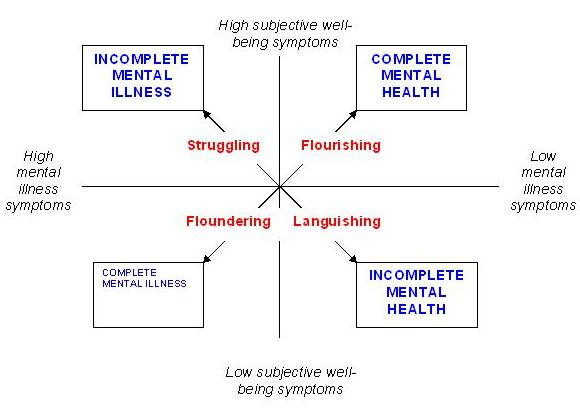
“The complete state model of MH has also inspired research looking into wellbeing as a mediator of MH and mental illness (Ven-ning et al., 2011 ) and potential applications in fields such as trauma-informed positive education (Brunzell et al., 2016) and recovery (Slade, 2010).”
BackgroundFarquharson, L., & MacLeod, A. K. (2014) · Psychotherapy and Psychosomatics · doi:10.1159/000356332 · Cited by 24
Positive mental health and wellbeing in adults with cystic fibrosis: a cross sectional study
Cronly, J., Duff, A., Riekert, K., Horgan, A., Lehane, E., Perry, I., Fitzgerald, A., Howe, B., Chroinin, M. N., & Savage, E. (2019) · Journal of Psychosomatic Research · doi:10.1016/j.jpsychores.2018.11.016 · Cited by 24
Rosen, A., Goldbloom, D. S., & McGeorge, P. (2010) · Current Opinion in Psychiatry · doi:10.1097/yco.0b013e32833f2f3e · Cited by 24
Self-management in young adults with bipolar disorder: Strategies and challenges
Nicholas, J., Boydell, K., & Christensen, H. M. (2016) · Journal of Affective Disorders · doi:10.1016/j.jad.2016.11.040 · Cited by 29
Vaingankar, J. A., Subramaniam, M., Tan, L. W. L., Abdin, E., Lim, W. Y., Wee, H. L., Chong, S. A., & van Dam, R. M. (2018) · BMC Medical Research Methodology · doi:10.1186/s12874-018-0487-9 · Cited by 24
“Slade [42] proposed that ‘collation of evidence from narratives of recovery from mental illness’ and their relation with mental wellbeing can ‘provide a counter-balance to the traditional focus of mental health services’ that relies on deficits, and these could provide a basis for mental health promotion beyond just t…”
Sreeram, A., Cross, W. M., & Townsin, L. (2021) · International Journal of Mental Health Nursing · doi:10.1111/inm.12897 · Cited by 36
Erondu, C., & McGraw, C. (2021) · Social Work in Mental Health · doi:10.1080/15332985.2021.1949426 · Cited by 28
van Agteren, J. E., Ali, K., Fassnacht, D. B., Iasiello, M. P., Furber, G., Howard, A., Woodyatt, L., Musker, M., & Kyrios, M. (2021) · JMIR Mental Health · doi:10.2196/28044 · Cited by 24
Moran, G. S., & Russo‐Netzer, P. (2015) · Qualitative Health Research · doi:10.1177/1049732315570124 · Cited by 26
Donnelly, A., O’Reilly, A., Dolphin, L., O’Keeffe, L., & Moore, J. (2019) · Irish Journal of Psychological Medicine · doi:10.1017/ipm.2018.55 · Cited by 24
Kraiss, J. T., ten Klooster, P. M., Chrispijn, M., Stevens, A. W. M. M., Kupka, R., & Bohlmeijer, E. T. (2019) · Journal of Clinical Psychology · doi:10.1002/jclp.22819 · Cited by 25
Koshiyama, D., Kirihara, K., Usui, K., Tada, M., Fujioka, M., Morita, S., Kawakami, S., Yamagishi, M., Sakurada, H., Sakakibara, E., et al. (2020) · Journal of Affective Disorders · doi:10.1016/j.jad.2020.01.030 · Cited by 24
A Salutogenic Mental Health Model: Flourishing as a Metaphor for Good Mental Health
Mjøsund, N. H. (2021) · Springer eBooks · doi:10.1007/978-3-030-63135-2_5 · Cited by 46
Metadata
- Authors
- Slade, M.
- Affiliations
- King's College London (GB)
- Corresponding author
- Slade, Mike
- ORCID
- Slade, Mike
- Venue
- BMC Health Services Research
- Published
- 2010-01-26
- Volume
- 10
- Issue
- 1
- Pages
- 26-26
- ISSN
- 1472-6963 (ISSN-L)
- PMC
- PMC2835700
- OpenAlex
- W2144320872
- Cited by
- 754
- References
- 125
- Citations by year
- 2026: 29 · 2025: 49 · 2024: 47 · 2023: 53 · 2022: 80 · 2021: 90 · 2020: 64 · 2019: 49 · 2018: 73 · 2017: 44 · 2016: 32 · 2015: 41 · 2014: 36 · 2013: 19 · 2012: 28
- FWCI
- 28.42
- Type
- journal article
- Language
- en
- Open access
- gold
- doi.org
- Licence
- cc-by
- creativecommons.org/licenses/by/2.0 (tdm)
- Locations
- BMC Health Services Research (publishedVersion, cc-by)
- PubMed Central (publishedVersion, cc-by)
- PubMed (publishedVersion)
- Research Portal (King's College London) (submittedVersion)
- DOAJ (DOAJ: Directory of Open Access Journals) (submittedVersion)
- Topics
- Social Sciences › Psychology › Social Psychology › Psychological Well-being and Life Satisfaction
- Health Sciences › Health Professions › General Health Professions › Mental Health and Patient Involvement
- Health Sciences › Health Professions › General Health Professions › Health, psychology, and well-being
- Keywords
- well-being, positive psychology, mental illness, mental health recovery, mental health services, person-centred care, strengths-based intervention, health policy influence, meaning in life
- MeSH terms
- Mental Disorders, Health Status, Humans, Mental Health, Mental Health Services, Personal Satisfaction, Psychology, Quality of Life, Surveys and Questionnaires
About these checks
Registry, retraction, Cites and statistics results are computed, not judged, with one exception: a printed reference that no index lists is read once by a model before it counts as a citation error. Claims are extracted by a model and kept only when their quote appears verbatim in the text; each cited source is then checked, with a model’s help, for whether it says what the claim relies on. Those verdicts can be wrong — read the claim’s quote and the cited source before relying on one.
Statistics and arithmetic are recomputed, not judged.
Confidence bands are shown only for fields calibrated on our annotated test set. None is calibrated yet, so no band is shown.
What counts as a claim ›How we measure confidence ›How we check this ›
Are you an author, or do you see a problem with this page? Request a review
Data sources
Bibliographic data: Semantic Scholar, OpenAlex, Crossref.
Contains information from the Semantic Scholar Academic Graph Datasets, made available under the ODC Attribution License (ODC-BY 1.0).
Semantic Scholar’s data is described in: Kinney, R., et al. (2023). The Semantic Scholar Open Data Platform. arXiv:2301.10140.
