

Mental illness and well-being: the central importance of positive psychology and recovery approaches
Open accessThe DOI matches its Crossref record; 118 of the 125 references it cites were found in a registry or an index.
Abstract
BACKGROUND: A new evidence base is emerging, which focuses on well-being. This makes it possible for health services to orientate around promoting well-being as well as treating illness, and so to make a reality of the long-standing rhetoric that health is more than the absence of illness. The aim of this paper is to support the re-orientation of health services around promoting well-being. Mental health services are used as an example to illustrate the new knowledge skills which will be needed by health professionals. DISCUSSION: New forms of evidence give a triangulated understanding about the promotion of well-being in mental health services. The academic discipline of positive psychology is developing evidence-based interventions to improve well-being. This complements the results emerging from synthesising narratives about recovery from mental illness, which provide ecologically valid insights into the processes by which people experiencing mental illness can develop a purposeful and meaningful life. The implications for health professionals are explored. In relation to working with individuals, more emphasis on the person's own goals and strengths will be needed, with integration of interventions which promote well-being into routine clinical practice. In addition, a more societally-focussed role for professionals is envisaged, in which a central part of the job is to influence local and national policies and practices that impact on well-being. SUMMARY: If health services are to give primacy to increasing well-being, rather than to treating illness, then health workers need new approaches to working with individuals. For mental health services, this will involve the incorporation of emerging knowledge from recovery and from positive psychology into education and training for all mental health professionals, and changes to some long-established working practices.
Overview
The claims and statistics of this paper haven’t been checked yet.
Free: it reads the open-access text and checks the first 5 claims that cite a source we can check. Create a free account to check every claim.
Integrity signals
Registry
Cites
Statistics
Figures
Verification
Claims the paper makes
The claims and statistics of this paper haven’t been checked yet.
Free: it reads the open-access text and checks the first 5 claims that cite a source we can check. Create a free account to check every claim.
Self-check
Percentages, sums and reported differences re-computed from the paper’s own numbers.
The self-check needs the paper’s full text.
Citations
Cites
(1997) · Naming the Mind: How Psychology Found its Language · doi:10.4135/9781446221815.n7 · Cited by 15,148 · cited 3×
“This is not a new focus - proposing qualities needed for a good life is an activity dating back to Aristotle’s investigation of eudaimonia, and builds on seminal work in the last Century by Antonovsky [33], Rogers [34] and Maslow [35].”
MethodNeighborhoods and Violent Crime: A Multilevel Study of Collective Efficacy
Sampson, R. J., Raudenbush, S. W., & Earls, F. (1997) · Science · doi:10.1126/science.277.5328.918 · Cited by 11,999 · cited 1×
“If skilled professionals with an interest in promoting well-being don’t point out that a high turnover of local residents create communities which are less cohesive [130] and more violent [131] then who will inject this information into social policy? This opens up innovative environmental approaches to fostering well…”
BackgroundPositive psychology: An introduction.
Seligman, M. E. P., & Csikszentmihalyi, M. (2000) · American Psychologist · doi:10.1037/0003-066x.55.1.5 · Cited by 11,351 · cited 2×
“Martin Seligman, often identified along with Mihaly Csikszentmihalyi as the founders of the discipline, suggests a definition [36]:”
BackgroundThe structure of psychological well-being revisited.
Ryff, C. D., & Keyes, C. L. M. (1995) · Journal of Personality and Social Psychology · doi:10.1037//0022-3514.69.4.719 · Cited by 10,285 · cited 1×
“These dimensions have been empirically validated [4,44], and are shown in Additional file 1.”
Handbook of Positive Psychology
(2001) · doi:10.1093/oso/9780195135336.001.0001 · Cited by 9,059
Handbook of Affective Sciences
(2002) · doi:10.1093/oso/9780195126013.001.0001 · Cited by 5,073
Habits of the Heart: Individualism and Commitment in American Life
Steidlmeier, P., Bellah, R. N., Madsen, R., Swindler, A., Sullivan, W. M., & Tipton, S. M. (1986) · Review of Religious Research · doi:10.2307/3511439 · Cited by 5,061
Meany, J., Rogers, C. R., Dorfman, E., Gordon, T., & Hobbes, N. (1951) · The American Catholic Sociological Review · doi:10.2307/3707825 · Cited by 4,192
Happiness: Lessons from a New Science
Cooper, R. N., & Layard, R. (2005) · Foreign Affairs · doi:10.2307/20031793 · Cited by 4,083
The PANAS-X: Manual for the Positive and Negative Affect Schedule - Expanded Form
Watson, D., & Clark, L. A. (1994) · University of Iowa · doi:10.17077/48vt-m4t2 · Cited by 3,700 · cited 1×
“alert, concentrating, determined) [82].”
Recovery from mental illness: the guiding vision of the mental health service system in the 1990s
Anthony, W. A. (1993) · Psychosocial Rehabilitation Journal · doi:10.1037/h0095655 · Cited by 3,700 · cited 1×
“as one grows beyond the catastrophic effects of mental illness ” [ 32 ].”
BackgroundHealth, stress and coping: (530902004-001)
(1990) · PsycEXTRA Dataset · doi:10.1037/e530902004-001 · Cited by 3,691
Mental illness and/or mental health? Investigating axioms of the complete state model of health
Keyes, C. L. M. (2005) · Journal of Consulting and Clinical Psychology · doi:10.1037/0022-006x.73.3.539 · Cited by 3,357 · cited 2×
“53, indicating that only one quarter of the variance between measures of mental illness and mental health is shared [6].”
BackgroundAlterations in brain and immune function produced by mindfulness meditation
Davidson, R. J., Kabat-Zinn, J., Schumacher, J., Rosenkranz, M., Muller, D., Santorelli, S. F., Urbanowski, F., Harrington, A., Bonus, K., & Sheridan, J. F. (2003) · Psychosomatic Medicine · doi:10.1097/01.psy.0000077505.67574.e3 · Cited by 2,925 · cited 1×
“Teaching meditation to members of the public increases self-reported happiness and well-being, changes which are corroborated by healthier EEG readings, heart rates and flu immunity [91].”
BackgroundKeyes, C. L. M. (1998) · Social Psychology Quarterly · doi:10.2307/2787065 · Cited by 2,924
Client-Centered Therapy: Its Current Practice, Implications and Theory
Rogers, C. R. (1951) · Cited by 2,416
Keyes, C. L. M. (2007) · American Psychologist · doi:10.1037/0003-066x.62.2.95 · Cited by 2,268 · cited 2×
“What is the prevalence of mental health, using these definitions? A cross-sectional assessment in the US population [43] (n = 3,032) is shown in Table 1.”
BackgroundClient-centered therapy; its current practice, implications, and theory.
Miles, D. W. (1952) · Psychological Bulletin · doi:10.1037/h0053095 · Cited by 2,112
Increased Cortical Representation of the Fingers of the Left Hand in String Players
Elbert, T., Pantev, C., Wienbruch, C., Rockstroh, B., & Taub, E. (1995) · Science · doi:10.1126/science.270.5234.305 · Cited by 2,054 · cited 1×
“Just as becoming a top-class violinist requires 10,000 hours of practice with a competent teacher [ 95 ], so too mindfulness needs to become a way of life if it is to transform identity.”
BackgroundMaximizing versus satisficing: Happiness is a matter of choice.
Schwartz, B. N., Ward, A. C., Monterosso, J. R., Lyubomirsky, S., White, K., & Lehman, D. R. (2002) · Journal of Personality and Social Psychology · doi:10.1037//0022-3514.83.5.1178 · Cited by 1,813
(2016) · The SAGE Encyclopedia of Theory in Psychology · doi:10.4135/9781483346274.n199 · Cited by 1,800
Nakamura, J., & Csikszentmihalyi, M. (2014) · Flow and the Foundations of Positive Psychology · doi:10.1007/978-94-017-9088-8_16 · Cited by 1,608
The effectiveness of psychotherapy: the Consumer Reports study
Seligman, M. E. P. (1995) · American Psychologist · doi:10.1037/0003-066x.50.12.965 · Cited by 1,608 · cited 1×
“A study involving 70 children at high risk of depression showed that this technique reduced depressive symptomatology and lowered incidence rates at 2-year follow-up [46].”
BackgroundThe Macroeconomics of Happiness
Tella, R. D., MacCulloch, R. J., & Oswald, A. J. (2003) · Review of Economics and Statistics · doi:10.1162/003465303772815745 · Cited by 1,605
Seligman, M. E. P., Rashid, T., & Parks, A. C. (2006) · American Psychologist · doi:10.1037/0003-066x.61.8.774 · Cited by 1,560
Recovery: the lived experience of rehabilitation
Deegan, P. E. (1988) · Psychosocial Rehabilitation Journal · doi:10.1037/h0099565 · Cited by 1,541 · cited 2×
“Many definitions of recovery have been proposed by those who are experiencing it [8,18].”
BackgroundPositive emotions in early life and longevity: Findings from the nun study.
Danner, D. D., Snowdon, D. A., & Friesen, W. V. (2001) · Journal of Personality and Social Psychology · doi:10.1037//0022-3514.80.5.804 · Cited by 1,406 · cited 1×
“Although there is good evidence that being happy and cheerful is associated with improved brain chemistry, blood pressure and heart rate [127,128], and with living longer [129], this kind of evidence does not yet feature prominently in public debate.”
BackgroundHow's life? Combining individual and national variables to explain subjective well-being
Helliwell, J. F. (2003) · Economic Modelling · doi:10.1016/s0264-9993(02)00057-3 · Cited by 1,394 · cited 1×
“The effects on happiness of problems in each domain have been estimated, on the basis of international surveys of factors associated with happiness [124,125].”
Emotion, plasticity, context, and regulation: Perspectives from affective neuroscience.
Davidson, R. J., Jackson, D. C., & Kalin, N. H. (2000) · Psychological Bulletin · doi:10.1037/0033-2909.126.6.890 · Cited by 1,322 · cited 1×
“Although there is good evidence that being happy and cheerful is associated with improved brain chemistry, blood pressure and heart rate [127,128], and with living longer [129], this kind of evidence does not yet feature prominently in public debate.”
BackgroundFlourishing: Positive psychology and the life well-lived.
(2003) · American Psychological Association eBooks · doi:10.1037/10594-000 · Cited by 1,298
Written emotional expression: Effect sizes, outcome types, and moderating variables
Smyth, J. M. (1998) · Journal of Consulting and Clinical Psychology · doi:10.1037/0022-006x.66.1.174 · Cited by 1,294 · cited 1×
“Empirical evidence suggests that this approach is particularly beneficial for groups who, as a whole, are not as open about their emotions: men [101], people with high hostility [102], and people with alexythimia [103].”
Background(2006) · Cited by 1,264
Incentives and Social Capital: Are Homeowners Better Citizens?
DiPasquale, D., & Glaeser, E. L. (1999) · Journal of Urban Economics · doi:10.1006/juec.1998.2098 · Cited by 1,221 · cited 2×
“This involved transforming from being an organisation which spent most of its allocated money on acute hospitalisation (28%), long-term care (23%) and out-patient therapy (23%) to one spending on individualised case management (41%), work (25%) and community integration (12%) [ 111 ].”
BackgroundFrisch, M. B., Cornell, J., Villanueva, M., & Retzlaff, P. J. (1992) · Psychological Assessment · doi:10.1037/1040-3590.4.1.92 · Cited by 1,075 · cited 1×
“55 [4,5].”
The role of income aspirations in individual happiness
Stutzer, A. (2004) · Journal of Economic Behavior & Organization · doi:10.1016/j.jebo.2003.04.003 · Cited by 1,049
Mindfulness-Based Cognitive Therapy for Depression
Segal, Z. (2023) · PsycTHERAPY Dataset · doi:10.1037/v00751-001 · Cited by 1,029
The experience of recovery from schizophrenia: Towards an empirically validated stage model
Andresen, R., Oades, L., & Caputi, P. (2003) · Australian & New Zealand Journal of Psychiatry · doi:10.1046/j.1440-1614.2003.01234.x · Cited by 871 · cited 7×
“A 10-site randomised controlled trial across three Australian states is underway.”
BackgroundInfluentialPositive Psychology in Practice
(2004) · Wiley eBooks · doi:10.1002/9780470939338 · Cited by 833
(2015) · Wiley eBooks · doi:10.1002/9781118996874 · Cited by 809 · cited 1×
“Academic compilations of the emerging empirical evidence [37,38] and accessible introductions to the theory [39,40] and its applications [41] are becoming available.”
BackgroundMental health in adolescence: Is America's youth flourishing?
Keyes, C. L. M. (2006) · American Journal of Orthopsychiatry · doi:10.1037/0002-9432.76.3.395 · Cited by 792 · cited 1×
“9% in 15 to 18 year olds [45].”
Monat, A. (1991) · Cited by 745
Is more always better?: A survey on positional concerns
J. Solnick, S., & Hemenway, D. (1998) · Journal of Economic Behavior & Organization · doi:10.1016/s0167-2681(98)00089-4 · Cited by 702 · cited 2×
“A salary of $50,000 where average salaries are $25,000 is preferred to a salary of $100,000 where the average is $250,000 [114].”
BackgroundPromoting Mental Health: Concepts, Emerging Evidence, Practice: (538802013-009)
Herrman, H., Saxena, S., & Moodie, R. (2004) · PsycEXTRA Dataset · doi:10.1037/e538802013-009 · Cited by 701
What Really Matters: Living a Moral Life Amidst Uncertainty and Danger
Kleinman, A. (2006) · Cited by 646
Shunned: Discrimination against people with mental illness
Thornicroft, G. (2003) · doi:10.1093/med/9780198570981.001.0001 · Cited by 643
Cohen, P. (1984) · Archives of General Psychiatry · doi:10.1001/archpsyc.1984.01790230064010 · Cited by 607 · cited 1×
“Third, the clinician’s illusion means that professionals don’t see people as often when they are coping [83], so they gain the false impression they cannot cope or selfright.”
BackgroundBellack, A. S. (2005) · Schizophrenia Bulletin · doi:10.1093/schbul/sbj044 · Cited by 574 · cited 1×
“To note, this distinction has been referred to by other writers as recovery “from” versus recovery “in” [27]; clinical recovery versus social recovery [28]; scientific versus consumer models of recovery [29]; and service-based recovery versus userbased recovery [30].”
BackgroundPROMOTING MENTAL HEALTH. CONCEPTS, EMERGING EVIDENCE, PRACTICE
STENIUS, K. (2007) · Addiction · doi:10.1111/j.1360-0443.2007.02046.x · Cited by 560
Sense of self in recovery from severe mental illness
Davidson, L., & Strauss, J. S. (1992) · British Journal of Medical Psychology · doi:10.1111/j.2044-8341.1992.tb01693.x · Cited by 557 · cited 1×
“Early accounts were written by individual pioneers [7-12].”
BackgroundOxford Handbook of Methods in Positive Psychology
(2006) · doi:10.1093/oso/9780195172188.001.0001 · Cited by 519
An analysis of the definitions and elements of recovery: A review of the literature.
Onken, S. J., Craig, C. M., Ridgway, P., Ralph, R. O., & Cook, J. A. (2007) · Psychiatric Rehabilitation Journal · doi:10.2975/31.1.2007.9.22 · Cited by 483 · cited 1×
“A second approach to increasing wellbeing is to pay more attention to spiritual development and healing [59]: “The healing process not only incorporates a new way of living with and controlling symptoms, but also an increasing adeptness of navigating social realms to overcome stigmatizing and discriminatory socialstru…”
BackgroundNarrative identity and eudaimonic well-being
Bauer, J. J., McAdams, D. P., & Pals, J. L. (2008) · Journal of Happiness Studies · doi:10.1007/s10902-006-9021-6 · Cited by 430 · cited 2×
“An influential framework, and one which could underpin the training of mental health professionals, is Seligman’s theory of Authentic Happiness [51, 52 ].”
BackgroundReStorying psychiatric disability: Learning from first person recovery narratives.
Ridgway, P. (2001) · Psychiatric Rehabilitation Journal · doi:10.1037/h0095071 · Cited by 426
A Working Life for People with Severe Mental Illness
Becker, D. R., & Drake, R. E. (2003) · doi:10.1093/acprof:oso/9780195131215.001.0001 · Cited by 423
(1997) · British Journal of Educational Studies · doi:10.1111/1467-8527.t01-1-00054 · Cited by 392
Character Strengths and Virtues
(2018) · The SAGE Encyclopedia of Lifespan Human Development · doi:10.4135/9781506307633.n128 · Cited by 389
When less is more: Counterfactual thinking and satisfaction among Olympic medalists.
Medvec, V. H., Madey, S. F., & Gilovich, T. (1995) · Journal of Personality and Social Psychology · doi:10.1037/0022-3514.69.4.603 · Cited by 374
Copeland, M. E. (2002) · Occupational Therapy in Mental Health · doi:10.1300/j004v17n03_09 · Cited by 340
Postpsychiatry: Mental health in a postmodern world
Bracken, P. J., & Thomas, P. (2005) · Oxford University Press eBooks · doi:10.1093/med/9780198526094.001.0001 · Cited by 304 · cited 3×
“Bracken P, Thomas P: Postpsychiatry.”
BackgroundSheldon, K. M., Kasser, T., Smith, K., & Share, T. (2002) · Journal of Personality · doi:10.1111/1467-6494.00176 · Cited by 295 · cited 1×
“The Collaborative Recovery Model emphasises key recovery values of autonomy and self-determination [55], and builds on an established evidence base around personal goal-setting and goal-striving [56].”
BackgroundTwamley, E. W., Jeste, D. V., & Lehman, A. F. (2003) · The Journal of Nervous and Mental Disease · doi:10.1097/01.nmd.0000082213.42509.69 · Cited by 272
The process of recovery from schizophrenia
Spaniol, L., Wewiorski, N. J., Gagne, C., & Anthony, W. A. (2002) · International Review of Psychiatry · doi:10.1080/0954026021000016978 · Cited by 269 · cited 1×
“The understanding of recovery which has emerged from these accounts emphasises the centrality of hope, identity, meaning and personal responsibility [13,24,25].”
Background(2008) · Medical Entomology and Zoology · Cited by 258
The Strengths Model: Case Management with People with Psychiatric Disabilities
Rapp, C. A., & Goscha, R. J. (2006) · Cited by 257
An Introduction to Positive Psychology
(2016) · Exploring Positive Psychology · doi:10.5040/9798400649127.ch-001 · Cited by 256
Character strengths and virtues
Hart, R. (2020) · Positive Psychology · doi:10.4324/9781315147857-10 · Cited by 256
Television and the American Family
(2001) · Routledge eBooks · doi:10.4324/9781410600172 · Cited by 255
Gould, M. S. (2001) · Annals of the New York Academy of Sciences · doi:10.1111/j.1749-6632.2001.tb05807.x · Cited by 232 · cited 1×
“Homicide rates go up after televised heavyweight fights [117], and suicide rates increase after on-screen portrayals [118].”
BackgroundAn empirical conceptualization of the recovery orientation
Resnick, S. G., Fontana, A., Lehman, A. F., & Rosenheck, R. A. (2005) · Schizophrenia Research · doi:10.1016/j.schres.2004.05.009 · Cited by 231 · cited 1×
“Whilst there are tensions between the values of evidence-based mental health and recovery [76], there is no fundamental incompatibility [77].”
BackgroundSchrank, B., & Slade, M. (2007) · Psychiatric Bulletin · doi:10.1192/pb.bp.106.013425 · Cited by 231
Self-citationToward a Science of Mental Health
Keyes, C. L. M. (2009) · The Oxford Handbook of Positive Psychology · doi:10.1093/oxfordhb/9780195187243.013.0009 · Cited by 217 · cited 1×
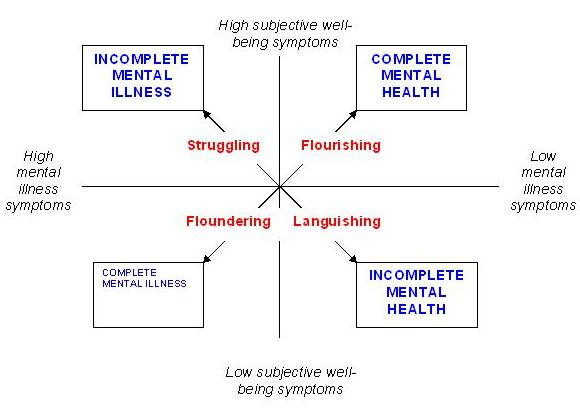
“A conceptual framework is provided by the Complete State Model of Mental Health [42], proposed by Corey Keyes, and shown in Figure 1.”
MethodSharing One's Story: On the Benefits of Writing or Talking About Emotional Experience
Niederhoffer, K. G., & Pennebaker, J. W. (2009) · The Oxford Handbook of Positive Psychology · doi:10.1093/oxfordhb/9780195187243.013.0059 · Cited by 201 · cited 1×
“This brings together insights from three strands of research (primarily from European and American cultures) [98]:”
BackgroundSurvival in Academy Award–Winning Actors and Actresses
Redelmeier, D. A., & Singh, S. M. (2001) · Annals of Internal Medicine · doi:10.7326/0003-4819-134-10-200105150-00009 · Cited by 193
Mental Health and the Built Environment: More than Bricks and Mortar
Min-Jung O, T. (1996) · Psychosomatic Medicine · doi:10.1097/00006842-199609000-00018 · Cited by 192
Self-Determination Theory in the Clinic: Motivating Physical and Mental Health
Sheldon, K. M., Williams, G. C., & Joiner, T. E. (2003) · Cited by 187
Footsteps on the road to a positive psychology
Gillham, J. E., & Seligman, M. E. P. (1999) · Behaviour Research and Therapy · doi:10.1016/s0005-7967(99)00055-8 · Cited by 187
Health Care Reform Based on an Empowerment Model of Recovery by People With Psychiatric Disabilities
Fisher, D. B. (1994) · Psychiatric Services · doi:10.1176/ps.45.9.913 · Cited by 186 · cited 1×
“Early accounts were written by individual pioneers [7-12].”
BackgroundCrookes, L. (2003) · Mental Health Practice · doi:10.7748/mhp.6.9.26.s18 · Cited by 184
Depressive symptoms erode self-esteem in severe mental illness: A three-wave, cross-lagged study.
Shahar, G., & Davidson, L. (2003) · Journal of Consulting and Clinical Psychology · doi:10.1037/0022-006x.71.5.890 · Cited by 181 · cited 1×
“A study of 260 people with severe mental illness showed that an increasing ability to engage in pleasurable activities leads to the ability to regulate depressive symptoms to the point where they did not impact on identity by eroding self-esteem [48].”
BackgroundWidening the Diagnostic Focus: A Case for Including Human Strengths and Environmental Resources
Wright, B. A., & Lopez, S. J. (2009) · The Oxford Handbook of Positive Psychology · doi:10.1093/oxfordhb/9780195187243.013.0008 · Cited by 179 · cited 1×
“How can a person with mental illness be assessed if the clinical goal is to promote well-being? Clinical assessment should focus on four dimensions [80]:”
BackgroundRemission and Recovery in Schizophrenia: Practitioner and Patient Perspectives
Davidson, L., Schmutte, T., Dinzeo, T., & Andres-Hyman, R. (2007) · Schizophrenia Bulletin · doi:10.1093/schbul/sbm122 · Cited by 178 · cited 1×
“To note, this distinction has been referred to by other writers as recovery “from” versus recovery “in” [27]; clinical recovery versus social recovery [28]; scientific versus consumer models of recovery [29]; and service-based recovery versus userbased recovery [30].”
BackgroundThe Impact of Mass Media Violence on U.S. Homicides
Phillips, D. P. (1983) · American Sociological Review · doi:10.2307/2117722 · Cited by 169 · cited 1×
“Homicide rates go up after televised heavyweight fights [117], and suicide rates increase after on-screen portrayals [118].”
BackgroundPáez, D., Velasco, C., & González, J. L. (1999) · Journal of Personality and Social Psychology · doi:10.1037//0022-3514.77.3.630 · Cited by 163
Mental health and the built environment
Halpern, D. (1995) · Cited by 148
Personal Recovery and Mental Illness: A Guide for Mental Health Professionals
Slade, M. (2009) · doi:10.1017/cbo9780511581649 · Cited by 147
Self-citationCynical hostility and cardiovascular reactivity during self-disclosure.
Christensen, A. J., & Smith, T. W. (1993) · Psychosomatic Medicine · doi:10.1097/00006842-199303000-00008 · Cited by 144 · cited 1×
“Empirical evidence suggests that this approach is particularly beneficial for groups who, as a whole, are not as open about their emotions: men [101], people with high hostility [102], and people with alexythimia [103].”
BackgroundDavidson, L., Shahar, G., Lawless, M. S., Sells, D., & Tondora, J. (2006) · Psychiatry: Interpersonal and Biological Processes · doi:10.1521/psyc.2006.69.2.151 · Cited by 137 · cited 1×
“In a mental health service context, there is also emerging evidence that positive life events are important protective factors [47].”
BackgroundSelf-Determination Theory in the Clinic: Motivating Physical and Mental Health
Sheldon, K. M., Williams, G. C., & Joiner, T. E. (2003) · Yale University Press eBooks · doi:10.12987/yale/9780300095449.001.0001 · Cited by 126
Postpsychiatry: Mental Health in a Postmodern World
Bracken, P. J., & Thomas, P. (2005) · CLOK (University of Central Lancashire) · Cited by 122
Crowe, T. P., Deane, F. P., Oades, L. G., Caputi, P., & Morland, K. G. (2006) · Psychiatric Services · doi:10.1176/appi.ps.57.10.1497 · Cited by 119 · cited 1×
“hopefulness) and knowledge [57].”
Secker, J., Membrey, H., Grove, B., & Seebohm, P. (2002) · Disability & Society · doi:10.1080/09687590220140340 · Cited by 112 · cited 1×
“To note, this distinction has been referred to by other writers as recovery “from” versus recovery “in” [27]; clinical recovery versus social recovery [28]; scientific versus consumer models of recovery [29]; and service-based recovery versus userbased recovery [30].”
BackgroundRecovery and positive psychology: parallel themes and potential synergies
Resnick, S. G., & Rosenheck, R. A. (2006) · Psychiatric Services · doi:10.1176/appi.ps.57.1.120 · Cited by 110 · cited 3×
“Why has there not been a greater rapprochement between these two, apparently compatible, groups? This may be because of their differing aims [65] - one is “an intellectual movement, led by prominent academic psychologists, that challenges the dominance of “negative psychology”, whereas the other is “a grassroots movem…”
BackgroundInfluentialMeditation and Positive Psychology
Shapiro, S. L. (2009) · The Oxford Handbook of Positive Psychology · doi:10.1093/oxfordhb/9780195187243.013.0057 · Cited by 109
The contribution of mental health services to recovery
Slade, M. (2009) · Journal of Mental Health · doi:10.3109/09638230903191256 · Cited by 100 · cited 2×
“For positive psychology, the incorporation of the central recovery focus on the individual and their differing ways of seeing the world (including giving primacy to familial or cultural affiliation over personal identity) will address criticisms that it is ethnocentric (being based mainly on US research) and overly co…”
BackgroundSelf-citationQualitative Studies of Recovery: What Can We Learn From the Person?
Davidson, L., Sells, D., Songster, S., & O’Connell, M. J. (2005) · American Psychological Association eBooks · doi:10.1037/10848-007 · Cited by 99 · cited 2×
“17], Scotland [18,19], the USA [12,20,21] and England [22,23].”
BackgroundAn introduction to positive psychology
ALTMAIER, E. M. (2019) · Elsevier eBooks · doi:10.1016/b978-0-12-811975-4.00002-2 · Cited by 99
Spiritually Integrated Psychotherapy
Leijssen, M. (2008) · Leuven University Press eBooks · doi:10.2307/j.ctt9qf1vw.9 · Cited by 95
"Kia Mauri Tau!" Narratives of recovery from disabling mental health problems
Lapsley, H., Nīkora, L. W., & Black, R. M. (2002) · Research Commons (University of Waikato) · Cited by 89
Recovery, psychosis and psychiatry: research is better than rhetoric
Slade, M., & Hayward, M. (2007) · Acta Psychiatrica Scandinavica · doi:10.1111/j.1600-0447.2007.01047.x · Cited by 86
Self-citation(2007) · Bright Futures · doi:10.1542/9781581102239-promoting_mental · Cited by 83
Cook, J. Α., & Jonikas, J. A. (2002) · Journal of Disability Policy Studies · doi:10.1177/10442073020130020401 · Cited by 77 · cited 1×
“Cook and Jonikas label this process as thriving, in which individuals rebuild lives with qualities better than before their difficulties began [49].”
BackgroundHarris, A. H. S., & Thoresen, C. E. (2005) · The Journal of Positive Psychology · doi:10.1080/17439760500380930 · Cited by 74 · cited 1×
“26 of greater occupation of the available attention reduces rumination and increases being in the moment – the flow concept we discussed earlier [96]:”
BackgroundSpiritually Integrated Psychotherapy
Pargäment, K. I. (2007) · Cited by 66
Ralph, R. O. (2000) · Psychiatric Rehabilitation Skills · doi:10.1080/10973430008408634 · Cited by 65
Client outcomes in a three-year controlled study of an integrated service agency model
(1996) · Psychiatric Services · doi:10.1176/ps.47.12.1337 · Cited by 58 · cited 2×
“Hospitalisations and living in institutional residence are markedly reduced for members attending the Village [112], allowing the money saved to be re-invested in worksupporting services.”
BackgroundSpirituality and Religion in Recovery From Mental Illness
(1999) · Psychiatric Services · doi:10.1176/ps.50.7.979b · Cited by 57 · cited 1×
“Healing as a spiritual activity [60], the role of moral experience [61], the role of community rather than individualism [62], the place of religion in mental health services [63] and approaches to supporting spirituality [64] are all contributors to well-being.”
BackgroundStructural properties of personal meaning systems: A new approach to measuring meaning of life
Pöhlmann, K., Gruß, B., & Joraschky, P. (2006) · The Journal of Positive Psychology · doi:10.1080/17439760600566008 · Cited by 57 · cited 1×
“By contrast, positive psychology is unequivocally based on empirical research, and unlike recoveryfocussed research has not avoided the use of nomothetic approaches, even to assess complex constructs such as meaning of life [71].”
BackgroundPascal, B. (1931) · Medical Entomology and Zoology · Cited by 52
Kenrick, D. T., Montello, D. R., Gutierres, S. E., & Trost, M. R. (1993) · Personality and Social Psychology Bulletin · doi:10.1177/0146167293192008 · Cited by 50
The Role of Emotion on Pathways to Positive Health
Ryff, C. D., & Singer, B. H. (2002) · Handbook of Affective Sciences · doi:10.1093/oso/9780195126013.003.0057 · Cited by 45
Television and the Family: The Cultivation Perspective
Morgan, M. (2001) · ScholarWorks@UMassAmherst (University of Massachusetts Amherst) · Cited by 40
Implications of evidence‐based practice for mental health nursing
Fisher, J. E., & Happell, B. (2009) · International Journal of Mental Health Nursing · doi:10.1111/j.1447-0349.2009.00607.x · Cited by 40 · cited 1×
“Whilst there are tensions between the values of evidence-based mental health and recovery [76], there is no fundamental incompatibility [77].”
BackgroundSupported spirituality: A new frontier in the recovery-oriented mental health system.
Russinova, Z. L., & Blanch, A. K. (2007) · Psychiatric Rehabilitation Journal · doi:10.2975/30.4.2007.247.249 · Cited by 25 · cited 1×
“Healing as a spiritual activity [60], the role of moral experience [61], the role of community rather than individualism [62], the place of religion in mental health services [63] and approaches to supporting spirituality [64] are all contributors to well-being.”
BackgroundPractice Guidelines for Recovery-Oriented Behavioral Health Care
(2006) · PsycEXTRA Dataset · doi:10.1037/e618002007-001 · Cited by 19
Positive Psychology and the Development of Well-Being
Henry, J. (2007) · Palgrave Macmillan UK eBooks · doi:10.1057/9780230287624_2 · Cited by 15 · cited 1×
“For positive psychology, the incorporation of the central recovery focus on the individual and their differing ways of seeing the world (including giving primacy to familial or cultural affiliation over personal identity) will address criticisms that it is ethnocentric (being based mainly on US research) and overly co…”
BackgroundTreatment Planning for Person-Centered Care
(2005) · Elsevier eBooks · doi:10.1016/b978-0-12-044155-6.x5000-4 · Cited by 14
Journeys of Despair, Journeys of Hope
Barnett, H., & Lapsley, H. (2006) · Cited by 12
Two Accounts of Mental Distress
O’Hagan, M. (1996) · doi:10.1007/978-1-349-25159-9_10 · Cited by 11 · cited 1×
“Early accounts were written by individual pioneers [7-12].”
Background
Research works printed but not linked: 32
- Mental Health Commission of Canada: Toward recovery & well-being Calgary: Mental Health Commission of Canada, Calgary 2009.
- Department of Health: New Horizons. Towards a shared vision for mental health. Consultation London: Department of Health 2009.
- Coleman R: Recovery -an Alien Concept Gloucester, Hansell 1999.
- Goldsack S, Reet M, Lapsley H, Gingell M: Experiencing a Recovery-Oriented Acute Mental Health Service: Home Based Treatment from the Perspectives of Services Users, their Families and Mental Health Professionals Wellington: Mental Health Commission 2005.
- Mental Health Commission: Three forensic service users and their families talk about recovery Wellington: Mental Health Commission 2000.
- Scottish Recovery Network: Journeys of Recovery. Stories of hope and recovery from long term mental health problems Glasgow: Scottish Recovery Network 2006.
- Scottish Recovery Network: Routes to recovery. Collected wisdom from the SRN Narrative Research Project Glasgow: Scottish Recovery Network 2007.
- Spaniol L, Koehler M, Boston MA, eds: The experience of recovery Center for Psychiatric Rehabilitation 1994.
- McIntosh Z: From Goldfish Bowl to Ocean: personal accounts of mental illness and beyond London: Chipmunkapublishing 2005.
- Barker PJ, Davidson B, Campbell P, eds: From the Ashes of Experience London: Whurr Publications 1999.
- Mental Health Commission: Recovery Competencies. Teaching Resource Kit Wellington: Mental Health Commission 2001.
- Seligman M: Authentic happiness: Using the new positive psychology to realize your potential for lasting fulfillment New York: Free Press 2002.
- Jayawickreme J, Pawelski J, Seligman M: Positive Psychology and Nussbaum's Capabilities Approach. Conference presentation: Subjective Measures of Well-Being and the Science of Happiness: Historical origins and philosophical foundations Birmingham AL 2008.
- Mental Health Commission: A Vision for a Recovery Model in Irish Mental Health Services Dublin: Mental Health Commission 2005.
- Substance Abuse and Mental Health Services Administration: National Consensus Conference on Mental Health Recovery and Systems Transformation Rockville, MD: Department of Health and Human Services 2005.
- National Institute for Mental Health in England: Emerging Best Practices in Mental Health recovery London: NIMHE 2004.
- Morgan JS: The science of positive psychology. The Psychologist 2007, 682-687.
- Maddux JE: Stopping the "Madness". Positive Psychology and the Deconstruction of the Illness Ideology and the DSM. Handbook of Positive Psychology New York: OxfordSnyder CR, Lopez JS 2002, 13-24.
- Slade M: 100 ways to support recovery London: Rethink 2009.
- Tondora J, Pocklington S, Osher D, Davidson L: Implementation of person- centered care and planning: From policy to practice to evaluation Washington DC: Substance Abuse and Mental Health Services Administration 2005.
- Copeland ME: Wellness Recovery Action Plan Brattleboro: VT: Peach Press 1999.
- Shapiro DH: Meditation: Self-regulation strategy and altered states of consciousness New York: Aldine 1980.
- Hanh Nhat Thich: Anger: Buddhist Wisdom for Cooling the Flames London: Rider 2001.
- Hoffman EH, Hoffman CD: Staying Focused in the Age of Distraction: How Mindfulness, Prayer & Meditation Can Help you Pay Attention Oakland CA: New Harbinger Publications 2006.
- Niederhoffer KG, Pennebaker JW, Snyder CR, Lopez SJ: Sharing One's Story. On the Benefits of Writing or Talking About Emotional Experience. Handbook of positive psychology. 2002, New York: Oxford University Press, 573-583.
- Baumeister RF, Vohs KD: The Pursuit of Meaningfulness in Life. Handbook of positive psychology. Edited by: Snyder CR, Lopez SJ. 2002, New York: Oxford University Press, 608-618.
- Foresight Mental Capital and Wellbeing Project: Mental Capital and Wellbeing: Making the most of ourselves in the 21st century. Final Project Report. 2008, London: Government Office for Science
- Thornicroft G: Actions speak louder... Tackling discrimination against people with mental illness. 2006, London: Mental Health Foundation
- Baumeister RF, Vohs KD: The Pursuit of Meaningfulness in Life. Handbook of positive psychology New York: Oxford University PressSnyder CR, Lopez SJ 2002, 608-618. 100. Bauer JJ, McAdams DP, Pals JL: Narrative identity and eudaimonic well- being. Journal of Happiness Studies 2008, 9:81-104. 101. Smyth JM: Written emotional expression: Effect sizes, outcome types, and moderating variables. Journal of Consulting and Clinical Psychology 1998, 66:174-184. 102. Christensen AJ, Smith TW: Cynical hostility and cardiovascular reactivity during self-disclosure. Psychosomatic Medicine 1993, 55:193-202. 103. Paez D, Velasco C, Gonzalez JL: Expressive writing and the role of alexithymia as a dispositional deficit in self-disclosure and psychological health. Journal of Personality and Social Psychology 1999, 77:630-641. 104. Seligman M, Rashid T, Parks AC: Positive Psychotherapy. American Psychologist 2006, 61:774-788. 105. Perkins R: I have a vision.... Open Mind 2000, 104(6). 106. Foresight Mental Capital and Wellbeing Project: Mental Capital and Wellbeing: Making the most of ourselves in the 21st century. Final Project Report London: Government Office for Science 2008. 107. Thornicroft G: Shunned: Discrimination against People with Mental Illness Oxford: Oxford University Press 2005. 108. Thornicroft G: Actions speak louder... Tackling discrimination against people with mental illness London: Mental Health Foundation 2006. 109. Twamley EW, Jeste DV, Lehman AF: Vocational rehabilitation in schizophrenia and other psychotic disorders: a literature review and meta-analysis of randomized controlled trials. Journal of Nervous and Mental Disease 2003, 191:515-523. 110. Becker DR, Drake RE: A Working Life for People with Severe Mental Illness Oxford: Oxford University Press 2003. 111. Lewin-VHI I, Meisel J, Chandler D: The Integrated Service Agency Model: A Summary Report to the California Department of Mental Health California: California Department of Mental Health 1995. 112.
- Scott-Clark C, Levy A: Fast forward into trouble. Guardian Weekend (June 14). 2003
- Williams TM, eds: A Natural Experiment in Three Communities. 1986, New York: Academic Press
- Rutter M, Smith DJ, eds: Psychosocial Disorders in Young People: Time Trends and Their Causes. 1995, Chichester: John Wiley
Cited by
Leamy, M., Bird, V., Boutillier, C. L., Williams, J., & Slade, M. (2011) · British Journal of Psychiatry · doi:10.1192/bjp.bp.110.083733 · Cited by 3,038
“A recovery orientation has overlap with the literature on well-being, 26 positive psychology 27 and self-management, 28 and systematic reviewing is hampered by the absence of relevant MeSH (Medical Sub-Headings) headings relating to recovery concepts.”
Self-citationUses and abuses of recovery: implementing recovery-oriented practices in mental health systems
Slade, M., Amering, M., Farkas, M., Hamilton, B., O'Hagan, M., Panther, G., Perkins, R., Shepherd, G., Tse, S., & Whitley, R. (2014) · World Psychiatry · doi:10.1002/wps.20084 · Cited by 949
“However, the broadest – and most important – challenge is societal change, which will involve professionals and people with lived experience becoming partners (112) and social activists (128), to challenge stigmatizing assumptions that people with mental illness cannot, or should not, have the same citizenship entitle…”
Self-citationReview and evaluation of mindfulness-based iPhone apps
Mani, M., Kavanagh, D. J., Hides, L., & Stoyanov, S. R. (2015) · JMIR mHealth and uHealth · doi:10.2196/mhealth.4328 · Cited by 495
“Accordingly, mindfulness has been found to have beneficial psychological, somatic, behavioral, and interpersonal effects [6], developing tolerance, acceptance, patience, trust, openness, gentleness, generosity, empathy, gratitude, and loving-kindness, each of which is relevant to the personal recovery of people with m…”
BackgroundA systematic review and meta-analysis of psychological interventions to improve mental wellbeing
van Agteren, J., Iasiello, M., Lo, L., Bartholomaeus, J., Kopsaftis, Z., Carey, M., & Kyrios, M. (2021) · Nature Human Behaviour · doi:10.1038/s41562-021-01093-w · Cited by 510
Le Boutillier, C., Leamy, M., Bird, V. J., Davidson, L., Williams, J., & Slade, M. (2011) · Psychiatric Services · doi:10.1176/appi.ps.001312011 · Cited by 481
Self-citation
Metadata
- Authors
- Slade, M.
- Affiliations
- King's College London (GB)
- Corresponding author
- Slade, Mike
- ORCID
- Slade, Mike
- Venue
- BMC Health Services Research
- Published
- 2010-01-26
- Volume
- 10
- Issue
- 1
- Pages
- 26-26
- ISSN
- 1472-6963 (ISSN-L)
- PMC
- PMC2835700
- OpenAlex
- W2144320872
- Cited by
- 754
- References
- 125
- Citations by year
- 2026: 29 · 2025: 49 · 2024: 47 · 2023: 53 · 2022: 80 · 2021: 90 · 2020: 64 · 2019: 49 · 2018: 73 · 2017: 44 · 2016: 32 · 2015: 41 · 2014: 36 · 2013: 19 · 2012: 28
- FWCI
- 28.42
- Type
- journal article
- Language
- en
- Open access
- gold
- doi.org
- Licence
- cc-by
- creativecommons.org/licenses/by/2.0 (tdm)
- Locations
- BMC Health Services Research (publishedVersion, cc-by)
- PubMed Central (publishedVersion, cc-by)
- PubMed (publishedVersion)
- Research Portal (King's College London) (submittedVersion)
- DOAJ (DOAJ: Directory of Open Access Journals) (submittedVersion)
- Topics
- Social Sciences › Psychology › Social Psychology › Psychological Well-being and Life Satisfaction
- Health Sciences › Health Professions › General Health Professions › Mental Health and Patient Involvement
- Health Sciences › Health Professions › General Health Professions › Health, psychology, and well-being
- Keywords
- well-being, positive psychology, mental illness, mental health recovery, mental health services, person-centred care, strengths-based intervention, health policy influence, meaning in life
- MeSH terms
- Mental Disorders, Health Status, Humans, Mental Health, Mental Health Services, Personal Satisfaction, Psychology, Quality of Life, Surveys and Questionnaires
About these checks
Registry, retraction, Cites and statistics results are computed, not judged, with one exception: a printed reference that no index lists is read once by a model before it counts as a citation error. Claims are extracted by a model and kept only when their quote appears verbatim in the text; each cited source is then checked, with a model’s help, for whether it says what the claim relies on. Those verdicts can be wrong — read the claim’s quote and the cited source before relying on one.
Statistics and arithmetic are recomputed, not judged.
Confidence bands are shown only for fields calibrated on our annotated test set. None is calibrated yet, so no band is shown.
What counts as a claim ›How we measure confidence ›How we check this ›
Are you an author, or do you see a problem with this page? Request a review
Data sources
Bibliographic data: Semantic Scholar, OpenAlex, Crossref.
Contains information from the Semantic Scholar Academic Graph Datasets, made available under the ODC Attribution License (ODC-BY 1.0).
Semantic Scholar’s data is described in: Kinney, R., et al. (2023). The Semantic Scholar Open Data Platform. arXiv:2301.10140.
