

The DOI matches its Crossref record; 23 of the 23 references it cites were found in a registry or an index.
Inhibitory activity of Lactobacillus plantarum LMG P-26358 against Listeria innocua when used as an adjunct starter in the manufacture of cheese
Open accessAbstract
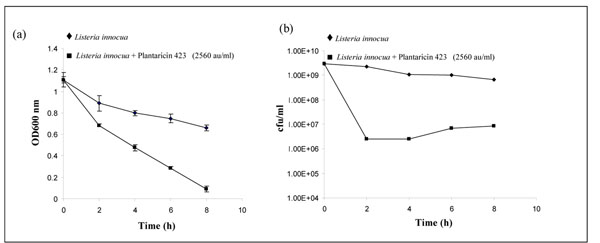
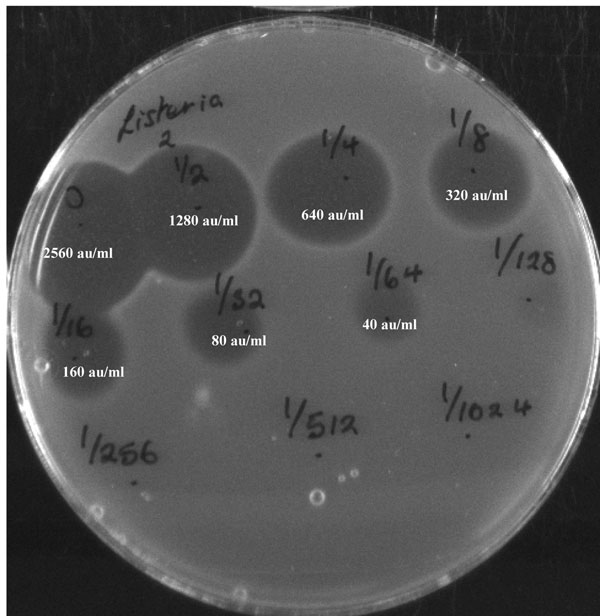
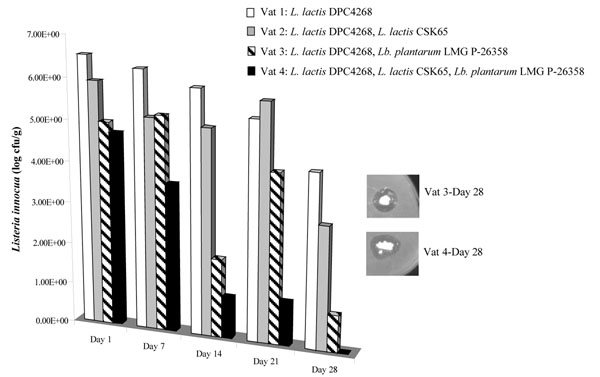
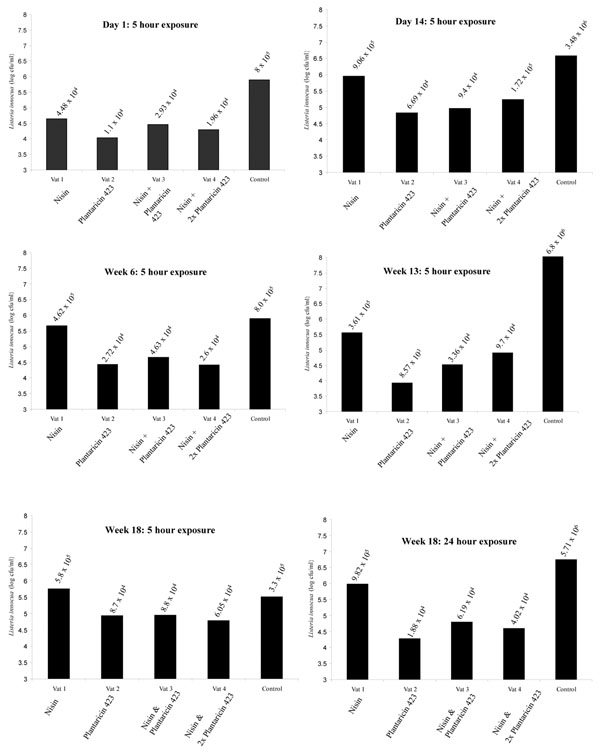
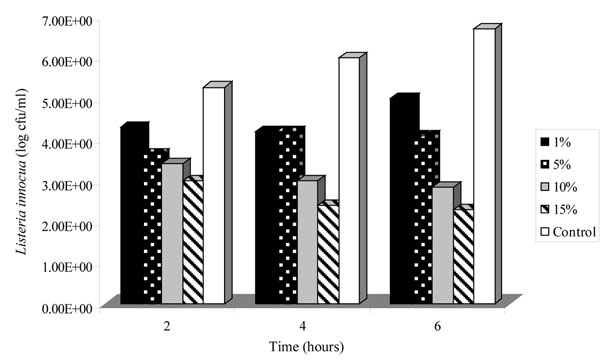
Lactobacillus plantarum LMG P-26358 isolated from a soft French artisanal cheese produces a potent class IIa bacteriocin with 100% homology to plantaricin 423 and bacteriocidal activity against Listeria innocua and Listeria monocytogenes. The bacteriocin was found to be highly stable at temperatures as high as 100°C and pH ranges from 1-10. While this relatively narrow spectrum bacteriocin also exhibited antimicrobial activity against species of enterococci, it did not inhibit dairy starters including lactococci and lactobacilli when tested by well diffusion assay (WDA). In order to test the suitability of Lb. plantarum LMG P-26358 as an anti-listerial adjunct with nisin-producing lactococci, laboratory-scale cheeses were manufactured. Results indicated that combining Lb. plantarum LMG P-26358 (at 108 colony forming units (cfu)/ml) with a nisin producer is an effective strategy to eliminate the biological indicator strain, L. innocua. Moreover, industrial-scale cheeses also demonstrated that Lb. plantarum LMG P-26358 was much more effective than the nisin producer alone for protection against the indicator. MALDI-TOF mass spectrometry confirmed the presence of plantaricin 423 and nisin in the appropriate cheeses over an 18 week ripening period. A spray-dried fermentate of Lb. plantarum LMG P-26358 also demonstrated potent anti-listerial activity in vitro using L. innocua. Overall, the results suggest that Lb. plantarum LMG P-26358 is a suitable adjunct for use with nisin-producing cultures to improve the safety and quality of dairy products.
Overview
The claims and statistics of this paper haven’t been checked yet.
Run the check — free, no account needed. It reads the open-access text and checks the sources it cites.
Integrity signals
Registry
Cites
Statistics
Figures
Verification
Claims the paper makes
The claims and statistics of this paper haven’t been checked yet.
Run the check — free, no account needed. It reads the open-access text and checks the sources it cites.
Claims other papers make about this one
Each is checked against this paper’s own text: does it say what the citing paper says it does?
The source backs part of the claim, not all of it — or backs it for a different population, condition or comparison.
In the citing paper
“Such bacteriocin-producing LAB species as L. plantarum, Streptococcus spp. and Enterococcus spp. have been shown to reduce L. monocytogenes and S. aureus contamination in various dairy products [17,128,143,144,145,146].”
From Lactic Acid Bacteria in Raw-Milk Cheeses: From Starter Cultures to Probiotic Functions (2022) · cites this paper as [143]
Experimental — accuracy not yet measuredThe source backs part of the claim, not all of it — or backs it for a different population, condition or comparison.
In the citing paper
“Bacteriocins are peptides with antimicrobial activity, synthesized by bacteria in ribosomes. These peptides often exhibit a narrow inhibitory spectrum and inhibit taxonomically-close bacteria [143,183,184,185].”
From Lactic Acid Bacteria in Raw-Milk Cheeses: From Starter Cultures to Probiotic Functions (2022) · cites this paper as [143]
Experimental — accuracy not yet measured
Self-check
Percentages, sums and reported differences re-computed from the paper’s own numbers.
The self-check needs the paper’s full text.
Citations
Cites
Gapped BLAST and PSI-BLAST: a new generation of protein database search programs
Altschul, S. (1997) · Nucleic Acids Research · doi:10.1093/nar/25.17.3389 · Cited by 73,302
Hoffman, C. S., & Winston, F. (1987) · Gene · doi:10.1016/0378-1119(87)90131-4 · Cited by 2,492
Bacteriocins: Developing innate immunity for food
Cotter, P. D., Hill, C., & Ross, R. P. (2005) · Nature Reviews Microbiology · doi:10.1038/nrmicro1273 · Cited by 2,380
Self-citationGenetics of bacteriocins produced by lactic acid bacteria
Klaenhammer, T. R. (1993) · FEMS Microbiology Reviews · doi:10.1111/j.1574-6976.1993.tb00012.x · Cited by 2,051
The Continuing Story of Class IIa Bacteriocins
Drider, D., Fimland, G., Héchard, Y., McMullen, L. M., & Prévost, H. (2006) · Microbiology and Molecular Biology Reviews · doi:10.1128/mmbr.00016-05 · Cited by 750
Application of bacteriocins in vegetable food biopreservation
Settanni, L., & Corsetti, A. (2008) · International Journal of Food Microbiology · doi:10.1016/j.ijfoodmicro.2007.09.001 · Cited by 441
Ryan, M. P., Rea, M. C., Hill, C., & Ross, R. P. (1996) · Applied and Environmental Microbiology · doi:10.1128/aem.62.2.612-619.1996 · Cited by 397
Self-citationComparative Studies of Class IIa Bacteriocins of Lactic Acid Bacteria
Eijsink, V. G. H., Rødland, M. S., Middelhoven, P. H., Brurberg, M. B., & Nes, I. F. (1998) · Applied and Environmental Microbiology · doi:10.1128/aem.64.9.3275-3281.1998 · Cited by 324
Reenen, V., Dicks, L. M. T., & Chikindas (1998) · Journal of Applied Microbiology · doi:10.1046/j.1365-2672.1998.00451.x · Cited by 310
Fimland, G., Johnsen, L., Dalhus, B., & Nissen‐Meyer, J. (2005) · Journal of Peptide Science · doi:10.1002/psc.699 · Cited by 227
Cited by
Sorted by citations
Items 101–111 of 111
A STUDY ON INDUSTRIAL STRAINS OF LACTIC ACID BACTERIA PRODUCING BACTERIOCINS
Khromova, N. Y., Panfilov, V. I., Marinicheva, E., Epishkina, J. M., & Shakir, I. V. (2020) · International Multidisciplinary Scientific GeoConference SGEM ... · doi:10.5593/sgem2020/6.1/s25.020 · Cited by 1
Hidayatulloh, A., Gumilar, J., & Harlia, E. (2019) · Jurnal Ilmu dan Teknologi Peternakan
TARHANADAN İZOLE EDİLEN LAKTOBASİLLER TARAFINDAN ÜRETİLEN BAKTERİYOSİNLERİN KARAKTERİZASYONU
Kaya, H. İ., & Şimşek, Ö. (2020) · GIDA / THE JOURNAL OF FOOD · doi:10.15237/gida.gd20027
The effects of nisin on the growth of milk-derived Staphylococcus aureus strains in the cheese
Can, Ö. P., & Hastaoğlu, E. (2020) · Harran Tarım ve Gıda Bilimleri Dergisi · doi:10.29050/harranziraat.685790
Bakteriyosinler: Sınıflandırılmaları, Etki Mekanizmaları ve Gıda Muhafazasında Kullanımları
Mehenktaş, C. (2022) · Akademik Gıda · doi:10.24323/akademik-gida.1149889
Anindita, N. S., & Khumaira, A. (2023) · Advances in Food Science Sustainable Agriculture and Agroindustrial Engineering · doi:10.21776/ub.afssaae.2023.006.01.3
Natural Antimicrobial Compounds in Food Safety
Vesković-Moračanin, S. M. (2025) · Springer eBooks · doi:10.1007/978-3-031-85089-9_4
Secondary and Adjunct Cultures
Irlinger, F., Hélinck, S., & Jany, J. (2025) · Elsevier eBooks · doi:10.1016/b978-0-443-15956-5.00044-0
Bouchemal, A., Ladouali, Z., Benhoula, M., Mechiah, F., INOURI, A., Meghlaoui, Z., & Madi, N. (2026) · Current Microbiology · doi:10.1007/s00284-026-05116-5
Metadata
- Authors
- Mills, S., Serrano, L., Griffin, C., O'Connor, P. M., Schaad, G., Bruining, C., Hill, C., Ross, R., & Meijer, W. C.
- Affiliations
- Teagasc - The Irish Agriculture and Food Development Authority (IE)
- CSK Food Enrichment (Netherlands) (NL)
- University College Cork (IE)
- Corresponding author
- Ross, RPaul
- Venue
- Microbial Cell Factories
- Published
- 2011-08-30
- Volume
- 10
- Issue
- S1
- Pages
- S7-S7
- ISSN
- 1475-2859 (ISSN-L)
- PMC
- PMC3231933
- OpenAlex
- W2171666000
- Cited by
- 111
- References
- 23
- Citations by year
- 2026: 1 · 2025: 3 · 2024: 4 · 2023: 14 · 2022: 14 · 2021: 5 · 2020: 11 · 2019: 5 · 2018: 5 · 2017: 14 · 2016: 7 · 2015: 12 · 2014: 8 · 2013: 5 · 2012: 3
- FWCI
- 7.49
- Type
- journal article
- Language
- en
- Open access
- gold
- doi.org
- Licence
- cc-by
- Locations
- Microbial Cell Factories (publishedVersion, cc-by)
- Europe PMC (PubMed Central) (publishedVersion, cc-by)
- PubMed Central (publishedVersion, cc-by)
- PubMed (publishedVersion)
- Arrow@dit (Dublin Institute of Technology) (acceptedVersion)
- Cork Open Research Archive (University College Cork, Ireland) (submittedVersion, cc-by)
- T-Stór (Teagasc) (submittedVersion, cc-by-nc-sa)
- Lenus, The Irish Health Repository (Dr Steevens Hospital Library) (submittedVersion)
- Topics
- Life Sciences › Agricultural and Biological Sciences › Food Science › Probiotics and Fermented Foods
- Life Sciences › Agricultural and Biological Sciences › Food Science › Listeria monocytogenes in Food Safety
- Life Sciences › Agricultural and Biological Sciences › Food Science › Essential Oils and Antimicrobial Activity
- Keywords
- Lactobacillus plantarum, Listeria innocua, Listeria monocytogenes, bacteriocins, class IIa bacteriocins, nisin, adjunct starter cultures, cheese safety, antilisterial activity, Enterococcus, dairy starter cultures, cheese ripening
- MeSH terms
- Anti-Bacterial Agents, Cheese, Food Microbiology, Hydrogen-Ion Concentration, Listeria, Nisin, Time Factors, Spectrometry, Mass, Matrix-Assisted Laser Desorption-Ionization, Lactic Acid, Lactobacillus plantarum, Lactiplantibacillus plantarum
About these checks
Registry, retraction, Cites and statistics results are computed, not judged, with one exception: a printed reference that no index lists is read once by a model before it counts as a citation error. Claims are extracted by a model and kept only when their quote appears verbatim in the text; each cited source is then checked, with a model’s help, for whether it says what the claim relies on. Those verdicts can be wrong — read the claim’s quote and the cited source before relying on one.
Statistics and arithmetic are recomputed, not judged.
Confidence bands are shown only for fields calibrated on our annotated test set. None is calibrated yet, so no band is shown.
What counts as a claim ›How we measure confidence ›How we check this ›
Are you an author, or do you see a problem with this page? Request a review
