

The DOI matches its Crossref record; 54 of the 55 references it cites were found in a registry or an index.
Increased proportions of outdoor feeding among residual malaria vector populations following increased use of insecticide-treated nets in rural Tanzania
Open accessAbstract
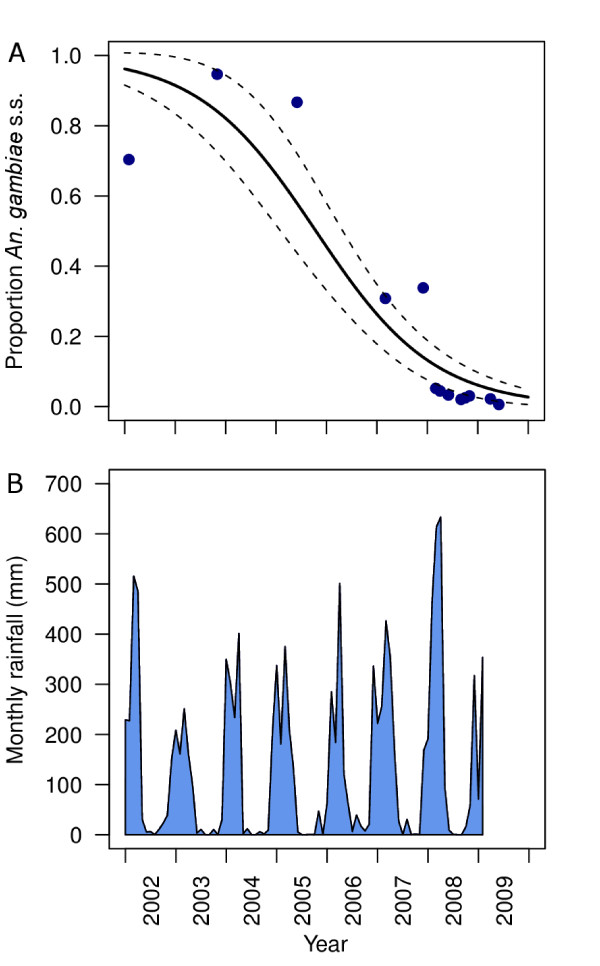
BACKGROUND: Insecticide-treated nets (ITNs) and indoor residual spraying (IRS) represent the front-line tools for malaria vector control globally, but are optimally effective where the majority of baseline transmission occurs indoors. In the surveyed area of rural southern Tanzania, bed net use steadily increased over the last decade, reducing malaria transmission intensity by 94%. METHODS: Starting before bed nets were introduced (1997), and then after two milestones of net use had been reached-75% community-wide use of untreated nets (2004) and then 47% use of ITNs (2009)-hourly biting rates of malaria vectors from the Anopheles gambiae complex and Anopheles funestus group were surveyed. RESULTS: In 1997, An. gambiae s.l. and An. funestus mosquitoes exhibited a tendency to bite humans inside houses late at night. For An. gambiae s.l., by 2009, nocturnal activity was less (p = 0.0018). At this time, the sibling species composition of the complex had shifted from predominantly An. gambiae s.s. to predominantly An. arabiensis. For An. funestus, by 2009, nocturnal activity was less (p = 0.0054) as well as the proportion biting indoors (p < 0.0001). At this time, An. funestus s.s. remained the predominant species within this group. As a consequence of these altered feeding patterns, the proportion (mean ± standard error) of human contact with mosquitoes (bites per person per night) occurring indoors dropped from 0.99 ± 0.002 in 1997 to 0.82 ± 0.008 in 2009 for the An. gambiae complex (p = 0.0143) and from 1.00 ± <0.001 to only 0.50 ± 0.048 for the An. funestus complex (p = 0.0004) over the same time period. CONCLUSIONS: High usage of ITNs can dramatically alter African vector populations so that intense, predominantly indoor transmission is replaced by greatly lowered residual transmission, a greater proportion of which occurs outdoors. Regardless of the underlying mechanism, the residual, self-sustaining transmission will respond poorly to further insecticidal measures within houses. Additional vector control tools which target outdoor biting mosquitoes at the adult or immature stages are required to complement ITNs and IRS.
Overview
The claims and statistics of this paper haven’t been checked yet.
Run the check — free, no account needed. It reads the open-access text and checks the sources it cites.
Integrity signals
Registry
Cites
Statistics
Figures
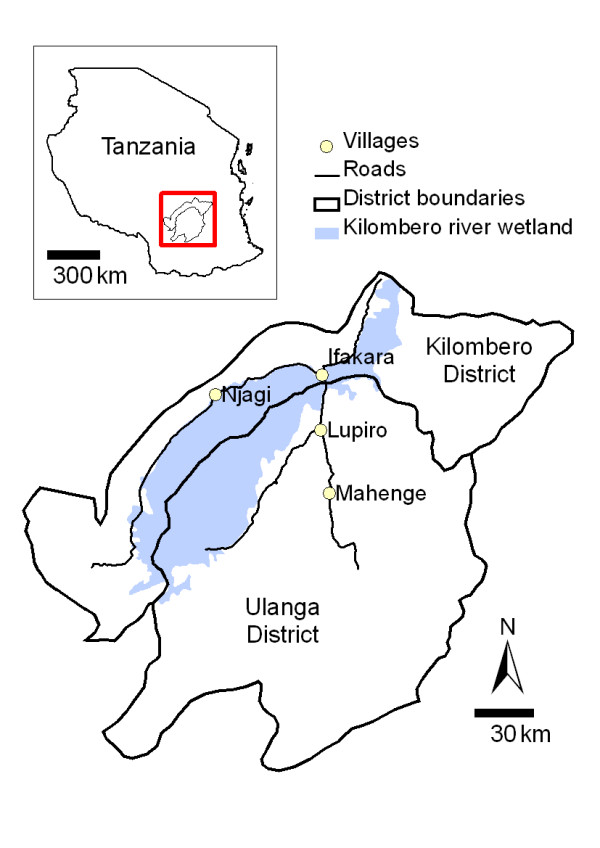
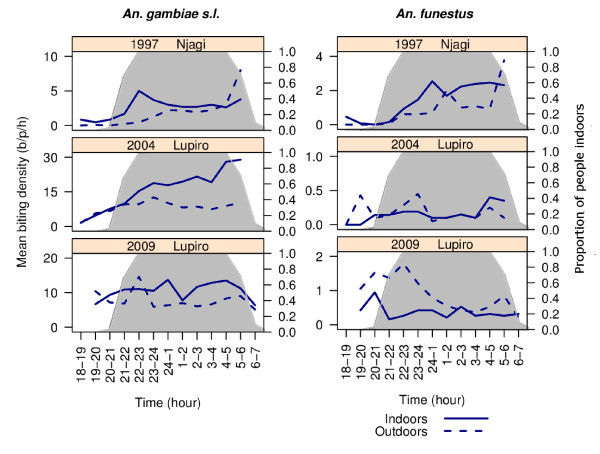
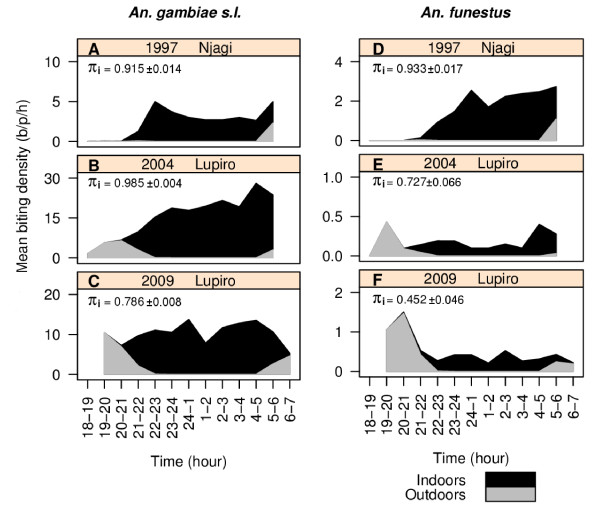
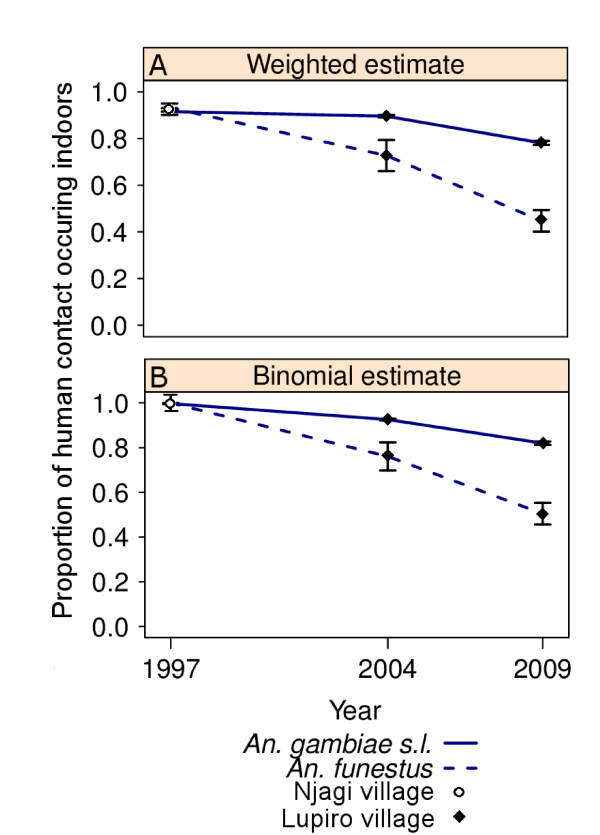
Verification
Claims the paper makes
The claims and statistics of this paper haven’t been checked yet.
Run the check — free, no account needed. It reads the open-access text and checks the sources it cites.
Claims other papers make about this one
Each is checked against this paper’s own text: does it say what the citing paper says it does?
The source backs part of the claim, not all of it — or backs it for a different population, condition or comparison.
In the citing paper
“Some investigators attribute this to a behavioural response by vectors to the protracted use of pyrethroid-treated bed nets [15, 16].”
From Sibling species of the major malaria vector Anopheles gambiae display divergent preferences for aquatic breeding sites in southern Nigeria (2024) · cites this paper as [16]
Experimental — accuracy not yet measuredThe source backs part of the claim, not all of it — or backs it for a different population, condition or comparison.
In the citing paper
“When one considers the human population at risk of transmission outdoors, the niche for spatial repellents becomes increasingly evident due to the lack of current control products for those humans becoming infected in these areas [34,35] (Figure 3).”
From Spatial repellents: from discovery and development to evidence-based validation (2012) · cites this paper as [35]
Experimental — accuracy not yet measuredThe cited source says what the claim attributes to it.
In the citing paper
“ecological shifts in vector composition and shifts in vector behaviour have been reported [19, 20].”
From Spatial temporal distribution of Anopheles mosquitoes in different ecological zones of Ghana (2026) · cites this paper as [19]
The cited source says what the claim attributes to it.
In the citing paper
“The observation of An. gambiae s.s in the sahel zone, where more outdoor mosquitoes fed on humans, may suggest potential shifts in biting behaviour in Anopheles gambiae mosquitoes, as reported in other studies [19, 20, 33].”
From Spatial temporal distribution of Anopheles mosquitoes in different ecological zones of Ghana (2026) · cites this paper as [19]
Self-check
Percentages, sums and reported differences re-computed from the paper’s own numbers.
The self-check needs the paper’s full text.
Citations
Cites
Insecticide-treated bed nets and curtains for preventing malaria
Lengeler, C. (2004) · Cochrane Database of Systematic Reviews · doi:10.1002/14651858.cd000363.pub2 · Cited by 1,700
Identification of Single Specimens of the Anopheles Gambiae Complex by the Polymerase Chain Reaction
Scott, J. A., Brogdon, W. G., & Collins, F. H. (1993) · American Journal of Tropical Medicine and Hygiene · doi:10.4269/ajtmh.1993.49.520 · Cited by 1,634
Silver, J. B. (2007) · Springer eBooks · doi:10.1007/978-1-4020-6666-5 · Cited by 1,005
A supplement to the Anophelinae of Africa south of the Sahara (Afrotropical Region).
Gillies, M. T., & Coetzee, M. (1987) · IHI Repository · Cited by 812
The Anophelinae of Africa south of the Sahara (Ethiopian Zoogeographical Region).
Gillies, M. T., & Meillon, B. D. (1968) · Cited by 776
Habicht, J. (1999) · International Journal of Epidemiology · doi:10.1093/ije/28.1.10 · Cited by 729
Koekemoer, L. L., Kamau, L., Hunt, R. H., & Coetzee, M. (2002) · The American journal of tropical medicine and hygiene · doi:10.4269/ajtmh.2002.66.804 · Cited by 641
HAWLEY, W. A., PHILLIPS-HOWARD, P. A., TER KUILE, F. O., TERLOUW, D. J., VULULE, J. M., OMBOK, M., NAHLEN, B. L., GIMNIG, J. E., KARIUKI, S. K., KOLCZAK, M. S., et al. (2003) · The American Journal of Tropical Medicine and Hygiene · doi:10.4269/ajtmh.2003.68.121 · Cited by 613
Griffin, J. T., Hollingsworth, T. D., Okell, L. C., Churcher, T. S., White, M., Hinsley, W., Bousema, T., Drakeley, C. J., Ferguson, N. M., Basáñez, M.-G., et al. (2010) · PLoS Medicine · doi:10.1371/journal.pmed.1000324 · Cited by 595
Self-citationChanges in the burden of malaria in sub-Saharan Africa
O’Meara, W. P., Mangeni, J. N., Steketee, R. W., & Greenwood, B. M. (2010) · The Lancet Infectious Diseases · doi:10.1016/s1473-3099(10)70096-7 · Cited by 517
Cited by
Sorted by citations
Items 601–686 of 686
Wild Populations of Malaria Vectors Can Mate Both Inside and Outside Human DwellingsPreprint
Nambunga, I. H., Msugupakulya, B. J., Hape, E. E., Mshani, I. H., Kahamba, N. F., Mkandawile, G., Mabula, D. M., Njalambaha, R. M., Kaindoa, E. W., Muyaga, L. L., et al. (2021) · Research Square · doi:10.21203/rs.3.rs-474590/v1
Hien, A. S., Soma, D. D., Sawadogo, S. P., Poda, S. B., Namountougou, M., Ouédraogo, G. A., Diabaté, A., & Dabiré, R. K. (2020) · doi:10.21203/rs.3.rs-20419/v1
Role of Pyrethroid-elicited Mosquito Behaviour in Control Programmes
Gupta, R. (2022) · JOURNAL OF COMMUNICABLE DISEASES · doi:10.24321/0019.5138.202293
Sanou, R., Maïga, H., Sow, B. B. D., Ouema, A., Millogo, A. A., Bayili, K., Hien, A. S., Sawadogo, S. P., Millogo, S. A., Bélem, A. M. G., et al. (2023) · Research Square · doi:10.21203/rs.3.rs-2432364/v1
Twentieth-Century Vector Control
Berube, D. M. (2023) · Risk, systems and decisions · doi:10.1007/978-3-031-25370-6_12
Abong’o, B., Agumba, S., Moshi, V., Simwero, J., Otima, J., & Ochomo, E. (2023) · bioRxiv (Cold Spring Harbor Laboratory) · doi:10.1101/2023.07.05.547882
Zeleke, G., Duchateau, L., Yewhalaw, D., Suleman, S., & Devreese, M. (2024) · Malaria Journal · doi:10.1186/s12936-024-04845-x
Denz, A., Njoroge, M. M., Tambwe, M. M., Kamber, L., Cavelan, A., Smith, T. A., van Loon, J. J. A., Hiscox, A., Saddler, A., Fillinger, U., et al. (2024) · medRxiv · doi:10.1101/2024.01.29.24301958
Nsemani, W., Ubachukwu, P. O., & Boadu, I. (2024) · Research Square · doi:10.21203/rs.3.rs-4791088/v1
Underused Alternative Techniques for Mosquito Control
Jones, R. G., & Messenger, L. A. (2024) · CABI eBooks · doi:10.1079/9781789248845.0012
Large-Scale Deployment of Lehmann’s Funnel Entry Traps to Control Malaria Mosquito Populations
Maïga, H., Sanou, R., Sow, B. B. D., Ouema, A., Millogo, A. A., Bayili, K., Hien, A. S., Sawadogo, S. P., Millogo, S. A., Bélem, A. M. G., et al. (2025) · Tropical Medicine and Infectious Disease · doi:10.3390/tropicalmed10020049
Akorli, E. A., Addo, S. N. A. S., Odoom, G., Osei‐Frempong, E., Boateng, J. K., & Akorli, J. (2025) · Research Square · doi:10.21203/rs.3.rs-6176263/v1
Zhang, R., Han, R., Jiao, S., Wang, X., Xu, G., He, F., Peng, C., Wu, Q., & Deng, S. (2025) · Decoding Infection and Transmission · doi:10.1016/j.dcit.2025.100055
Castro-Llanos, F., Stoops, C. A., Grieco, J. P., Escobedo-Vargas, K. S., López-Sifuentes, V. M., Lenhart, A. E., Stell, F. M., Larson, R. T., Achee, N. L., & Vásquez, G. M. (2025) · Malaria Journal · doi:10.1186/s12936-025-05442-2
MALDI-TOF MS for identification of Afro-tropical secondary malaria vectors
Tuwei, M., Karisa, J., Wanjiku, C., Kiuru, C., Ondieki, Z., Odongo, T., Mure, F., Otieno, B., Meli, P., Okoko, M., et al. (2025) · Malaria Journal · doi:10.1186/s12936-025-05549-6
Early-evening indoor and outdoor foraging by major malaria vectors in Nchelenge, Zambia
Gebhardt, M. E., Markle, H., Krizek, R. S., Mbewe, D., Mulenga, F. K., Lupiya, J. S., Barnett, E. E., Muleba, M., Ippolito, M. M., Stevenson, J. C., et al. (2026) · PLOS Global Public Health · doi:10.1371/journal.pgph.0005307
Lo, C. M. M., Ndiaye, A., Diop, A., Konaté, L., Faye, O., Niang, E. H. A., & Dia, I. (2025) · Advances in Entomology · doi:10.4236/ae.2025.134026
Dennis, T. P. W., Guelbeogo, M. W., Ferguson, H. M., Lindsay, S. W., N’Falé, S., Pignatelli, P. M., Ranson, H., Sanou, A., Tiono, A. B., Weetman, D., et al. (2025) · Evolutionary Applications · doi:10.1111/eva.70173
Burton, T. A., Simubali, L., Kabinga, L. H., Moono, J., Moono, P., Stevenson, J. C., Mburu, M. M., Simulundu, E., & Lobo, N. F. (2025) · PLoS ONE · doi:10.1371/journal.pone.0335514
Long-lasting insecticidal nets, arboviral risks, and ecological vector shifts in refugee settings
Ceccarelli, G., Branda, F., Scarpa, F., Giovanetti, M., & Ciccozzi, M. (2025) · IJID Regions · doi:10.1016/j.ijregi.2025.100809
Dakum, Y. D., Ombugadu, A., Maikenti, J. I., Ashigar, M. A., Lapang, M. P., Ali, A. A., Mafuyai, M. J., Omalu, I. C. J., & Pam, V. A. (2025) · UMYU Scientifica · doi:10.56919/usci.2543.017
Jobe, N. B., Máquina, M., Opiyo, M., Martí-Soler, H., Malheia, A., Marrenjo, D., Cuamba, N., Pino, D., Saúte, F., & Paaijmans, K. P. (2025) · Insects · doi:10.3390/insects16121264
Guglielmo, F., Sanou, A., Churcher, T. S., Ferguson, H. M., Ranson, H., & Sherrard-Smith, E. (2021) · Figshare · doi:10.6084/m9.figshare.13605208
Ebhodaghe, F. I., Sánchez-Vargas, I., Isaac, C., Foy, B. D., & Hemming‐Schroeder, E. (2024) · Figshare · doi:10.6084/m9.figshare.26686161
Msugupakulya, B. J., Urio, N. H., Jumanne, M., Ngowo, H. S., Selvaraj, P., Okumu, F. O., & Wilson, A. L. (2024) · Figshare · doi:10.6084/m9.figshare.26637027
Onyango, S. A., Ochwedo, K. O., Machani, M. G., Olumeh, J. O., Debrah, I., Omondi, C. J., Ogolla, S., Lee, M.-C., Zhou, G., Kokwaro, E. D., et al. (2022) · Figshare · doi:10.6084/m9.figshare.20472621
Mitchell, C. L., Ngasala, B., Janko, M. M., Chacky, F., Edwards, J. K., Pence, B. W., Mohamed, A., Mhamilawa, L. E., Makene, T., Thwai, K. L., et al. (2022) · Figshare · doi:10.6084/m9.figshare.19334230
Ebhodaghe, F. I., Sánchez-Vargas, I., Isaac, C., Foy, B. D., & Hemming‐Schroeder, E. (2024) · Figshare · doi:10.6084/m9.figshare.26686158
Ebhodaghe, F. I., Sánchez-Vargas, I., Isaac, C., Foy, B. D., & Hemming‐Schroeder, E. (2024) · Figshare · doi:10.6084/m9.figshare.26686155
Mawejje, H. D., Rwatooro, J. A., Kyagamba, P., Kamya, M. R., Rosenthal, P. J., Lines, J., Dorsey, G., & Staedke, S. G. (2024) · Figshare · doi:10.6084/m9.figshare.26555750
Muyaga, L. L., Meza, F. C., Kahamba, N. F., Njalambaha, R. M., Msugupakulya, B. J., Kaindoa, E. W., Ngowo, H. S., & Okumu, F. O. (2023) · Figshare · doi:10.6084/m9.figshare.23557856
Zeleke, G., Duchateau, L., Yewhalaw, D., Suleman, S., & Devreese, M. (2024) · Figshare · doi:10.6084/m9.figshare.25025915
Ebhodaghe, F. I., Sánchez-Vargas, I., Isaac, C., Foy, B. D., & Hemming‐Schroeder, E. (2024) · Figshare · doi:10.6084/m9.figshare.26686167
Denz, A., Njoroge, M. M., Tambwe, M. M., Champagne, C., Okumu, F., van Loon, J. J. A., Hiscox, A., Saddler, A., Fillinger, U., Moore, S. J., et al. (2021) · Figshare · doi:10.6084/m9.figshare.13619893
Ebhodaghe, F. I., Sánchez-Vargas, I., Isaac, C., Foy, B. D., & Hemming‐Schroeder, E. (2024) · Figshare · doi:10.6084/m9.figshare.26686170
Yohana, R., Chisulumi, P. S., Kidima, W. B., Tahghighi, A., Maleki‐Ravasan, N., & Kweka, E. J. (2022) · Figshare · doi:10.6084/m9.figshare.20317725
Andy, H., Haji, K. A., Abbas, F., Hassan, J., Ali, A., Yussuf, Y., Cook, J. A., Roșu, L., Houri-Yafin, A., Vigodny, A., et al. (2024) · Figshare · doi:10.6084/m9.figshare.26620180
Zemene, E., Belay, D. B., Tiruneh, A., Lee, M.-C., Yewhalaw, D., & Yan, G. (2021) · Figshare · doi:10.6084/m9.figshare.16530018
Woyessa, D., & Yewhalaw, D. (2023) · Research Square · doi:10.21203/rs.3.rs-3307406/v1
Soma, D. D., Zogo, B., Taconet, P., Somé, A., Coulibaly, S., Baba-Moussa, L., Ouédraogo, G. A., Koffi, A. A., Pennetier, C., Dabiré, R. K., et al. (2021) · Figshare · doi:10.6084/m9.figshare.13669287
Zemene, E., Belay, D. B., Tiruneh, A., Lee, M.-C., Yewhalaw, D., & Yan, G. (2021) · Figshare · doi:10.6084/m9.figshare.16530015
Egyirifa, R. K., & Akorli, J. (2024) · Figshare · doi:10.6084/m9.figshare.25210685
Ngowo, H. S., Limwagu, A. J., Ferguson, H. M., Matthiopoulos, J., Okumu, F. O., & Nelli, L. (2022) · Figshare · doi:10.6084/m9.figshare.20508710
Perugini, E., Guelbeogo, W. M., Guglielmo, F., Poggi, C., Gabrieli, E., Ranson, H., della Torre, A., & Pombi, M. (2023) · Figshare · doi:10.6084/m9.figshare.22624544
Perugini, E., Guelbeogo, W. M., Guglielmo, F., Poggi, C., Gabrieli, E., Ranson, H., della Torre, A., & Pombi, M. (2023) · Figshare · doi:10.6084/m9.figshare.22624547
Andy, H., Haji, K. A., Abbas, F., Hassan, J., Ali, A., Yussuf, Y., Cook, J. A., Roșu, L., Houri-Yafin, A., Vigodny, A., et al. (2024) · Figshare · doi:10.6084/m9.figshare.26620177
Cansado-Utrilla, C., Jeffries, C. L., Kristan, M., Brugman, V. A., Heard, P., Camara, G., Sylla, M., Béavogui, A. H., Messenger, L. A., Irish, S. R., et al. (2020) · Figshare · doi:10.6084/m9.figshare.12028398
Ebhodaghe, F. I., Sánchez-Vargas, I., Isaac, C., Foy, B. D., & Hemming‐Schroeder, E. (2024) · Figshare · doi:10.6084/m9.figshare.26686152
Perugini, E., Guelbeogo, W. M., Guglielmo, F., Poggi, C., Gabrieli, E., Ranson, H., della Torre, A., & Pombi, M. (2023) · Figshare · doi:10.6084/m9.figshare.22624541
Ebhodaghe, F. I., Sánchez-Vargas, I., Isaac, C., Foy, B. D., & Hemming‐Schroeder, E. (2024) · Figshare · doi:10.6084/m9.figshare.26686149
Soumare, H. M., Dabira, E. D., Camara, M. M., Jadama, L., Gaye, P. M., Kanteh, S., Jawara, E. A., Njie, A. K., Sanneh, F., Ndiath, M. O., et al. (2022) · Figshare · doi:10.6084/m9.figshare.21582709
Self-citationEbhodaghe, F. I., Sánchez-Vargas, I., Isaac, C., Foy, B. D., & Hemming‐Schroeder, E. (2024) · Figshare · doi:10.6084/m9.figshare.26686164
Sanou, R., Maïga, H., Bilgo, E. M., Sawadogo, S. P., Sow, B. B. D., Ouema, A., Bayili, K., Belem, A. M. G., Toe, L. P., Dabiré, R. K., et al. (2021) · Figshare · doi:10.6084/m9.figshare.13514063
Cansado-Utrilla, C., Jeffries, C. L., Kristan, M., Brugman, V. A., Heard, P., Camara, G., Sylla, M., Béavogui, A. H., Messenger, L. A., Irish, S. R., et al. (2020) · Figshare · doi:10.6084/m9.figshare.12028392
Killeen, G. F., Monroe, A. C., & Govella, N. J. (2021) · Figshare · doi:10.6084/m9.figshare.15102801
Self-citationNambunga, I. H., Msugupakulya, B. J., Hape, E. E., Mshani, I. H., Kahamba, N. F., Mkandawile, G., Mabula, D. M., Njalambaha, R. M., Kaindoa, E. W., Muyaga, L. L., et al. (2021) · Figshare · doi:10.6084/m9.figshare.16767460
Mwaanga, G., Ford, J., Yukich, J. O., Chanda, B., Ashton, R. A., Chanda, J., Munsanje, B., Muntanga, E., Mulota, M., Simuyandi, C., et al. (2024) · Figshare · doi:10.6084/m9.figshare.25929189
Ngowo, H. S., Okumu, F. O., Hape, E. E., Mshani, I. H., Ferguson, H. M., & Matthiopoulos, J. (2022) · Figshare · doi:10.6084/m9.figshare.20001122
Zhou, G., Li, Y., Zhong, D., Machani, M. G., Onyango, J. A., Wang, X., Lee, M.-C., Atieli, H. E., Mukabana, W. R., Githure, J. I., et al. (2022) · Research Square · doi:10.21203/rs.3.rs-1735295/v1
Ashine, T., Kochora, A., Shibru, H., Bekele, A., Assefa, M., Gidisa, B., Negash, N., Weetman, D., Ayele, T. A., Gadisa, E., et al. (2024) · Figshare · doi:10.6084/m9.figshare.27129488
Bartilol, B., Omedo, I., Mbogo, C., Mwangangi, J., & Rono, M. K. (2021) · Figshare · doi:10.6084/m9.figshare.13663125
Rocha, G., Corrêa, M. J. M., Marbel, J., Viegas, J., Campos, M., Crepeau, M., Egan, C. M., Cornel, A. J., Sousa, C. A., Lanzaro, G. C., et al. (2026) · Journal of Medical Entomology · doi:10.1093/jme/tjag026
Mahinda, M. A. (2026) · IAA Journal of Biological Sciences · doi:10.59298/iaajb/2026/1411221
Bouopda-Tuedom, A. G., Kiam, B. C., Abate, L., Bayibéki, A. N., Ibrahima, I., Nanssong-Vomo, C. T., Fotso, B. T., Onguene, C. J., Awono‐Ambene, P., Ayong, L. S., et al. (2026) · Malaria Journal · doi:10.1186/s12936-026-05861-9
Malaria elimination in China, evolution and challenges with respect to cross border transmission
Zhang, S. (2019) · theses.fr (ABES) · doi:10.70675/2f2cf18ez3ca4z4cfezb544zb00bd3c8ef75
Impact de l’utilisation des médicaments antipaludiques sur la transmission de Plasmodium sp.
Villa, M. (2020) · theses.fr (ABES) · doi:10.70675/a1b51bcdz3efcz41b4z8c5ezf5c9ea686580
Zoh, M. G. (2021) · theses.fr (ABES) · doi:10.70675/5ffea2f6z4961z4f2fza940z0bc2078e4d73
Mpunda, G. N., DIANGO, E. K., NDOMBE, R. T., Lubo, P. M., Sisa, E. M., Metelo, E., & MUTAMBEL'HITY, D. S. N. (2026) · International Journal of Science and Research Archive · doi:10.30574/ijsra.2026.19.1.0665
Richard, O., Adegboye, O. A., Dishon, C. H., Dunka, H. I., Adanu, A. W., Ihieri, C. O., & McBryde, E. S. (2026) · Transactions of the Royal Society of Tropical Medicine and Hygiene · doi:10.1093/trstmh/trag036
Nkya, T. E. (2025) · Tanzania journal of health research/Tanzania Journal of Health Research · doi:10.4314/thrb.v26i5.10s
Gandebagni, M., Konkon, A. K., Zoungbédji, D. M., Hoyochi, I., Salako, A. S., Akinro, B., Chitou, S., Osse, R. A., Moussa, L. B., Akogbéto, M., et al. (2026) · The Journal of Basic and Applied Zoology · doi:10.1186/s41936-026-00603-4
Ali, A. O., Khatib, B. O., Ali, K. F., Massoud, F., Khatib, T. S., Rashid, M. K., Gowelo, S., Shija, S. J., Omar, K. A., Kombo, M. M., et al. (2026) · Malaria Journal · doi:10.1186/s12936-026-06017-5
Self-citationIssae, A. R., Katusi, G. C., Mwang’onde, B. J., Mnyone, L. L., & Malisa, A. L. (2026) · Journal of applied science and environmental management · doi:10.4314/jasem.v30i4.30
Targeting the malaria parasite inside the mosquito host
Farrell, S. N., McFadden, G. I., & Goodman, C. D. (2026) · Advances in Parasitology/Advances in parasitology · doi:10.1016/bs.apar.2026.05.003
Sutthanont, N., Leanpolchareanchai, J., Sriwichai, P., Ruangsittichai, J., Phanpoowong, T., Sumruayphol, S., Phanitchat, T., Sakai, T., Eshita, Y., & Srisawat, R. (2026) · Scientific Reports · doi:10.1038/s41598-026-61769-z
Narpon, Q., Toto, J.-C., Lucarz, E., Santos, M. A. D., Ingles, A., Girault, C., Besnard, P., Cabinda, A. M., Martins, J. F., Poinsignon, A., et al. (2026) · bioRxiv (Cold Spring Harbor Laboratory) · doi:10.64898/2026.09.14.751460
Bikoy, E. N., Nwane, P. B., Ekoko, W. E., Enama, S. E., Chadou, M. P., Alenou, L. D., Mandeng, S. E., Niamsi-Emalio, Y., Kamgno, J., & Etang, J. (2026) · Frontiers in Public Health · doi:10.3389/fpubh.2026.1870575
Gitanya, M. P., Worges, M., Koenker, H. M., Kiware, S. S., Lazaro, S., Kitau, J., Kisinza, W. N., Serbantez, N., Kamala, B. A., Mwalimu, C. D., et al. (2026) · PLOS Global Public Health · doi:10.1371/journal.pgph.0005574
Arori, C. N. (2011) · ScholarWorks (Walden University)
Metadata
- Authors
- Russell, T. L., Govella, N. J., Azizi, S., Drakeley, C. J., Kachur, S. P., & Killeen, G. F.
- Affiliations
- Ifakara Health Institute (TZ)
- Centers for Disease Control and Prevention (US)
- Corresponding author
- Russell, Tanya L
- Venue
- Malaria Journal
- Published
- 2011-04-09
- Volume
- 10
- Issue
- 1
- Pages
- 80-80
- ISSN
- 1475-2875 (ISSN-L)
- PMC
- PMC3084176
- OpenAlex
- W2103610338
- Cited by
- 698
- References
- 55
- Citations by year
- 2026: 14 · 2025: 34 · 2024: 52 · 2023: 44 · 2022: 60 · 2021: 69 · 2020: 56 · 2019: 51 · 2018: 43 · 2017: 53 · 2016: 54 · 2015: 41 · 2014: 35 · 2013: 50 · 2012: 33
- FWCI
- 39.63
- Type
- journal article
- Language
- en
- Open access
- gold
- doi.org
- Licence
- Locations
- Malaria Journal (publishedVersion, cc-by)
- Europe PMC (PubMed Central) (publishedVersion, cc-by)
- PubMed Central (publishedVersion, cc-by)
- PubMed (publishedVersion)
- LSTM Online Archive (Liverpool School of Tropical Medicine) (acceptedVersion)
- IHI Repository (acceptedVersion)
- LSHTM Research Online (London School of Hygiene and Tropical Medicine) (acceptedVersion)
- ResearchOnline at James Cook University (James Cook University) (submittedVersion)
- DOAJ (DOAJ: Directory of Open Access Journals) (submittedVersion)
- Funders
- Bill and Melinda Gates Foundation (45114, 51431)
- Wellcome Trust (076806)
- Topics
- Health Sciences › Medicine › Public Health, Environmental and Occupational Health › Malaria Research and Control
- Health Sciences › Medicine › Public Health, Environmental and Occupational Health › Mosquito-borne diseases and control
- Life Sciences › Immunology and Microbiology › Parasitology › Bird parasitology and diseases
- Keywords
- insecticide-treated nets, malaria vector control, Anopheles gambiae s.l., Anopheles funestus, Anopheles arabiensis, indoor biting, residual malaria transmission, bed net use, rural Tanzania, indoor residual spraying, malaria transmission intensity
- MeSH terms
- Animals, Anopheles, Feeding Behavior, Humans, Human Activities, Insect Vectors, Malaria, Mosquito Control, Rural Population, Tanzania, Insecticide-Treated Bednets
About these checks
Registry, retraction, Cites and statistics results are computed, not judged, with one exception: a printed reference that no index lists is read once by a model before it counts as a citation error. Claims are extracted by a model and kept only when their quote appears verbatim in the text; each cited source is then checked, with a model’s help, for whether it says what the claim relies on. Those verdicts can be wrong — read the claim’s quote and the cited source before relying on one.
Statistics and arithmetic are recomputed, not judged.
Confidence bands are shown only for fields calibrated on our annotated test set. None is calibrated yet, so no band is shown.
What counts as a claim ›How we measure confidence ›How we check this ›
Are you an author, or do you see a problem with this page? Request a review
