

Integrated vector management for malaria control
Open accessThe DOI matches its Crossref record; 62 of the 64 references it cites were found in a registry or an index.
Abstract
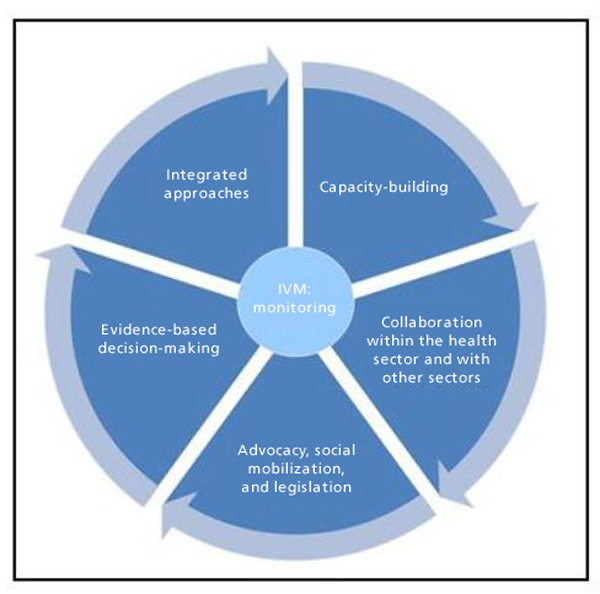
Integrated vector management (IVM) is defined as "a rational decision-making process for the optimal use of resources for vector control" and includes five key elements: 1) evidence-based decision-making, 2) integrated approaches 3), collaboration within the health sector and with other sectors, 4) advocacy, social mobilization, and legislation, and 5) capacity-building. In 2004, the WHO adopted IVM globally for the control of all vector-borne diseases. Important recent progress has been made in developing and promoting IVM for national malaria control programmes in Africa at a time when successful malaria control programmes are scaling-up with insecticide-treated nets (ITN) and/or indoor residual spraying (IRS) coverage. While interventions using only ITNs and/or IRS successfully reduce transmission intensity and the burden of malaria in many situations, it is not clear if these interventions alone will achieve those critical low levels that result in malaria elimination. Despite the successful employment of comprehensive integrated malaria control programmes, further strengthening of vector control components through IVM is relevant, especially during the "end-game" where control is successful and further efforts are required to go from low transmission situations to sustained local and country-wide malaria elimination. To meet this need and to ensure sustainability of control efforts, malaria control programmes should strengthen their capacity to use data for decision-making with respect to evaluation of current vector control programmes, employment of additional vector control tools in conjunction with ITN/IRS tactics, case-detection and treatment strategies, and determine how much and what types of vector control and interdisciplinary input are required to achieve malaria elimination. Similarly, on a global scale, there is a need for continued research to identify and evaluate new tools for vector control that can be integrated with existing biomedical strategies within national malaria control programmes. This review provides an overview of how IVM programmes are being implemented, and provides recommendations for further development of IVM to meet the goals of national malaria control programmes in Africa.
Overview
The claims and statistics of this paper haven’t been checked yet.
Free: it reads the open-access text and checks the first 5 claims that cite a source we can check. Create a free account to check every claim.
Integrity signals
Registry
Cites
Statistics
Figures
Verification
Claims the paper makes
The claims and statistics of this paper haven’t been checked yet.
Free: it reads the open-access text and checks the first 5 claims that cite a source we can check. Create a free account to check every claim.
Claims other papers make about this one
Each is checked against this paper’s own text: does it say what the citing paper says it does?
The cited source says what the claim attributes to it.
In the citing paper
“An IVM approach is important to sustain achievements and reduce transmission to critical low levels needed to eliminate malaria (Beier et al. 2009).”
From Global Status of DDT and Its Alternatives for Use in Vector Control to Prevent Disease (2009) · cites this paper as Beier et al. 2009
Self-check
Percentages, sums and reported differences re-computed from the paper’s own numbers.
The self-check needs the paper’s full text.
Citations
Cites
Disease control priorities in developing countries
(2006) · Choice Reviews Online · doi:10.5860/choice.44-0343 · Cited by 3,628
Macroeconomics and health: investing in health for economic development
Sachs, J. D. (2002) · Revista Panamericana de Salud Pública · doi:10.1590/s1020-49892002000800017 · Cited by 1,830
Disease control priorities in developing countries
Frenk, J. (2006) · Salud Pública de México · doi:10.1590/s0036-36342006000600011 · Cited by 1,599
Disease Control Priorities in Developing Countries
Mosley, W. H. (1993) · World Bank, Washington, DC eBooks · doi:10.1596/0-1952-0990-7 · Cited by 1,400
Handbook of Pesticide Toxicology
(2001) · Elsevier eBooks · doi:10.1016/b978-0-12-426260-7.x5000-9 · Cited by 1,322
Ross, R. (2010) · Cited by 940
Introduction to insect pest management
(1994) · Choice Reviews Online · doi:10.5860/choice.32-2128 · Cited by 539
Measuring the Burden of Neglected Tropical Diseases: The Global Burden of Disease Framework
Mathers, C. D., Ezzati, M., & Lopez, A. D. (2007) · PLoS Neglected Tropical Diseases · doi:10.1371/journal.pntd.0000114 · Cited by 510 · cited 1×
“Malaria and other vector-borne diseases contribute substantially to the global burden of diseases and disproportionately affect poor and under-served populations living in tropical and sub-tropical regions [1-5].”
BackgroundWALKER, K., & LYNCH, M. (2007) · Medical and Veterinary Entomology · doi:10.1111/j.1365-2915.2007.00674.x · Cited by 279 · cited 2×
“Recent reviews of environmental management [37,39] and larval control [26] contain additional examples.”
BackgroundEradication of Anopheles gambiae from Brazil: lessons for malaria control in Africa?
Killeen, G. F., Fillinger, U., Kiche, I., Gouagna, L. C., & Knols, B. G. (2002) · The Lancet Infectious Diseases · doi:10.1016/s1473-3099(02)00397-3 · Cited by 272 · cited 1×
“remaining low-levels of transmission? There is also a strong case for implementing larval control to target immature stages of anopheline mosquitoes to reduce malaria transmission [21-27], but further field trials are needed to show how these additional measures, beyond ITNs and IRS, have a substantial impact on malar…”
Background
Research works printed but not linked: 7
- Hatch CL Williams JW Jarinko PA Guidelines for measuring proficiency as an aid in mosquito abatement program assessment Mosq News 1973 33 228 233
- WHO Global strategic framework for integrated vector management World Health Organization 2004 10 1 12 WHO/CDS/CPE/PVC/2004
- WHO Report of the global partners' meeting on neglected tropical diseases: 2007 – a turning point: Geneva, Swizerland, 17–18 April 2007 2007 Geneva: World Health Organization
- Rafatjah HA Prospects and Progress on IPM in World-wide Malaria control Mosq News 1982 42 491 498
- Hinman EH The management of water for malaria control Symposium on Human Malaria: 1941; Philadelphia 1941 324 332
- Berg H van den Das PK von Hildebrand A Ragunathan V Evaluation of the Integrated Pest and Vector Management (IPVM) project in Sri Lanka 2006 New Dehli: World Health Organization, South East Asia Regional Office 1 46
- Manga L Toure A Shililu J Implementation of Integrated Vector Management in the WHO-African Region: Progress Report 2000–2003 2004 Washington, DC: Environmental Health Project, U.S. Agency for International Development 1 26
Cited by
White, N. J., Pukrittayakamee, S., Hien, T. T., Faiz, M. A., Mokuolu, O. A., & Dondorp, A. M. (2014) · The Lancet · doi:10.1016/s0140-6736(13)60024-0 · Cited by 1,123
Operational strategies to achieve and maintain malaria elimination
Moonen, B., Cohen, J. M., Snow, R. W., Slutsker, L., Drakeley, C., Smith, D. L., Abeyasinghe, R. R., Rodriguez, M. H., Maharaj, R., Tanner, M., et al. (2010) · The Lancet · doi:10.1016/s0140-6736(10)61269-x · Cited by 381
Global Status of DDT and Its Alternatives for Use in Vector Control to Prevent Disease
van den Berg, H. (2009) · Environmental Health Perspectives · doi:10.1289/ehp.0900785 · Cited by 376
“An IVM approach is important to sustain achievements and reduce transmission to criti cal low levels needed to eliminate malaria (Beier et al. 2009).”
BackgroundAlternative strategies for mosquito-borne arbovirus control
Achee, N. L., Grieco, J. P., Vatandoost, H., Seixas, G., Pinto, J., Ching-NG, L., Martins, A. J., Juntarajumnong, W., Corbel, V., Gouagna, C., et al. (2019) · PLOS Neglected Tropical Diseases · doi:10.1371/journal.pntd.0006822 · Cited by 353
Current vector control challenges in the fight against malaria
Benelli, G., & Beier, J. C. (2017) · Acta Tropica · doi:10.1016/j.actatropica.2017.06.028 · Cited by 313
Self-citationLarval source management for malaria control in Africa: myths and reality
Fillinger, U., & Lindsay, S. W. (2011) · Malaria Journal · doi:10.1186/1475-2875-10-353 · Cited by 276
“In order to maintain this momentum and aim for further reductions in malaria transmission, supplementary tools for vector control need to be added to the current arsenal [3].”
BackgroundMwangangi, J. M., Mbogo, C. M., Orindi, B. O., Muturi, E. J., Midega, J. T., Nzovu, J., Gatakaa, H., Githure, J., Borgemeister, C., Keating, J., et al. (2013) · Malaria Journal · doi:10.1186/1475-2875-12-13 · Cited by 242
“Scale up of LLINs to universal coverage, coupled with larval habitat management strategies, stakeholder involvement and community engagement packaged in integrated vector management (IVM) strategy, would be ideal to significantly reduce indoor and outdoor resting vectors [65-67].”
BackgroundSelf-citationMüller, G. C., Beier, J. C., Traore, S. F., Toure, M. B., Traore, M. M., Bah, S., Doumbia, S., & Schlein, Y. (2010) · Malaria Journal · doi:10.1186/1475-2875-9-210 · Cited by 239
“The lack of viable new methods for vector control is one reason why integrated vector management (IVM) strategies [9,10] have not been fully embraced and implemented [11].”
Self-citationAtkinson, J.-A., Vallely, A., Fitzgerald, L., Whittaker, M., & Tanner, M. (2011) · Malaria Journal · doi:10.1186/1475-2875-10-225 · Cited by 227
“Community engagement and participation has played a critical role in successful communicable disease control and elimination campaigns in many countries [13-19].”
BackgroundMalaria in Uganda: Challenges to control on the long road to elimination
Yeka, A., Gasasira, A., Mpimbaza, A., Achan, J., Nankabirwa, J., Nsobya, S., Staedke, S. G., Donnelly, M. J., Wabwire-Mangen, F., Talisuna, A., et al. (2012) · Acta Tropica · doi:10.1016/j.actatropica.2011.03.004 · Cited by 210
Haque, M., Islam, T., Rahman, N. A. A., McKimm, J., Abdullah, A., & Dhingra, S. (2020) · Risk Management and Healthcare Policy · doi:10.2147/rmhp.s239074 · Cited by 212
Integrating vector control across diseases
Golding, N., Wilson, A. L., Moyes, C. L., Cano, J., Pigott, D. M., Velayudhan, R., Brooker, S. J., Smith, D. L., Hay, S. I., & Lindsay, S. W. (2015) · BMC Medicine · doi:10.1186/s12916-015-0491-4 · Cited by 172
Bardosh, K., Ryan, S. J., Ebi, K. L., Welburn, S. C., & Singer, B. H. (2017) · Infectious Diseases of Poverty · doi:10.1186/s40249-017-0375-2 · Cited by 171
Zhou, G., Afrane, Y. A., Vardo-Zalik, A. M., Atieli, H., Zhong, D., Wamae, P., Himeidan, Y. E., Minakawa, N., Githeko, A. K., & Yan, G. (2011) · PLoS ONE · doi:10.1371/journal.pone.0020318 · Cited by 167
“Furthermore, since the principal determinants of malaria burden in Africa are linked to ecological and societal changes, climate, politics, and economics, these factors and their interactions remain complicated and the volatility of some political or economic changes [53–57] may negatively affect the systematic implem…”
BackgroundMwangangi, J. M., Muturi, E. J., Muriu, S. M., Nzovu, J., Midega, J. T., & Mbogo, C. (2013) · Parasites & Vectors · doi:10.1186/1756-3305-6-114 · Cited by 135
“Scale up of LLINs to universal coverage coupled with larval habitat management strategies, stakeholder involvement and community engagement packaged in integrated vector management (IVM) strategies would be ideal to significantly reduce indoor and outdoor resting vectors [53-55].”
BackgroundMalaria eradication and elimination: views on how to translate a vision into reality
Tanner, M., Greenwood, B., Whitty, C. J. M., Ansah, E. K., Price, R. N., Dondorp, A. M., von Seidlein, L., Baird, J. K., Beeson, J. G., Fowkes, F. J. I., et al. (2015) · BMC Medicine · doi:10.1186/s12916-015-0384-6 · Cited by 128
“Initiative (PMI) [104].”
Shaukat, A. M., Breman, J. G., & McKenzie, F. E. (2010) · Malaria Journal · doi:10.1186/1475-2875-9-122 · Cited by 123
“In 2004, the World Health Organization recommended IVM globally for the control of all vector-borne diseases [30].”
BackgroundTraore, M. M., Junnila, A., Traore, S. F., Doumbia, S., Revay, E. E., Kravchenko, V. D., Schlein, Y., Arheart, K. L., Gergely, P., Xue, R., et al. (2020) · Malaria Journal · doi:10.1186/s12936-020-3132-0 · Cited by 138
“Integrated vector management (IVM) seeks to optimize the use current interventions and to integrate them with new methods as they become available [6, 9] especially in problematic areas of sustained transmission despite the scale-up of LLINs or IRS [10–14].”
Self-citationAbeyasinghe, R. R., Galappaththy, G. N., Gueye, C. S., Kahn, J. G., & Feachem, R. G. (2012) · PLoS ONE · doi:10.1371/journal.pone.0043162 · Cited by 137
Müller, G. C., Beier, J. C., Traore, S. F., Toure, M. B., Traore, M. M., Bah, S., Doumbia, S., & Schlein, Y. (2010) · Malaria Journal · doi:10.1186/1475-2875-9-262 · Cited by 121
“Investigators in Mali are also searching for additional vector control methods that could eventually be used in conjunction with LLINs and IRS as part of integrated vector management (IVM) [3-5].”
BackgroundSelf-citationReview: Improving our knowledge of male mosquito biology in relation to genetic control programmes
Lees, R. S., Knols, B. G., Bellini, R., Benedict, M. Q., Bheecarry, A., Bossin, H., Chadee, D. D., Charlwood, J. D., Dabiré, R. K., Djogbénou, L., et al. (2013) · Acta Tropica · doi:10.1016/j.actatropica.2013.11.005 · Cited by 121
Castro, M. C., Tsuruta, A., Kanamori, S., Kannady, K., & Mkude, S. (2009) · Malaria Journal · doi:10.1186/1475-2875-8-57 · Cited by 117
“Indeed, the need for capacity building and for inter-sectoral collaboration are two of the characteristics of an IVM framework [2,3].”
BackgroundQualls, W. A., Müller, G. C., Traore, S. F., Traore, M. M., Arheart, K. L., Doumbia, S., Schlein, Y., Kravchenko, V. D., Xue, R., & Beier, J. C. (2015) · Malaria Journal · doi:10.1186/s12936-015-0819-8 · Cited by 117
“infections, they do not consistently reduce malaria prevalence [3].”
BackgroundSelf-citationAïkpon, R., Agossa, F., Ossè, R., Oussou, O., Aïzoun, N., Oké-Agbo, F., & Akogbéto, M. (2013) · Parasites & Vectors · doi:10.1186/1756-3305-6-192 · Cited by 94
“The development of resistance by the mosquito population to bendiocarb could jeopardize the current malaria control programme, specifically IRS using bendiocarb that is currently underway in the department of Atacora.”
MethodInfluentialZofou, D., Nyasa, R. B., Nsagha, D. S., Ntie‐Kang, F., Meriki, H. D., Assob, J. C. N., & Kuete, V. (2014) · Infectious Diseases of Poverty · doi:10.1186/2049-9957-3-1 · Cited by 109
“This situation may justify the slow progress, which continues to be observed with the implementation of IVM in Africa [17].”
Community participation in the prevention and control of dengue: thepatio limpiostrategy in Mexico
TAPIA-CONYER, R. C., Méndez-Galván, J. F., & Burciaga-Zúñiga, P. (2012) · Paediatrics and International Child Health · doi:10.1179/2046904712z.00000000047 · Cited by 109
Toxicity of bloodmeals from ivermectin-treated cattle toAnopheles gambiaes.l.
Fritz, M. L., Siegert, P. Y., Walker, E. D., Bayoh, M. N., VULULE, J. M., & Miller, J. R. (2009) · Annals of Tropical Medicine and Parasitology · doi:10.1179/000349809x12459740922138 · Cited by 108
“Previously, DDT and pyrethroids have been used, in programmes based on indoor residual spraying and ITN, respectively, for the suppression of vector populations (Beier et al., 2008).”
Müller, G. C., Junnila, A., Traore, M. M., Traore, S. F., Doumbia, S., Sissoko, F., Dembélé, S. M., Schlein, Y., Arheart, K. L., Revay, E. E., et al. (2017) · Malaria Journal · doi:10.1186/s12936-017-1878-9 · Cited by 104
“Current strategies for malaria vector control used in most African countries are not sufficient to achieve successful malaria control [27].”
BackgroundSelf-citationMalaria in selected non-Amazonian countries of Latin America
Arevalo-Herrera, M., Quiñones, M. L., Guerra, C., Céspedes, N., Giron, S., Ahumada, M., Piñeros, J. G., Padilla, N., Terrientes, Z., Rosas, Á., et al. (2012) · Acta Tropica · doi:10.1016/j.actatropica.2011.06.008 · Cited by 95
Self-citationAssogba, B. S., Djogbénou, L., Milesi, P., Berthomieu, A., Pérez, J., Ayala, D., Chandre, F., Makoutodé, M., Labbé, P., & Weill, M. (2015) · Scientific Reports · doi:10.1038/srep14529 · Cited by 95
Okumu, F. O., Mbeyela, E., Lingamba, G., Moore, J., Ntamatungiro, A. J., Kavishe, D. R., Kenward, M. G., Turner, E., Lorenz, L. M., & Moore, S. J. (2013) · Parasites & Vectors · doi:10.1186/1756-3305-6-46 · Cited by 84
“Methods: Comparative tests were conducted using experimental huts fitted with LLINs, untreated nets, IRS plus untreated nets, or combinations of LLINs and IRS, in an area where Anopheles arabiensis is the predominant malaria vector species.”
BackgroundInfluentialOduola, A. O., Idowu, E. T., Oyebola, M. K., Adeogun, A. O., Olojede, J. B., Otubanjo, O. A., & Awolola, T. S. (2012) · Parasites & Vectors · doi:10.1186/1756-3305-5-116 · Cited by 71
Kangwana, B. P., Kedenge, S. V., Noor, A. M., Alegana, V. A., Nyandigisi, A. J., Pandit, J., Fegan, G. W., Todd, J. E., Brooker, S., Snow, R. W., et al. (2011) · PLoS Medicine · doi:10.1371/journal.pmed.1000437 · Cited by 83
Lessons from Agriculture for the Sustainable Management of Malaria Vectors
Thomas, M. B., Godfray, H. C. J., Read, A. F., van den Berg, H., Tabashnik, B. E., LENTEREN, J. C. V., Waage, J. K., & Takken, W. (2012) · PLoS Medicine · doi:10.1371/journal.pmed.1001262 · Cited by 92
“, [16,17]), and tacit recognition of the approach already exists in World Health Organization (WHO) policy [18,19].”
BackgroundYakob, L., Dunning, R., & Yan, G. (2011) · Journal of The Royal Society Interface · doi:10.1098/rsif.2010.0537 · Cited by 77
Plant-sugar feeding and vectorial capacity
Stone, C., & Foster, W. A. (2013) · Wageningen Academic Publishers eBooks · doi:10.3920/978-90-8686-744-8_3 · Cited by 88
Evolution of Resistance to Insecticide in Disease Vectors
Labbé, P., Alout, H., Djogbénou, L., Pasteur, N., & Weill, M. (2010) · Elsevier eBooks · doi:10.1016/b978-0-12-384890-1.00014-5 · Cited by 88
Global status of DDT and its alternatives for use in vector control to prevent disease
van den Berg, H. (2009) · Ciência & Saúde Coletiva · doi:10.1590/s1413-81232011000200021 · Cited by 170
Evaluation of long-lasting microbial larvicide for malaria vector control in Kenya
Afrane, Y. A., Mweresa, N. G., Wanjala, C. L., Gilbreath III, T. M., Zhou, G., Lee, M.-C., Githeko, A. K., & Yan, G. (2016) · Malaria Journal · doi:10.1186/s12936-016-1626-6 · Cited by 83
Massebo, F., & Lindtjørn, B. (2013) · Malaria Journal · doi:10.1186/1475-2875-12-319 · Cited by 80
“In Ethiopia, resistance to pyrethroid insecticides by Anopheles arabiensis is increasing [2-4] and, hence, integrated malaria vectors control approach is needed to reduce the challenge from resistance on malaria transmission [5].”
BackgroundMalaria and lymphatic filariasis: the case for integrated vector management
van den Berg, H., Kelly‐Hope, L. A., & Lindsay, S. W. (2012) · The Lancet Infectious Diseases · doi:10.1016/s1473-3099(12)70148-2 · Cited by 83
Munguambe, K., Pool, R., Montgomery, C. M., Bavo, C., Nhacolo, A., Fiosse, L., Sacoor, C. N., Nhalungo, D. A., Mabunda, S., Macete, E., et al. (2011) · Malaria Journal · doi:10.1186/1475-2875-10-344 · Cited by 84
“Despite the recent decline in the burden of malaria linked to the recent deployment and scale-up of effective control tools [4], malaria control in sub-Saharan Africa remains a public health challenge [5,6].”
BackgroundHerdiana, H., Sari, J. F. K., & Whittaker, M. A. (2018) · PLoS ONE · doi:10.1371/journal.pone.0204659 · Cited by 81
“In some countries, intersectoral collaboration including public-private partnerships has proven itself to be a key intervention in reaching zero cases of VBDs [4, 14–16].”
Olfaction in Anopheles mosquitoes
Konopka, J. K., Task, D., Afify, A., Raji, J. I., Deibel, K. E., Maguire, S. E., Lawrence, R., & Potter, C. J. (2021) · Chemical Senses · doi:10.1093/chemse/bjab021 · Cited by 80
Nalinya, S., Musoke, D., & Deane, K. D. (2022) · Malaria Journal · doi:10.1186/s12936-022-04052-6 · Cited by 78
“Integrated vector management Integrated vector management (IVM) involves the combination of a range of multiple interventions to control vector-borne diseases [77].”
BackgroundJapanese Encephalitis: On the One Health Agenda
Impoinvil, D. E., Baylis, M., & Solomon, T. (2012) · Current topics in microbiology and immunology · doi:10.1007/978-3-662-45792-4_243 · Cited by 77
Self-citationBraack, L., Hunt, R. H., Koekemoer, L. L., Gericke, A., Munhenga, G., Haddow, A. D., Becker, P., Okia, M., Kimera, I., & Coetzee, M. (2015) · Parasites & Vectors · doi:10.1186/s13071-015-0677-9 · Cited by 80
“The current near-complete reliance on indoor residual spraying (IRS) and insecticide treated bed nets (ITN’s) for vector control is a cause for concern [5] and lends support for calls advocating broadened control strategies and exploration of fresh approaches [15-17].”
BackgroundSrimath-Tirumala-Peddinti, R. C. P. K., Neelapu, N. R. R., & Naresh, S. (2015) · PLoS ONE · doi:10.1371/journal.pone.0128377 · Cited by 77
McCann, R. S., van den Berg, H., Diggle, P. J., van Vugt, M., Terlouw, D. J., Phiri, K. S., Pasquale, A. D., Maire, N., Gowelo, S., Mburu, M. M., et al. (2017) · BMC Infectious Diseases · doi:10.1186/s12879-017-2749-2 · Cited by 76
Owusu, H. F., Chitnis, N., & Müller, P. (2017) · Scientific Reports · doi:10.1038/s41598-017-03918-z · Cited by 72
Harnessing Integrated Vector Management for Enhanced Disease Prevention
Chanda, E., Ameneshewa, B., Bagayoko, M. M., Govere, J. M., & MacDonald, M. B. (2016) · Trends in Parasitology · doi:10.1016/j.pt.2016.09.006 · Cited by 71
Self-citationSamson, D. M., Archer, R. S., Alimi, T. O., Arheart, K. L., Impoinvil, D. E., Oscar, R., Fuller, D. O., & Qualls, W. A. (2015) · Journal of Vector Ecology · doi:10.1111/jvec.12131 · Cited by 72
“The predictive maps we generated may be employed to minimize public health risk by guiding development of integrated vector management programs that prioritize control efforts (Beier et al. 2008) in specific high-risk areas of northern Haiti.”
MethodSelf-citationNiang, E. H. A., Bassène, H., Fenollar, F., & Mediannikov, O. (2018) · Journal of Tropical Medicine · doi:10.1155/2018/1470459 · Cited by 69
Mutero, C. M., Schlodder, D., Kabatereine, N. B., & Kramer, R. A. (2012) · Malaria Journal · doi:10.1186/1475-2875-11-21 · Cited by 68
“However, from an implementation and practical point of view, the present diagrammatic interpretation of IVM for malaria control differs from another, perhaps most recently published, generalized illustration of IVM [13] by visually emphasizing the centrality of the integration of mosquito control methods relative to t…”
BackgroundMethodSuccessful malaria elimination in the Ecuador–Peru border region: epidemiology and lessons learned
Krisher, L. K., Krisher, J. T., Ambuludi, M., Arichabala, A., Beltrán‐Ayala, E., Navarrete, P. V., Ordoñez, T., Polhemus, M. E., Quintana, F., Rochford, R. A., et al. (2016) · Malaria Journal · doi:10.1186/s12936-016-1630-x · Cited by 73
“This type of integrated framework is recommended by PAHO and others [33].”
The Dominant Mosquito Vectors of Human Malaria in India
Dev, V., & Sharma, V. P. (2013) · InTech eBooks · doi:10.5772/55215 · Cited by 68
“These approaches combined with environment management methods which are situation-specific and community-based would yield long term dividend for sustainable vector control [173,174].”
BackgroundMosqueira, B., Chabi, J., Chandre, F., Akogbeto, M. C., Hougard, J., Carnevale, P., & Mas‐Coma, S. (2010) · Malaria Journal · doi:10.1186/1475-2875-9-341 · Cited by 68
“Moreover, because of i) the expanding resistance of main malaria vectors to pyrethroids [4], and ii) operational drawbacks to IRS [5], there is need for novel strategies in the framework of an integrated vector management [6].”
BackgroundLeandro, A. D. S., Lopes, R. D., Martins, C. A., Rivas, A. V., Silva, I., Galvão, S. R., & Maciel‐de‐Freitas, R. (2021) · PLoS neglected tropical diseases · doi:10.1371/journal.pntd.0009109 · Cited by 67
“Furthermore, routine surveillance still relies on old-fashioned ineffective practices that jeopardize the adoption of timely decisions such as using paper-based notification systems to store fieldgathered information and absence of continuous capacity-building of health agents [6].”
BackgroundResearch priorities for the control of phlebotomine sand flies
Warburg, A., & Faiman, R. (2011) · Journal of Vector Ecology · doi:10.1111/j.1948-7134.2011.00107.x · Cited by 66
Expanding Integrated Vector Management to promote healthy environments
Lizzi, K. M., Qualls, W. A., Brown, S. C., & Beier, J. C. (2014) · Trends in Parasitology · doi:10.1016/j.pt.2014.06.001 · Cited by 65
Self-citationAcácio, S., Mandomando, I., Nhampossa, T., Quintó, L., Vubil, D. C., Sacoor, C. N., Kotloff, K. L., Farag, T. H., Nasrin, D., Macete, E., et al. (2019) · BMC Infectious Diseases · doi:10.1186/s12879-019-3948-9 · Cited by 67
NG'ANG'A, P. N., Aduogo, P., & Mutero, C. M. (2021) · Malaria Journal · doi:10.1186/s12936-021-03692-4 · Cited by 63
Hay, B. A., Chen, C., Ward, C. M., Huang, H., Su, J. T., & Guo, M. (2010) · Journal of Insect Physiology · doi:10.1016/j.jinsphys.2010.05.022 · Cited by 63
“Current methods of preventing these diseases, transmitted through the bite of an infected female mosquito, involve the use of antimalarial drugs if plasmodium infection occurs (there are no similar anti-dengue drugs), and vector control through the removal of breeding sites, the use of biological control agents, chemi…”
Githeko, A. K., Ototo, E. N., & Guiyun, Y. (2011) · Acta Tropica · doi:10.1016/j.actatropica.2011.10.002 · Cited by 64
“Integrated vector management in the highlands of western Kenya Integrated vector management has been defined as a rational decision-making process for the optimal use of resources for vector control (Beier et al., 2008).”
Revay, E. E., Schlein, Y., Tsabari, O., Kravchenko, V. D., Qualls, W. A., De-Xue, R., Beier, J. C., Traore, S. F., Doumbia, S., Hausmann, A., et al. (2015) · Acta Tropica · doi:10.1016/j.actatropica.2015.06.018 · Cited by 62
“Consequently, increased attention has been given for development of vector control strategies which aim to reduce mosquito population numbers or their contact with potential human host, with some methods proving highly effective in lowering the incidence of such ailments in many affected areas (Beier et al., 2008; Ena…”
BackgroundSelf-citationMarcos‐Marcos, J., Lima, A. O. D. L., Toro-Cárdenas, S., Lacasaña, M., Degroote, S., Ridde, V., & Bermúdez‐Tamayo, C. (2018) · Infectious Diseases of Poverty · doi:10.1186/s40249-018-0464-x · Cited by 62
Asale, A., Kussa, D., Girma, M., Mbogo, C. N. M., & Mutero, C. M. (2019) · BMC Public Health · doi:10.1186/s12889-019-7606-3 · Cited by 60
Challenges and prospects for dengue and malaria control in Thailand, Southeast Asia
Corbel, V., Nosten, F. H., Thanispong, K., Luxemburger, C., Kongmee, M., & Chareonviriyaphap, T. (2013) · Trends in Parasitology · doi:10.1016/j.pt.2013.09.007 · Cited by 59
Malaria vector research and control in Haiti: a systematic review
Frederick, J., Jean, Y. S., Lemoine, J. F., Dotson, E. M., Mace, K. E., Chang, M., Slutsker, L., Menach, A. L., Beier, J. C., Eisele, T. P., et al. (2016) · Malaria Journal · doi:10.1186/s12936-016-1436-x · Cited by 59
“Some activities that may have immediate impact in Haiti include: (1) attractive toxic sugar-baits which exploit the sugar-feeding behaviour of male and female mosquitoes [90–94]; (2) ivermectin, an endectocide, which is an antiparasitic drug that have been found to be active against both helminths, specifically filari…”
BackgroundSelf-citationMartins-Campos, K. M., Pinheiro, W. D., Vítor-Silva, S., Siqueira, A. M., de Melo, G. C., Rodrigues, Í. C., Fé, N. F., Barbosa, M. D. G. V., Tadei, W. P., Guinovart, C., et al. (2012) · Malaria Journal · doi:10.1186/1475-2875-11-351 · Cited by 58
“When integrated vector management (IVM) strategies have been consistently implemented in African countries, they have successfully controlled malaria transmission [29].”
BackgroundYakob, L., & Yan, G. (2009) · PLoS ONE · doi:10.1371/journal.pone.0006921 · Cited by 57
“Attacking the transmission cycle at multiple points is expected to act synergistically to enhance current malaria programs, and has rekindled hopes for malaria elimination [11].”
BackgroundOguttu, D. W., Matovu, J. K. B., Okumu, D. C., Ario, A. R., Okullo, A. E., Opigo, J., & Nankabirwa, V. (2017) · Malaria Journal · doi:10.1186/s12936-017-1871-3 · Cited by 57
“In December 2014, integrated vector management [31] was started by introducing IRS in addition to LLINs [32].”
MethodWilke, A. B. B., Vasquez, C., Mauriello, P. J., & Beier, J. C. (2018) · Parasites & Vectors · doi:10.1186/s13071-018-2866-9 · Cited by 56
Self-citationInnovative approaches to vector control: integrating genomic, biological, and chemical strategies
Abbasi, E. (2025) · Annals of Medicine and Surgery · doi:10.1097/ms9.0000000000003469 · Cited by 54
“Governments and international organizations must invest in capacity-building and infrastructure development to facilitate the adoption of IVM in low-resource settings [ 46 , 66 , 67 ] .”
Mosqueira, B., Duchon, S., Chandre, F., Hougard, J., Carnevale, P., & Mas‐Coma, S. (2010) · Malaria Journal · doi:10.1186/1475-2875-9-340 · Cited by 55
“A present recommendation towards resistance management is alternating or using in combination different insecticides or novel strategies in the framework of an integrated vector management [9] while respecting the Stockholm Convention on Persistent Organic Pollutants (POPs) of finding sustainable alternatives to POPs…”
BackgroundGueye, C. S., Newby, G., Gosling, R. D., Whittaker, M. A., Chandramohan, D., Slutsker, L., & Tanner, M. (2016) · Malaria Journal · doi:10.1186/s12936-015-1054-z · Cited by 53
“1 [6, 7].”
Epidemiology and Current Trends in Malaria
Patel, P. V., Bagada, A. A., & Vadia, N. (2024) · Wiley eBooks · doi:10.1002/9781394188741.ch20 · Cited by 55
Lobo, N. F., Achee, N. L., Grieco, J. P., & Collins, F. H. (2017) · Cold Spring Harbor Perspectives in Medicine · doi:10.1101/cshperspect.a025643 · Cited by 51
“IVM is a rational decision-making process for the optimal use of resources for vector control (WHO 2004, 2011; Beier et al. 2008).”
BackgroundInfluentialKloke, R. G., Nhamahanga, E., Hunt, R. H., & Coetzee, M. (2011) · Parasites & Vectors · doi:10.1186/1756-3305-4-16 · Cited by 51
“The integrity of the spray programme is then compromised to the detriment of the malaria control efforts [25,26].”
BackgroundAgyemang-Badu, S. Y., Awuah, E., Oduro–Kwarteng, S., Dzamesi, J. Y. W., Dom, N. C., & Kanno, G. G. (2023) · Environmental Health Insights · doi:10.1177/11786302221146890 · Cited by 52
Chanda, E., Mukonka, V. M., Kamuliwo, M., Macdonald, M. B., & Haque, U. (2013) · Malaria Journal · doi:10.1186/1475-2875-12-10 · Cited by 47
“: the rapid and significant impact of IRS for suppressing unstable malaria; the amenability of ITNs in effectively targeting the most vulnerable subgroups within communities with stable transmission; and, the greater operational and logistical ease of building and sustaining an ITN programme compared to an IRS one [25…”
ResultSelf-citationOliva, C. F., Vreysen, M. J. B., Dupé, S., Lees, R. S., Gilles, J. R. L., Gouagna, L., & Chhem, R. K. (2013) · Acta Tropica · doi:10.1016/j.actatropica.2013.11.019 · Cited by 52
“, 2009), since available control tools have shown to have their limitations for the management of malaria and mostly only contain disease transmission (Collins and Paskewitz, 1995; Beier et al., 2008; Klassen, 2009; Feachem et al., 2010).”
BackgroundKiware, S. S., Chitnis, N., Tatarsky, A., Wu, S. L., C., H. M. S., Gosling, R. D., Smith, D. L., & Marshall, J. M. (2017) · PLoS ONE · doi:10.1371/journal.pone.0187680 · Cited by 51
Persistent transmission of malaria in Garo hills of Meghalaya bordering Bangladesh, north-east India
Dev, V., Sangma, B. M., & Dash, A. P. (2010) · Malaria Journal · doi:10.1186/1475-2875-9-263 · Cited by 50
“combined measures that would help restore confidence in the communities and all round socio-economic development [18,19].”
BackgroundCombining Fungal Biopesticides and Insecticide-Treated Bednets to Enhance Malaria Control
Hancock, P. A. (2009) · PLoS Computational Biology · doi:10.1371/journal.pcbi.1000525 · Cited by 51
“Consistent with the goals of Integrated Vector Management frameworks [7,8,10], the model explores the total impact of multiple mosquito control interventions used in combination.”
BackgroundMethodResultPotential Predictability of Malaria in Africa Using ECMWF Monthly and Seasonal Climate Forecasts
Tompkins, A. M., & Di Giuseppe, F. (2015) · Journal of Applied Meteorology and Climatology · doi:10.1175/jamc-d-14-0156.1 · Cited by 43
“ual spraying (IRS) to maximize their impact (Worrall et al. 2008; Beier et al. 2008; Yukich et al. 2008).”
BackgroundKua, K. P., & Lee, S. W. H. (2021) · PLoS ONE · doi:10.1371/journal.pone.0244284 · Cited by 49
“Reliance on a single intervention to control mosquito-borne diseases has often been ineffective, thus, systematic application of different interventions in combination and in synergy is anticipated to be a strategy with great promise [72].”
BackgroundSustainable malaria control: transdisciplinary approaches for translational applications
Birkholtz, L., Bornman, R. M. S., Focke, W. W., Mutero, C. M., & de Jager, C. (2012) · Malaria Journal · doi:10.1186/1475-2875-11-431 · Cited by 47
“disease transmission [54] by using a range of control options that can respond better to the natural variation”
BackgroundAn Assessment of Participatory Integrated Vector Management for Malaria Control in Kenya
Mutero, C. M., Mbogo, C. M., MWANGANGI, J. M., Imbahale, S. S., Kibe, L. W., Orindi, B., Girma, M., Njui, A., Lwande, W., Affognon, H., et al. (2015) · Environmental Health Perspectives · doi:10.1289/ehp.1408748 · Cited by 47
“…on chemical interventions, the World Health Organization (WHO) has over the years recommended the use of an integrated approach to malaria vector control, involving both chemical and non chemical methods, including environmental management (Beier et al. 2008; Lindsay et al. 2003; WHO 1982, 2006).”
The Adaptation Gap Report 2018. United Nations Environment Programme (UNEP), Nairobi, Kenya
Neufeldt, H., Martinez, G. S., Olhoff, A., Knudsen, C. M. S., & Dorkenoo, K. E. J. (2018) · Technical University of Denmark, DTU Orbit (Technical University of Denmark, DTU) · Cited by 51
R., K., Diabat, A., Namountougou, M., Djogbenou, L., Wondji, C., Chandre, F., Simard, F., Oudraogo, J.-B., Martin, T., Weill, M., et al. (2012) · Insecticides - Pest Engineering · doi:10.5772/28749 · Cited by 40
“Thus, the control of vectors in many instances is the only affordable measure (Beier et al., 2008).”
BackgroundAïkpon, R. Y., Sèzonlin, M., Osse, R. A., & Akogbeto, M. C. (2014) · Parasites & Vectors · doi:10.1186/preaccept-1676019280144188 · Cited by 46
Nmor, J. C., Sunahara, T., Goto, K., Futami, K., Sonye, G., Akweywa, P., Dida, G., & Minakawa, N. (2013) · Parasites & Vectors · doi:10.1186/1756-3305-6-14 · Cited by 41
“For further reduction in malaria transmission, supplemental strategies to LLINs, IRS, and ACTs are essential [2-4].”
BackgroundManaging mosquitoes and ticks in a rapidly changing world – Facts and trends
Benelli, G. (2018) · Saudi Journal of Biological Sciences · doi:10.1016/j.sjbs.2018.06.007 · Cited by 48
“The wide array of control tools recently developed has been considered, with special reference to those approved by the WHO Vector Control Advisory Group (WHO VCAG), as well as novel ones with an extremely promising potential to be exploited in Integrated Vector Management (IVM), which suggests making use of the full…”
BackgroundOuédraogo, M., Samadoulougou, S., Rouamba, T., Hien, H., Sawadogo, J. M., Tinto, H., Alegana, V. A., Speybroeck, N., & Kirakoya‐Samadoulougou, F. (2018) · Malaria Journal · doi:10.1186/s12936-018-2606-9 · Cited by 45
Evolution of Resistance to Insecticide in Disease Vectors
Labbé, P., David, J., Alout, H., Milesi, P., Djogbénou, L., Pasteur, N., & Weill, M. (2017) · Elsevier eBooks · doi:10.1016/b978-0-12-799942-5.00014-7 · Cited by 46
Chanda, E., Chanda, J., Kandyata, A., Phiri, F. N., Muzia, L., Haque, U., & Baboo, K. S. (2013) · Journal of Medical Entomology · doi:10.1603/me13041 · Cited by 40
“…scale malaria vector control using indoor residual spraying (IRS) and insecticide-treated nets (ITNs) has been implemented extensively within the context of integrated vector management (IVM) strategy in most malaria endemic countries (WHO 2004a, Beier et al. 2008, Chanda et al. 2008).”
BackgroundChallenges to the implementation of malaria policies in Malawi
Mwendera, C. A., de Jager, C., Longwe, H., Kumwenda, S., Hongoro, C., Phiri, K. S., & Mutero, C. M. (2019) · BMC Health Services Research · doi:10.1186/s12913-019-4032-2 · Cited by 43
Changes in malaria epidemiology in France and worldwide, 2000–2015
Théllier, M., Simard, F., Musset, L., Cot, M., Velut, G., Kendjo, É., & Pradines, B. (2019) · Médecine et Maladies Infectieuses · doi:10.1016/j.medmal.2019.06.002 · Cited by 44
“New tools and integrated vector control strategies must now be developed, assessed, and implemented to address these new issues of resistance to insecticides and control of residual transmission [129].”
BackgroundMutero, C. M., Okoyo, C. O., Girma, M., MWANGANGI, J. M., Kibe, L. W., Ng’ang’a, P., Kussa, D., Diiro, G., Affognon, H., & Mbogo, C. M. (2020) · Malaria Journal · doi:10.1186/s12936-020-03464-6 · Cited by 43
Metadata
- Authors
- Beier, J. C., Keating, J., Githure, J. I., Macdonald, M. B., Impoinvil, D. E., & Novak, R. J.
- Affiliations
- University of Miami (US)
- Tulane University (US)
- International Centre of Insect Physiology and Ecology (KE)
- United States Agency for International Development (US)
- University of Liverpool (GB)
- University of Alabama at Birmingham (US)
- Corresponding author
- Beier, John C
- Venue
- Malaria Journal
- Published
- 2008-12
- Volume
- 7
- Issue
- S1
- Pages
- S4-S4
- ISSN
- 1475-2875 (ISSN-L)
- PMC
- PMC2604879
- OpenAlex
- W2024349624
- Cited by
- 355
- References
- 64
- Citations by year
- 2026: 12 · 2025: 25 · 2024: 26 · 2023: 18 · 2022: 14 · 2021: 24 · 2020: 23 · 2019: 25 · 2018: 16 · 2017: 21 · 2016: 19 · 2015: 20 · 2014: 21 · 2013: 26 · 2012: 21
- FWCI
- 2.21
- Type
- journal article
- Language
- en
- Open access
- gold
- doi.org
- Licence
- cc-by
- creativecommons.org/licenses/by/2.0 (tdm)
- Locations
- Malaria Journal (publishedVersion, cc-by)
- PubMed Central (publishedVersion, cc-by)
- PubMed (publishedVersion)
- DOAJ (DOAJ: Directory of Open Access Journals) (submittedVersion, cc-by-sa)
- Funders
- Foundation for the National Institutes of Health
- University of Miami
- Wellcome Trust
- National Institutes of Health
- U.S. Public Health Service (U01 A1054889)
- National Center for Research Resources (P20RR020770)
- Topics
- Health Sciences › Medicine › Public Health, Environmental and Occupational Health › Malaria Research and Control
- Health Sciences › Medicine › Public Health, Environmental and Occupational Health › Mosquito-borne diseases and control
- Health Sciences › Medicine › Public Health, Environmental and Occupational Health › Dengue and Mosquito Control Research
- Keywords
- integrated vector management, malaria control, malaria elimination, insecticide-treated nets, indoor residual spraying, vector control, evidence-based decision making, capacity building, social mobilization, advocacy, interdisciplinary collaboration, Africa
- MeSH terms
- Africa, Animals, Community Participation, Decision Making, Health Plan Implementation, Humans, Insect Vectors, Malaria, Mosquito Control, World Health Organization, Health Care Sector
About these checks
Registry, retraction, Cites and statistics results are computed, not judged, with one exception: a printed reference that no index lists is read once by a model before it counts as a citation error. Claims are extracted by a model and kept only when their quote appears verbatim in the text; each cited source is then checked, with a model’s help, for whether it says what the claim relies on. Those verdicts can be wrong — read the claim’s quote and the cited source before relying on one.
Statistics and arithmetic are recomputed, not judged.
Confidence bands are shown only for fields calibrated on our annotated test set. None is calibrated yet, so no band is shown.
What counts as a claim ›How we measure confidence ›How we check this ›
Are you an author, or do you see a problem with this page? Request a review
Data sources
Bibliographic data: Semantic Scholar, OpenAlex, Crossref.
Contains information from the Semantic Scholar Academic Graph Datasets, made available under the ODC Attribution License (ODC-BY 1.0).
Semantic Scholar’s data is described in: Kinney, R., et al. (2023). The Semantic Scholar Open Data Platform. arXiv:2301.10140.
