

Integrated vector management for malaria control
Open accessThe DOI matches its Crossref record; 62 of the 64 references it cites were found in a registry or an index.
Abstract
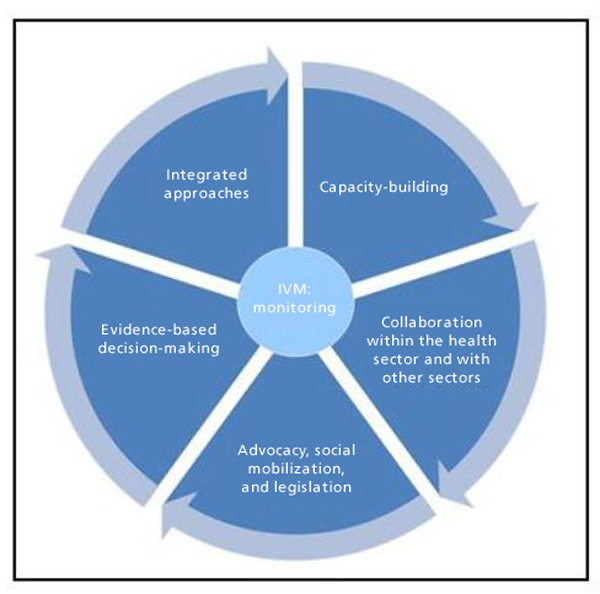
Integrated vector management (IVM) is defined as "a rational decision-making process for the optimal use of resources for vector control" and includes five key elements: 1) evidence-based decision-making, 2) integrated approaches 3), collaboration within the health sector and with other sectors, 4) advocacy, social mobilization, and legislation, and 5) capacity-building. In 2004, the WHO adopted IVM globally for the control of all vector-borne diseases. Important recent progress has been made in developing and promoting IVM for national malaria control programmes in Africa at a time when successful malaria control programmes are scaling-up with insecticide-treated nets (ITN) and/or indoor residual spraying (IRS) coverage. While interventions using only ITNs and/or IRS successfully reduce transmission intensity and the burden of malaria in many situations, it is not clear if these interventions alone will achieve those critical low levels that result in malaria elimination. Despite the successful employment of comprehensive integrated malaria control programmes, further strengthening of vector control components through IVM is relevant, especially during the "end-game" where control is successful and further efforts are required to go from low transmission situations to sustained local and country-wide malaria elimination. To meet this need and to ensure sustainability of control efforts, malaria control programmes should strengthen their capacity to use data for decision-making with respect to evaluation of current vector control programmes, employment of additional vector control tools in conjunction with ITN/IRS tactics, case-detection and treatment strategies, and determine how much and what types of vector control and interdisciplinary input are required to achieve malaria elimination. Similarly, on a global scale, there is a need for continued research to identify and evaluate new tools for vector control that can be integrated with existing biomedical strategies within national malaria control programmes. This review provides an overview of how IVM programmes are being implemented, and provides recommendations for further development of IVM to meet the goals of national malaria control programmes in Africa.
Overview
The claims and statistics of this paper haven’t been checked yet.
Free: it reads the open-access text and checks the first 5 claims that cite a source we can check. Create a free account to check every claim.
Integrity signals
Registry
Cites
Statistics
Figures
Verification
Claims the paper makes
The claims and statistics of this paper haven’t been checked yet.
Free: it reads the open-access text and checks the first 5 claims that cite a source we can check. Create a free account to check every claim.
Claims other papers make about this one
Each is checked against this paper’s own text: does it say what the citing paper says it does?
The cited source says what the claim attributes to it.
In the citing paper
“An IVM approach is important to sustain achievements and reduce transmission to critical low levels needed to eliminate malaria (Beier et al. 2009).”
From Global Status of DDT and Its Alternatives for Use in Vector Control to Prevent Disease (2009) · cites this paper as Beier et al. 2009
Self-check
Percentages, sums and reported differences re-computed from the paper’s own numbers.
The self-check needs the paper’s full text.
Citations
Cites
Disease control priorities in developing countries
(2006) · Choice Reviews Online · doi:10.5860/choice.44-0343 · Cited by 3,628
Macroeconomics and health: investing in health for economic development
Sachs, J. D. (2002) · Revista Panamericana de Salud Pública · doi:10.1590/s1020-49892002000800017 · Cited by 1,830
Disease control priorities in developing countries
Frenk, J. (2006) · Salud Pública de México · doi:10.1590/s0036-36342006000600011 · Cited by 1,599
Disease Control Priorities in Developing Countries
Mosley, W. H. (1993) · World Bank, Washington, DC eBooks · doi:10.1596/0-1952-0990-7 · Cited by 1,400
Handbook of Pesticide Toxicology
(2001) · Elsevier eBooks · doi:10.1016/b978-0-12-426260-7.x5000-9 · Cited by 1,322
Ross, R. (2010) · Cited by 940
Introduction to insect pest management
(1994) · Choice Reviews Online · doi:10.5860/choice.32-2128 · Cited by 539
Measuring the Burden of Neglected Tropical Diseases: The Global Burden of Disease Framework
Mathers, C. D., Ezzati, M., & Lopez, A. D. (2007) · PLoS Neglected Tropical Diseases · doi:10.1371/journal.pntd.0000114 · Cited by 510 · cited 1×
“Malaria and other vector-borne diseases contribute substantially to the global burden of diseases and disproportionately affect poor and under-served populations living in tropical and sub-tropical regions [1-5].”
BackgroundWALKER, K., & LYNCH, M. (2007) · Medical and Veterinary Entomology · doi:10.1111/j.1365-2915.2007.00674.x · Cited by 279 · cited 2×
“Recent reviews of environmental management [37,39] and larval control [26] contain additional examples.”
BackgroundEradication of Anopheles gambiae from Brazil: lessons for malaria control in Africa?
Killeen, G. F., Fillinger, U., Kiche, I., Gouagna, L. C., & Knols, B. G. (2002) · The Lancet Infectious Diseases · doi:10.1016/s1473-3099(02)00397-3 · Cited by 272 · cited 1×
“remaining low-levels of transmission? There is also a strong case for implementing larval control to target immature stages of anopheline mosquitoes to reduce malaria transmission [21-27], but further field trials are needed to show how these additional measures, beyond ITNs and IRS, have a substantial impact on malar…”
Background
Research works printed but not linked: 7
- Hatch CL Williams JW Jarinko PA Guidelines for measuring proficiency as an aid in mosquito abatement program assessment Mosq News 1973 33 228 233
- WHO Global strategic framework for integrated vector management World Health Organization 2004 10 1 12 WHO/CDS/CPE/PVC/2004
- WHO Report of the global partners' meeting on neglected tropical diseases: 2007 – a turning point: Geneva, Swizerland, 17–18 April 2007 2007 Geneva: World Health Organization
- Rafatjah HA Prospects and Progress on IPM in World-wide Malaria control Mosq News 1982 42 491 498
- Hinman EH The management of water for malaria control Symposium on Human Malaria: 1941; Philadelphia 1941 324 332
- Berg H van den Das PK von Hildebrand A Ragunathan V Evaluation of the Integrated Pest and Vector Management (IPVM) project in Sri Lanka 2006 New Dehli: World Health Organization, South East Asia Regional Office 1 46
- Manga L Toure A Shililu J Implementation of Integrated Vector Management in the WHO-African Region: Progress Report 2000–2003 2004 Washington, DC: Environmental Health Project, U.S. Agency for International Development 1 26
Cited by
Items 101–200 of 411
Aïkpon, R., Sèzonlin, M., Tokponon, F., Okè, M., Oussou, O., Oké-Agbo, F., Beach, R., & Akogbéto, M. (2014) · Parasites & Vectors · doi:10.1186/1756-3305-7-256 · Cited by 42
“The current effective vector control tools include the use of Long Lasting Insecticide Nets (LLIN) and Indoor Residual Spraying (IRS) [2].”
MethodMbare, O., Lindsay, S. W., & Fillinger, U. (2013) · Malaria Journal · doi:10.1186/1475-2875-12-94 · Cited by 42
“Since IRS and LLINs cannot totally suppress malaria transmission there is a growing interest in the use of additional tools in an integrated vector management approach [14-18].”
Mbatchou, V. C., Tchouassi, D. P., Dickson, R. A., Annan, K., Mensah, A. Y., Amponsah, I. K., Jacob, J. W., Cheseto, X., Habtemariam, S., & Torto, B. (2017) · Parasites & Vectors · doi:10.1186/s13071-017-2512-y · Cited by 42
van den Berg, H., Velayudhan, R., Ebol, A. P., Catbagan, B. H., Turingan, R., Tuso, M., & Hii, J. (2012) · Malaria Journal · doi:10.1186/1475-2875-11-269 · Cited by 41
“Vector control has the potential to play an important role in reducing transmission of these diseases and in reaching critical low levels of vectorial capacity required for elimination of disease [6-9].”
BackgroundEnfermedades transmitidas por vectores
Cetina, L. G. M. (2011) · Biomédica · doi:10.7705/biomedica.v31i0.546 · Cited by 40
Integrated vector management: a critical strategy for combating vector-borne diseases in South Sudan
Chanda, E., Govere, J. M., MacDonald, M. B., Lako, R. L. L., Haque, U., Baba, S. P., & Mnzava, A. P. (2013) · Malaria Journal · doi:10.1186/1475-2875-12-369 · Cited by 39
“In response to the call by WHO for member states to implement the IVM strategy [7], most countries in subSaharan Africa are deploying the approach for malaria vector control [23,24].”
Self-citationIs outdoor vector control needed for malaria elimination? An individual-based modelling study
Zhu, L., Müller, G. C., Marshall, J. M., Arheart, K. L., Qualls, W. A., Hlaing, W. M., Schlein, Y., Traore, S. F., Doumbia, S., & Beier, J. C. (2017) · Malaria Journal · doi:10.1186/s12936-017-1920-y · Cited by 40
“IVM suggests evidence-based decision-making and integrated approaches [47].”
BackgroundSelf-citationFirooziyan, S., Amani, A., Osanloo, M., Moosa-Kazemi, S. H., Basseri, H. R., Mohammadzadeh, H., Sadaghianifar, A., & Sedaghat, M. M. (2021) · Journal of Environmental Health Science and Engineering · doi:10.1007/s40201-021-00667-0 · Cited by 39
“Besides, for some VBDs such as dengue fever, the only way to control the diseases is to control their vectors [2].”
BackgroundA call for integrated metastatic management
Cunningham, J. J. (2019) · Nature Ecology & Evolution · doi:10.1038/s41559-019-0927-x · Cited by 38
James, S. L., Dass, B., & Quemada, H. D. (2023) · Transgenic Research · doi:10.1007/s11248-023-00335-z · Cited by 37
“…for regulatory capacity strengthening, as well as appropriate stakeholder engagement at all levels, in preparation for decisionmaking on testing and implementation of all innovative vector control tools including GDMMs (e.g., Beier et al 2008; World Health Organization 2017; Glover et al 2018).”
BackgroundZhou, G., Afrane, Y. A., Dixit, A., Atieli, H., Lee, M., Wanjala, C. L., Beilhe, L. B., Githeko, A. K., & Yan, G. (2013) · Malaria Journal · doi:10.1186/1475-2875-12-256 · Cited by 37
“Discussion Integrated management is considered to be the best strategy for malaria control, elimination, and eventual eradication, but precautions must be taken for the integration of different intervention measures [4,22-26].”
BackgroundMalaria vector control strategies. What is appropriate towards sustainable global eradication?
Ogunah, J. A., Lalah, J. O., & Schramm, K. (2020) · Sustainable Chemistry and Pharmacy · doi:10.1016/j.scp.2020.100339 · Cited by 36
Assogba, B. S., Djogbénou, L., Saïzonou, J., Milesi, P., Djossou, L., Djègbé, I., Oumbouke, W. A., Chandre, F., Baba‐Moussa, L., Weill, M., et al. (2014) · Parasites & Vectors · doi:10.1186/s13071-014-0548-9 · Cited by 36
“Therefore, in most of African countries, the control of mosquito vectors is the only affordable measure for the fight against malaria [9,10].”
BackgroundNaranjo, D. P., Qualls, W. A., Jurado, H., Perez, J. C., Xue, R., Gómez, E. A., & Beier, J. C. (2014) · BMC Public Health · doi:10.1186/1471-2458-14-674 · Cited by 35
“To ensure the rational use of available resources we need to establish a multi-disease control approach [10].”
BackgroundSelf-citationZhou, G., Wiseman, V. L., Atieli, H., Lee, M., Githeko, A. K., & Yan, G. (2016) · Trials · doi:10.1186/s13063-016-1545-4 · Cited by 35
“Larval control has historically been very successful and is widely used for mosquito control in many parts of the developed world [30–33], but is not commonly used in Africa.”
BackgroundBirhanu, Z., Yihdego, Y. Y.-E., & Yewhalaw, D. (2017) · BMC Infectious Diseases · doi:10.1186/s12879-017-2731-z · Cited by 36
A critical review of current laboratory methods used to evaluate mosquito repellents
Luker, H. A. (2024) · Frontiers in Insect Science · doi:10.3389/finsc.2024.1320138 · Cited by 34
Lima, J. B. P., Galardo, A. K. R., Bastos, L. S., Silva‐Lima, A. W., & Rosa-Freitas, M. G. (2017) · PLoS neglected tropical diseases · doi:10.1371/journal.pntd.0005245 · Cited by 34
NG'ANG'A, P. N., Okoyo, C. O., Mbogo, C. M., & Mutero, C. M. (2020) · Malaria Journal · doi:10.1186/s12936-020-03413-3 · Cited by 34
Insecticide-treated eave ribbons for malaria vector control in low-income communities
Kaindoa, E. W., Mmbando, A. S., Shirima, R. S., Hape, E. E., & Okumu, F. O. (2021) · Malaria Journal · doi:10.1186/s12936-021-03945-2 · Cited by 34
Review of Importance of Weather and Environmental Variables in Agent-Based Arbovirus Models
Pascoe, L., Clemen, T., Bradshaw, K., & Nyambo, D. G. (2022) · International Journal of Environmental Research and Public Health · doi:10.3390/ijerph192315578 · Cited by 34
Caragata, E. P., Otero, L. M., Carlson, J. S., Dizaji, N. B., & Dimopoulos, G. (2020) · Applied and Environmental Microbiology · doi:10.1128/aem.00240-20 · Cited by 34
“Instead, effective, longterm control will likely come through multifaceted strategies that exploit synergies between different insecticides, thereby providing a greater chance of limiting or overcoming potential mechanisms of resistance (26).”
BackgroundAbbasi, E. (2025) · Environmental Toxicology and Chemistry · doi:10.1093/etojnl/vgaf209 · Cited by 33
Mathania, M. M., Munisi, D. Z., & Silayo, R. S. (2020) · Parasite Epidemiology and Control · doi:10.1016/j.parepi.2020.e00179 · Cited by 33
“The use of Long Lasting Insecticide Nets (LLIN) and Indoor Residual Spraying (IRS) have been the current most effective Malaria vector control tools (Beier et al., 2008).”
BackgroundStone, C., Jackson, B. T., & Foster, W. A. (2012) · Malaria Journal · doi:10.1186/1475-2875-11-3 · Cited by 32
“The feasibility of using ATSB stations or treated vegetation as stand-alone control efforts or as a part of integrated vector management [20] in a given area will depend on the frequency of sugar feeding by female anophelines in the multitude of sub-Saharan environments.”
BackgroundImproving WHO’s understanding of WHO guideline uptake and use in Member States: a scoping review
Saluja, K., Reddy, K. S., Wang, Q., Zhu, Y., Li, Y., Chu, X., Li, R., Hou, L., Horsley, T., Carden, F., et al. (2022) · Health Research Policy and Systems · doi:10.1186/s12961-022-00899-y · Cited by 32
Insecticide resistance in mosquitoes: molecular mechanisms, management, and alternatives
Hazarika, H., Rajan, R. K., Pegu, P., & Das, P. (2025) · Journal of Pest Science · doi:10.1007/s10340-025-01895-1 · Cited by 31
“Integrated Vector Management (IVM) combines interventions like insecticide rotations, synergists to inhibit detoxification enzymes, and breeding site disruption to combat resistance (Beier et al. 2008).”
Sande, S., Zimba, M., Nyasvisvo, D. S., Mukuzunga, M., Kooma, E. H., Mberikunashe, J., & Dube, B. (2019) · Malaria Journal · doi:10.1186/s12936-019-2965-x · Cited by 29
Zhu, L., Marshall, J. M., Qualls, W. A., Schlein, Y., McManus, J. W., Arheart, K. L., Hlaing, W. M., Traore, S. F., Doumbia, S., Müller, G. C., et al. (2015) · Malaria Journal · doi:10.1186/s12936-015-1012-9 · Cited by 30
“It is questionable whether IRS and ITNs/LLINs alone will achieve malaria elimination [13].”
BackgroundSelf-citationNewer Approaches for Malaria Vector Control and Challenges of Outdoor Transmission
Beier, J. C., Wilke, A. B. B., & Benelli, G. (2018) · InTech eBooks · doi:10.5772/intechopen.75513 · Cited by 30
Self-citationStone, C., Lindsay, S. W., & Chitnis, N. (2014) · PLoS neglected tropical diseases · doi:10.1371/journal.pntd.0003393 · Cited by 29
“As progress is made toward meeting the goals of local elimination and global eradication that have been set for a number of vector-borne diseases, there is a need in many parts of the world to further reduce the intensity of transmission and make better use of existing funds over the long term [2,3].”
BackgroundDynamic malaria hotspots in an open cohort in western Kenya
Platt, A. C., Obala, A. A., MacIntyre, C., Khwa-Otsyula, B. O., & Meara, W. P. O. (2018) · Scientific Reports · doi:10.1038/s41598-017-13801-6 · Cited by 30
Honeysuckle essential oil as a potential source of ecofriendly larvicides for mosquito control
Muturi, E. J., Doll, K. M., Berhow, M. A., Flor-Weiler, L. B., & Rooney, A. P. (2019) · Pest Management Science · doi:10.1002/ps.5327 · Cited by 28
Development of a Gravid Trap for Collecting Live Malaria Vectors Anopheles gambiae s.l.
Dugassa, S., Lindh, J. M., Oyieke, F. A., Mukabana, W. R., Lindsay, S. W., & Fillinger, U. (2013) · PLoS ONE · doi:10.1371/journal.pone.0068948 · Cited by 28
“management strategies [6–9].”
Bagonza, J., Rutebemberwa, E., Eckmanns, T., & Kiracho, E. E. (2015) · BMC Public Health · doi:10.1186/s12889-015-2525-4 · Cited by 28
Mosqueira, B., Soma, D. D., Namountougou, M., Poda, S. B., Diabaté, A., Ouari, A., Fournet, F., Baldet, T., Carnevale, P., Dabiré, R. K., et al. (2015) · Acta Tropica · doi:10.1016/j.actatropica.2015.04.010 · Cited by 29
“To summarize, LLINs and IRS remain the cornertone in malaria vector control but there is a growing need to find lternative malaria vector control strategies that can be added to he list of tools to choose from (Beier et al., 2008).”
BackgroundMashatola, T., Ndo, C., Koekemoer, L. L., Dandalo, L. C., Wood, O. R., Malakoane, L., Poumachu, Y., Lobb, L. N., Kaiser, M., Bourtzis, K., et al. (2018) · Parasites & Vectors · doi:10.1186/s13071-018-3219-4 · Cited by 27
Chanda, E., Mukonka, V., Mthembu, D. S., Kamuliwo, M., Coetzer, S., & Shinondo, C. J. (2012) · Journal of Tropical Medicine · doi:10.1155/2012/363520 · Cited by 27
“Due to low levels of transmission, malaria vector control interventions amenable to focalized implementation, such as larval source management using larvicides [51, 52] in the context of integrated vector management [13, 14], are being implemented.”
BackgroundOcchipinti, J., Bobogare, A., Vallely, A. J., Boaz, L., Kelly, G. C., Basifiri, W., Forsyth, S. J., Baker, P., Appleyard, B., Toaliu, H., et al. (2009) · Malaria Journal · doi:10.1186/1475-2875-8-298 · Cited by 27
“Background Community engagement and participation has played a critical role in successful disease control and elimination campaigns in many countries [1-5].”
BackgroundSenn, N., Maraga, S., Sie, A., Rogerson, S. J., Reeder, J. C., Siba, P., & Mueller, I. (2010) · PLoS ONE · doi:10.1371/journal.pone.0009375 · Cited by 26
“Most prominent among them are insecticide treated bed nets (ITN), indoors residual spraying (IRS), artemisinin combination treatments (ACT)[1,2,3] and intermittent preventive treatment strategies in pregnant women or infants[4].”
BackgroundBhatt, L., & Kale, R. D. (2019) · Heliyon · doi:10.1016/j.heliyon.2019.e02842 · Cited by 26
“Out of the total world’s population, every second person is infected with at least one or more vector-borne disease (Beier et al., 2008; Lemon et al., 2008) Mosquitoes are known to be very dangerous to humans.”
BackgroundVector control for malaria elimination in Botswana: progress, gaps and opportunities
Kgoroebutswe, T. K., Makate, N., Fillinger, U., Mpho, M., Segoea, G., Sangoro, O. P., Mutero, C. M., Chanda, E., Ntebela, D., Mogopa, M., et al. (2020) · Malaria Journal · doi:10.1186/s12936-020-03375-6 · Cited by 26
New insight-guided approaches to detect, cure, prevent and eliminate malaria
Kumar, S., Kumari, R., & Pandey, R. (2014) · PROTOPLASMA · doi:10.1007/s00709-014-0697-x · Cited by 26
“The subject areas of mosquitocides, mosquito repellence and mosquito management in general have been respectively reviewed recently by Prato et al. (2012), Maia andMoore (2011), Dickens and Bohbot (2013) and Beier et al. (2008).”
BackgroundKibret, S., Wilson, G. G., Ryder, D., Tekie, H., & Petros, B. (2018) · PLoS ONE · doi:10.1371/journal.pone.0196064 · Cited by 25
Abejirinde, I. O., Ingabire, M. C., van Vugt, M., Mutesa, L., van den Borne, B. H. P., & Busari, J. O. (2018) · Research and Reports in Tropical Medicine · doi:10.2147/rrtm.s158131 · Cited by 26
New Insights into the Degradation Path of Deltamethrin
Aiello, F., Simons, M. G., van Velde, J. W., & Dani, P. (2021) · Molecules · doi:10.3390/molecules26133811 · Cited by 24
“Both solutions have a limited effect though, and the need to find more effective vector control strategies is still compelling [3]; a recent approach promotes the use of Insecticide-Treated durable Wall Linings (ITWL) for protecting interior house walls [4].”
BackgroundIntegrated vector management for malaria control: a review of approaches and effectiveness
Richard, O., Castellanos, M. E., Adegboye, O. A., & McBryde, E. S. (2025) · Transactions of the Royal Society of Tropical Medicine and Hygiene · doi:10.1093/trstmh/traf084 · Cited by 23
Xu, Y., & Qiao, J. (2021) · Annals of Translational Medicine · doi:10.21037/atm-21-3037 · Cited by 23
“In IVM, small follicles with a diameter of 2–10 mm are removed without prior administration of human chorionic gonadotropin and then mature in vitro (13).”
BackgroundNjeru, J. M., Tomaso, H., Mertens‐Scholz, K., Henning, K., Wareth, G., Heller, R., Kariuki, S., Fèvre, E. M., Neubauer, H., & Pletz, M. W. (2017) · New Microbes and New Infections · doi:10.1016/j.nmni.2017.05.015 · Cited by 23
Diiro, G., Kassie, M. B., Muriithi, B. W., Gathogo, N. G., Kidoido, M. M., Marubu, R. M., Ochola, J. B., & Mutero, C. M. (2020) · Sustainability · doi:10.3390/su12208552 · Cited by 23
“One of the key principals of IVM is that the interventions should be ecologically, environmentally, socially, economically and politically acceptable [14].”
BackgroundStone, C. (2013) · PLoS ONE · doi:10.1371/journal.pone.0076228 · Cited by 23
“The SIT for mosquitoes could possibly be most effective as part of an integrated vector management strategy [11], the WHO recommended approach that aims to combine two or more control methods that work in a synergistic manner and are most suited to a particular ecological setting [12].”
BackgroundMsangi, S., Lyatuu, E. E., & Kweka, E. J. (2011) · Journal of Tropical Medicine · doi:10.1155/2011/394541 · Cited by 23
“The control of mosquitoes can best be achieved through integrated vector management [8, 9].”
BackgroundSagna, A. B., Kassié, D., Couvray, A., Adja, A. M., Hermann, E., Riveau, G. J., Salem, G., Fournet, F., & Remoué, F. (2019) · The Journal of Infectious Diseases · doi:10.1093/infdis/jiz289 · Cited by 23
“This would lead to the development of an integrated vector management program that takes into account the spatial heterogeneity of the risk of MBD transmission, to optimize the program’s efficacy and make better use of available funds for targeting multiple MDB by means of 1 or more interventions [35].”
BackgroundOmotayo, A. I., Ande, A. T., Oduola, A. O., Adelaja, O. J., Adesalu, O., Jimoh, R. T., Ghazali, A. I., & Awolola, S. (2021) · Acta Tropica · doi:10.1016/j.actatropica.2021.106291 · Cited by 22
Fairfield, E. A., Hutchings, K., Hinchcliffe, D., Kingma, S. A., Burke, T. A., Komdeur, J., & Richardson, D. S. (2016) · Scientific Reports · doi:10.1038/srep29596 · Cited by 22
“Haemoproteus parasites are transmitted through biting insects, and the abundance and spatial distribution of these vectors is regarded as an important factor in the incidence of insect-vector-borne diseases 35 .”
BackgroundCurrent perspectives in the epidemiology and control of lymphatic filariasis
de Souza, D. K., & Bockarie, M. J. (2025) · Clinical Microbiology Reviews · doi:10.1128/cmr.00126-23 · Cited by 22
“Integrated vector management (IVM) is a strategic and rational approach to vector control that combines various methodologies and practices to manage vector popula tions effectively (185, 186).”
InfluentialBorchert, J. N., Enscore, R. E., Eisen, R. J., Atiku, L. A., Owor, N., Acayo, S., Babi, N., Montenieri, J. A., & Gage, K. L. (2010) · Journal of Medical Entomology · doi:10.1093/jmedent/47.5.842 · Cited by 21
Bawin, T. G. A., Sèye, F., Boukraa, S., Zimmer, J.-Y., Delvigne, F., & Francis, F. (2014) · The Canadian Entomologist · doi:10.4039/tce.2014.56 · Cited by 22
“…une gestion (ou lutte) intégrée des populations de moustiques (Lacey et Lacey 1990; Sucharit 1993; Rose 2001; Yoda et al. 2004; Keiser et al. 2005; Beier et al. 2008; Rey et al. 2012), définie par l’Organisation des Nations Unies pour l’alimentation et l’agriculture (1967) comme un système de…”
BackgroundUmar, A., Kabir, B. G. J., Amajoh, C., Inyama, P. U., Ordu, D. A., Barde, A. A., Misau, A. A., Sambo, M. L., Babuga, U., Kobi, M., et al. (2014) · Journal of Entomology and Nematology · doi:10.5897/jen2014.0100 · Cited by 21
“A. gambiae is the principal vector of malaria in sub-Saharan Africa (Gillies and Coetzee, 1987; Samdi et al., 2006; Sinka et al., 2010).”
BackgroundInfluentialVigodny, A., Aharon, M. B., Wharton–Smith, A., Fialkoff, Y., Houri-Yafin, A., Bragança, F., Graça, F. S. D., Glück, D., D’Abreu, J. A. V., & Rompão, H. (2023) · Malaria Journal · doi:10.1186/s12936-023-04543-0 · Cited by 20
Himmelsbach, G. S., Zabré, H. R., Leuenberger, A., Knoblauch, A. M., Brugger, F., & Winkler, M. S. (2023) · International Journal of Environmental Research and Public Health · doi:10.3390/ijerph20247167 · Cited by 21
“Even more imperative is the fact that community engagement is critical for disease control and for improving the populations’ health [93–96].”
BackgroundPedercini, M., Blanco, S. M., & Kopainsky, B. (2011) · PLoS ONE · doi:10.1371/journal.pone.0027771 · Cited by 21
“Integrated Vector Management (IVM) should provide intelligent management of prevention interventions, the optimal use of existing resources to fight malaria, advocacy and social mobilization as well as capacity building [8].”
BackgroundA scoping review of community knowledge in malaria prevention and control programmes
Rahim, F. A. A., Mahmud, M. A. F., Mutalip, M. H. A., Yoep, N., Aminuddin, M. A. H., & Ngesom, A. M. M. (2025) · PLoS ONE · doi:10.1371/journal.pone.0328703 · Cited by 19
“Participatory approaches such as workshops, community seminars, and experiential learning can support deeper understanding and sustained behavioural change [84].”
Genetic Technologies for Sustainable Management of Insect Pests and Disease Vectors
Grilli, S., Galizi, R., & Taxiarchi, C. (2021) · Sustainability · doi:10.3390/su13105653 · Cited by 19
“Integrated pest and vector management (IPVM), which incorporates a panel of control strategies, active engagement of local communities, modelling of population dynamics and disease transmission, risk assessment, and monitoring, has been adopted worldwide to promote sustainable interventions for controlling insect vect…”
BackgroundMAYEKU, W. P., OMOLLO, N. I., Odalo, O. J., & Hassanali, A. (2013) · Medical and Veterinary Entomology · doi:10.1111/mve.12039 · Cited by 19
“Malaria and other mosquito-borne diseases pose a major threat to human health globally with an estimated 2 billion people in the tropics being vulnerable (Beier et al., 2008; Manish et al., 2009).”
BackgroundKant, R., Haq, S. T. N., Srivastava, H., & Sharma, A. (2013) · Journal of Vector Borne Diseases · doi:10.4103/0972-9062.112528 · Cited by 18
Malaria transmission and disease burden in Assam: challenges and opportunities
Dev, V., Sharma, A., & Hojai, D. (2009) · Journal of Parasitic Diseases · doi:10.1007/s12639-009-0002-7 · Cited by 18
Antonio, C. A. T., Bermudez, A. N. C., Cochon, K. L., Reyes, M. S. G. L., Torres, C. D. H., Liao, S. A. S. P., Ortega, D. J. N., Silang, A. V. M. C., Uezono, D. R., Roxas, E. A., et al. (2020) · The Journal of Infectious Diseases · doi:10.1093/infdis/jiaa404 · Cited by 17
Dengue Exposure and Wolbachia wMel Strain Affects the Fertility of Quiescent Eggs of Aedes aegypti
Petersen, M. T., Couto‐Lima, D., Garcia, G. A., Pavan, M. G., David, M. R., & Maciel‐de‐Freitas, R. (2023) · Viruses · doi:10.3390/v15040952 · Cited by 17
“As expected, each approach has its pros and cons, but the continuous record of dengue outbreaks points out that there is an unceasing need for designing new and effective methods, as well as promoting an integrative vector management [21,22].”
MethodApplication of loop analysis for evaluation of malaria control interventions
Yasuoka, J., Jimba, M., & Levins, R. (2014) · Malaria Journal · doi:10.1186/1475-2875-13-140 · Cited by 17
“Community participation is vital for successful malaria control [2,124-127].”
BackgroundSetting International Standards for the Management of Public Health Pesticides
van den Berg, H., Yadav, R. S., & Zaim, M. (2015) · PLoS Medicine · doi:10.1371/journal.pmed.1001824 · Cited by 17
Okunlola, O. A., Oyeyemi, O. T., & Lukman, A. F. (2021) · Epidemiology and Health · doi:10.4178/epih.e2021041 · Cited by 17
“Studies have indicated that rural and remote areas provide conducive environmental and climatic conditions for the development of Anopheles mosquitoes and malaria parasites [25-27].”
BackgroundAkpan, U. B., Edet, E., Arogundade, K., Akpanika, C. J., Ekott, M. I., & Etuk, S. J. (2023) · Health Services Insights · doi:10.1177/11786329231211779 · Cited by 16
Stanton, M. C., Bockarie, M. J., & Kelly‐Hope, L. A. (2013) · PLoS ONE · doi:10.1371/journal.pone.0053755 · Cited by 16
“Sufficiently high coverage of bed nets should reduce the transmission of both diseases [5–9], hence the World Health Organization (WHO) is advocating for integrated vector management (IVM) in these areas [10,11].”
BackgroundInfluentialDev, V., Raghavendra, K., Singh, S., Phookan, S., Khound, K., & Dash, A. P. (2009) · Transactions of the Royal Society of Tropical Medicine and Hygiene · doi:10.1016/j.trstmh.2009.08.010 · Cited by 16
Micro-stratification of malaria risk in Nepal: implications for malaria control and elimination
Rijal, K. R., Adhikari, B., Adhikari, N., Dumre, S. P., Banjara, M. S., Shrestha, U. T., Banjara, M. R., Singh, N., Ortegea, L., Lal, B. K., et al. (2019) · Tropical Medicine and Health · doi:10.1186/s41182-019-0148-7 · Cited by 16
Bardosh, K., Jean, L., Rochars, V. B. D., Lemoine, J. F., Okech, B. A., Ryan, S. J., Welburn, S. C., & Morris, J. G. (2017) · Tropical Medicine and Infectious Disease · doi:10.3390/tropicalmed2030039 · Cited by 16
“Larval source management (LSM)—the control of aquatic mosquito habitats responsible for breeding disease-transmitting mosquitoes—is one area where community participation has been widely emphasized but selectively implemented or simply overlooked [5].”
BackgroundPoda, S. B., Soma, D. D., Hien, A. S., Namountougou, M., Gnankiné, O., Diabaté, A., Fournet, F., Baldet, T., Mas‐Coma, S., Mosqueira, B., et al. (2018) · Malaria Journal · doi:10.1186/s12936-018-2273-x · Cited by 16
Kgoroebutswe, T. K., Ramatlho, P., Reeder, S. M., Makate, N., & Paganotti, G. M. (2020) · Parasitology Research · doi:10.1007/s00436-020-06614-6 · Cited by 15
Insecticides for Vector-Borne Diseases: Current Use, Benefits, Hazard and Resistance
Yousif, E., Emmanuel, A., & Eliningaya, J. (2012) · InTech eBooks · doi:10.5772/29520 · Cited by 15
Environmental Management and Sustainable Control of Mosquito Vector: Challenges and Opportunities
Baitharu, I., Shroff, S., Naik, P. P., & Sahu, J. K. (2020) · Springer eBooks · doi:10.1007/978-981-15-9456-4_7 · Cited by 14
Musoke, D., Karani, G., Ndejjo, R., Okui, P., & Musoke, M. B. (2016) · Malaria Journal · doi:10.1186/s12936-016-1369-4 · Cited by 14
“Studies that have assessed integrated vector management for malaria prevention have mainly been quantitative with little evidence on community perceptions [17].”
A Comprehensive Review on Plant Disease Vectors and Their Management
Jaisval, G. K., Dwivedi, H., Pandey, A. K., Jaiswal, S., Kumar, A., Kushwaha, D., & Shukla, P. (2023) · International Journal of Environment and Climate Change · doi:10.9734/ijecc/2023/v13i92486 · Cited by 14
N’Guessan, R., Camara, S., Rowland, M., Alou, L. P. A., Wolie, R. Z., Zoh, M. G., Brou, N., Tia, I. Z., Oumbouke, W. A., Thomas, M. B., et al. (2023) · Malaria Journal · doi:10.1186/s12936-023-04758-1 · Cited by 14
“To maintain momentum and overcome insecticide resistance, the shortfalls of the current interventions need to be addressed with new, complementary vector control tools, one of which is targeted sugar bait [7].”
BackgroundSkovmand, O., Ouédraogo, T., Sanogo, E., Samuelsen, H., Toe, L. P., Bosselmann, R., Czajkowski, T., & Baldet, T. (2011) · Journal of Medical Entomology · doi:10.1603/me10041 · Cited by 14
“Integrated vector management has attracted attention in recent years, notably in the ongoing, intense campaign against malaria (Beier et al. 2008).”
BackgroundMalaria transmission-blocking Drugs: Implications and Future Perspectives
Wadi, I., Singh, P., Nath, M., Anvikar, A. R., & Sinha, A. (2020) · Future Medicinal Chemistry · doi:10.4155/fmc-2020-0026 · Cited by 14
Yu, S., Wang, P., Qin, J., Zheng, H., Wang, J., Liu, T., Yang, X., & Wang, Y. (2020) · Parasites & Vectors · doi:10.1186/s13071-020-04321-w · Cited by 14
A Multidisciplinary Approach in the Control of Zoonoses in Nigeria
Karshima, S. N. (2012) · Journal of Veterinary Advances · Cited by 14
Effect of predation on Anopheles larvae by five sympatric insect families in coastal Kenya
Mwangangi, J., Muiruri, S., Carlson, J. C., Kabiru, E. W., Kokwaro, E. D., Githure, J. I., Mbogo, C. M., & Beier, J. (2013) · Journal of Vector Borne Diseases · doi:10.4103/0972-9062.112534 · Cited by 14
Self-citationHighly cited articles in malaria research: a bibliometric analysis
Kolle, S. R., Vijayashree, M. S., & Shankarappa, T. H. (2017) · Collection Building · doi:10.1108/cb-10-2016-0028 · Cited by 13
Firooziyan, S., Osanloo, M., Moosa‐Kazemi, S. H., Basseri, H. R., Hajipirloo, H. M., Sadaghianifar, A., Amani, A., & Sedaghat, M. M. (2022) · Journal of arthropod-borne diseases · doi:10.18502/jad.v15i3.9821 · Cited by 13
“The most important diseases transmitted by mosquitoes are malaria, dengue fever, lymphatic filariasis, yellow fever, chikungunya, Zika virus, as well as viral encephalitis (2).”
BackgroundInfluentialEtang, J., Nwane, P. B., Piameu, M., Manga, B., Souop, D., & Awono‐Ambene, P. (2013) · PLoS ONE · doi:10.1371/journal.pone.0074929 · Cited by 13
“In 2004, WHO adopted integrated vector management (IVM) as the desired strategic approach for ecologically sound, cost-effective and sustainable control of vector-borne diseases [3,4].”
BackgroundAiswarya, D., Raja, R. K., Kamaraj, C., Balasubramani, G., Deepak, P., Arul, D., Amutha, V., Sankaranarayanan, C., Hazır, S., & Perumal, P. (2019) · Journal of Cluster Science · doi:10.1007/s10876-019-01564-1 · Cited by 13
Malaria in Eswatini, 2012–2019: a case study of the elimination effort
Nkya, T. E., Fillinger, U., Dlamini, M., Sangoro, O. P., Marubu, R. M., Zulu, Z., Chanda, E., Mutero, C. M., & Dlamini, Q. (2021) · Malaria Journal · doi:10.1186/s12936-021-03699-x · Cited by 13
Tabue, R. N., Gbalégba, C. G. N., Mwalimu, C. D., Tungu, P., Fodjo, B. K., Elanga-Ndille, E., Menze, B. D., Mosha, J. F., Wolie, R. Z., Clarke, S. E., et al. (2025) · Malaria Journal · doi:10.1186/s12936-025-05606-0 · Cited by 12
“Evidence shows that effectively integrated interventions reduce malaria incidence significantly and help delay the development of insecticide resistance [86, 87].”
Boëte, C., Burza, S., Lasry, E., Moriana, S., & Robertson, W. (2021) · Conflict and Health · doi:10.1186/s13031-021-00424-y · Cited by 12
“Combination of tools against malaria vectors There are strong programmatic reasons for combining several tools for the control of malaria vectors in what is called Integrated Vector Management (IVM) [8, 9].”
BackgroundPoda, S. B., Cribellier, A., Feugère, L., Fatou, M., Nignan, C., Hien, D. F. D. S., Müller, P., Gnankiné, O., Dabiré, R. K., Diabaté, A., et al. (2024) · iScience · doi:10.1016/j.isci.2024.111164 · Cited by 12
Baseline malaria vector transmission dynamics in communities in Ahafo mining area in Ghana
Dery, D. B., Asante, K. P., Zandoh, C., Febir, L. G., Brown, C. A., Adjei, G. O., Antwi-Dadzie, Y., Mahama, E., Tchum, K., Dosoo, D., et al. (2015) · Malaria Journal · doi:10.1186/s12936-015-0667-6 · Cited by 12
“Integrated vector control measures [22] are appropriate even more in the context of mining areas since the environment is greatly changed by mining and human activities.”
van den Berg, H., Yadav, R. S., & Zaim, M. (2014) · Malaria Journal · doi:10.1186/1475-2875-13-368 · Cited by 12
“tions and waste of valuable resources [13,14].”
Umar, A. M., Kabir, B. G. J., Abdullahi, M. B., Barde, A. A., Misau, A. A., Sambo, M. L., Babuga, U., & Kobi, M. (2015) · Advanced Studies in Biology · doi:10.12988/asb.2015.5210 · Cited by 12
“In Nigeria, malaria accounts for 60% of outpatient visits to health facilities, 30% of childhood deaths, 25% of death in children under one year and 11% maternal death in addition to the about 132 billion Naira financial loss in form of treatment costs, prevention, loss of man-hours etc. in Nigeria (FMOH/ NMCP, 2009).…”
BackgroundInfluential
Metadata
- Authors
- Beier, J. C., Keating, J., Githure, J. I., Macdonald, M. B., Impoinvil, D. E., & Novak, R. J.
- Affiliations
- University of Miami (US)
- Tulane University (US)
- International Centre of Insect Physiology and Ecology (KE)
- United States Agency for International Development (US)
- University of Liverpool (GB)
- University of Alabama at Birmingham (US)
- Corresponding author
- Beier, John C
- Venue
- Malaria Journal
- Published
- 2008-12
- Volume
- 7
- Issue
- S1
- Pages
- S4-S4
- ISSN
- 1475-2875 (ISSN-L)
- PMC
- PMC2604879
- OpenAlex
- W2024349624
- Cited by
- 355
- References
- 64
- Citations by year
- 2026: 12 · 2025: 25 · 2024: 26 · 2023: 18 · 2022: 14 · 2021: 24 · 2020: 23 · 2019: 25 · 2018: 16 · 2017: 21 · 2016: 19 · 2015: 20 · 2014: 21 · 2013: 26 · 2012: 21
- FWCI
- 2.21
- Type
- journal article
- Language
- en
- Open access
- gold
- doi.org
- Licence
- cc-by
- creativecommons.org/licenses/by/2.0 (tdm)
- Locations
- Malaria Journal (publishedVersion, cc-by)
- PubMed Central (publishedVersion, cc-by)
- PubMed (publishedVersion)
- DOAJ (DOAJ: Directory of Open Access Journals) (submittedVersion, cc-by-sa)
- Funders
- Foundation for the National Institutes of Health
- University of Miami
- Wellcome Trust
- National Institutes of Health
- U.S. Public Health Service (U01 A1054889)
- National Center for Research Resources (P20RR020770)
- Topics
- Health Sciences › Medicine › Public Health, Environmental and Occupational Health › Malaria Research and Control
- Health Sciences › Medicine › Public Health, Environmental and Occupational Health › Mosquito-borne diseases and control
- Health Sciences › Medicine › Public Health, Environmental and Occupational Health › Dengue and Mosquito Control Research
- Keywords
- integrated vector management, malaria control, malaria elimination, insecticide-treated nets, indoor residual spraying, vector control, evidence-based decision making, capacity building, social mobilization, advocacy, interdisciplinary collaboration, Africa
- MeSH terms
- Africa, Animals, Community Participation, Decision Making, Health Plan Implementation, Humans, Insect Vectors, Malaria, Mosquito Control, World Health Organization, Health Care Sector
About these checks
Registry, retraction, Cites and statistics results are computed, not judged, with one exception: a printed reference that no index lists is read once by a model before it counts as a citation error. Claims are extracted by a model and kept only when their quote appears verbatim in the text; each cited source is then checked, with a model’s help, for whether it says what the claim relies on. Those verdicts can be wrong — read the claim’s quote and the cited source before relying on one.
Statistics and arithmetic are recomputed, not judged.
Confidence bands are shown only for fields calibrated on our annotated test set. None is calibrated yet, so no band is shown.
What counts as a claim ›How we measure confidence ›How we check this ›
Are you an author, or do you see a problem with this page? Request a review
Data sources
Bibliographic data: Semantic Scholar, OpenAlex, Crossref.
Contains information from the Semantic Scholar Academic Graph Datasets, made available under the ODC Attribution License (ODC-BY 1.0).
Semantic Scholar’s data is described in: Kinney, R., et al. (2023). The Semantic Scholar Open Data Platform. arXiv:2301.10140.
