

Integrated vector management for malaria control
Open accessThe DOI matches its Crossref record; 62 of the 64 references it cites were found in a registry or an index.
Abstract
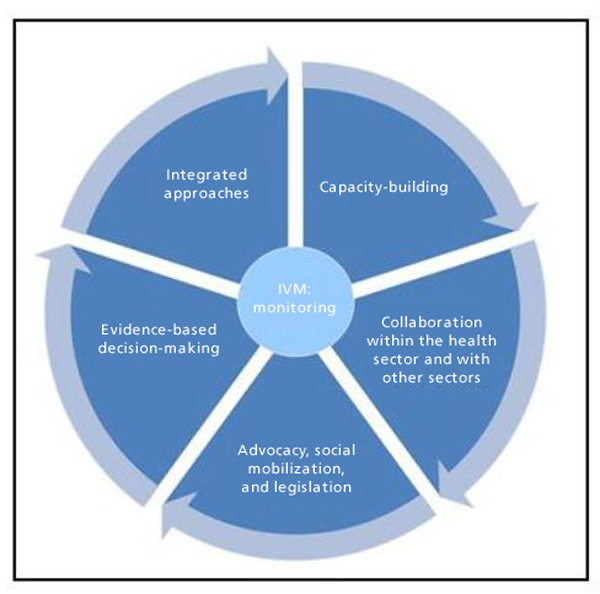
Integrated vector management (IVM) is defined as "a rational decision-making process for the optimal use of resources for vector control" and includes five key elements: 1) evidence-based decision-making, 2) integrated approaches 3), collaboration within the health sector and with other sectors, 4) advocacy, social mobilization, and legislation, and 5) capacity-building. In 2004, the WHO adopted IVM globally for the control of all vector-borne diseases. Important recent progress has been made in developing and promoting IVM for national malaria control programmes in Africa at a time when successful malaria control programmes are scaling-up with insecticide-treated nets (ITN) and/or indoor residual spraying (IRS) coverage. While interventions using only ITNs and/or IRS successfully reduce transmission intensity and the burden of malaria in many situations, it is not clear if these interventions alone will achieve those critical low levels that result in malaria elimination. Despite the successful employment of comprehensive integrated malaria control programmes, further strengthening of vector control components through IVM is relevant, especially during the "end-game" where control is successful and further efforts are required to go from low transmission situations to sustained local and country-wide malaria elimination. To meet this need and to ensure sustainability of control efforts, malaria control programmes should strengthen their capacity to use data for decision-making with respect to evaluation of current vector control programmes, employment of additional vector control tools in conjunction with ITN/IRS tactics, case-detection and treatment strategies, and determine how much and what types of vector control and interdisciplinary input are required to achieve malaria elimination. Similarly, on a global scale, there is a need for continued research to identify and evaluate new tools for vector control that can be integrated with existing biomedical strategies within national malaria control programmes. This review provides an overview of how IVM programmes are being implemented, and provides recommendations for further development of IVM to meet the goals of national malaria control programmes in Africa.
Overview
The claims and statistics of this paper haven’t been checked yet.
Free: it reads the open-access text and checks the first 5 claims that cite a source we can check. Create a free account to check every claim.
Integrity signals
Registry
Cites
Statistics
Figures
Verification
Claims the paper makes
The claims and statistics of this paper haven’t been checked yet.
Free: it reads the open-access text and checks the first 5 claims that cite a source we can check. Create a free account to check every claim.
Claims other papers make about this one
Each is checked against this paper’s own text: does it say what the citing paper says it does?
The cited source says what the claim attributes to it.
In the citing paper
“An IVM approach is important to sustain achievements and reduce transmission to critical low levels needed to eliminate malaria (Beier et al. 2009).”
From Global Status of DDT and Its Alternatives for Use in Vector Control to Prevent Disease (2009) · cites this paper as Beier et al. 2009
Self-check
Percentages, sums and reported differences re-computed from the paper’s own numbers.
The self-check needs the paper’s full text.
Citations
Cites
Disease control priorities in developing countries
(2006) · Choice Reviews Online · doi:10.5860/choice.44-0343 · Cited by 3,628
Macroeconomics and health: investing in health for economic development
Sachs, J. D. (2002) · Revista Panamericana de Salud Pública · doi:10.1590/s1020-49892002000800017 · Cited by 1,830
Disease control priorities in developing countries
Frenk, J. (2006) · Salud Pública de México · doi:10.1590/s0036-36342006000600011 · Cited by 1,599
Disease Control Priorities in Developing Countries
Mosley, W. H. (1993) · World Bank, Washington, DC eBooks · doi:10.1596/0-1952-0990-7 · Cited by 1,400
Handbook of Pesticide Toxicology
(2001) · Elsevier eBooks · doi:10.1016/b978-0-12-426260-7.x5000-9 · Cited by 1,322
Ross, R. (2010) · Cited by 940
Introduction to insect pest management
(1994) · Choice Reviews Online · doi:10.5860/choice.32-2128 · Cited by 539
Measuring the Burden of Neglected Tropical Diseases: The Global Burden of Disease Framework
Mathers, C. D., Ezzati, M., & Lopez, A. D. (2007) · PLoS Neglected Tropical Diseases · doi:10.1371/journal.pntd.0000114 · Cited by 510 · cited 1×
“Malaria and other vector-borne diseases contribute substantially to the global burden of diseases and disproportionately affect poor and under-served populations living in tropical and sub-tropical regions [1-5].”
BackgroundWALKER, K., & LYNCH, M. (2007) · Medical and Veterinary Entomology · doi:10.1111/j.1365-2915.2007.00674.x · Cited by 279 · cited 2×
“Recent reviews of environmental management [37,39] and larval control [26] contain additional examples.”
BackgroundEradication of Anopheles gambiae from Brazil: lessons for malaria control in Africa?
Killeen, G. F., Fillinger, U., Kiche, I., Gouagna, L. C., & Knols, B. G. (2002) · The Lancet Infectious Diseases · doi:10.1016/s1473-3099(02)00397-3 · Cited by 272 · cited 1×
“remaining low-levels of transmission? There is also a strong case for implementing larval control to target immature stages of anopheline mosquitoes to reduce malaria transmission [21-27], but further field trials are needed to show how these additional measures, beyond ITNs and IRS, have a substantial impact on malar…”
Background
Research works printed but not linked: 7
- Hatch CL Williams JW Jarinko PA Guidelines for measuring proficiency as an aid in mosquito abatement program assessment Mosq News 1973 33 228 233
- WHO Global strategic framework for integrated vector management World Health Organization 2004 10 1 12 WHO/CDS/CPE/PVC/2004
- WHO Report of the global partners' meeting on neglected tropical diseases: 2007 – a turning point: Geneva, Swizerland, 17–18 April 2007 2007 Geneva: World Health Organization
- Rafatjah HA Prospects and Progress on IPM in World-wide Malaria control Mosq News 1982 42 491 498
- Hinman EH The management of water for malaria control Symposium on Human Malaria: 1941; Philadelphia 1941 324 332
- Berg H van den Das PK von Hildebrand A Ragunathan V Evaluation of the Integrated Pest and Vector Management (IPVM) project in Sri Lanka 2006 New Dehli: World Health Organization, South East Asia Regional Office 1 46
- Manga L Toure A Shililu J Implementation of Integrated Vector Management in the WHO-African Region: Progress Report 2000–2003 2004 Washington, DC: Environmental Health Project, U.S. Agency for International Development 1 26
Cited by
Items 201–300 of 411
Taylor-Robinson, A. W., Perera, H., & Gunathilaka, N. (2019) · Journal of Vector Borne Diseases · doi:10.4103/0972-9062.289390 · Cited by 12
Mohamed, Y., & Nguetsop, V. F. (2020) · International Journal of Global Sustainability · doi:10.5296/ijgs.v4i1.17263 · Cited by 12
“Studies conducted by Beier et al (2008), Bowen (2013), Pemunta (2013), Peter et al (2014), and Givemore et al (2014) across different parts of the tropics have demonstrated that perceptions vary on the effects of malaria on different age groups.”
MethodScaling Up Malaria Control in Zambia: Progress and Impact 2005–2008
Spence-Lewis, I. M. (2011) · American Journal of Tropical Medicine and Hygiene · doi:10.4269/ajtmh.2011.10-0617a · Cited by 12
Musoke, D., Lubega, G. B., Niyongabo, F., Nakalawa, S., McMorrow, S. L., Wanyenze, R. K., & Kamya, M. R. (2024) · PLOS Global Public Health · doi:10.1371/journal.pgph.0002469 · Cited by 11
“By combining multiple strategies, integrated malaria prevention aims to reduce transmission and ultimately reduce the burden of the disease [12–15].”
BackgroundAbbasi, E. (2025) · META: Journal of Science and Technological Education · Cited by 11
Alcântara, J. A., de Araújo, F. S. A., Paz, A. D. C., Alencar, R. M., Caldas, B. Y. D. A., Godoy, R. S. M., Lacerda, M., de Melo, G. C., Monteiro, W. M., Sampaio, V. D. S., et al. (2023) · Malaria Journal · doi:10.1186/s12936-023-04767-0 · Cited by 11
“Between 2000 and 2015, the reduction in the number of malaria cases and deaths by 50% was closely attributed to insec-ticide-based vector control, such as insecticide-treated nets (ITNs) and indoor residual spraying (IRS) [10, 11].”
BackgroundZembere, K. (2024) · Malaria Journal · doi:10.1186/s12936-024-05161-0 · Cited by 11
Parra-Henao, G., Coelho, G. E., Escobar, J. P., Gonzálvez, G., & Bezerra, H. S. D. S. (2021) · Therapeutic Advances in Infectious Disease · doi:10.1177/2049936121997655 · Cited by 11
Land Market Restrictions, Women's Labour Force Participation and Wages in a Rural Economy
Emran, M. S., & Shilpi, F. J. (2017) · Oxford Bulletin of Economics and Statistics · doi:10.1111/obes.12159 · Cited by 11
Chanda, E. (2012) · Medical Journal of Zambia · Cited by 11
The Role of the Pharmaceutical Sector in Malaria Control in Ghana
Buabeng, K. O. (2010) · UEF eRepo (University of Eastern Finland) · Cited by 12
Evaluation of prediction models for the malaria incidence in Marodijeh Region, Somaliland
Mohamed, J., Mohamed, A. I., & Daud, E. I. (2021) · Journal of Parasitic Diseases · doi:10.1007/s12639-021-01458-y · Cited by 10
Comparison of Fan-Traps and Gravitraps for Aedes Mosquito Surveillance in Taiwan
Pan, C.-Y., Cheng, L., Liu, W., Su, M. P., Ho, H.-P., Liao, C.-H., Chang, J.-H., Yang, Y., Hsu, C.-C., Huang, J., et al. (2022) · Frontiers in Public Health · doi:10.3389/fpubh.2022.778736 · Cited by 10
“population surveillance via trapping (2).”
Kunambi, H. J., Ngowo, H. S., Ali, A., Urio, N. H., Ngonzi, A. J., Mwalugelo, Y. A., Jumanne, M., Mmbaga, A. T., Tarimo, F. S., Swilla, J., et al. (2023) · Malaria Journal · doi:10.1186/s12936-023-04699-9 · Cited by 10
“Larval source management (LSM) particularly chemical or microbial larviciding, is one of the promising tools that can be used in conjunction with adult-based interventions for effective control of malaria vectors [11–13].”
BackgroundTwo decades of insecticide resistance in Benin: a retrospective analysis of evolution and drivers
Hougbe, S. Z., Osse, R. A., Azondékon, R., Kpanou, C. D., Ahouandjinou, M. J., Affolabi, Z.-K., Koumodji, K. D., Sagbohan, H. W., Odjo, E. M., Adoha, C. J., et al. (2025) · Malaria Journal · doi:10.1186/s12936-025-05403-9 · Cited by 9
“Insecticide-Treated Nets (ITNs) and Indoor Residual Spraying (IRS) are the main tools for malaria vector con-trol in sub-Saharan Africa [1], demonstrating significant success in reducing disease transmission [2, 3].”
Cooper, V. M., Buckner, E. A., Jiang, Y., & Burkett-Cadena, N. D. (2025) · Scientific Reports · doi:10.1038/s41598-025-89520-0 · Cited by 9
Wetlands and mosquito control in the twenty-first century
Haas-Stapleton, E. J., & Rochlin, L. (2022) · Wetlands Ecology and Management · doi:10.1007/s11273-022-09860-w · Cited by 9
“Mosquito control is rooted in the principle of integrated management, whereby rational sciencebased knowledge is used for cost-effective and sustainable vector control (Beier et al. 2008).”
BackgroundRahim, F. A. A., Yatim, M. F. M., Mutalip, M. H. A., & Mahmud, M. A. F. (2023) · Malaria Journal · doi:10.1186/s12936-023-04704-1 · Cited by 9
“Moreover, the effective integration of malaria education into school curricula and community programs can be achieved through active participation in a diverse range of interactive activities, workshops, and seminars [35].”
BackgroundDias-Lopes, G., Borges-Veloso, A., Vahia, L. S., Padrón, G., Castro, C. L. D. F., Guimarães, A. C. R., Britto, C., Cuervo, P., & de Jesus, J. B. (2016) · Parasitology Research · doi:10.1007/s00436-016-4940-6 · Cited by 9
A User Friendly Method to Assess Anopheles stephensi (Diptera: Culicidae) Vector Fitness: Fecundity
Dembo, E., Ogboi, J. S., Abay, S. M., Lupidi, G., Dahiya, N. R., Habluetzel, A., & Lucantoni, L. (2014) · Journal of Medical Entomology · doi:10.1603/me13112 · Cited by 9
“KEY WORDS Anopheles stephensi, malaria, vector, fecundity, automated method Vector control is one of the main interventions that can potentially decrease malaria morbidity and mortality by reducing transmission intensity (Najera and Zaim 2003, Beier et al. 2008, Mwangangi et al. 2013).”
MethodSpatial Studies on Vector-Transmitted Diseases and Vectors
Rosa-Freitas, M. G., Honório, N. A., Codeço, C. T., Werneck, G. L., & Dégallier, N. (2012) · Journal of Tropical Medicine · doi:10.1155/2012/573965 · Cited by 9
A quantitative and systematic analysis of Anopheles stephensi bionomics and control approaches
Mwema, T., Zohdy, S., Sundaram, M., Lepczyk, C. A., Narine, L. L., & Willoughby, J. R. (2024) · Acta Tropica · doi:10.1016/j.actatropica.2024.107431 · Cited by 8
“As these variables change over time, so too may the preferred control strategies, underscoring the need for adaptive management practices that can evolve in response to changing ecological and social landscapes (Barrett and Arcese, 1995; Beier et al., 2008; Chaffin et al., 2016).”
Analysis of Malaria Control Measures’ Effectiveness Using Multistage Vector Model
Kamgang, J. C., & Thron, C. (2019) · Bulletin of Mathematical Biology · doi:10.1007/s11538-019-00637-6 · Cited by 8
Jaramillo, G. I., Tacugue, M. C., Power, G. M., Qureshi, R., Seelig, F., Quintero, J., Logan, J. G., & Jones, R. G. (2024) · Tropical Medicine and Infectious Disease · doi:10.3390/tropicalmed9020043 · Cited by 8
“Is important to complement this information with anonymous online surveys that could help us better understand the vector control situation in this part of the country.”
BackgroundNina, P. M., Kateyo, E., & Lunyolo, F. (2014) · International journal of innovation and applied studies · Cited by 8
Strengthening of the clinical research capacity for malaria: a shared responsibility
Mgone, C. S. (2010) · Malaria Journal · doi:10.1186/1475-2875-9-s3-s5 · Cited by 8
“Such capacity building should include the enabling of appropriate utilization of data in decisionmaking, and evaluation of the currently ongoing vector control programmes, such as use of insecticide-treated bed nets and indoor residual spraying; employment of additional vector control tools and other interventions suc…”
BackgroundOlalubi, O. A. (2016) · Journal of Prevention and Infection Control · doi:10.21767/2471-9668.100015 · Cited by 8
“Since malaria is a problem created by surface water, it is still surprising that engineers are rarely engaged in malaria control [23] since there are many simple and effective engineering solutions to reduce mosquito larval habitats [19].”
BackgroundKummer, A. G., Wilke, A. B. B., Ventura, P. C., Vasquez, C., Medina, J., Ünlü, I., Gonzalez, Y., Mhlanga, A., Benelli, G., Ejima, K., et al. (2024) · Journal of Pest Science · doi:10.1007/s10340-024-01787-w · Cited by 7
“During a dengue outbreak in well-equipped vector control programs, it is very likely that a set of interventions including source reduction and larvicide applications would be conducted simultaneously (Beier et al. 2008; Poletti et al. 2011).”
Kalitsilo, L., Abdullahi, L. H., Mbeye, N. M., Mwandira, L., Hara, H., Mitambo, C., & Oronje, R. N. (2025) · PLoS ONE · doi:10.1371/journal.pone.0302279 · Cited by 7
“…outcomes, crediting IVM for the remarkable VBD reduction across the globe through reducing the vector population, vector breeding sites, the entomology index, and consequently VBD prevalence [40, 41], and adding community participation and capacity building as elements of its sustainability.”
Qureshi, A., & Connolly, J. B. (2021) · Parasites & Vectors · doi:10.1186/s13071-021-04975-0 · Cited by 7
Shah, R. M., Ali, Q., Alam, M., Shad, S. A., Majeed, S., Riaz, M., & Binyameen, M. (2016) · Journal of Medical Entomology · doi:10.1093/jme/tjw211 · Cited by 7
Asgary, R. G., Grigoryan, Z., Naderi, R., & Allan, R. J. (2011) · Global Public Health · doi:10.1080/17441692.2011.643412 · Cited by 7
Larvicidal and ovipositional preference test of copper solution for mosquitoes
Reza, M., Yamamoto, D. S., & Matsuoka, H. (2014) · Medical Entomology and Zoology · doi:10.7601/mez.65.147 · Cited by 7
“We believe that a low concentration of copper can be used as an alternative for IVM along with the other chemical‒insecticides or bio-insecticides for which problems have been reported with toxicities and resistances (Tetreau et al., 2012).”
BackgroundAlternative Interventions Against Neglected Tropical Diseases in SSA: Vector Control
Boakye, D. A., de Souza, D., & Bockarie, M. J. (2016) · Neglected tropical diseases · doi:10.1007/978-3-319-25471-5_16 · Cited by 6
Vector Control: Some New Paradigms and Approaches
Duchet, C., Allan, R. J., & Carnevale, P. (2013) · InTech eBooks · doi:10.5772/56258 · Cited by 6
“It is likely that ATSB approaches could soon be added as a major component of Integrated Vector Management (IVM) based malaria vector control programs” [86-88].”
BackgroundSheetal, B. P., Geetha, P., Vaidehi, D., & Bharathi, D. (2019) · Biocatalysis and Agricultural Biotechnology · doi:10.1016/j.bcab.2019.01.003 · Cited by 6
Dery, D. B., Segbaya, S., Asoala, V., Amoyaw, F., Amoako, N., Agyeman-Budu, A., Oduro, A. R., Owusu‐Agyei, S., & Asante, K. P. (2016) · Journal of Medical Entomology · doi:10.1093/jme/tjw098 · Cited by 6
Kalitsilo, L., Oronje, R. N., & Mbeye, N. M. (2025) · Tropical Medicine and Infectious Disease · doi:10.3390/tropicalmed10090251 · Cited by 5
“All these are in tandem with the five key elements of IVM, which are: (1) evidence-based decision-making, (2) integrated approaches, (3) collaboration within the health sector and with other sectors, (4) advocacy, social mobilisation, and legislation, and (5) capacity-building [27].”
InfluentialVectors and Vector‐Borne Diseases: Biology, Epidemiology and Integrated Control Strategies
Rinaldi, R., Scieuzo, C., Stefano, F. D., Masucci, L., & Falabella, P. (2026) · Journal of Applied Entomology · doi:10.1111/jen.70093 · Cited by 5
“The coordinated use of biological, environmental and chemical approaches allows for complementary action across spatial and temporal scales (Beier et al. 2008; van den Berg et al. 2012; Wilson et al. 2020).”
A Malaria-Free World? Bring Back Public Health Entomologists
Lluberas, M., & Kramer, B. (2024) · Current Tropical Medicine Reports · doi:10.1007/s40475-024-00331-1 · Cited by 5
“…professionals may not have the best qualifications for the position, as their education and practice often lack a strong foundation in the One Health approach [26], let alone integrated vector control (IVC), which is a comprehensive approach to managing vectors that spread infectious agents [27].”
Nonlinearities in transmission dynamics and efficient management of vector‐borne pathogens
Ginsberg, H. S., & Couret, J. (2019) · Ecological Applications · doi:10.1002/eap.1892 · Cited by 5
Salazar, F. V., & Gimutao, K. A. (2018) · InTech eBooks · doi:10.5772/intechopen.78686 · Cited by 5
Research, Innovation and Education Towards Malaria Elimination: Improving Quality of Life in Africa
de Jager, C., Kruger, T., & Tosh, C. A. (2019) · International handbooks of quality-of-life · doi:10.1007/978-3-030-15367-0_9 · Cited by 5
Comparative Evaluation of Larvicides for Larval Source Management of Mosquitoes in Lagos, Nigeria.
Adetoro, F. A., Anikwe, J., Makanjuola, W. A., Omotayo, A. I., & Awolola, S. (2022) · Egyptian Academic Journal of Biological Sciences · doi:10.21608/eajbsa.2022.221971 · Cited by 5
Sustainable planning in a malaria vector control program: a study in Pesawaran, Indonesia
Susanna, D., Ernawati, K., & Achmadi, U. F. (2012) · Malaria Journal · doi:10.1186/1475-2875-11-s1-p129 · Cited by 5
“Based on a literature study aspects into consideration in the selection of an alternative is the social, economic, environmental, technological, and institutional [2,4,6].”
BackgroundMalaria prevention and control in Ethiopia
Kassa, D. H. (2014) · Unisa Institutional Repository (University of South Africa) · Cited by 5
Hakizimana, E. (2019) · doi:10.18174/464552 · Cited by 5
Yakob, L., & Yan, G. (2009) · PLoS ONE · doi:10.1371/annotation/9d928eac-d6d9-4e75-bb1a-3a25c930c77f · Cited by 5
Outdoor biting by malaria vectors: what are the options for intervention?
Braack, L., & MacDonald, M. B. (2025) · Malaria Journal · doi:10.1186/s12936-025-05689-9 · Cited by 4
“…for the optimal use of resources for vector control" and includes five key elements: 1) evidence-based decision-making, 2) integrated approaches 3), collaboration within the health sector and with other sectors, 4) advocacy, social mobilization, and legislation, and 5) capacity-building [181].”
Self-citationAbbasi, E. (2026) · IJID One Health · doi:10.1016/j.ijidoh.2026.100146 · Cited by 4
Escalating Dengue in Bangladesh: An Analytical Assessment of Environmental and Socioeconomic Drivers
Mohiuddin, A. K. (2021) · Archives of Community Medicine and Public Health · doi:10.17352/2455-5479.000229 · Cited by 4
Olasimbo, O. D., & Agnes, A. T. (2023) · Journal of Drug Design and Medicinal Chemistry · doi:10.11648/j.jddmc.20230901.11 · Cited by 4
“In an attempt to reduce the possibility of the development of resistance to insecticide and to also improve the success rates of interventions against disease vectors, an integrated approach to the control of vector-borne diseases has been promoted [2].”
BackgroundPhalkey, R. K., Bowen, K., & Neufeldt, H. (2018) · Technical University of Denmark, DTU Orbit (Technical University of Denmark, DTU) · Cited by 4
Evolution of Resistance to Insecticides in Disease Vectors
Nwane, P. B., Binyang, A., Mbakop, L. R., & Etang, J. (2024) · Elsevier eBooks · doi:10.1016/b978-0-443-28818-0.00006-9 · Cited by 4
Lamy, D. L., Gnambani, E. J., Saré, I., Millogo, S. A., Sodré, A. F., Namountougou, M., Viana, M., Baldini, F., Diabaté, A., & Bilgo, E. M. (2025) · Wellcome Open Research · doi:10.12688/wellcomeopenres.21238.2 · Cited by 4
Emidi, B. (2025) · The Journal of Basic and Applied Zoology · doi:10.1186/s41936-025-00448-3 · Cited by 4
“These suggestions align with integrated vector management (IVM) strategies which emphasize environmental management as a crucial component in controlling mosquito (Beier et al., 2008).”
Lamy, D. L., Gnambani, E. J., Saré, I., Millogo, S. A., Sodré, A. F., Namountougou, M., Viana, M., Baldini, F., Diabaté, A., & Bilgo, E. M. (2025) · Wellcome Open Research · doi:10.12688/wellcomeopenres.21238.3 · Cited by 4
Integrated Management of Malaria Vectors in Africa
Mbabazi, R., Maredia, K., El-Sayed, B., Kato, A. B., Savadogo, M., & Akinbo, O. (2021) · Springer eBooks · doi:10.1007/978-981-16-2964-8_9 · Cited by 4
Chinebu, T. I., Ezennorom, E. O., & Okwor, J. U. (2018) · International Journal of Trend in Scientific Research and Development · doi:10.31142/ijtsrd18475 · Cited by 4
Habonimana, D., Nimako, G., Ncayiyana, J. R., Ndayisaba, G., & Ramaswamy, R. (2019) · BMJ Open Quality · doi:10.1136/bmjoq-2018-000540 · Cited by 4
Malaria Elimination 3 Operational strategies to achieve and maintain malaria elimination
Moonen, B., Cohen, J. M., Snow, R. W., Slutsker, L., DRAKELEY, C. J., Smith, D. L., Abeyasinghe, R. R., Rodriguez, M. H., Maharaj, R., & Tanner, M. (2010) · Cited by 4
Optimizing Strategic Insecticide Resistance Management Planning in Malaria Vectors
Chanda, E. (2016) · InTech eBooks · doi:10.5772/61301 · Cited by 4
“For this reason, malaria control programmes are encouraged to adopt the WHO-led IVM strategy [48], which should be an evidence-based decision making process that requires coherent monitoring and evaluation component [49].”
BackgroundNg’habi, K. R. (2010) · doi:10.18174/151940 · Cited by 4
“Although the IVM global strategic framework is designed to overcome some of these problems, in practice this still proves to be difficult (Beier et al., 2008).”
BackgroundVector and Reservoir Control in Veterinary Public Health
Nayak, J. B., Pal, S., Anjaria, P. A., & Asediya, V. (2025) · Wiley eBooks · doi:10.1002/9781394208180.ch48 · Cited by 3
Barrier or breach? Assessing swine housing features for mosquito threats
Hanthorn, C. J., Cohnstaedt, L. W., & Cernicchiaro, N. (2025) · Frontiers in Insect Science · doi:10.3389/finsc.2025.1606259 · Cited by 3
“A well-structured mosquito surveillance strategy can help prevent the unnecessary or excessive use of insecticides, conserving time, money, and resources while slowing the development of insecticide resistance (42, 43).”
Nano-Enabled Herbal Remedies for Malaria Treatment: A Review of Recent Advances
Xu, C., Fatima, A., Fatima, M., Aqib, A. I., Zaheer, T., Rab, S. O., Saeed, M., Arif, Z., & Li, K. (2026) · Life · doi:10.3390/life16020322 · Cited by 3
“…control activities, disease detection, vector surveillance, program administration, facilities, equipment, financial and economic assessment [91]. https://doi.org/10.3390/life16020322 Manufacturers may offer limited analytical reviews of Rapid Diagnostic Kits for Malaria (MRDTs), which…”
InfluentialDass, K., Ramya, P., Prabhu, S., & Murugesan, R. (2026) · The Journal of Basic and Applied Zoology · doi:10.1186/s41936-026-00587-1 · Cited by 3
“Control of Ae. albopictus populations is an important component of integrated vector management (IVM) programs in regions where this species is prevalent and epidemiologically significant (Beier et al., 2008; Dass & Mariappan, 2016; Otolorin et al., 2025).”
Humblet, M., Losson, B., & Saegerman, C. (2020) · Scientific and Technical Review (World Organisation for Animal Health) · doi:10.20506/rst.39.3.3177 · Cited by 3
“It combines several tools such as source reduction, biological control, chemical control, monitoring, detection of pathogens and emergence of resistance, and public education (14, 15, 16).”
BackgroundMethodUrrea-Aguirre, P. A., Martins, K. M., López, C. D. D., Sánchez, F. O., Tobón-Castaño, A., Velásquez, C. M. R., & Vidal, A. L. P. (2024) · Acta Tropica · doi:10.1016/j.actatropica.2024.107223 · Cited by 3
Singer, B. H., & Castro, M. C. (2011) · Wiley eBooks · doi:10.1002/9781118148594.ch12 · Cited by 3
Biocontrol of Mosquito Vectors: A New Dimension to Control Mosquito Borne Diseases
Das, M. (2020) · Springer eBooks · doi:10.1007/978-981-15-9456-4_6 · Cited by 3
Alternative Interventions Against Neglected Tropical Diseases in SSA: Vector Control
Boakye, D. A., de Souza, D. K., & Bockarie, M. J. (2024) · Neglected tropical diseases · doi:10.1007/978-3-031-53901-5_19 · Cited by 3
Integrated Vector Management on Mosquito Control During the COVID-19 Pandemic
Nurlaela, L., & Mardliyah, E. (2021) · Advances in health sciences research/Advances in Health Sciences Research · doi:10.2991/ahsr.k.210723.035 · Cited by 3
“In 2004 this strategy framework was adapted for all VBDs and is considered a rational approach in optimizing resources for vector control [3,4].”
BackgroundMethodCombating the vectors and management of vector-borne diseases with essential oil nanoemulsions
Dey, A., Dey, S., Das, S., Majumder, M., Nandy, P. S., & Nandy, A. (2023) · Elsevier eBooks · doi:10.1016/b978-0-323-91942-5.00006-9 · Cited by 3
Almalki, M., & Karunamoorthi, K. (2024) · Current Tropical Medicine Reports · doi:10.1007/s40475-024-00315-1 · Cited by 3
Matsuo, K. (2019) · Applied Entomology and Zoology · doi:10.1007/s13355-019-00656-8 · Cited by 3
Novel insecticides and application strategies for malaria vector control
Mbare, O. (2015) · LSHTM Research Online (London School of Hygiene and Tropical Medicine) · doi:10.17037/pubs.02374462 · Cited by 3
“25 other and reduce the overdependence on insecticides (Beier et al. 2008; WHO 2008b).”
BackgroundInfluentialMusoke, D. (2015) · Figshare · doi:10.25401/cardiffmet.20310657 · Cited by 3
Bardosh, K., Ryan, S. J., Ebi, K. L., Welburn, S. C., & Singer, B. H. (2018) · Infectious Diseases of Poverty · doi:10.1186/s40249-018-0387-6 · Cited by 3
Karikari, A. S., Akorli, J. E. B., Gbogbo, F., Ndong, I. C., Karikari, A. A., Karikari, A. A., Kyerematen, R., Mawuli, A. A., Gyimah, T., & Aboagye‐Antwi, F. (2024) · bioRxiv (Cold Spring Harbor Laboratory) · doi:10.1101/2024.11.01.621049 · Cited by 3
Modrzynska, K. (2011) · OpenGrey (Institut de l'Information Scientifique et Technique) · Cited by 3
Mwema, T. (2021) · UNAM Scholarly Repository (University of Namibia) · Cited by 3
Oliva, C. F. (2012) · theses.fr (ABES) · doi:10.70675/f26ac86fz7a7dz42a8zadfdz0c9b0a7de866 · Cited by 3
“Un regain d'intérêt pour cette technique est apparu car les moyens disponibles ne sont pas suffisants pour lutter contre les réémergences de maladies infectieuses et contre le paludisme (Collins & Paskewitz 1995; Beier et al. 2008; Klassen 2009; Feachem et al. 2010).”
BackgroundKombate, G., M'belou, M., Soubeiga, K. A.-M., Grobbee, D. E., & van der Sande, M. A. B. (2025) · PLOS Global Public Health · doi:10.1371/journal.pgph.0004393 · Cited by 2
“…(WHO) recommends vector control (i.e., reducing the chances of mosquitoes biting human beings) and chemoprophylaxis (i.e., providing drugs that suppress infections) in specific population subgroups (i.e., pregnant women, children and other high-risk groups) to control the disease [1,2].”
Nzekwe, J. C. (2025) · International Journal of Biology Sciences · doi:10.33545/26649926.2025.v7.i10b.508 · Cited by 2
Iran’s Journey Through Malaria: From Past Challenges to Future Elimination—A Narrative Review
Hanifian, H., & Nateghpour, M. (2026) · Journal of Tropical Medicine · doi:10.1155/jotm/4251955 · Cited by 3
“These gaps highlight that although Iran has made signif-cant eforts, strengthening cross-border mechanisms remains essential for sustaining elimination progress and achieving WHO certifcation [17, 20, 21, 62–65, 71, 74].”
Shah, V. K., & Gupta, K. K. (2022) · Journal of the Entomological Research Society · doi:10.51963/jers.v24i3.2286 · Cited by 2
Políticas públicas para el control de enfermedades transmitidas por vectores en México
Juache-Villagrana, A. E., & Flores, A. E. (2021) · RESPYN Revista de Salud Pública y Nutrición · doi:10.29105/respyn20.2-5 · Cited by 2
Enwemiwe, V. N. (2022) · Agrobiological Records · doi:10.47278/journal.ijvs/2022.014 · Cited by 2
The synthesis of nanosilver and carbamat to control of Anopheles in malaria endemic areas
Raharjo, M., Subagio, A., & Sulistiyani, S. (2023) · International Journal of Public Health Science (IJPHS) · doi:10.11591/ijphs.v13i1.23453 · Cited by 2
First evaluation of bendiocarb in experimental huts using different substrates in Madagascar
Randriamaherijaona, S., Nepomichene, T., Assoukpa, J., Madec, Y., & Boyer, S. (2016) · Malaria Journal · doi:10.1186/s12936-016-1345-z · Cited by 2
“Operational scale malaria vector control using IRS and ITNs has been implemented extensively in most malaria endemic countries [3, 4].”
BackgroundBassat, Q., & Fumadó, V. (2011) · Anales de Pediatría Continuada · doi:10.1016/s1696-2818(11)70024-5 · Cited by 2
Stone, C. (2011) · OhioLink ETD Center (Ohio Library and Information Network) · Cited by 2
Becker, N., Petrić, D. V., Zgomba, M., Boase, C., Madon, M. B., Dahl, C., & Kaiser, A. (2020) · Fascinating life sciences · doi:10.1007/978-3-030-11623-1_18 · Cited by 2
Phonjatturas, K., Grieco, J. P., Corbel, V., Chareonviriyaphap, T., & Juntarajumnong, W. (2021) · Agriculture and Natural Resources · doi:10.34044/j.anres.2021.55.2.08 · Cited by 2
Lees, R. S., Chadee, D. D., & Gilles, J. R. L. (2014) · Acta Tropica · doi:10.1016/j.actatropica.2014.01.013 · Cited by 2
Mackowski, M. (2020) · Syracuse University Libraries (Syracuse University) · Cited by 2
Chanda, E. (2012) · University of Liverpool · doi:10.17638/00003413 · Cited by 2
Species composition and land use pattern of mosquito vector species in Sonitpur district, Assam
Nath, M. J., Goswami, D., Rabha, B., Pilakandy, R., & Bora, A. K. (2021) · International Journal of Mosquito Research · doi:10.22271/23487941.2021.v8.i2a.516 · Cited by 1
Metadata
- Authors
- Beier, J. C., Keating, J., Githure, J. I., Macdonald, M. B., Impoinvil, D. E., & Novak, R. J.
- Affiliations
- University of Miami (US)
- Tulane University (US)
- International Centre of Insect Physiology and Ecology (KE)
- United States Agency for International Development (US)
- University of Liverpool (GB)
- University of Alabama at Birmingham (US)
- Corresponding author
- Beier, John C
- Venue
- Malaria Journal
- Published
- 2008-12
- Volume
- 7
- Issue
- S1
- Pages
- S4-S4
- ISSN
- 1475-2875 (ISSN-L)
- PMC
- PMC2604879
- OpenAlex
- W2024349624
- Cited by
- 355
- References
- 64
- Citations by year
- 2026: 12 · 2025: 25 · 2024: 26 · 2023: 18 · 2022: 14 · 2021: 24 · 2020: 23 · 2019: 25 · 2018: 16 · 2017: 21 · 2016: 19 · 2015: 20 · 2014: 21 · 2013: 26 · 2012: 21
- FWCI
- 2.21
- Type
- journal article
- Language
- en
- Open access
- gold
- doi.org
- Licence
- cc-by
- creativecommons.org/licenses/by/2.0 (tdm)
- Locations
- Malaria Journal (publishedVersion, cc-by)
- PubMed Central (publishedVersion, cc-by)
- PubMed (publishedVersion)
- DOAJ (DOAJ: Directory of Open Access Journals) (submittedVersion, cc-by-sa)
- Funders
- Foundation for the National Institutes of Health
- University of Miami
- Wellcome Trust
- National Institutes of Health
- U.S. Public Health Service (U01 A1054889)
- National Center for Research Resources (P20RR020770)
- Topics
- Health Sciences › Medicine › Public Health, Environmental and Occupational Health › Malaria Research and Control
- Health Sciences › Medicine › Public Health, Environmental and Occupational Health › Mosquito-borne diseases and control
- Health Sciences › Medicine › Public Health, Environmental and Occupational Health › Dengue and Mosquito Control Research
- Keywords
- integrated vector management, malaria control, malaria elimination, insecticide-treated nets, indoor residual spraying, vector control, evidence-based decision making, capacity building, social mobilization, advocacy, interdisciplinary collaboration, Africa
- MeSH terms
- Africa, Animals, Community Participation, Decision Making, Health Plan Implementation, Humans, Insect Vectors, Malaria, Mosquito Control, World Health Organization, Health Care Sector
About these checks
Registry, retraction, Cites and statistics results are computed, not judged, with one exception: a printed reference that no index lists is read once by a model before it counts as a citation error. Claims are extracted by a model and kept only when their quote appears verbatim in the text; each cited source is then checked, with a model’s help, for whether it says what the claim relies on. Those verdicts can be wrong — read the claim’s quote and the cited source before relying on one.
Statistics and arithmetic are recomputed, not judged.
Confidence bands are shown only for fields calibrated on our annotated test set. None is calibrated yet, so no band is shown.
What counts as a claim ›How we measure confidence ›How we check this ›
Are you an author, or do you see a problem with this page? Request a review
Data sources
Bibliographic data: Semantic Scholar, OpenAlex, Crossref.
Contains information from the Semantic Scholar Academic Graph Datasets, made available under the ODC Attribution License (ODC-BY 1.0).
Semantic Scholar’s data is described in: Kinney, R., et al. (2023). The Semantic Scholar Open Data Platform. arXiv:2301.10140.
