

Micronutrient deficiency in obese subjects undergoing low calorie diet
Open accessThe DOI matches its Crossref record; 39 of the 40 references it cites were found in a registry or an index.
Abstract
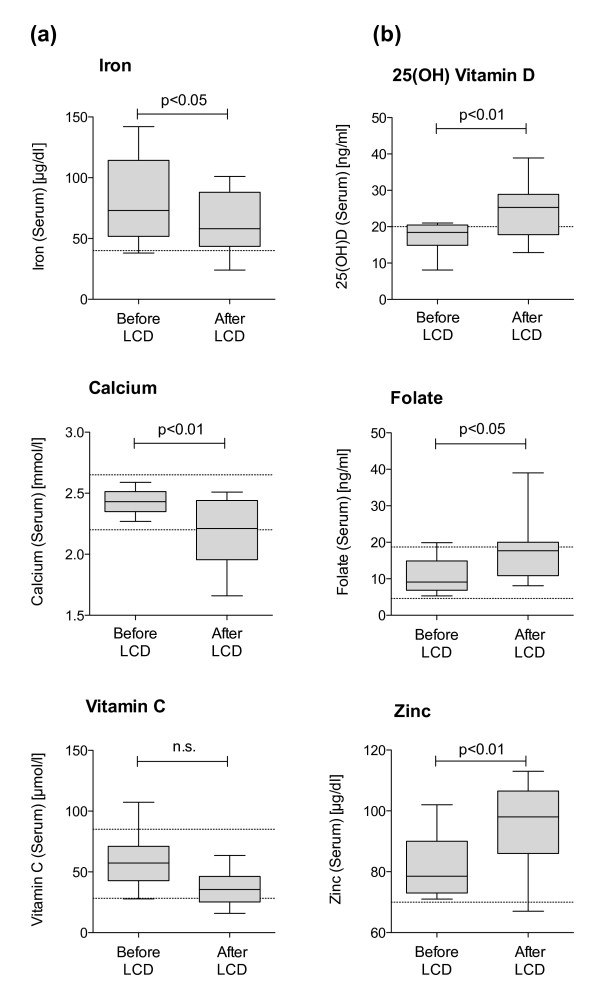
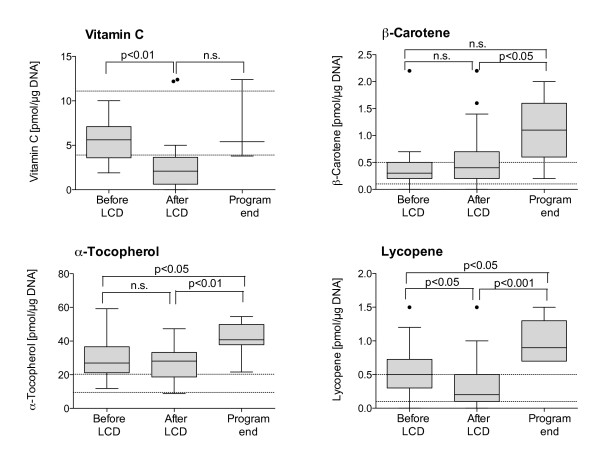
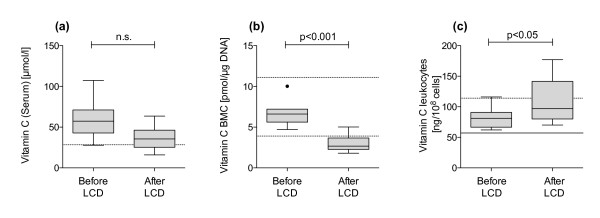
Background: The prevalence of micronutrient deficiencies is higher in obese individuals compared to normal-weight people, probably because of inadequate eating habits but also due to increased demands among overweight persons, which are underestimated by dietary reference intakes (DRI) intended for the general population. We therefore evaluated the dietary micronutrient intake in obese individuals compared to a reference population and DRI recommendations. Furthermore, we determined the micronutrient status in obese subjects undergoing a standardized DRI-covering low-calorie formula diet to analyze if the DRI meet the micronutrient requirements of obese individuals. Methods: In 104 subjects baseline micronutrient intake was determined by dietary record collection. A randomly assigned subgroup of subjects (n = 32) underwent a standardized DRI-covering low-calorie formula diet over a period of three months. Pre- and post-interventional intracellular micronutrient status in buccal mucosa cells (BMC) was analyzed, as well as additional micronutrient serum concentrations in 14 of the subjects. Results: Prior to dietetic intervention, nutrition was calorie-rich and micronutrient-poor. Baseline deficiencies in serum concentrations were observed for 25-hydroxyvitamin-D, vitamin C, selenium, iron, as well as ß-carotene, vitamin C, and lycopene in BMC. After a three-month period of formula diet even more subjects had reduced micronutrient levels of vitamin C (serum, BMC), zinc, and lycopene. There was a significant negative correlation between lipophilic serum vitamin concentrations and body fat, as well as between iron and C-reactive protein. Conclusions: The present pilot study shows that micronutrient deficiency occurring in obese individuals is not corrected by protein-rich formula diet containing vitamins and minerals according to DRI. In contrast, micronutrient levels remain low or become even lower, which might be explained by insufficient intake, increased demand and unbalanced dispersal of lipophilic compounds in the body. Trial registration: The study was registered at ClinicalTrials.gov (NCT01344525). The study protocol comprises only a part of the approved trial protocol.
Overview
The claims and statistics of this paper haven’t been checked yet.
Free: it reads the open-access text and checks the first 5 claims that cite a source we can check. Create a free account to check every claim.
Integrity signals
Registry
Cites
Statistics
Figures
Verification
Claims the paper makes
The claims and statistics of this paper haven’t been checked yet.
Free: it reads the open-access text and checks the first 5 claims that cite a source we can check. Create a free account to check every claim.
Claims other papers make about this one
Each is checked against this paper’s own text: does it say what the citing paper says it does?
The source backs part of the claim, not all of it — or backs it for a different population, condition or comparison.
In the citing paper
“Obesity can coexist not only with micronutrient deficiencies but also with sarcopenia, a reduction in skeletal muscle mass and strength most often associated with aging [85].”
From Nutritional considerations with antiobesity medications (2024) · cites this paper as [85]
Experimental — accuracy not yet measuredThe source backs part of the claim, not all of it — or backs it for a different population, condition or comparison.
In the citing paper
“Research demonstrates that, with such caloric restriction, nutrient intake is affected, adding to nutritional insufficiencies in the diet [51], which over time, impacts overall health and well-being for the individual.”
From International Society of Sports Nutrition position stand: diets for body weight reduction (2026) · cites this paper as [51]
Experimental — accuracy not yet measuredThe source backs part of the claim, not all of it — or backs it for a different population, condition or comparison.
In the citing paper
“Key variables such as dietary protein intake, micronutrient sufficiency, and gastrointestinal tolerability were seldom measured, despite known risks of nutritional deficiencies and cholelithiasis during rapid weight loss [38, 40, 41, 42, 43].”
From Nutrition Strategies for Next‐Generation Incretin Therapies: A Systematic Scoping Review of the Current Evidence (2026) · cites this paper as [40]
Experimental — accuracy not yet measured
Self-check
Percentages, sums and reported differences re-computed from the paper’s own numbers.
The self-check needs the paper’s full text.
Citations
Cites
Decreased bioavailability of vitamin D in obesity
Wortsman, J., Matsuoka, L. Y., Chen, T. C., Lu, Z., & Holick, M. F. (2000) · The American Journal of Clinical Nutrition · doi:10.1093/ajcn/72.3.690 · Cited by 3,204 · cited 1×
“for 25(OH)D [27,28].”
Discrepancy between self-reported and actual caloric intake and exercise in obese subjects
Lichtman, S. W., Pisarska, K., Berman, E. R., Pestone, M., Dowling, H., Offenbacher, E., Weisel, H., Heshka, S., Matthews, D. E., & Heymsfield, S. B. (1992) · New England Journal of Medicine · doi:10.1056/nejm199212313272701 · Cited by 964 · cited 1×
“The resulting error is possibly even more distinct in obese subjects [21-24].”
BackgroundVitamin B12, folic acid, and the nervous system
Reynolds, E. (2006) · The Lancet Neurology · doi:10.1016/s1474-4422(06)70598-1 · Cited by 860 · cited 1×
“Imbalances or deficiencies of essential micronutrients significantly influence day-to-day performance, behavior and emotional state, as well as intellectual and physical activity [13-15].”
BackgroundBourre, J. M. (2006) · PubMed · Cited by 765
Validity of reported energy intake in obese and nonobese adolescents
Bandini, L., Schoeller, D., Cyr, H., & Dietz, W. (1990) · The American Journal of Clinical Nutrition · doi:10.1093/ajcn/52.3.421 · Cited by 637 · cited 1×
“The resulting error is possibly even more distinct in obese subjects [21-24].”
BackgroundGoris, A. H., Westerterp-Plantenga, M. S., & Westerterp, K. R. (2000) · The American Journal of Clinical Nutrition · doi:10.1093/ajcn/71.1.130 · Cited by 530 · cited 1×
“The resulting error is possibly even more distinct in obese subjects [21-24].”
BackgroundEarthman, C. P., Beckman, L. M., Masodkar, K., & Sibley, S. D. (2012) · International Journal of Obesity · doi:10.1038/ijo.2011.119 · Cited by 430 · cited 1×
“for 25(OH)D [27,28].”
Poppitt, S., Swann, D., Black, A., & Prentice, A. (1998) · International Journal of Obesity · doi:10.1038/sj.ijo.0800584 · Cited by 363 · cited 1×
“However, underreporting especially applies to carbohydrate-rich snacks [25], which are low in micronutrient content by nature, and not to ‘healthy’ food.”
BackgroundAssociations between body mass index and the prevalence of low micronutrient levels among US adults.
Kimmons, J. E., Blanck, H. M., Tohill, B. C., Zhang, J., & Khan, L. K. (2006) · PubMed Central · Cited by 358
Nutritional Deficiencies in Morbidly Obese Patients: A New Form of Malnutrition?: Part A: Vitamins
Kaidar-Person, O., Person, B., Szomstein, S., & Rosenthal, R. J. (2008) · Obesity Surgery · doi:10.1007/s11695-007-9349-y · Cited by 325 · cited 3×
“It has been hypothesized that toxic byproducts of incomplete biochemical reactions resulting from excessive intake of kilocalories and states of micronutrient deficiencies could lead to further weight gain or development of associated metabolic diseases [13,16].”
BackgroundResult
Cited by
Items 101–191 of 191
Chemoprevention in Barrett’s Esophagus
Zeb, M. H., Baruah, A., Kossak, S., & Buttar, N. S. (2015) · Gastroenterology Clinics of North America · doi:10.1016/j.gtc.2015.02.009 · Cited by 8
Iron Deficiency Anaemia in Children
Obeagu, E. I., Obeagu, G. U., & Habimana, J. B. (2023) · International Research in Medical and Health Science · Cited by 7
Selenium Biomarkers and Their Relationship to Cardiovascular Risk Parameters in Obese Women
Cardoso, B. E. P., Soares, T. D. C., Dias, T. M. D. S., Fontenelle, L. C., Morais, J. B. S., Cruz, K. J. C., Sousa, M. D. P., de Sousa, T. G. V., Melo, S. R. D. S., dos Santos, L. R., et al. (2023) · Biological Trace Element Research · doi:10.1007/s12011-023-03726-9 · Cited by 7
“…body weight, excess body fat, and the presence of metabolic changes may require amounts of selenium higher than the values established by the recommendation, that is, requiring a higher amount of the element, reaching around 1 µg/kg/day to maintain its adequate nutritional status [50, 53, 54].”
Chen, B., Hong, S., Wang, Y., Hu, Q., & Ma, D. (2024) · Nutrients · doi:10.3390/nu16193284 · Cited by 7
Déficits en micronutriments dans le surpoids et l’obésité : conséquences métaboliques et cliniques
Roussel, A. (2017) · Nutrition Clinique et Métabolisme · doi:10.1016/j.nupar.2017.09.001 · Cited by 7
‘The hunger trap hypothesis’: New horizons in understanding the control of food intake
Aytekin, N., Godfri, B., & Cunliffe, A. (2019) · Medical Hypotheses · doi:10.1016/j.mehy.2019.109247 · Cited by 7
Chemoprevention in Barrett's oesophagus
Baruah, A., & Buttar, N. S. (2014) · Best Practice & Research Clinical Gastroenterology · doi:10.1016/j.bpg.2014.12.003 · Cited by 6
“There is relative deficiency of antioxidant micronutrients like vitamin C, bcarotene and lycopene in obese patients [55].”
BackgroundAbbas, H. A., Perna, S., Shah, A., Gasparri, C., & Rondanelli, M. (2022) · Nutrients · doi:10.3390/nu14163416 · Cited by 6
Carter, D. M., Le, H. N., & Phung, H. N. (2025) · Health Science Reports · doi:10.1002/hsr2.70943 · Cited by 6
Armborst, D., Metzner, C., Bitterlich, N., Lemperle, M., & Siener, R. (2019) · International Journal of Food Sciences and Nutrition · doi:10.1080/09637486.2018.1537363 · Cited by 6
“However, Damms-Machado et al. (2012) observed that micronutrient deficiency occurring in obese individuals is not corrected by protein-rich formula diets containing vitamins and minerals according to dietary reference intakes.”
BackgroundRanjan, P., Vikram, N. K., Kumari, A., Chopra, S., Choranur, A., Pradeep, Y., Puri, M., Malhotra, A., Ahuja, M., Meeta, et al. (2022) · Journal of Family Medicine and Primary Care · doi:10.4103/jfmpc.jfmpc_51_22 · Cited by 6
“For the main meals, these women should be encouraged to adjust the servings of the foods according to the ‘EatWell’ plate.[200]The caloric manipulation should be supplemented with generic advice on healthy eating behaviours.”
BackgroundImprovement of nutritional intake for the low-income urban dwellers with hypertension in Malaysia
Azizan, N. A., Majid, H. A., Mohamed, A. N., & Su, T. T. (2020) · SAGE Open Medicine · doi:10.1177/2050312120960563 · Cited by 6
Paz‐Tal, O., Canfi, A., Marko, R., Katorza, E., Karpas, Z., Schwarzfuchs, D., Shai, I., & Sheiner, E. K. (2013) · e-SPEN Journal · doi:10.1016/j.clnme.2013.04.001 · Cited by 6
Ayesha, S., Din, Z. U., Zeb, F., Ghaffar, F., Khan, S., Iqbal, M., & Khan, B. A. (2017) · Journal of Clinical Nutrition & Dietetics · doi:10.4172/2472-1921.100042 · Cited by 6
Iglesia, I., González‐Gross, M., Huybrechts, I., Miguel‐Etayo, P. D., Molnár, D., Μanios, Y., Widhalm, K., Gottrand, F., Kafatos, A., Marcos, A., et al. (2017) · Nutrición Hospitalaria · doi:10.20960/nh.559 · Cited by 6
“For instance, adolescents have increased nutrient requirements secondary to increased growth and body size (34).”
BackgroundVitamin C status of patients with chronic wounds
Cabunilas, D. (2021) · Otago University Research Archive (University of Otago) · Cited by 6
Adolescents with Normal Weight Obesity Have Less Dry Lean Mass Compared to Obese Counterparts
Brown, A. F., Cruz, A. J. A. B., Schwartz, M. G., Brooks, S. J., & Chandler, A. J. (2025) · International Journal of Environmental Research and Public Health · doi:10.3390/ijerph22020171 · Cited by 4
“…those who present with obesity may appear to be meeting the requirements for micronutrients, practitioners need to consider that the acceptable ranges were developed based on normal-weight individuals, and therefore do not account for the increased metabolic demands occurring with obesity [36].”
Va, I., Нисановна, С. А., Morozov, S. V., & Goncharov, A. (2025) · Advances in Therapy · doi:10.1007/s12325-025-03238-z · Cited by 4
Injectable drugs for weight management
Yates, N., & South, T.-L. (2025) · Australian Prescriber · doi:10.18773/austprescr.2025.052 · Cited by 3
Gan, H., Yan, Y., Jia, S., Guo, Y., & Lu, G. (2025) · Experimental Gerontology · doi:10.1016/j.exger.2025.112805 · Cited by 3
Arellano-Ortiz, A. L., Vega, F. J., Hernández, C. D., Vargas, M. S., Covarrubias, A. D. L. M., Díaz, J. A. L., Requena, C. L. V., & Nosthas, M. L. C. (2016) · Nutrición Hospitalaria · doi:10.20960/nh.396 · Cited by 3
(2015) · Journal of Obesity & Weight loss Therapy · doi:10.4172/2165-7904.1000251 · Cited by 3
“It has also been noted that obese individuals had fewer neurotransmitter for certain receptors than normal weight subjects [23].”
BackgroundBuilding effective intervention models utilizing big data to prevent the obesity epidemic
Tu, B., Patel, R., Rodriguez, M. A. P., Khan, H., & Gittner, L. S. (2023) · Obesity Research & Clinical Practice · doi:10.1016/j.orcp.2023.02.005 · Cited by 3
The impact of food price shocks on weight loss: Evidence from the adult population of TanzaniaPreprint
García‐Germán, S., Romeo, A., Magrini, E., & Balilé, J. (2016) · RePEc: Research Papers in Economics · doi:10.22004/ag.econ.260778 · Cited by 3
Défices nutricionais em doentes submetidos a cirurgia bariátrica: relevância da suplementação
Lopes, M. F. E. S. D. S. (2019) · Portuguese National Funding Agency for Science, Research and Technology (RCAAP Project by FCT) · doi:10.34626/69c9-gj94 · Cited by 3
The effectiveness of self-directed meal replacement-assisted intermittent fasting in adults
Zhang, M., Shi, G., Wang, S., He, X., Tung, T., Chen, Y., & Ye, Y. (2025) · BMC Complementary Medicine and Therapies · doi:10.1186/s12906-025-05016-4 · Cited by 2
“Furthermore, MRs are fortified with essential micro-nutrients (e.g., folic acid, vitamin D [34, 35]), addressing deficiencies common in obesity [36] and restrictive diets [37].”
Maćków, M., Sek, G., Godyla-Jabłoński, M., Raczkowska, E., Zawadzki, M., & Neubauer, K. (2026) · Journal of Clinical Medicine · doi:10.3390/jcm15082942 · Cited by 2
Publication trends in nutrition research for sarcopenic obesity: A 20-year bibliometric analysis
Liu, J. L., & Li, J. (2023) · Medicine · doi:10.1097/md.0000000000035758 · Cited by 2
Vitamin A insufficiency in obese Egyptian children with dyslipidemia
Ismail, N. A., Shatla, H. M., ElBaky, A. A., El-Deeb, M. T., Wahbee, A. A., & Ali, M. E. (2014) · Medical Research Journal · doi:10.1097/01.mjx.0000450145.72443.bb · Cited by 2
Cambios en las concentraciones séricas de micronutrientes selectos después de cirugía bariátrica
Arteaga-Pazmiño, C. L., Rodríguez, G. J., Nieto, V. H. S., Soriano, G., Pérez, D. M. F., & Álvarez-Córdova, L. (2018) · Revista Cubana de Alimentación y Nutrición · Cited by 2
Selênio plasmático e sua relação com parâmetros de risco cardiovascular em mulheres obesas
de Araújo, D. S. C., Fontenelle, L. C., Cruz, K. J. C., de Sousa, T. G. V., Sousa, M. D. P., de Oliveira, F. E., Henriques, G. S., & Marreiro, D. D. N. (2019) · Research Society and Development · doi:10.33448/rsd-v8i12.1734 · Cited by 2
Selênio eritrocitário e sua relação com o perfil lipídico em mulheres obesas
da Silva, N. C., da Silva, L. D., dos Santos, L. R., Soares, T. D. C., do Rêgo, M. N., Fontenelle, L. C., Melo, S. R. D. S., Poltronieri, F., & Marreiro, D. D. N. (2021) · Research Society and Development · doi:10.33448/rsd-v10i3.13476 · Cited by 2
Bulut, S. (2017) · Eastern Mediterranean University Institutional Repository (Eastern Mediterranean University) · Cited by 2
Medical nutritional therapy during pharmacotherapy for obesity: expert insights
Kręgielska-Narożna, M., Pastusiak, K., Ostrowska, L., & Bogdański, P. (2024) · Medical Studies · doi:10.5114/ms.2024.145396 · Cited by 2
Addressing bias to facilitate accurate nutrition assessment in obesity
Schneider, M. L., & Tewksbury, C. M. (2025) · Nutrition in Clinical Practice · doi:10.1002/ncp.70039 · Cited by 1
“43 Over half the study participants consumed inadequate (below the DRI) vitamin E, vitamin C, and calcium as well.”
Zhang, M., Yu, H., Li, H., Zhou, Y., & Liu, J. (2025) · Nutrients · doi:10.3390/nu18010081 · Cited by 2
Inflammation, Obesity, Barrett’s Esophagus, and Esophageal Adenocarcinoma
Sharma, A. N., Elebiary, A. M., Chowdhury, S., & Buttar, N. S. (2013) · Springer eBooks · doi:10.1007/978-1-4614-6819-6_6 · Cited by 1
Wpływ otyłości u matki w czasie ciąży na ryzyko rozwoju autyzmu u dziecka
Jessa, J., & Hozyasz, K. K. (2015) · Pediatria Polska · doi:10.1016/j.pepo.2015.03.004 · Cited by 1
Leffa, D. D., dos Santos, C. E. I., Debastiani, R., Amaral, L., Yoneama, M. L., Dias, J. F., & de Andrade, V. M. (2013) · Nuclear Instruments and Methods in Physics Research Section B Beam Interactions with Materials and Atoms · doi:10.1016/j.nimb.2013.06.066 · Cited by 1
Faghih, S., & Hedayati, M. (2015) · Journal of health sciences and surveillance system · Cited by 1
Grewal, D. K., Bains, K., & Kaur, H. (2018) · Journal of Applied and Natural Science · doi:10.31018/jans.v10i4.1896 · Cited by 1
Hita‐Contreras, F. (2019) · Springer eBooks · doi:10.1007/978-3-030-13936-0_27 · Cited by 1
Fujishiro, M. (2019) · Journal of Nihon University Medical Association · doi:10.4264/numa.78.4_223 · Cited by 1
Mohapatra, S., & Pitchumoni, C. S. (2020) · Springer eBooks · doi:10.1007/978-3-030-53370-0_62 · Cited by 1
Swallowing and Nutritional Complications
Smithard, D. G., & Weekes, C. E. (2015) · Springer eBooks · doi:10.1007/978-3-319-17855-4_7 · Cited by 1
Mwale, T. (2019) · University of Salford Institutional Repository (University of Salford) · Cited by 1
Cheng, H. L. (2014) · The Sydney eScholarship Repository (The University of Sydney) · Cited by 1
A feature selection approach to determine obesity using machine learning method
Antor, S. A., Ahmed, J., Nayen, Z., Tabassum, F., & Mahbub, R. (2021) · BRAC University Institutional Repository (BRAC University) · Cited by 1
Mebarki, A. (2021) · theses.fr (ABES) · doi:10.70675/bedbf6fcz660dz4448z9141z7b0830de12a2 · Cited by 1
International Society of Sports Nutrition position stand: diets for body weight reduction
Aragon, A. A., Campbell, B. I., Schoenfeld, B. J., Stout, J. R., Kalman, D., Arciero, P. J., Arent, S. M., Kreider, R. B., Taylor, L. W., Bannock, L., et al. (2026) · Journal of the International Society of Sports Nutrition · doi:10.1080/15502783.2026.2740266
“Research demonstrates that, with such caloric restriction, nutrient intake is affected, adding to nutritional insufficien-cies in the diet [51], which over time, impacts overall health and well-being for the individual.”
Jeong, S. B., Park, S., Ahn, S., Kim, J. N., & Kim, H. (2014) · 대한지역사회영양학회지 · doi:10.5720/kjcn.2014.19.6.513
Ávila‐Escalante, M. L. (2015) · Loughborough University Institutional Repository (Loughborough University)
García‐Germán, S. (2016) · UPM Digital Archive (Technical University of Madrid) · doi:10.20868/upm.thesis.45808
Epp, R. (2018) · University of Regensburg Publication Server (University of Regensburg) · doi:10.5283/epub.37930
The role of formula low energy diets in Type 2 diabetes mellitus patients treated with insulin
Brown, A. C. (2018) · Spiral (Imperial College London) · doi:10.25560/83066
Reversing type 2 diabetes: journal review and a case study
Singh, R. (2020) · Advances in Obesity Weight Management & Control · doi:10.15406/aowmc.2020.10.00322
Pre-existing Nutritional Deficiencies Associated with Obesity
Lakdawala, M., Sancheti, M. S., Kantharia, N., & Bhasker, A. G. (2021) · Springer eBooks · doi:10.1007/978-981-33-4702-1_3
Lapik, I. A., Гаппарова, К. М., & Galchenko, A. V. (2021) · Trace Elements in Medicine (Moscow) · doi:10.19112/2413-6174-2021-22-1-60-71
Carences, dénutrition et neuropathies après chirurgie bariatrique
Faucher, P., & Aron‐Wisnewsky, J. (2021) · Elsevier eBooks · doi:10.1016/b978-2-294-76753-1.00100-4
Diaf, M., & Khaled, M. B. (2022) · Egyptian Academic Journal of Biological Sciences. C, Physiology and Molecular Biology/Egyptian Academic Journal of Biological Sciences. C, Physiology and Molecular Biology · doi:10.21608/eajbsc.2022.234591
“It is clear that low-calorie diets generally involve vitamin and mineral deficits, especially in obese subjects for whom vitamin supplementation is still under discussion (Damms-Machado et al., 2012).”
BackgroundAvaliação dos nutrientes minerais na ingestão e nos fluidos biológicos em pessoas com obesidade
Junqueira, G. P. (2022) · Digital Library of Theses and Dissertations (Universidade de São Paulo) · doi:10.11606/d.17.2022.tde-06052022-163940
Постпаразитарный дефицит микронутриентов у детей
С.К, Р., Ф.С, С., & А.Н, М. (2022) · Eurasian Journal of Medical and Natural Sciences · doi:10.70413/ejmns-v02-i06-s42864
Witt, D., Schulte, D. M., Schlicht, K., Türk, K., Seoudy, A. K., & Laudes, M. (2022) · Aktuelle Ernährungsmedizin · doi:10.1055/s-0042-1748249
Selenium Concentrations and Their Relation to Insulin Resistance in Obese WomenPreprint
Soares, T. D. C., Cardoso, B. E. P., Dias, T. M. D. S., Morais, J. B. S., Melo, S. R. D. S., dos Santos, L. R., Fontenelle, L. C., de Sousa, T. G. V., Sousa, M. D. P., de Oliveira, F. E., et al. (2023) · Research Square · doi:10.21203/rs.3.rs-2899693/v1
Natalie, M. R., & Santoso, A. H. (2024) · Malahayati Nursing Journal · doi:10.33024/mnj.v6i2.12882
Schineider, I. M., Noronha, N. Y., Martins, L. D. S., Pereira, V. A. B., Delfino, H. B. P., Fernandes-Ferreira, R., Watanabe, L. M., Pinhel, M. A. D. S., Rodrigues, G. D. S., & Nonino, C. B. (2025) · Clinical Nutrition Open Science · doi:10.1016/j.nutos.2025.04.006
Glycemia under control: the role of micro- and phytonutrients
Никитина, Е. А., Орлова, С. В., Batysheva, T. T., Balashova, N. V., Alekseeva, М. V., & Pigareva, Y. A. (2025) · Medical alphabet · doi:10.33667/2078-5631-2025-19-105-114
Improving nutritional assessment in GLP-1RA therapy: Beyond self-reports to equitable interventions
Aphale, P., Shekhar, H., & Dokania, S. (2025) · Obesity Pillars · doi:10.1016/j.obpill.2025.100213
“A nutrient adequacy ratio framework could complement HEI to better assess whether reduced energy intake still supports micro-nutrient sufficiency, as deficiencies have been frequently reported in obesity management settings [2].”
Peng, G., Xu, T., Wang, C., Zhang, H., & Di, J. (2025) · Obesity Surgery · doi:10.1007/s11695-025-08410-6
Niebauer, A. (2023) · University of Regensburg Publication Server (University of Regensburg) · doi:10.5283/epub.52158
Obesidad en pediatría y micronutrientes.
Bages Mesa, M. C. (2013) · Univalle Digital Repository (University of Valle)
Talon, L. D. C. (2015) · Americanae (AECID Library)
Madi, G. (2023) · Nottingham ePrints (University of Nottingham)
Iglesia Altaba, I., Moreno Aznar, L. A., González Gross, M., & Moratidou, T. (2017) · Tesis Doctorals en Xarxa (Consorci de Serveis Universitaris de Catalunya)
Moreira, I. F. (2016) · Americanae (AECID Library)
Sousa, H. M. T. F. D. S. (2025) · Portuguese National Funding Agency for Science, Research and Technology (RCAAP Project by FCT)
The role of micronutrient deficiencies in obesity
Πάρπα, Θ. Γ., & Στράντζια, Α. Γ. (2025) · University of Thessaly Institutional Repository (University of Thessaly)
Aldahash, R., Alturki, H., Dabbour, J., Aldossari, S., Alonazi, S., & Aldhfayan, S. (2026) · Frontiers in Nutrition · doi:10.3389/fnut.2026.1686609
“Across nearly all dietary groups, vitamin D remained the most commonly used supplement, a trend consistent with international literature on restricted diets such as low-calorie (35), vegan (36), and gluten-free plans (37).”
Prévention de l’obésité par des micronutriments
Zahraoui, S., & Mammad, S. (2021) · Dépôt Institutionnel de lUniversité de Tlemcen
Guo, P., Yao, H., He, X., Li, X., Wu, H., Li, D., Qiu, J., & Pang, H. (2026) · European journal of medical research · doi:10.1186/s40001-026-04303-1
Marziou, A. (2021) · theses.fr (ABES) · doi:10.70675/5ac5d7aez174dz4164z86fbze535a2a8522a
Al-Kadi, A. (2026) · Obesity Research & Clinical Practice · doi:10.1016/j.orcp.2026.03.006
Jahn, S. L., Demircan, K., Chillon, T. S., Schuppelius, B., Lalama, E., Zhang, J., Hackler, J., Rüther, K. J. A., Csanalosi, M., Christ, A., et al. (2026) · Clinical Nutrition · doi:10.1016/j.clnu.2026.106693
Nutrigenomics and Malnutrition: Advances in Prevention and Therapeutic Strategies
TEHSEEN, A., Murtaza, I. U., Qasim, M., Arshad, R., Aslam, K., Qadir, H., Iqbal, M. S., Naseer, L., & Nazir, A. (2026) · Indus journal of bioscience research. · doi:10.70749/ijbr.v4i5.3246
Čermáková, E. (2026) · Medicína pro praxi · doi:10.36290/med.2026.025
Iron deficiency and obesity : are the two linked?
Kaçar, H. K. (2019) · Nottingham ePrints (University of Nottingham)
de van der Schueren, M. A. E., Prado, C. M. M., Stanford, F. C., Almandoz, J. P., Karn, H., Clucas, C., Kanu, C., & Neff, L. M. (2026) · Diabetes Obesity and Metabolism · doi:10.1111/dom.71526
Faria, S. L. (2013) · LA Referencia (Red Federada de Repositorios Institucionales de Publicaciones Científicas)
Metadata
- Authors
- Damms-Machado, A., Weser, G., & Bischoff, S. C.
- Affiliations
- University of Hohenheim (DE)
- Corresponding author
- Bischoff, Stephan C
- Venue
- Nutrition Journal
- Published
- 2012-06-01
- Volume
- 11
- Issue
- 1
- Pages
- 34-34
- ISSN
- 1475-2891 (ISSN-L)
- PMC
- PMC3404899
- OpenAlex
- W2155709875
- Cited by
- 157
- References
- 40
- Citations by year
- 2026: 9 · 2025: 20 · 2024: 12 · 2023: 8 · 2022: 10 · 2021: 11 · 2020: 11 · 2019: 15 · 2018: 9 · 2017: 8 · 2016: 9 · 2015: 18 · 2014: 8 · 2013: 7 · 2012: 1
- FWCI
- 10.50
- Type
- journal article
- Language
- en
- Open access
- gold
- doi.org
- Licence
- Locations
- Nutrition Journal (publishedVersion, cc-by)
- PubMed Central (publishedVersion, cc-by)
- PubMed (publishedVersion)
- DOAJ (DOAJ: Directory of Open Access Journals) (submittedVersion)
- Funders
- Bundesministerium für Bildung und Forschung (01GI0843)
- Topics
- Health Sciences › Medicine › Public Health, Environmental and Occupational Health › Nutrition and Health Studies
- Health Sciences › Medicine › Physiology (medical) › Nutrition and Health in Aging
- Health Sciences › Medicine › Public Health, Environmental and Occupational Health › Nutritional Studies and Diet
- Keywords
- micronutrient deficiency, obesity, serum vitamin D levels, vitamin C, selenium, iron, zinc, lycopene, beta-carotene, fat mass, C-reactive protein, lipophilic vitamins
- MeSH terms
- Lycopene, Adult, C-Reactive Protein, Energy Intake, Carotenoids, Feeding Behavior, Female, Humans, Male, Middle Aged, Nutritional Status, Obesity, Pilot Projects, Weight Loss, Diet Records, Micronutrients, beta Carotene, Caloric Restriction, Malnutrition
About these checks
Registry, retraction, Cites and statistics results are computed, not judged, with one exception: a printed reference that no index lists is read once by a model before it counts as a citation error. Claims are extracted by a model and kept only when their quote appears verbatim in the text; each cited source is then checked, with a model’s help, for whether it says what the claim relies on. Those verdicts can be wrong — read the claim’s quote and the cited source before relying on one.
Statistics and arithmetic are recomputed, not judged.
Confidence bands are shown only for fields calibrated on our annotated test set. None is calibrated yet, so no band is shown.
What counts as a claim ›How we measure confidence ›How we check this ›
Are you an author, or do you see a problem with this page? Request a review
Data sources
Bibliographic data: Semantic Scholar, OpenAlex, Crossref.
Contains information from the Semantic Scholar Academic Graph Datasets, made available under the ODC Attribution License (ODC-BY 1.0).
Semantic Scholar’s data is described in: Kinney, R., et al. (2023). The Semantic Scholar Open Data Platform. arXiv:2301.10140.
