

Micronutrient deficiency in obese subjects undergoing low calorie diet
Open accessThe DOI matches its Crossref record; 39 of the 40 references it cites were found in a registry or an index.
Abstract
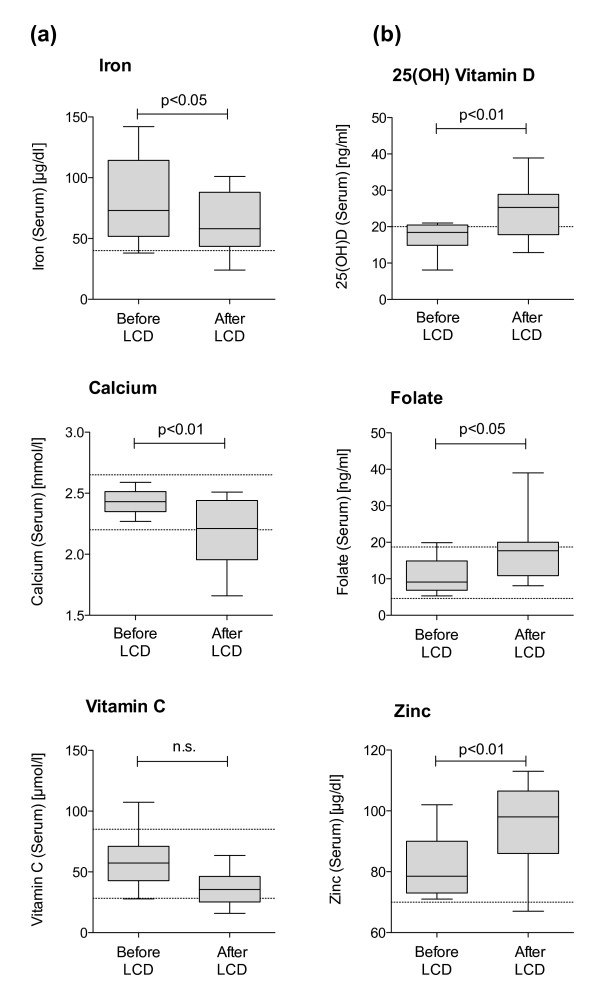
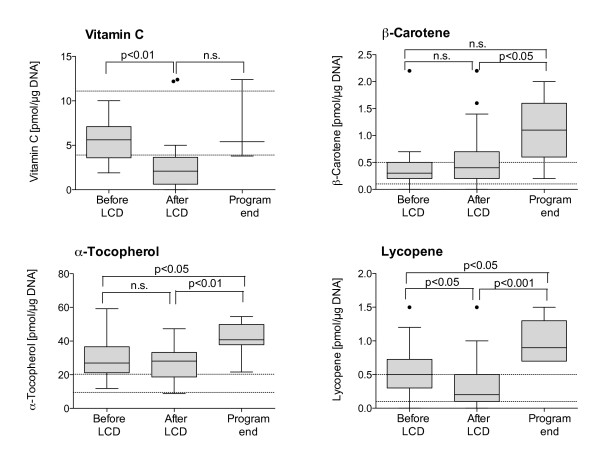
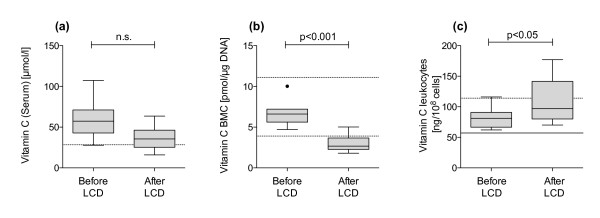
Background: The prevalence of micronutrient deficiencies is higher in obese individuals compared to normal-weight people, probably because of inadequate eating habits but also due to increased demands among overweight persons, which are underestimated by dietary reference intakes (DRI) intended for the general population. We therefore evaluated the dietary micronutrient intake in obese individuals compared to a reference population and DRI recommendations. Furthermore, we determined the micronutrient status in obese subjects undergoing a standardized DRI-covering low-calorie formula diet to analyze if the DRI meet the micronutrient requirements of obese individuals. Methods: In 104 subjects baseline micronutrient intake was determined by dietary record collection. A randomly assigned subgroup of subjects (n = 32) underwent a standardized DRI-covering low-calorie formula diet over a period of three months. Pre- and post-interventional intracellular micronutrient status in buccal mucosa cells (BMC) was analyzed, as well as additional micronutrient serum concentrations in 14 of the subjects. Results: Prior to dietetic intervention, nutrition was calorie-rich and micronutrient-poor. Baseline deficiencies in serum concentrations were observed for 25-hydroxyvitamin-D, vitamin C, selenium, iron, as well as ß-carotene, vitamin C, and lycopene in BMC. After a three-month period of formula diet even more subjects had reduced micronutrient levels of vitamin C (serum, BMC), zinc, and lycopene. There was a significant negative correlation between lipophilic serum vitamin concentrations and body fat, as well as between iron and C-reactive protein. Conclusions: The present pilot study shows that micronutrient deficiency occurring in obese individuals is not corrected by protein-rich formula diet containing vitamins and minerals according to DRI. In contrast, micronutrient levels remain low or become even lower, which might be explained by insufficient intake, increased demand and unbalanced dispersal of lipophilic compounds in the body. Trial registration: The study was registered at ClinicalTrials.gov (NCT01344525). The study protocol comprises only a part of the approved trial protocol.
Overview
The claims and statistics of this paper haven’t been checked yet.
Free: it reads the open-access text and checks the first 5 claims that cite a source we can check. Create a free account to check every claim.
Integrity signals
Registry
Cites
Statistics
Figures
Verification
Claims the paper makes
The claims and statistics of this paper haven’t been checked yet.
Free: it reads the open-access text and checks the first 5 claims that cite a source we can check. Create a free account to check every claim.
Claims other papers make about this one
Each is checked against this paper’s own text: does it say what the citing paper says it does?
The source backs part of the claim, not all of it — or backs it for a different population, condition or comparison.
In the citing paper
“Obesity can coexist not only with micronutrient deficiencies but also with sarcopenia, a reduction in skeletal muscle mass and strength most often associated with aging [85].”
From Nutritional considerations with antiobesity medications (2024) · cites this paper as [85]
Experimental — accuracy not yet measuredThe source backs part of the claim, not all of it — or backs it for a different population, condition or comparison.
In the citing paper
“Research demonstrates that, with such caloric restriction, nutrient intake is affected, adding to nutritional insufficiencies in the diet [51], which over time, impacts overall health and well-being for the individual.”
From International Society of Sports Nutrition position stand: diets for body weight reduction (2026) · cites this paper as [51]
Experimental — accuracy not yet measuredThe source backs part of the claim, not all of it — or backs it for a different population, condition or comparison.
In the citing paper
“Key variables such as dietary protein intake, micronutrient sufficiency, and gastrointestinal tolerability were seldom measured, despite known risks of nutritional deficiencies and cholelithiasis during rapid weight loss [38, 40, 41, 42, 43].”
From Nutrition Strategies for Next‐Generation Incretin Therapies: A Systematic Scoping Review of the Current Evidence (2026) · cites this paper as [40]
Experimental — accuracy not yet measured
Self-check
Percentages, sums and reported differences re-computed from the paper’s own numbers.
The self-check needs the paper’s full text.
Citations
Cites
Decreased bioavailability of vitamin D in obesity
Wortsman, J., Matsuoka, L. Y., Chen, T. C., Lu, Z., & Holick, M. F. (2000) · The American Journal of Clinical Nutrition · doi:10.1093/ajcn/72.3.690 · Cited by 3,204 · cited 1×
“for 25(OH)D [27,28].”
Discrepancy between self-reported and actual caloric intake and exercise in obese subjects
Lichtman, S. W., Pisarska, K., Berman, E. R., Pestone, M., Dowling, H., Offenbacher, E., Weisel, H., Heshka, S., Matthews, D. E., & Heymsfield, S. B. (1992) · New England Journal of Medicine · doi:10.1056/nejm199212313272701 · Cited by 964 · cited 1×
“The resulting error is possibly even more distinct in obese subjects [21-24].”
BackgroundVitamin B12, folic acid, and the nervous system
Reynolds, E. (2006) · The Lancet Neurology · doi:10.1016/s1474-4422(06)70598-1 · Cited by 860 · cited 1×
“Imbalances or deficiencies of essential micronutrients significantly influence day-to-day performance, behavior and emotional state, as well as intellectual and physical activity [13-15].”
BackgroundBourre, J. M. (2006) · PubMed · Cited by 765
Validity of reported energy intake in obese and nonobese adolescents
Bandini, L., Schoeller, D., Cyr, H., & Dietz, W. (1990) · The American Journal of Clinical Nutrition · doi:10.1093/ajcn/52.3.421 · Cited by 637 · cited 1×
“The resulting error is possibly even more distinct in obese subjects [21-24].”
BackgroundGoris, A. H., Westerterp-Plantenga, M. S., & Westerterp, K. R. (2000) · The American Journal of Clinical Nutrition · doi:10.1093/ajcn/71.1.130 · Cited by 530 · cited 1×
“The resulting error is possibly even more distinct in obese subjects [21-24].”
BackgroundEarthman, C. P., Beckman, L. M., Masodkar, K., & Sibley, S. D. (2012) · International Journal of Obesity · doi:10.1038/ijo.2011.119 · Cited by 430 · cited 1×
“for 25(OH)D [27,28].”
Poppitt, S., Swann, D., Black, A., & Prentice, A. (1998) · International Journal of Obesity · doi:10.1038/sj.ijo.0800584 · Cited by 363 · cited 1×
“However, underreporting especially applies to carbohydrate-rich snacks [25], which are low in micronutrient content by nature, and not to ‘healthy’ food.”
BackgroundAssociations between body mass index and the prevalence of low micronutrient levels among US adults.
Kimmons, J. E., Blanck, H. M., Tohill, B. C., Zhang, J., & Khan, L. K. (2006) · PubMed Central · Cited by 358
Nutritional Deficiencies in Morbidly Obese Patients: A New Form of Malnutrition?: Part A: Vitamins
Kaidar-Person, O., Person, B., Szomstein, S., & Rosenthal, R. J. (2008) · Obesity Surgery · doi:10.1007/s11695-007-9349-y · Cited by 325 · cited 3×
“It has been hypothesized that toxic byproducts of incomplete biochemical reactions resulting from excessive intake of kilocalories and states of micronutrient deficiencies could lead to further weight gain or development of associated metabolic diseases [13,16].”
BackgroundResult
Cited by
Prolonging healthy aging: Longevity vitamins and proteins
Ames, B. N. (2018) · Proceedings of the National Academy of Sciences · doi:10.1073/pnas.1809045115 · Cited by 271
Castellana, M., Conte, E., Cignarelli, A., Perrini, S., Giustina, A., Giovanella, L., Giorgino, F., & Trimboli, P. (2020) · Reviews in Endocrine and Metabolic Disorders · doi:10.1007/s11154-019-09514-y · Cited by 249
Bortolin, R. C., Vargas, A. R., Gasparotto, J., Chaves, P. R., Schnorr, C. E., Martinello, K. B., Silveira, A. K., Rabelo, T. K., Gelain, D. P., & Moreira, J. C. F. (2018) · International Journal of Obesity · doi:10.1038/ijo.2017.225 · Cited by 221
Exercise and nutrition strategies to counteract sarcopenic obesity
Trouwborst, I., Verreijen, A., Memelink, R., Massanet, P., Boirie, Y., Weijs, P., & Tieland, M. (2018) · Nutrients · doi:10.3390/nu10050605 · Cited by 210
Towards a multidisciplinary approach to understand and manage obesity and related diseases
Bischoff, S. C., Boirie, Y., Cederholm, T., Chourdakis, M., Cuerda, C., Delzenne, N. M., Deutz, N. E., Fouque, D., Genton, L., Gil, C., et al. (2017) · Clinical Nutrition · doi:10.1016/j.clnu.2016.11.007 · Cited by 206
“More recent studies in patients with advanced obesity undergoing weight reduction through multidisciplinary conservative programs or bariatric surgery revealed pre-interventional deficits mainly of vitamin D, but also of retinol, b-carotene, vitamin B6, vitamin C, vitamin E, and folic acid [169,170].”
BackgroundSelf-citationTodd, A. S., Street, S. J., Ziviani, J. M., Byrne, N. M., & Hills, A. P. (2015) · International Journal of Environmental Research and Public Health · doi:10.3390/ijerph120202306 · Cited by 192
“Nutrient deficiencies can also develop if the nutrient density of foods consumed is poor [44].”
BackgroundMalnutrition in Obesity: Is It Possible?
Kobylińska, M., Antosik, K., Decyk, A., & Kurowska, K. (2022) · Obesity Facts · doi:10.1159/000519503 · Cited by 186
Nutrient Deficiencies After Gastric Bypass Surgery
Saltzman, E., & Philip Karl, J. (2013) · Annual Review of Nutrition · doi:10.1146/annurev-nutr-071812-161225 · Cited by 151
Malnutrition in obesity before and after bariatric surgery
Mohapatra, S., Gangadharan, K., & Pitchumoni, C. S. (2019) · Disease-a-Month · doi:10.1016/j.disamonth.2019.06.008 · Cited by 174
Reversing Type 2 Diabetes: A Narrative Review of the Evidence
Hallberg, S. J., Gershuni, V. M., Hazbun, T. L., & Athinarayanan, S. J. (2019) · Nutrients · doi:10.3390/nu11040766 · Cited by 170
“Lastly, micronutrient deficiencies with the use of calorie restricted diets has been shown and supplementation and monitoring for deficiencies is a consideration with their use [55,56].”
BackgroundNutrition Optimization Prior to Surgery
Evans, D. C., Martindale, R. G., Kiraly, L. N., & Jones, C. M. (2013) · Nutrition in Clinical Practice · doi:10.1177/0884533613517006 · Cited by 170
Thiamin Deficiency in People with Obesity
Kerns, J. C., Arundel, C., & Chawla, L. S. (2015) · Advances in Nutrition · doi:10.3945/an.114.007526 · Cited by 163
Nutritional considerations with antiobesity medications
Almandoz, J. P., Wadden, T. A., Tewksbury, C., Apovian, C. M., Fitch, A., Ard, J. D., Li, Z., Richards, J., Butsch, W. S., Jouravskaya, I., et al. (2024) · Obesity · doi:10.1002/oby.24067 · Cited by 134
“…of routine micronutrient supplementation on the risk of nutritional deficiencies with AOM therapy, but the study by Damms-Machado et al. from 2012 [82] suggests that supplementation with a complete multivitamin alone may not be adequate to correct all preexisting deficiencies, particularly under…”
BackgroundAgarwal, S., Reider, C., Brooks, J. R., & Fulgoni, V. L. (2015) · Journal of the American College of Nutrition · doi:10.1080/07315724.2014.901196 · Cited by 126
“A small pilot study [13] reported insufficient and significantly lower intakes of retinol, ß-carotene, vitamin D, vitamin E, vitamin C, folate, iron, and calcium among obese adults.”
BackgroundTroesch, B., Biesalski, H., Bos, R., Buskens, E., Calder, P., Saris, W., Spieldenner, J., Verkade, H., Weber, P., & Eggersdorfer, M. (2015) · Nutrients · doi:10.3390/nu7075266 · Cited by 90
Pannu, P. K., Zhao, Y., & Soares, M. J. (2015) · Nutrition Research · doi:10.1016/j.nutres.2015.11.013 · Cited by 116
“We found that in 17 of 23 eligible studies, a significant increase in 25OHD was observed with a decrease in weight [17, 31-33, 35-42, 4549], with a decrease in BMI in 15 studies [11, 31-33, 35-39, 41, 42, 46-48, 50], with a decrease in %FM in 14 studies [17, 32, 33, 37-42, 44-48] and with a decrease in FFM in four stu…”
BackgroundResultInfluentialKhorsandi, H., Nikpayam, O., Yousefi, R., Parandoosh, M., Hosseinzadeh, N., Saidpour, A., & Ghorbani, A. (2019) · Diabetology & Metabolic Syndrome · doi:10.1186/s13098-019-0497-8 · Cited by 88
Associations between Dietary Antioxidant Intake and Metabolic Syndrome
Wei, J., Zeng, C., Gong, Q.-Y., Li, X., Lei, G., & Yang, T.-B. (2015) · PLoS ONE · doi:10.1371/journal.pone.0130876 · Cited by 87
Risk and Benefit of Different Cooking Methods on Essential Elements and Arsenic in Rice
Mwale, T., Rahman, M. M., & Mondal, D. (2018) · International Journal of Environmental Research and Public Health · doi:10.3390/ijerph15061056 · Cited by 81
The Optimal Nutritional Programme for Bariatric and Metabolic Surgery
Parrott, J. M., Craggs‐Dino, L., Faria, S. L., & O’Kane, M. P. M. (2020) · Current Obesity Reports · doi:10.1007/s13679-020-00384-z · Cited by 80
Micronutrient intake and the presence of the metabolic syndrome
Ghayour‐Mobarhan, M., Mouhebati, M., Esmailie, H., Norouzi, A., Ferns, G.-A., Ebrahimi, M., Azarpazhouh, M. R., Motamed, S., & Safarian, M. (2013) · North American Journal of Medical Sciences · doi:10.4103/1947-2714.114171 · Cited by 68
“After adjusting for cofounders including sex, age, physical activity level, and current smoking, past medical history, BMI, and energy intake, we found no association between micronutrient intake and MS [Tables 4 and 5].”
Johnson, B., Milstead, M., Thomas, O., McGlasson, T., Green, L., Kreider, R., & Jones, R. (2025) · Frontiers in Nutrition · doi:10.3389/fnut.2025.1566498 · Cited by 64
“For example, a previous study measuring baseline nutritional status of individuals with obesity found prevalence of micronutrient deficiencies from serum concentration for vitamin D, vitamin C, selenium, and iron (20).”
Nutritional status of selenium in overweight and obesity: A systematic review and meta-analysis
Fontenelle, L. C., de Araújo, D. S. C., Soares, T. D. C., Cruz, K. J. C., Henriques, G. S., & Marreiro, D. D. N. (2022) · Clinical Nutrition · doi:10.1016/j.clnu.2022.02.007 · Cited by 64
Rubini, E., Schenkelaars, N., Rousian, M., Sinclair, K. D., Wekema, L., Faas, M. M., Steegers‐Theunissen, R. P. M., & Schoenmakers, S. (2022) · American Journal of Obstetrics and Gynecology · doi:10.1016/j.ajog.2022.04.013 · Cited by 61
“excessive caloric input owing to consumption of an unbalanced diet predominantly composed of nutritionally poor and high-caloric food, which often leads to micronutrient deficiencies.(38)”
BackgroundPoli, V. F. S., Sanches, R. B., Moraes, A. D. S., Fidalgo, J. P. N., Nascimento, M. A., Bresciani, P., Andrade-Silva, S. G., Cipullo, M. A. T., Clemente, J. C., & Caranti, D. A. (2017) · Nutrition · doi:10.1016/j.nut.2017.01.012 · Cited by 52
“46 Recent studies point to an insufficient dietary mic ronutrient intake of vitamin D, A, C and D, folate, 47 iron, zinc and calcium in obese individuals [9,11].”
BackgroundInfluentialAnemia Status in Relation to Body Mass Index Among Women of Childbearing Age in Bangladesh
Bishwajit, G., Yaya, S., & Tang, S. (2016) · Asia Pacific Journal of Public Health · doi:10.1177/1010539516660374 · Cited by 51
Assessment of micronutrients in a 12-wk ketogenic diet in obese adults
Kenig, S., Petelin, A., Vatovec, T. P., Mohorko, N., & Pražnikar, Z. J. (2019) · Nutrition · doi:10.1016/j.nut.2019.06.003 · Cited by 50
van Dijk, M., Dijk, F. J., Hartog, A., van Norren, K., Verlaan, S., van Helvoort, A., Jaspers, R. T., & Luiking, Y. C. (2017) · Journal of Cachexia Sarcopenia and Muscle · doi:10.1002/jcsm.12237 · Cited by 50
Volek, J. S., Kackley, M. L., & Buga, A. (2024) · Current Nutrition Reports · doi:10.1007/s13668-024-00548-6 · Cited by 48
“Whereas the consensus is still extensively investigated [139], or obfuscated by dietary assessment methods [138, 146] and early clinical evidence [147, 148], there is recent promising data suggesting that carbohydrate-restriction is sensible to micronutrients with proper implementation and guidance.”
BackgroundMicronutrient deficiencies in the elderly – could ready meals be part of the solution?
Richard Hoffman PhD RNutr, F. R. S. A. (2017) · Journal of Nutritional Science · doi:10.1017/jns.2016.42 · Cited by 48
Vanderlelie, J., Scott, R., Shibl, R., Lewkowicz, J., Perkins, A., & Scuffham, P. A. (2016) · Maternal & Child Nutrition · doi:10.1111/mcn.12133 · Cited by 37
“…βcarotene and zinc associated with obesity (Neuhouser et al. 2001; Wallstrom et al. 2001; Kimmons et al. 2006; Ernst et al. 2009; Madan et al. 2010; Damms-Machado et al. 2012), the positive effect of micronutrient supplementation across the spectra of BMI in the EFHL cohort may not be unexpected.”
BackgroundMicronutrient Intake in the Etiology, Prevention and Treatment of Osteosarcopenic Obesity
J. Kelly, O., C. Gilman, J., Kim, Y., & Z. Ilich, J. (2016) · Current Aging Science · doi:10.2174/1874609809666160509122001 · Cited by 42
Perioperative Nutritional Optimization in Spine Surgery
Qureshi, R., Rasool, M. I., Puvanesarajah, V., & Hassanzadeh, H. R. (2018) · Clinical Spine Surgery A Spine Publication · doi:10.1097/bsd.0000000000000579 · Cited by 47
Remission of Type 2 Diabetes with Very Low-Calorie Diets—A Narrative Review
Juray, S., Axen, K. V., & Trasino, S. E. (2021) · Nutrients · doi:10.3390/nu13062086 · Cited by 45
Folic Acid Supplement Use and Increased Risk of Gestational Hypertension
Li, Q., Xu, S., Chen, X., Zhang, X., Li, X., Lin, L., Gao, D., Wu, M., Yang, S., Cao, X., et al. (2020) · Hypertension · doi:10.1161/hypertensionaha.119.14621 · Cited by 45
“prepregnancy BMI may affect the association between FA supplement use and GH,(26) which may be due to the discrepancy in inflammation, oxidative stress, and endothelial dysfunction of the participants.(27) Given FA supplement use was linked with increased GDM risk, we excluded women with GDM.”
BackgroundBrown, A., & Leeds, A. R. (2019) · Nutrition Bulletin · doi:10.1111/nbu.12372 · Cited by 43
“However, another study suggested that the vitamins and minerals provided in a formula LED were insufficient to meet demands of an obese person (Damms-Machado et al. 2012); although, to note, nutritional deficiencies were present before the study and this may have influenced the findings.”
BackgroundResultInfluentialSousa, J., Sousa, H. S., Vieira, S. Q., Nunes, R., Nogueiro, J., Pereira, A. D. A., Resende, F., Costa-Pinho, A., Preto, J. R., Sousa‐Pinto, B., et al. (2024) · Journal of Personalized Medicine · doi:10.3390/jpm14060650 · Cited by 43
“This could be attributed to the patient’s pre-surgery diet, which was high in energy but lacking in various nutrients, as well as the use of restrictive diets that may contribute to rapid metabolic changes and exacerbate these deficiencies [35,54].”
BackgroundOrces, C. H. (2019) · Cureus · doi:10.7759/cureus.5721 · Cited by 43
Horvath, J. D. C., de Castro, M. L. D., Kops, N. L., Malinoski, N. K., & Friedman, R. (2014) · PubMed · doi:10.3305/nh.2014.29.2.7053 · Cited by 43
San-Cristóbal, R., Navas‐Carretero, S., Livingstone, K. M., Celis-Morales, C. A., Macready, A. L., Fallaize, R., O’Donovan, C. B., Lambrinou, C. P., Moschonis, G., Marsaux, C. F. M., et al. (2017) · Nutrients · doi:10.3390/nu9101107 · Cited by 43
Interrelationship between Vitamin D and Calcium in Obesity and Its Comorbid Conditions
Harahap, I. A., Landrier, J., & Suliburska, J. (2022) · Nutrients · doi:10.3390/nu14153187 · Cited by 43
“Obesity is caused by micronutrient deficiency [10], inadequate intake of vitamins, such as cobalamin (vitamin B12), ascorbic acid (vitamin C), fat-soluble vitamins, and folic acid [11], a deficiency of vitamin D (VD) [12], poor mineral status [13], and low calcium (CAL) diet [14].”
BackgroundZavros, A., Andreou, E. P., Aphamis, G., Bogdanis, G. C., Sakkas, G. K., Ρούπα, Ζ., & Giannaki, C. D. (2023) · Nutrients · doi:10.3390/nu15143133 · Cited by 41
Formula food‐reducing diets: A new evidence‐based addition to the weight management tool box
Leeds, A. R. (2014) · Nutrition Bulletin · doi:10.1111/nbu.12098 · Cited by 34
Micronutrient bioavailability: concepts, influencing factors, and strategies for improvement
Richards, J. D., Cori, H., Rahn, M., Finn, K., Bárcena, J., Kanellopoulos, A. K., Péter, S., & Spooren, A. (2025) · Frontiers in Nutrition · doi:10.3389/fnut.2025.1646750 · Cited by 39
Obesity and micronutrients deficit, when and how to suplement
Chapela, S. P., Martinuzzi, A. L. N., Llobera, N. D., Ceriani, F., González, V. C., Montalván, M., Verde, L., & Frías-Toral, E. (2024) · Food and Agricultural Immunology · doi:10.1080/09540105.2024.2381725 · Cited by 36
“…study conducted by Damms-Machado et al. shows that micronutrient deficiency occurs in individuals with obesity and it is not corrected even by the implementation of a diet including a formula high in protein and containing vitamins and minerals (Damms-Machado et al., 2012; Shahbaz et al., 2023).”
Micronutrient status and intake in the UK – where might we be in 10 years' time?
Miller, R. B., Spiro, A., & Stanner, S. A. (2016) · Nutrition Bulletin · doi:10.1111/nbu.12187 · Cited by 36
Berger, M. M., Herter‐Aeberli, I., Zimmermann, M. B., Spieldenner, J., & Eggersdorfer, M. L. (2021) · Clinical Nutrition ESPEN · doi:10.1016/j.clnesp.2021.03.012 · Cited by 39
“Micronutrient deficiencies in obese individuals may not be entirely corrected by a diet containing recommended levels of vitamins and minerals [126].”
Assyov, Y. S., Nedeva, I., Spassov, B., Gerganova, A., Velikov, T., Kamenov, Z. A., & Velikova, T. V. (2024) · Nutrients · doi:10.3390/nu16152560 · Cited by 34
Gültekin, F., Nazıroğlu, M., Savaş, H. B., & Çiğ, B. (2018) · Metabolic Brain Disease · doi:10.1007/s11011-018-0289-0 · Cited by 31
Drug-micronutrient interactions: food for thought and thought for action
Karadima, V., Kraniotou, C., Bellos, G., & Tsangaris, G. T. (2016) · The EPMA Journal · doi:10.1186/s13167-016-0059-1 · Cited by 31
TFEB-dependent induction of thermogenesis by the hepatocyte SLC2A inhibitor trehalose
Zhang, Y., Higgins, C. B., Mayer, A. L., Mysorekar, I. U., Razani, B., Graham, M. J., Hruz, P. W., & DeBosch, B. J. (2018) · Autophagy · doi:10.1080/15548627.2018.1493044 · Cited by 30
Impact of diet and weight loss on iron and zinc status in overweight and obese young women.
Cheng, H. L., Griffin, H. J., Bryant, C. E., Rooney, K. B., Steinbeck, K. S., & O'Connor, H. T. (2013) · PubMed · doi:10.6133/apjcn.2013.22.4.08 · Cited by 28
Johnson, B. V. B., Milstead, M., Kreider, R., & Jones, R. (2025) · Obesity Pillars · doi:10.1016/j.obpill.2025.100209 · Cited by 27
“Previous studies investigating the nutritional status of individuals with obesity or overweight find higher prevalences of micro-nutrient deficiencies compared to individuals of normal weight [27].”
The Exposome and Immune Health in Times of the COVID-19 Pandemic
Morales, J. S., Valenzuela, P. L., Castillo‐García, A., Butragueño, J., Jiménez‐Pavón, D., Carrera‐Bastos, P., & Lucía, A. (2021) · Nutrients · doi:10.3390/nu14010024 · Cited by 28
Johnson, B. V. B., Milstead, M., Green, L., Kreider, R., & Jones, R. (2025) · Obesity Pillars · doi:10.1016/j.obpill.2025.100195 · Cited by 27
“For example, a previous study measuring baseline nutritional status of individuals with obesity found prevalence of micronutrient deficiencies from serum concentration for vitamin D, vitamin C, selenium, and iron [11].”
The Policy of Compulsory Large-Scale Food Fortification in Sub-Saharan Africa
Bell, V., Rodrigues, A. R., Ferrão, J., Varzakas, T. H., & Fernandes, T. H. (2024) · Foods · doi:10.3390/foods13152438 · Cited by 24
Yila, T. A., Araki, A., Sasaki, S., Miyashita, C., Itoh, K., Ikeno, T., Yoshioka, E., Kobayashi, S., Goudarzi, H., Baba, T., et al. (2016) · British Journal Of Nutrition · doi:10.1017/s0007114516001628 · Cited by 24
“Micronutrient deficiencies including folate in overweight/obese people have been reported by some previous studies((18)).”
ResultCarotenoids in Human Nutrition
Bowen, P. E., Stacewicz‐Sapuntzakis, M., & Diwadkar‐Navsariwala, V. (2015) · Springer eBooks · doi:10.1007/978-1-4939-2356-4_3 · Cited by 24
“It is of interest that intake of a low caloric diet that provided more than adequate micronutrients [exceeding the dietary reference intakes (DRI) requirements] was unable to correct deficiencies of many micronutrients, including lycopene, in obese subjects undergoing a 3-month weight loss regimen, suggesting a larger…”
BackgroundBolajoko, E. B., Akinosun, O. M., Anetor, J. I., & Mossanda, K. (2017) · TURKISH JOURNAL OF MEDICAL SCIENCES · doi:10.3906/sag-1601-95 · Cited by 23
Mkhize, B. T., Mabaso, M., Mamba, T., Napier, C. E., & Mkhize‐Kwitshana, Z. L. (2017) · BioMed Research International · doi:10.1155/2017/9059523 · Cited by 23
“The expected finding would be similarly low biochemical levels since intake levels were low [42].”
BackgroundAlathari, B. E., Bodhini, D., Jayashri, R., Lakshmipriya, N., Rani, C. S. S., Sudha, V., Lovegrove, J. A., Anjana, R. M., Mohan, V., Radha, V., et al. (2020) · Nutrients · doi:10.3390/nu12051357 · Cited by 24
Selenium status and its relationship with thyroid hormones in obese women
Fontenelle, L. C., Feitosa, M. M., de Freitas, T. E. C., Severo, J. S., Morais, J. B. S., Henriques, G. S., de Oliveira, F. E., Neto, J. M. M., & Marreiro, D. D. N. (2020) · Clinical Nutrition ESPEN · doi:10.1016/j.clnesp.2020.10.012 · Cited by 22
Bogdański, P., Suliburska, J., Szulińska, M., Sikora, M., Walkowiak, J., & Jakubowski, H. (2015) · Biomedicine & Pharmacotherapy · doi:10.1016/j.biopha.2015.10.001 · Cited by 23
“Deficiencies in serum concentrations of various micronutrients among them vitamin C were observed prior to and after low calories dietetic intervention in obese human populations [19].”
BackgroundAndraos, S., Wake, M. A., Saffery, R., Burgner, D. P., Kussmann, M., & O'Sullivan, J. M. (2019) · Advances in Nutrition · doi:10.1093/advances/nmz045 · Cited by 22
“Healthy/unhealthy anthropometric and clinical measures do not always correlate with a healthy/unhealthy nutritional status (50, 70, 71).”
Maio, G. D., Tafuri, M. G., Casillo, M., Messina, A., Allocca, S., Villano, I., Moscatelli, F., Monda, A., Marra, M. L., & Monda, V. (2026) · Nutrients · doi:10.3390/nu18061014 · Cited by 21
Mires, S., Caputo, M., Overton, T. G., & Skerritt, C. (2022) · Birth Defects Research · doi:10.1002/bdr2.2072 · Cited by 21
“Numerous factors influence micronutrient levels including BMI, age, ethnicity and a number of lifestyle factors such as smoking (Damms-Machado et al., 2012; Kant & Graubard, 2007; Preston, 1991; Richard & Roussel, 1999).”
BackgroundNovel approaches to sarcopenic obesity and weight management before and after kidney transplantation
Tantisattamo, E., Kalantar‐Zadeh, K., Halleck, F., Duettmann, W., Naik, M. G., & Budde, K. (2021) · Current Opinion in Nephrology & Hypertension · doi:10.1097/mnh.0000000000000673 · Cited by 21
“Moreover, hypocaloric diets may cause inadequate micronutrient [83].”
BackgroundChalut-Carpentier, A., Pataky, Z., Golay, A., & Bobbioni-Harsch, E. (2014) · Obesity Surgery · doi:10.1007/s11695-014-1471-z · Cited by 21
“these factors per se are able to deeply modify the micronutritional profile [11–13], independent of any surgical intervention.”
BackgroundLiu, W., Cao, S., Shi, D., Ye, Z., Yu, L., Liang, R., Cheng, M., Chen, W., & Wang, B. (2023) · Diabetes/Metabolism Research and Reviews · doi:10.1002/dmrr.3729 · Cited by 20
“10,12 Thus, the effect of dietary vitamin intake on mortality in people with diabetes may differ from that in the general population.”
BackgroundSurendran, S., Jayashri, R., Drysdale, L., Bodhini, D., Lakshmipriya, N., Rani, C. S. S., Sudha, V., Lovegrove, J. A., Anjana, R. M., Mohan, V., et al. (2019) · Genes & Nutrition · doi:10.1186/s12263-019-0649-3 · Cited by 20
Requirements for essential micronutrients during caloric restriction and fasting
Zhang, W., Chen, P., Huo, S., Huang, X., & Zhao, Y. (2024) · Frontiers in Nutrition · doi:10.3389/fnut.2024.1363181 · Cited by 19
Behary, P., Cegla, J., Tan, T., & Bloom, S. R. (2015) · Postgraduate Medicine · doi:10.1080/00325481.2015.1048181 · Cited by 21
“Although effective for weight loss, there is a small increased risk of complications such as gallstones and micronutrient deficiency [9,18].”
BackgroundFood consumption in patients referred for bariatric surgery with and without binge eating disorder
Horvath, J. D. C., Kops, N. L., de Castro, M. L. D., & Friedman, R. (2015) · Eating Behaviors · doi:10.1016/j.eatbeh.2015.09.007 · Cited by 19
GLP-1 Receptor Agonists – Good for Body Weight, Bad for Micronutrient Status?
Kerlikowsky, F., Krämer, K., Eggersdorfer, M., & Hahn, A. (2025) · Current Developments in Nutrition · doi:10.1016/j.cdnut.2025.107587 · Cited by 18
“…of micronutrient deficiencies, due to unbalanced diets, reduced bioavailability driven by inflammation (iron [29], vitamin B6 [30]), inflammation-driven alterations in binding proteins that lower circulating concentrations of certain micronutrients, and reduced sun exposure (vitamin D) [20,31,32].”
Rudzka, A., Kapuśniak, K., Zielińska, D., Kołożyn‐Krajewska, D., Kapuśniak, J., & Barczyńska, R. (2024) · Applied Sciences · doi:10.3390/app14114489 · Cited by 20
Barnett, M. P. G., Bermingham, E. N., Young, W., Bassett, S. A., Hesketh, J. E., Maciel‐Dominguez, A., McNabb, W. C., & Roy, N. C. (2015) · Nutrients · doi:10.3390/nu7053370 · Cited by 18
“This is particularly observed in obese individuals where the prevalence of micronutrient deficiencies, such as that of the trace element selenium (Se) and the vitamin folate [6–8], is higher compared to normal weight individuals of the same age and sex [7,9,10].”
BackgroundEffectiveness of various diet patterns among patients with multiple sclerosis
Zielińska, M., & Michońska, I. (2023) · Postępy Psychiatrii i Neurologii · doi:10.5114/ppn.2023.127246 · Cited by 18
“FMDs do not have clearly defined rules; rather, they are a collection of different dietary interventions related to fasting and low energy intake, which can be problematic to apply and cause possible nutritional deficiencies (especially in overweight patients) [61].”
BackgroundDargenio, V. N., Sgarro, N., Grasta, G. L., Begucci, M., Castellaneta, S. P., Dargenio, C., Paulucci, L., Francavilla, R., & Cristofori, F. (2025) · Nutrients · doi:10.3390/nu17223601 · Cited by 17
“The use of probiotics may offset adverse microbial changes, though clinical findings remain inconsistent [192].”
Wei, X., Zhao, L., Fang, H., Chen, M., Piao, W., Ju, L., Cai, S., Yang, Y., Li, Y., Li, F., et al. (2024) · Nutrients · doi:10.3390/nu16142371 · Cited by 17
Rodríguez‐Rivera, C., Pérez‐García, C., Muñoz‐Rodríguez, J. R., Vicente‐Rodríguez, M., Polo, F., Ford, R. M., Segura, E., León, A., Salas, E., Sáenz-Mateos, L. F., et al. (2018) · World Journal of Surgery · doi:10.1007/s00268-018-4851-z · Cited by 17
Low intakes of vitamins C and A are associated with obesity in early adulthood
Correa‐Rodríguez, M., Gómez‐Urquiza, J. L., Medina-Martínez, I., González‐Jiménez, E., Schmidt‐RioValle, J., & Rueda‐Medina, B. (2020) · International Journal for Vitamin and Nutrition Research · doi:10.1024/0300-9831/a000661 · Cited by 17
Spreckley, M., Ruggiero, C. F., & Brown, A. (2026) · Obesity Reviews · doi:10.1111/obr.70079 · Cited by 16
“Key variables such as dietary protein intake, micronutrient sufficiency, and gastrointestinal tolerability were seldom measured, despite known risks of nutritional deficiencies and cholelithiasis during rapid weight loss [38, 40–43].”
Mehta, M., Rometo, D. A., Gusenoff, J. A., & Rubin, J. P. (2025) · Plastic & Reconstructive Surgery · doi:10.1097/prs.0000000000012672 · Cited by 16
Use of Home Enteral Nutrition in Malnourished Post‐Bariatric Surgery Patients
Velapati, S. R., Schroeder, S. E., Schroeder, D. R., Buttar, N. S., Elfadil, O. M., Hurt, R. T., & Mundi, M. S. (2020) · Journal of Parenteral and Enteral Nutrition · doi:10.1002/jpen.1973 · Cited by 17
Treatment of Diabetes and Osteoporosis—A Reciprocal Risk?
Zawada, A. E., Ratajczak, A. E., Rychter, A. M., Szymczak‐Tomczak, A., Dobrowolska, A., & Krela‐Kaźmierczak, I. (2022) · Biomedicines · doi:10.3390/biomedicines10092191 · Cited by 16
Mehrdad, M., Vahid, F., & Eftekhari, M. H. (2020) · The American Journal of the Medical Sciences · doi:10.1016/j.amjms.2020.06.027 · Cited by 16
Minnetti, M., Barazzoni, R., Batsis, J. A., Busetto, L., Yumuk, V., Poggiogalle, E., Weijs, P. J. M., & Donini, L. M. (2025) · Obesity Facts · doi:10.1159/000548370 · Cited by 15
“Significant CR without adequate nutrient monitoring has been shown to deplete iron stores and B vitamins, increasing risks of anemia and neurological complications [25].”
InfluentialNikrad, N., Shakarami, A., Tousi, A. Z., Farhangi, M. A., Ardekani, A. M., & Jafarzadeh, F. (2023) · BMC Endocrine Disorders · doi:10.1186/s12902-023-01392-5 · Cited by 14
Fontenelle, L. C., Sousa, M. D. P., dos Santos, L. R., Cardoso, B. E. P., de Sousa, T. G. V., Soares, T. D. C., Melo, S. R. D. S., Morais, J. B. S., Dias, T. M. D. S., de Oliveira, F. E., et al. (2022) · Biological Trace Element Research · doi:10.1007/s12011-022-03209-3 · Cited by 14
Yi, Y. H., Kim, Y.-J., Lee, S. Y., Lee, J. G., Jeong, D.-W., Cho, Y. H., Tak, Y. J., Choi, E.-J., Hwang, H.-L., & Lee, S. H. (2015) · The Korean Journal of Obesity · doi:10.7570/kjo.2015.24.2.101 · Cited by 14
Tang, X., Reidlinger, D. P., Crichton, M., Craggs‐Dino, L., Fayet‐Moore, F., & Marshall, S. (2024) · Journal of the Academy of Nutrition and Dietetics · doi:10.1016/j.jand.2024.09.007 · Cited by 13
Wang, C., Jalal, M. I. A., Song, Z. L., Teo, Y. P., Tan, C. A., Heng, K. V., Low, M. S. Y., Zaini, A. A., & Lum, L. C. S. (2022) · International Journal of Environmental Research and Public Health · doi:10.3390/ijerph192113878 · Cited by 12
Nutritional Deficiencies Associated with Obesity
Gebler, L. (2015) · Journal of Obesity & Weight loss Therapy · doi:10.4172/2165-7904.1000252 · Cited by 12
“In contrast, micronutrient levels remained low or became even lower which may be explained by increased metabolic demand and/or an unbalanced distribution in the body [5,6].”
BackgroundTaleban, R., Heidari‐Beni, M., Qorbani, M., Motlagh, M. E., Malekshah, A. F., Moafi, M., Zavareh, N. H. T., & Kelishadi, R. (2019) · Health Promotion Perspectives · doi:10.15171/hpp.2019.41 · Cited by 11
Iqbal, W. A., Mendes, I. C., Finney, K., Oxley, A., & Lietz, G. (2021) · International Journal of Food Sciences and Nutrition · doi:10.1080/09637486.2021.1882962 · Cited by 11
Sander, J., Torensma, B., Siepe, J., Schorp, T., Schulte, T., Schmeer, C., Gögele, H., Böckelmann, I., Grabenhorst, A., Ockert-Belz, I., et al. (2025) · Obesity Surgery · doi:10.1007/s11695-025-07853-1 · Cited by 10
“Many deficiencies are already present preoperatively due to limited dietary diversity, dilution effects from increased serum volume, expanded fat and muscle mass, and conditions like liver steatosis, diabetes, and chronic inflammation [9, 25–31].”
Surendran, S., & Vimaleswaran, K. S. (2021) · Nutrition Bulletin · doi:10.1111/nbu.12494 · Cited by 10
Thiamine (Vitamin B1) After Weight Loss Bariatric Surgery
Nath, A., Shope, T. R., & Koch, T. R. (2016) · Elsevier eBooks · doi:10.1016/b978-0-12-804011-9.00037-6 · Cited by 10
Alexa, R.-E., Haliga, R. E., Morărașu, B. C., Ceasovschih, A., Sîrbu, O., Asaftei, A., Șorodoc, V., & Șorodoc, L. (2026) · Medical Sciences · doi:10.3390/medsci14020160 · Cited by 9
Leisegang, K. (2018) · Elsevier eBooks · doi:10.1016/b978-0-12-812501-4.00013-4 · Cited by 9
Metadata
- Authors
- Damms-Machado, A., Weser, G., & Bischoff, S. C.
- Affiliations
- University of Hohenheim (DE)
- Corresponding author
- Bischoff, Stephan C
- Venue
- Nutrition Journal
- Published
- 2012-06-01
- Volume
- 11
- Issue
- 1
- Pages
- 34-34
- ISSN
- 1475-2891 (ISSN-L)
- PMC
- PMC3404899
- OpenAlex
- W2155709875
- Cited by
- 157
- References
- 40
- Citations by year
- 2026: 9 · 2025: 20 · 2024: 12 · 2023: 8 · 2022: 10 · 2021: 11 · 2020: 11 · 2019: 15 · 2018: 9 · 2017: 8 · 2016: 9 · 2015: 18 · 2014: 8 · 2013: 7 · 2012: 1
- FWCI
- 10.50
- Type
- journal article
- Language
- en
- Open access
- gold
- doi.org
- Licence
- Locations
- Nutrition Journal (publishedVersion, cc-by)
- PubMed Central (publishedVersion, cc-by)
- PubMed (publishedVersion)
- DOAJ (DOAJ: Directory of Open Access Journals) (submittedVersion)
- Funders
- Bundesministerium für Bildung und Forschung (01GI0843)
- Topics
- Health Sciences › Medicine › Public Health, Environmental and Occupational Health › Nutrition and Health Studies
- Health Sciences › Medicine › Physiology (medical) › Nutrition and Health in Aging
- Health Sciences › Medicine › Public Health, Environmental and Occupational Health › Nutritional Studies and Diet
- Keywords
- micronutrient deficiency, obesity, serum vitamin D levels, vitamin C, selenium, iron, zinc, lycopene, beta-carotene, fat mass, C-reactive protein, lipophilic vitamins
- MeSH terms
- Lycopene, Adult, C-Reactive Protein, Energy Intake, Carotenoids, Feeding Behavior, Female, Humans, Male, Middle Aged, Nutritional Status, Obesity, Pilot Projects, Weight Loss, Diet Records, Micronutrients, beta Carotene, Caloric Restriction, Malnutrition
About these checks
Registry, retraction, Cites and statistics results are computed, not judged, with one exception: a printed reference that no index lists is read once by a model before it counts as a citation error. Claims are extracted by a model and kept only when their quote appears verbatim in the text; each cited source is then checked, with a model’s help, for whether it says what the claim relies on. Those verdicts can be wrong — read the claim’s quote and the cited source before relying on one.
Statistics and arithmetic are recomputed, not judged.
Confidence bands are shown only for fields calibrated on our annotated test set. None is calibrated yet, so no band is shown.
What counts as a claim ›How we measure confidence ›How we check this ›
Are you an author, or do you see a problem with this page? Request a review
Data sources
Bibliographic data: Semantic Scholar, OpenAlex, Crossref.
Contains information from the Semantic Scholar Academic Graph Datasets, made available under the ODC Attribution License (ODC-BY 1.0).
Semantic Scholar’s data is described in: Kinney, R., et al. (2023). The Semantic Scholar Open Data Platform. arXiv:2301.10140.
