

Gut microbiota, probiotics and diabetes
Open accessThe DOI matches its Crossref record; 124 of the 124 references it cites were found in a registry or an index.
Abstract
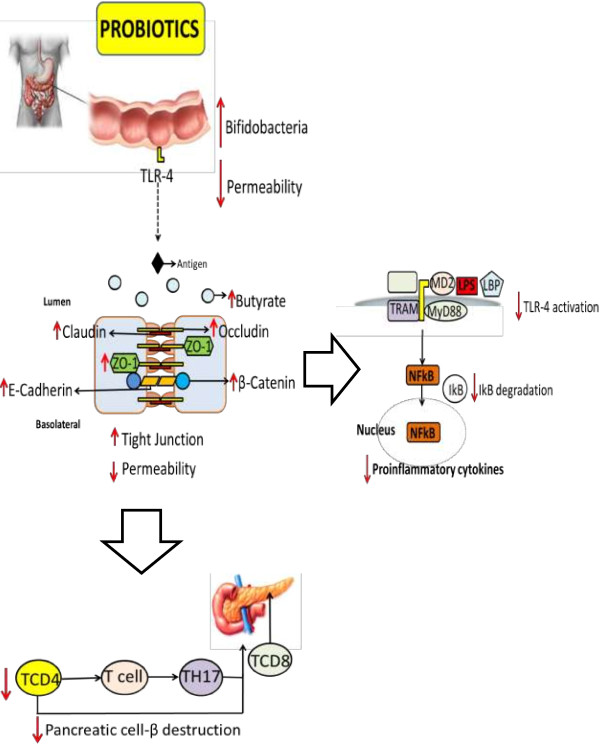
Diabetes is a condition of multifactorial origin, involving several molecular mechanisms related to the intestinal microbiota for its development. In type 2 diabetes, receptor activation and recognition by microorganisms from the intestinal lumen may trigger inflammatory responses, inducing the phosphorylation of serine residues in insulin receptor substrate-1, reducing insulin sensitivity. In type 1 diabetes, the lowered expression of adhesion proteins within the intestinal epithelium favours a greater immune response that may result in destruction of pancreatic β cells by CD8+ T-lymphocytes, and increased expression of interleukin-17, related to autoimmunity. Research in animal models and humans has hypothesized whether the administration of probiotics may improve the prognosis of diabetes through modulation of gut microbiota. We have shown in this review that a large body of evidence suggests probiotics reduce the inflammatory response and oxidative stress, as well as increase the expression of adhesion proteins within the intestinal epithelium, reducing intestinal permeability. Such effects increase insulin sensitivity and reduce autoimmune response. However, further investigations are required to clarify whether the administration of probiotics can be efficiently used for the prevention and management of diabetes.
Overview
The claims and statistics of this paper haven’t been checked yet.
Free: it reads the open-access text and checks the first 5 claims that cite a source we can check. Create a free account to check every claim.
Integrity signals
Registry
Cites
Statistics
Figures
Verification
Claims the paper makes
The claims and statistics of this paper haven’t been checked yet.
Free: it reads the open-access text and checks the first 5 claims that cite a source we can check. Create a free account to check every claim.
Claims other papers make about this one
Each is checked against this paper’s own text: does it say what the citing paper says it does?
The source backs part of the claim, not all of it — or backs it for a different population, condition or comparison.
In the citing paper
“The gut flora mediates three pathways connected to the pathogenesis of obesity and diabetes: low-grade inflammation, raised blood levels of lipopolysaccharides (endotoxemia), and increased energy harvest.”
From A critical review on diabetes mellitus type 1 and type 2 management approaches: from lifestyle modification to current and novel targets and therapeutic agents. (2024) · cites this paper as [110]
Experimental — accuracy not yet measuredThe check wasn’t confident either way, so it gives no verdict — never disputed.
In the citing paper
“Quirós et al. (76) found that kefir is able to inhibit the activity of angiotensin-converting enzyme (ACE) through the action of bioactive peptides generated from casein during the milk fermentation process.”
From Milk kefir : nutritional, microbiological and health benefits (2017) · cites this paper as [76]
Experimental — accuracy not yet measured
Self-check
Percentages, sums and reported differences re-computed from the paper’s own numbers.
The self-check needs the paper’s full text.
Citations
Cites
1 retracted
RETRACTED: Colonic flora, Probiotics, Obesity and Diabetes
Marik, P. E. (2012) · Frontiers in Endocrinology · doi:10.3389/fendo.2012.00087 · Cited by 38
RetractedHuman gut microbes associated with obesity
Ley, R. E., Turnbaugh, P. J., Klein, S., & Gordon, J. I. (2006) · Nature · doi:10.1038/4441022a · Cited by 8,785 · cited 1×
“Studies have shown the intestinal microbiota is associated with the development of metabolic diseases, as obese and diabetic subjects present perturbations in the proportions of Firmicutes, Bacteroidetes and Proteobacterias [4,12].”
BackgroundInterleukin-10 and the Interleukin-10 Receptor
Moore, K. W., de Waal Malefyt, R., Coffman, R. L., & O'Garra, A. (2001) · Annual Review of Immunology · doi:10.1146/annurev.immunol.19.1.683 · Cited by 6,737 · cited 1×
“IL-10 is an anti-inflammatory cytokine which inhibits antigen presentation and proinflammatory cytokine production [107], whereas depletion of hepatic natural killer cells is linked to the development of hepatic insulin resistance [108].”
BackgroundMetabolic Endotoxemia Initiates Obesity and Insulin Resistance
Cani, P. D., Amar, J., Iglesias, M. A., Poggi, M., Knauf, C., Bastelica, D., Neyrinck, A. M., Fava, F., Tuohy, K. M., Chabo, C., et al. (2007) · Diabetes · doi:10.2337/db06-1491 · Cited by 6,638
Origin and physiological roles of inflammation
Medzhitov, R. (2008) · Nature · doi:10.1038/nature07201 · Cited by 6,618 · cited 2×
“However, TLRs also stimulate adaptive immunity, once they induce the secretion of inflammatory cytokines [36].”
BackgroundInsulin signalling and the regulation of glucose and lipid metabolism
Saltiel, A. R., & Kahn, C. R. (2001) · Nature · doi:10.1038/414799a · Cited by 5,326 · cited 3×
“AGE: Advanced glycation end products; AKT: Protein kinase B; AP-1: Activating protein 1; BB: BioBreeding diabetes-prone; BBR: BioBreeding diabetes-resistant; CFU: Colony-forming units; CLRs: C-type lectin receptors; CREB: CRE binding protein; DAMPS: Damage-associated molecular pattern molecules; FFA: Free fatty acid;…”
BackgroundCani, P. D., Bibiloni, R., Knauf, C., Waget, A., Neyrinck, A. M., Delzenne, N. M., & Burcelin, R. (2008) · Diabetes · doi:10.2337/db07-1403 · Cited by 4,819 · cited 2×
“Increased intestinal permeability is a result of reduced expression of tight junction proteins, eventually favouring the translocation of bacterial lipopolysaccharide (LPS), which may result in metabolic endotoxemia and insulin resistance [5,6].”
BackgroundToll-like receptors and innate immunity
Medzhitov, R. (2001) · Nature Reviews Immunology · doi:10.1038/35100529 · Cited by 4,308
Gut Microbiota in Human Adults with Type 2 Diabetes Differs from Non-Diabetic Adults
Larsen, N., Vogensen, F. K., van den Berg, F. W. J., Nielsen, D. S., Andreasen, A. S., Pedersen, B. K., Al-Soud, W. A., Sørensen, S. J., Hansen, L. H., & Jakobsen, M. (2010) · PLoS ONE · doi:10.1371/journal.pone.0009085 · Cited by 2,952 · cited 2×
“Studies have shown the intestinal microbiota is associated with the development of metabolic diseases, as obese and diabetic subjects present perturbations in the proportions of Firmicutes, Bacteroidetes and Proteobacterias [4,12].”
BackgroundA microbial symbiosis factor prevents intestinal inflammatory disease
Mazmanian, S. K., Round, J. L., & Kasper, D. L. (2008) · Nature · doi:10.1038/nature07008 · Cited by 2,340
Research works printed but not linked: 2
- WHO - World Health Organization World Health Statistics WHO/FAO 2012 Geneva: WHO
- WHO - World Health Organization Evaluation of Health and Nutritional Properties of Probiotics in Food Including Powder Milk with Live Lactic Acid Bacteria Joint WHO/FAO Expert Consultation on Geneva 2001 Cordoba, Argentina: WHO
Cited by
Items 201–300 of 362
Induction of gut Lactobacillus reuteri in normal ICR mice by oral administration of L. plantarum AN1
Yokota, Y., Haraguchi, Y., Shikano, A., Kuda, T., Takahashi, H., & Kimura, B. (2018) · Journal of Food Biochemistry · doi:10.1111/jfbc.12589 · Cited by 11
Applications of Bacteria and Their Derived Biomaterials for Repair and Tissue Regeneration
Aavani, F., Biazar, E., Heshmatipour, Z., Arabameri, N., Kamalvand, M., & Nazbar, A. (2021) · Regenerative Medicine · doi:10.2217/rme-2020-0116 · Cited by 11
Nutrition Considerations for Microbiota Health in Diabetes
Jardine, M. (2016) · Diabetes Spectrum · doi:10.2337/ds16-0003 · Cited by 13
Cao, J., Ma, W., Chang, X., Pu, D., Tan, R., Hu, L., Hong, T., Cui, Y., Gao, L., & Wu, J. (2025) · BMC Microbiology · doi:10.1186/s12866-025-04097-y · Cited by 9
Li, T., Yang, J., Zhang, H., Xie, Y., Liu, H., Ren, J., Ren, F., & Jin, J. (2022) · Food & Nutrition Research · doi:10.29219/fnr.v66.8670 · Cited by 10
Bosch, B., Hartikainen, A. K., Ronkainen, A., Scheperjans, F., Arkkila, P. E. T., & Satokari, R. M. (2023) · Microorganisms · doi:10.3390/microorganisms11122901 · Cited by 8
Ghadimi, D., Herrmann, J. E., de Vrese, M., & Heller, K. J. (2018) · PharmaNutrition · doi:10.1016/j.phanu.2018.10.004 · Cited by 9
Les dispositifs informationnels sur les compléments alimentaires : une affaire de sante publique
Bardou‐Boisnier, S., & Caillaud, K. (2015) · Questions de communication · doi:10.4000/questionsdecommunication.9705 · Cited by 10
Santiago-Rodríguez, T. M., Cano, R. J., & Jiménez‐Flores, R. (2016) · Food & Function · doi:10.1039/c6fo00317f · Cited by 12
Yahyapoor, F., Haghighat, N., Sohrabi, Z., Asbaghi, O., Bagherniya, M., Jamialahmadi, T., & Sahebkar, A. (2023) · Current Drug Targets · doi:10.2174/1389450124666230427095742 · Cited by 12
Ahmad, R., Nnamdi, O. A., Etando, A., Sharma, P., Sinha, S., Chowdhury, K., Rowaiye, A. B., Akter, S., Mou, T. J., Dhingra, S., et al. (2023) · Journal of Applied Pharmaceutical Science · doi:10.7324/japs.2023.142387 · Cited by 17
Vinothkanna, A., Shi‐Liang, X., Rajan, D. K., Prathiviraj, R., Sekar, S., Zhang, S., Wang, B., Liu, Z., & Jia, A. (2024) · Food Frontiers · doi:10.1002/fft2.406 · Cited by 8
Liu, S., Yin, X., Hou, C., Liu, X., Ma, H., Zhang, X., Xu, M., Xie, Y., Li, Y., & Wang, J. (2021) · Frontiers in Nutrition · doi:10.3389/fnut.2021.762277 · Cited by 8
Abdella, A., Abou-Elazm, F. I., & El-Far, S. W. (2023) · Microbiology Research · doi:10.3390/microbiolres14020043 · Cited by 8
Probiotic supplementation has little effect on peripheral blood regulatory T cells
West, N. P., Horn, P. L., Pyne, D. B., Warren, H. S., Asad, S., Cox, A. J., Lahtinen, S. J., Lehtinen, M. J., Fricker, P. A., Cripps, A. W., et al. (2016) · Journal of Allergy and Clinical Immunology · doi:10.1016/j.jaci.2016.06.055 · Cited by 9
Nutraceuticals from Bioengineered Microorganisms
Singh, B., Mal, G., Gautam, S. K., & Mukesh, M. (2019) · Springer eBooks · doi:10.1007/978-3-030-21309-1_6 · Cited by 9
Zhang, Q., Gao, F., Yang, X. F., Hu, Y., Liu, Y., Hou, Y., Li, Y., Zhu, B., Niu, S., Huang, Y., et al. (2020) · Medical Science Monitor · doi:10.12659/msm.924040 · Cited by 9
The student-centered classroom: the new gut feeling
Lyles, J. K., & Oli, M. W. (2020) · FEMS Microbiology Letters · doi:10.1093/femsle/fnaa191 · Cited by 10
Nikolaidis, C. G., Gyriki, D., Stavropoulou, E., Karlafti, E., Didangelos, T., Tsigalou, C., & Thanopoulou, A. C. (2025) · Frontiers in Immunology · doi:10.3389/fimmu.2025.1701504 · Cited by 10
Jimoh, A., Zainab, M., & Muhammad, A. (2022) · Bulletin of the National Research Centre/Bulletin of the National Research Center · doi:10.1186/s42269-022-00918-6 · Cited by 10
Chen, X., Pan, L., Zhang, Z., Niu, R., Zhang, H., & Ma, T. (2022) · Zeitschrift für Geburtshilfe und Neonatologie · doi:10.1055/a-1956-3927 · Cited by 7
A formulation platform for incorporating live probiotics into different food matrices
Lee, S. H., Ow, D. S., Tay, P. K. R., Chen, D., Chow, P. S., Yang, Y. Y., Liu, S., & Heng, D. (2024) · Journal of Food Engineering · doi:10.1016/j.jfoodeng.2024.112113 · Cited by 7
Tocut, M., Shoenfeld, Y., & Zandman‐Goddard, G. (2020) · Expert Opinion on Investigational Drugs · doi:10.1080/13543784.2020.1807004 · Cited by 7
Chen, Y., Yue, R., Zhang, B., Li, Z., Shui, J., & Huang, X. (2020) · Medicina Clínica (English Edition) · doi:10.1016/j.medcle.2019.05.019 · Cited by 9
Ghafouri, A., Heshmati, J., Heydari, I., Shoormasti, R. S., Estêvão, M. D., Hoseini, A. S., Morvaridzadeh, M., Akbari‐Fakhrabadi, M., Farsi, F., Zarrati, M., et al. (2022) · Food Science & Nutrition · doi:10.1002/fsn3.3039 · Cited by 6
Probiotics Efficacy and Safety as add-on Therapy to Metformin in Type 2 Diabetes Mellitus
Kumar, V. M., Ahmed, Z., & Rahman, S. A. U. (2022) · Indian Journal of Public Health Research & Development · doi:10.37506/ijphrd.v14i4.18637 · Cited by 9
Neiva, L., Lopez, L. C., Pasiani, R. O., Serra, M. J. R., & Rullo, V. E. V. (2024) · Revista Paulista de Pediatria · doi:10.1590/1984-0462/2024/42/2023097 · Cited by 7
Research Progress on the Relationship between Intestinal Flora and Mental and Psychological Diseases
Tao, H., Wang, C., Guo, J., & Guo, M. (2020) · Advances in Microbiology · doi:10.4236/aim.2020.106021 · Cited by 10
Li, X., Zhang, Y., Zhao, C., Zhang, B., Peng, B., Zhang, Y., Wang, J., & Wang, S. (2022) · Journal of Functional Foods · doi:10.1016/j.jff.2022.105083 · Cited by 8
Probiotic fermented milk and type 2 diabetes mellitus: Mechanisms, benefits, and future directions”
Hidalgo-Silva, D., Berenice, O. L., Cruz-Guerrero, A. E., González-Olivares, L. G., & Ovando, A. C. (2025) · Journal of Functional Foods · doi:10.1016/j.jff.2025.107068 · Cited by 9
Singh, B., & Mal, G. (2016) · Journal of Gastrointestinal & Digestive System · doi:10.4172/2161-069x.1000415 · Cited by 7
Relationships between Diabetes and the Intestinal Microbial Population
Bondy, S. C. (2022) · International Journal of Molecular Sciences · doi:10.3390/ijms24010566 · Cited by 10
Health benefits of bacteriocins produced by probiotic lactic acid bacteria
Rani, P., & Tiwari, S. K. (2023) · Elsevier eBooks · doi:10.1016/b978-0-323-99476-7.00018-1 · Cited by 9
Ye, Y., Yu, D., Liu, Q., Ma, S., Zhang, M., Zhao, M., Xu, J., & Yu, J. (2023) · Animal Feed Science and Technology · doi:10.1016/j.anifeedsci.2023.115627 · Cited by 7
Sarkar, A., Khan, A. S., Kaul, R., Lee, S., Kamal, I., Paul, P., Laws, S., & Châari, A. (2024) · Discover Public Health · doi:10.1186/s12982-024-00213-x · Cited by 7
Significance Of Gut-Blood Barrier In Health And Disease
Huć, T., Pham, K., Skrzypecki, J., & Ufnal, M. (2016) · European Journal of Biological Research · doi:10.5281/zenodo.60336 · Cited by 7
Impact of Probiotics in Human Health and Disease Treatment
Tingirikari, J. M. R., Sarathy, M. V., & Karthigarani, A. K. (2018) · Advances in human services and public health (AHSPH) book series · doi:10.4018/978-1-5225-3267-5.ch002 · Cited by 6
Sohag, M. S. U., Paul, M., Al‐Bari, M. A. A., Wahed, M. I. I., & Khan, M. R. I. (2019) · Food and Nutrition Sciences · doi:10.4236/fns.2019.1012101 · Cited by 13
Antihyperglycemic Activities of Fermented Milk Enriched with Gembili (Dioscorea esculenta)
Andriani, R. D., Rahayu, P. P., & Apriliyani, M. W. (2020) · IOP Conference Series Earth and Environmental Science · doi:10.1088/1755-1315/411/1/012047 · Cited by 9
Fructooligosaccharides as Prebiotics, their Metabolism, and Health Benefits
de la Rosa, O., Flores‐Gallegos, A. C., Ascacio‐Valdés, J. A., Sepúlveda, L., Montañez, J., & Aguilar, C. N. (2022) · Wiley eBooks · doi:10.1002/9781119702160.ch13 · Cited by 7
Ren, X., Yan, C., Liu, X. Y., Jia, X., Chen, Y., Zhao, H., Feng, Y., Xue, G., Cui, J., Ke, Y., et al. (2025) · Journal of Gastroenterology · doi:10.1007/s00535-025-02332-x · Cited by 6
Shen, C., Wankhade, U. D., Shankar, K., Najjar, R. S., Feresin, R. G., Elmassry, M. M., Dufour, J. M., KAUR, G., Chintapalli, S. V., Piccolo, B. D., et al. (2024) · In Vivo · doi:10.21873/invivo.13606 · Cited by 6
Modulatory Role of Hesperetin–Copper(II) on Gut Microbiota in Type 2 Diabetes Mellitus Mice
Peng, X., Wei, Y., Gong, D., & Zhang, G. (2025) · Foods · doi:10.3390/foods14132390 · Cited by 7
Luo, C., Wan, J., Rao, Z., & Zhang, Y. (2020) · Gynecological Endocrinology · doi:10.1080/09513590.2020.1853696 · Cited by 5
Functional Foods and Antioxidant Effects: Emphasizing the Role of Probiotics
Heydari, A., Parvini, F., & Fard, N. A. (2022) · IntechOpen eBooks · doi:10.5772/intechopen.104322 · Cited by 5
Mechanisms of Beneficial Effects of Probiotics in Diabetes Mellitus
Sharma, V., Singh, T. G., Dhiman, S., & Garg, N. (2022) · Springer eBooks · doi:10.1007/978-981-16-8444-9_6 · Cited by 6
Ojo, O. O., Ogunleke, T., Ajeoge, J., & Olorunsogo, O. O. (2022) · Journal of Diabetes & Metabolic Disorders · doi:10.1007/s40200-022-01132-x · Cited by 6
Sariyanti, M., Andita, T. A., Erlinawati, N. D., Yunita, E., Nasution, A. A., Sari, K., Massardi, N. A., & Putri, S. R. (2022) · The Indonesian Biomedical Journal · doi:10.18585/inabj.v14i4.2047 · Cited by 10
Chlorogenic acid ameliorates intestinal inflammation via miRNA ‐microbe axis in db/db mice
Yan, Y., Li, Q., Yang, F., Ling, S., Guo, K., & Zhou, X. (2024) · The FASEB Journal · doi:10.1096/fj.202400382r · Cited by 6
Prevention of Heat Stress Adverse Effects in Rats by Bacillus subtilis Strain
Sorokulova, I. B., Globa, L. P., Pustovyy, O. M., & Vodyanoy, V. J. (2016) · Journal of Visualized Experiments · doi:10.3791/54122 · Cited by 5
Szablewski, L. (2021) · Elsevier eBooks · doi:10.1016/b978-0-12-819265-8.00065-6 · Cited by 5
Future Drug Treatments for Type 2 Diabetes
Bailey, C. J. (2016) · Wiley eBooks · doi:10.1002/9781118924853.ch67 · Cited by 5
Mihailović, M., Bajić, S. S., Јovanović, J. A., Brdarić, E., Dinić, S., Grdović, N., Uskoković, A. S., Rajić, J., Đorđević, M., Tolinački, M., et al. (2024) · International Journal of Molecular Sciences · doi:10.3390/ijms25147697 · Cited by 6
Leech, B., McEwen, B. J., & Sekyere, E. O. (2020) · Alternative and Complementary Therapies · doi:10.1089/act.2020.29287.ble · Cited by 4
PENGARUH STARTER BAKTERI ASAM LAKTAT PROBIOTIK TERHADAP PERUBAHAN KIMIAWI DAN MIKROBIOLOGIS RUSIP
Departemen Teknologi Hasil Perairan, F. P. D. I. K., Batubara, P. A. P., Desniar, D., Setyaningsih, I., & Departemen Teknologi Hasil Perairan, F. P. D. I. K. (2019) · Jurnal Teknologi dan Industri Pangan · doi:10.6066/jtip.2019.30.1.28 · Cited by 9
Diabetic enteric neuropathy: imbalance between oxidative and antioxidative mechanisms
Bódi, N., & Bagyánszki, M. (2020) · Elsevier eBooks · doi:10.1016/b978-0-12-815776-3.00003-6 · Cited by 5
Probiotics in the management of diabetes
Madempudi, R. S., Neelamraju, J., Mokashe, N. U., & Ahire, J. J. (2022) · Elsevier eBooks · doi:10.1016/b978-0-323-85170-1.00005-1 · Cited by 5
Probiotics for type 2 diabetes mellitus: an anti-diabetic intervention to see beyond the gut
Purwanta, M. L. A., Dewi, N. P. A. P. A., & Saraswati, M. R. (2017) · Indonesia Journal of Biomedical Science · doi:10.15562/ijbs.v11i2.139 · Cited by 5
Future Impact of Probiotic Therapy of Metabolic Disorder
El‐Sayyad, H. I. (2017) · Cited by 5
Adeli, I., Habibi, F., Badami, N., & Abdollahi, M. R. (2023) · Elsevier eBooks · doi:10.1016/b978-0-12-822521-9.00193-3 · Cited by 5
Mekadim, C., Mrázek, J., Fliegerova, K. O., Sechovcová, H., Mahayri, T. M., Jarošíková, R., Husáková, J., Wosková, V., Tůma, P., Polak, J., et al. (2025) · BMC Microbiology · doi:10.1186/s12866-025-04041-0 · Cited by 6
A Novel Polysaccharide from Blackened Jujube: Structural Characterization and Immunoactivity
Meng, M., Ning, F., He, X., Li, H., Feng, Y., Qi, Y., & Sun, H. (2025) · Foods · doi:10.3390/foods14142531 · Cited by 4
Uzair, S. A., Ajeesh, A., Ahmed, S. H., Alabduljabbar, S., Ahmad, F., Lakshmanan, A. P., & Terranegra, A. (2025) · Nutrition Reviews · doi:10.1093/nutrit/nuaf238 · Cited by 5
Probiotic Chewing Gums for Adjuctive Treatment of Periodontitis in Diabetics
DURGA, K. R., Ravindra, S., & Halami, P. M. (2023) · Cumhuriyet Dental Journal · doi:10.7126/cumudj.1094906 · Cited by 3
Mutalub, Y. B., Azemi, A. K., Suhaimi, S. Q. A., Rasool, A. H. G., Tang, S. P., Lee, C., & Mokhtar, S. S. (2025) · Journal of Functional Foods · doi:10.1016/j.jff.2025.106802 · Cited by 5
Neyazi, N., Farsani, T. M., Nouri, Z. H. M., Ghahremani, M. H., Khorramizadeh, M. R., Tajerian, R., & Motevaseli, E. (2016) · In Vitro Cellular & Developmental Biology - Animal · doi:10.1007/s11626-016-0083-4 · Cited by 3
ALTUN, H. K. (2019) · Journal of Nutrition and Dietetics · doi:10.33076/2019.bdd.1320 · Cited by 6
The use of E. faecium probiotic and autoprobiotic in patients with type 2 diabetes mellitus
Бакулина, Н. В., Викторович, Т. С., Ермоленко, Е. И., Котылева, М. П., Lavrenova, N. S., Topalova, Y. G., Simanenkov, V. I., & Suvorov, A. N. (2022) · HERALD of North-Western State Medical University named after I I Mechnikov · doi:10.17816/mechnikov104795 · Cited by 3
Rodríguez-Hernández, A. I., Salinas, E., Tirado‐González, D. N., Benítez, C. A. V., Jiménez, M., Córdova-Dávalos, L. E., Cervantes‐García, D., Nava, V. F. R., & Bermúdez‐Humarán, L. G. (2022) · Microorganisms · doi:10.3390/microorganisms10071291 · Cited by 4
Rithi, A. T., Mitra, A., Banerjee, A., Ilanchoorian, D., Marotta, F., & Radhakrishnan, A. (2024) · Functional Food Science · doi:10.31989/ffs.v4i1.1271 · Cited by 32
Prapa, I., Kompoura, V., Pavlatou, C., Nelios, G., Mitropoulou, G., Kostomitsopoulos, N. G., Plessas, S., Bezirtzoglou, E., Karathanos, V. Τ., Yanni, A. E., et al. (2024) · Microorganisms · doi:10.3390/microorganisms12102004 · Cited by 4
Role of Probiotics in Diabetes Control
Khalili, L., Eslamnezhad, K., Barzegar, A., Dehghani, A., Zakeri, N., & Mehrabi, E. (2022) · Springer eBooks · doi:10.1007/978-981-16-1626-6_16 · Cited by 3
GUT MICROBIOTA AND DIABETES MELLITUS - AN INTERLINKAGE
Jayaswal, R. P., Vijayasimha, M., & Prabhakar, P. K. (2018) · Asian Journal of Pharmaceutical and Clinical Research · doi:10.22159/ajpcr.2017.v11i1.22305 · Cited by 3
Personalized Probiotics Based on Phenotypes and Dietary Habit: A Critical Evaluation
Lee, Y. K. (2018) · Journal of Probiotics & Health · doi:10.4172/2329-8901.1000205 · Cited by 5
Zalzala, S. H., Al-Hashimi, B. A.-R., Zalzala, Z. H. A., & Fahad, K. S. (2024) · BMC Nutrition · doi:10.1186/s40795-024-00976-1 · Cited by 2
Wu, M., Chen, L. W., Chen, J., & Lai, C. (2025) · International Journal of Molecular Sciences · doi:10.3390/ijms26188890 · Cited by 3
Bakırhan, H., Arpa, F. Ö., Pehlivan, M., & Kalkan, İ. (2025) · Journal of Nutrition · doi:10.1016/j.tjnut.2025.11.016 · Cited by 6
Changes in the gut microbiota of pseudoxanthoma elasticum patients
Bérard, M., Chassain, K., Méry, C., Gillaizeau, F., Carton, T., Humeau, H., Navasiolava, N. M., Rocour, S., Schurgers, L. J., Kempf, M., et al. (2024) · Annales de Dermatologie et de Vénéréologie · doi:10.1016/j.annder.2024.103290 · Cited by 2
A scientometric visualization analysis of the gut microbiota and gestational diabetes mellitus
Su, Z., Liu, L., Zhang, J., Guo, J., Wang, G., & Zeng, X. (2025) · Frontiers in Microbiology · doi:10.3389/fmicb.2025.1485560 · Cited by 4
The role of functional foods in diabetes management
Mirzaei, M., Alahyaribeik, S., Mirdamadi, N., Fang, Y., & Hazaveh, M. N. (2025) · Elsevier eBooks · doi:10.1016/b978-0-443-28862-3.00020-0 · Cited by 3
The Impact of Gut Microbiota in the Development and Management of Diabetes
Upadhye, K. S., Tayade, P., Hariom, P., & Narendra, Y. (2025) · Journal of Diabetology · doi:10.4103/jod.jod_143_24 · Cited by 2
Wu, J., Li, Y., He, S., Tang, X., Wang, J., & Li, Y. (2025) · Journal of Microbiology and Biotechnology · doi:10.4014/jmb.2502.02053 · Cited by 3
Saito, M., Kaneda, A., SUGIYAMA, T., Ryousuke, I. I. D. A., Otokuni, K., Kaburagi, M., & Matsuoka, H. (2015) · EXPERIMENTAL ANIMALS · doi:10.1538/expanim.14-0089 · Cited by 2
Gastroenterology Disease and Lifestyle Medicine
FRIEDMAN, G. J. (2016) · Springer eBooks · doi:10.1007/978-3-319-24687-1_30 · Cited by 4
Longoria-García, S., Belmares, R. E., Flores-Verástegui, M. I. M., Contreras‐Esquivel, J. C., Montañez, J., & Cruz, M. (2016) · InTech eBooks · doi:10.5772/63643 · Cited by 2
Anti-hyperglycemic potential of Lactobacillus spp. in alloxan-induced Wistar rats.
Bharti, V., Mehta, A., Mourya, G. K., Ahirwal, L., Bajpai, V. K., & Shukla, S. (2017) · PubMed · Cited by 2
Al-Rawe, A. M., & Suleiman, A. A. (2020) · Iraqi Journal of Science · doi:10.24996/ijs.2020.61.2.4 · Cited by 2
Fermented Milk: The Most Famous Probiotic, Prebiotic, and Synbiotic Food Carrier
Thaidi, N. I. A., Rios‐Solis, L., & Halim, M. (2021) · Elsevier eBooks · doi:10.1016/b978-0-12-819662-5.00012-4 · Cited by 4
Rajput, K., & Dubey, R. C. (2021) · Asian Journal of Pharmaceutical and Clinical Research · doi:10.22159/ajpcr.2021.v14i3.40321 · Cited by 2
Neyazi, N., Motevaseli, E., Khorramizadeh, M. R., Farsani, T. M., Nouri, Z. H. M., Nasli‐Esfahani, E., & Ghahremani, M. H. (2018) · Medical Sciences · doi:10.3390/medsci6020036 · Cited by 2
Sharma, H., Tyagi, S., Verma, S., Ghosh, S., & Pande, M. S. (2026) · Diabetes Research and Clinical Practice · doi:10.1016/j.diabres.2026.113291 · Cited by 1
Motte, L. R. D. L., Carreras, F., & Drago, L. (2026) · Frontiers in Endocrinology · doi:10.3389/fendo.2026.1858420 · Cited by 4
A bélflóra hematológiai vonatkozásai
Szerafin, L., & Jakó, J. (2019) · Orvosi Hetilap · doi:10.1556/650.2019.31403 · Cited by 2
Viana, E. T., Kelman, J., Pereira, M. G., & Oliveira, C. R. (2022) · Arquivos Médicos dos Hospitais e da Faculdade de Ciências Médicas da Santa Casa de São Paulo · doi:10.26432/1809-3019.2022.67.006 · Cited by 1
Borges, H. D. M., Sousa, R. N. M., Ribeiro, L. S., & Draeger, C. L. (2023) · Revista Ibero-Americana de Humanidades, Ciências e Educação · doi:10.51891/rease.v9i10.11646 · Cited by 2
Desai, S. P., Kurian, C., Das, S., Rebello, S. J., Acharyya, S., & Paari, K. A. (2023) · Journal of Health Science and Medical Research · doi:10.31584/jhsmr.20231015 · Cited by 1
Probiotics as a Food Supplement: What are they and how do they Work?
(2023) · Journal of Nutrition Food Science and Technology · doi:10.47485/2834-7854.1032 · Cited by 1
Role of symbiotics in the treatment of diabetes mellitus via modification of the immune system
Khan, A., Sarkar, E., Afrin, G., Misra, A., & Chandra, A. (2024) · Elsevier eBooks · doi:10.1016/b978-0-443-13195-0.00014-4 · Cited by 1
A pro-, pre- és szinbiotikumok hatása a szénhidrát-, illetve lipidanyagcserére
Tomasics, G., Schandl, L., Polyák, A., & Winkler, G. (2024) · Orvosi Hetilap · doi:10.1556/650.2024.33064 · Cited by 1
Metadata
- Authors
- Gomes, A. C., Bueno, A. A., de Souza, R. G. M., & Mota, J. F.
- Affiliations
- Universidade Federal de Goiás (BR)
- University of Worcester (GB)
- Corresponding author
- Mota, João Felipe
- Venue
- Nutrition Journal
- Published
- 2014-06-17
- Volume
- 13
- Issue
- 1
- Pages
- 60-60
- ISSN
- 1475-2891 (ISSN-L)
- PMC
- PMC4078018
- OpenAlex
- W2125446896
- Cited by
- 363
- References
- 124
- Citations by year
- 2026: 9 · 2025: 21 · 2024: 33 · 2023: 34 · 2022: 44 · 2021: 39 · 2020: 41 · 2019: 35 · 2018: 32 · 2017: 28 · 2016: 26 · 2015: 20 · 2014: 1
- FWCI
- 3.12
- Type
- journal article
- Language
- en
- Open access
- gold
- doi.org
- Licence
- Locations
- Nutrition Journal (publishedVersion, cc-by)
- PubMed Central (publishedVersion, cc-by)
- PubMed (publishedVersion)
- Americanae (AECID Library) (publishedVersion, other-oa)
- Worcester Research and Publications (University of Worcester) (acceptedVersion)
- LA Referencia (Red Federada de Repositorios Institucionales de Publicaciones Científicas) (submittedVersion, other-oa)
- Funders
- University of Worcester
- Fundação de Amparo à Pesquisa do Estado de Goiás
- Universidade de São Paulo
- Universidade Estadual Paulista
- Directorate for Biological Sciences
- Topics
- Life Sciences › Agricultural and Biological Sciences › Food Science › Probiotics and Fermented Foods
- Life Sciences › Biochemistry, Genetics and Molecular Biology › Molecular Biology › Gut microbiota and health
- Health Sciences › Dentistry › Periodontics › Oral microbiology and periodontitis research
- Keywords
- gut microbiota, probiotics, type 2 diabetes, type 1 diabetes, insulin sensitivity, intestinal inflammation, oxidative stress, intestinal permeability, islet autoimmunity, IL-17, IRS-1, diabetes prevention
- MeSH terms
- Animals, Clinical Trials as Topic, Diabetes Mellitus, Type 1, Diabetes Mellitus, Type 2, Humans, Inflammation, Insulin Resistance, Probiotics, Gastrointestinal Tract, Toll-Like Receptor 4, Microbiota
About these checks
Registry, retraction, Cites and statistics results are computed, not judged, with one exception: a printed reference that no index lists is read once by a model before it counts as a citation error. Claims are extracted by a model and kept only when their quote appears verbatim in the text; each cited source is then checked, with a model’s help, for whether it says what the claim relies on. Those verdicts can be wrong — read the claim’s quote and the cited source before relying on one.
Statistics and arithmetic are recomputed, not judged.
Confidence bands are shown only for fields calibrated on our annotated test set. None is calibrated yet, so no band is shown.
What counts as a claim ›How we measure confidence ›How we check this ›
Are you an author, or do you see a problem with this page? Request a review
Data sources
Bibliographic data: Semantic Scholar, OpenAlex, Crossref.
Contains information from the Semantic Scholar Academic Graph Datasets, made available under the ODC Attribution License (ODC-BY 1.0).
Semantic Scholar’s data is described in: Kinney, R., et al. (2023). The Semantic Scholar Open Data Platform. arXiv:2301.10140.
