

Gut microbiota, probiotics and diabetes
Open accessThe DOI matches its Crossref record; 124 of the 124 references it cites were found in a registry or an index.
Abstract
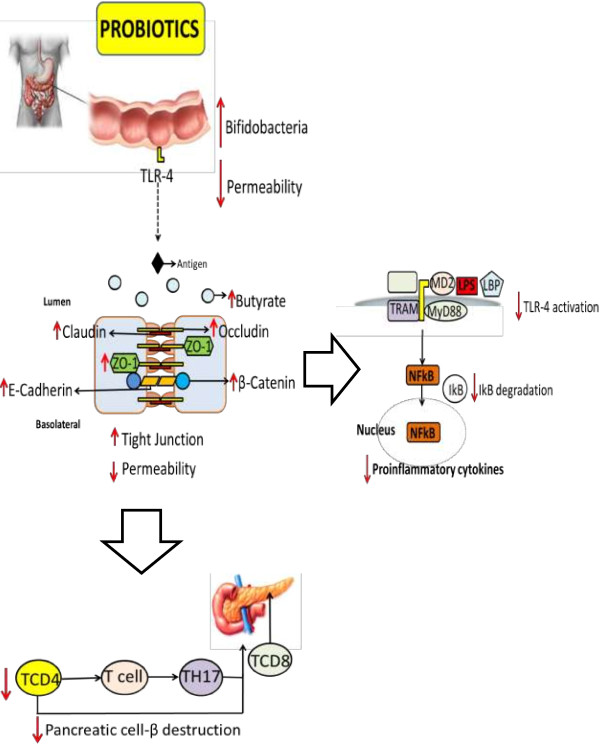
Diabetes is a condition of multifactorial origin, involving several molecular mechanisms related to the intestinal microbiota for its development. In type 2 diabetes, receptor activation and recognition by microorganisms from the intestinal lumen may trigger inflammatory responses, inducing the phosphorylation of serine residues in insulin receptor substrate-1, reducing insulin sensitivity. In type 1 diabetes, the lowered expression of adhesion proteins within the intestinal epithelium favours a greater immune response that may result in destruction of pancreatic β cells by CD8+ T-lymphocytes, and increased expression of interleukin-17, related to autoimmunity. Research in animal models and humans has hypothesized whether the administration of probiotics may improve the prognosis of diabetes through modulation of gut microbiota. We have shown in this review that a large body of evidence suggests probiotics reduce the inflammatory response and oxidative stress, as well as increase the expression of adhesion proteins within the intestinal epithelium, reducing intestinal permeability. Such effects increase insulin sensitivity and reduce autoimmune response. However, further investigations are required to clarify whether the administration of probiotics can be efficiently used for the prevention and management of diabetes.
Overview
The claims and statistics of this paper haven’t been checked yet.
Free: it reads the open-access text and checks the first 5 claims that cite a source we can check. Create a free account to check every claim.
Integrity signals
Registry
Cites
Statistics
Figures
Verification
Claims the paper makes
The claims and statistics of this paper haven’t been checked yet.
Free: it reads the open-access text and checks the first 5 claims that cite a source we can check. Create a free account to check every claim.
Claims other papers make about this one
Each is checked against this paper’s own text: does it say what the citing paper says it does?
The source backs part of the claim, not all of it — or backs it for a different population, condition or comparison.
In the citing paper
“The gut flora mediates three pathways connected to the pathogenesis of obesity and diabetes: low-grade inflammation, raised blood levels of lipopolysaccharides (endotoxemia), and increased energy harvest.”
From A critical review on diabetes mellitus type 1 and type 2 management approaches: from lifestyle modification to current and novel targets and therapeutic agents. (2024) · cites this paper as [110]
Experimental — accuracy not yet measuredThe check wasn’t confident either way, so it gives no verdict — never disputed.
In the citing paper
“Quirós et al. (76) found that kefir is able to inhibit the activity of angiotensin-converting enzyme (ACE) through the action of bioactive peptides generated from casein during the milk fermentation process.”
From Milk kefir : nutritional, microbiological and health benefits (2017) · cites this paper as [76]
Experimental — accuracy not yet measured
Self-check
Percentages, sums and reported differences re-computed from the paper’s own numbers.
The self-check needs the paper’s full text.
Citations
Cites
1 retracted
RETRACTED: Colonic flora, Probiotics, Obesity and Diabetes
Marik, P. E. (2012) · Frontiers in Endocrinology · doi:10.3389/fendo.2012.00087 · Cited by 38
RetractedHuman gut microbes associated with obesity
Ley, R. E., Turnbaugh, P. J., Klein, S., & Gordon, J. I. (2006) · Nature · doi:10.1038/4441022a · Cited by 8,785 · cited 1×
“Studies have shown the intestinal microbiota is associated with the development of metabolic diseases, as obese and diabetic subjects present perturbations in the proportions of Firmicutes, Bacteroidetes and Proteobacterias [4,12].”
BackgroundInterleukin-10 and the Interleukin-10 Receptor
Moore, K. W., de Waal Malefyt, R., Coffman, R. L., & O'Garra, A. (2001) · Annual Review of Immunology · doi:10.1146/annurev.immunol.19.1.683 · Cited by 6,737 · cited 1×
“IL-10 is an anti-inflammatory cytokine which inhibits antigen presentation and proinflammatory cytokine production [107], whereas depletion of hepatic natural killer cells is linked to the development of hepatic insulin resistance [108].”
BackgroundMetabolic Endotoxemia Initiates Obesity and Insulin Resistance
Cani, P. D., Amar, J., Iglesias, M. A., Poggi, M., Knauf, C., Bastelica, D., Neyrinck, A. M., Fava, F., Tuohy, K. M., Chabo, C., et al. (2007) · Diabetes · doi:10.2337/db06-1491 · Cited by 6,638
Origin and physiological roles of inflammation
Medzhitov, R. (2008) · Nature · doi:10.1038/nature07201 · Cited by 6,618 · cited 2×
“However, TLRs also stimulate adaptive immunity, once they induce the secretion of inflammatory cytokines [36].”
BackgroundInsulin signalling and the regulation of glucose and lipid metabolism
Saltiel, A. R., & Kahn, C. R. (2001) · Nature · doi:10.1038/414799a · Cited by 5,326 · cited 3×
“AGE: Advanced glycation end products; AKT: Protein kinase B; AP-1: Activating protein 1; BB: BioBreeding diabetes-prone; BBR: BioBreeding diabetes-resistant; CFU: Colony-forming units; CLRs: C-type lectin receptors; CREB: CRE binding protein; DAMPS: Damage-associated molecular pattern molecules; FFA: Free fatty acid;…”
BackgroundCani, P. D., Bibiloni, R., Knauf, C., Waget, A., Neyrinck, A. M., Delzenne, N. M., & Burcelin, R. (2008) · Diabetes · doi:10.2337/db07-1403 · Cited by 4,819 · cited 2×
“Increased intestinal permeability is a result of reduced expression of tight junction proteins, eventually favouring the translocation of bacterial lipopolysaccharide (LPS), which may result in metabolic endotoxemia and insulin resistance [5,6].”
BackgroundToll-like receptors and innate immunity
Medzhitov, R. (2001) · Nature Reviews Immunology · doi:10.1038/35100529 · Cited by 4,308
Gut Microbiota in Human Adults with Type 2 Diabetes Differs from Non-Diabetic Adults
Larsen, N., Vogensen, F. K., van den Berg, F. W. J., Nielsen, D. S., Andreasen, A. S., Pedersen, B. K., Al-Soud, W. A., Sørensen, S. J., Hansen, L. H., & Jakobsen, M. (2010) · PLoS ONE · doi:10.1371/journal.pone.0009085 · Cited by 2,952 · cited 2×
“Studies have shown the intestinal microbiota is associated with the development of metabolic diseases, as obese and diabetic subjects present perturbations in the proportions of Firmicutes, Bacteroidetes and Proteobacterias [4,12].”
BackgroundA microbial symbiosis factor prevents intestinal inflammatory disease
Mazmanian, S. K., Round, J. L., & Kasper, D. L. (2008) · Nature · doi:10.1038/nature07008 · Cited by 2,340
Research works printed but not linked: 2
- WHO - World Health Organization World Health Statistics WHO/FAO 2012 Geneva: WHO
- WHO - World Health Organization Evaluation of Health and Nutritional Properties of Probiotics in Food Including Powder Milk with Live Lactic Acid Bacteria Joint WHO/FAO Expert Consultation on Geneva 2001 Cordoba, Argentina: WHO
Cited by
Items 101–200 of 362
Yefet, E., Bar, L., Izhaki, I., Iskander, R., Massalha, M., Younis, J. S., & Nachum, Z. (2023) · Nutrients · doi:10.3390/nu15071633 · Cited by 55
Genetics of Type 2 Diabetes and Clinical Utility
Dorajoo, R., Liu, J., & Boehm, B. O. (2015) · Genes · doi:10.3390/genes6020372 · Cited by 54
Archer, A. C., Kurrey, N. K., & Halami, P. M. (2018) · Journal of Applied Microbiology · doi:10.1111/jam.13757 · Cited by 50
Yue, S., Shan, B., Peng, C., Tan, C., Wang, Q., & Gong, J. (2022) · Food & Function · doi:10.1039/d1fo03374c · Cited by 45
Yanni, A. E., Mitropoulou, G., Prapa, I., Agrogiannis, G., Kostomitsopoulos, N. G., Bezirtzoglou, E., Kourkoutas, Y., & Karathanos, V. Τ. (2020) · Metabolism Open · doi:10.1016/j.metop.2020.100040 · Cited by 45
Ghorbani, Y., Schwenger, K. J. P., & Allard, J. P. (2021) · European Journal of Nutrition · doi:10.1007/s00394-021-02520-4 · Cited by 43
Iron Reshapes the Gut Microbiome and Host Metabolism
Botta, A. M., Barra, N. G., Lam, N. H., Chow, S., Pantopoulos, K., Schertzer, J. D., & Sweeney, G. (2021) · Journal of Lipid and Atherosclerosis · doi:10.12997/jla.2021.10.2.160 · Cited by 44
Modeling human immune responses to vaccination in vitro
Morrocchi, E., van Haren, S. D., Palma, P., & Levy, O. (2023) · Trends in Immunology · doi:10.1016/j.it.2023.11.002 · Cited by 44
Bavafa-Valenlia, K., Morshedi, M., Saghafi‐Asl, M., Shahabi, P., & Abbasi, M. M. (2018) · Journal of Functional Foods · doi:10.1016/j.jff.2018.04.069 · Cited by 42
Liang, Y., Liu, L.-Y., Jia, Y., Li, Y., Cai, J.-N., Shu, Y., Tan, J., Chen, P., Li, H., Cai, H., et al. (2022) · World Journal of Diabetes · doi:10.4239/wjd.v13.i10.861 · Cited by 44
Microbiome Dysbiosis: A Pathological Mechanism at the Intersection of Obesity and Glaucoma
Pezzino, S., Sofia, M., Greco, L. P., Litrico, G., Filippello, G., Sarvà, I., Greca, G. L., & Latteri, S. (2023) · International Journal of Molecular Sciences · doi:10.3390/ijms24021166 · Cited by 41
Factors affecting obesity and its treatment
Singh, P., & Nand, S. (2019) · Obesity Medicine · doi:10.1016/j.obmed.2019.100140 · Cited by 43
Manaer, T., Yu, L., Nabi, X., Dilidaxi, D., Liu, L., & Sailike, J. (2021) · BMC Complementary Medicine and Therapies · doi:10.1186/s12906-021-03303-4 · Cited by 40
Zhang, W., Quan, K., Feng, C., Zhang, T., He, Q.-W., Kwok, L. Y., & Chen, Y. (2022) · Nutrients · doi:10.3390/nu14183745 · Cited by 46
Djurasevic, S., Bojic, S., Nikolic, B., Dimkic, I., Todorovic, Z., Djordjevic, J., & Mitic-Culafic, D. (2018) · Plant Foods for Human Nutrition · doi:10.1007/s11130-018-0689-7 · Cited by 38
Mihailović, M., Živković, M., Јovanović, J. A., Tolinački, M., Đorđević, M., Rajić, J., Uskoković, A. S., Dinić, S., Grdović, N., Golić, N., et al. (2017) · Journal of Functional Foods · doi:10.1016/j.jff.2017.09.033 · Cited by 42
Tillmann, S., & Wegener, G. (2018) · Behavioural Brain Research · doi:10.1016/j.bbr.2018.08.025 · Cited by 39
Hasain, Z., Ali, R. A. R., Ahmad, H. F., Rauf, U. F. A., Oon, S. F., & Mokhtar, N. M. (2022) · Nutrients · doi:10.3390/nu14183878 · Cited by 49
Wang, J., Yu, L.-Y., Zeng, X., Zheng, J., Wang, B., & Pan, L. (2021) · Food Bioscience · doi:10.1016/j.fbio.2021.101452 · Cited by 40
Gut Microbiota and Autoimmune Diseases: A Charming Real World Together with Probiotics
Piccioni, A., Cicchinelli, S., Valletta, F., Luca, G. D., Longhitano, Y., Candelli, M., Ojetti, V., Sardeo, F., Navarra, S. M., Covino, M., et al. (2021) · Current Medicinal Chemistry · doi:10.2174/0929867328666210922161913 · Cited by 40
Baroni, I., Fabrizi, D., Luciani, M., Magon, A., Conte, G., Angeli, G. D., Paglione, G., Ausili, D., & Caruso, R. (2024) · Clinical Nutrition · doi:10.1016/j.clnu.2024.03.006 · Cited by 45
Li, C., Nie, S., Zhu, K.-X., Xiong, T., & Xie, M. (2015) · Food Research International · doi:10.1016/j.foodres.2015.12.025 · Cited by 35
Pan, J., Pan, Q., Chen, Y., Zhang, H., & Zheng, X. (2019) · The Journal of Maternal-Fetal & Neonatal Medicine · doi:10.1080/14767058.2017.1376318 · Cited by 35
The Gut Microbiome, Lactobacillus acidophilus; Relation with Type 2 Diabetes Mellitus
Halawa, M. R., El-Salam, M. A., Mostafa, B. M., & Sallout, S. S. (2019) · Current Diabetes Reviews · doi:10.2174/1573399815666190206162143 · Cited by 38
Korkmaz, Ö. A., Şumlu, E., Koca, H. B., Pektaş, M. B., Kocabaş, A., Sadı, G., & Akar, F. (2019) · Medicina · doi:10.3390/medicina55050207 · Cited by 36
Probiotic mediated NF-κB regulation for prospective management of type 2 diabetes
Bhardwaj, R., Singh, B. P., Sandhu, N., Singh, N., Kaur, R., Rokana, N., Singh, K. S., Chaudhary, V., & Panwar, H. (2020) · Molecular Biology Reports · doi:10.1007/s11033-020-05254-4 · Cited by 40
Biswas, I., & MOHAPATRA, P. K. D. (2023) · Bioresource Technology Reports · doi:10.1016/j.biteb.2023.101583 · Cited by 40
Wang, C., Tung, Y., Chang, H., Lin, C.-H., & Chen, Y. (2020) · Nutrients · doi:10.3390/nu12113477 · Cited by 45
Resistant Maltodextrin and Metabolic Syndrome: A Review
Astina, J., & Sapwarobol, S. (2018) · Journal of the American College of Nutrition · doi:10.1080/07315724.2018.1523028 · Cited by 42
Memarrast, F., Ghafouri‐Fard, S., Kolivand, S., Nodooshan, S. J., Neyazi, N., Sadroddiny, E., & Motevaseli, E. (2017) · Diabetes/Metabolism Research and Reviews · doi:10.1002/dmrr.2912 · Cited by 33
Chen, Y., Yue, R., Zhang, B., Li, Z., Shui, J., & Huang, X. (2019) · Medicina Clínica · doi:10.1016/j.medcli.2019.05.041 · Cited by 43
Parekh, P. J., Nayi, V., Johnson, D. A., & Vinik, A. I. (2016) · Frontiers in Endocrinology · doi:10.3389/fendo.2016.00055 · Cited by 32
A pregnancy complication-dependent change in SIgA-targeted microbiota during third trimester
Cui, M., Qi, C., Yang, L., Zhang, M., Wang, H., She, G., Yu, R., Miao, T., & Sun, J. (2020) · Food & Function · doi:10.1039/c9fo02919b · Cited by 35
The Antidiabetic Potential of Probiotics: A Review
Li, S., Liu, Z., Zhang, Q., Su, D., Wang, P., Li, Y., Shi, W., & Zhang, Q. (2024) · Nutrients · doi:10.3390/nu16152494 · Cited by 31
Anti-oxidative activity of probiotics; focused on cardiovascular disease, cancer, aging, and obesity
Kavyani, B., Ahmadi, S., Nabizadeh, E., & Abdi, M. (2024) · Microbial Pathogenesis · doi:10.1016/j.micpath.2024.107001 · Cited by 34
Barssotti, L., de Abreu, I. C. M. E., Brandão, A. B. P., de Albuquerque, R. C. M. F., Ferreira, F. G., Salgado, M. A. C., Dias, D. D. S., Angelis, K. D., Yokota, R., Casarini, D. E., et al. (2021) · Scientific Reports · doi:10.1038/s41598-021-88497-w · Cited by 33
Early Nutrition and Risk of Type 1 Diabetes: The Role of Gut Microbiota
Verduci, E., Mameli, C., Amatruda, M., Petitti, A., Vizzuso, S., Assadi, F. E., Zuccotti, G., Alabduljabbar, S., & Terranegra, A. (2020) · Frontiers in Nutrition · doi:10.3389/fnut.2020.612377 · Cited by 38
Probiotics in Adolescent Prediabetes: A Pilot RCT on Glycemic Control and Intestinal Bacteriome
Stefanaki, C., Michos, A. G., Mastorakos, G. P., Mantzou, A., Landis, G., Zosi, P., & Bacopoulou, F. (2019) · Journal of Clinical Medicine · doi:10.3390/jcm8101743 · Cited by 30
New Insights into Immunotherapy Strategies for Treating Autoimmune Diabetes
Cabello-Olmo, M., Araña, M., Radichev, I., Smith, P., Huarte, E., & Barajas, M. A. (2019) · International Journal of Molecular Sciences · doi:10.3390/ijms20194789 · Cited by 29
Diets link metabolic syndrome and colorectal cancer development
Saetang, J., & Sangkhathat, S. (2017) · Oncology Reports · doi:10.3892/or.2017.5385 · Cited by 28
Gut Microbiota in Patients with Prediabetes
Chang, W.-L., Chen, Y.-E., Tseng, H.-T., Cheng, C., Wu, J., & Hou, Y. (2024) · Nutrients · doi:10.3390/nu16081105 · Cited by 30
Li, L., Fang, Z., Lee, Y. K., Zhao, J., Zhang, H., Lu, W., & Chen, W. (2020) · Food & Function · doi:10.1039/d0fo01363c · Cited by 27
Won, G., Choi, S., Kang, C.-H., & Kim, G. (2021) · Microorganisms · doi:10.3390/microorganisms9061139 · Cited by 26
Campos, G. M., Américo, M. F., Freitas, A. D. S., Barroso, F. A. L., Dutra, J. D. C. F., Quaresma, L. S., Cordeiro, B. F., Laguna, J. G., de Jesus, L. C. L., Fontes, A. M., et al. (2023) · Probiotics and Antimicrobial Proteins · doi:10.1007/s12602-023-10041-1 · Cited by 30
Bacterial Flora Changes in Conjunctiva of Rats with Streptozotocin-Induced Type I Diabetes
Yang, C., Fei, Y., Qin, Y., Luo, D., Yang, S., Kou, X., Zi, Y., Deng, T., & Jin, M. (2015) · PLoS ONE · doi:10.1371/journal.pone.0133021 · Cited by 25
A Metagenomic Insight Into the Human Microbiome
Saxena, R., & Sharma, V. K. (2016) · Elsevier eBooks · doi:10.1016/b978-0-12-420196-5.00009-5 · Cited by 36
Shibayama, J., Kuda, T., Shikano, A., Fukunaga, M., Takahashi, H., Kimura, B., & Ishizaki, S. (2018) · Food Bioscience · doi:10.1016/j.fbio.2018.07.002 · Cited by 26
McDougall, A. R. A., Nguyen, R., Nguyen, P., Allen, C. L., Cheang, S., Makama, M., Mills, K., Hastie, R. M., Ammerdorffer, A., Gülmezoglu, A. M., et al. (2024) · American Journal of Obstetrics & Gynecology MFM · doi:10.1016/j.ajogmf.2024.101322 · Cited by 31
Bifidobacteria possess inhibitory activity against dipeptidyl peptidase-IV
Zeng, Z., Luo, J., Zuo, F., Yu, R., Zhang, Y., Ma, H., & Chen, S. W. (2016) · Letters in Applied Microbiology · doi:10.1111/lam.12510 · Cited by 26
The role of yoghurt consumption in the management of type II diabetes
Yanni, A. E., Kartsioti, K., & Karathanos, V. Τ. (2020) · Food & Function · doi:10.1039/d0fo02297g · Cited by 29
Tipici, B. E., Coşkunpınar, E. M., Altunkanat, D., Çağatay, P., Ömer, B., Palanduz, Ş., Satman, İ., & Aral, F. (2023) · European Journal of Nutrition · doi:10.1007/s00394-023-03139-3 · Cited by 26
Lactobacillus paracasei as a protective factor of obesity induced by an unhealthy diet in children
Castañeda-Márquez, A. C., Díaz-Benítez, C. E., Bahena-Román, M., Campuzano-Benítez, G. E., Galván-Portillo, M., Campuzano-Rincón, J. C., Lagunas-Martínez, A., Bermúdez-Morales, V. H., Orbe-Orihuela, Y. C., Peralta‐Romero, J., et al. (2020) · Obesity Research & Clinical Practice · doi:10.1016/j.orcp.2020.04.005 · Cited by 24
Chattopadhyay, S., Khatun, S., Maity, M., Jana, S., Perveen, H., Dash, M., Dey, A., Jana, L., & Maity, P. P. (2017) · Probiotics and Antimicrobial Proteins · doi:10.1007/s12602-017-9333-3 · Cited by 25
Hammond, T. C., Green, S. J., Jacobs, Y., Chlipala, G. E., Xing, X., Heil, S. D., Chen, A., Aware, C. B., Flemister, A., Stromberg, A. J., et al. (2023) · Frontiers in Aging Neuroscience · doi:10.3389/fnagi.2023.1227203 · Cited by 25
Epigenetic Effects of Gut Metabolites: Exploring the Path of Dietary Prevention of Type 1 Diabetes
Theyab, A. A., Almutairi, T., Al-Suwaidi, A. M., Bendriss, G., McVeigh, C., & Châari, A. (2020) · Frontiers in Nutrition · doi:10.3389/fnut.2020.563605 · Cited by 23
The gut microbiota and its products: Establishing causal relationships with obesity related outcomes
Li, L., Zhang, Y., Speakman, J. R., Hu, S., Song, Y., & Qin, S. (2021) · Obesity Reviews · doi:10.1111/obr.13341 · Cited by 27
Biospeckle Decorrelation Quantifies the Performance of Alginate-Encapsulated Probiotic Bacteria
Mandracchia, B., Palpacuer, J., Nazzaro, F., Bianco, V., Rega, R., Ferraro, P., & Grilli, S. (2018) · IEEE Journal of Selected Topics in Quantum Electronics · doi:10.1109/jstqe.2018.2836941 · Cited by 22
Wang, Y., Tian, L., Fabi, J. P., & de Vos, P. (2025) · Food Bioscience · doi:10.1016/j.fbio.2025.107539 · Cited by 28
Predictors of overweight/obesity in a Brazilian cohort after 13 years of follow-up
Souza, L. G., Jardim, T. V., Rezende, A. C., Sousa, A. L. L., Moreira, H. G., Perillo, N. B., de Souza, S. G., Barroso, W. K. S., Araújo, Y. C. L., Peixoto, M. D. R. G., et al. (2018) · Nutrition Journal · doi:10.1186/s12937-018-0320-7 · Cited by 21
Immunological effects of Kefir produced from Kefir grains versus starter cultures when fed to mice
Davras, F., Güzel‐Seydim, Z. B., & Taş, T. K. (2018) · Functional Foods in Health and Disease · doi:10.31989/ffhd.v8i8.533 · Cited by 26
Zhan, M., Liang, X., Chen, J., Yang, X., Han, Y., Zhao, C., Xiao, J., Cao, Y., Xiao, H., & Song, M. (2023) · Food & Function · doi:10.1039/d3fo00516j · Cited by 21
Therapeutic Effect of Natural Products and Dietary Supplements on Aflatoxin-Induced Nephropathy
Ofori-Attah, E., Hashimoto, M., Oki, M., & Kadowaki, D. (2024) · International Journal of Molecular Sciences · doi:10.3390/ijms25052849 · Cited by 27
Bonaventura, M. V. M. D., Coman, M. M., Tomassoni, D., Bonaventura, E. M. D., Botticelli, L., Gabrielli, M. G., Rossolini, G. M., Pilato, V. D., Cecchini, C., Amedei, A., et al. (2021) · International Journal of Molecular Sciences · doi:10.3390/ijms222011171 · Cited by 22
Antibiotic-Induced Dysbiosis of the Gut Microbiota Impairs Gene Expression in Gut-Liver Axis of Mice
Liu, P., Zhang, Y., Zhang, Z., Huang, X., Su, X., Yang, S., & Xie, Y. (2023) · Genes · doi:10.3390/genes14071423 · Cited by 20
Yang, M., Lv, J., Yang, J., Yang, S., Wang, F., Wang, Y., & Zhang, C. (2023) · Journal of Functional Foods · doi:10.1016/j.jff.2023.105893 · Cited by 21
Lee, H., Lee, J.-H., Kim, S., Jo, S.-Y., & Min, K. (2023) · Aging and Disease · doi:10.14336/ad.2023.0122 · Cited by 27
The complex relationship between metabolic syndrome and sweeteners
Gómez‐Fernández, A. R., Santacruz, A., & Jacobo‐Velázquez, D. A. (2021) · Journal of Food Science · doi:10.1111/1750-3841.15709 · Cited by 23
Skalny, A. V., Aschner, M., Гриценко, В. А., Martins, A. C., Tizabi, Y., Korobeinikova, T. V., Paoliello, M. M. B., & Tinkov, A. A. (2024) · Advances in neurotoxicology · doi:10.1016/bs.ant.2024.02.002 · Cited by 23
Rittiphairoj, T., Pongpirul, K., Mueller, N. T., & Li, T. (2019) · Systematic Reviews · doi:10.1186/s13643-019-1145-y · Cited by 19
Gut Microbiota: An Immersion in Dysbiosis, Associated Pathologies, and Probiotics
Origüela, V., & López-Zaplana, A. (2025) · Microorganisms · doi:10.3390/microorganisms13051084 · Cited by 22
Lozano, J., Fernández-Ciganda, S., González-Revello, Á., Hirigoyen, D., Martinez, M. M., Scorza, C., & Zunino, P. (2022) · Journal of Applied Microbiology · doi:10.1111/jam.15664 · Cited by 18
Ghatani, K., Thapa, S., & Chakraborty, P. (2022) · Frontiers in Food Science and Technology · doi:10.3389/frfst.2022.955990 · Cited by 15
Flavor Addition in Dairy Products
Kumar, N., Raghavendra, M., Tokas, J., & Singal, H. R. (2017) · Elsevier eBooks · doi:10.1016/b978-0-12-809762-5.00010-3 · Cited by 28
Venkataraman, R., Jose, P., & Jose, J. (2019) · Journal of Natural Science Biology and Medicine · doi:10.4103/jnsbm.jnsbm_31_18 · Cited by 15
An Overview on Probiotics as an Alternative Strategy for Prevention and Treatment of Human Diseases.
Taherian, M., Samadi, P. M., Rastegar, H., Faramarzi, M. A., Rostami‐Nejad, M., Yazdi, M. H., Rezaei–Tavirani, M., & Yazdi, Z. (2019) · PubMed Central · doi:10.22037/ijpr.2020.112232.13620 · Cited by 44
Probiotics During the Therapeutic Management of Periodontitis
Furlaneto, F. A. C., Ishikawa, K., Messora, M. R., & Mayer, M. P. A. (2022) · Advances in experimental medicine and biology · doi:10.1007/978-3-030-96881-6_19 · Cited by 20
Han, K., Park, S., Sathiyaseelan, A., & Wang, M. (2023) · Fermentation · doi:10.3390/fermentation9080760 · Cited by 19
Designer probiotics: Opening the new horizon in diagnosis and prevention of human diseases
Debnath, N., Yadav, P., Mehta, P. K., Gupta, P., Kumar, D., Kumar, A., Gautam, V., & Yadav, A. K. (2023) · Biotechnology and Bioengineering · doi:10.1002/bit.28574 · Cited by 18
Probiotics Improve Chemerin and Metabolic Syndrome Parameters in Obese Rats
Çelik, M. N., & Söğüt, M. Ü. (2019) · Balkan Medical Journal · doi:10.4274/balkanmedj.galenos.2019.2019.2.61 · Cited by 15
Nachum, Z., Perlitz, Y., Shavit, L. Y., Magril, G., Vitner, D., Zipori, Y., Weiner, E., Alon, A. S., Ganor‐Paz, Y., Nezer, M., et al. (2023) · American Journal of Obstetrics & Gynecology MFM · doi:10.1016/j.ajogmf.2023.101224 · Cited by 22
Use of the microbiome in the management of children with type 2 diabetes mellitus
Brar, P. C., & Kohn, B. (2019) · Current Opinion in Pediatrics · doi:10.1097/mop.0000000000000781 · Cited by 17
Talebi, S., Shab‐Bidar, S., Mohammadi, H., Moini, A., & Djafarian, K. (2023) · Trials · doi:10.1186/s13063-023-07691-5 · Cited by 19
Mirzaee, H. S., Haghshenas, Z., Malekiantaghi, A., Vigeh, M., Mahdavi, F., & Eftekhari, K. (2023) · Pediatric Endocrinology Diabetes and Metabolism · doi:10.5114/pedm.2023.132025 · Cited by 16
Chaithanya, V., Kumar, J. S., Leela, K. V., Ram, M., & Thulukanam, J. (2024) · Life · doi:10.3390/life14111484 · Cited by 19
Mechanisms and applications of probiotics in healthcare industry
Pawar, R., Dhawal, P. P., Nabar, B., Barve, S., & Zambare, V. (2022) · Elsevier eBooks · doi:10.1016/b978-0-323-90042-3.00002-5 · Cited by 15
Association between progranulin serum levels and dietary intake
Nicoletto, B. B., Sarmento, R. A., Pedrollo, E. F., Krolikowski, T. C., & Canani, L. H. S. (2018) · PLoS ONE · doi:10.1371/journal.pone.0202149 · Cited by 16
Priyadarsini, S., Mukherjee, S., Samikshya, S., Bhanja, A., Paikra, S. K., Nayak, N., & Mishra, M. (2020) · Microbial Pathogenesis · doi:10.1016/j.micpath.2020.104276 · Cited by 15
Zhang, L., Zhang, Y., Liu, J., Li, Y., & Quan, J. (2022) · Diabetes Metabolic Syndrome and Obesity · doi:10.2147/dmso.s377776 · Cited by 12
The efficacy of Lactobacillus and Bifidobacterium in patients with schizophrenia: a meta-analysis
Yang, M., Cui, X., Kong, D., Huang, X., Zhao, G., Li, X., Zhao, H., Liu, L., Yan, F., Yang, Y., et al. (2024) · European Archives of Psychiatry and Clinical Neuroscience · doi:10.1007/s00406-024-01935-4 · Cited by 13
Role of Incretin Hormones in Bowel Diseases
Zietek, T., Waldschmitt, N., & Rath, E. (2017) · Endocrine development · doi:10.1159/000475731 · Cited by 13
Modulating the Gut Microbiome in Type 2 Diabetes: Nutritional and Therapeutic Strategies
Nikolaidis, C. G., Gyriki, D., Stavropoulou, E., Karlafti, E., Didangelos, T., Tsigalou, C., & Thanopoulou, A. C. (2025) · Nutrients · doi:10.3390/nu18010089 · Cited by 14
Cataruci, A. C. D. S., Kawamoto, D., Shimabukuro, N., Ishikawa, K. H., Ando‐Suguimoto, E. S., Ribeiro, R. A., Nicastro, G. G., Albuquerque‐Souza, E., de Souza, R. F., & Mayer, M. P. A. (2024) · Microorganisms · doi:10.3390/microorganisms12061057 · Cited by 17
Yarahmadi, M., Javid, A. Z., Bazyar, H., Yousefimanesh, H. A., Nejatian, T., Gravand, E., & Haghighizade, M. H. (2024) · Journal of Education and Health Promotion · doi:10.4103/jehp.jehp_1382_23 · Cited by 12
Djaja, N., Permadi, I., Witjaksono, F., Soewondo, P., Abdullah, M., Agustina, R., & Ali, S. (2019) · Mediterranean Journal of Nutrition and Metabolism · doi:10.3233/mnm-180258 · Cited by 12
Ma, X., Wang, F., Zhao, T., Wang, W., & Dai, Q. (2021) · Nutrición Hospitalaria · doi:10.20960/nh.03866 · Cited by 13
Eriksen, A. K., Kyrø, C., Nørskov, N. P., Frederiksen, K., Knudsen, K.-E. B., Overvad, K., Landberg, R., Tjønneland, A. M., & Olsen, A. (2019) · Diabetologia · doi:10.1007/s00125-019-4854-9 · Cited by 12
Gatea, F., Sârbu, I., & Vamanu, E. (2021) · Microorganisms · doi:10.3390/microorganisms9030590 · Cited by 12
Alamdary, S. Z., Afifirad, R., Asgharzadeh, S., Asadollahi, P., Ari, M. M., Dashtibin, S., Sabaghan, M., Shokouhamiri, M. R., Ghanavati, R., & Darbandi, A. (2022) · International Journal of Clinical Practice · doi:10.1155/2022/5963679 · Cited by 13
The origin of trimethylamine- N-oxide (TMAO) and its role in development of atherosclerosis
He, Z., & Chen, Z. (2018) · Journal of Food Bioactives · doi:10.31665/jfb.2018.2138 · Cited by 14
Shirani, M., Bagherniya, M., Sadeghi, O., Tehrani, H. G., Eskandari, M. H., Sharma, M., & Askari, G. (2025) · Nutrition Journal · doi:10.1186/s12937-025-01240-3 · Cited by 14
Metadata
- Authors
- Gomes, A. C., Bueno, A. A., de Souza, R. G. M., & Mota, J. F.
- Affiliations
- Universidade Federal de Goiás (BR)
- University of Worcester (GB)
- Corresponding author
- Mota, João Felipe
- Venue
- Nutrition Journal
- Published
- 2014-06-17
- Volume
- 13
- Issue
- 1
- Pages
- 60-60
- ISSN
- 1475-2891 (ISSN-L)
- PMC
- PMC4078018
- OpenAlex
- W2125446896
- Cited by
- 363
- References
- 124
- Citations by year
- 2026: 9 · 2025: 21 · 2024: 33 · 2023: 34 · 2022: 44 · 2021: 39 · 2020: 41 · 2019: 35 · 2018: 32 · 2017: 28 · 2016: 26 · 2015: 20 · 2014: 1
- FWCI
- 3.12
- Type
- journal article
- Language
- en
- Open access
- gold
- doi.org
- Licence
- Locations
- Nutrition Journal (publishedVersion, cc-by)
- PubMed Central (publishedVersion, cc-by)
- PubMed (publishedVersion)
- Americanae (AECID Library) (publishedVersion, other-oa)
- Worcester Research and Publications (University of Worcester) (acceptedVersion)
- LA Referencia (Red Federada de Repositorios Institucionales de Publicaciones Científicas) (submittedVersion, other-oa)
- Funders
- University of Worcester
- Fundação de Amparo à Pesquisa do Estado de Goiás
- Universidade de São Paulo
- Universidade Estadual Paulista
- Directorate for Biological Sciences
- Topics
- Life Sciences › Agricultural and Biological Sciences › Food Science › Probiotics and Fermented Foods
- Life Sciences › Biochemistry, Genetics and Molecular Biology › Molecular Biology › Gut microbiota and health
- Health Sciences › Dentistry › Periodontics › Oral microbiology and periodontitis research
- Keywords
- gut microbiota, probiotics, type 2 diabetes, type 1 diabetes, insulin sensitivity, intestinal inflammation, oxidative stress, intestinal permeability, islet autoimmunity, IL-17, IRS-1, diabetes prevention
- MeSH terms
- Animals, Clinical Trials as Topic, Diabetes Mellitus, Type 1, Diabetes Mellitus, Type 2, Humans, Inflammation, Insulin Resistance, Probiotics, Gastrointestinal Tract, Toll-Like Receptor 4, Microbiota
About these checks
Registry, retraction, Cites and statistics results are computed, not judged, with one exception: a printed reference that no index lists is read once by a model before it counts as a citation error. Claims are extracted by a model and kept only when their quote appears verbatim in the text; each cited source is then checked, with a model’s help, for whether it says what the claim relies on. Those verdicts can be wrong — read the claim’s quote and the cited source before relying on one.
Statistics and arithmetic are recomputed, not judged.
Confidence bands are shown only for fields calibrated on our annotated test set. None is calibrated yet, so no band is shown.
What counts as a claim ›How we measure confidence ›How we check this ›
Are you an author, or do you see a problem with this page? Request a review
Data sources
Bibliographic data: Semantic Scholar, OpenAlex, Crossref.
Contains information from the Semantic Scholar Academic Graph Datasets, made available under the ODC Attribution License (ODC-BY 1.0).
Semantic Scholar’s data is described in: Kinney, R., et al. (2023). The Semantic Scholar Open Data Platform. arXiv:2301.10140.
