

Gut microbiota, probiotics and diabetes
Open accessThe DOI matches its Crossref record; 124 of the 124 references it cites were found in a registry or an index.
Abstract
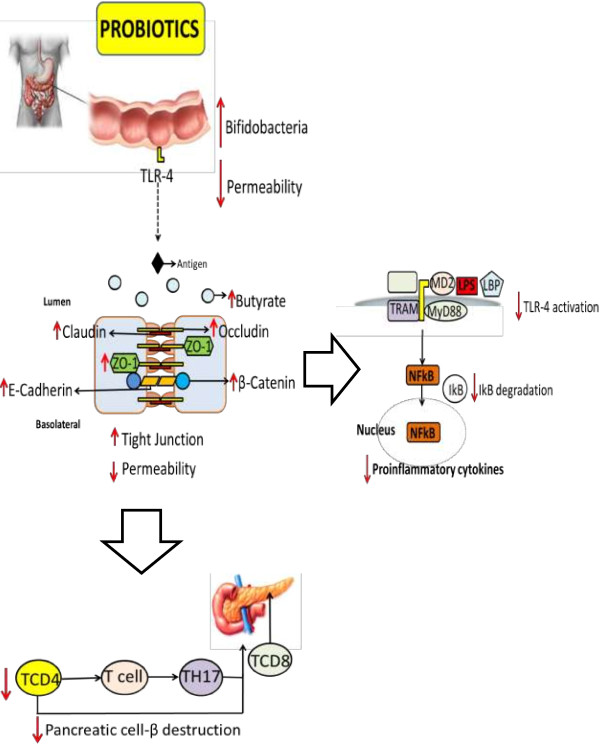
Diabetes is a condition of multifactorial origin, involving several molecular mechanisms related to the intestinal microbiota for its development. In type 2 diabetes, receptor activation and recognition by microorganisms from the intestinal lumen may trigger inflammatory responses, inducing the phosphorylation of serine residues in insulin receptor substrate-1, reducing insulin sensitivity. In type 1 diabetes, the lowered expression of adhesion proteins within the intestinal epithelium favours a greater immune response that may result in destruction of pancreatic β cells by CD8+ T-lymphocytes, and increased expression of interleukin-17, related to autoimmunity. Research in animal models and humans has hypothesized whether the administration of probiotics may improve the prognosis of diabetes through modulation of gut microbiota. We have shown in this review that a large body of evidence suggests probiotics reduce the inflammatory response and oxidative stress, as well as increase the expression of adhesion proteins within the intestinal epithelium, reducing intestinal permeability. Such effects increase insulin sensitivity and reduce autoimmune response. However, further investigations are required to clarify whether the administration of probiotics can be efficiently used for the prevention and management of diabetes.
Overview
The claims and statistics of this paper haven’t been checked yet.
Free: it reads the open-access text and checks the first 5 claims that cite a source we can check. Create a free account to check every claim.
Integrity signals
Registry
Cites
Statistics
Figures
Verification
Claims the paper makes
The claims and statistics of this paper haven’t been checked yet.
Free: it reads the open-access text and checks the first 5 claims that cite a source we can check. Create a free account to check every claim.
Claims other papers make about this one
Each is checked against this paper’s own text: does it say what the citing paper says it does?
The source backs part of the claim, not all of it — or backs it for a different population, condition or comparison.
In the citing paper
“The gut flora mediates three pathways connected to the pathogenesis of obesity and diabetes: low-grade inflammation, raised blood levels of lipopolysaccharides (endotoxemia), and increased energy harvest.”
From A critical review on diabetes mellitus type 1 and type 2 management approaches: from lifestyle modification to current and novel targets and therapeutic agents. (2024) · cites this paper as [110]
Experimental — accuracy not yet measuredThe check wasn’t confident either way, so it gives no verdict — never disputed.
In the citing paper
“Quirós et al. (76) found that kefir is able to inhibit the activity of angiotensin-converting enzyme (ACE) through the action of bioactive peptides generated from casein during the milk fermentation process.”
From Milk kefir : nutritional, microbiological and health benefits (2017) · cites this paper as [76]
Experimental — accuracy not yet measured
Self-check
Percentages, sums and reported differences re-computed from the paper’s own numbers.
The self-check needs the paper’s full text.
Citations
Cites
1 retracted
RETRACTED: Colonic flora, Probiotics, Obesity and Diabetes
Marik, P. E. (2012) · Frontiers in Endocrinology · doi:10.3389/fendo.2012.00087 · Cited by 38
RetractedHuman gut microbes associated with obesity
Ley, R. E., Turnbaugh, P. J., Klein, S., & Gordon, J. I. (2006) · Nature · doi:10.1038/4441022a · Cited by 8,785 · cited 1×
“Studies have shown the intestinal microbiota is associated with the development of metabolic diseases, as obese and diabetic subjects present perturbations in the proportions of Firmicutes, Bacteroidetes and Proteobacterias [4,12].”
BackgroundInterleukin-10 and the Interleukin-10 Receptor
Moore, K. W., de Waal Malefyt, R., Coffman, R. L., & O'Garra, A. (2001) · Annual Review of Immunology · doi:10.1146/annurev.immunol.19.1.683 · Cited by 6,737 · cited 1×
“IL-10 is an anti-inflammatory cytokine which inhibits antigen presentation and proinflammatory cytokine production [107], whereas depletion of hepatic natural killer cells is linked to the development of hepatic insulin resistance [108].”
BackgroundMetabolic Endotoxemia Initiates Obesity and Insulin Resistance
Cani, P. D., Amar, J., Iglesias, M. A., Poggi, M., Knauf, C., Bastelica, D., Neyrinck, A. M., Fava, F., Tuohy, K. M., Chabo, C., et al. (2007) · Diabetes · doi:10.2337/db06-1491 · Cited by 6,638
Origin and physiological roles of inflammation
Medzhitov, R. (2008) · Nature · doi:10.1038/nature07201 · Cited by 6,618 · cited 2×
“However, TLRs also stimulate adaptive immunity, once they induce the secretion of inflammatory cytokines [36].”
BackgroundInsulin signalling and the regulation of glucose and lipid metabolism
Saltiel, A. R., & Kahn, C. R. (2001) · Nature · doi:10.1038/414799a · Cited by 5,326 · cited 3×
“AGE: Advanced glycation end products; AKT: Protein kinase B; AP-1: Activating protein 1; BB: BioBreeding diabetes-prone; BBR: BioBreeding diabetes-resistant; CFU: Colony-forming units; CLRs: C-type lectin receptors; CREB: CRE binding protein; DAMPS: Damage-associated molecular pattern molecules; FFA: Free fatty acid;…”
BackgroundCani, P. D., Bibiloni, R., Knauf, C., Waget, A., Neyrinck, A. M., Delzenne, N. M., & Burcelin, R. (2008) · Diabetes · doi:10.2337/db07-1403 · Cited by 4,819 · cited 2×
“Increased intestinal permeability is a result of reduced expression of tight junction proteins, eventually favouring the translocation of bacterial lipopolysaccharide (LPS), which may result in metabolic endotoxemia and insulin resistance [5,6].”
BackgroundToll-like receptors and innate immunity
Medzhitov, R. (2001) · Nature Reviews Immunology · doi:10.1038/35100529 · Cited by 4,308
Gut Microbiota in Human Adults with Type 2 Diabetes Differs from Non-Diabetic Adults
Larsen, N., Vogensen, F. K., van den Berg, F. W. J., Nielsen, D. S., Andreasen, A. S., Pedersen, B. K., Al-Soud, W. A., Sørensen, S. J., Hansen, L. H., & Jakobsen, M. (2010) · PLoS ONE · doi:10.1371/journal.pone.0009085 · Cited by 2,952 · cited 2×
“Studies have shown the intestinal microbiota is associated with the development of metabolic diseases, as obese and diabetic subjects present perturbations in the proportions of Firmicutes, Bacteroidetes and Proteobacterias [4,12].”
BackgroundA microbial symbiosis factor prevents intestinal inflammatory disease
Mazmanian, S. K., Round, J. L., & Kasper, D. L. (2008) · Nature · doi:10.1038/nature07008 · Cited by 2,340
Research works printed but not linked: 2
- WHO - World Health Organization World Health Statistics WHO/FAO 2012 Geneva: WHO
- WHO - World Health Organization Evaluation of Health and Nutritional Properties of Probiotics in Food Including Powder Milk with Live Lactic Acid Bacteria Joint WHO/FAO Expert Consultation on Geneva 2001 Cordoba, Argentina: WHO
Cited by
Antioxidant Properties of Probiotic Bacteria
Wang, Y., Wu, Y., Wang, Y., Xu, H., Mei, X., Yu, D., Wang, Y., & Li, W. (2017) · Nutrients · doi:10.3390/nu9050521 · Cited by 917
The human gut microbiota: Metabolism and perspective in obesity
Gomes, A. C., Hoffmann, C., & Mota, J. F. (2018) · Gut Microbes · doi:10.1080/19490976.2018.1465157 · Cited by 727
Self-citationMilk kefir : nutritional, microbiological and health benefits
Rosa, D. D., Dias, M. M. S., Grześkowiak, Ł. M., Reis, S. A., Conceição, L. L., & Peluzio, M. D. C. G. (2017) · Nutrition Research Reviews · doi:10.1017/s0954422416000275 · Cited by 463
Gut microbiome-related effects of berberine and probiotics on type 2 diabetes (the PREMOTE study)
Zhang, Y., Gu, Y., Ren, H., Wang, S., Zhong, H., Zhao, X., Ma, J., Gu, X., Xue, Y., Huang, S., et al. (2020) · Nature Communications · doi:10.1038/s41467-020-18414-8 · Cited by 380
Precup, G., & Vodnar, D.-C. (2019) · British Journal of Nutrition · doi:10.1017/s0007114519000680 · Cited by 378
“microbiota are represented by two phyla, Firmicutes (which includes mainly Clostridium, Enterococcus, Lactobacillus and Faecalibacterium genera) and Bacteroidetes (which includes notably Bacteroides and Prevotella genera)(5,10).”
BackgroundAssociation of Early Exposure of Probiotics and Islet Autoimmunity in the TEDDY Study
Uusitalo, U., Liu, X., Yang, J., Aronsson, C. A., Hummel, S., Butterworth, M., Lernmark, Å., Rewers, M., Hagopian, W., She, J.-X., et al. (2016) · JAMA Pediatrics · doi:10.1001/jamapediatrics.2015.2757 · Cited by 292
T-cell-mediated regulation of neuroinflammation involved in neurodegenerative diseases
González, H., & Pacheco, R. (2014) · Journal of Neuroinflammation · doi:10.1186/s12974-014-0201-8 · Cited by 266
Probiotics modulate gut microbiota and improve insulin sensitivity in DIO mice
Bagarolli, R. A., Tobar, N., Oliveira, A. G., Araújo, T. G., Carvalho, B. M., Rocha, G. Z., Vecina, J. F., Calisto, K., Guadagnini, D., Prada, P. O., et al. (2017) · The Journal of Nutritional Biochemistry · doi:10.1016/j.jnutbio.2017.08.006 · Cited by 266
Impact of gut microbiota on diabetes mellitus
Blandino, G., Inturri, R., Lazzara, F., Di Rosa, M., & Malaguarnera, L. (2016) · Diabetes & Metabolism · doi:10.1016/j.diabet.2016.04.004 · Cited by 231
Hasain, Z., Mokhtar, N. M., Kamaruddin, N. A., Mohamed Ismail, N. A., Razalli, N. H., Gnanou, J. V., & Raja Ali, R. A. (2020) · Frontiers in Cellular and Infection Microbiology · doi:10.3389/fcimb.2020.00188 · Cited by 225
“Bifidobacterium and Lactobacillus are among the most common, non-pathogenic live microorganisms used as pharmacological interventions (Gomes et al., 2014).”
BackgroundGanesan, K., Chung, S. K., Vanamala, J., & Xu, B. (2018) · International Journal of Molecular Sciences · doi:10.3390/ijms19123720 · Cited by 221
Mechanisms Linking the Gut Microbiome and Glucose Metabolism
Utzschneider, K. M., Kratz, M., Damman, C. J., & Hullarg, M. (2016) · The Journal of Clinical Endocrinology & Metabolism · doi:10.1210/jc.2015-4251 · Cited by 214
Ruan, Y., Sun, J., He, J., Chen, F., Chen, R., & Chen, H. (2015) · PLOS ONE · doi:10.1371/journal.pone.0132121 · Cited by 210
Wernimont, S. M., Radosevich, J., Jackson, M. I., Ephraim, E., Badri, D. V., MacLeay, J. M., Jewell, D. E., & Suchodolski, J. S. (2020) · Frontiers in Microbiology · doi:10.3389/fmicb.2020.01266 · Cited by 207
“The evidence supporting the use of probiotics in DM suggests that probiotics may act to reduce inflammatory responses and oxidative stress and increase the expression of adhesion proteins within the GI epithelium to reduce intestinal permeability (Gomes et al., 2014).”
BackgroundGut microbiome and metabolic syndrome
Mazidi, M., Rezaie, P., Kengne, A. P., Mobarhan, M. G., & Ferns, G. A. (2016) · Diabetes & Metabolic Syndrome: Clinical Research & Reviews · doi:10.1016/j.dsx.2016.01.024 · Cited by 196
Epigenetic Regulation at the Interplay Between Gut Microbiota and Host Metabolism
Miro-Blanch, J., & Yanes, O. (2019) · Frontiers in Genetics · doi:10.3389/fgene.2019.00638 · Cited by 195
Li, W., Zhang, K., & Yang, H. (2018) · Journal of Agricultural and Food Chemistry · doi:10.1021/acs.jafc.8b02979 · Cited by 185
Hsieh, M.-C., Tsai, W.-H., Jheng, Y.-P., Su, S.-L., Wang, S.-Y., Lin, C.-C., Chen, Y.-H., & Chang, W.-W. (2018) · Scientific Reports · doi:10.1038/s41598-018-35014-1 · Cited by 182
Medina-Vera, I., Sanchez-Tapia, M., Noriega-López, L., Granados-Portillo, O., Guevara-Cruz, M., Flores-López, A., Avila-Nava, A., Fernández, M. L., Tovar, A. R., & Torres, N. (2019) · Diabetes & Metabolism · doi:10.1016/j.diabet.2018.09.004 · Cited by 179
Kijmanawat, A., Panburana, P., Reutrakul, S., & Tangshewinsirikul, C. (2019) · Journal of Diabetes Investigation · doi:10.1111/jdi.12863 · Cited by 174
Wickens, K. L., Barthow, C. A., Murphy, R., Abels, P. R., Maude, R. M., Stone, P. R., Mitchell, E. A., Stanley, T. V., Purdie, G. L., Kang, J. M., et al. (2017) · British Journal of Nutrition · doi:10.1017/s0007114517000289 · Cited by 172
“There is emerging evidence for a modulating effect of probiotics on gut microbiota and inflammatory responses((9,10)), with a recent meta-analysis suggesting that probiotics can favourably influence glucose metabolism((11)).”
BackgroundBreton, J., Galmiche, M., & Déchelotte, P. (2022) · Microorganisms · doi:10.3390/microorganisms10020452 · Cited by 165
“This effect seems to be related to the reduction of chronic low-grade inflammation [109].”
BackgroundEnvironmental Exposures and Autoimmune Diseases: Contribution of Gut Microbiome
Khan, M. F., & Wang, H. (2020) · Frontiers in Immunology · doi:10.3389/fimmu.2019.03094 · Cited by 178
New perspectives on probiotics in health and disease
Daliri, E. B.-M., & Lee, B. H. (2015) · Food Science and Human Wellness · doi:10.1016/j.fshw.2015.06.002 · Cited by 150
Sun, J., Wang, F., Ling, Z., Yu, X., Chen, W., Li, H., Jin, J., Pang, M., Zhang, H., Yu, J., et al. (2016) · Brain Research · doi:10.1016/j.brainres.2016.03.042 · Cited by 155
Pellonperä, O., Mokkala, K., Houttu, N., Vahlberg, T., Koivuniemi, E., Tertti, K., Rönnemaa, T., & Laitinen, K. (2019) · Diabetes Care · doi:10.2337/dc18-2591 · Cited by 145
The association of type II diabetes with gut microbiota composition
Navab-Moghadam, F., Sedighi, M., Khamseh, M. E., Alaei-Shahmiri, F., Talebi, M., Razavi, S., & Amirmozafari, N. (2017) · Microbial Pathogenesis · doi:10.1016/j.micpath.2017.07.034 · Cited by 144
SLE: Another Autoimmune Disorder Influenced by Microbes and Diet?
Mu, Q., Zhang, H., & Luo, X. M. (2015) · Frontiers in Immunology · doi:10.3389/fimmu.2015.00608 · Cited by 139
Petriello, M. C., Hoffman, J. B., Vsevolozhskaya, O. A., Morris, A. J., & Hennig, B. (2018) · Environmental Pollution · doi:10.1016/j.envpol.2018.07.039 · Cited by 154
Lindsay, K. L., Brennan, L., Kennelly, M. A., Maguire, O. C., Smith, T., Curran, S., Coffey, M., Foley, M. E., Hatunic, M., Shanahan, F., et al. (2015) · American Journal of Obstetrics and Gynecology · doi:10.1016/j.ajog.2015.02.008 · Cited by 157
Dolatkhah, N., Hajifaraji, M., Abbasalizadeh, F., Aghamohammadzadeh, N., Mehrabi, Y., & Mesgari Abbasi, M. (2015) · Journal of Health, Population and Nutrition · doi:10.1186/s41043-015-0034-9 · Cited by 132
Inflammation meets metabolic disease: Gut feeling mediated by GLP-1
Zietek, T., & Rath, E. (2016) · Frontiers in Immunology · doi:10.3389/fimmu.2016.00154 · Cited by 131
“Several factors associated with obesity and T2D, such as inflammatory cytokines and free FA, can induce ER UPR (129, 130).”
BackgroundInfluentialBadehnoosh, B., Karamali, M., Zarrati, M., Jamilian, M., Bahmani, F., Tajabadi-Ebrahimi, M., Jafari, P., Rahmani, E., & Asemi, Z. (2018) · The Journal of Maternal-Fetal & Neonatal Medicine · doi:10.1080/14767058.2017.1310193 · Cited by 130
RetractedDairy-Based Probiotic-Fermented Functional Foods: An Update on Their Health-Promoting Properties
Kaur, H., Kaur, G., & Ali, S. A. (2022) · Fermentation · doi:10.3390/fermentation8090425 · Cited by 198
Tarantino, G., & Finelli, C. (2015) · Future Microbiology · doi:10.2217/fmb.15.13 · Cited by 125
Feng, Y., Weng, H., Ling, L., Zeng, T., Zhang, Y., Chen, D., & Li, H. (2019) · International Journal of Biological Macromolecules · doi:10.1016/j.ijbiomac.2019.03.242 · Cited by 132
Using probiotics for type 2 diabetes mellitus intervention: Advances, questions, and potential
Sun, Z., Sun, X., Li, J., Li, Z., Hu, Q., Li, L., Hao, X., Song, M., & Li, C. (2020) · Critical Reviews in Food Science and Nutrition · doi:10.1080/10408398.2018.1547268 · Cited by 117
Unraveling the Puzzle: Health Benefits of Probiotics—A Comprehensive Review
Gul, S., & Durante‐Mangoni, E. (2024) · Journal of Clinical Medicine · doi:10.3390/jcm13051436 · Cited by 161
Probiotics for the management of type 2 diabetes mellitus: A systematic review and meta-analysis
Samah, S., Ramasamy, K., Lim, S. M., & Neoh, C. F. (2016) · Diabetes Research and Clinical Practice · doi:10.1016/j.diabres.2016.06.014 · Cited by 112
Tian, P., Li, B., He, C., Song, W., Hou, A., Tian, S., Meng, X., Li, K., & Shan, Y. (2016) · Food & Function · doi:10.1039/c6fo00831c · Cited by 120
Maffeis, C., Martina, A., Corradi, M., Quarella, S., Nori, N., Torriani, S., Plebani, M., Contreas, G., & Felis, G. E. (2016) · Diabetes/Metabolism Research and Reviews · doi:10.1002/dmrr.2790 · Cited by 110
Obaroakpo, J. U., Liu, L., Zhang, S., Lu, J., Pang, X., & Lv, J. (2019) · Food Chemistry · doi:10.1016/j.foodchem.2019.124985 · Cited by 110
Dixon, A., Robertson, K., Yung, A. E., Que, M. S., Randall, H., Wellalagodage, D., Cox, T., Robertson, D., Chi, C., & Sun, J. (2020) · Current Hypertension Reports · doi:10.1007/s11906-020-01080-y · Cited by 128
Leaky Gut and Autoimmunity: An Intricate Balance in Individuals Health and the Diseased State
Paray, B. A., Albeshr, M. F., Jan, A. T., & Rather, I. A. (2020) · International Journal of Molecular Sciences · doi:10.3390/ijms21249770 · Cited by 124
Is there a role for gut microbiota in type 1 diabetes pathogenesis?
Bibbò, S., Dore, M. P., Pes, G. M., Delitala, G., & Delitala, A. P. (2017) · Annals of Medicine · doi:10.1080/07853890.2016.1222449 · Cited by 108
Miraghajani, M. S., Zaghian, N., Mirlohi, M., Feizi, A., & Ghiasvand, R. (2017) · Journal of Renal Nutrition · doi:10.1053/j.jrn.2017.04.004 · Cited by 111
The Effect of Bacterial Infections, Probiotics and Zonulin on Intestinal Barrier Integrity
Serek, P., & Oleksy-Wawrzyniak, M. (2021) · International Journal of Molecular Sciences · doi:10.3390/ijms222111359 · Cited by 131
de Mendonça, E. L. S. S., Fragoso, M. B. T., de Oliveira, J. M., Xavier, J. A., Goulart, M. O. F., & de Oliveira, A. C. M. (2022) · Antioxidants · doi:10.3390/antiox11010129 · Cited by 126
Ardeshirlarijani, E., Tabatabaei‐Malazy, O., Mohseni, S., Qorbani, M., Larijani, B. A., & Jalili, R. B. (2019) · DARU Journal of Pharmaceutical Sciences · doi:10.1007/s40199-019-00302-2 · Cited by 119
Wang, G., Si, Q., Yang, S., Jiao, T., Zhu, H., Tian, P., Wang, L., Xiu, L., Gong, L., Zhao, J., et al. (2020) · Food & Function · doi:10.1039/c9fo02761k · Cited by 111
Mokkala, K., Paulin, N., Houttu, N., Koivuniemi, E., Pellonperä, O., Khan, S., Pietilä, S., Tertti, K., Elo, L. L., & Laitinen, K. (2020) · Gut · doi:10.1136/gutjnl-2020-321643 · Cited by 120
Gut-Microbial Metabolites, Probiotics and Their Roles in Type 2 Diabetes
Zhai, L., Wu, J., Lam, Y. Y., Kwan, H. Y., Bian, Z., & Wong, H. L. X. (2021) · International Journal of Molecular Sciences · doi:10.3390/ijms222312846 · Cited by 122
Featured article: Structure moderation of gut microbiota in liraglutide-treated diabetic male rats
Zhang, Q., Xiao, X., Zheng, J., Li, M., Yu, M., Ping, F., Wang, T., & Wang, X. (2018) · Experimental Biology and Medicine · doi:10.1177/1535370217743765 · Cited by 101
Probiotics and immunity: provisional role for personalized diets and disease prevention
Bubnov, R. V., Spivak, M. Y., Lazarenko, L. M., Bomba, A., & Boyko, N. (2015) · The EPMA Journal · doi:10.1186/s13167-015-0036-0 · Cited by 112
Zeng, Z., Luo, J., Zuo, F., Zhang, Y., Ma, H., & Chen, S. (2015) · Journal of Functional Foods · doi:10.1016/j.jff.2015.11.030 · Cited by 108
Systemic effects of gut microbiota and its relationship with disease and modulation
Ho, J. T., Chan, G. C., & Li, J. C. (2015) · BMC Immunology · doi:10.1186/s12865-015-0083-2 · Cited by 93
Ebrahimi, Z. S., Nasli-Esfahani, E., Nadjarzade, A., & Mozaffari-khosravi, H. (2017) · Journal of Diabetes & Metabolic Disorders · doi:10.1186/s40200-017-0304-8 · Cited by 91
Tabrizi, R., Moosazadeh, M., Lankarani, K. B., Akbari, M., Heydari, S. T., Kolahdooz, F., & Asemi, Z. (2017) · Probiotics and Antimicrobial Proteins · doi:10.1007/s12602-017-9299-1 · Cited by 95
Zepeda-Hernández, A., García-Amezquita, L. E., Requena, T., & García‐Cayuela, T. (2021) · Food Research International · doi:10.1016/j.foodres.2021.110208 · Cited by 106
Venkatakrishnan, K., Chiu, H., & Wang, C. (2019) · Journal of Functional Foods · doi:10.1016/j.jff.2019.04.039 · Cited by 108
The protective role of nutritional antioxidants against oxidative stress in thyroid disorders
Mačvanin, M., Gluvic, Z. M., Zafirovic, S. S., Gao, X., Essack, M., & Isenović, E. R. (2023) · Frontiers in Endocrinology · doi:10.3389/fendo.2022.1092837 · Cited by 114
Toejing, P., Khampithum, N., Sirilun, S., Chaiyasut, C., & Lailerd, N. (2021) · Foods · doi:10.3390/foods10071455 · Cited by 93
Cannarella, L. A. T., Mari, N. L., de Alcantara, C. C., Iryioda, T. M. V., Costa, N. T., Oliveira, S. R., Lozovoy, M. A. B., Reiche, E. M. V., Dichi, I., & Simão, A. N. C. (2021) · Nutrition · doi:10.1016/j.nut.2021.111282 · Cited by 89
Kumar, M., Yadav, A. K., Verma, V., Singh, B., Mal, G., Nagpal, R., & Hemalatha, R. (2016) · Future Microbiology · doi:10.2217/fmb.16.4 · Cited by 78
Prevention of Gestational Diabetes Mellitus (GDM) and Probiotics: Mechanism of Action: A Review
Rad, A. H., Bagheri, N., Mohammad‐Alizadeh‐Charandabi, S., Kashani, N., Mobaraki-Asl, N., Mirghafurvand, M., Asgharian, H., Ansari, F., & Pourjafar, H. (2019) · Current Diabetes Reviews · doi:10.2174/1573399815666190712193828 · Cited by 91
Nabhani, Z., Hezaveh, S. J. G., Razmpoosh, E., Jafarabadi, M. A., & Gargari, B. P. (2018) · Diabetes Research and Clinical Practice · doi:10.1016/j.diabres.2018.02.008 · Cited by 87
Miraghajani, M. S., Zaghian, N., Dehkohneh, A., Mirlohi, M., & Ghiasvand, R. (2017) · Probiotics and Antimicrobial Proteins · doi:10.1007/s12602-017-9325-3 · Cited by 73
Asgharian, H., Rad, A. H., Mirghafourvand, M., & Mohammad‐Alizadeh‐Charandabi, S. (2019) · European Journal of Nutrition · doi:10.1007/s00394-019-01900-1 · Cited by 81
Probiotic Ingestion, Obesity, and Metabolic-Related Disorders: Results from NHANES, 1999–2014
Lau, E., Neves, J. S., Ferreira‐Magalhães, M., Carvalho, D. M., & Freitas, P. (2019) · Nutrients · doi:10.3390/nu11071482 · Cited by 80
Xu, Y., Cao, X., Zhao, H., Yang, E., Wang, Y., Cheng, N., & Cao, W. (2021) · Nutrients · doi:10.3390/nu13082665 · Cited by 76
Effects of kefir or milk supplementation on zonulin in overweight subjects
Pražnikar, Z. J., Kenig, S., Vardjan, T., Bizjak, M. Č., & Petelin, A. (2020) · Journal of Dairy Science · doi:10.3168/jds.2019-17696 · Cited by 69
Archer, A. C., Peddha, M. S., & Halami, P. M. (2021) · Probiotics and Antimicrobial Proteins · doi:10.1007/s12602-021-09744-0 · Cited by 80
Potential health benefits of fermented blueberry: A review of current scientific evidence
Sivapragasam, N., Neelakandan, N., & Rupasinghe, H. P. V. (2023) · Trends in Food Science & Technology · doi:10.1016/j.tifs.2023.01.002 · Cited by 72
Human Gut Microbiota in Health and Selected Cancers
Sędzikowska, A., & Szablewski, L. (2021) · International Journal of Molecular Sciences · doi:10.3390/ijms222413440 · Cited by 78
Gut Microbiome Changes in Gestational Diabetes
Ionescu, R. F., Enache, R. M., Creţoiu, S. M., & Gașpar, B. S. (2022) · International Journal of Molecular Sciences · doi:10.3390/ijms232112839 · Cited by 73
Xing, X., Hsieh, Y. S. Y., Yap, K., Ang, M. E., Lahnstein, J., Tucker, M. R., Burton, R. A., & Bulone, V. (2017) · Carbohydrate Polymers · doi:10.1016/j.carbpol.2017.07.059 · Cited by 63
Alihosseini, N., Moahboob, S. A., Farrin, N., Mobasseri, M., Taghizadeh, A., & Ostadrahimi, A. R. (2017) · Acta Endocrinologica (Bucharest) · doi:10.4183/aeb.2017.431 · Cited by 69
Blood-based signatures in type 1 diabetes
Cabrera, S. M., Chen, Y.-G., Hagopian, W., & Hessner, M. J. (2015) · Diabetologia · doi:10.1007/s00125-015-3843-x · Cited by 67
Tay, A., Pringle, H., Penning, E., Plank, L. D., & Murphy, R. (2020) · Nutrients · doi:10.3390/nu12113530 · Cited by 62
O'Toole, P. W., & Shiels, P. G. (2020) · Journal of Internal Medicine · doi:10.1111/joim.13021 · Cited by 62
Tegegne, B. A., Adugna, A., Yenet, A., Yihunie Belay, W., Yibeltal, Y., Dagne, A., Hibstu Teffera, Z., Amare, G. A., Abebaw, D., Tewabe, H., et al. (2024) · Frontiers in Endocrinology · doi:10.3389/fendo.2024.1440456 · Cited by 61
“Additional study is necessary to answer these questions (110 – 113).”
BackgroundThe Association Between Intestinal Bacteria and Allergic Diseases—Cause or Consequence?
Han, P., Gu, J., Li, L., Wang, X., Wang, H., Wang, Y., Chang, C. C.-C., & Sun, J. (2021) · Frontiers in Cellular and Infection Microbiology · doi:10.3389/fcimb.2021.650893 · Cited by 72
Gut Microbiota and Type 1 Diabetes Mellitus: The Effect of Mediterranean Diet
Calabrese, C. M., Valentini, A., & Calabrese, G. (2021) · Frontiers in Nutrition · doi:10.3389/fnut.2020.612773 · Cited by 58
“Gut microbiota is also modulated by probiotics, which contribute to maintenance of physiological intestinal permeability, thus interfering with autoimmune pancreatic β-cell destruction (121), as shown in a study carried out in a mice model of T1DM, in which the administration of Lactobacillus johnsonii delayed the dev…”
BackgroundMirmiranpour, H., Huseini, H. F., Derakhshanian, H., Khodaii, Z., & Tavakoli‐Far, B. (2019) · Journal of Diabetes & Metabolic Disorders · doi:10.1007/s40200-019-00474-3 · Cited by 66
Obuchowska, A., Gorczyca, K., Standyło, A., Obuchowska, K., Kimber-Trojnar, Ż., Wierzchowska-Opoka, M., & Leszczyńska‐Gorzelak, B. (2022) · International Journal of Molecular Sciences · doi:10.3390/ijms23158253 · Cited by 63
The comparative mechanistic aspects of Trichoderma and Probiotics: Scope for future research
Sharma, V., Salwan, R., & Sharma, P. N. (2017) · Physiological and Molecular Plant Pathology · doi:10.1016/j.pmpp.2017.07.005 · Cited by 62
Nath, A., Molnár, M. A., Csighy, A., Kőszegi, K., Galambos, I., Pásztor‐Huszár, K., Koris, A. K., & Vatai, G. N. (2018) · Medicina · doi:10.3390/medicina54060098 · Cited by 60
Youn, H. S., Kim, J., Lee, J. S., Yoon, Y. Y., Choi, S. J., Lee, J. Y., Kim, W., & Hwang, K. W. (2021) · Infection and Immunity · doi:10.1128/iai.00615-20 · Cited by 57
Intake of sucrose affects gut dysbiosis in patients with type 2 diabetes
Hashimoto, Y., Hamaguchi, M., Kaji, A., Sakai, R., Osaka, T., Inoüe, R., Kashiwagi, S., Mizushima, K., Uchiyama, K., Takagi, T., et al. (2020) · Journal of Diabetes Investigation · doi:10.1111/jdi.13293 · Cited by 57
Altered Gut Microbiota Composition and Immune Response in Experimental Steatohepatitis Mouse Models
Ishioka, M., Miura, K., Minami, S., Shimura, Y., & Ohnishi, H. (2016) · Digestive Diseases and Sciences · doi:10.1007/s10620-016-4393-x · Cited by 58
Wang, K., Yu, X., Li, Y., Guo, Y., Lin, G., Pu, F., Ma, X., Cui, W., Marrota, F., He, F., et al. (2018) · Probiotics and Antimicrobial Proteins · doi:10.1007/s12602-018-9441-8 · Cited by 57
Naseri, K., Saadati, S., Yari, Z., Asbaghi, O., Hezaveh, Z. S., Mafi, D., Hoseinian, P., Ashtary‐Larky, D., Hekmatdoost, A., & de Courten, B. V. (2022) · Pharmacological Research · doi:10.1016/j.phrs.2022.106288 · Cited by 59
Wu, W. H., Liu, H., Chen, F., Liu, H., Cao, A., Yao, S., Sun, M., Evans‐Marin, H., Zhao, Y., Zhao, Q. S., et al. (2016) · European Journal of Immunology · doi:10.1002/eji.201546160 · Cited by 57
Altered Lipid Tumor Environment and Its Potential Effects on NKT Cell Function in Tumor Immunity
Tiwary, S., Berzofsky, J. A., & Terabe, M. (2019) · Frontiers in Immunology · doi:10.3389/fimmu.2019.02187 · Cited by 59
Park, H., Cho, D., Huang, E., Seo, J. Y., Kim, W. G., Todorov, S. D., Ji, Y., & Holzapfel, W. H. (2020) · Frontiers in Microbiology · doi:10.3389/fmicb.2020.00420 · Cited by 54
Behera, S. K., Praharaj, A. B., Dehury, B., & Negi, S. (2015) · Glycoconjugate Journal · doi:10.1007/s10719-015-9606-6 · Cited by 59
Yu, L., Zhai, Q., Tian, F., Liu, X., Wang, G., Zhao, J., Zhang, H., Narbad, A., & Chen, W. (2016) · Nutrients · doi:10.3390/nu8120783 · Cited by 48
Wang, C., Zhang, C., Li, S., Yu, L., Tian, F., Zhao, J., Zhang, H., Chen, W., & Zhai, Q. (2020) · Foods · doi:10.3390/foods9111540 · Cited by 52
Cao, H., Li, C., Lei, L., Wang, X., Liu, S., Liu, Q., Huan, Y., Sun, S., & Shen, Z. (2020) · Frontiers in Pharmacology · doi:10.3389/fphar.2020.578943 · Cited by 47
Zubiría, M., Gambaro, S., Rey, M., Carasi, P., Serradell, M., & Giovambattista, A. (2017) · Nutrients · doi:10.3390/nu9050470 · Cited by 45
Metadata
- Authors
- Gomes, A. C., Bueno, A. A., de Souza, R. G. M., & Mota, J. F.
- Affiliations
- Universidade Federal de Goiás (BR)
- University of Worcester (GB)
- Corresponding author
- Mota, João Felipe
- Venue
- Nutrition Journal
- Published
- 2014-06-17
- Volume
- 13
- Issue
- 1
- Pages
- 60-60
- ISSN
- 1475-2891 (ISSN-L)
- PMC
- PMC4078018
- OpenAlex
- W2125446896
- Cited by
- 363
- References
- 124
- Citations by year
- 2026: 9 · 2025: 21 · 2024: 33 · 2023: 34 · 2022: 44 · 2021: 39 · 2020: 41 · 2019: 35 · 2018: 32 · 2017: 28 · 2016: 26 · 2015: 20 · 2014: 1
- FWCI
- 3.12
- Type
- journal article
- Language
- en
- Open access
- gold
- doi.org
- Licence
- Locations
- Nutrition Journal (publishedVersion, cc-by)
- PubMed Central (publishedVersion, cc-by)
- PubMed (publishedVersion)
- Americanae (AECID Library) (publishedVersion, other-oa)
- Worcester Research and Publications (University of Worcester) (acceptedVersion)
- LA Referencia (Red Federada de Repositorios Institucionales de Publicaciones Científicas) (submittedVersion, other-oa)
- Funders
- University of Worcester
- Fundação de Amparo à Pesquisa do Estado de Goiás
- Universidade de São Paulo
- Universidade Estadual Paulista
- Directorate for Biological Sciences
- Topics
- Life Sciences › Agricultural and Biological Sciences › Food Science › Probiotics and Fermented Foods
- Life Sciences › Biochemistry, Genetics and Molecular Biology › Molecular Biology › Gut microbiota and health
- Health Sciences › Dentistry › Periodontics › Oral microbiology and periodontitis research
- Keywords
- gut microbiota, probiotics, type 2 diabetes, type 1 diabetes, insulin sensitivity, intestinal inflammation, oxidative stress, intestinal permeability, islet autoimmunity, IL-17, IRS-1, diabetes prevention
- MeSH terms
- Animals, Clinical Trials as Topic, Diabetes Mellitus, Type 1, Diabetes Mellitus, Type 2, Humans, Inflammation, Insulin Resistance, Probiotics, Gastrointestinal Tract, Toll-Like Receptor 4, Microbiota
About these checks
Registry, retraction, Cites and statistics results are computed, not judged, with one exception: a printed reference that no index lists is read once by a model before it counts as a citation error. Claims are extracted by a model and kept only when their quote appears verbatim in the text; each cited source is then checked, with a model’s help, for whether it says what the claim relies on. Those verdicts can be wrong — read the claim’s quote and the cited source before relying on one.
Statistics and arithmetic are recomputed, not judged.
Confidence bands are shown only for fields calibrated on our annotated test set. None is calibrated yet, so no band is shown.
What counts as a claim ›How we measure confidence ›How we check this ›
Are you an author, or do you see a problem with this page? Request a review
Data sources
Bibliographic data: Semantic Scholar, OpenAlex, Crossref.
Contains information from the Semantic Scholar Academic Graph Datasets, made available under the ODC Attribution License (ODC-BY 1.0).
Semantic Scholar’s data is described in: Kinney, R., et al. (2023). The Semantic Scholar Open Data Platform. arXiv:2301.10140.
