

Comparison of a low carbohydrate and low fat diet for weight maintenance in overweight or obese adults enrolled in a clinical weight management program
Open accessThe DOI matches its Crossref record; 25 of the 25 references it cites were found in a registry or an index.
Abstract
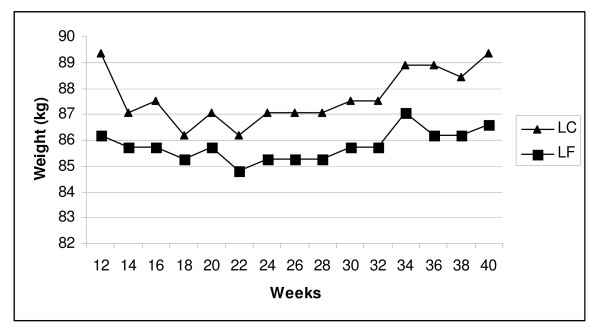
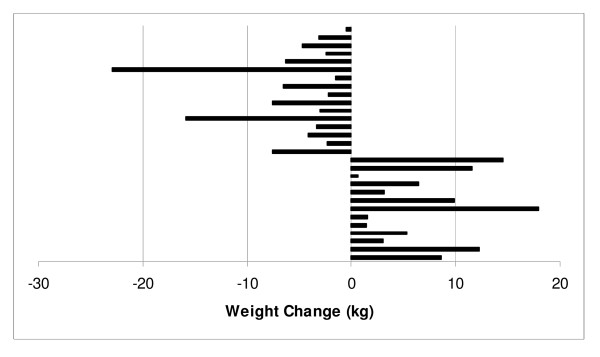
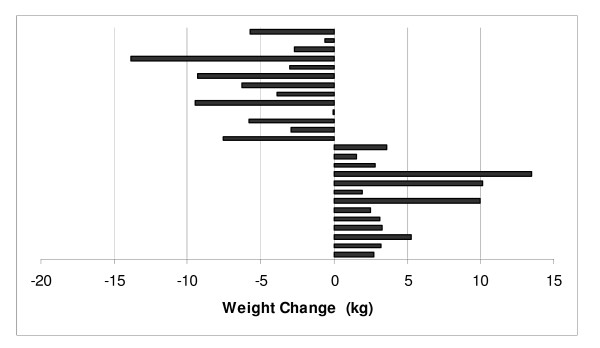
BACKGROUND: Recent evidence suggests that a low carbohydrate (LC) diet may be equally or more effective for short-term weight loss than a traditional low fat (LF) diet; however, less is known about how they compare for weight maintenance. The purpose of this study was to compare body weight (BW) for participants in a clinical weight management program, consuming a LC or LF weight maintenance diet for 6 months following weight loss. METHODS: Fifty-five (29 low carbohydrate diet; 26 low fat diet) overweight/obese middle-aged adults completed a 9 month weight management program that included instruction for behavior, physical activity (PA), and nutrition. For 3 months all participants consumed an identical liquid diet (2177 kJ/day) followed by 1 month of re-feeding with solid foods either low in carbohydrate or low in fat. For the remaining 5 months, participants were prescribed a meal plan low in dietary carbohydrate (~20%) or fat (~30%). BW and carbohydrate or fat grams were collected at each group meeting. Energy and macronutrient intake were assessed at baseline, 3, 6, and 9 months. RESULTS: The LC group increased BW from 89.2 +/- 14.4 kg at 3 months to 89.3 +/- 16.1 kg at 9 months (P = 0.84). The LF group decreased BW from 86.3 +/- 12.0 kg at 3 months to 86.0 +/- 14.0 kg at 9 months (P = 0.96). BW was not different between groups during weight maintenance (P = 0.87). Fifty-five percent (16/29) and 50% (13/26) of participants for the LC and LF groups, respectively, continued to decrease their body weight during weight maintenance. CONCLUSION: Following a 3 month liquid diet, the LC and LF diet groups were equally effective for BW maintenance over 6 months; however, there was significant variation in weight change within each group.
Overview
The claims and statistics of this paper haven’t been checked yet.
Free: it reads the open-access text and checks the first 5 claims that cite a source we can check. Create a free account to check every claim.
Integrity signals
Registry
Cites
Statistics
Figures
Verification
Claims the paper makes
The claims and statistics of this paper haven’t been checked yet.
Free: it reads the open-access text and checks the first 5 claims that cite a source we can check. Create a free account to check every claim.
Self-check
Percentages, sums and reported differences re-computed from the paper’s own numbers.
The self-check needs the paper’s full text.
Citations
Cites
Chobanian, A. V. (2003) · JAMA · doi:10.1001/jama.289.19.2560 · Cited by 25,386
Long-term weight loss maintenance
Wing, R. R., & Phelan, S. (2005) · The American Journal of Clinical Nutrition · doi:10.1093/ajcn/82.1.222s · Cited by 1,941 · cited 2×
“Further, it is wellknown that not all individuals that lose weight are successful for weight maintenance [1,2,16].”
A Randomized Trial of a Low-Carbohydrate Diet for Obesity
Foster, G. D., Wyatt, H. R., Hill, J. O., McGuckin, B. G., Brill, C., Mohammed, B. S., Szapary, P. O., Rader, D. J., Edman, J. S., & Klein, S. (2003) · New England Journal of Medicine · doi:10.1056/nejmoa022207 · Cited by 1,794 · cited 3×
“However, other similar studies have reported high rates of attrition up to 38% for low carbohydrate groups and 46% for low fat groups [4,6,7].”
Long-term weight-loss maintenance: a meta-analysis of US studies
Anderson, J. W., Konz, E. C., Frederich, R. C., & Wood, C. L. (2001) · The American Journal of Clinical Nutrition · doi:10.1093/ajcn/74.5.579 · Cited by 1,351 · cited 1×
“It was not surprising that some participants from both dietary groups regained weight after VLED as this has been reported elsewhere [15].”
A Low-Carbohydrate as Compared with a Low-Fat Diet in Severe Obesity
Samaha, F. F., Iqbal, N., Seshadri, P., Chicano, K. L., Daily, D. A., McGrory, J., Williams, T., Williams, M., Gracely, E. J., & Stern, L. (2003) · New England Journal of Medicine · doi:10.1056/nejmoa022637 · Cited by 1,267 · cited 3×
“However, other similar studies have reported high rates of attrition up to 38% for low carbohydrate groups and 46% for low fat groups [4,6,7].”
Gardner, C. D., Kiazand, A., Alhassan, S., Kim, S., Stafford, R. S., Balise, R. R., Kraemer, H. C., & King, A. C. (2007) · JAMA · doi:10.1001/jama.297.9.969 · Cited by 1,051
Nordmann, A. J., Nordmann, A., Briel, M., Keller, U., Yancy, W. S., Brehm, B. J., & Bucher, H. C. (2006) · Archives of Internal Medicine · doi:10.1001/archinte.166.3.285 · Cited by 973 · cited 1×
“low fat trials reported by Nordmann et al, attrition rates were 30% and 43% for a low carbohydrate and low fat diet, respectively, after 6 months and 38% and 46%, respectively, after 12 months [20].”
Yancy, W. S., Olsen, M. K., Guyton, J. R., Bakst, R. P., & Westman, E. C. (2004) · Annals of Internal Medicine · doi:10.7326/0003-4819-140-10-200405180-00006 · Cited by 946 · cited 4×
“Commonly reported adverse events for the low carbohydrate group were consistent with other studies, specifically, constipation, and diarrhea [ 7 ,24].”
InfluentialSelf-citationBrehm, B. J., Seeley, R. J., Daniels, S. R., & D’Alessio, D. A. (2003) · The Journal of Clinical Endocrinology & Metabolism · doi:10.1210/jc.2002-021480 · Cited by 830
Layman, D. K., Boileau, R. A., Erickson, D. J., Painter, J. E., Shiue, H., Sather, C., & Christou, D. D. (2003) · The Journal of Nutrition · doi:10.1093/jn/133.2.411 · Cited by 541 · cited 1×
“In addition, increasing the ratio of protein to carbohydrate, as reported by Layman et al, may also be important for continued weight loss and maintenance [19].”
Cited by
Comparison of Weight-Loss Diets with Different Compositions of Fat, Protein, and Carbohydrates
Sacks, F. M., Bray, G. A., Carey, V. J., Smith, S. R., Ryan, D. H., Anton, S. D., McManus, K., Champagne, C. M., Bishop, L. M., Laranjo, N., et al. (2009) · New England Journal of Medicine · doi:10.1056/nejmoa0804748 · Cited by 1,966
Melanson, E. L., Astrup, A., & Donahoo, W. T. (2009) · Annals of Nutrition and Metabolism · doi:10.1159/000229004 · Cited by 175
Baer, D. J., Stote, K. S., Paul, D. R., Harris, G. K., Rumpler, W. V., & Clevidence, B. A. (2011) · The Journal of Nutrition · doi:10.3945/jn.111.139840 · Cited by 169
Abete, I., Parra, D., & Martinez, J. A. (2009) · Journal of Medicinal Food · doi:10.1089/jmf.2007.0700 · Cited by 111
Consumption of sugars and body weight.
Van Baak, M. A., & Astrup, A. (2009) · Obesity Reviews · doi:10.1111/j.1467-789x.2008.00561.x · Cited by 103
“3 kg in the low-fat group (not significant) (19).”
Low Carbohydrate and Low-Fat Diets: What We Don’t Know and Why We Should Know It
Seid, H., & Rosenbaum, M. (2019) · Nutrients · doi:10.3390/nu11112749 · Cited by 71
“The data regarding the long-term success of low fat and low carbohydrate diets are inconclusive [66].”
Garcia Ulen, C., Huizinga, M. M., Beech, B., & Elasy, T. A. (2008) · Clinical Diabetes · doi:10.2337/diaclin.26.3.100 · Cited by 60
The potential of artificial intelligence in enhancing adult weight loss: a scoping review
Chew, H. S. J., Ang, W. H. D., & Lau, Y. (2021) · Public Health Nutrition · doi:10.1017/s1368980021000598 · Cited by 47
“effort needed through weight-loss mobile apps(26), clinical weight management programmes(27) and commercial weight-loss programmes(28).”
Effect of diet composition on energy expenditure during weight loss: the POUNDS LOST Study
Bray, G. A., Smith, S. R., DeJonge, L., de Souza, R., Rood, J., Champagne, C. M., Laranjo, N., Carey, V, Obarzanek, E., Loria, C. M., et al. (2012) · International Journal of Obesity · doi:10.1038/ijo.2011.173 · Cited by 43
“Low carbohydrate diets have been reported to enhance weight loss in some studies (13-17) but not in others (19-21).”
Lowe, F. J., Luettich, K., & Gregg, E. O. (2013) · Biomarkers · doi:10.3109/1354750x.2013.777116 · Cited by 39
Good Calories, Bad Calories by Gary Taubes; New York: AA Knopf
Bray, G. A. (2008) · Obesity Reviews · doi:10.1111/j.1467-789x.2008.00476.x · Cited by 30
“1.5 kg LeCheminant ( 56 ) 0.3 kg +0.1 kg Luscombe-Marsh (57)”
InfluentialAugustus, E., Francis-Granderson, I., & Rocke, K. D. (2020) · Nutrition and Cancer · doi:10.1080/01635581.2020.1803930 · Cited by 28
“This refers to the switch the body makes from burning carbohydrates to fat as fuel and the varying periods of time taken to adapt by different individuals (24,25).”
Lee, H. S., Lee, J., Chang, N., & Kim, J. (2009) · Journal of Nutrition and Health · doi:10.4163/kjn.2009.42.8.759 · Cited by 21
Elidottir, A. S., Halldorsson, T. I., Gunnarsdottir, I., & Ramel, A. (2016) · PLOS ONE · doi:10.1371/journal.pone.0156655 · Cited by 18
LeCheminant, J. D., SMITH, B. K., Westman, E. C., Vernon, M. C., & Donnelly, J. E. (2010) · Lipids in Health and Disease · doi:10.1186/1476-511x-9-54 · Cited by 20
“Participation criteria and methodology for this study have been reported elsewhere [15].”
Self-citationTaftian, M., Beigrezaei, S., Arabi, V., & Salehi‐Abargouei, A. (2022) · Nutrition and Cancer · doi:10.1080/01635581.2021.1942081 · Cited by 18
“of body from carbohydrates to fatty acids (21, 22).”
Galali, Y., Zebari, S. M. S., Jabbar, A. A., Balaky, H. H., Sadee, B. A., & Hassanzadeh, H. (2024) · Food Science & Nutrition · doi:10.1002/fsn3.3873 · Cited by 17
Program Adherence and Effectiveness of a Commercial Nutrition Program: The Metabolic Balance Study
Meffert, C., & Gerdes, N. (2010) · Journal of Nutrition and Metabolism · doi:10.1155/2010/197656 · Cited by 17
“Hindawi Publishing Corporation Journal of Nutrition and Metabolism Volume 2010, Article ID 197656, 8 pages doi:10.1155/2010/197656”
InfluentialSullivan, D. K., Goetz, J. R., Gibson, C., Mayo, M. S., Washburn, R. A., Lee, Y. T., Ptomey, L. T., & Donnelly, J. E. (2015) · Contemporary Clinical Trials · doi:10.1016/j.cct.2015.11.019 · Cited by 17
“Based on our previous weight loss trials, we expect that 97%-99% of participants will meet the 5% criteria and ~70% will achieve >10% weight loss at 6 months [28-30].”
Self-citationLambourne, K., Washburn, R. A., Gibson, C., Sullivan, D. K., Goetz, J. R., Lee, R. H., SMITH, B. K., Mayo, M. S., & Donnelly, J. E. (2012) · Contemporary Clinical Trials · doi:10.1016/j.cct.2012.05.014 · Cited by 14
“This approach produced clinically significant weight loss in the pilot study [24] and other studies [32,33,46].”
Self-citationBrain function predictors and outcome of weight loss and weight loss maintenance
Szabo‐Reed, A. N., Breslin, F. J., Lynch, A. M., Patrician, T. M., Martin, L. E., Lepping, R. J., Powell, J. N., Yeh, H., Befort, C. A., Sullivan, D. K., et al. (2014) · Contemporary Clinical Trials · doi:10.1016/j.cct.2014.12.008 · Cited by 15
Self-citationCollins, C. E., Morgan, P. J., Callister, R., & Fletcher, K. (2010) · JBI Library of Systematic Reviews · doi:10.11124/01938924-201008241-00002 · Cited by 16
Ghanemi, A., Yoshioka, M., & St‐Amand, J. (2021) · Biomolecules · doi:10.3390/biom11121830 · Cited by 10
The Midwest Exercise Trial for the Prevention of Weight Regain: MET POWeR
Szabo‐Reed, A. N., Washburn, R. A., Sullivan, D. K., Honas, J. J., Mayo, M. S., Goetz, J. R., Lee, J., & Donnelly, J. E. (2013) · Contemporary Clinical Trials · doi:10.1016/j.cct.2013.08.011 · Cited by 8
“Data from our previous weight loss trials indicate that 97%-99% of participants will meet the 5% criteria for weight loss at 3 months and we expect ~70% will achieve ≥10% weight loss over 3 months [41-43], thus providing a range of weight loss typical of many weight loss programs available to the public.”
Self-citationKalaitzopoulou, I., Theodoridis, X., Kotzakioulafi, E., Evripidou, K., & Chourdakis, M. (2023) · Children · doi:10.3390/children10091481 · Cited by 12
Examining the most popular weight loss diets: How effective are they?
Sherer, E. L., & Sherer, J. A. (2008) · JAAPA · doi:10.1097/01720610-200811000-00008 · Cited by 7
Zhang, F., & Gou, J. (2019) · Statistical Papers · doi:10.1007/s00362-019-01134-7 · Cited by 5
Are miracle diets miraculous? Review and analysis of a specific case: the Mayo Clinic Diet
Cano, S. S., Azpíroz, I. D., Motte, S. J., Bachs, A. M., Battino, M. A., & Villar, S. G. (2009) · Mediterranean Journal of Nutrition and Metabolism · doi:10.1007/s12349-009-0061-4 · Cited by 6
Lindroth, A. M., Park, J. H., Yoo, Y., & Park, Y. J. (2015) · Elsevier eBooks · doi:10.1016/b978-0-12-420135-4.00011-5 · Cited by 4
Nutriepigenomics: Paving the way for personalized nutrition
Park, Y. J., Song, S., Han, Y., & Lindroth, A. M. (2024) · Elsevier eBooks · doi:10.1016/b978-0-443-23802-4.00014-4 · Cited by 2
Central aspects of sugars in human nutrition
Palou, A. (2009) · Cited by 2
- Chromium (III) in Promoting Weight Loss and Lean Body Mass
Bagchi, D., & Preuss, H. G. (2012) · CRC Press eBooks · doi:10.1201/b12261-32 · Cited by 2
Effect of two different diets and exercise training on weight gain in rats
Elj, N. E., Lac, G., Zaouali, M., Tabka, Z., Gharbi, N., & Fezaa, S. E. (2011) · Science & Sports · doi:10.1016/j.scispo.2011.10.008
Parente, E. B. (2009) · Digital Library of Theses and Dissertations (Universidade de São Paulo) · doi:10.11606/t.5.2009.tde-31082009-152055
Adolescent Obesity and Eating Disorders: Can Calorie Restriction have a Positive Impact
Visweswaraiah, N. K., & Nathan, K. (2019) · Current Nutrition & Food Science · doi:10.2174/1573401315666190114153400
McAlister, A., Green, V., Camel, S. P., & Fontenot, C. (2020) · Journal of Nutrition Education and Behavior · doi:10.1016/j.jneb.2020.04.139
DeLegge, M. H., & Keith, J. N. (2012) · Springer eBooks · doi:10.1007/978-1-4419-1710-2_3 · Cited by 1
Metadata
- Authors
- LeCheminant, J. D., Gibson, C. A., Sullivan, D. K., Hall, S., Washburn, R., Vernon, M. C., Curry, C., Stewart, E., Westman, E. C., & Donnelly, J. E.
- Affiliations
- Southern Illinois University Edwardsville (US)
- University of Kansas Medical Center (US)
- University of Kansas (US)
- Altasciences Clinical Research Vince & Associates (US)
- Duke University (US)
- Corresponding author
- LeCheminant, James D
- Venue
- Nutrition Journal
- Published
- 2007-11-01
- Volume
- 6
- Issue
- 1
- Pages
- 36-36
- ISSN
- 1475-2891 (ISSN-L)
- PMC
- PMC2228297
- OpenAlex
- W2099440760
- Semantic Scholar
- df12bc2bc331306934a68c6d8ff125d1f46dc3bd
- Cited by
- 39
- References
- 25
- Citations by year
- 2024: 2 · 2023: 1 · 2022: 1 · 2021: 2 · 2020: 2 · 2019: 3 · 2016: 1 · 2015: 2 · 2014: 1 · 2013: 2 · 2012: 3
- FWCI
- 3.35
- Type
- journal article
- Language
- en
- Open access
- gold
- doi.org
- Licence
- Locations
- Nutrition Journal (publishedVersion, cc-by)
- Europe PMC (PubMed Central) (publishedVersion, cc-by)
- PubMed Central (publishedVersion, cc-by)
- PubMed (publishedVersion)
- ScholarsArchive (Brigham Young University) (submittedVersion, cc-by)
- DOAJ (DOAJ: Directory of Open Access Journals) (submittedVersion)
- KU ScholarWorks (University of Kansas) (submittedVersion, cc-by)
- Topics
- Health Sciences › Medicine › Physiology (medical) › Diet and metabolism studies
- Health Sciences › Medicine › Physiology (medical) › Dietary Effects on Health
- Health Sciences › Medicine › Public Health, Environmental and Occupational Health › Obesity, Physical Activity, Diet
- Keywords
- low-carbohydrate diet, low-fat diet, weight maintenance, weight management interventions, obesity, overweight adults, liquid diet, refeeding, macronutrient intake, energy intake, weight regain
- MeSH terms
- Adult, Aged, Body Weight, Diet, Reducing, Dietary Carbohydrates, Dietary Fats, Female, Humans, Male, Middle Aged, Obesity, Weight Loss, Treatment Outcome, Diet, Fat-Restricted, Overweight, Diet, Carbohydrate-Restricted
About these checks
Registry, retraction, Cites and statistics results are computed, not judged, with one exception: a printed reference that no index lists is read once by a model before it counts as a citation error. Claims are extracted by a model and kept only when their quote appears verbatim in the text; each cited source is then checked, with a model’s help, for whether it says what the claim relies on. Those verdicts can be wrong — read the claim’s quote and the cited source before relying on one.
Statistics and arithmetic are recomputed, not judged.
Confidence bands are shown only for fields calibrated on our annotated test set. None is calibrated yet, so no band is shown.
What counts as a claim ›How we measure confidence ›How we check this ›
Are you an author, or do you see a problem with this page? Request a review
Data sources
Bibliographic data: Semantic Scholar, OpenAlex, Crossref.
Contains information from the Semantic Scholar Academic Graph Datasets, made available under the ODC Attribution License (ODC-BY 1.0).
Semantic Scholar’s data is described in: Kinney, R., et al. (2023). The Semantic Scholar Open Data Platform. arXiv:2301.10140.
