

Anogenital distance is related to ovarian follicular number in young Spanish women: a cross-sectional study
Open accessThe DOI matches its Crossref record; 47 of the 47 references it cites were found in a registry or an index.
Abstract
BACKGROUND: In animals, anogenital distance (AGD) at birth reflects androgen levels during pregnancy and predicts adult AGD. Little is known about AGD in relation to female reproductive characteristics in humans, a question this study was designed to explore. METHODS: We used multiple linear and logistic regression analyses to model the relationships between adult female reproductive system characteristics (e.g. ovarian morphology, menstrual cycle) and two measures of AGD [anus-fourchette (AGD(AF)) and anus-clitoris (AGD(AC))] in 100 college-age volunteers in Spain. Ovarian morphology was classified as having < 6 or ≥ 6 follicles per ovary. RESULTS: Both AGD measures were positively associated with ovarian follicle number, with AGD(AF) being more strongly associated. Women in the upper tertile of the AGD(AF) and AGD(AC) distributions were more likely to have ≥ 6 ovarian follicles [OR: 6.0 (95% CI 2.0, 17.6) and 3.0 (95% CI 1.1, 8.6), respectively] compared to women in the lowest tertile. CONCLUSIONS: Increased follicular recruitment has been related to excess androgen exposure in utero in toxicological studies. Our results suggest that the androgenic environment during early fetal life may influence reproductive system development, including AGD, in human females.
Overview
The claims and statistics of this paper haven’t been checked yet.
Free: it reads the open-access text and checks the first 5 claims that cite a source we can check. Create a free account to check every claim.
Integrity signals
Registry
Cites
Statistics
Figures
Verification
Claims the paper makes
The claims and statistics of this paper haven’t been checked yet.
Free: it reads the open-access text and checks the first 5 claims that cite a source we can check. Create a free account to check every claim.
Claims other papers make about this one
Each is checked against this paper’s own text: does it say what the citing paper says it does?
The source backs part of the claim, not all of it — or backs it for a different population, condition or comparison.
In the citing paper
“Clinical characteristics of PCOS, including elevated serum testosterone and increased ovarian follicle count, are also positively associated with AGD in nonclinical samples of female college students (Mendiola et al., 2012; Mira‐Escolano et al., 2014).”
From Endometriosis and polycystic ovary syndrome are diametric disorders (2021) · cites this paper as Mendiola et al., 2012
Experimental — accuracy not yet measuredThe cited source says what the claim attributes to it.
In the citing paper
“lower ovarian follicle number,25”
From Prenatal Origins of Endometriosis Pathology and Pain: Reviewing the Evidence of a Role for Low Testosterone (2023) · cites this paper as [25]
Self-check
Percentages, sums and reported differences re-computed from the paper’s own numbers.
The self-check needs the paper’s full text.
Citations
Cites
Skakkebæk, N. E., Rajpert-De Meyts, E., & Main, K. M. (2001) · Human Reproduction · doi:10.1093/humrep/16.5.972 · Cited by 2,260
Decrease in anogenital distance among male infants with prenatal phthalate exposure
Swan, S. H., Main, K. M., Liu, F., Stewart, S. L., Kruse, R. L., Calafat, A. M., Mao, C. S., Redmon, J. B., Ternand, C. L., Sullivan, S., et al. (2005) · Environmental Health Perspectives · doi:10.1289/ehp.8100 · Cited by 1,586
Self-citationUltrasound assessment of the polycystic ovary: international consensus definitions
Balen, A. H., Laven, J. S. E., Tan, S.-L., & Dewailly, D. (2003) · Human Reproduction Update · doi:10.1093/humupd/dmg044 · Cited by 1,015 · cited 4×
“Several articles have previously defined having ≥ 6 or > 12 ovarian follicles as multifollicular [28,29] or polycystic ovaries [30], respectively.”
BackgroundMethodInfluentialSwan, S. H. (2008) · Environmental Research · doi:10.1016/j.envres.2008.08.007 · Cited by 856 · cited 7×
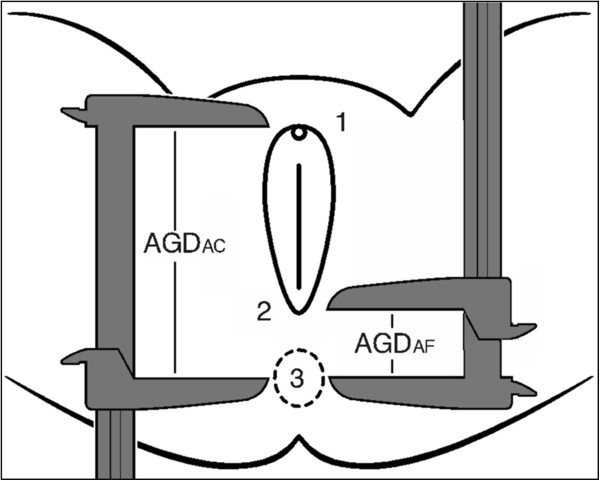
“To improve precision, two examiners made each of these measurements three times, taking in total 6 measures for AGDAF and AGDAC, respectively.”
BackgroundSelf-citationAdams, J., Polson, D. W., Abdulwahid, N., Morris, D. V., Franks, S., Mason, H. D., Tucker, M., Price, J., & Jacobs, H. S. (1985) · The Lancet · doi:10.1016/s0140-6736(85)92552-8 · Cited by 798
Bisphenol A Exposure Causes Meiotic Aneuploidy in the Female Mouse
Hunt, P. A., Koehler, K. E., Susiarjo, M., Hodges, C. A., Ilagan, A., Voigt, R. C., Thomas, S., Thomas, B. F., & Hassold, T. J. (2003) · Current Biology · doi:10.1016/s0960-9822(03)00189-1 · Cited by 636 · cited 2×
“; licensee BioMed Centr Commons Attribution License (http://creativec reproduction in any medium, provided the or been shown to disrupt and alter ovarian function [10-14]; and it has recently been demonstrated that BPA alters early oogenesis and follicle formation in the fetal ovary of nonhuman primates [14].”
BackgroundFOSTER, P. M. D. (2006) · International Journal of Andrology · doi:10.1111/j.1365-2605.2005.00563.x · Cited by 578 · cited 7×
“A number of animal studies have shown that exogenous androgen or estrogen exposure (including EDC) during the prenatal period can alter the development of the female reproductive tract [3-15].”
BackgroundInfluentialAbbott, D. H., Barnett, D. K., Bruns, C. M., & Dumesic, D. A. (2005) · Human Reproduction Update · doi:10.1093/humupd/dmi013 · Cited by 555 · cited 1×
“This prenatal hyperandrogenism results in enlarged cystic ovaries, anovulation or increases ovarian follicular recruitment in female offspring [3,4,7,35].”
BackgroundTesticular dysgenesis syndrome: mechanistic insights and potential new downstream effects
Sharpe, R. M., & Skakkebaek, N. E. (2008) · Fertility and Sterility · doi:10.1016/j.fertnstert.2007.12.026 · Cited by 446 · cited 1×
“infertility [21] suggesting a common origin, including a disruption of testicular development in utero, as suggested by the testicular dysgenesis syndrome hypothesis [42,43].”
BackgroundSir-Petermann, T. (2002) · Human Reproduction · doi:10.1093/humrep/17.10.2573 · Cited by 412 · cited 1×
“Pregnant women with PCOS have elevated circulating concentrations of androgens at mid-gestation, which may increase fetal androgen exposure, and female offspring of PCOS mothers are at increased risk of altered ovarian development and function [38,39].”
BackgroundAdverse effects of environmental antiandrogens and androgens on reproductive development in mammals1
Earl Gray, L., Wilson, V. S., Stoker, T., Lambright, C., Furr, J., Noriega, N., Howdeshell, K., Ankley, G. T., & Guillette, L. (2006) · International Journal of Andrology · doi:10.1111/j.1365-2605.2005.00636.x · Cited by 311
MacLeod, D. J., Sharpe, R. M., Welsh, M., Fisken, M., Scott, H. M., Hutchison, G. R., Drake, A. J., & Van Den Driesche, S. (2010) · International Journal of Andrology · doi:10.1111/j.1365-2605.2009.01005.x · Cited by 254 · cited 1×
“Therefore, in rodents AGD appears to provide a life-long read-out of prenatal androgen action [17].”
BackgroundAnogenital distance in human male and female newborns: a descriptive, cross-sectional study
Salazar-Martinez, E., Romano-Riquer, P., Yanez-Marquez, E., Longnecker, M. P., & Hernandez-Avila, M. (2004) · Environmental Health · doi:10.1186/1476-069x-3-8 · Cited by 243 · cited 6×
“To improve precision, two examiners made each of these measurements three times, taking in total 6 measures for AGDAF and AGDAC, respectively.”
BackgroundInfluentialBisphenol A alters early oogenesis and follicle formation in the fetal ovary of the rhesus monkey
Hunt, P. A., Lawson, C., Gieske, M., Murdoch, B., Smith, H., Marre, A., Hassold, T., & VandeVoort, C. A. (2012) · Proceedings of the National Academy of Sciences · doi:10.1073/pnas.1207854109 · Cited by 232
Shorter Anogenital Distance Predicts Poorer Semen Quality in Young Men in Rochester, New York
Mendiola, J., Stahlhut, R. W., Jørgensen, N., Liu, F., & Swan, S. H. (2011) · Environmental Health Perspectives · doi:10.1289/ehp.1103421 · Cited by 216
Self-citationWolf, C. J. (2002) · Toxicological Sciences · doi:10.1093/toxsci/65.1.71 · Cited by 214 · cited 6×
“Indeed, prenatal exposure of females to exogenous androgens results in longer and more masculine AGD [5-7] and increased ovarian follicular recruitment in adulthood compared to controls [3,4,7].”
BackgroundInfluentialThe Relationship between Anogenital Distance, Fatherhood, and Fertility in Adult Men
Eisenberg, M. L., Hsieh, M. H., Walters, R. C., Krasnow, R., & Lipshultz, L. I. (2011) · PLoS ONE · doi:10.1371/journal.pone.0018973 · Cited by 213 · cited 3×
“Recently, several studies on adult men have provided strong evidence of the relationship between AGD length and male reproductive function [21,22].”
BackgroundSteckler, T., Wang, J., Bartol, F. F., Roy, S. K., & Padmanabhan, V. (2005) · Endocrinology · doi:10.1210/en.2004-1444 · Cited by 209 · cited 4×
“In fact, in animal models, an association between prenatal exposures to androgen excess and an increase in ovarian follicular recruitment [3,4,7] and longer AGD measurement [7] has been reported.”
BackgroundInfluentialNeonatal exposure to bisphenol A reduces the pool of primordial follicles in the rat ovary
Rodríguez, H. A., Santambrosio, N., Santamaría, C. G., Muñoz-de-Toro, M., & Luque, E. H. (2010) · Reproductive Toxicology · doi:10.1016/j.reprotox.2010.07.008 · Cited by 186 · cited 2×
“; licensee BioMed Centr Commons Attribution License (http://creativec reproduction in any medium, provided the or been shown to disrupt and alter ovarian function [10-14]; and it has recently been demonstrated that BPA alters early oogenesis and follicle formation in the fetal ovary of nonhuman primates [14].”
BackgroundHotchkiss, A. K., Parks-Saldutti, L. G., Ostby, J. S., Lambright, C., Furr, J., Vandenbergh, J. G., & Gray, L. E. (2004) · Biology of Reproduction · doi:10.1095/biolreprod.104.031674 · Cited by 175
Endocrine Traits of Polycystic Ovary Syndrome in Prenatally Androgenized Female Sprague-Dawley Rats
WU, X.-Y., LI, Z.-L., WU, C.-Y., LIU, Y.-M., LIN, H., WANG, S.-H., & XIAO, W.-F. (2010) · Endocrine Journal · doi:10.1507/endocrj.k09e-205 · Cited by 150 · cited 8×
“Indeed, prenatal exposure of females to exogenous androgens results in longer and more masculine AGD [5-7] and increased ovarian follicular recruitment in adulthood compared to controls [3,4,7].”
BackgroundInfluentialSir-Petermann, T., Codner, E., Maliqueo, M., Echiburú, B., Hitschfeld, C., Crisosto, N., Pérez-Bravo, F., Recabarren, S. E., & Cassorla, F. (2006) · The Journal of Clinical Endocrinology & Metabolism · doi:10.1210/jc.2005-2693 · Cited by 149 · cited 1×
“Pregnant women with PCOS have elevated circulating concentrations of androgens at mid-gestation, which may increase fetal androgen exposure, and female offspring of PCOS mothers are at increased risk of altered ovarian development and function [38,39].”
BackgroundScott, H. M., Hutchison, G. R., Jobling, M. S., McKinnell, C., Drake, A. J., & Sharpe, R. M. (2008) · Endocrinology · doi:10.1210/en.2008-0413 · Cited by 145
Anogenital ratio: Measure of fetal virilization in premature and full-term newborn infants
Callegari, C. C., Everett, S. L., Ross, M. G., & Brasel, J. A. (1987) · The Journal of Pediatrics · doi:10.1016/s0022-3476(87)80075-6 · Cited by 145 · cited 8×
“Less is known about AGD in human females, but there are several published reports of virilization of the lower urogenital tract after either prenatal exogenous or endogenous exposure to androgenic hormones [23,24].”
BackgroundInfluentialScheffer, G. J., Broekmans, F. J. M., Bancsi, L. F., Habbema, J. D. F., Looman, C. W. N., & Te Velde, E. R. (2002) · Ultrasound in Obstetrics & Gynecology · doi:10.1046/j.1469-0705.2002.00787.x · Cited by 138
Zhang, H.-Q., Zhang, X., Zhang, L.-J., Chao, H.-H., Pan, B., Feng, Y., Li, L., Sun, X., & Shen, W. (2011) · Molecular Biology Reports · doi:10.1007/s11033-011-1372-3 · Cited by 127 · cited 2×
“; licensee BioMed Centr Commons Attribution License (http://creativec reproduction in any medium, provided the or been shown to disrupt and alter ovarian function [10-14]; and it has recently been demonstrated that BPA alters early oogenesis and follicle formation in the fetal ovary of nonhuman primates [14].”
BackgroundBancsi, L. F. J. M. M., Broekmans, F. J., Looman, C. W. N., Habbema, J. D. F., & Velde, E. R. T. (2004) · Fertility and Sterility · doi:10.1016/j.fertnstert.2003.06.011 · Cited by 126 · cited 1×
“While there is undoubtedly some inter-cycle variability of follicle count, it is considered to be of little clinical significance, for example, in predicting the response in in vitro fertilization [41].”
BackgroundSmith, P., Steckler, T. L., Veiga-Lopez, A., & Padmanabhan, V. (2009) · Biology of Reproduction · doi:10.1095/biolreprod.108.072801 · Cited by 119 · cited 4×
“In fact, in animal models, an association between prenatal exposures to androgen excess and an increase in ovarian follicular recruitment [3,4,7] and longer AGD measurement [7] has been reported.”
BackgroundInfluentialMeasurement and correlates of ano‐genital distance in healthy, newborn infants
Sathyanarayana, S., Beard, L., Zhou, C., & Grady, R. (2010) · International Journal of Andrology · doi:10.1111/j.1365-2605.2009.01044.x · Cited by 106 · cited 6×
“To improve precision, two examiners made each of these measurements three times, taking in total 6 measures for AGDAF and AGDAC, respectively.”
BackgroundInfluentialRivera, O. E., Varayoud, J., Rodríguez, H. A., Muñoz-de-Toro, M., & Luque, E. H. (2011) · Reproductive Toxicology · doi:10.1016/j.reprotox.2011.06.118 · Cited by 105 · cited 2×
“; licensee BioMed Centr Commons Attribution License (http://creativec reproduction in any medium, provided the or been shown to disrupt and alter ovarian function [10-14]; and it has recently been demonstrated that BPA alters early oogenesis and follicle formation in the fetal ovary of nonhuman primates [14].”
BackgroundMoyer, B., & Hixon, M. L. (2012) · Reproductive Toxicology · doi:10.1016/j.reprotox.2012.02.006 · Cited by 94 · cited 3×
“Moyer and Hixon [15] have recently shown that prenatal exposure to another well-known EDC, di(2-ethylhexyl) phthalate, increased the numbers of mature follicles in adult females in the highest exposure group and the subsequent decrease in overall reproductive lifespan.”
BackgroundReproduction in females: The role of the early life environment
Sloboda, D. M., Hickey, M., & Hart, R. (2011) · Human Reproduction Update · doi:10.1093/humupd/dmq048 · Cited by 94 · cited 1×
“As such, it has been widely hypothesized that the etiology of PCOS in humans may include excess prenatal androgen exposure [37].”
BackgroundDean, A., Smith, L. B., Macpherson, S., & Sharpe, R. M. (2012) · International Journal of Andrology · doi:10.1111/j.1365-2605.2011.01236.x · Cited by 92 · cited 6×
“Indeed, prenatal exposure of females to exogenous androgens results in longer and more masculine AGD [5-7] and increased ovarian follicular recruitment in adulthood compared to controls [3,4,7].”
BackgroundInfluentialEffects of estrogenic compounds on neonatal oocyte development
Karavan, J. R., & Pepling, M. E. (2012) · Reproductive Toxicology · doi:10.1016/j.reprotox.2012.02.005 · Cited by 86 · cited 1×
“A number of animal studies have shown that exogenous androgen or estrogen exposure (including EDC) during the prenatal period can alter the development of the female reproductive tract [3-15].”
BackgroundDisordered follicle development in ovaries of prenatally androgenized ewes
Forsdike, R. A., Hardy, K., Bull, L., Stark, J., Webber, L. J., Stubbs, S., Robinson, J. E., & Franks, S. (2007) · Journal of Endocrinology · doi:10.1677/joe.1.07097 · Cited by 86 · cited 1×
“animal models, furthermore [35,36].”
The ovarian dysgenesis syndrome
Buck Louis, G. M., Cooney, M. A., & Peterson, C. M. (2011) · Journal of Developmental Origins of Health and Disease · doi:10.1017/s2040174410000693 · Cited by 73 · cited 1×
“[44] suggested a similar paradigm for human females, the ovarian dysgenesis syndrome, which the authors define as alterations in ovarian structure or function that may manifest as fecundity impairments, gynecologic disorders, gravid diseases or later onset of adult diseases.”
BackgroundClitoral and penile sizes of full term newborns in two different ethnic groups.
Phillip, M., Boer, C. D., PILPEL, D., Karplus, M., & Sofer, S. (1996) · PubMed · Cited by 71
Environmental Contaminants, Fertility, and Multioocytic Follicles: A Lesson from Wildlife?
Guillette, L. J., & Moore, B. C. (2006) · Seminars in Reproductive Medicine · doi:10.1055/s-2006-944419 · Cited by 66 · cited 1×
“A number of animal studies have shown that exogenous androgen or estrogen exposure (including EDC) during the prenatal period can alter the development of the female reproductive tract [3-15].”
BackgroundGoldman, A. S., & Bongiovanni, A. M. (1967) · Annals of the New York Academy of Sciences · doi:10.1111/j.1749-6632.1967.tb14686.x · Cited by 63 · cited 1×
“Less is known about AGD in human females, but there are several published reports of virilization of the lower urogenital tract after either prenatal exogenous or endogenous exposure to androgenic hormones [23,24].”
BackgroundDifferential fecundity and effectiveness of contraception.
Tietze, C. (1959) · PubMed · Cited by 57
Litter sex composition affects life‐history traits in yellow‐bellied marmots
Monclús, R., & Blumstein, D. T. (2011) · Journal of Animal Ecology · doi:10.1111/j.1365-2656.2011.01888.x · Cited by 50 · cited 1×
“In many mammalian species females with shorter AGD are more fertile [33,34].”
BackgroundAnogenital distance as a predictor of attractiveness, litter size and sex ratio of rabbit does
Bánszegi, O., Szenczi, P., Dombay, K., Bilkó, Á., & Altbäcker, V. (2012) · Physiology & Behavior · doi:10.1016/j.physbeh.2012.01.002 · Cited by 43 · cited 1×
“In many mammalian species females with shorter AGD are more fertile [33,34].”
BackgroundLaterality and asymmetry of endometriotic lesions
Guo, S., Wang, Y., Liu, X., & Olive, D. L. (2007) · Fertility and Sterility · doi:10.1016/j.fertnstert.2007.02.043 · Cited by 27
Multifollicular ovaries in female adolescents with cystic fibrosis
Galli‐Τsinopoulou, A., Moudiou, T., Mamopoulos, A. M., Karamouzis, M., & Nousia‐Arvanitakis, S. (2006) · Fertility and Sterility · doi:10.1016/j.fertnstert.2005.10.051 · Cited by 20 · cited 4×
“Several articles have previously defined having ≥ 6 or > 12 ovarian follicles as multifollicular [28,29] or polycystic ovaries [30], respectively.”
BackgroundMethodInfluentialPhillip, M., Hershkovitz, E., Limoni, Y., Leiberman, E., Belotserkovsky, O., Douvdevani, A., & Weber, D. (1996) · Journal of Pediatric Endocrinology and Metabolism · doi:10.1515/jpem.1996.9.5.519 · Cited by 19
Differential Fecundity and Effectiveness of Contraception
Tietze, S. L., & Lincoln, R. (1987) · Springer eBooks · doi:10.1007/978-1-4612-4702-9_12 · Cited by 15
Variation in Ano‐Genital Distance in Spontaneously Cycling Female Mice
Dušek, A., & Bartoš, L. (2012) · Reproduction in Domestic Animals · doi:10.1111/j.1439-0531.2012.02003.x · Cited by 14
Cited by
EFSA Panel on Food Contact Materials, E. (2015) · EFSA Journal · doi:10.2903/j.efsa.2015.3978 · Cited by 1,023
First trimester phthalate exposure and anogenital distance in newborns
Swan, S. H., Sathyanarayana, S., Barrett, E. S., Janssen, S., Liu, F., Nguyen, R. H. N., Redmon, J. B., the TIDES Study Team, the TIDES Study Team, Liu, F., et al. (2015) · Human Reproduction · doi:10.1093/humrep/deu363 · Cited by 356
“In females, a longer AGD has been associated with conditions linked to increased androgenization such as congenital adrenal hyperplasia (Callegari et al., 1987) and multifollicular ovaries (Mendiola et al., 2012).”
BackgroundSelf-citationDean, A., & Sharpe, R. M. (2013) · The Journal of Clinical Endocrinology & Metabolism · doi:10.1210/jc.2012-4057 · Cited by 286
“and repeatable measurement (16, 17, 70) as it is unaffected”
BackgroundAnogenital distance as a marker of androgen exposure in humans
Thankamony, A., Pasterski, V., Ong, K. K., Acerini, C. L., & Hughes, I. A. (2016) · Andrology · doi:10.1111/andr.12156 · Cited by 238
“…that large increases occur in later life and sexual dimorphism is maintained to a lesser degree (ranges; males, 48.3–51.3 mm; females, 34.8–37.7 mm; male: female ratio calculated from the means from different studies, 1.4 : 1) (Mendiola et al., 2011, 2012; Lee et al., 2015; Parra et al., 2015).”
BackgroundInfluentialBarrett, E. S., Hoeger, K. M., Sathyanarayana, S., Abbott, D. H., Redmon, J. B., Nguyen, R. H. N., & Swan, S. H. (2018) · Journal of Developmental Origins of Health and Disease · doi:10.1017/s2040174417001118 · Cited by 145
Self-citation
Metadata
- Authors
- Mendiola, J., Roca, M., Mínguez-Alarcón, L., Mira-Escolano, M.-P., López-Espín, J. J., Barrett, E. S., Swan, S. H., & Torres-Cantero, A. M.
- Affiliations
- Universidad de Murcia (ES)
- Universitat de Miguel Hernández d'Elx (ES)
- University of Rochester Medicine (US)
- Icahn School of Medicine at Mount Sinai (US)
- Corresponding author
- Mendiola, Jaime
- Venue
- Environmental Health
- Published
- 2012-12
- Volume
- 11
- Issue
- 1
- Pages
- 90-90
- ISSN
- 1476-069X (ISSN-L)
- PMC
- PMC3562168
- OpenAlex
- W2106702000
- Cited by
- 114
- References
- 47
- Citations by year
- 2026: 5 · 2025: 6 · 2024: 4 · 2023: 8 · 2022: 11 · 2021: 13 · 2020: 8 · 2019: 4 · 2018: 10 · 2017: 11 · 2016: 13 · 2015: 10 · 2014: 5 · 2013: 6
- FWCI
- 2.70
- Type
- journal article
- Language
- en
- Open access
- gold
- doi.org
- Licence
- Locations
- Environmental Health (publishedVersion, cc-by)
- Europe PMC (PubMed Central) (publishedVersion, cc-by)
- PubMed Central (publishedVersion, cc-by)
- PubMed (publishedVersion)
- Rutgers University Community Repository (Rutgers University) (submittedVersion)
- DOAJ (DOAJ: Directory of Open Access Journals) (submittedVersion, cc-by-sa)
- Funders
- Ministerio de Ciencia e Innovación
- Instituto de Salud Carlos III (PI10/00985)
- Topics
- Health Sciences › Medicine › Endocrinology, Diabetes and Metabolism › Sexual Differentiation and Disorders
- Physical Sciences › Environmental Science › Health, Toxicology and Mutagenesis › Effects and risks of endocrine disrupting chemicals
- Health Sciences › Medicine › Reproductive Medicine › Ovarian function and disorders
- Keywords
- anogenital distance, ovarian follicle number, ovarian morphology, prenatal androgen exposure, reproductive system development, menstrual cycle, young women
- MeSH terms
- Adolescent, Adult, Anal Canal, Cross-Sectional Studies, Female, Genitalia, Female, Ovarian Follicle, Humans, Spain, Young Adult
About these checks
Registry, retraction, Cites and statistics results are computed, not judged, with one exception: a printed reference that no index lists is read once by a model before it counts as a citation error. Claims are extracted by a model and kept only when their quote appears verbatim in the text; each cited source is then checked, with a model’s help, for whether it says what the claim relies on. Those verdicts can be wrong — read the claim’s quote and the cited source before relying on one.
Statistics and arithmetic are recomputed, not judged.
Confidence bands are shown only for fields calibrated on our annotated test set. None is calibrated yet, so no band is shown.
What counts as a claim ›How we measure confidence ›How we check this ›
Are you an author, or do you see a problem with this page? Request a review
Data sources
Bibliographic data: Semantic Scholar, OpenAlex, Crossref.
Contains information from the Semantic Scholar Academic Graph Datasets, made available under the ODC Attribution License (ODC-BY 1.0).
Semantic Scholar’s data is described in: Kinney, R., et al. (2023). The Semantic Scholar Open Data Platform. arXiv:2301.10140.
