

The DOI matches its Crossref record; 44 of the 55 references it cites were found in a registry or an index.
Mesothelin confers pancreatic cancer cell resistance to TNF-α-induced apoptosis through Akt/PI3K/NF-κB activation and IL-6/Mcl-1 overexpression
Open accessAbstract
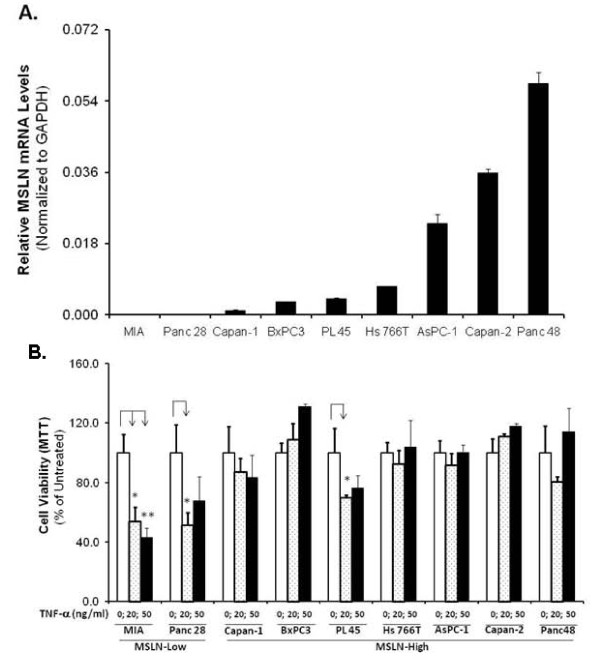
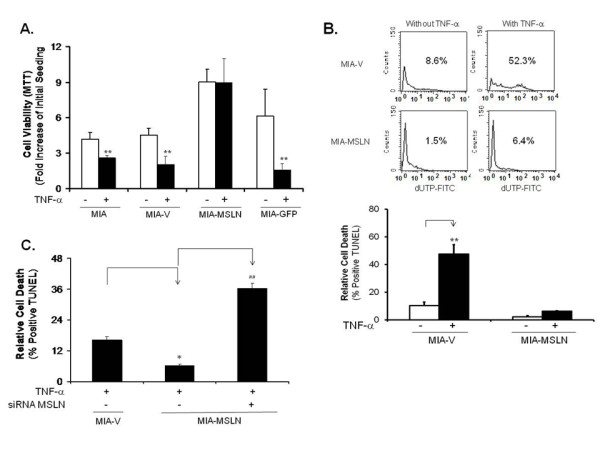
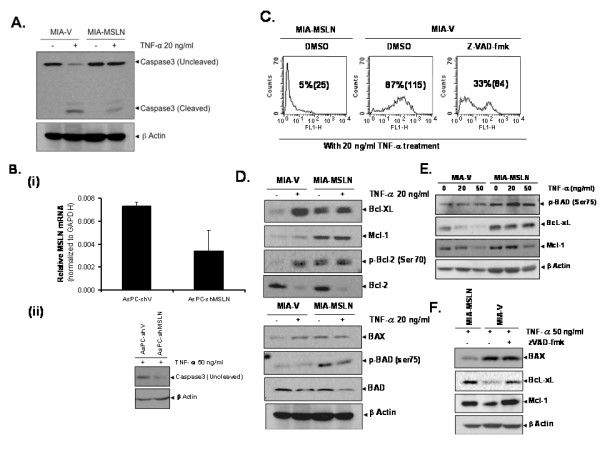
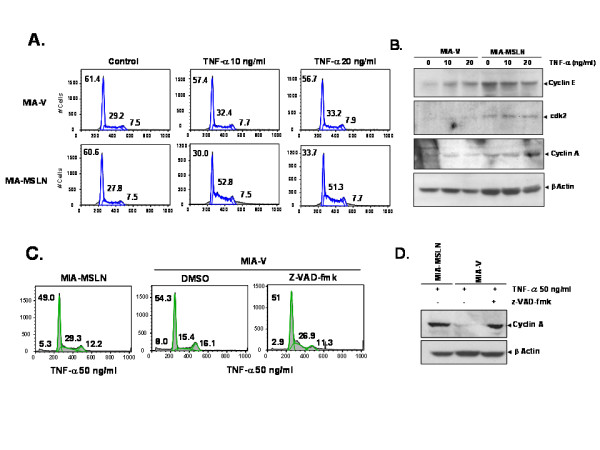
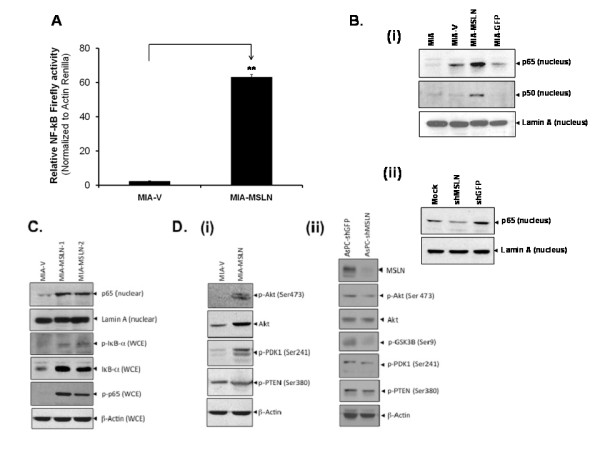
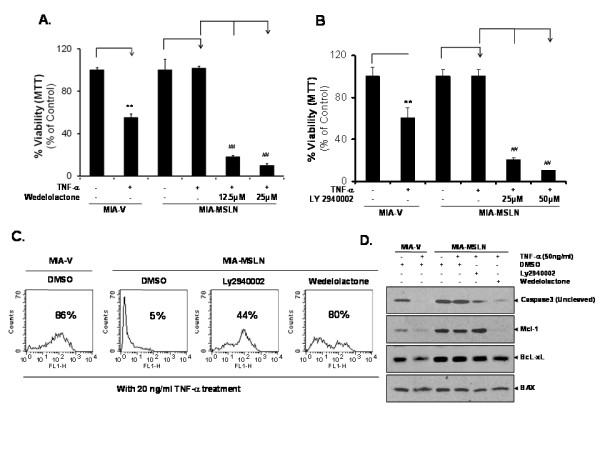
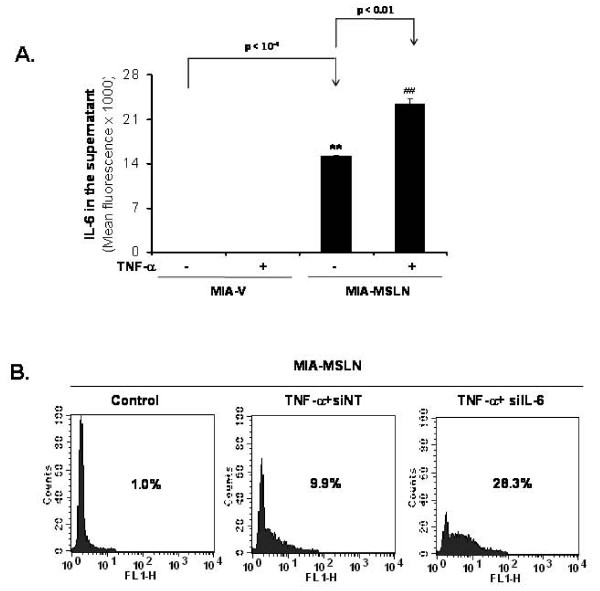
Background: Previous studies showed that mesothelin (MSLN) plays important roles in survival of pancreatic cancer (PC) cells under anchorage dependent/independent conditions as well as resistance to chemotherapy. The recent success of intratumorally-injected adeno-encoded, chemo/radiation-inducible-promoter driven hTNF-α, (TNFerade) + gemcitabine in pre-clinical models of PC have renewed interest in use of TNF-α as a therapeutic component. To help find additional factors which might affect the therapy, we examined the resistance of MSLN-overexpressing pancreatic cancer cell lines to TNF-α-induced growth inhibition/apoptosis. Methods: Stable MSLN overexpressing MIA PaCa-2 cells (MIA-MSLN), stable MSLN-silenced AsPC-1 cells (AsPC-shMSLN) and other pancreatic cells (MIA-PaCa2, Panc 28, Capan-1, BxPC3, PL 45, Hs 766T, AsPC-1, Capan-2, Panc 48) were used. NF-κB activation was examined by western blots and luciferase reporter assay. TNF-α induced growth inhibition/apoptosis was measured by MTT, TUNEL assay and caspase activation. IL-6 was measured using luminex based assay. Results: Compared to low endogenous MSLN-expressing MIA PaCa-2 and Panc 28 cells, high endogenous MSLN-expressing Capan-1, BxPC3, PL 45, Hs 766T, AsPC-1, Capan-2, Panc 48 cells were resistant to TNF-α induced growth inhibition. Stable MSLN overexpressing MIA-PaCa2 cells (MIA-MSLN) were resistant to TNF-α-induced apoptosis while stable MSLN-silenced AsPC1 cells (AsPC-shMSLN) were sensitive. Interestingly, TNF-α-treated MIA-MSLN cells showed increased cell cycle progression and cyclin A induction, both of which were reversed by caspase inhibition. We further found that MIA-MSLN cells showed increased expression of anti-apoptotic Bcl-XL and Mcl-1; deactivated (p-Ser 75 ) BAD, and activated (p-Ser 70 ) Bcl-2. Constitutively activated NF-κB and Akt were evident in MIA-MSLN cells that could be suppressed by MSLN siRNA with a resultant increase in sensitivity of TNF-α induced apoptosis. Blocking NF-κB using IKK inhibitor wedelolactone also increased sensitivity to TNF-α-mediated cytotoxicity with concomitant decrease in Mcl-1. Blocking Akt using PI3K inhibitor also had a likewise effect presumably affecting cell cycle. MIA-MSLN cells produced increased IL-6 and were increased furthermore by TNF-α treatment. SiRNA-silencing of IL-6 increased TNF-α sensitivity of MIA-MSLN cells. Conclusions: Our study delineates a MSLN-Akt-NF-κB-IL-6-Mcl-1 survival axis that may be operative in PC cells, and might help cancer cells' survival in the highly inflammatory milieu evident in PC. Further, for the success of TNFerade + gemcitabine to be successful, we feel the simultaneous inhibition of components of this axis is also essential.
Overview
The claims and statistics of this paper haven’t been checked yet.
Run the check — free, no account needed. It reads the open-access text and checks the sources it cites.
Integrity signals
Registry
Cites
Statistics
Figures
Verification
Claims the paper makes
The claims and statistics of this paper haven’t been checked yet.
Run the check — free, no account needed. It reads the open-access text and checks the sources it cites.
Claims other papers make about this one
Each is checked against this paper’s own text: does it say what the citing paper says it does?
The cited source says what the claim attributes to it.
In the citing paper
“It confers pancreatic cancer cell resistance to TNFα-induced apoptosis through NF-κB activation and the enhanced expression of IL-6 (319).”
From IL-6 in inflammation, autoimmunity and cancer (2021) · cites this paper as [319]
Self-check
Percentages, sums and reported differences re-computed from the paper’s own numbers.
The self-check needs the paper’s full text.
Citations
Cites
An endotoxin-induced serum factor that causes necrosis of tumors
Carswell, E. A., Old, L. J., Kassel, R. L., Green, S., Fiore, N., & Williamson, B. (1975) · Proceedings of the National Academy of Sciences · doi:10.1073/pnas.72.9.3666 · Cited by 4,532 · cited 1×
“TNF-a was identified as a cytokine that induces tumor necrosis/regression in animals [9].”
BackgroundThe Bcl2 family: regulators of the cellular life-or-death switch
Cory, S., & Adams, J. M. (2002) · Nature Reviews Cancer · doi:10.1038/nrc883 · Cited by 4,032 · cited 1×
“Dephosphorylated BAD promotes apoptosis by binding and sequestering Bcl-2 and/or Bcl-XL away from proapoptotic Bax/Bak proteins [22,23].”
BackgroundSignalling pathways of the TNF superfamily: a double-edged sword
Aggarwal, B. B. (2003) · Nature Reviews Immunology · doi:10.1038/nri1184 · Cited by 2,793 · cited 2×
“TNF-a induces NF- B activation in most cells [17,18] but this is not always sufficient to avoid the pro-apoptotic effects of TNF-a; rather, a constitutive activation of NF- B seems to be necessary [20].”
BackgroundInflammation and cancer: how hot is the link?
Aggarwal, B. B., Shishodia, S., Sandur, S. K., Pandey, M. K., & Sethi, G. (2006) · Biochemical Pharmacology · doi:10.1016/j.bcp.2006.06.029 · Cited by 1,312 · cited 8×
“Another interesting observation is that TNF-a induces MIA-MSLN cells to go into cell cycle rather than stalling the process, similar to previous reports of auto/paracrine growth stimulation by TNF-a [17].”
BackgroundResultInfluentialWang, C.-Y., Cusack, J. C., Liu, R., & Baldwin, A. S. (1999) · Nature Medicine · doi:10.1038/7410 · Cited by 986 · cited 1×
“However, a large percentage of patients and/or cell lines are resistant to TNF-a treatment [14,15].”
BackgroundTNF-α in promotion and progression of cancer
Balkwill, F. R. (2006) · Cancer and Metastasis Reviews · doi:10.1007/s10555-006-9005-3 · Cited by 919
Bcl-2 family proteins and cancer
Yip, K. W., & Reed, J. C. (2008) · Oncogene · doi:10.1038/onc.2008.307 · Cited by 913 · cited 1×
“Bcl-2 regulates apoptosis by heterodimerization with its pro-apoptotic partner, Bax, to maintain mitochondrial integrity [40].”
BackgroundMammalian cell-cycle regulation: several Cdks, numerous cyclins and diverse compensatory mechanisms
Satyanarayana, A., & Kaldis, P. (2009) · Oncogene · doi:10.1038/onc.2009.170 · Cited by 800 · cited 1×
“We further examined S-phase promoting cyclins A/E [28] and cdk2.”
BackgroundTumour necrosis factor-α as a tumour promoter
Szlosarek, P. W., Charles, K. A., & Balkwill, F. R. (2006) · European Journal of Cancer · doi:10.1016/j.ejca.2006.01.012 · Cited by 367
Mesothelin targeted cancer immunotherapy.
Hassan, R., & Ho, M. (2008) · European Journal of Cancer · doi:10.1016/j.ejca.2007.08.028 · Cited by 337 · cited 1×
“The importance of mesothelin (MSLN) as a biomarker and preferred immunotherapeutic target is steadily growing for many cancers, including pancreatic cancer (PC) [1-3].”
Background
Research works printed but not linked: 6
- Li M, Bharadwaj U, Zhang R, Zhang S, Mu H, Fisher WE, Brunicardi FC, Chen C, Yao Q: Mesothelin is a malignant factor and therapeutic vaccine target for pancreatic cancer. Mol Cancer Ther. 2008, 7: 286-296. 10.1158/1535-7163.MCT-07-0483 · DOI
- Fernandez A, Marin MC, McDonnell T, Ananthaswamy HN: Differential sensitivity of normal and Ha-ras-transformed C3H mouse embryo fibroblasts to tumor necrosis factor: induction of bcl-2, c-myc, and manganese superoxide dismutase in resistant cells. Oncogene. 1994, 9: 2009-2017.
- Komori A, Yatsunami J, Suganuma M, Okabe S, Abe S, Sakai A, Sasaki K, Fujiki H: Tumor necrosis factor acts as a tumor promoter in BALB/3T3 cell transformation. Cancer Res. 1993, 53: 1982-1985.
- Eisenmann KM, VanBrocklin MW, Staffend NA, Kitchen SM, Koo HM: Mitogen-activated protein kinase pathway-dependent tumor-specific survival signaling in melanoma cells through inactivation of the proapoptotic protein bad. Cancer Res. 2003, 63: 8330-8337.
- Argani P, Iacobuzio-Donahue C, Ryu B, Rosty C, Goggins M, Wilentz RE, Murugesan SR, Leach SD, Jaffee E, Yeo CJ: Mesothelin is overexpressed in the vast majority of ductal adenocarcinomas of the pancreas: identification of a new pancreatic cancer marker by serial analysis of gene expression (SAGE). Clin Cancer Res. 2001, 7: 3862-3868.
- Kalthoff H, Roeder C, Humburg I, Thiele HG, Greten H, Schmiegel W: Modulation of platelet-derived growth factor A- and B-chain/c-sis mRNA by tumor necrosis factor and other agents in adenocarcinoma cells. Oncogene. 1991, 6: 1015-1021.
Cited by
Sorted by citations
Items 101–151 of 151
Effect of siRNA pre-Exposure on Subsequent Response to siRNA Therapy
Aliabadi, H. M., Mahdipoor, P., Kucharski, C., Chan, N., & Uludağ, H. (2015) · Pharmaceutical Research · doi:10.1007/s11095-015-1741-z · Cited by 12
Advancing Immunotherapy in Pancreatic Cancer
Hegazi, A., Rager, L. E., Watkins, D., & Su, K. (2024) · International Journal of Molecular Sciences · doi:10.3390/ijms252111560 · Cited by 9
Exploiting mesothelin in thymic carcinoma as a drug delivery target for anetumab ravtansine
Chen, V., Umemura, S., Han, Y.-M., Raman, R., Tucker, R. D., Chahine, J., Kim, I.-K., Schatz, C., Zitzmann-Kolbe, S., Sommer, A., et al. (2021) · British Journal of Cancer · doi:10.1038/s41416-021-01658-6 · Cited by 9
“In pancreatic cancer, MSLN was shown to induce drug resistance via NF-kB activation and Mcl-1 overexpression [17].”
BackgroundStachyra, P., & Grzybowska-Szatkowska, L. (2025) · Genes · doi:10.3390/genes16050600 · Cited by 8
“…PI3K/AKT, as was mentioned above, may also be activated by IL-6, which is responsible for the intensification of the inflammatory response and the activation of acute phase proteins, and therefore is essential for the anti-apoptotic signaling cascade, which leads to therapeutic resistance [72].”
Wen, L., Huang, Y., Peng, L., Zhao, K., Sun, Y., Lin, Z.-C., Chen, Y.-Y., Li, Z., Qian, Q., Tong, F., et al. (2022) · Frontiers in Immunology · doi:10.3389/fimmu.2022.807915 · Cited by 8
“AKT/ PI3K/NF-kB pathways are activated by the overexpression of MSLN and subsequently induce resistance to apoptosis, which might help cancer cell survival in the highly inflammatory milieu (10).”
BackgroundNEAT1: Culprit lncRNA linking PIG-C, MSLN, and CD80 in triple-negative breast cancer.
Hussein, N. H., Eissa, R. A., de Bruyn, M., & Tayebi, H. E. E. (2022) · Life Science · doi:10.1016/j.lfs.2022.120523 · Cited by 8
Leal, A. D., Krishnamurthy, A., Head, L., & Messersmith, W. A. (2018) · Expert Opinion on Investigational Drugs · doi:10.1080/13543784.2018.1541085 · Cited by 8
“Additional mechanisms by which mesothelin is thought to contribute to tumorigenesis include the increased expression of matrix metalloproteinases 7 and 9 leading to enhancement of cancer cell invasion [34,35], promotion of autocrine IL-6 expression to stimulate cancer cell proliferation [36], and resistance to TNF-alp…”
BackgroundInfluentialInvolvement of NF-κB in mediating the anti-tumour effects of combretastatins in T cells
Pollock, J., Greene, L., Nathwani, S. M., Kinsella, P., O'Boyle, N. M., Meegan, M., & Zisterer, D. (2018) · Investigational new drugs · doi:10.1007/s10637-017-0543-z · Cited by 7
Significant pathway and biomarker identification of pancreatic cancer associated lung cancer
Khan, T., Paul, B. K., Hasan, M. T., Islam, M. R., Arefin, M., Ahmed, K., Islam, M. K., & Moni, M. A. (2021) · Informatics in Medicine Unlocked · doi:10.1016/j.imu.2021.100637 · Cited by 7
Targeting cytokines: Reshaping the pancreatic tumor microenvironment
Bandi, D. S. R., Chabattula, S. C., Pynam, H., Joseph, J. T., Sarvesh, S., Nagaraju, G. P., & El‐Rayes, B. F. (2025) · Cytokine & Growth Factor Reviews · doi:10.1016/j.cytogfr.2025.11.003 · Cited by 6
El-Serafi, I., Nilsson, I. M., Moter, A., Duan, Z., Mattsson, J., & Magalhaes, I. (2024) · Cancer Immunology and Immunotherapy · doi:10.1007/s00262-024-03740-3 · Cited by 6
Lim, M. S. H., Ohtsuki, T., Takenaka, F., Kobayashi, K., Akehi, M., Uji, H., Kobuchi, H., Sasaki, T., Ozeki, E., & Matsuura, E. (2021) · Life · doi:10.3390/life11020158 · Cited by 10
Wu, Z., Fu, X., Feng, Y., Zeng, R., Qin, H., & Yao, K. (2025) · Cancer Biology & Therapy · doi:10.1080/15384047.2025.2603105 · Cited by 5
Decoding the role of mesothelin in tumor dynamics and targeted treatment innovations
Silvestri, R., Colucci, E., Piccardi, M., Landi, S., & Gemignani, F. (2025) · Molecular Biomedicine · doi:10.1186/s43556-025-00379-z · Cited by 7
“5) [30].”
InfluentialAntoun, S., Atallah, D. M., Tahtouh, R., Assaf, M. D., Moubarak, M., Ayoub, E. N., Chahine, G. Y., & Hilal, G. (2019) · Oncology Letters · doi:10.3892/ol.2019.11233 · Cited by 4
“In fact, mesothelin, a protein modulated by the activation of this pathway, interacts with Ca-125 to promote peritoneal metastasis (56).”
BackgroundKim, K., Choi, C., & Suh, W. (2014) · Biomolecules & Therapeutics · doi:10.4062/biomolther.2014.010 · Cited by 5
“MSLN and IRS2 promote cell proliferation and survival by activating phosphatidylinositol 3-kinase/Akt signaling pathway (Bharadwaj et al., 2011; Gui et al., 2013).”
BackgroundAn, M., Wang, Y., Shao, J., Wu, S., Yan, J.-Y., Li, Y., Zhong, L., Guo, J., Chen, T.-R., Tian, M., et al. (2025) · Signal Transduction and Targeted Therapy · doi:10.1038/s41392-025-02524-0 · Cited by 4
“14,34 Additionally, the high-af fi nity interaction between MSLN and CA125 promotes tumor cell adhesion and metastasis.”
Mesothelin as a biomarker and potential therapeutic target in rheumatoid arthritis bone destruction
Su, X., Wang, Q., Wang, J., Zhu, P., Guo, W., Yang, J., Li, S., Huang, F., Qi, M., Li, H., et al. (2025) · Cell Reports Medicine · doi:10.1016/j.xcrm.2025.102430 · Cited by 4
“30,31 34 Moreover, overexpression of MSLN also facilitates cell migration and invasion by inducing the activation and expression of MMP-7.”
Jang, Y., Koh, J. S., Park, J.-H., Choi, S., Pham, D. A. T., Heo, B., Lee, S. W., Kim, J. Y., Lee, M.-W., Kim, S.-H., et al. (2024) · International Journal of Molecular Sciences · doi:10.3390/ijms25042140 · Cited by 4
“Mesothelin overexpressed in pancreatic cancer activates Akt signaling [16,23], which is reported to stimulate mitochondrial respiration [24].”
BackgroundDuran, A., Guerrero, P. E., Ortiz, M., del Campo, D. P., Castro, E., Garcia-Velasco, A., Fort, E., Llorens, R., Saldova, R., Llop, E., et al. (2022) · Biomedicines · doi:10.3390/biomedicines10081942 · Cited by 4
Mesothelin-Associated Anti-Senescence Through P53 in Pancreatic Ductal Adenocarcinoma
Liu, D., Lü, J., Chen, C., & Yao, Q. C. (2025) · Cancers · doi:10.3390/cancers17122058 · Cited by 1
Self-citationMalla, M., Deshkmukh, S. K., Wu, S., Samec, T., Olevian, D. C., Naili, R., Bassel, E.-R., Xiu, J., Farrell, A., Lenz, H., et al. (2023) · Research Square · doi:10.21203/rs.3.rs-3787873/v1 · Cited by 3
“17,30,31 Our work begins to uncover the relevance of MSLN overexpression in CRC patients as well as the implications of MSLN expression levels on pivotal CRC prognostic information including CRC tumor sidedness, CMS subtype, genetic mutation landscape, and immune response modulation.”
BackgroundMesothelin-expressing triple-negative breast cancer: a highly invasive and immunosuppressive subtype
Zhao, Z., Lei, H., Wang, B., Guo, L., Gao, L., Wang, B., Zheng, S., & Ying, J. (2025) · Breast Cancer Research and Treatment · doi:10.1007/s10549-025-07860-x · Cited by 3
High mesothelin expression is associated with low cytotoxic T cell infiltration in pancreatic cancer
Liang, O., White, A. L., Fielder, T., Shin, J., Sagnella, S. M., Schmitz, U., & Yeo, D. (2025) · Frontiers in Immunology · doi:10.3389/fimmu.2025.1651687 · Cited by 3
Takakura, H., Horinaka, M., Imai, A., Aono, Y., Nakao, T., Miyamoto, S., Iizumi, Y., Watanabe, M., Narita, T., Ishikawa, H., et al. (2021) · Journal of Clinical Biochemistry and Nutrition · doi:10.3164/jcbn.21-74 · Cited by 2
“(48,49) We speculate that down-regulation of TNF-α expression in the culture medium may also contribute to the additive/synergistic inhibitory effects of cell growth via induced cell-cycle arrest at the G1 phase on mouse intestinal polyp-derived cells (Fig.”
Mahmoud, S., Ibrahim, M. M., Hago, A., Huang, Y.-H., Wei, Y., Zhang, J., Zhang, Q.-Q., Xiao, Y., Wang, J., Adam, M., et al. (2016) · OncoTarget · doi:10.18632/oncotarget.11933 · Cited by 2
Correlation of cytotoxic effect of transmembrane and secretory TNF-α to cell cycle
Li, X., Shi, W.-L., Hu, Y.-B., Yan, Y.-J., Wu, Y.-Q., & Li, Z.-Y. (2012) · Journal of Huazhong University of Science and Technology. Medical Sciences · doi:10.1007/s11596-012-1038-y · Cited by 1
The Role of Mesothelin in Gynecological Tumors and Its Significance in Targeted Therapies—A Review
Kawecka, W., Wilczyński, J., Tyczyńska, M., Bielak, M., Obrzut, B., & Semczuk, A. (2026) · Cancers · doi:10.3390/cancers18111692 · Cited by 1
“It could also activate the nuclear factor kappa-light-chain-enhancer of activated B cells (NF κ B), mitogen-activated protein kinase (MAPK), and phosphoinositide 3-kinase (PI3K) pathways, inducing resistance to apoptosis [25,28].”
Wang, L., Zhan, Q., Luo, J., Li, J., He, C., Zhu, Y., Pei, C.-X., Chen, Y.-T., Tang, N., Yin, J.-X., et al. (2026) · Blood Advances · doi:10.1182/bloodadvances.2025017325 · Cited by 1
“12,39,40 Of note, MSLN-MUC16 binding has been postulated to play an important role during tumorigenesis and metastasis in solid tumors.”
MSLN-mediated activation of EGFR-ERK1/2 signaling drives liver metastasis in breast cancer
Chen, J., Liu, Y., Zhang, G., Meng, D., Chang, C., Chen, J., Wang, B., Tong, Y., Hai, Y., Lei, M., et al. (2026) · Cell Death Discovery · doi:10.1038/s41420-025-02835-9 · Cited by 1
“And MSLN overexpression could constitutively activate NF-κ B to promote cell survival [17, 18].”
Wu, H.-Y., Pang, M., Chen, H.-Q., Zhuang, K., Zhang, H., Zhao, Y., & Ding, X.-X. (2025) · Journal of Molecular Histology · doi:10.1007/s10735-025-10388-5 · Cited by 1
“The overexpression of MSLN can inhibit cell apoptosis and promote cell proliferation, migration and metastasis, potentially influencing the CAC pro - cess by regulating the biological functions of endothelial cells (Bharadwaj et al. 2011; Coelho et al. 2020).”
Xie, H. (2024) · International Conference on Biological Engineering and Medical Science · doi:10.1117/12.3012936 · Cited by 1
“However, in the PDAC, MSLN is able to stimulate the MAPK, NF-κB, and PI3K pathways to make cancer cells resistant to tumor necrosis factor-alpha (TNF-α) -induced apoptosis [17], or enhance cell proliferation and metastasis through up-regulated expression of MMP7 [18] and Interleukin-6 (IL-6) [19].”
BackgroundKravchenko, Y., Chumakov, S., & Frolova, E. (2020) · Innate antiviral immunity · doi:10.24075/brsmu.2020.068 · Cited by 1
“Mesothelin can inhibit the TNFαinduced apoptosis of tumor cells [5], stimulate proliferation and invasion of malignant cells [6] and promote resistance to chemotherapy [7].”
BackgroundZhou, Y., Yu, F., Luo, B., Luo, H., & Liu, C. (2019) · Process Biochemistry · doi:10.1016/j.procbio.2019.04.007 · Cited by 1
Mesothelin as Biomarker and Therapeutic Target for Immunotherapy in Cancer
Gupta, M. K., Vadde, R., & Nagaraju, G. P. (2026) · MedComm · doi:10.1002/mco2.71009
“This result is consistent with findings from Bharadwaj et al. [ 32 ], who showed that high MSLN levels enhance resistance to TNF-α -induced apoptosis through the Akt/phosphoinositide 3-kinase/nuclear factor kappa B signaling pathway.”
InfluentialOuyang, X., Deng, X., Qizhao, W., Chu, M., Wei, X., Wang, M., Xiang, C., Zhang, P., Sun, Z., Shen, S., et al. (2026) · Cancer Gene Therapy · doi:10.1038/s41417-026-01071-2
Conformational epitope engagement by anti-MSLN ADC RC88 confers resistance to soluble mesothelin
Xu, Y.-D., Li, M., Wang, L.-L., Wang, K.-L., Wang, X., Zhang, X.-P., Yu, Z.-J., Xin, Y., He, C., He, X.-Y., et al. (2026) · Antibody Therapeutics · doi:10.1093/abt/tbag036
“In addition, MSLN has been implicated in the regulation of cell survival, proliferation, and resistance to apoptosis via downstream signaling pathways such as NF-κ B and MAPK [ 15, 16].”
Self-citationAggrey-Fynn, J. E., Busch, J., Saul, D., Rajput, A., Willecke, K., Manjunath, M., Klimt, N., Rajendran, K., Schacherer, N., Ge, W., et al. (2026) · Cell Death Discovery · doi:10.1038/s41420-026-03019-9 · Cited by 1
Immuno-PET Imaging of Tumor Mesothelin Expression with a Gallium-68 Radiolabeled Nanobody.
Lv, X., Deng, Y., Song, X., Zheng, D.-Z., Lin, Z.-G., Wu, Z., Jiang, D.-W., Gai, Y.-K., Wei, W.-J., & Lan, X.-L. (2026) · Molecular Pharmaceutics · doi:10.1021/acs.molpharmaceut.5c01204
Khalafi, A., & Safari, F. (2025) · Biochemistry and Biophysics Reports · doi:10.1016/j.bbrep.2025.102411
“Interestingly, this continual activation of NF-κ B appears to be necessary for resistance to TNF-α -induced apoptosis [29,30].”
Ming, R., Wang, N., Deng, J., Wu, H., Huang, S., Huang, X.-P., Zhang, H., Zhan, F.-B., & Liu, H.-W. (2025) · International Journal of Biological Macromolecules · doi:10.1016/j.ijbiomac.2025.149705
A monoclonal antibody W1 blocks mesothelin-mediated tumor progression
Wang, Q., Cao, G., Li, M.-X., & Gong, R. (2025) · Molecular therapy. Oncology · doi:10.1016/j.omton.2025.201094
“28,32,33 It is well-documented that MSLN plays a role in the EMT process 5 and activates signaling pathways such as PI3K-AKT 34 and MAPK-ERK.”
Self-citationSMAC mimetics overcome apoptotic resistance in ovarian cancer through MSLN-TNF alpha axisPreprint
Coelho, R., Seashore-Ludlow, B., Schütz, S., Lombardo, F. C., Moussaud-Lamodière, E., Casanova, R., Ficek-Pascual, J., Labrosse, K. B., Hensler, M., Lopez-Nunez, M., et al. (2024) · bioRxiv · doi:10.1101/2024.01.24.576987
“…to TNFɑ-292 induced cell death remains incomplete, previous studies have suggested that MSLN induces the activation of the NF-𝜿 B pathway, resulting in the overexpression of multiple anti-apoptotic factors (11, 58–60) , thereby contributing to increased resistance to TNFɑ-induced cell death (11) .”
BackgroundResultThe Importance of Targeted Drug Delivery Systems on Pancreatic Cancer
Kaleli, S. (2014) · British Journal of Applied Science & Technology · doi:10.9734/bjast/2014/9671
“It has been reported that HIF-1α activation may be concurrent with inhibition of NF-κB [43].”
The Role of Mesothelin in Pancreatic Cancer
Marin-Muller, C., Chen, C., & Yao, Q. (2012) · doi:10.5772/28672
Self-citationResearch Article siRNA-mediated mesothelin silencing for treatment of mesothelioma
Aksoy, A., Varoglu, A., Onalan, E., Tektemur, A., & Artas, G. (2022) · Genetics and Molecular Research · doi:10.4238/gmr18955
“Therefore, MSLN is considered an excellent candidate for targeted therapy in cancers with MSLN overexpression (Rump et al., 2004; Bharadwaj et al., 2011; Yeo et al., 2021).”
BackgroundMesothelin-Targeted Agents in Mesothelioma
Urso, L., & Pasello, G. (2019) · Mesothelioma · doi:10.1007/978-3-030-16884-1_18
DNA complexes as an efficient gene anticancer drug delivery therapy
Madkour, L. H. (2019) · Nucleic Acids as Gene Anticancer Drug Delivery Therapy · doi:10.1016/b978-0-12-819777-6.00020-2
Mesothelium-derived factors shape tissue resident macrophage
Lai, C. (2019) · Open Scholarship Institutional Repository (Washington University in St. Louis) · doi:10.7936/regx-j539
Paradoxical Roles of Nanoparticles in Cancer Therapeutics and Carcinogenesis
Despeaux, E. (2016) · The Research Repository @ WVU (West Virginia University) · doi:10.33915/etd.7080
Metadata
- Authors
- Bharadwaj, U., Marin-Muller, C., Li, M., Chen, C., & Yao, Q.
- Affiliations
- Baylor College of Medicine (US)
- Corresponding author
- Yao, Qizhi
- Venue
- Molecular Cancer
- Published
- 2011-08-31
- Volume
- 10
- Issue
- 1
- Pages
- 106-106
- ISSN
- 1476-4598 (ISSN-L)
- PMC
- PMC3175472
- OpenAlex
- W2102073127
- Cited by
- 151
- References
- 55
- Citations by year
- 2026: 9 · 2025: 19 · 2024: 13 · 2023: 7 · 2022: 10 · 2021: 13 · 2020: 17 · 2019: 14 · 2018: 6 · 2017: 10 · 2016: 6 · 2015: 6 · 2014: 5 · 2013: 6 · 2012: 10
- FWCI
- 3.31
- Type
- journal article
- Language
- en
- Open access
- gold
- doi.org
- Licence
- cc-by
- Locations
- Molecular Cancer (publishedVersion, cc-by)
- Europe PMC (PubMed Central) (publishedVersion, cc-by)
- PubMed Central (publishedVersion, cc-by)
- PubMed (publishedVersion)
- DOAJ (DOAJ: Directory of Open Access Journals) (submittedVersion)
- Funders
- National Institutes of Health
- National Cancer Institute (CA140828, R21CA140828)
- Topics
- Health Sciences › Medicine › Oncology › Pancreatic and Hepatic Oncology Research
- Life Sciences › Biochemistry, Genetics and Molecular Biology › Molecular Biology › Cell death mechanisms and regulation
- Life Sciences › Biochemistry, Genetics and Molecular Biology › Molecular Biology › Signaling Pathways in Disease
- Keywords
- mesothelin, pancreatic cancer, TNF-α, apoptosis resistance, interleukin-6, Mcl-1, Bcl-xL, Bad phosphorylation, cell cycle progression, cyclin A, caspase activation, gemcitabine, chemosensitization, tumor microenvironment
- MeSH terms
- Phosphoinositide-3 Kinase Inhibitors, Mesothelin, Antineoplastic Agents, Cell Survival, Chromones, Coumarins, Enzyme Activation, Humans, Morpholines, Pancreatic Neoplasms, Recombinant Proteins, Tumor Necrosis Factor-alpha, Interleukin-6, Gene Expression, S Phase, NF-kappa B, Apoptosis, Genes, Reporter, Drug Resistance, Neoplasm, Proto-Oncogene Proteins c-bcl-2, Phosphatidylinositol 3-Kinases, Cyclin A, Protein Transport, RNA Interference, Cell Line, Tumor, Luciferases, Renilla, Apoptosis Regulatory Proteins, Proto-Oncogene Proteins c-akt, I-kappa B Kinase, Caspase 3, Gene Knockdown Techniques, GPI-Linked Proteins, Myeloid Cell Leukemia Sequence 1 Protein
About these checks
Registry, retraction, Cites and statistics results are computed, not judged, with one exception: a printed reference that no index lists is read once by a model before it counts as a citation error. Claims are extracted by a model and kept only when their quote appears verbatim in the text; each cited source is then checked, with a model’s help, for whether it says what the claim relies on. Those verdicts can be wrong — read the claim’s quote and the cited source before relying on one.
Statistics and arithmetic are recomputed, not judged.
Confidence bands are shown only for fields calibrated on our annotated test set. None is calibrated yet, so no band is shown.
What counts as a claim ›How we measure confidence ›How we check this ›
Are you an author, or do you see a problem with this page? Request a review
