

The DOI matches its Crossref record; 53 of the 53 references it cites were found in a registry or an index.
Enhanced increase of omega-3 index in healthy individuals with response to 4-week n-3 fatty acid supplementation from krill oil versus fish oil
Open accessAbstract
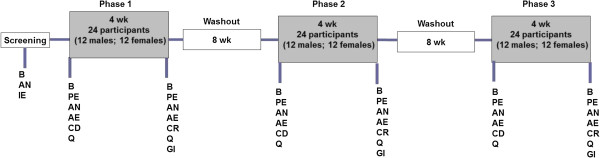
BACKGROUND: Due to structural differences, bioavailability of krill oil, a phospholipid based oil, could be higher than fish oil, a triglyceride-based oil, conferring properties that render it more effective than fish oil in increasing omega-3 index and thereby, reducing cardiovascular disease (CVD) risk. OBJECTIVE: The objective was to assess the effects of krill oil compared with fish oil or a placebo control on plasma and red blood cell (RBC) fatty acid profile in healthy volunteers. PARTICIPANTS AND METHODS: Twenty four healthy volunteers were recruited for a double blinded, randomized, placebo-controlled, crossover trial. The study consisted of three treatment phases including krill or fish oil each providing 600 mg of n-3 polyunsaturated fatty acids (PUFA) or placebo control, corn oil in capsule form. Each treatment lasted 4 wk and was separated by 8 wk washout phases. RESULTS: Krill oil consumption increased plasma (p = 0.0043) and RBC (p = 0.0011) n-3 PUFA concentrations, including EPA and DHA, and reduced n-6:n-3 PUFA ratios (plasma: p = 0.0043, RBC: p = 0.0143) compared with fish oil consumption. Sum of EPA and DHA concentrations in RBC, the omega-3 index, was increased following krill oil supplementation compared with fish oil (p = 0.0143) and control (p < 0.0001). Serum triglycerides and HDL cholesterol concentrations did not change with any of the treatments. However, total and LDL cholesterol concentrations were increased following krill (TC: p = 0.0067, LDL: p = 0.0143) and fish oil supplementation (TC: p = 0.0028, LDL: p = 0.0143) compared with control. CONCLUSIONS: Consumption of krill oil was well tolerated with no adverse events. Results indicate that krill oil could be more effective than fish oil in increasing n-3 PUFA, reducing n-6:n-3 PUFA ratio, and improving the omega-3 index. TRIAL REGISTRATION: ClinicalTrials.gov, NCT01323036.
Overview
The claims and statistics of this paper haven’t been checked yet.
Run the check — free, no account needed. It reads the open-access text and checks the sources it cites.
Integrity signals
Registry
Cites
Statistics
Figures
Verification
Claims the paper makes
The claims and statistics of this paper haven’t been checked yet.
Run the check — free, no account needed. It reads the open-access text and checks the sources it cites.
Claims other papers make about this one
Each is checked against this paper’s own text: does it say what the citing paper says it does?
The source backs part of the claim, not all of it — or backs it for a different population, condition or comparison.
In the citing paper
“Several studies have shown that different esterified forms of polyunsaturated fatty acids exhibited different levels of bioavailability and effectiveness of their bioactivities.”
From Solid Matrix-Supported Supercritical CO2 Enhances Extraction of γ-Linolenic Acid from the Cyanobacterium Arthrospira (Spirulina) platensis and Bioactivity Evaluation of the Molecule in Zebrafish (2019) · cites this paper as [57]
Experimental — accuracy not yet measuredThe check wasn’t confident either way, so it gives no verdict — never disputed.
In the citing paper
“For example, docosahexaenoic acid-phosphatidylcholine (DHA-PC) produced a more significant improvement in brain development, cognitive performance and emotional well-being than docosahexaenoic acid-triglyceride (DHA-TG) [56,57,58].”
From Solid Matrix-Supported Supercritical CO2 Enhances Extraction of γ-Linolenic Acid from the Cyanobacterium Arthrospira (Spirulina) platensis and Bioactivity Evaluation of the Molecule in Zebrafish (2019) · cites this paper as [57]
Experimental — accuracy not yet measured
Self-check
Percentages, sums and reported differences re-computed from the paper’s own numbers.
The self-check needs the paper’s full text.
Citations
Cites
A SIMPLE METHOD FOR THE ISOLATION AND PURIFICATION OF TOTAL LIPIDES FROM ANIMAL TISSUES
Folch, J., Lees, M., & Stanley, G. H. S. (1957) · Journal of Biological Chemistry · doi:10.1016/s0021-9258(18)64849-5 · Cited by 65,189
Friedewald, W. T., Levy, R. I., & Fredrickson, D. S. (1972) · Clinical Chemistry · doi:10.1093/clinchem/18.6.499 · Cited by 32,423
Fish Consumption, Fish Oil, Omega-3 Fatty Acids, and Cardiovascular Disease
Kris-Etherton, P. M., Harris, W. S., & Appel, L. J. (2002) · Circulation · doi:10.1161/01.cir.0000038493.65177.94 · Cited by 3,707
de Lorgeril, M., Salen, P., Martin, J.-L., Monjaud, I., Delaye, J., & Mamelle, N. (1999) · Circulation · doi:10.1161/01.cir.99.6.779 · Cited by 2,910
Burr, M. L., Gilbert, J. F., Holliday, R. M., Elwood, P. C., Fehily, A. M., Rogers, S., Sweetnam, P. M., & Deadman, N. M. (1989) · The Lancet · doi:10.1016/s0140-6736(89)90828-3 · Cited by 2,610
(1999) · PubMed · Cited by 2,062
n-3 fatty acids and serum lipoproteins: human studies
Harris, W. (1997) · The American Journal of Clinical Nutrition · doi:10.1093/ajcn/65.5.1645s · Cited by 1,243
Blood Levels of Long-Chain n–3 Fatty Acids and the Risk of Sudden Death
Albert, C. M., Campos, H., Stampfer, M. J., Ridker, P. M., Manson, J. E., Willett, W. C., & Ma, J. (2002) · New England Journal of Medicine · doi:10.1056/nejmoa012918 · Cited by 1,146
Fish oils and plasma lipid and lipoprotein metabolism in humans: a critical review
Harris, W. S. (1989) · Journal of Lipid Research · doi:10.1016/s0022-2275(20)38310-3 · Cited by 1,127
Cited by
Sorted by citations
Items 101–175 of 175
Wang, J., Yu, Z., Yin, F., Li, D., Liu, H., Song, L., & Zhou, D. (2021) · Journal of Food Processing and Preservation · doi:10.1111/jfpp.15754 · Cited by 13
Encapsulation of Docosahexaenoic Acid Oil Substantially Improves the Oxylipin Profile of Rat Tissues
Wang, J., Ossemond, J., Gouar, Y. L., Boissel, F., Dupont, D., & Pédrono, F. (2022) · Frontiers in Nutrition · doi:10.3389/fnut.2021.812119 · Cited by 13
Huang, H., Liao, D., He, B., Zhou, G., & Cui, Y. (2023) · Diabetes & Metabolic Syndrome Clinical Research & Reviews · doi:10.1016/j.dsx.2023.102909 · Cited by 13
Zhou, X., Zhou, D., Yin, F., Song, L., Liu, Y.-X., Xie, H., Gang, K.-Q., Zhu, B., & Shahidi, F. (2018) · Journal of Food Bioactives · doi:10.31665/jfb.2018.1132 · Cited by 13
Seasonal Variation of Lipid Profile of Oyster Crassostrea talienwhanensis from the Yellow Sea Area
Liu, Y., Wu, Z., Zhang, J., Liu, Y.-X., Liu, Z., Xie, H., Rakariyatham, K., & Zhou, D. (2020) · Journal of Aquatic Food Product Technology · doi:10.1080/10498850.2020.1737998 · Cited by 13
Nayda, N. C., Thomas, J. M., Delaney, C. L., & Miller, M. (2023) · Nutrition Reviews · doi:10.1093/nutrit/nuad020 · Cited by 13
Sung, H., Sinclair, A. J., Huynh, K., Smith, A., Mellett, N. A., Meikle, P. J., & Su, X. Q. (2020) · Nutrients · doi:10.3390/nu12092804 · Cited by 12
van der Wurff, I. S. M., von Schacky, C., Berge, K., Kirschner, P. A., & de Groot, R. H. M. (2016) · BMJ Open · doi:10.1136/bmjopen-2016-011790 · Cited by 12
Sarkkinen, E. S., Savolainen, M. J., Taurio, J., Marvola, T., & Bruheim, I. A. (2018) · Lipids in Health and Disease · doi:10.1186/s12944-018-0935-x · Cited by 12
Sehl, A., Couëdelo, L., Chamekh-Coelho, I., Vaysse, C., & Cansell, M. (2019) · British Journal Of Nutrition · doi:10.1017/s0007114519001491 · Cited by 12
Burri, L., Wyse, C. A., Gray, S. R., Harris, W. S., & Lazzerini, K. (2018) · Research in Veterinary Science · doi:10.1016/j.rvsc.2018.10.002 · Cited by 12
Monakhova, Y. B., Zailer, E., & Diehl, B. W. K. (2018) · Analytical Letters · doi:10.1080/00032719.2018.1440402 · Cited by 11
Bilinski, K. L., Chang, D., Fahey, P. P., & Bensoussan, A. (2019) · Advances in Integrative Medicine · doi:10.1016/j.aimed.2019.04.003 · Cited by 11
Liu, Z., Zhou, D., Rakariyatham, K., Xie, H., Li, D., Zhu, B., & Shahidi, F. (2019) · Journal of the American Oil Chemists Society · doi:10.1002/aocs.12293 · Cited by 11
Comparison of Fish, Krill and Flaxseed as Omega-3 Sources to Increase the Omega-3 Index in Dogs
Lindqvist, H., Dominguez, T. E., Whitaker, R. D., Ding, Y., & Burri, L. (2023) · Veterinary Sciences · doi:10.3390/vetsci10020162 · Cited by 15
Zuo, W., Wen, M., Zhao, Y., Li, X., Xue, C., Yanagita, T., Wang, Y., & Zhang, T. (2024) · Journal of the Science of Food and Agriculture · doi:10.1002/jsfa.13625 · Cited by 10
Yin, F., Zhou, D., Liu, Y., Zhao, Q., Zhou, X., Song, L., Qin, L., Qi, H., & Zhu, B. (2017) · Journal of Aquatic Food Product Technology · doi:10.1080/10498850.2017.1339756 · Cited by 10
Adkins, Y. C., Laugero, K. D., Mackey, B. E., & Kelley, D. S. (2019) · Lipids · doi:10.1002/lipd.12115 · Cited by 10
Mullins, V. A., Snider, J. M., Michael, B. R., Porter, L. R., Brinton, R. D., & Chilton, F. H. (2024) · Nutrition & Metabolism · doi:10.1186/s12986-024-00815-x · Cited by 9
Lü, L., Li, S., Li, X., Ma, J.-R., He, J., Xing, H., Chen, C., Miyashita, K., Yang, Y., & Du, L. (2024) · Journal of Functional Foods · doi:10.1016/j.jff.2024.106234 · Cited by 9
Burri, L., Heggen, K., & Storsve, A. B. (2020) · Veterinary World · doi:10.14202/vetworld.2020.1167-1173 · Cited by 9
Martín-Olmedo, J. J., & Jurado‐Fasoli, L. (2025) · Critical Reviews in Food Science and Nutrition · doi:10.1080/10408398.2025.2472858 · Cited by 8
Bioavailability and metabolism of dietary lipids
Michalski, M., Couëdelo, L., Penhoat, A., Vaysse, C., & Vors, C. (2020) · Elsevier eBooks · doi:10.1016/b978-0-12-817105-9.00002-1 · Cited by 10
Guarneiri, L. L., Wilcox, M. L., & Maki, K. C. (2023) · Nutrition · doi:10.1016/j.nut.2023.112090 · Cited by 7
Wallace, T. C., Montenegro‐Bethancourt, G., Rohloff, P. J., Jimenez, E. Y., Proaño, G. V., McCabe, G. P., Steiber, A. L., Ruosch, A. J., Laessig, I. M., Ladwig, E., et al. (2023) · Food Science & Nutrition · doi:10.1002/fsn3.3736 · Cited by 7
Wu, Y., Peng, X., Lee, Y., Xie, P., Tan, C. P., Wang, Y., & Zhang, Z. (2024) · Food Bioscience · doi:10.1016/j.fbio.2024.105246 · Cited by 7
Sung, H., Sinclair, A. J., & Su, X. Q. (2022) · Lipids · doi:10.1002/lipd.12335 · Cited by 7
Safaei, P., Bayat, G., & Mohajer, A. (2024) · Systematic Reviews · doi:10.1186/s13643-023-02426-8 · Cited by 7
Thaipitakwong, T., & Aramwit, P. (2016) · American Journal of Cardiovascular Drugs · doi:10.1007/s40256-016-0191-2 · Cited by 7
Pharmacokinetics and Safety Profile of Omega-3 Polyunsaturated Fatty Acids
Tamargo, J. L., & Tamargo, M. (2016) · Springer eBooks · doi:10.1007/978-3-319-40458-5_39 · Cited by 7
Sun, Q., Mu, Q., Yan, Y., Jiang, W., Lin, Y., Qian, L., Jiang, S., Zhao, Y., Zhou, Q., Miao, L., et al. (2023) · Aquaculture Reports · doi:10.1016/j.aqrep.2023.101721 · Cited by 6
Fosfolípidos: propiedades y efectos sobre la salud
Torres, J., & Durán‐Agüero, S. (2015) · Redalyc (Universidad Autónoma del Estado de México) · Cited by 6
Song, X., Diep, P., Schenk, J. M., Casper, C., Orem, J., Makhoul, Z., Lampe, J. W., & Neuhouser, M. L. (2016) · Prostaglandins Leukotrienes and Essential Fatty Acids · doi:10.1016/j.plefa.2016.09.002 · Cited by 6
Barenie, M. J., Freemas, J. A., Baranauskas, M. N., Goss, C. S., Freeman, K. L., Chen, X., Dickinson, S., Fly, A. D., Kawata, K., Robert F. Chapman, P., et al. (2020) · Journal of Dietary Supplements · doi:10.1080/19390211.2020.1853649 · Cited by 6
Nanoencapsulation of Fish Oil and Essential Fatty Acids
Tontul, İ., Eroğlu, E., & Topuz, A. (2017) · Elsevier eBooks · doi:10.1016/b978-0-12-809740-3.00003-9 · Cited by 6
Salmon, J. E., Wallace, D. J., Rus, V., Cox, A., Dykas, C., Williams, B., Ding, Y., Hals, P., Johnsen, L., & Lipsky, P. E. (2024) · Lupus Science & Medicine · doi:10.1136/lupus-2024-001201 · Cited by 8
Pham, T.-P.-T., Hoang, T.-V., Le, T.-T.-D., Cao, P.-T.-N., Ho, V.-T.-N., Vu, T.-M.-H., Le, T.-H.-T., Pham, H.-T.-X., Mafruhah, O. R., Pham, T.-T.-L., et al. (2024) · Journal of Functional Foods · doi:10.1016/j.jff.2024.106379 · Cited by 5
Mellouk, Z., Agustina, M., Ramírez, M., Pena, K., & Arivalo, J. (2016) · Annales de Cardiologie et d Angéiologie · doi:10.1016/j.ancard.2016.04.008 · Cited by 5
Caviar: processing, composition, safety, and sensory attributes
Ghelichi, S., Hajfathalian, M., & Bekhit, A. E. A. (2022) · Elsevier eBooks · doi:10.1016/b978-0-12-819893-3.00006-0 · Cited by 5
Response to commentary on a trial comparing krill oil versus fish oil
Ramprasath, V. R., Eyal, I., Zchut, S., & Jones, P. J. H. (2014) · Lipids in Health and Disease · doi:10.1186/1476-511x-13-17 · Cited by 5
Lee, J. Y., Hong, J.-B., Kim, B., Shim, S. B., Jang, H. W., & Lee, J.-B. (2024) · Journal of Microbiology and Biotechnology · doi:10.4014/jmb.2406.06026 · Cited by 4
Açık, M., Çakiroğlu, F. P., Tekın, A., & EGELİ, A. (2025) · Journal of Affective Disorders · doi:10.1016/j.jad.2025.03.097 · Cited by 4
Improvement of Bioaccessibility and Bioavailability: From Molecular Interactions to Delivery Systems
Rein, M. J., & Pinto, M. D. S. (2016) · Food engineering series · doi:10.1007/978-1-4939-6595-3_15 · Cited by 4
The Quantitation of EPA and DHA in Fish Oil Dietary Supplements Sold in the United States
Hilton, J. E., Setzer, W. N., Satyal, P., Poudel, A., Ashcroft, S., & Satyal, R. (2024) · Dietetics · doi:10.3390/dietetics3040041 · Cited by 3
Hoem, N., Harris, S., Scott, G., & Hals, P. (2025) · Prostaglandins Leukotrienes and Essential Fatty Acids · doi:10.1016/j.plefa.2025.102671 · Cited by 3
Limiñana, V. A., Moya, S. P., Pérez, S. E. M., & Fernández-González, V. (2025) · Journal of Food Composition and Analysis · doi:10.1016/j.jfca.2025.107824 · Cited by 3
Determination of Phosphatidylcholine in Shrimp by High-Resolution Mass Spectrometry
Zhou, L. Y., Wang, Y., Wang, X., Liang, Y., & Huang, Z. (2018) · Analytical Letters · doi:10.1080/00032719.2018.1459658 · Cited by 3
Metabolic Effects of Krill Oil
Ulven, S. M. (2016) · Elsevier eBooks · doi:10.1016/b978-0-12-802844-5.00030-0 · Cited by 3
Coral-Hinostroza, G., Díaz, M., Huberman, A., & Silencio-Barrita, J. L. (2016) · Grasas y Aceites · doi:10.3989/gya.1021153 · Cited by 3
Carotenoids and chlorophylls in Antarctic krill (Euphausia superba) oil
Abad, A., & Shahidi, F. (2026) · Food Bioscience · doi:10.1016/j.fbio.2026.108270 · Cited by 2
Effects of Antarctic krill oil on lipid profiles and SPM levels in rats over time
Lu, W., Huangfu, N., Ge, L., Wu, H., Wang, S., Wu, J., Xue, J., Zeng, C., Xuan, T., Cui, L., et al. (2026) · npj Science of Food · doi:10.1038/s41538-026-00727-5 · Cited by 2
Currie, C. (2023) · Biomedical Journal of Scientific & Technical Research · doi:10.26717/bjstr.2023.49.007847 · Cited by 2
Krill oil attenuates obesity-induced skeletal muscle atrophy in mice
Zhou, M., Yang, Y., Zheng, Y., Wu, Z., Chen, C., Liang, Q., Yang, Y., Wu, H., Guo, X., & Du, L. (2024) · Food Science and Human Wellness · doi:10.26599/fshw.2024.9250018 · Cited by 2
Ang, X., Chen, H., Xiang, J., Wei, F., & Quek, S. Y. (2024) · Molecules · doi:10.3390/molecules29071539 · Cited by 2
Sarıyer, E. T., Baş, M., Çolak, H., Özkan, N., Demirel, Ö. Ü., & Yüksel, M. (2024) · Nutrients · doi:10.3390/nu16203426 · Cited by 2
Patten, G. S., Sanguansri, L., Augustin, M. A., Abeywardena, M. Y., Bird, A. R., Patch, C. S., & Belobrajdic, D. P. (2016) · International Journal of Food Sciences and Nutrition · doi:10.1080/09637486.2016.1224229 · Cited by 2
Sustainability Activities in a Hard-to-Abate Industry—A Real-Life Example
Whitaker, R. D., Burri, L., Skogrand, P., Røkke, T., Ananiev, V., & Grafsrønningen, S. (2024) · Sustainability · doi:10.3390/su16135532 · Cited by 3
Urina-Triana, M. A., David-Pardo, D. G., Urina-Triana, M., Valencia, J., Bernal-Martínez, A., Urina‐Jassir, D., Orozco-Acosta, E., & Elajami, T. K. (2026) · BMC Complementary Medicine and Therapies · doi:10.1186/s12906-026-05245-1 · Cited by 3
Loukil, I., Vachon, A., Çaku, A., & Plourde, M. (2026) · American Journal of Clinical Nutrition · doi:10.1016/j.ajcnut.2026.101346 · Cited by 1
BackesJM Ruisinger, J. F. (2014) · Journal of Glycomics & Lipidomics · doi:10.4172/2153-0637.1000121 · Cited by 1
Krill Oil Prevents Atherosclerosis in an Experimental Model
GÜLTEKİN, Y., BOLAT, A., & Kunt, A. T. (2021) · e-Journal of Cardiovascular Medicine · doi:10.32596/ejcm.galenos.2021-05-029 · Cited by 1
(2014) · CRC Press eBooks · doi:10.1201/b17656-4 · Cited by 1
Nyquist, N. F., Burri, L., & Jensen, R. B. (2023) · Journal of Animal Physiology and Animal Nutrition · doi:10.1111/jpn.13828 · Cited by 1
Wang, Q., Liu, Y., Liu, F., Niu, W., Wang, S., Wang, X., Yu, J., Cai, D., Zhou, D., & Yin, F. (2023) · European Journal of Lipid Science and Technology · doi:10.1002/ejlt.202300126 · Cited by 1
Anticancer Properties of Krill Oil
Çekici, H., & Bakırhan, Y. E. (2019) · Journal of Apitherapy and Nature · doi:10.35206/jan.620517
Liu, Z., Gang, K.-Q., Yin, F., Xie, H., Song, L., & Zhou, D. (2019) · Journal of Food Bioactives · doi:10.31665/jfb.2019.8210 · Cited by 1
Mullins, V. A., Snider, J. M., Michael, B. R., Porter, L. R., Brinton, R. D., & Chilton, F. H. (2024) · Figshare · doi:10.6084/m9.figshare.26211413
Mullins, V. A., Snider, J. M., Michael, B. R., Porter, L. R., Brinton, R. D., & Chilton, F. H. (2024) · Figshare · doi:10.6084/m9.figshare.26211645
She, Y., Jia, K., Cardillo, A., Shamloo, M., León, A. S., Liu, X., Mollard, R. C., & MacKay, D. (2026) · Food & Function · doi:10.1039/d5fo04672f
Caractérisation et prévention des conséquences d'un syndrome métabolique dans la rétine
Vidal, E. (2018) · theses.fr (ABES) · doi:10.70675/09e85feez27afz465az91aaz70fa8efb0c74
Encapsulation of DHA oil as Pickering emulsion : effect on DHA bioaccessibility and metabolism
Wang, J. (2022) · theses.fr (ABES) · doi:10.70675/8bd2ed1az4d01z4bb6za7a2zc9317ad41d3e · Cited by 1
Ali, O., Teye, M., Tóth, T., Bázár, G., Szabó, A., Badu, R., Maki, M., & Yakubu, H. G. (2026) · Veterinary and Animal Science · doi:10.1016/j.vas.2026.100791
Vasconcelos, A. R., Dias, D. D., Souza, A. C. R., de Abreu-Silva, E. O., Marcadenti, A., & Name, J. J. (2026) · Nutrients · doi:10.3390/nu18162622
Zhang, X., Gao, X., Hao, S., & Gao, M. (2026) · Research Square · doi:10.21203/rs.3.rs-10601635/v1
Metadata
- Authors
- Ramprasath, V. R., Eyal, I., Zchut, S., & Jones, P. J.
- Affiliations
- University of Manitoba (CA)
- Tower Semiconductor (Israel) (IL)
- Corresponding author
- Jones, Peter JH
- ORCID
- Jones, Peter JH
- Venue
- Lipids in Health and Disease
- Published
- 2013-12
- Volume
- 12
- Issue
- 1
- Pages
- 178-178
- ISSN
- 1476-511X (ISSN-L)
- PMC
- PMC4235028
- OpenAlex
- W2140531245
- Cited by
- 175
- References
- 53
- Citations by year
- 2026: 8 · 2025: 4 · 2024: 20 · 2023: 14 · 2022: 13 · 2021: 8 · 2020: 12 · 2019: 22 · 2018: 14 · 2017: 12 · 2016: 21 · 2015: 15 · 2014: 12
- FWCI
- 14.85
- Type
- journal article
- Language
- en
- Open access
- gold
- doi.org
- Licence
- cc-by
- Locations
- Lipids in Health and Disease (publishedVersion, cc-by)
- Europe PMC (PubMed Central) (publishedVersion, cc-by)
- PubMed Central (publishedVersion, cc-by)
- PubMed (publishedVersion)
- Mspace (University of Manitoba) (submittedVersion)
- Funders
- University of Haifa
- Topics
- Health Sciences › Nursing › Nutrition and Dietetics › Fatty Acid Research and Health
- Physical Sciences › Chemistry › Organic Chemistry › Edible Oils Quality and Analysis
- Life Sciences › Agricultural and Biological Sciences › Aquatic Science › Aquaculture Nutrition and Growth
- Keywords
- krill oil, fish oil, omega-3 index, omega-3 fatty acids, EPA, docosahexaenoic acid, n-6/n-3 ratio, plasma fatty acid profile, cholesterol, serum triglycerides, cardiovascular risk, dietary supplementation
- MeSH terms
- Adult, Animals, Corn Oil, Dietary Fats, Unsaturated, Docosahexaenoic Acids, Double-Blind Method, Female, Fish Oils, Humans, Cholesterol, HDL, Male, Triglycerides, Eicosapentaenoic Acid, Cross-Over Studies, Euphausiacea, Healthy Volunteers
About these checks
Registry, retraction, Cites and statistics results are computed, not judged, with one exception: a printed reference that no index lists is read once by a model before it counts as a citation error. Claims are extracted by a model and kept only when their quote appears verbatim in the text; each cited source is then checked, with a model’s help, for whether it says what the claim relies on. Those verdicts can be wrong — read the claim’s quote and the cited source before relying on one.
Statistics and arithmetic are recomputed, not judged.
Confidence bands are shown only for fields calibrated on our annotated test set. None is calibrated yet, so no band is shown.
What counts as a claim ›How we measure confidence ›How we check this ›
Are you an author, or do you see a problem with this page? Request a review
