

The DOI matches its Crossref record; 44 of the 44 references it cites were found in a registry or an index.
Evaluating the responsiveness of the Warwick Edinburgh Mental Well-Being Scale (WEMWBS): Group and individual level analysis
Open accessAbstract
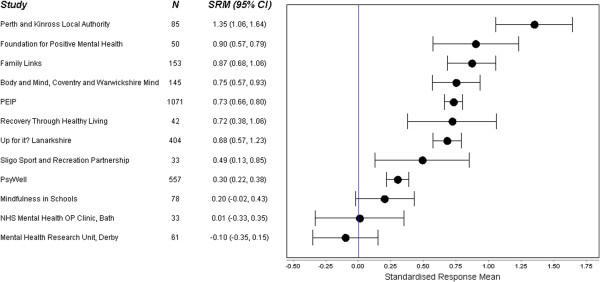
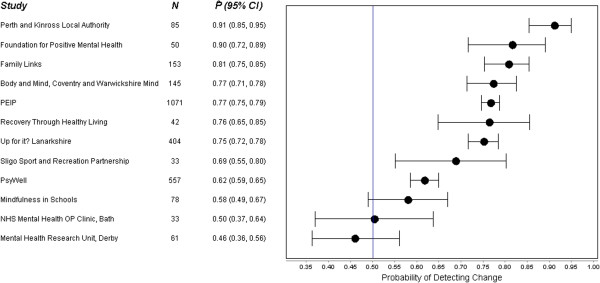
BACKGROUND: Mental well-being now features prominently in UK and international health policy. However, progress has been hampered by lack of valid measures that are responsive to change. The objective of this study was to evaluate the responsiveness of the Warwick Edinburgh Mental Well-being Scale (WEMWBS) at both the individual and group level. METHODS: Secondary analysis of twelve different interventional studies undertaken in different populations using WEMWBS as an outcome measure. Standardised response mean (SRM), probability of change statistic (P(^)) and standard error of measurement (SEM) were used to evaluate whether WEMWBS detected statistically important changes at the group and individual level, respectively. RESULTS: Mean change in WEMWBS score ranged from -0.6 to 10.6. SRM ranged from -0.10 (95% CI: -0.35, 0.15) to 1.35 (95% CI: 1.06, 1.64). In 9/12 studies the lower limit of the 95% CI for P(^) was greater than 0.5, denoting responsiveness. SEM ranged from 2.4 to 3.1 units, and at the threshold 2.77 SEM, WEMWBS detected important improvement in at least 12.8% to 45.7% of participants (lower limit of 95% CI>5.0%). CONCLUSIONS: WEMWBS is responsive to changes occurring in a wide range of mental health interventions undertaken in different populations. It offers a secure base for research and development in this rapidly evolving field. Further research using external criteria of change is warranted.
Overview
The claims and statistics of this paper haven’t been checked yet.
Run the check — free, no account needed. It reads the open-access text and checks the sources it cites.
Integrity signals
Registry
Cites
Statistics
Figures
Verification
Claims the paper makes
The claims and statistics of this paper haven’t been checked yet.
Run the check — free, no account needed. It reads the open-access text and checks the sources it cites.
Claims other papers make about this one
Each is checked against this paper’s own text: does it say what the citing paper says it does?
The cited source says what the claim attributes to it.
In the citing paper
“At an individual level, a change of three or more units is interpreted as representing ‘meaningful change’. 45”
From Feasibility of RESTORE: An online Acceptance and Commitment Therapy intervention to improve palliative care staff wellbeing. (2023) · cites this paper as [45]
Self-check
Percentages, sums and reported differences re-computed from the paper’s own numbers.
The self-check needs the paper’s full text.
Citations
Cites
Coefficient Alpha and the Internal Structure of Tests
Cronbach, L. J. (1951) · Psychometrika · doi:10.1007/bf02310555 · Cited by 43,931 · cited 1×
“In the one study undertaken in the adolescent population, WEMWBS demonstrated satisfactory internal consistency [44], however, the Cronbach’s alpha score was lower than that found in the validation study undertaken in an adolescent population [17].”
ResultOn Happiness and Human Potentials: A Review of Research on Hedonic and Eudaimonic Well-Being
Ryan, R. M., & Deci, E. L. (2001) · Annual Review of Psychology · doi:10.1146/annurev.psych.52.1.141 · Cited by 11,567 · cited 1×
“; licensee BioMed Ce Creative Commons Attribution License (http:/ distribution, and reproduction in any medium and that it covers both eudaimonic (psychological functioning) and hedonic (affective) dimensions [12].”
BackgroundJacobson, N. S., & Truax, P. (1991) · Journal of Consulting and Clinical Psychology · doi:10.1037/0022-006x.59.1.12 · Cited by 7,770 · cited 1×
“96√2 × SEM) takes into account measurement error, the combined variability across the baseline and post intervention samples, and chance at the 95% confidence interval [32,33].”
BackgroundThe Warwick-Edinburgh Mental Well-being Scale (WEMWBS): development and UK validation
Tennant, R., Hiller, L., Fishwick, R., Platt, S., Joseph, S., Weich, S., Parkinson, J., Secker, J., & Stewart-Brown, S. (2007) · Health and Quality of Life Outcomes · doi:10.1186/1477-7525-5-63 · Cited by 5,031 · cited 5×
“WEMWBS is a valid, reliable and acceptable measure [13], which we have demonstrated, is responsive to change in a wide variety of settings from the community settings, to schools, and psychiatric hospitals, making it suitable for use in evaluation of interventions at group and individual level.”
BackgroundMethodResultInfluentialSelf-citationJaeschke, R., Singer, J., & Guyatt, G. H. (1989) · Controlled Clinical Trials · doi:10.1016/0197-2456(89)90005-6 · Cited by 4,982 · cited 1×
“5 units on each item on a Likert scale would equate to an improvement deemed important by individuals [45].”
BackgroundMental illness and/or mental health? Investigating axioms of the complete state model of health
Keyes, C. L. M. (2005) · Journal of Consulting and Clinical Psychology · doi:10.1037/0022-006x.73.3.539 · Cited by 3,357 · cited 1×
“While debate surrounds the precise definitions of both well-being and mental well-being [10,11], there is broad consensus that the latter is more than the absence of mental illness”
BackgroundReport by the commission on the measurement of economic performance and social progress
Fitoussi, J., Sen, A. K., & Stiglitz, J. E. (2011) · Cited by 2,887
Effect Sizes for Interpreting Changes in Health Status
Kazis, L. E., Anderson, J. J., & Meenan, R. F. (1989) · Medical Care · doi:10.1097/00005650-198903001-00015 · Cited by 2,401 · cited 1×
“However, in the literature a variety of statistics have been used to evaluate responsiveness at the group-level, including the paired t-test [35] and Cohen’s effect size (mean change in score by the standard deviation of the baseline score) [36].”
MethodIndividual-patient monitoring in clinical practice: are available health status surveys adequate?
McHorney, C. A., & Tarlov, A. R. (1995) · Quality of Life Research · doi:10.1007/bf01593882 · Cited by 2,206
Measuring change over time: assessing the usefulness of evaluative instruments.
Guyatt, G., Walter, S. D., & Norman, G. (1987) · Journal of Chronic Diseases · doi:10.1016/0021-9681(87)90069-5 · Cited by 1,997 · cited 2×
“Responsive instruments should have the ability to detect changes in health status where these occur [19].”
Background
Cited by
Sorted by citations
Ng Fat, L., Scholes, S., Boniface, S., Mindell, J., & Stewart-Brown, S. (2017) · Quality of Life Research · doi:10.1007/s11136-016-1454-8 · Cited by 548
“This difference may prove important in small-scale evaluations of community-based mental wellbeing interventions [29].”
BackgroundSelf-citationAmmar, A., Trabelsi, K., Brach, M., Chtourou, H., Boukhris, O. F., Masmoudi, L., Bouaziz, B., Bentlage, E., How, D., Ahmed, M. G. A. E., et al. (2020) · Biology of Sport · doi:10.5114/biolsport.2020.96857 · Cited by 445
Savage, M. J., James, R. M., Magistro, D., Donaldson, J. A., Healy, L. C., Nevill, M. E., & Hennis, P. J. (2020) · Mental health and physical activity · doi:10.1016/j.mhpa.2020.100357 · Cited by 401
Psychological consequences of COVID-19 home confinement: The ECLB-COVID19 multicenter study
Ammar, A., Mueller, P., Trabelsi, K., Chtourou, H., Boukhris, O. F., Masmoudi, L., Bouaziz, B., Brach, M., Schmicker, M., Bentlage, E., et al. (2020) · PLoS ONE · doi:10.1371/journal.pone.0240204 · Cited by 314
Koushede, V., Lasgaard, M., Hinrichsen, C., Meilstrup, C., Nielsen, L., Rayce, S. B., Torres-Sahli, M., Guðmundsdóttir, D. G., Stewart-Brown, S. L., & Santini, Z. I. (2018) · Psychiatry Research · doi:10.1016/j.psychres.2018.12.003 · Cited by 230
“Information regarding survey and sampling in Iceland, England, and Catalonia is provided in Appendix 1.”
BackgroundMethodInfluentialSelf-citationBjørnsen, H. N., Espnes, G. A., Eilertsen, M. B., Ringdal, R., & Moksnes, U. K. (2017) · The Journal of School Nursing · doi:10.1177/1059840517732125 · Cited by 203
Trousselard, M., Steiler, D., Dutheil, F., Claverie, D., Canini, F., Fenouillet, F., Naughton, G., Stewart-Brown, S., & Franck, N. (2016) · Psychiatry Research · doi:10.1016/j.psychres.2016.08.050 · Cited by 152
“…of languages and populations including Spanish (Castellvi et al., 2014), Italian (Gremigni and Stewart-Brown, 2011), Brazilian Portuguese (Santos et al., 2015) and Chinese (Ng et al., 2014), and its sensitivity to change has been demonstrated in observational studies (Maheswaran et al., 2012).”
BackgroundMethodResultInfluentialSelf-citationPeill, J. M., Trinci, K. E., Kettner, H., Mertens, L. J., Roseman, L., Timmermann, C., Rosas, F. E., Lyons, T., & Carhart-Harris, R. L. (2022) · Journal of Psychopharmacology · doi:10.1177/02698811211066709 · Cited by 141
“Hence, this scale can be used to investigate the improvement or change in well-being within subject and at a group level (Maheswaran et al., 2012).”
MethodCastellví, P., Forero, C. G., Codony, M., Vilagut, G., Brugulat, P., Medina, A., Gabilondo, A., Mompart, A., Colom, J., Tresserras, R., et al. (2013) · Quality of Life Research · doi:10.1007/s11136-013-0513-7 · Cited by 152
“showed good responsiveness of WEMWBS in a wide range of mental health interventions [45].”
BackgroundSelf-citationTaggart, F. M., Friede, T., Weich, S., Clarke, A., Johnson, M., & Stewart-Brown, S. L. (2013) · Health and Quality of Life Outcomes · doi:10.1186/1477-7525-11-27 · Cited by 127
“It is responsive to change [7] and highly acceptable in both clinical and non-clinical settings [4,6,8].”
BackgroundMethodSelf-citationMeasuring Mental Wellbeing Among Adolescents: A Systematic Review of Instruments
Rose, T., Joe, S., Williams, A., Harris, R. L., Betz, G., & Stewart-Brown, S. L. (2017) · Journal of Child and Family Studies · doi:10.1007/s10826-017-0754-0 · Cited by 113
Self-citationA Social Ecological Measure of Resilience for Adults: The RRC-ARM
Liebenberg, L., & Moore, J. (2016) · Social Indicators Research · doi:10.1007/s11205-016-1523-y · Cited by 132
Jolley, S., Garety, P. A., PETERS, E. R., Fornells‐Ambrojo, M., Onwumere, J., Harris, V., Brabban, A., & Johns, L. (2014) · Behaviour Research and Therapy · doi:10.1016/j.brat.2014.11.006 · Cited by 97
DEMİRTAŞ, A. S., & Baytemir, K. (2019) · Elektronik Sosyal Bilimler Dergisi · doi:10.17755/esosder.432708 · Cited by 97
Fung, S.-F. (2019) · Health and Quality of Life Outcomes · doi:10.1186/s12955-019-1113-1 · Cited by 95
Smith, O. R. F., Alves, D. E., Knapstad, M., Haug, E., & Aarø, L. E. (2017) · BMC Psychiatry · doi:10.1186/s12888-017-1343-x · Cited by 93
“Moreover, responsiveness of the Norwegian versions of WEMWBS and SWEMWBS should be assessed in future studies in order to address whether they are responsive to change, as was the original scale [48].”
MethodSalomone, E., Leadbitter, K., Aldred, C. R., Barrett, B. M., Byford, S., Charman, T., Howlin, P., Green, J., Couteur, A. S. L., McConachie, H., et al. (2017) · Journal of Autism and Developmental Disorders · doi:10.1007/s10803-017-3392-x · Cited by 106
“1997); median wellbeing levels on the WEMWBS were also significantly lower than the expected UK population median (Tennant et al. 2007; Maheswaran et al. 2012).”
BackgroundShah, N., Cader, M., Andrews, W. P., Wijesekera, D., & Stewart-Brown, S. L. (2018) · Health and Quality of Life Outcomes · doi:10.1186/s12955-018-1060-2 · Cited by 92
“Whilst WEMWBS responsiveness to change has been demonstrated [9], responsiveness of SWEMWBS to change in clinical and community settings has not been formally evaluated.”
MethodSelf-citationWalters, K. R., Frost, R., Kharicha, K., Avgerinou, C., Gardner, B., Ricciardi, F., Hunter, R. M., Liljas, A. E. M., Manthorpe, J., Drennan, V. M., et al. (2017) · Health Technology Assessment · doi:10.3310/hta21730 · Cited by 88
Psychometric evaluation of the Questionnaire about the Process of Recovery (QPR)
Williams, J., Leamy, M. C., Pesola, F., Bird, V., Boutillier, C. L., & Slade, M. (2015) · The British Journal of Psychiatry · doi:10.1192/bjp.bp.114.161695 · Cited by 83
Tew, G. A., Howsam, J., Hardy, M., & Bissell, L. J. L. (2017) · BMC Geriatrics · doi:10.1186/s12877-017-0520-6 · Cited by 91
“10 [24] and between 3 and 8 points [25], respectively, have been recommended as clinically important.”
Dunn, B. D., Widnall, E., Reed, N., Owens, C., Campbell, J., & Kuyken, W. (2019) · Behaviour Research and Therapy · doi:10.1016/j.brat.2019.103418 · Cited by 70
Bass, M., Dawkin, M., Muncer, S., Vigurs, S., & Bostock, J. (2016) · Journal of Mental Health · doi:10.3109/09638237.2015.1124401 · Cited by 67
“Maheswaran et al. (2012) reported WEMWBS distributions and responsiveness for three secondary care mental health service user samples that were receiving a variety of interventions.”
BackgroundPsychiatric risks for worsened mental health after psychedelic use
Marrocu, A., Kettner, H., Weiss, B., Zeifman, R. J., Erritzoe, D., & Carhart-Harris, R. L. (2024) · Journal of Psychopharmacology · doi:10.1177/02698811241232548 · Cited by 60
“In the total cohort, we identified 16.4% (132 cases) who reported clinically meaningful decreases in well-being at 4 weeks post-experience; these were our “bottom margin” (Kahneman, 2011; Maheswaran et al., 2012).”
BackgroundMethodInfluentialPersecutory delusions and psychological well-being
Freeman, D. H., Startup, H. M., Dunn, G., Wingham, G., Černis, E., Evans, N., Lister, R., Pugh, K., Cordwell, J., & Kingdon, D. (2013) · Social Psychiatry and Psychiatric Epidemiology · doi:10.1007/s00127-013-0803-y · Cited by 68
Jensen, A., Holt, N., Honda, S., & Bungay, H. (2024) · Frontiers in Public Health · doi:10.3389/fpubh.2024.1412306 · Cited by 58
Further evidence that singing fosters mental health and wellbeing: the West Kent and Medway project
Clift, S. M., Manship, S., & Stephens, L. (2017) · Mental Health and Social Inclusion · doi:10.1108/mhsi-11-2016-0034 · Cited by 58
Santos, J. J. A. D., Costa, T. A. D., Guilherme, J. H., Silva, W. C. D., Abentroth, L. R. L., Krebs, J. A., & Sotoriva, P. (2015) · Revista da Associação Médica Brasileira · doi:10.1590/1806-9282.61.03.209 · Cited by 55
Mental health and caregiving experiences of family carers supporting people with psychosis
Sin, J., Elkes, J., Batchelor, R., Henderson, C., Gillard, S., Woodham, L. A., Chen, T., Aden, A., & Cornelius, V. R. (2021) · Epidemiology and Psychiatric Sciences · doi:10.1017/s2045796020001067 · Cited by 52
“The primary health outcome was the carers ’ mental wellbeing, measured with the Warwick-Edinburgh Mental Wellbeing Scale (WEMWBS) (Tennant et al ., 2007).”
InfluentialMothers' group participation: associations with social capital, social support and mental well-being
Strange, C., Bremner, A., Fisher, C., Howat, P., & Wood, L. (2016) · Journal of Advanced Nursing · doi:10.1111/jan.12809 · Cited by 52
Patient Reported Outcome Measure of Spiritual Care as Delivered by Chaplains
Snowden, A. W., & Telfer, I. (2017) · Journal of Health Care Chaplaincy · doi:10.1080/08854726.2017.1279935 · Cited by 51
“…Mental Wellbeing Scale, because of its use in other studies measuring well-being in people having had spiritual care The Scottish PROM 141 interventions (Morgan & Tan, 2015; Stewart-Brown, 2014) and its excellent validity in a range of populations (Maheswaran et al., 2012; Tennant et al., 2007).”
BackgroundMethodQuinlan, D., Vella-Brodrick, D. A., Gray, A., & Swain, N. (2019) · Journal of Happiness Studies · doi:10.1007/s10902-018-0051-7 · Cited by 58
The Impact of Arts Activity on Nursing Staff Well-Being: An Intervention in the Workplace
Karpavičiūtė, S., & Macijauskienė, J. (2016) · International Journal of Environmental Research and Public Health · doi:10.3390/ijerph13040435 · Cited by 48
Powell, J., Williams, V., Atherton, H., Bennett, K., Yang, Y., Davoudianfar, M., Hellsing, A., Martin, A., Mollison, J., Shanyinde, M., et al. (2020) · Journal of Medical Internet Research · doi:10.2196/16804 · Cited by 44
Self-citationNewbold, A., Warren, F. C., Taylor, R. S., Hulme, C. T., Burnett, S., Aas, B., Botella, C., Burkhardt, F., Ehring, T. W., Fontaine, J. R. J., et al. (2020) · BMC Psychiatry · doi:10.1186/s12888-020-02857-w · Cited by 46
“3 units is the most conservative estimate [88].”
BackgroundPandya, S. P. (2018) · Journal of Religion and Health · doi:10.1007/s10943-018-0632-0 · Cited by 43
“Cross-cultural surveys, intervention and monitoring and evaluation studies have used WEMWBS (e.g. Gremigni and Stewart-Brown 2011; Lloyd and Devine 2012; López et al. 2012; Maheswaran et al. 2012; Orgeta et al. 2013; Santos et al. 2015; Stewart-Brown 2013; Taggart et al. 2013).”
Hunter, S. C., Houghton, S. J., & Wood, L. J. (2015) · The Australian Educational and Developmental Psychologist · doi:10.1017/edp.2015.12 · Cited by 43
‘Chaplains for well-being’ in primary care: analysis of the results of a retrospective study
Kevern, P., & Hill, L. (2014) · Primary Health Care Research & Development · doi:10.1017/s1463423613000492 · Cited by 43
“The scale shows broad reliability and validity (Tennant et al., 2007; Stewart-Brown et al., 2009; Maheswaran et al., 2012) as well as having been tested cross-culturally (Taggart et al., 2013), a significant consideration in Sandwell.”
BackgroundInfluentialWade, M., Mann, S., Copeland, R. J., & Steele, J. (2019) · Journal of Epidemiology & Community Health · doi:10.1136/jech-2019-212674 · Cited by 44
On behalf of the TANDEM Investigators, Sohanpal, R., Pinnock, H., Steed, L., Heslop-Marshall, K., Chan, C. L., Kelly, M. J., Priebe, S., Roberts, C. M., Singh, S., et al. (2020) · Trials · doi:10.1186/s13063-019-3800-y · Cited by 41
Effectiveness of a Cognitive Behavioral Coaching Program Delivered via Video in Real World Settings
Lungu, A., Boone, M. S., Chen, S. Y., Chen, C., & Walser, R. D. (2020) · Telemedicine Journal and e-Health · doi:10.1089/tmj.2019.0313 · Cited by 50
“The number of participants who demonstrated reliable change (RC) on either measure was calculated using the RC index proposed by Jacobson and Truax,(43) with values for PSS and WEMWBS calculated in prior research.(39,44) The RC index indicates whether a subject made substantial improvement in symptomatology, change th…”
MethodMartin, F., Wright, H., Moody, L., Whiteman, B., McGillion, M., Clyne, W., Pearce, G., & Turner, A. (2020) · Journal of Medical Internet Research · doi:10.2196/17824 · Cited by 33
“A change of three or more is seen as clinically meaningful change [65].”
BackgroundRich, A., Aly, A., Cecchinato, M. E., Lascău, L., Baker, M., Viney, R., & Cox, A. L. (2020) · BMC Medical Education · doi:10.1186/s12909-020-02160-y · Cited by 39
“However 41% (n = 9) of participants showed meaningful improvement in wellbeing scores (increase of between 3 and 8 points) [29, 30].”
BackgroundNature-Based Meditation, Rumination and Mental Wellbeing
Owens, M., & Bunce, H. L. I. (2022) · International Journal of Environmental Research and Public Health · doi:10.3390/ijerph19159118 · Cited by 37
“Short Warwickshire Edinburgh Mental Wellbeing Scale (SWEMWBS) The Warwick Edinburgh Mental Wellbeing Scale (WEMWBS) is a well-validated measure of wellbeing, suitable for young people [82] and sensitive to change in mental wellbeing prevention interventions [83].”
MethodFarrall, A., Taylor, J., Ainsworth, B., & Alexander, J. (2023) · CHI Conference on Human Factors in Computing Systems · doi:10.1145/3544548.3581188 · Cited by 37
“Alongside a six-item StateTrait Anxiety Inventory (STAI[1][2][4]) [112] and a Short WarwickEdinburgh Mental Wellbeing Scale (SWEMWBS[1][4]) [78], VAS were implemented as validated measures to assess emotional states as unobtrusively as possible [14, 36, 64].”
MethodJohnson, R., Jenkinson, D., Stinton, C., Taylor-Phillips, S., Madan, J., Stewart-Brown, S., & Clarke, A. (2016) · Health and Quality of Life Outcomes · doi:10.1186/s12955-016-0532-5 · Cited by 31
“WEMWBS has been in use since 2007, it is valid and reliable at the population level [15] and is sensitive to change [17].”
MethodSelf-citationEffect of the Connecting People Intervention on Social Capital: A Pilot Study
Webber, M., Morris, D., Howarth, S., Fendt-Newlin, M., Treacy, S., & McCrone, P. (2018) · Research on Social Work Practice · doi:10.1177/1049731517753685 · Cited by 33
Outcomes of a Comparison Study into a Group-Based Infant Parenting Programme
Ch, J., Erjavec, M., Viktor, S., & Hutchings, J. (2016) · Journal of Child and Family Studies · doi:10.1007/s10826-016-0489-3 · Cited by 30
“The WEMWBS has been shown to be responsive to change following intervention at the individual and group level (Maheswaran et al. 2012).”
BackgroundResultCummins, S., Clark, C., Lewis, D. J., Smith, N., Thompson, C., Smuk, M., Stansfeld, S. A., Taylor, S. J., Fahy, A., Greenhalgh, T., et al. (2018) · Public Health Research · doi:10.3310/phr06120 · Cited by 30
“A systematic review of interventions using the WEMWBS found large variability in change scores for different interventions.(126) However, to date few studies have examined the impact of neighbourhood interventions on change in mean WEMWBS scores.”
MethodArts on prescription: observed changes in anxiety, depression, and well-being across referral cycles
Sumner, R. C., Crone, D., Hughes, S., & James, D. V. B. (2021) · Public Health · doi:10.1016/j.puhe.2020.12.008 · Cited by 30
Wellbeing of CAMHS staff and changes in working practices during the COVID‐19 pandemic
Bentham, C., Driver, K., & Stark, D. L. (2021) · Journal of Child and Adolescent Psychiatric Nursing · doi:10.1111/jcap.12311 · Cited by 36
“The measure has robust psychometric properties (Tennant et al., 2007) and sensitivity to change (Maheswaran et al., 2012).”
BackgroundJohnson, R., Robertson, W., Towey, M., Stewart-Brown, S. L., & Clarke, A. (2017) · Public Health · doi:10.1016/j.puhe.2017.01.012 · Cited by 30
Self-citationSin, J., Henderson, C., Elkes, J., Cornelius, V. R., Woodham, L. A., Batchelor, R., Chen, T., Corredor, A. M., Coughlan, D., Dhital, R., et al. (2022) · The Lancet Digital Health · doi:10.1016/s2589-7500(22)00031-0 · Cited by 28
Orgeta, V., Sterzo, E. L., & Orrell, M. (2013) · International Psychogeriatrics · doi:10.1017/s1041610213000835 · Cited by 33
“Developed originally for use in the general population, the WEMWBS has been shown to be responsive to change in a wide variety of interventions and populations enabling identification of protective and promoting factors related to positive mental health (Maheswaran et al., 2012).”
BackgroundForest Bathing Increases Adolescents’ Mental Well-Being: A Mixed-Methods Study
Keller, J., Kayira, J., Chawla, L., & Rhoades, J. L. (2023) · International Journal of Environmental Research and Public Health · doi:10.3390/ijerph21010008 · Cited by 30
“This 6.5-point increase shows a moderate effect size (Hedges’ g = 0.7) and is considered a meaningful improvement using the WEMWBS [93,100].”
BackgroundMethodInfluentialEvaluation of the SCARF Well‐Being and Suicide Prevention Program for Rural Australian Communities
Perceval, M., Reddy, P., Ross, V. L., Joiner, T. E., & Kõlves, K. (2019) · The Journal of Rural Health · doi:10.1111/jrh.12373 · Cited by 26
Pescheny, J. V., Gunn, L. H., Pappas, Y., & Randhawa, G. (2019) · Journal of Public Health · doi:10.1093/pubmed/fdz155 · Cited by 26
Kendrick, T., Geraghty, A. W. A., Bowers, H. M., Stuart, B. L., Leydon, G., May, C. R., Yao, G., O’Brien, W., Głowacka, M., Holley, S., et al. (2020) · Trials · doi:10.1186/s13063-020-04338-7 · Cited by 27
Kearns, A., Ghosh, S., Mason, P., & Egan, M. (2020) · Health & Place · doi:10.1016/j.healthplace.2019.102262 · Cited by 26
Nudging intrinsic motivation in environmental risk and social policy
Kácha, O., & Ruggeri, K. (2018) · Journal of Risk Research · doi:10.1080/13669877.2018.1459799 · Cited by 29
“The scale is reliable (Tennant et al. 2007) and adequately sensitive to change over time (Maheswaran et al. 2012).”
BackgroundWright, H., Martin, F., Clyne, W., Clark, C. C. T., Matouskova, G., McGillion, M. H., & Turner, A. (2021) · Journal of Medical Internet Research · doi:10.2196/28322 · Cited by 27
Johns, L., Jolley, S., Garety, P. A., Khondoker, M. R., Fornells‐Ambrojo, M., Onwumere, J., PETERS, E. R., Milosh, C., Brabban, A., & Byrne, M. (2019) · Behaviour Research and Therapy · doi:10.1016/j.brat.2019.03.002 · Cited by 23
Shannon, S., Breslin, G., Prentice, G., & Leavey, G. (2020) · Psychiatry Research · doi:10.1016/j.psychres.2020.113393 · Cited by 21
Geary, R. S., Thompson, D., Garrett, J. K., Mizen, A., Rowney, F. M., Song, J., White, M. P., Lovell, R., Watkins, A. J., Lyons, R. A., et al. (2023) · Public Health Research · doi:10.3310/lqpt9410 · Cited by 32
Mepolizumab for COPD with Eosinophilic Phenotype following Hospitalization
Flynn, C. A., McAuley, H. J. C., Elneima, O., Aung, H., Ibrahim, W., Ward, T., Bourne, M., Thornton, T. D., Mistry, V., Gilbert, H. R., et al. (2025) · NEJM Evidence · doi:10.1056/evidoa2500012 · Cited by 22
Konaszewski, K., Niesiobędzka, M., & Surżykiewicz, J. (2021) · Health and Quality of Life Outcomes · doi:10.1186/s12955-021-01716-w · Cited by 22
“WEMWBS covers the main concepts associated with positive mental health, for example: positive affect, satisfying interpersonal relationships and positive functioning [5, 6, 10, 19].”
BackgroundShen, J.-L., Hung, B.-L., & Fang, S. (2022) · Scientific Reports · doi:10.1038/s41598-022-14534-x · Cited by 24
The Relationship Between Hope, Social Inclusion, and Mental Wellbeing in Supported Employment
Dunstan, D. A., Falconer, A. K., & Price, I. (2017) · Australian Journal of Rehabilitation Counselling · doi:10.1017/jrc.2017.5 · Cited by 22
“The reported mean total score in a sample of outpatients diagnosed with schizophrenia, bipolar disorder, depression and anxiety disorders (n = 145) is M = 40.30 (SD = 9.2; Maheswaran et al., 2012).”
BackgroundInfluentialAbbott, W., Brownlee, T. E., Harper, L. D., Naughton, R. J., Richardson, A., & Clifford, T. (2019) · European Journal of Sport Science · doi:10.1080/17461391.2019.1600586 · Cited by 22
“The ≥3 point change in MW when injured is also considered to be a clinically meaningful decrease (Maheswaran et al., 2012).”
BackgroundThompson, C., de la Cruz, L. F., Mataix‐Cols, D., & Onwumere, J. (2016) · Journal of Obsessive-Compulsive and Related Disorders · doi:10.1016/j.jocrd.2016.03.002 · Cited by 22
Macdonald, G. (2017) · Primary Health Care Research & Development · doi:10.1017/s1463423617000159 · Cited by 20
“A clinically significant improvement in wellbeing is evidenced by an increase of 7 points (Maheswaran et al., 2012).”
BackgroundStewart-Brown, S. L. (2014) · European Journal of Integrative Medicine · doi:10.1016/j.eujim.2014.08.004 · Cited by 20
Self-citationPeacock, S., McKenna, J., Carless, D., & Cooke, C. B. (2019) · Sports · doi:10.3390/sports7060135 · Cited by 20
Recovery in Mind: A Recovery College's journey through the Covid‐19 pandemic
Yoeli, H., Ryan, A., Hensby, C., Habermehl, F., Burton, S., & Sin, J. (2022) · Health Expectations · doi:10.1111/hex.13635 · Cited by 19
“This difference is nearly five times the MCID of 3 points on WEMWBS.33 WEMWBS has been compared to the Centre for Epidemiological Studies Depression Scale (CES‐”
MethodInfluentialHooper, P., Kleeman, A., Edwards, N., Bolleter, J., & Foster, S. (2023) · The Lancet Regional Health - Western Pacific · doi:10.1016/j.lanwpc.2023.100807 · Cited by 23
O’Brien, N., Lawlor, M., Chambers, F. C., Breslin, G., & Brien, W. O. (2019) · Irish Educational Studies · doi:10.1080/03323315.2019.1697948 · Cited by 21
Mental health and resilience: Arts on Prescription for children and young people in a school setting
Efstathopoulou, L., & Bungay, H. (2021) · Public Health · doi:10.1016/j.puhe.2021.07.021 · Cited by 18
Connor, C., Valliere, N. D., Warwick, J., Stewart-Brown, S. L., & Thompson, A. D. (2022) · BMC Public Health · doi:10.1186/s12889-022-13305-7 · Cited by 18
Self-citationVaingankar, J. A., Subramaniam, M., Abdin, E., Picco, L., Chua, B. Y., Eng, G. K., Sambasivam, R., Shafie, S., Zhang, Y., & Chong, S. A. (2013) · Quality of Life Research · doi:10.1007/s11136-013-0589-0 · Cited by 18
“6 following various interventions [62].”
Socio-environmental influences on Nordic walking participation and their implications for well-being
Zurawik, M. A. (2020) · Journal of Outdoor Recreation and Tourism · doi:10.1016/j.jort.2020.100285 · Cited by 19
O’Brien, N., Lawlor, M. P., Chambers, F. C., & O’Brien, W. (2020) · International Journal of Environmental Research and Public Health · doi:10.3390/ijerph17155530 · Cited by 22
Webber, M., Ngamaba, K. H., Moran, N. E., Pinfold, V., Boehnke, J. R., Knapp, M. R. J., Henderson, C., Rehill, A., & Morris, D. (2020) · The British Journal of Social Work · doi:10.1093/bjsw/bcaa159 · Cited by 17
Morriss, R. K., Kaylor‐Hughes, C., Rawsthorne, M., Coulson, N., Simpson, S., Guo, B., James, M., Lathe, J., Moran, P., Tata, L. J., et al. (2020) · Journal of Medical Internet Research · doi:10.2196/23487 · Cited by 17
Freedman, S. B., Thull‐Freedman, J. D., Lightbody, T. K., Prisnie, K., Wright, B. J., Coulombe, A., Anderson, L. M., Stang, A. S., Mikrogianakis, A., VanRiper, L., et al. (2020) · BMJ Open Quality · doi:10.1136/bmjoq-2020-001106 · Cited by 16
Sin, J., Henderson, C., Cornelius, V. R., Chen, T., Elkes, J., Woodham, L. A., Hernández, A. S., Spence-Polin, D., Batchelor, R., & Gillard, S. (2020) · BMC Psychiatry · doi:10.1186/s12888-020-02528-w · Cited by 16
“range of mental health intervention trials undertaken in different populations [13, 33].”
BackgroundKrogh, S. C. (2021) · Young · doi:10.1177/11033088211009128 · Cited by 16
“The validity of both the 14- and 7-item versions of the WEMWBS was shown in several studies, both among the general population (Castellví et al., 2014; Maheswaran et al., 2012; Smith et al., 2017; Stewart-Brown et al., 2009; Tennant et al., 2007) and among adolescents (Clarke et al., 2011).”
MethodAzcurra, D. S. (2015) · Acta Colombiana de Psicología · doi:10.14718/acp.2015.18.1.8 · Cited by 17
Vedøy, I. B., Skulberg, K. R., Anderssen, S. A., Fagerland, M. W., Tjomsland, H. E., & Thurston, M. N. (2021) · International Journal of Behavioral Nutrition and Physical Activity · doi:10.1186/s12966-021-01211-x · Cited by 19
“At an individual level, a change of 3 or more units (1 SEM) has been interpreted as important [36].”
BackgroundInfluentialForero, C. G., Adroher, N. D., Stewart-Brown, S. L., Castellví, P., Codony, M., Vilagut, G., Mompart, A., Tresseres, R., Colom, J., Castro-Rodríguez, J. I., et al. (2014) · Journal of Clinical Epidemiology · doi:10.1016/j.jclinepi.2014.06.017 · Cited by 16
Self-citationFinucane, A. M., Hulbert-Williams, N. J., Swash, B., Spiller, J. A., Wright, B., Milton, L., & Gillanders, D. (2023) · Palliative Medicine · doi:10.1177/02692163221143817 · Cited by 21
Caregiver wellbeing during Covid-19: does being hopeful play a role?
Onwumere, J., Kuipers, E., Wildman, E. K., Mason, A., & Stahl, D. R. (2021) · Journal of Affective Disorders Reports · doi:10.1016/j.jadr.2021.100239 · Cited by 15
“The measure reports good reliability and validity data (Maheswaran et al 2012) and history of use with caregiver populations (e.g. Sin et al 2021).”
Kolster, A., Heikkinen, M., Pajunen, A., Mickos, A., Wennman, H., & Partonen, T. (2023) · Frontiers in Public Health · doi:10.3389/fpubh.2023.1208858 · Cited by 15
Phang, J. K., Kwan, Y. H., Fong, W. W. S., Tan, C. S., Lui, N. L., Thumboo, J., & Leung, Y. Y. (2020) · International Journal of Rheumatic Diseases · doi:10.1111/1756-185x.13801 · Cited by 16
Melin, J., Lundin, A., & Johansson, M. (2021) · Public Health · doi:10.1016/j.puhe.2021.10.009 · Cited by 14
Coulton, S., Stockdale, K. J., Marchand, C., Hendrie, N., Billings, J. R., Boniface, S., Butler, S., Deluca, P., Drummond, C., Newbury‐Birch, D., et al. (2017) · BMC Public Health · doi:10.1186/s12889-017-4170-6 · Cited by 14
Primary care chaplaincy: an intervention for complex presentation
Macdonald, G. (2018) · Primary Health Care Research & Development · doi:10.1017/s1463423618000737 · Cited by 14
“An increase of between 3–8 points in WEMWBS is seen as evidence of clinically important and statistically meaningful improvement (Maheswaran et al., 2012).”
BackgroundMethodMirea, D.-M., Martin-Key, N. A., Barton‐Owen, G., Olmert, T., Cooper, J. D., Han, S. Y. S., Farrag, L. P., Bell, E., Friend, L. V., Eljasz, P., et al. (2020) · JMIR Mental Health · doi:10.2196/23813 · Cited by 18
“Nonetheless, the well-being improvement of 6 WEMWBS points over 12 months is comparable with the average effect size of different psychological interventions [46].”
BackgroundLeadbitter, K., Langhorne, S., Smallman, R. P., Chu, P., Ellis, C., Harrison, L., Hutton, T., Butter, C., Goldie, C., James, K., et al. (2025) · The Lancet Psychiatry · doi:10.1016/s2215-0366(25)00036-7 · Cited by 15
Wallis, K. A., Donald, M., Horowitz, M. A., Moncrieff, J., Ware, R. S., Byrnes, J., Thrift, K., Cleetus, M., Panahi, I., Zwar, N. A., et al. (2023) · Trials · doi:10.1186/s13063-023-07646-w · Cited by 14
“This scale has been shown to be responsive to change following mental health interventions [45].”
BackgroundSohanpal, R., Pinnock, H., Steed, L., Heslop-Marshall, K., Kelly, M. J., Chan, C. L., Wileman, V., Barradell, A. C., Dibao-Dina, C., Gilabert, P. F., et al. (2023) · Health Technology Assessment · doi:10.3310/pawa7221 · Cited by 14
Metadata
- Authors
- Maheswaran, H., Weich, S., Powell, J., & Stewart-Brown, S.
- Affiliations
- University of Warwick (GB)
- University of Oxford (GB)
- Corresponding author
- Maheswaran, Hendramoorthy
- Venue
- Health and Quality of Life Outcomes
- Published
- 2012
- Volume
- 10
- Issue
- 1
- Pages
- 156
- ISSN
- 1477-7525 (ISSN-L)
- PMC
- PMC3560098
- OpenAlex
- W2139610815
- Cited by
- 265
- References
- 44
- Citations by year
- 2026: 20 · 2025: 29 · 2024: 27 · 2023: 28 · 2022: 22 · 2021: 27 · 2020: 23 · 2019: 19 · 2018: 14 · 2017: 19 · 2016: 12 · 2015: 15 · 2014: 4 · 2013: 6
- FWCI
- 10.61
- Type
- journal article
- Language
- en
- Open access
- gold
- doi.org
- Licence
- cc-by
- Locations
- Health and Quality of Life Outcomes (publishedVersion, cc-by)
- Europe PMC (PubMed Central) (publishedVersion, cc-by)
- PubMed Central (publishedVersion, cc-by)
- PubMed (publishedVersion)
- White Rose Research Online (University of Leeds, The University of Sheffield, University of York) (acceptedVersion)
- Warwick Research Archive Portal (University of Warwick) (acceptedVersion)
- DOAJ (DOAJ: Directory of Open Access Journals) (submittedVersion)
- Funders
- NHS Health Scotland
- University of Warwick
- University of Bath
- University of Edinburgh
- Topics
- Social Sciences › Decision Sciences › Management Science and Operations Research › Psychometric Methodologies and Testing
- Social Sciences › Economics, Econometrics and Finance › Economics and Econometrics › Health Systems, Economic Evaluations, Quality of Life
- Social Sciences › Psychology › Social Psychology › Psychological Well-being and Life Satisfaction
- Keywords
- Warwick-Edinburgh Mental Well-being Scale, responsiveness to change, psychological well-being, mental health interventions, standardized response mean, standard error of measurement, psychometric properties, outcome measurement
- MeSH terms
- Adolescent, Adult, Aged, Female, United Kingdom, Humans, Male, Mental Health, Middle Aged, Personal Satisfaction, Psychometrics, Surveys and Questionnaires, Reproducibility of Results, Confidence Intervals, Young Adult
About these checks
Registry, retraction, Cites and statistics results are computed, not judged, with one exception: a printed reference that no index lists is read once by a model before it counts as a citation error. Claims are extracted by a model and kept only when their quote appears verbatim in the text; each cited source is then checked, with a model’s help, for whether it says what the claim relies on. Those verdicts can be wrong — read the claim’s quote and the cited source before relying on one.
Statistics and arithmetic are recomputed, not judged.
Confidence bands are shown only for fields calibrated on our annotated test set. None is calibrated yet, so no band is shown.
What counts as a claim ›How we measure confidence ›How we check this ›
Are you an author, or do you see a problem with this page? Request a review
