

Guidance for industry: patient-reported outcome measures: use in medical product development to support labeling claims: draft guidance
Open accessThe DOI matches its Crossref record.
Abstract
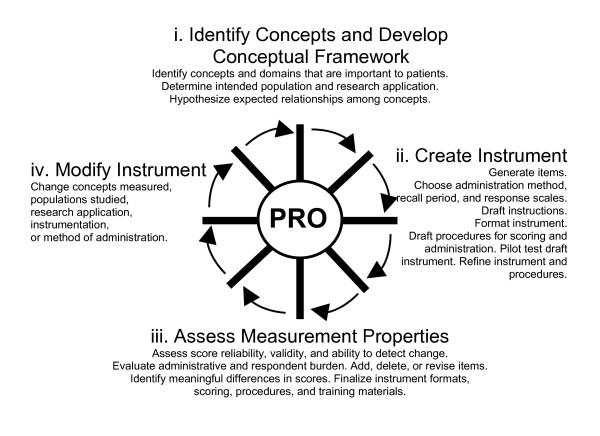
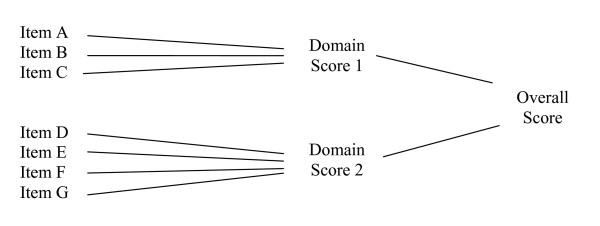
This guidance describes how the FDA evaluates patient-reported outcome (PRO) instruments used as effectiveness endpoints in clinical trials. It also describes our current thinking on how sponsors can develop and use study results measured by PRO instruments to support claims in approved product labeling (see appendix point 1). It does not address the use of PRO instruments for purposes beyond evaluation of claims made about a drug or medical product in its labeling. By explicitly addressing the review issues identified in this guidance, sponsors can increase the efficiency of their endpoint discussions with the FDA during the product development process, streamline the FDA's review of PRO endpoint adequacy, and provide optimal information about the patient's perspective of treatment benefit at the time of product approval. A PRO is a measurement of any aspect of a patient's health status that comes directly from the patient (i.e., without the interpretation of the patient's responses by a physician or anyone else). In clinical trials, a PRO instrument can be used to measure the impact of an intervention on one or more aspects of patients' health status, hereafter referred to as PRO concepts, ranging from the purely symptomatic (response of a headache) to more complex concepts (e.g., ability to carry out activities of daily living), to extremely complex concepts such as quality of life , which is widely understood to be a multidomain concept with physical, psychological, and social components. Data generated by a PRO instrument can provide evidence of a treatment benefit from the patient perspective. For this data to be meaningful, however, there should be evidence that the PRO instrument effectively measures the particular concept that is studied. Generally, findings measured by PRO instruments may be used to support claims in approved product labeling if the claims are derived from adequate and well-controlled investigations that use PRO instruments that reliably and validly measure the specific concepts at issue. The glossary defines many of the terms used in this guidance. In particular, the term instrument refers to the actual questions or items contained in a questionnaire or interview schedule along with all the additional information and documentation that supports the use of these items in producing a PRO measure (e.g., interviewer training and instructions, scoring and interpretation manual). The term conceptual framework refers to how items are grouped according to subconcepts or domains (e.g., the item walking without help may be grouped with another item, walking with difficulty , within the domain of ambulation , and ambulation may be further grouped into the concept of physical ability ). FDA's guidance documents, including this guidance, do not establish legally enforceable responsibilities. Instead, guidance documents describe the Agency's current thinking on a topic and should be viewed only as recommendations, unless specific regulatory or statutory requirements are cited. The use of the word should in Agency guidance documents means that something is suggested or recommended but not required. First publication of the Draft Guidance by the Food and Drug Administration- February 2006.
Overview
The claims and statistics of this paper haven’t been checked yet.
Free: it reads the open-access text and checks the first 5 claims that cite a source we can check. Create a free account to check every claim.
Integrity signals
Registry
Cites
Statistics
Figures
Verification
Claims the paper makes
The claims and statistics of this paper haven’t been checked yet.
Free: it reads the open-access text and checks the first 5 claims that cite a source we can check. Create a free account to check every claim.
Claims other papers make about this one
Each is checked against this paper’s own text: does it say what the citing paper says it does?
The cited source says what the claim attributes to it.
In the citing paper
“The central importance of PROs in clinical trials has been emphasized by both international health regulatory agencies and patients [216, 217]”
In the citing paper
“The weaRAble-PRO study administered a selection of validated PRO measures for RA in complement to bespoke digital PRO assessments—that are validated in clinical trials”
From Digital health technologies and machine learning augment patient reported outcomes to remotely characterise rheumatoid arthritis (2024) · cites this paper as [36]
Self-check
Percentages, sums and reported differences re-computed from the paper’s own numbers.
The self-check needs the paper’s full text.
Citations
Cited by
Items 1,001–1,018 of 1,018
‘The patient’: at the center of patient-reported outcomes
Awad, A. G. (2015) · Expert Review of Pharmacoeconomics & Outcomes Research · doi:10.1586/14737167.2015.1077118 · Cited by 20
“I Want It to Look Natural”: Development and Validation of the FACE-Q Aesthetics Natural Module
Klassen, A. F., Cano, S., Mansouri, J., Poulsen, L., Rae, C. S., Kaur, M. N., Dayan, S. H., Tsangaris, E., Armstrong, K., Klok, J. A., et al. (2024) · Aesthetic Surgery Journal · doi:10.1093/asj/sjad374 · Cited by 27
Sittig, D. F., Boxwala, A. A., Wright, A. T., Zott, C., Gauthreaux, N. A., Swiger, J., Lomotan, E. A., & Dullabh, P. (2024) · Journal of the American Medical Informatics Association · doi:10.1093/jamia/ocae138 · Cited by 23
Barone, M., Cogliandro, A., Salzillo, R., Tambone, V., & Persichetti, P. (2018) · Aesthetic Plastic Surgery · doi:10.1007/s00266-018-1158-2 · Cited by 19
Martin, M. L., Stassek, L., Blum, S. I., Joshi, A. V., & Jones, D. E. (2019) · Journal of Patient-Reported Outcomes · doi:10.1186/s41687-018-0090-1 · Cited by 22
Trauma-related memories in PTSD after interpersonal violence: An ambulatory assessment study
Kleindienst, N., Priebe, K., Petri, M., Hecht, A., Santangelo, P., Bohus, M., & Schulte-Herbrüggen, O. (2017) · European Journal of Psychotraumatology · doi:10.1080/20008198.2017.1409062 · Cited by 18
The PBRN Initiative: Transforming New Technologies to Improve Patient Care
Curro, F. A., Vena, D., Naftolin, F., Terracio, L., & Thompson, V. P. (2012) · Journal of Dental Research · doi:10.1177/0022034512447948 · Cited by 17
Challenges and prospects for pharmacotherapy in functional gastrointestinal disorders
Sanger, G. J., Chang, L., Bountra, C., & Houghton, L. A. (2010) · Therapeutic Advances in Gastroenterology · doi:10.1177/1756283x10369922 · Cited by 17
Naegeli, A. N., Flood, E., Tucker, J., Devlen, J., & Edson-Heredia, E. (2013) · Health and Quality of Life Outcomes · doi:10.1186/1477-7525-11-192 · Cited by 17
Camilleri, M. (2009) · The American Journal of Gastroenterology · doi:10.1038/ajg.2009.20 · Cited by 16
Perez, T. M., Glue, P., Adhia, D. B., Navid, M. S., Zeng, J., Dillingham, P., Smith, M., Niazi, I. K., Young, C. K., & De Ridder, D. (2022) · Trials · doi:10.1186/s13063-022-06863-z · Cited by 8
Helissey, C., Parnot, C., Rivière, C., Duverger, C., Schernberg, A., Becherirat, S., Picchi, H., Le Roy, A., Vuagnat, P., Pristavu, R., et al. (2023) · Frontiers in Digital Health · doi:10.3389/fdgth.2023.1104700 · Cited by 7
Dimaguila, G. L., Gray, K., & Merolli, M. (2020) · JMIR Research Protocols · doi:10.2196/16827 · Cited by 6
Incorporating Patient-Reported Outcomes Into Hepatitis C Virus Treatment Studies
Evon, D. M. (2014) · Clinical Gastroenterology and Hepatology · doi:10.1016/j.cgh.2014.02.017 · Cited by 4
Lebensqualität und psychische Belastung bei Hodentumorpatienten
Sztankay, M., Giesinger, J. M., & Holzner, B. (2017) · Der Onkologe · doi:10.1007/s00761-016-0158-6 · Cited by 4
Knudsen, A.-M., Dalgård Dunvald, A.-C., Hangaard, S., Hejlesen, O., & Kronborg, T. (2024) · doi:10.2196/preprints.58296 · Cited by 2
Viegas1, P., L Ferreira1, L., Vieira2, 3., Barbosa2, P., P Ramos2, 3., & Duarte2, 3. (2025) · Jornal Brasileiro de Pneumologia · doi:10.36416/1806-3756/e20250159 · Cited by 1
Metadata
- Authors
- U.S. Department of Health and Human Services FDA Center for Drug Evaluation and Research, U.S. Department of Health and Human Services FDA Center for Biologics Evaluation and Research, & U.S. Department of Health and Human Services FDA Center for Devices and Radiological Health
- Venue
- Health and Quality of Life Outcomes
- Published
- 2006-10-11
- Volume
- 4
- Issue
- 1
- Pages
- 79-79
- ISSN
- 1477-7525 (ISSN-L)
- PMC
- PMC1629006
- OpenAlex
- W4250968058
- Cited by
- 2,856
- References
- 0
- Citations by year
- 2026: 133 · 2025: 222 · 2024: 283 · 2023: 316 · 2022: 279 · 2021: 252 · 2020: 239 · 2019: 171 · 2018: 175 · 2017: 185 · 2016: 156 · 2015: 96 · 2014: 76 · 2013: 44 · 2012: 46
- FWCI
- 81.70
- Type
- journal article
- Language
- en
- Open access
- gold
- doi.org
- Licence
- cc-by
- Locations
- Health and Quality of Life Outcomes (publishedVersion, cc-by)
- PubMed (publishedVersion)
- DOAJ (DOAJ: Directory of Open Access Journals) (submittedVersion, cc-by-sa)
- Topics
- Social Sciences › Economics, Econometrics and Finance › Economics and Econometrics › Health Systems, Economic Evaluations, Quality of Life
- Physical Sciences › Mathematics › Statistics and Probability › Statistical Methods in Clinical Trials
- Health Sciences › Nursing › Research and Theory › Health Education and Validation
- Keywords
- patient-reported outcome measures, medical product development, clinical trial endpoints, quality of life, patient perspectives, regulatory review, conceptual framework, instrument validation, treatment benefit, ambulation, activities of daily living, quality of life domains, medical device approval
- MeSH terms
- Clinical Trials as Topic, Data Interpretation, Statistical, Drug Industry, Humans, Pain Measurement, Product Labeling, Psychometrics, Quality of Life, Surveys and Questionnaires, United States, United States Food and Drug Administration, Treatment Outcome, Patient Satisfaction, Guidelines as Topic
About these checks
Registry, retraction, Cites and statistics results are computed, not judged, with one exception: a printed reference that no index lists is read once by a model before it counts as a citation error. Claims are extracted by a model and kept only when their quote appears verbatim in the text; each cited source is then checked, with a model’s help, for whether it says what the claim relies on. Those verdicts can be wrong — read the claim’s quote and the cited source before relying on one.
Statistics and arithmetic are recomputed, not judged.
Confidence bands are shown only for fields calibrated on our annotated test set. None is calibrated yet, so no band is shown.
What counts as a claim ›How we measure confidence ›How we check this ›
Are you an author, or do you see a problem with this page? Request a review
Data sources
Bibliographic data: Semantic Scholar, OpenAlex, Crossref.
Contains information from the Semantic Scholar Academic Graph Datasets, made available under the ODC Attribution License (ODC-BY 1.0).
Semantic Scholar’s data is described in: Kinney, R., et al. (2023). The Semantic Scholar Open Data Platform. arXiv:2301.10140.
