

The DOI matches its Crossref record; 51 of the 52 references it cites were found in a registry or an index.
Fatigue characteristics in multiple sclerosis: the North American Research Committee on Multiple Sclerosis (NARCOMS) survey
Open accessAbstract
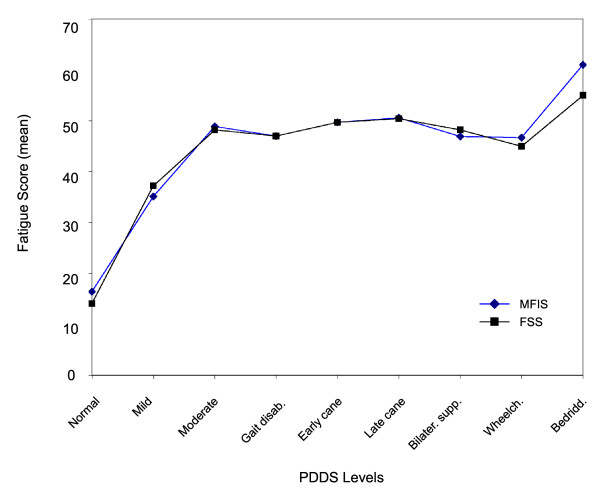
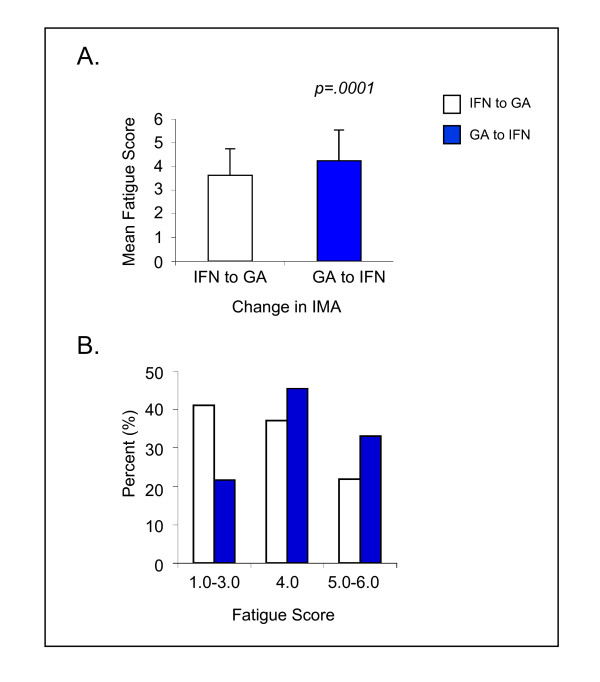
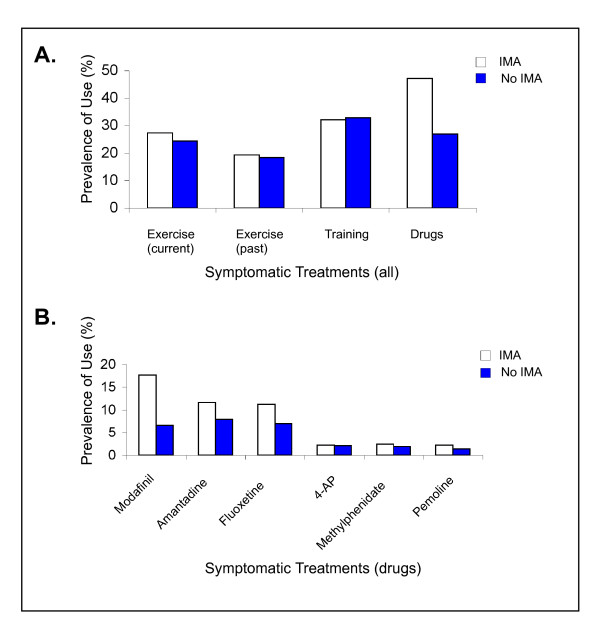
Background: Fatigue is a common disabling symptom of multiple sclerosis (MS) and has a significantly negative impact on quality of life. Persons with MS enrolled in the North American Research Committee on Multiple Sclerosis (NARCOMS) Patient Registry are invited to complete follow-up surveys every six months to update their original registration information. One of these surveys was designed to focus on the severity and impact of fatigue, and its association with other clinical parameters of MS such as physical disability. Methods: In addition to the usual data collected in Registry update surveys such as demographic characteristics, MS-related medical history, disability and handicap, immunomodulatory and symptomatic therapies taken, and healthcare services used, the survey for this study included two validated self-report fatigue scales, the Fatigue Severity Scale (FSS) and the Modified Fatigue Impact Scale (MFIS) and questions about the use of symptomatic management for fatigue, both pharmacologic and non-pharmacologic treatments. This Registry update survey was mailed to all NARCOMS registrants (n = 18,595) in November 2002. Information provided by registry participants was approved for research purposes by the Yale University Institutional Review Board. Results: The response rate for the survey was 49.5% (9205/18,595). Severe fatigue as measured with the FSS using the developer's recommended severity cutpoint of ≥ 36 was reported by 6691 (74%) of evaluable respondents (n = 9077). A higher prevalence of severe fatigue was observed in relapsing-worsening MS compared with relapsing-stable and primary progressive MS. A distinct pattern of fatigue was observed across the disability levels of the Patient-Determined Disease Steps (PDDS). Although there were no differences in the severity or impact of fatigue by immunomodulatory agents (IMA), respondents who recalled therapy changes in the prior six months reported different patterns of change in fatigue with lower fatigue levels reported after changing from interferon-β to glatiramer acetate than after changing from glatiramer acetate to interferon-β. Concomitant therapy for fatigue was used by 47.2% of the 5799 survey respondents receiving IMA. Conclusion: Characterizing MS symptoms like fatigue can increase awareness about their impact on persons with MS and suggest recommendations for a care plan.
Overview
The claims and statistics of this paper haven’t been checked yet.
Run the check — free, no account needed. It reads the open-access text and checks the sources it cites.
Integrity signals
Registry
Cites
Statistics
Figures
Verification
Claims the paper makes
The claims and statistics of this paper haven’t been checked yet.
Run the check — free, no account needed. It reads the open-access text and checks the sources it cites.
Claims other papers make about this one
Each is checked against this paper’s own text: does it say what the citing paper says it does?
The source backs part of the claim, not all of it — or backs it for a different population, condition or comparison.
In the citing paper
“15%–50% considering fatigue their most disabling symptom.4”
From MS quality of life, depression, and fatigue improve after mindfulness training: A randomized trial (2010) · cites this paper as [4]
Experimental — accuracy not yet measuredThe cited source says what the claim attributes to it.
In the citing paper
“At least 65% of patients with MS complain of fatigue”
From MS quality of life, depression, and fatigue improve after mindfulness training: A randomized trial (2010) · cites this paper as [4]
Self-check
Percentages, sums and reported differences re-computed from the paper’s own numbers.
The self-check needs the paper’s full text.
Citations
Cites
Rating neurologic impairment in multiple sclerosis: An expanded disability status scale (EDSS)
Kurtzke, J. F. (1983) · Neurology · doi:10.1212/wnl.33.11.1444 · Cited by 15,011
Krupp, L. B. (1989) · Archives of Neurology · doi:10.1001/archneur.1989.00520460115022 · Cited by 6,172
Measuring the Functional Impact of Fatigue: Initial Validation of the Fatigue Impact Scale
Fisk, J. D., Ritvo, P. G., Ross, L., Haase, D. A., Marrie, T. J., & Schlech, W. F. (1994) · Clinical Infectious Diseases · doi:10.1093/clinids/18.supplement_1.s79 · Cited by 1,546
The impact of fatigue on patients with multiple sclerosis
Fisk, J. D., Pontefract, A., Ritvo, P. G., Archibald, C. J., & Murray, T. J. (1994) · Canadian Journal of Neurological Sciences / Journal Canadien des Sciences Neurologiques · doi:10.1017/s0317167100048691 · Cited by 1,025 · cited 18×
“The most reliable and valid fatigue measures, the Modified Fatigue Impact Scale (MFIS) and the Fatigue Severity Scale (FSS) [4,29,30], were incorporated into the survey, along with a question designed to capture the registrants' perceptions of fatigue levels following changes from one IMA to another when that had occu…”
InfluentialKrupp, L., Alvarez, L., LaRocca, N. G., & Lc, S. (1988) · Archives of Neurology · doi:10.1001/archneur.1988.00520280085020 · Cited by 999
Flachenecker, P., Kümpfel, T., Kallmann, B. A., Gottschalk, M., Grauer, O. M., Rieckmann, P., Trenkwalder, C., & Toyka, K. V. (2002) · Multiple Sclerosis Journal · doi:10.1191/1352458502ms839oa · Cited by 635
Disease Steps in multiple sclerosis
Hohol, M. J., Orav, E. J., & Weiner, H. L. (1995) · Neurology · doi:10.1212/wnl.45.2.251 · Cited by 553
Symptomatic fatigue in multiple sclerosis.
Freal, J. E., Kraft, G. H., & Coryell, J. K. (1984) · PubMed · Cited by 526
Quality of life in multiple sclerosis: the impact of depression, fatigue and disability
Amato, M. P., Ponziani, G., Rossi, F., Liedl, C. L., Stefanile, C., & Rossi, L. (2001) · Multiple Sclerosis Journal · doi:10.1177/135245850100700511 · Cited by 506
Quality of life in patients with multiple sclerosis
Janardhan, V., & Bakshi, R. (2002) · Journal of the Neurological Sciences · doi:10.1016/s0022-510x(02)00312-x · Cited by 489
Research works printed but not linked: 2
- Multiple Sclerosis Clinical Practice Guidelines Council: Fatigue and multiple sclerosis: evidence-based management strategies for fatigue in multiple sclerosis. In Multiple sclerosis clinical practice guideline. Washington, DC: Paralyzed Veterans Association; 1998.
- Edgely K, Sullivan MJL, Dehoux E: A survey of multiple sclerosis: Pt 2: determinations of employment status. Can J Rehab 1991, 4: 127–132.
Cited by
Sorted by citations
Items 201–243 of 243
MS Fatigue Post High‐Efficacy Treatment
Sales, C., Patel, R., Wijeratne, T., Brüstle, A., & Cherbuin, N. (2025) · European Journal of Neurology · doi:10.1111/ene.70385 · Cited by 1
Martell, S. G., Holthaus, T. A., Verma, S., Adamson, B., Motl, R. W., & Khan, N. A. (2026) · Nutrition Research · doi:10.1016/j.nutres.2026.05.006 · Cited by 1
McLoughlin, J. (2018) · Springer eBooks · doi:10.1007/978-3-319-14418-4_65 · Cited by 1
Alamri, A., Alshamrani, F., AlMohish, N. M., Zafar, A. S., Alnaaim, S. A., Azman, H. A., Alghanimi, I., AlNahdi, A. A., AlDawsari, F. A., Almatrafi, S. B., et al. (2024) · Journal of Family and Community Medicine · doi:10.4103/jfcm.jfcm_73_23 · Cited by 1
Non-Pharmacological Interventions for Fatigue in Multiple Sclerosis: A Systematic Review
Masoud, S. A., Karami, F., Noorbakhsh, M., Akbari, H., Masoud, M. S., & Karami, M. (2025) · doi:10.32592/smmr.202501.05.04 · Cited by 1
Akbar, H. M., Sedighi, B., Iranmanesh, F., & Hosein, A. M. (2011) · Iranian journal of pharmacology & therapeutics · Cited by 1
Symptomatic Treatment for Progressive Multiple Sclerosis
Rice, C. M., & Wilkins, A. (2012) · Springer eBooks · doi:10.1007/978-1-4471-2395-8_8 · Cited by 1
Güven, Ş. Ş. (2016) · Türkiye Fiziksel Tıp ve Rehabilitasyon Dergisi · doi:10.5606/tftrd.2016.98215 · Cited by 1
Norton, J., Joos, S. K., Cameron, M. H., & Hugos, C. L. (2021) · Multiple Sclerosis Journal - Experimental Translational and Clinical · doi:10.1177/20552173211054454 · Cited by 1
Widener, G. L. (2013) · Elsevier eBooks · doi:10.1016/b978-0-323-07586-2.00028-5 · Cited by 1
Symptomatic Treatment for Progressive Multiple Sclerosis
Bailey, S. M., & Rice, C. M. (2017) · Springer eBooks · doi:10.1007/978-3-319-65921-3_7 · Cited by 2
Multiple Sclerosis related Fatigue and the Hypothalamic-Pituitary-Adrenal Axis
Nawrath, L. M. (2010)
Hogan, N. (2011) · University of Limerick Institutional Repository (University of Limerick) · doi:10.34961/7244
Targum, S. D., Richly, P., Sinay, V. J., Goldberg‐Zimring, D., & Manes, F. F. (2013) · Neuroscience & Medicine · doi:10.4236/nm.2013.43022
Disturbi sessuali nella sclerosi multipla: Un approccio multidisciplinare
Fletcher, S. G., & Frohman, E. M. (2012) · Springer eBooks · doi:10.1007/978-88-470-2724-4_15
Fitness and cognitive processing speed in persons with multiple sclerosis
Sandroff, B. M. (2012) · Illinois Digital Environment for Access to Learning and Scholarship (University of Illinois at Urbana-Champaign)
Anton, G., & Beiske, A. G. (2013) · NORA - Norwegian Open Research Archives
Neural Mechanisms of Fatigue in Humans
Gould, J. R. (2015) · CU Scholar (University of Colorado Boulder)
Complex Symptoms and Mobility in Multiple Sclerosis Consensus Conference
Bennett, S. E., Béthoux, F., Tower, K., Finlayson, M. L., & Foley, F. W. (2014)
Reproductive Issues in Multiple Sclerosis: Parental MS and Child Outcomes (The Research Perspective)
Razaz, N., Joseph, K. S., Marrie, R. A., & Tremlett, H. L. (2017) · Springer eBooks · doi:10.1007/978-3-7091-4858-7_6
Decision making under risk in multiple sclerosis
Radomski, A. D. (2013) · ERA: Education and Research Archive (University of Alberta) · doi:10.7939/r3bg2hh5w
Estudo sobre os portadores de esclerose múltipla na microrregião de Divinópolis
Oliveira, L. M. D. (2017) · Fisioterapia Brasil · doi:10.33233/fb.v11i4.1392
Exploring the fear-avoidance model after brain injury
Wijenberg, M. (2021) · Research Publications (Maastricht University) · doi:10.26481/dis.20210705mw
Asare, S., Figuim, B., Sandio, A., Ngouatna, S., Cecillia, T., Esene, I. N., Bitang, L. J., Moisi, M., & Casimir, F. (2021) · Research Square · doi:10.21203/rs.3.rs-1010546/v1
Bhise, V. V., & Krupp, L. (2015) · Neuropsychiatric symptoms of neurological disease · doi:10.1007/978-3-319-18464-7_11
Asare, S., Figuim, B., Sandio, A., Ngouatna, S., Cecillia, T., Esene, I. N., Bitang, L. J., Moisi, M. D., & Casimir, F. (2022) · Research Square · doi:10.21203/rs.3.rs-1043869/v1
McLoughlin, J. (2016) · Springer eBooks · doi:10.1007/978-3-319-30808-1_65-1
Asare, S., Figuim, B., Sandio, A., Ngouatna, S., Cecillia, T., Esene, I. N., Bitang, L. J., Moisi, M. D., & Casimir, F. (2022) · SN Comprehensive Clinical Medicine · doi:10.1007/s42399-022-01189-y
Asare, S., Dognia, S., Sandio, A., Oluwade, B. O., Abdukhamitova, S., & Ayers, E. (2022) · Recent Advances in Clinical Trials · doi:10.33425/2771-9057.1012
Fatigue in multiple sclerosis – a current perspective
(2023) · Frontiers research topics · doi:10.3389/978-2-83251-727-7
Asthenia in children: What's new for a pediatrician. A review
Эдуардовна, Л. Э., Savitskaya, N. А., & Хмелькова, И. И. (2023) · Pediatrics Consilium Medicum · doi:10.26442/26586630.2023.3.202364
Sodelovanje in vztrajanje bolnikov z multiplo sklerozo pri zdravljenju z zdravili
Jožef, M., Locatelli, I., Jakob, G. B., Kos, M., & Rot, U. (2024) · Slovenian Medical Journal · doi:10.6016/zdravvestn.3506
Ramirez, A. O., Keenan, A., Kalau, O., Worthington, E., Cohen, L., & Singh, S. (2021) · Figshare · doi:10.6084/m9.figshare.17120447
Ramirez, A. O., Keenan, A., Kalau, O., Worthington, E., Cohen, L., & Singh, S. (2021) · Figshare · doi:10.6084/m9.figshare.17120459
Ramirez, A. O., Keenan, A., Kalau, O., Worthington, E., Cohen, L., & Singh, S. (2021) · Figshare · doi:10.6084/m9.figshare.17120453
Ramirez, A. O., Keenan, A., Kalau, O., Worthington, E., Cohen, L., & Singh, S. (2021) · Figshare · doi:10.6084/m9.figshare.17120462
Fuller, P., Fearn, S., Barton, B. D., Pires, S. B., Agarwal, V., & Kipps, C. (2025) · medRxiv · doi:10.64898/2025.12.19.25342360
Roe, A., Livingstone, A., Moore, F. R., & Turnbull, S. (2026) · Health Psychology and Behavioral Medicine · doi:10.1080/21642850.2026.2632444
Kratz, A., Carlozzi, N. E., Murphy, S., Braley, T. J., Whibley, D., Williams, D. A., Fritz, N. E., Abou, L., & Kallen, M. A. (2026) · Journal of Patient-Reported Outcomes · doi:10.1186/s41687-026-01068-3
Clinical, Psychological, and Behavioral Factors Associated with Fatigue in Multiple Sclerosis
Mikuľákova, W., Klímová, E., Gajdoš, M., Andraščíková, Š., Rosińćzuk, J., & Kendrová, L. D. (2026) · Journal of Clinical Medicine · doi:10.3390/jcm15218314
Metadata
- Authors
- Hadjimichael, O., Vollmer, T., & Oleen-Burkey, M.
- Affiliations
- Yale University (US)
- Barrow Neurological Institute (US)
- Corresponding author
- Oleen-Burkey, MerriKay
- ORCID
- Vollmer, Timothy
- Venue
- Health and Quality of Life Outcomes
- Published
- 2008-11-14
- Volume
- 6
- Issue
- 1
- Pages
- 100-100
- ISSN
- 1477-7525 (ISSN-L)
- PMC
- PMC2596785
- OpenAlex
- W2017544610
- Cited by
- 240
- References
- 52
- Citations by year
- 2026: 5 · 2025: 9 · 2024: 8 · 2023: 10 · 2022: 15 · 2021: 21 · 2020: 14 · 2019: 10 · 2018: 19 · 2017: 15 · 2016: 12 · 2015: 19 · 2014: 19 · 2013: 17 · 2012: 10
- FWCI
- 8.54
- Type
- journal article
- Language
- en
- Open access
- gold
- doi.org
- Licence
- cc-by
- Locations
- Health and Quality of Life Outcomes (publishedVersion, cc-by)
- PubMed Central (publishedVersion, cc-by)
- PubMed (publishedVersion)
- DOAJ (DOAJ: Directory of Open Access Journals) (submittedVersion)
- Funders
- Yale University
- Teva Pharmaceutical Industries
- Topics
- Health Sciences › Medicine › Clinical Neurology › Multiple Sclerosis Research Studies
- Health Sciences › Medicine › Oncology › Cancer survivorship and care
- Health Sciences › Medicine › Psychiatry and Mental health › Fibromyalgia and Chronic Fatigue Syndrome Research
- Keywords
- multiple sclerosis, fatigue, Fatigue Severity Scale, Modified Fatigue Impact Scale, primary progressive multiple sclerosis, disability severity, Patient-Determined Disease Steps, interferon-beta, glatiramer acetate, immunomodulatory therapy, quality of life
- MeSH terms
- Glatiramer Acetate, Adult, Chronic Disease, Fatigue, Female, Humans, Immunologic Factors, Immunosuppressive Agents, Male, Middle Aged, Multiple Sclerosis, Muscle Spasticity, North America, Pain Measurement, Peptides, Psychometrics, Quality of Life, Surveys and Questionnaires, Registries, Severity of Illness Index, Prevalence, Treatment Outcome, Interferon-beta, Sickness Impact Profile, Disease Progression, Multiple Sclerosis, Chronic Progressive, Multiple Sclerosis, Relapsing-Remitting
About these checks
Registry, retraction, Cites and statistics results are computed, not judged, with one exception: a printed reference that no index lists is read once by a model before it counts as a citation error. Claims are extracted by a model and kept only when their quote appears verbatim in the text; each cited source is then checked, with a model’s help, for whether it says what the claim relies on. Those verdicts can be wrong — read the claim’s quote and the cited source before relying on one.
Statistics and arithmetic are recomputed, not judged.
Confidence bands are shown only for fields calibrated on our annotated test set. None is calibrated yet, so no band is shown.
What counts as a claim ›How we measure confidence ›How we check this ›
Are you an author, or do you see a problem with this page? Request a review
