

The DOI matches its Crossref record; 49 of the 49 references it cites were found in a registry or an index.
Obstetric complications in women with polycystic ovary syndrome: a systematic review and meta-analysis
Open accessAbstract
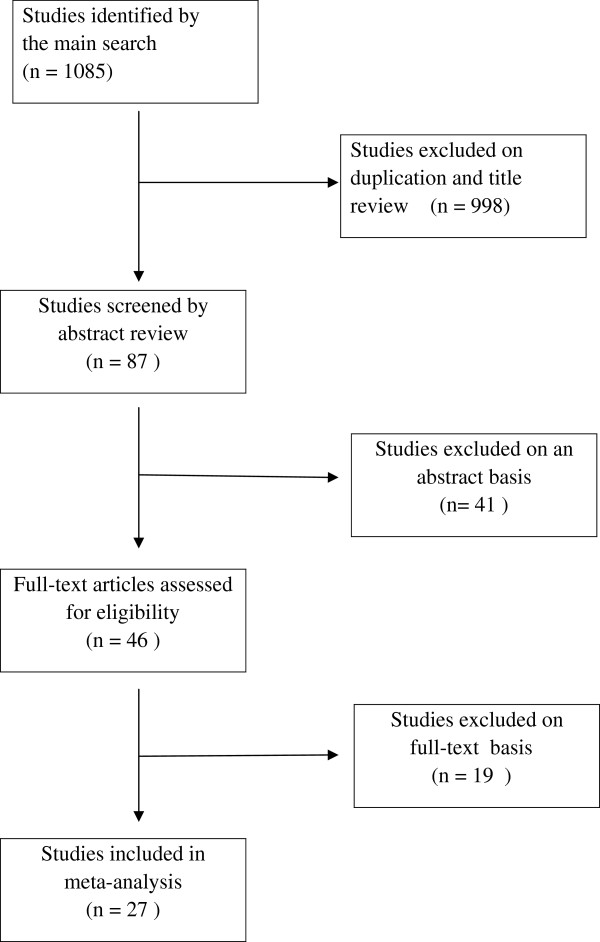
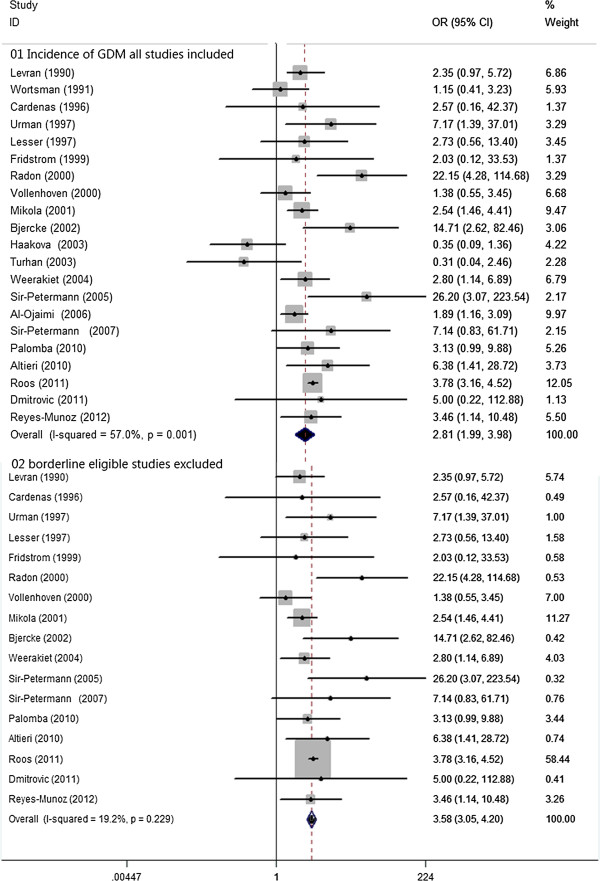
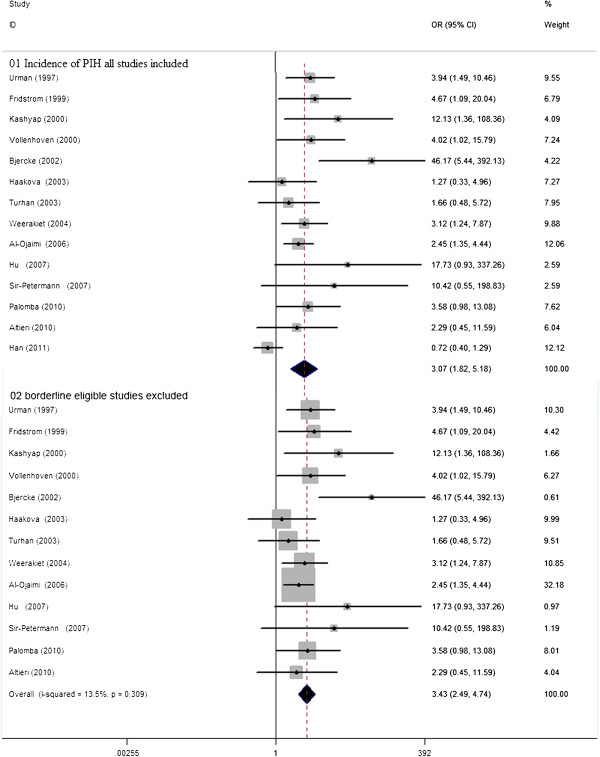
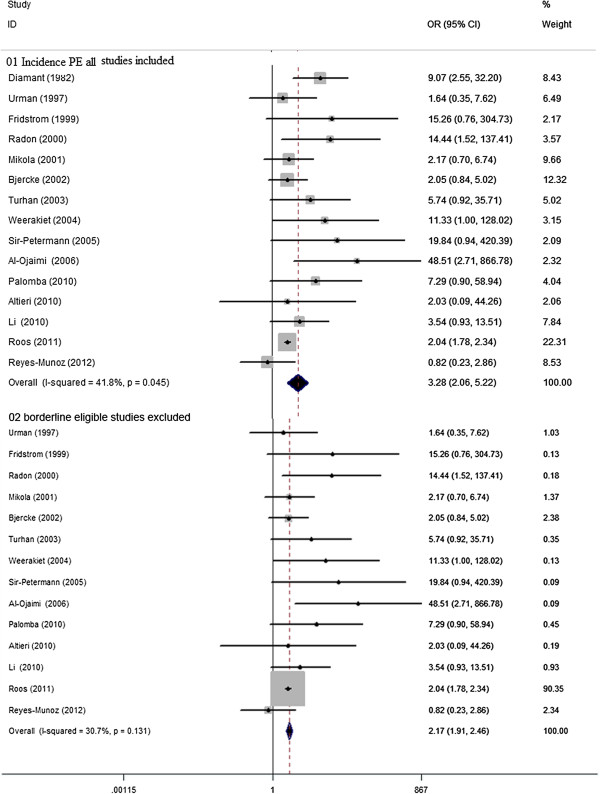
Background: Polycystic ovary syndrome (PCOS) is a common endocrine disorder in women of childbearing age. The risk of pregnancy and neonatal complications in women with PCOS is debatable. In order to determine the risk of pregnancy and neonatal complications, evidence regarding these risks was examined. Methods: Literature searches were performed in the electronic databases MEDLINE, EMBASE, and CENTRAL based on the established strategy and eligible tries were included according to inclusion and exclusion criteria. A systematic literature review looking at rates of gestational diabetes mellitus (GDM), pregnancy-induced hypertension (PIH), preeclampsia, premature delivery, neonatal birth weight, caesarean section and admission to a neonatal intensive care unit (NICU) was conducted in women with PCOS. Pregnancy outcomes between women with PCOS versus controls were included. Sensitivity analyses were performed to determine the reliability of the available evidence and to validate the results. The study was performed with the approval of the ethics committee of the First Affiliated Hospital of Guangxi Medical University. Results: A total of 27studies, involving 4982 women with PCOS and 119692 controls were eligible for the meta-analysis. Women with PCOS demonstrated a significantly higher risk of developing GDM (OR3.43; 95% CI: 2.49–4.74), PIH (OR3.43; 95% CI: 2.49–4.74), preeclampsia (OR2.17; 95% CI: 1.91–2.46), preterm birth (OR1.93; 95%CI: 1.45–2.57), caesarean section (OR 1.74; 95% CI: 1.38–2.11) compared to controls. Their babies had a marginally significant lower birth weight (WMD −0.11g; 95%CI: -0.19 – -0.03), and higher risk of admission to NICU (OR 2.32; 95% CI: 1.40–3.85) compared to controls. Conclusions: Women with PCOS have increased risk of adverse pregnancy and neonatal complications. It is necessary to establish guidelines for supervision during pregnancy and parturition to prevent these complications.
Overview
The claims and statistics of this paper haven’t been checked yet.
Run the check — free, no account needed. It reads the open-access text and checks the sources it cites.
Integrity signals
Registry
Cites
Statistics
Figures
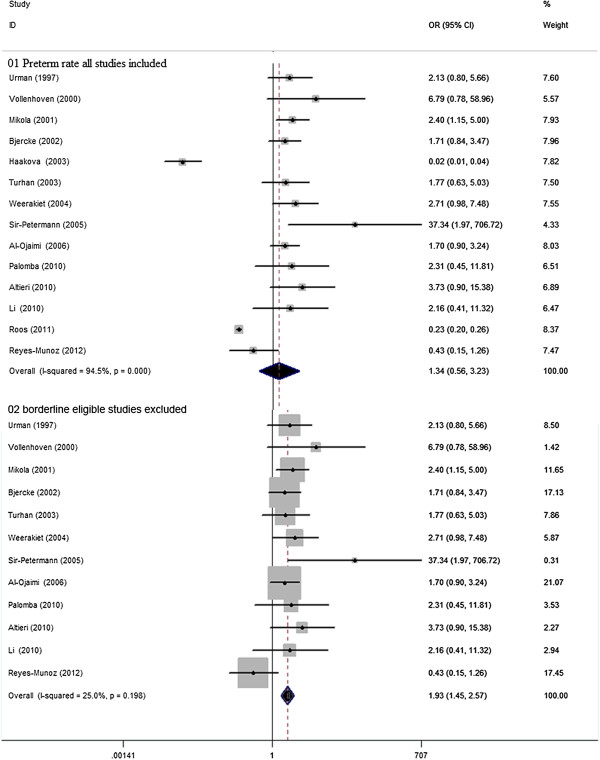
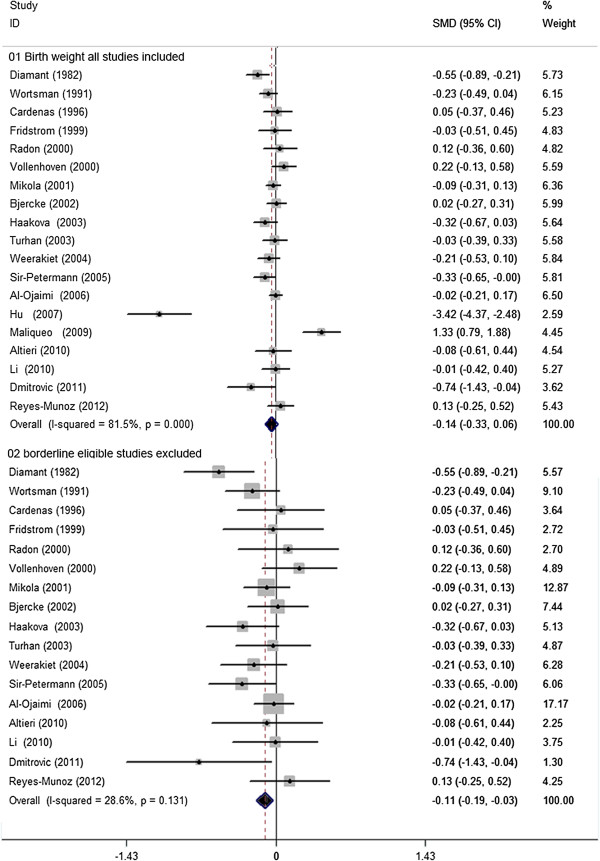
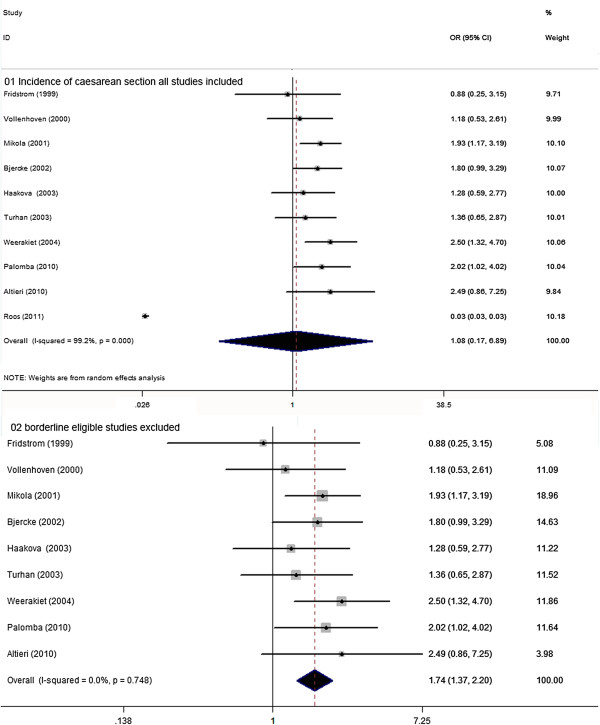
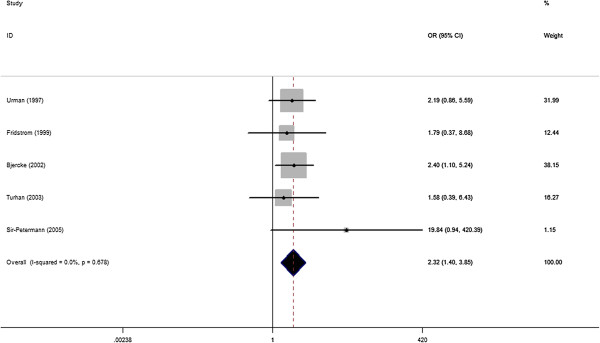
Verification
Claims the paper makes
The claims and statistics of this paper haven’t been checked yet.
Run the check — free, no account needed. It reads the open-access text and checks the sources it cites.
Claims other papers make about this one
Each is checked against this paper’s own text: does it say what the citing paper says it does?
In the citing paper
“Women with PCOS have 2.8 to 4.3 times the risk of developing GDM during pregnancy, compared to women without PCOS [53–55].”
From From Prediabetes to Type 2 Diabetes Mellitus in Women with Polycystic Ovary Syndrome: Lifestyle and Pharmacological Management (2020) · cites this paper as [55]
Self-check
Percentages, sums and reported differences re-computed from the paper’s own numbers.
The self-check needs the paper’s full text.
Citations
Cites
(2004) · Fertility and Sterility · doi:10.1016/j.fertnstert.2003.10.004 · Cited by 9,050
The Rotterdam ESHRE/ASRM-sponsored PCOS consensus workshop group (2004) · Human Reproduction · doi:10.1093/humrep/deh098 · Cited by 6,138
Azziz, R., Carmina, E., Dewailly, D., Diamanti-Kandarakis, E., Escobar-Morreale, H. F., Futterweit, W., Janssen, O. E., Legro, R. S., Norman, R. J., Taylor, A. E., et al. (2009) · Fertility and Sterility · doi:10.1016/j.fertnstert.2008.06.035 · Cited by 2,132
A meta-analysis of pregnancy outcomes in women with polycystic ovary syndrome
Boomsma, C. M., Eijkemans, M. J. C., Hughes, E. G., Visser, G. H. A., Fauser, B. C. J. M., & Macklon, N. S. (2006) · Human Reproduction Update · doi:10.1093/humupd/dml036 · Cited by 852
Obesity and pregnancy: complications and cost
Galtier, F., Boegner, C., & Bringer, J. (2000) · American Journal of Clinical Nutrition · doi:10.1093/ajcn/71.5.1242s · Cited by 546
Detecting Insulin Resistance in Polycystic Ovary Syndrome: Purposes and Pitfalls
Legro, R. S., Castracane, V. D., & Kauffman, R. P. (2004) · Obstetrical & Gynecological Survey · doi:10.1097/01.ogx.0000109523.25076.e2 · Cited by 453
Glueck, C. J., Phillips, H., Cameron, D., Sieve-Smith, L., & Wang, P. (2001) · Fertility and Sterility · doi:10.1016/s0015-0282(00)01666-6 · Cited by 429
Multiple birth resulting from ovarian stimulation for subfertility treatment
Fauser, B. C. J. M., Devroey, P., & Macklon, N. (2005) · The Lancet · doi:10.1016/s0140-6736(05)66478-1 · Cited by 405
Pregnancy complications in women with polycystic ovary syndrome.
Boomsma, C., Fauser, B., & Macklon, N. (2008) · Seminars in Reproductive Medicine · doi:10.1055/s-2007-992927 · Cited by 360
Roos, N., Kieler, H., Sahlin, L., Ekman-Ordeberg, G. E., Falconer, H., & Stephansson, O. (2011) · BMJ · doi:10.1136/bmj.d6309 · Cited by 315
Pregnancy outcomes in women with polycystic ovary syndrome: a metaanalysis
Kjerulff, L. E., Sanchez‐Ramos, L., & Duffy, D. A. (2011) · American Journal of Obstetrics and Gynecology · doi:10.1016/j.ajog.2011.03.021 · Cited by 299
Chang, W. Y., Knochenhauer, E. S., Bartolucci, A. A., & Azziz, R. (2005) · Fertility and Sterility · doi:10.1016/j.fertnstert.2005.01.096 · Cited by 284
Long-term health consequences of PCOS
Wild, R. A. (2002) · Human Reproduction Update · doi:10.1093/humupd/8.3.231 · Cited by 232
Maternal Morbidity and Mortality Associated With Multiple Gestations
Conde‐Agudelo, A., BELIZÁN, J. M., & LINDMARK, G. (2000) · Obstetrics and Gynecology · doi:10.1016/s0029-7844(99)00640-7 · Cited by 228
Birth weight in offspring of mothers with polycystic ovarian syndrome
Sir‐Petermann, T., Hitchsfeld, C., Maliqueo, M. A., Ethel Codner, D., Echiburú, B., Gazitúa, R., Recabarren, S. E., & CASSORLA, F. G. (2005) · Human Reproduction · doi:10.1093/humrep/dei009 · Cited by 212
Obstetric outcome in women with polycystic ovarian syndrome
Mikola, M. (2001) · Human Reproduction · doi:10.1093/humrep/16.2.226 · Cited by 206
Palomba, S., Falbo, A. I., Russo, T., Tolino, A., Orio, F., & Zullo, F. (2009) · Fertility and Sterility · doi:10.1016/j.fertnstert.2009.10.043 · Cited by 184
Glueck, C. J. (2004) · Human Reproduction · doi:10.1093/humrep/deh109 · Cited by 182
The outcome of multiple pregnancy
Doyle, P. (1996) · Human Reproduction · doi:10.1093/humrep/11.suppl_4.110 · Cited by 145
Eijkemans, M. J. C. (2003) · Human Reproduction · doi:10.1093/humrep/deg459 · Cited by 142
Bjercke, S., Dale, P. O., Tanbo, T. G., Storeng, R., Ertzeid, G., & Åbyholm, T. (2002) · Gynecologic and Obstetric Investigation · doi:10.1159/000067719 · Cited by 138
Pregnancy outcome in women with PCOS and in controls matched by age and weight
Haaková, L. (2003) · Human Reproduction · doi:10.1093/humrep/deg289 · Cited by 133
Impaired Glucose Tolerance in Pregnant Women With Polycystic Ovary Syndrome
RADON, P. A., MCMAHON, M. J., & MEYER, W. R. (1999) · Obstetrics and Gynecology · doi:10.1016/s0029-7844(99)00252-5 · Cited by 123
Diagnosis, phenotype, and prevalence of polycystic ovary syndrome.
Carmina, E., & Azziz, R. (2006) · Fertility and Sterility · doi:10.1016/j.fertnstert.2006.03.012 · Cited by 117
Insulin resistance in women with polycystic ovary syndrome
Dunaif, A. E. (2006) · Fertility and Sterility · doi:10.1016/j.fertnstert.2006.04.011 · Cited by 77
Assessment of glucose tolerance and pregnancy outcome of polycystic ovary patients
Turhan, N. Ö., Seçkin, N. C., Aybar, F., & Inegöl, İ. (2003) · International Journal of Gynecology & Obstetrics · doi:10.1016/s0020-7292(03)00003-1 · Cited by 76
Pregnancy in infertile PCOD patients. Complications and outcome.
Urman, B., Sarac, E., Dogan, L., & Gürgan, T. (1997) · PubMed · Cited by 74
Fridström, M., Nisell, H., Sjöblom, P., & Hillensjø, T. (1999) · Hypertension in Pregnancy · doi:10.3109/10641959909009612 · Cited by 71
Weerakiet, S., Srisombut, C., Rojanasakul, A., Panburana, P., Thakkinstian, A., & Herabutya, Y. (2004) · Gynecological Endocrinology · doi:10.1080/09513590400007242 · Cited by 69
Veltman-Verhulst, S. M., van Haeften, T. W., Eijkemans, M. J. C., de Valk, H. W., Fauser, B. C. J. M., & Goverde, A. J. (2010) · Human Reproduction · doi:10.1093/humrep/deq272 · Cited by 66
High incidence of preeclamptic toxemia in patients with polycystic ovarian disease
Diamant, Y. Z., Rimon, E., & Evron, S. (1982) · European Journal of Obstetrics & Gynecology and Reproductive Biology · doi:10.1016/0028-2243(82)90097-1 · Cited by 64
Han, A. R., Kim, H. O., Cha, S. W., Park, C. W., Kim, J. Y., Yang, K. M., Song, I. O., Koong, M. K., & Kang, I. S. (2011) · Daehan saengsik uihak hoeji/Clinical and experimental reproductive medicine · doi:10.5653/cerm.2011.38.2.103 · Cited by 63
Reyes-Muñoz, E., Castellanos-Barroso, G., Ramírez-Eugenio, B. Y., Ortega-González, C., Parra, A., Castillo-Mora, A., & De la Jara-Díaz, J. F. (2012) · Fertility and Sterility · doi:10.1016/j.fertnstert.2012.03.023 · Cited by 61
Maternal polycystic ovary syndrome may be associated with adverse pregnancy outcomes
Altieri, P., Gambineri, A., Prontera, O., Cionci, G., Franchina, M., & Pasquali, R. (2010) · European Journal of Obstetrics & Gynecology and Reproductive Biology · doi:10.1016/j.ejogrb.2009.11.010 · Cited by 58
Vollenhoven, B. J., Clark, S., Kovács, G., Burger, H., & Healy, D. (2000) · Australian and New Zealand Journal of Obstetrics and Gynaecology · doi:10.1111/j.1479-828x.2000.tb03167.x · Cited by 57
Serum adiponectin and lipid concentrations in pregnant women with polycystic ovary syndrome
Sir‐Petermann, T., Echiburú, B., Maliqueo, M. A., Crisosto, N., Sanchez, F., Hitschfeld, C., Cárcamo, M., Amigo, P., & Pérez‐Bravo, F. (2007) · Human Reproduction · doi:10.1093/humrep/dem090 · Cited by 55
Polycystic ovaries and infertility: Our experience
Rajashekar, L., Krishna, D., & Patil, M. (2008) · Journal of Human Reproductive Sciences · doi:10.4103/0974-1208.44113 · Cited by 53
Gestational diabetes and neonatal macrosomia in the polycystic ovary syndrome.
Wortsman, J., Ángeles, S. D. L., Futterweit, W., Singh, K. B., & Kaufmann, R. C. (1991) · PubMed · Cited by 50
Atherogenic metabolic profile in PCOS patients: role of obesity and hyperandrogenism
Castelo‐Branco, C., Steinvarcel, F., Osorio, A., Ros, C., & Balasch, J. (2010) · Gynecological Endocrinology · doi:10.3109/09513590.2010.481025 · Cited by 49
Polycystic ovary disease and the risk of pregnancy-induced hypertension.
Kashyap, S., & Claman, P. (2000) · PubMed · Cited by 47
Lanzone, A., Fulghesu, A. M., Cucinelli, F., Guido, M., Pavone, V., Caruso, A., & Mancuso, S. (1996) · Human Reproduction · doi:10.1093/oxfordjournals.humrep.a019119 · Cited by 45
Vascular dysfunction during pregnancy in women with polycystic ovary syndrome
Hu, S., Leonard, A., Seifalian, A. M., & Hardiman, P. J. (2007) · Human Reproduction · doi:10.1093/humrep/dem028 · Cited by 43
Metabolic parameters in cord blood of newborns of women with polycystic ovary syndrome
Maliqueo, M. A., Echiburú, B., Crisosto, N., Amigo, P., Aranda, P., Sánchez, F., & Sir‐Petermann, T. (2008) · Fertility and Sterility · doi:10.1016/j.fertnstert.2008.04.022 · Cited by 35
Association Between Polycystic Ovary Syndrome and Glucose Intolerance During Pregnancy
Lesser, K. B., & García, F. (1997) · The Journal of Maternal-Fetal Medicine · doi:10.1002/(sici)1520-6661(199709/10)6:5 · Cited by 32
Glueck, C. J., Goldenberg, N., Sieve, L., & Wang, P. (2008) · Metabolism · doi:10.1016/j.metabol.2008.02.011 · Cited by 27
Continuous Glucose Monitoring During Pregnancy in Women With Polycystic Ovary Syndrome
Dmitrovic, R., Katcher, H. I., Kunselman, A. R., & Legro, R. S. (2011) · Obstetrics & Gynecology · doi:10.1097/aog.0b013e31822c887f · Cited by 23
Glucose tolerance in pregnant women following treatment for sterility.
Levran, D., Shoham, Z., Habib, D., Greenwald, M., Nebel, L., & Mashiach, S. (1990) · PubMed · Cited by 23
Pregnancy outcomes after laparoscopic ovarian drilling in women with polycystic ovarian syndrome
Al-Ojaimi, E. H. (2006) · Saudi Medical Journal · doi:10.15537/1658-3175.3387 · Cited by 20
Molecular karyotype single nucleotide polymorphism analysis of early fetal demise
Li, G., Liu, Y., He, N., Hu, L., Zhang, Y., Wang, Y., Dong, F., Guo, Y.-H., Su, Y., & Sun, Y. (2012) · Systems Biology in Reproductive Medicine · doi:10.3109/19396368.2012.750696 · Cited by 13
Research works printed but not linked: 2
- Zawadzki JK, Dunaif A: Diagnostic criteria for polycystic ovary syndrome: towards a rational approach. Boston. 1992, 77-84.
- Cardenas M, Coulson CC, Legro RS: Abstract: American Society for Reproductive Medicine. Infertile PCOS women do not have an increased risk for gestational diabetes or macrosomia. 1996, Scientific Oral and Poster Sessions Programme Supplement, 85-
Cited by
Sorted by citations
Criteria, Prevalence, and Phenotypes of Polycystic Ovary Syndrome
Lizneva, D., Suturina, L., Walker, W., Brakta, S., Gavrilova-Jordan, L., & Azziz, R. (2016) · Fertility and Sterility · doi:10.1016/j.fertnstert.2016.05.003 · Cited by 1,358
Pregnancy complications in women with polycystic ovary syndrome
Palomba, S., de Wilde, M. A., Falbo, A., Koster, M. P. H., La Sala, G. B., & Fauser, B. C. J. M. (2015) · Human Reproduction Update · doi:10.1093/humupd/dmv029 · Cited by 691
Preeclampsia: Risk Factors, Diagnosis, Management, and the Cardiovascular Impact on the Offspring
Fox, R., Kitt, J., Leeson, P., Aye, C. Y. L., & Lewandowski, A. J. (2019) · Journal of Clinical Medicine · doi:10.3390/jcm8101625 · Cited by 526
Vannuccini, S., Clifton, V. L., Fraser, I. S., Taylor, H. S., Critchley, H., Giudice, L. C., & Petraglia, F. (2016) · Human Reproduction Update · doi:10.1093/humupd/dmv044 · Cited by 379
Complications and challenges associated with polycystic ovary syndrome: current perspectives
Palomba, S., Santagni, S., Falbo, A., & La Sala, G. B. (2015) · International Journal of Women's Health · doi:10.2147/ijwh.s70314 · Cited by 287
Metadata
- Authors
- Qin, J. Z., Pang, L. H., Li, M. J., Fan, X. J., Huang, R. D., & Chen, H. Y.
- Affiliations
- First Affiliated Hospital of GuangXi Medical University (CN)
- Corresponding author
- Pang, Li H
- Li, Mu J
- Venue
- Reproductive Biology and Endocrinology
- Published
- 2013-06-26
- Volume
- 11
- Issue
- 1
- Pages
- 56-56
- ISSN
- 1477-7827 (ISSN-L)
- PMC
- PMC3737012
- OpenAlex
- W2143450042
- Cited by
- 317
- References
- 49
- Citations by year
- 2026: 13 · 2025: 19 · 2024: 41 · 2023: 27 · 2022: 38 · 2021: 27 · 2020: 27 · 2019: 25 · 2018: 27 · 2017: 18 · 2016: 9 · 2015: 28 · 2014: 17
- FWCI
- 2.91
- Type
- journal article
- Language
- en
- Open access
- gold
- doi.org
- Licence
- cc-by
- Locations
- Reproductive Biology and Endocrinology (publishedVersion, cc-by)
- Europe PMC (PubMed Central) (publishedVersion, cc-by)
- PubMed Central (publishedVersion, cc-by)
- PubMed (publishedVersion)
- Topics
- Health Sciences › Medicine › Reproductive Medicine › Ovarian function and disorders
- Health Sciences › Medicine › Obstetrics and Gynecology › Gestational Diabetes Research and Management
- Health Sciences › Medicine › Obstetrics and Gynecology › Pregnancy and preeclampsia studies
- Keywords
- polycystic ovary syndrome, pregnancy complications, gestational diabetes mellitus, gestational hypertension, preeclampsia, preterm birth, cesarean section, birth weight, neonatal intensive care admission, adverse pregnancy outcomes
- MeSH terms
- Female, Humans, Infant, Newborn, Polycystic Ovary Syndrome, Pregnancy, Pregnancy Complications, Pregnancy Outcome, Risk Factors, Diabetes, Gestational, Risk Assessment, Hypertension, Pregnancy-Induced, Premature Birth
About these checks
Registry, retraction, Cites and statistics results are computed, not judged, with one exception: a printed reference that no index lists is read once by a model before it counts as a citation error. Claims are extracted by a model and kept only when their quote appears verbatim in the text; each cited source is then checked, with a model’s help, for whether it says what the claim relies on. Those verdicts can be wrong — read the claim’s quote and the cited source before relying on one.
Statistics and arithmetic are recomputed, not judged.
Confidence bands are shown only for fields calibrated on our annotated test set. None is calibrated yet, so no band is shown.
What counts as a claim ›How we measure confidence ›How we check this ›
Are you an author, or do you see a problem with this page? Request a review
