

Motivation, self-determination, and long-term weight control
Open accessThe DOI matches its Crossref record; 88 of the 88 references it cites were found in a registry or an index.
Abstract
This article explores the topics of motivation and self-regulation in the context of weight management and related behaviors. We focus on the role of a qualitative approach to address motivation--not only considering the level but also type of motivation--in weight control and related behaviors. We critically discuss the operationalization of motivation in current weight control programs, present a complementary approach to understanding motivation based on self-determination theory, and review empirical findings from weight control studies that have used self-determination theory measures and assessed their association with weight outcomes. Weight loss studies which used Motivational Interviewing (MI) are also reviewed, considering MI's focus on enhancing internal motivation. We hypothesize that current weight control interventions may have been less successful with weight maintenance in part due to their relative disregard of qualitative dimensions of motivation, such as level of perceived autonomy, often resulting in a motivational disconnect between weight loss and weight-related behaviors. We suggest that if individuals fully endorse weight loss-related behavioral goals and feel not just competent but also autonomous about reaching them, as suggested by self-determination theory, their efforts are more likely to result in long-lasting behavior change.
Overview
The claims and statistics of this paper haven’t been checked yet.
Free: it reads the open-access text and checks the first 5 claims that cite a source we can check. Create a free account to check every claim.
Integrity signals
Registry
Cites
Statistics
Figures
Verification
Claims the paper makes
The claims and statistics of this paper haven’t been checked yet.
Free: it reads the open-access text and checks the first 5 claims that cite a source we can check. Create a free account to check every claim.
Claims other papers make about this one
Each is checked against this paper’s own text: does it say what the citing paper says it does?
The source backs part of the claim, not all of it — or backs it for a different population, condition or comparison.
In the citing paper
“Self-monitoring and self-efficacy are associated with increased autonomy [30].”
From Use and Effect of Web-Based Embodied Conversational Agents for Improving Eating Behavior and Decreasing Loneliness Among Community-Dwelling Older Adults: Protocol for a Randomized Controlled Trial (2021) · cites this paper as [30]
Experimental — accuracy not yet measuredThe source backs part of the claim, not all of it — or backs it for a different population, condition or comparison.
In the citing paper
“Not only is intrinsically motivated behaviour change more sustainable than extrinsically motivated change (Teixeira, Silva, Mata, Palmeira, & Markland, 2012)”
From Gamification for health and wellbeing: A systematic review of the literature (2016) · cites this paper as Teixeira, Silva, Mata, Palmeira, & Markland, 2012
Experimental — accuracy not yet measuredThe check wasn’t confident either way, so it gives no verdict — never disputed.
In the citing paper
“The difference between the two interventions was reasonably attributed to the intrinsic different goals of the therapy: while CBT is focused on the reduction of symptoms [24], providing an immediate—but not lasting—relief, ACT fosters psychological flexibility, considered the core mechanism of action of therapy [18].”
From The ACTyourCHANGE study protocol: promoting a healthy lifestyle in patients with obesity with Acceptance and Commitment Therapy-a randomized controlled trial. (2021) · cites this paper as [24]
Experimental — accuracy not yet measured
Self-check
Percentages, sums and reported differences re-computed from the paper’s own numbers.
The self-check needs the paper’s full text.
Citations
Cites
Ryan, R. M., & Deci, E. L. (2000) · American Psychologist · doi:10.1037//0003-066x.55.1.68 · Cited by 54,599 · cited 1×
“, social connectedness, personal growth, fame and fortune, physical attractiveness) and different regulatory reasons (to conform, to maintain self-esteem, to have fun) in that behavioral pursuits associated with more extrinsic goals, for instance, projecting an attractive image, tend to be regulated by more controlled…”
BackgroundThe "what" and "why" of goal pursuits: Human needs and the self-determination of behavior
Deci, E. L., & Ryan, R. M. (2000) · Psychological Inquiry · doi:10.1207/s15327965pli1104_01 · Cited by 34,210 · cited 5×
“From a self-determination theory perspective, rigid thinking and rigid behavioral patterns are thought to be maladaptive responses to conditions where basic needs are (or were) not satisfied [25].”
BackgroundInfluentialIntrinsic Motivation and Self-Determination in Human Behavior
Deci, E. L., & Ryan, R. M. (1985) · doi:10.1007/978-1-4899-2271-7 · Cited by 26,772
Reduction in the incidence of type 2 diabetes with lifestyle intervention or metformin
(2002) · New England Journal of Medicine · doi:10.1056/nejmoa012512 · Cited by 19,011 · cited 1×
“, [13-15]) also offer limited detail into specific motivational mechanisms selected to influence behavior change.”
BackgroundIntrinsic Motivation and Self-Determination in Human Behavior
Miller, K. A., Deci, E. L., & Ryan, R. M. (1988) · Contemporary Sociology · doi:10.2307/2070638 · Cited by 15,312
‘Small Changes' to Diet and Physical Activity Behaviors for Weight Management
Hills, A. P., Byrne, N. M., Lindstrom, R., & Hill, J. O. (2013) · Obesity Facts · doi:10.1159/000345030 · Cited by 9,493
Lippa, N. C., & Sanderson, S. C. (2013) · Human Heredity · doi:10.1159/000353712 · Cited by 6,078
Moral Identity and Developmental Theory
Lapsley, D. (2015) · Human Development · doi:10.1159/000435926 · Cited by 3,819
The Stigma of Obesity: A Review and Update
Puhl, R. M., & Heuer, C. A. (2009) · Obesity · doi:10.1038/oby.2008.636 · Cited by 3,323 · cited 1×
“Not only can implicit social messages lead people, women in particular, to believe that thinness and attractiveness will automatically bring about happiness and well-being but obese people are also discriminated against in critical areas of life such as employment opportunities and health care [41].”
BackgroundToward a hierarchical model of intrinsic and extrinsic motivation
Vallerand, R. J. (1997) · Advances in experimental social psychology · doi:10.1016/s0065-2601(08)60019-2 · Cited by 3,198 · cited 1×
“Results were consistent with the a priori hypotheses and with the hierarchical model of motivation [57], suggesting that the quality of motivation could be one mechanism through which successful self-regulation in one area may spill-over into other behavioral domains.”
ResultFurther Examining the American Dream: Differential Correlates of Intrinsic and Extrinsic Goals
Kasser, T., & Ryan, R. M. (1996) · Personality and Social Psychology Bulletin · doi:10.1177/0146167296223006 · Cited by 2,745 · cited 1×
“, health, affiliation, personal growth) tend to be directly connected to the satisfaction of basic psychological needs [23] and are typically regulated by more autonomous forms of motivation [24].”
BackgroundMedical Professionalism in the New Millennium: A Physician Charter
Project of the ABIM Foundation, A. F. (2002) · Annals of Internal Medicine · doi:10.7326/0003-4819-136-3-200202050-00012 · Cited by 1,624
Motivational predictors of weight loss and weight-loss maintenance.
Williams, G. C., Grow, V. M., Freedman, Z. R., Ryan, R. M., & Deci, E. L. (1996) · Journal of Personality and Social Psychology · doi:10.1037/0022-3514.70.1.115 · Cited by 1,609 · cited 4×
“Autonomous motivation at 6 months also correlated with self-reported exercise and weight loss at a 20-month follow-up [52].”
BackgroundMethodInfluentialToward a theory of motivational interviewing
Miller, W. R., & Rose, G. S. (2009) · American Psychologist · doi:10.1037/a0016830 · Cited by 1,603 · cited 1×
“An increase in change talk is considered the key ‘active ingredient’ in MI [64,81].”
BackgroundElfhag, K., & Rössner, S. (2005) · Obesity Reviews · doi:10.1111/j.1467-789x.2005.00170.x · Cited by 1,343 · cited 3×
“A lack of motivation leading to poor adherence has been presented as a rationale for including MI in weight control programs [9] and “internal motivation to lose weight” and “self-motivation” have been identified as predictors of successful weight control in previous review articles [10,11].”
BackgroundMedical professionalism in the new millennium: a physician charter
(2002) · Obstetrics & Gynecology · doi:10.1016/s0029-7844(02)02082-3 · Cited by 1,021
Pelletier, L. G., Fortier, M. S., Vallerand, R. J., & Brière, N. M. (2001) · Motivation and Emotion · doi:10.1023/a:1014805132406 · Cited by 958 · cited 1×
“As we will review later in this text, such controlled regulations are typically associated with less stable behavioral patterns [38,39].”
BackgroundArtinian, N. T., Fletcher, G. F., Mozaffarian, D., Kris-Etherton, P., Van Horn, L., Lichtenstein, A. H., Kumanyika, S., Kraus, W. E., Fleg, J. L., Redeker, N. S., et al. (2010) · Circulation · doi:10.1161/cir.0b013e3181e8edf1 · Cited by 919 · cited 1×
“[28]).”
Baumeister, R. F., Gailliot, M., DeWall, C. N., & Oaten, M. (2006) · Journal of Personality · doi:10.1111/j.1467-6494.2006.00428.x · Cited by 910 · cited 1×
“(Note: Some authors refer to autonomous regulation as autonomous self-regulation, placing the emphasis on autonomy as a distinctive feature of the regulatory process and differentiated from more traditional views of self-regulation [26](1)).”
BackgroundThe Look AHEAD Study: A Description of the Lifestyle Intervention and the Evidence Supporting It
The Look AHEAD Research Group (2006) · Obesity · doi:10.1038/oby.2006.84 · Cited by 873 · cited 1×
“, [13-15]) also offer limited detail into specific motivational mechanisms selected to influence behavior change.”
BackgroundA self-regulation program for maintenance of weight loss
Wing, R. R., Tate, D. F., Gorin, A. A., Raynor, H. A., & Fava, J. L. (2006) · New England Journal of Medicine · doi:10.1056/nejmoa061883 · Cited by 830 · cited 1×
“, [13-15]) also offer limited detail into specific motivational mechanisms selected to influence behavior change.”
BackgroundToward a theory-based analysis of behavioral maintenance
Rothman, A. J. (2000) · Health Psychology · doi:10.1037/0278-6133.19.suppl1.64 · Cited by 783 · cited 1×
“For example, what is the personal meaning (or meanings) associated with participating in regular exercise, adopting a new dietary regimen, or achieving a reduced body weight? Why do some patients “lose motivation” and others do not, particularly after achieving weight loss and entering maintenance? Why do some partici…”
BackgroundMotivational Interviewing and Self–Determination Theory
Markland, D., Ryan, R. M., Tobin, V. J., & Rollnick, S. (2005) · Journal of Social and Clinical Psychology · doi:10.1521/jscp.2005.24.6.811 · Cited by 690 · cited 2×
“Optimally implemented, one would expect MI to enhance individuals’ autonomous motivation for change [65,66] (see also [63]).”
BackgroundSelf-citationSchwartz, M. B., & Brownell, K. D. (2004) · Body Image · doi:10.1016/s1740-1445(03)00007-x · Cited by 637
A self-determination theory approach to psychotherapy: The motivational basis for effective change.
Ryan, R. M., & Deci, E. L. (2008) · Canadian Psychology / Psychologie canadienne · doi:10.1037/a0012753 · Cited by 629
Increased food energy supply is more than sufficient to explain the US epidemic of obesity
Swinburn, B., Sacks, G., & Ravussin, E. (2009) · The American Journal of Clinical Nutrition · doi:10.3945/ajcn.2009.28595 · Cited by 526 · cited 1×
“The recent increase in obesity is undoubtedly rooted in powerful environmental changes, which exert constant pressure, or at the least that make it increasingly easy for individuals to lead predominantly sedentary lives and eat high-energy dense foods in excess [1,2].”
BackgroundOunces of Prevention — The Public Policy Case for Taxes on Sugared Beverages
Brownell, K. D., & Frieden, T. R. (2009) · New England Journal of Medicine · doi:10.1056/nejmp0902392 · Cited by 524 · cited 1×
“, [3]) may prove decisive in effectively fighting obesity at a population level, major environmental changes will take time to be implemented and are still in the early stages of effectiveness testing (e.”
BackgroundPatrick, H., & Williams, G. C. (2012) · International Journal of Behavioral Nutrition and Physical Activity · doi:10.1186/1479-5868-9-18 · Cited by 481
A review of psychosocial pre‐treatment predictors of weight control
Teixeira, P. J., Going, S. B., Sardinha, L. B., & Lohman, T. G. (2005) · Obesity Reviews · doi:10.1111/j.1467-789x.2005.00166.x · Cited by 449 · cited 1×
“A lack of motivation leading to poor adherence has been presented as a rationale for including MI in weight control programs [9] and “internal motivation to lose weight” and “self-motivation” have been identified as predictors of successful weight control in previous review articles [10,11].”
Self-citationSilva, M. N., Vieira, P. N., Coutinho, S. R., Minderico, C. S., Matos, M. G., Sardinha, L. B., & Teixeira, P. J. (2010) · Journal of Behavioral Medicine · doi:10.1007/s10865-009-9239-y · Cited by 448 · cited 3×
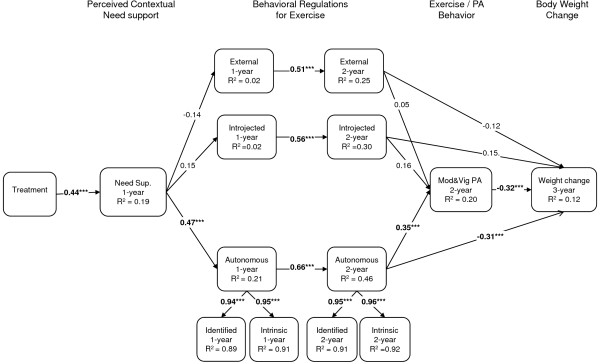
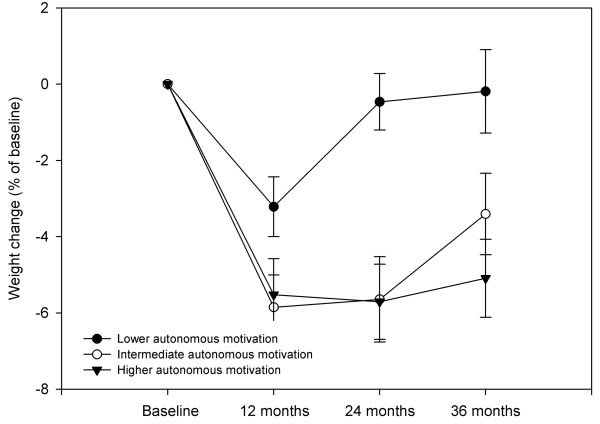
“More recently, a randomized controlled trial was implemented to address the role of autonomous motivation in weight control, focusing on physical activity behaviors as well as on motivation for physical activity and exercise as putative mediating agents for long-term weight management, in premenopausal overweight and…”
BackgroundSelf-citationRyan, R. M., Lynch, M. F., Vansteenkiste, M., & Deci, E. L. (2011) · The Counseling Psychologist · doi:10.1177/0011000009359313 · Cited by 429 · cited 3×
“In fact, even if this would be scalable to effectively affect the millions of people struggling with obesity, accepting that regular reinforcements and “booster sessions” are needed for lasting behavior change denotes a clear focus on external regulation of behavior, which is typical of operant conditioning theory and…”
BackgroundInfluentialVansteenkiste, M., & Sheldon, K. M. (2006) · British Journal of Clinical Psychology · doi:10.1348/014466505x34192 · Cited by 410 · cited 1×
“Optimally implemented, one would expect MI to enhance individuals’ autonomous motivation for change [65,66] (see also [63]).”
BackgroundMediators of Weight Loss and Weight Loss Maintenance in Middle‐aged Women
Teixeira, P. J., Silva, M. N., Coutinho, S. R., Palmeira, A. L., Mata, J., Vieira, P. N., Carraça, E. V., Santos, T. C., & Sardinha, L. B. (2010) · Obesity · doi:10.1038/oby.2009.281 · Cited by 404 · cited 3×
“, self-efficacy, perceived barriers, and intrinsic motivation) were significantly correlated with 2-year weight change [37].”
BackgroundSelf-citationMotivational Interviewing Improves Weight Loss in Women With Type 2 Diabetes
West, D. S., DiLillo, V., Bursac, Z., Gore, S. A., & Greene, P. G. (2007) · Diabetes Care · doi:10.2337/dc06-1966 · Cited by 399
Pelletier, L. G., Dion, S. C., Slovinec-D'Angelo, M., & Reid, R. (2004) · Motivation and Emotion · doi:10.1023/b:moem.0000040154.40922.14 · Cited by 390 · cited 1×
“, autonomous eating regulation) with changes in body weight [59].”
BackgroundMata, J., Silva, M. N., Vieira, P. N., Carraça, E. V., Andrade, A. M., Coutinho, S. R., Sardinha, L. B., & Teixeira, P. J. (2009) · Health Psychology · doi:10.1037/a0016764 · Cited by 390 · cited 4×
“Also in the PESO study, Mata and colleagues analyzed whether global self-determination, motivation for staying in the trial, and exercise motivational regulations predicted successful eating self-regulation and mediated the association between actual physical activity and eating behavior [47].”
BackgroundMethodResultInfluentialSelf-citationSmith, D. E., Heckemeyer, C. M., Kratt, P. P., & Mason, D. A. (1997) · Diabetes Care · doi:10.2337/diacare.20.1.52 · Cited by 359 · cited 2×
“Other studies have failed to show significant additional weight loss benefits for supplementing behavioral treatments with MI or in comparisons of MI with other interventions or control conditions [9,70,76-79].”
BackgroundMotivational Interviewing for Pediatric Obesity: Conceptual Issues and Evidence Review
Resnicow, K., Davis, R., & Rollnick, S. (2006) · Journal of the American Dietetic Association · doi:10.1016/j.jada.2006.09.015 · Cited by 349
Financial Incentives for Extended Weight Loss: A Randomized, Controlled Trial
John, L. K., Loewenstein, G., Troxel, A. B., Norton, L., Fassbender, J. E., & Volpp, K. G. (2011) · Journal of General Internal Medicine · doi:10.1007/s11606-010-1628-y · Cited by 346 · cited 1×
“Just as one example, financial incentives may promote short-term weight loss but appear ineffective in the long-term [29].”
BackgroundFortier, M. S., Duda, J. L., Guerin, E., & Teixeira, P. J. (2012) · International Journal of Behavioral Nutrition and Physical Activity · doi:10.1186/1479-5868-9-20 · Cited by 329
Self-citationYaemsiri, S., Slining, M. M., & Agarwal, S. K. (2011) · International Journal of Obesity · doi:10.1038/ijo.2010.229 · Cited by 321
Motivational Interviewing: moving from why to how with autonomy support
Resnicow, K., & McMaster, F. (2012) · International Journal of Behavioral Nutrition and Physical Activity · doi:10.1186/1479-5868-9-19 · Cited by 320
Barte, J. C. M., Ter Bogt, N. C. W., Bogers, R. P., Teixeira, P. J., Blissmer, B., Mori, T. A., & Bemelmans, W. J. E. (2010) · Obesity Reviews · doi:10.1111/j.1467-789x.2010.00740.x · Cited by 319
Self-citationOffice-Based Motivational Interviewing to Prevent Childhood Obesity: A Feasibility Study
Schwartz, R. P., Hamre, R., Dietz, W. H., Wasserman, R. C., Slora, E. J., Myers, E. F., Sullivan, S., Rockett, H., Thoma, K. A., Dumitru, G., et al. (2007) · Archives of Pediatrics & Adolescent Medicine · doi:10.1001/archpedi.161.5.495 · Cited by 306 · cited 2×
“Other studies have failed to show significant additional weight loss benefits for supplementing behavioral treatments with MI or in comparisons of MI with other interventions or control conditions [9,70,76-79].”
BackgroundResultSelf-determination theory and the psychology of exercise
Hagger, M., & Chatzisarantis, N. (2008) · International Review of Sport and Exercise Psychology · doi:10.1080/17509840701827437 · Cited by 305
Bish, C. L., Blanck, H. M., Serdula, M. K., Marcus, M., Kohl, H. W., & Khan, L. K. (2005) · Obesity Research · doi:10.1038/oby.2005.64 · Cited by 301
Exercise Autonomous Motivation Predicts 3-yr Weight Loss in Women
SILVA, M. N., MARKLAND, D., CARRAÇA, E. V., VIEIRA, P. N., COUTINHO, S. R., MINDERICO, C. S., MATOS, M. G., SARDINHA, L. B., & TEIXEIRA, P. J. (2011) · Medicine & Science in Sports & Exercise · doi:10.1249/mss.0b013e3181f3818f · Cited by 296 · cited 3×
“As we will review later in this text, such controlled regulations are typically associated with less stable behavioral patterns [38,39].”
BackgroundResultSelf-citationRhodes, R. E., & Pfaeffli, L. A. (2010) · International Journal of Behavioral Nutrition and Physical Activity · doi:10.1186/1479-5868-7-37 · Cited by 277 · cited 1×
“and its inherent attributes and experiential elements, which could per se undermine behavior change [35].”
BackgroundA new cognitive behavioural approach to the treatment of obesity
Cooper, Z., & Fairburn, C. G. (2001) · Behaviour Research and Therapy · doi:10.1016/s0005-7967(00)00065-6 · Cited by 272
Understanding motivation for exercise: A self-determination theory perspective.
Wilson, P. M., Mack, D. E., & Grattan, K. P. (2008) · Canadian Psychology / Psychologie canadienne · doi:10.1037/a0012762 · Cited by 243 · cited 1×
“Meanwhile, studies in the area of exercise and physical activity clearly show that perceived need support and autonomous forms of motivation are consistent predictors of behavior adoption and, in some cases, also maintenance [49,50].”
BackgroundHardcastle, S., Taylor, A., Bailey, M., & Castle, R. (2008) · Patient Education and Counseling · doi:10.1016/j.pec.2007.09.014 · Cited by 225 · cited 3×
“Furthermore, a number of studies have found advantages for MI in terms of weight-related outcomes other than weight loss, including physical activity [72,73], dietary behaviors [77], eating concerns and unrestrained eating [74], program adherence and glycemic control among type II diabetics [71,76], and a reduction in…”
BackgroundResultResults of Go Girls: A Weight Control Program for Overweight African‐American Adolescent Females
Resnicow, K., Taylor, R., Baskin, M., & McCarty, F. (2005) · Obesity Research · doi:10.1038/oby.2005.212 · Cited by 212 · cited 2×
“Although only two of the existing MI weight control studies have explicitly utilized self-determination theory as a theoretical framework [67,68], in most cases the authors explicitly state that MI was employed in recognition that the facilitation of internal or self-generated motivation for change is vital for sustai…”
BackgroundResultNational type 2 diabetes prevention programme in Finland: FIN-D2D
Saaristo, T., Peltonen, M., Keinänen-Kiukaanniemi, S., Vanhala, M., Saltevo, J., Niskanen, L., Oksa, H., Korpi-Hyøvälti, E., & Tuomilehto, J. (2007) · International Journal of Circumpolar Health · doi:10.3402/ijch.v66i2.18239 · Cited by 210 · cited 1×
“, [6-8]) has not yet been fully tested and should not, in our view, be underestimated when considering population behavior change.”
BackgroundMarkland, D., & Tobin, V. J. (2010) · Psychology of Sport and Exercise · doi:10.1016/j.psychsport.2009.07.001 · Cited by 207 · cited 1×
“Indeed, recent evidence suggests that merely preserving (or not thwarting) autonomy may not be sufficient to ensure the development of autonomous motivation in the presence of competence and relatedness need support [33].”
BackgroundSelf-citationSilva, M. N., Markland, D., Minderico, C. S., Vieira, P. N., Castro, M. M., Coutinho, S. R., Santos, T. C., Matos, M. G., Sardinha, L. B., & Teixeira, P. J. (2008) · BMC Public Health · doi:10.1186/1471-2458-8-234 · Cited by 207 · cited 1×
“More recently, a randomized controlled trial was implemented to address the role of autonomous motivation in weight control, focusing on physical activity behaviors as well as on motivation for physical activity and exercise as putative mediating agents for long-term weight management, in premenopausal overweight and…”
Self-citationElliot, D. L., Goldberg, L., Kuehl, K. S., Moe, E. L., Breger, R. K. R., & Pickering, M. A. (2007) · Journal of Occupational and Environmental Medicine · doi:10.1097/jom.0b013e3180329a8d · Cited by 205 · cited 2×
“Other studies have failed to show significant additional weight loss benefits for supplementing behavioral treatments with MI or in comparisons of MI with other interventions or control conditions [9,70,76-79].”
BackgroundExercise Motivation, Eating, and Body Image Variables as Predictors of Weight Control
TEIXEIRA, P. J., GOING, S. B., HOUTKOOPER, L. B., CUSSLER, E. C., METCALFE, L. L., BLEW, R. M., SARDINHA, L. B., & LOHMAN, T. G. (2006) · Medicine & Science in Sports & Exercise · doi:10.1249/01.mss.0000180906.10445.8d · Cited by 200 · cited 2×
“A similar study had been conducted in US women who participated in a 4month behavior weight control trial [56].”
BackgroundSelf-citationUsing motivational interviewing as a supplement to obesity treatment: A stepped-care approach.
Carels, R. A., Darby, L., Cacciapaglia, H. M., Konrad, K., Coit, C., Harper, J., Kaplar, M. E., Young, K., Baylen, C. A., & Versland, A. (2007) · Health Psychology · doi:10.1037/0278-6133.26.3.369 · Cited by 199
Motivational dynamics of eating regulation: a self-determination theory perspective
Verstuyf, J., Patrick, H., Vansteenkiste, M., & Teixeira, P. J. (2012) · International Journal of Behavioral Nutrition and Physical Activity · doi:10.1186/1479-5868-9-21 · Cited by 195
Self-citationRodearmel, S. J., Wyatt, H. R., Stroebele, N., Smith, S. M., Ogden, L. G., & Hill, J. O. (2007) · Pediatrics · doi:10.1542/peds.2006-2927 · Cited by 182 · cited 1×
“, [4]).”
Vansteenkiste, M., Williams, G. C., & Resnicow, K. (2012) · International Journal of Behavioral Nutrition and Physical Activity · doi:10.1186/1479-5868-9-23 · Cited by 174
Hagger, M. S., Chatzisarantis, N. L. D., & Harris, J. M. (2006) · Motivation and Emotion · doi:10.1007/s11031-006-9046-5 · Cited by 153 · cited 1×
“, studied the association between perceived locus of causality for dieting and exercising, and intention and behavior in a cross-sectional sample of college students [60].”
BackgroundPhysician Communication Techniques and Weight Loss in Adults
Pollak, K. I., Alexander, S. C., Coffman, C. J., Tulsky, J. A., Lyna, P., Dolor, R. J., James, I. E., Brouwer, R. J. N., Manusov, J. R. E., & Østbye, T. (2010) · American Journal of Preventive Medicine · doi:10.1016/j.amepre.2010.06.005 · Cited by 144
Three Levels of Exercise Motivation
Ingledew, D. K., Markland, D., & Ferguson, E. (2009) · Applied Psychology: Health and Well-Being · doi:10.1111/j.1758-0854.2009.01015.x · Cited by 144 · cited 2×
“, health, affiliation, personal growth) tend to be directly connected to the satisfaction of basic psychological needs [23] and are typically regulated by more autonomous forms of motivation [24].”
BackgroundSelf-citationA chaotic view of behavior change: a quantum leap for health promotion.
Resnicow, K., & VAUGHAN, R. D. (2006) · International Journal of Behavioral Nutrition and Physical Activity · doi:10.1186/1479-5868-3-25 · Cited by 141
for the Program to Reduce Incontinence by Diet and Exercise (PRIDE) Research Group, West, D. S., Gorin, A. A., Subak, L. L., Foster, G., Bragg, C., Hecht, J., Schembri, M., & Wing, R. R. (2011) · International Journal of Obesity · doi:10.1038/ijo.2010.138 · Cited by 125 · cited 3×
“Although only two of the existing MI weight control studies have explicitly utilized self-determination theory as a theoretical framework [67,68], in most cases the authors explicitly state that MI was employed in recognition that the facilitation of internal or self-generated motivation for change is vital for sustai…”
BackgroundResultPowell, L. H., Calvin, J. E., & Calvin, J. E. (2007) · American Psychologist · doi:10.1037/0003-066x.62.3.234 · Cited by 125
Sacks, G., Lawrence, M. A., & Swinburn, B. A. (2008) · Australia and New Zealand Health Policy · doi:10.1071/hp080513 · Cited by 122
The effect of physical activity on weight loss is mediated by eating self-regulation
Andrade, A. M., Coutinho, S. R., Silva, M. N., Mata, J., Vieira, P. N., Minderico, C. S., Melanson, K. J., Baptista, F., Sardinha, L. B., & Teixeira, P. J. (2010) · Patient Education and Counseling · doi:10.1016/j.pec.2010.01.006 · Cited by 118 · cited 1×
“improved weight control; not only via the effects of physical activity itself, but also positively influencing the regulation of other relevant behaviors such as eating [58].”
BackgroundSelf-citationReasons for wanting to lose weight: different strokes for different folks
O’Brien, K., Venn, B. J., Perry, T., Green, T., Aitken, W., Bradshaw, A. J., & RuthThomson (2006) · Eating Behaviors · doi:10.1016/j.eatbeh.2006.01.004 · Cited by 116 · cited 1×
“One study in men found that health benefits, appearance, fitness, and well-being were the key reasons (in this order) mentioned for participating in a worksite weight management program [43], while another study with men and women reported that health (50%), appearance (35%), and improved mood (15%) were the “number o…”
BackgroundBefort, C. A., Nollen, N., Ellerbeck, E. F., Sullivan, D. K., Thomas, J. L., & Ahluwalia, J. S. (2008) · Journal of Behavioral Medicine · doi:10.1007/s10865-008-9161-8 · Cited by 113 · cited 5×
“A lack of motivation leading to poor adherence has been presented as a rationale for including MI in weight control programs [9] and “internal motivation to lose weight” and “self-motivation” have been identified as predictors of successful weight control in previous review articles [10,11].”
BackgroundMethodResultInfluentialMedical Professionalism in the New Millenium: A Physician Charter
Husser, W. C. (2003) · Journal of the American College of Surgeons · doi:10.1016/s1072-7515(02)01617-4 · Cited by 95
DiMarco, I. D., Klein, D. A., Clark, V. L., & Wilson, G. T. (2009) · Eating Behaviors · doi:10.1016/j.eatbeh.2009.02.001 · Cited by 85 · cited 3×
“In some studies, MI has been used principally to facilitate adherence to the behavioral treatments they have accompanied, or to enhance the efficacy of those treatments, rather than to promote autonomous motivation for engaging in a healthier lifestyle [9,74].”
BackgroundMethodSacks, G., Swinburn, B. A., & Lawrence, M. A. (2008) · Australia and New Zealand Health Policy · doi:10.1186/1743-8462-5-13 · Cited by 83
Why lose weight? Reasons for seeking weight loss by overweight but otherwise healthy men
Hankey, C., Leslie, W., & Lean, M. (2002) · International Journal of Obesity · doi:10.1038/sj.ijo.0801999 · Cited by 78
Vadheim, L. M., McPherson, C., Kassner, D. R., Vanderwood, K. K., Hall, T. O., Butcher, M. K., Helgerson, S. D., & Harwell, T. S. (2010) · The Diabetes Educator · doi:10.1177/0145721710372811 · Cited by 68 · cited 1×
“, [6-8]) has not yet been fully tested and should not, in our view, be underestimated when considering population behavior change.”
BackgroundThe use of motivational interviewing in weight loss
Dorsten, B. V. (2007) · Current Diabetes Reports · doi:10.1007/s11892-007-0063-x · Cited by 68
Motivational Interviewing in Internet Groups: A Pilot Study for Weight Loss
Webber, K., Tate, D. F., & Quintiliani, L. M. (2008) · Journal of the American Dietetic Association · doi:10.1016/j.jada.2008.03.005 · Cited by 66 · cited 2×
“, [78] also assessed autonomous motivation in an 8-week internet-based intervention comparing MI with MI plus a discussion of values.”
BackgroundMethodHealth care practitioners' motivation for tobacco-dependence counseling
Williams, G. C. (2003) · Health Education Research · doi:10.1093/her/cyf042 · Cited by 53 · cited 1×
“This has previously been observed in tobacco cessation [34].”
BackgroundMcDoniel, S. O., Wolskee, P. J., & Shen, J. (2009) · Patient Education and Counseling · doi:10.1016/j.pec.2009.07.034 · Cited by 52 · cited 1×
“Other studies have failed to show significant additional weight loss benefits for supplementing behavioral treatments with MI or in comparisons of MI with other interventions or control conditions [9,70,76-79].”
BackgroundWebber, K. H., Gabriele, J. M., Tate, D. F., & Dignan, M. B. (2010) · International Journal of Behavioral Nutrition and Physical Activity · doi:10.1186/1479-5868-7-4 · Cited by 50 · cited 3×
“Although only two of the existing MI weight control studies have explicitly utilized self-determination theory as a theoretical framework [67,68], in most cases the authors explicitly state that MI was employed in recognition that the facilitation of internal or self-generated motivation for change is vital for sustai…”
BackgroundMethodResultPredictors of Psychological Well-Being during Behavioral Obesity Treatment in Women
Vieira, P. N., Mata, J., Silva, M. N., Coutinho, S. R., Santos, T. C., Minderico, C. S., Sardinha, L. B., & Teixeira, P. J. (2011) · Journal of Obesity · doi:10.1155/2011/936153 · Cited by 42 · cited 1×
“controlled motivation, including those experienced during weight control, are associated with different psychological consequences [25,31], selected psychological and behavioral outcomes might also have to be routinely considered successful.”
BackgroundSelf-citationFinch, E. A., Kelly, M. S., Marrero, D. G., & Ackermann, R. T. (2009) · The Diabetes Educator · doi:10.1177/0145721709331420 · Cited by 41 · cited 1×
“, [6-8]) has not yet been fully tested and should not, in our view, be underestimated when considering population behavior change.”
BackgroundAppearance vs. Health Reasons for Seeking Treatment Among Obese Patients with Binge Eating Disorder
Reas, D. L., Masheb, R. M., & Grilo, C. M. (2004) · Obesity Research · doi:10.1038/oby.2004.91 · Cited by 19 · cited 1×
“Health (64%) and appearance (36%) were also given as the primary motives to start a “stop binge eating and lose weight program” [45].”
BackgroundTackling the growth of the obesity literature: obesity evidence spreads across many journals
Baier, L. A., Wilczynski, N. L., & Haynes, R. B. (2009) · International Journal of Obesity · doi:10.1038/ijo.2009.268 · Cited by 17 · cited 1×
“Unfortunately, and despite the enormous growth in obesity studies in the recent 10-15 years [53], these encouraging findings did not spur immediate interest to “motivate” further research on the role of autonomous regulation in weight control.”
BackgroundNijs, J., Wallman, K. E., & Paul, L. (2011) · Routledge eBooks · doi:10.4324/9780203877043 · Cited by 11
Lifestyle Change and Maintenance in Obesity Treatment and Prevention
Patrick, H., Gorin, A. A., & Williams, G. C. (2010) · Elsevier eBooks · doi:10.1016/b978-0-12-374387-9.00029-5 · Cited by 9 · cited 2×
“A more sophisticated examination of the consequences of differences in the quality of motivation could help in understanding successful weight loss and eventually help design more effective interventions [18].”
Background(1990)
Research works printed but not linked: 1
- Ryan R Deci E Self-determination theory and the facilitation of intrinsic motivation, social development, and well-being American Psychologist 2000 55 68 78 11392867
Cited by
Gamification for health and wellbeing: A systematic review of the literature
Johnson, D., Deterding, S., Kuhn, K.-A., Staneva, A., Stoyanov, S., & Hides, L. (2016) · Internet Interventions · doi:10.1016/j.invent.2016.10.002 · Cited by 1,237
NIH working group report: Innovative research to improve maintenance of weight loss
MacLean, P. S., Wing, R. R., Davidson, T., Epstein, L., Goodpaster, B., Hall, K. D., Levin, B. E., Perri, M. G., Rolls, B. J., Rosenbaum, M., et al. (2015) · Obesity · doi:10.1002/oby.20967 · Cited by 548
“Constructs and mechanisms underlying “motivation” There is great interest in understanding what “motivates” an individual to adhere to weight loss prescription (62,85), but we need to have better defined constructs and measures for studying “motivation” in the context of adherence to a diet and exercise prescriptions,…”
BackgroundFortier, M. S., Duda, J. L., Guerin, E., & Teixeira, P. J. (2012) · International Journal of Behavioral Nutrition and Physical Activity · doi:10.1186/1479-5868-9-20 · Cited by 329
Self-citationAl-Jubari, I., Hassan, A., & Liñán, F. (2019) · International Entrepreneurship and Management Journal · doi:10.1007/s11365-018-0529-0 · Cited by 298
Greaves, C., Gillison, F., Stathi, A., Bennett, P., Reddy, P., Dunbar, J., Perry, R., Messom, D., Chandler, R., Francis, M., et al. (2015) · International Journal of Behavioral Nutrition and Physical Activity · doi:10.1186/s12966-014-0159-z · Cited by 299
Metadata
- Authors
- Teixeira, P. J., Silva, M. N., Mata, J., Palmeira, A. L., & Markland, D.
- Affiliations
- Centro Interdisciplinar de Estudo da Performance Humana (PT)
- Bangor University (GB)
- Corresponding author
- Teixeira, Pedro J
- Venue
- International Journal of Behavioral Nutrition and Physical Activity
- Published
- 2012
- Volume
- 9
- Issue
- 1
- Pages
- 22
- ISSN
- 1479-5868 (ISSN-L)
- PMC
- PMC3312817
- OpenAlex
- W2105934633
- Cited by
- 422
- References
- 87
- Citations by year
- 2026: 29 · 2025: 38 · 2024: 30 · 2023: 26 · 2022: 24 · 2021: 52 · 2020: 34 · 2019: 27 · 2018: 30 · 2017: 35 · 2016: 27 · 2015: 23 · 2014: 25 · 2013: 14 · 2012: 7
- FWCI
- 3.12
- Type
- journal article
- Language
- en
- Open access
- gold
- doi.org
- Licence
- cc-by
- Locations
- International Journal of Behavioral Nutrition and Physical Activity (publishedVersion, cc-by)
- Europe PMC (PubMed Central) (publishedVersion, cc-by)
- PubMed Central (publishedVersion, cc-by)
- PubMed (publishedVersion)
- MADOC (University of Mannheim) (acceptedVersion, cc-by)
- DOAJ (DOAJ: Directory of Open Access Journals) (submittedVersion)
- Max Planck Digital Library (submittedVersion)
- MPG.PuRe (Max Planck Society) (submittedVersion)
- Topics
- Social Sciences › Psychology › Social Psychology › Motivation and Self-Concept in Sports
- Social Sciences › Psychology › Applied Psychology › Behavioral Health and Interventions
- Health Sciences › Medicine › Public Health, Environmental and Occupational Health › Obesity and Health Practices
- Keywords
- motivation, self-determination theory, weight management, weight maintenance, self-regulation, motivational interviewing, perceived autonomy, weight loss interventions, long-term behavior change, weight-related behaviors
- MeSH terms
- Behavior Therapy, Body Weight, Humans, Interviews as Topic, Motivation, Obesity, Health Behavior, Self Efficacy, Personal Autonomy, Weight Reduction Programs
About these checks
Registry, retraction, Cites and statistics results are computed, not judged, with one exception: a printed reference that no index lists is read once by a model before it counts as a citation error. Claims are extracted by a model and kept only when their quote appears verbatim in the text; each cited source is then checked, with a model’s help, for whether it says what the claim relies on. Those verdicts can be wrong — read the claim’s quote and the cited source before relying on one.
Statistics and arithmetic are recomputed, not judged.
Confidence bands are shown only for fields calibrated on our annotated test set. None is calibrated yet, so no band is shown.
What counts as a claim ›How we measure confidence ›How we check this ›
Are you an author, or do you see a problem with this page? Request a review
Data sources
Bibliographic data: Semantic Scholar, OpenAlex, Crossref.
Contains information from the Semantic Scholar Academic Graph Datasets, made available under the ODC Attribution License (ODC-BY 1.0).
Semantic Scholar’s data is described in: Kinney, R., et al. (2023). The Semantic Scholar Open Data Platform. arXiv:2301.10140.
