

Exercise, physical activity, and self-determination theory: A systematic review
Open accessThe DOI matches its Crossref record; 108 of the 110 references it cites were found in a registry or an index; 6 of the 97 sources its claims cite were checked for support.
Abstract
Systematic review of 66 empirical studies on self-determination theory constructs and exercise outcomes.
Overview
CoChat Summary
## TL;DR
This systematic review synthesized 66 empirical studies on self-determination theory (SDT) and exercise/physical activity published up to June 2011. It found the most consistent support for autonomous motivation—especially identified and intrinsic regulation—and for competence satisfaction and intrinsic motives as positive predictors of exercise participation.
## Key findings
- Across 66 studies comprising 72 independent samples, the review found consistent positive associations between more autonomous forms of motivation and exercise; for example, 37 of 42 cross-sectional studies, 10 prospective studies, 7 experimental studies, and 2 mixed designs were represented among the regulation studies.
- Identified regulation showed positive associations with exercise in 28 samples (74%) in multivariate analyses and 22 samples (85%) in bivariate analyses; intrinsic motivation was positively associated in 23 or 22 samples (62% or 92%) depending on analysis type, and no study reported negative associations for intrinsic motivation.
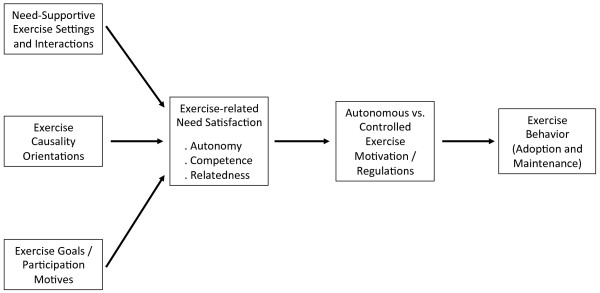
- Competence satisfaction was the most frequently assessed basic need and was positively associated with physical activity in 56% of independent samples in multivariate analysis and 92% in correlational analysis; relatedness showed no positive multivariate association with exercise (K = 4, 100% no association).
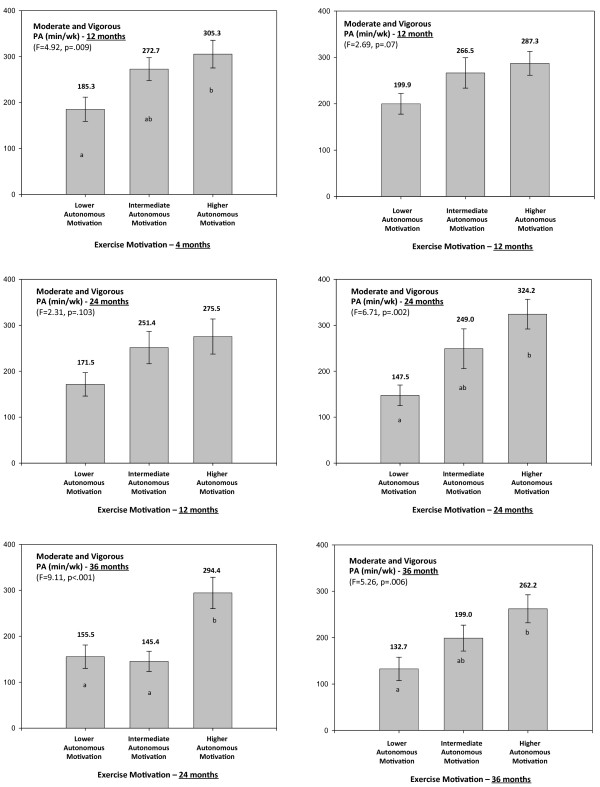
- In SDT-based interventions, 7 interventions were identified and 6 (86%) found significant differences favoring the SDT group for perceived autonomy support, need satisfaction, autonomous and introjected regulations, and self-reported exercise; in the longest trial, only autonomous regulations mediated long-term exercise effects.
## Methods
- Systematic review of empirical SDT–exercise studies published up to June 2011; searches were run in PsycINFO and SportDiscus for studies from 1960 to June 2011, limited to English-language, peer-reviewed journal articles on adult, non-athletic samples.
- Included 66 studies / 72 independent samples with experimental, cross-sectional, prospective, and mixed designs; outcomes included actual or self-reported exercise/physical activity, attendance, relapse, dropout, and stages of change.
- Evidence was summarized quantitatively by counting independent samples showing significant positive, negative, or null associations; the unit of analysis was the independent sample, and significance was set at 0.05.
## Limitations
- The paper states that it was limited to English-language, peer-reviewed articles and excluded gray literature, unpublished studies, non-English publications, non-adult samples, adolescents/children, and competitive athletic samples.
- The authors state that classifying and quantifying results was “somewhat arbitrary,” that only direct paths were evaluated, and that lumping together self-report and direct measures, attendance, and stages of change is “clearly not without reproach.”
- Evident from the text: most included studies were descriptive/non-experimental and many samples were mixed, so causal inference and subgroup-specific conclusions are limited.
Model-written summary. Check it against the paper before relying on it.
Integrity signals
Registry
Cites
Statistics
Figures
Verification
Claims the paper makes
3 Valid · 5 Not valid · 58 Not checked · 143 Own results and interpretations
The cited sources support only part of this claim — read each source’s verdict below.
In the paper
“Satisfaction of these basic needs results in increased feelings of vitality and well-being [15].”
§ Exercise, physical activity, and self-determination theory: A systematic review > Introduction
What the sources say
- Partly supportedcites [15] matched to “Testing a self‐determination theory‐based teaching style intervention in the exercise domain” (2008) sourceExperimental — accuracy not yet measured
The discussion of basic psychological need satisfaction (p. 5) says that satisfying needs, together with more autonomous motivation, is expected to produce adaptive affective responses. The findings (p. 24) link competence need satisfaction to less negative affect. Neither passage establishes that need satisfaction results in increased vitality or well-being specifically, and the claim states the relationship more definitively than the paper does. (LLM, conf=0.84)
plainstates a cause- Asserted: passes — The authors put it forward as true.
- Checkable: passes — It can be checked against evidence.
- Load-bearing: passes — The paper’s conclusions depend on it.
- Based: passes — The paper gives a reason why it holds.
- Partly supported
The cited sources support only part of this claim — read each source’s verdict below.
In the paper
“Relations from perceived autonomy support to exercise behavior, via psychological needs and regulatory styles have been tested (in part or all) in several studies and in general these confirm the proposed sequences [17,44,43,77,76,38,33].”
§ Exercise, physical activity, and self-determination theory: A systematic review > Discussion > Need satisfaction and exercise
What the sources say
- Supportedcites [17] matched to “Exercise motivation: a cross-sectional analysis examining its relationships with frequency, intensity, and duration of exercise” (2010) source
The Background (page unavailable) says the study tested relationships between behavioral regulations and exercise frequency, intensity, and duration—one part of the proposed sequence. The Results (page unavailable) report that all three exercise indices correlated more strongly with autonomous than controlling regulations, broadly supporting the sequence. The citing sentence expressly allows studies to have tested it only “in part.” (LLM, conf=0.87)
- Partly supportedcites [44] matched to “Mediators of physical activity behaviour change among adult non-clinical populations: a review update” (2010) sourceExperimental — accuracy not yet measured
The Results section (‘Evidence of Mediation by Theory’; page not provided) reports support in one study for a link between autonomy support and physical activity. But the other self-determination-theory study found no changes in its constructs or behavior, and neither established the proposed sequence through psychological needs and regulatory styles. The review therefore does not support saying that the studies generally confirmed that sequence. (LLM, conf=0.88)
- Not checked — no full text of the sourcecites [43] matched to “The Independent Effects of Goal Contents and Motives on Well-Being: It’s Both What You Pursue and Why You Pursue It” (2004) source
- Not matchedcites [77]
The reference list we hold has no entry [77].
- Not matchedcites [76]
The reference list we hold has no entry [76].
- Not checked — no full text of the sourcecites [38] matched to “Body image and body shape ideals in magazines: exposure, awareness, and internalization” (1997) source
- Not checked — no full text of the sourcecites [33] matched to “Go Figure? Body-Shape Motives are Associated with Decreased Physical Activity Participation Among Midlife Women” (2006) source
plainstates an association- Asserted: passes — The authors put it forward as true.
- Checkable: passes — It can be checked against evidence.
- Load-bearing: passes — The paper’s conclusions depend on it.
- Based: passes — The paper gives a reason why it holds.
- Supported
A result the paper reports from its own data — it cites no other source for it, so there is none to check. The quote shows it is in the paper.
In the paper
“The literature is also consistent in that competence satisfaction and more intrinsic motives positively predict exercise participation across a range of samples and settings.”
§ Exercise, physical activity, and self-determination theory: A systematic review > Abstract > Results
boostedstates an association- Asserted: passes — The authors put it forward as true.
- Checkable: passes — It can be checked against evidence.
- Load-bearing: passes — The paper’s conclusions depend on it.
- Based: passes — The paper gives a reason why it holds.
A result the paper reports from its own data — it cites no other source for it, so there is none to check. The quote shows it is in the paper.
In the paper
“and intrinsic motivation being more predictive of long-term exercise adherence”
§ Exercise, physical activity, and self-determination theory: A systematic review > Abstract > Results
plainstates an association- Asserted: passes — The authors put it forward as true.
- Checkable: passes — It can be checked against evidence.
- Load-bearing: passes — The paper’s conclusions depend on it.
- Based: passes — The paper gives a reason why it holds.
A result the paper states — it cites no source for it, so there is none to check. The quote shows it is in the paper.
In the paper
“but similar results are found across cross-sectional, prospective, and experimental designs”
§ Exercise, physical activity, and self-determination theory: A systematic review > Abstract > Results
plain- Asserted: passes — The authors put it forward as true.
- Checkable: passes — It can be checked against evidence.
- Load-bearing: passes — The paper’s conclusions depend on it.
- Based: passes — The paper gives a reason why it holds.
99 more claims
Create a free account to see all 209 claims and to verify the 2 references still open.
- It may state two separate claims as one. 74
- Probably not a substantial claim. 39
Claims other papers make about this one
Each is checked against this paper’s own text: does it say what the citing paper says it does?
The source backs part of the claim, not all of it — or backs it for a different population, condition or comparison.
In the citing paper
“As of today, merely one systematic review in the exercise context (Teixeira et al., 2012), having SDT as theoretical background, has analyzed the satisfaction (although not frustration) of basic psychological needs, the motivational regulation, and the way these can predict different physiological outcomes (i.e., energy expenditure, body mass index).”
From Can Interpersonal behavior influence the persistence and adherence to physical exercise practice in adults? A systematic review (2018) · cites this paper as Teixeira et al., 2012
Experimental — accuracy not yet measuredThe source backs part of the claim, not all of it — or backs it for a different population, condition or comparison.
In the citing paper
“which might be justified by the fact that most of them so far cannot yet distinguish this regulation from identified regulation, given that both share the same principles”
From Can Interpersonal behavior influence the persistence and adherence to physical exercise practice in adults? A systematic review (2018) · cites this paper as Teixeira et al., 2012
Experimental — accuracy not yet measuredThe source backs part of the claim, not all of it — or backs it for a different population, condition or comparison.
In the citing paper
“Conversely, structured exercise programs foster intrinsic motivation (65), self-regulation, and a positive relationship with the body, promoting sustained engagement even after pharmacotherapy discontinuation.”
From GLP-1 agonists and exercise: the future of lifestyle prioritization (2025) · cites this paper as [65]
Experimental — accuracy not yet measuredThe source backs part of the claim, not all of it — or backs it for a different population, condition or comparison.
In the citing paper
“a study by Teixeira et al. [31] highlights that exercise not only improves physical health but also promotes a positive self-image and resilience”
From Sociodemographic influences on Student Mental Health and their association with activation-regulating functional impairments (2026) · cites this paper as [31]
Experimental — accuracy not yet measuredThe cited source says what the claim attributes to it.
In the citing paper
“The instruments described herein have been used in various contexts, for example to assess to what extent a medical professional (Williams et al., 2009), healthcare intervention (Williams et al., 2011; Teixeira et al., 2012) or a procedure (Ng et al., 2012) supports autonomy.”
From Designing for Motivation, Engagement and Wellbeing in Digital Experience (2018) · cites this paper as Teixeira et al., 2012
9 more claims about this paper
Create a free account to see every claim other papers make about this one.
Self-check
Percentages, sums and reported differences re-computed from the paper’s own numbers.
Rated minor: it would not touch a result — a value no result rests on, a p-value that stays on the same side of the significance level, or a conflict that is clerical, resolved elsewhere in the paper, or outside its own findings.
In the paper
“A total of 57 samples (53 studies) analyzed associations between regulations and exercise behavior. Of these, 37 were used in cross-sectional designs, 10 in prospective designs, 7 in experimental studies, and 2 in mixed designs.”
§ Exercise, physical activity, and self-determination theory: A systematic review > Results > Motivational predictors of exercise-related outcomes
Reported 57 · recomputed 56
Citations
Cites
Ryan, R. M., & Deci, E. L. (2000) · American Psychologist · doi:10.1037//0003-066x.55.1.68 · Cited by 54,599
Self-citationThe "what" and "why" of goal pursuits: Human needs and the self-determination of behavior
Deci, E. L., & Ryan, R. M. (2000) · Psychological Inquiry · doi:10.1207/s15327965pli1104_01 · Cited by 34,210 · cited 5×
“determination and volition with respect to the target behavior [12].”
BackgroundInfluentialSelf-citationIntrinsic Motivation and Self-Determination in Human Behavior
Deci, E. L., & Ryan, R. M. (1985) · doi:10.1007/978-1-4899-2271-7 · Cited by 26,772
Self-citationIntrinsic Motivation and Self-Determination in Human Behavior
Miller, K. A., Deci, E. L., & Ryan, R. M. (1988) · Contemporary Sociology · doi:10.2307/2070638 · Cited by 15,312
Self-citationMediation in experimental and nonexperimental studies: New procedures and recommendations.
Shrout, P. E., & Bolger, N. (2002) · Psychological Methods · doi:10.1037/1082-989x.7.4.422 · Cited by 11,335 · cited 1×
“, mediated) effects between them [75].”
Garber, C. E., Blissmer, B., Deschenes, M. R., Franklin, B. A., Lamonte, M. J., Lee, I.-M., Nieman, D. C., & Swain, D. P. (2011) · Medicine & Science in Sports & Exercise · doi:10.1249/mss.0b013e318213fefb · Cited by 9,319
A simple method to assess exercise behavior in the community.
Godin, G., & Shephard, R. J. (1985) · PubMed · Cited by 4,760
Moral Identity and Developmental Theory
Lapsley, D. (2015) · Human Development · doi:10.1159/000435926 · Cited by 3,819
Perceived locus of causality and internalization: Examining reasons for acting in two domains.
Ryan, R. M., & Connell, J. P. (1989) · Journal of Personality and Social Psychology · doi:10.1037/0022-3514.57.5.749 · Cited by 3,311 · cited 2×
“Autonomous motivation includes the identified regulation and intrinsic motivation subscales of the Exercise Self-Regulation Questionnaire [84].”
Self-citation(2002) · Cited by 3,047
Self-citation
Research works printed but not linked: 1
- Koestner R Losier GF In Handbook of self-determination research Distinguishing three ways of being internally motivated: a closer look at introjection, identification, and intrinsic motivation 2002 Edited by Deci EL, Ryan RM, Rochester, NY: University of Rochester Press 101 121
Cited by
Items 2,801–2,900 of 2,926
Considerations for Physical Activity in Women Currently Enrolled in Higher Education
Impastato, K., Kuenze, C., & Madrak, E. (2026) · Women in Sport and Physical Activity Journal · doi:10.1123/wspaj.2025-0125
Mancin, P., Valdesalici, A., Ghisi, M., Granziol, U., & Cerea, S. (2026) · International Journal of Sport and Exercise Psychology · doi:10.1080/1612197x.2026.2701823
What Makes Them Move? An Agent-Based Model of Childhood Physical Activity
Kasman, M., Hammond, R. A., Heerman, W. J., Pate, R. R., Reader, L., Sedlak, A. B., Innes-Gold, R., Sommer, E. C., & Barkin, S. L. (2026) · Childhood Obesity · doi:10.1177/21532176261468924 · Cited by 1
“72 To represent the emerging in fl uence of cognitive development on MVPA through early childhood, we allow for self-ef fi cacy to only be part of an agent ’ s individual inclination after a certain age; we allow this age to differ across children to re fl ect heterogeneity in development.”
Smith, B. J., McDonald, M., McVeigh, J. A., Kwaśnicka, D., Riddell, H., Sivaramakrishnan, H., Kritz, M., Cunningham, J., Woods, J., Calleja, E., et al. (2026) · Health Promotion International · doi:10.1093/heapro/daag095
“…requires support for basic psychological needs of autonomy, competence, and relatedness (Deci and Ryan 2000) and points to the importance of considering how social experiences combine with autonomy and a sense of purpose to make participation meaningful and sustainable for men (Teixeira et al .”
Orhan, B. E., Alkasasbeh, W. J., Karaçam, A., Branquinho, L., & Amawi, A. T. (2026) · Frontiers in Psychology · doi:10.3389/fpsyg.2026.1908692
“…through movement, the basic psychological needs whose satisfaction underpins eudaimonic well-being within self-determination theory (Ryan and Deci, 2000; Teixeira et al., 2012; Ntoumanis et al., 2021), physical literacy may foster the psychological assets that constitute mental well-being.”
Suh, D., Jung, M., Lee, S., & Song, S.-H. (2026) · Current Psychology · doi:10.1007/s12144-026-09807-x
“These mechanisms closely parallel principles of Self-Determination Theory, which posits that experiences of competence, autonomy, and intrinsic enjoyment are central drivers of sustained behavioral engagement (Deci & Ryan, 2000; Teixeira et al., 2012).”
Correlates of extrinsic and intrinsic motives for physical activity among adults with depression
Sillice, M. A., Uebelacker, L. A., Meshesha, L. Z., Braun, T. D., Anderson, B. J., & Abrantes, A. M. (2026) · Mental health and physical activity · doi:10.1016/j.mhpa.2026.100805
Oh, A., & Park, E.-H. (2026) · Frontiers in Public Health · doi:10.3389/fpubh.2026.1904037
“Nevertheless, prior research suggests that enjoyment is positively associated with participation intention (40, 44), supporting its inclusion as a potential mediator.”
A Critical Review of the Limited Use of Creativity in Health and Fitness Training
Torrents, C., Calvo-Estelrich, C., & Almarcha, M. (2026) · Quest · doi:10.1080/00336297.2026.2707157
Ercilasun, S., & Devonport, T. J. (2026) · Journal of Sports Sciences · doi:10.1080/02640414.2026.2702747 · Cited by 1
“At the same time, because need satisfaction fosters greater autonomous motivation, it also indirectly contributes to physical activity outcomes (Teixeira et al., 2012; Weman-Josefsson et al., 2015), making it more likely for individuals to initiate and sustain activity over the longer term (Duncan…”
Running Toward Goals: A Longitudinal Study of Goal Achievement in Marathon Training
Aicher, T. J., Lower‐Hoppe, L. M., & Huang, L. (2026) · Journal of Sport Management · doi:10.1123/jsm.2025-0311
Feng, A., Fan, L., Li, Y., & Zhao, Z. (2026) · Frontiers in Public Health · doi:10.3389/fpubh.2026.1890434
“In contrast, the Intrinsically Driven group crossed this threshold long ago via strong internal motivation, while the Anxiety-Transformed and Socially Embedded groups (each ~20% in early stage) have viable paths of “pressure transformation” and “social support,” respectively (25, 45).”
Park, J., Yun, S., Kim, T., Lorenzo, V., Prieto, J., Vu, M., & Yli-Piipari, S. R. (2026) · Sport Sciences for Health · doi:10.1007/s11332-026-01879-3
활동적 장애인의 운동 참여환경과 인지된 건강상태, 운동효과 및 행복감의 관계
유, 수., & 이, 도. (2026) · 한국체육학회지 · doi:10.23949/kjpe.2026.5.65.3.54
Rodrigues, F. F., Duarte-Mendes, P., Soares, R., & Teixeira, D. S. (2026) · Frontiers in Psychology · doi:10.3389/fpsyg.2026.1891893
“Although previous studies have consistently highlighted motivational and emotional factors as critical determinants of exercise behavior, attrition rates in fitness center settings remain exceptionally high (Rodrigues et al., 2018; Teixeira et al., 2012).”
Zheng, J., Chang, X., & Ren, Y. (2026) · Frontiers in Psychology · doi:10.3389/fpsyg.2026.1886854 · Cited by 1
“For college students, value recognition may support the intention to exercise, whereas intrinsic motivation may be more closely associated with sustained engagement and positive exercise experience (Marques et al., 2025; Teixeira et al., 2012).”
Fawcett, J., & Langer, S. (2026) · Cogent Social Sciences · doi:10.1080/23311886.2026.2703911
Monteiro, F. C., Filho, C. L. V., Britto, T. D. A., Zettel, C. M., da Silva, L. K. S., Schuch, F. B., Cheniaux, E., Matias, T. S., Carneiro, L. S. R. D. S. F., & Deslandes, A. C. (2026) · PLoS ONE · doi:10.1371/journal.pone.0354264
Terzioğlu, Z. A., Çakır, S. G., & Kahraman, N. (2026) · Mindfulness · doi:10.1007/s12671-026-02947-y
Okemuo, A. J., Dairo, Y. M., & Gallagher, D. (2026) · Health & Social Care in the Community · doi:10.1155/hsc/1456242
ÖZYILDIRIM, M., Bolat, C., & Kardaş, N. T. (2026) · The Online Journal of Recreation and Sport · doi:10.22282/tojras.1844166
Fan, Z., Anuar, N. A., & Mazalan, N. S. (2026) · Research Square · doi:10.21203/rs.3.rs-10275793/v1
Min, S., & Li, X. (2026) · Frontiers in Psychology · doi:10.3389/fpsyg.2026.1875230
“…Theory posits that intrinsic motivation is an endogenous drive arising from an individual’s interest in and enjoyment of an activity itself, and it plays a critical role in determining the level of participation in and adherence to physical exercise (Ednie and Stibor, 2017; Pedro et al., 2012).”
Thomas, O., Oliver, H., Moll, T., Willoughby, K., & Moss, C. (2026) · Applied Psychology Health and Well-Being · doi:10.1111/aphw.70197
“…the 1TeamActive intervention supports contentions that SDT and the satisfaction of basic needs can act as an underpinning mechanism by which physical activity can improve both positive human functioning and mental well-being for police workers (Fortier et al., 2012; Teixeira et al., 2012).”
Epiney, F., Hany, L., Nagel, S., & Klenk, C. (2026) · Sport Sciences for Health · doi:10.1007/s11332-026-01883-7 · Cited by 2
“From the perspective of self-determination theory (SDT), support from these close social environments fulfils basic psychological needs, particularly relatedness, the perception of personal connection and belonging [37, 38].”
Leibfried, L. P., Leibfried, F. I., Gensitz, K. M., & Froböse, I. (2026) · International Journal of Sport and Exercise Psychology · doi:10.1080/1612197x.2026.2701825
Zhou, B., Wang, N., Xiaobing, L., & Jing, Z. (2026) · Behavioral Sciences · doi:10.3390/bs16081331
“In physical activity contexts, autonomous motivation has been associated with more sustained engagement and behavioral persistence (Teixeira et al., 2012).”
InfluentialFan, H., Chen, S., & Fan, G. (2026) · Frontiers in Psychology · doi:10.3389/fpsyg.2026.1805418
“Self-determination Theory (SDT) suggests that an individual’s behavior is influenced by the need for competence, autonomy, and relatedness, and researchers have validated the SDT’s explanations of an individual’s behavior (Teixeira et al., 2012).”
Kim, I., & Kim, S. (2026) · Frontiers in Psychology · doi:10.3389/fpsyg.2026.1875168
Tiongco, R. E., Corpuz, K. C., Manlapaz, J., Policarpio, P. D., Ramirez, D., Santiago, R. S., Tayag, K., & Basilio, P. V. (2026) · SN Comprehensive Clinical Medicine · doi:10.1007/s42399-026-02600-8
Fang, C., & Jieyou, Z. (2026) · Frontiers in Psychology · doi:10.3389/fpsyg.2026.1887009
“Similarly, Self-Determination Theory (SDT) emphasizes that fulfilling basic psychological needs for competence, autonomy, and relatedness fosters intrinsic motivation and well-being (Ryan and Deci, 2017; Teixeira et al., 2012).”
Shaping the Body, Shaping the Mind: Body Esteem and Emotions in Gym Training
Wołpiuk‐Ochocińska, A. (2026) · Przegląd Psychologiczny · doi:10.31648/przegldpsychologiczny.12250
“In particular, recreational motivation and more positive body-related perceptions were linked to better emotional outcomes, which is consistent with previous research (Ryan & Deci, 2017; Teixeira et al., 2012).”
Chen, L., Mei, Z., Cai, C., Yin, T., & Xiang, Y. (2026) · Research in Developmental Disabilities · doi:10.1016/j.ridd.2026.105362
Ma, H., Liu, L., Liu, T., Huang, S., Yin, Z., & Cheng, W. (2026) · Frontiers in Psychology · doi:10.3389/fpsyg.2026.1903004 · Cited by 1
“Thus, a diminished sense of meaning plausibly pre-cedes reduced exercise participation, as purpose appraisals shape motivational states that guide subsequent actions (Teixeira et al., 2012).”
Vold, J. H., Furulund, E., Druckrey-Fiskaaen, K. T., Arjmand, E. J., Madebo, T., Dyrstad, S. M., Lid, T. G., & Fadnes, L. T. (2026) · Research Square · doi:10.21203/rs.3.rs-10520611/v1 · Cited by 1
Lee, H. H., Jeon, S., Bok, W. J., & Lee, J. (2026) · Research Square · doi:10.21203/rs.3.rs-10617058/v1
Tu, Z., & Yao, Z. (2026) · Research Square · doi:10.21203/rs.3.rs-10321922/v1
Perceptions of primary health care professionals about training to promote physical activity
Spósito, L. A. C., Guerra, P. H., Elsangedy, H. M., de Carvalho, F. F. B., Rech, C. R., Velardi, M., Andrade, D. R., & Kokubun, E. (2026) · Revista Brasileira de Ciências do Esporte · doi:10.1590/rbce.48.e20250020
Zhang, Y., Liu, Y., Wang, Y., & Yanlan, G. (2026) · Healthcare · doi:10.3390/healthcare14162547 · Cited by 1
“Proposed pathways include self-efficacy, sleep, social support, enjoyment, and perceived competence [20–22].”
Michael, P., McCormick, S. A., Alexanders, J., Innes, A. Q., Harwood, A. E., Fatoye, F., Doherty, P., Cable, N. T., Deniszczyc, D., & Yeowell, G. (2026) · Frontiers in Psychology · doi:10.3389/fpsyg.2026.1807688
“…in PA. Research underpinned by self-determination theory has frequently depicted that a shift from extrinsic motivational states toward more autonomous states (both identified and intrinsic), is predictive of short-term and long-term exercise behavior (Fortier et al., 2012; Teixeira et al., 2012).”
He, J., Zhu, S., Luo, J., & Ou, J. (2026) · Frontiers in Psychiatry · doi:10.3389/fpsyt.2026.1871297 · Cited by 1
Xia, J., & Yang, Y.-X. (2026) · Frontiers in Psychology · doi:10.3389/fpsyg.2026.1902785
“Evidence from exercise research supports the relevance of autonomous motivation and need-related processes (Teixeira et al., 2012), and the Chinese version of the Basic Psychological Needs in Exercise Scale has been validated among undergraduates (Liu et al., 2013).”
Orhan, B. E., Alkasasbeh, W. J., Solak, N., & Amawi, A. T. (2026) · Frontiers in Psychology · doi:10.3389/fpsyg.2026.1824061
“…activities than from investment in dedicated gyms, consistent with broader SDT-based evidence that environmental affordances supporting autonomous, intrinsically rewarding activity choices are associated with greater adherence than facility-centered provision alone (Teixeira et al., 2012).”
InfluentialGao, J., Hu, J., Yang, C., & Dai, X. (2026) · Frontiers in Psychology · doi:10.3389/fpsyg.2026.1883121
“SDT’s evidence base in exercise science rests largely on established activities (Teixeira et al., 2012); the significant need-related paths observed here are consistent with the theory’s core propositions traveling to novel sport contexts and to the pre-participation stage, indicating that…”
InfluentialThe impact of AI-based fitness applications on perceived stress in university students
Alecu, Ş. (2026) · Timisoara Physical Education and Rehabilitation Journal · doi:10.2478/tperj-2026-0002
“The discrepancy observed in the current study may be explained by the reliance on self-reported measures, which may not fully capture exercise intensity, context, or intrinsic motivation — factors known to influence psychological outcomes (Teixeira et al., 2012).”
Zhao, T., Dong, R., & Yin, Q. (2026) · Frontiers in Psychology · doi:10.3389/fpsyg.2026.1916035
“In the field of physical activity, research based on Self-Determination Theory has also shown that autonomous motivation, perceived competence, and intrinsic interest are closely associated with participation and persistence in exercise and physical activity (Teixeira et al., 2012).”
Stack, M. (2026) · ACSMʼs Health & Fitness Journal · doi:10.1249/fit.0000000000001187
Uebelacker, L. A., Saper, R. B., Roseen, E. J., Taylor, L. E., Abrantes, A. M., Anderson, B. J., Sprecht-Walsch, S., Lorin, L., Ikai, D., Desaulniers, J. A., et al. (2026) · Drug and Alcohol Dependence · doi:10.1016/j.drugalcdep.2026.113320
Zhang, P. (2026) · Youth Violence and Juvenile Justice · doi:10.1177/15412040261480204
“Meta-analyses in the SDT literature show that autonomous motivation varies across individuals at baseline, that situational intervention can still raise it, and that the gains predict lasting behavior change independently of baseline level (Ng et al., 2012; Teixeira et al., 2012).”
Gai, Y., Liu, X., Sun, S., Wang, P., & Wang, S. (2026) · Frontiers in Psychology · doi:10.3389/fpsyg.2026.1907886 · Cited by 1
“Motivational perspectives also link autonomous exercise motivation with persistence (Teixeira et al., 2012).”
Güleşce, M., Şimşek, B., Aktaş, S., Solmaz, S., Malchrowicz-Mośko, E., & Staśkiewicz‐Bartecka, W. (2026) · Applied Sciences · doi:10.3390/app16178431
Nuss, K. J., Brice, A. N., Sullivan, T., Chirico, N., Held, S. L., & Poirier, A. (2026) · American Journal of Lifestyle Medicine · doi:10.1177/15598276261481490
Yu, Y., & Ji, L. (2026) · Healthcare · doi:10.3390/healthcare14172686
“Self-determination theory distinguishes autonomous from controlled motivation [21,22], although autonomous motivation does not guarantee action when opportunity, skills, or disease-related constraints are limiting [23].”
Khoshraftar, M., Karimi, Z., Yermukhanova, L. S., Nurbakyt, A. N., & Afshar, A. (2026) · Healthcare · doi:10.3390/healthcare14172697
“This matters for long-term conditions because rehabilitation asks patients to internalize exercise, symptom management, and lifestyle change rather than merely comply with supervised instructions [35,47,49].”
InfluentialWollesen, B., Asuako, P. A. G., Herden, M., Giannaki, C. D., Langeard, A., Lamberti, N., Mack, M., Audiffren, M. F., Netz, Y., & Voelcker‐Rehage, C. (2026) · physioscience · doi:10.1055/a-2820-8550
Tan, Y., Mou, X., Liu, S., Zang, L., & Cui, H. (2026) · Frontiers in Psychology · doi:10.3389/fpsyg.2026.1914946
“Autonomy is a normative concept concerning whether action is self-endorsed and responsive to the participant’s values and reasons; in exercise contexts, autonomy-supportive conditions are associated with sustained, self-regulated participation (Teixeira et al., 2012).”
Gao, G., Lynch, G., Finnegan, D. J., Dias, N. V., & Barathi, S. C. (2026) · Frontiers in Virtual Reality · doi:10.3389/frvir.2026.1897543
Sannigrahi, S., Filian, K., Seenappa, B., Sathyamoorthy, H., Reddy, S., Gowda, M., Pushparaj, J., Sanju, R., Papanna, S., Satish Kumar, S. K., et al. (2026) · medRxiv · doi:10.64898/2026.08.24.26361285
Fitness Sporu Yapan Bireylerin Motivasyonel Kararlılık Düzeyleri
Atasoy, M., Türkçapar, Ü., & Aktürk, H. (2026) · Beden Eğitimi ve Spor Bilimleri Dergisi · doi:10.61962/bsd.1713356
Batista, M., Freitas, J., Simões, V., Conceição, A. T., Martins, M., Teixeira, E., Rosa, P., & Louro, H. G. (2026) · International Journal of Environmental Research and Public Health · doi:10.3390/ijerph23091139
Karkauskienė, E., Coll‐Planas, L., Fuente-Vidal, A., Sanchez, D., Barth, N., Dallmeier, D., Socorro-Cumplido, J. L., Giné‐Garriga, M., Caserotti, P., Lefebvre, G., et al. (2026) · European Geriatric Medicine · doi:10.1007/s41999-026-01547-2
Zhuang, Z., & Wang, H. (2026) · Frontiers in Sports and Active Living · doi:10.3389/fspor.2026.1736997
Perceived Barriers and Facilitators to Physical Activity Among Autistic Adults: A Scoping Review
Duong, V. N., Quested, E., McVeigh, J. A., Wan, P., & Thompson, C. (2026) · Journal of Physical Activity and Health · doi:10.1123/jpah.2026-0200
Mourre, M.-L., & Helme-Guizon, A. (2026) · Complementary Therapies in Medicine · doi:10.1016/j.ctim.2026.103430
Wang, J., Chen, J.-W., Shi-jun, J., & Zhu, K. (2026) · European Journal of Pediatrics · doi:10.1007/s00431-026-07371-x
“Self-Determination Theory proposes that perceived autonomy is related to motivation and affective experience during physical activity [50, 89].”
Wang, J., Chee, C. S., Xie, Q., & Li, Z. Q. (2026) · Quest · doi:10.1080/00336297.2026.2725708
Hatzinger, L. A., Wang, W.-L., Crosley‐Lyons, R., Hewus, M., Do, B., Huh, J., Dyck, D. V., & Dunton, G. F. (2026) · Research Quarterly for Exercise and Sport · doi:10.1080/02701367.2026.2720487
Ying, W., Guo, C., Zhang, M., & Zhao, Y. (2026) · Frontiers in Public Health · doi:10.3389/fpubh.2026.1865508
“…estimates. achieving this goal requires the successful transition from externally motivated and deliberately regulated exercise behavior to internally motivated and habitually maintained physical activity that is experienced as a valued and integral part of one’s identity and lifestyle (9, 42, 82).”
InfluentialKiggundu, R., Waswa, J. P., Lwigale, F., Mwanja, H., Mackline, H., Tumwine, C., Ayebare, R. R., Kambugu, A., Byonanebye, D. M., & Kakooza, F. (2026) · Frontiers in Public Health · doi:10.3389/fpubh.2026.1782858
Ciubotariu, N., Maclean, C., Macrae, E. H. R., & Hammond, K. (2026) · World Leisure Journal · doi:10.1080/16078055.2026.2721595
Liu, G., Zhao, J., Zhao, M., Zhao, Y., & Zhao, C. (2026) · Frontiers in Public Health · doi:10.3389/fpubh.2026.1871624
Psychologists’ physical activity promotion practices, barriers and facilitators: a scoping review
Dissanayake, I., Lamble, R., Wall, P. L., Fassnacht, D. B., Ali, K., Szuhany, K. L., White, R. L., Faulkner, G., Rosenbaum, S., Stubbs, B., et al. (2026) · Health Psychology Review · doi:10.1080/17437199.2026.2726379
Teno, S. C., Rodriguez‐Larrad, A., Irazusta, J., Echeverria, I., Ugalde-Aranzabal, N., Lajas, Á. M., Júdice, P. B., & Espin, A. (2026) · Journal of Occupational Rehabilitation · doi:10.1007/s10926-026-10449-w
When Every Move Counts: Psychological Determinants of Physical Activity and Physical Health
JONGE, J. D., & Taris, T. W. (2026) · Oxford University Press eBooks · doi:10.1093/9780197692332.003.0005
Tiny is Mighty? Investigating the Effect of Micro Goals on Physical Activity
Szypula, J., Dawson, R., Dong, H., & Tapper, K. (2026) · Behavioral Medicine · doi:10.1080/08964289.2026.2726309
Gao, J., Lin, D., Meiye, C., & Hu, J. (2026) · Acta Psychologica · doi:10.1016/j.actpsy.2026.107741
Luo, R., Xue, J., & Han, X. (2026) · Quest · doi:10.1080/00336297.2026.2730231
Gray, P. M., Perham, P., & Andrews, B. (2026) · International Journal of Qualitative Studies on Health and Well-Being · doi:10.1080/17482631.2026.2727778
“The theory, which has substantial empirical support within the exercise domain (Manninen et al., 2022; Teixeira et al., 2012), suggests that when these needs are satisfied, self-determined motivation (e.g., identified or integrated regulation), positive health behaviours, and well-being are likely…”
Ale, O. A. J., Bélisle, J., Doré, I., Carbonneau, N., Barnett, T. A., Girard, S., & Guimarães, R. D. F. (2026) · Frontiers in Psychology · doi:10.3389/fpsyg.2026.1910169
Pleasure and enjoyment responses during different cool-down durationsPreprint
McClugage, C. L., Zenko, Z., Bartholomew, J., & Kilpatrick, M. (2026) · SSRN Electronic Journal · doi:10.2139/ssrn.7441618
仝进年, & Jing, H. (2026) · SAGE Open · doi:10.1177/21582440261490274
Calvo-Estelrich, C., Pérez‐Calzado, E., Martín-Hoz, L., López, J. C., & Torrents, C. (2026) · Performance Enhancement & Health · doi:10.1016/j.peh.2026.100460
Alder, J. (2026) · Social Sciences & Humanities Open · doi:10.1016/j.ssaho.2026.103641
Malaikah, S. (2026) · Frontiers in Digital Health · doi:10.3389/fdgth.2026.1871670
Bai, D., Li, X., Song, P., & Zhang, J. (2026) · Journal of Intelligence · doi:10.3390/jintelligence14090222
“From the perspective of self-determination theory, repeated participation can also become increasingly self-endorsed and integrated with personal values and the self (Ryan & Deci, 2000; Teixeira et al., 2012).”
Rekreasyonel Spora Katılımda Fiziksel Aktiviteden Keyif Alma ve Psikolojik Akış İlişkisi
Bayram, A., Alimoğlu, U. B., Bülbül, Ö., & ŞAHİN, E. (2026) · Sportive · doi:10.53025/sportive.1993074
Caglar, E. F., Bıyıklı, T., Soylu, Ç., & Açar, G. (2026) · Frontiers in Public Health · doi:10.3389/fpubh.2026.1841661
From domains to mechanisms of healthy psychological aging
Bunzeck, N. (2026) · Neuroscience & Biobehavioral Reviews · doi:10.1016/j.neubiorev.2026.106988
Cao, L.-X., Cheng, X.-X., Deng, C.-Q., Ren, Y.-X., Zhang, S.-J., & Li, L.-Y. (2026) · Frontiers in Public Health · doi:10.3389/fpubh.2026.1886988
Between precariousness and self-care: socioeconomic barriers to weight control treatment
Hernández, L. H., García, N. P. S., & Vázquez, M. D. L. M. M. (2026) · SAP Health and Policy · doi:10.62486/shp2026344
Barraud, A., Lanièpce, A., Cabé, J., Segobin, S. H., Pitel, A., & Cabé, N. (2026) · Addictive Behaviors Reports · doi:10.1016/j.abrep.2026.100749
Yu, Q., & Li, S. (2026) · Psychology of sport and exercise · doi:10.1016/j.psychsport.2026.103263
Casajús, J. J. (2026) · Educación Física y Ciencia · doi:10.24215/23142561e363
Poulsen, N. S., Kroneman, M. W., de Groot, I., et al. (2026) · Neuromuscular Disorders · doi:10.1016/j.nmd.2026.107438
Yang, J., Zhang, Z., & Li, Z. (2026) · Frontiers in Public Health · doi:10.3389/fpubh.2026.1932711
“Self-determination theory holds that perceived competence—a sense of mastery and visible progress—is one of the basic psychological needs whose satisfaction predicts sustained exercise engagement and adherence (20).”
Torre, S. A. D. L., Gomer, R., Hekler, E. B., & schraefel, M. C. (2026) · JMIR Formative Research · doi:10.2196/85164
Flemons, O., Cook, E., Williams, J., & Chater, A. (2026) · Education Sciences · doi:10.3390/educsci16091546
Pelletier-Visa, M., Jeannot, L., Pereira, B., Coudeyre, E., & Lanhers, C. (2026) · Frontiers in Rehabilitation Sciences · doi:10.3389/fresc.2026.1900991
“In addition, fluctuating pain (28), fear of symptom exacerbation (29), lack of perceived benefit, and the progressive loss of professional supervision may contribute to disengagement from home-based exercise programmes.”
Hu, M., Wu, W., Zhang, S., He, Y., Li, J., & Huang, S. (2026) · Frontiers in Psychology · doi:10.3389/fpsyg.2026.1896758
“…indicates that students’ cognitive appraisals of school demands and expectations are critical for motivation, wellbeing, and self-regulation (Deci and Ryan, 2000; Hagger and Chatzisarantis, 2016; Ntoumanis et al., 2021; Standage et al., 2012; Teixeira et al., 2012; Vasconcellos et al., 2020).”
The intrinsic value of self-organized sport and physical activity: a narrative review
Fosstveit, S. H. (2026) · Frontiers in Sports and Active Living · doi:10.3389/fspor.2026.1911210
“…particularly in children and young people (38), and more autonomous, enjoyment-based motivation is associated with continued participation (24), a pattern that recurs across the life course, including among older adults for whom outdoor, self-directed activity supports intrinsic…”
Influential
Metadata
- Authors
- Teixeira, P. J., Carraça, E. V., Markland, D., Silva, M. N., & Ryan, R. M.
- Affiliations
- Universidade Técnica de Lisboa (PT)
- Bangor University (GB)
- University of Rochester (US)
- Corresponding author
- Teixeira, Pedro J
- Venue
- International Journal of Behavioral Nutrition and Physical Activity
- Published
- 2012
- Volume
- 9
- Issue
- 1
- Pages
- 78
- ISSN
- 1479-5868 (ISSN-L)
- PMC
- PMC3441783
- OpenAlex
- W2120612383
- Semantic Scholar
- 91c1a302b1ba3d78f18d769090d5c285c36d9567
- Cited by
- 2,963
- References
- 110
- Citations by year
- 2026: 399 · 2025: 332 · 2024: 260 · 2023: 244 · 2022: 242 · 2021: 279 · 2020: 256 · 2019: 215 · 2018: 202 · 2017: 162 · 2016: 141 · 2015: 100 · 2014: 66 · 2013: 59 · 2012: 3
- FWCI
- 10.23
- Type
- journal article
- Language
- en
- Open access
- gold
- doi.org
- Licence
- cc-by
- Locations
- International Journal of Behavioral Nutrition and Physical Activity (publishedVersion, cc-by)
- Europe PMC (PubMed Central) (publishedVersion, cc-by)
- PubMed Central (publishedVersion, cc-by)
- PubMed (publishedVersion)
- DOAJ (DOAJ: Directory of Open Access Journals) (submittedVersion)
- Topics
- Social Sciences › Psychology › Social Psychology › Motivation and Self-Concept in Sports
- Social Sciences › Psychology › Applied Psychology › Behavioral Health and Interventions
- Health Sciences › Medicine › Public Health, Environmental and Occupational Health › Physical Activity and Health
- Keywords
- self-determination theory, exercise motivation, physical activity, autonomous motivation, intrinsic motivation, identified regulation, introjected regulation, competence satisfaction, need satisfaction, exercise adherence, exercise self-regulation, exercise intervention, exercise behavior
- MeSH terms
- Health Promotion, Humans, Motor Activity, Personal Satisfaction, Health Behavior, Exercise, Databases, Factual, Personal Autonomy, Empirical Research
About these checks
Registry, retraction, Cites and statistics results are computed, not judged, with one exception: a printed reference that no index lists is read once by a model before it counts as a citation error. Claims are extracted by a model and kept only when their quote appears verbatim in the text; each cited source is then checked, with a model’s help, for whether it says what the claim relies on. Those verdicts can be wrong — read the claim’s quote and the cited source before relying on one.
The claim verdicts this report counts are experimental: their accuracy is not yet measured.
A language model drew the claims from the paper on 2026-10-10, under version 3 of the claim definition (model deepseek-v4.1-flash, prompt extract-v3).
A second model labelled each claim on 2026-10-10 (model jev-1.13-20260917, definition revision gold-guideline-v0.2).
Cited sources are checked with a language model’s help (gpt-6-sol).
Statistics and arithmetic are recomputed, not judged.
Confidence bands are shown only for fields calibrated on our annotated test set. None is calibrated yet, so no band is shown.
What counts as a claim ›How we measure confidence ›How we check this ›
Are you an author, or do you see a problem with this page? Request a review
Data sources
Bibliographic data: Semantic Scholar, OpenAlex, Crossref.
Contains information from the Semantic Scholar Academic Graph Datasets, made available under the ODC Attribution License (ODC-BY 1.0).
Semantic Scholar’s data is described in: Kinney, R., et al. (2023). The Semantic Scholar Open Data Platform. arXiv:2301.10140.
