

The DOI matches its Crossref record; 40 of the 40 references it cites were found in a registry or an index.
Evaluating glymphatic pathway function utilizing clinically relevant intrathecal infusion of CSF tracer
Open accessAbstract
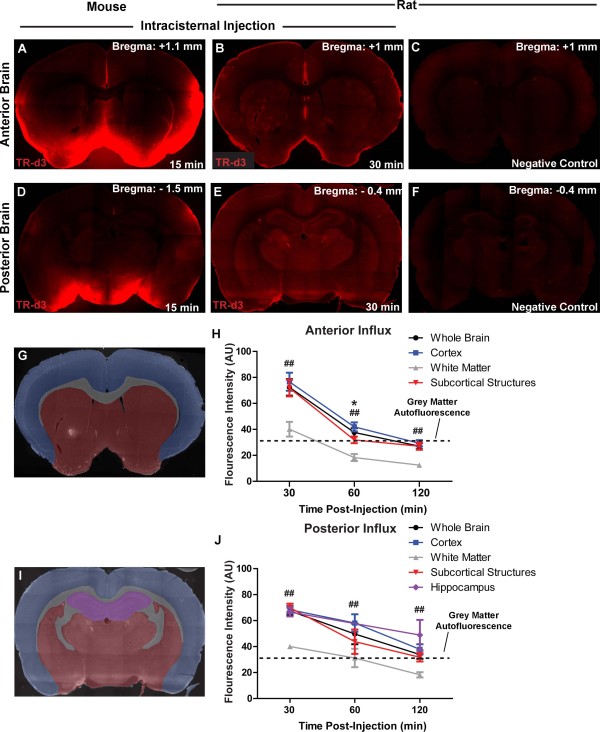
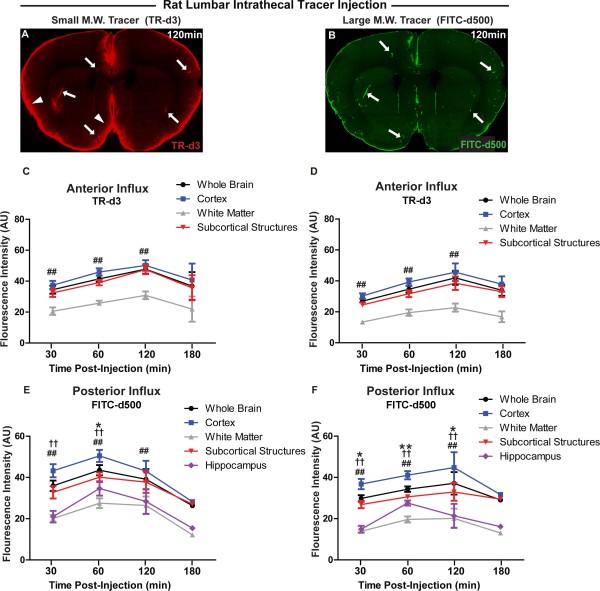
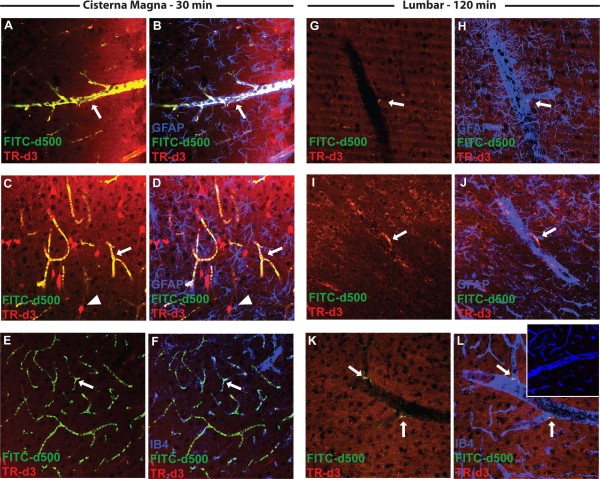
Background: Neurodegenerative diseases such as Alzheimer’s are associated with the aggregation of endogenous peptides and proteins that contribute to neuronal dysfunction and loss. The glymphatic system, a brain-wide perivascular pathway along which cerebrospinal fluid (CSF) and interstitial fluid (ISF) rapidly exchange, has recently been identified as a key contributor to the clearance of interstitial solutes from the brain, including amyloid β. These findings suggest that measuring changes in glymphatic pathway function may be an important prognostic for evaluating neurodegenerative disease susceptibility or progression. However, no clinically acceptable approach to evaluate glymphatic pathway function in humans has yet been developed. Methods: Time-sequenced ex vivo fluorescence imaging of coronal rat and mouse brain slices was performed at 30–180 min following intrathecal infusion of CSF tracer (Texas Red- dextran-3, MW 3 kD; FITC- dextran-500, MW 500 kD) into the cisterna magna or lumbar spine. Tracer influx into different brain regions (cortex, white matter, subcortical structures, and hippocampus) in rat was quantified to map the movement of CSF tracer following infusion along both routes, and to determine whether glymphatic pathway function could be evaluated after lumbar intrathecal infusion. Results: Following lumbar intrathecal infusions, small molecular weight TR-d3 entered the brain along perivascular pathways and exchanged broadly with the brain ISF, consistent with the initial characterization of the glymphatic pathway in mice. Large molecular weight FITC-d500 remained confined to the perivascular spaces. Lumbar intrathecal infusions exhibited a reduced and delayed peak parenchymal fluorescence intensity compared to intracisternal infusions. Conclusion: Lumbar intrathecal contrast delivery is a clinically useful approach that could be used in conjunction with dynamic contrast enhanced MRI nuclear imaging to assess glymphatic pathway function in humans.
Overview
The claims and statistics of this paper haven’t been checked yet.
Run the check — free, no account needed. It reads the open-access text and checks the sources it cites.
Integrity signals
Registry
Cites
Statistics
Figures
Verification
Claims the paper makes
The claims and statistics of this paper haven’t been checked yet.
Run the check — free, no account needed. It reads the open-access text and checks the sources it cites.
Claims other papers make about this one
Each is checked against this paper’s own text: does it say what the citing paper says it does?
The source backs part of the claim, not all of it — or backs it for a different population, condition or comparison.
In the citing paper
“Clearance of MRI contrast agents, such as gadobutrol, has previously been proposed to potentially resemble clearance of brain macromolecules with similar properties (14), including amyloidβ (7) and tau (21, 66).”
From Brain-wide glymphatic enhancement and clearance in humans assessed with MRI. (2018) · cites this paper as [66]
Experimental — accuracy not yet measured
Self-check
Percentages, sums and reported differences re-computed from the paper’s own numbers.
The self-check needs the paper’s full text.
Citations
Cites
The Amyloid Hypothesis of Alzheimer’s Disease: Progress and Problems on the Road to Therapeutics
Hardy, J., & Selkoe, D. J. (2002) · Science · doi:10.1126/science.1072994 · Cited by 13,864
Iliff, J. J., Wang, M., Liao, Y., Plogg, B. A., Peng, W., Gundersen, G. A., Benveniste, H., Vates, G. E., Deane, R., Goldman, S. A., et al. (2012) · Science Translational Medicine · doi:10.1126/scitranslmed.3003748 · Cited by 5,824
Self-citationProtein aggregation and neurodegenerative disease
Ross, C. A., & Poirier, M. A. (2004) · Nature Medicine · doi:10.1038/nm1066 · Cited by 3,454
Diffusion in Brain Extracellular Space
Syková, E., & Nicholson, C. (2008) · Physiological Reviews · doi:10.1152/physrev.00027.2007 · Cited by 1,481
Aggregation and Motor Neuron Toxicity of an ALS-Linked SOD1 Mutant Independent from Wild-Type SOD1
Bruijn, L. I., Houseweart, M. K., Kato, S., Anderson, K. L., Anderson, S., Ohama, E., Reaume, A. G., Scott, R. W., & Cleveland, D. W. (1998) · Science · doi:10.1126/science.281.5384.1851 · Cited by 1,250
Brain-wide pathway for waste clearance captured by contrast-enhanced MRI
Iliff, J. J., Lee, H., Yu, M., Feng, T., Logan, J., Nedergaard, M., & Benveniste, H. (2013) · Journal of Clinical Investigation · doi:10.1172/jci67677 · Cited by 1,148
Self-citationMathiisen, T. M., Lehre, K. P., Danbolt, N. C., & Ottersen, O. (2010) · Glia · doi:10.1002/glia.20990 · Cited by 893
Evidence for bulk flow of brain interstitial fluid: significance for physiology and pathology
Abbott, N. J. (2004) · Neurochemistry International · doi:10.1016/j.neuint.2003.11.006 · Cited by 786
Scherzinger, E., Sittler, A., Schweiger, K., Heiser, V., Lurz, R., Hasenbank, R., Bates, G. P., Lehrach, H. R., & Wanker, E. E. (1999) · Proceedings of the National Academy of Sciences · doi:10.1073/pnas.96.8.4604 · Cited by 707
Delivery of therapeutic agents to the central nervous system: the problems and the possibilities
Begley, D. J. (2004) · Pharmacology & Therapeutics · doi:10.1016/j.pharmthera.2004.08.001 · Cited by 679
Pathogenic protein seeding in Alzheimer disease and other neurodegenerative disorders
Jucker, M., & Walker, L. C. (2011) · Annals of Neurology · doi:10.1002/ana.22615 · Cited by 622 · cited 1×
“Neurodegenerative disorders such as Alzheimer’s disease (AD) are characterized by progressive loss of neurons, sensory and motor impairments, and severe cognitive decline [1].”
BackgroundLinking Aβ and Tau in Late-Onset Alzheimer's Disease: A Dual Pathway Hypothesis
Small, S. A., & Duff, K. (2008) · Neuron · doi:10.1016/j.neuron.2008.11.007 · Cited by 546
Classification and basic properties of contrast agents for magnetic resonance imaging
Geraldes, C. F. G. C., & Laurent, S. (2009) · Contrast Media & Molecular Imaging · doi:10.1002/cmmi.265 · Cited by 540
Physiology of the choroid plexus.
Cserr, H. F. (1971) · Physiological Reviews · doi:10.1152/physrev.1971.51.2.273 · Cited by 514
The use of PET in Alzheimer disease
Nordberg, A. K., Rinne, J. O., Kadir, A., & Långström, B. (2010) · Nature Reviews Neurology · doi:10.1038/nrneurol.2009.217 · Cited by 467
Role of the Blood-Brain Barrier in the Pathogenesis of Alzheimers Disease
Deane, R., & Zloković, B. V. (2007) · Current Alzheimer Research · doi:10.2174/156720507780362245 · Cited by 365
Self-citationEnzmann, D. R., & Pelc, N. J. (1991) · Radiology · doi:10.1148/radiology.178.2.1987610 · Cited by 362
Drainage of interstitial fluid from different regions of rat brain
Szentistvanyi, I., Patlak, C. S., Ellis, R. A., & Cserr, H. F. (1984) · American Journal of Physiology-Renal Physiology · doi:10.1152/ajprenal.1984.246.6.f835 · Cited by 355
Drainage of cerebral interstitial fluid into deep cervical lymph of the rabbit
Bradbury, M. W., Cserr, H. F., & Westrop, R. J. (1981) · American Journal of Physiology-Renal Physiology · doi:10.1152/ajprenal.1981.240.4.f329 · Cited by 335
The Revitalized Tau Hypothesis on Alzheimer's Disease
Maccioni, R. B., Farias, G. A., Morales, I., & Navarrete, L. P. (2010) · Archives of Medical Research · doi:10.1016/j.arcmed.2010.03.007 · Cited by 316
Risks and side‐effects of intrathecal morphine combined with spinal anaesthesia: a meta‐analysis
Gehling, M., & Tryba, M. (2009) · Anaesthesia · doi:10.1111/j.1365-2044.2008.05817.x · Cited by 292
Recent insights into a new hydrodynamics of the cerebrospinal fluid
Bulat, M., & Klarica, M. (2010) · Brain Research Reviews · doi:10.1016/j.brainresrev.2010.08.002 · Cited by 255
Spinal CSF absorption in healthy individuals
Edsbagge, M., Tisell, M., Jacobsson, L., & Wikkelsø, C. (2004) · American Journal of Physiology-Regulatory, Integrative and Comparative Physiology · doi:10.1152/ajpregu.00215.2004 · Cited by 166
Traumatic Cerebrospinal Fluid Leaks
Prosser, J. D., Vender, J. R., & Solares, C. A. (2011) · Otolaryngologic Clinics of North America · doi:10.1016/j.otc.2011.06.007 · Cited by 151
Water and solute secretion by the choroid plexus
Prætorius, J. (2006) · Pflügers Archiv - European Journal of Physiology · doi:10.1007/s00424-006-0170-6 · Cited by 114
Pöpping, D. M., Elia, N., Marret, E., Wenk, M., & Tramèr, M. R. (2012) · Pain · doi:10.1016/j.pain.2011.11.028 · Cited by 114
Hoxworth, J. M., Trentman, T. L., Kotsenas, A. L., Thielen, K. R., Nelson, K. D., & Dodick, D. W. (2012) · American Journal of Roentgenology · doi:10.2214/ajr.11.8238 · Cited by 102
Stoodley, M. A., Jones, N. R., & Brown, C. J. (1996) · Brain Research · doi:10.1016/0006-8993(95)01228-1 · Cited by 95
The importance of lymphatics in cerebrospinal fluid transport
Johnston, M. (2003) · Lymphatic Research and Biology · doi:10.1089/15396850360495682 · Cited by 84
Kerr, J. Z., Berg, S. L., & Blaney, S. M. (2001) · Critical Reviews in Oncology/Hematology · doi:10.1016/s1040-8428(00)00115-3 · Cited by 77
Hong, J.-H., & Lee, I. H. (2005) · Anaesthesia · doi:10.1111/j.1365-2044.2005.04158.x · Cited by 47
Traumatic, iatrogenic, and spontaneous cerebrospinal fluid (CSF) leak: endoscopic repair.
Daele, J., Goffart, Y. L. J., & Machiels, S. (2011) · PubMed · Cited by 45
Strittmatter, W. J. (2013) · Journal of Clinical Investigation · doi:10.1172/jci68241 · Cited by 35
Cisternal puncture complications. Treatment of coccidioidal meningitis with amphotericin B.
Keane, J. R. (1973) · PubMed · Cited by 27
Spinal cord birth injury: Value of computed tomographic myelography
Adams, C., Babyn, P., & Logan, W. J. (1988) · Pediatric Neurology · doi:10.1016/0887-8994(88)90049-5 · Cited by 24
Begley, D. J. (2012) · Science Translational Medicine · doi:10.1126/scitranslmed.3004611 · Cited by 23
Depiction of a postoperative pseudomeningocele with digital subtraction myelography.
Phillips, C. D., Kaptain, G. J., & Razack, N. (2002) · PubMed Central · Cited by 20
Unilateral blindness secondary to acute sphenoid sinusitis.
Farboud, A., Trinidade, A., Shakeel, M., Rajapaksa, S., & Hanif, J. (2011) · PubMed · Cited by 17
Lumbar Intraspinal Epidermoid Tumor
Kapila, A. (1987) · Spine · doi:10.1097/00007632-198710000-00020 · Cited by 10
Burns, B. (2008) · Annals of Emergency Medicine · doi:10.1016/j.annemergmed.2007.08.028 · Cited by 5
Cited by
Sorted by citations
Structural and functional features of central nervous system lymphatic vessels
Louveau, A., Smirnov, I., Keyes, T. J., Eccles, J. D., Rouhani, S. J., Peske, J. D., Derecki, N. C., Castle, D., Mandell, J. W., Lee, K. S., et al. (2015) · Nature · doi:10.1038/nature14432 · Cited by 4,413
The glymphatic system: a beginner's guide
Jessen, N. A., Munk, A. S. F., Lundgaard, I., & Nedergaard, M. (2015) · Neurochemical Research · doi:10.1007/s11064-015-1581-6 · Cited by 2,075
Self-citationClearance systems in the brain—implications for Alzheimer disease
Tarasoff-Conway, J. M., Carare, R. O., Osorio, R. S., Glodzik, L., Butler, T., Fieremans, E., Axel, L., Rusinek, H., Nicholson, C., Zlokovic, B. V., et al. (2015) · Nature Reviews Neurology · doi:10.1038/nrneurol.2015.119 · Cited by 1,678
Verkhratsky, A., & Nedergaard, M. (2018) · Physiological Reviews · doi:10.1152/physrev.00042.2016 · Cited by 1,678
Self-citationImpairment of paravascular clearance pathways in the aging brain
Kress, B. T., Iliff, J. J., Xia, M., Wang, M., Wei, H. S., Zeppenfeld, D., Xie, L., Kang, H., Xu, Q., Liew, J. A., et al. (2014) · Annals of Neurology · doi:10.1002/ana.24271 · Cited by 1,521
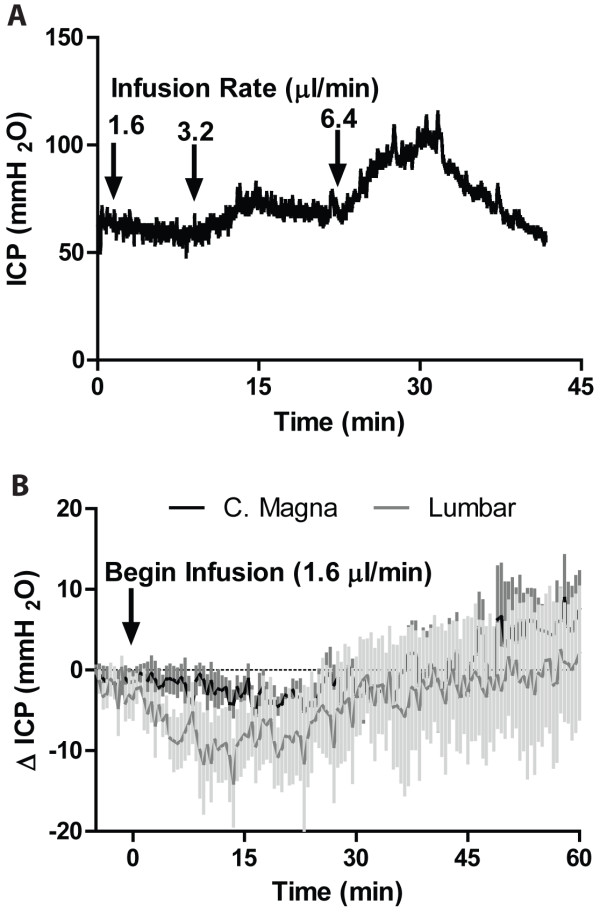
“Additionally, we have observed that at infusion rates that do not change ICP, paravascular CSF tracer flux follows the same patterns observed in the present study.(5,8) Because paravascular CSF recirculation occurs long after the normalization of ICP after the cessation of tracer infusion, the CSF tracer fluxes observ…”
ResultSelf-citation
Metadata
- Authors
- Yang, L., Kress, B. T., Weber, H. J., Thiyagarajan, M., Wang, B., Deane, R., Benveniste, H., Iliff, J. J., & Nedergaard, M.
- Affiliations
- Hebei Medical University (CN)
- University of Rochester Medicine (US)
- Stony Brook University (US)
- Oregon Health & Science University (US)
- Corresponding author
- Iliff, Jeffrey J
- Nedergaard, Maiken
- Venue
- Journal of Translational Medicine
- Published
- 2013-05-01
- Volume
- 11
- Issue
- 1
- Pages
- 107-107
- ISSN
- 1479-5876 (ISSN-L)
- PMC
- PMC3665671
- OpenAlex
- W2166233935
- Cited by
- 317
- References
- 40
- Citations by year
- 2026: 13 · 2025: 20 · 2024: 13 · 2023: 23 · 2022: 39 · 2021: 24 · 2020: 26 · 2019: 27 · 2018: 26 · 2017: 38 · 2016: 24 · 2015: 25 · 2014: 14 · 2013: 4
- FWCI
- 10.96
- Type
- journal article
- Language
- en
- Open access
- gold
- doi.org
- Licence
- cc-by
- Locations
- Journal of Translational Medicine (publishedVersion, cc-by)
- Europe PMC (PubMed Central) (publishedVersion, cc-by)
- PubMed Central (publishedVersion, cc-by)
- PubMed (publishedVersion)
- Funders
- U.S. Department of Defense
- American Heart Association
- National Institutes of Health
- National Institute of Neurological Disorders and Stroke (R01NS078304, R01NS078167, R01NS075177)
- Topics
- Health Sciences › Medicine › Clinical Neurology › Cerebrospinal fluid and hydrocephalus
- Life Sciences › Neuroscience › Neurology › Barrier Structure and Function Studies
- Life Sciences › Neuroscience › Cellular and Molecular Neuroscience › Alzheimer's disease research and treatments
- Keywords
- glymphatic system, intrathecal infusion, interstitial fluid exchange, amyloid-beta clearance, Alzheimer's disease, neurodegenerative diseases, dynamic contrast-enhanced MRI
- MeSH terms
- Animals, Brain, Cerebrospinal Fluid, Female, Injections, Spinal, Intracranial Pressure, Lumbar Vertebrae, Male, Mice, Inbred C57BL, Molecular Weight, Molecular Probes, Rats, Sprague-Dawley, Extracellular Fluid
About these checks
Registry, retraction, Cites and statistics results are computed, not judged, with one exception: a printed reference that no index lists is read once by a model before it counts as a citation error. Claims are extracted by a model and kept only when their quote appears verbatim in the text; each cited source is then checked, with a model’s help, for whether it says what the claim relies on. Those verdicts can be wrong — read the claim’s quote and the cited source before relying on one.
Statistics and arithmetic are recomputed, not judged.
Confidence bands are shown only for fields calibrated on our annotated test set. None is calibrated yet, so no band is shown.
What counts as a claim ›How we measure confidence ›How we check this ›
Are you an author, or do you see a problem with this page? Request a review
