

A prospective phase II trial exploring the association between tumor microenvironment biomarkers and clinical activity of ipilimumab in advanced melanoma
Open accessThe DOI matches its Crossref record; 69 of the 70 references it cites were found in a registry or an index.
Abstract
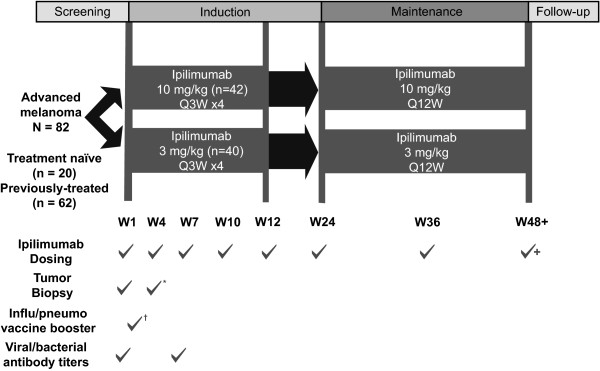
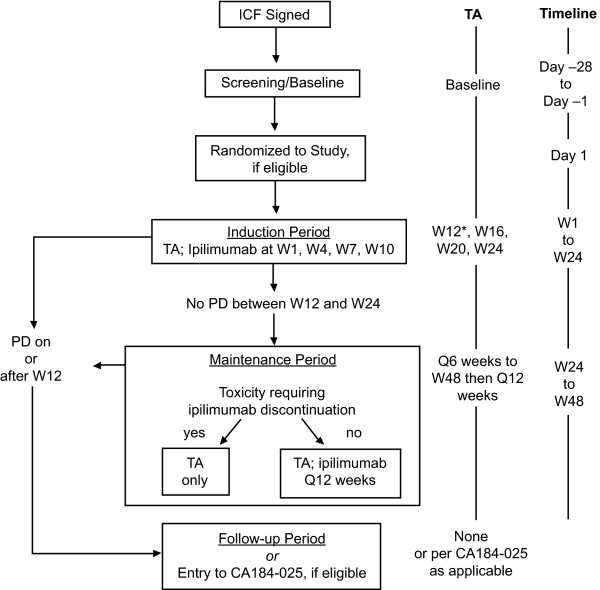
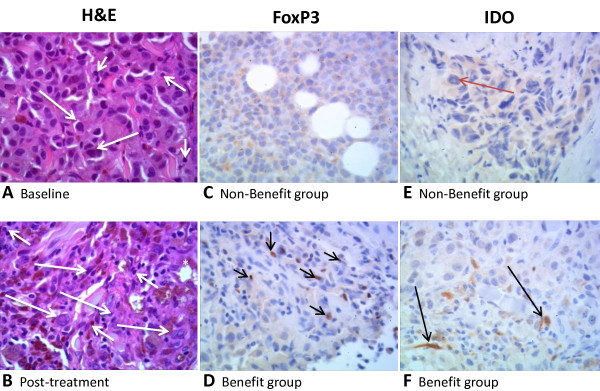
BACKGROUND: Ipilimumab, a fully human monoclonal antibody that blocks cytotoxic T-lymphocyte antigen-4, has demonstrated an improvement in overall survival in two phase III trials of patients with advanced melanoma. The primary objective of the current trial was to prospectively explore candidate biomarkers from the tumor microenvironment for associations with clinical response to ipilimumab. METHODS: In this randomized, double-blind, phase II biomarker study (ClinicalTrials.gov NCT00261365), 82 pretreated or treatment-naïve patients with unresectable stage III/IV melanoma were induced with 3 or 10 mg/kg ipilimumab every 3 weeks for 4 doses; at Week 24, patients could receive maintenance doses every 12 weeks. Efficacy was evaluated per modified World Health Organization response criteria and safety was assessed continuously. Candidate biomarkers were evaluated in tumor biopsies collected pretreatment and 24 to 72 hours after the second ipilimumab dose. Polymorphisms in immune-related genes were also evaluated. RESULTS: Objective response rate, response patterns, and safety were consistent with previous trials of ipilimumab in melanoma. No associations between genetic polymorphisms and clinical activity were observed. Immunohistochemistry and histology on tumor biopsies revealed significant associations between clinical activity and high baseline expression of FoxP3 (p = 0.014) and indoleamine 2,3-dioxygenase (p = 0.012), and between clinical activity and increase in tumor-infiltrating lymphocytes (TILs) between baseline and 3 weeks after start of treatment (p = 0.005). Microarray analysis of mRNA from tumor samples taken pretreatment and post-treatment demonstrated significant increases in expression of several immune-related genes, and decreases in expression of genes implicated in cancer and melanoma. CONCLUSIONS: Baseline expression of immune-related tumor biomarkers and a post-treatment increase in TILs may be positively associated with ipilimumab clinical activity. The observed pharmacodynamic changes in gene expression warrant further analysis to determine whether treatment-emergent changes in gene expression may be associated with clinical efficacy. Further studies are required to determine the predictive value of these and other potential biomarkers associated with clinical response to ipilimumab.
Overview
The claims and statistics of this paper haven’t been checked yet.
Free: it reads the open-access text and checks the first 5 claims that cite a source we can check. Create a free account to check every claim.
Integrity signals
Registry
Cites
Statistics
Figures
Verification
Claims the paper makes
The claims and statistics of this paper haven’t been checked yet.
Free: it reads the open-access text and checks the first 5 claims that cite a source we can check. Create a free account to check every claim.
Claims other papers make about this one
Each is checked against this paper’s own text: does it say what the citing paper says it does?
The source backs part of the claim, not all of it — or backs it for a different population, condition or comparison.
In the citing paper
“Combinatorial biomarker strategies that capture attributes of the host and tumor-immune ecosystem will be essential (Fig. 2; refs.121-124).”
From The Next Decade of Immune Checkpoint Therapy (2021) · cites this paper as [122]
Experimental — accuracy not yet measured
Self-check
Percentages, sums and reported differences re-computed from the paper’s own numbers.
The self-check needs the paper’s full text.
Citations
Cites
R: A Language and Environment for Statistical Computing
R Core Team (2025) · doi:10.32614/r.manuals · Cited by 352,181
PD-1 and PD-L1 Immune Checkpoint Blockade to Treat Breast Cancer
Hartkopf, A. D., Taran, F.-A., Wallwiener, M., Walter, C. B., Krämer, B., Grischke, E.-M., & Brucker, S. Y. (2016) · Breast Care · doi:10.1159/000453569 · Cited by 30,845
Adverse Renal Effects of Immune Checkpoint Inhibitors: A Narrative Review
Wanchoo, R., Karam, S., Uppal, N. N., Barta, V. S., Deray, G., Devoe, C., Launay-Vacher, V., Jhaveri, K. D., & on behalf of Cancer and Kidney International Network Workgroup on Immune Checkpoint Inhibitors (2017) · American Journal of Nephrology · doi:10.1159/000455014 · Cited by 15,256
Improved Survival with Ipilimumab in Patients with Metastatic Melanoma
Hodi, F. S., O'Day, S. J., McDermott, D. F., Weber, R. W., Sosman, J. A., Haanen, J. B., Gonzalez, R., Robert, C., Schadendorf, D., Hassel, J. C., et al. (2010) · New England Journal of Medicine · doi:10.1056/nejmoa1003466 · Cited by 15,155 · cited 3×
“5% for 3 mg/kg ipilimumab monotherapy in a phase III trial [4].”
BackgroundResultBioconductor: open software development for computational biology and bioinformatics
Gentleman, R. C., Carey, V. J., Bates, D. M., Bolstad, B., Dettling, M., Dudoit, S., Ellis, B., Gautier, L., Ge, Y., Gentry, J., et al. (2004) · Genome Biology · doi:10.1186/gb-2004-5-10-r80 · Cited by 12,172 · cited 1×
“0 (Affy package) [32] and q-value package v1.”
Exploration, normalization, and summaries of high density oligonucleotide array probe level data
Irizarry, R. A. (2003) · Biostatistics · doi:10.1093/biostatistics/4.2.249 · Cited by 10,603 · cited 1×
“Gene expression data were normalized using the Robust Multichip Average method [30] and the resulting log2-transformed expression levels were used for subsequent analyses.”
MethodStatistical significance for genomewide studies
Storey, J. D., & Tibshirani, R. (2003) · Proceedings of the National Academy of Sciences · doi:10.1073/pnas.1530509100 · Cited by 9,692 · cited 1×
“A false discovery rate (q-value) approach [31] was used to adjust for multiple testing.”
MethodControl of Regulatory T Cell Development by the Transcription Factor Foxp3
Hori, S., Nomura, T., & Sakaguchi, S. (2003) · Science · doi:10.1126/science.1079490 · Cited by 8,187 · cited 1×
“FoxP3 has been identified as a marker of natural and adaptive/induced regulatory T cells (Tregs) [58].”
BackgroundCuriel, T. J., Coukos, G., Zou, L., Alvarez, X., Cheng, P., Mottram, P., Evdemon-Hogan, M., Conejo-Garcia, J. R., Zhang, L., Burow, M., et al. (2004) · Nature Medicine · doi:10.1038/nm1093 · Cited by 5,151 · cited 1×
“Patients with cancer have higher levels of Tregs in peripheral blood than healthy individuals [59], leading to a suppression of T-cell immunity that has an immunopathologic role in tumor growth [56] and influences prognosis in many cancers [60-63].”
BackgroundTHE USE OF CONFIDENCE OR FIDUCIAL LIMITS ILLUSTRATED IN THE CASE OF THE BINOMIAL
CLOPPER, C. J., & PEARSON, E. S. (1934) · Biometrika · doi:10.1093/biomet/26.4.404 · Cited by 5,003 · cited 2×
“Exact 2-sided 95% confidence intervals (CIs) for within-dose-group BORR were calculated using the method of Clopper and Pearson [27].”
Method
Research works printed but not linked: 4
- Richards J Hwu P Chin K Ibrahim R Berman D Yellin M Lowy I Fahumy F Hoos A Wolchok J Evaluation of treatment guidelines developed for management of immune-related adverse events in ipilimumab clinical protocols [abstract] Presented at the Perspectives in Melanoma XIII Annual Meeting: Baltimore: O-0006 2009
- Harmankaya K Hoos A Wolchok J O'Day SJ Weber JS Lebbe C Maio M Ibrahim R Humphrey R Hodi FS Immune-related response criteria (irRC) identify patients with novel response patterns who have favorable survival among progressors per mWHO criteria [abstract] Presented at the World Meeting of Interdisciplinary Melanoma/Skin Cancer Centers: 19-21 Nov 2009; Berlin, Germany 37
- Chin K Ibrahim R Berman D Yellin MJ Lowy I Lin R Hoos A Treatment guidelines for the management of immune-related adverse events in patients treated with ipilimumab [abstract] Presented at the 7th World Congress on Melanoma/5th Congress of the European Association of Dermato-Oncology (WCM/EADO) 2009 Joint Meeting 12-16 May 2009; Vienna, Austria
- Gajewski TF Grimm EA Nickoloff BJ Govindan R New potential therapeutic targets in melanoma ASCO Educational Book 2008 2008 Alexandria, VA: American Society of Clinical Oncology 404 407
Cited by
Items 201–300 of 547
Current Trends in Cancer Immunotherapy
Filin, I. Y., Solovyeva, V. V., Kitaeva, K. V., Rutland, C. S., & Rizvanov, A. A. (2020) · Biomedicines · doi:10.3390/biomedicines8120621 · Cited by 51
Checkpoint Blockade for the Treatment of Advanced Melanoma
Callahan, M. K., Flaherty, C., & Postow, M. A. (2015) · Cancer treatment and research · doi:10.1007/978-3-319-22539-5_9 · Cited by 50
Biomarkers and Immunotherapeutic Targets in Glioblastoma
Hung, A. L., Garzón-Muvdi, T., & Lim, M. K. (2017) · World Neurosurgery · doi:10.1016/j.wneu.2017.03.011 · Cited by 53
Leven, C., Padelli, M., Carré, J., Bellissant, É., & Misery, L. (2019) · Clinical Pharmacokinetics · doi:10.1007/s40262-019-00789-7 · Cited by 53
Jensen, C., Sinkevičiūtė, D., Madsen, D. H., Önnerfjord, P., Hansen, M., Schmidt, H., Karsdal, M. A., Svane, I. M., & Willumsen, N. (2020) · Cancers · doi:10.3390/cancers12102786 · Cited by 55
Self-citationBlood mRNA Expression Profiling Predicts Survival in Patients Treated with Tremelimumab
Saenger, Y. M., Magidson, J., Liaw, B. C.-H., de Moll, E., Harcharik, S., Fu, Y., Wassmann, K., Fisher, D. E., Kirkwood, J. M., Oh, W. K., et al. (2014) · Clinical Cancer Research · doi:10.1158/1078-0432.ccr-13-2906 · Cited by 48
“presence of CTLA-4 polymorphisms (26), increased T-cell expression of ICOS (27), increased tumor expression of FoxP3 and IDO expression in the tumor (28), increase in ratio of effector to regulatory T cells (27), increase in the number of tumor infiltrating lymphocytes from baseline (28), the absolute lymphocyte count…”
BackgroundKönig, D., & Laubli, H. P. (2020) · Pharmacology · doi:10.1159/000509081 · Cited by 54
Immunotherapy for castration-resistant prostate cancer: Progress and new paradigms
Quinn, D. I., Shore, N. D., Egawa, S., Gerritsen, W. R., & Fizazi, K. S. (2015) · Urologic Oncology Seminars and Original Investigations · doi:10.1016/j.urolonc.2014.10.009 · Cited by 52
“, ALC [64] Antibody or T-cell responses to cancer antigens (e.”
BackgroundInfluentialDuan, J., Wang, Y., & Jiao, S. (2018) · Cancer Medicine · doi:10.1002/cam4.1722 · Cited by 51
Signorelli, D., Giannatempo, P., Grazia, G., Aiello, M. M., Bertolini, F., Mirabile, A., Buti, S., Vasile, E., Scotti, V., Pisapia, P., et al. (2019) · BioMed Research International · doi:10.1155/2019/9056417 · Cited by 51
Role of immune checkpoint inhibitors in the treatment of colorectal cancer: focus on nivolumab
Jacome, A. A. D. A., & Eng, C. (2019) · Expert Opinion on Biological Therapy · doi:10.1080/14712598.2019.1680636 · Cited by 48
“Tumorinfiltrating lymphocytes [132], T-cell receptor clonality [133], neoantigen burden [71], immune gene signatures [72], and multiplex immunohistochemistry [133] have also been evaluated as potential biomarkers.”
BackgroundSingh, M. P., Sethuraman, S. N., Ritchey, J. W., Fiering, S., Guha, C., Malayer, J. R., & Ranjan, A. (2019) · International Journal of Hyperthermia · doi:10.1080/02656736.2019.1663280 · Cited by 50
Liu, Z., Guo, C., Li, J., Xu, H., Lu, T., Wang, L., Liu, L., & Han, X. (2021) · Clinical and Translational Medicine · doi:10.1002/ctm2.619 · Cited by 63
Emerging Tissue and Blood-Based Biomarkers that may Predict Response to Immune Checkpoint Inhibition
Friedman, C. F., & Postow, M. A. (2016) · Current Oncology Reports · doi:10.1007/s11912-016-0509-x · Cited by 46
Tarhini, A. A., Lin, Y., Lin, H.-M., Vallabhaneni, P., Sander, C., LaFramboise, W. A., & Hamieh, L. (2016) · OncoImmunology · doi:10.1080/2162402x.2016.1231291 · Cited by 47
“enrolled 45 patients, Affymetrix gene expression profiling was conducted on tumor biopsies obtained from before and 3 weeks after the start of treatment.(19,20) High-baseline (pretreatment) expression of immune-related genes was significantly associated with clinical benefit from ipilimumab.”
MethodKim, H., Kwon, H. J., Han, Y. B., Park, S. Y., Kim, E. S., Kim, S. H., Kim, Y. J., Lee, J. S., & Chung, J.-H. (2018) · Modern Pathology · doi:10.1038/s41379-018-0142-3 · Cited by 50
Current and emerging systemic therapies for cutaneous metastatic melanoma
Mason, R., Au, L., Garces, A. I., & Larkin, J. (2019) · Expert Opinion on Pharmacotherapy · doi:10.1080/14656566.2019.1601700 · Cited by 46
“CTLA-4 with PD-1 inhibitor response and survival [52,53].”
BackgroundRole of immune checkpoint inhibitors in the revolutionization of advanced melanoma care
Singh, S., Numan, A., Agrawal, N., Tambuwala, M. M., Singh, V., & Kesharwani, P. (2020) · International Immunopharmacology · doi:10.1016/j.intimp.2020.106417 · Cited by 45
“An early Phase II dosing study demonstrated a dose-dependent increase in irAEs with increasing ipilimumab dose [48].”
BackgroundImmune checkpoint-targeted antibodies: a room for dose and schedule optimization?
Maritaz, C., Broutin, S., Chaput, N., Marabelle, A., & Paci, A. (2022) · Journal of Hematology & Oncology · doi:10.1186/s13045-021-01182-3 · Cited by 54
“Ipilimumab had comparable efficacy in doses ranging from 3 to 10 mg/kg with a lower toxicity at 3 mg/kg [11].”
BackgroundNovel antibodies targeting immune regulatory checkpoints for cancer therapy
Lee, C. S., Cragg, M. S., Glennie, M. J., & Johnson, P. (2013) · British Journal of Clinical Pharmacology · doi:10.1111/bcp.12164 · Cited by 46
Potentiation of immunomodulatory antibody therapy with oncolytic viruses for treatment of cancer
Zamarin, D., & Wolchok, J. D. (2014) · Molecular Therapy — Oncolytics · doi:10.1038/mto.2014.4 · Cited by 47
Buchbinder, E. I., Gunturi, A., Perritt, J. C., Dutcher, J. P., Aung, S., Kaufman, H. L., Ernstoff, M. S., Miletello, G. P., Curti, B. D., Daniels, G. A., et al. (2016) · Journal for ImmunoTherapy of Cancer · doi:10.1186/s40425-016-0155-8 · Cited by 44
“Numerous studies are evaluating different possible retrospective and prospective markers of immune response [10 – 13].”
BackgroundCurkovic, N. B., Bai, K., Ye, F., & Johnson, D. B. (2024) · Cancers · doi:10.3390/cancers16020340 · Cited by 50
Sundahl, N., Wolf, K. D., Krüse, V., Meireson, A., Reynders, D., Goetghebeur, E. J. T., Gele, M. V., Speeckaert, R., Hennart, B., Brochez, L., et al. (2017) · International Journal of Radiation Oncology*Biology*Physics · doi:10.1016/j.ijrobp.2017.11.029 · Cited by 43
Blake, Z., Marks, D. K., Gartrell, R. D., Hart, T. D., Horton, P., Cheng, S. K., Taback, B., Horst, B. A. J., & Saenger, Y. M. (2018) · Journal for ImmunoTherapy of Cancer · doi:10.1186/s40425-018-0338-6 · Cited by 43
“For ipilimumab, an increase in tumorinfiltrating lymphocytes (TILs) as well as a high genomic mutational load have been shown to be predictive of response to therapy [27, 28].”
BackgroundPrognostic and Predictive Immunohistochemistry-Based Biomarkers in Cancer and Immunotherapy
Rizk, E. M., Gartrell, R. D., Barker, L. W., Esancy, C. L., Finkel, G. G., Bordbar, D. D., & Saenger, Y. M. (2019) · Hematology/Oncology Clinics of North America · doi:10.1016/j.hoc.2018.12.005 · Cited by 47
CTLA-4 Blockade Plus Adoptive T-Cell Transfer Promotes Optimal Melanoma Immunity in Mice
Mahvi, D. A., Meyers, J. V., Tatar, A. J., Contreras, A., Suresh, M., LEVERSON, G. E., Sen, S., & Cho, C. S. (2015) · Journal of Immunotherapy · doi:10.1097/cji.0000000000000064 · Cited by 43
Robust detection of immune transcripts in FFPE samples using targeted RNA sequencing
Paluch, B. E., Glenn, S. T., Conroy, J. M., Papanicolau‐Sengos, A., Bshara, W., Omilian, A. R., Brese, E., Nesline, M., Burgher, B., Andreas, J., et al. (2016) · Oncotarget · doi:10.18632/oncotarget.13691 · Cited by 45
Immune Checkpoint Molecules, Personalized Immunotherapy, and Autoimmune Diabetes
Orabona, C., Mondanelli, G., Puccetti, P., & Grohmann, U. (2018) · Trends in Molecular Medicine · doi:10.1016/j.molmed.2018.08.005 · Cited by 47
Immune Checkpoint Therapy and the Search for Predictive Biomarkers
Sharma, P. (2016) · The Cancer Journal · doi:10.1097/ppo.0000000000000185 · Cited by 46
Immunologic and immunogenomic aspects of tumor progression
Ladányi, A., & Tímár, J. (2019) · Seminars in Cancer Biology · doi:10.1016/j.semcancer.2019.08.011 · Cited by 46
The Discovery of Biomarkers in Cancer Immunotherapy
George, A. P., Kuzel, T. M., Zhang, Y., & Zhang, B. (2019) · Computational and Structural Biotechnology Journal · doi:10.1016/j.csbj.2019.03.015 · Cited by 45
“found that high expression of IDO at baseline was associated with improved clinical efficacy of anti-CTLA-4 therapy in metastatic melanoma [37].”
BackgroundJensen, C., Nissen, N. I., von Arenstorff, C. S., Karsdal, M. A., & Willumsen, N. (2021) · Journal of Experimental & Clinical Cancer Research · doi:10.1186/s13046-021-02133-z · Cited by 45
Blockade of the B7-H1/PD-1 Pathway as a Basis for Combination Anticancer Therapy
Sznol, M. (2014) · The Cancer Journal · doi:10.1097/ppo.0000000000000056 · Cited by 41
“Tumor T cell infiltration could possibly be promoted by altering the vasculature with vascular endothelial growth factor (VEGF) antagonists,(27) or administration of anti–CTLA-4,(21) which was shown to increase tumor T cell infiltration in single-agent trials.(28,29) Targeted agents and epigenetic modifiers may also i…”
BackgroundPredictive factors for immunotherapy in melanoma.
Teixidó, C., González‐Cao, M., Karachaliou, N., & Rosell, R. (2015) · Europe PMC (PubMed Central) · doi:10.3978/j.issn.2305-5839.2015.05.07 · Cited by 46
“found no associations between genetic polymorphisms and clinical activity, but did find significant associations between clinical efficacy and high baseline expression of FoxP3, indoleamine 2,3-dioxygenase (IDO) and increase in TILs between baseline and 3 weeks after starting ipilimumab treatment (51).”
BackgroundImmunotherapy for breast cancer: past, present, and future
Spellman, A., & Tang, S.-C. (2016) · Cancer and Metastasis Reviews · doi:10.1007/s10555-016-9654-9 · Cited by 43
“IDO expressing MDSCs correlated with increased infiltration of T-regs and lymph node metastases [77].”
MethodInfluentialCho, J.-W., Son, J., Ha, S., & Lee, I. (2021) · Computational and Structural Biotechnology Journal · doi:10.1016/j.csbj.2021.01.025 · Cited by 40
“Therefore, TI-Tregs are considered major cellular targets for cancer immunotherapy [10,13,15–17].”
BackgroundJohnson, R. L., Cummings, M., Thangavelu, A., Theophilou, G., Jong, D. D., & Orsi, N. M. (2021) · Cancers · doi:10.3390/cancers13246231 · Cited by 43
Chung, C. K., Silva, C. G. D., Kralisch, D., Chan, A. B., OSSENDORP, F. A., & Cruz, L. J. (2018) · Journal of Controlled Release · doi:10.1016/j.jconrel.2018.07.011 · Cited by 41
Kaufman, H. L., Schwartz, L. H., William, W. N., Sznol, M., Fahrbach, K. R., Xu, Y., Masson, E., & Vergara-Silva, A. L. (2018) · Journal of Cancer Research and Clinical Oncology · doi:10.1007/s00432-018-2738-x · Cited by 39
Ouwerkerk, W., van den Berg, M., van der Niet, S., Limpens, J., & Luiten, R. M. (2019) · Melanoma Research · doi:10.1097/cmr.0000000000000589 · Cited by 44
Specenier, P. M. (2016) · Expert Review of Anticancer Therapy · doi:10.1080/14737140.2016.1211936 · Cited by 43
Liu, Y., Altreuter, J., Bodapati, S., Cristea, S., Wong, C. J., Wu, C. J., & Michor, F. (2023) · Cell Genomics · doi:10.1016/j.xgen.2023.100444 · Cited by 48
“64 However, in various cancers treated with PD-L1 blockade, a higher density of CD8 + T cells in the tumor core and invasive margins in pre-treatment biopsies was correlated with response.”
BackgroundDevelopment of a multifunctional envelope-type nano device and its application to nanomedicine
Sato, Y., Nakamura, T., Yamada, Y., & Harashima, H. (2016) · Journal of Controlled Release · doi:10.1016/j.jconrel.2016.06.042 · Cited by 39
Mechanisms of Resistance to Checkpoint Blockade Therapy
Shi, H., Lan, J., & Yang, J. (2020) · Advances in experimental medicine and biology · doi:10.1007/978-981-15-3266-5_5 · Cited by 40
Find the Flame: Predictive Biomarkers for Immunotherapy in Melanoma
Garutti, M., Bonin, S., Buriolla, S., Bertoli, E., Pizzichetta, M. A., Zalaudek, I., & Puglisi, F. (2021) · Cancers · doi:10.3390/cancers13081819 · Cited by 39
“Both pembrolizumab [30] and ipilimumab [27] were associated with a post-treatment expression of immune-response related genes (such as those coding for immunoglobulins, granzyme B, perforin-1, granulysin, CD8 b-subunit, and T-cell receptor-a and -b subunits) with an impact on recurrence-free…”
Cancer Resistance to Immunotherapy: Molecular Mechanisms and Tackling Strategies
Vu, S. H., Vetrivel, P., Kim, J., & Lee, M. (2022) · International Journal of Molecular Sciences · doi:10.3390/ijms231810906 · Cited by 45
“In a clinical trial using ipilimumab to treat patients with advanced melanoma, increased TILs were found to be associated with better outcomes [61].”
BackgroundDo inflammatory pathways drive melanomagenesis?
Schneider, S. L., Ross, A. L., & Grichnik, J. M. (2014) · Experimental Dermatology · doi:10.1111/exd.12502 · Cited by 39
Immune Checkpoint Inhibitors in Gliomas
Tan, A. C., Heimberger, A. B., & Khasraw, M. (2017) · Current Oncology Reports · doi:10.1007/s11912-017-0586-5 · Cited by 39
Microenvironnement immunitaire et cancer: Intérêt de l’immunoscore pour prédire l’évolution clinique
Galon, J., Bindea, G., Mlecnik, B., Angell, H. K., Lagorce, C., Mușină, A.-M., Berger, A., & Pagès, F. (2014) · médecine/sciences · doi:10.1051/medsci/20143004020 · Cited by 39
SITC cancer immunotherapy resource document: a compass in the land of biomarker discovery
Hu‐Lieskovan, S., Bhaumik, S., Dhodapkar, K. M., Grivel, J., Gupta, S. V., Hanks, B. A., Janetzki, S., Kleen, T. O., Koguchi, Y., Lund, A. W., et al. (2020) · Journal for ImmunoTherapy of Cancer · doi:10.1136/jitc-2020-000705 · Cited by 41
Overcoming Resistance to Immune Checkpoint Inhibitors in Head and Neck Squamous Cell Carcinomas
dos Santos, L. V., Abrahão, C. M., & William, W. N. (2021) · Frontiers in Oncology · doi:10.3389/fonc.2021.596290 · Cited by 44
Adoptive TIL Transfer in the Adjuvant Setting for Melanoma: Long-Term Patient Survival
Khammari, A., Knol, A., Nguyen, J., Bossard, C., Denis, M. G., Pandolfino, M., Quereux, G., Bercegeay, S., & Dréno, B. (2014) · Journal of Immunology Research · doi:10.1155/2014/186212 · Cited by 35
Zhang, J., Choi, H., Kim, Y., Park, J., Cho, S., Kim, E., Cho, A., Lee, J. Y., Choi, J., Low, C., et al. (2025) · Journal for ImmunoTherapy of Cancer · doi:10.1136/jitc-2024-011346 · Cited by 40
Choudhury, N. J., & Nakamura, Y. (2015) · Cancer Science · doi:10.1111/cas.12862 · Cited by 34
Chemokine Receptors and Exercise to Tackle the Inadequacy of T Cell Homing to the Tumor Site
Idorn, M., & Straten, P. T. (2018) · Cells · doi:10.3390/cells7080108 · Cited by 36
“In addition, accumulating data supports the notion that baseline tumor infiltration by activated CD8+ T cells (inflamed tumors) identifies a group of patients with a better chance for a clinical response to treatment with immunotherapy when compared to patients with non-inflamed tumors [9,10].”
BackgroundPedersen, J. G., Madsen, A. T., Gammelgaard, K. R., Pedersen, N. A., Sørensen, B. S., Øllegaard, T. H., & Jakobsen, M. R. (2020) · Cancers · doi:10.3390/cancers12061414 · Cited by 34
Vasaturo, A., Halilović, A., Bol, K. F., Verweij, D. I., Blokx, W. A. M., Punt, C. J. A., Groenen, P. J. T. A., van Krieken, J. H., Textor, J. C., de Vries, I. J. M., et al. (2016) · Cancer Research · doi:10.1158/0008-5472.can-15-3211 · Cited by 36
Predictive factors of response to immunotherapy—a review from the Spanish Melanoma Group (GEM)
On behalf of the Spanish Melanoma Group (GEM), Espinosa, E., Márquez‐Rodas, I., Soria, A., Berrocal, A., Manzano, J. L., González‐Cao, M., & Martín‐Algarra, S. (2017) · Annals of Translational Medicine · doi:10.21037/atm.2017.08.10 · Cited by 37
“Lymphocyte density in tumor biopsies taken after the second dose of ipilimumab has been associated with significant activity of this drug (35).”
BackgroundMonitoring checkpoint inhibitors: predictive biomarkers in immunotherapy
Zhang, M., Yang, H. J., Hua, W., Zhong, L., Xu, Z., & Qian, Q. (2019) · Frontiers of Medicine · doi:10.1007/s11684-018-0678-0 · Cited by 38
Peer, C. J., Goldstein, D. A., Goodell, J. C., Nguyen, R., Figg, W. D., & Ratain, M. J. (2020) · British Journal of Clinical Pharmacology · doi:10.1111/bcp.14369 · Cited by 34
“Hamad et al demonstrated comparable efficacy of ipilimumab over a dose range of 3 to 10 mg/kg, with similar effects on peripheral T cells, and with lower toxicity at 3 mg/kg.(16,17) Furthermore, near-saturation of target binding was determined in vitro at 20 μg/mL, which is achievable with 3 mg/kg q3wk.”
BackgroundAdjuvant immunotherapy for melanoma
Thomas, D. C., & Bello, D. M. (2021) · Journal of Surgical Oncology · doi:10.1002/jso.26329 · Cited by 37
“pembrolizumab, higher densities of CD8 T cell infiltrates were seen in serial biopsies of tumor in patients responding to therapy.(58,59) Although these findings are interesting, baseline CD T cell density”
BackgroundSeremet, T., Koch, A., Jansen, Y. J. L., Schreuer, M. S., Wilgenhof, S., del Mármol, V., Líénard, D., Thielemans, K., Schats, K., Kockx, M. M., et al. (2016) · Journal of Translational Medicine · doi:10.1186/s12967-016-0990-x · Cited by 33
“However, no consistent findings have been reported concerning the identification of a tumoral transcriptional signature that predicts long-term benefit to Ipi [21, 22].”
Influence of ipilimumab on expanded tumour derived T cells from patients with metastatic melanoma
Bjoern, J., Lyngaa, R., Andersen, R. S., Hölmich, L. R., Hadrup, S. R., Donia, M., & Svane, I. M. (2017) · Oncotarget · doi:10.18632/oncotarget.16003 · Cited by 34
“Our group recently reported that T cell reactivity towards autologous and allogeneic melanoma cell lines is positively correlated to treatment response in TIL based ACT [5], that Ipilimumab has been shown to induce influx of T cells in tumour lesions in patients with clinical benefit [22] and might have an impact on T…”
ResultCytotoxic T-Lymphocyte Antigen-4 Blockade in Melanoma
Buchbinder, E. I., & McDermott, D. F. (2015) · Clinical Therapeutics · doi:10.1016/j.clinthera.2015.02.003 · Cited by 34
Immunotherapy for Lung Cancer: Ongoing Clinical Trials
Declerck, S., & Vansteenkiste, J. (2013) · Future Oncology · doi:10.2217/fon.13.166 · Cited by 32
Koemans, W. J., Chalabi, M., van Sandick, J. W., van Dieren, J. M., & Kodach, L. L. (2018) · Cancer Letters · doi:10.1016/j.canlet.2018.11.001 · Cited by 34
The Ipilimumab Lesson in Melanoma: Achieving Long-Term Survival
Delyon, J., Maio, M., & Lebbé, C. (2015) · Seminars in Oncology · doi:10.1053/j.seminoncol.2015.02.005 · Cited by 35
Neoadjuvant Treatment of a Solitary Melanoma Brain Metastasis With Vemurafenib
Kolar, G. R., Miller‐Thomas, M. M., Schmidt, R. E., Simpson, J. R., Rich, K. M., & Linette, G. P. (2012) · Journal of Clinical Oncology · doi:10.1200/jco.2012.43.7061 · Cited by 31
Lu, Y., Wu, F., Cao, Q., Sun, Y., Huang, M., Xiao, J., Zhou, B., & Zhang, L. (2021) · Oncogene · doi:10.1038/s41388-021-02124-6 · Cited by 35
“An early increase in TILs is also positively associated with clinical response [39].”
BackgroundZhou, S., Lu, J., Liu, S., Shao, J., Liu, Z., Li, J., & Xiao, W. (2023) · Frontiers in Cell and Developmental Biology · doi:10.3389/fcell.2023.1166916 · Cited by 38
“However, recent research suggests that Treg populations may be positively associated with the efficacy of therapy against CTLA-4 within ICI treatment (Hamid et al., 2011; Arce Vargas et al., 2018).”
BackgroundIivanainen, S., & Koivunen, J. P. (2020) · International Journal of Molecular Sciences · doi:10.3390/ijms21020556 · Cited by 30
Anichini, A., Molla, A., Nicolini, G., Perotti, V., Sgambelluri, F., Covre, A., Fazio, C., Lofiego, M. F., Giacomo, A. M. D., Coral, S., et al. (2022) · Journal of Experimental & Clinical Cancer Research · doi:10.1186/s13046-022-02529-5 · Cited by 39
“In two published datasets [44, 388 45] involving n=45 [44] and n=54 melanoma patients [45], among 376 and 286 genes upregulated 389 by Ipilimumab in on treatment lesions compared to baseline, we found only 35/166 (21.”
ResultImmune cells in primary and metastatic gastrointestinal stromal tumors (GIST).
Cameron, S., Gieselmann, M., Blaschke, M., Ramadori, G. P., & FÜZESI, L. (2014) · PubMed Central · Cited by 30
Checkpoint inhibition and melanoma: Considerations in treating the older adult
Friedman, C. F., & Wolchok, J. D. (2017) · Journal of Geriatric Oncology · doi:10.1016/j.jgo.2017.04.003 · Cited by 35
Targeted therapy and immunotherapy: Emerging biomarkers in metastatic melanoma
LoRusso, P. M., Schalper, K. A., & Sosman, J. A. (2020) · Pigment Cell & Melanoma Research · doi:10.1111/pcmr.12847 · Cited by 33
“…T cell Cytotoxicity T cell Activation Dendritic cell Melanoma cell of FOXP3 (p = .014) and indoleamine 2,3-dioxygenase (p = .012) and between clinical activity and an increase in tumor-infiltrating lymphocytes between baseline and 3 weeks after treatment initiation (p = .005; Hamid et al., 2011).”
BackgroundImmunotherapy for Advanced Melanoma: Future Directions
Valpione, S., & Campana, L. G. (2016) · Immunotherapy · doi:10.2217/imt.15.111 · Cited by 31
Immune Profiling of Cancer Patients Treated with Immunotherapy: Advances and Challenges
Pilla, L., & Maccalli, C. (2018) · Biomedicines · doi:10.3390/biomedicines6030076 · Cited by 30
“The modulation of miRNAs levels was associated with immune-related genes in a cohort of patients treated with anti-CTLA-4 mAb [86].”
BackgroundZhu, Y., Zhao, F., Li, Z., & Yu, J. (2018) · Cancer Management and Research · doi:10.2147/cmar.s167400 · Cited by 30
“50 .”
Strategies for Predicting Response to Checkpoint Inhibitors
Zappasodi, R., Wolchok, J. D., & Merghoub, T. (2018) · Current Hematologic Malignancy Reports · doi:10.1007/s11899-018-0471-9 · Cited by 31
Chen, J. A., Ma, W., Yuan, J. D., & Li, T. (2020) · Cancer treatment and research · doi:10.1007/978-3-030-38862-1_9 · Cited by 31
Recent developments in the use of immunotherapy in non-small cell lung cancer
Santarpía, M., Giovannetti, E., Rolfo, C. D., Karachaliou, N., González‐Cao, M., Altavilla, G., & Rosell, R. (2016) · Expert Review of Respiratory Medicine · doi:10.1080/17476348.2016.1182866 · Cited by 29
“The percentage of TILs has been demonstrated to correlate with ipilimumab activity in melanoma patients [81].”
BackgroundTargeted Therapies for Melanoma Brain Metastases
Berghoff, A. S., & Preusser, M. (2017) · Current Treatment Options in Neurology · doi:10.1007/s11940-017-0449-2 · Cited by 29
Chen, G. M., Azzam, A., Ding, Y., Barrett, D. M., Grupp, S. A., & Tan, K. (2020) · Clinical Cancer Research · doi:10.1158/1078-0432.ccr-19-3888 · Cited by 28
Baltussen, J. C., Welters, M. J. P., Verdegaal, E. M. E., Kapiteijn, E., Schrader, A. M. R., Slingerland, M., Liefers, G., van der Burg, S. H., Portielje, J. E. A., & de Glas, N. A. (2021) · Cancers · doi:10.3390/cancers13246366 · Cited by 34
Gorris, M. A. J., van der Woude, L. L., Kroeze, L. I., Bol, K. F., Verrijp, K. N., Amir, A. L., Meek, J., Textor, J. C., Figdor, C. G., & de Vries, I. J. M. (2022) · Journal for ImmunoTherapy of Cancer · doi:10.1136/jitc-2021-004329 · Cited by 36
“We believe that this is an important finding and this also validates that biopsies can be taken from any anatomical site to get reliable data on TMB, HLA-ABC expression, and lymphocyte infiltration.”
BackgroundMolecular genetic and immunotherapeutic targets in metastatic melanoma
Melis, C., Rogiers, A., Bechter, O. E., & van den Oord, J. J. (2017) · Archiv für Pathologische Anatomie und Physiologie und für Klinische Medicin · doi:10.1007/s00428-017-2113-3 · Cited by 31
Pike, E., Hamidi, V., Sæterdal, I., Odgaard‐Jensen, J., & Klemp, M. (2017) · BMJ Open · doi:10.1136/bmjopen-2016-014880 · Cited by 31
Chae, Y. K., Oh, M. S., & Giles, F. J. (2017) · The Oncologist · doi:10.1634/theoncologist.2017-0354 · Cited by 28
“A phase II trial of ipilimumab in advanced melanoma again observed a significant relationship between TILs and clinical activity [59].”
BackgroundLeick, K. M., Rodriguez, A. B., Melssen, M. M., Benamar, M., Lindsay, R. S., Eki, R., Du, K., Parlak, M., Abbas, T., Engelhard, V. H., et al. (2019) · Annals of Surgery · doi:10.1097/sla.0000000000003522 · Cited by 30
Judge, S. J., Yanagisawa, M., Sturgill, I. R., Bateni, S. B., Gingrich, A. A., Foltz, J. A., Lee, D. A., Modiano, J. F., Monjazeb, A. M., Culp, W. T. N., et al. (2020) · PLoS ONE · doi:10.1371/journal.pone.0224775 · Cited by 27
Kee, D., & McArthur, G. A. (2016) · European Journal of Surgical Oncology · doi:10.1016/j.ejso.2016.07.014 · Cited by 28
Liu, Z., Jing, C., & Kong, F. (2024) · Journal of Ovarian Research · doi:10.1186/s13048-024-01359-7 · Cited by 29
“At the same time, many studies have shown that CTLA-4 inhibitors can also increase the activity of cytotoxic T cells and achieve satisfactory results in tumors such as melanoma and small-cell lung cancer [156, 157].”
BackgroundTooley, K., Jerby‐Arnon, L., Escobar, G., Krovi, S. H., Mangani, D., Dandekar, G., Cheng, H., Madi, A., Goldschmidt, E., Lambden, C., et al. (2024) · Cell Reports Medicine · doi:10.1016/j.xcrm.2024.101640 · Cited by 36
“5 The TME is a key determinant of ICB response, 6–8 but how it impacts T cell functionality remains incompletely understood.”
Kakavand, H., Wilmott, J. S., Long, G. V., & Scolyer, R. A. (2016) · Pathology · doi:10.1016/j.pathol.2015.12.010 · Cited by 28
Ridolfi, L., Rosa, F. D., Ridolfi, R., Gentili, G., Valmorri, L., Scarpi, E., Parisi, E., Romeo, A., & Guidoboni, M. (2014) · Journal of Translational Medicine · doi:10.1186/s12967-014-0262-6 · Cited by 28
“In an attempt to develop a more manageable and better tolerated therapeutic schedule it has been decided to try a short IL-2 infusion repeated every 21 days, to add corticosteroids [38] to reduce the risk of capillary leak syndrome, and to add radiotherapy to exploit the abscopal effect [52,53].”
BackgroundSelf-citationAltomonte, M., Giacomo, A. M. D., Queirolo, P., Ascierto, P. A., Spagnolo, F., Bajetta, E., Calabrò, L., Danielli, R., Rosa, F. D., Maur, M., et al. (2013) · Journal of Experimental & Clinical Cancer Research · doi:10.1186/1756-9966-32-82 · Cited by 27
“The antitumour activity of ipilimumab in patients with advanced melanoma has been demonstrated in a number of phase 2 trials [8-12] and in two phase 3 trials; one as monotherapy in patients with pretreated metastatic melanoma at a dose of 3 mg/kg, and the second in combination with chemotherapy in patients with previo…”
Leick, K. M., Pinczewski, J., Mauldin, I. S., Young, S. J., Deacon, D. H., Woods, A. N., Bosenberg, M., Engelhard, V. H., & Slingluff, C. L. (2019) · Cancer Immunology Immunotherapy · doi:10.1007/s00262-019-02345-5 · Cited by 27
Tupikowski, K., Partyka, A., Kołodziej, A., Dembowski, J., Dębiński, P., Hałoń, A., Zdrojowy, R., Frydecka, I., & Karabon, L. (2015) · Tissue Antigens · doi:10.1111/tan.12671 · Cited by 25
Understanding and overcoming resistance to immunotherapy in genitourinary cancers
Evans, S. T., Jani, Y. C., Jansen, C. S., Yıldırım, A., Kalemoglu, E., & Bilen, M. A. (2024) · Cancer Biology & Therapy · doi:10.1080/15384047.2024.2342599 · Cited by 27
“98,123 In some cases, these Tregs co-exist with active immune responses, and their presence has been associated with improved clinical outcomes following anti-CTLA-4 therapy.”
Background
Metadata
- Authors
- Hamid, O., Schmidt, H., Nissan, A., Ridolfi, L., Aamdal, S., Hansson, J., Guida, M., Hyams, D. M., Gómez, H., Bastholt, L., Chasalow, S. D., & Berman, D.
- Affiliations
- Angeles Clinic and Research Institute (US)
- Aarhus University Hospital (DK)
- Hebrew University of Jerusalem (IL)
- Istituto Scientifico Romagnolo per lo Studio e la Cura dei Tumori (IT)
- Oslo University Hospital (NO)
- Karolinska University Hospital (SE)
- Istituto Tumori Bari (IT)
- Instituto Nacional de Enfermedades Neoplásicas (PE)
- Odense University Hospital (DK)
- Bristol-Myers Squibb (United States) (US)
- Corresponding author
- Hamid, Omid
- ORCID
- Venue
- Journal of Translational Medicine
- Published
- 2011-11-28
- Volume
- 9
- Issue
- 1
- Pages
- 204-204
- ISSN
- 1479-5876 (ISSN-L)
- PMC
- PMC3239318
- OpenAlex
- W2138134458
- Cited by
- 534
- References
- 70
- Citations by year
- 2026: 3 · 2025: 7 · 2024: 22 · 2023: 25 · 2022: 25 · 2021: 42 · 2020: 59 · 2019: 41 · 2018: 51 · 2017: 40 · 2016: 53 · 2015: 56 · 2014: 49 · 2013: 47 · 2012: 13
- FWCI
- 17.34
- Type
- journal article
- Language
- en
- Open access
- gold
- doi.org
- Licence
- cc-by
- creativecommons.org/licenses/by/2.0 (tdm)
- Locations
- Journal of Translational Medicine (publishedVersion, cc-by)
- Europe PMC (PubMed Central) (publishedVersion, cc-by)
- PubMed Central (publishedVersion, cc-by)
- PubMed (publishedVersion)
- University of Southern Denmark Research Portal (University of Southern Denmark) (publishedVersion)
- DOAJ (DOAJ: Directory of Open Access Journals) (submittedVersion, cc-by-sa)
- NORA - Norwegian Open Research Archives (submittedVersion, cc-by)
- Funders
- Bristol-Myers Squibb
- American Society of Clinical Oncology
- European Society for Medical Oncology
- Topics
- Health Sciences › Medicine › Oncology › Cancer Immunotherapy and Biomarkers
- Health Sciences › Medicine › Oncology › Cutaneous Melanoma Detection and Management
- Life Sciences › Immunology and Microbiology › Immunology › Immunotherapy and Immune Responses
- Keywords
- ipilimumab, advanced melanoma, predictive biomarkers, CTLA-4 blockade, Foxp3, indoleamine 2,3-dioxygenase, tumor-infiltrating lymphocytes, cancer gene expression, immunotherapy response
- MeSH terms
- Ipilimumab, Adult, Aged, Aged, 80 and over, Antibodies, Monoclonal, Antineoplastic Agents, Dose-Response Relationship, Drug, Drug Administration Schedule, Female, Humans, Immunohistochemistry, Male, Melanoma, Middle Aged, Neoplasm Staging, Polymorphism, Genetic, Prospective Studies, RNA, Messenger, Skin Neoplasms, Biomarkers, Tumor, Gene Expression Regulation, Neoplastic, Treatment Outcome, Young Adult, Tumor Microenvironment
About these checks
Registry, retraction, Cites and statistics results are computed, not judged, with one exception: a printed reference that no index lists is read once by a model before it counts as a citation error. Claims are extracted by a model and kept only when their quote appears verbatim in the text; each cited source is then checked, with a model’s help, for whether it says what the claim relies on. Those verdicts can be wrong — read the claim’s quote and the cited source before relying on one.
Statistics and arithmetic are recomputed, not judged.
Confidence bands are shown only for fields calibrated on our annotated test set. None is calibrated yet, so no band is shown.
What counts as a claim ›How we measure confidence ›How we check this ›
Are you an author, or do you see a problem with this page? Request a review
Data sources
Bibliographic data: Semantic Scholar, OpenAlex, Crossref.
Contains information from the Semantic Scholar Academic Graph Datasets, made available under the ODC Attribution License (ODC-BY 1.0).
Semantic Scholar’s data is described in: Kinney, R., et al. (2023). The Semantic Scholar Open Data Platform. arXiv:2301.10140.
