

A prospective phase II trial exploring the association between tumor microenvironment biomarkers and clinical activity of ipilimumab in advanced melanoma
Open accessThe DOI matches its Crossref record; 69 of the 70 references it cites were found in a registry or an index.
Abstract
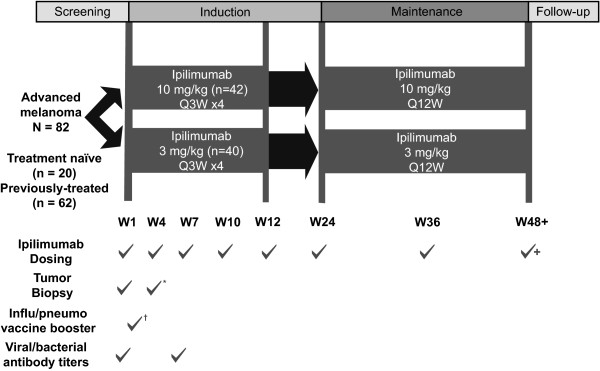
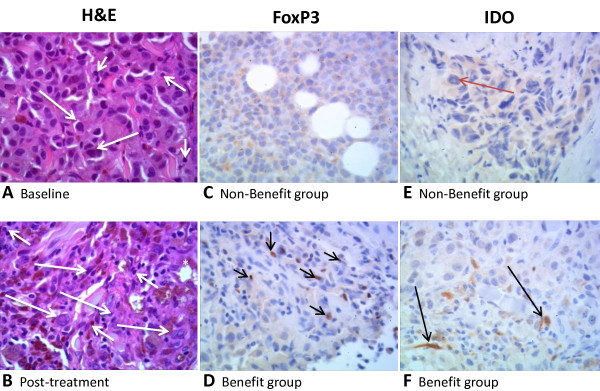
BACKGROUND: Ipilimumab, a fully human monoclonal antibody that blocks cytotoxic T-lymphocyte antigen-4, has demonstrated an improvement in overall survival in two phase III trials of patients with advanced melanoma. The primary objective of the current trial was to prospectively explore candidate biomarkers from the tumor microenvironment for associations with clinical response to ipilimumab. METHODS: In this randomized, double-blind, phase II biomarker study (ClinicalTrials.gov NCT00261365), 82 pretreated or treatment-naïve patients with unresectable stage III/IV melanoma were induced with 3 or 10 mg/kg ipilimumab every 3 weeks for 4 doses; at Week 24, patients could receive maintenance doses every 12 weeks. Efficacy was evaluated per modified World Health Organization response criteria and safety was assessed continuously. Candidate biomarkers were evaluated in tumor biopsies collected pretreatment and 24 to 72 hours after the second ipilimumab dose. Polymorphisms in immune-related genes were also evaluated. RESULTS: Objective response rate, response patterns, and safety were consistent with previous trials of ipilimumab in melanoma. No associations between genetic polymorphisms and clinical activity were observed. Immunohistochemistry and histology on tumor biopsies revealed significant associations between clinical activity and high baseline expression of FoxP3 (p = 0.014) and indoleamine 2,3-dioxygenase (p = 0.012), and between clinical activity and increase in tumor-infiltrating lymphocytes (TILs) between baseline and 3 weeks after start of treatment (p = 0.005). Microarray analysis of mRNA from tumor samples taken pretreatment and post-treatment demonstrated significant increases in expression of several immune-related genes, and decreases in expression of genes implicated in cancer and melanoma. CONCLUSIONS: Baseline expression of immune-related tumor biomarkers and a post-treatment increase in TILs may be positively associated with ipilimumab clinical activity. The observed pharmacodynamic changes in gene expression warrant further analysis to determine whether treatment-emergent changes in gene expression may be associated with clinical efficacy. Further studies are required to determine the predictive value of these and other potential biomarkers associated with clinical response to ipilimumab.
Overview
The claims and statistics of this paper haven’t been checked yet.
Free: it reads the open-access text and checks the first 5 claims that cite a source we can check. Create a free account to check every claim.
Integrity signals
Registry
Cites
Statistics
Figures
Verification
Claims the paper makes
The claims and statistics of this paper haven’t been checked yet.
Free: it reads the open-access text and checks the first 5 claims that cite a source we can check. Create a free account to check every claim.
Claims other papers make about this one
Each is checked against this paper’s own text: does it say what the citing paper says it does?
The source backs part of the claim, not all of it — or backs it for a different population, condition or comparison.
In the citing paper
“Combinatorial biomarker strategies that capture attributes of the host and tumor-immune ecosystem will be essential (Fig. 2; refs.121-124).”
From The Next Decade of Immune Checkpoint Therapy (2021) · cites this paper as [122]
Experimental — accuracy not yet measured
Self-check
Percentages, sums and reported differences re-computed from the paper’s own numbers.
The self-check needs the paper’s full text.
Citations
Cites
R: A Language and Environment for Statistical Computing
R Core Team (2025) · doi:10.32614/r.manuals · Cited by 352,181
PD-1 and PD-L1 Immune Checkpoint Blockade to Treat Breast Cancer
Hartkopf, A. D., Taran, F.-A., Wallwiener, M., Walter, C. B., Krämer, B., Grischke, E.-M., & Brucker, S. Y. (2016) · Breast Care · doi:10.1159/000453569 · Cited by 30,845
Adverse Renal Effects of Immune Checkpoint Inhibitors: A Narrative Review
Wanchoo, R., Karam, S., Uppal, N. N., Barta, V. S., Deray, G., Devoe, C., Launay-Vacher, V., Jhaveri, K. D., & on behalf of Cancer and Kidney International Network Workgroup on Immune Checkpoint Inhibitors (2017) · American Journal of Nephrology · doi:10.1159/000455014 · Cited by 15,256
Improved Survival with Ipilimumab in Patients with Metastatic Melanoma
Hodi, F. S., O'Day, S. J., McDermott, D. F., Weber, R. W., Sosman, J. A., Haanen, J. B., Gonzalez, R., Robert, C., Schadendorf, D., Hassel, J. C., et al. (2010) · New England Journal of Medicine · doi:10.1056/nejmoa1003466 · Cited by 15,155 · cited 3×
“5% for 3 mg/kg ipilimumab monotherapy in a phase III trial [4].”
BackgroundResultBioconductor: open software development for computational biology and bioinformatics
Gentleman, R. C., Carey, V. J., Bates, D. M., Bolstad, B., Dettling, M., Dudoit, S., Ellis, B., Gautier, L., Ge, Y., Gentry, J., et al. (2004) · Genome Biology · doi:10.1186/gb-2004-5-10-r80 · Cited by 12,172 · cited 1×
“0 (Affy package) [32] and q-value package v1.”
Exploration, normalization, and summaries of high density oligonucleotide array probe level data
Irizarry, R. A. (2003) · Biostatistics · doi:10.1093/biostatistics/4.2.249 · Cited by 10,603 · cited 1×
“Gene expression data were normalized using the Robust Multichip Average method [30] and the resulting log2-transformed expression levels were used for subsequent analyses.”
MethodStatistical significance for genomewide studies
Storey, J. D., & Tibshirani, R. (2003) · Proceedings of the National Academy of Sciences · doi:10.1073/pnas.1530509100 · Cited by 9,692 · cited 1×
“A false discovery rate (q-value) approach [31] was used to adjust for multiple testing.”
MethodControl of Regulatory T Cell Development by the Transcription Factor Foxp3
Hori, S., Nomura, T., & Sakaguchi, S. (2003) · Science · doi:10.1126/science.1079490 · Cited by 8,187 · cited 1×
“FoxP3 has been identified as a marker of natural and adaptive/induced regulatory T cells (Tregs) [58].”
BackgroundCuriel, T. J., Coukos, G., Zou, L., Alvarez, X., Cheng, P., Mottram, P., Evdemon-Hogan, M., Conejo-Garcia, J. R., Zhang, L., Burow, M., et al. (2004) · Nature Medicine · doi:10.1038/nm1093 · Cited by 5,151 · cited 1×
“Patients with cancer have higher levels of Tregs in peripheral blood than healthy individuals [59], leading to a suppression of T-cell immunity that has an immunopathologic role in tumor growth [56] and influences prognosis in many cancers [60-63].”
BackgroundTHE USE OF CONFIDENCE OR FIDUCIAL LIMITS ILLUSTRATED IN THE CASE OF THE BINOMIAL
CLOPPER, C. J., & PEARSON, E. S. (1934) · Biometrika · doi:10.1093/biomet/26.4.404 · Cited by 5,003 · cited 2×
“Exact 2-sided 95% confidence intervals (CIs) for within-dose-group BORR were calculated using the method of Clopper and Pearson [27].”
MethodIpilimumab plus Dacarbazine for Previously Untreated Metastatic Melanoma
Robert, C., Thomas, L., Bondarenko, I., O'Day, S., Weber, J., Garbe, C., Lebbe, C., Baurain, J.-F., Testori, A., Grob, J.-J., et al. (2011) · New England Journal of Medicine · doi:10.1056/nejmoa1104621 · Cited by 4,496 · cited 1×
“After decades of disappointments in the search for a melanoma therapy that could extend OS beyond that seen for the standard of care, two phase III randomized controlled trials demonstrated a statistically significant improvement in OS with ipilimumab in combination with dacarbazine in treatment-naïve patients [3] and…”
BackgroundWolchok, J. D., Hoos, A., O'Day, S., Weber, J. S., Hamid, O., Lebbé, C., Maio, M., Binder, M., Bohnsack, O., Nichol, G., et al. (2009) · Clinical Cancer Research · doi:10.1158/1078-0432.ccr-09-1624 · Cited by 3,222
Self-citationKRAS Mutation Status Is Predictive of Response to Cetuximab Therapy in Colorectal Cancer
Lièvre, A., Bachet, J.-B., Le Corre, D., Boige, V., Landi, B., Emile, J.-F., Côté, J.-F., Tomasic, G., Penna, C., Ducreux, M., et al. (2006) · Cancer Research · doi:10.1158/0008-5472.can-06-0191 · Cited by 2,229
Effector Memory T Cells, Early Metastasis, and Survival in Colorectal Cancer
Pagès, F., Berger, A., Camus, M., Sanchez-Cabo, F., Costes, A., Molidor, R., Mlecnik, B., Kirilovsky, A., Nilsson, M., Damotte, D., et al. (2005) · New England Journal of Medicine · doi:10.1056/nejmoa051424 · Cited by 2,135 · cited 1×
“The presence of TILs, indicating an antitumor immune response, is a favorable prognostic indicator in a number of cancers [41-45]; however, the prognostic significance of TILs in melanoma remains unclear [46].”
BackgroundWolchok, J. D., Neyns, B., Linette, G., Negrier, S., Lutzky, J., Thomas, L., Waterfield, W., Schadendorf, D., Smylie, M., Guthrie, T., et al. (2010) · The Lancet Oncology · doi:10.1016/s1470-2045(09)70334-1 · Cited by 1,195 · cited 3×
“8% and DCRs of 20% to 30% for 10 mg/kg ipilimumab monotherapy in phase II studies [8-10], and to a BORR of 10.”
BackgroundRoss, J. S., Slodkowska, E. A., Symmans, W. F., Pusztai, L., Ravdin, P. M., & Hortobagyi, G. N. (2009) · The Oncologist · doi:10.1634/theoncologist.2008-0230 · Cited by 1,144 · cited 1×
“By allowing the prediction of both beneficial and detrimental responses to a given agent [14], biomarkers such as HER-2 in breast cancer [15] and KRAS in colon cancer [16] are beginning to change treatment paradigms.”
BackgroundIndoleamine 2,3-dioxygenase and tumor-induced tolerance
Munn, D. H., & Mellor, A. L. (2007) · Journal of Clinical Investigation · doi:10.1172/jci31178 · Cited by 1,078 · cited 5×
“Thus, intratumoral expression of IDO may have promoted the accumulation of FoxP3+ cells; however, recent findings suggest that FoxP3 may not be specific for Tregs, but can also be expressed by other activated T-cell populations [66].”
BackgroundInfluentialHori, S., Nomura, T., & Sakaguchi, S. (2017) · The Journal of Immunology · doi:10.1093/jimmunol/198.3.981 · Cited by 1,066
A Confidence Interval for the Median Survival Time
Brookmeyer, R., & Crowley, J. (1982) · Biometrics · doi:10.2307/2530286 · Cited by 914 · cited 2×
“PFS and OS within dose groups was estimated using the Kaplan-Meier product-limit method and included medians and corresponding 2-sided 95% CIs calculated using the method of Brookmeyer and Crowley [28].”
MethodIncrease of regulatory T cells in the peripheral blood of cancer patients.
Wolf, A. M., Wolf, D. G. F., Steurer, M., Gastl, G. A., Gunsilius, E., & Grubeck-Loebenstein, B. (2003) · PubMed · Cited by 891
Allan, S. E., Crome, S. Q., Crellin, N. K., Passerini, L., Steiner, T. S., Bacchetta, R., Roncarolo, M. G., & Levings, M. K. (2007) · International Immunology · doi:10.1093/intimm/dxm014 · Cited by 872 · cited 1×
“Thus, intratumoral expression of IDO may have promoted the accumulation of FoxP3 cells; however, recent findings suggest that FoxP3 may not be specific for Tregs, but can also be expressed by other activated T-cell populations [66].”
ResultKorn, E. L., Liu, P.-Y., Lee, S. J., Chapman, J.-A. W., Niedzwiecki, D., Suman, V. J., Moon, J., Sondak, V. K., Atkins, M. B., Eisenhauer, E. A., et al. (2008) · Journal of Clinical Oncology · doi:10.1200/jco.2007.12.7837 · Cited by 705 · cited 1×
“Background Historically, the prognosis for patients with stage IV metastatic melanoma has been very poor, with a median overall survival (OS) of 6-10 months and a 1-year survival rate of ~25% [1,2].”
BackgroundQuezada, S. A. (2006) · Journal of Clinical Investigation · doi:10.1172/jci27745 · Cited by 700
Hodi, F. S., Butler, M., Oble, D. A., Seiden, M. V., Haluska, F. G., Kruse, A., MacRae, S., Nelson, M., Canning, C., Lowy, I., et al. (2008) · Proceedings of the National Academy of Sciences · doi:10.1073/pnas.0712237105 · Cited by 650 · cited 1×
“Other reports suggest that the ratio of effector T cells (Teffs) to Tregs, rather than changes in the absolute number of intratumoral Teffs or Tregs, may be a more specific biomarker of effective antitumor immune responses elicited by CTLA-4 blockade [67,68].”
BackgroundImmunostimulatory monoclonal antibodies for cancer therapy
Melero, I., Hervas-Stubbs, S., Glennie, M., Pardoll, D. M., & Chen, L. (2007) · Nature Reviews Cancer · doi:10.1038/nrc2051 · Cited by 627 · cited 1×
“Ipilimumab is a fully human, monoclonal antibody that blocks cytotoxic T-lymphocyte antigen-4 (CTLA-4) [5,6], a molecule that down-regulates pathways of T-cell activation [7].”
BackgroundSystematic Review of Medical Treatment in Melanoma: Current Status and Future Prospects
Garbe, C., Eigentler, T. K., Keilholz, U., Hauschild, A., & Kirkwood, J. M. (2011) · The Oncologist · doi:10.1634/theoncologist.2010-0190 · Cited by 582
Weber, J., Thompson, J. A., Hamid, O., Minor, D., Amin, A., Ron, I., Ridolfi, R., Assi, H., Maraveyas, A., Berman, D., et al. (2009) · Clinical Cancer Research · doi:10.1158/1078-0432.ccr-09-1024 · Cited by 568 · cited 3×
“8% and DCRs of 20% to 30% for 10 mg/kg ipilimumab monotherapy in phase II studies [8-10], and to a BORR of 10.”
BackgroundSelf-citationO'Day, S. J., Maio, M., Chiarion-Sileni, V., Gajewski, T. F., Pehamberger, H., Bondarenko, I. N., Queirolo, P., Lundgren, L., Mikhailov, S., Roman, L., et al. (2010) · Annals of Oncology · doi:10.1093/annonc/mdq013 · Cited by 514
Chen, W., Liang, X., Peterson, A. J., Munn, D. H., & Blazar, B. R. (2008) · The Journal of Immunology · doi:10.4049/jimmunol.181.8.5396 · Cited by 453
Major Response to Imatinib Mesylate in KIT-Mutated Melanoma
Hodi, F. S., Friedlander, P., Corless, C. L., Heinrich, M. C., Mac Rae, S., Kruse, A., Jagannathan, J., Van den Abbeele, A. D., Velazquez, E. F., Demetri, G. D., et al. (2008) · Journal of Clinical Oncology · doi:10.1200/jco.2007.14.0707 · Cited by 419 · cited 1×
“Promising biomarkers for melanoma include KIT and BRAF gene mutations [17,18].”
BackgroundMeasuring Response in Solid Tumors: Unidimensional Versus Bidimensional Measurement
James, K., Eisenhauer, E., Christian, M., Terenziani, M., Vena, D., Muldal, A., & Therasse, P. (1999) · JNCI Journal of the National Cancer Institute · doi:10.1093/jnci/91.6.523 · Cited by 401 · cited 1×
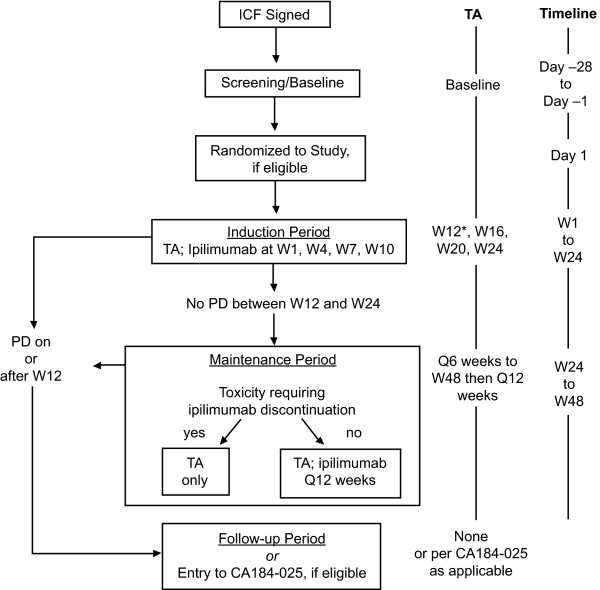
“Investigator assessment of best overall response (BOR), determined between the date of first ipilimumab dose and the last tumor assessment (TA), was image-based and scored using modified World Health Organization criteria [25].”
MethodVan Cutsem, E., Lang, I., D'haens, G., Moiseyenko, V., Zaluski, J., Folprecht, G., Tejpar, S., Kisker, O., Stroh, C., & Rougier, P. (2008) · Journal of Clinical Oncology · doi:10.1200/jco.2008.26.15_suppl.2 · Cited by 372
Fong, L., & Small, E. J. (2008) · Journal of Clinical Oncology · doi:10.1200/jco.2008.17.8954 · Cited by 323 · cited 11×
“Associations between genetic polymorphisms and clinical activity were investigated by genotyping peripheral blood for 20 single nucleotide polymorphisms (SNPs) and two deletions in 10 immune-related genes (BTNL2, CCR5, CD86, CTLA-4, IFNAR1, IFNAR2, IFNG, IL23R, NOD2, and PTPN22).”
BackgroundInfluentialPrognostic implications of type and density of tumour-infiltrating lymphocytes in gastric cancer
Lee, H. E., Chae, S. W., Lee, Y. J., Kim, M. A., Lee, H. S., Lee, B. L., & Kim, W. H. (2008) · British Journal of Cancer · doi:10.1038/sj.bjc.6604738 · Cited by 302 · cited 1×
“The presence of TILs, indicating an antitumor immune response, is a favorable prognostic indicator in a number of cancers [41-45]; however, the prognostic significance of TILs in melanoma remains unclear [46].”
BackgroundClarke, B., Tinker, A. V., Lee, C.-H., Subramanian, S., van de Rijn, M., Turbin, D., Kalloger, S., Han, G., Ceballos, K., Cadungog, M. G., et al. (2009) · Modern Pathology · doi:10.1038/modpathol.2008.191 · Cited by 280
Anti–CTLA-4 Antibody Therapy: Immune Monitoring During Clinical Development of a Novel Immunotherapy
Callahan, M. K., Wolchok, J. D., & Allison, J. P. (2010) · Seminars in Oncology · doi:10.1053/j.seminoncol.2010.09.001 · Cited by 245 · cited 1×
“, increased frequency of CD8+ cells) [20-24].”
Muller, A. J., Sharma, M. D., Chandler, P. R., DuHadaway, J. B., Everhart, M. E., Johnson, B. A., Kahler, D. J., Pihkala, J., Soler, A. P., Munn, D. H., et al. (2008) · Proceedings of the National Academy of Sciences · doi:10.1073/pnas.0806173105 · Cited by 240 · cited 1×
“Increased expression of IDO has been associated with an immunosuppressive tumor microenvironment or a response to chronic inflammation [51,52].”
BackgroundFocus on TILs: prognostic significance of tumor infiltrating lymphocytes in human melanoma.
Oble, D. A., Loewe, R. P., Yu, P., & Mihm, M. C. (2009) · PubMed Central · Cited by 237
Flaherty, K., Puzanov, I., Sosman, J., Kim, K., Ribas, A., McArthur, G., Lee, R. J., Grippo, J. F., Nolop, K., & Chapman, P. (2009) · Journal of Clinical Oncology · doi:10.1200/jco.2009.27.15_suppl.9000 · Cited by 229
Ipilimumab: controversies in its development, utility and autoimmune adverse events
Weber, J. (2009) · Cancer Immunology, Immunotherapy · doi:10.1007/s00262-008-0653-8 · Cited by 224 · cited 11×
“Associations between genetic polymorphisms and clinical activity were investigated by genotyping peripheral blood for 20 single nucleotide polymorphisms (SNPs) and two deletions in 10 immune-related genes (BTNL2, CCR5, CD86, CTLA-4, IFNAR1, IFNAR2, IFNG, IL23R, NOD2, and PTPN22).”
BackgroundInfluentialClinical Significance of Tumor-Infiltrating Lymphocytes in Lung Neoplasms
Ruffini, E., Asioli, S., Filosso, P. L., Lyberis, P., Bruna, M. C., Macrì, L., Daniele, L., & Oliaro, A. (2009) · The Annals of Thoracic Surgery · doi:10.1016/j.athoracsur.2008.10.067 · Cited by 205 · cited 1×
“The presence of TILs, indicating an antitumor immune response, is a favorable prognostic indicator in a number of cancers [41-45]; however, the prognostic significance of TILs in melanoma remains unclear [46].”
BackgroundSarnaik, A. A., Yu, B., Yu, D., Morelli, D., Hall, M., Bogle, D., Yan, L., Targan, S., Solomon, J., Nichol, G., et al. (2011) · Clinical Cancer Research · doi:10.1158/1078-0432.ccr-10-2463 · Cited by 202 · cited 1×
“, increased frequency of CD8+ cells) [20-24].”
The Case for Personalized Medicine
Abrahams, E., & Silver, M. (2009) · Journal of Diabetes Science and Technology · doi:10.1177/193229680900300411 · Cited by 163
Wolchok, J. D., Weber, J. S., Hamid, O., Lebbé, C., Maio, M., Schadendorf, D., de Pril, V., Heller, K. N., Chen, T., Ibrahim, R. A., et al. (2010) · PubMed · Cited by 151
Self-citationRibas, A., Comin-Anduix, B., Economou, J. S., Donahue, T. R., de la Rocha, P., Morris, L. F., Jalil, J., Dissette, V. B., Shintaku, I. P., Glaspy, J. A., et al. (2009) · Clinical Cancer Research · doi:10.1158/1078-0432.ccr-08-0783 · Cited by 132 · cited 1×
“In a pilot study of 15 tumor biopsies from 7 tremelimumab-treated patients, clinical response was associated with increased tumor infiltration by CD8 TILs whereas a more variable association was found with tumor infiltration of CD4 TILs [69].”
BackgroundDe Angulo, G., Yuen, C., Palla, S. L., Anderson, P. M., & Zweidler‐McKay, P. A. (2008) · Cancer · doi:10.1002/cncr.23168 · Cited by 123
Low absolute lymphocyte count is a poor prognostic factor in diffuse-large-B-cell-lymphoma
Cox, M. C., Nofroni, I., Ruco, L., Amodeo, R., Ferrari, A., Verde, G. L., Cardelli, P., Montefusco, E., Conte, E., Monarca, B., et al. (2008) · Leukemia & lymphoma/Leukemia and lymphoma · doi:10.1080/10428190802226425 · Cited by 110
Breunis, W. B., Tarazona-Santos, E., Chen, R., Kiley, M., Rosenberg, S. A., & Chanock, S. J. (2008) · Journal of Immunotherapy · doi:10.1097/cji.0b013e31817fd8f3 · Cited by 107 · cited 1×
“In a previous study of ipilimumab in melanoma patients, associations between SNPs in the CTLA-4 gene and objective response were suggested [70]; such associations were not observed in the current study.”
ResultLadner, R. D., Lynch, F. J., Groshen, S. G., Xiong, Y., Sherrod, A., Caradonna, S. J., Stoehlmacher, J., & Lenz, H. (2000) · PubMed · Cited by 107
Ménard, C., Ghiringhelli, F., Roux, S., Chaput, N., Mateus, C., Grohmann, U., Caillat-Zucman, S., Zitvogel, L., & Robert, C. (2008) · Clinical Cancer Research · doi:10.1158/1078-0432.ccr-07-4797 · Cited by 106 · cited 1×
“, increased frequency of CD8+ cells) [20-24].”
Jung, I. D., Lee, C.-M., Jeong, Y.-I., Lee, J. S., Park, W. S., Han, J., & Park, Y.-M. (2007) · FEBS Letters · doi:10.1016/j.febslet.2007.02.073 · Cited by 85 · cited 2×
“Patients with cancer have higher levels of Tregs in peripheral blood than healthy individuals [59], leading to a suppression of T-cell immunity that has an immunopathologic role in tumor growth [56] and influences prognosis in many cancers [60-63].”
BackgroundEge, H., Gertz, M. A., Markovic, S. N., Lacy, M. Q., Dispenzieri, A. A., Hayman, S. R., Kumar, S. K., & Porrata, L. F. (2008) · British Journal of Haematology · doi:10.1111/j.1365-2141.2008.07123.x · Cited by 77 · cited 1×
“blood absolute lymphocyte count (ALC) has also demonstrated prognostic value in a number of malignancies [47-50].”
BackgroundBouček, J., Mrkvan, T., Chovanec, M., Kuchař, M., Betka, J., Boucek, V., Hladíková, M., Betka, J., Eckschlager, T., & Řı́hová, B. (2009) · Journal of Cellular and Molecular Medicine · doi:10.1111/j.1582-4934.2008.00650.x · Cited by 72 · cited 1×
“Patients with cancer have higher levels of Tregs in peripheral blood than healthy individuals [59], leading to a suppression of T-cell immunity that has an immunopathologic role in tumor growth [56] and influences prognosis in many cancers [60-63].”
BackgroundBerman, D. M., Wolchok, J., Weber, J., Hamid, O., O'Day, S., & Chasalow, S. D. (2009) · Journal of Clinical Oncology · doi:10.1200/jco.2009.27.15_suppl.3020 · Cited by 62
Self-citationClaude, L., Pérol, D., Ray-Coquard, I. L., Petit, T., Blay, J., Carrié, C., & Bachelot, T. (2005) · Radiotherapy and Oncology · doi:10.1016/j.radonc.2005.06.004 · Cited by 61 · cited 1×
“blood absolute lymphocyte count (ALC) has also demonstrated prognostic value in a number of malignancies [47-50].”
BackgroundProapoptotic activity of indoleamine 2,3-dioxygenase expressed in renal tubular epithelial cells
Mohib, K., Guan, Q., Diao, H., Du, C., & Jevnikar, A. M. (2007) · American Journal of Physiology-Renal Physiology · doi:10.1152/ajprenal.00044.2007 · Cited by 60 · cited 1×
“Furthermore, the presence of IDO might be a consequence of an active immune microenvironment since IDO expression is induced by pro-inflammatory cytokines such as IL-1, interferon-g and tumor necrosis factor-a [55-57].”
BackgroundCarvajal, R. D., Chapman, P. B., Wolchok, J. D., Cane, L. M., Teitcher, J. B., Lutzky, J., Pavlick, A. C., Bastian, B. C., Antonescu, C. R., & Schwartz, G. K. (2009) · Journal of Clinical Oncology · doi:10.1200/jco.2009.27.15_suppl.9001 · Cited by 59
Sheu, B., Kuo, W., Chen, R., Huang, S., Chang, K., & Chow, S. (2008) · The Breast · doi:10.1016/j.breast.2008.06.001 · Cited by 51 · cited 1×
“The presence of TILs, indicating an antitumor immune response, is a favorable prognostic indicator in a number of cancers [41-45]; however, the prognostic significance of TILs in melanoma remains unclear [46].”
BackgroundKinetics of response to ipilimumab (MDX-010) in patients with stage III/IV melanoma
Hamid, O., Urba, W. J., Yellin, M., Nichol, G. M., Weber, J., Hersh, E. M., Tchekmedyian, S., Hodi, F. S., Weber, R., & O'Day, S. (2007) · Journal of Clinical Oncology · doi:10.1200/jco.2007.25.18_suppl.8525 · Cited by 41
Self-citationCetindere, T., Nambiar, S., Santourlidis, S., Eßmann, F., & Hassan, M. (2009) · Cellular Signalling · doi:10.1016/j.cellsig.2009.09.013 · Cited by 30
Yang, A., Kendle, R. F., Ginsberg, B. A., Roman, R., Heine, A. I., Pogoriler, E., Yuan, J., & Wolchok, J. D. (2010) · Journal of Clinical Oncology · doi:10.1200/jco.2010.28.15_suppl.2555 · Cited by 28
Antitumor response and new lesions in advanced melanoma patients on ipilimumab treatment
Wolchok, J. D., Ibrahim, R. A., DePril, V., Maio, M., Queirolo, P., Harmankaya, K., Lundgren, L. M., Hoos, A., Humphrey, R. W., & Hamid, O. (2008) · Journal of Clinical Oncology · doi:10.1200/jco.2008.26.15_suppl.3020 · Cited by 24
Self-citationHassan, M., Mirmohammadsadegh, A., Selimović, D., Nambiar, S., Tannapfel, A., & Hengge, U. R. (2005) · Cellular and Molecular Life Sciences · doi:10.1007/s00018-005-5172-6 · Cited by 24
Molecular Markers of Response to Treatment for Melanoma
Sznol, M. (2011) · The Cancer Journal · doi:10.1097/ppo.0b013e318212dd5a · Cited by 23 · cited 2×
“The immunotherapies tested in these studies include high- dose interleukin (IL)-2, IL-12, peptide vaccines (including MAGE-A3), and dendritic cells pulsed with peptide vaccines [19].”
BackgroundMethodMalachowski, W. P., Metz, R., Prendergast, G. C., & Muller, A. J. (2005) · Drugs of the Future · doi:10.1358/dof.2005.030.09.918200 · Cited by 15 · cited 1×
“Increased expression of IDO has been associated with an immunosuppressive tumor microenvironment or a response to chronic inflammation [51,52].”
BackgroundCD4+CD25high regulatory cells in peripheral blood of cancer patients.
Liu, L., Wu, G., Yao, J.-X., Ding, Q., & Huang, S.-A. (2008) · PubMed · Cited by 15
Predictive Biomarkers: Identification and Verification
Yeatman, T. J. (2009) · Journal of Clinical Oncology · doi:10.1200/jco.2008.21.5087 · Cited by 13 · cited 1×
“By allowing the prediction of both beneficial and detrimental responses to a given agent [14], biomarkers such as HER-2 in breast cancer [15] and KRAS in colon cancer [16] are beginning to change treatment paradigms.”
BackgroundCD4~+CD25~(high) regulatory cells in peripheral blood of cancer patients
Cao, R. (2006) · Zhonghua jianyan yixue zazhi · Cited by 5
Li, S. P., Peng, Q.-Q., Ding, T., Xu, J., Zhang, C., Feng, K., & Li, J. Q. (2008) · PubMed · Cited by 5
Research works printed but not linked: 4
- Richards J Hwu P Chin K Ibrahim R Berman D Yellin M Lowy I Fahumy F Hoos A Wolchok J Evaluation of treatment guidelines developed for management of immune-related adverse events in ipilimumab clinical protocols [abstract] Presented at the Perspectives in Melanoma XIII Annual Meeting: Baltimore: O-0006 2009
- Harmankaya K Hoos A Wolchok J O'Day SJ Weber JS Lebbe C Maio M Ibrahim R Humphrey R Hodi FS Immune-related response criteria (irRC) identify patients with novel response patterns who have favorable survival among progressors per mWHO criteria [abstract] Presented at the World Meeting of Interdisciplinary Melanoma/Skin Cancer Centers: 19-21 Nov 2009; Berlin, Germany 37
- Chin K Ibrahim R Berman D Yellin MJ Lowy I Lin R Hoos A Treatment guidelines for the management of immune-related adverse events in patients treated with ipilimumab [abstract] Presented at the 7th World Congress on Melanoma/5th Congress of the European Association of Dermato-Oncology (WCM/EADO) 2009 Joint Meeting 12-16 May 2009; Vienna, Austria
- Gajewski TF Grimm EA Nickoloff BJ Govindan R New potential therapeutic targets in melanoma ASCO Educational Book 2008 2008 Alexandria, VA: American Society of Clinical Oncology 404 407
Cited by
Primary, Adaptive, and Acquired Resistance to Cancer Immunotherapy
Sharma, P., Hu-Lieskovan, S., Wargo, J. A., & Ribas, A. (2017) · Cell · doi:10.1016/j.cell.2017.01.017 · Cited by 5,588
“A retrospective study of patients treated with anti-CTLA-4 reported that a high baseline expression of FoxP3+ Tregs in the tumor was associated with better clinical outcomes (Hamid et al., 2011).”
Innate and adaptive immune cells in the tumor microenvironment
Gajewski, T. F., Schreiber, H., & Fu, Y.-X. (2013) · Nature Immunology · doi:10.1038/ni.2703 · Cited by 4,148
Immune Checkpoint Blockade in Cancer Therapy
Postow, M. A., Callahan, M. K., & Wolchok, J. D. (2015) · Journal of Clinical Oncology · doi:10.1200/jco.2014.59.4358 · Cited by 2,709
“Intratumorally, a high number of T regulatory cells, the presence of the immunosuppressive enzyme indoleamine 2,3-dioxygenase, and immune-active genetic profile have been associated with benefit from ipilimumab.(82,83) More recently, whole-exome sequencing of tumors from patients treated with CTLA-4 blockade has revea…”
BackgroundNivolumab and ipilimumab versus ipilimumab in untreated melanoma
Postow, M. A., Chesney, J., Pavlick, A. C., Robert, C., Grossmann, K., McDermott, D., Linette, G. P., Meyer, N., Giguere, J. K., Agarwala, S. S., et al. (2015) · New England Journal of Medicine · doi:10.1056/nejmoa1414428 · Cited by 2,781
“Grade 3 or 4 5 4/5 (80) 1/4 (25) NE (5.”
Taube, J. M., Klein, A., Brahmer, J. R., Xu, H., Pan, X., Kim, J. H., Chen, L., Pardoll, D. M., Topalian, S. L., & Anders, R. A. (2014) · Clinical Cancer Research · doi:10.1158/1078-0432.ccr-13-3271 · Cited by 2,324
“494 Yes 14 (34) 11 (79) 3 (21) 11 (79) 3 (21) Interval between specimen procurement and treatment initiation (n 1⁄4 41) <1 year 16 (39) 10 (63) 6 (37) 0.”
Metadata
- Authors
- Hamid, O., Schmidt, H., Nissan, A., Ridolfi, L., Aamdal, S., Hansson, J., Guida, M., Hyams, D. M., Gómez, H., Bastholt, L., Chasalow, S. D., & Berman, D.
- Affiliations
- Angeles Clinic and Research Institute (US)
- Aarhus University Hospital (DK)
- Hebrew University of Jerusalem (IL)
- Istituto Scientifico Romagnolo per lo Studio e la Cura dei Tumori (IT)
- Oslo University Hospital (NO)
- Karolinska University Hospital (SE)
- Istituto Tumori Bari (IT)
- Instituto Nacional de Enfermedades Neoplásicas (PE)
- Odense University Hospital (DK)
- Bristol-Myers Squibb (United States) (US)
- Corresponding author
- Hamid, Omid
- ORCID
- Venue
- Journal of Translational Medicine
- Published
- 2011-11-28
- Volume
- 9
- Issue
- 1
- Pages
- 204-204
- ISSN
- 1479-5876 (ISSN-L)
- PMC
- PMC3239318
- OpenAlex
- W2138134458
- Cited by
- 534
- References
- 70
- Citations by year
- 2026: 3 · 2025: 7 · 2024: 22 · 2023: 25 · 2022: 25 · 2021: 42 · 2020: 59 · 2019: 41 · 2018: 51 · 2017: 40 · 2016: 53 · 2015: 56 · 2014: 49 · 2013: 47 · 2012: 13
- FWCI
- 17.34
- Type
- journal article
- Language
- en
- Open access
- gold
- doi.org
- Licence
- cc-by
- creativecommons.org/licenses/by/2.0 (tdm)
- Locations
- Journal of Translational Medicine (publishedVersion, cc-by)
- Europe PMC (PubMed Central) (publishedVersion, cc-by)
- PubMed Central (publishedVersion, cc-by)
- PubMed (publishedVersion)
- University of Southern Denmark Research Portal (University of Southern Denmark) (publishedVersion)
- DOAJ (DOAJ: Directory of Open Access Journals) (submittedVersion, cc-by-sa)
- NORA - Norwegian Open Research Archives (submittedVersion, cc-by)
- Funders
- Bristol-Myers Squibb
- American Society of Clinical Oncology
- European Society for Medical Oncology
- Topics
- Health Sciences › Medicine › Oncology › Cancer Immunotherapy and Biomarkers
- Health Sciences › Medicine › Oncology › Cutaneous Melanoma Detection and Management
- Life Sciences › Immunology and Microbiology › Immunology › Immunotherapy and Immune Responses
- Keywords
- ipilimumab, advanced melanoma, predictive biomarkers, CTLA-4 blockade, Foxp3, indoleamine 2,3-dioxygenase, tumor-infiltrating lymphocytes, cancer gene expression, immunotherapy response
- MeSH terms
- Ipilimumab, Adult, Aged, Aged, 80 and over, Antibodies, Monoclonal, Antineoplastic Agents, Dose-Response Relationship, Drug, Drug Administration Schedule, Female, Humans, Immunohistochemistry, Male, Melanoma, Middle Aged, Neoplasm Staging, Polymorphism, Genetic, Prospective Studies, RNA, Messenger, Skin Neoplasms, Biomarkers, Tumor, Gene Expression Regulation, Neoplastic, Treatment Outcome, Young Adult, Tumor Microenvironment
About these checks
Registry, retraction, Cites and statistics results are computed, not judged, with one exception: a printed reference that no index lists is read once by a model before it counts as a citation error. Claims are extracted by a model and kept only when their quote appears verbatim in the text; each cited source is then checked, with a model’s help, for whether it says what the claim relies on. Those verdicts can be wrong — read the claim’s quote and the cited source before relying on one.
Statistics and arithmetic are recomputed, not judged.
Confidence bands are shown only for fields calibrated on our annotated test set. None is calibrated yet, so no band is shown.
What counts as a claim ›How we measure confidence ›How we check this ›
Are you an author, or do you see a problem with this page? Request a review
Data sources
Bibliographic data: Semantic Scholar, OpenAlex, Crossref.
Contains information from the Semantic Scholar Academic Graph Datasets, made available under the ODC Attribution License (ODC-BY 1.0).
Semantic Scholar’s data is described in: Kinney, R., et al. (2023). The Semantic Scholar Open Data Platform. arXiv:2301.10140.
