

A prospective phase II trial exploring the association between tumor microenvironment biomarkers and clinical activity of ipilimumab in advanced melanoma
Open accessThe DOI matches its Crossref record; 69 of the 70 references it cites were found in a registry or an index.
Abstract
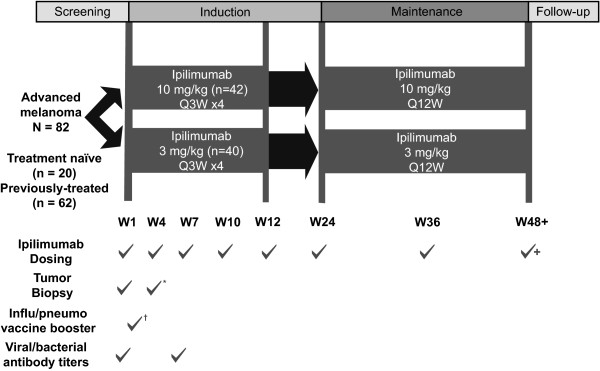
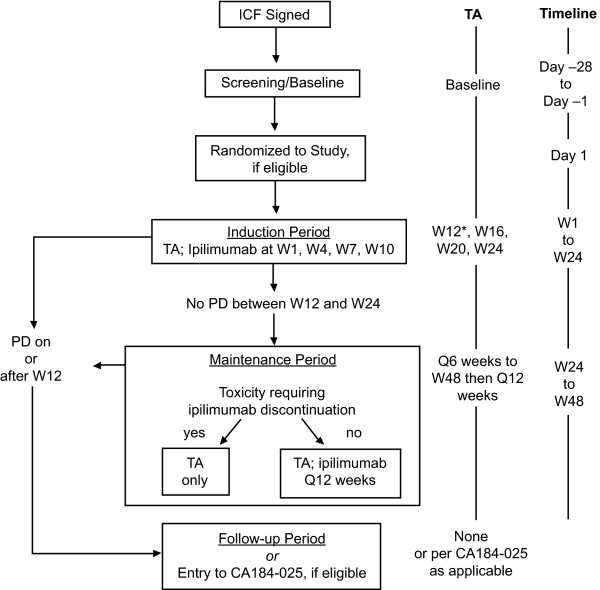
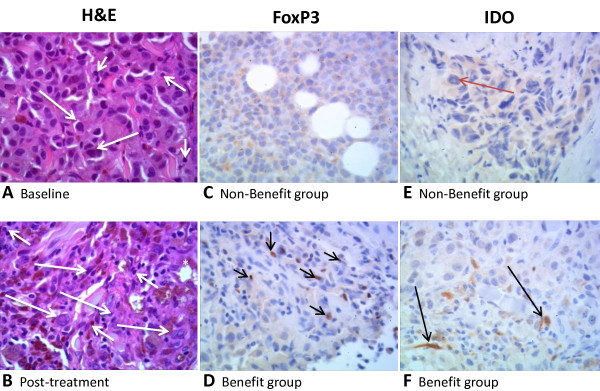
BACKGROUND: Ipilimumab, a fully human monoclonal antibody that blocks cytotoxic T-lymphocyte antigen-4, has demonstrated an improvement in overall survival in two phase III trials of patients with advanced melanoma. The primary objective of the current trial was to prospectively explore candidate biomarkers from the tumor microenvironment for associations with clinical response to ipilimumab. METHODS: In this randomized, double-blind, phase II biomarker study (ClinicalTrials.gov NCT00261365), 82 pretreated or treatment-naïve patients with unresectable stage III/IV melanoma were induced with 3 or 10 mg/kg ipilimumab every 3 weeks for 4 doses; at Week 24, patients could receive maintenance doses every 12 weeks. Efficacy was evaluated per modified World Health Organization response criteria and safety was assessed continuously. Candidate biomarkers were evaluated in tumor biopsies collected pretreatment and 24 to 72 hours after the second ipilimumab dose. Polymorphisms in immune-related genes were also evaluated. RESULTS: Objective response rate, response patterns, and safety were consistent with previous trials of ipilimumab in melanoma. No associations between genetic polymorphisms and clinical activity were observed. Immunohistochemistry and histology on tumor biopsies revealed significant associations between clinical activity and high baseline expression of FoxP3 (p = 0.014) and indoleamine 2,3-dioxygenase (p = 0.012), and between clinical activity and increase in tumor-infiltrating lymphocytes (TILs) between baseline and 3 weeks after start of treatment (p = 0.005). Microarray analysis of mRNA from tumor samples taken pretreatment and post-treatment demonstrated significant increases in expression of several immune-related genes, and decreases in expression of genes implicated in cancer and melanoma. CONCLUSIONS: Baseline expression of immune-related tumor biomarkers and a post-treatment increase in TILs may be positively associated with ipilimumab clinical activity. The observed pharmacodynamic changes in gene expression warrant further analysis to determine whether treatment-emergent changes in gene expression may be associated with clinical efficacy. Further studies are required to determine the predictive value of these and other potential biomarkers associated with clinical response to ipilimumab.
Overview
The claims and statistics of this paper haven’t been checked yet.
Free: it reads the open-access text and checks the first 5 claims that cite a source we can check. Create a free account to check every claim.
Integrity signals
Registry
Cites
Statistics
Figures
Verification
Claims the paper makes
The claims and statistics of this paper haven’t been checked yet.
Free: it reads the open-access text and checks the first 5 claims that cite a source we can check. Create a free account to check every claim.
Claims other papers make about this one
Each is checked against this paper’s own text: does it say what the citing paper says it does?
The source backs part of the claim, not all of it — or backs it for a different population, condition or comparison.
In the citing paper
“Combinatorial biomarker strategies that capture attributes of the host and tumor-immune ecosystem will be essential (Fig. 2; refs.121-124).”
From The Next Decade of Immune Checkpoint Therapy (2021) · cites this paper as [122]
Experimental — accuracy not yet measured
Self-check
Percentages, sums and reported differences re-computed from the paper’s own numbers.
The self-check needs the paper’s full text.
Citations
Cites
R: A Language and Environment for Statistical Computing
R Core Team (2025) · doi:10.32614/r.manuals · Cited by 352,181
PD-1 and PD-L1 Immune Checkpoint Blockade to Treat Breast Cancer
Hartkopf, A. D., Taran, F.-A., Wallwiener, M., Walter, C. B., Krämer, B., Grischke, E.-M., & Brucker, S. Y. (2016) · Breast Care · doi:10.1159/000453569 · Cited by 30,845
Adverse Renal Effects of Immune Checkpoint Inhibitors: A Narrative Review
Wanchoo, R., Karam, S., Uppal, N. N., Barta, V. S., Deray, G., Devoe, C., Launay-Vacher, V., Jhaveri, K. D., & on behalf of Cancer and Kidney International Network Workgroup on Immune Checkpoint Inhibitors (2017) · American Journal of Nephrology · doi:10.1159/000455014 · Cited by 15,256
Improved Survival with Ipilimumab in Patients with Metastatic Melanoma
Hodi, F. S., O'Day, S. J., McDermott, D. F., Weber, R. W., Sosman, J. A., Haanen, J. B., Gonzalez, R., Robert, C., Schadendorf, D., Hassel, J. C., et al. (2010) · New England Journal of Medicine · doi:10.1056/nejmoa1003466 · Cited by 15,155 · cited 3×
“5% for 3 mg/kg ipilimumab monotherapy in a phase III trial [4].”
BackgroundResultBioconductor: open software development for computational biology and bioinformatics
Gentleman, R. C., Carey, V. J., Bates, D. M., Bolstad, B., Dettling, M., Dudoit, S., Ellis, B., Gautier, L., Ge, Y., Gentry, J., et al. (2004) · Genome Biology · doi:10.1186/gb-2004-5-10-r80 · Cited by 12,172 · cited 1×
“0 (Affy package) [32] and q-value package v1.”
Exploration, normalization, and summaries of high density oligonucleotide array probe level data
Irizarry, R. A. (2003) · Biostatistics · doi:10.1093/biostatistics/4.2.249 · Cited by 10,603 · cited 1×
“Gene expression data were normalized using the Robust Multichip Average method [30] and the resulting log2-transformed expression levels were used for subsequent analyses.”
MethodStatistical significance for genomewide studies
Storey, J. D., & Tibshirani, R. (2003) · Proceedings of the National Academy of Sciences · doi:10.1073/pnas.1530509100 · Cited by 9,692 · cited 1×
“A false discovery rate (q-value) approach [31] was used to adjust for multiple testing.”
MethodControl of Regulatory T Cell Development by the Transcription Factor Foxp3
Hori, S., Nomura, T., & Sakaguchi, S. (2003) · Science · doi:10.1126/science.1079490 · Cited by 8,187 · cited 1×
“FoxP3 has been identified as a marker of natural and adaptive/induced regulatory T cells (Tregs) [58].”
BackgroundCuriel, T. J., Coukos, G., Zou, L., Alvarez, X., Cheng, P., Mottram, P., Evdemon-Hogan, M., Conejo-Garcia, J. R., Zhang, L., Burow, M., et al. (2004) · Nature Medicine · doi:10.1038/nm1093 · Cited by 5,151 · cited 1×
“Patients with cancer have higher levels of Tregs in peripheral blood than healthy individuals [59], leading to a suppression of T-cell immunity that has an immunopathologic role in tumor growth [56] and influences prognosis in many cancers [60-63].”
BackgroundTHE USE OF CONFIDENCE OR FIDUCIAL LIMITS ILLUSTRATED IN THE CASE OF THE BINOMIAL
CLOPPER, C. J., & PEARSON, E. S. (1934) · Biometrika · doi:10.1093/biomet/26.4.404 · Cited by 5,003 · cited 2×
“Exact 2-sided 95% confidence intervals (CIs) for within-dose-group BORR were calculated using the method of Clopper and Pearson [27].”
Method
Research works printed but not linked: 4
- Richards J Hwu P Chin K Ibrahim R Berman D Yellin M Lowy I Fahumy F Hoos A Wolchok J Evaluation of treatment guidelines developed for management of immune-related adverse events in ipilimumab clinical protocols [abstract] Presented at the Perspectives in Melanoma XIII Annual Meeting: Baltimore: O-0006 2009
- Harmankaya K Hoos A Wolchok J O'Day SJ Weber JS Lebbe C Maio M Ibrahim R Humphrey R Hodi FS Immune-related response criteria (irRC) identify patients with novel response patterns who have favorable survival among progressors per mWHO criteria [abstract] Presented at the World Meeting of Interdisciplinary Melanoma/Skin Cancer Centers: 19-21 Nov 2009; Berlin, Germany 37
- Chin K Ibrahim R Berman D Yellin MJ Lowy I Lin R Hoos A Treatment guidelines for the management of immune-related adverse events in patients treated with ipilimumab [abstract] Presented at the 7th World Congress on Melanoma/5th Congress of the European Association of Dermato-Oncology (WCM/EADO) 2009 Joint Meeting 12-16 May 2009; Vienna, Austria
- Gajewski TF Grimm EA Nickoloff BJ Govindan R New potential therapeutic targets in melanoma ASCO Educational Book 2008 2008 Alexandria, VA: American Society of Clinical Oncology 404 407
Cited by
Items 101–200 of 547
PD-1 Inhibitors: Do they have a Future in the Treatment of Glioblastoma?
Khasraw, M., Reardon, D. A., Weller, M., & Sampson, J. H. (2020) · Clinical Cancer Research · doi:10.1158/1078-0432.ccr-20-1135 · Cited by 143
“Clin Cancer Res; 26(20) October 15, 2020 CLINICAL CANCER RESEARCH 5288”
BackgroundInfluentialSpatially mapping the immune landscape of melanoma using imaging mass cytometry
Moldoveanu, D., Ramsay, L., Lajoie, M., Anderson-Trocmé, L., Lingrand, M., Berry, D., Perus, L. J. M., Wei, Y., Moraes, C., Alkallas, R., et al. (2022) · Science Immunology · doi:10.1126/sciimmunol.abi5072 · Cited by 142
Ascierto, P. A., Capone, M., Urba, W. J., Bifulco, C. B., Botti, G., Lugli, A., Marincola, F. M., Ciliberto, G., Galon, J., & Fox, B. A. (2013) · Journal of Translational Medicine · doi:10.1186/1479-5876-11-54 · Cited by 120
“related genes FoxP3 and indoleamine 2,3-dioxygenase (IDO) at baseline and an increase from baseline in TILs (at week 4) in tumor biopsies [14].”
BackgroundAnti-programmed death-1 and anti-programmed death-ligand 1 antibodies in cancer therapy
Hamid, O., & Carvajal, R. D. (2013) · Expert Opinion on Biological Therapy · doi:10.1517/14712598.2013.770836 · Cited by 132
“Although there have been attempts to identify a pretreatment biomarker that would predict prognosis and/or response to ipilimumab [105-107], no single molecule has been pinpointed.”
BackgroundSelf-citationThe biomarkers related to immune related adverse events caused by immune checkpoint inhibitors
Jia, X., Geng, L., Jiang, P., Xu, H., Nan, K., Yao, Y., Jiang, L., Sun, H., Qin, T., & Guo, H. (2020) · Journal of Experimental & Clinical Cancer Research · doi:10.1186/s13046-020-01749-x · Cited by 135
“This could be verified in the colon biopsies of patients with GI irAEs, which revealed focal neutrophilic crypts and neutrophil infiltration in the lamina propria of the affected tissue [28, 86], the most prominent features of active colitis [28, 86].”
BackgroundMultimodel preclinical platform predicts clinical response of melanoma to immunotherapy
Pérez-Guijarro, E., Yang, H. H., Araya, R. E., El Meskini, R., Michael, H. T., Vodnala, S. K., Marie, K. L., Smith, C., Chin, S., Lam, K. C., et al. (2020) · Nature Medicine · doi:10.1038/s41591-020-0818-3 · Cited by 118
Predictive biomarkers for response to immune checkpoint inhibition
Shum, B., Larkin, J., & Turajlic, S. (2021) · Seminars in Cancer Biology · doi:10.1016/j.semcancer.2021.03.036 · Cited by 134
Monitoring immune responses in the tumor microenvironment
Wargo, J. A., Reddy, S. M., Reuben, A., & Sharma, P. (2016) · Current Opinion in Immunology · doi:10.1016/j.coi.2016.05.006 · Cited by 113
Ottenhof, S. R., Djajadiningrat, R. S., Thygesen, H. H., Jakobs, P., Jóźwiak, K., Heeren, A. M., de Jong, J., Sanders, J., Horenblas, S., & Jordanova, E. S. (2018) · Frontiers in Immunology · doi:10.3389/fimmu.2018.01253 · Cited by 131
Therapeutic use of anti-CTLA-4 antibodies
Blank, C. U., & Enk, A. (2015) · International Immunology · doi:10.1093/intimm/dxu076 · Cited by 115
Immunotherapy in the treatment of non-small cell lung cancer
Sundar, R., Soong, R., Cho, B. C., Brahmer, J. R., & Soo, R. A. (2014) · Lung Cancer · doi:10.1016/j.lungcan.2014.05.005 · Cited by 123
“Tumor infiltrating lymphocytes have been found to have correlate with clinical benefit from treatment with ipilimumab [100] Forkhead box P3 (FOXP3)-positive and indoleamine 2,3-dioxygenase (IDO)-positive patients benefited from CTLA4 blockage as well [100].”
Chevolet, I., Speeckaert, R., Schreuer, M. S., Neyns, B., Krysko, O., Bachert, C., Hennart, B., Allorge, D., van Geel, N., Gele, M. V., et al. (2015) · OncoImmunology · doi:10.4161/2162402x.2014.982382 · Cited by 119
“IDO expression analysis could also be useful for predictive immunoprofiling, as immunohistochemical IDO-positivity in the tumor micro-environment has been shown to predict response to anti-CTLA-4 therapy in patients with metastatic melanoma.(25) Others have also demonstrated that lower levels of circulating mMDSCs bef…”
BackgroundRole of PD-L1 expression as a biomarker for GEP neuroendocrine neoplasm grading
Cavalcanti, E., Armentano, R., Valentini, A. M., Chieppa, M., & Caruso, M. L. (2017) · Cell Death and Disease · doi:10.1038/cddis.2017.401 · Cited by 116
“Anti-PD-1 administration may improve the prognosis of patients characterized by both tumor cells’ PD-L1 expression and TILs, as shown by multiple studies.(31,32) PD-L1 expression on tumor cells and immune-infiltrating cells, such as tumor-infiltrating macrophages, appears to be a crucial predictor of the antitumor T c…”
Shi, L. Z., Fu, T., Guan, B., Chen, J., Blando, J. M., Allison, J. P., Xiong, L., Subudhi, S. K., Gao, J., & Sharma, P. (2016) · Nature Communications · doi:10.1038/ncomms12335 · Cited by 111
“Since both a -CTLA-4 and a -PD-1 treatment increase tumour T-cell infiltration in mouse and human 22–24 , we examined the abundance of CD4 þ and CD8 þ T cells in MB49 tumours treated with a -CTLA-4, a -PD-1 or combination therapy.”
Ma, S.-D., Xu, X., Jones, R., Delecluse, H., Zumwalde, N. A., Sharma, A., Gumperz, J. E., & Kenney, S. C. (2016) · PLoS Pathogens · doi:10.1371/journal.ppat.1005642 · Cited by 112
“Consistent with our results, a previous study in melanoma patients reported that enhanced T cell infiltration of tumors following immune checkpoint blockade was associated with a higher likelihood of clinical response [62].”
ResultNeurological Adverse Events Associated with Immune Checkpoint Inhibitors: Diagnosis and Management
Astaras, C., Micheli, R. D., Moura, B. G., Hundsberger, T., & Hottinger, A. F. (2018) · Current Neurology and Neuroscience Reports · doi:10.1007/s11910-018-0810-1 · Cited by 113
Yap suppresses T-cell function and infiltration in the tumor microenvironment
Stampouloglou, E., Cheng, N., Federico, A., Slaby, E., Monti, S., Szeto, G. L., & Varelas, X. (2020) · PLOS Biology · doi:10.1371/journal.pbio.3000591 · Cited by 104
Model‐based clinical pharmacology profiling of ipilimumab in patients with advanced melanoma
Feng, Y., Masson, E., Dai, D., Parker, S. M., Berman, D., & Roy, A. (2014) · British Journal of Clinical Pharmacology · doi:10.1111/bcp.12323 · Cited by 103
Self-citationTargeting innate sensing in the tumor microenvironment to improve immunotherapy
Liu, Z., Han, C., & Fu, Y. (2019) · Cellular and Molecular Immunology · doi:10.1038/s41423-019-0341-y · Cited by 112
Naidoo, J., Page, D. B., & Wolchok, J. D. (2014) · Hematology/Oncology Clinics of North America · doi:10.1016/j.hoc.2014.02.002 · Cited by 109
“expression of immune-related genes such as FoxP3 and indoleamine 2,3-dioxygenase (IDO) at baseline, as well as an increase in TILs between a baseline biopsy and a biopsy obtained at week 4.(75) Myeloid-derived suppressor cells (MDSC) are a different type of immune cell that can be detected in both primary and metastat…”
BackgroundThe multifarious roles of the chemokine CXCL14 in cancer progression and immune responses
Westrich, J. A., Vermeer, D. W., Colbert, P. L., Spanos, W. C., & Pyeon, D. (2020) · Molecular Carcinogenesis · doi:10.1002/mc.23188 · Cited by 109
Sanlorenzo, M., Vujic, I., Posch, C., Dajee, A., Yen, A., Kim, S. T., Ashworth, M. T., Rosenblum, M. D., Algazi, A. P., Osella‐Abate, S., et al. (2014) · Cancer Biology & Therapy · doi:10.4161/cbt.28555 · Cited by 108
“Baseline high expression of FoxP3 and indoleamine 2,3-dioxygenase (IDO), and a high count of tumor-infiltrating lymphocytes at baseline are related to a higher clinical activity of ipilimumab.(76) These biomarkers could help to develop an immunoprofiling panel to select patients that are more likely to respond to anti…”
BackgroundThe Challenge for Development of Valuable Immuno-oncology Biomarkers
Mehnert, J. M., Monjazeb, A. M., Beerthuijzen, J. M. T., Collyar, D., Rubinstein, L., & Harris, L. N. (2017) · Clinical Cancer Research · doi:10.1158/1078-0432.ccr-16-3063 · Cited by 92
“detected CD8þ T cells (11, 19, 20) PD-1/PD-L1 expression on these cells predicts response to”
BackgroundTargeting of the Tumor Necrosis Factor Receptor Superfamily for Cancer Immunotherapy
Bremer, E. (2013) · ISRN Oncology · doi:10.1155/2013/371854 · Cited by 118
DeVito, N. C., Sturdivant, M. S., Thievanthiran, B., Xiao, C., Plebanek, M. P., Salama, A. K. S., Beasley, G. M., Holtzhausen, A., Novotny‐Diermayr, V., Strickler, J. H., et al. (2020) · Cell Reports · doi:10.1016/j.celrep.2021.109071 · Cited by 93
“IDO1 has been previously described to be upregulated in responders to ICI therapy, likely in response to interferon (IFN)-g signaling (Gide et al., 2018; Hamid et al., 2011; Yoshida et al., 1981).”
Host Indoleamine 2,3-Dioxygenase: Contribution to Systemic Acquired Tumor Tolerance
Johnson, T. S., & Munn, D. H. (2012) · Immunological Investigations · doi:10.3109/08820139.2012.689405 · Cited by 107
“However, clinical studies using monoclonal blocking antibodies against CTLA-4 to treat melanoma show a correlation between baseline IDO expression and clinical effect (Hamid et al., 2011) but no decrease in IDO expression after treatment (Ribas et al.”
Toward a comprehensive view of cancer immune responsiveness: a synopsis from the SITC workshop
Society for Immunotherapy of Cancer (SITC) Cancer Immune Responsiveness Task Force and Working Groups, Bedognetti, D., Ceccarelli, M., Galluzzi, L., Lu, R., Palucka, K., Samayoa, J., Spranger, S., Warren, S., Wong, K.-K., et al. (2019) · Journal for ImmunoTherapy of Cancer · doi:10.1186/s40425-019-0602-4 · Cited by 88
Cancer Immunotherapies: From Efficacy to Resistance Mechanisms – Not Only Checkpoint Matters
Wang, S., Xie, K., & Liu, T. (2021) · Frontiers in Immunology · doi:10.3389/fimmu.2021.690112 · Cited by 103
Presti, D., Dall’Olio, F. G., Besse, B., Ribeiro, J. M., Meglio, A. D., & Soldato, D. (2022) · Critical Reviews in Oncology/Hematology · doi:10.1016/j.critrevonc.2022.103773 · Cited by 99
Immune-related tumour response assessment criteria: a comprehensive review
Somarouthu, B., Lee, S. I., Urban, T., Sadow, C. A., Harris, G. J., & Kambadakone, A. R. (2017) · British Journal of Radiology · doi:10.1259/bjr.20170457 · Cited by 100
Twelve-year survival and immune correlates in dendritic cell–vaccinated melanoma patients
Gross, S., Erdmann, M., Haendle, I., Voland, S., Berger, T., Schultz, E., Strasser, E., Dankerl, P., Janka, R., Schliep, S., et al. (2017) · JCI Insight · doi:10.1172/jci.insight.91438 · Cited by 87
“Transcriptome studies had then suggested that a T cell–inflamed milieu in pretreatment melanoma metastases is associated with favorable clinical outcome to melanoma vaccines (46) and other immunotherapies such as anti–CTLA-4 (47, 48).”
BackgroundMismatch Repair Deficiency as a Predictive Biomarker for Immunotherapy Efficacy
Viale, G., Trapani, D., & Curigliano, G. (2017) · BioMed Research International · doi:10.1155/2017/4719194 · Cited by 95
The Resistance Mechanisms of Lung Cancer Immunotherapy
Wang, F., Wang, S., & Zhou, Q. H. (2020) · Frontiers in Oncology · doi:10.3389/fonc.2020.568059 · Cited by 99
“Reduced expression of IDO at baseline was noted to be associated with poor response to ipilimumab in a phase II study in melanoma (161).”
BackgroundTumor and Host Factors Controlling Antitumor Immunity and Efficacy of Cancer Immunotherapy
Spranger, S., Sivan, A., Corrales, L., & Gajewski, T. F. (2016) · Advances in Immunology · doi:10.1016/bs.ai.2015.12.003 · Cited by 85
The Tumor Microenvironment Factors That Promote Resistance to Immune Checkpoint Blockade Therapy
Russell, B. L., Sooklal, S. A., Malindisa, S. T., Daka, L. J., & Ntwasa, M. M. (2021) · Frontiers in Oncology · doi:10.3389/fonc.2021.641428 · Cited by 86
Myeloid Cells as Clinical Biomarkers for Immune Checkpoint Blockade
Peranzoni, E., Ingangi, V., Masetto, E., Pinton, L., & Marigo, I. (2020) · Frontiers in Immunology · doi:10.3389/fimmu.2020.01590 · Cited by 86
“High baseline IDO1 expression in tumors has been shown to predict response to anti-CTLA-4 in metastatic melanoma patients (201).”
BackgroundImmune checkpoint modulation: Rational design of combination strategies
Zamarin, D., & Postow, M. A. (2015) · Pharmacology & Therapeutics · doi:10.1016/j.pharmthera.2015.01.003 · Cited by 91
Luke, J. J., & Hodi, F. S. (2013) · The Oncologist · doi:10.1634/theoncologist.2012-0391 · Cited by 103
Beyond PD-L1 testing-emerging biomarkers for immunotherapy in non-small cell lung cancer
Voong, K. R., Feliciano, J. L., Becker, D. J., & Levy, B. P. (2017) · Annals of Translational Medicine · doi:10.21037/atm.2017.06.48 · Cited by 90
“NSCLC: increase in post-treatment TILS was associated with anti-CTLA-4 response (18); CD8+ TILs in early stage lung cancer was prognostic for disease”
BackgroundThe Immune Microenvironment: A Major Player in Human Cancers
Fridman, W. H., Remark, R., Goc, J., Giraldo, N. A., Becht, E., Hammond, S. A., Damotte, D., Dieu-Nosjean, M.-C., & Sautès-Fridman, C. (2014) · International Archives of Allergy and Immunology · doi:10.1159/000362332 · Cited by 77
Shahabi, V., Whitney, G. S., Hamid, O., Schmidt, H., Chasalow, S. D., Alaparthy, S., & Jackson, J. R. (2012) · Cancer Immunology Immunotherapy · doi:10.1007/s00262-012-1227-3 · Cited by 88
“Study design, response assessment and disease control assessment were described elsewhere [18].”
MethodSelf-citationSong, P., Zhang, D., Cui, X., & Zhang, L. (2020) · Thoracic Cancer · doi:10.1111/1759-7714.13541 · Cited by 96
Wu, W., Liu, Y., Zeng, S., Han, Y., & Shen, H. (2021) · Journal of Hematology & Oncology · doi:10.1186/s13045-021-01166-3 · Cited by 89
A personalized view on cancer immunotherapy
Wayteck, L., Breckpot, K., Demeester, J., Smedt, S. C. D., & Raemdonck, K. (2013) · Cancer Letters · doi:10.1016/j.canlet.2013.09.016 · Cited by 94
“[155].”
Jensen, C., Madsen, D. H., Hansen, M., Schmidt, H., Svane, I. M., Karsdal, M. A., & Willumsen, N. (2018) · Journal for ImmunoTherapy of Cancer · doi:10.1186/s40425-018-0474-z · Cited by 79
“Some patients have an immune-excluded phenotype, in which a dense stroma (desmoplasia) in the tumor microenvironment restricts the access of tumor infiltrating lymphocytes (TILs) into the tumor, resulting in poor clinical responses to ICIs [6–8].”
BackgroundSelf-citationGenetic and Epigenetic Biomarkers of Immune Checkpoint Blockade Response
Xiao, Q., Nobre, A., Piñeiro, P., Berciano‐Guerrero, M., Alba, E., Cobo, M., Lauschke, V. M., & Barragán, I. (2020) · Journal of Clinical Medicine · doi:10.3390/jcm9010286 · Cited by 84
Melosky, B., Chu, Q., Juergens, R., Leighl, N., McLeod, D., & Hirsh, V. (2016) · Journal of Clinical Oncology · doi:10.1200/jco.2015.63.8049 · Cited by 80
Choudhury, N. J., Kiyotani, K., Yap, K. L., Campanile, A., Antic, T., Yew, P. Y., Steinberg, G. D., Park, J. H., Nakamura, Y., & O’Donnell, P. H. (2015) · European Urology Focus · doi:10.1016/j.euf.2015.09.007 · Cited by 82
“001); IDO1 expression is probably upregulated in response to CD8 upregulation in a negative feedback mechanism [20,21].”
BackgroundCancer vaccine formulation dictates synergy with CTLA-4 and PD-L1 checkpoint blockade therapy
Hailemichael, Y., Woods, A. N., Fu, T., He, Q., Nielsen, M. C., Hasan, F., Roszik, J., Xiao, Z., Vianden, C., Khong, H., et al. (2018) · Journal of Clinical Investigation · doi:10.1172/jci93303 · Cited by 86
“Since leukocyte function–associated antigen 1 (LFA-1, also known as αLβ2) and very late antigen 4 (VLA-4, also known as α4β7) were both expressed on pmel-1 Teffs and non–pmel-1 Teffs in blood (Figure 5B), we analyzed expression of their cognate ligands, intercellular adhesion molecule 1 differentiation antigen tyrosin…”
BackgroundClinical Development of Immune Checkpoint Inhibitors
Ito, A., Kondo, S., Tada, K., & Kitano, S. (2015) · BioMed Research International · doi:10.1155/2015/605478 · Cited by 87
Idorn, M., Skadborg, S. K., Kellermann, L., Halldórsdóttir, H. R., Holmen Olofsson, G., Met, Ö., & thor Straten, P. (2018) · OncoImmunology · doi:10.1080/2162402x.2018.1450715 · Cited by 76
“Many of the new immune therapies either require the presence of pre-existing T cells in the tumor,(12,26,27) or rely on sufficient tumor homing of tumor specific T cells after peripheral or in vitro activation.(14,28) Contrary to the “pro-inflammatory” chemokines, found in a subset of patients with pre-existing TIL in…”
BackgroundRegulation of tumor immunity and immunotherapy by the tumor collagen extracellular matrix
Flies, D. B., Langermann, S., Jensen, C., Karsdal, M. A., & Willumsen, N. (2023) · Frontiers in Immunology · doi:10.3389/fimmu.2023.1199513 · Cited by 88
Biomarkers of response to immune checkpoint blockade in cancer treatment
Fujii, T., Naing, A., Rolfo, C. D., & Hajjar, J. (2018) · Critical Reviews in Oncology/Hematology · doi:10.1016/j.critrevonc.2018.07.010 · Cited by 81
Balatoni, T., Mohos, A., Papp, E., Sebestyén, T., Liszkay, G., Oláh, J., Varga, A., Lengyel, Z., Emri, G., Gaudi, I., et al. (2018) · Cancer Immunology, Immunotherapy · doi:10.1007/s00262-017-2072-1 · Cited by 76
Biomarkers for Response of Melanoma Patients to Immune Checkpoint Inhibitors: A Systematic Review
Jessurun, C. A. C., Vos, J. A. M., Limpens, J., & Luiten, R. M. (2017) · Frontiers in Oncology · doi:10.3389/fonc.2017.00233 · Cited by 82
“The studies of immune-related gene expression in tumor tissue, as described earlier, also included genes involved in T-cell activation and cytolytic activity, such as granzyme B or perforin (25, 64).”
BackgroundMethodInfluentialTremelimumab: A Review of Development to Date in Solid Tumors
Tarhini, A. A. (2013) · Immunotherapy · doi:10.2217/imt.13.9 · Cited by 76
Ma, C., & Armstrong, A. W. (2013) · Journal of Dermatological Treatment · doi:10.3109/09546634.2013.813897 · Cited by 81
“If left untreated, serious complications such as intestinal perforation may occur, as seen in two clinical trials (5,9).”
BackgroundSensitizing the Tumor Microenvironment to Immune Checkpoint Therapy
Zemek, R. M., Chin, W. L., Nowak, A. K., Millward, M., Lake, R., & Lesterhuis, W. J. (2020) · Frontiers in Immunology · doi:10.3389/fimmu.2020.00223 · Cited by 75
“Indeed, there is an association between pre-treatment Foxp3+ T-reg infiltration, followed by a subsequent increase in TILs 3 weeks into treatment in melanoma biopsies which was associated with response to the CTLA4-targeting antibody ipilimumab (48).”
BackgroundYang, F., Wang, J., Wang, Y., Liu, B., & Molina, J. R. (2021) · Cancers · doi:10.3390/cancers14010109 · Cited by 85
“The predictive role of TILs in immunotherapy was first evaluated in a phase II study of ipilimumab in metastatic melanoma patients [169].”
BackgroundLucarini, V., Buccione, C., Ziccheddu, G., Peschiaroli, F., Sestili, P., Puglisi, R., Mattia, G., Zanetti, C., Parolini, I., Bracci, L., et al. (2016) · Journal of Investigative Dermatology · doi:10.1016/j.jid.2016.08.024 · Cited by 77
“In this regard, the finding that DAC/IFN-I, with respect to IFN-I alone, both enhances tumor cell expression of PDL-1 and increases tumor-infiltrating CD8 T cells suggest that this regimen may represent a promising platform to increase the therapeutic response to immunotherapies blocking the PD-1/PDL-1 axis (Gajewski…”
BackgroundZhan, C., Cheng, J., Li, B., Huang, S., Zeng, F., & Wu, S. (2018) · Analytical Chemistry · doi:10.1021/acs.analchem.8b00594 · Cited by 72
Plesca, I., Tunger, A., Müller, L., Wehner, R., Lai, X., Grimm, M., Rutella, S., Bachmann, M. P., & Schmitz, M. (2020) · Frontiers in Immunology · doi:10.3389/fimmu.2020.00364 · Cited by 76
“found a positive correlation between clinical efficacy of CTLA-4 blockade and a high baseline expression of either the Treg cell-associated transcription factor FoxP3 or the immunosuppressive molecule indoleamine 2,3-dioxygenase (IDO) in melanoma patients (29).”
BackgroundSzabó, P. M., Vajdi, A., Kumar, N., Tolstorukov, M. Y., Chen, B. J., Edwards, R. H., Ligon, K. L., Chasalow, S. D., Chow, K.-H., Shetty, A., et al. (2023) · Scientific Reports · doi:10.1038/s41598-023-28480-9 · Cited by 79
Self-citationChevolet, I., Speeckaert, R., Haspeslagh, M., Neyns, B., Krüse, V., Schreuer, M. S., Gele, M. V., van Geel, N., & Brochez, L. (2014) · British Journal of Dermatology · doi:10.1111/bjd.13100 · Cited by 74
Zito Marino, F., Ascierto, P. A., Rossi, G., Staibano, S., Montella, M., Russo, D., Alfano, R., Morabito, A., Botti, G., & Franco, R. (2017) · Expert Opinion on Biological Therapy · doi:10.1080/14712598.2017.1309387 · Cited by 73
Chat, V., Ferguson, R., Simpson, D., Kazlow, E., Lax, R., Moran, U., Pavlick, A. C., Frederick, D. T., Boland, G. M., Sullivan, R. J., et al. (2019) · Cancer Immunology Immunotherapy · doi:10.1007/s00262-019-02318-8 · Cited by 87
Immunotherapy: enhancing the efficacy of this promising therapeutic in multiple cancers
Inthagard, J., Edwards, J., & Roseweir, A. K. (2019) · Clinical Science · doi:10.1042/cs20181003 · Cited by 77
Pulanco, M. C., Madsen, A. T., Tanwar, A., Corrigan, D. T., & Zang, X. (2023) · Cellular and Molecular Immunology · doi:10.1038/s41423-023-01019-8 · Cited by 75
“Surprisingly, the clinical activity of CTLA-4 blockade in melanoma is positively correlated with high FoxP3 levels in baseline tumor biopsies [182].”
BackgroundFujiwara, Y., Mittra, A., Naqash, A. R., & Takebe, N. (2020) · Cancer Drug Resistance · doi:10.20517/cdr.2020.11 · Cited by 87
“Conversely, the high levels of FoxP3 protein, which was relatively specific for Tregs prior to the initiation of ipilimumab treatment for melanoma patients, were related to better clinical outcomes([93]).”
BackgroundAnstee, J. E., Feehan, K. T., Opzoomer, J. W., Dean, I., Muller, H. P., Bahri, M., Cheung, T. S., Liakath‐Ali, K., Liu, Z., Choy, D., et al. (2022) · Developmental Cell · doi:10.1016/j.devcel.2023.06.006 · Cited by 70
“There is a clear clinical link between the presence of tumor-infil-trating lymphocytes (TILs) and response to therapeutics that can modulate their effects through anti-tumor immune responses, such as immune checkpoint blockade 43,44 and cytotoxic chemo-therapies.”
Ville, S., Poirier, N., Blancho, G., & Vanhove, B. (2015) · Frontiers in Immunology · doi:10.3389/fimmu.2015.00411 · Cited by 66
Chiarion-Sileni, V, Pigozzo, J., Ascierto, P. A., Simeone, E., Maio, M., Calabrò, L., Marchetti, P., De Galitiis, F., Testori, A., Ferrucci, P. F., et al. (2014) · British Journal of Cancer · doi:10.1038/bjc.2014.126 · Cited by 64
“…clinical trials of patients with advanced melanoma, with some patients still alive for 45 years after starting treatment (Weber et al, 2009; Hodi et al, 2010; O’Day et al, 2010; Wolchok et al, 2010; Hamid et al, 2011; Robert et al, 2011; Prieto et al, 2012; Lebbé et al, 2013; Maio et al, 2013).”
BackgroundResultBerman, D., Korman, A., Peck, R., Feltquate, D., Lonberg, N., & Canetta, R. (2015) · Pharmacology & Therapeutics · doi:10.1016/j.pharmthera.2014.11.017 · Cited by 61
Self-citationImmunomodulatory therapy for melanoma: Ipilimumab and beyond
Callahan, M. K., Postow, M. A., & Wolchok, J. D. (2013) · Clinics in Dermatology · doi:10.1016/j.clindermatol.2012.08.006 · Cited by 71
A novel immune resistance mechanism of melanoma cells controlled by the ADAR1 enzyme
Galore-Haskel, G., Nemlich, Y., Greenberg, E., Ashkenazi, S., Hakim, M., Itzhaki, O., Shoshani, N., Shapira-Fromer, R., Ben‐Ami, E., Ofek, E., et al. (2015) · Oncotarget · doi:10.18632/oncotarget.4905 · Cited by 65
“[55].”
Radiomic biomarkers of tumor immune biology and immunotherapy response
Wang, J. H., Wahid, K. A., van Dijk, L. V., Farahani, K., Thompson, R. F., & Fuller, C. D. (2021) · Clinical and Translational Radiation Oncology · doi:10.1016/j.ctro.2021.03.006 · Cited by 72
Santarpía, M., González‐Cao, M., Viteri, S., Karachaliou, N., Altavilla, G., & Rosell, R. (2015) · PubMed Central · doi:10.3978/j.issn.2218-6751.2015.12.04 · Cited by 71
“Spontaneous lymphocytic infiltration is frequently observed in a variety of human cancers and in numerous studies tumor infiltrating lymphocytes (TILs) have been correlated with a more favorable clinical outcome of patients and also with response to treatment, including chemotherapy and immunotherapy (8-13).”
BackgroundResultGaining momentum: New options and opportunities for the treatment of advanced melanoma
Michielin, O. A., & Höeller, C. (2015) · Cancer Treatment Reviews · doi:10.1016/j.ctrv.2015.05.012 · Cited by 68
“An important area for future research will be to identify and validate potential biomarkers to select patients most likely to benefit from treatment and achieve long-term clinical benefit with immunotherapy [96,145,146].”
BackgroundDamuzzo, V., Solito, S., Pinton, L., Carrozzo, E., Valpione, S., Pigozzo, J., Arboretti, R., Chiarion‐Sileni, V., & Mandruzzato, S. (2016) · OncoImmunology · doi:10.1080/2162402x.2016.1249559 · Cited by 65
“results which makes the predictive power of Treg not extensively reliable.(10,13,18,19)”
BackgroundBorcherding, N. C., Kolb, R. H., Gullicksrud, J. A., Vikas, P., Zhu, Y., & Zhang, W. (2018) · Journal of Molecular Biology · doi:10.1016/j.jmb.2018.05.030 · Cited by 70
Leung, A. M., Fermin, A., Ozao‐Choy, J. J., Ramos, R. I., Hamid, O., Oâ€TMDay, S. J., Shin-Sim, M., Morton, D. L., Faries, M. B., Sieling, P. A., et al. (2014) · Frontiers in Oncology · doi:10.3389/fonc.2014.00110 · Cited by 59
“Previous studies have examined tumor sample microarray analysis of mRNA expression of immune related genes (25), NY-ESO-1 antibody seropositivity (26), and absolute lymphocyte count (27); however, the ability to discriminate those who might benefit from ipilimumab is still out of reach.”
BackgroundSelf-citationPrognostic Factors for Checkpoint Inhibitor Based Immunotherapy: An Update With New Evidences
Yan, X., Zhang, S., Deng, Y., Wang, P., Hou, Q., & Xu, H. (2018) · Frontiers in Pharmacology · doi:10.3389/fphar.2018.01050 · Cited by 57
Harder, N., Schönmeyer, R., Nekolla, K., Meier, A., Brieu, N., Vanegas, C., Madonna, G., Capone, M., Botti, G., Ascierto, P. A., et al. (2019) · Scientific Reports · doi:10.1038/s41598-019-43525-8 · Cited by 56
Identification of responders to immune checkpoint therapy: Which biomarkers have the highest value?
Liebl, M. C., & Hofmann, T. G. (2019) · Journal of the European Academy of Dermatology and Venereology · doi:10.1111/jdv.15992 · Cited by 58
Queirolo, P., Morabito, A., Laurent, S., Lastraioli, S., Piccioli, P., Ascierto, P. A., Gentilcore, G., Serra, M., Marasco, A., Tornari, E., et al. (2013) · Cancer Investigation · doi:10.3109/07357907.2013.793699 · Cited by 58
“(39), who did not find any association with”
BackgroundMadonna, G., Ballesteros-Merino, C., Feng, Z., Bifulco, C., Capone, M., Giannarelli, D., Mallardo, D., Simeone, E., Grimaldi, A. M., Caracò, C., et al. (2018) · OncoImmunology · doi:10.1080/2162402x.2017.1405206 · Cited by 55
“suppressive factors such as FoxP3 and IDO is associated with better outcomes with ipilimumab.(29) A possible mechanism underlying this paradoxical relationship could reflect the ability of ipilimumab to reverse FOXP3C regulatory T cell-mediated active suppression of T-effector cells.”
BackgroundNeuroendocrine Regulation of Tumor-Associated Immune Cells
Colón-Echevarria, C. B., Lamboy-Caraballo, R., Aquino-Acevedo, A. N., & Armaiz-Peña, G. N. (2019) · Frontiers in Oncology · doi:10.3389/fonc.2019.01077 · Cited by 63
Cabel, L., Loir, E., Gravis, G., Lavaud, P., Massard, C., Albiges, L. K., Baciarello, G., Loriot, Y., & Fizazi, K. S. (2017) · Journal for ImmunoTherapy of Cancer · doi:10.1186/s40425-017-0232-7 · Cited by 59
“Tumorinfiltrating lymphocytes (TIL) in pre-treatment samples was not clearly demonstrated as a predictive biomarker in this study [22], while increases in TIL density in tumor biopsy samples collected after the second dose of ipilimumab were associated with significantly greater clinical activity [22, 23].”
BackgroundCousin, S., Cantarel, C., Guégan, J., Mazard, T., Gomez‐Roca, C., Metges, J., Bellera, C. A., Adenis, A., Korakis, I., Poureau, P.-G., et al. (2022) · European Journal of Cancer · doi:10.1016/j.ejca.2021.11.012 · Cited by 60
Pasqualini, C., Rubino, J., Brard, C., Cassard, L., André, N., Rondof, W., Scoazec, J., Marchais, A., Nebchi, S., Boselli, L., et al. (2021) · European Journal of Cancer · doi:10.1016/j.ejca.2021.03.032 · Cited by 59
“Pre-existing T-cell anti-tumor immunity is an important prerequisite to the anti-PD-1/PD-L1 response (30).”
Clouthier, D., Lien, S. C., Yang, S. Y. C., Nguyen, L. T., Manem, V. S., Gray, D., Ryczko, M. C., Razak, A. R. A., Lewin, J. H., Lheureux, S., et al. (2019) · Journal for ImmunoTherapy of Cancer · doi:10.1186/s40425-019-0541-0 · Cited by 62
Radiomics analysis for predicting pembrolizumab response in patients with advanced rare cancers
Colen, R. R., Rolfo, C. D., Ak, M., Ayoub, M., Ahmed, S., Elshafeey, N. A., Mamindla, P., Zinn, P. O., Ng, C. S., Vikram, R., et al. (2021) · Journal for ImmunoTherapy of Cancer · doi:10.1136/jitc-2020-001752 · Cited by 61
Clinical trials of immunotherapy in triple-negative breast cancer
Howard, F. M., Pearson, A. T., & Nanda, R. (2022) · Breast Cancer Research and Treatment · doi:10.1007/s10549-022-06665-6 · Cited by 58
“This is consistent with studies of checkpoint blockade in melanoma [86], suggesting that immunotherapy efficacy is dependent on immune cell recruitment.”
ResultGavrielatou, N., Fortis, E., Spathis, A., Anastasiou, Μ., Economopoulou, P., Foukas, G. R. P., Lelegiannis, I. M., Rusakiewicz, S., Vathiotis, I. A., Aung, T. N., et al. (2023) · Annals of Oncology · doi:10.1016/j.annonc.2023.12.011 · Cited by 57
Microenvironment and tumor progression of melanoma: New therapeutic prospectives
Botti, G., Cerrone, M., Scognamiglio, G., Anniciello, A., Ascierto, P. A., & Cantile, M. (2012) · Journal of Immunotoxicology · doi:10.3109/1547691x.2012.723767 · Cited by 57
“It was possible to observe (using microarray) that not only was there an increase in TIL number and activity, but also a significant increase in expression of many microenvironment proteins (Hamid et al., 2011).”
BackgroundAgulló-Ortuño, M. T., Gómez-Martín, Ó., Ponce, S., Iglesias, L., Ojeda, L., Ferrer, I., García‐Ruíz, I., Paz-Ares, L. G., & Pardo, V. (2019) · Clinical Lung Cancer · doi:10.1016/j.cllc.2019.08.006 · Cited by 57
Innate immune sensing of cancer: clues from an identified role for type I IFNs
Gajewski, T. F., Fuertes, M. B., & Woo, S. (2012) · Cancer Immunology Immunotherapy · doi:10.1007/s00262-012-1305-6 · Cited by 54
“This includes clinical benefit to several cancer vaccines, the anti-CTLA-4 mAb ipilimumab, and IL-2 [6–11].”
BackgroundYamazaki, N., Uhara, H., Fukushima, S., Uchi, H., Shibagaki, N., Kiyohara, Y., Tsutsumida, A., Namikawa, K., Okuyama, R., Otsuka, Y., et al. (2015) · Cancer Chemotherapy and Pharmacology · doi:10.1007/s00280-015-2870-0 · Cited by 55
“However, the rates of immune-related Grade 3/4 elevations in ALT (21 %) and AST (17 %) reported in that study [12] were higher than Grade 3/4 hepatic irAEs previously reported in mostly Caucasian patients receiving IPI monotherapy at 3 or 10 mg/kg (0–12 %) [7, 15, 19].”
ResultHong, M. M. Y., & Vareki, S. M. (2022) · Cancers · doi:10.3390/cancers14061580 · Cited by 55
“Clinical response to anti-CTLA-4 in advanced melanoma is associated with tumor mutational load, and an increase of TILs can be observed as early as three weeks post-treatment [128,130].”
BackgroundAnari, F., Ramamurthy, C., & Zibelman, M. (2018) · Future Oncology · doi:10.2217/fon-2017-0585 · Cited by 50
Metadata
- Authors
- Hamid, O., Schmidt, H., Nissan, A., Ridolfi, L., Aamdal, S., Hansson, J., Guida, M., Hyams, D. M., Gómez, H., Bastholt, L., Chasalow, S. D., & Berman, D.
- Affiliations
- Angeles Clinic and Research Institute (US)
- Aarhus University Hospital (DK)
- Hebrew University of Jerusalem (IL)
- Istituto Scientifico Romagnolo per lo Studio e la Cura dei Tumori (IT)
- Oslo University Hospital (NO)
- Karolinska University Hospital (SE)
- Istituto Tumori Bari (IT)
- Instituto Nacional de Enfermedades Neoplásicas (PE)
- Odense University Hospital (DK)
- Bristol-Myers Squibb (United States) (US)
- Corresponding author
- Hamid, Omid
- ORCID
- Venue
- Journal of Translational Medicine
- Published
- 2011-11-28
- Volume
- 9
- Issue
- 1
- Pages
- 204-204
- ISSN
- 1479-5876 (ISSN-L)
- PMC
- PMC3239318
- OpenAlex
- W2138134458
- Cited by
- 534
- References
- 70
- Citations by year
- 2026: 3 · 2025: 7 · 2024: 22 · 2023: 25 · 2022: 25 · 2021: 42 · 2020: 59 · 2019: 41 · 2018: 51 · 2017: 40 · 2016: 53 · 2015: 56 · 2014: 49 · 2013: 47 · 2012: 13
- FWCI
- 17.34
- Type
- journal article
- Language
- en
- Open access
- gold
- doi.org
- Licence
- cc-by
- creativecommons.org/licenses/by/2.0 (tdm)
- Locations
- Journal of Translational Medicine (publishedVersion, cc-by)
- Europe PMC (PubMed Central) (publishedVersion, cc-by)
- PubMed Central (publishedVersion, cc-by)
- PubMed (publishedVersion)
- University of Southern Denmark Research Portal (University of Southern Denmark) (publishedVersion)
- DOAJ (DOAJ: Directory of Open Access Journals) (submittedVersion, cc-by-sa)
- NORA - Norwegian Open Research Archives (submittedVersion, cc-by)
- Funders
- Bristol-Myers Squibb
- American Society of Clinical Oncology
- European Society for Medical Oncology
- Topics
- Health Sciences › Medicine › Oncology › Cancer Immunotherapy and Biomarkers
- Health Sciences › Medicine › Oncology › Cutaneous Melanoma Detection and Management
- Life Sciences › Immunology and Microbiology › Immunology › Immunotherapy and Immune Responses
- Keywords
- ipilimumab, advanced melanoma, predictive biomarkers, CTLA-4 blockade, Foxp3, indoleamine 2,3-dioxygenase, tumor-infiltrating lymphocytes, cancer gene expression, immunotherapy response
- MeSH terms
- Ipilimumab, Adult, Aged, Aged, 80 and over, Antibodies, Monoclonal, Antineoplastic Agents, Dose-Response Relationship, Drug, Drug Administration Schedule, Female, Humans, Immunohistochemistry, Male, Melanoma, Middle Aged, Neoplasm Staging, Polymorphism, Genetic, Prospective Studies, RNA, Messenger, Skin Neoplasms, Biomarkers, Tumor, Gene Expression Regulation, Neoplastic, Treatment Outcome, Young Adult, Tumor Microenvironment
About these checks
Registry, retraction, Cites and statistics results are computed, not judged, with one exception: a printed reference that no index lists is read once by a model before it counts as a citation error. Claims are extracted by a model and kept only when their quote appears verbatim in the text; each cited source is then checked, with a model’s help, for whether it says what the claim relies on. Those verdicts can be wrong — read the claim’s quote and the cited source before relying on one.
Statistics and arithmetic are recomputed, not judged.
Confidence bands are shown only for fields calibrated on our annotated test set. None is calibrated yet, so no band is shown.
What counts as a claim ›How we measure confidence ›How we check this ›
Are you an author, or do you see a problem with this page? Request a review
Data sources
Bibliographic data: Semantic Scholar, OpenAlex, Crossref.
Contains information from the Semantic Scholar Academic Graph Datasets, made available under the ODC Attribution License (ODC-BY 1.0).
Semantic Scholar’s data is described in: Kinney, R., et al. (2023). The Semantic Scholar Open Data Platform. arXiv:2301.10140.
