

A prospective phase II trial exploring the association between tumor microenvironment biomarkers and clinical activity of ipilimumab in advanced melanoma
Open accessThe DOI matches its Crossref record; 69 of the 70 references it cites were found in a registry or an index.
Abstract
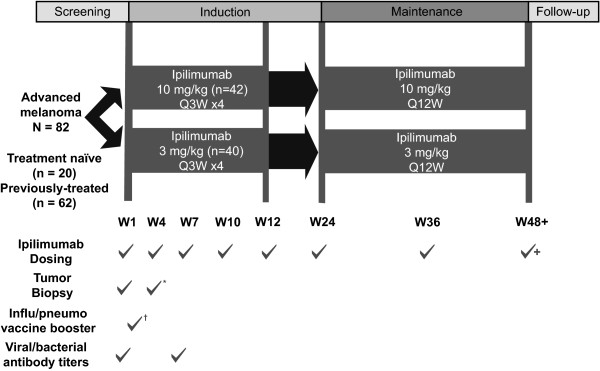
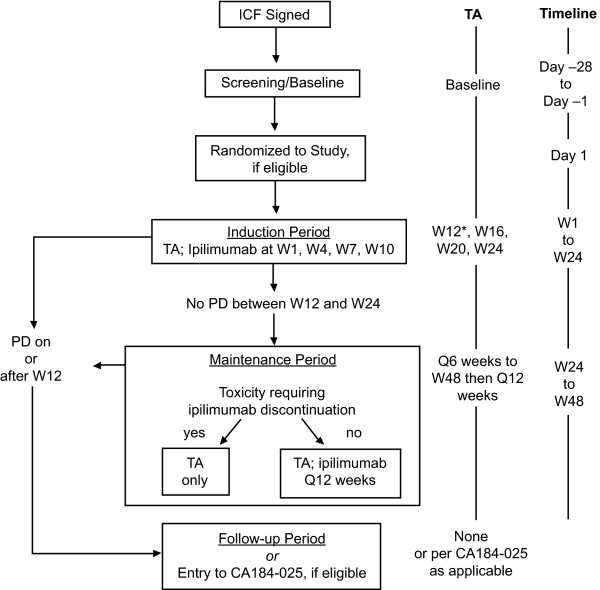
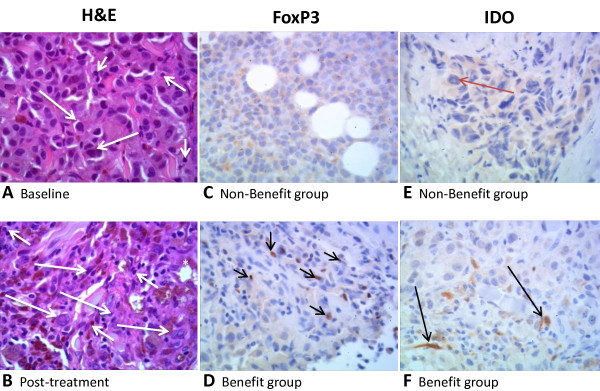
BACKGROUND: Ipilimumab, a fully human monoclonal antibody that blocks cytotoxic T-lymphocyte antigen-4, has demonstrated an improvement in overall survival in two phase III trials of patients with advanced melanoma. The primary objective of the current trial was to prospectively explore candidate biomarkers from the tumor microenvironment for associations with clinical response to ipilimumab. METHODS: In this randomized, double-blind, phase II biomarker study (ClinicalTrials.gov NCT00261365), 82 pretreated or treatment-naïve patients with unresectable stage III/IV melanoma were induced with 3 or 10 mg/kg ipilimumab every 3 weeks for 4 doses; at Week 24, patients could receive maintenance doses every 12 weeks. Efficacy was evaluated per modified World Health Organization response criteria and safety was assessed continuously. Candidate biomarkers were evaluated in tumor biopsies collected pretreatment and 24 to 72 hours after the second ipilimumab dose. Polymorphisms in immune-related genes were also evaluated. RESULTS: Objective response rate, response patterns, and safety were consistent with previous trials of ipilimumab in melanoma. No associations between genetic polymorphisms and clinical activity were observed. Immunohistochemistry and histology on tumor biopsies revealed significant associations between clinical activity and high baseline expression of FoxP3 (p = 0.014) and indoleamine 2,3-dioxygenase (p = 0.012), and between clinical activity and increase in tumor-infiltrating lymphocytes (TILs) between baseline and 3 weeks after start of treatment (p = 0.005). Microarray analysis of mRNA from tumor samples taken pretreatment and post-treatment demonstrated significant increases in expression of several immune-related genes, and decreases in expression of genes implicated in cancer and melanoma. CONCLUSIONS: Baseline expression of immune-related tumor biomarkers and a post-treatment increase in TILs may be positively associated with ipilimumab clinical activity. The observed pharmacodynamic changes in gene expression warrant further analysis to determine whether treatment-emergent changes in gene expression may be associated with clinical efficacy. Further studies are required to determine the predictive value of these and other potential biomarkers associated with clinical response to ipilimumab.
Overview
The claims and statistics of this paper haven’t been checked yet.
Free: it reads the open-access text and checks the first 5 claims that cite a source we can check. Create a free account to check every claim.
Integrity signals
Registry
Cites
Statistics
Figures
Verification
Claims the paper makes
The claims and statistics of this paper haven’t been checked yet.
Free: it reads the open-access text and checks the first 5 claims that cite a source we can check. Create a free account to check every claim.
Claims other papers make about this one
Each is checked against this paper’s own text: does it say what the citing paper says it does?
The source backs part of the claim, not all of it — or backs it for a different population, condition or comparison.
In the citing paper
“Combinatorial biomarker strategies that capture attributes of the host and tumor-immune ecosystem will be essential (Fig. 2; refs.121-124).”
From The Next Decade of Immune Checkpoint Therapy (2021) · cites this paper as [122]
Experimental — accuracy not yet measured
Self-check
Percentages, sums and reported differences re-computed from the paper’s own numbers.
The self-check needs the paper’s full text.
Citations
Cites
R: A Language and Environment for Statistical Computing
R Core Team (2025) · doi:10.32614/r.manuals · Cited by 352,181
PD-1 and PD-L1 Immune Checkpoint Blockade to Treat Breast Cancer
Hartkopf, A. D., Taran, F.-A., Wallwiener, M., Walter, C. B., Krämer, B., Grischke, E.-M., & Brucker, S. Y. (2016) · Breast Care · doi:10.1159/000453569 · Cited by 30,845
Adverse Renal Effects of Immune Checkpoint Inhibitors: A Narrative Review
Wanchoo, R., Karam, S., Uppal, N. N., Barta, V. S., Deray, G., Devoe, C., Launay-Vacher, V., Jhaveri, K. D., & on behalf of Cancer and Kidney International Network Workgroup on Immune Checkpoint Inhibitors (2017) · American Journal of Nephrology · doi:10.1159/000455014 · Cited by 15,256
Improved Survival with Ipilimumab in Patients with Metastatic Melanoma
Hodi, F. S., O'Day, S. J., McDermott, D. F., Weber, R. W., Sosman, J. A., Haanen, J. B., Gonzalez, R., Robert, C., Schadendorf, D., Hassel, J. C., et al. (2010) · New England Journal of Medicine · doi:10.1056/nejmoa1003466 · Cited by 15,155 · cited 3×
“5% for 3 mg/kg ipilimumab monotherapy in a phase III trial [4].”
BackgroundResultBioconductor: open software development for computational biology and bioinformatics
Gentleman, R. C., Carey, V. J., Bates, D. M., Bolstad, B., Dettling, M., Dudoit, S., Ellis, B., Gautier, L., Ge, Y., Gentry, J., et al. (2004) · Genome Biology · doi:10.1186/gb-2004-5-10-r80 · Cited by 12,172 · cited 1×
“0 (Affy package) [32] and q-value package v1.”
Exploration, normalization, and summaries of high density oligonucleotide array probe level data
Irizarry, R. A. (2003) · Biostatistics · doi:10.1093/biostatistics/4.2.249 · Cited by 10,603 · cited 1×
“Gene expression data were normalized using the Robust Multichip Average method [30] and the resulting log2-transformed expression levels were used for subsequent analyses.”
MethodStatistical significance for genomewide studies
Storey, J. D., & Tibshirani, R. (2003) · Proceedings of the National Academy of Sciences · doi:10.1073/pnas.1530509100 · Cited by 9,692 · cited 1×
“A false discovery rate (q-value) approach [31] was used to adjust for multiple testing.”
MethodControl of Regulatory T Cell Development by the Transcription Factor Foxp3
Hori, S., Nomura, T., & Sakaguchi, S. (2003) · Science · doi:10.1126/science.1079490 · Cited by 8,187 · cited 1×
“FoxP3 has been identified as a marker of natural and adaptive/induced regulatory T cells (Tregs) [58].”
BackgroundCuriel, T. J., Coukos, G., Zou, L., Alvarez, X., Cheng, P., Mottram, P., Evdemon-Hogan, M., Conejo-Garcia, J. R., Zhang, L., Burow, M., et al. (2004) · Nature Medicine · doi:10.1038/nm1093 · Cited by 5,151 · cited 1×
“Patients with cancer have higher levels of Tregs in peripheral blood than healthy individuals [59], leading to a suppression of T-cell immunity that has an immunopathologic role in tumor growth [56] and influences prognosis in many cancers [60-63].”
BackgroundTHE USE OF CONFIDENCE OR FIDUCIAL LIMITS ILLUSTRATED IN THE CASE OF THE BINOMIAL
CLOPPER, C. J., & PEARSON, E. S. (1934) · Biometrika · doi:10.1093/biomet/26.4.404 · Cited by 5,003 · cited 2×
“Exact 2-sided 95% confidence intervals (CIs) for within-dose-group BORR were calculated using the method of Clopper and Pearson [27].”
Method
Research works printed but not linked: 4
- Richards J Hwu P Chin K Ibrahim R Berman D Yellin M Lowy I Fahumy F Hoos A Wolchok J Evaluation of treatment guidelines developed for management of immune-related adverse events in ipilimumab clinical protocols [abstract] Presented at the Perspectives in Melanoma XIII Annual Meeting: Baltimore: O-0006 2009
- Harmankaya K Hoos A Wolchok J O'Day SJ Weber JS Lebbe C Maio M Ibrahim R Humphrey R Hodi FS Immune-related response criteria (irRC) identify patients with novel response patterns who have favorable survival among progressors per mWHO criteria [abstract] Presented at the World Meeting of Interdisciplinary Melanoma/Skin Cancer Centers: 19-21 Nov 2009; Berlin, Germany 37
- Chin K Ibrahim R Berman D Yellin MJ Lowy I Lin R Hoos A Treatment guidelines for the management of immune-related adverse events in patients treated with ipilimumab [abstract] Presented at the 7th World Congress on Melanoma/5th Congress of the European Association of Dermato-Oncology (WCM/EADO) 2009 Joint Meeting 12-16 May 2009; Vienna, Austria
- Gajewski TF Grimm EA Nickoloff BJ Govindan R New potential therapeutic targets in melanoma ASCO Educational Book 2008 2008 Alexandria, VA: American Society of Clinical Oncology 404 407
Cited by
Primary, Adaptive, and Acquired Resistance to Cancer Immunotherapy
Sharma, P., Hu-Lieskovan, S., Wargo, J. A., & Ribas, A. (2017) · Cell · doi:10.1016/j.cell.2017.01.017 · Cited by 5,588
“A retrospective study of patients treated with anti-CTLA-4 reported that a high baseline expression of FoxP3+ Tregs in the tumor was associated with better clinical outcomes (Hamid et al., 2011).”
Innate and adaptive immune cells in the tumor microenvironment
Gajewski, T. F., Schreiber, H., & Fu, Y.-X. (2013) · Nature Immunology · doi:10.1038/ni.2703 · Cited by 4,148
Immune Checkpoint Blockade in Cancer Therapy
Postow, M. A., Callahan, M. K., & Wolchok, J. D. (2015) · Journal of Clinical Oncology · doi:10.1200/jco.2014.59.4358 · Cited by 2,709
“Intratumorally, a high number of T regulatory cells, the presence of the immunosuppressive enzyme indoleamine 2,3-dioxygenase, and immune-active genetic profile have been associated with benefit from ipilimumab.(82,83) More recently, whole-exome sequencing of tumors from patients treated with CTLA-4 blockade has revea…”
BackgroundNivolumab and ipilimumab versus ipilimumab in untreated melanoma
Postow, M. A., Chesney, J., Pavlick, A. C., Robert, C., Grossmann, K., McDermott, D., Linette, G. P., Meyer, N., Giguere, J. K., Agarwala, S. S., et al. (2015) · New England Journal of Medicine · doi:10.1056/nejmoa1414428 · Cited by 2,781
“Grade 3 or 4 5 4/5 (80) 1/4 (25) NE (5.”
Taube, J. M., Klein, A., Brahmer, J. R., Xu, H., Pan, X., Kim, J. H., Chen, L., Pardoll, D. M., Topalian, S. L., & Anders, R. A. (2014) · Clinical Cancer Research · doi:10.1158/1078-0432.ccr-13-3271 · Cited by 2,324
“494 Yes 14 (34) 11 (79) 3 (21) 11 (79) 3 (21) Interval between specimen procurement and treatment initiation (n 1⁄4 41) <1 year 16 (39) 10 (63) 6 (37) 0.”
The immune contexture in cancer prognosis and treatment
Fridman, W. H., Zitvogel, L., Sautès–Fridman, C., & Kroemer, G. (2017) · Nature Reviews Clinical Oncology · doi:10.1038/nrclinonc.2017.101 · Cited by 2,263
Schadendorf, D., Hodi, F. S., Robert, C., Weber, J. S., Margolin, K., Hamid, O., Patt, D., Chen, T.-T., Berman, D. M., & Wolchok, J. D. (2015) · Journal of Clinical Oncology · doi:10.1200/jco.2014.56.2736 · Cited by 2,141
Self-citationImmune checkpoint inhibitors: recent progress and potential biomarkers
Darvin, P., Toor, S. M., Sasidharan Nair, V., & Elkord, E. (2018) · Experimental & Molecular Medicine · doi:10.1038/s12276-018-0191-1 · Cited by 2,035
STING-Dependent Cytosolic DNA Sensing Mediates Innate Immune Recognition of Immunogenic Tumors
Woo, S.-R., Fuertes, M. B., Corrales, L., Spranger, S., Furdyna, M. J., Leung, M. Y. K., Duggan, R., Wang, Y., Barber, G. N., Fitzgerald, K. A., et al. (2014) · Immunity · doi:10.1016/j.immuni.2014.10.017 · Cited by 1,917
“In metastatic disease, a preexisting T cell-inflamed tumor microenvironment appears to be associated with clinical responses to therapeutic vaccines and other immunotherapies and is being explored as a predictive biomarker (Gajewski et al., 2010; Hamid et al., 2011; Harlin et al., 2009).”
BackgroundPredictive biomarkers for checkpoint inhibitor-based immunotherapy
Gibney, G. T., Weiner, L. M., & Atkins, M. B. (2016) · The Lancet Oncology · doi:10.1016/s1470-2045(16)30406-5 · Cited by 1,635
Human CAR T cells with cell-intrinsic PD-1 checkpoint blockade resist tumor-mediated inhibition
Cherkassky, L., Morello, A., Villena-Vargas, J., Feng, Y., Dimitrov, D. S., Jones, D. R., Sadelain, M., & Adusumilli, P. S. (2016) · Journal of Clinical Investigation · doi:10.1172/jci83092 · Cited by 1,074
Indoleamine 2,3 dioxygenase and metabolic control of immune responses
Munn, D. H., & Mellor, A. L. (2013) · Trends in Immunology · doi:10.1016/j.it.2012.10.001 · Cited by 1,037
“11, 312–319 64 Hamid, O. et al. (2011) A prospective phase II trial exploring the association between tumor microenvironment biomarkers and”
BackgroundThe Continuum of Cancer Immunosurveillance: Prognostic, Predictive, and Mechanistic Signatures
Galon, J., Angell, H. K., Bedognetti, D., & Marincola, F. M. (2013) · Immunity · doi:10.1016/j.immuni.2013.07.008 · Cited by 864
Selby, M. J., Engelhardt, J. J., Quigley, M., Henning, K. A., Chen, T., Srinivasan, M., & Korman, A. J. (2013) · Cancer Immunology Research · doi:10.1158/2326-6066.cir-13-0013 · Cited by 857
“Indeed, response to ipilimumab has been associated with the presence of tumor-infiltrating lymphocytes (43, 44).”
BackgroundGenetics and biology of prostate cancer
Wang, G., Zhao, D., Spring, D. J., & DePinho, R. A. (2018) · Genes & Development · doi:10.1101/gad.315739.118 · Cited by 750
“This pattern is notable because a higher regulatory:effector T-cell ratio correlates with poor response to anti-CTLA-4 therapy inmurinemodels and patients (Hamid et al. 2011).”
BackgroundTreatment of the Immune-Related Adverse Effects of Immune Checkpoint Inhibitors: A Review
Friedman, C. F., Proverbs-Singh, T. A., & Postow, M. A. (2016) · JAMA Oncology · doi:10.1001/jamaoncol.2016.1051 · Cited by 802
An immune-active tumor microenvironment favors clinical response to ipilimumab
Ji, R.-R., Chasalow, S. D., Wang, L., Hamid, O., Schmidt, H., Cogswell, J., Alaparthy, S., Berman, D., Jure-Kunkel, M., Siemers, N. O., et al. (2012) · Cancer Immunology, Immunotherapy · doi:10.1007/s00262-011-1172-6 · Cited by 775
“Patients who completed the induction phase were eligible for maintenance doses thereafter, every 12 weeks (Q12 W) [16].”
MethodSelf-citationThe future of cancer immunotherapy: microenvironment-targeting combinations
Murciano-Goroff, Y. R., Warner, A. B., & Wolchok, J. D. (2020) · Cell Research · doi:10.1038/s41422-020-0337-2 · Cited by 749
The Next Decade of Immune Checkpoint Therapy
Sharma, P., Siddiqui, B. A., Anandhan, S., Yadav, S. S., Subudhi, S. K., Gao, J., Goswami, S., & Allison, J. P. (2021) · Cancer Discovery · doi:10.1158/2159-8290.cd-20-1680 · Cited by 750
Zamarin, D., Holmgaard, R. B., Subudhi, S. K., Park, J. S., Mansour, M., Palese, P., Merghoub, T., Wolchok, J. D., & Allison, J. P. (2014) · Science Translational Medicine · doi:10.1126/scitranslmed.3008095 · Cited by 711
“DISCUSSION The presence of TILs has been shown to be a favorable prognostic indicator in a number of cancers, and gene expression profiling demonstrated that patients with high baseline tumor expression of genes related toboth innate and adaptive immune response weremore likely to favorably respond to immunotherapy (7…”
BackgroundBertrand, A., Kostine, M., Barnetche, T., Truchetet, M.-E., & Schaeverbeke, T. (2015) · BMC Medicine · doi:10.1186/s12916-015-0455-8 · Cited by 704
“Hamid [17] Randomized, double blind, phase II Melanoma 82 Ipilimumab 3; 10 n/a”
BackgroundMethodHolmgaard, R. B., Zamarin, D., Munn, D. H., Wolchok, J. D., & Allison, J. P. (2013) · Journal of Experimental Medicine · doi:10.1084/jem.20130066 · Cited by 634
“…studies using CTLA-4 blockade to treat melanoma show a positive correlation between IDO expression in pretreatment biopsies and clinical efficacy (Hamid et al., 2011; Ji et al., 2012), and demonstrate no decrease in IDO expression after treatment (Ribas et al., 2009), suggesting that IDO…”
BackgroundEvolving synergistic combinations of targeted immunotherapies to combat cancer
Melero, I., Berman, D. M., Aznar, M. A., Korman, A. J., Gracia, J. L. P., & Haanen, J. (2015) · Nature Reviews Cancer · doi:10.1038/nrc3973 · Cited by 637
Self-citationThe Tumor Microenvironment in the Response to Immune Checkpoint Blockade Therapies
Petitprez, F., Meylan, M., de Reyniès, A., Sautès-Fridman, C., & Fridman, W. H. (2020) · Frontiers in Immunology · doi:10.3389/fimmu.2020.00784 · Cited by 602
“However, since CTLA-4 is constitutively expressed on Tregs, their presence has been shown to be associated with response to CTLA-4 blockade (42).”
BackgroundInnate Immune Recognition of Cancer
Woo, S.-R., Corrales, L., & Gajewski, T. F. (2015) · Annual Review of Immunology · doi:10.1146/annurev-immunol-032414-112043 · Cited by 571
Angell, H., & Galon, J. (2013) · Current Opinion in Immunology · doi:10.1016/j.coi.2013.03.004 · Cited by 574
Neurological adverse events associated with immune checkpoint inhibitors: Review of the literature
Cuzzubbo, S., Javeri, F., Tissier, M., Roumi, A., Barlog, C., Doridam, J., Lebbe, C., Belin, C., Ursu, R., & Carpentier, A. F. (2017) · European Journal of Cancer · doi:10.1016/j.ejca.2016.12.001 · Cited by 571
Xu, C., Chen, Y.-P., Du, X.-J., Liu, J.-Q., Huang, C.-L., Chen, L., Zhou, G.-Q., Li, W.-F., Mao, Y.-P., Hsu, C., et al. (2018) · BMJ · doi:10.1136/bmj.k4226 · Cited by 558
Heinhuis, K. M., Ros, W., Kok, M., Steeghs, N., Beijnen, J. H., & Schellens, J. H. M. (2019) · Annals of Oncology · doi:10.1093/annonc/mdy551 · Cited by 557
Antagonist Antibodies to PD-1 and B7-H1 (PD-L1) in the Treatment of Advanced Human Cancer—Response
Sznol, M., & Chen, L. (2013) · Clinical Cancer Research · doi:10.1158/1078-0432.ccr-13-2234 · Cited by 528
Immune Modulation in Cancer with Antibodies
Page, D. B., Postow, M. A., Callahan, M. K., Allison, J. P., & Wolchok, J. D. (2014) · Annual Review of Medicine · doi:10.1146/annurev-med-092012-112807 · Cited by 515
Antagonist Antibodies to PD-1 and B7-H1 (PD-L1) in the Treatment of Advanced Human Cancer
Sznol, M., & Chen, L. (2013) · Clinical Cancer Research · doi:10.1158/1078-0432.ccr-12-2063 · Cited by 488
“Substantial therapeutic advances for the B7-H1þ TILþ subgroup may follow further characterization of other coinhibitory ligand–receptor interactions or immune suppressive factors in the tumor microenvironment.”
ResultInfluentialThe host STING pathway at the interface of cancer and immunity
Corrales, L., McWhirter, S. M., Dubensky, T. W., & Gajewski, T. F. (2016) · Journal of Clinical Investigation · doi:10.1172/jci86892 · Cited by 487
“Importantly, clinical data have revealed that patients with this T cell–inflamed tumor phenotype are the most likely to respond to several immunotherapies, including therapeutic cancer vaccines (9), high-dose IL-2 (13), and antibodies against the inhibitory receptors cytotoxic T-lymphocyte associated-4 (CTLA-4) (14, 1…”
BackgroundCancer immunotherapy strategies based on overcoming barriers within the tumor microenvironment
Gajewski, T. F., Woo, S.-R., Zha, Y., Spaapen, R., Zheng, Y., Corrales, L., & Spranger, S. (2013) · Current Opinion in Immunology · doi:10.1016/j.coi.2013.02.009 · Cited by 422
Objective Measurement and Clinical Significance of TILs in Non–Small Cell Lung Cancer
Schalper, K. A., Brown, J., Carvajal-Hausdorf, D., McLaughlin, J., Velcheti, V., Syrigos, K. N., Herbst, R. S., & Rimm, D. L. (2015) · JNCI: Journal of the National Cancer Institute · doi:10.1093/jnci/dju435 · Cited by 417
“One key unaddressed issue is the potential of TILs, alone or in combination with other markers, to predict response to immunostimulatory therapies such as anti-PD-1/PD-L1 as previously suggested (12,14,22).”
BackgroundInnate immune signaling and regulation in cancer immunotherapy
Corrales, L., Matson, V., Flood, B., Spranger, S., & Gajewski, T. F. (2017) · Cell Research · doi:10.1038/cr.2016.149 · Cited by 408
Predictive biomarkers in PD-1/PD-L1 checkpoint blockade immunotherapy
Meng, X., Huang, Z., Teng, F., Xing, L., & Yu, J. (2015) · Cancer Treatment Reviews · doi:10.1016/j.ctrv.2015.11.001 · Cited by 401
“1% in the non-benefit group [50].”
Lessons learned from the blockade of immune checkpoints in cancer immunotherapy
Li, X., Shao, C., Shi, Y., & Han, W. (2018) · Journal of Hematology & Oncology · doi:10.1186/s13045-018-0578-4 · Cited by 381
“One study of patients treated with CTLA-4 mAb showed that a high baseline expression of Foxp3 Treg cells in the tumor was correlated with better clinical outcomes [66].”
BackgroundImproved Survival with T Cell Clonotype Stability After Anti–CTLA-4 Treatment in Cancer Patients
Cha, E., Klinger, M., Hou, Y., Cummings, C., Ribas, A., Faham, M., & Fong, L. (2014) · Science Translational Medicine · doi:10.1126/scitranslmed.3008211 · Cited by 383
“The potential importance of baseline T cell fitness is underscored by factors that have been associated with clinical benefit from ipilimumab and are suggestive of T cell activation and/or proliferation upon treatment with CTLA-4 blockade: elevated absolute lymphocyte counts (17), expression of inflammatory immune-rel…”
BackgroundAt the Bedside: CTLA-4- and PD-1-blocking antibodies in cancer immunotherapy
Callahan, M. K., & Wolchok, J. D. (2013) · Journal of Leukocyte Biology · doi:10.1189/jlb.1212631 · Cited by 348
Biomarkers for immune checkpoint inhibition in non–small cell lung cancer (NSCLC)
Bodor, J. N., Boumber, Y., & Borghaei, H. (2020) · Cancer · doi:10.1002/cncr.32468 · Cited by 329
CTLA-4 blockade in tumor models: an overview of preclinical and translational research.
Grosso, J. F., & Jure‐Kunkel, M. (2013) · Europe PMC (PubMed Central) · Cited by 402
Trial watch: IDO inhibitors in cancer therapy
Vacchelli, E., Aranda, F., Eggermont, A., Sautès-Fridman, C., Tartour, E., Kennedy, E. P., Platten, M., Zitvogel, L., Kroemer, G., & Galluzzi, L. (2014) · OncoImmunology · doi:10.4161/21624011.2014.957994 · Cited by 326
“Moreover, elevated expression levels of IDO1 at baseline have been associated with improved clinical outcome in melanoma patients treated with the CTLA4-targeting antibody ipilimumab.(99) In this Trial Watch,(100-102) we discuss preclinical and clinical findings about the inhibition of IDO1 as a strategy for the re(ac…”
BackgroundBiomarkers of response to PD-1/PD-L1 inhibition
Maleki Vareki, S., Garrigós, C., & Duran, I. (2017) · Critical Reviews in Oncology/Hematology · doi:10.1016/j.critrevonc.2017.06.001 · Cited by 318
Defining clinically useful biomarkers of immune checkpoint inhibitors in solid tumours
Holder, A. M., Dedeilia, A., Sierra-Davidson, K., Cohen, S., Liu, D., Parikh, A., & Boland, G. M. (2024) · Nature Reviews Cancer · doi:10.1038/s41568-024-00705-7 · Cited by 298
Tarhini, A. A., Edington, H., Butterfield, L. H., Lin, Y., Shuai, Y., Tawbi, H., Sander, C., Yin, Y., Holtzman, M., Johnson, J., et al. (2014) · PLoS ONE · doi:10.1371/journal.pone.0087705 · Cited by 310
“Hamid, et al reported a significant association between high baseline tumor FOXP3 expression by IHC and improved clinical outcome after ipilimumab treatment for metastatic melanoma supporting a role for ipilimumab in modulating intra-tumoral Treg [31].”
BackgroundTumor-Infiltrating Lymphocytes and Their Prognostic Value in Cutaneous Melanoma
Maibach, F., Sadozai, H., Seyed Jafari, S. M., Hunger, R. E., & Schenk, M. (2020) · Frontiers in Immunology · doi:10.3389/fimmu.2020.02105 · Cited by 312
“While baseline TIL scores in H&E stained biopsies were not elevated in patients who displayed clinical responses compared to those who did not, a majority of responding patients exhibited significant increases in TIL scores following treatment (139).”
BackgroundResultDevelopment of ipilimumab: a novel immunotherapeutic approach for the treatment of advanced melanoma
Wolchok, J. D., Hodi, F. S., Weber, J. S., Allison, J. P., Urba, W. J., Robert, C., O'Day, S. J., Hoos, A., Humphrey, R., Berman, D. M., et al. (2013) · Annals of the New York Academy of Sciences · doi:10.1111/nyas.12180 · Cited by 303
Self-citationRemark, R., Becker, C., Gomez, J. E., Damotte, D., Dieu-Nosjean, M.-C., Sautès-Fridman, C., Fridman, W.-H., Powell, C. A., Altorki, N. K., Merad, M., et al. (2015) · American Journal of Respiratory and Critical Care Medicine · doi:10.1164/rccm.201409-1671pp · Cited by 271
“Although some other associations between tumor microenvironment biomarkers and clinical activity have been reported (85, 86), they still need to be more intensively investigated to validate them as predictive markers of response or for selection of patients most likely to respond to the treatment.”
BackgroundFerrucci, P. F., Gandini, S., Battaglia, A., Alfieri, S., Di Giacomo, A. M., Giannarelli, D., Cappellini, G. C. A., De Galitiis, F., Marchetti, P., Amato, G., et al. (2015) · British Journal of Cancer · doi:10.1038/bjc.2015.180 · Cited by 262
“…cells, and soluble factors such as lactate dehydrogenase (LDH) or C-reactive protein (Breunis et al, 2008; Ku et al, 2010; Di Giacomo et al, 2011; Hamid et al, 2011; Delyon et al, 2013; Di Giacomo et al, 2013; Queirolo et al, 2013; Wilgenhof et al, 2013; Berrocal et al, 2014; Kelderman et al,…”
BackgroundImmune checkpoint pathways in immunotherapy for head and neck squamous cell carcinoma
Mei, Z., Huang, J., Qiao, B., & Lam, A. K.-Y. (2020) · International Journal of Oral Science · doi:10.1038/s41368-020-0084-8 · Cited by 257
Oliva, M., Spreafico, A., Taberna, M., Alemany, L., Coburn, B., Mesia, R., & Siu, L. L. (2019) · Annals of Oncology · doi:10.1093/annonc/mdy507 · Cited by 260
“For instance, CD8þ T-cell infiltration at baseline has been correlated with increased response to anti-PD-1/PD-L1 agents in melanoma [81, 82].”
BackgroundSimeone, E., Gentilcore, G., Giannarelli, D., Grimaldi, A. M., Caracò, C., Curvietto, M., Esposito, A., Paone, M., Palla, M., Cavalcanti, E., et al. (2014) · Cancer Immunology, Immunotherapy · doi:10.1007/s00262-014-1545-8 · Cited by 253
“taking this into consideration, it was hypothesised that tregs, and thus FoxP3, may be upregulated in the tumours of patients with ongoing, yet suboptimal, antitumour immune responses and that these individuals may be more likely to respond to ipilimumab [20].”
BackgroundOtt, P. A., Hodi, F. S., & Buchbinder, E. I. (2015) · Frontiers in Oncology · doi:10.3389/fonc.2015.00202 · Cited by 242
“Unfortunately, while the immunosuppressive mechanisms of immune checkpoint blockade are being uncovered, good predictive biomarkers of success have yet to be validated (8, 9).”
BackgroundTeng, F., Meng, X., Kong, L., & Yu, J. (2018) · Cancer Letters · doi:10.1016/j.canlet.2017.11.014 · Cited by 243
Overcoming Immune Evasion in Melanoma
Eddy, K., & Chen, S. (2020) · International Journal of Molecular Sciences · doi:10.3390/ijms21238984 · Cited by 222
Pathways and therapeutic targets in melanoma
Shtivelman, E., Davies, M. A., Hwu, P., Yang, J., Lotem, M., Oren, M., Flaherty, K. T., & Fisher, D. E. (2014) · Oncotarget · doi:10.18632/oncotarget.1892 · Cited by 217
“Significant associations were detected between clinical activity and high-baseline expression of FoxP3 and indoleamine 2,3-dioxygenase (IDO), and an increase in tumor-infiltrating lymphocytes (TILs) [226].”
Advancing to the era of cancer immunotherapy
Wang, Y., Wang, M., Wu, H., & Xu, R. (2021) · Cancer Communications · doi:10.1002/cac2.12178 · Cited by 214
Buder-Bakhaya, K., & Hassel, J. C. (2018) · Frontiers in Immunology · doi:10.3389/fimmu.2018.01474 · Cited by 217
“A more detailed assessment of the T cell infiltrate at baseline revealed an association between high baseline FoxP3+ Tregs and indoleamine2,3-dioxygenase (IDO) expression and favorable outcome (115).”
BackgroundInfluentialVassilakopoulou, M., Avgeris, M., Velcheti, V., Kotoula, V., Rampias, T., Chatzopoulos, K., Perisanidis, C., Kontos, C. K., Giotakis, A. I., Scorilas, A., et al. (2016) · Clinical Cancer Research · doi:10.1158/1078-0432.ccr-15-1543 · Cited by 212
“Preliminary studies in other tumors also suggest that clinical responses to immune checkpoint inhibitors are associated with increased levels of immune inhibitory signals, such as PD-L1, and with increased TILs or TIL subtypes (5-8).”
BackgroundRadiotherapy and CTLA-4 Blockade Shape the TCR Repertoire of Tumor-Infiltrating T Cells
Rudqvist, N.-P., Pilones, K. A., Lhuillier, C., Wennerberg, E., Sidhom, J.-W., Emerson, R. O., Robins, H. S., Schneck, J., Formenti, S. C., & Demaria, S. (2018) · Cancer Immunology Research · doi:10.1158/2326-6066.cir-17-0134 · Cited by 213
Immune-suppressive properties of the tumor microenvironment
Becker, J. C., Andersen, M. H., Schrama, D., & thor Straten, P. (2013) · Cancer Immunology, Immunotherapy · doi:10.1007/s00262-013-1434-6 · Cited by 204
“Importantly, several lines of evidence suggest that an immune-active tumor microenvironment favors clinical response to ipilimumab [59, 60].”
BackgroundSomatic Mutations and Neoepitope Homology in Melanomas Treated with CTLA-4 Blockade
Nathanson, T., Ahuja, A., Rubinsteyn, A., Aksoy, B. A., Hellmann, M. D., Miao, D., Van Allen, E., Merghoub, T., Wolchok, J. D., Snyder, A., et al. (2017) · Cancer Immunology Research · doi:10.1158/2326-6066.cir-16-0019 · Cited by 210
“5 (88-725) in benefiters and 48 (1-401) in non-benefiters (Figure 2A, Mann-Whitney, p=0.”
Durable benefit and the potential for long-term survival with immunotherapy in advanced melanoma
McDermott, D., Lebbé, C., Hodi, F. S., Maio, M., Weber, J. S., Wolchok, J. D., Thompson, J. A., & Balch, C. M. (2014) · Cancer Treatment Reviews · doi:10.1016/j.ctrv.2014.06.012 · Cited by 202
Pérez-Ruiz, E., Melero, I., Kopecka, J., Sarmento-Ribeiro, A. B., García-Aranda, M., & De Las Rivas, J. (2020) · Drug Resistance Updates · doi:10.1016/j.drup.2020.100718 · Cited by 196
“though TIL analysis among patients with metastatic melanoma who participated in a phase II trial with Ipilimumab showed that the pretreatment abundance of TILs was not a predictor of clinical response, the increase in the density of the TILs after the second cycle of Ipilimumab was associated with better clinical resp…”
BackgroundExisting and Emerging Biomarkers for Immune Checkpoint Immunotherapy in Solid Tumors
Arora, S., Velichinskii, R., Lesh, R. W., Ali, U., Kubiak, M., Bansal, P., Borghaei, H., Edelman, M. J., & Boumber, Y. (2019) · Advances in Therapy · doi:10.1007/s12325-019-01051-z · Cited by 196
Predictors of responses to immune checkpoint blockade in advanced melanoma
Jacquelot, N., Roberti, M. P., Enot, D. P., Rusakiewicz, S., Ternès, N., Jegou, S., Woods, D. M., Sodré, A. L., Hansen, M., Meirow, Y., et al. (2017) · Nature Communications · doi:10.1038/s41467-017-00608-2 · Cited by 197
Self-citationNakamura, T., Miyabe, H., Hyodo, M., Sato, Y., Hayakawa, Y., & Harashima, H. (2015) · Journal of Controlled Release · doi:10.1016/j.jconrel.2015.08.026 · Cited by 198
“Spontaneous immune responses against cancer are believed to contribute to the control of tumor growth in cancer patients, because the infiltration of preexisting T cells in tumor microenvironments appears to affect the prognostic benefit [1-3].”
BackgroundLinsley, P. S., Speake, C., Whalen, E., & Chaussabel, D. (2014) · PLoS ONE · doi:10.1371/journal.pone.0109760 · Cited by 208
“Despite this encouraging activity, cancer immunotherapy is not always effective and may be associated with significant safety issues due to mechanism-based, immune-related adverse events [3,4].”
BackgroundTokito, T., Azuma, K., Kawahara, A., Ishii, H., Yamada, K., Matsuo, N., Kinoshita, T., Mizukami, N., Ono, H., Kage, M., et al. (2016) · European Journal of Cancer · doi:10.1016/j.ejca.2015.11.020 · Cited by 188
Burugu, S., Gao, D., Leung, S., Chia, S. K., & Nielsen, T. O. (2017) · Annals of Oncology · doi:10.1093/annonc/mdx557 · Cited by 189
Immune checkpoint inhibitors: a promising anticancer therapy
Singh, S., Hassan, D., Aldawsari, H. M., Molugulu, N., Shukla, R., & Kesharwani, P. (2020) · Drug Discovery Today · doi:10.1016/j.drudis.2019.11.003 · Cited by 189
Feng, Y., Roy, A., Masson, E., Chen, T.-T., Humphrey, R., & Weber, J. S. (2013) · Clinical Cancer Research · doi:10.1158/1078-0432.ccr-12-3243 · Cited by 183
“gated potential biomarkers of clinical activity in patients who received ipilimumab at 3 or 10 mg/kg (12), and study CA184-007 evaluated the impact of prophylactic oral budesonide on the rate of grade 2 or more diarrhea in patients”
BackgroundShahabi, V., Berman, D., Chasalow, S. D., Wang, L., Tsuchihashi, Z., Hu, B., Panting, L., Jure-Kunkel, M., & Ji, R.-R. (2013) · Journal of Translational Medicine · doi:10.1186/1479-5876-11-75 · Cited by 173
“In trial CA184007, treatment-naïve or previously treated patients with stage III (unresectable) or IV melanoma (N= 115) received open-label ipilimumab (10 mg/kg every 3 weeks for four doses) and were randomized to receive concomitant blinded prophylactic oral budesonide (9 mg/d with gradual taper through week 16) or p…”
BackgroundInfluentialSelf-citationBiomarkers for Immune Checkpoint Inhibitor-Mediated Tumor Response and Adverse Events
Nakamura, Y. (2019) · Frontiers in Medicine · doi:10.3389/fmed.2019.00119 · Cited by 185
“Hamid et al showed that baseline IDO expression, as well as baseline FoxP3 expression, in tumor tissue assessed by IHC significantly correlated with better ORR in melanoma patients treated with ipilimumab (27).”
BackgroundBarbee, M. S., Ogunniyi, A., Horvat, T. Z., & Dang, T.-O. (2015) · Annals of Pharmacotherapy · doi:10.1177/1060028015586218 · Cited by 179
“Melanoma patients with a high baseline expression of FoxP3, high baseline expression of indoleamine 2,3-dioxygenase, or an increase in tumor-infiltrating lymphocytes between baseline and 3 weeks posttreatment responded better to ipilimumab than their counterparts.(84) FoxP3, however, was not found to predict clinical…”
BackgroundAlmutairi, A. R., McBride, A., Slack, M., Erstad, B. L., & Abraham, I. (2020) · Frontiers in Oncology · doi:10.3389/fonc.2020.00091 · Cited by 175
“Characteristics of the Included Trials The 35 trials included 6,331 advanced melanoma patients treated with anti-CTLA-4 or anti-PD-1 monotherapy or combination therapy: 2,726 received ipilimumab in 21 studies (23, 29, 39– 53, 56)12, (61, 62), 1,019 received nivolumab in 7 studies (23, 24, 34, 36–38, 60), 1,632 receive…”
BackgroundCytotoxic T lymphocyte antigen-4 and immune checkpoint blockade
Buchbinder, E., & Hodi, F. S. (2015) · Journal of Clinical Investigation · doi:10.1172/jci80012 · Cited by 178
“There has been an association between response and baseline expression of immune-related tumor markers and an increase in tumor-infiltrating lymphocytes after treatment (57).”
BackgroundImmunotherapy and Novel Combinations in Oncology: Current Landscape, Challenges, and Opportunities
Morrissey, K., Yuraszeck, T., Li, C., Zhang, Y., & Kasichayanula, S. (2016) · Clinical and Translational Science · doi:10.1111/cts.12391 · Cited by 171
Barriers to immune cell infiltration in tumors
Melssen, M. M., Sheybani, N. D., Leick, K. M., & Slingluff, C. L. (2023) · Journal for ImmunoTherapy of Cancer · doi:10.1136/jitc-2022-006401 · Cited by 159
Prognostic and predictive significance of immune cells infiltrating cutaneous melanoma
Ladányi, A. (2015) · Pigment Cell & Melanoma Research · doi:10.1111/pcmr.12371 · Cited by 168
“…as strong baseline staining for FOXP3 and IDO, was found to correlate with clinical activity, while no ª 2015 John Wiley & Sons A/S. Published by John Wiley & Sons Ltd 495 such association was observed in the case of pretreatment TIL, CD4, CD8, CD45RO, granzyme B, or perforin (Hamid et al., 2011).”
BackgroundBiomarkers associated with checkpoint inhibitors
Manson, G., Norwood, J., Marabelle, A., Kohrt, H., & Houot, R. (2016) · Annals of Oncology · doi:10.1093/annonc/mdw181 · Cited by 164
Hannani, D., Vétizou, M., Enot, D., Rusakiewicz, S., Chaput, N., Klatzmann, D., Desbois, M., Jacquelot, N., Vimond, N., Chouaib, S., et al. (2015) · Cell Research · doi:10.1038/cr.2015.3 · Cited by 162
Control of CD8 T-Cell Infiltration into Tumors by Vasculature and Microenvironment
(2015) · Advances in Cancer Research · doi:10.1016/bs.acr.2015.05.001 · Cited by 159
IDO1: An important immunotherapy target in cancer treatment
Li, F., Zhang, R., Li, S., & Liu, J. (2017) · International Immunopharmacology · doi:10.1016/j.intimp.2017.03.024 · Cited by 158
“In preclinical study, elevated expression levels of IDO1 at baseline have been associated with improved clinical outcome in melanoma patients treated with the CTLA4targeting antibody ipilimumab [66].”
BackgroundSubudhi, S. K., Vence, L., Zhao, H., Blando, J., Yadav, S. S., Xiong, Q., Reuben, A., Aparicio, A., Corn, P. G., Chapin, B. F., et al. (2020) · Science Translational Medicine · doi:10.1126/scitranslmed.aaz3577 · Cited by 158
“Some of the highest objective response rates to ICB are observed in patients with melanoma and non–small cell lung cancer (NSCLC), tumors that have high tumor mutational burden (TMB) and neoantigen frequency (1), both of which have been associated with clinical responses to ICB (2–5).”
BackgroundInfluentialLesokhin, A. M., Callahan, M. K., Postow, M. A., & Wolchok, J. D. (2015) · Science Translational Medicine · doi:10.1126/scitranslmed.3010274 · Cited by 152
“For example, in a prospectively designed phase 2 study of melanoma patients treated with ipilimumab, expression of immune-related genes in pretreatment tumor biopsy specimens, including IFN-g–responsive genes, was correlated positively with clinical activity (93, 94).”
BackgroundKirilovsky, A., Marliot, F., El Sissy, C., Haicheur, N., Galon, J., & Pagès, F. (2016) · International Immunology · doi:10.1093/intimm/dxw021 · Cited by 157
Inhibitory receptors as targets for cancer immunotherapy
Turnis, M. E., Andrews, L. P., & Vignali, D. A. A. (2015) · European Journal of Immunology · doi:10.1002/eji.201344413 · Cited by 152
Opzoomer, J. W., Sosnowska, D., Anstee, J. E., Spicer, J. F., & Arnold, J. N. (2019) · Frontiers in Immunology · doi:10.3389/fimmu.2019.01654 · Cited by 152
“Unprecedented clinical benefit has been achieved in a variety of cancers using Immune checkpoint inhibitors (ICIs) that targets immune regulation of T-cell responses, such as antibodies which neutralize PD-1 or its ligand PD-L1, or CTLA-4 (11).”
BackgroundInfluentialAhmed, F., & Haass, N. K. (2018) · Frontiers in Oncology · doi:10.3389/fonc.2018.00173 · Cited by 161
Xie, Q., Chen, P., Hu, W., Sun, P., He, W., Jiang, C., Kong, P., Liu, S., Chen, H., Yang, Y., et al. (2018) · Journal of Translational Medicine · doi:10.1186/s12967-018-1638-9 · Cited by 167
Cancer Immunotherapy: Accomplishments to Date and Future Promise
Helmy, K. Y., Patel, S. A., Nahas, G. R., & Rameshwar, P. (2013) · Therapeutic Delivery · doi:10.4155/tde.13.88 · Cited by 156
Lebbé, C., Weber, J. S., Maio, M., Neyns, B., Harmankaya, K., Hamid, O., O'Day, S. J., Konto, C., Cykowski, L., McHenry, M. B., et al. (2014) · Annals of Oncology · doi:10.1093/annonc/mdu441 · Cited by 152
“These data provide a 5.5- year update for study CA184-004 and a 6-year update for studies CA184-007, CA184-008, and CA184-022.”
InfluentialSelf-citationPhase 2 study of pembrolizumab in patients with advanced rare cancers
Naing, A., Meric‐Bernstam, F., Stephen, B., Karp, D. D., Hajjar, J., Rodon, J. A., Piha-Paul, S. A., Colen, R. R., Jiménez, C., Raghav, K. P. S., et al. (2020) · Journal for ImmunoTherapy of Cancer · doi:10.1136/jitc-2019-000347 · Cited by 145
“Though unexplained, similar findings have been reported in a phase 2 biomarker study in patients with unresectable melanoma treated with ipilimumab 40 and in patients with melanoma, non-small cell lung cancer, renal cell carcinoma, colorectal carcinoma, or castration-resistant prostate cancer…”
Di Giacomo, A. M., Calabrò, L., Danielli, R., Fonsatti, E., Bertocci, E., Pesce, I., Fazio, C., Cutaia, O., Giannarelli, D., Miracco, C., et al. (2013) · Cancer Immunology Immunotherapy · doi:10.1007/s00262-013-1418-6 · Cited by 135
Hannani, D., Vétizou, M., Enot, D. P., Rusakiewicz, S., Chaput, N., Klatzmann, D., Desbois, M., Jacquelot, N., Vimond, N., Chouaïb, S., et al. (2015) · Cell Research · doi:10.1038/cr.2015.28 · Cited by 135
Kitano, S., Postow, M. A., Ziegler, C. G. K., Kuk, D., Panageas, K. S., Cortez, C., Rasalan, T., Adamow, M., Yuan, J., Wong, P., et al. (2014) · Cancer Immunology Research · doi:10.1158/2326-6066.cir-14-0013 · Cited by 134
“Gene expression profiling on tumor biopsies collected from 45 patients with melanoma before and after ipilimumab treatment showed that an immunologically active tumor microenvironment favors clinical response to ipilimumab (26, 27).”
BackgroundBeyond the Barrier: Unraveling the Mechanisms of Immunotherapy Resistance
Bell, H. N., & Zou, W. (2024) · Annual Review of Immunology · doi:10.1146/annurev-immunol-101819-024752 · Cited by 149
Orchestrating immune check-point blockade for cancer immunotherapy in combinations
Perez‐Gracia, J. L., Labiano, S., Rodriguez-Ruiz, M. E., Sanmamed, M. F., & Melero, I. (2014) · Current Opinion in Immunology · doi:10.1016/j.coi.2014.01.002 · Cited by 138
“Although no predictive biomarkers exist, there is a pattern in which a pretreatment gene signature revealing CD8 T cell infiltrates and CD8-attracting chemokines is at least to some degree positively correlated with benefit [84].”
Metadata
- Authors
- Hamid, O., Schmidt, H., Nissan, A., Ridolfi, L., Aamdal, S., Hansson, J., Guida, M., Hyams, D. M., Gómez, H., Bastholt, L., Chasalow, S. D., & Berman, D.
- Affiliations
- Angeles Clinic and Research Institute (US)
- Aarhus University Hospital (DK)
- Hebrew University of Jerusalem (IL)
- Istituto Scientifico Romagnolo per lo Studio e la Cura dei Tumori (IT)
- Oslo University Hospital (NO)
- Karolinska University Hospital (SE)
- Istituto Tumori Bari (IT)
- Instituto Nacional de Enfermedades Neoplásicas (PE)
- Odense University Hospital (DK)
- Bristol-Myers Squibb (United States) (US)
- Corresponding author
- Hamid, Omid
- ORCID
- Venue
- Journal of Translational Medicine
- Published
- 2011-11-28
- Volume
- 9
- Issue
- 1
- Pages
- 204-204
- ISSN
- 1479-5876 (ISSN-L)
- PMC
- PMC3239318
- OpenAlex
- W2138134458
- Cited by
- 534
- References
- 70
- Citations by year
- 2026: 3 · 2025: 7 · 2024: 22 · 2023: 25 · 2022: 25 · 2021: 42 · 2020: 59 · 2019: 41 · 2018: 51 · 2017: 40 · 2016: 53 · 2015: 56 · 2014: 49 · 2013: 47 · 2012: 13
- FWCI
- 17.34
- Type
- journal article
- Language
- en
- Open access
- gold
- doi.org
- Licence
- cc-by
- creativecommons.org/licenses/by/2.0 (tdm)
- Locations
- Journal of Translational Medicine (publishedVersion, cc-by)
- Europe PMC (PubMed Central) (publishedVersion, cc-by)
- PubMed Central (publishedVersion, cc-by)
- PubMed (publishedVersion)
- University of Southern Denmark Research Portal (University of Southern Denmark) (publishedVersion)
- DOAJ (DOAJ: Directory of Open Access Journals) (submittedVersion, cc-by-sa)
- NORA - Norwegian Open Research Archives (submittedVersion, cc-by)
- Funders
- Bristol-Myers Squibb
- American Society of Clinical Oncology
- European Society for Medical Oncology
- Topics
- Health Sciences › Medicine › Oncology › Cancer Immunotherapy and Biomarkers
- Health Sciences › Medicine › Oncology › Cutaneous Melanoma Detection and Management
- Life Sciences › Immunology and Microbiology › Immunology › Immunotherapy and Immune Responses
- Keywords
- ipilimumab, advanced melanoma, predictive biomarkers, CTLA-4 blockade, Foxp3, indoleamine 2,3-dioxygenase, tumor-infiltrating lymphocytes, cancer gene expression, immunotherapy response
- MeSH terms
- Ipilimumab, Adult, Aged, Aged, 80 and over, Antibodies, Monoclonal, Antineoplastic Agents, Dose-Response Relationship, Drug, Drug Administration Schedule, Female, Humans, Immunohistochemistry, Male, Melanoma, Middle Aged, Neoplasm Staging, Polymorphism, Genetic, Prospective Studies, RNA, Messenger, Skin Neoplasms, Biomarkers, Tumor, Gene Expression Regulation, Neoplastic, Treatment Outcome, Young Adult, Tumor Microenvironment
About these checks
Registry, retraction, Cites and statistics results are computed, not judged, with one exception: a printed reference that no index lists is read once by a model before it counts as a citation error. Claims are extracted by a model and kept only when their quote appears verbatim in the text; each cited source is then checked, with a model’s help, for whether it says what the claim relies on. Those verdicts can be wrong — read the claim’s quote and the cited source before relying on one.
Statistics and arithmetic are recomputed, not judged.
Confidence bands are shown only for fields calibrated on our annotated test set. None is calibrated yet, so no band is shown.
What counts as a claim ›How we measure confidence ›How we check this ›
Are you an author, or do you see a problem with this page? Request a review
Data sources
Bibliographic data: Semantic Scholar, OpenAlex, Crossref.
Contains information from the Semantic Scholar Academic Graph Datasets, made available under the ODC Attribution License (ODC-BY 1.0).
Semantic Scholar’s data is described in: Kinney, R., et al. (2023). The Semantic Scholar Open Data Platform. arXiv:2301.10140.
