

A prospective phase II trial exploring the association between tumor microenvironment biomarkers and clinical activity of ipilimumab in advanced melanoma
Open accessThe DOI matches its Crossref record; 69 of the 70 references it cites were found in a registry or an index.
Abstract
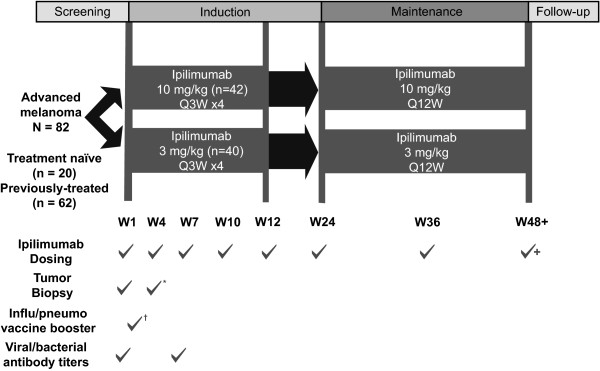
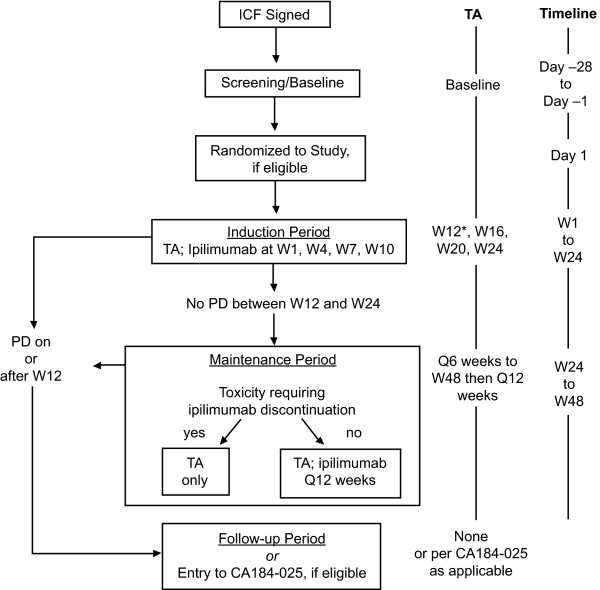
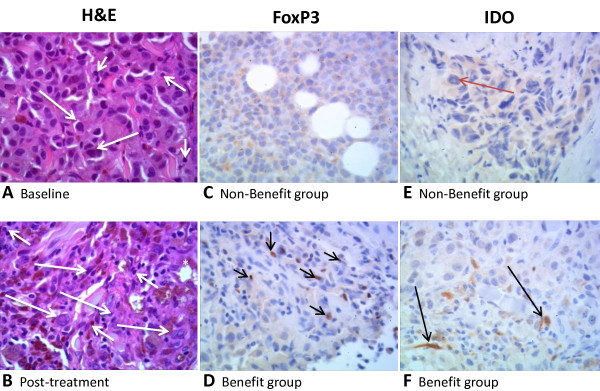
BACKGROUND: Ipilimumab, a fully human monoclonal antibody that blocks cytotoxic T-lymphocyte antigen-4, has demonstrated an improvement in overall survival in two phase III trials of patients with advanced melanoma. The primary objective of the current trial was to prospectively explore candidate biomarkers from the tumor microenvironment for associations with clinical response to ipilimumab. METHODS: In this randomized, double-blind, phase II biomarker study (ClinicalTrials.gov NCT00261365), 82 pretreated or treatment-naïve patients with unresectable stage III/IV melanoma were induced with 3 or 10 mg/kg ipilimumab every 3 weeks for 4 doses; at Week 24, patients could receive maintenance doses every 12 weeks. Efficacy was evaluated per modified World Health Organization response criteria and safety was assessed continuously. Candidate biomarkers were evaluated in tumor biopsies collected pretreatment and 24 to 72 hours after the second ipilimumab dose. Polymorphisms in immune-related genes were also evaluated. RESULTS: Objective response rate, response patterns, and safety were consistent with previous trials of ipilimumab in melanoma. No associations between genetic polymorphisms and clinical activity were observed. Immunohistochemistry and histology on tumor biopsies revealed significant associations between clinical activity and high baseline expression of FoxP3 (p = 0.014) and indoleamine 2,3-dioxygenase (p = 0.012), and between clinical activity and increase in tumor-infiltrating lymphocytes (TILs) between baseline and 3 weeks after start of treatment (p = 0.005). Microarray analysis of mRNA from tumor samples taken pretreatment and post-treatment demonstrated significant increases in expression of several immune-related genes, and decreases in expression of genes implicated in cancer and melanoma. CONCLUSIONS: Baseline expression of immune-related tumor biomarkers and a post-treatment increase in TILs may be positively associated with ipilimumab clinical activity. The observed pharmacodynamic changes in gene expression warrant further analysis to determine whether treatment-emergent changes in gene expression may be associated with clinical efficacy. Further studies are required to determine the predictive value of these and other potential biomarkers associated with clinical response to ipilimumab.
Overview
The claims and statistics of this paper haven’t been checked yet.
Free: it reads the open-access text and checks the first 5 claims that cite a source we can check. Create a free account to check every claim.
Integrity signals
Registry
Cites
Statistics
Figures
Verification
Claims the paper makes
The claims and statistics of this paper haven’t been checked yet.
Free: it reads the open-access text and checks the first 5 claims that cite a source we can check. Create a free account to check every claim.
Claims other papers make about this one
Each is checked against this paper’s own text: does it say what the citing paper says it does?
The source backs part of the claim, not all of it — or backs it for a different population, condition or comparison.
In the citing paper
“Combinatorial biomarker strategies that capture attributes of the host and tumor-immune ecosystem will be essential (Fig. 2; refs.121-124).”
From The Next Decade of Immune Checkpoint Therapy (2021) · cites this paper as [122]
Experimental — accuracy not yet measured
Self-check
Percentages, sums and reported differences re-computed from the paper’s own numbers.
The self-check needs the paper’s full text.
Citations
Cites
R: A Language and Environment for Statistical Computing
R Core Team (2025) · doi:10.32614/r.manuals · Cited by 352,181
PD-1 and PD-L1 Immune Checkpoint Blockade to Treat Breast Cancer
Hartkopf, A. D., Taran, F.-A., Wallwiener, M., Walter, C. B., Krämer, B., Grischke, E.-M., & Brucker, S. Y. (2016) · Breast Care · doi:10.1159/000453569 · Cited by 30,845
Adverse Renal Effects of Immune Checkpoint Inhibitors: A Narrative Review
Wanchoo, R., Karam, S., Uppal, N. N., Barta, V. S., Deray, G., Devoe, C., Launay-Vacher, V., Jhaveri, K. D., & on behalf of Cancer and Kidney International Network Workgroup on Immune Checkpoint Inhibitors (2017) · American Journal of Nephrology · doi:10.1159/000455014 · Cited by 15,256
Improved Survival with Ipilimumab in Patients with Metastatic Melanoma
Hodi, F. S., O'Day, S. J., McDermott, D. F., Weber, R. W., Sosman, J. A., Haanen, J. B., Gonzalez, R., Robert, C., Schadendorf, D., Hassel, J. C., et al. (2010) · New England Journal of Medicine · doi:10.1056/nejmoa1003466 · Cited by 15,155 · cited 3×
“5% for 3 mg/kg ipilimumab monotherapy in a phase III trial [4].”
BackgroundResultBioconductor: open software development for computational biology and bioinformatics
Gentleman, R. C., Carey, V. J., Bates, D. M., Bolstad, B., Dettling, M., Dudoit, S., Ellis, B., Gautier, L., Ge, Y., Gentry, J., et al. (2004) · Genome Biology · doi:10.1186/gb-2004-5-10-r80 · Cited by 12,172 · cited 1×
“0 (Affy package) [32] and q-value package v1.”
Exploration, normalization, and summaries of high density oligonucleotide array probe level data
Irizarry, R. A. (2003) · Biostatistics · doi:10.1093/biostatistics/4.2.249 · Cited by 10,603 · cited 1×
“Gene expression data were normalized using the Robust Multichip Average method [30] and the resulting log2-transformed expression levels were used for subsequent analyses.”
MethodStatistical significance for genomewide studies
Storey, J. D., & Tibshirani, R. (2003) · Proceedings of the National Academy of Sciences · doi:10.1073/pnas.1530509100 · Cited by 9,692 · cited 1×
“A false discovery rate (q-value) approach [31] was used to adjust for multiple testing.”
MethodControl of Regulatory T Cell Development by the Transcription Factor Foxp3
Hori, S., Nomura, T., & Sakaguchi, S. (2003) · Science · doi:10.1126/science.1079490 · Cited by 8,187 · cited 1×
“FoxP3 has been identified as a marker of natural and adaptive/induced regulatory T cells (Tregs) [58].”
BackgroundCuriel, T. J., Coukos, G., Zou, L., Alvarez, X., Cheng, P., Mottram, P., Evdemon-Hogan, M., Conejo-Garcia, J. R., Zhang, L., Burow, M., et al. (2004) · Nature Medicine · doi:10.1038/nm1093 · Cited by 5,151 · cited 1×
“Patients with cancer have higher levels of Tregs in peripheral blood than healthy individuals [59], leading to a suppression of T-cell immunity that has an immunopathologic role in tumor growth [56] and influences prognosis in many cancers [60-63].”
BackgroundTHE USE OF CONFIDENCE OR FIDUCIAL LIMITS ILLUSTRATED IN THE CASE OF THE BINOMIAL
CLOPPER, C. J., & PEARSON, E. S. (1934) · Biometrika · doi:10.1093/biomet/26.4.404 · Cited by 5,003 · cited 2×
“Exact 2-sided 95% confidence intervals (CIs) for within-dose-group BORR were calculated using the method of Clopper and Pearson [27].”
Method
Research works printed but not linked: 4
- Richards J Hwu P Chin K Ibrahim R Berman D Yellin M Lowy I Fahumy F Hoos A Wolchok J Evaluation of treatment guidelines developed for management of immune-related adverse events in ipilimumab clinical protocols [abstract] Presented at the Perspectives in Melanoma XIII Annual Meeting: Baltimore: O-0006 2009
- Harmankaya K Hoos A Wolchok J O'Day SJ Weber JS Lebbe C Maio M Ibrahim R Humphrey R Hodi FS Immune-related response criteria (irRC) identify patients with novel response patterns who have favorable survival among progressors per mWHO criteria [abstract] Presented at the World Meeting of Interdisciplinary Melanoma/Skin Cancer Centers: 19-21 Nov 2009; Berlin, Germany 37
- Chin K Ibrahim R Berman D Yellin MJ Lowy I Lin R Hoos A Treatment guidelines for the management of immune-related adverse events in patients treated with ipilimumab [abstract] Presented at the 7th World Congress on Melanoma/5th Congress of the European Association of Dermato-Oncology (WCM/EADO) 2009 Joint Meeting 12-16 May 2009; Vienna, Austria
- Gajewski TF Grimm EA Nickoloff BJ Govindan R New potential therapeutic targets in melanoma ASCO Educational Book 2008 2008 Alexandria, VA: American Society of Clinical Oncology 404 407
Cited by
Items 301–400 of 547
New developments in biomarkers for melanoma
Griewank, K., Ugurel, S., Schadendorf, D., & Paschen, A. (2013) · Current Opinion in Oncology · doi:10.1097/cco.0b013e32835dafdf · Cited by 28
“com Predictive and prognostic immunological biomarkers Recently, immunohistochemical analysis of tumor biopsiesfromstageIVmelanomapatientstreatedwith ipilimumabrevealedsignificantassociationsbetween theclinical activityof ipilimumabanda highbaseline expression of FoxP3 and indoleamine 2,3-dioxygenase (IDO) [51].”
BackgroundInfluentialCTLA-4 antibodies: new directions, new combinations.
Funt, S. A., Page, D. B., Wolchok, J. D., & Postow, M. A. (2014) · PubMed · Cited by 28
The Relationship of Immune Cell Signatures to Patient Survival Varies within and between Tumor Types
Linsley, P. S., Chaussabel, D., & Speake, C. (2015) · PLoS ONE · doi:10.1371/journal.pone.0138726 · Cited by 27
“Despite advances, cancer immunotherapy is not always effective and may be associated with significant safety issues [4,5], leading to intensive efforts to identify biomarkers for better patient selection [6,7].”
BackgroundMcNamara, M. J., Hilgart-Martiszus, I., Echenique, D. M. B., Linch, S. N., Kasiewicz, M. J., & Redmond, W. L. (2016) · Cancer Immunology Research · doi:10.1158/2326-6066.cir-16-0022 · Cited by 24
“Abundant lymphocyte infiltration of the tumor (7), an immune-active microenvironment (8), and a high tumor mutational burden (9) are previously reported prognostic biomarkers for CTLA-4 blockade.”
BackgroundMastracci, L., Fontana, V., Queirolo, P., Carosio, R., Grillo, F., Morabito, A., Banelli, B., Tanda, E. T., Boutros, A., Dozin, B., et al. (2020) · Cancer Immunology Immunotherapy · doi:10.1007/s00262-020-02494-y · Cited by 28
Therapeutic Combinations of Immune-Modulating Antibodies in Melanoma and Beyond
Cohen, J. V., & Sznol, M. (2015) · Seminars in Oncology · doi:10.1053/j.seminoncol.2015.02.014 · Cited by 23
“combination observed in PD-L1 low/absent tumors is the ability of anti-CTLA-4 to produce increased T cell infiltration into tumors and increased intratumoral CD8+-to-Treg ratios.(9,10)”
BackgroundGuida, A., Sabbatini, R., Gibellini, L., Biasi, S. D., Cossarizza, A., & Porta, C. (2021) · Cancer Treatment Reviews · doi:10.1016/j.ctrv.2021.102157 · Cited by 24
Jenkins, K. A., Park, M., Pederzoli-Ribeil, M., Eskiocak, U., Johnson, P. M., Guzman, W., McLaughlin, M., Moore-Lai, D., O’Toole, C., Liu, Z., et al. (2023) · Journal for ImmunoTherapy of Cancer · doi:10.1136/jitc-2023-007785 · Cited by 28
Changes in the tumor immune microenvironment in resected recurrent soft tissue sarcomas
Zheng, B., Wang, J., Cai, W., Lao, I. W., Shi, Y., Luo, X., & Yan, W. (2019) · Annals of Translational Medicine · doi:10.21037/atm.2019.07.43 · Cited by 23
“TILs are associated with the clinical response to immune therapy (3,13).”
BackgroundCheckpoint Modulation in Melanoma: An Update on Ipilimumab and Future Directions
Page, D. B., Postow, M. A., Callahan, M. K., & Wolchok, J. D. (2013) · Current Oncology Reports · doi:10.1007/s11912-013-0337-1 · Cited by 24
“antigen-specific responses to NY-ESO-1, the percentage of CD4ICOS cells following treatment, expression of genes involved in immune response, and posttreatment increases the levels of in tumor infiltrating lymphocytes [54–58].”
Monitoring Regulatory Immune Responses in Tumor Immunotherapy Clinical Trials
Olson, B. M., & McNeel, D. G. (2013) · Frontiers in Oncology · doi:10.3389/fonc.2013.00109 · Cited by 24
“Interestingly, another report by Hamid et al. (2011) evaluating ipilimumab in patients with melanoma also found that increased expression of Foxp3 and IDO in pretreatment biopsy samples correlated with enhanced clinical benefit.”
BackgroundNon-BRAF-targeted therapy, immunotherapy, and combination therapy for melanoma
Tomei, S., Wang, E., Delogu, L. G., Marincola, F. M., & Bedognetti, D. (2014) · Expert Opinion on Biological Therapy · doi:10.1517/14712598.2014.890586 · Cited by 22
“Therefore, it is not surprising that high expression of IDO and PD-1 ligands, which are both IFN-g inducible genes, have been found to be associated with responsiveness to ipilimumab [214] and anti-PD1 treatment [165].”
BackgroundThe evaluation of immunotherapy and chemotherapy treatment on melanoma: a network meta-analysis
Ci-Ren, B.-S., Wang, X., & Long, Z. (2016) · Oncotarget · doi:10.18632/oncotarget.13277 · Cited by 26
Immunologic Correlates in the Course of Treatment With Immunomodulating Antibodies
Weide, B., Di Giacomo, A. M., Fonsatti, E., & Zitvogel, L. (2015) · Seminars in Oncology · doi:10.1053/j.seminoncol.2015.02.016 · Cited by 21
Optimizing cancer immunotherapy: Is it time for personalized predictive biomarkers?
Music, M., Prassas, I., & Diamandis, E. P. (2018) · Critical Reviews in Clinical Laboratory Sciences · doi:10.1080/10408363.2018.1499706 · Cited by 23
“TILs following the initiation of treatment [42].”
Adjuvant Therapy for High-Risk Melanoma: An In-Depth Examination of the State of the Field
Eljilany, I., Castellano, E., & Tarhini, A. A. (2023) · Cancers · doi:10.3390/cancers15164125 · Cited by 23
“Some studies have reported increased densities of CD8+ T-cell infiltrates in serial tumor biopsies of patients with metastatic melanoma who received ipilimumab and pembrolizumab and exhibited a positive response to the therapy [82,83].”
BackgroundRole of the MEK Inhibitor Trametinib in the Treatment of Metastatic Melanoma
King, J., & Nathan, P. (2014) · Future Oncology · doi:10.2217/fon.14.89 · Cited by 23
Predictive Biomarkers for PD-1 and PD-L1 Immune Checkpoint Blockade Therapy
Song, Y., Li, Z., Xue, W., & Zhang, M. (2019) · Immunotherapy · doi:10.2217/imt-2018-0173 · Cited by 22
Biomarkers for predicting the outcome of various cancer immunotherapies
Jafarzadeh, L., Khakpoor-Koosheh, M., Mirzaei, H., & Mirzaei, H. R. (2020) · Critical Reviews in Oncology/Hematology · doi:10.1016/j.critrevonc.2020.103161 · Cited by 22
PLCG2 as a potential indicator of tumor microenvironment remodeling in soft tissue sarcoma
Li, Z., Zhao, R., Yang, W., Li, C., Huang, J., Wen, Z., Du, G., & Jiang, L. (2021) · Medicine · doi:10.1097/md.0000000000025008 · Cited by 26
Lim, J. U., & Kang, H. S. (2021) · Annals of Translational Medicine · doi:10.21037/atm-21-68 · Cited by 22
“T cell receptor clonality, TILs, blood soluble cytokine concentrations, and immune gene signature had shown association with ICI response in melanoma, breast, and lung cancer (51-53) (Table 1).”
BackgroundMetabolic Interplay between the Immune System and Melanoma Cells: Therapeutic Implications
Indini, A., Grossi, F., Mandalà, M., Taverna, D., & Audrito, V. (2021) · Biomedicines · doi:10.3390/biomedicines9060607 · Cited by 22
Roccuzzo, G., Sarda, C., Pala, V., Ribero, S., & Quaglino, P. (2024) · Expert Review of Molecular Diagnostics · doi:10.1080/14737159.2024.2347484 · Cited by 21
“In a separate study conducted by Hamid and colleagues, biomarkers in tumor samples were evaluated both at baseline and after the second dose of ipilimumab [32].”
BackgroundEarly analysis of surrogate endpoints for metastatic melanoma in immune checkpoint inhibitor trials
Petrelli, F., Coinu, A., Cabiddu, M., Borgonovo, K., Ghilardi, M., Lonati, V., & Barni, S. (2016) · Medicine · doi:10.1097/md.0000000000003997 · Cited by 21
Chakravarti, N., Ivan, D. S., Trinh, V. A., Glitza, I. C., Curry, J. L., Torres-Cabala, C. A., Tetzlaff, M. T., Bassett, R. L., Prieto, V. G., & Hwu, W. (2016) · Melanoma Research · doi:10.1097/cmr.0000000000000305 · Cited by 19
Research progress and clinical application of predictive biomarker for immune checkpoint inhibitors
Ma, K., Jin, Q., Wang, M., Li, X., & Zhang, Y. (2019) · Expert Review of Molecular Diagnostics · doi:10.1080/14737159.2019.1617702 · Cited by 21
“patients with increased TIL density presented greater clinical benefit than those without increased TIL[102].”
BackgroundInfluentialBansal, A., Srinivasan, R., Rohilla, M., Rai, B., Rajwanshi, A., Suri, V., & Saha, S. C. (2021) · Apmis · doi:10.1111/apm.13116 · Cited by 22
Silk, A. W., Saraiya, B., Groisberg, R., Chan, N., Spencer, K. R., Girda, E., Shih, W., Palmeri, M., Saunders, T., Berman, R., et al. (2022) · European journal of medical research · doi:10.1186/s40001-022-00732-w · Cited by 19
Li, Y., Liang, X., Li, H., & Chen, X. (2023) · International Immunopharmacology · doi:10.1016/j.intimp.2022.109657 · Cited by 21
The Role of Surgical Pathology in Guiding Cancer Immunotherapy
Lovitch, S. B., & Rodig, S. J. (2016) · Annual Review of Pathology Mechanisms of Disease · doi:10.1146/annurev-pathol-012615-044125 · Cited by 20
Towards tumor immunodiagnostics
Kourea, H. P., & Kotoula, V. (2016) · Annals of Translational Medicine · doi:10.21037/atm.2016.07.07 · Cited by 23
“Until now there is no predictive marker for CTLA-4 inhibitors (95), although high expression of FOXP3 and IDO at baseline biopsies and increases in TILs after initiation of treatment were related to increased clinical activity of ipilimumab in melanoma (96).”
BackgroundPredictive value of PD-L1 based on mRNA level in the treatment of stage IV melanoma with ipilimumab
Brüggemann, C., Kirchberger, M. C., Goldinger, S. M., Weide, B., Konrad, A., Erdmann, M., Schadendorf, D., Croner, R. S., Krähenbühl, L., Kähler, K. C., et al. (2017) · Journal of Cancer Research and Clinical Oncology · doi:10.1007/s00432-017-2450-2 · Cited by 21
“…on predictive markers such as forkhead box P3 and indolamin-2,3-dioxygenase (IDO), a post-treatment increase in tumor-infiltrating lymphocytes (Hamid et al. 2011) and expression of immune-related genes such as Th1 cytokines and chemokines (CCL4, CCL5, CXCL9, CXCL10, and CXCL11), marker for…”
BackgroundInfluentialAcquired Resistance to Immune Checkpoint Blockade Therapies
Zhao, X., Wangmo, D., Robertson, M. J., & Subramanian, S. (2020) · Cancers · doi:10.3390/cancers12051161 · Cited by 21
“Tumor-infiltrating lymphocyte Assessment of T cells at invasive tumor margin or tumor parenchyma Yes [72,73]”
BackgroundImmune Monitoring of Cancer Patients Prior to and During CTLA-4 or PD-1/PD-L1 Inhibitor Treatment
Tunger, A., Kießler, M., Wehner, R., Temme, A., Meier, F. E., Bachmann, M. P., & Schmitz, M. (2018) · Biomedicines · doi:10.3390/biomedicines6010026 · Cited by 19
“Furthermore, it has been shown that a high baseline expression of indoleamine 2,3-dioxygenase (IDO) in the tumor tissues is associated with improved clinical outcome of ipilimumab-treated melanoma patients [32].”
BackgroundPrelaj, A., Pircher, C. C., Massa, G., Martelli, V., Corrao, G., Russo, G. L., Proto, C., Ferrara, R., Galli, G., Toma, A. D., et al. (2021) · Cancers · doi:10.3390/cancers13061300 · Cited by 18
“The intrinsic mechanisms inclued also TME alteration, including molecules and cells of the tumor stroma, immune-regulatory cell (Tregs [44], MDSCs [45], M2 macrophages [46]), immune checkpoints.”
BackgroundIshii, H., Azuma, K., Kawahara, A., Matsuo, N., Tokito, T., Kinoshita, T., Yamada, K., Sasada, T., Akiba, J., & Hoshino, T. (2017) · Oncotarget · doi:10.18632/oncotarget.18651 · Cited by 19
Garutti, M., Bruno, R., Polesel, J., Pizzichetta, M. A., & Puglisi, F. (2024) · Heliyon · doi:10.1016/j.heliyon.2024.e32433 · Cited by 19
“However, further studies on the immune cells are necessary, including a more comprehensive investigation of features as density, localization, and phenotype, before definitive statements can be made regarding their role in treatment selection [65].”
BackgroundJin, P., Civini, S., Zhao, Y., Giorgi, V. D., Ren, J., Sabatino, M., Jin, J., Wang, H., Bedognetti, D., Marincola, F. M., et al. (2014) · British Journal of Cancer · doi:10.1038/bjc.2014.235 · Cited by 18
“Interestingly, data from clinical trials assessing the effectiveness of anti-CTLA4 therapy in metastatic melanoma have shown that the overexpression of IDO by infiltrating immune cells in pre-treatment lesions strongly correlates with treatment responsiveness (Hamid et al, 2011).”
BackgroundAnti-cytotoxic T lymphocyte antigen-4 antibodies in melanoma
Pennacchioli, E., Tosti, G., & Cocorocchio, E. (2013) · Clinical Cosmetic and Investigational Dermatology · doi:10.2147/ccid.s24246 · Cited by 19
“and decreases in expression of genes implicated in tumor progression (tyrosinase-related protein-2).(67) Interestingly, FoxP3 is expressed by immunosuppressive Tregs, which play a major role in suppression of the immune response in the tumor microenvironment.”
Cancer Neoantigens: A Promising Source of Immunogens for Cancer Immunotherapy
Kitano, A. I. S. (2015) · Journal of Clinical & Cellular Immunology · doi:10.4172/2155-9899.1000322 · Cited by 18
“In the context of immune checkpoint blockade therapies, several potential predictive/prognostic biomarkers have been suggested [55,62-67].”
BackgroundCulyer, A. J. (2014) · Cited by 17
Sharma, A., Campbell, M. T., Yee, C., Goswami, S., & Sharma, P. (2019) · Elsevier eBooks · doi:10.1016/b978-0-7020-6896-6.00077-6 · Cited by 24
Cell Communication Network factor 4 promotes tumor‐induced immunosuppression in melanoma
Fernández, A., Deng, W., McLaughlin, S. L., Pirkey, A., Rellick, S. L., Razazan, A. P., & Klinke, D. J. (2022) · EMBO Reports · doi:10.15252/embr.202154127 · Cited by 19
“…can be present both in the local tumor microenvironment and in secondary lymphoid organs to augment anti-tumor immunity (Bin-newies et al , 2018; Fransen et al , 2018), an ongoing anti-tumor immune response is a prognostic indicator of a clinical response (Hamid et al , 2011; Daud et al , 2016).”
Viro-immune therapy: A new strategy for treatment of pancreatic cancer
Ibrahim, A. M., & Wang, Y. (2016) · World Journal of Gastroenterology · doi:10.3748/wjg.v22.i2.748 · Cited by 22
Tumor-infiltrating lymphocytes as a prognostic and predictive factor for Melanoma
Vargas, G. M., Shafique, N., Xu, X., & Karakousis, G. C. (2024) · Expert Review of Molecular Diagnostics · doi:10.1080/14737159.2024.2312102 · Cited by 22
“In the evolving landscape of immunotherapy regimens for the treatment of melanoma, TILs have garnered considerable attention for their putative role in predicting response to different immunotherapy regimens across a spectrum of clinical stages (Table 4) [14,15,83–85].”
BackgroundGide, T. N., Allanson, B. M., Menzies, A. M., Ferguson, P. M., Madore, J., Saw, R. P. M., Thompson, J. F., Long, G. V., Wilmott, J. S., & Scolyer, R. A. (2018) · Histopathology · doi:10.1111/his.13814 · Cited by 16
“In advanced melanoma, clinical activity of ipilimumab was associated with increased baseline expression of IDO, potentially because IDO expression reflects an inflamed tumour microenvironment.(21) The heterogeneous expression of IDO, both within and between patients, may explain the variations in response to IDO combi…”
ResultJanus or Hydra: The Many Faces of T Helper Cells in the Human Tumour Microenvironment
Guisier, F., Barros‐Filho, M. C., Rock, L. D., Strachan-Whaley, M. R., Marshall, E. A., Dellaire, G., & Lam, W. L. (2020) · Advances in experimental medicine and biology · doi:10.1007/978-3-030-35723-8_3 · Cited by 18
Parra, E. R., Jiang, M., Rúgolo, J. R. M., Yaegashi, L. B., Prieto, T. G., Farhat, C., de Sá, V. K., Nagai, M. A., de Lima, V. C. C., Takagaki, T. Y., et al. (2020) · Archives of Pathology & Laboratory Medicine · doi:10.5858/arpa.2019-0419-oa · Cited by 18
Immune-Checkpoints : les nouvelles immunothérapies anticancéreuses
Ileana, E. E., Champiat, S., & Soria, J. (2013) · Bulletin du Cancer · doi:10.1684/bdc.2013.1771 · Cited by 18
Strategies to sensitize cancer cells to immunotherapy
George, A., Şahin, İ., Carneiro, B. A., Dizon, D. S., Safran, H. P., & El‐Deiry, W. S. (2021) · Human Vaccines & Immunotherapeutics · doi:10.1080/21645515.2021.1891817 · Cited by 17
Bresler, S. C., Min, L., Rodig, S. J., Walls, A. C., Xu, S., Geng, S., Hodi, F. S., Murphy, G. F., & Lian, C. G. (2016) · Laboratory Investigation · doi:10.1038/labinvest.2016.126 · Cited by 16
Immunotherapy response modeling by ex-vivo organ culture for lung cancer
Kamer, I., Bab-Dinitz, E., Zadok, O., Ofek, E., Gottfried, T., Daniel‐Meshulam, I., Hout‐Siloni, G., Nun, A. B., Barshack, I., Onn, A., et al. (2021) · Cancer Immunology Immunotherapy · doi:10.1007/s00262-020-02828-w · Cited by 16
Identification of discrepancy between CTLA4 expression and CTLA4 activation in gastric cancer
Xiang, Z., Chen, W., Zhang, J., Song, S., Xia, G., Huang, X., Xie, J., Yu, Y., & Zhang, Q. (2018) · Immunopharmacology and Immunotoxicology · doi:10.1080/08923973.2018.1533968 · Cited by 15
Ipilimumab for Previously Untreated Unresectable Malignant Melanoma: A Critique of the Evidence
Giannopoulou, C., Sideris, E., Wade, R., Moe‐Byrne, T., Eastwood, A. J., & McKenna, C. (2015) · PharmacoEconomics · doi:10.1007/s40273-015-0299-2 · Cited by 16
“First, the trials (CA184-022 and CA184-004) used by the manufacturer to support the assertion that the clinical effect of ipilimumab 10 mg/kg is a proxy for 3 mg/ kg does not provide convincing evidence; median OS appeared better with ipilimumab 10 mg/kg compared with ipilimumab 3 mg/kg in the CA184-022 (n = 18) trial…”
InfluentialSerum PD-1 Is Elevated after Pembrolizumab Treatment but Has No Predictive Value
Music, M., Iafolla, M. A. J., Ren, A. H., Soosaipillai, A. R., Prassas, I., & Diamandis, E. P. (2019) · Molecular Cancer Therapeutics · doi:10.1158/1535-7163.mct-19-0132 · Cited by 16
Chodurek, E., Orchel, A., Orchel, J., Kurkiewicz, S., Gawlik, N., Dzierżewicz, Z., & Stȩpień, K. B. (2012) · Cellular & Molecular Biology Letters · doi:10.2478/s11658-012-0033-4 · Cited by 17
“Standard therapy based on surgical intervention and chemo- or radiotherapy still does not give satisfactory results [1-4].”
BackgroundHLA Class I Downregulation in Progressing Metastases of Melanoma Patients Treated With Ipilimumab
Ladányi, A., Hegyi, B., Balatoni, T., Liszkay, G., Rohregger, R., Waldnig, C., Dudás, J., & Ferrone, S. (2022) · Pathology & Oncology Research · doi:10.3389/pore.2022.1610297 · Cited by 16
Mapping the single cell spatial immune landscapes of the melanoma microenvironment
Magrill, J., Moldoveanu, D., Gu, J., Lajoie, M., & Watson, I. R. (2024) · Clinical & Experimental Metastasis · doi:10.1007/s10585-023-10252-4 · Cited by 14
“While prior studies have shown that the abundance of TILs in the TME is associated with better prognosis and response to ICIs [64–66], we demonstrated that within the pre-treatment melanoma TME, it was the abundance of proliferating antigen-experienced cytotoxic T-cells (CD8 + CD45RO + Ki67 + ) and…”
ResultSnyder, A., Zamarin, D., & Wolchok, J. D. (2015) · Progress in tumor research · doi:10.1159/000436998 · Cited by 17
Immune Checkpoint Therapy in Melanoma
Callahan, M. K. (2016) · The Cancer Journal · doi:10.1097/ppo.0000000000000183 · Cited by 17
“Tumor microenvironment markers that reflect increased immune activation, particularly activation of effector T cells, have correlated with favorable clinical outcomes.(46,47) In addition, the burden of tumor mutations in melanoma has also been correlated with clinical outcome in patients treated with ipilimumab; patie…”
BackgroundDesigning and Immunomodulating Multiresponsive Nanomaterial for Cancer Theranostics
Khan, A., Dias, F., Neekhra, S., Singh, B., & Srivastava, R. (2021) · Frontiers in Chemistry · doi:10.3389/fchem.2020.631351 · Cited by 14
“Few are found in typical TME, thus can be distinctively targeted by the NPs upon reaching the tumor site and significantly improving the treatment efficacy (Hamid et al., 2011; Yuan et al., 2016; Roma-Rodrigues et al., 2019).”
BackgroundWhole Genome and Exome Sequencing of Melanoma
Dutton‐Regester, K., & Hayward, N. K. (2012) · Advances in pharmacology · doi:10.1016/b978-0-12-397927-8.00013-0 · Cited by 13
Iga, N., Otsuka, A., Hirata, M., Kataoka, T. R., Irie, H., Nakashima, C., Matsushita, S., Uchi, H., Yamamoto, Y., Funakoshi, T., et al. (2019) · Cancer Science · doi:10.1111/cas.14195 · Cited by 14
Is there a role for immune checkpoint blockade with ipilimumab in prostate cancer?
Cha, E., & Small, E. J. (2013) · Cancer Medicine · doi:10.1002/cam4.64 · Cited by 12
“Antibody and T-cell responses to NY-ESO-1 [43], high baseline expression of immune markers such as FoxP3 and indoleamine 2,3-dioxygenase [44], increases in tumor-infiltrating lymphocytes, and changes in expression of immunerelated genes [44] have all been correlated with clinical activity or benefit of ipilimumab.”
BackgroundRavelli, A., Reuben, J. M., Lanza, F. B., Anfossi, S., Cappelletti, M. R., Zanotti, L., Gobbi, A., Milani, M., Spada, D., Pedrazzoli, P., et al. (2015) · Expert Review of Anticancer Therapy · doi:10.1586/14737140.2015.1042864 · Cited by 13
“Also, an incrementation of absolute lymphocyte count has been found to increase the probabilities of response to treatment, as well as the up-regulation of HLA-DR/CD45RO on T-cells surface [61,62].”
Lim, S. Y., & Rizos, H. (2018) · Mammalian Genome · doi:10.1007/s00335-018-9757-4 · Cited by 13
“Interestingly, high baseline expression of FoxP3, a marker of T regulatory cells, was also associated with clinical activity but expression of CD4, CD8, granzyme B and perforin, markers of effector cytotoxic T cells, did not correlate with response (Hamid et al. 2011).”
BackgroundWang, S., & Jia, M. (2016) · Advances in experimental medicine and biology · doi:10.1007/978-94-017-7555-7_1 · Cited by 12
Lei, K., Liang, R., Tan, B., Li, L., Lyu, Y., Wang, K., Wang, W., Wang, K., Hu, X., Wu, D., et al. (2023) · Oxidative Medicine and Cellular Longevity · doi:10.1155/2023/6811625 · Cited by 16
“The immune contexture of cancer was closely related to the prognosis [7] and the efficacy of tumor immunotherapy [8, 9].”
Backgroundβ2‐adrenergic receptor expression in patients receiving bevacizumab therapy for metastatic melanoma
Schuster, C., Akslen, L. A., & Straume, O. (2023) · Cancer Medicine · doi:10.1002/cam4.6424 · Cited by 12
Overview of Basic Immunology and Clinical Application
Stephen, B., & Hajjar, J. (2020) · Advances in experimental medicine and biology · doi:10.1007/978-3-030-41008-7_1 · Cited by 13
Qian, F., & Han, B. (2020) · Chinese Medical Journal · doi:10.1097/cm9.0000000000001124 · Cited by 13
“A retrospective study reported that the high expression of FoxP3+ Tregs was associated with better prognosis in patients treated with anti-CTLA-4 therapy.([94]) These data suggest that when immunotherapy fails to increase Teff and/or decrease Tregs to improve the ratio of Teff to Treg, tumors are likely to develop res…”
BackgroundTarhini, A. A., Lin, Y., Zahoor, H., Shuai, Y., Butterfield, L. H., Ringquist, S., Gogas, H. J., Sander, C., Lee, S., Agarwala, S. S., et al. (2015) · PLoS ONE · doi:10.1371/journal.pone.0132745 · Cited by 11
Synthetic Cells and Molecules in Cellular Immunotherapy
Lin, H., Li, C., Zhang, W., Wu, B., Wang, Y., Wang, S., Wang, D., Li, X., & Huang, H. (2024) · International Journal of Biological Sciences · doi:10.7150/ijbs.94346 · Cited by 12
“The success of antibody-mediated checkpoint blockade requires a relatively high mutational burden and the presence of infiltrating T cells [149,150].”
BackgroundRajneesh, Tiwari, R., Singh, V. K., Kumar, A., Mehrotra, S., Gautam, V., Neville, J. F., Bansal, V., Pathak, R., Singh, A. K., et al. (2025) · Biology · doi:10.3390/biology14091109 · Cited by 10
A new approach to overcoming resistance to immunotherapy: nanotechnology
Shao, J., Jin, Y. H., & Jin, C. (2023) · Frontiers in Oncology · doi:10.3389/fonc.2023.1210245 · Cited by 10
“In a clinical trial using ipilimumab to treat patients with advanced melanoma, increased TIL was found to be associated with better outcomes (97).”
BackgroundVillaverde, M. S., Combe, K., Duchene, A. G., Wei, M., Glikin, G. C., & Finocchiaro, L. M. E. (2014) · International Immunopharmacology · doi:10.1016/j.intimp.2014.06.021 · Cited by 10
Harnessing the immune system for the treatment of melanoma: current status and future prospects
Guennoun, A., Sidahmed, H., Maccalli, C., Seliger, B., Marincola, F. M., & Bedognetti, D. (2016) · Expert Review of Clinical Immunology · doi:10.1080/1744666x.2016.1176529 · Cited by 10
Amdahl, J., Chen, L., & Delea, T. E. (2016) · Oncology and Therapy · doi:10.1007/s40487-016-0030-2 · Cited by 11
“There was no evidence of improved PFS or OS with 10 versus 3 mg/kg in this trial [37, 38].”
BackgroundUnderstanding Response to Immunotherapy Using Standard of Care and Experimental Imaging Approaches
Flavell, R. R., Evans, M. J., Villanueva-Meyer, J. E., & Yom, S. S. (2020) · International Journal of Radiation Oncology*Biology*Physics · doi:10.1016/j.ijrobp.2020.06.025 · Cited by 10
Scognamiglio, G., Capone, M., Sabbatino, F., Mauro, A. D., Cantile, M., Cerrone, M., Madonna, G., Grimaldi, A. M., Mallardo, D., Palla, M., et al. (2021) · Cancers · doi:10.3390/cancers13102325 · Cited by 10
“Inherent resistance of melanoma cells and the host immune response of the tumor immune microenvironment (TIME) represent major limitations for the treatment of melanoma [4].”
BackgroundAdvances in the systemic treatment of metastatic melanoma.
Yushak, M. L., Kluger, H. M., & Sznol, M. (2013) · PubMed · Cited by 11
Immunogenomics: using genomics to personalize cancer immunotherapy
Siniard, R. C., & Harada, S. (2017) · Archiv für Pathologische Anatomie und Physiologie und für Klinische Medicin · doi:10.1007/s00428-017-2140-0 · Cited by 10
“significantly associated with high expression of IDO and increased TILs between [28].”
BackgroundIpilimumab-Induced Enterocolitis: A Systematic Review and Meta-Analysis
Witges, K., Shafer, L. A., Zarychanski, R., Abou-Setta, A. M., Rabbani, R., Dingwall, O., & Bernstein, C. N. (2020) · Drug Safety · doi:10.1007/s40264-020-00979-4 · Cited by 10
Immunotherapy in Advanced Melanoma: A Network Meta-Analysis
Pyo, J., & Kang, G. (2017) · Immunotherapy · doi:10.2217/imt-2016-0143 · Cited by 11
Immune Regulation and Immune Therapy in Melanoma: Review with Emphasis on CD155 Signalling
Wu, L., Park, S.-H., Jakobsson, H., Shackleton, M. J., & Möller, A. (2024) · Cancers · doi:10.3390/cancers16111950 · Cited by 10
“Although a variety of contributing factors, such as TIL populations [174] and TIGIT expression on CD8 + T cells [154], can modulate immunotherapy outcomes, a comprehensive understanding of resistance pathways is required to overcome these limitations.”
BackgroundOncogenic Signalling Pathways in Cancer Immunotherapy: Leader or Follower in This Delicate Dance?
Cartwright, D., Kidd, A. C., Ansel, S., Ascierto, M. L., & Spiliopoulou, P. (2025) · International Journal of Molecular Sciences · doi:10.3390/ijms26094393 · Cited by 9
“In addition, high baseline FOXP3 + Tregs infiltration may be associated with clinical response to anti-CTLA-4 inhibition [36].”
Leal, J. L., & John, T. (2022) · Clinical Lung Cancer · doi:10.1016/j.cllc.2022.08.009 · Cited by 9
Baker, J. J., Stitzenberg, K. B., Collichio, F. A., Meyers, M. O., & Ollila, D. W. (2014) · The American Surgeon · doi:10.1177/000313481408000833 · Cited by 9
Germline Genetics in Immuno-oncology: From Genome-Wide to Targeted Biomarker Strategies
Kirchhoff, T., & Ferguson, R. (2019) · Methods in molecular biology · doi:10.1007/978-1-4939-9773-2_4 · Cited by 9
Jerby‐Arnon, L., Tooley, K., Escobar, G., Dandekar, G., Madi, A., Goldschmidt, E., Lambden, C., Rozenblatt–Rosen, O., Anderson, A. C., & Regev, A. (2021) · bioRxiv (Cold Spring Harbor Laboratory) · doi:10.1101/2021.10.31.466532 · Cited by 9
Drug targets and predictive biomarkers in the management of metastatic melanoma
Kluger, H. M., Giesen, E., & Thumar (2012) · Pharmacogenomics and Personalized Medicine · doi:10.2147/pgpm.s25100 · Cited by 10
“005).(13) Recently, Yuan et al showed that high titers of pretreatment anti-NY-ESO-1 antibodies can predict response to ipilimumab.”
Tsaknakis, B., Schaefer, I., Schwörer, H., Sahlmann, C., Thoms, K., Blaschke, M., Ramadori, G. P., & Cameron, S. (2013) · Medical Oncology · doi:10.1007/s12032-013-0813-3 · Cited by 8
“FOXP3? cells in the tumour microenvironment reveal higher response rates than samples with low expression [53].”
BackgroundBiomarqueurs prédictifs de réponse aux traitements bloquant les voies de costimulation inhibitrices
Pagès, F., Granier, C., Kirilovsky, A., Sissy, C. E., & Tartour, É. (2016) · Bulletin du Cancer · doi:10.1016/s0007-4551(16)30373-3 · Cited by 8
Martinez, R. (2019) · JACC Heart Failure · doi:10.1016/j.jchf.2018.12.003 · Cited by 9
Prognostic and predictive role of immune microenvironment in colorectal cancer
Kuznetsova, O. A., Fedyanin, M. Y., Эдуардовна, З. Л., Moskvina, L., Kuznetsova, O., Lebedeva, A., Tryakin, A. A., Kireeva, G. S., Borshchev, G. G., Tjulandin, S., et al. (2024) · World Journal of Gastrointestinal Oncology · doi:10.4251/wjgo.v16.i3.643 · Cited by 9
“In another prospective phase II study, the increase of TILs following ipilimumab treatment in metastatic melanoma was associated with a more pronounced response[44].”
Immune-based Therapies for Penile Cancer
Assaad, M. A., Safa, H., Mercinelli, C., Spiess, P. E., Necchi, A., & Chahoud, J. (2024) · Urologic Clinics of North America · doi:10.1016/j.ucl.2024.03.014 · Cited by 9
Review – The impact of pharmacogenetics on the outcome of immune checkpoint inhibitors
de Joode, K., Heersche, N., Basak, E. A., Bins, S., van der Veldt, A. A. M., van Schaik, R. H. N., & Mathijssen, R. H. J. (2023) · Cancer Treatment Reviews · doi:10.1016/j.ctrv.2023.102662 · Cited by 9
Current Status of Immunotherapy for Non-Small-Cell Lung Cancer
Imbimbo, M., Russo, G. L., & Blackhall, F. H. (2016) · Tumori Journal · doi:10.5301/tj.5000537 · Cited by 7
“Targeting and blocking CTLA4 with specific antibodies has been shown to boost the immune system and induce anticancer responses (40, 41).”
BackgroundSuccessful Targeting of CTLA-4 in a Melanoma Clinical Case: A Long-Term “One Stop Therapeutic Shop”
Colucci, M., D’Alonzo, V., Santangelo, F., Miracco, C., Valente, M., Maio, M., & Giacomo, A. M. D. (2022) · OncoTargets and Therapy · doi:10.2147/ott.s367389 · Cited by 7
Immune Checkpoint Blockade and Adaptive Immune Resistance in Cancer
Wong, R. M. H., & Cameron, R. B. (2017) · InTech eBooks · doi:10.5772/66494 · Cited by 7
Metadata
- Authors
- Hamid, O., Schmidt, H., Nissan, A., Ridolfi, L., Aamdal, S., Hansson, J., Guida, M., Hyams, D. M., Gómez, H., Bastholt, L., Chasalow, S. D., & Berman, D.
- Affiliations
- Angeles Clinic and Research Institute (US)
- Aarhus University Hospital (DK)
- Hebrew University of Jerusalem (IL)
- Istituto Scientifico Romagnolo per lo Studio e la Cura dei Tumori (IT)
- Oslo University Hospital (NO)
- Karolinska University Hospital (SE)
- Istituto Tumori Bari (IT)
- Instituto Nacional de Enfermedades Neoplásicas (PE)
- Odense University Hospital (DK)
- Bristol-Myers Squibb (United States) (US)
- Corresponding author
- Hamid, Omid
- ORCID
- Venue
- Journal of Translational Medicine
- Published
- 2011-11-28
- Volume
- 9
- Issue
- 1
- Pages
- 204-204
- ISSN
- 1479-5876 (ISSN-L)
- PMC
- PMC3239318
- OpenAlex
- W2138134458
- Cited by
- 534
- References
- 70
- Citations by year
- 2026: 3 · 2025: 7 · 2024: 22 · 2023: 25 · 2022: 25 · 2021: 42 · 2020: 59 · 2019: 41 · 2018: 51 · 2017: 40 · 2016: 53 · 2015: 56 · 2014: 49 · 2013: 47 · 2012: 13
- FWCI
- 17.34
- Type
- journal article
- Language
- en
- Open access
- gold
- doi.org
- Licence
- cc-by
- creativecommons.org/licenses/by/2.0 (tdm)
- Locations
- Journal of Translational Medicine (publishedVersion, cc-by)
- Europe PMC (PubMed Central) (publishedVersion, cc-by)
- PubMed Central (publishedVersion, cc-by)
- PubMed (publishedVersion)
- University of Southern Denmark Research Portal (University of Southern Denmark) (publishedVersion)
- DOAJ (DOAJ: Directory of Open Access Journals) (submittedVersion, cc-by-sa)
- NORA - Norwegian Open Research Archives (submittedVersion, cc-by)
- Funders
- Bristol-Myers Squibb
- American Society of Clinical Oncology
- European Society for Medical Oncology
- Topics
- Health Sciences › Medicine › Oncology › Cancer Immunotherapy and Biomarkers
- Health Sciences › Medicine › Oncology › Cutaneous Melanoma Detection and Management
- Life Sciences › Immunology and Microbiology › Immunology › Immunotherapy and Immune Responses
- Keywords
- ipilimumab, advanced melanoma, predictive biomarkers, CTLA-4 blockade, Foxp3, indoleamine 2,3-dioxygenase, tumor-infiltrating lymphocytes, cancer gene expression, immunotherapy response
- MeSH terms
- Ipilimumab, Adult, Aged, Aged, 80 and over, Antibodies, Monoclonal, Antineoplastic Agents, Dose-Response Relationship, Drug, Drug Administration Schedule, Female, Humans, Immunohistochemistry, Male, Melanoma, Middle Aged, Neoplasm Staging, Polymorphism, Genetic, Prospective Studies, RNA, Messenger, Skin Neoplasms, Biomarkers, Tumor, Gene Expression Regulation, Neoplastic, Treatment Outcome, Young Adult, Tumor Microenvironment
About these checks
Registry, retraction, Cites and statistics results are computed, not judged, with one exception: a printed reference that no index lists is read once by a model before it counts as a citation error. Claims are extracted by a model and kept only when their quote appears verbatim in the text; each cited source is then checked, with a model’s help, for whether it says what the claim relies on. Those verdicts can be wrong — read the claim’s quote and the cited source before relying on one.
Statistics and arithmetic are recomputed, not judged.
Confidence bands are shown only for fields calibrated on our annotated test set. None is calibrated yet, so no band is shown.
What counts as a claim ›How we measure confidence ›How we check this ›
Are you an author, or do you see a problem with this page? Request a review
Data sources
Bibliographic data: Semantic Scholar, OpenAlex, Crossref.
Contains information from the Semantic Scholar Academic Graph Datasets, made available under the ODC Attribution License (ODC-BY 1.0).
Semantic Scholar’s data is described in: Kinney, R., et al. (2023). The Semantic Scholar Open Data Platform. arXiv:2301.10140.
