

A prospective phase II trial exploring the association between tumor microenvironment biomarkers and clinical activity of ipilimumab in advanced melanoma
Open accessThe DOI matches its Crossref record; 69 of the 70 references it cites were found in a registry or an index.
Abstract
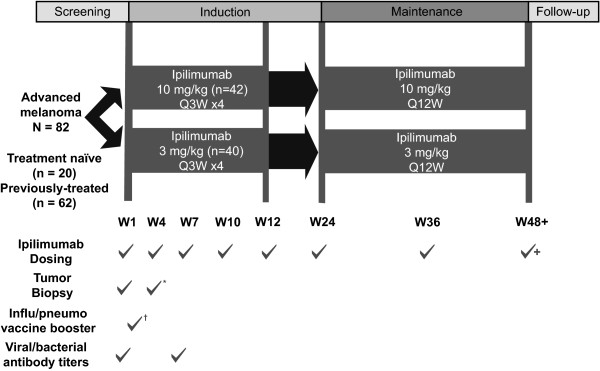
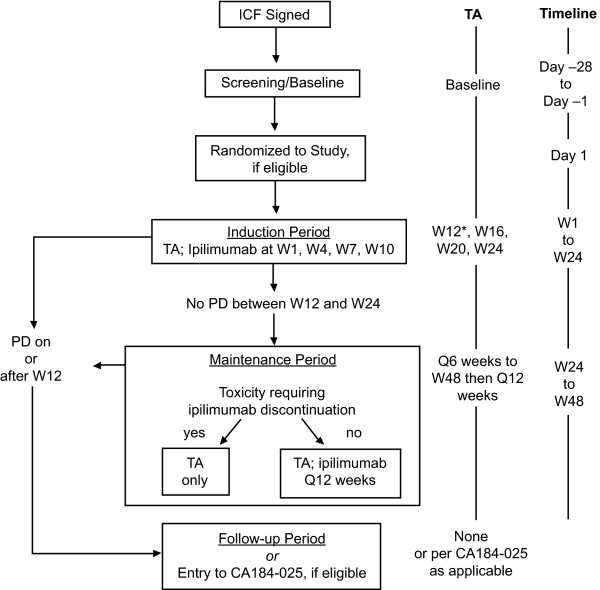
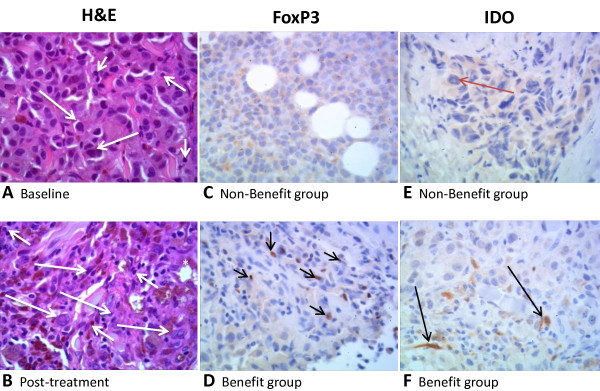
BACKGROUND: Ipilimumab, a fully human monoclonal antibody that blocks cytotoxic T-lymphocyte antigen-4, has demonstrated an improvement in overall survival in two phase III trials of patients with advanced melanoma. The primary objective of the current trial was to prospectively explore candidate biomarkers from the tumor microenvironment for associations with clinical response to ipilimumab. METHODS: In this randomized, double-blind, phase II biomarker study (ClinicalTrials.gov NCT00261365), 82 pretreated or treatment-naïve patients with unresectable stage III/IV melanoma were induced with 3 or 10 mg/kg ipilimumab every 3 weeks for 4 doses; at Week 24, patients could receive maintenance doses every 12 weeks. Efficacy was evaluated per modified World Health Organization response criteria and safety was assessed continuously. Candidate biomarkers were evaluated in tumor biopsies collected pretreatment and 24 to 72 hours after the second ipilimumab dose. Polymorphisms in immune-related genes were also evaluated. RESULTS: Objective response rate, response patterns, and safety were consistent with previous trials of ipilimumab in melanoma. No associations between genetic polymorphisms and clinical activity were observed. Immunohistochemistry and histology on tumor biopsies revealed significant associations between clinical activity and high baseline expression of FoxP3 (p = 0.014) and indoleamine 2,3-dioxygenase (p = 0.012), and between clinical activity and increase in tumor-infiltrating lymphocytes (TILs) between baseline and 3 weeks after start of treatment (p = 0.005). Microarray analysis of mRNA from tumor samples taken pretreatment and post-treatment demonstrated significant increases in expression of several immune-related genes, and decreases in expression of genes implicated in cancer and melanoma. CONCLUSIONS: Baseline expression of immune-related tumor biomarkers and a post-treatment increase in TILs may be positively associated with ipilimumab clinical activity. The observed pharmacodynamic changes in gene expression warrant further analysis to determine whether treatment-emergent changes in gene expression may be associated with clinical efficacy. Further studies are required to determine the predictive value of these and other potential biomarkers associated with clinical response to ipilimumab.
Overview
The claims and statistics of this paper haven’t been checked yet.
Free: it reads the open-access text and checks the first 5 claims that cite a source we can check. Create a free account to check every claim.
Integrity signals
Registry
Cites
Statistics
Figures
Verification
Claims the paper makes
The claims and statistics of this paper haven’t been checked yet.
Free: it reads the open-access text and checks the first 5 claims that cite a source we can check. Create a free account to check every claim.
Claims other papers make about this one
Each is checked against this paper’s own text: does it say what the citing paper says it does?
The source backs part of the claim, not all of it — or backs it for a different population, condition or comparison.
In the citing paper
“Combinatorial biomarker strategies that capture attributes of the host and tumor-immune ecosystem will be essential (Fig. 2; refs.121-124).”
From The Next Decade of Immune Checkpoint Therapy (2021) · cites this paper as [122]
Experimental — accuracy not yet measured
Self-check
Percentages, sums and reported differences re-computed from the paper’s own numbers.
The self-check needs the paper’s full text.
Citations
Cites
R: A Language and Environment for Statistical Computing
R Core Team (2025) · doi:10.32614/r.manuals · Cited by 352,181
PD-1 and PD-L1 Immune Checkpoint Blockade to Treat Breast Cancer
Hartkopf, A. D., Taran, F.-A., Wallwiener, M., Walter, C. B., Krämer, B., Grischke, E.-M., & Brucker, S. Y. (2016) · Breast Care · doi:10.1159/000453569 · Cited by 30,845
Adverse Renal Effects of Immune Checkpoint Inhibitors: A Narrative Review
Wanchoo, R., Karam, S., Uppal, N. N., Barta, V. S., Deray, G., Devoe, C., Launay-Vacher, V., Jhaveri, K. D., & on behalf of Cancer and Kidney International Network Workgroup on Immune Checkpoint Inhibitors (2017) · American Journal of Nephrology · doi:10.1159/000455014 · Cited by 15,256
Improved Survival with Ipilimumab in Patients with Metastatic Melanoma
Hodi, F. S., O'Day, S. J., McDermott, D. F., Weber, R. W., Sosman, J. A., Haanen, J. B., Gonzalez, R., Robert, C., Schadendorf, D., Hassel, J. C., et al. (2010) · New England Journal of Medicine · doi:10.1056/nejmoa1003466 · Cited by 15,155 · cited 3×
“5% for 3 mg/kg ipilimumab monotherapy in a phase III trial [4].”
BackgroundResultBioconductor: open software development for computational biology and bioinformatics
Gentleman, R. C., Carey, V. J., Bates, D. M., Bolstad, B., Dettling, M., Dudoit, S., Ellis, B., Gautier, L., Ge, Y., Gentry, J., et al. (2004) · Genome Biology · doi:10.1186/gb-2004-5-10-r80 · Cited by 12,172 · cited 1×
“0 (Affy package) [32] and q-value package v1.”
Exploration, normalization, and summaries of high density oligonucleotide array probe level data
Irizarry, R. A. (2003) · Biostatistics · doi:10.1093/biostatistics/4.2.249 · Cited by 10,603 · cited 1×
“Gene expression data were normalized using the Robust Multichip Average method [30] and the resulting log2-transformed expression levels were used for subsequent analyses.”
MethodStatistical significance for genomewide studies
Storey, J. D., & Tibshirani, R. (2003) · Proceedings of the National Academy of Sciences · doi:10.1073/pnas.1530509100 · Cited by 9,692 · cited 1×
“A false discovery rate (q-value) approach [31] was used to adjust for multiple testing.”
MethodControl of Regulatory T Cell Development by the Transcription Factor Foxp3
Hori, S., Nomura, T., & Sakaguchi, S. (2003) · Science · doi:10.1126/science.1079490 · Cited by 8,187 · cited 1×
“FoxP3 has been identified as a marker of natural and adaptive/induced regulatory T cells (Tregs) [58].”
BackgroundCuriel, T. J., Coukos, G., Zou, L., Alvarez, X., Cheng, P., Mottram, P., Evdemon-Hogan, M., Conejo-Garcia, J. R., Zhang, L., Burow, M., et al. (2004) · Nature Medicine · doi:10.1038/nm1093 · Cited by 5,151 · cited 1×
“Patients with cancer have higher levels of Tregs in peripheral blood than healthy individuals [59], leading to a suppression of T-cell immunity that has an immunopathologic role in tumor growth [56] and influences prognosis in many cancers [60-63].”
BackgroundTHE USE OF CONFIDENCE OR FIDUCIAL LIMITS ILLUSTRATED IN THE CASE OF THE BINOMIAL
CLOPPER, C. J., & PEARSON, E. S. (1934) · Biometrika · doi:10.1093/biomet/26.4.404 · Cited by 5,003 · cited 2×
“Exact 2-sided 95% confidence intervals (CIs) for within-dose-group BORR were calculated using the method of Clopper and Pearson [27].”
Method
Research works printed but not linked: 4
- Richards J Hwu P Chin K Ibrahim R Berman D Yellin M Lowy I Fahumy F Hoos A Wolchok J Evaluation of treatment guidelines developed for management of immune-related adverse events in ipilimumab clinical protocols [abstract] Presented at the Perspectives in Melanoma XIII Annual Meeting: Baltimore: O-0006 2009
- Harmankaya K Hoos A Wolchok J O'Day SJ Weber JS Lebbe C Maio M Ibrahim R Humphrey R Hodi FS Immune-related response criteria (irRC) identify patients with novel response patterns who have favorable survival among progressors per mWHO criteria [abstract] Presented at the World Meeting of Interdisciplinary Melanoma/Skin Cancer Centers: 19-21 Nov 2009; Berlin, Germany 37
- Chin K Ibrahim R Berman D Yellin MJ Lowy I Lin R Hoos A Treatment guidelines for the management of immune-related adverse events in patients treated with ipilimumab [abstract] Presented at the 7th World Congress on Melanoma/5th Congress of the European Association of Dermato-Oncology (WCM/EADO) 2009 Joint Meeting 12-16 May 2009; Vienna, Austria
- Gajewski TF Grimm EA Nickoloff BJ Govindan R New potential therapeutic targets in melanoma ASCO Educational Book 2008 2008 Alexandria, VA: American Society of Clinical Oncology 404 407
Cited by
Items 401–500 of 547
Loo, K. L., Gauvin, G., Soliman, I., Renzetti, M., Deng, M., Ross, E. A., Luo, B., Wu, H. G., Reddy, S. S., Olszanski, A. J., et al. (2020) · Pigment Cell & Melanoma Research · doi:10.1111/pcmr.12909 · Cited by 8
PREDICTIVE RESPONSE MARKERS FOR IMMUNE RESPONSE BLOCKS
Janus, G. A., Iyevleva, A. G., Suspitsyn, E. N., Tiurin, V. I., Валерьевич, Б. И., Gorustovich, O. A., Imyanitov, E., Kholmatov, M. M., Laidus, T. A., Chuynyshena, S., et al. (2020) · Siberian Journal of Oncology · doi:10.21294/1814-4861-2020-19-4-123-131 · Cited by 7
Signorovitch, J., Moshyk, A., Zhao, J., Le, T. K., Burns, L. C., Gooden, K., & Hamilton, M. (2022) · Future Oncology · doi:10.2217/fon-2021-1054 · Cited by 8
Cho, H., Binder, J., Weeratna, R. D., Dermyer, M. R., Dai, S., Boccia, A., Li, W., Li, S., Jooss, K. U., Merson, J. R., et al. (2022) · Cancer Immunology Immunotherapy · doi:10.1007/s00262-022-03245-x · Cited by 8
Fortis, S. P., Sofopoulos, M., Goulielmaki, M., Arnogiannaki, N., Ardavanis, A. S., Perez, S. A., Gritzapis, A. D., & Baxevanis, C. N. (2022) · Cancers · doi:10.3390/cancers14246208 · Cited by 9
Overview of Basic Immunology and Translational Relevance for Clinical Investigators
Stephen, B., & Hajjar, J. (2018) · Advances in experimental medicine and biology · doi:10.1007/978-3-030-02505-2_1 · Cited by 8
Huang, Y., Xie, W.-J., Fan, H., & Du, J. (2020) · Frontiers in Oncology · doi:10.3389/fonc.2020.571135 · Cited by 7
Anami, T., Komohara, Y., Miura, Y., Yamanaka, K., Kurahashi, R., Segawa, T., Motoshima, T., Murakami, Y., Yatsuda, J., Yamaguchi, T., et al. (2021) · Medical Molecular Morphology · doi:10.1007/s00795-021-00292-8 · Cited by 7
Bahri, M., Al‐Adhami, T., Demirel, E., Sarkar, J., Feehan, K. T., Anstee, J. E., Cheung, T. S., Sosnowska, D., Woodman, C. A., Macmorland, W., et al. (2025) · Science Translational Medicine · doi:10.1126/scitranslmed.ads3085 · Cited by 7
Immune signatures predicting responses to immunomodulatory antibody therapy
Pawelec, G. (2018) · Current Opinion in Immunology · doi:10.1016/j.coi.2018.03.003 · Cited by 6
Treatment of Stage III Resectable Melanoma—Adjuvant and Neoadjuvant Approaches
Tarhini, A. A., Castellano, E., & Eljilany, I. (2024) · The Cancer Journal · doi:10.1097/ppo.0000000000000706 · Cited by 7
Markers for Anti-cytotoxic T-lymphocyte Antigen 4 (CTLA-4) Therapy in Melanoma
Postow, M. A., Yuan, J. D., Kitano, S., Lesokhin, A. M., & Wolchok, J. D. (2013) · Methods in molecular biology · doi:10.1007/978-1-62703-727-3_6 · Cited by 7
Germline genetic host factors as predictive biomarkers in immuno-oncology
Chat, V., Ferguson, R., & Kirchhoff, T. (2019) · Immuno-Oncology Technology · doi:10.1016/j.iotech.2019.08.001 · Cited by 6
“Several studies have assessed the contribution of cytotoxic T-lymphocyte-associated protein 4 (CTLA-4) polymorphisms [39,40,65] in the context of ICI.”
BackgroundSpecenier, P. M. (2012) · Expert Review of Anticancer Therapy · doi:10.1586/era.12.132 · Cited by 8
Tissue Biomarkers in Melanoma Patients Treated with TIL
Knol, A., Nguyen, J., Pandolfino, M., Quereux, G., Brocard, A., Peuvrel, L., Saint-Jean, M., Saïagh, S., Khammari, A., & Dréno, B. (2012) · PLoS ONE · doi:10.1371/journal.pone.0048729 · Cited by 6
“In a similar manner than our results, Hamid et al reported recently significant associations between clinical activity and high baseline expression of two immune-related genes, Foxp3 and indoleamine 2,3dioxygenase (IDO) in advanced melanoma patients treated with anti-CTLA-4 Ipilimumab [24].”
ResultCancer therapy with Newcastle disease virus: rationale for new immunotherapeutic combinations
Plitt, T., & Zamarin, D. (2015) · Clinical Investigation · doi:10.4155/cli.14.102 · Cited by 8
Biomarqueurs prédictifs de réponse aux inhibiteurs de points de contrôle immuns
Frelau, A., Pracht, M., Sourd, S. L., Lespagnol, A., Corre, R., Menard, C., Tarte, K., Mosser, J., & Edeline, J. (2018) · Bulletin du Cancer · doi:10.1016/s0007-4551(18)30393-x · Cited by 6
Guo, C., Jiang, S., Kuang, Y., & Hu, H. (2018) · Journal of Cancer · doi:10.7150/jca.28120 · Cited by 6
“Finally, 24 studies (n = 4549 patients) [19, 21-37, 39-41, 43-45] with 35 independent cohorts (21 melanoma, 6 prostate cancer, 5 NSCLC, and 3 SCLC cohorts) were included in the meta-analysis.”
BackgroundResultInfluentialEvolving landscape and academic attitudes toward the controversies of global immuno‐oncology trials
Xu, C., Zhang, S., Zhang, Y., Tang, S., Fang, X., Zhu, G., Peng, L., Liu, J.-Q., Mao, Y., Tang, L., et al. (2021) · International Journal of Cancer · doi:10.1002/ijc.33503 · Cited by 7
Margolin, K. A., Tarhini, A. A., Rao, S. A., Katyal, M., Chang, I., Johnson, D. B., Jang, S., Clark, J. I., & McDermott, D. F. (2015) · The Journal of Community and Supportive Oncology · doi:10.12788/jcso.0124 · Cited by 5
de Joode, K., Mora, A. R., van Schaik, R. H. N., Zippelius, A., Veldt, A. A. M. V. D., Gerard, C. L., Laubli, H. P., Michielin, O. A., von Moos, R., Joerger, M., et al. (2024) · Journal of Immunotherapy · doi:10.1097/cji.0000000000000506 · Cited by 5
“17,18 However, all these studies lacked an appropriate statistical design/power and, therefore, the results remained merely descriptive.”
BackgroundPredictive immune biomarkers: an unattainable chimera?
Trotta, A. M., Pacelli, R., & Scala, S. (2018) · Cellular and Molecular Immunology · doi:10.1038/cmi.2017.162 · Cited by 5
Singh, P., SOUZA, P. D., Scott, K. F., Hall, B. M., Verma, N. D., Becker, T. M., Toh, J. W. T., Sajinovic, M., & Spring, K. J. (2019) · Translational Medicine Communications · doi:10.1186/s41231-019-0032-9 · Cited by 6
“associated with ipilimumab clinical activity [53].”
Present and future of immune checkpoint blockade: Monotherapy to adjuvant approaches
Patel, M. A. (2015) · World Journal of Immunology · doi:10.5411/wji.v5.i1.1 · Cited by 6
Managing Immunotherapy-related Side Effects
Friedman, C. F., Postow, M. A., & Fellow (2015) · touchREVIEWS in Oncology & Haematology · doi:10.17925/ohr.2015.11.02.143 · Cited by 5
Melanoma clonal subline analysis uncovers heterogeneity-driven immunotherapy resistance mechanismsPreprint
Gruen, C., Yang, H. H., Sassano, A., Wu, E., Gopalan, V., Marie, K. L., Castro, A., Mehrabadi, F. R., Wu, C. H., Church, I., et al. (2023) · bioRxiv (Cold Spring Harbor Laboratory) · doi:10.1101/2023.04.03.535074 · Cited by 6
Toward the Identification of Genetic Determinants of Responsiveness to Cancer Immunotherapy
Bedognetti, D., Tomei, S., Hendrickx, W., Marincola, F. M., & Wang, E. (2015) · Cancer drug discovery and develogment/Cancer drug discovery and development · doi:10.1007/978-3-319-21167-1_5 · Cited by 6
Towards Predictive Biomarkers for Immunotherapy Response in Breast Cancer Patients
Voorwerk, L., Kat, M., & Kok, M. (2018) · Breast Cancer Management · doi:10.2217/bmt-2017-0014 · Cited by 4
Zhang, D., Xu, H., Zhao, C. H., Qin, L., Wei, R., Xi, L., & Li, F. (2023) · Human Immunology · doi:10.1016/j.humimm.2023.07.003 · Cited by 5
Teng, F., Ju, X., Gao, Z., Xu, J., Li, Y., Wang, Y., Zou, B., & Yu, J. (2024) · Biochimica et Biophysica Acta (BBA) - Reviews on Cancer · doi:10.1016/j.bbcan.2024.189194 · Cited by 5
Khalil, M. I., Wang, J., Vu, L., Yang, C., Yin, C., Chadha, S., Nabors, H., Vocelle, D. B., May, D. G., Chrisopulos, R. J., et al. (2026) · Proceedings of the National Academy of Sciences · doi:10.1073/pnas.2525730123 · Cited by 6
“I) molecules on tumor cells (13–16).”
Immune Co-signaling to Treat Cancer
Callahan, M. K., Wolchok, J. D., Allison, J. P., & Sharma, P. (2012) · Springer eBooks · doi:10.1007/978-1-4614-4732-0_8 · Cited by 4
Patt, D. A., Rembert, D., Bhor, M., Bhowmik, D., & Rao, S. A. (2014) · Journal of Cancer Therapy · doi:10.4236/jct.2014.512110 · Cited by 4
“9% [10].”
Immune cell infiltration and inflammatory biomarkers in colorectal cancer
Väyrynen, J. P. (2014) · Cited by 4
Microenvironment and Lung Cancer
Walser, T. C., Liclican, E. L., O'Byrne, K. J., Cho, W. C. S., & Dubinett, S. M. (2018) · Elsevier eBooks · doi:10.1016/b978-0-323-52357-8.00014-7 · Cited by 6
Hou, Q., & Xu, H. (2020) · Advances in experimental medicine and biology · doi:10.1007/978-981-15-3266-5_7 · Cited by 5
Advances in Diagnostic Procedures and Their Applications in the Era of Cancer Immunotherapy
Xu, M., Ergin, I., & Beyaz, S. (2020) · Advances in experimental medicine and biology · doi:10.1007/978-3-030-41008-7_2 · Cited by 4
Cheng, M., Zhang, S., Liu, J., Jiang, S., & Dong, M. (2021) · International Immunopharmacology · doi:10.1016/j.intimp.2021.107703 · Cited by 5
Predictive biomarkers of inhibitors immune checkpoints therapy in malignant tumors
Kiselevsky, M. V., Самойленко, И. В., Жаркова, О. В., Ziganshina, N. V., Petkevich, A., Ситдикова, С. М., Suleymanova, A. M., Sagoyan, G. B., Михайловна, Е. М., Киргизов, К. И., et al. (2021) · Russian Journal of Pediatric Hematology and Oncology · doi:10.21682/2311-1267-2021-8-2-73-83 · Cited by 4
“Однако увеличение плотности ОИЛ в образцах биопсии опухоли, полученных после 2-го курса терапии, коррелировало со значительно большей клинической эффективностью ипилимумаба, нежели у больных, в биоптатах которых не отмечалось увеличение плотности ОИЛ на фоне ИТ [40].”
Yin, Z., Zhou, M., Liao, T.-T., Xu, J.-J., Fan, J., Deng, J.-J., & Jin, Y. (2022) · Frontiers in Oncology · doi:10.3389/fonc.2021.673567 · Cited by 3
“The composition of tumor-infiltrating immune cells and immune checkpoints have related to the responses to immune checkpoint inhibitors (44, 45).”
BackgroundAru, B., Soltani, M., Pehlivanoğlu, C., Gürlü, E., Ganjalıkhani-Hakemi, M., & Demirel, G. Y. (2022) · Frontiers in Oncology · doi:10.3389/fonc.2022.789728 · Cited by 5
“Inherited pathogenic germline variants in genes coding for CTLA-4 have been shown to react differently to ICIs compared to wild-type CTLA-4 (77).”
BackgroundXiao, L., Li, Q., Huang, Y., Fan, Z., Ma, L., Liu, B., & Yuan, X. (2022) · Journal of Healthcare Engineering · doi:10.1155/2022/7651758 · Cited by 4
“,e abundance of tumor-infiltrating lymphocytes was positively related to the efficacy of immune checkpoint inhibitors [66, 67].”
BackgroundNanotechnology and Immunomodulators in Cancer
Volovat, C. D., Volovăț, S. R., & Agop, M. (2022) · Springer eBooks · doi:10.1007/978-981-16-6379-6_5 · Cited by 5
Molecular Profiling of Immunotherapeutic Resistance
Bedognetti, D., Wang, E., Sato‐Matsushita, M., Marincola, F. M., & Ascierto, M. L. (2013) · Elsevier eBooks · doi:10.1016/b978-0-12-394296-8.00023-3 · Cited by 4
de Wolf, A. C. M. T., Herberts, C. A., & Hoefnagel, M. H. N. (2020) · Frontiers in Medicine · doi:10.3389/fmed.2020.00091 · Cited by 5
Prognostic and predictive value of IDO expression in metastatic melanoma treated with Ipilimumab
von Bubnoff, D., Schmitt, C., Goldinger, S. M., Schadendorf, D., Kähler, K. C., Hafner, C. M., Kramer, N., Fröhlich, W., Dummer, R., Berking, C., et al. (2025) · PLoS ONE · doi:10.1371/journal.pone.0321937 · Cited by 3
Antibodies to Stimulate Host Immunity
Callahan, M. K., Postow, M. A., & Wolchok, J. D. (2013) · Elsevier eBooks · doi:10.1016/b978-0-12-394296-8.00019-1 · Cited by 4
Wang, B., Wang, K., Wu, D., Sahni, S., Jiang, P., & Ruppin, E. (2024) · iScience · doi:10.1016/j.isci.2024.109926 · Cited by 3
Classification of Pancreatic Cancer: Ready for Practical Application?
Khalil, D. N., & O'Reilly, E. M. (2018) · Clinical Cancer Research · doi:10.1158/1078-0432.ccr-18-1113 · Cited by 3
Predictive biomarkers in clinical practice: State of the art and perspectives in solid tumors
Ulivi, P. (2020) · The International Journal of Biological Markers · doi:10.1177/1724600820904964 · Cited by 3
Mohanty, S. K., Mishra, S. K., Amin, M. B., Agaimy, A., & Fuchs, F. S. (2023) · Advances in Anatomic Pathology · doi:10.1097/pap.0000000000000395 · Cited by 3
Chodurek, E., Dzierżęga‐Lęcznar, A., Kurkiewicz, S., & Stȩpień, K. B. (2013) · Journal of Analytical and Applied Pyrolysis · doi:10.1016/j.jaap.2013.05.012 · Cited by 3
Jiang, X., Asad, M., Li, L., Sun, Z., Milanese, J., Liao, B., & Wang, E. (2020) · Quantitative Biology · doi:10.1007/s40484-020-0212-7 · Cited by 4
“Germline pathogenic variants in genes related to interleukins and chemokines show a different response to both anti-PD-1 and anti-CTLA4 treatments [85].”
BackgroundInfluentialBiomarkers for Assessing the Effectiveness of Immunotherapy in Breast Cancer
Nixon, M. J., & Balko, J. M. (2018) · Biomarkers in Medicine · doi:10.2217/bmm-2017-0408 · Cited by 3
Tokudome, T. (2016) · Springer eBooks · doi:10.1007/978-4-431-55031-0_18 · Cited by 2
Pharmacological interventions for melanoma: Comparative analysis using bayesian meta-analysis
Yang, Y., Pei, J., Gao, G., Yang, Z., Guo, S., Yue, B., & Qiu, J. (2016) · Oncotarget · doi:10.18632/oncotarget.12644 · Cited by 3
Nucleic acid biomarker technology for cancer immunotherapy
Dixon, S., Tran, A. M. H., Schrier, M. S., & Trivedi, M. S. (2021) · Elsevier eBooks · doi:10.1016/b978-0-323-90949-5.00010-3 · Cited by 2
Comprehensive overview of biomarkers to predict response to immune checkpoint therapy in lung cancer
Jain, K. M., Mehra, D., Ganguly, N. K., Rana, R., Ganguly, S., & Aggarwal, S. (2023) · Current Medicine Research and Practice · doi:10.4103/cmrp.cmrp_78_23 · Cited by 2
Mao, Y.-K., Wang, Y., Chen, X., Liu, C., & Bao, Q. (2023) · Journal of Cosmetic Dermatology · doi:10.1111/jocd.16105 · Cited by 3
Barnaby, L., Watts, A. G., & Estrela, P. (2024) · Biosensors and Bioelectronics X · doi:10.1016/j.biosx.2024.100561 · Cited by 2
Emerging options for the treatment of melanoma – focus on ipilimumab
Roddie, C., & Peggs, K. S. (2014) · ImmunoTargets and Therapy · doi:10.2147/itt.s43522 · Cited by 2
“29 Hamid et al 30 also explored the optimal dose question in previously treated patients and found that 10 mg/kg compared with 3 mg/kg gave a better ORR of 11.9% versus 7.5%, respectively, but demonstrated that this did not translate into a survival benefit with OS at 12 months of 44.2% in the 10 mg/kg cohort compared…”
InfluentialBiomarkers in Melanoma: where are we now?
Johnson, D. B., & Sullivan, R. J. (2014) · Melanoma Management · doi:10.2217/mmt.14.19 · Cited by 2
Liu, J. S., & Rao, S. A. (2015) · Experimental Hematology and Oncology · doi:10.1186/s40164-016-0039-0 · Cited by 2
“However, the disadvantages of ipilimumab are that the treatment effect can be delayed by ~3 months [19] and initial response rates are low [19–24].”
BackgroundEntendiendo las terapias actuales en melanoma metastásico
Rodríguez, R., Parra, A., González, S., Molgó, M., Nicolás Droppelmann, M., Acevedo, F., Peña, J., & Uribe, P. (2016) · Revista médica de Chile · doi:10.4067/s0034-98872016001100011 · Cited by 3
Checkpoint Blockade in Cancer Immunotherapy: Squaring the Circle
Marzolini, M. A. V., Quezada, S. A., & Peggs, K. S. (2015) · EMJ Oncology · doi:10.33590/emjoncol/10314057 · Cited by 3
Stephen, B., & Hajjar, J. (2021) · Advances in experimental medicine and biology · doi:10.1007/978-3-030-79308-1_1 · Cited by 2
Immune Checkpoint Inhibitors - New Insights and Recent Progress
Raza, A. (2022) · IntechOpen eBooks · doi:10.5772/intechopen.100958 · Cited by 2
Development of Tumor Markers for Breast Cancer Immunotherapy
Fang, Q., Shen, G., Xie, Q., Guan, Y., Liu, X., Ren, D., Zhao, F., Liu, Z., Ma, F., & Zhao, J. (2023) · Current Molecular Medicine · doi:10.2174/1566524023666230508152817 · Cited by 3
Karakousis, V. A., Mantalovas, S., Karakousi, V. C., Vizirianakis, I. S., Papamitsou, T., Pavlidis, L., & Kosmidis, C. S. (2026) · Cells · doi:10.3390/cells15131182 · Cited by 2
Chen, Y., Liang, X., Chen, X., & Li, Y. (2026) · Health Science Reports · doi:10.1002/hsr2.72865 · Cited by 1
Comprehensive Immunomonitoring to Guide the Development of Immunotherapeutic Products for Cancer
Welters, M. J. P., & van der Burg, S. H. (2013) · Elsevier eBooks · doi:10.1016/b978-0-12-394296-8.00016-6 · Cited by 1
Ritalin Use Modifies Alcohol Effects in Rats
Sonne, B. R., & Dafny, N. (2014) · Journal of Behavioral and Brain Science · doi:10.4236/jbbs.2014.410044 · Cited by 1
Biomarkers for Immune Checkpoint Inhibitors
Sharif, P. M., Keshavarz‐Fathi, M., & Rezaei, N. (2020) · Springer eBooks · doi:10.1007/978-3-030-50287-4_25 · Cited by 1
Neue Aspekte der medikamentösen Therapie des malignen Pleuramesothelioms
Kurz, S., & Grohé, C. (2014) · Pneumologie · doi:10.1055/s-0034-1365025 · Cited by 1
Wölfel, T., Becker, J. C., & Schmitt, M. W. (2013) · Oncology Research and Treatment · doi:10.1159/000350921 · Cited by 1
Immunotherapy in Melanoma, Gastrointestinal (GI), and Pulmonary Malignancies
Dillon, A. B., Lin, K. C., Kwong, A., & Ortiz‐Urda, S. (2015) · AIMS Public Health · doi:10.3934/publichealth.2015.1.86 · Cited by 2
Emerging Biomarkers During Clinical Development of Anti-CTLA4 Antibody Therapy
Ku, G. Y., Kyi, C., & Yuan, J. D. (2014) · Springer eBooks · doi:10.1007/978-3-662-44946-2_24 · Cited by 1
Emerging Clinical Issues in Melanoma in the Molecularly Targeted Era
Sullivan, R. J., & Atkins, M. B. (2013) · Methods in molecular biology · doi:10.1007/978-1-62703-727-3_2 · Cited by 1
Immunopharmacogenomics in Cancer Management
Calibasi‐Kocal, G., & Baskın, Y. (2018) · InTech eBooks · doi:10.5772/intechopen.76934 · Cited by 1
“-301 + 246A > G, polymorphism and responsiveness to ipilimumab [40].”
BackgroundToxicités sévères des immunothérapies du cancer
Campedel, L., Assoun, S., Bécourt, S., Nguyen, O., Ledoux, F., Doucet, L. S., Espié, M., & Teixeira, L. (2018) · Médecine Intensive Réanimation · doi:10.3166/rea-2018-0070 · Cited by 1
Biomarkers for Predicting Response to Immunotherapy with Immune Checkpoint Inhibitors
Bořilová, S., Grell, P., Bílek, O., & Kišš, I. (2020) · Onkologie · doi:10.36290/xon.2020.075 · Cited by 1
“limumabem, která ukázala, že počáteční vyšší exprese FoxP3 v nádorové tkání koreluje s delším OS (85).”
Gordoa, T. A., Vázquez, J. P., & Díaz‐Rubio, E. (2014) · Wiley eBooks · doi:10.1002/9783527682423.ch59 · Cited by 1
Current Advances in Immune Checkpoint Therapy
Russell, B. L., Malindisa, S. T., Sooklal, S. A., & Ntwasa, M. M. (2023) · IntechOpen eBooks · doi:10.5772/intechopen.107315 · Cited by 1
Immune checkpoint inhibitors: Utilizing patient’s own immunity to treat oral cancer
Phulari, R. G., & Solanki, B. (2024) · Journal of Oral and Maxillofacial Pathology · doi:10.4103/jomfp.jomfp_327_22 · Cited by 3
“[40,41] Ipilimumab increases overall progression free survival (PFS) and immune‑mediated PFS, but do not increase overall survival (OS).”
Predictive Biomarkers and Targeted Therapies in Immuno-oncology
Koeppen, H., McCleland, M. L., & Kowanetz, M. (2018) · Springer eBooks · doi:10.1007/978-3-319-95228-4_29 · Cited by 1
Miao, L., Wei, X., Zhao, Q., Qi, J., Ren, C., Wu, Q., Wei, D., Liu, J., Wang, F., & Xu, R. (2020) · Clinical & Translational Immunology · doi:10.1002/cti2.1172 · Cited by 1
“highly responsible for the initiation and progression of cancer.(18-23) Moreover, some studies have demonstrated that the T-cell-inflamed phenotype correlates with positive treatment”
BackgroundDummer, R., Schadendorf, D., Ascierto, P. A., Larkin, J., Lebbé, C., & Hauschild, A. (2014) · Journal of Translational Medicine · doi:10.1186/1479-5876-12-s1-p8 · Cited by 1
“Details on these four trials have previously been published [6–9].”
BackgroundDesign and delivery strategies of alphavirus replicon-based cervical cancer vaccines
van de Wall, M.-N. S. (2018) · University of Groningen research database (University of Groningen / Centre for Information Technology) · Cited by 1
The Immune landscape of pediatric solid tumorsPreprint
Sherif, S., Roelands, J. P., Mifsud, W., Ahmed, E. I., Mifsud, B., Bedognetti, D., & Hendrickx, W. (2021) · bioRxiv (Cold Spring Harbor Laboratory) · doi:10.1101/2021.05.04.442503 · Cited by 1
“…NBL-HR-MYCN_NA was A strong association between the presence of T-cell-infiltration and/or a T-cell-inflamed gene expression signatures, and response to immune-checkpoint blockade has been previously observed (Chen et al. 2016) , (Tumeh et al. 2014) , (Hellmann et al. 2019) , (Hamid et al. 2011).”
BackgroundPowderly, J. D., Norman, T., Duncan, M., Huber, M., O’Neil, J., Patel, E., & Vandross, A. (2021) · Journal for ImmunoTherapy of Cancer · doi:10.1136/jitc-2021-sitc2021.519 · Cited by 1
Ipilimumab: report and comment about the MDX010-020 clinical trial
Nicoletti, S. V. L., Rosa, F. D., & Ridolfi, R. (2012) · Expert Review of Dermatology · doi:10.1586/edm.12.53
Cupissol, D., Sassolas, B., Combemale, P., Modiano, P., Bédane, C., Derrey, S., Dygai‐Cochet, I., Lamant, L., Lubrano, V., Mirabel, X., et al. (2014) · ONCOLOGIE · doi:10.1007/s10269-013-2360-4
“Les données actuellement disponibles ne permettent pas non plus d’évaluer le bénéfice potentiel d’une augmentation de dose d’ipilimumab à 10 mg/kg (niveau de preuve C) [6,17].”
BackgroundChoudhury, N. J. (2015) · Springer eBooks · doi:10.1007/978-4-431-55726-5_5
Marker Utility for Combination Therapy
Simeone, E., Grimaldi, A. M., & Ascierto, P. A. (2013) · Methods in molecular biology · doi:10.1007/978-1-62703-727-3_7
Trinh, V. A., Ahn, Y., & Hwu, W. (2016) · Springer eBooks · doi:10.1007/978-1-4939-3554-3_10
Translational Medicine Case Studies and Reports
Passioukov, A., Ferré, P. J., & Audoly, L. (2015) · Elsevier eBooks · doi:10.1016/b978-0-12-803460-6.00006-4
Bustos, B. D. U., & Estrada, R. B. (2016) · Piel · doi:10.1016/j.piel.2016.04.015
Predictors of Response to Immune Checkpoint Blockade
Andrews, M. C., & Wargo, J. A. (2017) · Springer eBooks · doi:10.1007/978-3-319-62431-0_31
Cabel, L., Loir, E., Gravis, G., Lavaud, P., Massard, C., Albiges, L. K., Baciarello, G., Loriot, Y., & Fizazi, K. S. (2018) · Kompass Onkologie · doi:10.1159/000489743
The Development Of A Novel Chimeric Antigen Receptor Specific For Syndecan-1
Berinstein, E. M. (2016) · TSpace (University of Toronto)
Metadata
- Authors
- Hamid, O., Schmidt, H., Nissan, A., Ridolfi, L., Aamdal, S., Hansson, J., Guida, M., Hyams, D. M., Gómez, H., Bastholt, L., Chasalow, S. D., & Berman, D.
- Affiliations
- Angeles Clinic and Research Institute (US)
- Aarhus University Hospital (DK)
- Hebrew University of Jerusalem (IL)
- Istituto Scientifico Romagnolo per lo Studio e la Cura dei Tumori (IT)
- Oslo University Hospital (NO)
- Karolinska University Hospital (SE)
- Istituto Tumori Bari (IT)
- Instituto Nacional de Enfermedades Neoplásicas (PE)
- Odense University Hospital (DK)
- Bristol-Myers Squibb (United States) (US)
- Corresponding author
- Hamid, Omid
- ORCID
- Venue
- Journal of Translational Medicine
- Published
- 2011-11-28
- Volume
- 9
- Issue
- 1
- Pages
- 204-204
- ISSN
- 1479-5876 (ISSN-L)
- PMC
- PMC3239318
- OpenAlex
- W2138134458
- Cited by
- 534
- References
- 70
- Citations by year
- 2026: 3 · 2025: 7 · 2024: 22 · 2023: 25 · 2022: 25 · 2021: 42 · 2020: 59 · 2019: 41 · 2018: 51 · 2017: 40 · 2016: 53 · 2015: 56 · 2014: 49 · 2013: 47 · 2012: 13
- FWCI
- 17.34
- Type
- journal article
- Language
- en
- Open access
- gold
- doi.org
- Licence
- cc-by
- creativecommons.org/licenses/by/2.0 (tdm)
- Locations
- Journal of Translational Medicine (publishedVersion, cc-by)
- Europe PMC (PubMed Central) (publishedVersion, cc-by)
- PubMed Central (publishedVersion, cc-by)
- PubMed (publishedVersion)
- University of Southern Denmark Research Portal (University of Southern Denmark) (publishedVersion)
- DOAJ (DOAJ: Directory of Open Access Journals) (submittedVersion, cc-by-sa)
- NORA - Norwegian Open Research Archives (submittedVersion, cc-by)
- Funders
- Bristol-Myers Squibb
- American Society of Clinical Oncology
- European Society for Medical Oncology
- Topics
- Health Sciences › Medicine › Oncology › Cancer Immunotherapy and Biomarkers
- Health Sciences › Medicine › Oncology › Cutaneous Melanoma Detection and Management
- Life Sciences › Immunology and Microbiology › Immunology › Immunotherapy and Immune Responses
- Keywords
- ipilimumab, advanced melanoma, predictive biomarkers, CTLA-4 blockade, Foxp3, indoleamine 2,3-dioxygenase, tumor-infiltrating lymphocytes, cancer gene expression, immunotherapy response
- MeSH terms
- Ipilimumab, Adult, Aged, Aged, 80 and over, Antibodies, Monoclonal, Antineoplastic Agents, Dose-Response Relationship, Drug, Drug Administration Schedule, Female, Humans, Immunohistochemistry, Male, Melanoma, Middle Aged, Neoplasm Staging, Polymorphism, Genetic, Prospective Studies, RNA, Messenger, Skin Neoplasms, Biomarkers, Tumor, Gene Expression Regulation, Neoplastic, Treatment Outcome, Young Adult, Tumor Microenvironment
About these checks
Registry, retraction, Cites and statistics results are computed, not judged, with one exception: a printed reference that no index lists is read once by a model before it counts as a citation error. Claims are extracted by a model and kept only when their quote appears verbatim in the text; each cited source is then checked, with a model’s help, for whether it says what the claim relies on. Those verdicts can be wrong — read the claim’s quote and the cited source before relying on one.
Statistics and arithmetic are recomputed, not judged.
Confidence bands are shown only for fields calibrated on our annotated test set. None is calibrated yet, so no band is shown.
What counts as a claim ›How we measure confidence ›How we check this ›
Are you an author, or do you see a problem with this page? Request a review
Data sources
Bibliographic data: Semantic Scholar, OpenAlex, Crossref.
Contains information from the Semantic Scholar Academic Graph Datasets, made available under the ODC Attribution License (ODC-BY 1.0).
Semantic Scholar’s data is described in: Kinney, R., et al. (2023). The Semantic Scholar Open Data Platform. arXiv:2301.10140.
