

The effects of pre versus post workout supplementation of creatine monohydrate on body composition and strength
Open accessThe DOI matches its Crossref record; 44 of the 44 references it cites were found in a registry or an index.
Abstract
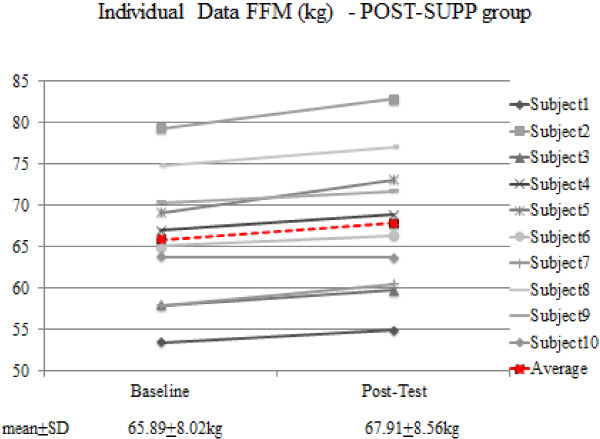
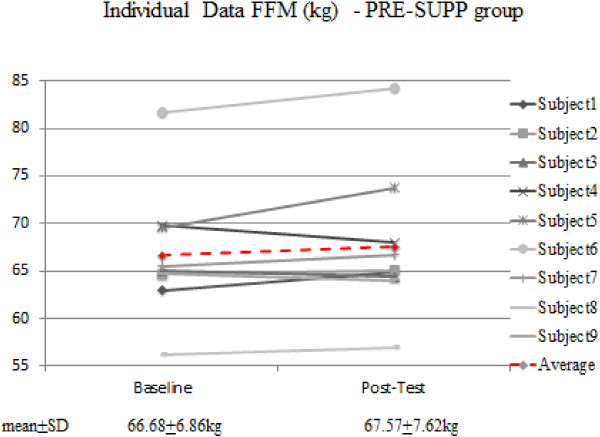
BACKGROUND: Chronic supplementation with creatine monohydrate has been shown to promote increases in total intramuscular creatine, phosphocreatine, skeletal muscle mass, lean body mass and muscle fiber size. Furthermore, there is robust evidence that muscular strength and power will also increase after supplementing with creatine. However, it is not known if the timing of creatine supplementation will affect the adaptive response to exercise. Thus, the purpose of this investigation was to determine the difference between pre versus post exercise supplementation of creatine on measures of body composition and strength. METHODS: Nineteen healthy recreational male bodybuilders (mean ± SD; age: 23.1 ± 2.9; height: 166.0 ± 23.2 cm; weight: 80.18 ± 10.43 kg) participated in this study. Subjects were randomly assigned to one of the following groups: PRE-SUPP or POST-SUPP workout supplementation of creatine (5 grams). The PRE-SUPP group consumed 5 grams of creatine immediately before exercise. On the other hand, the POST-SUPP group consumed 5 grams immediately after exercise. Subjects trained on average five days per week for four weeks. Subjects consumed the supplement on the two non-training days at their convenience. Subjects performed a periodized, split-routine, bodybuilding workout five days per week (Chest-shoulders-triceps; Back-biceps, Legs, etc.). Body composition (Bod Pod®) and 1-RM bench press (BP) were determined. Diet logs were collected and analyzed (one random day per week; four total days analyzed). RESULTS: 2x2 ANOVA results - There was a significant time effect for fat-free mass (FFM) (F = 19.9; p = 0.001) and BP (F = 18.9; p < 0.001), however, fat mass (FM) and body weight did not reach significance. While there were trends, no significant interactions were found. However, using magnitude-based inference, supplementation with creatine post workout is possibly more beneficial in comparison to pre workout supplementation with regards to FFM, FM and 1-RM BP. The mean change in the PRE-SUPP and POST-SUPP groups for body weight (BW kg), FFM (kg), FM (kg) and 1-RM bench press (kg) were as follows, respectively: Mean ± SD; BW: 0.4 ± 2.2 vs. 0.8 ± 0.9; FFM: 0.9 ± 1.8 vs. 2.0 ± 1.2; FM: -0.1 ± 2.0 vs. -1.2 ± 1.6; Bench Press 1-RM: 6.6 ± 8.2 vs. 7.6 ± 6.1. Qualitative inference represents the likelihood that the true value will have the observed magnitude. Furthermore, there were no differences in caloric or macronutrient intake between the groups. CONCLUSIONS: Creatine supplementation plus resistance exercise increases fat-free mass and strength. Based on the magnitude inferences it appears that consuming creatine immediately post-workout is superior to pre-workout vis a vis body composition and strength.
Overview
The claims and statistics of this paper haven’t been checked yet.
Free: it reads the open-access text and checks the first 5 claims that cite a source we can check. Create a free account to check every claim.
Integrity signals
Registry
Cites
Statistics
Figures
Verification
Claims the paper makes
The claims and statistics of this paper haven’t been checked yet.
Free: it reads the open-access text and checks the first 5 claims that cite a source we can check. Create a free account to check every claim.
Claims other papers make about this one
Each is checked against this paper’s own text: does it say what the citing paper says it does?
The source backs part of the claim, not all of it — or backs it for a different population, condition or comparison.
In the citing paper
“Moreover, in a group of healthy recreational male bodybuilders, 5 g/day of creatine consumed either pre- or post-training had no effect on fat mass [90].”
From Common questions and misconceptions about creatine supplementation: what does the scientific evidence really show? (2021) · cites this paper as [90]
Experimental — accuracy not yet measuredThe source backs part of the claim, not all of it — or backs it for a different population, condition or comparison.
In the citing paper
“After 4 weeks of training, changes in fat-free mass (assessed by air-displacement plethysmography) and bench-press strength (assessed by 1-repetition maximum) were similar between creatine ingestion strategies.”
From Creatine O'Clock: Does Timing of Ingestion Really Influence Muscle Mass and Performance? (2022) · cites this paper as Antonio and Ciccone (2013)
Experimental — accuracy not yet measuredThe cited source says what the claim attributes to it.
In the citing paper
“participants in the studies by Antonio and Ciccone (2013) and Jurado-Castro et al. (2021) consumed creatine on non-training days which may have also influenced their findings.”
From Creatine O'Clock: Does Timing of Ingestion Really Influence Muscle Mass and Performance? (2022) · cites this paper as Antonio and Ciccone (2013)
The cited source says what the claim attributes to it.
In the citing paper
“↔ FFM, FM, BM, 1-RM Bench press between groups; Magnitude based inference revealed CR Post more beneficial for FFM, FM, 1-RM Bench press”
From Creatine O'Clock: Does Timing of Ingestion Really Influence Muscle Mass and Performance? (2022) · cites this paper as Antonio and Ciccone (2013)
The cited source says what the claim attributes to it.
In the citing paper
“For instance, research related to caffeine [13], creatine [14–16] and bicarbonate [17] have indicated that timing may affect the acute and chronic response to exercise.”
From International society of sports nutrition position stand: nutrient timing (2017) · cites this paper as [14]
Self-check
Percentages, sums and reported differences re-computed from the paper’s own numbers.
The self-check needs the paper’s full text.
Citations
Cites
Progressive Statistics for Studies in Sports Medicine and Exercise Science
HOPKINS, W. G., MARSHALL, S. W., BATTERHAM, A. M., & HANIN, J. (2009) · Medicine & Science in Sports & Exercise · doi:10.1249/mss.0b013e31818cb278 · Cited by 9,128 · cited 2×
“Several studies have supported the use of magnitude-based inference statistics as a complementary tool for null hypothesis testing to reduce errors in interpretation and to provide more clinically meaningful results [30,31].”
MethodMaking Meaningful Inferences About Magnitudes
Batterham, A. M., & Hopkins, W. G. (2006) · International Journal of Sports Physiology and Performance · doi:10.1123/ijspp.1.1.50 · Cited by 2,183 · cited 5×
“Several studies have supported the use of magnitude-based inference statistics as a complementary tool for null hypothesis testing to reduce errors in interpretation and to provide more clinically meaningful results [30,31].”
MethodInfluentialPostexercise net protein synthesis in human muscle from orally administered amino acids
Tipton, K. D., Ferrando, A. A., Phillips, S. M., Doyle, D., & Wolfe, R. R. (1999) · American Journal of Physiology-Endocrinology and Metabolism · doi:10.1152/ajpendo.1999.276.4.e628 · Cited by 616 · cited 1×
“However, based on the preponderance of evidence, it is apparent that consuming the proper nutrients during the periworkout time period may enhance lean body mass and expedite skeletal muscle recovery [25-29].”
BackgroundEsmarck, B., Andersen, J. L., Olsen, S., Richter, E. A., Mizuno, M., & Kjær, M. (2001) · The Journal of Physiology · doi:10.1111/j.1469-7793.2001.00301.x · Cited by 540
Tipton, K. D., Rasmussen, B. B., Miller, S. L., Wolf, S. E., Owens-Stovall, S. K., Petrini, B. E., & Wolfe, R. R. (2001) · American Journal of Physiology-Endocrinology and Metabolism · doi:10.1152/ajpendo.2001.281.2.e197 · Cited by 526 · cited 3×
“However, based on the preponderance of evidence, it is apparent that consuming the proper nutrients during the periworkout time period may enhance lean body mass and expedite skeletal muscle recovery [25-29].”
BackgroundRasmussen, B. B., Tipton, K. D., Miller, S. L., Wolf, S. E., & Wolfe, R. R. (2000) · Journal of Applied Physiology · doi:10.1152/jappl.2000.88.2.386 · Cited by 523 · cited 1×
“investigators found no difference in the anabolic response whether the drink was consumed 1 hour or 3 hours post exercise [39].”
BackgroundInternational Society of Sports Nutrition position stand: Nutrient timing
Kerksick, C., Harvey, T., Stout, J., Campbell, B., Wilborn, C., Kreider, R., Kalman, D., Ziegenfuss, T., Lopez, H., Landis, J., et al. (2008) · Journal of the International Society of Sports Nutrition · doi:10.1186/1550-2783-5-17 · Cited by 456
Performance and muscle fiber adaptations to creatine supplementation and heavy resistance training
VOLEK, J. S., DUNCAN, N. D., MAZZETTI, S. A., STARON, R. S., PUTUKIAN, M., G??MEZ, A. L., PEARSON, D. R., FINK, W. J., & KRAEMER, W. J. (1999) · Medicine & Science in Sports & Exercise · doi:10.1097/00005768-199908000-00011 · Cited by 366 · cited 2×
“3% increase in body weight and fat-free mass after a 12 week treatment period [12].”
BackgroundInternational Society of Sports Nutrition position stand: creatine supplementation and exercise
Buford, T. W., Kreider, R. B., Stout, J. R., Greenwood, M., Campbell, B., Spano, M., Ziegenfuss, T., Lopez, H., Landis, J., & Antonio, J. (2007) · Journal of the International Society of Sports Nutrition · doi:10.1186/1550-2783-4-6 · Cited by 341 · cited 2×
“Introduction Chronic supplementation with creatine has been shown to increase lean body mass and enhance exercise performance [1-10].”
BackgroundOlsen, S., Aagaard, P., Kadi, F., Tufekovic, G., Verney, J., Olesen, J. L., Suetta, C., & Kjær, M. (2006) · The Journal of Physiology · doi:10.1113/jphysiol.2006.107359 · Cited by 319 · cited 1×
“Mechanistically, creatine supplementation has been shown to increase muscle fiber size, enhance myosin heavy chain protein synthesis, activate satellite cells as well as increase the concentrations of intramuscular ATP and PCr [6,7,12,36,37].”
BackgroundStimulation of net muscle protein synthesis by whey protein ingestion before and after exercise
Tipton, K. D., Elliott, T. A., Cree, M. G., Aarsland, A. A., Sanford, A. P., & Wolfe, R. R. (2007) · American Journal of Physiology-Endocrinology and Metabolism · doi:10.1152/ajpendo.00166.2006 · Cited by 307 · cited 2×
“However, not all investigations demonstrate a positive effect of creatine supplementation vis a vis body composition [14-18].”
BackgroundProtein and amino acids for athletes
Tipton, K. D., & Wolfe, R. R. (2004) · Journal of Sports Sciences · doi:10.1080/0264041031000140554 · Cited by 274 · cited 1×
“However, not all investigations demonstrate a positive effect of creatine supplementation vis a vis body composition [14-18].”
BackgroundEffects of Supplement Timing and Resistance Exercise on Skeletal Muscle Hypertrophy
CRIBB, P. J., & HAYES, A. (2006) · Medicine & Science in Sports & Exercise · doi:10.1249/01.mss.0000233790.08788.3e · Cited by 270 · cited 3×
“Cribb and Hayes discovered that consuming a protein-carbohydrate-creatine supplement immediately pre and post workout resulted in greater gains in lean body mass, muscle fiber size and muscular strength in comparison to morning and evening consumption [25].”
BackgroundVerdijk, L. B., Jonkers, R. A., Gleeson, B. G., Beelen, M., Meijer, K., Savelberg, H. H., Wodzig, W. K., Dendale, P., & van Loon, L. J. (2009) · The American Journal of Clinical Nutrition · doi:10.3945/ajcn.2008.26626 · Cited by 253 · cited 1×
“Indeed, others have found that timed protein supplementation immediately before and after exercise does not further enhance muscle mass or strength in healthy elderly men who habitually consume adequate amounts of dietary protein [40].”
BackgroundLevenhagen, D. K., Gresham, J. D., Carlson, M. G., Maron, D. J., Borel, M. J., & Flakoll, P. J. (2001) · American Journal of Physiology-Endocrinology and Metabolism · doi:10.1152/ajpendo.2001.280.6.e982 · Cited by 239 · cited 1×
“However, based on the preponderance of evidence, it is apparent that consuming the proper nutrients during the periworkout time period may enhance lean body mass and expedite skeletal muscle recovery [25-29].”
BackgroundCreatine supplementation combined with resistance training in older men
CHRUSCH, M. J., CHILIBECK, P. D., CHAD, K. E., SHAWN DAVISON, K., & BURKE, D. G. (2001) · Medicine & Science in Sports & Exercise · doi:10.1097/00005768-200112000-00021 · Cited by 233 · cited 1×
“3 kg) and improved lower body strength as measured using a 1-RM [32].”
MethodEffect of creatine and weight training on muscle creatine and performance in vegetarians
BURKE, D. G., CHILIBECK, P. D., PARISE, G., CANDOW, D. G., MAHONEY, D., & TARNOPOLSKY, M. (2003) · Medicine & Science in Sports & Exercise · doi:10.1249/01.mss.0000093614.17517.79 · Cited by 224 · cited 1×
“vegetarians) are more responsive to supplementation than those who regularly consume meat [13].”
BackgroundCreatine Supplementation Enhances Muscular Performance During High-Intensity Resistance Exercise
VOLEK, J. S., KRAEMER, W. J., BUSH, J. A., BOETES, M., INCLEDON, T., CLARK, K. L., & LYNCH, J. M. (1997) · Journal of the American Dietetic Association · doi:10.1016/s0002-8223(97)00189-2 · Cited by 219
Effects of oral creatine and resistance training on myosin heavy chain expression
WILLOUGHBY, D. S., & ROSENE, J. (2001) · Medicine & Science in Sports & Exercise · doi:10.1097/00005768-200110000-00010 · Cited by 209 · cited 1×
“Mechanistically, creatine supplementation has been shown to increase muscle fiber size, enhance myosin heavy chain protein synthesis, activate satellite cells as well as increase the concentrations of intramuscular ATP and PCr [6,7,12,36,37].”
BackgroundMIHIC, S., MacDONALD, J. R., McKENZIE, S., & TARNOPOLSKY, M. A. (2000) · Medicine & Science in Sports & Exercise · doi:10.1097/00005768-200002000-00007 · Cited by 201 · cited 1×
“Introduction Chronic supplementation with creatine has been shown to increase lean body mass and enhance exercise performance [1-10].”
BackgroundCreatine supplementation enhances muscular performance during high- intensity resistance exercise
Volek, J., Kraemer, W. J., & Bush, J. A. (1997) · Excerpta medica. Section 35, Occupational health and industrial medicine · Cited by 186
Bortolotto, S. K., Stephenson, D. G., & Stephenson, G. M. M. (1999) · American Journal of Physiology-Cell Physiology · doi:10.1152/ajpcell.1999.276.3.c628 · Cited by 149
Nutrient timing revisited: is there a post-exercise anabolic window?
Aragon, A. A., & Schoenfeld, B. J. (2013) · Journal of the International Society of Sports Nutrition · doi:10.1186/1550-2783-10-5 · Cited by 139 · cited 2×
“consuming nutrients pre, during and/or post workout) has on the adaptive response to exercise [19-24].”
BackgroundCooke, M. B., Rybalka, E., Williams, A. D., Cribb, P. J., & Hayes, A. (2009) · Journal of the International Society of Sports Nutrition · doi:10.1186/1550-2783-6-13 · Cited by 126 · cited 1×
“Introduction Chronic supplementation with creatine has been shown to increase lean body mass and enhance exercise performance [1-10].”
BackgroundHoffman, J. R., Ratamess, N. A., Tranchina, C. P., Rashti, S. L., Kang, J., & Faigenbaum, A. D. (2009) · International Journal of Sport Nutrition and Exercise Metabolism · doi:10.1123/ijsnem.19.2.172 · Cited by 123 · cited 1×
“Also, timed proteinsupplement ingestion in resistance-trained athletes during a 10-week training program does not further enhance strength, power, or body-composition changes [41].”
BackgroundAguiar, A. F., Januário, R. S. B., Junior, R. P., Gerage, A. M., Pina, F. L. C., do Nascimento, M. A., Padovani, C. R., & Cyrino, E. S. (2013) · European Journal of Applied Physiology · doi:10.1007/s00421-012-2514-6 · Cited by 121 · cited 1×
“Introduction Chronic supplementation with creatine has been shown to increase lean body mass and enhance exercise performance [1-10].”
BackgroundBemben, M. G., Witten, M. S., Carter, J. M., Eliot, K. A., Knehans, A. W., & Bemben, D. A. (2010) · The Journal of nutrition, health and aging · doi:10.1007/s12603-009-0124-8 · Cited by 120
Creatine supplementation improves muscular performance in older women
Gotshalk, L. A., Kraemer, W. J., Mendonca, M. A. G., Vingren, J. L., Kenny, A. M., Spiering, B. A., Hatfield, D. L., Fragala, M. S., & Volek, J. S. (2007) · European Journal of Applied Physiology · doi:10.1007/s00421-007-0580-y · Cited by 106 · cited 1×
“Introduction Chronic supplementation with creatine has been shown to increase lean body mass and enhance exercise performance [1-10].”
BackgroundEffect of carbohydrate-protein supplement timing on acute exercise-induced muscle damage
White, J. P., Wilson, J. M., Austin, K. G., Greer, B. K., St John, N., & Panton, L. B. (2008) · Journal of the International Society of Sports Nutrition · doi:10.1186/1550-2783-5-5 · Cited by 106
Spillane, M., Schoch, R., Cooke, M., Harvey, T., Greenwood, M., Kreider, R., & Willoughby, D. S. (2009) · Journal of the International Society of Sports Nutrition · doi:10.1186/1550-2783-6-6 · Cited by 95
Effect of Creatine Ingestion after Exercise on Muscle Thickness in Males and Females
CHILIBECK, P. D., STRIDE, D., FARTHING, J. P., & BURKE, D. G. (2004) · Medicine & Science in Sports & Exercise · doi:10.1249/01.mss.0000142301.70419.c6 · Cited by 89 · cited 2×
“Introduction Chronic supplementation with creatine has been shown to increase lean body mass and enhance exercise performance [1-10].”
BackgroundStark, M., Lukaszuk, J., Prawitz, A., & Salacinski, A. (2012) · Journal of the International Society of Sports Nutrition · doi:10.1186/1550-2783-9-54 · Cited by 84 · cited 2×
“consuming nutrients pre, during and/or post workout) has on the adaptive response to exercise [19-24].”
BackgroundZiegenfuss, T. N., Rogers, M., Lowery, L., Mullins, N., Mendel, R., Antonio, J., & Lemon, P. (2002) · Nutrition · doi:10.1016/s0899-9007(01)00802-4 · Cited by 81 · cited 1×
“Introduction Chronic supplementation with creatine has been shown to increase lean body mass and enhance exercise performance [1-10].”
BackgroundContemporary Issues in Protein Requirements and Consumption for Resistance Trained Athletes
Wilson, J., & Wilson, G. J. (2006) · Journal of the International Society of Sports Nutrition · doi:10.1186/1550-2783-3-1-7 · Cited by 75 · cited 2×
“consuming nutrients pre, during and/or post workout) has on the adaptive response to exercise [19-24].”
BackgroundImproving muscle mass: Response of muscle metabolism to exercise, nutrition and anabolic agents
Tipton, K. D., & Ferrando, A. A. (2008) · Essays in Biochemistry · doi:10.1042/bse0440085 · Cited by 66 · cited 1×
“However, based on the preponderance of evidence, it is apparent that consuming the proper nutrients during the periworkout time period may enhance lean body mass and expedite skeletal muscle recovery [25-29].”
BackgroundTiming of creatine or protein supplementation and resistance training in the elderly
Candow, D. G., & Chilibeck, P. D. (2008) · Applied Physiology, Nutrition, and Metabolism · doi:10.1139/h07-139 · Cited by 60 · cited 1×
“consuming nutrients pre, during and/or post workout) has on the adaptive response to exercise [19-24].”
BackgroundLow-dose creatine supplementation enhances fatigue resistance in the absence of weight gain
Rawson, E. S., Stec, M. J., Frederickson, S. J., & Miles, M. P. (2011) · Nutrition · doi:10.1016/j.nut.2010.04.001 · Cited by 58 · cited 1×
“Introduction Chronic supplementation with creatine has been shown to increase lean body mass and enhance exercise performance [1-10].”
BackgroundChilibeck, P. D., Magnus, C., & Anderson, M. (2007) · Applied Physiology, Nutrition, and Metabolism · doi:10.1139/h07-072 · Cited by 50 · cited 2×
“However, not all investigations demonstrate a positive effect of creatine supplementation vis a vis body composition [14-18].”
BackgroundSakkas, G. K., Mulligan, K., DaSilva, M., Doyle, J. W., Khatami, H., Schleich, T., Kent-Braun, J. A., & Schambelan, M. (2009) · PLoS ONE · doi:10.1371/journal.pone.0004605 · Cited by 45 · cited 1×
“However, not all investigations demonstrate a positive effect of creatine supplementation vis a vis body composition [14-18].”
BackgroundEffects of creatine supplementation on oxidative stress profile of athletes
Percário, S., Domingues, S. P. D. T., Teixeira, L. F. M., Vieira, J. L. F., de Vasconcelos, F., Ciarrocchi, D. M., Almeida, E. D., & Conte, M. (2012) · Journal of the International Society of Sports Nutrition · doi:10.1186/1550-2783-9-56 · Cited by 43 · cited 1×
“29 kg; creatine versus control) [33].”
Jagim, A. R., Oliver, J. M., Sanchez, A., Galvan, E., Fluckey, J., Riechman, S., Greenwood, M., Kelly, K., Meininger, C., Rasmussen, C., et al. (2012) · Journal of the International Society of Sports Nutrition · doi:10.1186/1550-2783-9-43 · Cited by 42 · cited 1×
“These and other investigations indeed show that creatine supplementation in general has a significant anabolic and performance-enhancing effect [34,35] which is in agreement with the current investigation.”
ResultEffects of creatine on thermoregulatory responses while exercising in the heat
Mendel, R. W., Blegen, M. D., Cheatham, C., António, J., & Ziegenfuss, T. N. (2005) · Nutrition · doi:10.1016/j.nut.2004.06.024 · Cited by 32
Lemon, P. W. R., Berardi, J. M., & Noreen, E. E. (2002) · Current Sports Medicine Reports · doi:10.1249/00149619-200208000-00005 · Cited by 27 · cited 1×
“Data on protein and amino acid supplementation indicate that indeed the pre, during and post workout window are important times to consume nutrients though some studies demonstrate a neutral effect [20-24,38].”
BackgroundSouza-Junior, T. P., Willardson, J. M., Bloomer, R., Leite, R. D., Fleck, S. J., Oliveira, P. R., & Simão, R. (2011) · Journal of the International Society of Sports Nutrition · doi:10.1186/1550-2783-8-17 · Cited by 20 · cited 1×
“These and other investigations indeed show that creatine supplementation in general has a significant anabolic and performance-enhancing effect [34,35] which is in agreement with the current investigation.”
Result
Cited by
International society of sports nutrition position stand: nutrient timing
Kerksick, C. M., Arent, S., Schoenfeld, B. J., Stout, J. R., Campbell, B., Wilborn, C. D., Taylor, L., Kalman, D., Smith-Ryan, A. E., Kreider, R. B., et al. (2017) · Journal of the International Society of Sports Nutrition · doi:10.1186/s12970-017-0189-4 · Cited by 622
Zdzieblik, D., Oesser, S., Baumstark, M. W., Gollhofer, A., & König, D. (2015) · British Journal of Nutrition · doi:10.1017/s0007114515002810 · Cited by 269
“Creatine supplementation has been shown to improve both muscle mass and muscular function in some but not all studies((45)).”
BackgroundAntonio, J., Candow, D. G., Forbes, S. C., Gualano, B., Jagim, A. R., Kreider, R. B., Rawson, E. S., Smith-Ryan, A. E., VanDusseldorp, T. A., Willoughby, D. S., et al. (2021) · Journal of the International Society of Sports Nutrition · doi:10.1186/s12970-021-00412-w · Cited by 345
“healthy recreational male bodybuilders, 5 g/day of creatine consumed either pre- or post-training had no effect on fat mass [90].”
BackgroundCreatine for exercise and sports performance, with recovery considerations for healthy populations
Wax, B., Kerksick, C. M., Jagim, A. R., Mayo, J. J., Lyons, B. C., & Kreider, R. B. (2021) · Nutrients · doi:10.3390/nu13061915 · Cited by 182
“[29], who observed greater improvements in fat-free mass accrual and bench press 1 RM strength in recreational male body builders following a 5-week creatine supplementation period, in conjunction with a body-building-type resistance training program compared to those in the placebo group.”
MethodAthletes’ nutritional demands: a narrative review of nutritional requirements
Amawi, A., AlKasasbeh, W., Jaradat, M., Almasri, A., Alobaidi, S., Hammad, A. A., Bishtawi, T., Fataftah, B., Turk, N., Saoud, H. A., et al. (2024) · Frontiers in Nutrition · doi:10.3389/fnut.2023.1331854 · Cited by 154
Metadata
- Authors
- Antonio, J., & Ciccone, V.
- Affiliations
- Exercise and Sports SciencesNova Southeastern University, 3532 S. University Drive University Park Plaza Suite 3532 33314 Davie FL USA
- Nova Southeastern University (US)
- Venue
- Journal of the International Society of Sports Nutrition
- Publisher
- Informa UK Limited
- Published
- 2013-01-03
- Volume
- 10
- Issue
- 1
- Pages
- 36-36
- ISSN
- 1550-2783 (ISSN-L)
- PMC
- PMC3750511
- OpenAlex
- W2099802348
- Cited by
- 83
- References
- 44
- Citations by year
- 2026: 5 · 2025: 4 · 2024: 7 · 2023: 3 · 2022: 6 · 2021: 7 · 2020: 6 · 2019: 8 · 2018: 10 · 2017: 5 · 2016: 8 · 2015: 10 · 2014: 3 · 2013: 1
- FWCI
- 4.25
- Type
- journal article
- Language
- en
- Open access
- gold
- doi.org
- Licence
- Locations
- Journal of the International Society of Sports Nutrition (publishedVersion, cc-by)
- Europe PMC (PubMed Central) (publishedVersion, cc-by)
- PubMed Central (publishedVersion, cc-by)
- PubMed (publishedVersion)
- Topics
- Health Sciences › Nursing › Nutrition and Dietetics › Muscle metabolism and nutrition
- Health Sciences › Medicine › Orthopedics and Sports Medicine › Sports Performance and Training
- Health Sciences › Medicine › Physiology (medical) › Biochemical effects in animals
- Keywords
- creatine monohydrate, timing of supplementation, body composition, fat-free mass, fat mass, muscle strength, bodybuilding, resistance training, dietary intake, magnitude-based inference, bodybuilders, recreational athletes, skeletal muscle hypertrophy, phosphocreatine, exercise adaptation
About these checks
Registry, retraction, Cites and statistics results are computed, not judged, with one exception: a printed reference that no index lists is read once by a model before it counts as a citation error. Claims are extracted by a model and kept only when their quote appears verbatim in the text; each cited source is then checked, with a model’s help, for whether it says what the claim relies on. Those verdicts can be wrong — read the claim’s quote and the cited source before relying on one.
Statistics and arithmetic are recomputed, not judged.
Confidence bands are shown only for fields calibrated on our annotated test set. None is calibrated yet, so no band is shown.
What counts as a claim ›How we measure confidence ›How we check this ›
Are you an author, or do you see a problem with this page? Request a review
Data sources
Bibliographic data: Semantic Scholar, OpenAlex, Crossref.
Contains information from the Semantic Scholar Academic Graph Datasets, made available under the ODC Attribution License (ODC-BY 1.0).
Semantic Scholar’s data is described in: Kinney, R., et al. (2023). The Semantic Scholar Open Data Platform. arXiv:2301.10140.
