

A buffered form of creatine does not promote greater changes in muscle creatine content, body composition, or training adaptations than creatine monohydrate
Open accessThe DOI matches its Crossref record; 41 of the 43 references it cites were found in a registry or an index.
Abstract
BACKGROUND: Creatine monohydrate (CrM) has been consistently reported to increase muscle creatine content and improve high-intensity exercise capacity. However, a number of different forms of creatine have been purported to be more efficacious than CrM. The purpose of this study was to determine if a buffered creatine monohydrate (KA) that has been purported to promote greater creatine retention and training adaptations with fewer side effects at lower doses is more efficacious than CrM supplementation in resistance-trained individuals. METHODS: In a double-blind manner, 36 resistance-trained participants (20.2 ± 2 years, 181 ± 7 cm, 82.1 ± 12 kg, and 14.7 ± 5% body fat) were randomly assigned to supplement their diet with CrM (Creapure® AlzChem AG, Trostberg, Germany) at normal loading (4 x 5 g/d for 7-days) and maintenance (5 g/d for 21-days) doses; KA (Kre-Alkalyn®, All American Pharmaceutical, Billings, MT, USA) at manufacturer's recommended doses (KA-L, 1.5 g/d for 28-days); or, KA with equivalent loading (4 x 5 g/d for 7-days) and maintenance (5 g/d) doses of CrM (KA-H). Participants were asked to maintain their current training programs and record all workouts. Muscle biopsies from the vastus lateralis, fasting blood samples, body weight, DEXA determined body composition, and Wingate Anaerobic Capacity (WAC) tests were performed at 0, 7, and 28-days while 1RM strength tests were performed at 0 and 28-days. Data were analyzed by a repeated measures multivariate analysis of variance (MANOVA) and are presented as mean ± SD changes from baseline after 7 and 28-days, respectively. RESULTS: Muscle free creatine content obtained in a subgroup of 25 participants increased in all groups over time (1.4 ± 20.7 and 11.9 ± 24.0 mmol/kg DW, p = 0.03) after 7 and 28-days, respectively, with no significant differences among groups (KA-L -7.9 ± 22.3, 4.7 ± 27.0; KA-H 1.0 ± 12.8, 9.1 ± 23.2; CrM 11.3 ± 23.9, 22.3 ± 21.0 mmol/kg DW, p = 0.46). However, while no overall group differences were observed (p = 0.14), pairwise comparison between the KA-L and CrM groups revealed that changes in muscle creatine content tended to be greater in the CrM group (KA-L -1.1 ± 4.3, CrM 11.2 ± 4.3 mmol/kg DW, p = 0.053 [mean ± SEM]). Although some significant time effects were observed, no significant group x time interactions (p > 0.05) were observed in changes in body mass, fat free mass, fat mass, percent body fat, or total body water; bench press and leg press 1RM strength; WAC mean power, peak power, or total work; serum blood lipids, markers of catabolism and bone status, and serum electrolyte status; or, whole blood makers of lymphocytes and red cells. Serum creatinine levels increased in all groups (p < 0.001) with higher doses of creatine promoting greater increases in serum creatinine (p = 0.03) but the increases observed (0.1 - 0.2 mg/dl) were well within normal values for active individuals (i.e., <1.28 ± 0.2 mg/dl). Serum LDL was decreased to a greater degree following ingesting loading doses in the CrM group but returned to baseline during the maintenance phase. No side effects were reported. CONCLUSIONS: Neither manufacturers recommended doses of KA (1.5 g/d) or KA with equivalent loading (20 g/d for 7-days) and maintenance doses (5 g/d for 21-days) of CrM promoted greater changes in muscle creatine content, body composition, strength, or anaerobic capacity than CrM (20 g/d for 7-days, 5 g/d for 21-days). There was no evidence that supplementing the diet with a buffered form of creatine resulted in fewer side effects than CrM. These findings do not support claims that consuming a buffered form of creatine is a more efficacious and/or safer form of creatine to consume than creatine monohydrate.
Overview
The claims and statistics of this paper haven’t been checked yet.
Free: it reads the open-access text and checks the first 5 claims that cite a source we can check. Create a free account to check every claim.
Integrity signals
Registry
Cites
Statistics
Figures
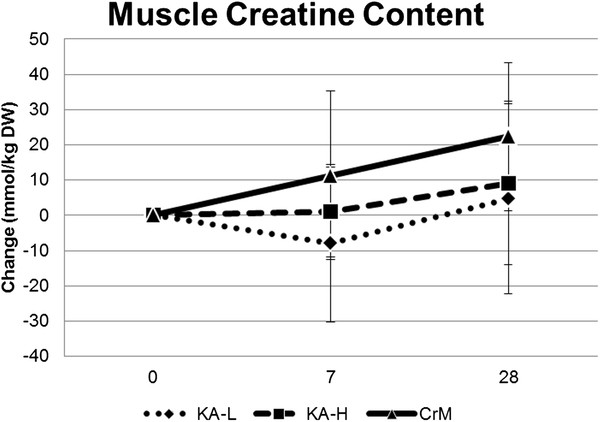
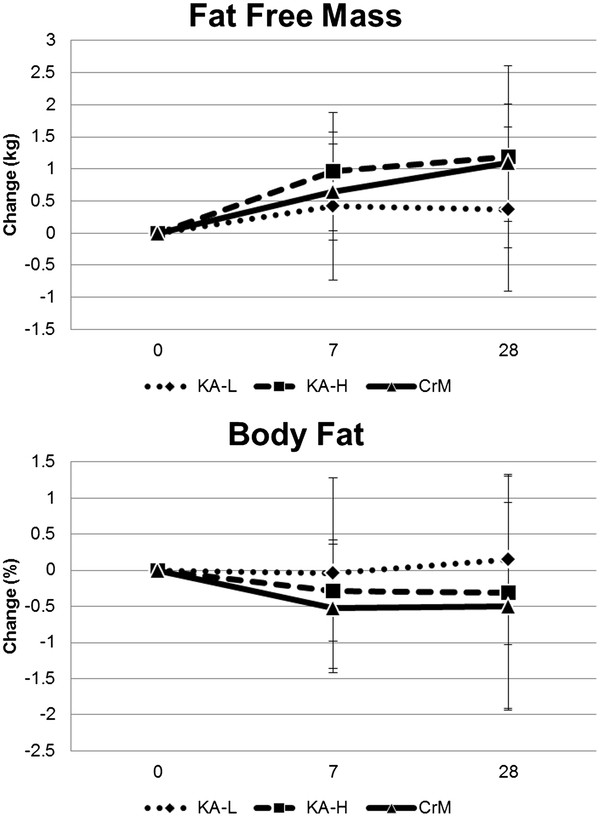
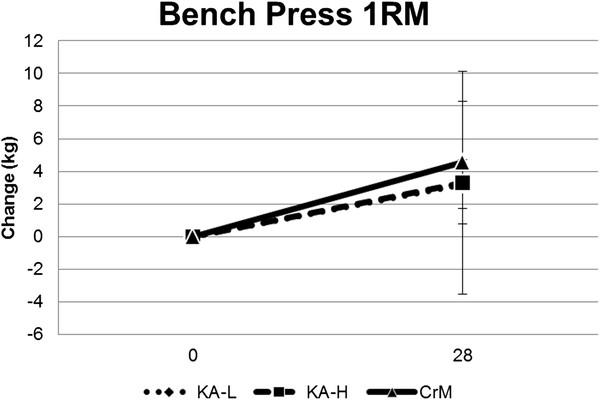
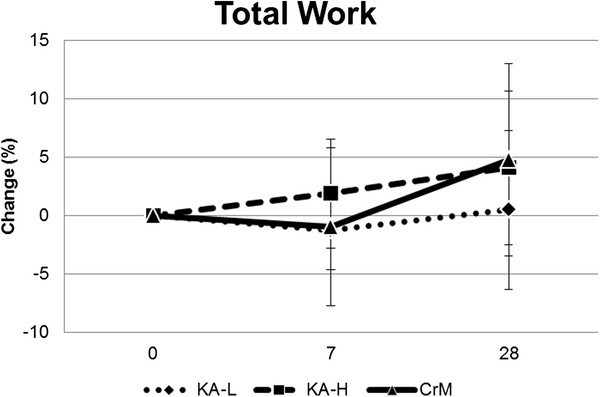
Verification
Claims the paper makes
The claims and statistics of this paper haven’t been checked yet.
Free: it reads the open-access text and checks the first 5 claims that cite a source we can check. Create a free account to check every claim.
Claims other papers make about this one
Each is checked against this paper’s own text: does it say what the citing paper says it does?
The source backs part of the claim, not all of it — or backs it for a different population, condition or comparison.
In the citing paper
“Furthermore, resistance-trained males who consumed creatine supplementation (20 g/day for seven days followed by 5 g/day for 21 days) had no significant increase in ICW, ECW, or TBW [41].”
From Common questions and misconceptions about creatine supplementation: what does the scientific evidence really show? (2021) · cites this paper as [41]
Experimental — accuracy not yet measuredThe cited source says what the claim attributes to it.
In the citing paper
“Although several other forms of creatine have been proposed and marketed as alternatives, none have been shown to offer benefits above and beyond those seen with monohydrate.”
From Creatine for exercise and sports performance, with recovery considerations for healthy populations (2021) · cites this paper as [163]
The cited source says what the claim attributes to it.
In the citing paper
“Research has indicated that internal phosphocreatine stores can be increased by 15–40% through creatine supplementation strategies, which can subsequently have various performance-related benefits in isolation, and when used in conjunction with structured exercise training programs over time [2,3,4,5,6].”
From Creatine Supplementation in Children and Adolescents (2021) · cites this paper as [4]
The cited source says what the claim attributes to it.
In the citing paper
“There was some evidence that ingesting higher doses of CrM-Alk increased muscle creatine content after 28 days (6.2 ± 29.2; 27.3 ± 49.1%, respectively), but these values were less than observed with CrM (23.5 ± 49.0; 50.4 ± 44.8%, respectively).”
From Bioavailability, Efficacy, Safety, and Regulatory Status of Creatine and Related Compounds: A Critical Review (2022) · cites this paper as [28]
The cited source says what the claim attributes to it.
In the citing paper
“In a double-blind manner, 36 resistance-trained participants were randomly assigned to ingest CrM (4 × 5 g/day for 7-days, 5 g/day for 21-days), CrM-Alk at recommended doses (1.5 g/day for 28-days), or CrM-Alk with equivalent doses to CrM (4 × 5 g/day for 7-days, 5 g/day for 21-days).”
From Bioavailability, Efficacy, Safety, and Regulatory Status of Creatine and Related Compounds: A Critical Review (2022) · cites this paper as [28]
2 more claims about this paper
Create a free account to see every claim other papers make about this one.
Self-check
Percentages, sums and reported differences re-computed from the paper’s own numbers.
The self-check needs the paper’s full text.
Citations
Cites
Elevation of creatine in resting and exercised muscle of normal subjects by creatine supplementation
Harris, R. C., Söderlund, K., & Hultman, E. (1992) · Clinical Science · doi:10.1042/cs0830367 · Cited by 1,168 · cited 5×
“This is the reason that the conversion of creatine to creatinine in the gastrointestinal tract has been reported to be minimal regardless of transit time [7,18,20].”
BackgroundMethodInfluentialHarris, R. C., Hultman, E., & Nordesjö, L. O. (1974) · Scandinavian Journal of Clinical and Laboratory Investigation · doi:10.3109/00365517409082477 · Cited by 849
Muscle creatine loading in men
Hultman, E., Soderlund, K., Timmons, J. A., Cederblad, G., & Greenhaff, P. L. (1996) · Journal of Applied Physiology · doi:10.1152/jappl.1996.81.1.232 · Cited by 822 · cited 4×
“Muscle tissue samples were analyzed spectrophotometrically in duplicate for creatine (Cr) using methods developed by Harris and colleagues [7,8,43].”
BackgroundMethodInfluentialThe creatine kinase system and pleiotropic effects of creatine
Wallimann, T., Tokarska-Schlattner, M., & Schlattner, U. (2011) · Amino Acids · doi:10.1007/s00726-011-0877-3 · Cited by 797 · cited 1×
“A number of potential therapeutic benefits have also been suggested in various clinical populations [11-17].”
BackgroundEffect of oral creatine supplementation on skeletal muscle phosphocreatine resynthesis
Greenhaff, P. L., Bodin, K., Soderlund, K., & Hultman, E. (1994) · American Journal of Physiology-Endocrinology and Metabolism · doi:10.1152/ajpendo.1994.266.5.e725 · Cited by 531 · cited 2×
“Previous research has shown that ingestion of 20 g/d of CrM for 5–7 days can increase muscle creatine content 10-40% after 5–7 d of supplementation [1,4-8,10].”
BackgroundSuction applied to a muscle biopsy maximizes sample size
EVANS, W. J., PHINNEY, S. D., & YOUNG, V. R. (1982) · Medicine & Science in Sports & Exercise · doi:10.1249/00005768-198201000-00018 · Cited by 519
Greenhaff, P. L., Casey, A., Short, A. H., Harris, R., Soderlund, K., & Hultman, E. (1993) · Clinical Science · doi:10.1042/cs0840565 · Cited by 460 · cited 2×
“Previous research has shown that ingestion of 20 g/d of CrM for 5–7 days can increase muscle creatine content 10-40% after 5–7 d of supplementation [1,4-8,10].”
BackgroundEffects of creatine supplementation on body composition, strength, and sprint performance
KREIDER, R. B., FERREIRA, M., WILSON, M., GRINDSTAFF, P., PLISK, S., REINARDY, J., CANTLER, E., & ALMADA, A. L. (1998) · Medicine & Science in Sports & Exercise · doi:10.1097/00005768-199801000-00011 · Cited by 430 · cited 3×
“Our research group has extensive experience in conducting clinical research studies on the efficacy and safety of supplementing the diet during training with various forms of creatine [9,25,26,32-39].”
BackgroundMethodResultSelf-citationISSN exercise & sport nutrition review: research & recommendations
Kreider, R. B., Wilborn, C. D., Taylor, L., Campbell, B., Almada, A. L., Collins, R., Cooke, M., Earnest, C. P., Greenwood, M., Kalman, D. S., et al. (2010) · Journal of the International Society of Sports Nutrition · doi:10.1186/1550-2783-7-7 · Cited by 428
Self-citationPerformance and muscle fiber adaptations to creatine supplementation and heavy resistance training
VOLEK, J. S., DUNCAN, N. D., MAZZETTI, S. A., STARON, R. S., PUTUKIAN, M., G??MEZ, A. L., PEARSON, D. R., FINK, W. J., & KRAEMER, W. J. (1999) · Medicine & Science in Sports & Exercise · doi:10.1097/00005768-199908000-00011 · Cited by 366 · cited 2×
“Previous research has shown that ingestion of 20 g/d of CrM for 5–7 days can increase muscle creatine content 10-40% after 5–7 d of supplementation [1,4-8,10].”
Background
Research works printed but not linked: 6
- Greenhaff P Constantin-Teodosiu D Casey A Hultman E The effect of oral creatine supplementation on skeletal muscle ATP degradation during repeated bouts of maximal voluntary exercise in man J Physiol 1994 476 84
- Greenwood M Greenwood L Kreider R Stahura K Creatine supplementation does not increase perceptions of fatigue or adversely affect health status during three a day training J Athletic Train 2002 37 S82
- Tallon MJ Child R Kre-alkalyn® supplementation has no beneficial effect on creatine-to-creatinine conversion rates 2007 International Society of Sports Nutrition Annual Conference, Las Vegas, NV
- Kreider R Willoughby DS Greenwood M Parise G Payne D Tarnopolsky M Effects of serum creatine supplementation on muscle creatine content Journal of Exercise Physiology: online 2003 6 24 33
- Kreider RB Klesges RC Lotz D Davis M Cantler E Harmon-Clayton K Dudley R Grindstaff P Ramsey L Bullen D Effects of nutritional supplementation during off-season college football training on body composition and strength Journal of Exercise Physiology Online 1999 2 24 39
- Almada A Kreider R Ransom J Rasmussen C Tutko R Milnor P Comparison of the reliability of repeated whole body DEXA scans to repeated spine and hip scans J Bone Miner Res 1999 14 SA243
Cited by
Kreider, R. B., Kalman, D. S., Antonio, J., Ziegenfuss, T. N., Wildman, R., Collins, R., Candow, D. G., Kleiner, S. M., Almada, A. L., & Lopez, H. L. (2017) · Journal of the International Society of Sports Nutrition · doi:10.1186/s12970-017-0173-z · Cited by 1,057
“Clinical evidence has not demonstrated that different forms of creatine such as creatine citrate [50], creatine serum [58], creatine ethyl ester [59], buffered forms of creatine [60], or creatine nitrate [61] promote greater creatine retention than creatine monohydrate [53].”
BackgroundSelf-citationAntonio, J., Candow, D. G., Forbes, S. C., Gualano, B., Jagim, A. R., Kreider, R. B., Rawson, E. S., Smith-Ryan, A. E., VanDusseldorp, T. A., Willoughby, D. S., et al. (2021) · Journal of the International Society of Sports Nutrition · doi:10.1186/s12970-021-00412-w · Cited by 345
“For example, studies have shown that three days of creatine supplementation increased TBW and extracellular body water (ECW) [37] and intracellular water (ICW) [38].”
MethodInfluentialSelf-citationHelms, E. R., Aragon, A. A., & Fitschen, P. J. (2014) · Journal of the International Society of Sports Nutrition · doi:10.1186/1550-2783-11-20 · Cited by 178
“tation did not increase muscle creatine concentrations more than CM [139,140].”
BackgroundCreatine for exercise and sports performance, with recovery considerations for healthy populations
Wax, B., Kerksick, C. M., Jagim, A. R., Mayo, J. J., Lyons, B. C., & Kreider, R. B. (2021) · Nutrients · doi:10.3390/nu13061915 · Cited by 182
Self-citationHall, M., & Trojian, T. H. (2013) · Current Sports Medicine Reports · doi:10.1249/jsr.0b013e31829cdff2 · Cited by 112
“Other forms of creatine, such as a buffered form of creatine, to increase hydrophilic nature of the molecule is a more efficacious and/or safer form of creatine to consume than creatine monohydrate (31).”
BackgroundKreider, R. B., Jäger, R., & Purpura, M. (2022) · Nutrients · doi:10.3390/nu14051035 · Cited by 103
“supplementation noting “there are no peer-reviewed published papers showing that the ingestion of equal amounts of creatine salts [30–33] or other forms of creatine like effervescent creatine [22], creatine ethyl ester [27,34,35], buffered creatine [28], creatine nitrate [29,36], creatine dipeptides, or the micro amou…”
BackgroundInfluentialSelf-citationAntonio, J., & Ciccone, V. (2013) · Journal of the International Society of Sports Nutrition · doi:10.1186/1550-2783-10-36 · Cited by 83
“These and other investigations indeed show that creatine supplementation in general has a significant anabolic and performance-enhancing effect [34,35] which is in agreement with the current investigation.”
ResultSupplements with purported effects on muscle mass and strength
Valenzuela, P. L., Morales, J. S., Emanuele, E., Pareja-Galeano, H., & Lucia, A. (2019) · European Journal of Nutrition · doi:10.1007/s00394-018-1882-z · Cited by 92
Nutrition recommendations for bodybuilders in the off-season: a narrative review
Iraki, J., Fitschen, P., Espinar, S., & Helms, E. (2019) · Sports · doi:10.3390/sports7070154 · Cited by 67
“Newer versions of creatine such as kre-alkalyn [94] and creatine ethyl-ester [95] have not been shown to be superior to creatine monohydrate despite typically having a higher price point.”
BackgroundKresta, J. Y., Oliver, J. M., Jagim, A. R., Fluckey, J., Riechman, S., Kelly, K., Meininger, C., Mertens-Talcott, S. U., Rasmussen, C., & Kreider, R. B. (2014) · Journal of the International Society of Sports Nutrition · doi:10.1186/s12970-014-0055-6 · Cited by 55
“3 g/kg/d for 5 to 7-days) results in an increase in muscle creatine content by 10–40% [16,19-21,31,41] and a large effect size was observed following creatine supplementation.”
BackgroundSelf-citationCreatine Supplementation in Children and Adolescents
Jagim, A. R., & Kerksick, C. M. (2021) · Nutrients · doi:10.3390/nu13020664 · Cited by 61
“Research has indicated that internal phosphocreatine stores can be increased by 15-40% through creatine supplementation strategies, which can subsequently have various performance-related benefits in isolation, and when used in conjunction with structured exercise training programs over time [2-6].”
BackgroundSelf-citationJung, Y. P., Earnest, C. P., Koozehchian, M., Cho, M., Barringer, N., Walker, D., Rasmussen, C., Greenwood, M., Murano, P. S., & Kreider, R. B. (2017) · Journal of the International Society of Sports Nutrition · doi:10.1186/s12970-016-0158-3 · Cited by 40
Self-citationKendall, K. L., Moon, J. R., Fairman, C. M., Spradley, B. D., Tai, C.-Y., Falcone, P. H., Carson, L. R., Mosman, M. M., Joy, J. M., Kim, M. P., et al. (2014) · Nutrition Research · doi:10.1016/j.nutres.2014.04.003 · Cited by 46
“[26] Jagim AR, Oliver JM, Sanchez A, Galvan E, Fluckey J, Riechman S, et al.”
BackgroundJiaming, Y., & Rahimi, M. H. (2021) · Journal of Food Biochemistry · doi:10.1111/jfbc.13916 · Cited by 39
Hematological and Hemodynamic Responses to Acute and Short-Term Creatine Nitrate Supplementation
Dalton, R., Sowinski, R., Grubic, T., Collins, P., Coletta, A., Reyes, A., Sanchez, B., Koozehchian, M., Jung, Y., Rasmussen, C., et al. (2017) · Nutrients · doi:10.3390/nu9121359 · Cited by 23
“Our group has evaluated the efficacy and safety of a number of newer forms of creatine, including serum creatine [17], effervescent creatine [18], creatine ethyl ester [19], and a buffered form of creatine [20].”
BackgroundSelf-citationFazio, C., Elder, C. L., & Harris, M. M. (2022) · Journal of Strength & Conditioning Research · doi:10.1519/jsc.0000000000003873 · Cited by 20
“These studies examined Cr phosphate, Krealkalyn (buffered creatine), and Cr malate, and found similar inconsistent results (26,31,41).”
ResultInterest of creatine supplementation in soccer
Miny, K., Burrowes, J., & Jidovtseff, B. (2017) · Science & Sports · doi:10.1016/j.scispo.2016.11.001 · Cited by 13
Escalante, G., Gonzalez, A. M., Mart, D. S., Torres, M., Echols, J., Islas, M., & Schoenfeld, B. J. (2022) · Heliyon · doi:10.1016/j.heliyon.2022.e12113 · Cited by 18
The Effect of Creatine Supplementation on Lean Body Mass with and Without Resistance Training
Desai, I., Pandit, A., Smith‐Ryan, A. E., Simar, D., Candow, D. G., Kaakoush, N. O., & Hagstrom, A. D. (2025) · Nutrients · doi:10.3390/nu17061081 · Cited by 17
Askow, A. T., Paulussen, K. J. M., McKenna, C. F., Salvador, A. F., Scaroni, S. E., Hamann, J., ULANOV, A. V., Li, Z. A., Paluska, S. A., Beaudry, K. M., et al. (2022) · International Journal of Sport Nutrition and Exercise Metabolism · doi:10.1123/ijsnem.2022-0074 · Cited by 16
Ostojic, S. M., Stajer, V., Vranes, M., & Ostojic, J. (2019) · Food Science & Nutrition · doi:10.1002/fsn3.1237 · Cited by 9
“For example, a buffered form of creatine was found less effective than CRM (Jagim et al., 2012) while several creatine analogs have shown significant side effects and limited applicability (Andres et al., 2017).”
BackgroundPapukashvili, D., Rcheulishvili, N., & Deng, Y. (2020) · Molecules · doi:10.3390/molecules25092029 · Cited by 9
Oliver, J. M., Jagim, A. R., Pischel, I., Jäger, R., Purpura, M., Sanchez, A., Fluckey, J. D., Riechman, S. E., Greenwood, M. P., Kelly, K. A., et al. (2014) · Journal of the International Society of Sports Nutrition · doi:10.1186/1550-2783-11-6 · Cited by 9
“Several researchers have investigated the effect of these various forms of Cr in terms of Cr retention, uptake into the muscle cell, and effects on performance [11-15], confirming CrM as the most effective formulation [10].”
BackgroundSelf-citationArazi, H., Eghbali, E., & Karimifard, M. (2019) · Biomedical Human Kinetics · doi:10.2478/bhk-2019-0022 · Cited by 9
“[20] found that creatine monohydrate consumption did not significantly reduce body fat percentage in subjects, and despite the increase in weight, the observed changes were not significant.”
BackgroundCreatina: Estratégia ergogênica no meio esportivo. Uma breve revisão.
Leite, M. S. R., Sousa, S. C., Silva, F. M., & Bouzas, J. C. (2015) · Revista de Atenção à Saúde · doi:10.13037/rbcs.vol13n43.2539 · Cited by 22
Creatine in Sport and Medicine
Szewczyk, P., & Poniewierka, E. (2015) · Nursing and Public Health · doi:10.17219/pzp/60488 · Cited by 6
Dietary and ergogenic supplementation to improve elite swimming players’ performance and recovery
Wang, X., Wang, H., & Wu, H. (2023) · Science & Sports · doi:10.1016/j.scispo.2022.12.004 · Cited by 8
CEFIT, C. D. E. D. F. D. E. E. T. –., & de Faria, D. P. B. (2018) · Revista Eletrônica Acervo Saúde · doi:10.25248/reas274_2018 · Cited by 7
(Na, I. T. S. A. C. C. M. P. B. W. S. C., (Kre-Alkalyn, ). T. A. P. O. 1. W. U., Pharmaceutical, (. B. A. A., Billings, monohydrate, M. O. G. C. I. C., analysis, C. E. A. C. M. F. F. (. S. O. E. W. P. A. R. F. S. S. T. R. R. A. C. A. F. P., creatines, L. C. M. W. A. T. A. G. C. A. P. O. A. B. N.-5. F. T. A. M. A. D. W. R. A. C. W. M. F. T. 4. D. T. O., & each., U. 6. L. O. (2015) · Integrative Molecular Medicine · doi:10.15761/imm.1000141 · Cited by 3
“Both conventional creatine and buffered creatine were capable of increasing protein synthesis in human muscle and cartilage cells when compared to un-supplemented cultures similar to previous studies [18].”
BackgroundResultInfluentialGutiérrez, A. J., Gil‐Izquierdo, Á., García, C. M. A., Lesmes, I. B., Nieto, G., Sánchez, S. P., & Mata, M. D. C. S. (2024) · Food Risk Assess Europe · doi:10.2903/fr.efsa.2024.fr-0046 · Cited by 3
Trehan, A., Anand, R., Kumari, P., Singh, H., Soni, N., Madan, R., Matta, R., Maheshwari, S., & Verma, M. K. (2025) · Cureus · doi:10.7759/cureus.81555 · Cited by 1
“Jagim et al., in their study comparing buffered creatine to CM, showed no significant differences in muscle creatine content, body composition, strength, or anaerobic capacity, suggesting no advantage of buffered creatine over CM [14].”
Beyond the Obvious: Future Innovations in Sports Nutrition
Almada, A. L. (2015) · Springer eBooks · doi:10.1007/978-3-319-18230-8_16 · Cited by 2
“More rigorous analysis, including fecal creatine and creatinine measurements, along with periodic urine collection, has shown apparent creatine absorption to approximate 100 %, with trivial conversion of creatine into creatinine [ 49 ] (signifi cant creatine to creatinine conversion is often asserted by some creatine-…”
MethodSports Nutrition: Critical Components for Optimal Performance
Barys, A. (2014) · The Corinthian · Cited by 1
Sportsupplemente und Nahrungsergänzungsmittel
Lamprecht, M. (2016) · Springer eBooks · doi:10.1007/978-3-211-99716-1_23 · Cited by 1
Cárdenas, L. H. (2019) · Cited by 1
Fallah, E. (2021) · Journal of Sports Physiology and Athletic Conditioning · doi:10.61186/jspac.19871.1.1.21 · Cited by 1
Effective Nutritional Supplement Combinations
Cooke, M. B., & Cribb, P. J. (2015) · Springer eBooks · doi:10.1007/978-3-319-18230-8_9 · Cited by 2
Effects of Creatine-Electrolyte Supplement on Power and Strength Performance
Hummer, E. T. (2016) · Western CEDAR (Western Washington University) · doi:10.25710/fnn6-qd53
Suplementação em Atletas Adolescentes: o que se Sabe sobre a sua Segurança e Eficácia
(FMUP), A. D. F. D. M. P., Nogueira, G., Carvalho, P., & Rêgo, C. (2021) · Revista de Medicina Desportiva informa · doi:10.23911/suplementa_adolescente_2021_set
ATUALIZAÇÃO SOBRE OS EFEITOS DA CREATINA NO ESPORTE
Dias, A. C. D. S., Silva, J. A. B., Eustáquio, J. M. J., & da Silva, M. L. T. (2022) · Editora Científica Digital eBooks · doi:10.37885/230212104
Lamprecht, M., & Ziegler, T. (2025) · Springer eBooks · doi:10.1007/978-3-662-68883-0_21
Richen, S., Su, M., Xu, X., Wang, N., Li, Z., Sun, X., Lin, W., & Wang, H. (2026) · Journal of the International Society of Sports Nutrition · doi:10.1080/15502783.2026.2740221
Metadata
- Authors
- Jagim, A. R., Oliver, J. M., Sanchez, A., Galvan, E., Fluckey, J., Riechman, S., Greenwood, M., Kelly, K., Meininger, C., Rasmussen, C., & Kreider, R. B.
- Affiliations
- Texas A&M University (US)
- University of Pittsburgh (US)
- Texas A&M Health Science Center (US)
- Corresponding author
- Kreider, Richard B
- ORCID
- Venue
- Journal of the International Society of Sports Nutrition
- Publisher
- Informa UK Limited
- Published
- 2012-02-06
- Volume
- 9
- Issue
- 1
- Pages
- 43-43
- ISSN
- 1550-2783 (ISSN-L)
- PMC
- PMC3479057
- OpenAlex
- W2161638140
- Cited by
- 42
- References
- 43
- Citations by year
- 2026: 1 · 2025: 3 · 2024: 1 · 2023: 1 · 2022: 4 · 2021: 7 · 2020: 2 · 2019: 5 · 2018: 1 · 2017: 3 · 2016: 2 · 2015: 5 · 2014: 5 · 2013: 2
- FWCI
- 1.82
- Type
- journal article
- Language
- en
- Open access
- gold
- doi.org
- Licence
- Locations
- Journal of the International Society of Sports Nutrition (publishedVersion, cc-by)
- Europe PMC (PubMed Central) (publishedVersion, cc-by)
- PubMed Central (publishedVersion, cc-by)
- PubMed (publishedVersion)
- D-Scholarship@Pitt (University of Pittsburgh) (acceptedVersion)
- DOAJ (DOAJ: Directory of Open Access Journals) (submittedVersion, cc-by-sa)
- OakTrust (Texas A&M University Libraries) (submittedVersion)
- Topics
- Health Sciences › Nursing › Nutrition and Dietetics › Muscle metabolism and nutrition
- Health Sciences › Medicine › Orthopedics and Sports Medicine › Sports Performance and Training
- Health Sciences › Medicine › Physiology (medical) › Biochemical effects in animals
- Keywords
- creatine supplementation, creatine monohydrate, body composition, resistance training adaptation, one-repetition maximum, resistance-trained individuals
About these checks
Registry, retraction, Cites and statistics results are computed, not judged, with one exception: a printed reference that no index lists is read once by a model before it counts as a citation error. Claims are extracted by a model and kept only when their quote appears verbatim in the text; each cited source is then checked, with a model’s help, for whether it says what the claim relies on. Those verdicts can be wrong — read the claim’s quote and the cited source before relying on one.
Statistics and arithmetic are recomputed, not judged.
Confidence bands are shown only for fields calibrated on our annotated test set. None is calibrated yet, so no band is shown.
What counts as a claim ›How we measure confidence ›How we check this ›
Are you an author, or do you see a problem with this page? Request a review
Data sources
Bibliographic data: Semantic Scholar, OpenAlex, Crossref.
Contains information from the Semantic Scholar Academic Graph Datasets, made available under the ODC Attribution License (ODC-BY 1.0).
Semantic Scholar’s data is described in: Kinney, R., et al. (2023). The Semantic Scholar Open Data Platform. arXiv:2301.10140.
