

A universal scaling relationship between body mass and proximal limb bone dimensions in quadrupedal terrestrial tetrapods
Open accessThe DOI matches its Crossref record; 151 of the 152 references it cites were found in a registry or an index.
Abstract
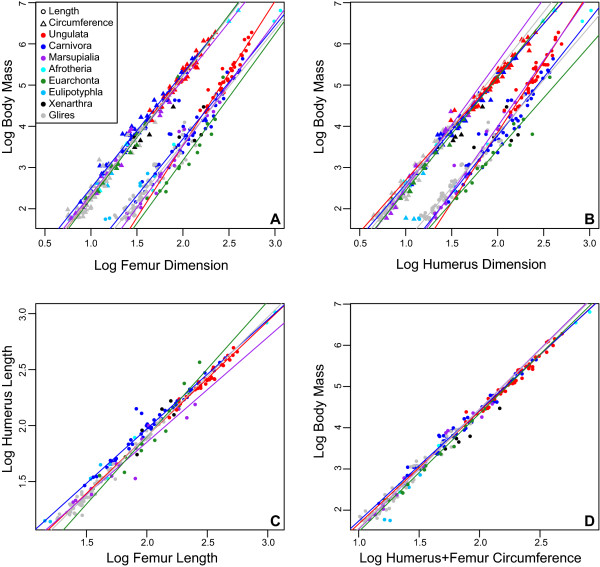
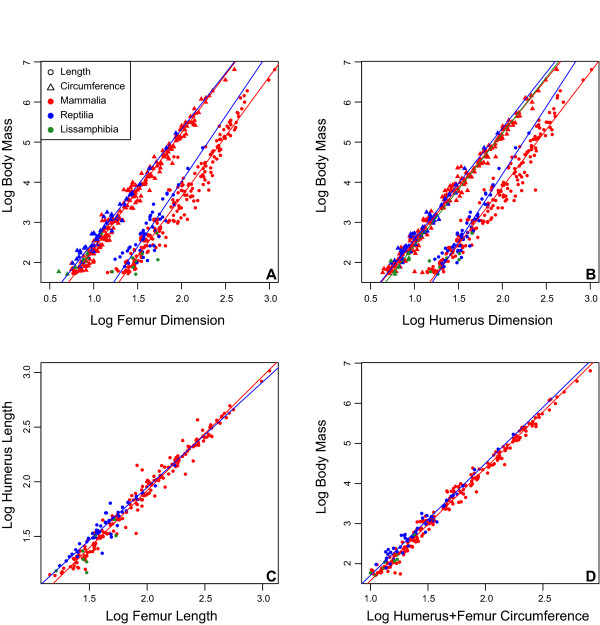
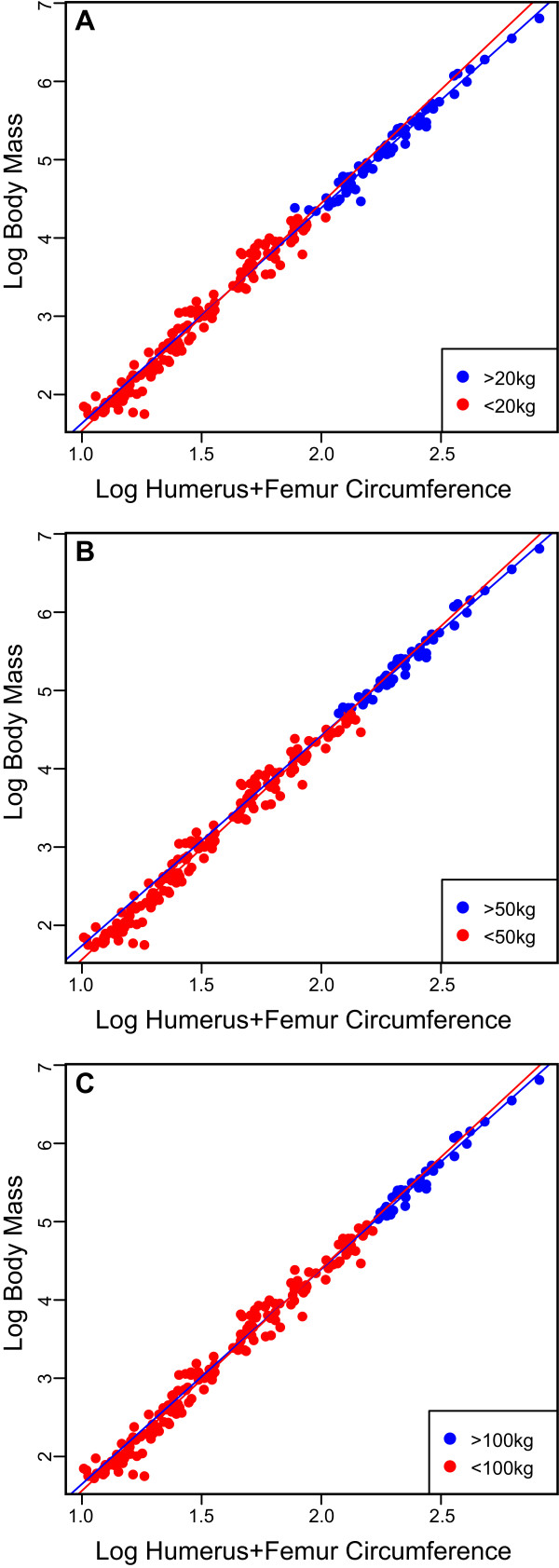
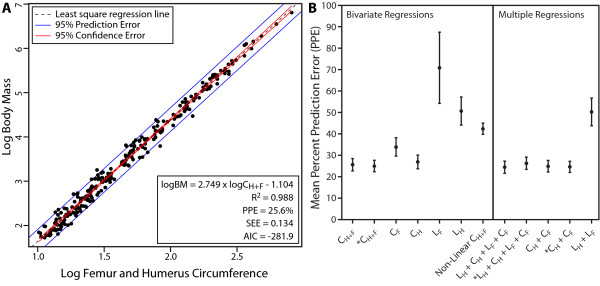
BACKGROUND: Body size is intimately related to the physiology and ecology of an organism. Therefore, accurate and consistent body mass estimates are essential for inferring numerous aspects of paleobiology in extinct taxa, and investigating large-scale evolutionary and ecological patterns in the history of life. Scaling relationships between skeletal measurements and body mass in birds and mammals are commonly used to predict body mass in extinct members of these crown clades, but the applicability of these models for predicting mass in more distantly related stem taxa, such as non-avian dinosaurs and non-mammalian synapsids, has been criticized on biomechanical grounds. Here we test the major criticisms of scaling methods for estimating body mass using an extensive dataset of mammalian and non-avian reptilian species derived from individual skeletons with live weights. RESULTS: Significant differences in the limb scaling of mammals and reptiles are noted in comparisons of limb proportions and limb length to body mass. Remarkably, however, the relationship between proximal (stylopodial) limb bone circumference and body mass is highly conserved in extant terrestrial mammals and reptiles, in spite of their disparate limb postures, gaits, and phylogenetic histories. As a result, we are able to conclusively reject the main criticisms of scaling methods that question the applicability of a universal scaling equation for estimating body mass in distantly related taxa. CONCLUSIONS: The conserved nature of the relationship between stylopodial circumference and body mass suggests that the minimum diaphyseal circumference of the major weight-bearing bones is only weakly influenced by the varied forces exerted on the limbs (that is, compression or torsion) and most strongly related to the mass of the animal. Our results, therefore, provide a much-needed, robust, phylogenetically corrected framework for accurate and consistent estimation of body mass in extinct terrestrial quadrupeds, which is important for a wide range of paleobiological studies (including growth rates, metabolism, and energetics) and meta-analyses of body size evolution.
Overview
The claims and statistics of this paper haven’t been checked yet.
Free: it reads the open-access text and checks the first 5 claims that cite a source we can check. Create a free account to check every claim.
Integrity signals
Registry
Cites
Statistics
Figures
Verification
Claims the paper makes
The claims and statistics of this paper haven’t been checked yet.
Free: it reads the open-access text and checks the first 5 claims that cite a source we can check. Create a free account to check every claim.
Claims other papers make about this one
Each is checked against this paper’s own text: does it say what the citing paper says it does?
The cited source says what the claim attributes to it.
In the citing paper
“As Microraptor is critical for our analysis we compared our mass value to one generated from an estimate of femoral circumference using the empirical equation of Campione et al. [128] as well as comparisons to mass estimates generated through 3-D computer and displacement methods [19, 22, 76]. All of these produce similar estimates to the one obtained using Christiansen & Farin ˜ a [127] (see”
From Potential for Powered Flight Neared by Most Close Avialan Relatives, but Few Crossed Its Thresholds (2020) · cites this paper as [128]
Self-check
Percentages, sums and reported differences re-computed from the paper’s own numbers.
The self-check needs the paper’s full text.
Citations
Cites
R: A Language and Environment for Statistical Computing
R Core Team (2025) · doi:10.32614/r.manuals · Cited by 352,181
Controlling the False Discovery Rate: A Practical and Powerful Approach to Multiple Testing
Benjamini, Y., & Hochberg, Y. (1995) · Journal of the Royal Statistical Society Series B: Statistical Methodology · doi:10.1111/j.2517-6161.1995.tb02031.x · Cited by 109,482 · cited 7×
“The results of the two intercept comparison methods described above are presented, and all P-values are corrected using the FDR [119,120], implemented with the ‘p.adjust’ function in R.”
BackgroundMethodInfluentialAPE: analyses of phylogenetics and evolution in R language
Paradis, E., Claude, J., & Strimmer, K. (2004) · Bioinformatics · doi:10.1093/bioinformatics/btg412 · Cited by 11,335 · cited 1×
“Branch lengths were assigned and transformed in Mesquite and the tree file was imported into R, where contrasts were calculated using the ‘APE’ package [140].”
MethodPhylogenies and the Comparative Method
Felsenstein, J. (1985) · The American Naturalist · doi:10.1086/284325 · Cited by 9,793 · cited 1×
“[73], we calculated the phylogenetic independent contrasts (PIC) for the entire dataset in order to correct for non-independence of the raw data as a result of common ancestry [121].”
Method(2009) · Cited by 6,571
The Ecological Implications of Body Size
Peters, R. H. (1983) · Cambridge University Press eBooks · doi:10.1017/cbo9780511608551 · Cited by 5,649
(2019) · American Museum Novitates · doi:10.1206/novi · Cited by 4,138
Effects of Size and Temperature on Metabolic Rate
Gillooly, J. F., Brown, J. H., West, G. B., Savage, V. M., & Charnov, E. L. (2001) · Science · doi:10.1126/science.1061967 · Cited by 3,810
Size, Function, and Life History
Calder, W. A. (1984) · Medical Entomology and Zoology · Cited by 2,864
Cellular Scaling Rules for the Brains of Marsupials: Not as “Primitive” as Expected
Dos Santos, S. E., Porfirio, J., da Cunha, F. B., Manger, P. R., Tavares, W., Pessoa, L., Raghanti, M. A., Sherwood, C. C., & Herculano-Houzel, S. (2017) · Brain, Behavior and Evolution · doi:10.1159/000452856 · Cited by 2,642
Research works printed but not linked: 12
- Hopson JA: Paleoneurology. In Biology of the Replilia, Neurology A. Volume 9. Edited by: Gans C, Northcutt RG, Ulinski P. New York: Academic Press; 1979:39-146.
- Grand TI: The functional anatomy of body mass. In Body Size in Mammalian Paleobiology: Estimation and Biological Implications. Edited by: Damuth J, MacFadden BJ. Cambridge, UK: Cambridge University Press; 1990:39-47.
- Gingerich PD: Prediction of body mass in mammalian species from long bone lengths and diameters. Contributions from the Museum of Paleontology, University of Michigan 1990, 28:79-92.
- Campbell KE, Marcus L: The relationships of hindlimb bone dimensions to body weight in birds. Natural History Museum of Los Angeles County Science Series 1992, 36:395-412.
- Gunga H-C, Kirsch K, Rittweger J, Clarke A, Albertz J, Wiedemann A, Wehr A, Heinrich W-D, Schultze H-P: Dimensions of Brachiosaurus brancai, Dicraeosaurus hansemanni and Diplodocus carnegii and their implications for gravitational physiology. Adaptation Biol Med 2002, 3:156-169.
- Wedel MJ: Vertebral pneumaticity, air sacs, and the physiology of sauropod dinosaurs. Paleobiology 2003, 29:243-255. · doi:10.1666/0094-8373(2003)029
- Mallison H: Rearing giants: kinetic-dynamic modeling of sauropod bipedal and tripodal poses. In Biology of the Sauropod Dinosaurs: Understanding the Life of Giants. Edited by: Klein N, Remes K, Gee CT, Sander PM. Bloomington, ID: Indiana University Press; 2011:237-250.
- Mallison H: Plateosaurus in 3D: how CAD models and kinetic-dynamic modeling bring an extinct animal to life. In Biology of the Sauropod Dinosaurs: Understanding the Life of Giants. Edited by: Klein N, Remes K, Gee CT, Sander PM. Bloomington, ID: Indiana University Press; 2011:219-236.
- Paul G: Dinosaur models: the good, the bad, and using them to estimate the mass of dinosaurs. In Dinofest International. Edited by: Wolberg DL, Stump E, Rosenberg GD. Arizona State University: The Academy of Natural Sciences; 1997:39-45.
- Sokal RR, Rohlf FJ: Biometry: The Principles and Practice of Statistics in Biological Science San Francisco, CA: W. H. Freeman and Company; 1969.
- Blob RW: Evolution of hindlimb posture in nonmammalian therapsids: biomechanical tests of paleontological hypotheses. Paleobiology. 2001, 27: 14-38. 10.1666/0094-8373(2001)027<0014:EOHPIN>2.0.CO;2. · doi:10.1666/0094-8373(2001)027
- Andrews RM: Patterns of growth in reptiles. Biology of the Reptilia: Physiology D. Edited by: Gans C, Pough FH. 1982, London, UK: Academic Press, 13: 273-320.
Cited by
Benson, R. B. J., Campione, N. E., Carrano, M. T., Mannion, P. D., Sullivan, C., Upchurch, P., & Evans, D. C. (2014) · PLoS Biology · doi:10.1371/journal.pbio.1001853 · Cited by 457
“, limb bone lengths) and volumetric models of extinct dinosaurs ([84–86]; reviewed by [40]).”
BackgroundMethodSelf-citationTschopp, E., Mateus, O., & Benson, R. B. J. (2015) · PeerJ · doi:10.7717/peerj.857 · Cited by 266
“Carballido et al. (2012b) divided the original character, which did not discriminate between cervical and dorsal vertebrae (Wilson & Sereno, 1998).”
BackgroundCampione, N. E., Evans, D. C., Brown, C. M., & Carrano, M. T. (2014) · Methods in Ecology and Evolution · doi:10.1111/2041-210x.12226 · Cited by 208
“Results were graphically examined within the context of the quadrupedal data presented by Campione & Evans (2012).”
BackgroundMethodResultSelf-citationA new giant titanosaur sheds light on body mass evolution among sauropod dinosaurs
Carballido, J. L., Pol, D., Otero, A., Cerda, I. A., Salgado, L., Garrido, A. C., Ramezani, J., Cúneo, N. R., & Krause, J. M. (2017) · Proceedings of the Royal Society B: Biological Sciences · doi:10.1098/rspb.2017.1219 · Cited by 208
“We used the modification implemented by Campione and Evans (2012), which uses a scaling equation, adjusted for phylogenetic correlation/covariance between species, as follows: Log BM = 2.”
BackgroundMethodInfluentialCope's rule and the adaptive landscape of dinosaur body size evolution
Benson, R. B. J., Hunt, G., Carrano, M. T., & Campione, N. (2018) · Palaeontology · doi:10.1111/pala.12329 · Cited by 202
“This is consistent with the lack of support for differing relationships of body mass with stylopodial shaft circumferences among different clades and among taxa with different stances (Campione & Evans 2012).”
BackgroundMethodResultInfluentialSelf-citationAn arboreal docodont from the Jurassic and mammaliaform ecological diversification
Meng, Q.-J., Ji, Q., Zhang, Y.-G., Liu, D., Grossnickle, D. M., & Luo, Z.-X. (2015) · Science · doi:10.1126/science.1260879 · Cited by 196
Brown, C. M., Evans, D. C., Campione, N. E., O'Brien, L. J., & Eberth, D. A. (2013) · Palaeogeography, Palaeoclimatology, Palaeoecology · doi:10.1016/j.palaeo.2012.06.027 · Cited by 196
Self-citationAssessing ontogenetic maturity in extinct saurian reptiles
Griffin, C. T., Stocker, M. R., Colleary, C., Stefanic, C. M., Lessner, E. J., Riegler, M., Formoso, K., Koeller, K., & Nesbitt, S. J. (2021) · Biological Reviews · doi:10.1111/brv.12666 · Cited by 191
Exceptional continental record of biotic recovery after the Cretaceous–Paleogene mass extinction
Lyson, T. R., Miller, I. M., Bercovici, A. D., Weissenburger, K., Fuentes, A. J., Clyde, W. C., Hagadorn, J. W., Butrim, M. J., Johnson, K. R., Fleming, R. F., et al. (2019) · Science · doi:10.1126/science.aay2268 · Cited by 192
Lacovara, K. J., Lamanna, M. C., Ibiricu, L. M., Poole, J. C., Schroeter, E. R., Ullmann, P. V., Voegele, K. K., Boles, Z. M., Carter, A. M., Fowler, E. K., et al. (2014) · Scientific Reports · doi:10.1038/srep06196 · Cited by 187
Skeletal Correlates for Body Mass Estimation in Modern and Fossil Flying Birds
Field, D. J., Lynner, C., Brown, C., & Darroch, S. A. F. (2013) · PLoS ONE · doi:10.1371/journal.pone.0082000 · Cited by 178
“For these reasons, and for ease of comparison with previously published avian allometric studies [30], we have elected to present OLS results instead of phylogenetic regressions.”
BackgroundMethodResultInfluentialPotential for Powered Flight Neared by Most Close Avialan Relatives, but Few Crossed Its Thresholds
Pei, R., Pittman, M., Goloboff, P. A., Dececchi, T. A., Habib, M. B., Kaye, T. G., Larsson, H. C. E., Norell, M. A., Brusatte, S. L., & Xu, X. (2020) · Current Biology · doi:10.1016/j.cub.2020.06.105 · Cited by 137
Woodward, H. N., Freedman Fowler, E. A., Farlow, J. O., & Horner, J. R. (2015) · Paleobiology · doi:10.1017/pab.2015.19 · Cited by 129
“A body mass approximation of 3833± 958 kg (N. Campione personal communication 2013) for ROM 44770 was obtained from humerus and femur circumference measurements and using the phylogenetically corrected equation of Campione and Evans (2012).”
MethodReisz, R. R., & Fröbisch, J. (2014) · PLoS ONE · doi:10.1371/journal.pone.0094518 · Cited by 124
“Comparisons between the use of vertebral measurements, as applied by Romer and Price [21] for their body mass estimates, and proximal limb bone dimensions in quadrupedal terrestrial vertebrates [24] using scaling relationships, have yielded surprisingly similar results for the caseid taxa, well within a 25% error rang…”
ResultBishop, P. J., Cuff, A. R., & Hutchinson, J. R. (2020) · Paleobiology · doi:10.1017/pab.2020.46 · Cited by 140
“…in history, they included the largest terrestrial animals to ever exist, for both quadrupeds and bipeds (Colbert 1962; Hutchinson et al. 2011; Campione and Evans 2012; Campione et al. 2014; Bates et al. 2016, Benson et al. 2018); exhibited repeated evolutionary increases and decreases in…”
BackgroundBalanoff, A. M., Bever, G. S., Colbert, M. W., Clarke, J. A., Field, D. J., Gignac, P. M., Ksepka, D. T., Ridgely, R. C., Smith, N. A., Torres, C. R., et al. (2016) · Journal of Anatomy · doi:10.1111/joa.12378 · Cited by 113
“This practice will make subsequent calculations, such as encephaliza-tion quotients, more conservative and less prone to over-or underestimation due to statistical chance (Campione & Evans, 2012; Field et al. 2013).”
MethodLuo, Z., Gatesy, S. M., Jenkins, F. A., Amaral, W. W., & Shubin, N. H. (2015) · Proceedings of the National Academy of Sciences · doi:10.1073/pnas.1519387112 · Cited by 134
“8476) based on a dataset of extant mammals (42).”
BackgroundCastanhinha, R., Araújo, R. M. N., Júnior, L. C. V. B., Angielczyk, K. D., Martins, G. G., Martins, R. M. S., Chaouiya, C., Beckmann, F., & Wilde, F. (2013) · PLoS ONE · doi:10.1371/journal.pone.0080974 · Cited by 119
“The final three estimates were based on the non-phylogenetically corrected multivariate equation for humerus and femur length [63], using our predicted humerus length and each of our three predicted femur lengths.”
BackgroundMethodInfluentialMcPhee, B. W., Benson, R., Botha, J., Bordy, E. M., & Choiniere, J. N. (2018) · Current Biology · doi:10.1016/j.cub.2018.07.063 · Cited by 117
“Body Mass Estimation and Postural Determination The minimum circumferences of limb bone shafts provide information about weight-bearing capacity in tetrapods [17].”
Erickson, G. M. (2014) · Annual Review of Earth and Planetary Sciences · doi:10.1146/annurev-earth-060313-054858 · Cited by 103
A gigantic new dinosaur from Argentina and the evolution of the sauropod hind foot
González Riga, B. J., Lamanna, M. C., Ortiz David, L. D., Calvo, J. O., & Coria, J. P. (2016) · Scientific Reports · doi:10.1038/srep19165 · Cited by 89
“It is important to note, however, that subtracting the mean percent prediction error of this equation (25.6% of calculated mass 20 ) yields a substantially lower estimate of ~44.9 metric tons for UNCUYO-LD 301.”
InfluentialEvolutionary development in basal mammaliaforms as revealed by a docodontan
Luo, Z., Meng, Q.-J., Ji, Q., Liu, D., Zhang, Y., & Neander, A. I. (2015) · Science · doi:10.1126/science.1260880 · Cited by 112
A Cretaceous eutriconodont and integument evolution in early mammals
Martin, T., Marugán‐Lobón, J., Vullo, R., Martín‐Abad, H., Luo, Z., & Buscalioni, Á. D. (2015) · Nature · doi:10.1038/nature14905 · Cited by 105
The accuracy and precision of body mass estimation in non‐avian dinosaurs
Campione, N. E., & Evans, D. C. (2020) · Biological reviews/Biological reviews of the Cambridge Philosophical Society · doi:10.1111/brv.12638 · Cited by 97
“…precision, or rather imprecision, which can be measured by typical measures of variance, standard deviations, and confidence intervals (JCGM 200:2012), can be high among ES approaches (Campione & Evans, 2012; Bates et al., 2015; Campione, 2017; Carballido et al., 2017; Benson et al., 2018).”
BackgroundMethodResultInfluentialSelf-citationAn Evolutionary Cascade Model for Sauropod Dinosaur Gigantism - Overview, Update and Tests
Sander, P. M. (2013) · PLoS ONE · doi:10.1371/journal.pone.0078573 · Cited by 97
“Starting with the simple quantification of sauropod body size in comparison with other clades of vertebrates [9,10,11], amazing progress has been made in quantifying dinosaur ecology [9,11,12,13,14,15].”
BackgroundInfluentialOsteological correlates for quadrupedality in ornithischian dinosaurs
Maidment, S. C. R., & Barrett, P. M. (2012) · Acta Palaeontologica Polonica · doi:10.4202/app.2012.0065 · Cited by 107
Body Size Distribution of the Dinosaurs
O’Gorman, E. J., & Hone, D. W. E. (2012) · PLoS ONE · doi:10.1371/journal.pone.0051925 · Cited by 103
“While the use of limb bone circumference has been recommended for estimating mass [32], the combined data on femur lengths and body mass estimates were far more extensive.”
BackgroundSkeleton of a Cretaceous mammal from Madagascar reflects long-term insularity
Krause, D. W., Hoffmann, S., Hu, Y., Wible, J. R., Rougier, G. W., Kirk, E. C., Groenke, J., Rogers, R. R., Rossie, J. B., Schultz, J. A., et al. (2020) · Nature · doi:10.1038/s41586-020-2234-8 · Cited by 92
Oviraptorosaur tail forms and functions
Persons, S. (2013) · Acta Palaeontologica Polonica · doi:10.4202/app.2012.0093 · Cited by 84
“2011 [and comments]; Campione and Evans 2012). Two sets of total body mass estimations are used. The first set is taken from the work of Paul (2010a) or from his work on similar specimens and scaled according to femur size.”
MethodA new Jurassic scansoriopterygid and the loss of membranous wings in theropod dinosaurs
Wang, M., O’Connor, J. K., Xu, X., & Zhou, Z. (2019) · Nature · doi:10.1038/s41586-019-1137-z · Cited by 82
Secondary ossification center induces and protects growth plate structure
Xie, M., Gol’din, P., Herdina, A. N., Estefa, J., Medvedeva, E. V., Li, L., Newton, P. T., Kotova, S., Shavkuta, B. S., Saxena, A., et al. (2020) · eLife · doi:10.7554/elife.55212 · Cited by 85
Brawn before brains in placental mammals after the end-Cretaceous extinction
Bertrand, O., Shelley, S. L., Williamson, T. E., Wible, J. R., Chester, S. G. B., Flynn, J. J., Holbrook, L., Lyson, T. R., Meng, J., Miller, I. M., et al. (2022) · Science · doi:10.1126/science.abl5584 · Cited by 83
Precocity in a tiny titanosaur from the Cretaceous of Madagascar
Rogers, K. C., Whitney, M. R., D’Emic, M. D., & Bagley, B. C. (2016) · Science · doi:10.1126/science.aaf1509 · Cited by 80
The multi-peak adaptive landscape of crocodylomorph body size evolution
Godoy, P. L., Benson, R., Bronzati, M., & Butler, R. J. (2019) · BMC Evolutionary Biology · doi:10.1186/s12862-019-1466-4 · Cited by 89
“178 Campione & Evans [98] demonstrated a universal scaling relationship between 179 proximal (stylopodial) limb bone circumferences and the body masses of terrestrial 180 tetrapods.”
BackgroundRevisiting the Estimation of Dinosaur Growth Rates
Myhrvold, N. P. (2013) · PLoS ONE · doi:10.1371/journal.pone.0081917 · Cited by 72
“A recent study [56] of 200 mammal and 47 non-avian reptile species found substantial empirical support for the Anderson et al.”
BackgroundHIGH RATES OF EVOLUTION PRECEDED THE ORIGIN OF BIRDS
Puttick, M. N., Thomas, G. H., & Benton, M. J. (2014) · Evolution · doi:10.1111/evo.12363 · Cited by 71
“…for body size, bone lengths in extinct taxa are widely used (Sookias et al. 2012), but a problem may be that lengths do not represent true body size (Campione and Evans 2012), and in particular changes in posture in Aves mean that use of the femur can be problematic (Dececchi and Larsson 2013).”
BackgroundBiomechanical evolution of solid bones in large animals: a microanatomical investigation
Houssaye, A., Waskow, K., Hayashi, S., Cornette, R., Lee, A. H., & Hutchinson, J. R. (2015) · Biological Journal of the Linnean Society · doi:10.1111/bij.12660 · Cited by 89
Where Have All the Giants Gone? How Animals Deal with the Problem of Size
Dick, T. J. M., & Clemente, C. J. (2017) · PLoS Biology · doi:10.1371/journal.pbio.2000473 · Cited by 78
Godoy, P. L., Bronzati, M., Eltink, E., Marsola, J. C. A., Cidade, G. M., Langer, M. C., & Montefeltro, F. C. (2016) · PeerJ · doi:10.7717/peerj.2075 · Cited by 82
“…PDF | (2016:02:8992:2:0:NEW 3 May 2016) estimates obtained with the formulas from Farlow et al. (2005), we also applied the equations presented by Campione & Evans (2012), which uses proximal (stylopodial) limb bone circumference to obtain total body mass, and seems to work well for many fossil…”
MethodHedrick, B. P., Dickson, B. V., Dumont, E. R., & Pierce, S. E. (2020) · Scientific Reports · doi:10.1038/s41598-019-57144-w · Cited by 78
New Jurassic mammaliaform sheds light on early evolution of mammal-like hyoid bones
Zhou, C., Bhullar, B.-A. S., Neander, A. I., Martin, T., & Luo, Z. (2019) · Science · doi:10.1126/science.aau9345 · Cited by 69
Two Early Cretaceous Fossils Document Transitional Stages in Alvarezsaurian Dinosaur Evolution
Xu, X., Choiniere, J. N., Tan, Q., Benson, R., Clark, J. M., Sullivan, C., Zhao, Q., Han, F., Ma, Q., He, Y., et al. (2018) · Current Biology · doi:10.1016/j.cub.2018.07.057 · Cited by 67
Evolution of high tooth replacement rates in theropod dinosaurs
D’Emic, M. D., O’Connor, P. M., Pascucci, T. R., Gavras, J. N., Mardakhayava, E., & Lund, E. K. (2019) · PLoS ONE · doi:10.1371/journal.pone.0224734 · Cited by 70
“Body masses were estimated using stylopodial limb circumferences and the equations presented in Campione and Evans [20] and Campione et al.”
MethodInfluentialThe scaling of postcranial muscles in cats (Felidae) I: forelimb, cervical, and thoracic muscles
Cuff, A. R., Sparkes, E. L., Randau, M., Pierce, S. E., Kitchener, A. C., Goswami, A., & Hutchinson, J. R. (2016) · Journal of Anatomy · doi:10.1111/joa.12477 · Cited by 66
“This weakly allometric or isometric scaling of musculature might be partly compensated for by the positive allometry of the limb bones in felids, which otherwise is predominant in mammals larger than 300 kg (Biewener, 2005; Doube et al. 2009; although see Campione & Evans, 2012).”
BackgroundPendraig milnerae, a new small-sized coelophysoid theropod from the Late Triassic of Wales
Spiekman, S. N. F., Ezcurra, M. D., Butler, R. J., Fraser, N. C., & Maidment, S. C. R. (2021) · Royal Society Open Science · doi:10.1098/rsos.210915 · Cited by 66
“Even though femoral circumference is generally considered to represent the best proxy for body size [103], femur length was used since this measurement is r o y a l s o c i e t y pub l i s h i ng . o r g / j o u r n a l / r s o s R .”
Downsizing a giant: re-evaluating Dreadnoughtus body mass
Bates, K. T., Falkingham, P. L., Macaulay, S., Brassey, C., & Maidment, S. C. R. (2015) · Biology Letters · doi:10.1098/rsbl.2015.0215 · Cited by 69
“Benson RBJ, Campione NE, Carrano MT, Mannion PD, Sullivan C, Upchurch P, Evans DC. 2014 Rates of dinosaur body mass evolution indicate 170 million years of sustained ecological innovation on the avian stem lineage.”
InfluentialOtero, A., Allen, V. R., Pol, D., & Hutchinson, J. R. (2017) · PeerJ · doi:10.7717/peerj.3976 · Cited by 69
Díaz, V. D., Suberbiola, X. P., & Jl, S. (2013) · Palaeontologia Electronica · doi:10.26879/350 · Cited by 71
“For the body mass and size we have used the equations proposed by Packard et al. (2009), Seebacher (2001) and Campione and Evans (2012), in which M(g) = 3.352PerH+F2,125, M(kg) = 214.44L(m)1.46, and logM(g) = 2.754logPerH+F − 1.097, where M: body mass, PerH+F: sum of the perimeters of the humerus…”
MethodInfluentialSecondary osteons scale allometrically in mammalian humerus and femur
Felder, A., Phillips, C., Cornish, H., Cooke, M., Hutchinson, J. R., & Doube, M. (2017) · Royal Society Open Science · doi:10.1098/rsos.170431 · Cited by 66
“Therefore, larger osteons, to the extent to which they do not preclude osteocyte viability, in large species may be explained as tissue-level geometrical adaptations to offset mechanical disadvantages that come with increased size, conceptually similar to adaptations at the organ level described in previous studies su…”
BackgroundOsteohistological analyses reveal diverse strategies of theropod dinosaur body-size evolution
Cullen, T. M., Canale, J. I., Apesteguía, S., Smith, N. D., Hu, D., & Makovicky, P. J. (2020) · Proceedings of the Royal Society B Biological Sciences · doi:10.1098/rspb.2020.2258 · Cited by 69
Scaling of Convex Hull Volume to Body Mass in Modern Primates, Non-Primate Mammals and Birds
Brassey, C., & Sellers, W. I. (2014) · PLoS ONE · doi:10.1371/journal.pone.0091691 · Cited by 60
“Our models are characterised by low values for mean percentage prediction error (%PE) equivalent to those recently reported for bivariate regressions of limb bone dimensions [2,3] but with the added advantage of not relying upon single skeletal elements.”
BackgroundMethodResultInfluentialAn elephant-sized Late Triassic synapsid with erect limbs
Sulej, T., & Niedźwiedzki, G. (2018) · Science · doi:10.1126/science.aal4853 · Cited by 64
Currie, P. J., Holmes, R. B., Ryan, M. J., & Coy, C. (2016) · Journal of Vertebrate Paleontology · doi:10.1080/02724634.2015.1048348 · Cited by 57
“Because the number of new specimens available for study has increased, intra- and interspecific variation amongst taxa has led to the acknowledgment that some historical taxa actually represent ontogenetic stages of a single taxon; for example, Dodson (1975) synonymized 12 species of lambeosaurines into three species…”
BackgroundBODY-MASS ESTIMATION IN PALEONTOLOGY: A REVIEW OF VOLUMETRIC TECHNIQUES
Brassey, C. (2016) · The Paleontological Society Papers · doi:10.1017/scs.2017.12 · Cited by 66
“Application of DME resulted in much-reduced mass estimates of 1823– 2158 kg for the specimen using the Campione and Evans (2012) equation, overlapping with those based on volumetric models and highlighting the sensitivity of traditional allometry-based predictive models to uncertainty in…”
BackgroundMethodInfluentialPorter, W. R., & Witmer, L. M. (2020) · The Anatomical Record · doi:10.1002/ar.24234 · Cited by 54
“Head volume was used as one measure of size, specifically to control for the effects of head volume on canal size and because dinosaur body masses from the literature can vary widely even for the same specimen (Taylor, 2010; Campione and Evans, 2012).”
MethodA hypothesis of differential secondary bone formation in dinosaurs
Padian, K., Werning, S., & Horner, J. R. (2015) · Comptes Rendus Palevol · doi:10.1016/j.crpv.2015.03.002 · Cited by 60
Benoît, J., Manger, P. R., Norton, L. A., Fernández, V., & Rubidge, B. S. (2017) · PeerJ · doi:10.7717/peerj.3496 · Cited by 64
Interspecific variation in the limb long bones among modern rhinoceroses—extent and drivers
Mallet, C., Cornette, R., Billet, G., & Houssaye, A. (2019) · PeerJ · doi:10.7717/peerj.7647 · Cited by 62
“This would be in accordance with previous works on changes of limb shape between graviportal and cursorial taxa (Biewener, 1989b; Campione & Evans, 2012).”
The evolutionary biomechanics of locomotor function in giant land animals
Hutchinson, J. R. (2021) · Journal of Experimental Biology · doi:10.1242/jeb.217463 · Cited by 62
“For example, minimal long bone circumference tends to scale isometrically versus body mass – or at most with weak positive allometry – from small tetrapods such as shrews to giant ones such as elephants (Campione and Evans, 2012).”
BackgroundMarchini, M., Sparrow, L. M., Cosman, M. N., Dowhanik, A., Krueger, C., Hallgrímsson, B., & Rolian, C. (2014) · BMC Evolutionary Biology · doi:10.1186/s12862-014-0258-0 · Cited by 62
“Limb bone size and shape among terrestrial mammals scale allometrically with body mass, both within populations [1], and also across species with a wide range of body masses [2-6] (Figure 1).”
BackgroundCompetition structured a Late Cretaceous megaherbivorous dinosaur assemblage
Mallon, J. C. (2019) · Scientific Reports · doi:10.1038/s41598-019-51709-5 · Cited by 39
Marcy, A. E., Hadly, E. A., Sherratt, E., Garland, K., & Weisbecker, V. (2016) · BMC Evolutionary Biology · doi:10.1186/s12862-016-0782-1 · Cited by 48
Ríos, M., Sánchez, I. M., & Morales, J. (2017) · PLoS ONE · doi:10.1371/journal.pone.0185378 · Cited by 50
Estimation of Body Size in Fossil Mammals
Hopkins, S. S. B. (2018) · Vertebrate paleobiology and paleoanthroplogy series/Vertebrate paleobiology and paleoanthropology series · doi:10.1007/978-3-319-94265-0_2 · Cited by 54
Two Late Cretaceous sauropods reveal titanosaurian dispersal across South America
Hechenleitner, E. M., Leuzinger, L., Martinelli, A. G., Rocher, S., Fiorelli, L. E., Taborda, J. R. A., & Salgado, L. (2020) · Communications Biology · doi:10.1038/s42003-020-01338-w · Cited by 50
Chicken-sized oviraptorid dinosaurs from central China and their ontogenetic implications
Lü, J., Currie, P. J., Xu, L., Zhang, X., Pu, H., & Jia, S. (2013) · Die Naturwissenschaften · doi:10.1007/s00114-012-1007-0 · Cited by 49
“Although the femoral circumference is regarded as a more reliable indicator (Campione and Evans 2012), the measurement of femoral circumference is not possible in this case.”
BackgroundMitchell, J., Sander, P. M., & Stein, K. H. W. (2017) · Paleobiology · doi:10.1017/pab.2016.47 · Cited by 51
“Although the circumference has been shown to be a better proxy for mass in quadrupedal mammals and reptiles compared with length (Campione and Evans 2012), in sauropods, femur length has an isometric relationship with circumference (Bonnan 2004; Kilbourne and Makovicky 2010).”
BackgroundDíaz, V. D., Garcia, G., Suberbiola, X. P., Jentgen, B., Stein, K. H. W., Godefroit, P., & Valentin, X. (2018) · Cretaceous Research · doi:10.1016/j.cretres.2018.06.015 · Cited by 51
Reconsidering the Avian Nature of the Oviraptorosaur Brain (Dinosauria: Theropoda)
Balanoff, A. M., Bever, G. S., & Norell, M. A. (2014) · PLoS ONE · doi:10.1371/journal.pone.0113559 · Cited by 54
“Although no one metric accurately estimates body mass across all groups [27], we utilize a single proxy to maintain consistency throughout the analysis.”
MethodKobayashi, Y., Nishimura, T., Takasaki, R., Chiba, K., Fiorillo, A. R., Tanaka, K., Chinzorig, T., Sato, T., & Sakurai, K. (2019) · Scientific Reports · doi:10.1038/s41598-019-48607-1 · Cited by 52
Brassey, C., Maidment, S. C. R., & Barrett, P. M. (2015) · Biology Letters · doi:10.1098/rsbl.2014.0984 · Cited by 48
“Benson RBJ, Campione NE, Carrano MT, Mannion PD, Sullivan C, Upchurch P, Evans DC. 2014 Rates of dinosaur body mass evolution indicate 170 million years of sustained ecological innovation on the avian stem lineage.”
BackgroundMethodInfluentialA titanosaurian sauropod with Gondwanan affinities in the latest Cretaceous of Europe
Vila, B., Sellés, A. G., Moreno‐Azanza, M., Razzolini, N. L., Gil-Delgado, A., Canudo, J. I., & Galobart, À. (2022) · Nature Ecology & Evolution · doi:10.1038/s41559-021-01651-5 · Cited by 46
How scaling approaches can reveal fundamental principles in physiology and biomechanics
Clemente, C. J., & Dick, T. J. M. (2023) · Journal of Experimental Biology · doi:10.1242/jeb.245310 · Cited by 48
Chapelle, K. E. J., Benson, R., Stiegler, J., Otero, A., Zhao, Q., & Choiniere, J. N. (2019) · Palaeontology · doi:10.1111/pala.12451 · Cited by 46
“The training dataset was compiled by combining the data of McPhee et al. (2018) (in turn extended from Campione & Evans 2012) and the largest available specimens (and thus probably ontogenetically mature individuals) of living taxa from our ontogenetic dataset.”
BackgroundMethodSerrano, F. J., Palmqvist, P., & Sanz, J. L. (2015) · Zoological Journal of the Linnean Society · doi:10.1111/zoj.12215 · Cited by 41
Persons, W. S., & Currie, P. J. (2016) · Scientific Reports · doi:10.1038/srep19828 · Cited by 40
The Role of Endocasts in the Study of Brain Evolution
Balanoff, A. M., & Bever, G. S. (2016) · Elsevier eBooks · doi:10.1016/b978-0-12-804042-3.00023-3 · Cited by 46
“…surprising considering that body mass is an important variable for a wide assortment of morphological, physiological, and paleoecological considerations (eg, Christiansen and Fariña, 2004; Finarelli and Flynn, 2006; De Esteban-Trivigno et al., 2008; Campione and Evans, 2012; Field et al., 2013).”
BackgroundOccipital condyle width (OCW) is a highly accurate predictor of body mass in therian mammals
Engelman, R. K. (2022) · BMC Biology · doi:10.1186/s12915-021-01224-9 · Cited by 46
“Compared to the limb bone equations of Campione and Evans [87] (subsetted to only include mammals in order to allow for direct comparisons), in which the authors found limb bone dimensions to be highly correlated with body mass across tetrapods, OCW outperformed both humeral length and femoral length and produced valu…”
BackgroundResultInfluentialWarburton, N. M., Grégoire, L. L., Jacques, S., & Flandrin, C. (2013) · Australian Journal of Zoology · doi:10.1071/zo13086 · Cited by 39
“Relative to body mass, the humeri of Isoodon spp. appear to be relatively short, consistent with adaptation for digging in tetrapods (Campione and Evans 2012).”
BackgroundMeasurement, variation, and scaling of osteocyte lacunae: a case study in birds
D’Emic, M. D., & Benson, R. (2013) · Bone · doi:10.1016/j.bone.2013.08.010 · Cited by 42
“[29], has a relatively weak and indirect relationship with body mass in tetrapods [71], especially sauropod dinosaurs, whose femoral midshaft varies greatly in eccentricity among taxa.”
BackgroundMethodInfluentialBrocklehurst, N., & Brink, K. S. (2017) · FACETS · doi:10.1139/facets-2016-0046 · Cited by 43
“It should be noted that a more recent method of estimating body mass is available: using the shaft circumference of the femur and the humerus (Campione and Evans 2012).”
MethodExtrapolating body masses in large terrestrial vertebrates
Campione, N. E. (2017) · Paleobiology · doi:10.1017/pab.2017.9 · Cited by 40
“Campione and Evans (2012) attempted to address such a possibility by testing for differential scaling patterns between larger and smaller taxa at various thresholds (i.e., 20, 50, and 100 kg), but they did not test whether a quadratic (or second-degree polynomial) model fits the log10 data better.”
BackgroundMethodInfluentialSelf-citationGorscak, E., O’Connor, P. M., Roberts, E. M., & Stevens, N. J. (2017) · Journal of Vertebrate Paleontology · doi:10.1080/02724634.2017.1343250 · Cited by 42
Maidment, S. C. R., Henderson, D. M., & Barrett, P. M. (2014) · Die Naturwissenschaften · doi:10.1007/s00114-014-1239-2 · Cited by 38
Differing effects of size and lifestyle on bone structure in mammals
Amson, E., & Bibi, F. (2021) · BMC Biology · doi:10.1186/s12915-021-01016-1 · Cited by 42
“This trait naturally relates to humeral length, which has been shown to scale with weak negative allometry in mammals and tetrapods in general [61] (body mass ~ humeral length; scaling coefficient with our dataset pruned to terrestrial species: humeral length).”
BackgroundEvidence for convergent evolution of a neocortex‐like structure in a late Permian therapsid
Laaß, M., & Kaestner, A. P. (2017) · Journal of Morphology · doi:10.1002/jmor.20712 · Cited by 40
Fahn‐Lai, P., Biewener, A. A., & Pierce, S. E. (2020) · PeerJ · doi:10.7717/peerj.8556 · Cited by 43
“Using a scaling equation to predict total body mass based on the 625 circumferences of the humeral and femoral diaphyses (Campione & Evans, 2012), we estimate the body 626 mass of a particular Massetognathus pascuali individual (MCZVP 3691) as 1.83 kg (electronic 627 supplementary material, table…”
MethodInfluentialApaldetti, C., Pol, D., Ezcurra, M. D., & Martínez, R. N. (2021) · Scientific Reports · doi:10.1038/s41598-021-01120-w · Cited by 39
Canale, J. I., Cerda, I. A., Novas, F. E., & Haluza, A. (2016) · Cretaceous Research · doi:10.1016/j.cretres.2016.02.001 · Cited by 42
Evolutionary allometry of the thoracolumbar centra in felids and bovids
Jones, K. E. (2015) · Journal of Morphology · doi:10.1002/jmor.20382 · Cited by 38
“Similarly, across tetrapods there was variation in proximal limb bones scaling exponents (Campione and Evans, 2012).”
BackgroundExploring the Relationship between Skeletal Mass and Total Body Mass in Birds
Martin‐Silverstone, E., Vincze, O., McCann, R., Jonsson, C. H. W., Palmer, C. F., Kaiser, G. W., & Dyke, G. J. (2015) · PLoS ONE · doi:10.1371/journal.pone.0141794 · Cited by 37
“Body mass (‘total body mass’; TBM) is strongly correlated with an animal’s biology, physiology and mode-of-life [1].”
BackgroundBrassey, C., Kitchener, A. C., Withers, P. J., Manning, P. L., & Sellers, W. I. (2013) · The Anatomical Record · doi:10.1002/ar.22658 · Cited by 37
“Campione and Evans (2012) failed to find any significant differences in femoral length or circumference scaling exponents to body mass between size classes, regardless of whether the boundary was drawn at 20, 50, or 100 kg. Interestingly, postural data from Biewener (1989, 2005) cited above have…”
BackgroundThe Appendicular Osteology ofPatagotitan Mayorum(Dinosauria, Sauropoda)
Otero, A., Carballido, J. L., & Moreno, A. P. (2020) · Journal of Vertebrate Paleontology · doi:10.1080/02724634.2020.1793158 · Cited by 36
“Recalculating the Body Mass of Patagotitan The original estimate of body mass in Patagotitan was about 70 tons (Carballido et al., 2017), using the scaling equation based on stylopodial circumferences proposed by Campione and Evans (2012).”
BackgroundMethodInfluentialBrown, C. M., Campione, N. E., Wilson, G. P., & Evans, D. C. (2021) · Paleobiology · doi:10.1017/pab.2021.35 · Cited by 38
Self-citationBrassey, C., & Gardiner, J. (2015) · Royal Society Open Science · doi:10.1098/rsos.150302 · Cited by 34
“The equations derived can subsequently be used in a predictive capacity: commonly applied metrics include craniodental measures applied to fossil ungulates [7], femoral head breadth in fossil hominids [8], and humeral and femoral circumference applied to nonavian dinosaurs [9].”
BackgroundTaborda, J. R. A., Cerda, I. A., & Desojo, J. B. (2013) · Geological Society London Special Publications · doi:10.1144/sp379.19 · Cited by 44
“However, in the present contribution we prefer to use Campione & Evans’ (2012) equation to estimate the body mass of aetosaurs, as used for other reptiles.”
BackgroundMethodResultInfluentialDrumheller, S. K., Stocker, M. R., & Nesbitt, S. J. (2014) · Die Naturwissenschaften · doi:10.1007/s00114-014-1238-3 · Cited by 37
Brassey, C., Maidment, S. C. R., & Barrett, P. M. (2017) · Journal of Vertebrate Paleontology · doi:10.1080/02724634.2017.1361432 · Cited by 37
“…studies have found that long bone length is often a less accurate predictor of body mass in modern vertebrates relative to cross-sectional properties (Damuth and MacFadden, 1990; Campione and Evans, 2012), and that segment length may contain a strong functional signal (Brassey et al., 2013).”
BackgroundLeardi, J., Pol, D., & de Gasparini, Z. B. (2018) · Comptes Rendus Palevol · doi:10.1016/j.crpv.2018.02.002 · Cited by 32
Rovinsky, D., Evans, A. R., Martin, D. G., & Adams, J. W. (2020) · Proceedings of the Royal Society B Biological Sciences · doi:10.1098/rspb.2020.1537 · Cited by 35
“This preliminary analysis showed that the HcFc regression differs significantly from the MRL regression estimates ( p < 0.001; electronic supplementary material, S5) and that these HcFc estimates are largely congruent with both the convex hull and volumetric model mass estimates (figure 2a; electronic supplementary ma…”
BackgroundMethodInfluential
Metadata
- Authors
- Campione, N. E., & Evans, D. C.
- Affiliations
- University of Toronto (CA)
- Royal Ontario Museum (CA)
- Corresponding author
- Campione, Nicolás E
- Venue
- BMC Biology
- Published
- 2012-07-10
- Volume
- 10
- Issue
- 1
- Pages
- 60-60
- ISSN
- 1741-7007 (ISSN-L)
- PMC
- PMC3403949
- OpenAlex
- W2053913541
- Cited by
- 475
- References
- 152
- Citations by year
- 2026: 19 · 2025: 45 · 2024: 38 · 2023: 39 · 2022: 37 · 2021: 62 · 2020: 46 · 2019: 42 · 2018: 18 · 2017: 29 · 2016: 32 · 2015: 27 · 2014: 20 · 2013: 17 · 2012: 3
- FWCI
- 15.86
- Type
- journal article
- Language
- en
- Open access
- gold
- doi.org
- Licence
- cc-by
- creativecommons.org/licenses/by/2.0 (tdm)
- Locations
- BMC Biology (publishedVersion, cc-by)
- Europe PMC (PubMed Central) (publishedVersion, cc-by)
- PubMed Central (publishedVersion, cc-by)
- PubMed (publishedVersion)
- RUNE (Research UNE) (submittedVersion, cc-by)
- TSpace (University of Toronto) (submittedVersion)
- KTH Publication Database DiVA (KTH Royal Institute of Technology) (submittedVersion, other-oa)
- DOAJ (DOAJ: Directory of Open Access Journals) (submittedVersion)
- Topics
- Physical Sciences › Earth and Planetary Sciences › Paleontology › Evolution and Paleontology Studies
- Physical Sciences › Earth and Planetary Sciences › Paleontology › Paleontology and Evolutionary Biology
- Life Sciences › Agricultural and Biological Sciences › Ecology, Evolution, Behavior and Systematics › Morphological variations and asymmetry
- Keywords
- body mass estimation, scaling laws, mammals, non-avian reptiles, non-avian dinosaurs, body size evolution, paleobiology, limb biomechanics
- MeSH terms
- Animals, Bone and Bones, Extremities, Gait, Mammals, Phylogeny, Posture, Reptiles, Least-Squares Analysis, Body Size
About these checks
Registry, retraction, Cites and statistics results are computed, not judged, with one exception: a printed reference that no index lists is read once by a model before it counts as a citation error. Claims are extracted by a model and kept only when their quote appears verbatim in the text; each cited source is then checked, with a model’s help, for whether it says what the claim relies on. Those verdicts can be wrong — read the claim’s quote and the cited source before relying on one.
Statistics and arithmetic are recomputed, not judged.
Confidence bands are shown only for fields calibrated on our annotated test set. None is calibrated yet, so no band is shown.
What counts as a claim ›How we measure confidence ›How we check this ›
Are you an author, or do you see a problem with this page? Request a review
Data sources
Bibliographic data: Semantic Scholar, OpenAlex, Crossref.
Contains information from the Semantic Scholar Academic Graph Datasets, made available under the ODC Attribution License (ODC-BY 1.0).
Semantic Scholar’s data is described in: Kinney, R., et al. (2023). The Semantic Scholar Open Data Platform. arXiv:2301.10140.
