

A universal scaling relationship between body mass and proximal limb bone dimensions in quadrupedal terrestrial tetrapods
Open accessThe DOI matches its Crossref record; 151 of the 152 references it cites were found in a registry or an index.
Abstract
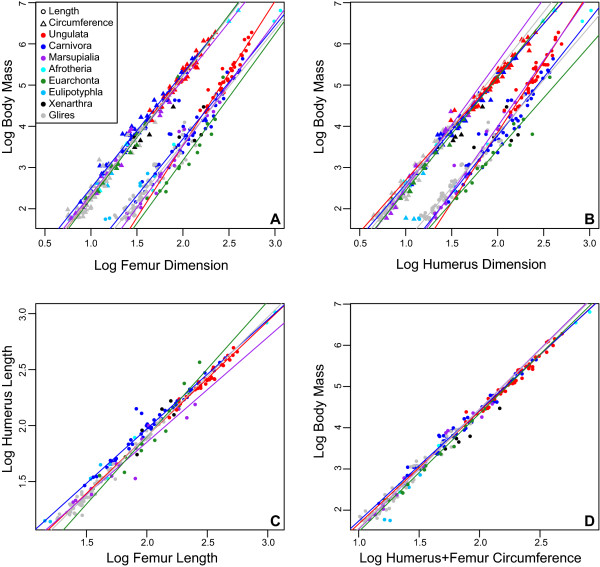
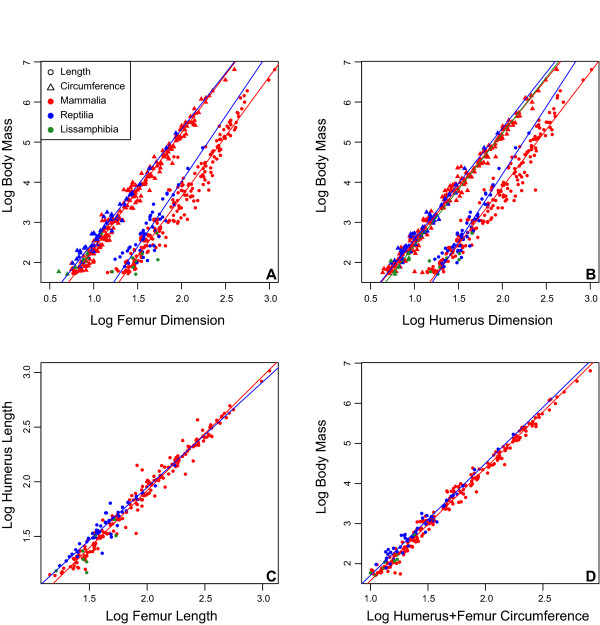
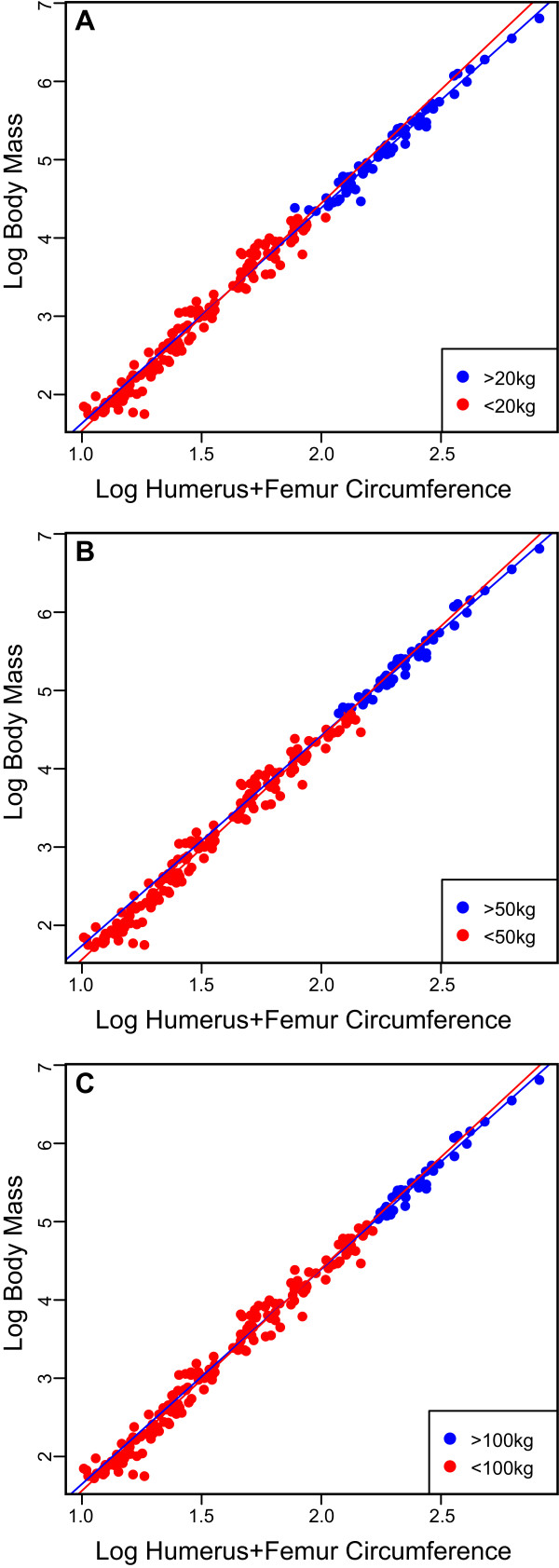
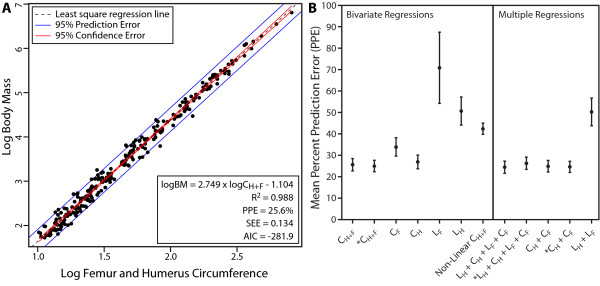
BACKGROUND: Body size is intimately related to the physiology and ecology of an organism. Therefore, accurate and consistent body mass estimates are essential for inferring numerous aspects of paleobiology in extinct taxa, and investigating large-scale evolutionary and ecological patterns in the history of life. Scaling relationships between skeletal measurements and body mass in birds and mammals are commonly used to predict body mass in extinct members of these crown clades, but the applicability of these models for predicting mass in more distantly related stem taxa, such as non-avian dinosaurs and non-mammalian synapsids, has been criticized on biomechanical grounds. Here we test the major criticisms of scaling methods for estimating body mass using an extensive dataset of mammalian and non-avian reptilian species derived from individual skeletons with live weights. RESULTS: Significant differences in the limb scaling of mammals and reptiles are noted in comparisons of limb proportions and limb length to body mass. Remarkably, however, the relationship between proximal (stylopodial) limb bone circumference and body mass is highly conserved in extant terrestrial mammals and reptiles, in spite of their disparate limb postures, gaits, and phylogenetic histories. As a result, we are able to conclusively reject the main criticisms of scaling methods that question the applicability of a universal scaling equation for estimating body mass in distantly related taxa. CONCLUSIONS: The conserved nature of the relationship between stylopodial circumference and body mass suggests that the minimum diaphyseal circumference of the major weight-bearing bones is only weakly influenced by the varied forces exerted on the limbs (that is, compression or torsion) and most strongly related to the mass of the animal. Our results, therefore, provide a much-needed, robust, phylogenetically corrected framework for accurate and consistent estimation of body mass in extinct terrestrial quadrupeds, which is important for a wide range of paleobiological studies (including growth rates, metabolism, and energetics) and meta-analyses of body size evolution.
Overview
The claims and statistics of this paper haven’t been checked yet.
Free: it reads the open-access text and checks the first 5 claims that cite a source we can check. Create a free account to check every claim.
Integrity signals
Registry
Cites
Statistics
Figures
Verification
Claims the paper makes
The claims and statistics of this paper haven’t been checked yet.
Free: it reads the open-access text and checks the first 5 claims that cite a source we can check. Create a free account to check every claim.
Claims other papers make about this one
Each is checked against this paper’s own text: does it say what the citing paper says it does?
The cited source says what the claim attributes to it.
In the citing paper
“As Microraptor is critical for our analysis we compared our mass value to one generated from an estimate of femoral circumference using the empirical equation of Campione et al. [128] as well as comparisons to mass estimates generated through 3-D computer and displacement methods [19, 22, 76]. All of these produce similar estimates to the one obtained using Christiansen & Farin ˜ a [127] (see”
From Potential for Powered Flight Neared by Most Close Avialan Relatives, but Few Crossed Its Thresholds (2020) · cites this paper as [128]
Self-check
Percentages, sums and reported differences re-computed from the paper’s own numbers.
The self-check needs the paper’s full text.
Citations
Cites
R: A Language and Environment for Statistical Computing
R Core Team (2025) · doi:10.32614/r.manuals · Cited by 352,181
Controlling the False Discovery Rate: A Practical and Powerful Approach to Multiple Testing
Benjamini, Y., & Hochberg, Y. (1995) · Journal of the Royal Statistical Society Series B: Statistical Methodology · doi:10.1111/j.2517-6161.1995.tb02031.x · Cited by 109,482 · cited 7×
“The results of the two intercept comparison methods described above are presented, and all P-values are corrected using the FDR [119,120], implemented with the ‘p.adjust’ function in R.”
BackgroundMethodInfluentialAPE: analyses of phylogenetics and evolution in R language
Paradis, E., Claude, J., & Strimmer, K. (2004) · Bioinformatics · doi:10.1093/bioinformatics/btg412 · Cited by 11,335 · cited 1×
“Branch lengths were assigned and transformed in Mesquite and the tree file was imported into R, where contrasts were calculated using the ‘APE’ package [140].”
MethodPhylogenies and the Comparative Method
Felsenstein, J. (1985) · The American Naturalist · doi:10.1086/284325 · Cited by 9,793 · cited 1×
“[73], we calculated the phylogenetic independent contrasts (PIC) for the entire dataset in order to correct for non-independence of the raw data as a result of common ancestry [121].”
Method(2009) · Cited by 6,571
The Ecological Implications of Body Size
Peters, R. H. (1983) · Cambridge University Press eBooks · doi:10.1017/cbo9780511608551 · Cited by 5,649
(2019) · American Museum Novitates · doi:10.1206/novi · Cited by 4,138
Effects of Size and Temperature on Metabolic Rate
Gillooly, J. F., Brown, J. H., West, G. B., Savage, V. M., & Charnov, E. L. (2001) · Science · doi:10.1126/science.1061967 · Cited by 3,810
Size, Function, and Life History
Calder, W. A. (1984) · Medical Entomology and Zoology · Cited by 2,864
Cellular Scaling Rules for the Brains of Marsupials: Not as “Primitive” as Expected
Dos Santos, S. E., Porfirio, J., da Cunha, F. B., Manger, P. R., Tavares, W., Pessoa, L., Raghanti, M. A., Sherwood, C. C., & Herculano-Houzel, S. (2017) · Brain, Behavior and Evolution · doi:10.1159/000452856 · Cited by 2,642
Research works printed but not linked: 12
- Hopson JA: Paleoneurology. In Biology of the Replilia, Neurology A. Volume 9. Edited by: Gans C, Northcutt RG, Ulinski P. New York: Academic Press; 1979:39-146.
- Grand TI: The functional anatomy of body mass. In Body Size in Mammalian Paleobiology: Estimation and Biological Implications. Edited by: Damuth J, MacFadden BJ. Cambridge, UK: Cambridge University Press; 1990:39-47.
- Gingerich PD: Prediction of body mass in mammalian species from long bone lengths and diameters. Contributions from the Museum of Paleontology, University of Michigan 1990, 28:79-92.
- Campbell KE, Marcus L: The relationships of hindlimb bone dimensions to body weight in birds. Natural History Museum of Los Angeles County Science Series 1992, 36:395-412.
- Gunga H-C, Kirsch K, Rittweger J, Clarke A, Albertz J, Wiedemann A, Wehr A, Heinrich W-D, Schultze H-P: Dimensions of Brachiosaurus brancai, Dicraeosaurus hansemanni and Diplodocus carnegii and their implications for gravitational physiology. Adaptation Biol Med 2002, 3:156-169.
- Wedel MJ: Vertebral pneumaticity, air sacs, and the physiology of sauropod dinosaurs. Paleobiology 2003, 29:243-255. · doi:10.1666/0094-8373(2003)029
- Mallison H: Rearing giants: kinetic-dynamic modeling of sauropod bipedal and tripodal poses. In Biology of the Sauropod Dinosaurs: Understanding the Life of Giants. Edited by: Klein N, Remes K, Gee CT, Sander PM. Bloomington, ID: Indiana University Press; 2011:237-250.
- Mallison H: Plateosaurus in 3D: how CAD models and kinetic-dynamic modeling bring an extinct animal to life. In Biology of the Sauropod Dinosaurs: Understanding the Life of Giants. Edited by: Klein N, Remes K, Gee CT, Sander PM. Bloomington, ID: Indiana University Press; 2011:219-236.
- Paul G: Dinosaur models: the good, the bad, and using them to estimate the mass of dinosaurs. In Dinofest International. Edited by: Wolberg DL, Stump E, Rosenberg GD. Arizona State University: The Academy of Natural Sciences; 1997:39-45.
- Sokal RR, Rohlf FJ: Biometry: The Principles and Practice of Statistics in Biological Science San Francisco, CA: W. H. Freeman and Company; 1969.
- Blob RW: Evolution of hindlimb posture in nonmammalian therapsids: biomechanical tests of paleontological hypotheses. Paleobiology. 2001, 27: 14-38. 10.1666/0094-8373(2001)027<0014:EOHPIN>2.0.CO;2. · doi:10.1666/0094-8373(2001)027
- Andrews RM: Patterns of growth in reptiles. Biology of the Reptilia: Physiology D. Edited by: Gans C, Pough FH. 1982, London, UK: Academic Press, 13: 273-320.
Cited by
Items 101–200 of 476
Report of a giant titanosaur sauropod from the Upper Cretaceous of Neuquén Province, Argentina
Otero, A., Carballido, J. L., Salgado, L., Canudo, J. I., & Garrido, A. C. (2021) · Cretaceous Research · doi:10.1016/j.cretres.2021.104754 · Cited by 32
Rhodes, M. M., Henderson, D. M., & Currie, P. J. (2021) · PeerJ · doi:10.7717/peerj.10855 · Cited by 36
Effects of long‐term ethanol storage on muscle architecture
Leonard, K. C., Worden, N., Boettcher, M. L., Dickinson, E., & Hartstone‐Rose, A. (2021) · The Anatomical Record · doi:10.1002/ar.24638 · Cited by 32
A new multi-faceted framework for deciphering diplodocid ontogeny
Woodruff, D., Fowler, D., & Horner, Jr. (2017) · Palaeontologia Electronica · doi:10.26879/674 · Cited by 11
Filippi, L. S., Salgado, L., & Garrido, A. C. (2019) · Cretaceous Research · doi:10.1016/j.cretres.2019.03.008 · Cited by 35
From dinosaurs to modern bird diversity: extending the time scale of adaptive radiation
Moen, D., & Morlon, H. (2014) · PLoS Biology · doi:10.1371/journal.pbio.1001854 · Cited by 31
“The authors estimated body mass from fossils by using measurements of the circumference of the stylopodium shaft (the largest bone of the arm or leg, such as the femur), which shows a consistent scaling relationship with body mass in extant reptiles and mammals [23].”
BackgroundKlinkhamer, A. J., Mallison, H., Poropat, S. F., Sinapius, G. H. K., & Wroe, S. (2018) · The Anatomical Record · doi:10.1002/ar.23950 · Cited by 34
“To estimate body mass, we used humeral and femoral minimum long-bone midshaft circumference as this method has previously been identified as a relatively accurate predictor of body mass compared to bone length (Campione and Evans, 2012; Benson et al., 2014).”
MethodRelationships of mass properties and body proportions to locomotor habit in terrestrial Archosauria
Bishop, P. J., Bates, K. T., Allen, V. R., Henderson, D. M., Randau, M., & Hutchinson, J. R. (2020) · Paleobiology · doi:10.1017/pab.2020.47 · Cited by 35
“Body mass is paramount, as the mass that an animal must support against gravity increases more quickly with respect to size (e.g., length) than the cross-sectional area of supportive tissues such as muscle and bone (Alexander 1985; Biewener 1990; Vogel 2003; Campione and Evans 2012).”
Iijima, M. (2017) · Journal of Anatomy · doi:10.1111/joa.12626 · Cited by 35
“…important biological aspects of extinct organisms such as feeding and locomotor habits and body size (Kubo & Benton, 2009; Zanno & Makovicky, 2011; Campione & Evans, 2012), and can get insights into the ecological diversity pattern, species or higher level interac- tions, and history of…”
BackgroundRichards, H. L., Wells, R. T., Evans, A. R., Fitzgerald, E. M. G., & Adams, J. W. (2019) · PLoS ONE · doi:10.1371/journal.pone.0221824 · Cited by 30
“As per the findings of Campione and Evans [63], the equation derived from combined humeral and femoral circumference data had the most predictive power, with the lowest PPE and SEE of the three models, followed by humerus-only, with the femoral-only equation giving the lowest predictive power.”
BackgroundMethodResultInfluentialBeck, R. M. D., Louys, J., Brewer, P., Archer, M., Black, K. H., & Tedford, R. H. (2020) · Scientific Reports · doi:10.1038/s41598-020-66425-8 · Cited by 32
Therrien, F., Zelenitsky, D. K., Tanaka, K., Voris, J. T., Erickson, G. M., Currie, P. J., DeBuhr, C. L., & Kobayashi, Y. (2023) · Science Advances · doi:10.1126/sciadv.adi0505 · Cited by 35
Araújo, R. M. N., Fernández, V., Rabbitt, R. D., Ekdale, E. G., Antunes, M. T., Castanhinha, R., Fröbisch, J., & Martins, R. M. S. (2018) · PLoS ONE · doi:10.1371/journal.pone.0189883 · Cited by 33
“Other authors [64] derived equations to estimate body mass based on the femur and humerus circumference.”
BackgroundMethodKlinkhamer, A. J., Mallison, H., Poropat, S. F., Sloan, T., & Wroe, S. (2018) · The Anatomical Record · doi:10.1002/ar.23977 · Cited by 31
“…greater proportion of the skeleton than is often available for many taxa (i.e., Diamantinasaurus in this study), we have chosen to use the long bone shaft circumference scaling equation to estimate body mass and normalize the results of our analysis (Campione and Evans, 2012; Benson et al., 2014).”
MethodOrlandi-Oliveras, G., Meneses, C. N., Koufos, G. D., & Köhler, M. (2018) · Scientific Reports · doi:10.1038/s41598-018-35347-x · Cited by 30
Müller, R. T., Ferreira, J. D., Pretto, F. A., Bronzati, M., & Kerber, L. R. (2020) · Journal of Anatomy · doi:10.1111/joa.13350 · Cited by 37
“The first method was an estimate based on the relation between body mass and femoral circumference (Campione & Evans, 2012; Campione et al., 2014; Christiansen & Fariña, 2004).”
MethodFemoral specializations to locomotor habits in early archosauriforms
Pintore, R., Houssaye, A., Nesbitt, S. J., & Hutchinson, J. R. (2021) · Journal of Anatomy · doi:10.1111/joa.13598 · Cited by 37
Dantas, M. A. T. (2022) · Journal of South American Earth Sciences · doi:10.1016/j.jsames.2022.103900 · Cited by 31
Serrano, F. J., Palmqvist, P., Chiappe, L. M., & Sanz, J. L. (2016) · Paleobiology · doi:10.1017/pab.2016.35 · Cited by 31
“…for both B and SL on the x variables can be assumed, and given that prediction is the main objective of the regression analyses, the OLS method is the most adequate for deriving the equations (Gingerich et al. 1982; Sokal and Rohlf 1986; MacLeod 2004; Smith 2009; Campione and Evans 2012).”
BackgroundMethodInfluentialLimb bone scaling in hopping macropods and quadrupedal artiodactyls
Doube, M., Felder, A., Chua, M. Y., Lodhia, K., Kłosowski, M. M., Hutchinson, J. R., & Shefelbine, S. J. (2018) · Royal Society Open Science · doi:10.1098/rsos.180152 · Cited by 29
Network‐regulated organ allometry: The developmental regulation of morphological scaling
Vea, I. M., & Shingleton, A. W. (2020) · Wiley Interdisciplinary Reviews Developmental Biology · doi:10.1002/wdev.391 · Cited by 30
“Some studies use body mass (mostly in vertebrate systems, e.g., Brooke, Hanley, & Laughlin, 1999; Campione & Evans, 2012; Silva & Downing, 1995), others use a proxy for body size, such as stature in humans (e.g., Gustafsson & Lindenfors, 2004) or wing size in flies (e.g., Calboli, Kennington, &…”
MethodCerda, I. A., Pol, D., Otero, A., & Chinsamy, A. (2022) · Palaeontology · doi:10.1111/pala.12614 · Cited by 31
“For this, we consider the femoral midshaft circumference as a proxy for body size (Campione & Evans 2012) and express the relative size of each individual as a percentage of the largest known individual (LKI) of Mussaurus (i.e. MLP 61-III-20-22).”
MethodStein, K. H. W., & Werner, J. (2013) · PLoS ONE · doi:10.1371/journal.pone.0077109 · Cited by 31
“Dicraeosaurus MfN T31a fe 980 3000 58540 [99]”
BackgroundInfluentialThe extinct, giant giraffid Sivatherium giganteum : skeletal reconstruction and body mass estimation
Basu, C., Falkingham, P. L., & Hutchinson, J. R. (2016) · Biology Letters · doi:10.1098/rsbl.2015.0940 · Cited by 28
“humeral circumference Campione & Evans [7] 3053 1578 5910 23.”
InfluentialHeck, C. T., & Woodward, H. N. (2021) · Journal of Anatomy · doi:10.1111/joa.13503 · Cited by 30
Freimuth, W. J., Varricchio, D. J., Brannick, A. L., Weaver, L. N., & Wilson, G. P. (2021) · Palaeontology · doi:10.1111/pala.12546 · Cited by 29
“Although femur length has been suggested as a poor predictor of body mass (Campione & Evans 2012; Campione et al. 2014), it was the only available datum for Anchiornis specimens associated with pellets.”
BackgroundBrocklehurst, N., Ford, D. P., & Benson, R. (2022) · Systematic Biology · doi:10.1093/sysbio/syac020 · Cited by 30
“Using discrete categories of body size is less precise than estimates of size using continuous measurements (e.g., Alroy 1998; Campione and Evans 2012; Brocklehurst and Brink 2017; Benson et al. 2018).”
BackgroundEtienne, C., Mallet, C., Cornette, R., & Houssaye, A. (2020) · Biological Journal of the Linnean Society · doi:10.1093/biolinnean/blaa005 · Cited by 28
Influence of captivity and selection on limb long bone cross‐sectional morphology of reindeer
Pelletier, M., Niinimäki, S., & Salmi, A. (2021) · Journal of Morphology · doi:10.1002/jmor.21403 · Cited by 27
“For example, it is often assumed that centroid size/body size can provide a good estimate of the body weight of an animal, which makes it possible to study the effects of allometry (e.g., Campione & Evans, 2012; Dick & Clemente, 2017; Mallet et al., 2019).”
BackgroundBates, K. T., Wang, L., Dempsey, M. C., Broyde, S., Fagan, M. J., & Cox, P. G. (2021) · Journal of The Royal Society Interface · doi:10.1098/rsif.2021.0324 · Cited by 27
Codron, J., Botha, J., Codron, D., Huttenlocker, A. K., & Angielczyk, K. D. (2016) · Journal of Evolutionary Biology · doi:10.1111/jeb.12983 · Cited by 29
Romano, M., Manucci, F., & Palombo, M. R. (2019) · Historical Biology · doi:10.1080/08912963.2019.1617289 · Cited by 31
Paul, G. S. (2019) · Annals of Carnegie Museum · doi:10.2992/007.085.0403 · Cited by 31
Growth and miniaturization among alvarezsauroid dinosaurs
Qin, Z., Zhao, Q., Choiniere, J. N., Clark, J. M., Benton, M. J., & Xu, X. (2021) · Current Biology · doi:10.1016/j.cub.2021.06.013 · Cited by 25
The cervical spine of Australopithecus sediba
Meyer, M. R., Williams, S. A., Schmid, P., Churchill, S. E., & Berger, L. R. (2017) · Journal of Human Evolution · doi:10.1016/j.jhevol.2017.01.001 · Cited by 29
“This very high correlation indicates that each postcranial geometric mean captures body size similarly and effectively (Richmond and Jungers, 1995; Campione and Evans, 2012).”
BackgroundScaling of adult human bone and skeletal muscle mass to height in the US population
Heymsfield, S. B., Hwaung, P., Ferreyro‐Bravo, F., Heo, M., Thomas, D. M., & Schuna, J. M. (2019) · American Journal of Human Biology · doi:10.1002/ajhb.23252 · Cited by 28
“Extensive discussions and re-analyses of these early studies followed in subsequent publications (Biewener, 2005; Campione & Evans, 2012; Christiansen, 2002; Garcia & da Silva, 2004; Prothero, 1995), but few question the empirical observation that large terrestrial animals have a greater relative…”
BackgroundResultInfluentialCranial Endocast of the Lambeosaurine Hadrosaurid Amurosaurus riabinini from the Amur Region, Russia
Lauters, P., Vercauteren, M., Bolotsky, Y. L., & Godefroit, P. (2013) · PLoS ONE · doi:10.1371/journal.pone.0078899 · Cited by 26
“According to Evans et al. [26], the most striking aspect of the brain endocast of lambeosaurine hadrosaurids is the relatively large size of the cerebrum.”
BackgroundMethodInfluentialde Fabrègues, C. P., & Allain, R. (2019) · Journal of Vertebrate Paleontology · doi:10.1080/02724634.2019.1732996 · Cited by 33
“In quadrupeds, the combined circumferences of the femur and humerus are correlated with body mass (Campione and Evans, 2012).”
Wosik, M., Chiba, K., Therrien, F., & Evans, D. C. (2020) · Paleobiology · doi:10.1017/pab.2020.2 · Cited by 24
“…circumference was selected (1) to maintain consistency of the sectioning location through ontogeny, (2) to correlate with body-mass estimations (Campione and Evans 2012), and (3) to compare with previously published literature of other hadrosaurid taxa (Horner et al. 1999, 2000; Cooper et al.…”
BackgroundMethodResultInfluentialSelf-citationLongrich, N. R., Pereda-Suberbiola, X., Bardet, N., & Jalil, N.-E. (2024) · Scientific Reports · doi:10.1038/s41598-024-53447-9 · Cited by 26
“Because body mass is tightly correlated with limb bone dimensions, particularly diameters and circumferences 75 , it is possible to make a mass estimate from the femur.”
BackgroundMethodInfluentialTHE BIRCH CREEK CANIDS AND DOGS AS TRANSPORT LABOR IN THE INTERMOUNTAIN WEST
Welker, M., & Byers, D. A. (2019) · American Antiquity · doi:10.1017/aaq.2018.81 · Cited by 25
“…range size, population density and growth, functional morphology, and metabolism, and as a result, it has been widely used in studying both extant and extinct species (see Anyonge and Roman 2006; Campione and Evans 2012; Damuth and MacFadden 1990; Legendre and Roth 1988; Thackeray and Kieser 1992).”
BackgroundHeck, C. T., Varricchio, D. J., Gaudin, T. J., Woodward, H. N., & Horner, J. R. (2019) · PLoS ONE · doi:10.1371/journal.pone.0215655 · Cited by 24
Romano, M., & Manucci, F. (2019) · Historical Biology · doi:10.1080/08912963.2019.1631819 · Cited by 31
“It follows that the 9.33 tons value obtained with the regression formula by Campione and Evans (2012) overestimates the body mass for Lisowicia of about 60% on average.”
BackgroundMethodInfluentialNovel information on the endocranial morphology of the abelisaurid theropod Carnotaurus sastrei
Cerroni, M. A., & Paulina‐Carabajal, A. (2019) · Comptes Rendus Palevol · doi:10.1016/j.crpv.2019.09.005 · Cited by 26
Schmitt, M. R., Martinelli, A. G., Kaiuca, J. F. L., Schultz, C. L., & Soares, M. B. (2023) · The Anatomical Record · doi:10.1002/ar.25244 · Cited by 25
“Following the approach of Filippini et al. (2022), measurements are based on Campione and Evans (2012) and Toledo et al. (2014): antero-posterior diameter (humerus and femur; at midshaft); transverse diameter (humerus and femur; at midshaft); circumference (humerus and femur); femoral maximum…”
MethodWosik, M., Goodwin, M. B., & Evans, D. C. (2017) · Journal of Vertebrate Paleontology · doi:10.1080/02724634.2017.1398168 · Cited by 28
“When using the adult-sized CCM E. annectens skeleton as a comparative standard (body mass estimate D 6922 § 1772 kg via equation 1 of Campione and Evans, 2012) for developmental mass extrapolation, UCMP 128181 was estimated to have weighed 14.7 kg based on femur length and 12.7 kg based on femur…”
MethodInfluentialSelf-citationPavanatto, A. E. B., Kerber, L. R., & Dias‐da‐Silva, S. (2019) · Journal of Morphology · doi:10.1002/jmor.21029 · Cited by 28
Brassey, C., O'mahoney, T., Kitchener, A. C., Manning, P. L., & Sellers, W. I. (2016) · PeerJ · doi:10.7717/peerj.1432 · Cited by 32
Reconstruction of the adductor chamber and predicted bite force in pterodactyloids (Pterosauria)
Pêgas, R. V., Costa, F. R., & Kellner, A. W. A. (2021) · Zoological Journal of the Linnean Society · doi:10.1093/zoolinnean/zlaa163 · Cited by 23
Lefebvre, R., Houssaye, A., Mallison, H., Cornette, R., & Allain, R. (2022) · Journal of Anatomy · doi:10.1111/joa.13646 · Cited by 26
Hulsey, C. D., Holzman, R., & Meyer, A. (2018) · Ecology and Evolution · doi:10.1002/ece3.4651 · Cited by 25
“…or more extensive lateral swimming muscles in the body wall (Blake, 2004; Camp, Roberts, & Brainerd, 2015; Camp, Scott, Brainerd, & Wilga, 2017; Campione & Evans, 2012; Carroll, Wainwright, Huskey, Collar, & Turingan, 2004; Heidhues, Swett, & Kiddy, 1961; Tytell et al., 2010; Wardle, Videler,…”
Ecomorphological specialization leads to loss of evolvability in primate limbs*
Rolian, C. (2020) · Evolution · doi:10.1111/evo.13900 · Cited by 23
“Limb bone lengths scale positively with body mass, and thus skeletal size is used here as a proxy for overall body size (Campione and Evans 2012).”
BackgroundKlein, N., & Griebeler, E. M. (2015) · Comptes Rendus Palevol · doi:10.1016/j.crpv.2015.02.009 · Cited by 22
Díaz, V. D., Mannion, P. D., Csiki‐Sava, Z., & Upchurch, P. (2025) · Journal of Systematic Palaeontology · doi:10.1080/14772019.2024.2441516 · Cited by 23
A macroevolutionary pathway to megaherbivory
Sanisidro, Ó., Mihlbachler, M. C., & Cantalapiedra, J. L. (2023) · Science · doi:10.1126/science.ade1833 · Cited by 34
Maidment, S. C. R., Sennikov, A. G., Ezcurra, M. D., Dunne, E. M., Gower, D. J., Hedrick, B. P., Meade, L. E., Raven, T. J., Pashchenko, D. I., & Butler, R. J. (2020) · Royal Society Open Science · doi:10.1098/rsos.201089 · Cited by 21
“The body masses of Garjainia prima and Erythrosuchus africanus (based on NHMUK PV R3592) were estimated using the bivariate regression equations of [66] implemented in R v.”
MethodInfluentialRadermacher, V. J., Fernandez, V., Schachner, E. R., Butler, R. J., Bordy, E. M., Naylor Hudgins, M., de Klerk, W. J., Chapelle, K. E., & Choiniere, J. N. (2021) · eLife · doi:10.7554/elife.66036 · Cited by 20
Quantitative Interpretation of Tracks for Determination of Body Mass
Schanz, T., Lins, Y., Viefhaus, H., Barciaga, T., Läbe, S., Preuschoft, H., Witzel, U., & Sander, P. M. (2013) · PLoS ONE · doi:10.1371/journal.pone.0077606 · Cited by 21
“However, a reliable quantitative method for weight reconstruction from dinosaur footprints has not been developed so far, even though this is of major importance, especially for gigantic sauropods [32].”
MethodBeck, R. M. D., Warburton, N. M., Archer, M., Hand, S. J., & Aplin, K. P. (2016) · Memoirs of Museum Victoria · doi:10.24199/j.mmv.2016.74.14 · Cited by 24
“…limb bones are characteristic of semi-fossorial and fossorial mammals (Casinos et al., 1993; Farina and Vizcaino, 1997; Vizcaino et al., 1999; Campione and Evans, 2012), being better able to withstand the high muscular and reaction forces acting through the bones during digging (Hildebrand…”
BackgroundLong bone structural proportions and locomotor behavior in Cercopithecidae
Ruff, C. B., Harper, C. M., Goldstein, D. M., Daegling, D. J., & McGraw, W. S. (2019) · Journal of Human Evolution · doi:10.1016/j.jhevol.2019.04.003 · Cited by 23
Romano, M., Manucci, F., Rubidge, B. S., & den Brandt, M. J. V. (2021) · Frontiers in Ecology and Evolution · doi:10.3389/fevo.2021.692035 · Cited by 23
“The evolution of body size over time is a very crucial aspect in a macro-evolutionary context, considering the central importance of body mass in several biological aspects including general physiology, ecology, metabolism, preferential diet, home range and trophic requirements, growth rate, locomotion, life span, and…”
BackgroundKnaus, P. L., van Heteren, A. H., Lungmus, J. K., & Sander, P. M. (2021) · Frontiers in Ecology and Evolution · doi:10.3389/fevo.2021.751238 · Cited by 21
Adams, T. L. (2019) · Journal of Vertebrate Paleontology · doi:10.1080/02724634.2019.1623226 · Cited by 21
“Body mass for T. winkleri was also calculated using both Farlow et al. (2005) and the method presented by Campione and Evans (2012), which uses proximal limb bone circumference to estimate total body mass.”
MethodBellardini, F., Coria, R. A., Pino, D., Windholz, G. J., Baiano, M. A., & Martinelli, A. G. (2022) · Zoological Journal of the Linnean Society · doi:10.1093/zoolinnean/zlac003 · Cited by 20
Post-Mortem Dental Profile as a Powerful Tool in Animal Forensic Investigations—A Review
Viciano, J., López‐Lázaro, S., & Tanga, C. (2022) · Animals · doi:10.3390/ani12162038 · Cited by 24
Brocklehurst, N. (2016) · PeerJ · doi:10.7717/peerj.1555 · Cited by 24
“Most other estimates have used a single measurement as a proxy for mass e.g. dorsal centrum cross section (Romer & Price, 1940), humerus and femur shaft circumference (Campione & Evans, 2012).”
MethodUnusual cranial and postcranial anatomy in the archetypal ankylosaur Ankylosaurus magniventris
Arbour, V. M., & Mallon, J. C. (2017) · FACETS · doi:10.1139/facets-2017-0063 · Cited by 19
“This package estimates body mass from combined stylopodial shaft circumferences using a scaling equation described by Campione and Evans (2012).”
MethodChiba, K., Ryan, M. J., Fanti, F., Loewen, M. A., & Evans, D. C. (2017) · Journal of Paleontology · doi:10.1017/jpa.2017.62 · Cited by 21
“…basal skull lengths that range in size from 666mm to 786mm (Table S3), with associated estimated body masses between 2,500 and 4,800 kg (body mass estimation based on sum of humerus and femur circumference using an interspecific limb scaling equation provided in Campione and Evans, 2012; Table S3).”
MethodSelf-citationShelley, S. L., Williamson, T. E., & Brusatte, S. L. (2018) · PLoS ONE · doi:10.1371/journal.pone.0200132 · Cited by 21
Díaz, V. D., Garcia, G., Suberbiola, X. P., Jentgen, B., Stein, K. H. W., Godefroit, P., & Valentin, X. (2020) · Historical Biology · doi:10.1080/08912963.2020.1841184 · Cited by 20
“…result in a body size of 4.37 metres (sensu Seebacher 2001), and a body mass of 1.85 tonnes (sensu Packard et al. 2009) to 2.2 tonnes (sensu Campione and Evans 2012), whereas with the largest specimens the same dimensions are 5.31 metres (sensu Seebacher 2001), and 2 tonnes (sensu Packard…”
BackgroundMethodInfluentialThe Role of Endocasts in the Study of Brain Evolution
Balanoff, A. M., & Bever, G. S. (2020) · Elsevier eBooks · doi:10.1016/b978-0-12-820584-6.00003-9 · Cited by 24
Rare evidence for ‘gnawing-like’ behavior in a small-bodied theropod dinosaur
Brown, C. M., Tanke, D. H., & Hone, D. W. E. (2021) · PeerJ · doi:10.7717/peerj.11557 · Cited by 22
Nelson, A., Engelman, R. K., & Croft, D. A. (2023) · Journal of Mammalian Evolution · doi:10.1007/s10914-023-09669-1 · Cited by 21
“1985; Swartz 1989; Jungers 1990; Ruff 1990; Scott 1990; Anyonge 1993; Egi 2001; Campione and Evans 2012).”
BackgroundMethodInfluentialRedelstorff, R., Hübner, T., Chinsamy, A., & Sander, P. M. (2013) · The Anatomical Record · doi:10.1002/ar.22701 · Cited by 20
“Developmental Mass Extrapolation after Erickson and Tumanova (2000) and stylopodial scaling equations after Campione and Evans (2012) were finally applied to get additional body mass estimates for Ng and MB.R.3593 for comparison.”
MethodGriffin, C. T. (2019) · Journal of Paleontology · doi:10.1017/jpa.2019.13 · Cited by 20
“Although there is some uncertainty in predicting body mass in extinct organisms (Seebacher, 2001; Alexander, 2006; but see Campione and Evans, 2012; Campione et al., 2014), limb bone shaft circumference is known to be an overall better metric than femoral length for estimating body mass (e.g.,…”
BackgroundMethodPostcranial Skeleton of Henkelotherium guimarotae (Cladotheria, Mammalia) and Locomotor Adaptation
Jäger, K. R. K., Luo, Z., & Martin, T. (2019) · Journal of Mammalian Evolution · doi:10.1007/s10914-018-09457-2 · Cited by 21
“Henkelotherium was a small mammal with a body mass of 17 g based on body mass scaling to the humeral and femoral length following Campione and Evans (2012).”
MethodMorschhauser, E. M., You, H., Li, D., & Dodson, P. (2018) · Journal of Vertebrate Paleontology · doi:10.1080/02724634.2018.1524383 · Cited by 20
“The specimens were examined first-hand or as casts, unless marked by an asterisk, in which case photographs and publications were used: Archaeoceratops oshimai (IVPP V11114, IVPP V11115), Centrosaurus apertus (AMNH 5351, YPM 2015), Cerasinops hodgskissi (MOR 300, USNM 13863, USNM 13864), Chasmosaurus belli (NHMUK R494…”
BackgroundInfluentialMolar occlusion and jaw roll in early crown mammals
Jäger, K. R. K., Cifelli, R. L., & Martin, T. (2020) · Scientific Reports · doi:10.1038/s41598-020-79159-4 · Cited by 18
Huttenlocker, A. K., Singh, S. A., Henrici, A. C., & Sumida, S. S. (2021) · Royal Society Open Science · doi:10.1098/rsos.211237 · Cited by 18
Romano, M., & Rubidge, B. S. (2019) · Historical Biology · doi:10.1080/08912963.2019.1640219 · Cited by 17
“…of the dwarf elephants, Romano et al. (2019) compared the volumetric estimate determined for four specimens (referable to three ontogenetic states) with values obtained from regression formulae and demonstrated that the formula of Campione and Evans (2012) overestimates BM by between 25% and 104%.”
BackgroundMethodResultInfluentialHocknull, S. A., Wilkinson, M., Lawrence, R. A., Konstantinov, V., Mackenzie, S., & Mackenzie, R. (2021) · PeerJ · doi:10.7717/peerj.11317 · Cited by 20
Smith, N. A. (2015) · Paleobiology · doi:10.1017/pab.2015.24 · Cited by 18
Tanaka, K., Anvarov, O. U. O., Zelenitsky, D. K., Ahmedshaev, A. S., & Kobayashi, Y. (2021) · Royal Society Open Science · doi:10.1098/rsos.210923 · Cited by 17
“It has been demonstrated in large theropods, such as tyrannosaurids [47], that the length of the maxillary tooth row is isometrically correlated with femur length, and femur length is widely used as an indicator of body mass [4,48,49].”
BackgroundBader, C., Delapré, A., & Houssaye, A. (2023) · Journal of Anatomy · doi:10.1111/joa.13827 · Cited by 18
On time: developmental timing within and across species
García‐Ojalvo, J., & Bulut-Karslıoğlu, A. (2023) · Development · doi:10.1242/dev.201045 · Cited by 20
Young, C. B. (2020) · Journal of Human Evolution · doi:10.1016/j.jhevol.2020.102899 · Cited by 16
Zedda, M., & Babosová, R. (2021) · Zoomorphology · doi:10.1007/s00435-021-00516-6 · Cited by 18
García‐Girón, J., Heino, J., Alahuhta, J., Chiarenza, A. A., & Brusatte, S. L. (2021) · Palaeontology · doi:10.1111/pala.12526 · Cited by 17
“…≤ 10 000 kg; very large > 10 000 kg; Noto & Grossman 2010) based on adult representatives from the comprehensive dataset of Benson et al. (2014), which provides a wide list of dinosaur taxa using the scaling relationship of limb bone robustness (stylopodial circumference; Campione & Evans 2012).”
BackgroundKnoll, F., Lautenschlager, S., Kawabe, S., Martínez, G., Espílez, E., Mampel, L., & Alcalá, L. (2021) · The Journal of Comparative Neurology · doi:10.1002/cne.25224 · Cited by 16
Wagstaffe, A. Y., O’Driscoll, A. M., Kunz, C. J., Rayfield, E. J., & Janis, C. M. (2022) · Journal of Morphology · doi:10.1002/jmor.21445 · Cited by 17
“Estimation of body masses of extinct taxa is problematic, especially if these taxa range outside of the size of the extant taxa that can form a reference group (e.g., Campione & Evans, 2012).”
BackgroundBendel, E.-M., Kammerer, C. F., Smith, R. M. H., & Fröbisch, J. (2023) · PeerJ · doi:10.7717/peerj.15378 · Cited by 16
Napoli, J. G., Williamson, T. E., Shelley, S. L., & Brusatte, S. L. (2017) · Journal of Mammalian Evolution · doi:10.1007/s10914-017-9381-1 · Cited by 20
“Body mass estimates based on long bone measurements are substantially more accurate than those based on dental measurements (Campione and Evans 2012).”
BackgroundTsai, H. P., Middleton, K. M., Hutchinson, J. R., & Holliday, C. M. (2020) · Evolution · doi:10.1111/evo.14017 · Cited by 17
Late acquisition of erect hindlimb posture and function in the forerunners of therian mammals
Bishop, P. J., & Pierce, S. E. (2024) · Science Advances · doi:10.1126/sciadv.adr2722 · Cited by 16
“…for muscles lying distal to the knee and whose principal action is ankle dorsiflexion 3) Distal plantarflexors, for the remaining distal muscles To apply these equations, body mass was estimated from the minimal circumferences of the humerus and femur using equation 1 from ( 98 ) (Table 1).”
MethodLawson, A. B., Hedrick, B. P., Echols, S., & Schachner, E. R. (2021) · Journal of Morphology · doi:10.1002/jmor.21340 · Cited by 15
“Therefore, right femoral lengths were additionally measured three times, averaged, and used as a proxy for size (Table 2; Campione & Evans, 2012; Field et al., 2013).”
MethodPradelli, L. A., Leardi, J., & Ezcurra, M. D. (2021) · Ameghiniana · doi:10.5710/amgh.16.09.2021.3441 · Cited by 18
“The species body mass was not calculated because the most robust equations to estimate it are based on the humeral and femoral shaft circumferences (Anderson et al., 1985; Campione & Evans, 2012, 2020), and we do not have this measure for most of the sampled species.”
BackgroundReconstruction of body cavity volume in terrestrial tetrapods
Clauß, M., Nurutdinova, I., Meloro, C., Gunga, H., Jiang, D., Koller, J., Herkner, B., Sander, P. M., & Hellwich, O. (2016) · Journal of Anatomy · doi:10.1111/joa.12557 · Cited by 17
“Given the nature of our data, the most promising candidate was femur length (Campione and Evans, 2012).”
BackgroundLow morphological disparity and decelerated rate of limb size evolution close to the origin of birds
Wang, M., & Zhou, Z. (2023) · Nature Ecology & Evolution · doi:10.1038/s41559-023-02091-z · Cited by 15
Moro, D., Damke, L. V. S., Müller, R. T., Kerber, L. R., & Pretto, F. A. (2023) · The Anatomical Record · doi:10.1002/ar.25319 · Cited by 18
Reconstructing dinosaur locomotion
Falkingham, P. L. (2025) · Biology Letters · doi:10.1098/rsbl.2024.0441 · Cited by 14
Metadata
- Authors
- Campione, N. E., & Evans, D. C.
- Affiliations
- University of Toronto (CA)
- Royal Ontario Museum (CA)
- Corresponding author
- Campione, Nicolás E
- Venue
- BMC Biology
- Published
- 2012-07-10
- Volume
- 10
- Issue
- 1
- Pages
- 60-60
- ISSN
- 1741-7007 (ISSN-L)
- PMC
- PMC3403949
- OpenAlex
- W2053913541
- Cited by
- 475
- References
- 152
- Citations by year
- 2026: 19 · 2025: 45 · 2024: 38 · 2023: 39 · 2022: 37 · 2021: 62 · 2020: 46 · 2019: 42 · 2018: 18 · 2017: 29 · 2016: 32 · 2015: 27 · 2014: 20 · 2013: 17 · 2012: 3
- FWCI
- 15.86
- Type
- journal article
- Language
- en
- Open access
- gold
- doi.org
- Licence
- cc-by
- creativecommons.org/licenses/by/2.0 (tdm)
- Locations
- BMC Biology (publishedVersion, cc-by)
- Europe PMC (PubMed Central) (publishedVersion, cc-by)
- PubMed Central (publishedVersion, cc-by)
- PubMed (publishedVersion)
- RUNE (Research UNE) (submittedVersion, cc-by)
- TSpace (University of Toronto) (submittedVersion)
- KTH Publication Database DiVA (KTH Royal Institute of Technology) (submittedVersion, other-oa)
- DOAJ (DOAJ: Directory of Open Access Journals) (submittedVersion)
- Topics
- Physical Sciences › Earth and Planetary Sciences › Paleontology › Evolution and Paleontology Studies
- Physical Sciences › Earth and Planetary Sciences › Paleontology › Paleontology and Evolutionary Biology
- Life Sciences › Agricultural and Biological Sciences › Ecology, Evolution, Behavior and Systematics › Morphological variations and asymmetry
- Keywords
- body mass estimation, scaling laws, mammals, non-avian reptiles, non-avian dinosaurs, body size evolution, paleobiology, limb biomechanics
- MeSH terms
- Animals, Bone and Bones, Extremities, Gait, Mammals, Phylogeny, Posture, Reptiles, Least-Squares Analysis, Body Size
About these checks
Registry, retraction, Cites and statistics results are computed, not judged, with one exception: a printed reference that no index lists is read once by a model before it counts as a citation error. Claims are extracted by a model and kept only when their quote appears verbatim in the text; each cited source is then checked, with a model’s help, for whether it says what the claim relies on. Those verdicts can be wrong — read the claim’s quote and the cited source before relying on one.
Statistics and arithmetic are recomputed, not judged.
Confidence bands are shown only for fields calibrated on our annotated test set. None is calibrated yet, so no band is shown.
What counts as a claim ›How we measure confidence ›How we check this ›
Are you an author, or do you see a problem with this page? Request a review
Data sources
Bibliographic data: Semantic Scholar, OpenAlex, Crossref.
Contains information from the Semantic Scholar Academic Graph Datasets, made available under the ODC Attribution License (ODC-BY 1.0).
Semantic Scholar’s data is described in: Kinney, R., et al. (2023). The Semantic Scholar Open Data Platform. arXiv:2301.10140.
