

Developing risk prediction models for type 2 diabetes: a systematic review of methodology and reporting
Open accessThe DOI matches its Crossref record; 102 of the 102 references it cites were found in a registry or an index.
Abstract
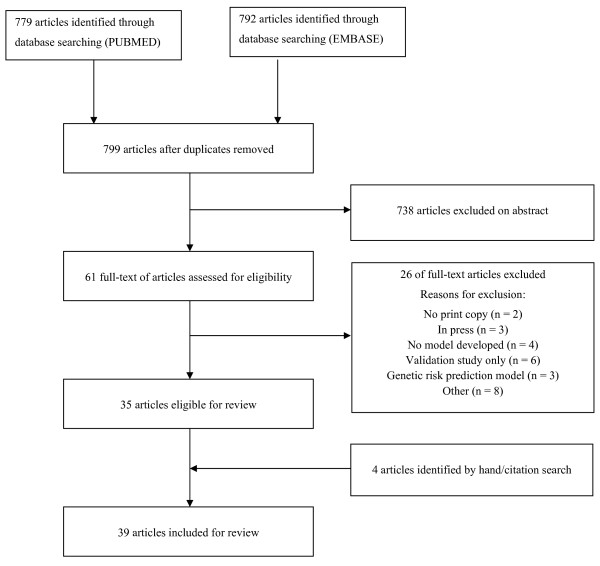
BACKGROUND: The World Health Organisation estimates that by 2030 there will be approximately 350 million people with type 2 diabetes. Associated with renal complications, heart disease, stroke and peripheral vascular disease, early identification of patients with undiagnosed type 2 diabetes or those at an increased risk of developing type 2 diabetes is an important challenge. We sought to systematically review and critically assess the conduct and reporting of methods used to develop risk prediction models for predicting the risk of having undiagnosed (prevalent) or future risk of developing (incident) type 2 diabetes in adults. METHODS: We conducted a systematic search of PubMed and EMBASE databases to identify studies published before May 2011 that describe the development of models combining two or more variables to predict the risk of prevalent or incident type 2 diabetes. We extracted key information that describes aspects of developing a prediction model including study design, sample size and number of events, outcome definition, risk predictor selection and coding, missing data, model-building strategies and aspects of performance. RESULTS: Thirty-nine studies comprising 43 risk prediction models were included. Seventeen studies (44%) reported the development of models to predict incident type 2 diabetes, whilst 15 studies (38%) described the derivation of models to predict prevalent type 2 diabetes. In nine studies (23%), the number of events per variable was less than ten, whilst in fourteen studies there was insufficient information reported for this measure to be calculated. The number of candidate risk predictors ranged from four to sixty-four, and in seven studies it was unclear how many risk predictors were considered. A method, not recommended to select risk predictors for inclusion in the multivariate model, using statistical significance from univariate screening was carried out in eight studies (21%), whilst the selection procedure was unclear in ten studies (26%). Twenty-one risk prediction models (49%) were developed by categorising all continuous risk predictors. The treatment and handling of missing data were not reported in 16 studies (41%). CONCLUSIONS: We found widespread use of poor methods that could jeopardise model development, including univariate pre-screening of variables, categorisation of continuous risk predictors and poor handling of missing data. The use of poor methods affects the reliability of the prediction model and ultimately compromises the accuracy of the probability estimates of having undiagnosed type 2 diabetes or the predicted risk of developing type 2 diabetes. In addition, many studies were characterised by a generally poor level of reporting, with many key details to objectively judge the usefulness of the models often omitted.
Overview
The claims and statistics of this paper haven’t been checked yet.
Free: it reads the open-access text and checks the first 5 claims that cite a source we can check. Create a free account to check every claim.
Integrity signals
Registry
Cites
Statistics
Figures
Verification
Claims the paper makes
The claims and statistics of this paper haven’t been checked yet.
Free: it reads the open-access text and checks the first 5 claims that cite a source we can check. Create a free account to check every claim.
Claims other papers make about this one
Each is checked against this paper’s own text: does it say what the citing paper says it does?
The source backs part of the claim, not all of it — or backs it for a different population, condition or comparison.
In the citing paper
“However, the overwhelming evidence shows that the quality of reporting of prediction model studies is poor.”
From Transparent Reporting of a multivariable prediction model for Individual Prognosis Or Diagnosis (TRIPOD): The TRIPOD Statement (2015) · cites this paper as [23]
Experimental — accuracy not yet measuredThe source backs part of the claim, not all of it — or backs it for a different population, condition or comparison.
In the citing paper
“Many reviews have showed that the quality of reporting in published articles describing the development or validation of multivariable prediction models in medicine is poor [23–27,29].”
From Transparent reporting of a multivariable prediction model for individual prognosis or diagnosis (TRIPOD): the TRIPOD Statement (2015) · cites this paper as [24]
Experimental — accuracy not yet measuredThe cited source says what the claim attributes to it.
In the citing paper
“Many reviews have showed that the quality of reporting in published articles describing the development or validation of multivariable prediction models in medicine is poor (23)(24)(25)(26)(27)29).”
From Transparent Reporting of a multivariable prediction model for Individual Prognosis Or Diagnosis (TRIPOD): The TRIPOD Statement (2015) · cites this paper as [23]
The cited source says what the claim attributes to it.
In the citing paper
“Collins and colleagues [24] evaluated the methodological conduct and reporting of 39 reports published before May 2011 describing the development of models to predict prevalent or incident type 2 diabetes. Reporting was also found to be generally poor, with key details on which predictors were examined, the handling and reporting of missing data, and model-building strategy often poorly described.”
From Transparent reporting of a multivariable prediction model for individual prognosis or diagnosis (TRIPOD): the TRIPOD Statement (2015) · cites this paper as [24]
The cited source says what the claim attributes to it.
In the citing paper
“However, the overwhelming evidence shows that the quality of reporting of prediction model studies is poor.”
From Transparent Reporting of a Multivariable Prediction Model for Individual Prognosis or Diagnosis (TRIPOD): The TRIPOD Statement (2015) · cites this paper as [24]
3 more claims about this paper
Create a free account to see every claim other papers make about this one.
Self-check
Percentages, sums and reported differences re-computed from the paper’s own numbers.
The self-check needs the paper’s full text.
Citations
Cites
Preferred Reporting Items for Systematic Reviews and Meta-Analyses: the PRISMA statement
Moher, D., Liberati, A., Tetzlaff, J., Altman, D. G., & for the PRISMA Group (2009) · BMJ · doi:10.1136/bmj.b2535 · Cited by 83,823
Preferred reporting items for systematic reviews and meta-analyses: the PRISMA Statement.
(2009) · PubMed Central · Cited by 44,859
von Elm, E., Altman, D. G., Egger, M., Pocock, S. J., Gøtzsche, P. C., Vandenbroucke, J. P., & Initiative, F. T. S. (2007) · PLoS Medicine · doi:10.1371/journal.pmed.0040296 · Cited by 23,020
CONSORT 2010 Statement: updated guidelines for reporting parallel group randomised trials
the CONSORT Group, Schulz, K. F., Altman, D. G., & Moher, D. (2010) · BMC Medicine · doi:10.1186/1741-7015-8-18 · Cited by 13,371
Elm, E. V., Altman, D. G., Egger, M., Pocock, S. J., Gøtzsche, P. C., & Vandenbroucke, J. P. (2007) · BMJ · doi:10.1136/bmj.39335.541782.ad · Cited by 10,766
A simulation study of the number of events per variable in logistic regression analysis
Peduzzi, P., Concato, J., Kemper, E., Holford, T. R., & Feinstein, A. R. (1996) · Journal of Clinical Epidemiology · doi:10.1016/s0895-4356(96)00236-3 · Cited by 9,655 · cited 3×
“A rule of thumb is that models should be developed with 10 to 20 events per variable (EPV) [63,64].”
BackgroundCONSORT 2010 Statement: updated guidelines for reporting parallel group randomised trials
Schulz, K. F., Altman, D. G., Moher, D., & for the CONSORT Group (2010) · BMJ · doi:10.1136/bmj.c332 · Cited by 9,329
CONSORT 2010 statement: updated guidelines for reporting parallel group randomized trials
Schulz, K. F., Altman, D. G., Moher, D., & for the CONSORT Group* (2010) · Annals of Internal Medicine · doi:10.7326/0003-4819-152-11-201006010-00232 · Cited by 3,824
Towards complete and accurate reporting of studies of diagnostic accuracy: The STARD Initiative.
Bossuyt, P. M., Reitsma, J. B., Bruns, D. E., Gatsonis, C. A., Glasziou, P. P., Irwig, L. M., Lijmer, J. G., Moher, D., Rennie, D., de Vet, H. C. W., et al. (2003) · Annals of Internal Medicine · doi:10.7326/0003-4819-138-1-200301070-00010 · Cited by 3,219
Towards complete and accurate reporting of studies of diagnostic accuracy: the STARD initiative
Bossuyt, P. M., Reitsma, J. B., Bruns, D. E., Gatsonis, C. A., Glasziou, P. P., Irwig, L. M., Lijmer, J. G., Moher, D., Rennie, D., & de Vet, H. C. W. (2003) · BMJ · doi:10.1136/bmj.326.7379.41 · Cited by 3,215
Research works printed but not linked: 3
- Mallett S Royston P Dutton S Waters R Altman DG Reporting methods in studies developing prognostic models in cancer: a review BMC Med 2010 8 20 10.1186/1741-7015-8-20 20353578 PMC2856521 · DOI · Paper page
- Mallett S Royston P Waters R Dutton S Altman DG Reporting performance of prognostic models in cancer: a review BMC Med 2010 8 21 10.1186/1741-7015-8-21 20353579 PMC2857810 · DOI · Paper page
- Wasson JH Sox HC Neff RK Goldman L Clinical prediction rules: applications and methodological standards N Engl J Med 1985 313 793 799 10.1056/NEJM198509263131306 3897864 · DOI · Paper page
Cited by
Items 301–400 of 490
What (not) to expect when classifying rare events
Blagus, R., & Goeman, J. J. (2016) · Briefings in Bioinformatics · doi:10.1093/bib/bbw107 · Cited by 8
Mitchell, A. J., Vancampfort, D., Manu, P., Correll, C. U., Wampers, M., van Winkel, R., Yu, W., & Binder, M. D. (2019) · PLoS ONE · doi:10.1371/journal.pone.0210674 · Cited by 12
“Usually these clinical variables have been combined in clinical prediction algorithms or risk models [26, 27, 28, 29, 30, 31].”
BackgroundHanprathet, N., Lertmaharit, S., Lohsoonthorn, V., Rattananupong, T., Ammaranond, P., & Jiamjarasrangsi, W. (2019) · Diabetes Metabolic Syndrome and Obesity · doi:10.2147/dmso.s219524 · Cited by 12
Miao, S., Chen, P., Li, D., Shen, S., & Wen, A. (2022) · BMJ Open · doi:10.1136/bmjopen-2021-052568 · Cited by 8
A Comparative Analysis of Machine Learning Models for the Detection of Undiagnosed Diabetes Patients
Cichosz, S. L., Bender, C., & Hejlesen, O. K. (2024) · Diabetology · doi:10.3390/diabetology5010001 · Cited by 9
“Typically, these models incorporate a blend of variables, encompassing weight, lifestyle, familial background, and clinical measurements, and are formulated through the utilization of multivariable statistical techniques [6–8].”
MethodPrediction models for the risk of postoperative nausea and vomiting
Pace, N. L., Carlisle, J. B., Eberhart, L. H. J., Kranke, P., Trivella, M., Lee, A. S. Y., & Bennett, M. H. (2014) · Cochrane Database of Systematic Reviews · doi:10.1002/14651858.cd011318 · Cited by 8
Nonexercise Equations to Estimate Fitness in White European and South Asian Men
O’Donovan, G., Bakrania, K., Ghouri, N., Yates, T. E., Gray, L. J., Hamer, M., Stamatakis, E., Khunti, K., Davies, M. J., Sattar, N. A., et al. (2015) · Medicine & Science in Sports & Exercise · doi:10.1249/mss.0000000000000836 · Cited by 9
“Resting heart rate was not removed from any model because the removal of important variables might lead to unreliable models (2).”
BackgroundAutocuidado de pacientes com Diabetes Mellitus tipo 2
de Souza, K. O. C., de Mendonça, S. C. B., Otero, L. M., de Souza, M. F. C., & Ribeiro, S. D. O. (2019) · Semina Ciências Biológicas e da Saúde · doi:10.5433/1679-0367.2019v40n1p75 · Cited by 11
Wang, X., Bernabé, E., Pitts, N. B., Zheng, S., & Gallagher, J. E. (2021) · Caries Research · doi:10.1159/000518964 · Cited by 8
Systematic Reviews of Prognostic Factor Studies
Riley, R. D., Moons, K. G. M., Altman, D. G., Collins, G. S., & Debray, T. P. A. (2022) · Wiley eBooks · doi:10.1002/9781119099369.ch17 · Cited by 9
Inaguma, D., Hayashi, H., Yanagiya, R., Koseki, A., Iwamori, T., Kudo, M., Fukuma, S., & Yuzawa, Y. (2021) · BMJ Open · doi:10.1136/bmjopen-2021-058833 · Cited by 14
Evaluating the Performance of the Indian Diabetes Risk Score in Different Ethnic Groups
Nugawela, M. D., Sivaprasad, S., Mohan, V., Rajalakshmi, R., & Netuveli, G. (2020) · Diabetes Technology & Therapeutics · doi:10.1089/dia.2019.0354 · Cited by 8
“…for Americans but most of them require some form of clinical measurement such as blood pressure level, cholesterol level, fasting plasma glucose level, and hence it is difficult to use them in mass screening programs, 28,29 whereas IDRS is a noninvasive risk score that requires only four variables.”
The added value of periodontal measurements for identification of diabetes among Saudi adults
Talakey, A. A., Hughes, F. J., AlMoharib, H. S., Al‐Askar, M., & Bernabé, E. (2020) · Journal of Periodontology · doi:10.1002/jper.20-0118 · Cited by 8
Tan, J., Qi, Y., Liu, C., Xiong, Y., He, Q., Zhang, G., Chen, M., He, G., Wang, W., Liu, X., et al. (2019) · Journal of Clinical Epidemiology · doi:10.1016/j.jclinepi.2019.07.009 · Cited by 7
Cho, S. B., Jang, J. H., Chung, M., & Kim, S. C. (2020) · Diabetes & Metabolism Journal · doi:10.4093/dmj.2019.0163 · Cited by 8
“These have been frequently used to develop models to predict T2DM [26].”
MethodPhuc, P. T., Nguyen, P., Nguyen, N. N., Hsu, M., Le, N. Q. K., Tran, Q., Huang, C., Yang, H., Chen, C., Le, T. A. H., et al. (2024) · Journal of Medical Internet Research · doi:10.2196/52107 · Cited by 8
Naenen-Hernani, K., Palazón‐Bru, A., Colomina-Climent, F., & Gil-Guillén, V. F. (2017) · Journal of Developmental & Behavioral Pediatrics · doi:10.1097/dbp.0000000000000495 · Cited by 7
Palazón‐Bru, A., Herencia, J. A. C., Rueda, M. S., Artigao-Rodenas, L. M., Divisón, J. A., Escribano, F. M., Ponce-García, I., & on behalf of GEVA (Group of Vascular Diseases From Albacete) (2018) · The Journal of Cardiovascular Nursing · doi:10.1097/jcn.0000000000000534 · Cited by 7
Talakey, A. A., Hughes, F. J., & Bernabé, E. (2022) · Journal Of Clinical Periodontology · doi:10.1111/jcpe.13596 · Cited by 8
Bai, E., Song, S. L., Fraser, H., & Ranney, M. L. (2022) · Applied Clinical Informatics · doi:10.1055/s-0041-1740923 · Cited by 9
Chang, L., Fukuoka, Y., Aouizerat, B. E., Zhang, L., & Flowers, E. (2023) · JMIR Diabetes · doi:10.2196/44018 · Cited by 8
“Risk prediction models can incorporate multiple variables relevant to T2D, but current models exhibit unreliable risk prediction [12].”
BackgroundPrediction of complications in health economic models of type 2 diabetes: a review of methods used
Li, X., Li, F., Wang, J., van Giessen, A., & Feenstra, T. (2023) · Acta Diabetologica · doi:10.1007/s00592-023-02045-8 · Cited by 8
Recalibration in Validation Studies of Diabetes Risk Prediction Models: A Systematic Review
Masconi, K. L., Matsha, T. E., Erasmus, R. T., & Kengne, A. P. (2015) · International Journal of Statistics in Medical Research · doi:10.6000/1929-6029.2015.04.04.5 · Cited by 7
Martínez‐Hervás, S., Morales‐Suárez‐Varela, M., Andrés‐Blasco, I., Lara-Hernández, F., Peraita‐Costa, I., Real, J. T., García-García, A.-B., & Chaves, F. J. (2022) · European Journal of Internal Medicine · doi:10.1016/j.ejim.2022.05.005 · Cited by 8
Félix‐Martínez, G. J., & Godínez-Fernández, J. R. (2018) · Endocrinología Diabetes y Nutrición · doi:10.1016/j.endinu.2018.04.004 · Cited by 8
Hunt, A., Law, H., Carney, R., Mulholland, R. E., Flores, A., Smith, C. T., Varese, F., Parker, S., Yung, A. R., & Bonnett, L. J. (2024) · Frontiers in Psychiatry · doi:10.3389/fpsyt.2024.1408738 · Cited by 11
“Identi fi cation of individuals at high and imminent risk of developing a fi rst episode of psychosis (FEP) is possible through the use of the “ At Risk Mental State ” (ARMS) criteria (also known as the Ultra High Risk (UHR) and Clinical High Risk (CHR) criteria) (1, 2).”
Graf, R., Todd, S., & Baksh, M. F. (2026) · Biometrical Journal · doi:10.1002/bimj.70171 · Cited by 8
“Cox regression (Cox 1972 ) is most widely used for developing prognostic models in medical time-to-event data (Collins et al. 2014 , 2011 ; Goldstein et al. 2017 ; Hueting et al. 2022 ; Mahar et al. 2017 ; Mallett et al. 2010 ; Phung et al. 2019 ; Steyerberg et al. 2013 ; Wynants et al. 2019 ).”
Glasziou, P., Altman, D. G., Bossuyt, P. M., Boutron, I., Clarke, M. J., Julious, S. A., Michie, S., Moher, D., & Wager, E. (2014) · Cited by 6
Hudda, M. T., Archer, L., van Smeden, M., Moons, K. G. M., Collins, G. S., Steyerberg, E. W., Wahlich, C., Reitsma, J. B., Riley, R. D., CALSTER, B. V., et al. (2022) · Journal of Clinical Epidemiology · doi:10.1016/j.jclinepi.2022.12.005 · Cited by 7
“Previous studies have shown that reporting of prediction model research has generally been poor across medical disciplines [6,19,20].”
ResultLiu, C., Qi, Y., Liu, X., Chen, M., Xiong, Y., Huang, S., Zou, K., Tan, J., & Sun, X. (2023) · BMC Medical Research Methodology · doi:10.1186/s12874-023-01832-9 · Cited by 6
Mazzini, M. C. R., Blumer, M. G., Hoehne, E. L., Guimarães, K. R. L. S. L. D. Q., Caramelli, B., Fornari, L. S., & Malheiros, S. V. P. (2013) · Revista da Associação Médica Brasileira · doi:10.1016/j.ramb.2012.09.002 · Cited by 18
Ward, T. T., Medina‐Lara, A., Mujica-Mota, R. E., & Spencer, A. E. (2021) · Value in Health · doi:10.1016/j.jval.2020.12.022 · Cited by 7
A Perspective: Use of Machine Learning Models to Predict the Risk of Multimorbidity
Delanerolle, G. (2021) · LOJ Medical Sciences · doi:10.32474/lojms.2021.05.000225 · Cited by 8
“identified 43 different ML prediction models across 39 published studies but concluded the review with an observation that there is a widespread use of poor methods that leads to questioning the reliability and usefulness of such models [30].”
BackgroundSystematic Reviews of Prediction Models
Collins, G. S., Moons, K. G. M., Debray, T. P. A., Altman, D. G., & Riley, R. D. (2022) · Wiley eBooks · doi:10.1002/9781119099369.ch18 · Cited by 8
External validation of two diabetes risk scores in a young UK South Asian population
Gray, L. J., Khunti, K., Wilmot, E. G., Yates, T. E., & Davies, M. J. (2014) · Diabetes Research and Clinical Practice · doi:10.1016/j.diabres.2014.03.018 · Cited by 6
“scores to assess calibration [25], the level of agreement between the predicted and observed outcomes rates, usually assessed using the Hosmer and Lemeshow statistic [22].”
BackgroundMethodInfluentialKang, S. Y., & Kim, Y. S. (2021) · Journal of Diabetes · doi:10.1111/1753-0407.13238 · Cited by 8
“However, the progression from prediabetes to diabetes or cardiovascular disease is influenced by factors such as age, sex, ethnicity, and lifestyle.(3,6) Recently, several studies have shown prediction models for diabetes, and these models include multiple lifestyle factors and metabolic parameters as key variables.”
BackgroundAsgari, S., Khalili, D., Mehrabi, Y., & Hadaegh, F. (2021) · Diabetes Therapy · doi:10.1007/s13300-021-01186-9 · Cited by 6
“Hypertension [8, 10, 11] is another main risk factor for diabetes that was not considered in the multivariable analysis.”
BackgroundLiu, J., Tong, R., Lu, Z., Wang, Z., Wang, Y., Liu, Y., Yuan, H., Jia, F., Zhang, X., Li, Z., et al. (2024) · Frontiers in Psychiatry · doi:10.3389/fpsyt.2024.1398733 · Cited by 5
“Nomograms hold substantial potential for guiding clinical decision-making for patient management (15).”
Royce, N., Cronjé, H. T., Kengne, A. P., Kruger, H. S., Dolman, R., & Pieters, M. (2024) · BMC Endocrine Disorders · doi:10.1186/s12902-024-01735-w · Cited by 6
“Though many T2D risk scores have been developed, only a few have been externally validated, usually in high-income countries [36].”
BackgroundBevan, G., Poli, C. D., Keng, M. J., & Raine, R. (2020) · BMJ Open · doi:10.1136/bmjopen-2019-033483 · Cited by 5
Ansari, W. E., & Elhag, W. (2022) · Metabolic Syndrome and Related Disorders · doi:10.1089/met.2021.0153 · Cited by 5
“40 20, 22 We assessed”
Howell, C. R., Tanaka, S., Zhang, L., Carson, A. P., Yi, N., Shikany, J. M., Garvey, W. T., & Cherrington, A. (2025) · Diabetes Obesity and Metabolism · doi:10.1111/dom.16241 · Cited by 6
Sathish, T., Kannan, S., Sarma, P. S., & Thankappan, K. R. (2012) · Asia Pacific Journal of Public Health · doi:10.1177/1010539512454162 · Cited by 5
“Therefore, screening tools (risk score, logistic regression equation, and classification tree form) have been developed to identify individuals with type 2 diabetes.(7) In rural areas of India, where more than two thirds of India’s population lives,(8) the primary health care settings face severe shortage of the healt…”
MethodBan, J.-W., Chan, M. S., Muthee, T. B., Páez, A., Stevens, R., & Perera, R. (2021) · Journal of Clinical Epidemiology · doi:10.1016/j.jclinepi.2021.01.016 · Cited by 6
Asgari, S., Khalili, D., Azizi, F., & Hadaegh, F. (2023) · BMC Medical Research Methodology · doi:10.1186/s12874-023-01891-y · Cited by 6
“During the last 20 years, different risk prediction models were developed for detecting incident T2DM [2, 3] and the majority of them use logistic or survival regression.”
BackgroundValidation of the Framingham Diabetes Risk Model Using Community-Based KoGES Data
Lee, H. A., Park, H., & Hong, Y. S. (2024) · Journal of Korean Medical Science · doi:10.3346/jkms.2024.39.e47 · Cited by 6
“10 To reduce the cost and the time required to 9/14 Prediction Model for Diabetes https://doi.org/10.3346/jkms.2024.39.e47 https://jkms.org predict diabetes risk, Lindstrom and Tuomilehto 20 proposed the Finnish Diabetes Risk Score based on lifestyle features, rather than laboratory tests, to…”
BackgroundInfluentialLi, J., Wang, W., Liu, F., Qiu, L., Ren, Y., Li, M., Li, W., Gao, F., & Zhang, J. (2024) · Frontiers in Genetics · doi:10.3389/fgene.2024.1356696 · Cited by 7
“The World Health Organization predicts that the global number of T2DM patients will double, reaching 350 million by 2030 (Collins et al., 2011).”
BackgroundAvaliação do risco de desenvolver diabetes mellitus tipo 2 em população universitária.
Magalhães, A. T., da Silva, B. A. K., Ribeiro, J. A., Bisneto, J. F. D. A., Pereira, L. P. I., Machado, N. V., da Silva, C. S., & Cardoso, V. S. (2015) · Revista Brasileira em Promoção da saúde · doi:10.5020/18061230.2015.p5 · Cited by 12
“Isso pode ser devido a uma junção de fatores, como a inatividade física (59,5%) e o estresse, o que pode culminar com a elevação da pressão arterial, pois o docente está exposto a inúmeros fatores de estresse, tornando-os uma categoria profissional de risco(30).”
BackgroundKe, C., Persaud, S., Singh, K. K., Ostrow, B., Lebovic, G., Hincapié, C. A., & LOWE, J. M. (2020) · BMJ Open Diabetes Research & Care · doi:10.1136/bmjdrc-2020-001349 · Cited by 6
“18 These covariates included age, ethnicity, rurality, education, income, employment, smoking, region, waist circumference, and an interaction term between sex and waist circumference due to the sex-specific effects of waist circumference.”
Beneyto‐Ripoll, C., Palazón‐Bru, A., Llópez‐Espinós, P., Martínez‐Díaz, A. M., Gil-Guillén, V. F., & Carbonell‐Torregrosa, M. Á. (2021) · International Journal of Clinical Practice · doi:10.1111/ijcp.14044 · Cited by 7
Zhu, M., Li, Y. H., Wang, W., Liu, Y., Tong, T., & Liu, Y. (2024) · Scientific Reports · doi:10.1038/s41598-024-64430-9 · Cited by 5
“Currently, there are more than 30 prediction models for the incidence of diabetes, each based on different populations 17 , with some models predicting the risk of new-onset diabetes in patients with coronary heart disease 8 .”
BackgroundMultivariate Ordered Logistic Regression Models: Dealing with the Model-Building Strategy
Palazón‐Bru, A., Tomás-Rodríguez, M. I., López-Cascales, M. T., la Rosa, D. M. F.-D., & Gil-Guillén, V. F. (2017) · Journal of Pediatric and Adolescent Gynecology · doi:10.1016/j.jpag.2017.06.006 · Cited by 5
Robledo, K. P., Marschner, I. C., Grossmann, M., Handelsman, D. J., Yeap, B. B., Allan, C. A., Foote, C., Inder, W. J., Stuckey, B. G. A., Jesudason, D. R., et al. (2024) · European Journal of Endocrinology · doi:10.1093/ejendo/lvae166 · Cited by 5
Pereira, E. C., Bertolami, M. C., Faludi, A. Á., Monte, O., Xavier, H. T., Pereira, T., & Abdalla, D. S. P. (2015) · International Journal of Endocrinology · doi:10.1155/2015/146816 · Cited by 4
“Indeed, there is a clear potential for overfitting and overestimation, because our models were constructed with a large number of biomarkers relative to the number of participants [15].”
MethodCollaborative, O. B. O. T. P.-S., Gray, L. J., Brady, E. M., Albaina, O., Edwardson, C. L., Harrington, D. M., Khunti, K., Miksza, J. K., Raposo, J. F., Smith, E., et al. (2019) · BMC Endocrine Disorders · doi:10.1186/s12902-019-0410-3 · Cited by 4
Arejano, G. G., Hoffmann, L. V., Wyse, L. F., Correia, P. E., Pieniz, S., Botelho, F. T., Schneider, A., Schadock, I., & Barros, C. C. (2023) · Archives of Endocrinology and Metabolism · doi:10.20945/2359-4292-2021-0204 · Cited by 4
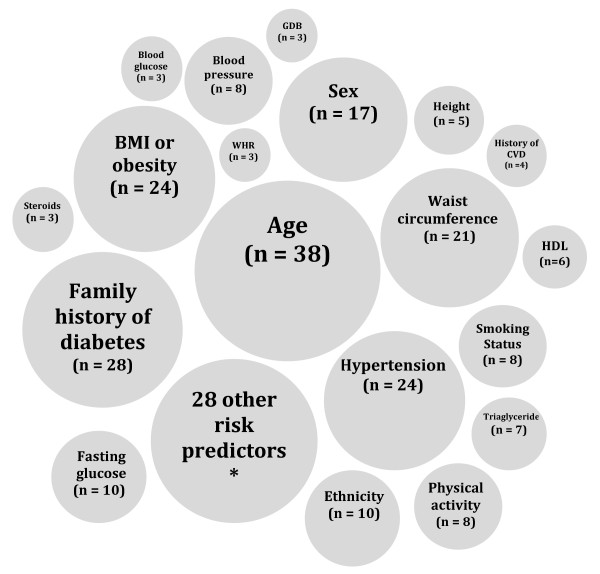
“Regarding diabetes, Collins and cols. (31) mention age as the most common risk factor.”
BackgroundFelea, M. G., Covrig, M., Mircea, I., & Naghi, L. E. (2014) · Procedia Economics and Finance · doi:10.1016/s2212-5671(14)00278-0 · Cited by 4
Srugo, S. A., de Groh, M., Jiang, Y., MORRISON, H. I., & Villeneuve, P. J. (2019) · Preventive Medicine · doi:10.1016/j.ypmed.2019.01.002 · Cited by 6
A new pipeline for structural characterization and classification of RNA-Seq microbiome data
Racedo, S., Portnoy, I., Velez, J. I., San-Juan-Vergara, H. G., Sanjuan, M. E., & Zurek, E. E. (2021) · BioData Mining · doi:10.1186/s13040-021-00266-7 · Cited by 4
“In clinical and bioinformatic research, prediction models are extensively used to derive classification rules useful to accurately predict whether a patient has or would develop a disease, whether the treatment is going to work, or even whether a disease would recur [33 – 35].”
BackgroundFélix‐Martínez, G. J., & Godínez-Fernández, J. R. (2018) · Endocrinología Diabetes y Nutrición (English ed ) · doi:10.1016/j.endien.2018.11.005 · Cited by 6
Data collaboration analysis in predicting diabetes from a small amount of health checkup data
Uchitachimoto, G., Sukegawa, N., Kojima, M., Kagawa, R., Oyama, T., Okada, Y., Imakura, A., & Sakurai, T. (2023) · Scientific Reports · doi:10.1038/s41598-023-38932-x · Cited by 5
Clinical prediction models for pre-eclampsia: time to take the next step
Kleinrouweler, C. E., & Mol, B. W. (2014) · Ultrasound in Obstetrics and Gynecology · doi:10.1002/uog.14638 · Cited by 4
Krishnaswami, A., Alloggiamento, T., Forman, D. E., Leong, T. K., Go, A. S., & McCulloch, C. E. (2016) · The Permanente Journal · doi:10.7812/tpp/15-112 · Cited by 4
Multivariable Risk Prediction Models: It’s All about the Performance
Collins, G. S., & Manach, Y. L. (2013) · Anesthesiology · doi:10.1097/aln.0b013e31828e13e9 · Cited by 5
Causal Pattern Mining in Highly Heterogeneous and Temporal EHRs Data
Yadav, P. (2017) · University of Minnesota Digital Conservancy (University of Minnesota) · Cited by 4
Predictive modeling for incident and prevalent diabetes risk evaluation
Masconi, K. L., Echouffo-Tcheugui, J. B., Matsha, T. E., Erasmus, R. T., & Kengne, A. P. (2015) · Expert Review of Endocrinology & Metabolism · doi:10.1586/17446651.2015.1015989 · Cited by 4
“However, few studies report the complete measures of predictive performance, including discrimination, calibration with sensitivity and specificity and positive or predicted value for potential cutoffs [23,25,26].”
BackgroundRisk prediction models for familial breast cancer
McGarrigle, S. A., Hanhauser, Y. P., Mockler, D., Gallagher, D. J., Kennedy, M. J., Damen, J. A., Bennett, K., Connolly, E. M., & Supported by the Cochrane Breast Cancer Review Group (2018) · Cochrane Database of Systematic Reviews · doi:10.1002/14651858.cd013185 · Cited by 4
Diabetes Management in Latin America
Carrillo-Larco, R. M., Bracco, P. A., Bernabé‐Ortiz, A., Lazo‐Porras, M., Zafra‐Tanaka, J. H., Tenorio‐Mucha, J., Bello‐Chavolla, O. Y., & Beran, D. (2023) · Springer eBooks · doi:10.1007/978-3-031-25519-9_18 · Cited by 3
Mohamed, F., Gunter, S., Yirdaw, B. E., Raal, F. J., Millen, A. M. E., & Kalla, I. (2025) · BMC Endocrine Disorders · doi:10.1186/s12902-025-02056-2 · Cited by 3
“Numerous DM risk prediction models have been developed in recent years using clinical and biochemical markers [17–19].”
Satoh, T., Nakatani, E., Ariyasu, H., Saito, C., Oshiro, Y., Ohata, E., Itoh, H., Hayashi, K., & Usui, T. (2025) · Scientific Reports · doi:10.1038/s41598-025-21831-8 · Cited by 3
“…studies have identified multiple risk factors for the onset of T2DM, such as male sex, older age, elevated BMI, high SBP, increased liver enzymes, elevated HbA1c levels, urinary protein, dyslipidemia, hypertension, and exercise habits 7,29,30,34–39 . and our results are considered reasonable.”
Ronaghi, S., Choudhary, P., Rehkopf, D. H., & Lin, B. Y. (2025) · Annual International Conference of the IEEE Engineering in Medicine and Biology Society (EMBC) · doi:10.1109/embc58623.2025.11254798 · Cited by 3
“Additionally, although diabetes is influenced by behaviors, psychological characteristics, and socioeconomic factors [8], existing risk prediction models do not integrate these domains [9].”
Psychiatric factors predict type 2 diabetes mellitus in US Veterans
Pless, L., Mitchell-Miland, C., Seo, Y., Bennett, C. B., Freyberg, Z., & Haas, G. L. (2025) · Schizophrenia · doi:10.1038/s41537-025-00616-y · Cited by 3
“Though prediction models for T2D have been previously proposed 27 , none have been generated using a sample size of the magnitude (>610,000 individuals) or of complex ancestral backgrounds utilized for this study.”
Development and Validation of a New Diabetes Risk Score in Guyana
LOWE, J. M., Ke, C., Singh, K. K., Gobin, R., Lebovic, G., & Ostrow, B. (2020) · Diabetes Therapy · doi:10.1007/s13300-020-00775-4 · Cited by 3
“We carried out both unadjusted and multivariable logistic regression to examine the association of pre-specified literature-derived variables [8] [known diabetes; on treatment for diabetes; age; sex; family history of diabetes; ethnicity; blood pressure and body mass index (BMI)] with Diabetes Ther”
MethodPredicting Diabetes Mellitus and its Complications through a Graph-Based Risk Scoring System
Erandathi, M., Wang, W. Y. C., & Mayo, M. (2020) · International Conference on Medical and Health Informatics (ICMHI) · doi:10.1145/3418094.3418115 · Cited by 3
“Risk scoring systems are introduced to assess patients with minimally invasive methods [10, 11, 12, 13] .”
BackgroundObura, M. O., van Valkengoed, I. G. M., Rutters, F., Hart, L. M. ‘., Rauh, S. P., van Charante, E. P. M., Snijder, M. B., & Beulens, J. W. J. (2021) · Global Heart · doi:10.5334/gh.846 · Cited by 3
Prediction model “T2DP” for the onset of Type 2 Diabetes Mellitus
Alomar, M. J., Al-Tabakha, M. M., & Hussein, Z. A. (2021) · Research Journal of Pharmacy and Technology · doi:10.52711/0974-360x.2021.00578 · Cited by 3
Khalid, S. I., Massaad, E., Roy, J. M., Thomson, K. B., Mirpuri, P., Kiapour, A., & Shin, J. H. (2024) · Neurosurgery · doi:10.1227/neu.0000000000003074 · Cited by 3
El-Khoury, R., Chemaitelly, H. S., Alaama, A. S., Hermez, J. G., Nagelkerke, N. J. D., & Abu-Raddad, L. J. (2024) · BMJ Open · doi:10.1136/bmjopen-2024-085506 · Cited by 3
Bantounou, M. A., Nahar, T. A. K., Plascevic, J., Kumar, N. S., Nath, M., Myint, P. K., & Philip, S. (2024) · American Journal of Ophthalmology · doi:10.1016/j.ajo.2024.07.012 · Cited by 3
Hidden risks of predictive models in healthcare
Alderman, J. E., Riley, R. D., Parekh, D., Summers, C., Liu, X., & Denniston, A. K. (2025) · BMJ Evidence-Based Medicine · doi:10.1136/bmjebm-2025-113730 · Cited by 6
Type 2 diabetes risk prediction—Do biomarkers increase detection?
Gray, L. J., & Khunti, K. (2013) · Diabetes Research and Clinical Practice · doi:10.1016/j.diabres.2013.07.008 · Cited by 3
From Risk Prediction Models to Risk Assessment Service: A Formulation of Development ParadigmPreprint
Xia, E., Yu, Y., Xu, E., Mei, J., & Sun, W. X. (2019) · arXiv (Cornell University) · doi:10.48550/arxiv.1903.07551 · Cited by 3
“As a formulation of risk assessment service development paradigm, six stages have been proposed and illustrated in Figure 4: (1) requirements analysis; (2) service development; (3) model validation; (4) pilot study; (5) service deployment; and (6) assessment and refinement.”
BackgroundMethodDiomatari, C., Martin, G. P., Jenkins, D. A., & Jani, M. (2025) · Seminars in Arthritis and Rheumatism · doi:10.1016/j.semarthrit.2025.152728 · Cited by 2
Noaeen, M., Rostami, A., Ghanem, I., Saarela, O., Keshavjee, K., Brook, J. R., & Shakeri, Z. (2026) · Scientific Reports · doi:10.1038/s41598-025-34287-7 · Cited by 3
“Similarly, socioeconomic disadvantages, such as differences in income, employment, and education, correlate with a higher diabetes burden 10,11 .”
Zhang, J., Wang, D., Dong, J., He, Y., Liu, Y., You, T., Li, J., Li, L., Wu, X., Tang, Q., et al. (2026) · BMC Medical Research Methodology · doi:10.1186/s12874-026-02893-2 · Cited by 2
“Dichotomization of continuous variables has been recognised as a major methodological concern because it may lead to information loss, unreasonable risk estimation, increased risk of bias, and impaired predictive performance [73–75].”
Comparative analysis of screening models for undiagnosed diabetes in Mexico
Félix‐Martínez, G. J., & Godínez-Fernández, J. R. (2019) · Endocrinología Diabetes y Nutrición · doi:10.1016/j.endinu.2019.08.006 · Cited by 2
Ling, S., Sun, P., Zaccardi, F., Khosla, S., Cooper, A., Fenici, P., & Khunti, K. (2020) · Diabetes Obesity and Metabolism · doi:10.1111/dom.13966 · Cited by 2
“In the last two decades, numerous clinical diagnostic or prognostic models for individuals with diabetes have been developed and validated in different populations, clinical settings and/or countries.(14) Several validated models on diabetes-related complications are available for people with T2D,(29) but those for gl…”
BackgroundMethodAdministrative Records Applications for the 2020 Census
Mule, V. T., & Keller, A. (2021) · Wiley eBooks · doi:10.1002/9781119272076.ch9 · Cited by 2
Causal Model Building in the Context of Cardiac Rehabilitation: A Systematic Review
Akbari, N., Heinze, G., Rauch, G., Sander, B., Becher, H., & Dunkler, D. (2023) · International Journal of Environmental Research and Public Health · doi:10.3390/ijerph20043182 · Cited by 3
Punyadasa, D. H., Kumarapeli, V., & Senaratne, W. (2023) · BMC Pulmonary Medicine · doi:10.1186/s12890-023-02773-1 · Cited by 2
“As prediction is all about estimation rather than testing of risk factors, it is recommended to include clinically relevant and reliable predictors for a risk prediction model [18].”
Hu, X., Lin, Y., Appleton, A. A., Wang, W., Yu, B., Zhou, L., Li, G., Zhou, Y., Ou, Y., & Dong, H. (2024) · Diabetology & Metabolic Syndrome · doi:10.1186/s13098-024-01304-0 · Cited by 2
“Traditional risk factors for DM, including aging, family history, obesity, dyslipidemia, physical inactivity, life-style, and heavy metals exposure have been extensively studied [3, 4].”
BackgroundPros and cons of live kidney donation in prediabetics: A critical review and way forward
Khalil, M. A. M., Sadagah, N. M., Tan, J. C., Syed, F. O., Chong, V. H., & Al-Qurashi, S. H. (2024) · World Journal of Transplantation · doi:10.5500/wjt.v14.i1.89822 · Cited by 2
“Various studies have shown strong associations between cigarette smoking and the development of DM[154-157].”
InfluentialBan, J.-W., Abel, L., Stevens, R., & Perera, R. (2024) · PLoS ONE · doi:10.1371/journal.pone.0310321 · Cited by 2
Chiba, S., Itoga, T., Asada, K., & Yabe, D. (2025) · Journal of Diabetes Investigation · doi:10.1111/jdi.70035 · Cited by 2
“While many risk prediction models for diabetes complications have been studied, most focus on individuals already diagnosed with type 2 diabetes, with few addressing the risk among those not yet diagnosed, such as individuals undergoing routine health checkups 12 .”
Analysis and Mapping of Machine Learning in the Context of Diabetes
Ghamgosar, A., Nemati‐Anaraki, L., Zarghani, M., Bazri, H., Ahmadian, L., Galavi, Z., & Norouzi, S. (2025) · Health Science Reports · doi:10.1002/hsr2.71167 · Cited by 2
“Many primary and secondary studies on the application of ML show that it is mainly used for the risk factors classification of glycemic control, the prediction and diagnosis of genetic and environmental factors, health care, and diabetes disease management [8 – 13].”
High -density lipoprotein cholesterol as a predictor for diabetes mellitus.
Wu, H. Y., Ouyang, P., & Sun, W. (2018) · PubMed Central · doi:10.22088/cjim.9.2.144 · Cited by 2
“Statistical analysis: The statistical analysis was performed with R program (18).”
MethodScreening for Diabetes and Prediabetes
Gray, L. J., Willis, A. M., Webb, D. R., Davies, M. J., & Khunti, K. (2018) · Endocrinology · doi:10.1007/978-3-319-27317-4_12-1 · Cited by 6
Metabolic Syndrome Risk Models and Scores: A Systematic Review
Ibrahim, M. S., Pang, D., Pappas, Y., & Randhawa, G. (2020) · Biomedical Journal of Scientific & Technical Research · doi:10.26717/bjstr.2020.26.004307 · Cited by 2
“Having MetS models from those countries is necessary because it is a known fact that in risk prediction models there are significant variations in predictor-outcome association in different ethnicities [13,51].”
BackgroundResultInfluentialComparison of Some Prediction Models and their Relevance in the Clinical Research
Panda, N. R., MAHANTA, K. L., Pati, J. K., Varanasi, P. R., & Bhuyan, R. (2023) · International Journal of Statistics in Medical Research · doi:10.6000/1929-6029.2023.12.02 · Cited by 2
Development and application of statistical methods for prognosis research
Snell, K. I. (2015) · University of Birmingham Institutional Research Archive (University of Birmingham) · Cited by 3
Metadata
- Authors
- Collins, G. S., Mallett, S., Omar, O., & Yu, L.-M.
- Affiliations
- University of Oxford (GB)
- Venue
- BMC Medicine
- Published
- 2011-09-08
- Volume
- 9
- Issue
- 1
- Pages
- 103-103
- ISSN
- 1741-7015 (ISSN-L)
- PMC
- PMC3180398
- OpenAlex
- W2102171609
- Cited by
- 484
- References
- 101
- Citations by year
- 2026: 15 · 2025: 26 · 2024: 29 · 2023: 30 · 2022: 34 · 2021: 44 · 2020: 41 · 2019: 37 · 2018: 47 · 2017: 26 · 2016: 30 · 2015: 51 · 2014: 29 · 2013: 29 · 2012: 15
- FWCI
- 3.43
- Type
- journal article
- Language
- en
- Open access
- gold
- doi.org
- Licence
- Locations
- BMC Medicine (publishedVersion, cc-by)
- Europe PMC (PubMed Central) (publishedVersion, cc-by)
- PubMed Central (publishedVersion, cc-by)
- PubMed (publishedVersion)
- DOAJ (DOAJ: Directory of Open Access Journals) (submittedVersion)
- University of Birmingham Research Portal (University of Birmingham) (submittedVersion, other-oa)
- Funders
- Cancer Research UK
- Topics
- Physical Sciences › Mathematics › Statistics and Probability › Statistical Methods in Epidemiology
- Health Sciences › Medicine › Endocrinology, Diabetes and Metabolism › Diabetes, Cardiovascular Risks, and Lipoproteins
- Health Sciences › Health Professions › Health Information Management › Artificial Intelligence in Healthcare
- Keywords
- risk prediction model, model development methodology, reporting quality, new-onset diabetes, missing data handling
- MeSH terms
- Diabetes Mellitus, Type 2, Humans, Research Design, Risk Assessment
About these checks
Registry, retraction, Cites and statistics results are computed, not judged, with one exception: a printed reference that no index lists is read once by a model before it counts as a citation error. Claims are extracted by a model and kept only when their quote appears verbatim in the text; each cited source is then checked, with a model’s help, for whether it says what the claim relies on. Those verdicts can be wrong — read the claim’s quote and the cited source before relying on one.
Statistics and arithmetic are recomputed, not judged.
Confidence bands are shown only for fields calibrated on our annotated test set. None is calibrated yet, so no band is shown.
What counts as a claim ›How we measure confidence ›How we check this ›
Are you an author, or do you see a problem with this page? Request a review
Data sources
Bibliographic data: Semantic Scholar, OpenAlex, Crossref.
Contains information from the Semantic Scholar Academic Graph Datasets, made available under the ODC Attribution License (ODC-BY 1.0).
Semantic Scholar’s data is described in: Kinney, R., et al. (2023). The Semantic Scholar Open Data Platform. arXiv:2301.10140.
