

Developing risk prediction models for type 2 diabetes: a systematic review of methodology and reporting
Open accessThe DOI matches its Crossref record; 102 of the 102 references it cites were found in a registry or an index.
Abstract
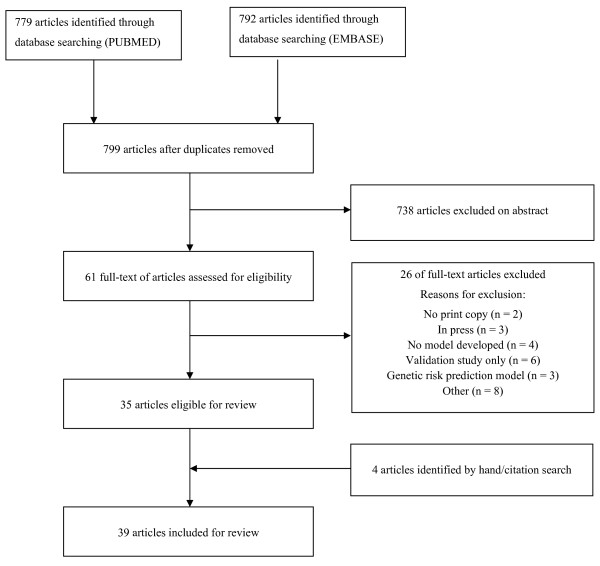
BACKGROUND: The World Health Organisation estimates that by 2030 there will be approximately 350 million people with type 2 diabetes. Associated with renal complications, heart disease, stroke and peripheral vascular disease, early identification of patients with undiagnosed type 2 diabetes or those at an increased risk of developing type 2 diabetes is an important challenge. We sought to systematically review and critically assess the conduct and reporting of methods used to develop risk prediction models for predicting the risk of having undiagnosed (prevalent) or future risk of developing (incident) type 2 diabetes in adults. METHODS: We conducted a systematic search of PubMed and EMBASE databases to identify studies published before May 2011 that describe the development of models combining two or more variables to predict the risk of prevalent or incident type 2 diabetes. We extracted key information that describes aspects of developing a prediction model including study design, sample size and number of events, outcome definition, risk predictor selection and coding, missing data, model-building strategies and aspects of performance. RESULTS: Thirty-nine studies comprising 43 risk prediction models were included. Seventeen studies (44%) reported the development of models to predict incident type 2 diabetes, whilst 15 studies (38%) described the derivation of models to predict prevalent type 2 diabetes. In nine studies (23%), the number of events per variable was less than ten, whilst in fourteen studies there was insufficient information reported for this measure to be calculated. The number of candidate risk predictors ranged from four to sixty-four, and in seven studies it was unclear how many risk predictors were considered. A method, not recommended to select risk predictors for inclusion in the multivariate model, using statistical significance from univariate screening was carried out in eight studies (21%), whilst the selection procedure was unclear in ten studies (26%). Twenty-one risk prediction models (49%) were developed by categorising all continuous risk predictors. The treatment and handling of missing data were not reported in 16 studies (41%). CONCLUSIONS: We found widespread use of poor methods that could jeopardise model development, including univariate pre-screening of variables, categorisation of continuous risk predictors and poor handling of missing data. The use of poor methods affects the reliability of the prediction model and ultimately compromises the accuracy of the probability estimates of having undiagnosed type 2 diabetes or the predicted risk of developing type 2 diabetes. In addition, many studies were characterised by a generally poor level of reporting, with many key details to objectively judge the usefulness of the models often omitted.
Overview
The claims and statistics of this paper haven’t been checked yet.
Free: it reads the open-access text and checks the first 5 claims that cite a source we can check. Create a free account to check every claim.
Integrity signals
Registry
Cites
Statistics
Figures
Verification
Claims the paper makes
The claims and statistics of this paper haven’t been checked yet.
Free: it reads the open-access text and checks the first 5 claims that cite a source we can check. Create a free account to check every claim.
Claims other papers make about this one
Each is checked against this paper’s own text: does it say what the citing paper says it does?
The source backs part of the claim, not all of it — or backs it for a different population, condition or comparison.
In the citing paper
“However, the overwhelming evidence shows that the quality of reporting of prediction model studies is poor.”
From Transparent Reporting of a multivariable prediction model for Individual Prognosis Or Diagnosis (TRIPOD): The TRIPOD Statement (2015) · cites this paper as [23]
Experimental — accuracy not yet measuredThe source backs part of the claim, not all of it — or backs it for a different population, condition or comparison.
In the citing paper
“Many reviews have showed that the quality of reporting in published articles describing the development or validation of multivariable prediction models in medicine is poor [23–27,29].”
From Transparent reporting of a multivariable prediction model for individual prognosis or diagnosis (TRIPOD): the TRIPOD Statement (2015) · cites this paper as [24]
Experimental — accuracy not yet measuredThe cited source says what the claim attributes to it.
In the citing paper
“Many reviews have showed that the quality of reporting in published articles describing the development or validation of multivariable prediction models in medicine is poor (23)(24)(25)(26)(27)29).”
From Transparent Reporting of a multivariable prediction model for Individual Prognosis Or Diagnosis (TRIPOD): The TRIPOD Statement (2015) · cites this paper as [23]
The cited source says what the claim attributes to it.
In the citing paper
“Collins and colleagues [24] evaluated the methodological conduct and reporting of 39 reports published before May 2011 describing the development of models to predict prevalent or incident type 2 diabetes. Reporting was also found to be generally poor, with key details on which predictors were examined, the handling and reporting of missing data, and model-building strategy often poorly described.”
From Transparent reporting of a multivariable prediction model for individual prognosis or diagnosis (TRIPOD): the TRIPOD Statement (2015) · cites this paper as [24]
The cited source says what the claim attributes to it.
In the citing paper
“However, the overwhelming evidence shows that the quality of reporting of prediction model studies is poor.”
From Transparent Reporting of a Multivariable Prediction Model for Individual Prognosis or Diagnosis (TRIPOD): The TRIPOD Statement (2015) · cites this paper as [24]
3 more claims about this paper
Create a free account to see every claim other papers make about this one.
Self-check
Percentages, sums and reported differences re-computed from the paper’s own numbers.
The self-check needs the paper’s full text.
Citations
Cites
Preferred Reporting Items for Systematic Reviews and Meta-Analyses: the PRISMA statement
Moher, D., Liberati, A., Tetzlaff, J., Altman, D. G., & for the PRISMA Group (2009) · BMJ · doi:10.1136/bmj.b2535 · Cited by 83,823
Preferred reporting items for systematic reviews and meta-analyses: the PRISMA Statement.
(2009) · PubMed Central · Cited by 44,859
von Elm, E., Altman, D. G., Egger, M., Pocock, S. J., Gøtzsche, P. C., Vandenbroucke, J. P., & Initiative, F. T. S. (2007) · PLoS Medicine · doi:10.1371/journal.pmed.0040296 · Cited by 23,020
CONSORT 2010 Statement: updated guidelines for reporting parallel group randomised trials
the CONSORT Group, Schulz, K. F., Altman, D. G., & Moher, D. (2010) · BMC Medicine · doi:10.1186/1741-7015-8-18 · Cited by 13,371
Elm, E. V., Altman, D. G., Egger, M., Pocock, S. J., Gøtzsche, P. C., & Vandenbroucke, J. P. (2007) · BMJ · doi:10.1136/bmj.39335.541782.ad · Cited by 10,766
A simulation study of the number of events per variable in logistic regression analysis
Peduzzi, P., Concato, J., Kemper, E., Holford, T. R., & Feinstein, A. R. (1996) · Journal of Clinical Epidemiology · doi:10.1016/s0895-4356(96)00236-3 · Cited by 9,655 · cited 3×
“A rule of thumb is that models should be developed with 10 to 20 events per variable (EPV) [63,64].”
BackgroundCONSORT 2010 Statement: updated guidelines for reporting parallel group randomised trials
Schulz, K. F., Altman, D. G., Moher, D., & for the CONSORT Group (2010) · BMJ · doi:10.1136/bmj.c332 · Cited by 9,329
CONSORT 2010 statement: updated guidelines for reporting parallel group randomized trials
Schulz, K. F., Altman, D. G., Moher, D., & for the CONSORT Group* (2010) · Annals of Internal Medicine · doi:10.7326/0003-4819-152-11-201006010-00232 · Cited by 3,824
Towards complete and accurate reporting of studies of diagnostic accuracy: The STARD Initiative.
Bossuyt, P. M., Reitsma, J. B., Bruns, D. E., Gatsonis, C. A., Glasziou, P. P., Irwig, L. M., Lijmer, J. G., Moher, D., Rennie, D., de Vet, H. C. W., et al. (2003) · Annals of Internal Medicine · doi:10.7326/0003-4819-138-1-200301070-00010 · Cited by 3,219
Towards complete and accurate reporting of studies of diagnostic accuracy: the STARD initiative
Bossuyt, P. M., Reitsma, J. B., Bruns, D. E., Gatsonis, C. A., Glasziou, P. P., Irwig, L. M., Lijmer, J. G., Moher, D., Rennie, D., & de Vet, H. C. W. (2003) · BMJ · doi:10.1136/bmj.326.7379.41 · Cited by 3,215
Research works printed but not linked: 3
- Mallett S Royston P Dutton S Waters R Altman DG Reporting methods in studies developing prognostic models in cancer: a review BMC Med 2010 8 20 10.1186/1741-7015-8-20 20353578 PMC2856521 · DOI · Paper page
- Mallett S Royston P Waters R Dutton S Altman DG Reporting performance of prognostic models in cancer: a review BMC Med 2010 8 21 10.1186/1741-7015-8-21 20353579 PMC2857810 · DOI · Paper page
- Wasson JH Sox HC Neff RK Goldman L Clinical prediction rules: applications and methodological standards N Engl J Med 1985 313 793 799 10.1056/NEJM198509263131306 3897864 · DOI · Paper page
Cited by
Items 101–200 of 490
Bao, W., Hu, F. B., Rong, S., Rong, Y., Bowers, K. A., Schisterman, E. F., Liu, L., & Zhang, C. (2013) · American Journal of Epidemiology · doi:10.1093/aje/kwt123 · Cited by 76
Venema, E., Wessler, B. S., Paulus, J. K., Salah, R., Raman, G., Leung, L. Y., Koethe, B. C., Nelson, J., Park, J. G., van Klaveren, D., et al. (2021) · Journal of Clinical Epidemiology · doi:10.1016/j.jclinepi.2021.06.017 · Cited by 65
Cao, Y., Li, J., Zhang, Z., Liu, J., Sun, X., Feng, X., Luo, H., Yang, W., Li, S., Yang, X., et al. (2019) · Frontiers in Endocrinology · doi:10.3389/fendo.2019.00050 · Cited by 69
“However, a number of predictive models failed to accurately predict incident T2DM (30), even including genetic factors used in the predicting tools (31).”
BackgroundResampling methods improve the predictive power of modeling in class-imbalanced datasets
Lee, P. (2014) · International Journal of Environmental Research and Public Health · doi:10.3390/ijerph110909776 · Cited by 62
“A recent systematic review showed that from 1997 to 2010 there were 15 published papers about developing prediction models to identify undiagnosed diabetes [8], but none of these addressed the problem of class imbalance.”
BackgroundMethodInfluentialCollins, G. S., Reitsma, J. B., Altman, D. G., & Moons, K. G. M. (2015) · European Journal of Clinical Investigation · doi:10.1111/eci.12376 · Cited by 58
Xiong, X.-L., Zhang, R.-X., Bi, Y., Zhou, W., Yu, Y., & Zhu, D. (2019) · Current Medical Science · doi:10.1007/s11596-019-2077-4 · Cited by 67
Osteoprotegerin increases in metabolic syndrome and promotes adipose tissue proinflammatory changes
Bernardi, S., Fabris, B., Thomas, M. C., Toffoli, B., Tikellis, C., Candido, R., Catena, C., Mulatero, P., Barbone, F., Radillo, O., et al. (2014) · Molecular and Cellular Endocrinology · doi:10.1016/j.mce.2014.06.004 · Cited by 62
Quality of first trimester risk prediction models for pre‐eclampsia: a systematic review
Brunelli, V., & Prefumo, F. (2015) · BJOG An International Journal of Obstetrics & Gynaecology · doi:10.1111/1471-0528.13334 · Cited by 64
Cheng, Y., Gadd, D. A., Gieger, C., Monterrubio‐Gómez, K., Zhang, Y., Berta, I., Stam, M. J., Szlachetka, N., Lobzaev, E., Wrobel, N., et al. (2023) · Nature Aging · doi:10.1038/s43587-023-00391-4 · Cited by 65
Extending Association Rule Summarization Techniques to Assess Risk of Diabetes Mellitus
Simon, G., Caraballo, P. J., Therneau, T. M., Cha, S., Castro, M. R., & Li, P. W. (2014) · IEEE Transactions on Knowledge and Data Engineering · doi:10.1109/tkde.2013.76 · Cited by 59
“In many cases, a high min sup threshold may discover only commonsense patterns but a low one may generate an explosive number of output patterns, which severely restricts its usage.”
BackgroundPrediction of Incident Diabetes in the Jackson Heart Study Using High-Dimensional Machine Learning
Casanova, R., Saldana, S., Simpson, S. L., Lacy, M. E., Subauste, A. R., Blackshear, C., Wagenknecht, L., & Bertoni, A. G. (2016) · PLOS ONE · doi:10.1371/journal.pone.0163942 · Cited by 53
Paprott, R., Mühlenbruch, K., Mensink, G., Thiele, S., Schulze, M. B., Scheidt‐Nave, C., & Heidemann, C. (2016) · BMJ Open Diabetes Research & Care · doi:10.1136/bmjdrc-2016-000280 · Cited by 65
Ziauddeen, N., Roderick, P., Macklon, N., & Alwan, N. A. (2017) · Obesity Reviews · doi:10.1111/obr.12640 · Cited by 69
“It could also be important to retain predictors known to be important from literature but does not achieve statistical significance in the model development dataset (51).”
Zheng, L., Wang, Y., Hao, S., Shin, A. Y., Jin, B., Ngo, A. D., Jackson-Browne, M. S., Feller, D. J., Fu, T., Zhang, K., et al. (2016) · JMIR Medical Informatics · doi:10.2196/medinform.6328 · Cited by 60
“[25-29], medications extracted from Unified Medical Language System, and NLP terms into the structured metadata.”
Kendzerska, T., King, L. K., Lipscombe, L. L., Croxford, R., Stanaitis, I., & HAWKER, G. A. (2018) · Diabetologia · doi:10.1007/s00125-018-4703-2 · Cited by 60
Prediction models for the incidence and progression of periodontitis: A systematic review
Du, M., Bo, T., Kapellas, K., & Peres, M. A. (2018) · Journal Of Clinical Periodontology · doi:10.1111/jcpe.13037 · Cited by 59
Heianza, Y., Arase, Y., Hsieh, S. D., Saito, K., Tsuji, H., Kodama, S., Tanaka, S., Ohashi, Y., Shimano, H., Yamada, N., et al. (2012) · Diabetologia · doi:10.1007/s00125-012-2712-0 · Cited by 57
Talaei-Khoei, A., & Wilson, J. M. (2018) · International Journal of Medical Informatics · doi:10.1016/j.ijmedinf.2018.08.008 · Cited by 48
How diabetes risk assessment tools are implemented in practice: A systematic review
Dhippayom, T., Chaiyakunapruk, N., & Krass, I. (2014) · Diabetes Research and Clinical Practice · doi:10.1016/j.diabres.2014.01.008 · Cited by 56
“systematic reviews of risk assessment tools [12–16].”
BackgroundInfluentialNon-lab and semi-lab algorithms for screening undiagnosed diabetes: A cross-sectional study
Li, W., Xie, B., Qiu, S., Huang, X., Chen, J., Xl, W., Li, H., Chen, Q., Wang, Q., Tu, P., et al. (2018) · EBioMedicine · doi:10.1016/j.ebiom.2018.08.009 · Cited by 55
Fracture Risk Assessment: State of the Art, Methodologically Unsound, or Poorly Reported?
Collins, G. S., & Michaëlsson, K. (2012) · Current Osteoporosis Reports · doi:10.1007/s11914-012-0108-1 · Cited by 51
Self-citationH2RM: A Hybrid Rough Set Reasoning Model for Prediction and Management of Diabetes Mellitus
Ali, R., Hussain, J., Siddiqi, M., Hussain, M., & Lee, S. (2015) · Sensors · doi:10.3390/s150715921 · Cited by 53
“Other risk prediction models for type-2 diabetes can be read from the systematic review [32].”
BackgroundHjellvik, V., Strøm, & Sakshaug (2012) · Clinical Epidemiology · doi:10.2147/clep.s31830 · Cited by 58
“In many risk prediction models, continuous variables are categorized, 23 which implies loss of information.”
Diabetes and the Female Disadvantage
Woodward, M., Peters, S. A., & Huxley, R. R. (2015) · Women's Health · doi:10.2217/whe.15.67 · Cited by 48
Risk assessment tools for detecting those with pre-diabetes: A systematic review
Barber, S. R., Davies, M. J., Khunti, K., & Gray, L. J. (2014) · Diabetes Research and Clinical Practice · doi:10.1016/j.diabres.2014.03.007 · Cited by 56
“[20] Collins G, Mallett S, Omar O, Yu L.”
BackgroundBernardi, S., Zauli, G., Tikellis, C., Candido, R., Fabris, B., Secchiero, P., Cooper, M. E., & Thomas, M. C. (2012) · Clinical Science · doi:10.1042/cs20120176 · Cited by 53
Farran, B., AlWotayan, R., Alkandari, H., Al-Abdulrazzaq, D., Channanath, A., & Thanaraj, T. A. (2019) · Frontiers in Endocrinology · doi:10.3389/fendo.2019.00624 · Cited by 49
A combined strategy of feature selection and machine learning to identify predictors of prediabetes
De Silva, K., Jönsson, D., & Demmer, R. T. (2020) · Journal of the American Medical Informatics Association · doi:10.1093/jamia/ocz204 · Cited by 47
“…reviews of the quality of diabetes and prediabetes prediction models, respectively, revealed common methodological issues including univariate prescreening of variables, categorization of continuous attributes, poor handling of missing data, 20 and the lack of external validation of tools.”
BackgroundMethodOpening the black box: interpretable machine learning for predictor finding of metabolic syndrome
Zhang, Y., Zhang, X., Razbek, J., Li, D., Xia, W., Bao, L., Mao, H., Daken, M., & Cao, M. (2022) · BMC Endocrine Disorders · doi:10.1186/s12902-022-01121-4 · Cited by 51
“These models can also be to screen individuals to identify those who are at an increased risk of having an undiagnosed condition, for which diagnosis management and treatment can be initiated and ultimately improve patient outcomes [36].”
Wynants, L., Kent, D. M., Timmerman, D., Lundquist, C. M., & Van Calster, B. (2019) · Diagnostic and Prognostic Research · doi:10.1186/s41512-019-0046-9 · Cited by 45
“They are also in line with numerous reviews that signaled incomplete reporting and poor design and analysis for prediction models for diabetes [78], kidney disease [79, 80], cancer [81], neurological disorders [82, 83], and fetal and maternal outcomes in obstetrics [84].”
ResultDamen, J. A., Debray, T. P. A., Pajouheshnia, R., Reitsma, J. B., Scholten, R. J. P. M., Moons, K. G. M., & Hooft, L. (2019) · BMJ Open · doi:10.1136/bmjopen-2018-026160 · Cited by 50
Carrillo-Larco, R. M., Guzman‐Vilca, W. C., Xu, X., & Bernabé‐Ortiz, A. (2023) · Diabetic Medicine · doi:10.1111/dme.15174 · Cited by 53
When and how to use data from randomised trials to develop or validate prognostic models
Pajouheshnia, R., Groenwold, R. H. H., Peelen, L. M., Reitsma, J. B., & Moons, K. G. M. (2019) · BMJ · doi:10.1136/bmj.l2154 · Cited by 50
Cui, J., Wang, L., Tan, G., Chen, W., Guang-min, H., Huang, H., Chen, Z., Yang, H., Chen, J., & Liu, G. (2020) · International Journal of Surgery · doi:10.1016/j.ijsu.2020.03.010 · Cited by 55
Kaiser, I., Pfahlberg, A. B., Uter, W. J. C., Heppt, M. V., Veierød, M. B., & Gefeller, O. (2020) · International Journal of Environmental Research and Public Health · doi:10.3390/ijerph17217919 · Cited by 47
“Complete reporting of how a prediction model has been developed and validated is necessary to objectively appraise the usefulness of the model [83].”
Prediction of type 2 diabetes mellitus onset using logistic regression-based scorecards
Edlitz, Y., & Segal, E. (2022) · eLife · doi:10.7554/elife.71862 · Cited by 48
“79 80 Several such tools are in use today (Noble et al., 2011; Collins et al., 2011; Kengne et al., 2014).”
BackgroundLucaroni, F., Cicciarella Modica, D., Macino, M., Palombi, L., Abbondanzieri, A., Agosti, G., Biondi, G., Morciano, L., & Vinci, A. (2019) · BMJ Open · doi:10.1136/bmjopen-2019-030234 · Cited by 42
Ge, S., Xu, X., Zhang, J., Hou, H., Wang, H., Liu, D., Zhang, X., Song, M., Li, D., Zhou, Y., et al. (2019) · The EPMA Journal · doi:10.1007/s13167-019-0159-9 · Cited by 42
Aim for Clinical Utility, Not Just Predictive Accuracy
Sachs, M. C., Sjölander, A., & Gabriel, E. E. (2020) · Epidemiology · doi:10.1097/ede.0000000000001173 · Cited by 49
The Role of Risk Prediction Models in Prevention and Management of AKI
Hodgson, L. E., Selby, N. M., Huang, T., & Forni, L. G. (2019) · Seminars in Nephrology · doi:10.1016/j.semnephrol.2019.06.002 · Cited by 45
Flores-Guerrero, J. L., Gruppen, E. G., Connelly, M. A., SHALAUROVA, I. Y., Otvos, J. D., Garcia, E., Bakker, S. J. L., & Dullaart, R. P. F. (2020) · Journal of Clinical Medicine · doi:10.3390/jcm9092781 · Cited by 44
“estimates may be compromised, due several methodological flaws [51].”
BackgroundA prediction nomogram for the 3-year risk of incident diabetes among Chinese adults
Wu, Y., Hu, H., Cai, J., Chen, R., Zuo, X., Cheng, H. W., & Yan, D. (2020) · Scientific Reports · doi:10.1038/s41598-020-78716-1 · Cited by 44
Dalakleidi, K., Zarkogianni, K., Thanopoulou, A., & Nikita, K. (2017) · Expert Systems · doi:10.1111/exsy.12214 · Cited by 37
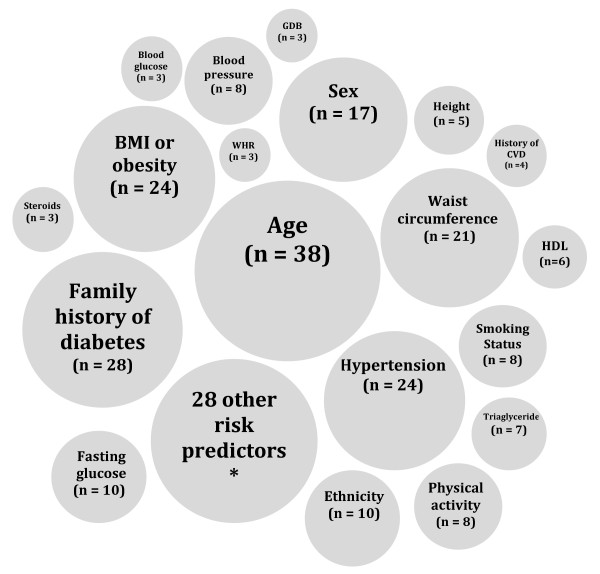
“…T2DM risk predictors are age, family history of diabetes, body mass index, hypertension, waist circumference, sex, ethnicity, fasting glucose level, glycosylated hemoglobin, lipids, uric acid, or γ ‐ glutamyltransferases, smoking status, and physical activity (Abbasi et al., 2012; Collins, 2011).”
BackgroundPredicting youth diabetes risk using NHANES data and machine learning
Vangeepuram, N., Liu, B., Chiu, P.-H., Wang, L., & Pandey, G. S. (2021) · Scientific Reports · doi:10.1038/s41598-021-90406-0 · Cited by 42
Shi, C., Dumville, J. C., & Cullum, N. A. (2018) · International Journal of Nursing Studies · doi:10.1016/j.ijnurstu.2018.08.005 · Cited by 42
“This is consistent with findings of prognostic model reviews in other clinical areas, for example for predicting Type-2 diabetes risk (Collins et al., 2011).”
MethodResultCho, S. B., Kim, S. C., & Chung, M. (2019) · Scientific Reports · doi:10.1038/s41598-019-40058-y · Cited by 43
Boosting for high-dimensional two-class prediction
Blagus, R., & Lusa, L. (2015) · BMC Bioinformatics · doi:10.1186/s12859-015-0723-9 · Cited by 43
“In clinical research prediction models are used to develop rules that can be used to accurately predict the outcome of the patients based on some of their characteristics and are extensively used in medicine and bioinformatics [2–4].”
MethodHu, H., Nakagawa, T., Honda, T., Yamamoto, S., & Mizoue, T. (2024) · BMJ Open Diabetes Research & Care · doi:10.1136/bmjdrc-2023-003680 · Cited by 42
Lee, H., Hwang, S. H., Park, S., Choi, Y., Lee, S., Park, J., Son, Y., Kim, H. J., Kim, S., Oh, J., et al. (2025) · EClinicalMedicine · doi:10.1016/j.eclinm.2025.103069 · Cited by 44
Gray, L. J., Khunti, K., Williams, S., Goldby, S., Troughton, J., Yates, T., Gray, A., Davies, M. J., & Collaborators, F. T. L. P. (2012) · Cardiovascular Diabetology · doi:10.1186/1475-2840-11-56 · Cited by 38
“Various risk scores have been developed and validated for identifying T2DM [23].”
BackgroundGray, L. J., Khunti, K., Edwardson, C. L., Goldby, S., Henson, J. J., Morris, D. H., Sheppard, D., Webb, D. R., Williams, S. T., Yates, T. E., et al. (2012) · Diabetologia · doi:10.1007/s00125-012-2725-8 · Cited by 38
“A plethora of risk scores have been developed and validated over the past 10 years [3].”
BackgroundO’Donovan, G., Chudasama, Y., Grocock, S., Leigh, R. J., Dalton, A. M., Gray, L. J., Yates, T. E., Edwardson, C. L., Hill, S., Henson, J. J., et al. (2017) · Environment International · doi:10.1016/j.envint.2017.03.027 · Cited by 38
Gahete, M. D., del Río-Moreno, M., Camargo, A., Alcala-Diaz, J. F., Alors‐Pérez, E., Delgado‐Lista, J., Reyes, Ó., Ventura, S., Pérez‐Martínez, P., Castano, J. P., et al. (2018) · EBioMedicine · doi:10.1016/j.ebiom.2018.10.056 · Cited by 38
“Thus, early identification of individuals at high risk for T2DM development, especially among patients with CVD [3,4], is critical for prevention [5,6].”
BackgroundChoi, J., Diao, H., Feng, Z., Lau, A. N., Wang, R., Jevnikar, A. M., & Ma, S. (2013) · Plant Biotechnology Journal · doi:10.1111/pbi.12149 · Cited by 40
“Diabetes is a global epidemic that is expected to affect approximately 350 million people by 2030 (Collins et al., 2011).”
BackgroundThompson, D. D., Murray, G. D., Dennis, M. S., Sudlow, C. L. M., & Whiteley, W. N. (2014) · BMC Medicine · doi:10.1186/1741-7015-12-58 · Cited by 41
“We searched Medline and EMBASE databases from 1980 to 19 April 2013 with an electronic search strategy using a search term for ‘stroke’ and synonyms for ‘clinical prediction models’ [see Additional file 1] [6,7].”
MethodEfficacy of Machine Learning in Predicting the Kind of Delivery by Cardiotocography
Improta, G., Ricciardi, C., Amato, F., D’Addio, G., Cesarelli, M., & Romano, M. (2019) · World Congress on Medical Physics and Biomedical Engineering, September 7 - 12, 2009, Munich, Germany · doi:10.1007/978-3-030-31635-8_95 · Cited by 42
Composite Outcomes in Clinical Prediction Modeling: Are We Trying to Predict Apples and Oranges?
Dash, K., Goodacre, S. W., & Sutton, L. (2022) · Annals of Emergency Medicine · doi:10.1016/j.annemergmed.2022.01.046 · Cited by 41
Rodrigo, E., Santos, L., Piñera, C., Ruiz, J. C., Quintela, E., Toyos, C., Allende, N., Gómez-Alamillo, C., & Arias, M. (2012) · Diabetes Care · doi:10.2337/dc11-2071 · Cited by 38
“In the general population, more than 40 diabetes prediction models have been reported (6).”
BackgroundTime to question the NHS diabetes prevention programme
Barry, E., Roberts, S. A., Finer, S., Vijayaraghavan, S., & Greenhalgh, T. (2015) · BMJ · doi:10.1136/bmj.h4717 · Cited by 39
Howell, C. R., Zhang, L., Mehta, T. S., Wilkinson, L., Carson, A. P., Levitan, E. B., Cherrington, A., Yi, N., & Garvey, W. T. (2024) · JACC Advances · doi:10.1016/j.jacadv.2024.100868 · Cited by 39
O’Donovan, G., Stensel, D. J., Hamer, M., & Stamatakis, E. (2017) · European Journal of Epidemiology · doi:10.1007/s10654-017-0280-9 · Cited by 38
“models should include variables that are thought to be important in the literature [23].”
BackgroundGomes, C., Geels, J., Debray, T. P. A., Malekzadeh, A., Asselbergs, F. W., & Linschoten, M. (2025) · BMJ · doi:10.1136/bmj-2025-084062 · Cited by 41
Rahimi, A. K., Canfell, O. J., Chan, W., Sly, B. P., Pole, J. D., Sullivan, C. M., & Shrapnel, S. (2022) · International Journal of Medical Informatics · doi:10.1016/j.ijmedinf.2022.104758 · Cited by 41
Guerra, B., Haile, S. R., Lamprecht, B., Ramírez, A. S., Martínez‐Camblor, P., Kaiser, B., Alfageme, I., Almagro, P., Casanova, C., Esteban, C., et al. (2018) · BMC Medicine · doi:10.1186/s12916-018-1013-y · Cited by 40
Implementation and Updating of Clinical Prediction Models: A Systematic Review
Saelmans, A., Seinen, T. M., Pera, V., Markus, A. F., Fridgeirsson, E. A., John, L. H., Schiphof‐Godart, L., Rijnbeek, P. R., Reps, J., & Williams, R. D. (2025) · Mayo Clinic Proceedings Digital Health · doi:10.1016/j.mcpdig.2025.100228 · Cited by 53
Lifestyle interventions in preventing new type 2 diabetes in Asian populations
Modesti, P. A., Galanti, G., Calà, P., & Calabrese, M. (2015) · Internal and Emergency Medicine · doi:10.1007/s11739-015-1325-2 · Cited by 37
“before performing the IGT test [45, 58].”
BackgroundSinnott, M., Kinsley, B., Jackson, A. D., Walsh, C., O’Grady, T., Nolan, J. J., Gaffney, P. R., Boran, G. P., Kelleher, C., & Carr, B. (2015) · PLoS ONE · doi:10.1371/journal.pone.0122704 · Cited by 34
“The importance of accurate population data on the prevalence of type 2 diabetes is clear [6, 7].”
Bernabé‐Ortiz, A., Smeeth, L. L., Gilman, R. H., Sánchez-Abanto, J., Checkley, W., Miranda, J. J., & CRONICAS Cohort Study Group (2016) · Journal of Diabetes Research · doi:10.1155/2016/8790235 · Cited by 40
“According to a previous study [33], 17 reports described a noninvasive model to predict the development of diabetes and included a median of six risk predictors, ranging from 2 to 11 [34].”
MethodLocal vs. Global Interpretability of Machine Learning Models in Type 2 Diabetes Mellitus Screening
Kopitar, L., Cilar, L., Kocbek, P., & Štiglic, G. (2019) · Lecture notes in computer science · doi:10.1007/978-3-030-37446-4_9 · Cited by 45
LACY, M. E., Wellenius, G. A., Carnethon, M. R., Loucks, E. B., Carson, A. P., Luo, X., Kiefe, C. I., Gjelsvik, A., Gunderson, E. P., Eaton, C. B., et al. (2016) · Diabetes Care · doi:10.2337/dc15-0509 · Cited by 33
Asgari, S., Khalili, D., Hosseinpanah, F., & Hadaegh, F. (2021) · Intern J Endocrinol Metab · doi:10.5812/ijem.109206 · Cited by 34
Taieb, A. B., Roberts, E., Luckevich, M., Larsen, S., le Roux, C. W., de Freitas, P. G., & Wolfert, D. (2022) · Diabetology & Metabolic Syndrome · doi:10.1186/s13098-022-00952-4 · Cited by 33
“Otherwise potential problems arise when developing multivariable risk prediction models, including overestimating performance and overfitting [6, 21], meaning that the equation’s performance cannot be applied to external data cohorts not used to derive the model [88].”
BackgroundPreventing Diabetes: Early Versus Late Preventive Interventions
Tuomilehto, J. O., & Schwarz, P. E. H. (2016) · Diabetes Care · doi:10.2337/dcs15-3000 · Cited by 35
Decision models of prediabetes populations: A systematic review
Leal, J., Morrow, L. M., Khurshid, W., Pagano, E., & Feenstra, T. (2019) · Diabetes, Obesity and Metabolism · doi:10.1111/dom.13684 · Cited by 30
Venous Thromboembolic Events After Spinal Fusion: Which Patients Are at High Risk?
Goz, V., McCarthy, I., Weinreb, J. H., Dallas, K. B., Bendo, J. A., Lafage, V., & Errico, T. J. (2014) · Journal of Bone and Joint Surgery · doi:10.2106/jbjs.l.01602 · Cited by 29
Glurich, I., Nycz, G. R., & Acharya, A. (2017) · Clinical Medicine & Research · doi:10.3121/cmr.2017.1348 · Cited by 30
Luu, J. H., Борисенко, Е. А., Przekop, V., Patil, A., Forrester, J. D., & Choi, J. (2024) · Trauma Surgery & Acute Care Open · doi:10.1136/tsaco-2023-001222 · Cited by 34
Carrillo-Larco, R. M., Aparcana-Granda, D. J., Mejia, J. R., Barengo, N. C., & Bernabé‐Ortiz, A. (2019) · Diabetic Medicine · doi:10.1111/dme.14114 · Cited by 34
FINDRISC in Latin America: a systematic review of diagnosis and prognosis models
Carrillo-Larco, R. M., Aparcana-Granda, D. J., Mejia, J. R., & Bernabé‐Ortiz, A. (2020) · BMJ Open Diabetes Research & Care · doi:10.1136/bmjdrc-2019-001169 · Cited by 27
Heianza, Y., Arase, Y., Saito, K., Hsieh, S. D., Tsuji, H., Kodama, S., Tanaka, S., Ohashi, Y., Shimano, H., Yamada, N., et al. (2013) · The Journal of Clinical Endocrinology & Metabolism · doi:10.1210/jc.2012-3092 · Cited by 33
Prediction and severity estimation of diabetes using data mining technique
Balpande, V. R., & Wajgi, R. D. (2017) · International Conference on Innovative Mechanisms for Industry Applications · doi:10.1109/icimia.2017.7975526 · Cited by 30
Wang, R., Miao, Z., Liu, T., Liu, M., Grdinovac, K., Song, X., Liang, Y., Delen, D., & Paiva, W. (2021) · Journal of Clinical Medicine · doi:10.3390/jcm10071473 · Cited by 32
Prognostic models for chronic kidney disease: a systematic review and external validation
van Rijn, M. H. C., van de Luijtgaarden, M. W. M., van Zuilen, A. D., Blankestijn, P. J., Wetzels, J. F. M., Debray, T. P. A., & van den Brand, J. A. J. G. (2020) · Nephrology Dialysis Transplantation · doi:10.1093/ndt/gfaa155 · Cited by 31
Chen, Y., Tian, Y., Zhu, P., Du, L., Chen, W., & Wu, C. (2020) · Frontiers in Chemistry · doi:10.3389/fchem.2020.602752 · Cited by 26
Evaluation of Major Online Diabetes Risk Calculators and Computerized Predictive Models
Štiglic, G., & Pajnkihar, M. (2015) · PLoS ONE · doi:10.1371/journal.pone.0142827 · Cited by 27
“Although there are multiple diabetes risk prediction models available [4, 5], we used four models in this study based on potential outreach in the general population.”
MethodDavies, M. J., Gray, L. J., Ahrabian, D., Carey, M., Farooqi, A., Gray, A. M., Goldby, S., Hill, S., Jones, K. L., Leal, J., et al. (2017) · Programme Grants for Applied Research · doi:10.3310/pgfar05020 · Cited by 34
“Studies have shown that risk scores produced using complete-case data may be biased and could produce scores that perform poorly when used in clinical practice.(125) Future work should consider the robustness of the scores produced to missing data.”
MethodQuantifying the risk of type 2 diabetes in East London using the QDScore: a cross-sectional analysis
Mathur, R., Noble, D. J., Smith, D. M., Greenhalgh, T., & Robson, J. P. (2012) · British Journal of General Practice · doi:10.3399/bjgp12x656793 · Cited by 26
Zhao, M., Yao, Z., Zhang, Y., Ma, L., Pang, W., Ma, S., Xu, Y., & Wei, L. S. (2025) · BMC Medical Informatics and Decision Making · doi:10.1186/s12911-024-02848-x · Cited by 32
“Risk prediction models may aid in clinical decision-making for patient management [47].”
Schofield, I., Brodbelt, D. C., Niessen, S., Church, D. B., Geddes, R. F., Kennedy, N., & O'Neill, D. G. (2020) · Journal of Veterinary Internal Medicine · doi:10.1111/jvim.15851 · Cited by 33
“Uniform shrinkage to correct for model optimism was applied by multiplying the optimism-adjusted calibration slope with the coefficients.(21,33) The model constant was reestimated based on the adjusted coefficients to maintain overall model calibration.”
MethodA clinical diabetes risk prediction model for prediabetic women with prior gestational diabetes
Man, B., Schwartz, A., Pugach, O., Xia, Y., & Gerber, B. S. (2021) · PLoS ONE · doi:10.1371/journal.pone.0252501 · Cited by 29
“Barriers to utilizing risk calculators have been described and may include concern for generalizability and lack of added value to clinical judgment [44, 45].”
BackgroundAn Analytics‐Driven Approach for Optimal Individualized Diabetes Screening
Kamalzadeh, H., Ahuja, V., Hahsler, M., & Bowen, M. E. (2021) · Production and Operations Management · doi:10.1111/poms.13422 · Cited by 30
Bình, T. Q., Duong, L. T., Chung, L. T. K., Phương, P. T., Nga, B. T. T., Ngọc, N. A., Thuyen, T. Q., Tung, D. D., & Nhung, B. T. (2021) · Biochemical Genetics · doi:10.1007/s10528-021-10124-0 · Cited by 24
Lamer, A., Arab, O. A., Bourgeois, A., Parrot, A., Popoff, B., Beuscart, J., Tavernier, B., & Moussa, M. D. (2021) · Journal of Medical Internet Research · doi:10.2196/29259 · Cited by 28
Ojurongbe, T. A., Afolabi, H. A., Oyekale, A. O., Bashiru, K. A., Ayelagbe, O. G., Ojurongbe, O. D., Abbasi, S. A., & Adegoke, N. A. (2024) · Health Science Reports · doi:10.1002/hsr2.1834 · Cited by 30
“The necessity of this approach has been underscored in recent literature, with studies by Collin et al., 36 Fregoso ‐ Aparisio et al., 37 Eyiji et al., 38 and Tuppad et al. 39 highlighting the importance of incorporating multiple risk factors into predictive models for diabetes.”
ResultMobile Applications for Type 2 Diabetes Risk Estimation: a Systematic Review
Fijačko, N., Povalej, P., & Štiglic, G. (2015) · Journal of Medical Systems · doi:10.1007/s10916-015-0319-y · Cited by 26
Tentolouris, N., Lathouris, P., Lontou, S. P., Tzemos, K., & Maynard, J. (2013) · Diabetes Research and Clinical Practice · doi:10.1016/j.diabres.2013.01.002 · Cited by 24
“However, their accuracy is modest and does not always translate well to new populations, the number of questions and computation of the final score can dissuade wide-spread use and individuals may not take the results seriously [12–14,34].”
BackgroundPreventing Type 2 Diabetes Mellitus: A Call for Personalized Intervention
Glauber, H. S., & Karnieli, E. (2013) · The Permanente Journal · doi:10.7812/tpp/12-143 · Cited by 26
Risk predictive modelling for diabetes and cardiovascular disease
Kengne, A. P., Masconi, K. L., Mbanya, V. N., Lekoubou, A., Echouffo-Tcheugui, J. B., & Matsha, T. E. (2013) · Critical Reviews in Clinical Laboratory Sciences · doi:10.3109/10408363.2013.853025 · Cited by 28
Building Toward a Population-Based Approach to Diabetes Screening and Prevention for US Adults
Bowen, M. E., Schmittdiel, J. A., Kullgren, J. T., Ackermann, R. T., & O’Brien, M. J. (2018) · Current Diabetes Reports · doi:10.1007/s11892-018-1090-5 · Cited by 23
Li, W., Leng, J., Liu, H., Zhang, S., Wang, L., Hu, G., & Mi, J. (2018) · Clinical Endocrinology · doi:10.1111/cen.13863 · Cited by 24
Metadata
- Authors
- Collins, G. S., Mallett, S., Omar, O., & Yu, L.-M.
- Affiliations
- University of Oxford (GB)
- Venue
- BMC Medicine
- Published
- 2011-09-08
- Volume
- 9
- Issue
- 1
- Pages
- 103-103
- ISSN
- 1741-7015 (ISSN-L)
- PMC
- PMC3180398
- OpenAlex
- W2102171609
- Cited by
- 484
- References
- 101
- Citations by year
- 2026: 15 · 2025: 26 · 2024: 29 · 2023: 30 · 2022: 34 · 2021: 44 · 2020: 41 · 2019: 37 · 2018: 47 · 2017: 26 · 2016: 30 · 2015: 51 · 2014: 29 · 2013: 29 · 2012: 15
- FWCI
- 3.43
- Type
- journal article
- Language
- en
- Open access
- gold
- doi.org
- Licence
- Locations
- BMC Medicine (publishedVersion, cc-by)
- Europe PMC (PubMed Central) (publishedVersion, cc-by)
- PubMed Central (publishedVersion, cc-by)
- PubMed (publishedVersion)
- DOAJ (DOAJ: Directory of Open Access Journals) (submittedVersion)
- University of Birmingham Research Portal (University of Birmingham) (submittedVersion, other-oa)
- Funders
- Cancer Research UK
- Topics
- Physical Sciences › Mathematics › Statistics and Probability › Statistical Methods in Epidemiology
- Health Sciences › Medicine › Endocrinology, Diabetes and Metabolism › Diabetes, Cardiovascular Risks, and Lipoproteins
- Health Sciences › Health Professions › Health Information Management › Artificial Intelligence in Healthcare
- Keywords
- risk prediction model, model development methodology, reporting quality, new-onset diabetes, missing data handling
- MeSH terms
- Diabetes Mellitus, Type 2, Humans, Research Design, Risk Assessment
About these checks
Registry, retraction, Cites and statistics results are computed, not judged, with one exception: a printed reference that no index lists is read once by a model before it counts as a citation error. Claims are extracted by a model and kept only when their quote appears verbatim in the text; each cited source is then checked, with a model’s help, for whether it says what the claim relies on. Those verdicts can be wrong — read the claim’s quote and the cited source before relying on one.
Statistics and arithmetic are recomputed, not judged.
Confidence bands are shown only for fields calibrated on our annotated test set. None is calibrated yet, so no band is shown.
What counts as a claim ›How we measure confidence ›How we check this ›
Are you an author, or do you see a problem with this page? Request a review
Data sources
Bibliographic data: Semantic Scholar, OpenAlex, Crossref.
Contains information from the Semantic Scholar Academic Graph Datasets, made available under the ODC Attribution License (ODC-BY 1.0).
Semantic Scholar’s data is described in: Kinney, R., et al. (2023). The Semantic Scholar Open Data Platform. arXiv:2301.10140.
