

CAR/FoxP3-engineered T regulatory cells target the CNS and suppress EAE upon intranasal delivery
Open accessThe DOI matches its Crossref record; 41 of the 42 references it cites were found in a registry or an index.
Abstract
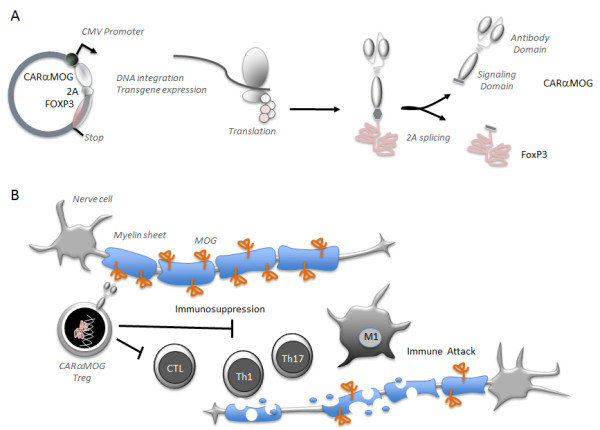
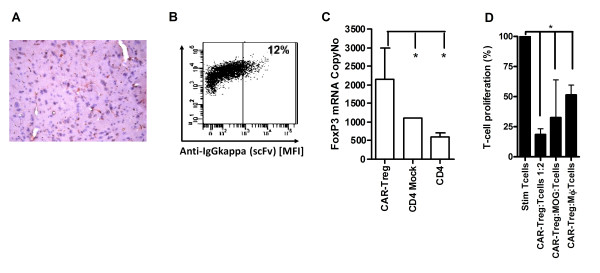
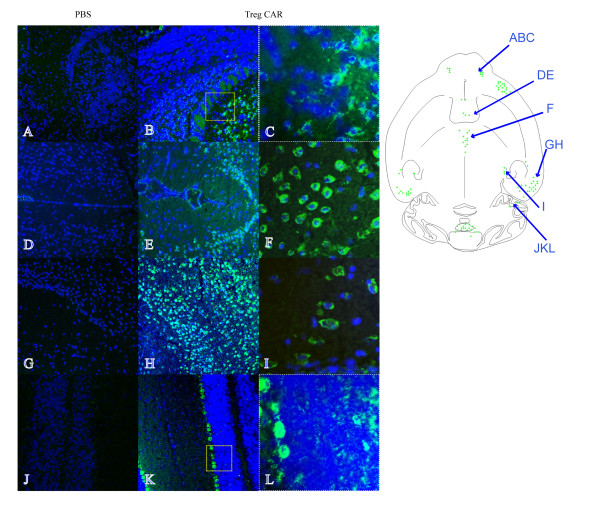
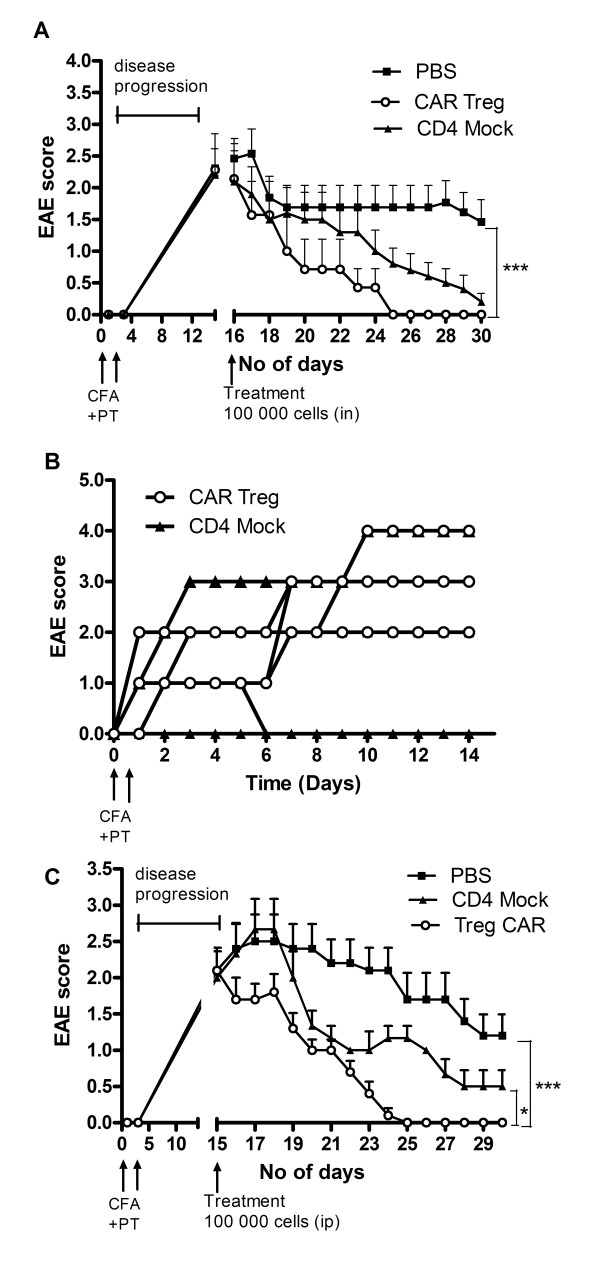
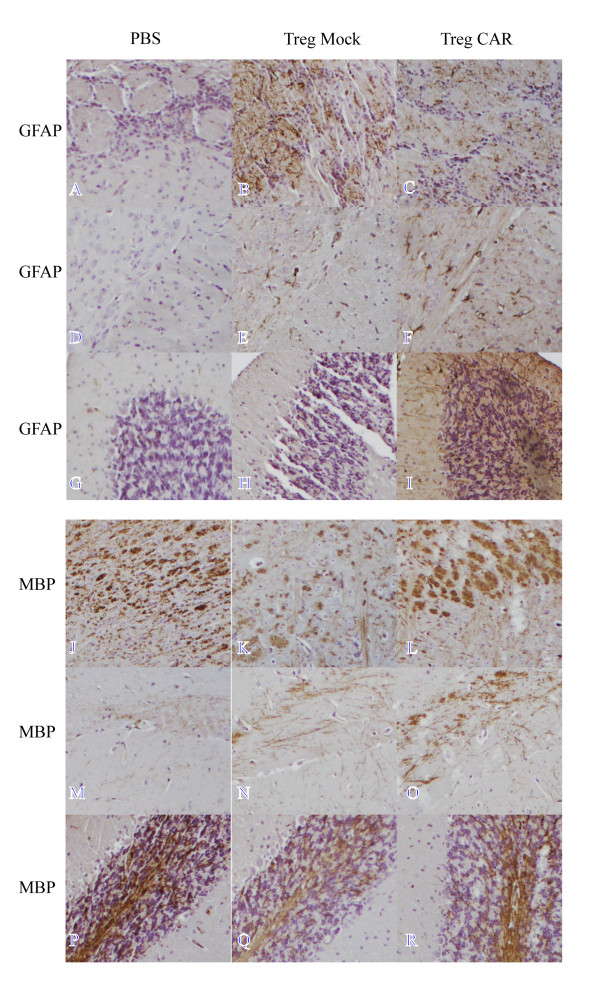
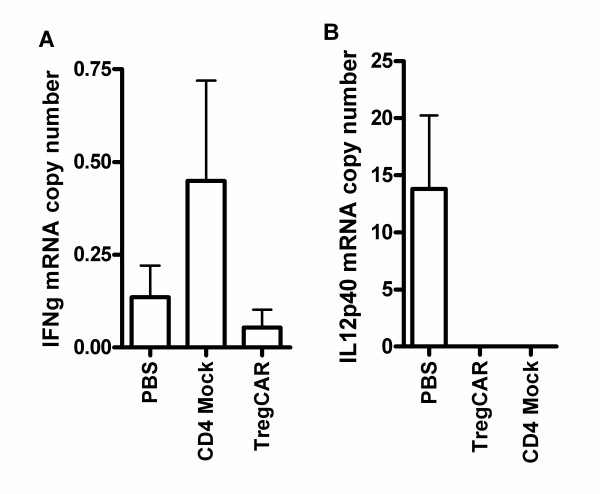
BACKGROUND: Multiple sclerosis (MS) is an autoimmune disease of the central nervous system (CNS). In the murine experimental autoimmune encephalomyelitis (EAE) model of MS, T regulatory (Treg) cell therapy has proved to be beneficial, but generation of stable CNS-targeting Tregs needs further development. Here, we propose gene engineering to achieve CNS-targeting Tregs from naïve CD4 cells and demonstrate their efficacy in the EAE model. METHODS: CD4+ T cells were modified utilizing a lentiviral vector system to express a chimeric antigen receptor (CAR) targeting myelin oligodendrocyte glycoprotein (MOG) in trans with the murine FoxP3 gene that drives Treg differentiation. The cells were evaluated in vitro for suppressive capacity and in C57BL/6 mice to treat EAE. Cells were administered by intranasal (i.n.) cell delivery. RESULTS: The engineered Tregs demonstrated suppressive capacity in vitro and could efficiently access various regions in the brain via i.n cell delivery. Clinical score 3 EAE mice were treated and the engineered Tregs suppressed ongoing encephalomyelitis as demonstrated by reduced disease symptoms as well as decreased IL-12 and IFNgamma mRNAs in brain tissue. Immunohistochemical markers for myelination (MBP) and reactive astrogliosis (GFAP) confirmed recovery in mice treated with engineered Tregs compared to controls. Symptom-free mice were rechallenged with a second EAE-inducing inoculum but remained healthy, demonstrating the sustained effect of engineered Tregs. CONCLUSION: CNS-targeting Tregs delivered i.n. localized to the CNS and efficiently suppressed ongoing inflammation leading to diminished disease symptoms.
Overview
The claims and statistics of this paper haven’t been checked yet.
Free: it reads the open-access text and checks the first 5 claims that cite a source we can check. Create a free account to check every claim.
Integrity signals
Registry
Cites
Statistics
Figures
Verification
Claims the paper makes
The claims and statistics of this paper haven’t been checked yet.
Free: it reads the open-access text and checks the first 5 claims that cite a source we can check. Create a free account to check every claim.
Claims other papers make about this one
Each is checked against this paper’s own text: does it say what the citing paper says it does?
In the citing paper
“studies have shown that transfection of T cells with FoxP3 induces regulatory activity.”
From Modulating immune responses to AAV by expanded polyclonal T-regs and capsid specific chimeric antigen receptor T-regulatory cells (2021) · cites this paper as [17]
Self-check
Percentages, sums and reported differences re-computed from the paper’s own numbers.
The self-check needs the paper’s full text.
Citations
Cites
Control of Regulatory T Cell Development by the Transcription Factor Foxp3
Hori, S., Nomura, T., & Sakaguchi, S. (2003) · Science · doi:10.1126/science.1079490 · Cited by 8,187
The Role of Tumoral FOXP3 on Cell Proliferation, Migration, and Invasion in Gastric Cancer
Zhang, L., Xu, J., Zhang, X., Zhang, Y., Wang, L., Huang, X., & Xu, Z. (2017) · Cellular Physiology and Biochemistry · doi:10.1159/000479442 · Cited by 4,088
In Vitro–expanded Antigen-specific Regulatory T Cells Suppress Autoimmune Diabetes
Tang, Q., Henriksen, K. J., Bi, M., Finger, E. B., Szot, G., Ye, J., Masteller, E. L., McDevitt, H., Bonyhadi, M., & Bluestone, J. A. (2004) · The Journal of Experimental Medicine · doi:10.1084/jem.20040139 · Cited by 1,221 · cited 1×
“Genetically engineered and cultured Tregs have been evaluated for treatment efficacy in a wide variety of adoptive transfer models of autoimmune diseases [9,23,25-27].”
BackgroundRegulatory T cells in the control of immune pathology
Maloy, K. J., & Powrie, F. (2001) · Nature Immunology · doi:10.1038/ni0901-816 · Cited by 1,175 · cited 2×
“; licensee BioMed Centr Commons Attribution License (http://creativec reproduction in any medium, provided the or regulate ongoing immune reactions and are important in the control of autoimmunity [2,3].”
BackgroundHori, S., Nomura, T., & Sakaguchi, S. (2017) · The Journal of Immunology · doi:10.1093/jimmunol/198.3.981 · Cited by 1,066
Szymczak, A. L., Workman, C. J., Wang, Y., Vignali, K. M., Dilioglou, S., Vanin, E. F., & Vignali, D. A. A. (2004) · Nature Biotechnology · doi:10.1038/nbt957 · Cited by 1,059 · cited 1×
“gene transfer of murine FoxP3 into CD4CD25 T cells, Chai and coworkers generated Tregs and used them in an animal model for transplantation with promising results [23], and this was later confirmed using a lentiviral vector system [24].”
BackgroundZiegler, S. F. (2006) · Annual Review of Immunology · doi:10.1146/annurev.immunol.24.021605.090547 · Cited by 922 · cited 1×
“Furthermore, Tregs block T cell activation indirectly via their interaction with antigen-presenting cells (APCs), preventing APC maturation and consequently downregulate their expression of costimulatory molecules and cytokine secretion [4,5].”
BackgroundTransport of drugs from the nasal cavity to the central nervous system
Illum, L. (2000) · European Journal of Pharmaceutical Sciences · doi:10.1016/s0928-0987(00)00087-7 · Cited by 907 · cited 1×
“The olfactory pathways have been extensively investigated as potential entry for pharmaceutical drugs into the brain [35,36].”
BackgroundMyelin-specific regulatory T cells accumulate in the CNS but fail to control autoimmune inflammation
Korn, T., Reddy, J., Gao, W., Bettelli, E., Awasthi, A., Petersen, T. R., Bäckström, B. T., Sobel, R. A., Wucherpfennig, K. W., Strom, T. B., et al. (2007) · Nature Medicine · doi:10.1038/nm1564 · Cited by 811 · cited 1×
“Hence the effector cell resistance to Treg suppression demonstrated by Korn and coworkers [34] may not occur using engineered Tregs.”
BackgroundKohm, A. P., Carpentier, P. A., Anger, H. A., & Miller, S. D. (2002) · The Journal of Immunology · doi:10.4049/jimmunol.169.9.4712 · Cited by 782
Cited by
Items 101–200 of 372
Antigen-specificity using chimeric antigen receptors: the future of regulatory T-cell therapy?
Boardman, D. A., Maher, J. F., Lechler, R. I., Smyth, L. A., & Lombardi, G. (2016) · Biochemical Society Transactions · doi:10.1042/bst20150247 · Cited by 48
IL23R-Specific CAR Tregs for the Treatment of Crohn’s Disease
Cui, Y., David, M., Bouchareychas, L., Rouquier, S., Sajuthi, S. P., Ayrault, M., Navarin, C., Lara, G., Lafon, A., Saviane, G., et al. (2024) · Journal of Crohn s and Colitis · doi:10.1093/ecco-jcc/jjae135 · Cited by 68
Human OX40L–CAR-T regs target activated antigen-presenting cells and control T cell alloreactivity
Rui, X., Calderon, F. A., Wobma, H., Gerdemann, U., Albanese, A., Cagnin, L. S., McGuckin, C., Michaelis, K. A., Naqvi, K., Blazar, B. R., et al. (2024) · Science Translational Medicine · doi:10.1126/scitranslmed.adj9331 · Cited by 46
“In pre-clinical models, CAR-T regs are also being explored to treat autoimmune disorders such as multiple sclerosis (e.g., myelin-oligodendrocyte glycoprotein-directed CAR-T regs ) ( 22 ) and vitiligo (e.g., ganglioside D3 CAR-T regs ) ( 30 ).”
BackgroundControlled release strategies for modulating immune responses to promote tissue regeneration
Dumont, C. M., Park, J., & Shea, L. D. (2015) · Journal of Controlled Release · doi:10.1016/j.jconrel.2015.08.014 · Cited by 48
“Directly injecting Tregs can alleviate the chronic inflammation characteristic of multiple sclerosis (MS) [163].”
BackgroundRouse, M. D., Nagarkatti, M., & Nagarkatti, P. S. (2012) · Immunobiology · doi:10.1016/j.imbio.2012.08.269 · Cited by 45
Arjomandnejad, M., Sylvia, K., Blackwood, M., Nixon, T., Tang, Q., Muhuri, M., Gruntman, A. M., Gao, G., Flotte, T. R., & Keeler, A. M. (2021) · Molecular Therapy - Methods & Clinical Development · doi:10.1016/j.omtm.2021.10.010 · Cited by 44
“FOXP3 expression was found to be crucial for Treg suppressive activity,(15) and studies have shown that transfection of T cells with FoxP3 induces regulatory activity.(16,17) Tregs can be classified as natural Tregs, which develop in the thymus, or induced Tregs, which are generated in the periphery.”
BackgroundBressler, E. M., Adams, S. C., Liu, R., Colson, Y. L., Wong, W. W., & Grinstaff, M. W. (2023) · Clinical and Translational Medicine · doi:10.1002/ctm2.1244 · Cited by 46
Regulating the regulatory T cells as cell therapies in autoimmunity and cancer
Hosseinalizadeh, H., Rabiee, F., Eghbalifard, N., Rajabi, H., Klionsky, D. J., & Rezaee, A. (2023) · Frontiers in Medicine · doi:10.3389/fmed.2023.1244298 · Cited by 49
“have reported that CAR-engineered Tregs targeting MOG (myelin oligodendrocyte glycoprotein) in the CNS can suppress the mouse model of experimental autoimmune encephalomyelitis(EAE) when administered intranasally, leading to a reduction in disease symptoms (140).”
Thatte, A. S., Hamilton, A. G., Nachod, B. E., Mukalel, A. J., Billingsley, M. M., Palanki, R., Swingle, K. L., & Mitchell, M. J. (2023) · Nano Letters · doi:10.1021/acs.nanolett.3c02573 · Cited by 51
Immune System Investigation Using Parasitic Helminths
Douglas, B. B., Oyesola, O. O., Cooper, M. M., Posey, A. D., Wojno, E. D. T., Giacomin, P., & Herbert, D. R. (2021) · Annual Review of Immunology · doi:10.1146/annurev-immunol-093019-122827 · Cited by 53
Nature vs. nurture: FOXP3, genetics, and tissue environment shape Treg function
Raugh, A., Allard, D., & Bettini, M. (2022) · Frontiers in Immunology · doi:10.3389/fimmu.2022.911151 · Cited by 47
Advances in CAR‐Engineered Immune Cell Generation: Engineering Approaches and Sourcing Strategies
Chen, Z., Hu, Y., & Mei, H. (2023) · Advanced Science · doi:10.1002/advs.202303215 · Cited by 53
Yano, H., Koga, K., Sato, T., Shinohara, T., Iriguchi, S., Matsuda, A., Nakazono, K., Shioiri, M., Miyake, Y., Kassai, Y., et al. (2024) · Cell stem cell · doi:10.1016/j.stem.2024.05.004 · Cited by 46
The promise and perils of immunotherapy
Lesch, S., & Gill, S. I. (2021) · Blood Advances · doi:10.1182/bloodadvances.2021004453c · Cited by 48
New cell sources for CAR-based immunotherapy
Mazinani, M., & Rahbarizadeh, F. (2023) · Biomarker Research · doi:10.1186/s40364-023-00482-9 · Cited by 43
Protective and Detrimental Roles for Regulatory T Cells in a Viral Model for Multiple Sclerosis
Martinez, N. E., Karlsson, F., Sato, F., Kawai, E., Omura, S., Minagar, A., Grisham, M. B., & Tsunoda, I. (2014) · Brain Pathology · doi:10.1111/bpa.12119 · Cited by 42
“Adoptive transfer of Tregs isolated from naïve mice has been shown to ameliorate EAE induced with either active myelin antigen sensitization or passive transfer of myelin-specific T cells (14, 24).”
BackgroundGene therapy with regulatory T cells: A beneficial alliance
Biswas, M., Kumar, S. R. P., Terhorst, C., & Herzog, R. W. (2018) · Frontiers in Immunology · doi:10.3389/fimmu.2018.00554 · Cited by 41
Application of novel CAR technologies to improve treatment of autoimmune disease
Cheever, A., Kang, C., O'Neill, K. L., & Weber, K. S. (2024) · Frontiers in Immunology · doi:10.3389/fimmu.2024.1465191 · Cited by 42
Current and Future Roles of Chimeric Antigen Receptor T-Cell Therapy in Neurology: A Review
Ismail, F. S., Gallus, M., Meuth, S. G., Okada, H., Hartung, H.-P., & Melzer, N. (2024) · JAMA Neurology · doi:10.1001/jamaneurol.2024.3818 · Cited by 46
Fransson, M. E., Piras, E., Wang, H., Burman, J., Duprez, I. R., Harris, R. A., LeBlanc, K., Magnusson, P. U., Brittebo, E. B., & Loskog, A. (2014) · Immunology · doi:10.1111/imm.12275 · Cited by 41
Self-citationHarnessing Advances in T Regulatory Cell Biology for Cellular Therapy in Transplantation
Lam, A. J., Hoeppli, R. E., & Levings, M. K. (2017) · Transplantation · doi:10.1097/tp.0000000000001757 · Cited by 42
“For example, Treg cells expressing a CAR specific for carcinoembryonic antigen can suppress colitis induced by carcinoembryonic antigen–specific Tconv cells,(155) and Treg cells transduced with a CAR targeting myelin oligodendrocyte glycoprotein protect mice against experimental autoimmune encephalomyelitis.(156) Buil…”
BackgroundCAR T Cells: A Snapshot on the Growing Options to Design a CAR
Holzinger, A., & Abken, H. (2019) · HemaSphere · doi:10.1097/hs9.0000000000000172 · Cited by 44
“engineered with and activated by CARs(18); in a pre-clinical model, FoxP3 induced Treg cells were redirected by an engineered CAR towards myelin oligodendrocyte glycoprotein (MOG) in order to repress murine experimental auto-immune encephalomyelitis.(19) T cells were engineered with CAR redirected specificity for the…”
BackgroundCurrent status and perspectives of regulatory T cell-based therapy
Qu, G., Chen, J., Li, Y., Yuan, Y., Liang, R., & Li, B. (2022) · Journal of genetics and genomics/Journal of Genetics and Genomics · doi:10.1016/j.jgg.2022.05.005 · Cited by 44
CAR T cells in autoimmunity: game changer or stepping stone?
Mougiakakos, D., Meyer, E. H., & Schett, G. A. (2024) · Blood · doi:10.1182/blood.2024025413 · Cited by 42
Chimeric Antigen Receptor (CAR) Regulatory T-Cells in Solid Organ Transplantation
Gille, I., Claas, F. H. J., Haasnoot, G. W., Heemskerk, M. H. M., & Heidt, S. (2022) · Frontiers in Immunology · doi:10.3389/fimmu.2022.874157 · Cited by 43
“Since then, Tregs have been engineered with CAR technology as potential therapy for several other autoimmune diseases and allergy-related diseases, such as experimental autoimmune encephalomyelitis (EAE) (46, 47), type I diabetes (48), asthma (49), hemophilia A (50, 51), vitiligo (52), and arthritis (53).”
BackgroundT-regulatory cells for the treatment of autoimmune diseases
Fisher, M. S., & Sennikov, S. V. (2025) · Frontiers in Immunology · doi:10.3389/fimmu.2025.1511671 · Cited by 43
Hong, G. U., Kim, N. G., Jeoung, D., & Ro, J. Y. (2013) · Journal of Neuroimmunology · doi:10.1016/j.jneuroim.2013.04.002 · Cited by 38
“Recently, it has been reported that the engineered Treg cells suppress EAE (Fransson et al., 2012), and Treg cells increased in EBV-induced gene 3 (EBI3) knockout mice marginally enhance EAE development versus wild-type mice (Liu et al., 2012).”
Regulatory T cells: the future of autoimmune disease treatment
Ryba-Stanisławowska, M. E., Sakowska, J., Zieliński, M., Ławrynowicz, U., & Trzonkowski, P. (2019) · Expert Review of Clinical Immunology · doi:10.1080/1744666x.2019.1620602 · Cited by 39
“This CAR Tregs keep the immunosuppressive potential to reduce autoimmune responses [178,179].”
BackgroundRoth‐Walter, F., Adcock, I. M., Benito‐Villalvilla, C., Bianchini, R., Bjermer, L. H., Boyman, O., Caramori, G., Cari, L., Chung, K. F., Diamant, Z., et al. (2021) · Allergy · doi:10.1111/all.14478 · Cited by 46
Neuroimmune crosstalk and evolving pharmacotherapies in neurodegenerative diseases
Baidya, F., Bohra, M., Datta, A., Sarmah, D., Shah, B., Jagtap, P., Raut, S., Sarkar, A., Singh, U., Kalia, K., et al. (2021) · Immunology · doi:10.1111/imm.13264 · Cited by 38
T Cell Engaging Immunotherapies, Highlighting Chimeric Antigen Receptor (CAR) T Cell Therapy
Bousser, E. D., Callewaert, N., & Festjens, N. (2021) · Cancers · doi:10.3390/cancers13236067 · Cited by 44
In vivo induction of regulatory T cells for immune tolerance in hemophilia
Wang, X., Terhorst, C., & Herzog, R. W. (2015) · Cellular Immunology · doi:10.1016/j.cellimm.2015.10.001 · Cited by 39
“investigated in models of autoimmune disease and now also shown to be a promising strategy to suppress inhibitor formation in hemophilia [15,147,148].”
BackgroundMoreno, C. M., Haynie, C., Cheever, A., & Weber, K. S. (2022) · Biomedicines · doi:10.3390/biomedicines10071493 · Cited by 41
“The CAR construct included the FoxP3 gene to induce the Treg phenotype and reduce switching to inflammatory phenotypes [193].”
BackgroundBiosensors for inflammation as a strategy to engineer regulatory T cells for cell therapy
Bittner, S., Ruhland, B., Hofmann, V., Schmidleithner, L., Schambeck, K., Pant, A., Stüve, P., Delacher, M., Echtenacher, B., Edinger, M., et al. (2022) · Proceedings of the National Academy of Sciences · doi:10.1073/pnas.2208436119 · Cited by 38
“, the gut (17, 39) or the central nervous system (15); however, focusing on one specific epitope may not be favorable to address autoimmune diseases, which are driven by a large and sometimes even unknown repertoire of autoantigens affecting various organs.”
BackgroundCAR-Based Therapy for Autoimmune Diseases: A Novel Powerful Option
Műzes, G., & Sípos, F. (2023) · Cells · doi:10.3390/cells12111534 · Cited by 42
CAR immunotherapy in autoimmune diseases: promises and challenges
Yu, J., Yang, Y., Gu, Z., Shi, M., Cava, A. L., & Liu, A. (2024) · Frontiers in Immunology · doi:10.3389/fimmu.2024.1461102 · Cited by 39
“Another study designed CAR-Tregs speci fi c for myelin oligodendrocyte glycoprotein to inhibit experimental autoimmune encephalomyelitis (37), a model of multiple sclerosis (MS).”
Current advancements in cellular immunotherapy for autoimmune disease
Berry, C. T., Frazee, C. P., Herman, P. J., Chen, S., Chen, A., Kuo, Y., & Ellebrecht, C. T. (2025) · Seminars in Immunopathology · doi:10.1007/s00281-024-01034-5 · Cited by 46
“The first is to use a CAR signaling domain contain - ing an scFv that directs the Tregs to an antigen present on the affected tissue [ 26].”
Formulation strategies for nose-to-brain delivery of therapeutic molecules
Pandey, V., Gadeval, A., Asati, S., Jain, P., Jain, N., Roy, R. K., Tekade, M., Soni, V., & Tekade, R. K. (2019) · Elsevier eBooks · doi:10.1016/b978-0-12-814487-9.00007-7 · Cited by 45
Friend or foe: the dichotomous impact of T cells on neuro-de/re-generation during aging
Coder, B., Wang, W., Wang, L., Wu, Z., Zhuge, Q., & Su, D.-M. (2017) · Oncotarget · doi:10.18632/oncotarget.12572 · Cited by 36
“Clearly, the therapeutic use of Tregs in CNS injury and autoimmune disorders is an area of growing interest [185, 186].”
BackgroundAntigen-Specific Treatment Modalities in MS: The Past, the Present, and the Future
Derdelinckx, J., Cras, P. P., Berneman, Z. N., & Cools, N. (2021) · Frontiers in Immunology · doi:10.3389/fimmu.2021.624685 · Cited by 36
Emerging strategies for treating autoimmune disorders with genetically modified Treg cells
Boardman, D. A., & Levings, M. K. (2022) · Journal of Allergy and Clinical Immunology · doi:10.1016/j.jaci.2021.11.007 · Cited by 40
Sahlolbei, M., Azangou‐Khyavy, M., Khanali, J., Khorsand, B., Shiralipour, A., Ahmadbeigi, N., Madjd, Z., Ghanbarian, H., Ardjmand, A., Hashemi, S. M., et al. (2023) · Heliyon · doi:10.1016/j.heliyon.2023.e19763 · Cited by 39
“Nevertheless, chimeric antigen receptor regulatory T cells (CAR Tregs) that were tested to encounter autoimmunity in MS showed the promise of cellular immunotherapies in autoimmune diseases [26,27].”
BackgroundThe Emerging Jamboree of Transformative Therapies for Autoimmune Diseases
Carballido, J. M., Regairaz, C., Rauld, C., Raad, L., Picard, D., & Kammuller, M. E. (2020) · Frontiers in Immunology · doi:10.3389/fimmu.2020.00472 · Cited by 40
Regulatory T Cells in Autoimmune Vasculitis
Jin, K., Parreau, S., Warrington, K. J., Koster, M. J., Berry, G. J., Goronzy, J. J., & Weyand, C. M. (2022) · Frontiers in Immunology · doi:10.3389/fimmu.2022.844300 · Cited by 38
Cell-based therapies for rheumatoid arthritis: opportunities and challenges
Li, Y.-J., & Chen, Z. (2022) · Therapeutic Advances in Musculoskeletal Disease · doi:10.1177/1759720x221100294 · Cited by 40
Autoimmunity as a target for chimeric immune receptor therapy: A new vision to therapeutic potential
Haddadi, M. H., Hajizadeh‐Saffar, E., Maharlooei, M. K., Basiri, M., Negahdari, B., & Baharvand, H. (2019) · Blood Reviews · doi:10.1016/j.blre.2019.100645 · Cited by 35
Unlocking the potential of Tregs: innovations in CAR technology
Cier, C. J. R., Valentini, N., & Lamarche, C. (2023) · Frontiers in Molecular Biosciences · doi:10.3389/fmolb.2023.1267762 · Cited by 39
How antigen specificity directs regulatory T‐cell function: self, foreign and engineered specificity
Hoeppli, R. E., MacDonald, K. G., Levings, M. K., & Cook, L. E. (2016) · HLA · doi:10.1111/tan.12822 · Cited by 35
“One such example is MOG-CAR FOXP3-transduced Tregs, which protect mice against EAE (109).”
BackgroundMalviya, M., Saoudi, A., Bauer, J., Fillatreau, S., & Liblau, R. (2020) · Journal of Autoimmunity · doi:10.1016/j.jaut.2020.102401 · Cited by 36
Foxp3+ regulatory T cell therapy for tolerance in autoimmunity and solid organ transplantation
Sanders, J. M., Jeyamogan, S., Mathew, J. M., & Leventhal, J. R. (2022) · Frontiers in Immunology · doi:10.3389/fimmu.2022.1055466 · Cited by 35
Cancer immunotherapies repurposed for use in autoimmunity
Boardman, D. A., & Levings, M. K. (2019) · Nature Biomedical Engineering · doi:10.1038/s41551-019-0359-6 · Cited by 33
Zhan, X., Jiang, X. X., Dai, X., & Li, B. (2022) · Frontiers in Immunology · doi:10.3389/fimmu.2022.916411 · Cited by 41
CD8+ T cells: The past and future of immune regulation
Lees, J. R. (2020) · Cellular Immunology · doi:10.1016/j.cellimm.2020.104212 · Cited by 39
Chen, Z., Shu, J., Hu, Y., & Mei, H. (2024) · Molecular Therapy · doi:10.1016/j.ymthe.2024.09.019 · Cited by 33
CAR T-cell therapy in autoimmune diseases: a promising frontier on the horizon
Wu, D., Xu-Monette, Z. Y., Zhou, J., Yang, K., Wang, X., Fan, Y., & Young, K. H. (2025) · Frontiers in Immunology · doi:10.3389/fimmu.2025.1613878 · Cited by 50
CAR-engineered cell therapies: current understandings and future perspectives
Bayat, M., & Nahand, J. S. (2026) · Molecular Biomedicine · doi:10.1186/s43556-025-00401-4 · Cited by 37
“…with tis- sue-or antigen-specific CARs (e.g., MOG for experimental autoimmune encephalomyelitis) can establish dominant tolerance by suppressing Th17 effector responses through IL-10/TGF-β secretion and CTLA-4– mediated modulation of APCs, thus preventing relapse in preclinical models [374–377].”
Janssens, I., & Cools, N. (2020) · Cellular Immunology · doi:10.1016/j.cellimm.2020.104236 · Cited by 37
Intranasal Drug Delivery to the Brain
Lochhead, J. J., & Thorne, R. G. (2013) · AAPS advances in the pharmaceutical sciences series · doi:10.1007/978-1-4614-9105-7_14 · Cited by 39
Chimeric antigen receptor Treg therapy in transplantation
Eskandari, S. K., Daccache, A., & Azzi, J. R. (2023) · Trends in Immunology · doi:10.1016/j.it.2023.11.005 · Cited by 33
Regulatory T cell-based therapy in type 1 diabetes: Latest breakthroughs and evidence
Huang, Q., & Zhu, J. (2024) · International Immunopharmacology · doi:10.1016/j.intimp.2024.112724 · Cited by 34
Engineered T cells and their therapeutic applications in autoimmune diseases
Bao, L., 上海交通大学医学院上海市免疫学研究所免疫学和微生物学系, 上., Bo, X., Cao, H.-W., Qian, C., Wang, Z., & Li, B. (2022) · 动物学研究 · doi:10.24272/j.issn.2095-8137.2021.363 · Cited by 33
“Third, mice in the CAR-Treg group also showed decreased expression of IL-12 and IFN-γ mRNA in the brain, which may be due to the reduction in inflammation and inhibition of DC maturation (Fransson et al., 2012).”
CARs: a new approach for the treatment of autoimmune diseases
Sun, Y., Yuan, Y., Zhang, B., & Zhang, X. (2022) · Science China Life Sciences · doi:10.1007/s11427-022-2212-5 · Cited by 34
“Importantly, the authors provided a promising option for the production of engineered CD4+ T cells with immunosuppressive abilities, addressing the issues of low frequency, slow expansion, and the phenotypic instability of Tregs (Fransson et al., 2012).”
BackgroundInfluentialDawn of CAR-T cell therapy in autoimmune diseases
Liu, Y., Dong, M., Chu, Y., Zhou, L., You, Y., Pang, X., Yang, S., Zhang, L., Chen, L., Zhu, L., et al. (2024) · Chinese Medical Journal · doi:10.1097/cm9.0000000000003111 · Cited by 32
“[33] This characteristic of CAR-T cells makes them favorable candidates for the treatment of CNS autoimmune diseases, while the differing experimental outcomes necessitate comprehensive animal studies to underscore CAR therapy’s efficacy and safety profile in MS.”
BackgroundCurrent status and regulatory perspective of chimeric antigen receptor-modified T cell therapeutics
Kim, M.-G., Kim, D., Suh, S., Park, Z., Choi, M. J., & Oh, Y. (2016) · Archives of Pharmacal Research · doi:10.1007/s12272-016-0719-7 · Cited by 31
Membranous nephropathy: Clearer pathology and mechanisms identify potential strategies for treatment
Chung, E. Y. M., Wang, Y. M., Keung, K. L., Hu, M., McCarthy, H. J., Wong, G., Kairaitis, L., Bose, B., Harris, D. C. H., & Alexander, S. I. (2022) · Frontiers in Immunology · doi:10.3389/fimmu.2022.1036249 · Cited by 40
Eras of designer Tregs: Harnessing synthetic biology for immune suppression
Tuomela, K., Salim, K., & Levings, M. K. (2023) · Immunological Reviews · doi:10.1111/imr.13254 · Cited by 32
“These include among others: 2,4,6-trinitrophenol (TNP)- specific CAR Tregs, which protect against TNP-induced colitis, 87 myelin oligodendrocyte glycoprotein (MOG)- specific Foxp3-engineered CAR T cells to suppress EAE, 88 and carcinoembryonic antigen (CEA)- specific CAR Tregs, which protect against azoxym-ethane dext…”
BackgroundThe potential of regulatory T cell-based therapies for alopecia areata
Wan, S., Xu, W., Xie, B., Guan, C., & Song, X. (2023) · Frontiers in Immunology · doi:10.3389/fimmu.2023.1111547 · Cited by 30
Jacob, J., Nadkarni, S., Volpe, A., Peng, Q., Tung, S. L., Hannen, R. F., Mohseni, Y. R., Scottà, C., Marelli‐Berg, F. M., Lechler, R. I., et al. (2020) · Molecular Therapy — Methods & Clinical Development · doi:10.1016/j.omtm.2020.12.003 · Cited by 33
Becker, M., Dirschl, S. M., Scherm, M. G., Serr, I., & Daniel, C. (2024) · Cell Metabolism · doi:10.1016/j.cmet.2023.12.019 · Cited by 29
CAR-engineered T cell therapy as an emerging strategy for treating autoimmune diseases
Vuković, J., Abazović, D., Vučetić, D. D., & Medenica, S. (2024) · Frontiers in Medicine · doi:10.3389/fmed.2024.1447147 · Cited by 34
New Insights into Immunotherapy Strategies for Treating Autoimmune Diabetes
Cabello-Olmo, M., Araña, M., Radichev, I., Smith, P., Huarte, E., & Barajas, M. A. (2019) · International Journal of Molecular Sciences · doi:10.3390/ijms20194789 · Cited by 29
Intranasal Insulin: a Treatment Strategy for Addiction
Kashyap, B., Hanson, L. R., & Frey, W. H. (2020) · Neurotherapeutics · doi:10.1007/s13311-019-00822-4 · Cited by 29
“associated virus gene therapy [39], therapeutic cells including stem cells [40, 41], T cells [42], macrophages, and microglia”
BackgroundProspects of the Use of Cell Therapy to Induce Immune Tolerance
Wang, Z., Liu, X., Cao, F., Bellanti, J. A., Zhou, J., & Zheng, S. G. (2020) · Frontiers in Immunology · doi:10.3389/fimmu.2020.00792 · Cited by 29
Aghlara-Fotovat, S., Nash, A., Kim, B., Krencik, R., & Veiseh, O. (2021) · Drug Delivery and Translational Research · doi:10.1007/s13346-021-01018-0 · Cited by 32
Addressing the key issue: Antigen-specific targeting of B cells in autoimmune diseases
Holborough-Kerkvliet, M. D., Kroos, S., van de Wetering, R., & Toes, R. E. M. (2023) · Immunology Letters · doi:10.1016/j.imlet.2023.05.005 · Cited by 29
Innovative drug delivery strategies to the CNS for the treatment of multiple sclerosis
Mwema, A., Muccioli, G. G., & Rieux, A. D. (2023) · Journal of Controlled Release · doi:10.1016/j.jconrel.2023.10.052 · Cited by 28
Schwab, R. D., Degaramo, D. A., Hong, S. J., Bi, X., Faruqi, A., Aguilar, W., Brookens, S. K., Keane, J. T., Liu, F., Musunuru, K., et al. (2025) · Circulation · doi:10.1161/circulationaha.125.073987 · Cited by 33
Antigen-specific tolerance approach for rheumatoid arthritis: Past, present and future
Page, A., Fusil, F., & Cosset, F. (2021) · Joint Bone Spine · doi:10.1016/j.jbspin.2021.105164 · Cited by 27
CAR T Cell Immunotherapy Beyond Haematological Malignancy
Hupperetz, C., Lah, S., Kim, H., & Kim, C. H. (2022) · Immune Network · doi:10.4110/in.2022.22.e6 · Cited by 26
“(106) transduced polyclonal activated CD4+ T cells with an anti-MOG CAR fused to 2A and FoxP3 for differentiation into Treg cells.”
BackgroundMoorman, C. D., Yu, S., Briseño, C. G., Phee, H., Sahoo, A., Ramrakhiani, A., & Chaudhry, A. (2023) · Frontiers in Immunology · doi:10.3389/fimmu.2023.1235222 · Cited by 28
Understanding and Modulating Immunity With Cell Reprogramming
Pires, C. F., Rosa, F. A., Kurochkin, I., & Pereira, C. (2019) · Frontiers in Immunology · doi:10.3389/fimmu.2019.02809 · Cited by 30
Herzog, R. W., Kuteyeva, V., Saboungi, R., Terhorst, C., & Biswas, M. (2019) · Frontiers in Immunology · doi:10.3389/fimmu.2019.00274 · Cited by 24
Advances in Psoriasis Research: Decoding Immune Circuits and Developing Novel Therapies
Wang, L., Liu, R., Tang, Y.-L., Ma, Y.-F., Wang, G., Ruan, Q., & Zheng, S. J. (2025) · International Journal of Molecular Sciences · doi:10.3390/ijms26189233 · Cited by 34
“Genetically engineered CAR-FoxP3 Tregs, administered intranasally, effectively suppressed inflammation, ameliorated disease symptoms, and conferred sustained protection against secondary experimental autoimmune encephalomyelitis (EAE) induction in a murine model of EAE [221].”
Tanshinone IIA Ameliorates CNS Autoimmunity by Promoting the Differentiation of Regulatory T Cells
Gong, Y., Liu, Y., Ding, X., Fu, Y., Cui, L., & Yan, Y. (2019) · Neurotherapeutics · doi:10.1007/s13311-019-00789-2 · Cited by 25
Gene editing for inflammatory disorders
Ewart, D. T., Peterson, E. J., & Steer, C. J. (2018) · Annals of the Rheumatic Diseases · doi:10.1136/annrheumdis-2018-213454 · Cited by 26
Antigen-specific T cells and autoimmunity
Rojas, M., Acosta‐Ampudia, Y., Heuer, L. S., Zang, W., Monsalve, D. M., Ramírez-Santana, C., Anaya, J., Ridgway, W. M., Ansari, A. A., & Gershwin, M. E. (2024) · Journal of Autoimmunity · doi:10.1016/j.jaut.2024.103303 · Cited by 33
Roads and detours for CAR T cell therapy in autoimmune diseases
Avouac, J., Barzel, A., Caiati, D., Davis, R. S., Gottschalk, S. M., Grieshaber‐Bouyer, R., Mao, X., Prak, E. T. L., Radic, M. Z., Scherlinger, M., et al. (2026) · Nature Reviews Drug Discovery · doi:10.1038/s41573-025-01349-4 · Cited by 28
Mo, F., Watanabe, N., Omdahl, K. I., Burkhardt, P. M., Ding, X., Hayase, E., Panoskaltsis‐Mortari, A., Jenq, R. R., Heslop, H. E., Kean, L. S., et al. (2022) · Blood · doi:10.1182/blood.2022016052 · Cited by 24
Chimeric antigen receptor T-cell therapy in autoimmune diseases
Liu, J., Yan, Z., & Hai, Z. (2024) · Frontiers in Immunology · doi:10.3389/fimmu.2024.1492552 · Cited by 28
“In a study by Fransson et al., CD4+ T cells were transduced using a lentiviral vector system to express a CAR targeting myelin oligodendrocyte glycoprotein (MOG) (148).”
InfluentialZhang, C., Guo, X., Wang, Y., Zhang, S., & Wang, Z. (2025) · Molecular Cancer · doi:10.1186/s12943-025-02441-4 · Cited by 33
“These results demonstrate that when naive CD4 T cells are directly stimulated by the TCR/CD3 complex, activation of α7 nAChRs on T cells leads to the upregulation of Tregs, and α7 nAChRs are involved in regulating adaptive immunity [183].”
CAR-Tregs as a Strategy for Inducing Graft Tolerance
Wagner, J. C., & Tang, Q. (2020) · Current Transplantation Reports · doi:10.1007/s40472-020-00285-z · Cited by 25
T cell receptor revision and immune repertoire changes in autoimmune diseases
Song, R., Jia, X., Zhao, J., Du, P., & Zhang, J. (2021) · International Reviews of Immunology · doi:10.1080/08830185.2021.1929954 · Cited by 25
“In mouse models, the Tregs transduced with antigen-specific CARs have shown satisfactory results in colitis, arthritis and experimental allergic encephalomyelitis (EAE) [152–156].”
BackgroundMultipurposing CARs: Same engine, different vehicles
Hossian, A. K. M. N., Hackett, C. S., Brentjens, R. J., & Rafiq, S. (2022) · Molecular Therapy · doi:10.1016/j.ymthe.2022.02.012 · Cited by 25
“Preclinical activity of CAR Tregs has been showing in other autoimmune diseases, including reactive airway disease/asthma,(83) rheumatoid arthritis,(84) vitiligo,(85) and multiple sclerosis.(86) Tregs expressing CARs targeting insulin and pancreatic endocrine antigens have been designed to address type 1 diabetes.”
BackgroundThe Role of Chimeric Antigen Receptor T‐Cell Therapy in Immune‐Mediated Neurological Diseases
Brittain, G., Roldán, E., Alexander, T., Saccardi, R., Snowden, J. A., Sharrack, B., & Greco, R. (2024) · Annals of Neurology · doi:10.1002/ana.27029 · Cited by 27
“74 Targeting MuSK had a similar ef fi cacy to CD19 CAR-T therapy, but resulted in speci fi c MuSK B-cell depletion without reducing total B cells or IgG levels, and with a freedom from off-target effects.”
Therapeutic Potential of Gene-Modified Regulatory T Cells: From Bench to Bedside
Chae, W., & Bothwell, A. L. M. (2018) · Frontiers in Immunology · doi:10.3389/fimmu.2018.00303 · Cited by 23
“In clinical settings, modification of TCR has been utilized to modulate Treg activity to intervene in various types of inflammatory diseases in an antigen-specific manner (61, 62).”
BackgroundMethodEngineering therapeutic T cells to suppress alloimmune responses using TCRs, CARs, or BARs
Sicard, A., Levings, M. K., & Scott, D. W. (2018) · American Journal of Transplantation · doi:10.1111/ajt.14747 · Cited by 25
Targeting Type 1 Diabetes: Selective Approaches for New Therapies
Sheehy, D. F., Quinnell, S. P., & Vegas, A. J. (2019) · Biochemistry · doi:10.1021/acs.biochem.8b01118 · Cited by 24
Prado, C. E., Ugalde, V., González, H., Figueroa, A., López, E., Lladser, Á., & Pacheco, R. (2019) · Journal of Immunology Research · doi:10.1155/2019/1982570 · Cited by 21
“In this regard, the generation of antigen-specific Treg lymphocytes with chimeric antigen receptors recognizing myelin oligodendrocyte glycoprotein and the carcinoembryonic antigen are two examples of immunosuppressive therapies based on the generation of Treg lymphocytes by ex vivo viral transduction which have shown…”
BackgroundZhang, M., & Huang, H. (2020) · Frontiers in Immunology · doi:10.3389/fimmu.2020.611710 · Cited by 25
Delivery of transcription factors as modulators of cell differentiation
Rilo-Alvarez, H., Ledo, A. M., Vidal, A., & García-Fuentes, M. (2021) · Drug Delivery and Translational Research · doi:10.1007/s13346-021-00931-8 · Cited by 25
Metadata
- Authors
- Fransson, M., Piras, E., Burman, J., Nilsson, B., Essand, M., Lu, B., Harris, R. A., Magnusson, P. U., Brittebo, E., & Loskog, A. S.
- Affiliations
- Uppsala University (SE)
- University of Pittsburgh (US)
- Karolinska Institutet (SE)
- Corresponding author
- Fransson, Moa
- Piras, Elena
- Loskog, Angelica SI
- ORCID
- Venue
- Journal of Neuroinflammation
- Published
- 2012-05-30
- Volume
- 9
- Issue
- 1
- Pages
- 112-112
- ISSN
- 1742-2094 (ISSN-L)
- PMC
- PMC3403996
- OpenAlex
- W2149184543
- Semantic Scholar
- 18bee0cf8a5a2439df63b51185e4704ca9f003c0
- Cited by
- 372
- References
- 42
- Citations by year
- 2026: 36 · 2025: 41 · 2024: 46 · 2023: 39 · 2022: 40 · 2021: 34 · 2020: 29 · 2019: 29 · 2018: 18 · 2017: 25 · 2016: 11 · 2015: 9 · 2014: 8 · 2013: 5 · 2012: 2
- FWCI
- 5.24
- Type
- journal article
- Language
- en
- Open access
- gold
- doi.org
- Locations
- Journal of Neuroinflammation (publishedVersion, cc-by)
- Europe PMC (PubMed Central) (publishedVersion, cc-by)
- PubMed Central (publishedVersion, cc-by)
- PubMed (publishedVersion)
- D-Scholarship@Pitt (University of Pittsburgh) (acceptedVersion)
- Uppsala University Publications (Uppsala University) (submittedVersion, other-oa)
- DOAJ (DOAJ: Directory of Open Access Journals) (submittedVersion)
- Funders
- Vetenskapsrådet
- Uppsala Universitet
- Topics
- Health Sciences › Medicine › Clinical Neurology › Multiple Sclerosis Research Studies
- Life Sciences › Immunology and Microbiology › Immunology › T-cell and B-cell Immunology
- Health Sciences › Medicine › Oncology › CAR-T cell therapy research
- Keywords
- regulatory T cells, chimeric antigen receptor, Foxp3, myelin oligodendrocyte glycoprotein, experimental autoimmune encephalomyelitis, multiple sclerosis, lentiviral transduction, adoptive immunotherapy, immunosuppression, myelination, reactive astrogliosis, IL-12, interferon-gamma
- MeSH terms
- Administration, Intranasal, Animals, Cell Line, Central Nervous System, Encephalomyelitis, Autoimmune, Experimental, Female, Genetic Vectors, Mice, Inbred C57BL, Receptors, Antigen, T-Cell, Genetic Therapy, Lentivirus, Gene Transfer Techniques, T-Lymphocytes, Regulatory, Mice, Forkhead Transcription Factors, Cell Engineering
About these checks
Registry, retraction, Cites and statistics results are computed, not judged, with one exception: a printed reference that no index lists is read once by a model before it counts as a citation error. Claims are extracted by a model and kept only when their quote appears verbatim in the text; each cited source is then checked, with a model’s help, for whether it says what the claim relies on. Those verdicts can be wrong — read the claim’s quote and the cited source before relying on one.
Statistics and arithmetic are recomputed, not judged.
Confidence bands are shown only for fields calibrated on our annotated test set. None is calibrated yet, so no band is shown.
What counts as a claim ›How we measure confidence ›How we check this ›
Are you an author, or do you see a problem with this page? Request a review
Data sources
Bibliographic data: Semantic Scholar, OpenAlex, Crossref.
Contains information from the Semantic Scholar Academic Graph Datasets, made available under the ODC Attribution License (ODC-BY 1.0).
Semantic Scholar’s data is described in: Kinney, R., et al. (2023). The Semantic Scholar Open Data Platform. arXiv:2301.10140.
