

CAR/FoxP3-engineered T regulatory cells target the CNS and suppress EAE upon intranasal delivery
Open accessThe DOI matches its Crossref record; 41 of the 42 references it cites were found in a registry or an index.
Abstract
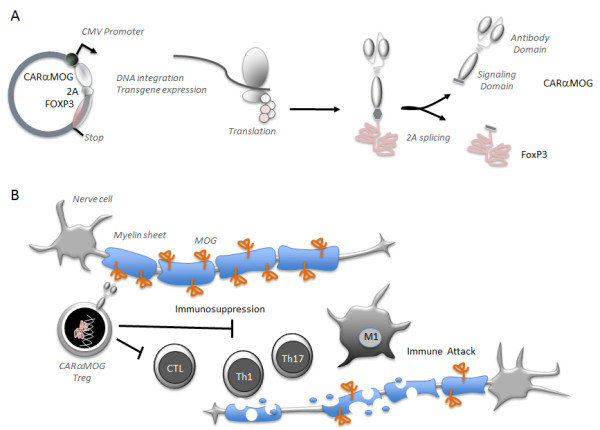
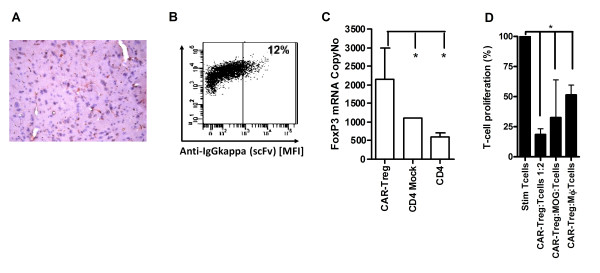
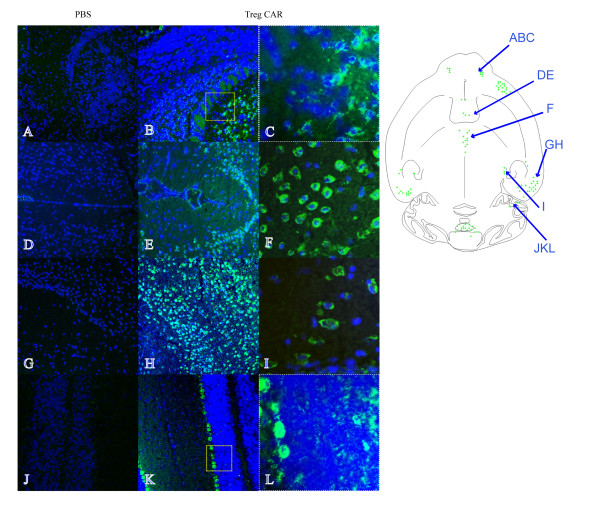
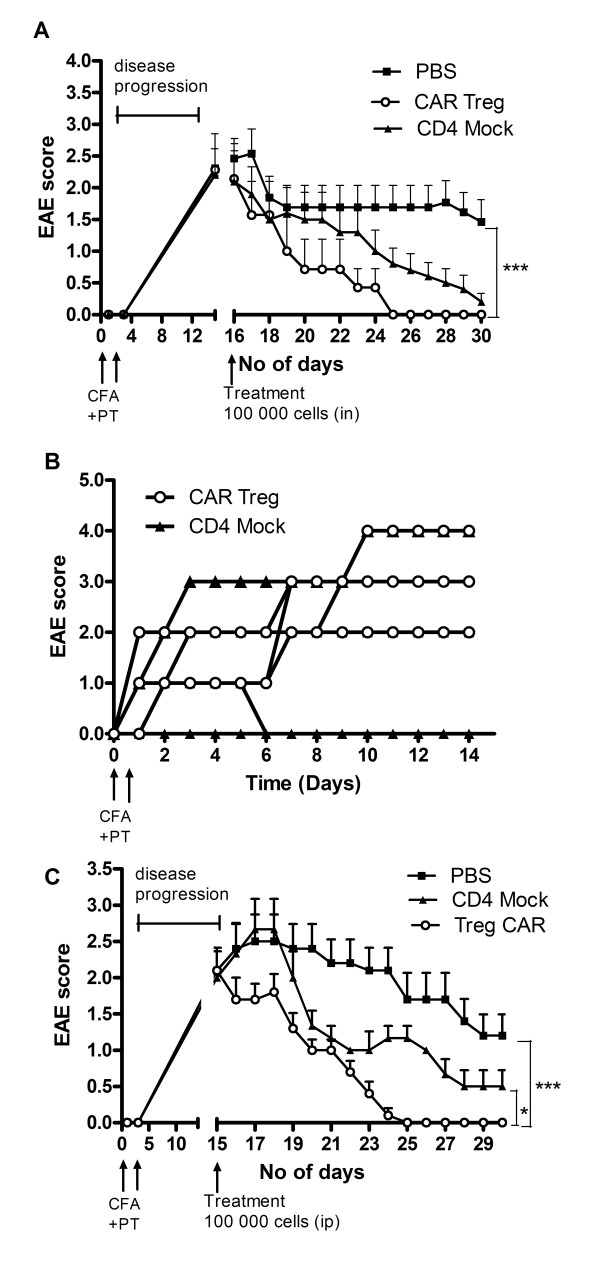
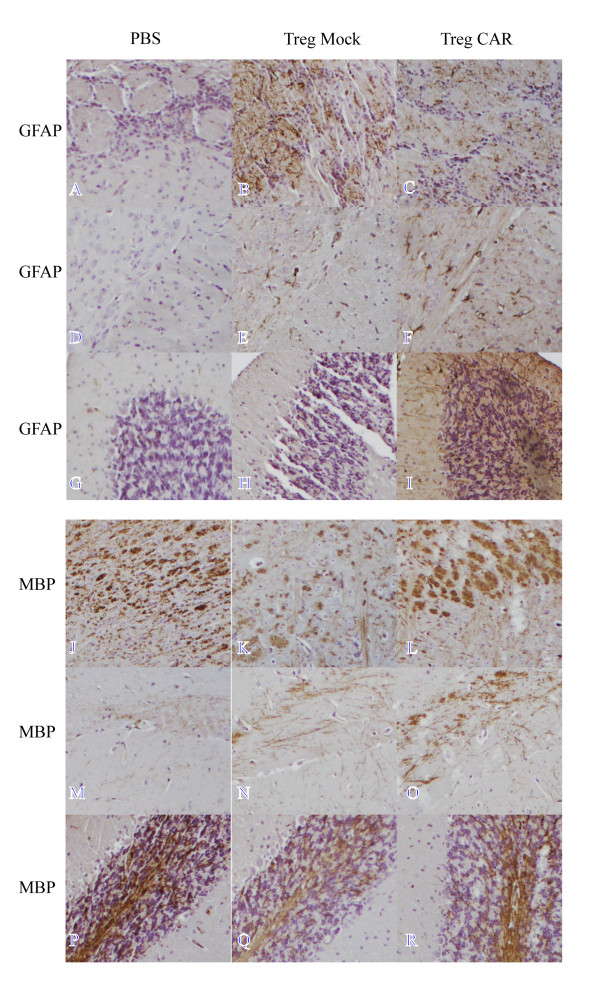
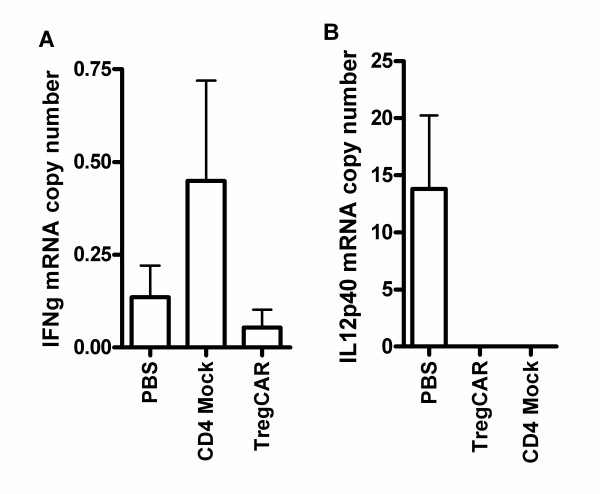
BACKGROUND: Multiple sclerosis (MS) is an autoimmune disease of the central nervous system (CNS). In the murine experimental autoimmune encephalomyelitis (EAE) model of MS, T regulatory (Treg) cell therapy has proved to be beneficial, but generation of stable CNS-targeting Tregs needs further development. Here, we propose gene engineering to achieve CNS-targeting Tregs from naïve CD4 cells and demonstrate their efficacy in the EAE model. METHODS: CD4+ T cells were modified utilizing a lentiviral vector system to express a chimeric antigen receptor (CAR) targeting myelin oligodendrocyte glycoprotein (MOG) in trans with the murine FoxP3 gene that drives Treg differentiation. The cells were evaluated in vitro for suppressive capacity and in C57BL/6 mice to treat EAE. Cells were administered by intranasal (i.n.) cell delivery. RESULTS: The engineered Tregs demonstrated suppressive capacity in vitro and could efficiently access various regions in the brain via i.n cell delivery. Clinical score 3 EAE mice were treated and the engineered Tregs suppressed ongoing encephalomyelitis as demonstrated by reduced disease symptoms as well as decreased IL-12 and IFNgamma mRNAs in brain tissue. Immunohistochemical markers for myelination (MBP) and reactive astrogliosis (GFAP) confirmed recovery in mice treated with engineered Tregs compared to controls. Symptom-free mice were rechallenged with a second EAE-inducing inoculum but remained healthy, demonstrating the sustained effect of engineered Tregs. CONCLUSION: CNS-targeting Tregs delivered i.n. localized to the CNS and efficiently suppressed ongoing inflammation leading to diminished disease symptoms.
Overview
The claims and statistics of this paper haven’t been checked yet.
Free: it reads the open-access text and checks the first 5 claims that cite a source we can check. Create a free account to check every claim.
Integrity signals
Registry
Cites
Statistics
Figures
Verification
Claims the paper makes
The claims and statistics of this paper haven’t been checked yet.
Free: it reads the open-access text and checks the first 5 claims that cite a source we can check. Create a free account to check every claim.
Claims other papers make about this one
Each is checked against this paper’s own text: does it say what the citing paper says it does?
In the citing paper
“studies have shown that transfection of T cells with FoxP3 induces regulatory activity.”
From Modulating immune responses to AAV by expanded polyclonal T-regs and capsid specific chimeric antigen receptor T-regulatory cells (2021) · cites this paper as [17]
Self-check
Percentages, sums and reported differences re-computed from the paper’s own numbers.
The self-check needs the paper’s full text.
Citations
Cites
Control of Regulatory T Cell Development by the Transcription Factor Foxp3
Hori, S., Nomura, T., & Sakaguchi, S. (2003) · Science · doi:10.1126/science.1079490 · Cited by 8,187
The Role of Tumoral FOXP3 on Cell Proliferation, Migration, and Invasion in Gastric Cancer
Zhang, L., Xu, J., Zhang, X., Zhang, Y., Wang, L., Huang, X., & Xu, Z. (2017) · Cellular Physiology and Biochemistry · doi:10.1159/000479442 · Cited by 4,088
In Vitro–expanded Antigen-specific Regulatory T Cells Suppress Autoimmune Diabetes
Tang, Q., Henriksen, K. J., Bi, M., Finger, E. B., Szot, G., Ye, J., Masteller, E. L., McDevitt, H., Bonyhadi, M., & Bluestone, J. A. (2004) · The Journal of Experimental Medicine · doi:10.1084/jem.20040139 · Cited by 1,221 · cited 1×
“Genetically engineered and cultured Tregs have been evaluated for treatment efficacy in a wide variety of adoptive transfer models of autoimmune diseases [9,23,25-27].”
BackgroundRegulatory T cells in the control of immune pathology
Maloy, K. J., & Powrie, F. (2001) · Nature Immunology · doi:10.1038/ni0901-816 · Cited by 1,175 · cited 2×
“; licensee BioMed Centr Commons Attribution License (http://creativec reproduction in any medium, provided the or regulate ongoing immune reactions and are important in the control of autoimmunity [2,3].”
BackgroundHori, S., Nomura, T., & Sakaguchi, S. (2017) · The Journal of Immunology · doi:10.1093/jimmunol/198.3.981 · Cited by 1,066
Szymczak, A. L., Workman, C. J., Wang, Y., Vignali, K. M., Dilioglou, S., Vanin, E. F., & Vignali, D. A. A. (2004) · Nature Biotechnology · doi:10.1038/nbt957 · Cited by 1,059 · cited 1×
“gene transfer of murine FoxP3 into CD4CD25 T cells, Chai and coworkers generated Tregs and used them in an animal model for transplantation with promising results [23], and this was later confirmed using a lentiviral vector system [24].”
BackgroundZiegler, S. F. (2006) · Annual Review of Immunology · doi:10.1146/annurev.immunol.24.021605.090547 · Cited by 922 · cited 1×
“Furthermore, Tregs block T cell activation indirectly via their interaction with antigen-presenting cells (APCs), preventing APC maturation and consequently downregulate their expression of costimulatory molecules and cytokine secretion [4,5].”
BackgroundTransport of drugs from the nasal cavity to the central nervous system
Illum, L. (2000) · European Journal of Pharmaceutical Sciences · doi:10.1016/s0928-0987(00)00087-7 · Cited by 907 · cited 1×
“The olfactory pathways have been extensively investigated as potential entry for pharmaceutical drugs into the brain [35,36].”
BackgroundMyelin-specific regulatory T cells accumulate in the CNS but fail to control autoimmune inflammation
Korn, T., Reddy, J., Gao, W., Bettelli, E., Awasthi, A., Petersen, T. R., Bäckström, B. T., Sobel, R. A., Wucherpfennig, K. W., Strom, T. B., et al. (2007) · Nature Medicine · doi:10.1038/nm1564 · Cited by 811 · cited 1×
“Hence the effector cell resistance to Treg suppression demonstrated by Korn and coworkers [34] may not occur using engineered Tregs.”
BackgroundKohm, A. P., Carpentier, P. A., Anger, H. A., & Miller, S. D. (2002) · The Journal of Immunology · doi:10.4049/jimmunol.169.9.4712 · Cited by 782
Cited by
Items 201–300 of 372
CAR-Treg cell therapies and their future potential in treating ocular autoimmune conditions
Abraham, A. R., Maghsoudlou, P., Copland, D. A., Nicholson, L. B., & Dick, A. D. (2023) · Frontiers in Ophthalmology · doi:10.3389/fopht.2023.1184937 · Cited by 20
“The transferred MOG CAR-Tregs successfully localised to the brain following intranasal delivery leading to reduced disease activity scores in EAE induced mice (44).”
BackgroundSadtler, K., Collins, J., Byrne, J. D., & Langer, R. (2020) · Advanced Drug Delivery Reviews · doi:10.1016/j.addr.2020.06.021 · Cited by 20
“exogenous proteins, factor VIII in FVIII-treated hemophiliacs [131,132].”
BackgroundOverhauling CAR T Cells to Improve Efficacy, Safety and Cost
Chicaybam, L., Bonamino, M., Invitti, A. L., Rozenchan, P. B., Vieira, I. D. L., & Strauss, B. E. (2020) · Cancers · doi:10.3390/cancers12092360 · Cited by 23
“In opposition to the cytotoxic effect promoted by the transgenic expression of CAR in NK and effector T cells, Tregs can be gene modified with CARs in order to promote tolerance to self-antigens, leading to the control of autoimmune disease [115] or impairing graft rejection [116] in mouse models.”
BackgroundRegulatory T Cell Therapeutics for Neuroinflammatory Disorders
Harkins, A. L., Kopec, A. L., & Keeler, A. M. (2022) · Critical Reviews in Immunology · doi:10.1615/critrevimmunol.2022045080 · Cited by 19
Tolerogenic Nano-/Microparticle Vaccines for Immunotherapy
Liu, Q., Chen, G., Liu, X., Tao, L., Fan, Y., & Xia, T. (2024) · ACS Nano · doi:10.1021/acsnano.3c11647 · Cited by 31
Breaking barriers: advancing cellular therapies in autoimmune disease management
Fu, Y., Feng, C., Qin, S., Xing, Z., Liu, C., Liu, Z., & Yu, H. (2024) · Frontiers in Immunology · doi:10.3389/fimmu.2024.1503099 · Cited by 21
Regulatory T cell therapies: from patient data to biological insights
Rodrigues, K. B., Eggenhuizen, P. J., Bacchetta, R., & Good, Z. (2025) · Frontiers in Immunology · doi:10.3389/fimmu.2025.1675114 · Cited by 18
Adabi, N., Pordel, S., Rezaee, M. A., Shobeiri, F. S., & Shobeiri, S. S. (2023) · The Journal of Gene Medicine · doi:10.1002/jgm.3484 · Cited by 19
“ated by the immune system, including self-reactive T cells that target epitopes of myelin.(55,65,66) These T lymphocytes attack the central nervous system, leading to the migration of monocytes and demyelination and neuronal damage in the spinal cord and brain tissue.”
BackgroundInfluentialVimond, N., Lasselin, J., Anegón, I., Guillonneau, C., & Bézie, S. (2020) · Molecular Therapy — Methods & Clinical Development · doi:10.1016/j.omtm.2020.11.008 · Cited by 19
“While Fransson et al.9 reached 12% of transduction in murine CD4+ T cells by using the pantropic VSVg-pseudotyped lentiviral vector, we barely obtained 0.5% to 1.5% transduced mouse CD4+ and CD8+ T cells using a dose of 10 MOI (Figure 6A).”
MethodInfluentialA method for expansion and retroviral transduction of mouse regulatory T cells
Wu, D., Wong, M. Q., Vent‐Schmidt, J., Boardman, D. A., Steiner, T. S., & Levings, M. K. (2020) · Journal of Immunological Methods · doi:10.1016/j.jim.2020.112931 · Cited by 18
Do Treg Speed Up with CARs? Chimeric Antigen Receptor Treg Engineered to Induce Transplant Tolerance
Kaljanac, M., & Abken, H. (2022) · Transplantation · doi:10.1097/tp.0000000000004316 · Cited by 23
“54 Engineering human Treg with a CAR specific for HLA-A2 is rendering the cells highly suppressive and capable of preventing lethal GvHD in an artificial xenogenic model of HLA-A2-positive effector T cells in immune-deficient mice.”
CAR T-cells meet autoimmune neurological diseases: a new dawn for therapy
Chinas, N. A., & Alexopoulos, H. (2025) · Frontiers in Immunology · doi:10.3389/fimmu.2025.1604174 · Cited by 18
“Disease-free mice, when re-administered the EAE induction protocol, remained disease-free (53).”
Promises and Pitfalls of Next-Generation Treg Adoptive Immunotherapy
Christofi, P., Pantazi, C., Psatha, N., Sakellari, I., Yannaki, E., & Παπαδοπούλου, Α. (2023) · Cancers · doi:10.3390/cancers15245877 · Cited by 18
“Following this study, many groups reported data suggesting the preliminary success of CAR-Tregs in experimental models of autoimmune and chronic inflammatory diseases, including inflammatory bowel disease [86–88], multiple sclerosis [89], T1D [90], asthma [91], and hemophilia [92].”
MethodHassan, S. H., Alshahrani, M. Y., Saleh, R. O., Mohammed, B. A., Kumar, A., Almalki, S. G., Alkhafaji, A. T., Ghildiyal, P., Al-Tameemi, A. R., & Elawady, A. (2024) · Medical Oncology · doi:10.1007/s12032-024-02362-0 · Cited by 17
“The result demonstrated suppressive encephalomyelitis and low disease symptoms by decreasing the expression level of IL-12 and IFN-γ in brain tissue [50].”
The Future of CAR T Therapeutics to Treat Autoimmune Disorders
Pecher, A., Hensen, L., Lengerke, C., & Henes, J. (2024) · Molecular Diagnosis & Therapy · doi:10.1007/s40291-024-00730-0 · Cited by 19
“Pub-lications so far describe preclinical data in mural models of multiple sclerosis, type 1 diabetes, and autoimmune colitis [41–44], thereby demonstrating the feasibility of the concept and also reduction of inflammation.”
BackgroundFesnak, A. D., & O’Doherty, U. (2017) · European Oncology & Haematology · doi:10.17925/eoh.2017.13.01.28 · Cited by 18
Santamaría-Alza, Y., & Vásquez, G. M. (2021) · Inflammation Research · doi:10.1007/s00011-021-01470-1 · Cited by 17
“• In a murine model of type 1 diabetes, second-generation insulin-CAR-Tregs associated with a CD28 co-stimulatory domain were used.”
BackgroundInfluentialA reasoned approach to the treatment of autoimmune hepatitis
Vergani, D., Beretta‐Piccoli, B. T., & Mieli‐Vergani, G. (2021) · Digestive and Liver Disease · doi:10.1016/j.dld.2021.05.033 · Cited by 19
“Tregs designed to express antigen-specific chimaeric receptors have been investigated in animal models of autoimmune disease, including a murine model of multiple sclerosis, experimental autoimmune encephalitis [177] , and a murine model of IBD [178] .”
Ortuño‐Sahagún, D., Hermosillo‐Abundis, C., Reyes-Mata, M. P., & Arias-Carrión, Ó. (2025) · Multiple Sclerosis and Related Disorders · doi:10.1016/j.msard.2025.106812 · Cited by 17
Taking regulatory T-cell therapy one step further
Sicard, A., Boardman, D. A., & Levings, M. K. (2018) · Current Opinion in Organ Transplantation · doi:10.1097/mot.0000000000000566 · Cited by 16
Regulatory T cells use heparanase to access IL-2 bound to extracellular matrix in inflamed tissue
Martinez, H. A., Koliesnik, I. O., Kaber, G., Reid, J. K., Nagy, N., Barlow, G. L., Falk, B. A., Medina, C. O., Hargil, A., Zihsler, S., et al. (2024) · Nature Communications · doi:10.1038/s41467-024-45012-9 · Cited by 20
“MOG-speci fi c CAR Tregs have previously been shown to diminish disease severity in EAE upon intranasal transfer 58 .”
BackgroundTipping the balance in autoimmunity: are regulatory t cells the cause, the cure, or both?
Hardtke‐Wolenski, M., & Landwehr-Kenzel, S. (2024) · Molecular and Cellular Pediatrics · doi:10.1186/s40348-024-00176-8 · Cited by 18
“Notably, the significance of antigen-specific CAR-Treg cells in preventing genetic resilience against organ-specific autoimmunity and inhibiting autoimmune tissue damage has been well documented in various disease models, including multiple sclerosis [269] and Alzheimer’s disease [270].”
BackgroundA new era of genetic engineering for autoimmune and inflammatory diseases
Ewart, D. T., Peterson, E. J., & Steer, C. J. (2019) · Seminars in Arthritis and Rheumatism · doi:10.1016/j.semarthrit.2019.05.004 · Cited by 17
Díaz, D., Muñoz-Castañeda, R., Alonso, J. R., & Weruaga, E. (2014) · The Neuroscientist · doi:10.1177/1073858414547538 · Cited by 18
Regulatory Cell Therapy in Organ Transplantation: Achievements and Open Questions
Fortunato, M., Morali, K., Passeri, L., & Gregori, S. (2021) · Frontiers in Immunology · doi:10.3389/fimmu.2021.641596 · Cited by 18
“First developed for cancer immunotherapy, CARs demonstrated their feasibility in early pre-clinical studies in which CD4FOXP3 Treg specificity was redirected against antigen relevant to autoimmunity (36, 37).”
BackgroundRegulatory T Cells: Central Concepts from Ontogeny to Therapy
Khor, B. (2017) · Transfusion Medicine Reviews · doi:10.1016/j.tmrv.2016.07.003 · Cited by 15
“Murine studies demonstrate antigen-specific disease attenuation in models of colitis and multiple sclerosis [110,111].”
BackgroundTonic signaling in CAR-T therapy: the lever long enough to move the planet
Huang, Y., & Wang, H. (2025) · Frontiers of Medicine · doi:10.1007/s11684-025-1130-x · Cited by 20
Jiang, Y., Zhou, M., Cheng, M., Chen, S., & Guo, Y. (2025) · JCI Insight · doi:10.1172/jci.insight.182050 · Cited by 19
“CAR-Tregs have been used to modulate immune responses in multiple disease conditions, including GVHD (46), multiple sclerosis (22), inflammatory bowel disease (47), asthma (48), vitiligo (49), and hemophilia (50).”
Regulatory T Cell-Based Adoptive Cell Therapy in Autoimmunity
Gozálvez, E., Lario, A., Muñoz‐Sánchez, G., & Lozano, F. (2025) · International Journal of Molecular Sciences · doi:10.3390/ijms262110340 · Cited by 18
Patients With Severe Multiple Sclerosis Exhibit Functionally Altered CD8 + Regulatory T Cells
Benallegue, N., Nicol, B., Lasselin, J., Bézie, S., Flippe, L., Règue, H., Vimond, N., Remy, S., Garcia, A., Frère, F. L., et al. (2022) · Neurology Neuroimmunology & Neuroinflammation · doi:10.1212/nxi.0000000000200016 · Cited by 19
Yang, T., Liu, P.-J., Sun, Q.-Y., Wang, Z., Yuan, G.-B., Fan, Z.-X., Ma, L., Lu, J.-F., Yuan, B.-Y., Zou, W.-L., et al. (2024) · Scientific Reports · doi:10.1038/s41598-024-56739-2 · Cited by 20
“Among CD4 + CD25 + Treg subsets, the antigen-specific Treg population demonstrated better suppression of CD4 + effector T cell (Teff) proliferation and control of CNS myelin-induced EAE in vivo than polyclonal Tregs 19,37,38 .”
BackgroundAdvances in engineered T cell immunotherapy for autoimmune and other non-oncological diseases
Huang, Q., Zhu, X., & Zhang, Y. (2025) · Biomarker Research · doi:10.1186/s40364-025-00736-8 · Cited by 16
Clinical Applications of Regulatory T cells in Adoptive Cell Therapies
Marshall, G. P., Cserny, J., Perry, D. J., Yeh, W.-I., Seay, H. R., Elsayed, A. G., Posgai, A. L., & Brusko, T. M. (2018) · Cell and Gene Therapy Insights · doi:10.18609/cgti.2018.042 · Cited by 16
“CAR Transgenic mouse model 2,4,6-trinitrophenol Colitis [193] CAR Lentiviral transduction Myelin oligodendrocyte glycoprotein Multiple sclerosis [194]”
MethodNEUROPROTECTIVE IMMUNITY: Leukaemia Inhibitory Factor (LIF) as guardian of brain health
Metcalfe, S. M. (2019) · Medicine in Drug Discovery · doi:10.1016/j.medidd.2019.100006 · Cited by 16
Qian, Z., Latham, K. A., Whittington, K. B., Miller, D. C., Brand, D. D., & Rosloniec, E. F. (2013) · The Journal of Immunology · doi:10.4049/jimmunol.1300024 · Cited by 15
“In the MBP- or MOG-based experimental autoimmune encephalitis models, Tregs expressing TCR specific for either Ag have been shown to be very effective in inhibiting primary disease as well treating relapsing disease (36, 40).”
BackgroundWen, R., Li, B., Wu, F., Mao, J., Azad, T., Wang, Y., Zhu, J., Zhou, X. Y., Xie, H., Qiu, X., et al. (2025) · Autoimmunity Reviews · doi:10.1016/j.autrev.2025.103859 · Cited by 16
Emerging CAR immunotherapies: broadening therapeutic horizons beyond cancer
Sueangoen, N., & Prasongtanakij, S. (2025) · Clinical and Experimental Medicine · doi:10.1007/s10238-025-01820-x · Cited by 16
“In T1D models, CAR T cells targeting insulin-reactive immune cells delayed disease onset [134], whereas CAR Tregs targeting myelin oligodendrocyte glycoprotein effectively reduced central nervous system (CNS) inflammation in MS models [135].”
Therapeutic application of T regulatory cells in composite tissue allotransplantation
Yang, J.-H., & Eun, S. (2017) · Journal of Translational Medicine · doi:10.1186/s12967-017-1322-5 · Cited by 16
Biologia Futura: Emerging antigen-specific therapies for autoimmune diseases
Sármay, G. (2021) · Biologia Futura · doi:10.1007/s42977-021-00074-4 · Cited by 16
Sedaghat, N., & Etemadifar, M. (2022) · Multiple Sclerosis and Related Disorders · doi:10.1016/j.msard.2021.103341 · Cited by 13
Sun, M., Li, W., & Chen, W. (2023) · Human Vaccines & Immunotherapeutics · doi:10.1080/21645515.2023.2251839 · Cited by 14
“Alternatively, regulatable receptors can be designed to become active only in the presence of a specific drug, providing a means for controlled modulation of cell behavior.(84) Therefore, to develop effective and safe strategies, it is crucial to have a precise understanding of their effects on the allorecognition pat…”
BackgroundThe enchanting canvas of CAR technology: Unveiling its wonders in non-neoplastic diseases
Shu, J., Xie, W., Chen, Z., Offringa, R., Hu, Y., & Mei, H. (2024) · Med · doi:10.1016/j.medj.2024.03.016 · Cited by 16
Kazemi, R., Yazdanpanah, E., Esmaeili, S., Yousefi, B., Baharlou, R., & Haghmorad, D. (2024) · Molecular Biology Reports · doi:10.1007/s11033-023-09148-z · Cited by 12
Liang, Z., Xie, H., & Wu, D. (2025) · Frontiers in Immunology · doi:10.3389/fimmu.2025.1520063 · Cited by 15
CAR-T cells leave the comfort zone: current and future applications beyond cancer
Mazzi, M. T., Hajdu, K. L., Ribeiro, P. R., & Bonamino, M. (2020) · Immunotherapy Advances · doi:10.1093/immadv/ltaa006 · Cited by 15
“These findings show a promising new treatment strategy for MS and warrant further studies [70].”
BackgroundResultAdvances in hematopoietic stem cell transplantation for autoimmune diseases
Xu, Y., Wang, X., Hu, Z., Huang, R., Yang, G., Wang, R., Yang, S., Guo, L., Song, Q., Wei, J., et al. (2024) · Heliyon · doi:10.1016/j.heliyon.2024.e39302 · Cited by 14
“Consequently, CAR-Treg cells have also been introduced for treating ADs and have demonstrated effectiveness in EAE mouse models [154] and trinitrobenzene sulfonic acid (TNBS)-induced colitis mouse models [155], providing a strong rationale for clinical studies of CAR-Treg cells.”
BackgroundCaël, B., Bôle‐Richard, E., Garnache‐Ottou, F., & Aubin, F. (2024) · Journal of Allergy and Clinical Immunology · doi:10.1016/j.jaci.2024.12.1066 · Cited by 15
Driving CARs to BARs: The Winding Road to Specific Regulatory T Cells for Tolerance
Scott, D. W. (2021) · Frontiers in Immunology · doi:10.3389/fimmu.2021.742719 · Cited by 12
Wright, S., Hennessy, C., Hester, J., & Issa, F. (2021) · Engineering · doi:10.1016/j.eng.2021.10.018 · Cited by 14
Improving outcomes in scleroderma: recent progress of cell-based therapies
Khanna, D., Krieger, N., & Sullivan, K. M. (2022) · Rheumatology · doi:10.1093/rheumatology/keac628 · Cited by 12
Translation of cell therapies to treat autoimmune disorders
Mehta, J. M., Hiremath, S. C., Chilimba, C., Ghasemi, A., & Weaver, J. D. (2023) · Advanced Drug Delivery Reviews · doi:10.1016/j.addr.2023.115161 · Cited by 11
Tolerance of activated pathogenic CD4+ T cells by transcriptional targeting of dendritic cells
Pereira, B. D. A., Ackermann, M., Chaudhary, S., Vogel, R., Vogt, B., Dresch, C., & Fraefel, C. (2015) · Gene Therapy · doi:10.1038/gt.2015.6 · Cited by 11
Stabilizing Human Regulatory T Cells for Tolerance Inducing Immunotherapy
He, X., Koenen, H. J. P. M., Slaats, J., & Joosten, I. (2017) · Immunotherapy · doi:10.2217/imt-2017-0017 · Cited by 13
The expanded application of CAR-T cell therapy for the treatment of multiple non-tumoral diseases
Liu, Z., Xiao, Y., Lyu, J., Jing, D., Liu, L., Fu, Y., Niu, W., Jin, L., & Zhang, C. (2023) · Protein & Cell · doi:10.1093/procel/pwad061 · Cited by 11
Multiple sclerosis treatments a review of current biomedical engineering approaches
Mohseni, S. O., Au, K. M., Issa, W., Ruan, L., Stüve, O., & Wang, A. Z. (2024) · Biomaterials · doi:10.1016/j.biomaterials.2024.122807 · Cited by 15
Zeng, L., Li, Y., Wang, X., Xiao, W., Long, Z., & Sun, L. (2024) · Journal of Autoimmunity · doi:10.1016/j.jaut.2024.103350 · Cited by 10
Mirlekar, B., Gautam, D., & Chattopadhyay, S. (2017) · Frontiers in Immunology · doi:10.3389/fimmu.2017.00072 · Cited by 11
“Since autoimmune and inflammatory disorders are the result of an imbalance in immune regulation, a different approach that modulates Treg population could potentially be a target (113, 114).”
Li, Y., Weifan, Y., & Yang, H. (2019) · Cytotherapy · doi:10.1016/j.jcyt.2019.04.060 · Cited by 10
Made to Measure: Patient-Tailored Treatment of Multiple Sclerosis Using Cell-Based Therapies
Wens, I., Janssens, I., Derdelinckx, J., Meena, M., Willekens, B. M. P., & Cools, N. (2021) · International Journal of Molecular Sciences · doi:10.3390/ijms22147536 · Cited by 11
“In one study, engineered Tregs, overexpressing a MOG-specific CAR in trans with the murine FoxP3 gene, demonstrated their suppressive function in vitro [148].”
BackgroundOn the mark: genetically engineered immunotherapies for autoimmunity
Ellebrecht, C. T., Lundgren, D. K., & Payne, A. S. (2019) · Current Opinion in Immunology · doi:10.1016/j.coi.2019.08.005 · Cited by 10
Zhdanov, D. D., Gladilina, Y. A., Blinova, V. G., Abramova, A. A., Shishparenok, A. N., & Eliseeva, D. D. (2024) · Biomedicines · doi:10.3390/biomedicines12051022 · Cited by 11
“Chimeric antigen receptor (CAR) technology has allowed researchers to produce CAR-Tregs with therapeutic relevance towards type 1 diabetes [62], inflammatory bowel disease [63], multiple sclerosis [64], hemophilia [65], vitiligo [66], transplant rejection, and GvHD [67,68].”
BackgroundCellular therapies in rheumatic and musculoskeletal diseases
Franco-Fuquen, P., Figueroa-Aguirre, J., Martínez, D. A., Moreno-Cortes, E. F., García-Robledo, J. E., Vargas-Cely, F. S., Castro-Martinez, D. A., Al‐Maini, M., & Castro, J. E. (2024) · Journal of Translational Autoimmunity · doi:10.1016/j.jtauto.2024.100264 · Cited by 9
Kahmini, F. R., & Shahgaldi, S. (2022) · Molecular Biology Reports · doi:10.1007/s11033-022-07511-0 · Cited by 10
Chimeric antigen receptor–based therapies beyond cancer
Andrés, M. V., Muñoz‐Sánchez, G., Carrillo‐Serradell, L., Gutiérrez‐Hernández, M. D. M., Català, C., Isamat, M., & Lozano, F. (2023) · European Journal of Immunology · doi:10.1002/eji.202250184 · Cited by 11
From IgG Fusion Proteins to Engineered-Specific Human Regulatory T Cells: A Life of Tolerance
Scott, D. W. (2017) · Frontiers in Immunology · doi:10.3389/fimmu.2017.01576 · Cited by 9
Rotolo, R. A., Demuro, J., Drummond, G., Little, C., Johns, L. D., & Betz, A. J. (2021) · Journal of Neuroimmunology · doi:10.1016/j.jneuroim.2021.577603 · Cited by 11
Emerging Cellular Therapies for Anti-myeloperoxidase Vasculitis and Other Autoimmune Diseases
Odobasic, D., & Holdsworth, S. R. (2021) · Frontiers in Immunology · doi:10.3389/fimmu.2021.642127 · Cited by 9
“CAR Tregs are able to migrate to the site of auto-inflammation where they get activated by their specific autoantigen (69).”
BackgroundKe, M., Liu, W., Lu, H., Pan, X., Wu, M., Qi, N., Wang, Z., Wu, Y., & Zhang, F. (2025) · Frontiers in Immunology · doi:10.3389/fimmu.2025.1613502 · Cited by 8
“These MOG-CAR Tregs demonstrated the ability to inhibit effector T-cell proliferation in vitro and alleviate symptoms in experimental autoimmune encephalomyelitis (EAE) mouse models by reducing pro-in fl ammatory cytokine levels.”
Research progress on chimeric antigen receptor-based immunotherapy against autoimmune diseases
Jiang, M., Zhao, J., Yuan, J., Yu, Z., Liu, J., Zhu, Z., Ning, X., & Sun, S. (2025) · Human Vaccines & Immunotherapeutics · doi:10.1080/21645515.2025.2538350 · Cited by 9
“196,197 Insulin-specific CAR Tregs can exert a sustained and stable inhibitory effect in mice.”
CAR Treg therapies for neurodegenerative diseases
Stein, D. N., & Gendelman, H. E. (2026) · iScience · doi:10.1016/j.isci.2026.114988 · Cited by 10
“212,213 TCR-engi-neered Tregs targeting myelin basic protein (MBP) also suppress MOG-induced EAE, demonstrating the ability of CAR Tregs to combat autoimmunity through bystander effects that transcend antigen specificity.”
Clinical progress of engineered cellular immunotherapies for autoimmunity
Solimani, F., Amagai, M., Bollard, C. M., & Payne, A. S. (2026) · Nature Biotechnology · doi:10.1038/s41587-026-03001-x · Cited by 9
Intranasal Drug Delivery to the Brain
Lochhead, J. J., Kumar, N. N., Nehra, G., Stenslik, M. J., Bradley, L. H., & Thorne, R. G. (2022) · AAPS advances in the pharmaceutical sciences series · doi:10.1007/978-3-030-88773-5_15 · Cited by 11
Wu, Q., Wang, X., Gu, Y., Zhang, X., Yao, Q., Chen, H., Xu, X., Yang, T., & Zhang, M. (2016) · Science China Life Sciences · doi:10.1007/s11427-016-5077-7 · Cited by 10
The Role of the Ikaros Family of Transcription Factors in Regulatory T cell Development and Function
Seng, A., & Yankee, T. M. (2017) · Journal of Clinical & Cellular Immunology · doi:10.4172/2155-9899.1000495 · Cited by 10
“For example, injection of Treg cells has been successfully used in murine models of multiple sclerosis, inflammatory bowel disease, and graftversus-host disease [12-14].”
MethodRedefining multiple sclerosis with CAR-T cell therapy
Li, Y.-R., Chen, Y., & Yang, L. (2025) · Molecular Therapy · doi:10.1016/j.ymthe.2025.12.022 · Cited by 8
Cell therapy in Sjögren's syndrome: opportunities and challenges
Lu, Y., Shi, R., He, W., An, Q., Zhao, J., Gao, X., Zhang, B., Zhang, L., Xu, K., & Ma, D. (2024) · Expert Reviews in Molecular Medicine · doi:10.1017/erm.2024.21 · Cited by 8
Contribution of Intravital Neuroimaging to Study Animal Models of Multiple Sclerosis
Buttigieg, E., Scheller, A., Waly, B. E., Kirchhoff, F., & Debarbieux, F. C. (2023) · Neurotherapeutics · doi:10.1007/s13311-022-01324-6 · Cited by 8
“1 3 distribution of myelin specific chimeric antigen receptor T cells (CAR-T) either injected systemically [145] or generated in vivo through viral therapy [146].”
BackgroundSegovia, M. F., Landoni, D., Defranchi, Y., Calderón-Jofré, R., Olivares, C. A. F., & Keppeke, G. D. (2025) · Exploration of Immunology · doi:10.37349/ei.2025.1003185 · Cited by 8
Shumnalieva, R., Velikova, T. V., & Monov, S. V. (2024) · International Journal of Rheumatic Diseases · doi:10.1111/1756-185x.15182 · Cited by 7
“66 Although CAR-T cell therapy effectiveness was demonstrated in both murine SLE model and refractory SLE in humans, data on long-term remission of autoimmune diseases after CAR T-cell therapy are elusive as well.”
BackgroundCAR-based cell therapies for systemic lupus erythematosus
Wang, Y., Lu, L., Ye, S., & Fu, Q. (2024) · Chinese Medical Journal · doi:10.1097/cm9.0000000000003406 · Cited by 6
CAR T-cell therapy in autoimmune diseases: Opportunities and challenges, with implications for RA
Shargh, M. M. H., Mahmoudi, M., Agah, S. A. A., Forouzanfar, F., Javanmardi, Z., Fadaee, A., Haghmorad, D., & Esmaeili, S. (2025) · Tissue and Cell · doi:10.1016/j.tice.2025.103164 · Cited by 9
Clark, K. C., Wang, D., Kumar, P., Mor, S., Kulubya, E. S., Lazar, S. V., & Wang, A. (2022) · Advanced Biology · doi:10.1002/adbi.202101099 · Cited by 6
Multipl Skleroza Genetik Yatkınlık: FOXP3 Gen Polimorfizminin Rolü
Işık, N., Manukyan, N. Y., Cantürk, İ. A., Candan, F., ÇAKMAK, A. Ü., & Direskeneli, G. S. (2013) · Nöro Psikiyatri Arşivi · doi:10.4274/npa.y7098 · Cited by 8
“In addition, it was observed that mRNA levels of inflammatory cytokines including IL-12 and IFN-gamma were decreased in the brain tissue (27).”
BackgroundCAR T cell therapy beyond cancer: current status, challenges and future prospects
Upadhyay, S., Cho, S., Upmanyu, K., & Gabr, M. T. (2026) · Signal Transduction and Targeted Therapy · doi:10.1038/s41392-026-02873-4 · Cited by 6
“168 By leveraging antigen-directed homing and local suppressive function, CAR-Tregs offer a strategy to re-establish tolerance at sites of active demyelination while preserving systemic immunity.”
Chimeric Antigen Receptor T‐Cell Therapy and Autoimmune Diseases in the Nervous System
Yao, S., Du, M., Yang, H., Zeng, Q., Zhou, H., Zhang, X., Sugimoto, K., Liu, J., Lin, L., Kang, X., et al. (2025) · Immunity Inflammation and Disease · doi:10.1002/iid3.70298 · Cited by 5
Chimeric Antigen Receptor T-cell Therapy Beyond Cancer: Current Practice and Future Prospects
Zhang, P., Xie, D., & Li, Q. (2020) · Immunotherapy · doi:10.2217/imt-2020-0009 · Cited by 5
Mukherjee, A. M. (2025) · Clinical Immunology Communications · doi:10.1016/j.clicom.2025.09.003 · Cited by 5
The potential of CAR T cells in autoimmune diseases
Richter, J., Krusche, M., Haase, I., Kötter, I., & Kröger, N. M. (2025) · Immunotherapy · doi:10.1080/1750743x.2025.2558348 · Cited by 5
Mougiakakos, D., & Dalakas, M. C. (2026) · Handbook of clinical neurology · doi:10.1016/b978-0-323-90887-0.00012-2 · Cited by 7
Engineering immune cells for next-generation therapies
Han, M., Lou, J., Pan, M., Xu, S., Jiang, X., & Jing, W. (2026) · Journal of Controlled Release · doi:10.1016/j.jconrel.2026.115012 · Cited by 5
Engineering cell-based therapies
Blazquez-Roman, J. L., Pisani, M., & Siciliano, V. (2022) · Elsevier eBooks · doi:10.1016/b978-0-12-824469-2.00023-3 · Cited by 5
Synthetic receptor-based cell therapies for autoimmune diseases: an update
Lachota, M., & Zagożdżon, R. (2025) · Cytotherapy · doi:10.1016/j.jcyt.2025.02.007 · Cited by 5
Immune status of the murine 22q11.2 deletion syndrome model
Crockett, A. M., Kébir, H., Benallegue, N., Adelman, P., Gur, R. E., Sullivan, K. E., Anderson, S. A., & Alvarez, J. I. (2022) · European Journal of Immunology · doi:10.1002/eji.202249840 · Cited by 6
Tigu, A.-B., Nistor, M., Gulei, D., Constantinescu, C.-S., Kegyes, D., Cenariu, D., Mureșan, X. M., Munteanu, R. A., Feder, R., Jitaru, C., et al. (2025) · Blood Reviews · doi:10.1016/j.blre.2025.101354 · Cited by 4
The cribriform plate: A dynamic central nervous system–immune hub
Laaker, C. J., Vrba, S. M., Port, J. M., Hsu, M., Baenen, C. M., Herbáth, M., Priyathilaka, T. T., Sándor, M., & Fábry, Z. (2025) · The Journal of Experimental Medicine · doi:10.1084/jem.20251871 · Cited by 4
Current Status of Treg Therapy in Transplantation and Autoimmune Disease
Li, H., & Zeng, H. (2026) · Immunology · doi:10.1111/imm.70151 · Cited by 4
“Finally, S a n g a m o T h e r a p e u t i c s in a murine model of MS, CAR-Tregs directed against myelin oligodendrocyte glycoprotein markedly reduced the expression of pro-inflammatory cytokines in brain tissue and ameliorated clinical manifestations [170].”
CD4+CD25+ regulatory T cell therapy in neurological autoimmune diseases
Yuan, G., Liu, Y., Wang, H., Yang, T., & Liu, G.-Z. (2025) · PeerJ · doi:10.7717/peerj.19450 · Cited by 3
“4D) ( Fransson et al., 2012 ).”
Bergo, N. J., Lee, S., Siebrand, C. J., Mayeri, Z., Andersen, J. K., & Walton, C. C. (2025) · Journal of Translational Medicine · doi:10.1186/s12967-025-07324-2 · Cited by 4
“CARs directed against MOG have been shown to guide intrana-sally administered Tregs to oligodendrocytes in the brain of mouse models of MS [51].”
An updated overview of the application of CAR‐T cell therapy in neurological diseases
Shahabifard, H., Zarei, M., Kookli, K., Afyouni, N. E., Soltani, N., Maghsoodi, S., Adili, A., Mahmoudi, J., Shomali, N., & Shotorbani, S. S. (2023) · Biotechnology Progress · doi:10.1002/btpr.3356 · Cited by 4
“98,99 Results from the mouse model revealed suppressive capacity in-vitro and reduced symptoms in the ill mice, which are encouraging findings.”
BackgroundEmerging immune tolerance therapies for neuromyelitis optica spectrum disorder
Contentti, E. C., & Correale, J. D. (2025) · Expert Opinion on Emerging Drugs · doi:10.1080/14728214.2025.2470706 · Cited by 3
“For instance, CD4 + T cells have been transduced to upregulate FoxP3, Treg cells differentiation [28].”
Metadata
- Authors
- Fransson, M., Piras, E., Burman, J., Nilsson, B., Essand, M., Lu, B., Harris, R. A., Magnusson, P. U., Brittebo, E., & Loskog, A. S.
- Affiliations
- Uppsala University (SE)
- University of Pittsburgh (US)
- Karolinska Institutet (SE)
- Corresponding author
- Fransson, Moa
- Piras, Elena
- Loskog, Angelica SI
- ORCID
- Venue
- Journal of Neuroinflammation
- Published
- 2012-05-30
- Volume
- 9
- Issue
- 1
- Pages
- 112-112
- ISSN
- 1742-2094 (ISSN-L)
- PMC
- PMC3403996
- OpenAlex
- W2149184543
- Semantic Scholar
- 18bee0cf8a5a2439df63b51185e4704ca9f003c0
- Cited by
- 372
- References
- 42
- Citations by year
- 2026: 36 · 2025: 41 · 2024: 46 · 2023: 39 · 2022: 40 · 2021: 34 · 2020: 29 · 2019: 29 · 2018: 18 · 2017: 25 · 2016: 11 · 2015: 9 · 2014: 8 · 2013: 5 · 2012: 2
- FWCI
- 5.24
- Type
- journal article
- Language
- en
- Open access
- gold
- doi.org
- Locations
- Journal of Neuroinflammation (publishedVersion, cc-by)
- Europe PMC (PubMed Central) (publishedVersion, cc-by)
- PubMed Central (publishedVersion, cc-by)
- PubMed (publishedVersion)
- D-Scholarship@Pitt (University of Pittsburgh) (acceptedVersion)
- Uppsala University Publications (Uppsala University) (submittedVersion, other-oa)
- DOAJ (DOAJ: Directory of Open Access Journals) (submittedVersion)
- Funders
- Vetenskapsrådet
- Uppsala Universitet
- Topics
- Health Sciences › Medicine › Clinical Neurology › Multiple Sclerosis Research Studies
- Life Sciences › Immunology and Microbiology › Immunology › T-cell and B-cell Immunology
- Health Sciences › Medicine › Oncology › CAR-T cell therapy research
- Keywords
- regulatory T cells, chimeric antigen receptor, Foxp3, myelin oligodendrocyte glycoprotein, experimental autoimmune encephalomyelitis, multiple sclerosis, lentiviral transduction, adoptive immunotherapy, immunosuppression, myelination, reactive astrogliosis, IL-12, interferon-gamma
- MeSH terms
- Administration, Intranasal, Animals, Cell Line, Central Nervous System, Encephalomyelitis, Autoimmune, Experimental, Female, Genetic Vectors, Mice, Inbred C57BL, Receptors, Antigen, T-Cell, Genetic Therapy, Lentivirus, Gene Transfer Techniques, T-Lymphocytes, Regulatory, Mice, Forkhead Transcription Factors, Cell Engineering
About these checks
Registry, retraction, Cites and statistics results are computed, not judged, with one exception: a printed reference that no index lists is read once by a model before it counts as a citation error. Claims are extracted by a model and kept only when their quote appears verbatim in the text; each cited source is then checked, with a model’s help, for whether it says what the claim relies on. Those verdicts can be wrong — read the claim’s quote and the cited source before relying on one.
Statistics and arithmetic are recomputed, not judged.
Confidence bands are shown only for fields calibrated on our annotated test set. None is calibrated yet, so no band is shown.
What counts as a claim ›How we measure confidence ›How we check this ›
Are you an author, or do you see a problem with this page? Request a review
Data sources
Bibliographic data: Semantic Scholar, OpenAlex, Crossref.
Contains information from the Semantic Scholar Academic Graph Datasets, made available under the ODC Attribution License (ODC-BY 1.0).
Semantic Scholar’s data is described in: Kinney, R., et al. (2023). The Semantic Scholar Open Data Platform. arXiv:2301.10140.
